โ–ท The world of Pets: Dogs, cats, birds, reptiles, amphibians

Pembroke Welsh Corgi
Gran Bretaรฑaa Gales- FCI 39 . Sheepdogs

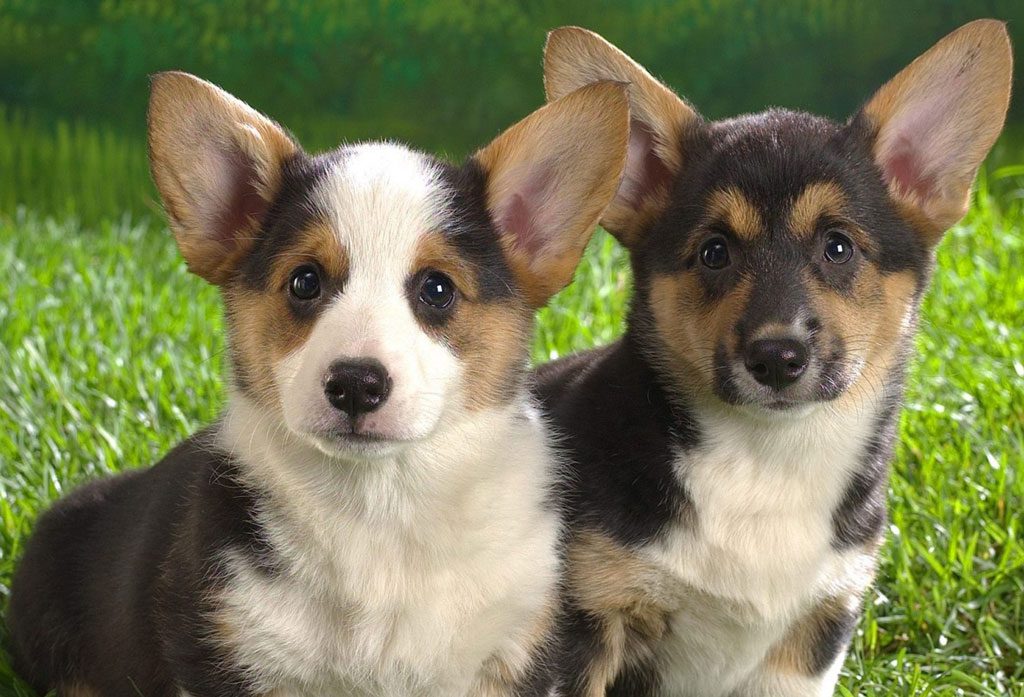
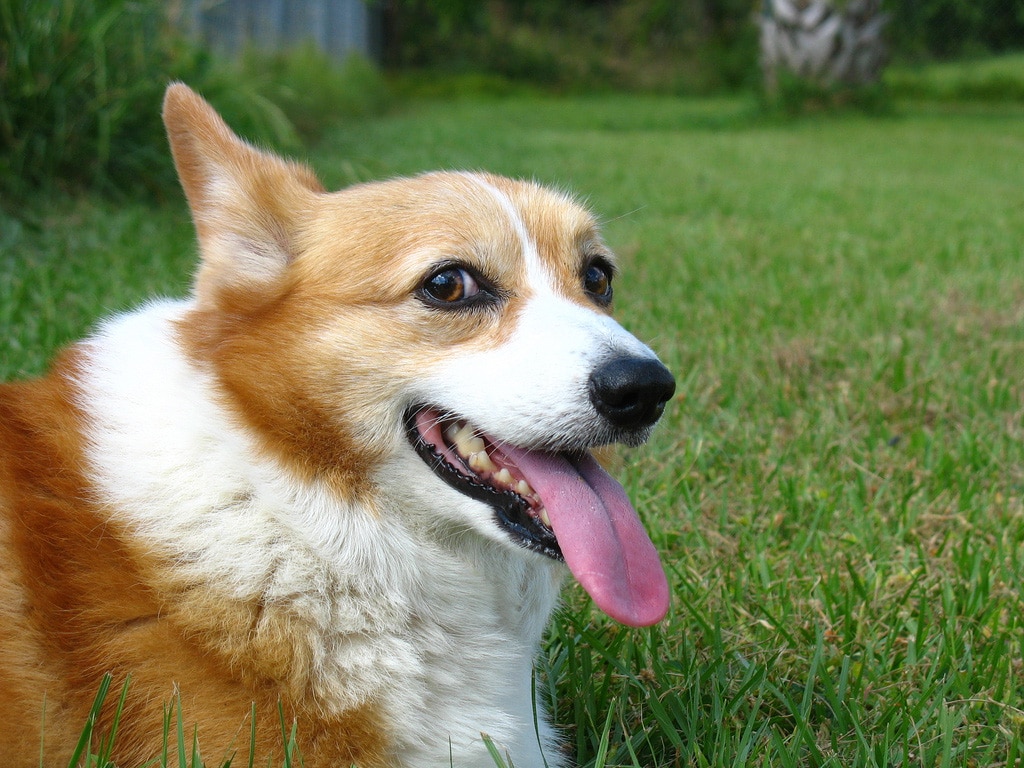
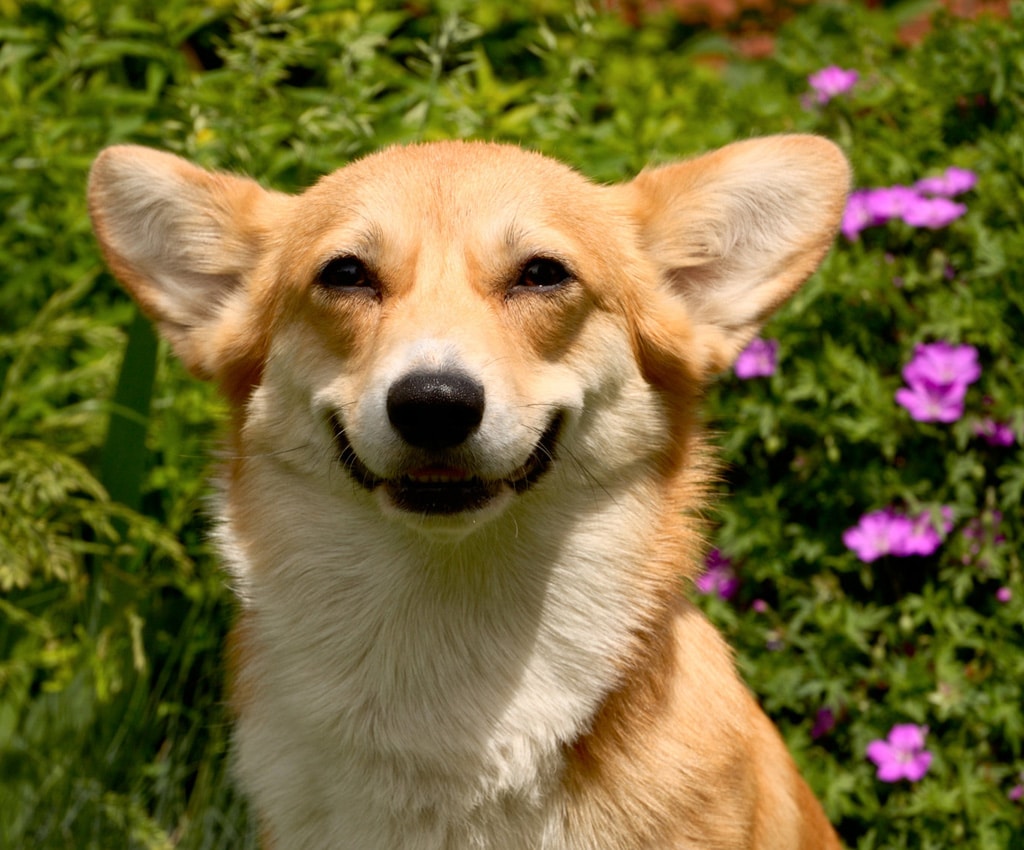
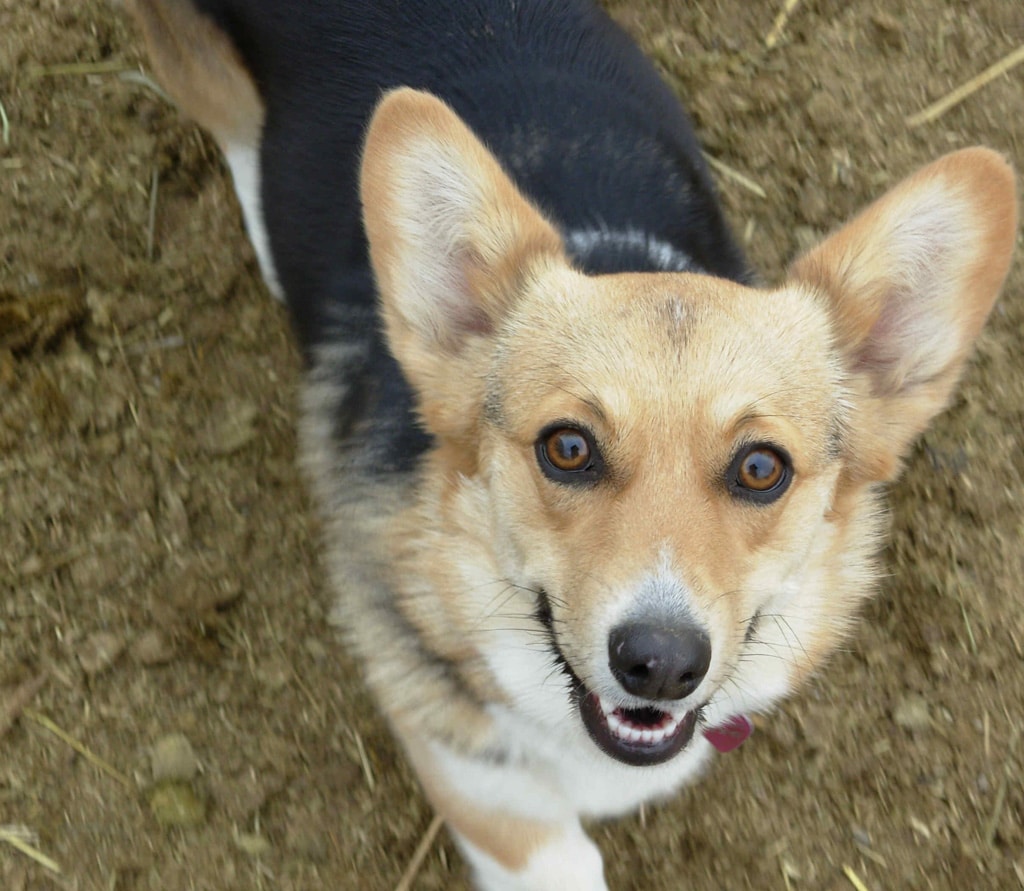
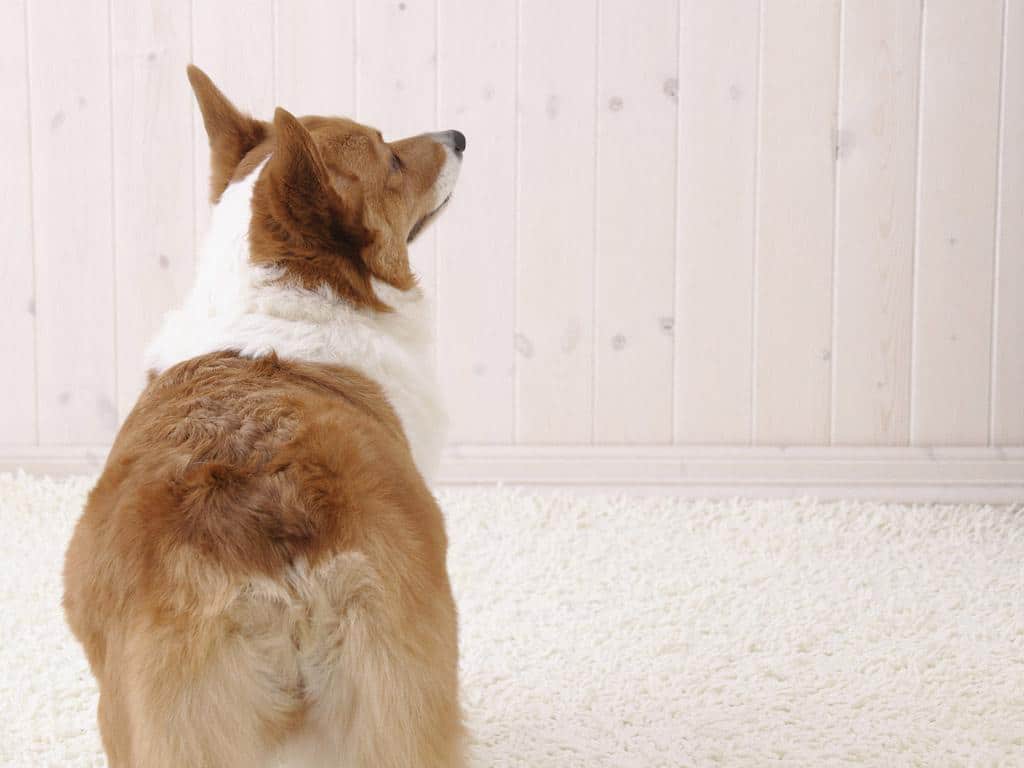
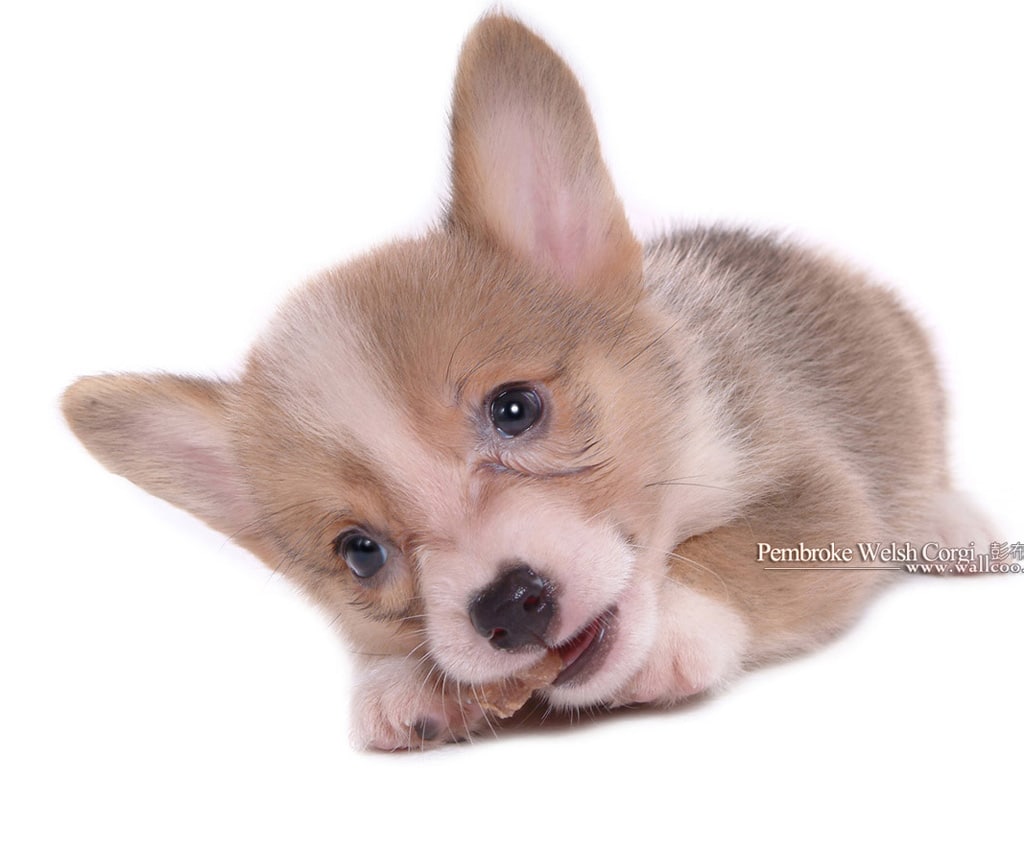
The Pembroke Welsh Corgi is extremely intelligent, affectionate and possesses a great personality.

Corgi Galรฉs de Pembroke

Content

Characteristics "Pembroke Welsh Corgi"

Coexistence is important that you have with your new friend. Before considering the acquisition of a dog of the breed"Pembroke Welsh Corgi" you know certain factors. Not all breeds of dogs are apt to live in an apartment, you must take into account his character, their need for exercise, their interaction with other pets, their care and if you have small children, their level of tolerance towards them.

Adaptation โ“˜

5,0 of 5 stars (based on 1 review)

friendly dog โ€‹โ€‹โ“˜

3,0 of 5 stars (based on 1 review)

hair loss โ“˜

5,0 of 5 stars (based on 1 review)

Affection level โ“˜

5,0 of 5 stars (based on 1 review)

Need for exercise โ“˜

4,0 of 5 stars (based on 1 review)

Social need โ“˜

4,0 of 5 stars (based on 1 review)

Home โ“˜

5,0 of 5 stars (based on 1 review)

Toilet โ“˜

3,0 of 5 stars (based on 1 review)

Friendly with strangers โ“˜

3,0 of 5 stars (based on 1 review)

barking โ“˜

5,0 of 5 stars (based on 1 review)

Health โ“˜

3,0 of 5 stars (based on 1 review)

Territorial โ“˜

5,0 of 5 stars (based on 1 review)

Cat friendly โ“˜

5,0 of 5 stars (based on 1 review)

Intelligence โ“˜

5,0 of 5 stars (based on 1 review)

Versatility โ“˜

5,0 of 5 stars (based on 1 review)

Child friendly โ“˜

5,0 of 5 stars (based on 1 review)

Surveillance โ“˜

4,0 of 5 stars (based on 1 review)

joy โ“˜

5,0 of 5 stars (based on 1 review)

History

The Pembroke Welsh Corgi (Corgi) It is a small dog native of Great Britain. He has served for centuries as a shepherd, still considered one of the oldest dogs of Great Britain. There is another Welsh race, the Cardigan Welsh Corgi of very similar characteristics, Although of larger size and long tail.

There are different theories about the origins of the Pembroke Welsh Corgi. It is believed that the two varieties Corgi they are descended from the dog of the Visigoths who introduced the Vikings in Wales to 9th century. Or the Cardigan may be the oldest variety, introduced the Celts into Wales around the year 1200 (name Corgi comes from the Celtic word "corgi" which means "dog").

According to other sources, the Pembroke variety was brought to Wales by Flemish weavers in the 12th century. Independently, What was the origin of the breed, the Pembroke Welsh Corgi was developed in Pembrokeshire) and it was used to guide cattle mordisqueando its paw and barking. The varieties Pembroke and Cardigan They interbred freely until the 1970s. 30. From then on, breeders attempted to emphasize their differences.

Another theory posits that the two varieties of Corgi have a common origin which is the cross between a Shetland Sheepdog and Sealyham terrier.

This race was used for grazing. The poor peasants of the time were allowed to pasture in the open fields of the Crown, this absence of fences put the cattle at risk of getting lost or dispersing and made a fast dog necessary, clever and who could move smoothly between the livestock. The Pembroke is this kind of dog, that pushes the cattle by the heels. His short height allowed him to run under cattle without being kicked.. It has evolved as a domestic animal, and it is the favorite breed of the English Royal family. It is a constant companion and an excellent guardian.

Physical characteristics

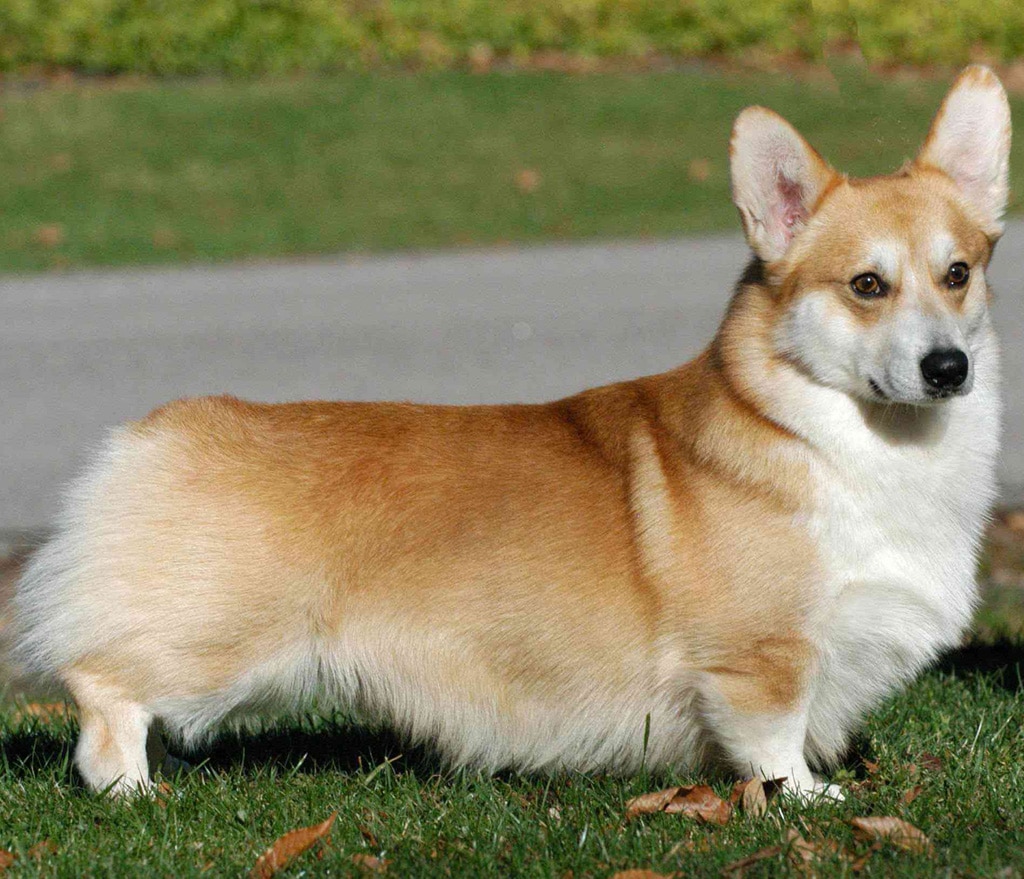
Although Cardigan Welsh Corgi and Pembroke they are relatives, his description of race is completely different. The Pembroke It is small in size, strong, robust Constitution, alert and active, It gives the impression of strength and stamina in a small body.

Head recalls by the shape and appearance to the Fox, with an expression alert and intelligent. The tail is short, preferably natural, When the puppies are not born rabones tail amputates almost completely.

The hair is fairly long and smooth, in various colors such as red, Jet, beige or black and Tan, usually with white spots, is a truly beautiful dog.

The Pembroke Welsh Corgi average has a height of 25 to 30 cm., unato length of 30 to 38 cm and a weight of 11 to 14 kg. Their life expectancy is of 12 to 14 years.

Observations

In England the Corgi de Pembroke is much more popular than Cardigan Welsh Corgi. Perhaps the most obvious reason for that popularity is that Pembroke is the favorite of the royal family, in particular of Queen Elizabeth II. Outside of England the Cardigan is still less known than the Corgi.

Character and skills

It is a very active dog, but the tendency to have them as pets in small homes reduces its activity. If this excesses are added in their food taken quickly to obesity.

The Pembroke Welsh Corgi is extremely intelligent and loving, with a great personality, very active and worker. Very adaptable to the farms and also, It is a perfect companion dog for children if it is treated properly and barks only occasionally..

Food

An average dog requires of 150 to 300 grams of balanced commercial feed per day. A fairly common feature of Corgi is their voracity, leading you to overeat which makes you feel like you are never full; You must limit your intake.

Health

By the length of the spine are particularly sensitive to overweight which can produce osteoarthritis that reduces your life expectancy and the quality of the same.

This race also has a tendency to hip dysplasia (polygenetic origin), the falls, retinal dysplasia, von Willebrand disease and degenerative myelopathy.

Images "Pembroke Welsh Corgi"
Videos ยซCORGI JUGS DE PEMBROKEยป

Type and recognitions:

  • FCI CLASSIFICATION:
  • Group :
  • Section : . .

Federations:

  • FCI – Group 1 Herding dogs, Section 1 Sheepdogs โ“˜
  • AKC – PASTORAGE โ“˜
  • ANKC – Group 5 (working dogs) โ“˜
  • CKC – Group 7 – Herding dogs โ“˜
  • โ€‹KC – Pastoral โ“˜
  • NZKC – Working dog โ“˜
  • UKC – Herding dogs โ“˜

FCI breed standard "Pembroke Welsh Corgi"

Origin:
United Kingdom, Wales

Date of publication of the valid original standard:
4.11.2010

Use:

Shepherd dog.


General appearance:

It is a small dog, strong, robust Constitution, alert and active, It gives the impression of strength and stamina in a small body.

important proportions:

The length of the muzzle should be 3/5 the length of the skull.


Behavior / temperament:

Sociable and friendly, never nervous or aggressive.

Head:

The head resembles that of the fox due to its shape and appearance, with an expression alert and intelligent.

Cranial region:
  • Skull: The skull is quite wide and flattened between the ears.
  • Depression links (Stop): Slightly marked.

facial region:

  • Truffle: black.
  • Snout: Narrowing slightly.
  • Jaws / Teeth: Must have strong jaws, with healthy teeth, complete and scissor bite, that is to say, that the internal face of the upper incisors is in contact with the external face of the lower incisors, and well positioned in the jaws.
  • Eyes: Well-placed, round, medium in size and brown in color that harmonizes with the mantle.
  • Ears: Medium-sized, upright and slightly rounded. If a straight line is drawn from the tip of the nose passing through the eyes and continues, I should cross the tip of the ears or be tangent to it.

Neck:

Moderately long.

Body:

The body is medium long, well sprung ribs, the lumbar region should not be short. Slightly tapered when viewed from above. Horizontal top line, the chest is broad and deep and well descended between the extremities.

Tail:

Short, naturally preferable.
  • amputee: Short.
  • Without amputating: Inserted at the same level as the upper line, carried low, not curled on the back. Carried along the same line as the back in motion, low at rest. Too high or too low insertion is undesirable.


Tips

Former members
  • Shoulder: Well bent backs, forming an angle of 90 ยฐ with the arms
  • Arms: Arms conform to the shape of the chest.
  • Elbows: The elbows close to the body, neither loose nor too tight.
  • forearms: Short forearms and as straight as possible. Strong skeleton in all its extension to the feet.
  • Previous feet: Oval; with strong fingers, well arched and together. The middle fingers slightly exceed the sides; the pads should be strong and well-rounded. Nails must be short.
Former members
  • General appearance: Strong and flexible. Short hindquarters with good bones all the way to the feet..
  • Knees: Well angulated.
  • Hocks: Seen from behind they should be parallel.
  • Hind feet: Oval; with strong fingers, well arched and together. The middle fingers slightly exceed the sides; the pads should be strong and well-rounded. The
    nails must be short.

Movement:

Your movement must be lively and lively, elbows neither loose nor too close together. The forelimbs should be directed forward, without lifting them much, in harmony with the propeller action of the posterior limbs.

Mantle

  • Fur :Medium long, smooth and with a dense undercoat. It should never be smooth, wavy or very hard (wire).
  • Color : Uniform colours: Red, carbonated leonado, black and tan, with or without white spots on the limbs, chest and neck. Small white spots are allowed on the head and forehead.


Size and weight:

Height to the cross:

Approximately between 25,4 and 30,5 cm..

Weight

  • Males: Among 10 and 12 kg.
  • females: Among 10 and 11 kg.


Fouls:

Any deviation from the aforementioned criteria is considered as a fault and its severity is considered with respect to the degree of the deviation to the standard and its consequences on the health and well-being of the dog., and the dog's ability to perform its traditional task.

disqualifying fouls:

  • Aggressiveness or extreme shyness.
  • Any dog โ€‹โ€‹showing clear signs of physical or behavioral abnormalities.


N.B.:
  • Males should have two normal-appearing testicles fully descended into the scrotum.
  • Only functionally and clinically healthy dogs, with the typical conformation of the breed, should be used for breeding.

The latest changes are in bold.

Source: F.C.I - International Cynological Federation

Alternative names:

1. Pembroke, PWC, Pem, Corgi, Welsh Corgi (English).
2. Welsh Corgi Pembroke (French).
3. Welsh Corgi Pembroke (German).
4. Welsh Corgi Pembroke (Portuguese).
5. Welsh Corgi Pembroke (espaรฑol).

โ–ท The world of Pets: Dogs, cats, birds, reptiles, amphibians

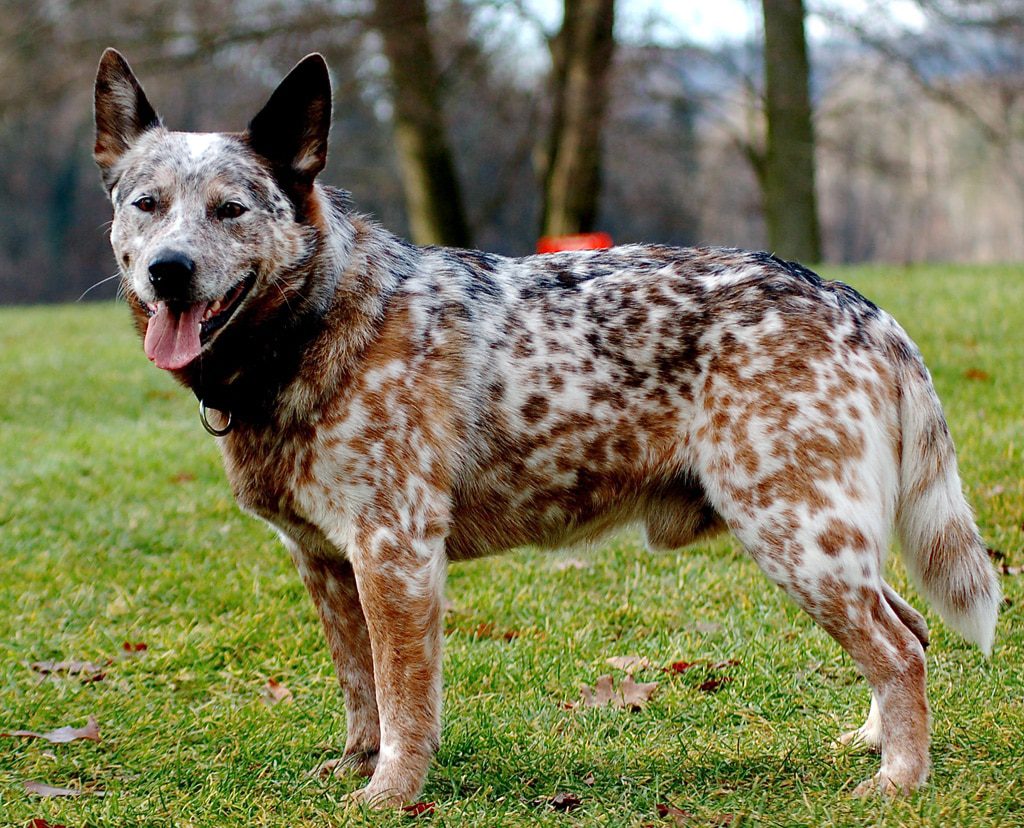
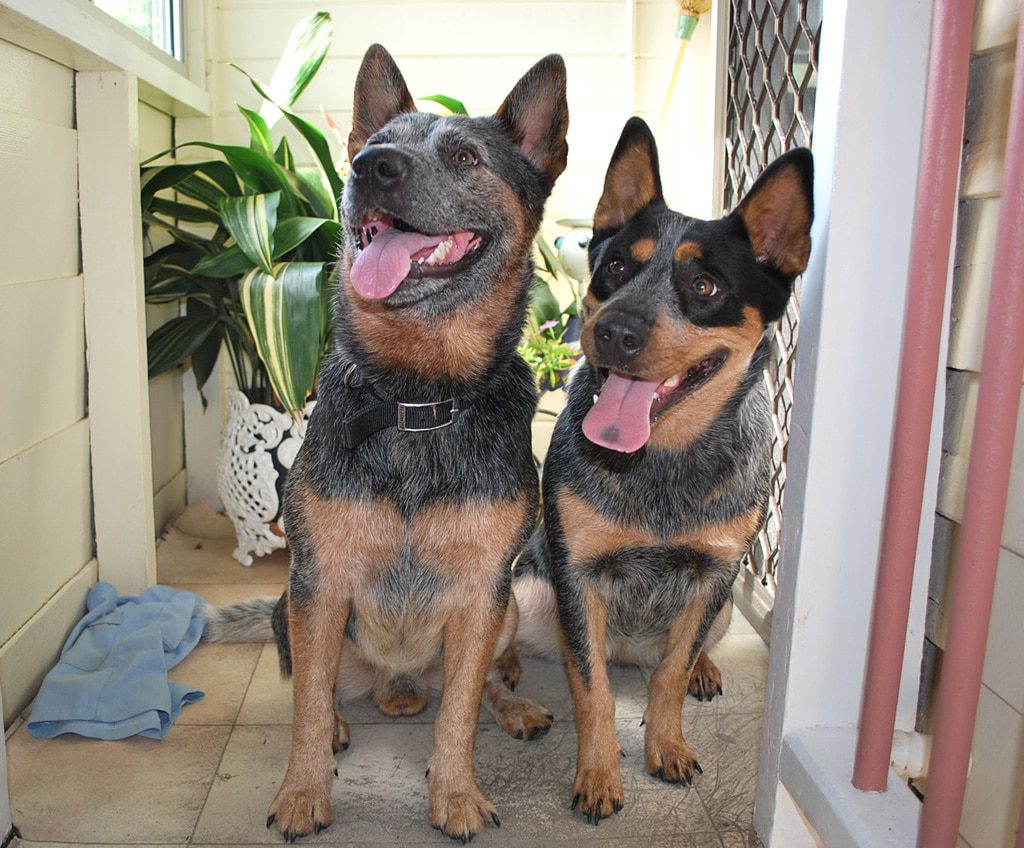
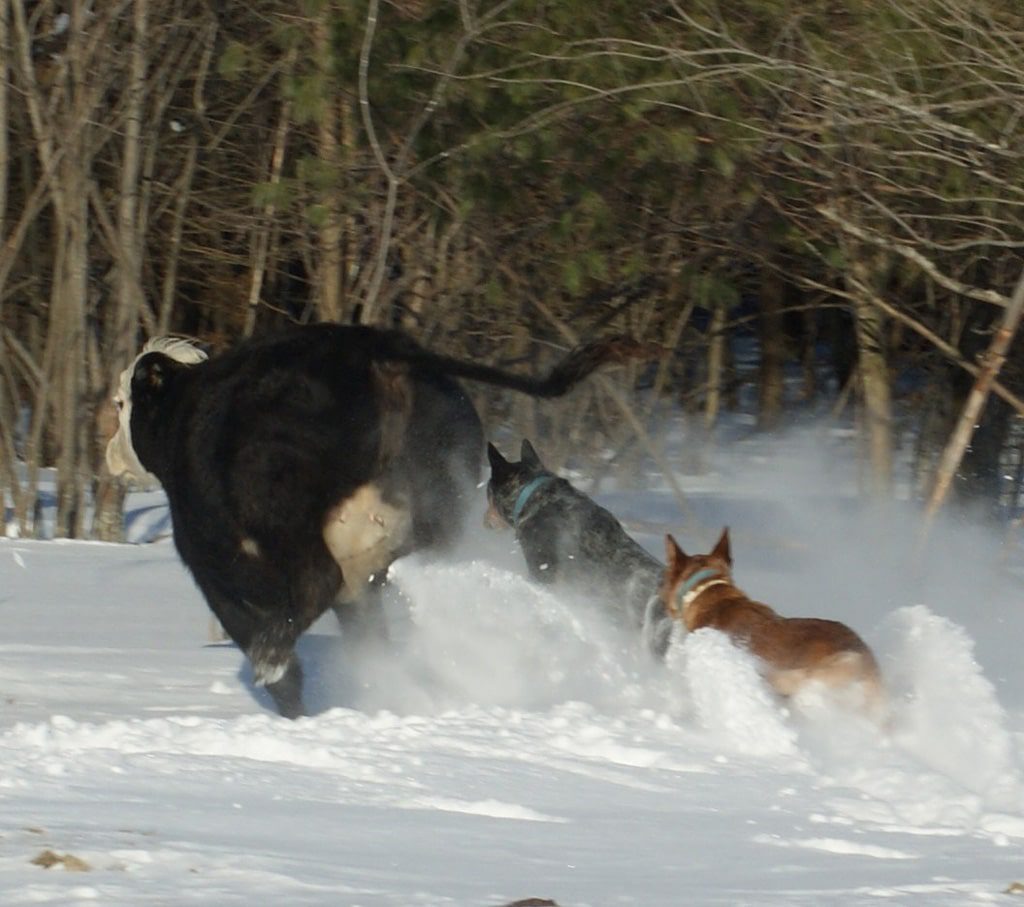
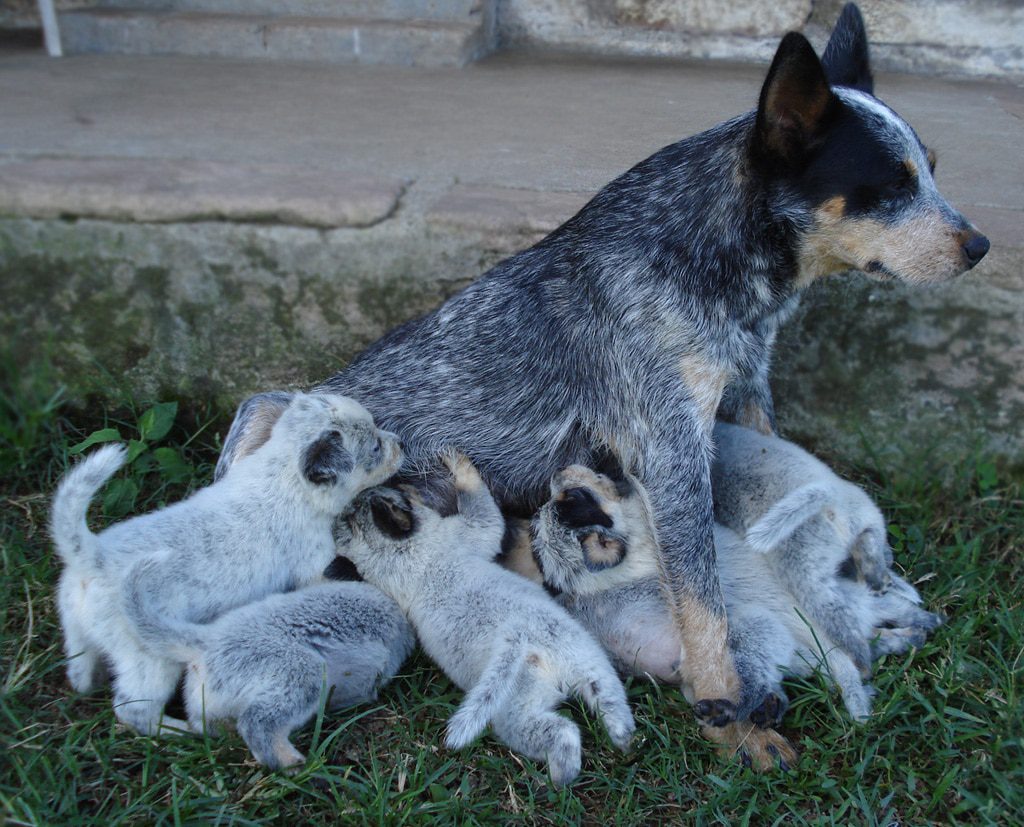
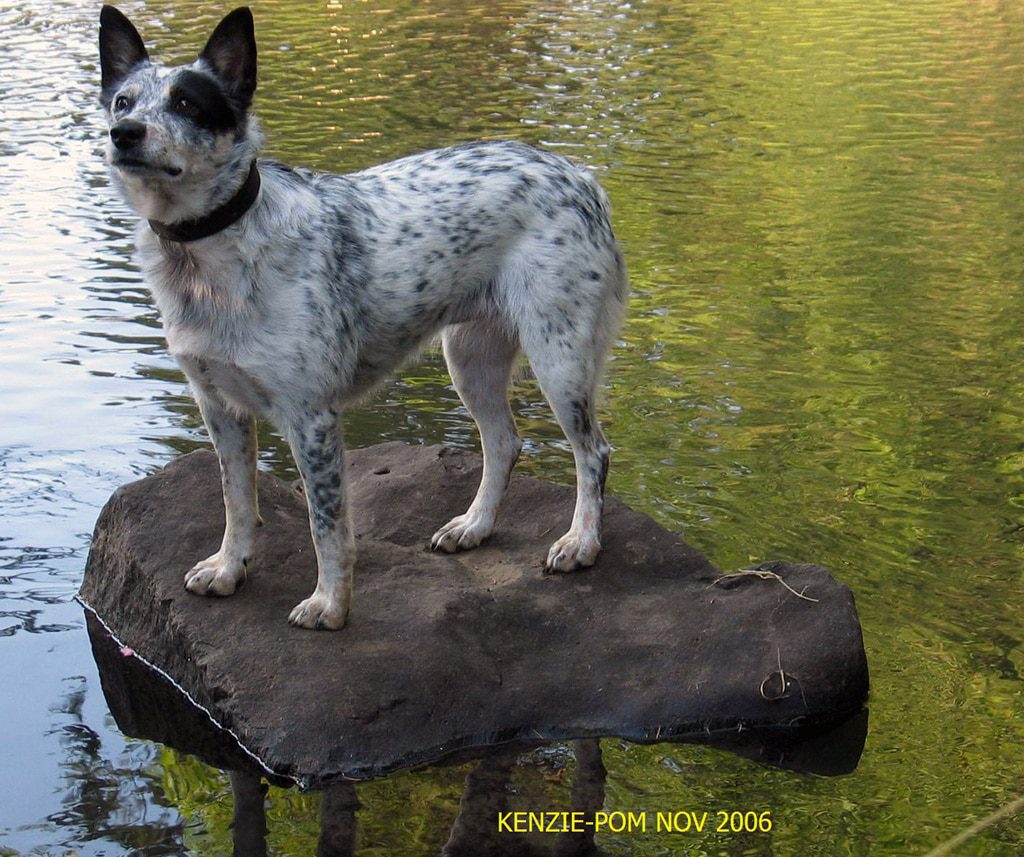
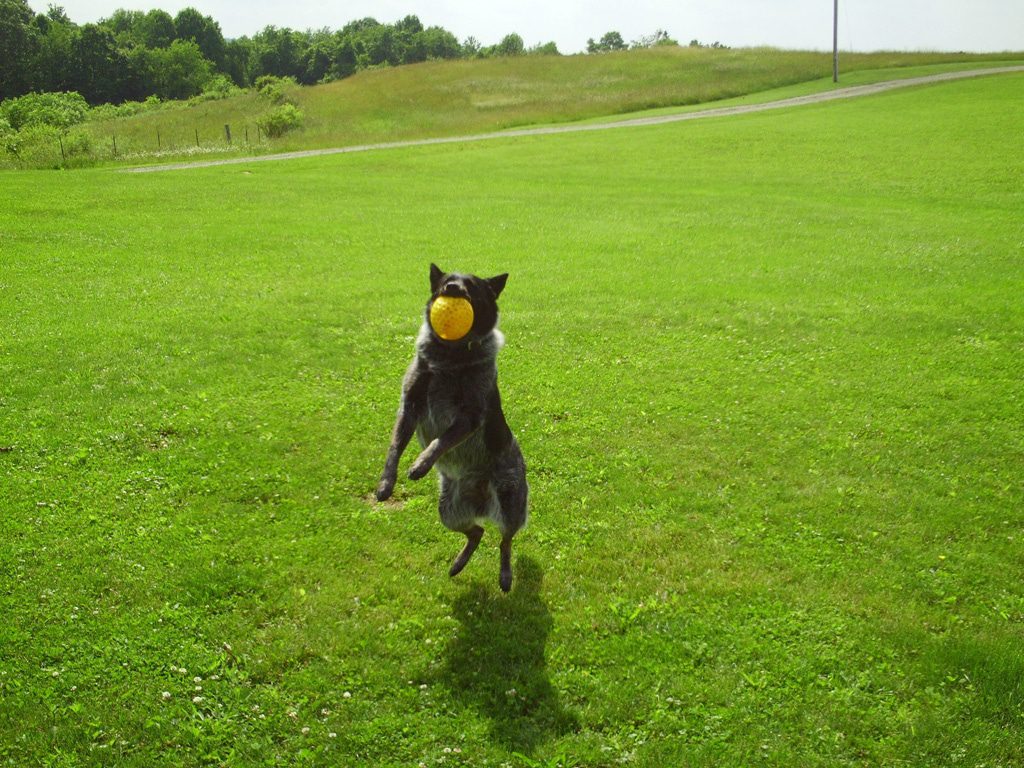
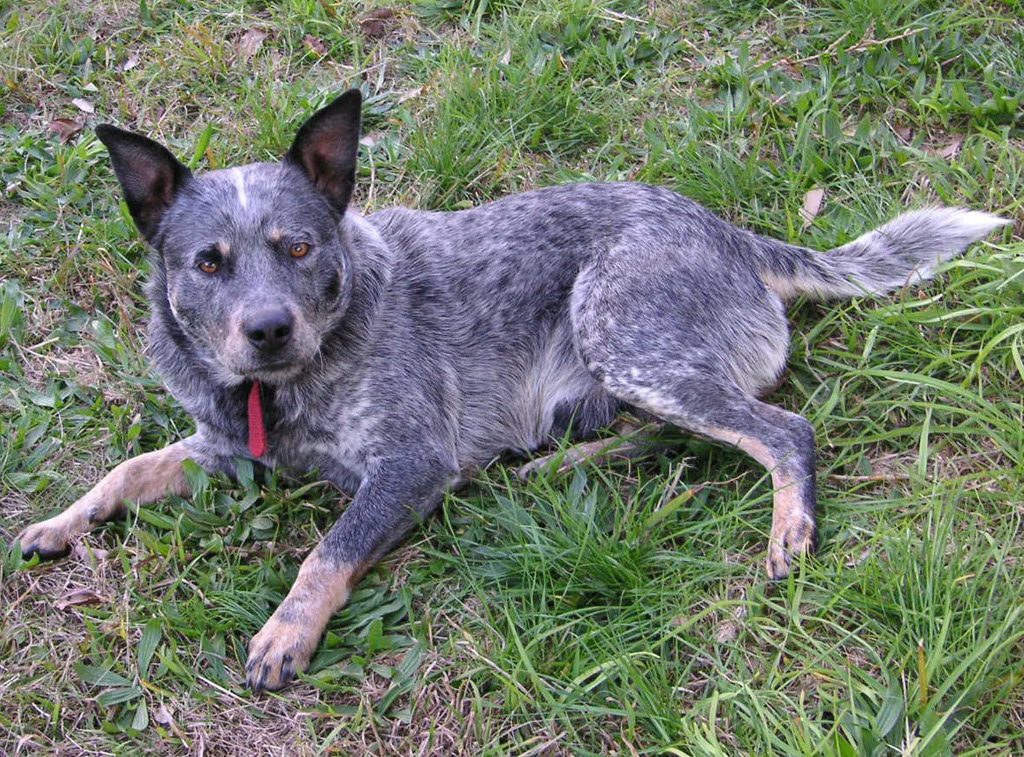
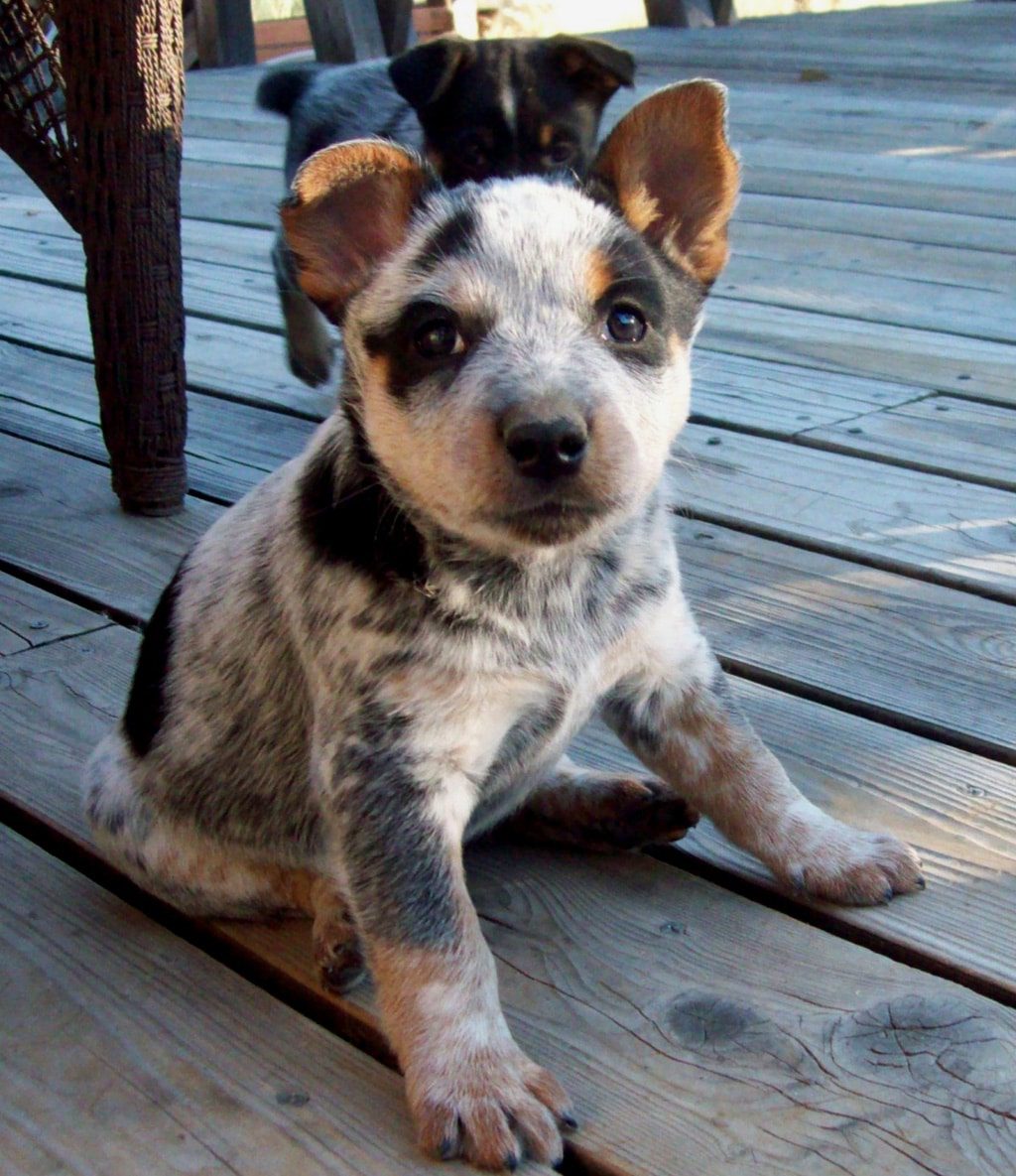
Australian Cattle Dog
Autralia FCI 287 - Sennenhund

Pastor Ganadero Australiano

The Australian Cattle Dog is a rustic dog, robust and without health problems.

Content

History

The Australian Cattle Dog It is a dog originating in australian. In comparison with other races its history is very well documented, because it is a relatively recent.

By the early 19th century the cattle industry in Australia had grown out onto the plains and onto the vast expanses of land. The cattle had become wild and rude beasts, the Smithfields, until then their dogs of grazing, already frequently lost control of livestock. These dogs were overcome by the heat and the distances they traveled to move the cattle, they also tended to bite and bark a lot, because they knew how to graze sheep and not cattle, and sometimes with horns, they were injured. This problem existed in both Australia and the United States, and while Americans were inventing cowboys (Cowboys) Australians invented dogs jeans.

In 1830 a cross of Smithfields took place with Dingoes, the primitive dog that lives in Australia and killed the cattle. This, be regarded as a pest at that time, He went on to be the best contribution to this race. It was believed that dogs more adapted to the climate would be obtained, to work and quieter. Were dogs of red hair, silent but biting even more. This breed was unsuccessful and died.

In 1840 another farmer with the same concern but different approach, imported a couple of Bearded Collie blue-haired scotland, were dogs that barked much. The offspring of this couple crossed it with the Dingo and got a silent working dog with either blue or red fur.

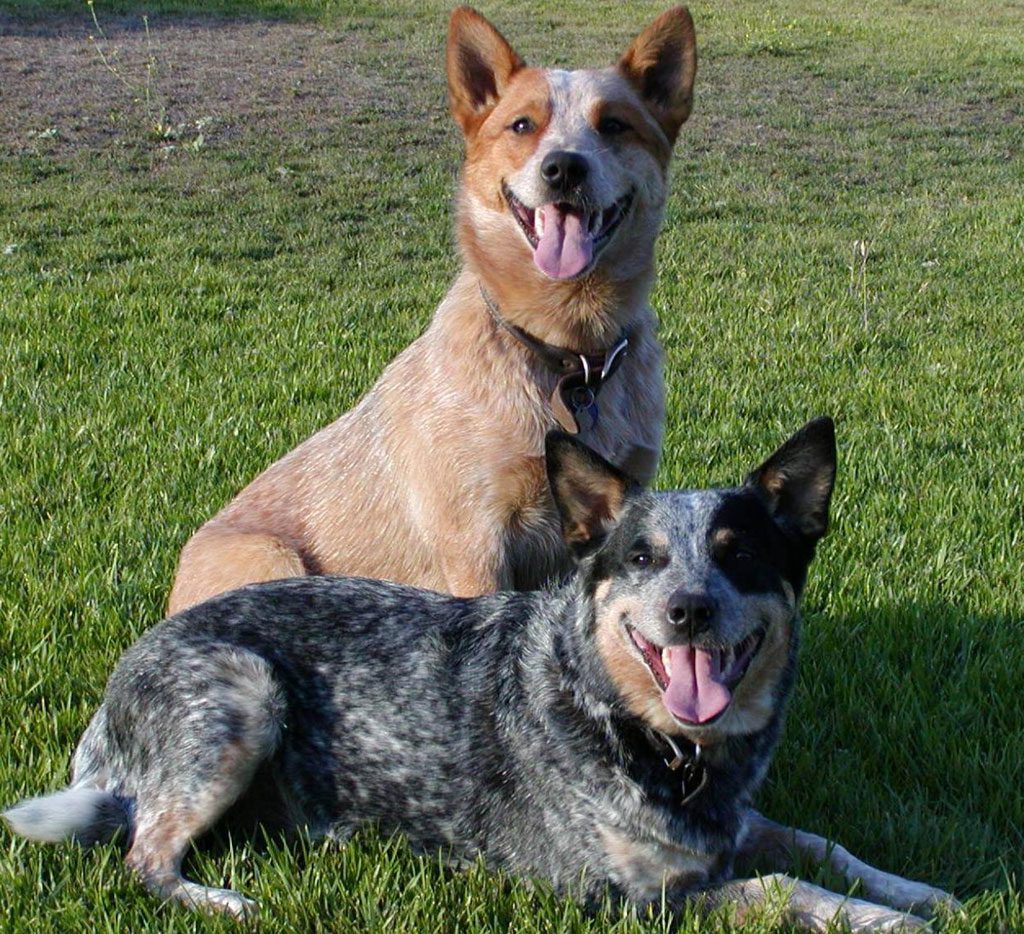
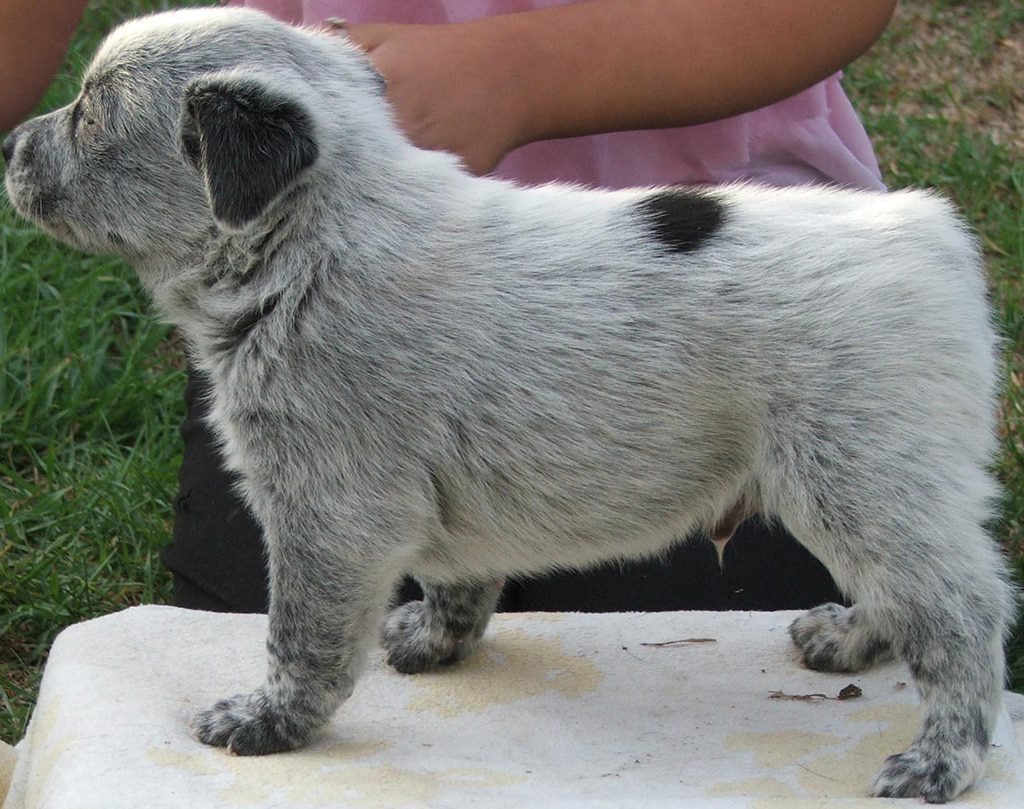
Other races introduced to this cross: the Dalmatian in order to ensure that dogs will also work with horses and more faithful and reliable for masters. The Kelpies black or straw color, Australian foresee dogs; to reaffirm their skills in the jobs that had been lost with the crossbreeding of Dalmatians. The influence of Dalmatians I create puppies with white fur at birth and that changes color at three weeks of age from a smooth coat to another gray. Of the Kelpie straw colored markings on legs, chest and head. The end result was an active dog, compact, with the caution of Dingo, the reliability of a Dalmatian, the skill of a Collie and Kelpie, and a unique coat coloration in the world.

In the early 1890's Mr.. Robert Kaleski became interested in these dogs; as he lover of them and at the same time journalist decided to give to know this race and make it achieved in 1903 the Kennel Club of Wales accepted the first standard of the breed. He firmly believed in the important contribution of Dingo blood to herding cattle and eventually introduced Dingoes to crossbreeds to maintain the efficient heeler style..

In November of 1988 It was formed in Australian Cattle Dog Club of America in California. The 1 May th 1980 they petitioned the AKC license (American Kennel Club) and the 1 September of that year they were awarded.

In all these years Australians livestock herders have been gaining ground both at work and in the heart of the masters. They are known with many names or nicknames: ยซBlueysยป (azulitos), ยซBlue Dogsยป (blue dogs), "Healers" (taloneros), "Queenlad Heelers" (taloneros Queens), "Blue Heelers" (Blue taloneros), "Red heels" (Red taloneros) and they are even mistakenly called "Dingos".

Physical characteristics

The Australian Cattle Dog they are a moderate breed in all respects. They must be balanced, symmetric, robust and compact. Judging this race we must seek a harmonious dog.

We often hear: "Must have a big head"; This is fine if the body is in line with the head. The standard of the breed does not require a large head but a head according to the body, or of a heavy bone structure, If disagrees with the rest of the dog.

The Australian Cattle Dog he's a working dog, created strong, compact, symmetric, with the ability and willingness to carry out their assigned task no matter how difficult. Its combination of substance, power, balance sheet and strong muscle condition, leads to great agility, strength and endurance. Both too big and fat dog, as one too small and thin they would have serious faults. We must see the dog altogether. A large head does not make a good dog, not a very crude bone structure.

Remember: BALANCE SHEET, SYMMETRY AND MODERATION.

As its name says, It's primary function and no one matches, It is the control and management of livestock in open or closed extensions. Always alert, extremely intelligent, look-out, brave and reliable, with a total devotion to duty, making it the ideal dog.

A dog that is gentle in nature, outside of obese condition, will lose points. They are athletes and they should always give that appearance.

As far as the physical aspect is concerned, we point out the following...

  • The head It is strong and it must be proportional to the body of the dog, to maintain its overall conformation. The wide skull is slightly curved between ears. The mejilla5 are muscular, Neither crude nor prominent, strong jaw. The lips are clean and tight. !.nose is always black. A gluttony for measuring head is from the tip of the nose, passing between the eyes, stop ear tip; through the skull back through the eye to the tip of the nose; They must be measured an equilateral triangle.
  • The eyes: they are oval shaped, medium-sized, Neither prominent nor sunken, they should express State of alert and intelligence, are dark brown in colour.
  • The ears: they should be of moderate size, preferable to small to large, broad base and pointed tip, or round as spoon, Neither plicate of bat. Placed separate head inclined outwards. They must be thick, fleshy and covered with weight on the inside. The teeth would be strong, with equal separations, with grip, bite and scissors, the lower incisors just before close and playing at the incisive superiors.
  • The neck: is very strong, muscular, It allows you to turn the head to the body, It must not be loose or have hanging skin.
  • Front rooms: the forearm should join the shoulder almost 90%. There is a tendency in the short forearms that does not allow you to the correct length needed. They must be just as the cross to the elbow to elbow on the floor. It must not exceed the width of the chest to the elbows. The creation of exaggeration is a problem in the race.
  • Proportions: The dog must be 10% longer than high, many are unfortunately very short and it subtracts them movement and flexibility.
  • Hindquarters: strong, widths, muscular. The rather long rump to slant, long thighs, wide and well developed. Seen from the back should be parallel and rights, not very close to each other, not very separate.
  • The legs: round, with fingers long and together. Hard bearings, short and strong nails.
  • The tail: placed moderately downward, following the contour of the thigh and rump of length until reaching the hocks. When rest with a slight curve. Movement or shaking the tail should be raised. At no time should the tail be carried beyond a vertical line from the root (or coiled). The tail should have abundant fur.
  • When it is in movement and walking: the action is real, free, flexible to tireless, and the movement of the shoulders and forequarters is in unison with the strength of the hindquarters. The rapid and unexpected movements ability is elementary. When they trotting legs tend to join the ground as the speed is on the rise.
  • Weight and height: The male can be measured in 46 cm to 51 cm., and weigh between 20 and 26 kg. The female can be measured in 43 cm to 48 cm., and weigh between 18 and 23 kg. Here there is almost no problems, because height requirements have been maintained with ease.
  • Fur: The hair is soft, with double layer being the shortest denser.; the hair of the longest layer is closed, each hair is, straight and hard, Why which is waterproof. On the hind legs the coat is long where join the thighs. In the head (even within the ears) up to the front of the legs the coat is short. Around the neck, longer and thicker. A very short or very long hair will be a lack. Curly hair in wavy is evident in the very adult females.
  • Colors of the mantle:
  1. Blue: the color can be blue, graying blue, Blue mottled with or without other brands. Allowed in brands are, black, Blue or straw in the head, preferably symmetrical. Paws straw halfway and extending to the front to the chest and throat, and in the jaws. The Undercoat may be straw in the body where it stands not out to the blue upper layer. The black marks on the body are not desirable.
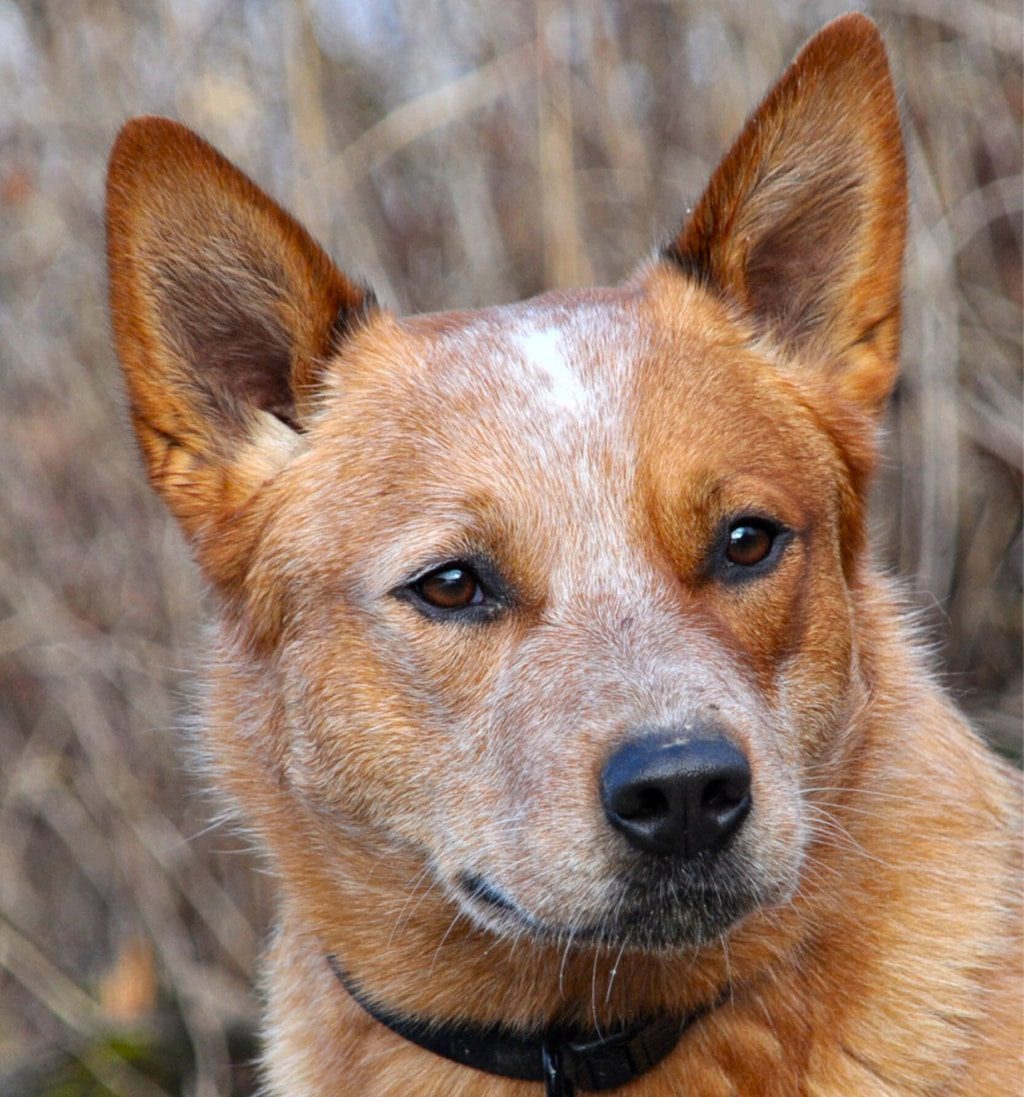
  2. Red: the color should be very smooth throughout the body, including the bottom layer (either white or cream), with or without red marks on the head. Symmetrical marks are desired. The red marks on the body are permitted but not desired.

There are two main problems in color. The blue dogs tend to black and the second are the Red dogs without freckles. The latter is more than a problem, and one of the reasons why the reds are less dominant than blue.

Character and skills

The Australian Cattle Dog are very versatile and tireless workers who adapt various activities. They have been used as search and rescue dogs., bombs and drugs detectors, service and of course dogs, livestock grazing.

One Australian Cattle Dog not the ideal dog to lock him in a yard. These dogs require working and living together with people or at least the presence of someone to her around in the absence of their day-to-day work. Isolated in the courtyard of a house in the city the edge to create problems.

The doctor. Harvey, Veterinary Australia, It has two of these dogs and also attends many more as patients. The comments: ยซThe main problem that I see and that far exceeds others, is the behaviour of these animals, everything is due to boredom and lack of exercise. Since they are very good guardians, people leave them in their backyard taking care of the House, totally ignoring their needs for exercise and mental stimulation".

One Australian Cattle Dog can live in an apartment or on a ranch 20 hectares, the problem is not the space; It is the exercise and the time the owner puts into his dog. If no is given a job the dog, the same is going to invent:

  • Garden design: holes, plants cropped or out of place.
  • Interior design: biting furniture tapestry, Chew chairs, dig a way out of the street, spreading garbage around the House, etc.
  • Another very common problem in cities is the natural tendency that these dogs have to protect their family and their home.. Even without training, they defend their territory from outsiders, including the milkman, the postman and anyone who is not familiar

    Signs are commonly used in some rural places in the United States warning that the place is guarded by Australian Cattle Dog, to avoid that strangers come. If there are children running, screaming, any dog grazing naturally want to corner to put them under control; with biting and barking. If their children have guests it is preferable to keep the dog, because it will not allow their masters to be touched, even by game.

    Social coexistence with children must be at an early age, dogs are taloneros by nature to instinctively chase other animals, however these dogs are very adaptable and can learn to suppress some of their natural inclinations. They are a perfect company for the family and their children. Once you know the dog and controls, their obedience will surprise your guests.

    The doctor. Harvey also believes about coaching: "He Australian Cattle Dog it is very manageable; as a coach and scholar of the behavior, He catalogued it as the most adaptable dog who had worked with. However these dogs do not respond well to the method in which force them.

    After several months of trying in vain to train a female with punishment straps, correct and other, opt for more motivational methods and the results were excellent. The confidence and enthusiasm can be seen in the position of the tail. A dog with a drooping tail, probably this suppressed or bored, a raised tail denotes a dog active and attentive.

    Therefore the coaches that without the knowledge of the race, using traditional methods, such as the drawing with the collar of punishment; they invariably consider them fools, irritable and difficult. Coaches using positive methods, they believe that they are very attentive and willing to learn. Kalesky once said: "And Australian Cattle Dog should we remember a typical Dingo, and this is very important if we want to describe the race.

    Before you choose the puppy we must stop to think for what they want to this dog, as a pet, as a guard dog, dog of grazing, dog for beauty exhibition, etc. Now let's see how they behave all the puppies in the litter. The one we see who fights all his brothers, would serve as a guard; the largest and that always sleeps because it is where most ate, would be great as a pet or for beauty, the more chiquitos resembling whirlwinds have learned to make an extra effort to obtain their food fought against the elderly, they would be ideal for the job. But there is no written rule the nature of the dogs molded it in a large percentage owners, in this way one very aggressive can be very manso and vice versa. Always take into account the opinion of the breeder.

    Faults occur in all races, without them there would be no challenges for breeders. It is important to be attentive to the faults to overcome them. The faults are only an obstacle in our attempt to raise the perfect dog. Look at your dog critically, see the faults and strive to rectify them. Don't want to pretend that they there is no because there is not a perfect dog.

    The loyalty of Australian Cattle Dog will keep him next to his master, more than anything in the world, They must be with the master, accompany you and assist you in everything. The easiest way of making them happy is having them on your side. If you leave the lane, It can be that the dog will bite the heels, But if you are the ideal type to have an Australian, This morderรก you heart.

    Australian Cattle Dog – Health

    All dogs have the potential to develop genetic health problems, just as all people have the potential to inherit a particular disease. Run, do not walk, from any breeder that does not offer a health guarantee on puppies, to tell you that the breed is 100 percent healthy and has no known problems, or tell you that your puppies are isolated from the main part of the home for health reasons. A reputable breeder will be honest and open about the breed's health problems and the incidence with which they occur in their lines.. The problems observed in the Australian Cattle Dog include hip dysplasia, patellar dislocation, portosystemic shunts, progressive retinal atrophy (PRA) and genetic deafness.

    Careful breeders screen their breeding dogs for genetic diseases and breed only the healthiest, best-looking specimens., but sometimes mother nature has other ideas and a puppy develops one of these diseases despite good husbandry practices. Advances in veterinary medicine mean that in most cases dogs can still live a good life. If you are going to have a puppy, ask the breeder about the ages of the dogs in their lines and what they died of.

    Remember that after you have welcomed a new puppy into your home, has the power to protect you from one of the most common health problems: the obesity. Keep a Australian Cattle Dog with a proper weight is one of the easiest ways to prolong your life. Make the most of your preventive skills to help ensure a healthier dog for life.

    Australian Cattle Dog – Grooming

    The Australian Cattle Dog has a flat, hard coat that is resistant to rain and dirt. This makes grooming a simple task – only needs to be brushed once or twice a week to remove dead hair. For this you can use a bristle brush or slippery bristles. He will remove his short and dense undercoat once or twice a year, which will require more brushing. Other tools to keep on hand are a comb and undercoat rake.

    The Australian Cattle Dog you will only need occasional baths if you get very dirty. Check your ears to make sure they are clean and dry and there is no evidence of infection. Your adult dog will need to have his nails trimmed about once a month, depending on wear. Puppies may need a weekly nail cut. Brush your dog's teeth regularly to promote good dental hygiene and fresh breath.

    Characteristics "Australian Cattle Dog"

    Coexistence is important that you have with your new friend. Before considering the acquisition of a dog of the breed "Australian Cattle Dog" you know certain factors. Not all breeds of dogs are apt to live in an apartment, you must take into account his character, their need for exercise, their interaction with other pets, their care and if you have small children, their level of tolerance towards them.

    Adaptation โ“˜

    3,0 of 5 stars (based on 1 review)

    friendly dog โ€‹โ€‹โ“˜

    3,0 of 5 stars (based on 1 review)

    hair loss โ“˜

    3,0 of 5 stars (based on 1 review)

    Affection level โ“˜

    3,0 of 5 stars (based on 1 review)

    Need for exercise โ“˜

    5,0 of 5 stars (based on 1 review)

    Social need โ“˜

    3,0 of 5 stars (based on 1 review)

    Home โ“˜

    1,0 of 5 stars (based on 1 review)

    Toilet โ“˜

    1,0 of 5 stars (based on 1 review)

    Friendly with strangers โ“˜

    2,0 of 5 stars (based on 1 review)

    barking โ“˜

    4,0 of 5 stars (based on 1 review)

    Health โ“˜

    3,0 of 5 stars (based on 1 review)

    Territorial โ“˜

    5,0 of 5 stars (based on 1 review)

    Cat friendly โ“˜

    3,0 of 5 stars (based on 1 review)

    Intelligence โ“˜

    5,0 of 5 stars (based on 1 review)

    Versatility โ“˜

    5,0 of 5 stars (based on 1 review)

    Child friendly โ“˜

    5,0 of 5 stars (based on 1 review)

    Surveillance โ“˜

    5,0 of 5 stars (based on 1 review)

    joy โ“˜

    5,0 of 5 stars (based on 1 review)

    Australian Cattle Dog Images

    Australian Cattle Dog Videos

    Type and recognitions:

    • FCI CLASSIFICATION:
    • Group :
    • Section : . .

    Federations:

    • FCI – Group 1 Herding dogs, Section 2 Sennenhund, except Swiss boyeros โ“˜
    • AKC – PASTORAGE โ“˜
    • ANKC – Group 5 (working dogs) โ“˜
    • CKC – Group 7 – Herding dogs โ“˜
    • โ€‹KC – Pastoral โ“˜
    • NZKC – Working dog โ“˜
    • UKC – Herding dogs โ“˜

    FCI breed standard Australian Cattle Dog

    FCIFCI - Australian Cattle Dog
    Pastor

    Alternative names:

    1. ACD, Cattle Dog, Blue Heeler, Red Heeler, Queensland Heeler (English).
    2. Australian cattle dog (French).
    3. Australischer (German).
    4. Australian Cattle Dog (Portuguese).
    5. Ganadero Australiano, Boyero australiano, Perro Australiano de Ganado, Perro Ganadero Australiano (espaรฑol).

    โ–ท The world of Pets: Dogs, cats, birds, reptiles, amphibians

    Smooth Collie
    Escocia FCI 296 . Sheepdogs

    The Smooth Collie, today it is considered a variety of Border Collie in countries such as the United States and Canada

    Content

    The Shorthair Collie is a breed of dog originally developed for grazing. It is a variety of the Border Collie. Some canine organizations, to the copies of Longhair and shorthair, classified them as variations of the same race.

    History

    The early history of Smooth Collie, like many breeds of dogs, It is largely a matter of speculation. The most common opinion of the breed is that they are descended from a population of sheepdogs brought to Scotland by the Romans in the 5th century. (See more information about the breed ยปCollieโ€).

    The modern history of both Collie, the Smooth Collie and the Rough Collie, It began in the reign of Queen Victoria, He turned his attention in the dogs of the shepherds and ordered that they bring to their balmoral castle in Scotland, some specimens. In 1860 years. At that time, the interest of the Queen, made the breed fashionable Smooth Collie. Thus began the transformation of the farm dog breed, similar to modern Border Collie, Pet highlighting its aesthetics and preparation for dog competitions, sample, for example.

    The Smooth Collie, today it is considered a variety of Border Collie in countries like the United States and Canada, which means that they can be crossed and in the statistical registers, are registered as โ€œCollieโ€ without specifying if it is a Rough Collie or a Smooth Collie.

    In other countries, such as United Kingdom and Australia, they are classified as separate breeds, but for a very short time, the UK Kennel Club allowed the two varieties to be crossed until 1993.

    Physical characteristics

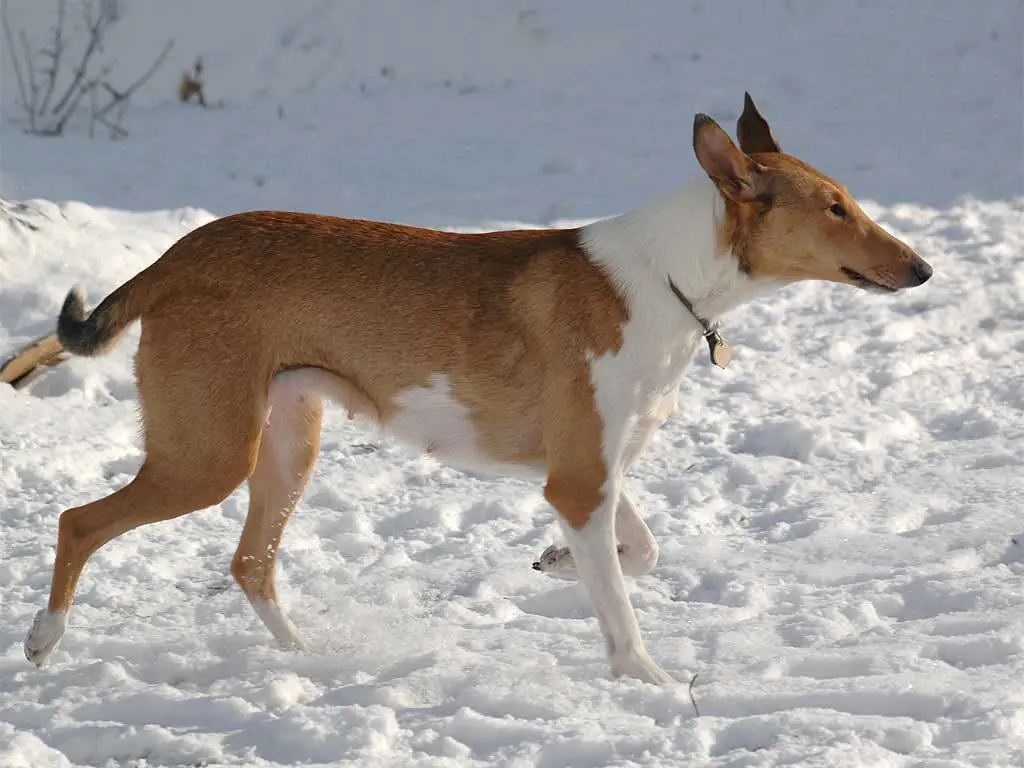
    The Smooth Collie it is a medium-sized dog pulling a large, the females measure of 56 to 61 cm. to the cross and the males of 61 to 66 cm.. Y, they weigh in 20 to 34 kg. Standard breed size varies by country, is the far larger in the range United States and Canada, and the smallest elsewhere.

    The Collie's short hair is slightly longer than high, with a straight back and a deep chest. The characteristics of the head, especially "sweet", are considered very important in the ring. The breed has long snout, the flat skull and semi-erectas ears.

    The layer is two-fold, one is soft and dense stuck to the body, and the outer layer is smooth and hard for a length of 2,54 centimeters, with the most dense hair around the neck forming a collar, and in the back of the thighs. The coat requires a weekly brushing. Unlike other Collie, It presents non bangs…, the hair is short.

    The coat of the Smooth Collie it can be of the following colors:

    • Sand: the colour of the famous Lassie, that it goes golden light to dark mahogany. With white areas on the chest, neck, feet, legs, and the tail.
    • Tricolor: black, with spots of color fire and white. With white areas on the chest, neck, feet, legs, and the tail.
    • blackbird blue: that color is a gray marble silver black with spots of color fire. With white areas on the chest, neck, feet, legs, and the tail.

    Character and skills

    The Smooth Collie is generally a sociable dog, easy to train family. Although it is not an aggressive breed, It is always alert and barking when he noticed something unusual, It is therefore a great watchdog.

    Dogs Collie -usually- they are agile dogs, assets and need regular exercise. It is easy to train, due to their high intelligence and eagerness to please their owners. The formation of this breed requires exclusive dedication and patience, they are sensitive to correction and hide if they feel badly treated or it sobre required.

    They get along well with children, they tend to harmonize well with other animals that live in the House, they usually mix well with other dogs.

    The Smooth Collie is-mainly- a family pet, You can compete in obedience, agility, grazing trials, and other canine sports. Some are still used as herding working dogs. (but less and less). They are also very useful as assistance dogs for people with disabilities..

    It has a life expectancy of 12 to 14 years.

    Type and recognitions:

    • FCI CLASSIFICATION:Group 1 –> / Sheepdogs and Cattle Dogs (except Swiss Cattle Dogs). Section 1 –> Pastor dogs. Without working trial.
    • FCI 296
    • Federations:
      • FCI – Group 1 Herding dogs, Section 1 Sheepdogs โ“˜
      • AKC – PASTORAGE โ“˜
      • ANKC – Group 5 (working dogs) โ“˜
      • CKC – Group 7 – Herding dogs โ“˜
      • โ€‹KC – Pastoral โ“˜
      • NZKC – Working dog โ“˜
      • UKC – Herding dogs โ“˜

    FCI breed standard "Smooth Collie"

    Origin:
    Scotland, United Kingdom

    Date of publication of the valid original standard:
    24.06.1987.

    Use:

    Shepherd dog.


    General appearance:

    The short-haired Collie is a dog endowed with intelligence, vivacity and activity. He behaves with dignity as a result of his perfect anatomical structure, in which each part is in proportion to the whole. Its physical structure must show strength and activity, no signs of heaviness or coarseness. The expression is very important. When making a relative assessment, the balance and perfect combination of the skull and muzzle should be considered, size, form, eye color and location, and the correct position and bearing of the ears.


    Behavior / temperament:

    Cheerful and friendly, never nervous or aggressive.

    Head:

    The characteristics of the head are very important and should be considered in proportion to the size of the dog. The head, front or side view, has a well-drawn wedge shape, clearly truncated and smooth outline. The midpoint between the inner angle of the eyes constitutes the balance point of the length of the head.

    Cranial region:
    • Skull: The skull is flattened. The sides taper gradually and smoothly from the ears to the tip of the nose.. Height
      Skull measure of supraorbital arcade to the submaxillary region should never be excessive (altogether not very deep).
    • Depression links (Stop): Light but noticeable. The midpoint between the inner angles of the eyes is the midpoint of a well-placed stop or depression.

    facial region:

    • Truffle: Must always be black.
    • Snout: The smooth, well-rounded end of the muzzle is truncated, but never square or pointed.
    • Jaws/teeth: The lower jaw is strong and well delineated. The teeth are of a good size.
      Must have strong jaws, with healthy and complete teeth with scissor bite, that is to say that the inner face of the incisors
      superiors is in narrow contact with the outer face of the lower incisors and placed at right angles with the maxillas.
    • Cheeks: Not prominent.
    • Eyes: They are a very important characteristic that confer a sweet expression. Are medium-sized (never very small), placed is somewhat oblique position, almond-shaped and dark brown in color, except in those blue merle specimens in which the eyes (one or both eyes, or part of one or both) are blue or mottled blue. They have an expression full of intelligence, with a sharp and alert look when the dog is attentive.
    • Ears: Ears are moderately large, wider at the base and set not too close together or too far apart at the sides of the head. When the dog is at rest, they are thrown back, but when he is attentive, brings them forward and carries them erect, that is, approximately the first two thirds of the ear is erect and the upper third falls naturally forward, below horizontal.

    Neck:

    Muscular, strong, of good length and well arched.

    Body:

    • Back: Straight and firm.
    • Pork loin: Slightly arched.
    • Breast : Relatively wide behind the shoulders. Well arched ribs.

    Tail:

    The tail is long, The last vertebra reaching at least the corvejones. When the dog is at rest, Tails the tail low but twists it slightly upward at the tip; when he is excited he can carry it happily but never on the back.

    Tips

    Former members

    Previous members, straight and muscular, they must have moderate bones.

    • Shoulder: Oblique and well angulated.
    • Elbows: Neither close to the body nor protruding.
    • Forearm: The muscles have a certain thickness.
    • Metacarpus: Flexible, but not weak.
    • Previous feet: Oval, strong pads. Fingers should be arched and close together.
    Former members

    Well defined and wiry.

    • Thigh: Muscular
    • Knee: With good angle.
    • Hocks: The hocks must be well lowered and powerful.
    • Hind feet: Oval, strong pads. Fingers should be arched and close together.

    Movement:

    Movement is a distinctive characteristic of this race. A dog with good movements should never have his elbows turned outwards., however when it moves, your front feet stay relatively close together. Walking across the limbs is highly undesirable. longitudinally or laterally and swinging the body. Seen from behind, hindlimbs from hocks to ground should move parallel but not too close together; seen from the side, the movement is gathered. The hind limbs are powerful and give a lot of drive. A reasonably long stride is desirable, it should be light and effortless..

    Mantle

    • Fur: The hair is short and smooth. The outer coat of hair is rough in texture; the inner layer is very dense. Should not be groomed or trimmed.
    • Color: Three colors are recognized: sable and white, tricolor and blue merle.
      โ€ข Cebellina: Any shade from light gold to dark mahogany or nuanced sable. The colors pale straw and cream
      They are highly undesirable.

      โ€ข Tricolor: Black color predominates with intense tan spots on the extremities and head. A reddish reflex
      About the fur is highly undesirable.

      โ€ข Blue merle: Light silver blue predominates, splashed and marbled with black. Deep tan markings are preferred, although its absence should not be penalized. Large black spots, slaty color or reddish reflections on the outer or inner layer are highly undesirable.

    The specimens of all the colors mentioned must have the typical white marks of Collie in a greater or lower degree. The following brands are desirable: the total or partial white collar, the white bib, Member, white feet and tip of tail. A whitelist on the muzzle or head is allowed, or both. A completely white coat or in which white predominates is highly undesirable.


    Size and weight:

    Height to the cross:

    • Males between 56 and 61 cm..
    • Females between 51 and 56 cm..

    Weight:

    • Males between 20,5 and 29,5 kg.
    • Females between 18,0 and 25,0 kg.


    Fouls:

    Any deviation from the aforementioned criteria is considered as a fault and the severity of this is considered to the degree of the deviation to the standard and its consequences on the health and well-being of the dog., and the dog's ability to perform its traditional task.

    disqualifying fouls:
    • Aggressiveness or extreme shyness.
    • Any dog โ€‹โ€‹showing clear physical or behavioral abnormalities.


    N.B.:
    • Males should have two normal-appearing testicles fully descended into the scrotum..
    • Only functionally and clinically healthy dogs, with the typical conformation of the breed, should be used for parenting.

    The latest changes are in bold.

    Source: F.C.I - International Cynological Federation

    Alternative names:

    1. Collie, Smooth Coat (English).
    2. Colley (French).
    3. Smooth Collie, KURZHAARIGER SCHOTTISCHER SCHAFERHUND (German).
    4. Collie de pelo curto, Smooth collie (Portuguese).
    5. Pastor escocรฉs de pelo corto (espaรฑol).


    Breeders of the breed "Smooth Collie"

    Where can we find out...

    Collie Club of Spain

    Email: infocollieclub@gmail.com

    List of Breeders Smooth Collie recommended and recognized by the Collie Club of Spain:

    Currently, There are no breeders of Smooth Collie in Spain. We called the Collie Club of Spain, to contrast the information.

    They have also told us that in Spain there is no copies of the race even, several years ago there was a breeder of Collie breeds located in Madrid had two specimens, but they will already be old folks.

    If a specimen is seen, it may be with English or French tourists… It is not a dog that has had much fame in our country, However in England or France, for example, they tend to be quite often.

    If a reader is determined to have a Smooth Collie We leave you the websites and emails of breeders from France and England:

    โ–ท The world of Pets: Dogs, cats, birds, reptiles, amphibians

    Shetland Sheepdog
    Escocia FCI 88 . Sheepdogs.

    Shetland Sheepdog

    The Shetland Sheepdog it's really friendly, lovely with children, intelligent and loyal.

    Content

    History

    In the 19th century, in the North Shetland Islands of Scotland, the ancestors of Shetland Sheepdog, often called Sheltie, they helped the flocks of sheep and sounded the alarm when strangers approached their farm.

    But, the exact origins of this dog are as obscure as the mist that covers its homeland. Its resemblance to him Rough Collie supports the theory that it descends from these dogs, believed to have been imported from Scotland. But, Colleys breeders and various specialists refute this claim.

    For them, the Sheltie would have developed in isolation on these islands, and would be the result of different crosses. The races most frequently cited as contributors to its creation are the Icelandic Sheepdog, the Yakki de Groenlandia (an extinct race), the Cavalier King Charles spaniel, the Pomeranian and the Border Collie.

    In any case, at the beginning of the 20th century it was often crossed Rough Collie, which reinforced the resemblance between the two races.

    What is certain is that its small size was the result of the most rational selection work. Like the "Shetland pony", known for its miniature size, locals gave preference to animals that needed little food, a rare commodity in this difficult region.

    Although the Shetland Sheepdog it was especially appreciated in its native islands for its qualities of a sheepdog and alert, it was mainly her appearance that got her out of there. Visitors to England in the late 19th century were delighted with the small size and texture of the dog's coat. Shetland Sheepdog, and soon they wanted to take something home, which they did. Soon, some locals decided to start breeding for export, selecting breeders for height and coat. More and more individuals set out to conquer Britain and then the rest of the world. But, there were neither breed standards nor consultations between the different breeders, so the race developed in directions sometimes very distant from each other.

    Things changed after the official recognition in 1909 by the Kennel Club, the leading organization in Great Britain. The name chosen was simply the name by which the dog had been known until then., the Shetland Sheepdog. This recognition helped to stabilize the breed by establishing a well-defined framework in which the different breeders had to work..

    But, the chosen name was not to the liking of the colleys breeders, who pressured them and won their case in 1914: then it was officially renamed as Shetland Sheepdog.

    In the meantime, the first specimens had reached the United States and, already in 1911, the American Kennel Club (AKC) also accepted it. Was not up 1948 that the United Kennel Club (UKC), the other reference organization in the United States, he did the same. It was followed by the Fรฉdรฉration Cynologique Internationale (FCI) in 1954, as well as by all other important institutions, including the Canadian Kennel Club (CCC).

    Although the Shetland Sheepdog is now common worldwide, paradoxically it has become rare on its home island, where it has been replaced by the Border Collie for grazing.

    This decline can also be seen in the rest of Britain. These may include, Annual Kennel Club enrollments have dropped from more than 1300 less than 800 in less than a decade.

    The phenomenon is also occurring in the United States, where he now occupies the position 25 (of a little less than 200) on the AKC popularity rankings, based on the annual number of people registered in the organization. In other words, has lost a lot of ground compared to the decades of 1980 and 1990, in which he was almost constantly among the 10 first, reaching a maximum of 40.000 records in 1993. The fall is slow but steady, since at the beginning of 2010, was still in the 20 first positions.

    The "father" race Shetland Sheepdog o โ€œSheltieโ€ as they are often nicknamed, they are the Border Collie.

    Physical characteristics

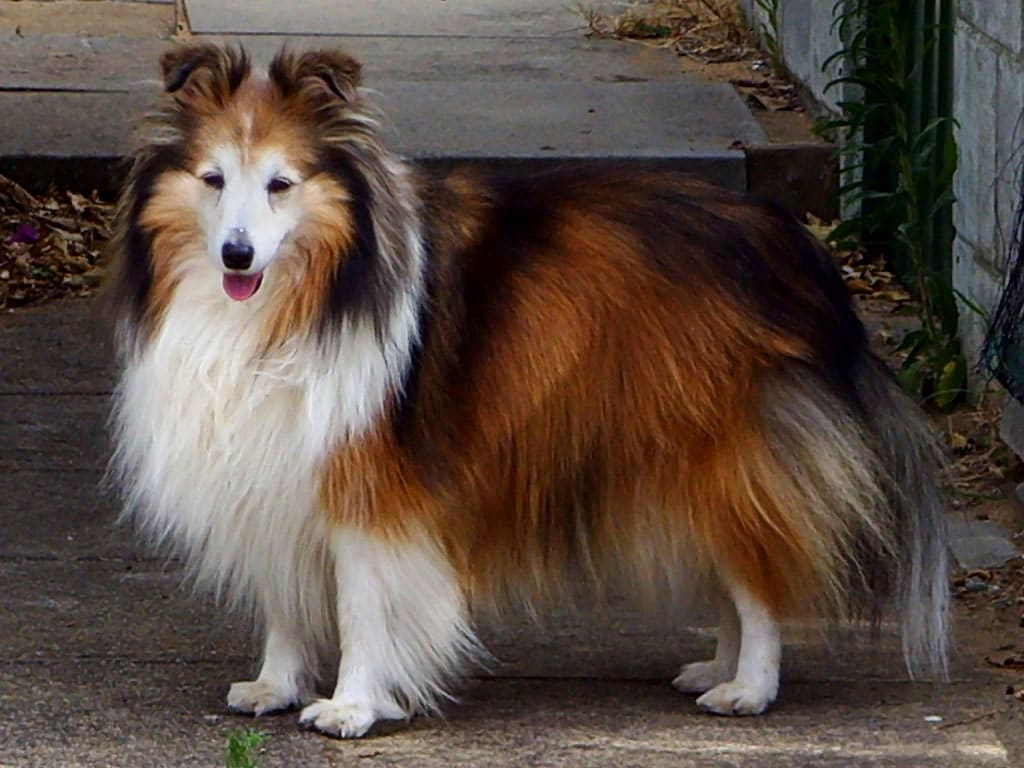
    The Sheltie they have a double mantle, What makes this breed peleche much more than other dogs. Long hair covering the thick and soft layer base, is repellent to water, while the base layer provides relief from hot and cold.

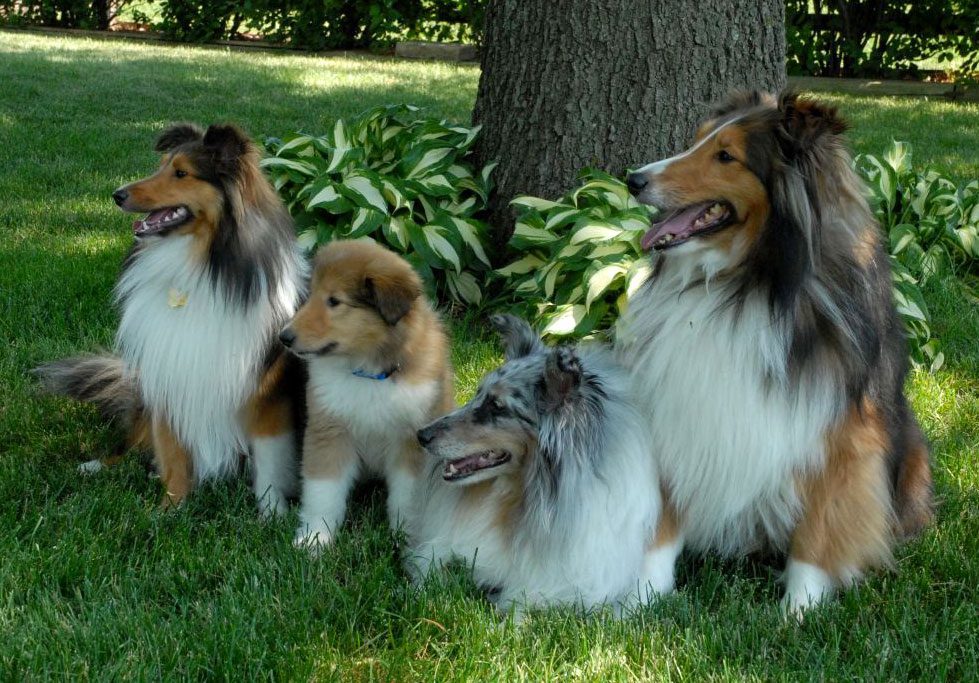
    There are three main colors: Sable, It ranges from the Golden to mahogany; Tri-color, formed by the black, White and Tan, and blue mirlo, composite grayscale, white, black and Tan.

    black and white: it is less common but still acceptable.

    Sand: the best-known color, dominates over other colors. The shadow Sabre, or mahogany can sometimes be confused with the Sheltie tricolor because of the large amount of dark shading in their coats. Another name for him Sheltie "shading", is trifactorado sable and white. This name comes from the mixture of a tricolor and a sable and white. Another acceptable but less common color is the Sable Blackbird., that it can sometimes be difficult to distinguish between the regular sable after puppyhood. The Sable merle has patches of dark brown on a light brown background compared to the black and grey blue Merle.

    There are other two colors that are a bit rare, which are unacceptable in the ring. The White Color-headed (majority of white with the head "normally" marked), It is the product of two dogs crossed white facotrados. Double Merle, the product of the crossing of two Sheltie blue merle, they can be crossed but have a high incidence of deafness or blindness than other colors.

    The ideal height at the cross, in males 37,5 cm.. The females. 35,5 cm.. One greater diversion of 2,5 cm above or below these measures is regarded as highly undesirable.

    Character and skills

    It is an excellent companion dog, highly loyal. It is joyful, intelligent and always ready to obey. The Sheltie is love, loyal and affectionate with the family and of course, on the sidelines, with strangers; for this reason the Sheltie must be socialized. Some may be very reserved. This breed gets along very well with children if they are raised with them from a young age.; However, its small size makes it easy for a child to accidentally harm them, This monitoring is necessary. Well consider bringing an adult Sheltie for a House with young children, they may not be compatible.

    Some Sheltie tend to show a similar to a Terrier personality that tends to be hyperactive, and always ready, However this temperament is not sanctioned in the breed standard. Some may be shy, but this temperament is specifically discouraged by the standard. The trend towards shyness, It can be reduced with proper socialization. The average Sheltie is an excellent watch dog, giving alarm barks when a person is at the door or pass a car on the street.

    The herding instinct is strong in many Sheltie. Love to chase and pasture including, squirrels, ducks, pigeons and children. The Sheltie love run in large open areas.

    They normally love to play. They are better with a sensitive owner, but firm. The Sheltie is, first and foremost, a smart pastor and love to keep them busy, Although his level of activity, usually, It coincides with the level of its owner. As they are very intelligent, they are highly trainable. Lack of exercise and intellectual stimulation, It can lead to undesirable behaviors, including excessive barking, phobias and nervousness. Fortunately the annoying behaviors may decrease largely by an hour of exercise to make the dog with its owner.

    in your category, the breed dominates Dog Agility competition. They also look at obedience competition, Flyball, Grazing, Tracking and proof of talent.

    It is a very intelligent dog, according to Dr.. Stanley city, expert on animal intelligence. The Sheltie is one of the brightest dogs occupying the position number 6 in the Ranking of 132 evaluated races. His research determined that an average Sheltie could understand a new command in less than 5 repetitions and would obey the command the first time the 95% of the times or more.

    Health

    Similar to the Rough Collie, There is a tendency to inherit malformations and diseases in the eye. Each puppy should have his eyes examined by a qualified eye veterinarian. Some lines may be susceptible to hypothyroidism, epilepsy, Hip Dysplasia, or skin allergies. The life expectancy of the Sheltie is between 10 and 15 years, Although some in some it may be more, and in others may be less.

    Von Willebrand disease is an inherited bleeding disorder. The Sheltie breed, affected dogs, as a general rule, they do not live long. The Sheltie carry type III Von Willebrand, which, It is the most severe of the three levels. There are DNA tests that were developed to find the disease in dogs Sheltie. It can be done at any age and will showcase one of the following results: affected, carrier or affected not. The Sheltie may also suffer from hypothyroidism, It is the low functioning of the thyroid gland. Clinical symptoms include, loss of hair, on low weight and faintness.

    Although small breed dogs are unlikely to be affected by hip dysplasia, It has been identified in some specimens of Sheltie. Occurs when the head of the femur and the acetabulum do not fit correctly, This causes pain and/or lameness. Hip Dysplasia is thought to be genetic; Many breeders sent to test their dogs to certify that they are free from this.

    Characteristics "Shetland Sheepdog"

    Coexistence is important that you have with your new friend. Before considering the acquisition of a dog of the breed "Shetland Sheepdog" you know certain factors. Not all breeds of dogs are apt to live in an apartment, you must take into account his character, their need for exercise, their interaction with other pets, their care and if you have small children, their level of tolerance towards them.

    Adaptation โ“˜

    4,0 of 5 stars (based on 1 review)

    friendly dog โ€‹โ€‹โ“˜

    3,0 of 5 stars (based on 1 review)

    hair loss โ“˜

    4,0 of 5 stars (based on 1 review)

    Affection level โ“˜

    4,0 of 5 stars (based on 1 review)

    Need for exercise โ“˜

    4,0 of 5 stars (based on 1 review)

    Social need โ“˜

    4,0 of 5 stars (based on 1 review)

    Home โ“˜

    3,0 of 5 stars (based on 1 review)

    Toilet โ“˜

    3,0 of 5 stars (based on 1 review)

    Friendly with strangers โ“˜

    3,0 of 5 stars (based on 1 review)

    barking โ“˜

    5,0 of 5 stars (based on 1 review)

    Health โ“˜

    5,0 of 5 stars (based on 1 review)

    Territorial โ“˜

    3,0 of 5 stars (based on 1 review)

    Cat friendly โ“˜

    3,0 of 5 stars (based on 1 review)

    Intelligence โ“˜

    5,0 of 5 stars (based on 1 review)

    Versatility โ“˜

    4,0 of 5 stars (based on 1 review)

    Child friendly โ“˜

    5,0 of 5 stars (based on 1 review)

    Surveillance โ“˜

    2,0 of 5 stars (based on 1 review)

    joy โ“˜

    4,0 of 5 stars (based on 1 review)

    Type and recognitions:

    • FCI CLASSIFICATION:
    • Group :
    • Section : . .

    Federations:

    • FCI – Group 1 Herding dogs, Section 1 Sheepdogs โ“˜
    • AKC – PASTORAGE โ“˜
    • ANKC – Group 5 (Working dogs) โ“˜
    • CKC – Group 5 (Pastoral) โ“˜
    • โ€‹KC – Pastoral โ“˜
    • NZKC – Work โ“˜
    • UKCScenthounds โ“˜

    FCI breed standard "Shetland Sheepdog"

    Origin:
    Scotland, United Kingdom

    Date of publication of the valid original standard:
    19.08.2013

    Use:

    Shepherd dog


    General appearance:

    The Shetland Sheepdog is a small-sized, long-haired working dog, Of great beauty, no signs of heaviness or coarseness, free and graceful action. Its structure must be symmetrical so that no part of its body appears disproportionate.
    The fur, very abundant mane and bib, the beauty of the head and the sweetness of the expression combine to present the ideal specimen.

    IMPORTANT PROPORTIONS;
    The skull and muzzle must be the same length, the balance point being the internal angle of the eye.
    Slightly longer from point of shoulder to point of croup than height at withers.


    Behavior / temperament:

    It is an alert dog, delicate, Intelligent, strong and active. Affectionate and loyal to his master, reserved with strangers, but never nervous.

    Head:

    The head should be refined and elegant without exaggeration; viewed from above or from the side should be in the shape of a long truncated wedge, that is refined from the ears to the truffle. Width and depth of the skull must be proportionate to its length and the length of the muzzle. It should be considered in conjunction with the size of the dog.

    Cranial region:
    • Skull : Flattened, moderately wide between the ears, without showing any occipital protuberance. The upper line of the skull is parallel to - the upper line of the snout.
    • Depression links ( Stop) : Light, but defined.

    facial region:

    The characteristic expression is obtained from the perfect harmony and combination of the skull and snout, of the form, the color and placement of your eyes and the correct position and bearing of your ears.

    • Truffle : black.
    • Snout : Well rounded.
    • Lips : Blacks, firm.
    • Jaws / teeth : Jaws of equal length, net and strong, well developed lower jaw. Healthy teeth with perfect scissor bite, regular and complete, that is to say that the internal face of the maxillary incisors is in close contact with the outer side of the lower incisors and placed at right angles to the jaws. It is highly desirable that the denture contains 42 properly placed teeth.
    • Cheeks : Flat, bind gently with the muzzle.
    • Eyes : Are medium-sized, almond shaped and placed in an oblique position. Color should be dark brown, except in the case of merle specimens, in which one or both eyes may be blue or streaked blue. The rims of the eyes should be black.
    • Ears : Small, moderately wide at the base, placed fairly close to each other at the top of the skull. When the dog is at rest, they are thrown back; When it is attentive it brings them forward and carries them semi -erect with the fallen tips forward.

    Neck:

    Muscular and well arched, long enough to wear your head proudly.

    Body:

    • Back : Straight, with a delicate curvature.
    • Rump : Gradually descends towards the hind limbs.
    • Breast : Deep, descends to the elbows. The ribs are well sprung, but taper in the lower half to allow free movement of the forelimbs and shoulders.

    Tail:

    Has a low implantation, vertebrae gradually decrease in size towards the tip, which reaches at least the hocks. It is provided with abundant hair and has a slight upward curvature. When the dog is moving it can be carried slightly raised, but never on the back and curled.

    Tips

    FORELIMBS

    Forelimbs appear straight when viewed from the front; they are muscular and well proportioned with strong but not heavy bone.

    • Shoulder : The shoulder blades should be tilted, separated in the cross region only by the vertebrae, and should slope outward to allow for the desired bowing of the ribs. The shoulder joint must be well angulated.
    • Arm : Arm and scapula should be approximately the same length.
    • Elbows : The humerus-radio-cubital joint (elbow) is equidistant from the ground to the region of the cross.
    • Metacarpus : Strong and flexible.

    HINDQUARTERS

    • Thigh : Wide and muscular; the femur should join the pelvis at a right angle.
    • Knee : The femoro-tibio-patellar joint must have a marked angulation.
    • Hock : crisp, angled, well descended. With strong bones. Viewed from behind they should be straight.
    • Pies : Oval, with strong pads. Fingers arched and together.

    Movement:

    Of agile movement, reunited and funny; with a driving due to the posterior members that cover the maximum extension with the minimum effort. Ambling movement is highly undesirable, march across the limbs, swinging the body, as well as the rigid and important vertical displacement.

    Mantle

    HAIR:

    • The coat is double: the outer coat is long hair, rough and smooth. The undercoat is short haired, smooth and dense. The mane and chest have abundant hair. The forelimbs have abundant fringes. Hind limbs, on the hocks, they are covered with very abundant hair, while below them, the hair is shorter. The coat should accommodate the body and not dominate or change the shape of the dog. The hair on the face is short. Short-haired specimens are highly undesirable.

    COLOR:

    • Cebellina : Light or dark. All shades are admitted, from pale gold to dark mahogany; but those tones must be of an intense tone. Wolf and gray colors are undesirable.
    • Tricolor : Intense black color on the body, and in them bright fire colored spots are preferred.
    • Blue Merle : Light silver blue, splashed or mottled with black. Deep tan stains are preferred, although its absence should not be penalized. Large black markings and slate or rust-colored markings on the outer or inner coat of hair are highly undesirable. The overall appearance should be blue.
    • Black and white and black and tan : They are also recognized colors.
      White spots may exist (except in the black and tan specimens) on the forehead, the collar and the sill, the chest, the limbs and the tip of the tail. All or some white spots are preferable (except in the black and tan specimens), but its absence should not be penalized. White spots on the body are highly undesirable.


    Size and weight:

    Ideal height at the withers :

    • Males : 37 cm.
    • females : 35,5 cm.

      One greater diversion of 2,5 cm above or below these measurements is considered highly undesirable.


    Fouls:

    Any deviation from the aforementioned criteria is considered a fault, and the severity of this is considered in proportion to the degree of the deviation to the standard and its consequences on the health and well-being of the dog.


    FALTAS DESCALIFICANTES

    • Aggressive or fearful dog.

    Any dog โ€‹โ€‹showing clear signs of physical or behavioral abnormalities must be disqualified..


    N.B.:

    Males should have two normal-appearing testicles fully descended into the scrotum..
    Only functionally and clinically healthy dogs, with the typical conformation of the breed, They should be used for parenting.

    DATE OF PUBLICATION OF THE ORIGINAL VALID STANDARD: 19.08.2013.
    TRANSLATION: Lic. Valverde Calvo (Costa Rica) and Jorge Nallem (Uruguay).
    Information obtained fromhttps://www.fci.be/es/nomenclature/PERRO-PASTOR-DE-SHETLAND-88.html

    Source: F.C.I - International Cynological Federation

    Alternative names:

    1. Shetland Collie, Dwarf Scotch Shepherd, Sheltie (English).
    2. Shetland, Sheltie (French).
    3. Sheltie (German).
    4. Sheltie (Portuguese).
    5. Miniature Collie, Sheltie (espaรฑol).

    โ–ท The world of Pets: Dogs, cats, birds, reptiles, amphibians

    Rough Collie
    Gran Bretaรฑaa FCI 156 . Sheepdogs

    The Rough Collie he is a very sweet and affectionate dog, maybe a little shy.

    Content

    History

    The Rough Collie is one of the Collie breeds medium-sized and long-haired who was born in Scotland in the early 1800.

    As he Rough Collie as the Smooth Collie , they are descended from a variety of grazing dogs from Scotland and Wales.

    • The variety of Scotland, It is characterized for being a strong dog, large, aggressive, raised to care for flocks of sheep in the Highlands, an all terrainโ€ฆ
    • The variety of Wales, However, was a small dog, agile, home and cuddlier, and also pastor of goats.

    From the crossing of these two varieties of shepherd dogs are born the precious Collie who we call today Rough Collie and Smooth Collie.

    After the industrial revolution, owning a dog became fashionable, people began to acquire copies and began to expand and cross with other breeds. Y, there is a theory that says that those first Collie, were crossed with a Borzoi (Russian Hunting Sighthound) in order to obtain a more โ€œnobleโ€ head (finest), what is today one of the true characteristics of the Rough Collie. But in reality, is not known conclusively if it crosses with the Borzoi It took place on the main stream of the race.

    But fashions change as the wind blows... Like for example, When the Queen Victoria acquired a Border Collie, After seeing one in the Balmoral Castle, the Collie they became something like a fashion item.

    The issue is that, the Collie they were distributed around the map and continuous reproduction in order to improve the breed for exhibitions, He carried that drastically changed the appearance of the dogs, in the decade of 1960, the Collie was much higher than today.

    At the first dawn of the breed the dogs were more robust and resistant, they could travel great distances throughout the day and conserve energyโ€ฆ

    Although many theories try to explain them, Unfortunately, the exact origins of the Collie are veiled in darkness. The race has been the subject of much research and speculation. The origin of the word "Collie" is as uncertain as information about the origin of the breed. In the century 18, the natural home of Rough Collie I was in the Highlands of Scotland lands, where it had been used for centuries as a herding dog. Dogs were bred with great care in order to assist their masters in grazing and the monitoring of their flocks.

    In the UK the Rough Collie no longer used for cattle grazing, After having been replaced by the Border Collie. Although in the United States and several European countries, there has been a revival in the use of Collie like a working and performance dog, already not are seen as old.

    The Club Collie of America was founded the 26 in August of 1886, What makes it one of the oldest clubs in the race. The original club's goal was "the furtherance and improvement of the breed of Border Collie.". From there the first official standard of the breed was drawn up Collie. The celebration of the centenary of the club took place in 1986. Y, Although a lot of time has passed and many things have changed... the objective of the Club remains the same. The Collie Club in England dates of 1881 (Although officially, The American club is oldest...).

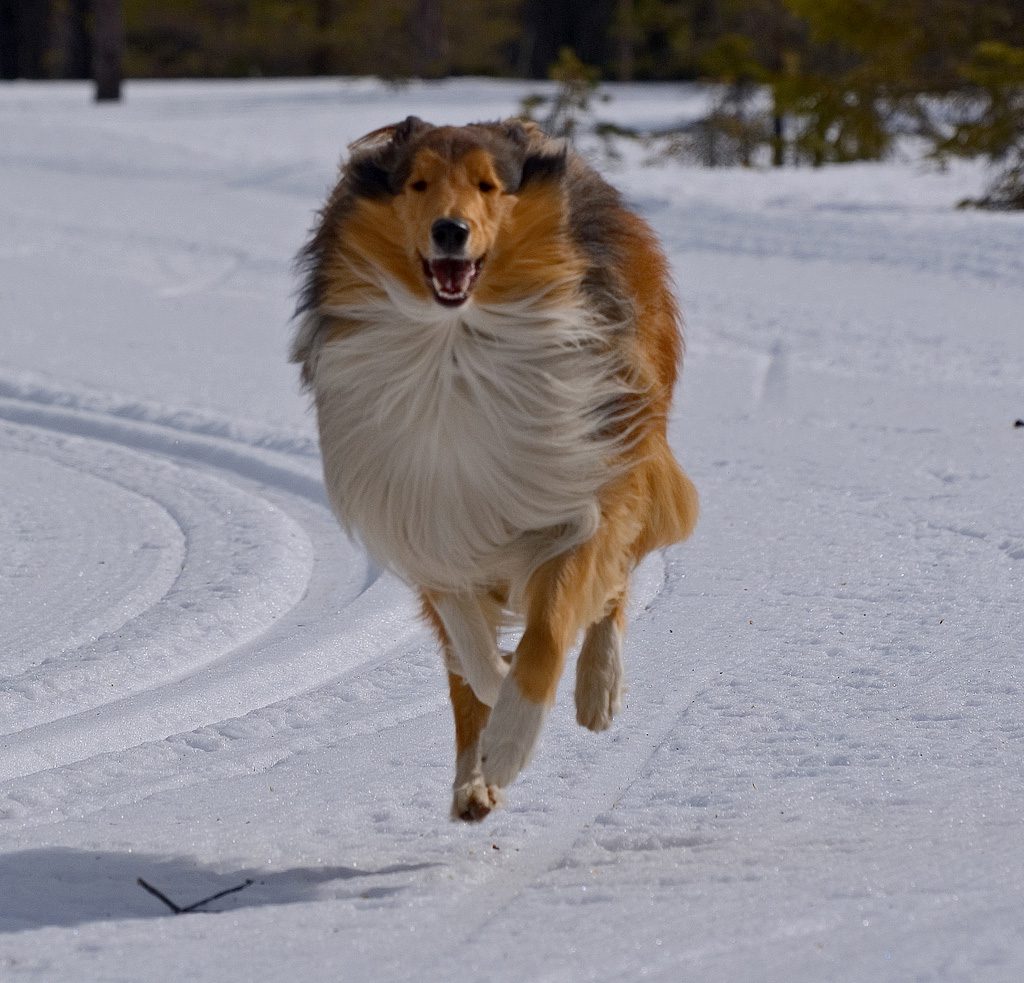
    The Rough Collie was exhibited for the first time in 1860 in the Birmingham, England, at the dog show ยซScotch Shee-pdogยซ. In 1879 the first Rough Collie it was imported to England. And from there are the pillars of the race.

    With the turn of the century, this breed was already in a state of continuous development. This dog continued to flourish in England. As a result of imports, the race progressed rapidly between the years 1900 to 1920. These dogs built the foundation on which the Rough Collie of today and paved the way for the rise of the great and famous American dog kennels in the years 1920 and 1930.

    One of them and perhaps the one that catapulted the Rough Collie, He was the author Albert Payson Terhune devoted almost all his life to these dogs. Albert Payson Terhune (21 december 1872 until 18 february 1942) was an American author, Collie dog breeder, and journalist. The public knows him so much for his novels related to the adventures of his beloved Collie, as for its famous hatcheries "Sunnybankโ€, from which the bloodlines of specimens of Rough Collie who live among us today.

    Physical characteristics

    One of the characteristic features of the Long-Haired Collie is its delicately pointed head and snout.. It resembles a wedge decline gently from the ears until the black nose. The snout is rounded and never square. The eyes are of medium size and Pacific way. The ears are supposed to be semi erect, folded in the upper third. In appearance they are very similar to the dog Shetland Sheepdog, but larger.

    Regarding the coat of hair of the Rough Collie, the admitted colors are:

    • Sable color: Where sable or grey goes from Pale to mahogany.
    • Blackbird: the blue Merle, It is a mottled grey.
    • Tricolor: It is mainly Tan.

    All have white areas, in the neck, the back of the legs, and usually the tip of the tail. Some may have white fringes on the face. The American Kennel Club supports white, where is the dog predominantly white with spots of the sable color, Tricolor and blue Merle, in the head and patches in the body as a.

    It has dual layer, the woolly, dense subpelo, It is covered by a layer of hair is long and rough exterior with a remarkable necklace around the neck, feathers on the legs, a skirt in the abdomen, and a steering wheel in the rear quarters.

    The outer layer needs brushing frequent, careful to keep it free from spikes and thorns, he has long hair and it looks like Velcroโ€ฆ Shearing it is very damaging to the skin and some do not grow back a significant amount of hair after being shaved.

    The desired size and weight vary between the breed standards of the different kennel clubs., but trying to balance the measures... a Rough Collie male measures 55,8 to 66 cm in height to the cross, females tend to be a 5 shorter centimeters. Males weigh in 20 to 34 Kg and females are generally lighter (of 2 to 5 fewer kilos).

    Character and skills

    The Rough Collie it is a dog that never shows nervousness or aggression, and they are generally good with children and other animals. But, They must be well socialized to prevent shyness. Although they are medium-sized to large dogs, It adapts very well to life in small apartments, because of his quiet nature.

    Like many dogs grazing, the Rough Collie can be very vocal (robberโ€ฆ), and in some cases it is difficult to correct them. They are very loyal and excellent with children, provided have been well socialized and trained. They are always eager to learn and respond better to a gentle hand. They enjoy human company and the warmth of home.

    To rememberโ€ฆ The character of โ€œLassieโ€ created by the British author Eric Knight was a Rough Collie, It is probably the most famous dog in the world, fictional character who participated in various films, TV series and books for years.

    That character inspired screenwriter Hugo Butler in the movie โ€œLassie Come Homeโ€, under the direction of Fred M. Wilcox, in the year 1943. Film that definitively launched the beautiful Rough Collie.

    Health ยซLong-Haired Collieยป

    All dogs have the potential to develop genetic health problems, just as all people have the potential to inherit a particular disease. Run, do not walk, from any breeder that does not offer a health guarantee on puppies, to tell you that the breed is 100 percent healthy and has no known problems, or tell you that your puppies are isolated from the main part of the home for health reasons. A reputable breeder will be honest and open about the breed's health problems and the incidence with which they occur in their lines.. The Collie you are prone to a host of health problems. Here is a brief summary of what you should know.

    Collies can be affected by a number of genetic health problems, including multiple drug sensitivities due to a mutation in the multidrug resistance gene (MDR1). Dogs with this mutation can have serious or fatal reactions to a number of common drugs., such as preventive ivermectin against heartworm and loperamide, a human antidiarrheal agent that is sometimes used in dogs. Detecting these diseases not only in the parents of your puppy, but also in your dog, it's a life-saving need. The test is simple and only requires a cheek smear.; information on how to test your dog can be found here.

    Eye problems are also a serious concern in the breed. One of the most intractable is progressive retinal atrophy (ARP), but luckily the gene for detection was recently identified and a genetic screening test will be available as soon as this year, after which all breeders should have ARP clearances on all their breeding dogs.

    The eye abnormality Collie is a group of mild to severe eye disorders. They are present at birth, and can be detected in puppies between five and eight weeks of age. Your puppy's breeder should examine the eyes of all dogs in the litter before selling them.. Have a Certified Veterinary Ophthalmologist regularly examine your Collie's eyes. Reputable Collie breeders don't just check their breeders' eyes, but also those of all puppies offered for sale. Do not buy a Collie from a breeder who has not examined puppies' eyes or does not offer a certificate of their eye status.

    Unfortunately, the Rough Collie they can also be affected by a number of health conditions for which there are no screening tests. These include epilepsy, as well as a condition called bloating, in which the stomach expands with air. This can become the most serious condition, gastric torsion, if the stomach twists on itself, cutting off blood flow. Gastric torsion suddenly hits, and a dog that was fine a minute can die a few hours later. Watch for symptoms such as restlessness and gait, babeo, pale gums and lip licking, try to vomit but without bringing out anything, and signs of pain. Gastric torsion requires immediate veterinary surgery, and most dogs that have bloated once will bloat again. That means it's wise to opt for the procedure known as "gastric torsion.", which will prevent the stomach from twisting in the future.

    Not all of these conditions are detectable on a growing puppy, and it is impossible to predict if an animal will be free of these diseases, so you need to find a reputable breeder who commit to raise healthier animals possible. Must be able to produce independent certification that the dog's parents (and grandparents, etc.) have been examined for common defects and considered healthy for breeding. That's where health records come in..

    Careful breeders screen their breeding dogs for genetic diseases and breed only the healthiest and best looking dogs, but sometimes mother nature has other ideas and a puppy develops one of these diseases despite good husbandry practices. Advances in veterinary medicine mean that in most cases dogs can still live a good life. If you are going to have a puppy, ask the breeder about the ages of the dogs in their lines and what they died of.

    Remember that after you have welcomed a new puppy into your home, has the power to protect you from one of the most common health problems: the obesity. Keeping a Collie at the right weight is one of the easiest ways to extend its life.. Make the most of your preventive skills to help ensure a healthier dog for life.

    Grooming ยซLong-Haired Collieยป

    Both varieties of Collie have double layer, which means they have a thicker, softer inner layer and a thinner, flatter outer layer. The Rough Collie has a beautiful, voluminous coat that seems to need a lot of grooming, but it's not like that. Thorough brushing every one to two weeks will keep the coat healthy and tangle free. The coat of the Smooth Collie it's a piece of cake. Brush it weekly with a rubber brush or soft brush to remove dead hair. Your Collie should not need a bath more than once a month..

    The Rough Collie they go through a heavy shedding twice a year, floating dumb call. During this time, brush daily to keep all hair down under control. The Smooth Collie doesn`t blow his coat, but throughout the year he loses more hair than he Rough Collie.

    The rest is basic care. Trim nails as needed, usually every few weeks. It shouldn't take so long that you can hear the click on the floor.. Brush your teeth daily to improve general health and breath.

    Characteristics "Rough Collie"

    Coexistence is important that you have with your new friend. Before considering the acquisition of a dog of the breed "Rough Collie" you know certain factors. Not all breeds of dogs are apt to live in an apartment, you must take into account his character, their need for exercise, their interaction with other pets, their care and if you have small children, their level of tolerance towards them.

    Adaptation โ“˜

    4,0 of 5 stars (based on 1 review)

    friendly dog โ€‹โ€‹โ“˜

    5,0 of 5 stars (based on 1 review)

    hair loss โ“˜

    5,0 of 5 stars (based on 1 review)

    Affection level โ“˜

    4,0 of 5 stars (based on 1 review)

    Need for exercise โ“˜

    5,0 of 5 stars (based on 1 review)

    Social need โ“˜

    5,0 of 5 stars (based on 1 review)

    Home โ“˜

    1,0 of 5 stars (based on 1 review)

    Toilet โ“˜

    3,0 of 5 stars (based on 1 review)

    Friendly with strangers โ“˜

    3,0 of 5 stars (based on 1 review)

    barking โ“˜

    5,0 of 5 stars (based on 1 review)

    Health โ“˜

    4,0 of 5 stars (based on 1 review)

    Territorial โ“˜

    5,0 of 5 stars (based on 1 review)

    Cat friendly โ“˜

    5,0 of 5 stars (based on 1 review)

    Intelligence โ“˜

    4,0 of 5 stars (based on 1 review)

    Versatility โ“˜

    5,0 of 5 stars (based on 1 review)

    Child friendly โ“˜

    5,0 of 5 stars (based on 1 review)

    Surveillance โ“˜

    3,0 of 5 stars (based on 1 review)

    joy โ“˜

    5,0 of 5 stars (based on 1 review)

    Type and recognitions:

    • FCI CLASSIFICATION:
    • Group :
    • Section : . .

    Federations:

  • FCI โ“˜, AKC โ“˜, ANKC โ“˜, CKC โ“˜, โ€‹KC โ“˜, NZKC โ“˜, UKC โ“˜

  • FCI breed standard "Rough Collie"

    Origin:
    Scotland, United Kingdom

    Date of publication of the valid original standard:
    08.10.2012

    Use:

    Shepherd dog.


    General appearance:

    Appears as a dog of great beauty, standing with impassive dignity with no part out of the proportions of the whole. The physical structure with lines of strength and activity, without being rough or with coarse features.

    Your expression is the most important. This is obtained by a perfect balance and combination of the skull and the muzzle., size, shape color and placement of the eyes, correct position and bearing of the ears.


    Behavior / temperament:

    Friendly disposition without traces of nervousness or aggressiveness. A great companion dog, friendly, happy and active. Good with children and other dogs.

    Head:

    The properties of the head are of great importance and must be considered in proportion to the size of the dog. Seen from the front or in profile the head resembles a well-chiseled blunt wedge with smooth exterior lines.. The sides taper gradually and smoothly from the ears to the end of the black nose.. Profile view, The top of the skull and the top of the snout form two right parallel lines of equal length divided by the stop. A midpoint between the inner corner of the eyes (which is the center of a correctly placed stop) is the center of balance in the length of the head. The depth of the skull from the eyebrow to the bottom of the jaw should never be excessive. (Total depth).

    Cranial region:
    • Skull: Plano.
    • Depression links (Stop): Slight but noticeable.

    facial region:

    • Truffle: always black
    • Snout: Smooth termination, blunt snout well rounded, never square. Not pointed.
    • Jaws/Teeth: Strong jaws, well-defined lower jaw. Good size teeth. A perfect, full and regular scissor bite, that is to say, incisors
      The upper ones cover the lower ones in close contact and are set squarely in relation to the jaws..
    • Cheeks: Cheek bones not prominent.
    • Eyes: Very important feature giving a smooth expression. Medium-sized (never too small), placed somewhat obliquely, almond-shaped and dark brown in color, except in the cases of the blue blackbird where the eyes frequently (one or both or part of one or both) are blue or stained blue.
      Smart expression with a quick and alert gaze when attentive.
    • Ears: Small, not too close together at the top of the skull, not too far apart. At rest the bearing is backwards but when alert it carries them forward with a semi-erect bearing, This is, about two-thirds of the ear erect and the upper third forward naturally, below horizontal.

    Neck:

    Muscular, strong, long Middle, well arched.

    Body:

    • Back: companies.
    • Pork loin: Slight elevation.
    • Breast : Deep, somewhat wide behind the shoulders, well arched ribs

    Tail:

    Long reaching at least to the hock joint. Low carriage when at rest but with a slight upward curve at the end. Can be worn happily when excited but never on the back.

    Tips

    PREVIOUS MEMBERS:

    • Shoulder: Leaning and well angulated.
    • Elbows: Never turned in or out.
    • Forearm: Straight and muscular forelimbs with moderate round bone structure.
    • Previous feet: Oval, well padded ear cushions. Toes arched and close together.

    LATER MEMBERS:

    • Thigh: Muscular.
    • Knee: Well angled.
    • Leg: Clear and sinewy.
    • The Hock joint: Very low and strong.
    • Hind feet: Oval, well padded ear cushions. Toes arched and close together. Somewhat less arched than the previous ones.

    Movement:

    Distinctive feature of the breed. A correct dog never turns his elbows out, moves with feet earlier comparatively closer together. Braid, crossing or rolling is highly undesirable. Hindquarters from the hock joint to the floor, seen from behind they should be parallel and not too tight, Seen on side, the movement is smooth. Powerful hind limbs with full thrust. You want a reasonable long stride and should be light and appear effortless. Absolute correctness is essential.

    Mantle

    Fur: Mark the outer line of the body, very profuse. The outer hair is straight and hard to the touch, soft inner hair, plush and very tight usually covering the skin. Very abundant mane and necklace, mask and smooth face, ears smooth to the tip but with a little more hair towards the base. Forelimbs well covered with long hair, hindlimbs on hocks profusely covered with hair but smooth below hock joint. Very abundant hair on the tail.

    • Color: Cebellina, sable and white, tricolor and blue blackbird.
    • Cebellina: and shaded from light gold to dark mahogany or nuanced sable. Highly undesirable is a light straw or cream color.
    • Tricolor: Predominantly black with deep tan markings on limbs and head. An oxide dye on the outer hair is highly undesirable.
    • blackbird blue: Predominantly clear, silver blue, splashed or marbled with black. Intense fire marks are preferred but their absence should not be penalized. Big black markings, Slate color or rust tones on both the exterior and interior hair are highly unwanted.

    All should have the typical white Collie markings to a greater or lesser degree..

    The following brands are preferable: White collar, in whole or in part, white bib, limbs and feet, white tail tip. A white list on the muzzle or skull or both.

    Tpredominant white or white ear is highly undesirable.


    Size and weight:

    Height to the cross:

    • Males: 56 - 61 cm..
    • females: 51 - 56 cm..


    Fouls:

    Any deviation from the aforementioned criteria should be considered as a fault and the severity of this is considered to the degree of the deviation to the standard and its consequences on the health and well-being of the dog and the ability of the dog to perform its traditional task.

      FALTAS DESCALIFICANTES:

      โ€ข Aggressiveness or extreme shyness.
      โ€ข Any dog โ€‹โ€‹showing clear signs of physical or behavioral abnormalities.


    N.B.:

    โ€ข Males must have two normal-appearing testicles fully descended into the scrotum..
    โ€ข Only functionally and clinically healthy dogs, with the typical conformation of the breed, should be used for parenting.

    The latest changes are in bold.

    Source: F.C.I - International Cynological Federation

    Alternative names:

    1. Collie, Scottish Collie, Long-Haired Collie, English Collie, ยซLassieยป dog (English).
    2. Colley ร  poil long, berger รฉcossais (French).
    3. Rough Collie, LANGHAARIGER SCHOTTISCHER SCHAFERHUND (German).
    4. Rough collie (Portuguese).
    5. Pastor escocรฉs de pelo largo (espaรฑol).

    creators of Rough Collie in Spain


    See list of creators 🔎

    Breeders of the breed "Rough Collie"

    Criadores de Collie de Pelo Largo o Rough Collie en Espaรฑa

    Where can we find out...

    Collie Club of Spain

    Email: infocollieclub@gmail.com

    Collie breeders list of hair long or Rough Collie recommended and recognized by the Collie Club of Spain:

    Other breeders…

    • Rough Collie Canary (Tenerife). Tel: 697799449.

    Photo: ourworldofdogs.com

    โ–ท The world of Pets: Dogs, cats, birds, reptiles, amphibians

    Mudi
    Hungrรญa FCI 238 - Sheepdogs

    Mudi

    The Mudi is a single master dog, and a rare breed outside its native Hungary.

    Content

    History

    The Mudi is the name of a canine breed of herding dog rare, originally from Hungary.

    According to existing documentation, some currents maintain that the Mudi was formed in Hungary spontaneously, between the 19th and 20th centuries.

    Others reply that the Pumi, the Puli and the Croatian Sheepdog, are close relatives of Mudi.

    Are what, they are their ancestor and the form in which it existed, What is known for sure is that the Mudi, has survived this time thanks to the appreciation of the shepherds who praise his innate ability in which protection of livestock with regard.

    In the year 1936 wrote the first breed standard, naming it Mudi.

    The herd book is still open, that means that more and more dogs of this type, they live in their homeland, incorporated into breeding records.

    The Mudi, is currently a "rare breedโ€ there are few specimens in their native country, and outside of Hungary if there isโ€ฆ, very few inches.

    In Hungary they have been fighting for years to keep the breed alive. As it has been the case with many breeds of dogs pastors, their copies have declined to the rhythm of the socio-cultural advancement.

    Before, herds of cattle were numerous and sheepdogsโ€ฆ, essential, This situation has changed a lot from time to time and along the way we have lost many canine breeds specialized in working with cattle..

    Physical characteristics

    Usually weigh between 8 and 13 kg and measure between 38 and 48 centimeters to the cross.

    The mantle is medium wavy or curly, with short hair on the face and legs. The colors accepted are black, Ash, brown, white, Fawn and merle.

    The Mudi can have the tail short birth or birth with them long and cut them.

    It is a very versatile dog, You can be on a farm, You can hunt, exterminate rodents, make guardian, dog herds and as dog boyero.

    Although it is a much less popular breed than the Puli and the Komondor in your country of origin, owners always recognize his superiority due to his versatile talent and always friendly and working arrangement.

    • Fur: varies by region. The head and limbs are covered in short hair, straight and smooth. On other parts of the body there is hair of a length between and cm, dense, undulating and shiny. the undercoat is arranged in spirals and stripes.
    • Color: glossy black or white, but there are also white mantles with black stripes or black ones with white stripes, with medium-sized spots and uniform distribution.
    • Size: 35 to 47 cm..

    The hair of the Mudi, Unlike other dog breeds, has much pigment. Surfaces devoid of hair, They must be totally black, However, the pads and nails are slate grey.

    Character and skills

    The Mudi is a very active race. If you live in the city, you need to take a brisk walk every day, or run.

    It also, it would be beneficial for his health if he had an outdoor area where he can run to his heart's content, they need a lot of exercise to stay healthyโ€ฆ and happy.

    To the Mudi She loves to play and Excel in all kinds of sports Canine as the Frisbee, for example.

    Can also compete in the agility, obedience, Rally obedience, Schutzhund, show, flyball, and tracking. It has strong instinct and grazing capacity, with appropriate training, could also compete in grazing trials.

    A Mudi can live in a house doing enough exercise, but always they need ample space to run and play. They are active and they can live, perfectly, in the open air.

    Their life expectancy is around the 14 years.

    Mudi Health

    The Mudi is a generally healthy breed with a life expectancy of 12 to 14 years.

    Health problems seen in the Mudi include epilepsy, Hip Dysplasia, cataract, elbow dysplasia and patellar dislocation.

    If a breeder tells you they don't need to do those tests because they've never had any problems in their lines or because their dogs have been checked out by a vet or if they give any other excuse to skimp on genetic testing of their dogs, leave immediately.

    Careful breeders screen their breeding dogs for genetic diseases and breed only the healthiest and best looking dogs, but sometimes Mother Nature has other ideas and a puppy develops one of these diseases despite good husbandry practices. Advances in veterinary medicine mean that in many cases dogs can still live a good life. If you are going to have a puppy, ask the breeder about the ages of the dogs in their lines and what their cause of death was.

    Remember that after you have welcomed a new puppy into your home, has the power to protect you from one of the most common canine health problems: the obesity. Keeping a Mudi at the right weight is one of the easiest ways to extend his life..

    Kuvasz grooming

    The coat of the Mudi loose the dirt (and the hair, of course) and does not require frequent bathing. A weekly brushing is usually all that is needed and the coat does not need to be trimmed.

    If your Mudi is like most, you will enjoy swimming in a pool, a lake or the ocean. Thereafter, rinsed with fresh water to remove chlorine, algae or salt and restore shine to your coat.

    The Mudi sheds her coat in the spring and doesn't get it back fully until late summer.

    The rest is basic care. Trim nails every few weeks or as needed. brush your teeth often – with a vet-approved pet toothpaste – for good general health and fresh breath.

    Characteristics "Mudi"

    Coexistence is important that you have with your new friend. Before considering the acquisition of a dog of the breed "Mudi" you know certain factors. Not all breeds of dogs are apt to live in an apartment, you must take into account his character, their need for exercise, their interaction with other pets, their care and if you have small children, their level of tolerance towards them.

    Adaptation โ“˜

    5,0 of 5 stars (based on 1 review)

    friendly dog โ€‹โ€‹โ“˜

    3,0 of 5 stars (based on 1 review)

    hair loss โ“˜

    2,0 of 5 stars (based on 1 review)

    Affection level โ“˜

    5,0 of 5 stars (based on 1 review)

    Need for exercise โ“˜

    4,0 of 5 stars (based on 1 review)

    Social need โ“˜

    5,0 of 5 stars (based on 1 review)

    Home โ“˜

    3,0 of 5 stars (based on 1 review)

    Toilet โ“˜

    2,0 of 5 stars (based on 1 review)

    Friendly with strangers โ“˜

    3,0 of 5 stars (based on 1 review)

    barking โ“˜

    4,0 of 5 stars (based on 1 review)

    Health โ“˜

    3,0 of 5 stars (based on 1 review)

    Territorial โ“˜

    3,0 of 5 stars (based on 1 review)

    Cat friendly โ“˜

    3,0 of 5 stars (based on 1 review)

    Intelligence โ“˜

    5,0 of 5 stars (based on 1 review)

    Versatility โ“˜

    5,0 of 5 stars (based on 1 review)

    Child friendly โ“˜

    3,0 of 5 stars (based on 1 review)

    Surveillance โ“˜

    5,0 of 5 stars (based on 1 review)

    joy โ“˜

    5,0 of 5 stars (based on 1 review)

    Mudi Images

    Videos "Mudi"

    Type and recognitions:

    • FCI CLASSIFICATION:Group 1 –> Pastor and Boyeros dogs (except Swiss Cattle Dogs)
      / Section 1 –> Pastor dogs. Without working trial.
    • FCI 238
  • Federations:
    • FCI – Group 1 Herding dogs, Section 1 Sheepdogs โ“˜
    • AKC – PASTORAGE โ“˜
    • FSSโ“˜
    • CKC – Group 7 – Herding dogs โ“˜
    • UKC – Herding dogs โ“˜

    FCI breed standard Mudi

    FCIFCI - Mudi
    Mudi

    Alternative names:

    1. Hungarian Mudi, Canis Ovilis Fenyesi (English).
    2. Mudi (French).
    3. Mudi (German).
    4. Mudi (Portuguese).
    5. Mudi hรบngaro (espaรฑol).

    โ–ท The world of Pets: Dogs, cats, birds, reptiles, amphibians

    Czechoslovakian Wolfdog
    Eslovaquia FCI 332 . Sheepdogs

    Czechoslovakian Wolf Dog

    Not a dog fit for everyone.

    Content

    History

    The Czechoslovakian Wolfdog It has its origin in the crossing experiments between the "Carpathian Wolf" and the German Shepherd carried out in the former Czechoslovak Socialist Republic from 1955 under the supervision of the SR. Karel Hartl, a renowned Czech cynologist and breeder. The scientific objective of these experiments was to determine the characteristics of these hybrids. (physical appearance, behavior, utility, fertility…), while the military tried to create a breed with the strength of the wolf and the docility of the dog, that could be used as an attack dog.

    The first births took place in 1958 at the border guard kennel in Libejovice, in the south of the country. Brita the wolf and the German Shepherd Cezar z Brezoveho Haje gave birth to 5 Puppies: Brent, Berta, Bono, Betty y Bessy.

    Betty was selected to continue the line at the Libejovice kennel, while his sister Berta was sent to the Samorin kennel (now Malacky) with the same goal. Their pups were used as patrol dogs by border guards, confirming that these hybrids were healthy, functional and fertile.

    After this initial success, the Brita Wolf was able to mate again with a new male German Shepherd named Kurt z Vaclavky. Like this, in 1960, Defender, Bigan, Trophy, Bill and Bima were born in the Libejovice kennel. The male Bikar was chosen to be sent to the Pohranicni kennel in Slovakia to continue this second lineage.

    The experiment stopped at 1965, not without some success: hybrids were able to reproduce, socialize with humans and be trained for different tasks. At the end of the experiment, 16 of these dogs remained in the care of the army, While 18 were given to civil breeders.

    Then new lines were created, as..:

    – Astra (female german shepherd dog) and Argo (Carpathian wolf male) in 1968;
    – Lejdy (female Carpathian wolf) y Boyar from Schotterhof (male german shepherd) in 1972;
    – Urta with the Guardian Guard (third generation hybrid female) and Sarik (male Carpathian wolf) in 1974;
    – Xela with the Guardian Guard (third generation female hybrid) and Sarik (Carpathian wolf male) in 1983.

    Name "Czechoslovakian WolfdogยปIt seems to have become common to designate these hybrids already in the decade of 1960, but it wasn't until 1982 that the efforts of Mr.. Karel Hartl were finally officially rewarded when this new breed was recognized by the Czechoslovakian Dog Breeders Committee, the canine organization of reference in the country.

    It developed quite quickly and to 1991 not less than 1552 Czechoslovakian wolfhounds were entered in the national register of pedigree dogs.

    In 1999, the Czechoslovakian Wolfdog was recognized by the Fรฉdรฉration Cynologique Internationale (FCI).

    In the news, are mainly found in Central Europe, but its popularity is growing rapidly in various Western European countries such as Italy, Germany, Spain and France. In France, for example, little more than 3.000 representatives of the breed have registered with the LOF (Book of French Origins) between 2010 and 2016, and the trend is increasing. His growing renown leads him to the gates of 10 Most popular dog breeds in France.

    On the other hand, the Czechoslovak Wolf dog has not actually crossed the English Channel: it is only one of the breeds recognized by the Kennel Club, the British organization of reference, and the FCI only has one approved kennel in the whole country.

    In United States, the AKC (American Kennel Club) partially recognizes it from 2001: their representatives can participate in competitions organized under the aegis of the organization, but they cannot register in the breed dog registry. On the other hand, the UKC (United Kennel Club) fully recognizes it, and has been doing it since 2006. It also, in 2011 an official breed club was established (el Czechoslovakian Vlcak Club of America). There are currently some 200 specimens in american territory.

    Physical characteristics

    It is a dog of strong constitution, medium-sized and rectangular in structure. It is similar to the wolf in constitution, movement, colors, cloak and mask. The head, symmetrical and well muscled, is shaped like a truncated wedge. the eyes are small, macaroons, amber, with well-attached eyelids.
    Ears are erect, thin, triangular and short. The tail is implanted high, but it hangs straight. When the dog is excited, lifts it up in a sickle.

    Fur: The coat is straight and adherent. In winter it has a very dense undercoat.
    Color: From yellowish gray to silver gray, with characteristic white mask.
    Size: Males measure at least 65 cm.. the females, minimal 60 cm..

    Character and skills

    The Czechoslovakian Wolfdog he is very devoted to his family, including children. But, their rather dominant nature can be problematic for young people. In any case, it is important to socialize him from an early age and never leave a young child alone with a dog, regardless of race.

    He is also sociable with his companions and other pets who live under the same roof., since he is used to their presence relatively early. On the other hand, woe to the cats, small dogs and other rodents that are unfamiliar to you and would have the bad idea to venture into your territory, or that they will meet during a walk: his hunting instincts were then all chances to regain the advantage.

    It also, he is as affectionate with his entourage as he mistrusts strangers: there is also necessary an education and socialization of the puppy started from an early age to avoid any later problem.

    Having a highly developed sense of hierarchy, He must face as soon as possible with his "herd leader", who should show their dog his place in the family hierarchy . The Czechoslovakian Wolfdog he is a dog that cannot stand loneliness, greatly preferring to live in the company of their pack, that is, his family. You are very likely to be unhappy if you have to be alone for long periods of time and are at risk of running away to join your family, or to feel excluded from the "pack" and lose confidence in his master.

    It also, the Czechoslovakian Wolfdog it is a very durable and active breed of dog, able to accompany his master even over very long distances that can exceed even those of a marathon, and whatever the weather conditions. In fact, being able to exercise daily is necessary for your physical and psychological well-being, and allows to avoid the risk of damage caused by the dog . It is an ideal companion for a sports lover who would like to, for example, jogging with your dog , go hiking with your dog or even ride a bike with your dog.. On the other hand, even more than for any other race, your handler should make sure to always be out front and thus show your dog who is the โ€œleader of the packโ€ .

    On the other hand, a person who prefers to spend his free time in front of a screen or immersed in a book is exposed to some difficulties if he thinks about adopting a Czechoslovakian Wolfdog

    It also, by needing space, the latter is not a recommended breed of dog in apartments : it is much better to have a house with a garden. It is not uncommon to see him playing and sleeping there whatever the weather: it's not very hard, and is able to perfectly withstand bad weather. On the other hand, it is recommended that said garden be perfectly fenced, to avoid the risk of the dog escaping and wandering on public roads.

    The Czechoslovakian Wolfdog very little, if he barks. But when it does, it is impossible not to notice: similar to his ancestors the wolves , its howl is loud and can be heard over long distances. Daily, when you need to express yourself, opt for other means, like moans and grunts .

    Like this, this loyal and active dog will make a firm human companion happiness, sporty and available, but it is not recommended for people who have never had dogs before or who are often absent. In fact, the majority of failed adoptions are due to the fact that the human has not known how to impose himself as "leader of the pack" and / or has not been sufficiently available and active for his partner.

    Last, It should be remembered that this recent breed of dog is still under construction, so excessively fearful or aggressive subjects may appear.

    Price "Czechoslovak Wolf Dog"

    The price of a puppy Czechoslovakian Wolfdog is of some 1250 to 1500 EUR.

    creators of "Czechoslovakian Wolfdog"

    Register kennel

    Czechoslovak Wolf dog

    Offer your puppies for free. Sign up here.

    • This field is a validation field and should be left unchanged.

    Characteristics "Czechoslovakian Wolfdog"

    Coexistence is important that you have with your new friend. Before considering the acquisition of a dog of the breed "Czechoslovakian Wolfdog" you know certain factors. Not all breeds of dogs are apt to live in an apartment, you must take into account his character, their need for exercise, their interaction with other pets, their care and if you have small children, their level of tolerance towards them.

    Adaptation โ“˜

    4,0 of 5 stars (based on 1 review)

    friendly dog โ€‹โ€‹โ“˜

    2,0 of 5 stars (based on 1 review)

    hair loss โ“˜

    3,0 of 5 stars (based on 1 review)

    Affection level โ“˜

    4,0 of 5 stars (based on 1 review)

    Need for exercise โ“˜

    5,0 of 5 stars (based on 1 review)

    Social need โ“˜

    4,0 of 5 stars (based on 1 review)

    Home โ“˜

    2,0 of 5 stars (based on 1 review)

    Toilet โ“˜

    2,0 of 5 stars (based on 1 review)

    Friendly with strangers โ“˜

    2,0 of 5 stars (based on 1 review)

    barking โ“˜

    3,0 of 5 stars (based on 1 review)

    Health โ“˜

    3,0 of 5 stars (based on 1 review)

    Territorial โ“˜

    5,0 of 5 stars (based on 1 review)

    Cat friendly โ“˜

    2,0 of 5 stars (based on 1 review)

    Intelligence โ“˜

    4,0 of 5 stars (based on 1 review)

    Versatility โ“˜

    3,0 of 5 stars (based on 1 review)

    Child friendly โ“˜

    4,0 of 5 stars (based on 1 review)

    Surveillance โ“˜

    5,0 of 5 stars (based on 1 review)

    joy โ“˜

    3,0 of 5 stars (based on 1 review)

    Type and recognitions:

    • FCI CLASSIFICATION:
    • Group :
    • Section : . .

    Federations:

  • FCI โ“˜,
  • AKC โ“˜,
  • ANKC โ“˜,
  • UKC โ“˜

  • FCI breed standard Czechoslovakian Wolfdog

    FCIFCI - Czechoslovakian Wolfdog
    Dog

    Alternative names:

    1. Czechoslovak Vlcak (English).
    2. ฤŒeskoslovenskรฝ vlฤiak (French).
    3. tschechisch ฤeskoslovenskรฝ vlฤรกk, slowakisch ฤeskoslovenskรฝ vlฤiak (German).
    4. ฤŒeskoslovenskรฝ vlฤรกk (Portuguese).
    5. ฤŒeskoslovenskรฝ vlฤรกk, PLC (espaรฑol).

    Photo:
    Czechoslovakian Wolfdog by UsernameNotInUse / CC BY-SA

    โ–ท The world of Pets: Dogs, cats, birds, reptiles, amphibians

    White Swiss Shepherd Dog
    Suiza FCI 347 - Sheepdogs.

    Pastor Blanco Suizo

    The White Swiss Shepherd Dog is a dog of great temperament, attentive and guardian and never nervous.

    Content

    History

    The White Swiss Shepherd Dog a breed of dog is pastor of Swiss origin. Share origins with the German Shepherd, but has been recognized provisionally as a breed apart by the FCI.

    The 3 in April of 1899, the first dog German Shepherd, as we know it today, It was officially registered. This dog was a completely white male which was used by ranchers and sheepherders for grazing because it was very easy to distinguish it from the wolves.

    The first news about a hatchery White Swiss Shepherd Dog are earlier than the year 1900 and its origin is found in Alsace-Lorraine, to be more exact in the Royal Court of the Habsburgs. In their enclosure they had a kennel of purebred white shepherds.

    After the creation of the race German Shepherd, all colors were accepted. It was in the first decades of the 20th century, When were the white copies excluded, Therefore, persecuted and almost wiped out in Europe.

    Back in the years 70, Switzerland had imported the first specimens of white shepherds, while in Germany - as we said above- as these dogs did not meet the standard of the German Shepherd as we know it today, White shepherds were almost wiped out.

    The first Club of White Swiss Shepherd Dog was founded in the decade of 1970 in United States. For which reason, the race returned to appear in Europe. At first in Switzerland and Denmark, and later in Germany. Little by little, European Cynological societies began to open their stud books for the White Swiss Shepherd Dog.

    A dog born in 1966, it was the first White Swiss Shepherd Dog which was registered in Europe, in Switzerland.

    The breed was recognized in Switzerland of 1991, followed by the Netherlands in 1992. Czech Republic, Austria and Denmark, They also recognized the breed.

    Switzerland, Despite the low popularity of this breed, He recovered the race and also assumed the same motherhood, so in the 26 in November of the year 2002 the Federation Cynologique Internationale acknowledged - on a provisional basis- to the White Swiss Shepherd Dog, as a separate breed.

    Physical characteristics

    The White Swiss Shepherd Dog, to the naked eye and as far as the physical, He is a German Shepherd in all rule, It is only slightly more elongated and less angular.

    According to him standard, the White Swiss Shepherd Dog, is a dog from size medium, powerful, muscular and robust. According to the standard, males must have a tall cross ranging from 60 to 66 cm., females are slightly smaller their stature is about 55 to 61 cm..

    It has the ears large, straight and triangular. The tail scimitar-shaped, is low and at rest reaches the Hock.

    It is the eyes they are fed and slightly oblique tend to be of color dark brown or purplish-brown fire.

    And perhaps, The most outstanding feature of this beautiful dog is its white mantle of double layer and medium long length. Dense and well separated hair.

    The colour of the mantle is white. The nose, the lips and pads are absolutely black.

    In the year 1933, the white color of the coat was pointed out as a defect that had to be eliminated by the German Shepherd Club of Germany, of America and Canada.

    There are even theories, in the news, that continues to hold the white color is due to a physical defect, to a pathology but that type of theory lacks foundation and the first proof of it, It is a very healthy dog.

    Its white color comes from a simple recessive gene that both parents must be carriers to continue the color, that is the reality.

    Character and skills

    The German Shepherd, not only the color of the mantle but also in its character differ.

    While it is a dog of great temperament he displays never nervous, But if attentive and vigilant. It tends to be suspicious with strangers but never aggressive.

    It is a dog friendly, very Intelligent and learn with ease.

    Itร‚ยดs fair to his family and -as we said- he can be cautious with strangers, but should never show shy or fearful behavior and less aggressiveness. Some people think that the Arctic Wolf mixed with the breed, and that's where his caution comes from, but that only a legend.

    It is a balanced dog, very good watchdog and has even been trained as a guide dog on occasion.

    It is a great companion for everything physical exercise that is its scope, loves to play with sticks, balls, run…

    While its origin speaks of a shepherd dog, today despite the fact that in some countries it is still used in such tasks, is widely accepted as a companion dog.

    It adapts perfectly to the home, fond of children but remember that need exercise like all dogs, This always necessary if we want to keep happy balanced our puppies. Let's not forget that he is a working dog that needs physical and mental challenges.

    The White Swiss Shepherd Dog gets along well with other dogs and, as well, It is usually good in agility competitions, search, rescue and obedience. They are also used as assistance dogs.

    The character of White Swiss Shepherd Dog it is softer than the German Shepherd, But if you take genius to protect his family, will not hesitate it to.

    White Swiss Shepherd Dog Images

    White Swiss Shepherd Dog videos

    Type and recognitions:

    • FCI CLASSIFICATION:
    • Group :
    • Section : . .

    Federations:

    • FCI – Group 1 Herding dogs, Section 1 Sheepdogs โ“˜
    • ANKC – Group 5 (working dogs) โ“˜
    • โ€‹KC – Pastoral โ“˜
    • NZKC – Working dog โ“˜

    FCI breed standard "White Swiss Shepherd Dog"

    Origin:
    Switzerland

    Date of publication of the valid original standard:
    04.07.2011

    Use:

    Family and companion dog.


    General appearance:

    It is a powerful White Shepherd dog, good muscular, medium-sized, with erect ears, double coat that can be medium or long; elongated; medium and elegant bone, harmonious silhouette.

    IMPORTANT PROPORTIONS: Moderately long with a rectangular shape: body length (from the tip of the shoulder to the tip of the ischium) and height at the withers = 12 : 10.

    The distance from the stop to the tip of the nose is slightly greater than from the stop to the occipital protuberance.


    Behavior / temperament:

    Lively and balanced temperament, enjoy the action, attentive with good ability to be trained. Friendly and discreet. With high social capacity and devoted to his master. Never skittish or aggressive without provocation. A cheerful and easily teachable working and sporting dog; with the ability to be educated in any discipline.
    Its high social capacity allows it to be integrated into any kind of events and situations.

    Head:

    ---

    Cranial region:

    Strong, clean cut and finely chiseled, in good proportion to the body. Wedge shaped, top or side view. The axes of the skull and muzzle are parallel.

    • Skull: Only somewhat rounded; the central groove is barely perceptible.
    • Depression links (Stop): Slightly marked, but clearly perceptible.

    facial region:

    Truffle: Medium-sized; black pigmentation is desirable; lighter pigmented and winter nose is accepted.

    • Snout: Powerful and moderately long in relation to the skull; straight nose bridge and lower muzzle line, converging slightly towards the nose.
    • Lips: Dried, closing fairly, as black as possible.
    • Jaws / Teeth: Strong and complete scissor bite. The teeth are set at right angles to the jaws.
    • EYES: Medium size, almendrada form, placed somewhat obliquely; brown to dark brown color, dark brown. Well attached eyelids, it is desirable that it has black edges.
    • EARS: erect, set high, parallel and directed forward; in the shape of an elongated triangle with a slightly rounded tip.

    Neck:

    Moderately long and well muscled, harmoniously inserting into the body, without jowl; the elegant upper neck line runs in a continuous line from the head, which is carried moderately high, to the cross.

    Body:

    • top line: Strong, muscular of medium length.Cross: Pronounced.
    • Back: Level and firm.Pork loin: Well muscled.
    • Rump: Long and medium wide, leans gently towards the root of the tail.
    • Breast : Not too wide. Its depth (approx.. the 50% of the height to the cross); reaching elbow; torch oval box, spreading well back. Marked chest.
    • Bottom line and belly: Thin flanks, firm: moderately retracted lower line.

    Tail:

    Saber-shaped and thick, slimming to tip; rather low insertion; reaching at least the hock; at rest it hangs downwards straight or with a slight saber-like curve in its last third; in action it takes it higher but never higher than the top line.

    Tips

    PREVIOUS MEMBERS:

    • General appearance: Strong, vigorous, with medium bone. Straight, seen from the front; only moderately separated; viewed profile, they are well angulated.
    • Shoulder: The scapula is long and well sloped, well angled; the entire shoulder region well muscled.
    • Arms: Of adequate length and well muscled.Elbows: They are well attached to the body.forearms: Long, straight and vigorous.Metacarpus: Firm and only slightly oblique.
    • Previous feet: Oval; fingers are well arched and close together, footpads are firm, resistant and black. Are desired dark nails.

    LATER MEMBERS:

    • General appearance: Strong, vigorous, with medium bone. Viewed from behind they are straight and parallel; while standing they are not too separated; viewed from the side with adequate angulation.
    • Thigh: Medium in length and well muscled.Knee: With adequate angulation.
    • Leg: Medium length, oblique, with solid bone and well muscular.
    • Hock: Strong, of good angulation.Metatarsus: Medium length, straight, robust.
    • Hind feet: Oval; hind feet are slightly longer than fore feet. Fingers are arched and well together, footpads are firm and black, dark nails are desired.

    Movement:

    Rhythmic sequence of steps with push and resistance; forelimbs reaching well forward, with strong push; the trot is free, with good ground cover.

    Mantle

    • SKIN: No creases with dark pigmentation.

    Fur:

    • Medium length mantle: Denso, glued with double hair; abundant undercoat covered with stiff hair, protection straight; the face, ears and forehead of limbs is covered by shorter hair; on the neck and on the back of the limbs the hair is slightly longer. Slightly wavy but hard hair is allowed.
    • Long hair: Denso, double glued mantle; with abundant undercoat covered with hard hair, protection straight. The face, ears and forehead of limbs are covered by shorter hair; on the neck the long hair forms a clear mane and on the back of the legs are short and the hair on the tail is dense. The length of the coat should never be exaggerated. Slightly wavy but hard hair is allowed.
    • Color: White.


    Size and weight:

    Height to the cross:

    • Males: 58 โ€“ 66 cm.. females: approximately 53 โ€“ 61 cm.Weight:
    • Males: 30 โ€“ 40 kg. females: approximately 25 โ€“ 35 kg.

    Typical dogs slightly below or above the stipulated measurements should not be disqualified.


    Fouls:

    Any deviation from the aforementioned criteria is considered as a fault and the severity of this is considered to the degree of the deviation to the standard and its consequences on the health and well-being of the dog., and the dog's ability to perform its traditional task.

    • Slight bay color overlapping (light yellow or shades of bay) on the tips of the ears, at the back and top of the tail.
    • Partial loss of pigmentation giving a mottled appearance to the nose, lips and / or on the edge of the eyelids.
    • Spurs. Except in countries where its removal is prohibited by law.


      SERIOUS FAULTS:
    • Heavy appearance, too short under construction (square silhouette).
    • Absence of sexual dimorphism.
    • Missing more than two PM1; M3 are not taken into account.
    • Floppy ears (hanging), semi-erect ears, button ears.
    • Severely falling top line.
    • Ring on tail, curled tail, hooked tail, tail carried higher than top line.
    • Soft mantle, silky outer hair; woolly, curly, open hair; decidedly long hair without undercoat.
    • Decidedly bay color (clear yellowish or bay overlay) on the tips of the ears, back or top of the tail.

      FALTAS DESCALIFICANTES:

    • Aggressiveness or extreme shyness.
    • Any dog โ€‹โ€‹showing clear physical or behavioral abnormalities.
    • Anxiety, fear in high degree, aggressiveness due to anxiety, unnecessary aggression, lethargic behavior.
    • One or both blue eyes. Protruding eyes.
    • Entropion, ectropion.
    • Upper or lower prognathism, deviated jaw.
    • Total loss of pigmentation in the nose, lips and / or edge of the eyelids.
    • Total loss of pigmentation in the skin or footpads.
    • albinism.


    N.B.:
    • Males should have two normal-appearing testicles fully descended into the scrotum..
    • Only functionally and clinically healthy dogs, with the typical conformation of the breed, should be used for parenting.

    Source: F.C.I - International Cynological Federation

    Alternative names:

    1. Berger Blanc Suisse, White German Shepherd (English).
    2. berger blanc (French).
    3. Berger Blanc Suisse (German).
    4. Pastor branco suรญรงo (Portuguese).
    5. Perro de pastor suizo blanco (espaรฑol).