โ–ท The world of Pets: Dogs, cats, birds, reptiles, amphibians

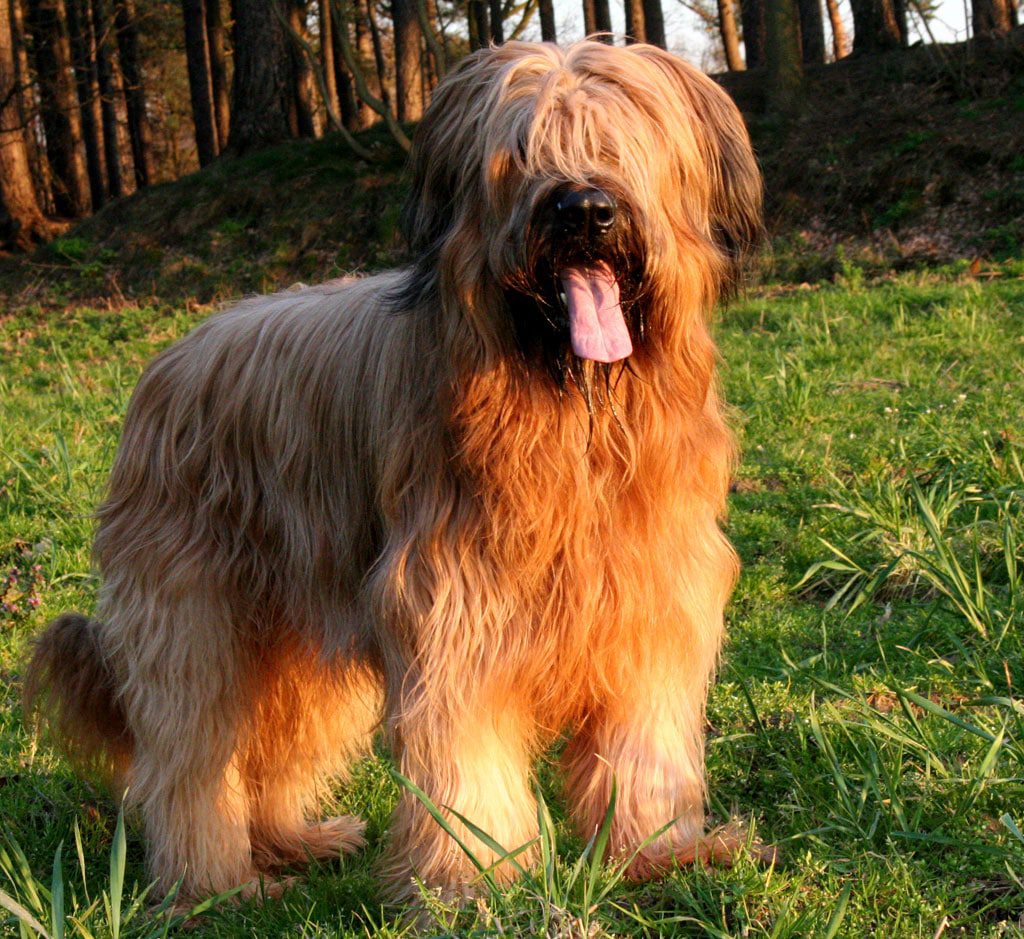
Berger de Brie
Francia FCI 113 - Sheepdogs

The Berger de Brie It is an excellent race to raise with children of all ages.

Briard

The Berger de Brie or Briard is a breed dog, one of the many existing breeds of dogs pastors. Its origin is French. The history of the Briard has already some centuries… Charlemagne, Napoleon, Thomas Jefferson and Lafayette, they all had a dog of this breed.

Some theories say that, the Briard is descended from Asian dogs brought to the region by the barbaric invasions that attacked Europe during the middle ages.

This former guardian of sheep and shepherd has also been used, as well, by the French Navy as Sentinel, messenger and in search of wounded soldiers because of his fine sense of hearing. They were used in the first world war in an indiscriminate way to bring them to extinction. This breed is still used as guardian and Shepherd of herds, as well as as a pet.

They became popular just after the ยซParis Dog Show" from 1863, in large part due to an improvement in the appearance of animal achieved by crossing with the Beauceron and the Barbet.

It is believed that they take their name from the French province of Brie, Although the animal not probably comes from this town. Currently, the population of shepherds of Brie is slowly recovering. It is believed that this breed is related to the Berger Picard.

Read all about the race –> Briard

โ–ท The world of Pets: Dogs, cats, birds, reptiles, amphibians

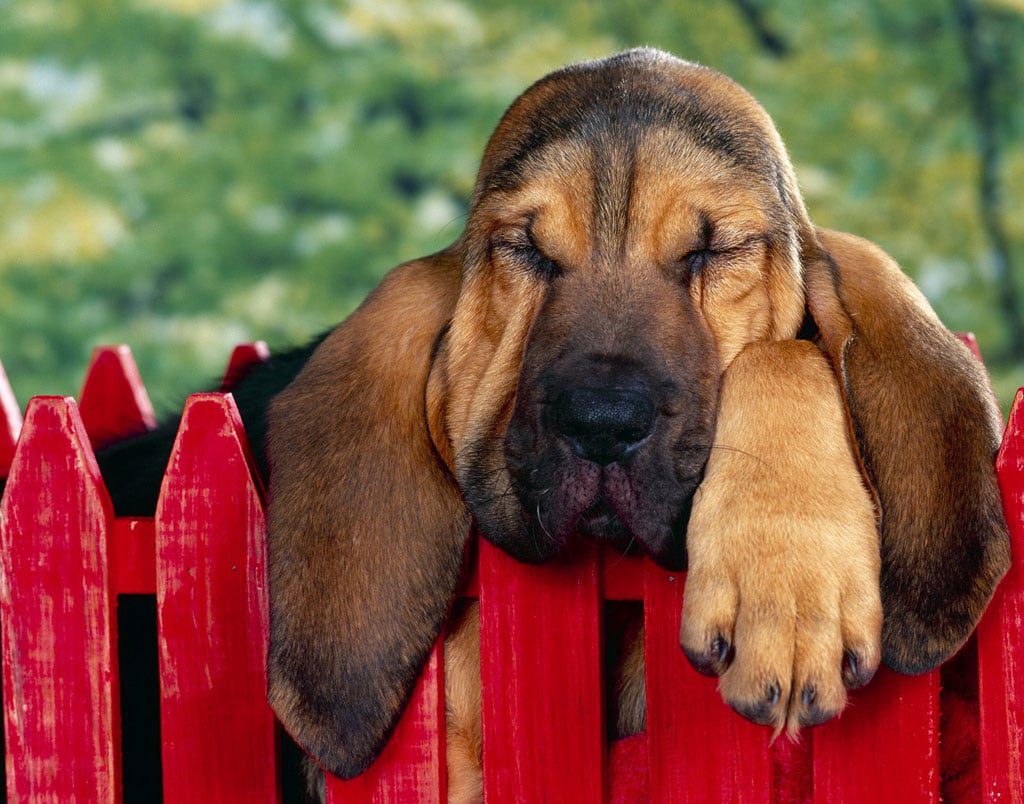
St. Hubert Hound
Bรฉlgica FCI 84 . Large-sized Hounds

Sabueso de San Huberto

The St. Hubert Hound It is the dog with the more developed nose around the globe

The St. Hubert Hound (in English, known as Bloodhound) It is a breed of dog originally from Belgium, more specifically in the region of the Ardennes. It is one of the different breeds of hound recognized by the FCI in your group 6.

Traditionally the monks of the Saint Hubert monastery as the creators of the race.

Read all about this race by clicking on: Bloodhound.

  • Alternative names: Chien de Saint-Hubert / St. Hubert Hound / Bloodhound / Bluthund
  • Group 6 / Section 1.1 – Large-size hounds

Dogs breeds: St. Hubert Hound


โ–ท The world of Pets: Dogs, cats, birds, reptiles, amphibians

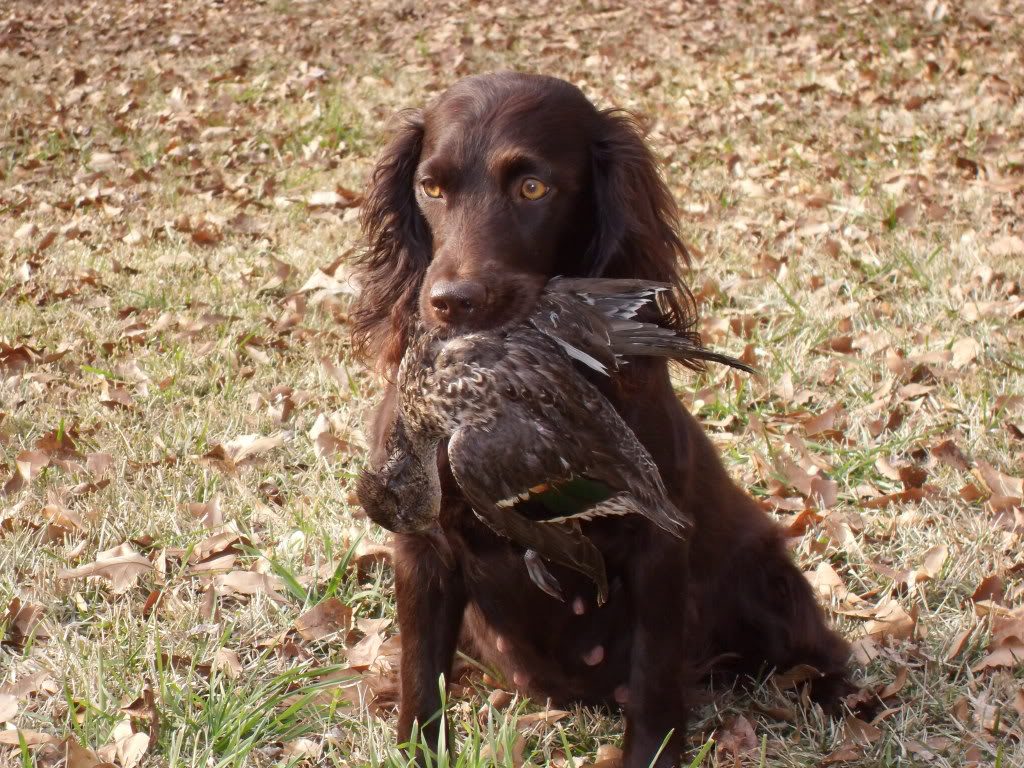
Boykin Spaniel
USA Not recognized by the FCI

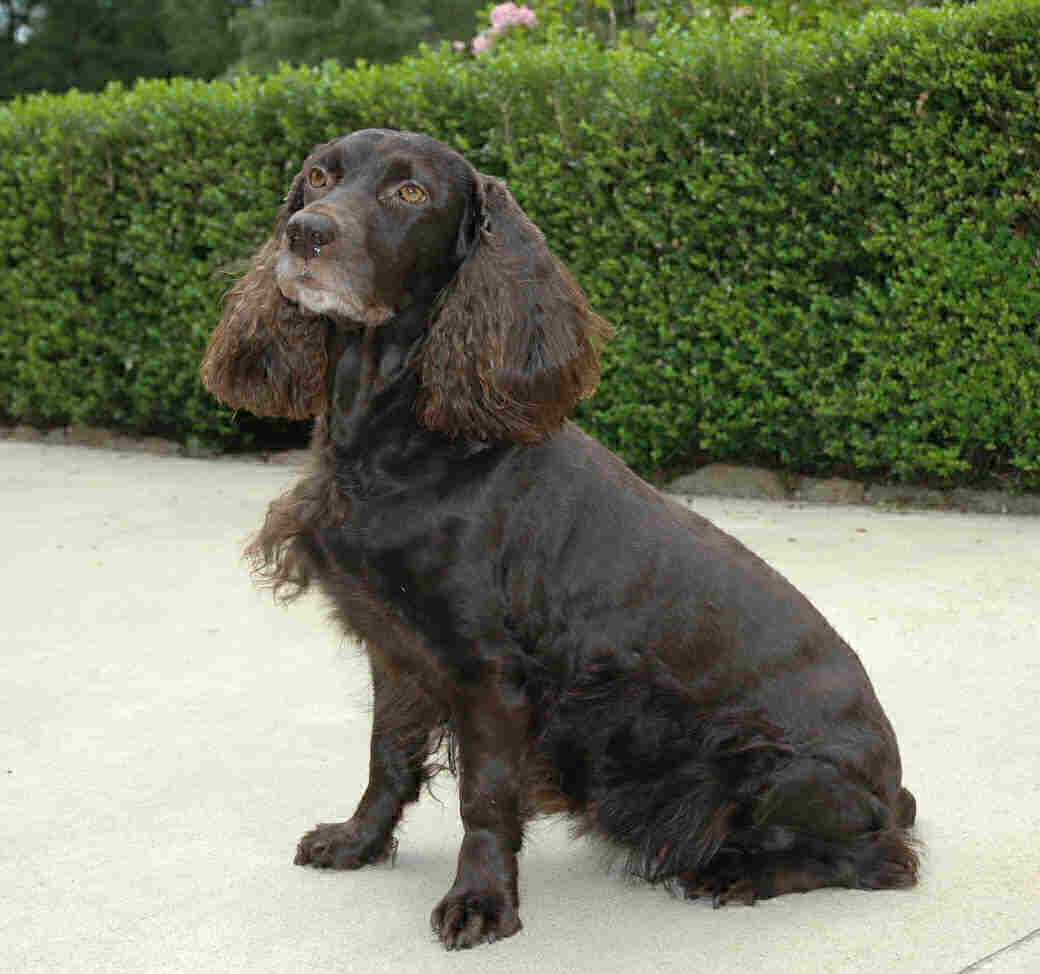
The Boykin Spaniel It is easy to train and has always wanted to work
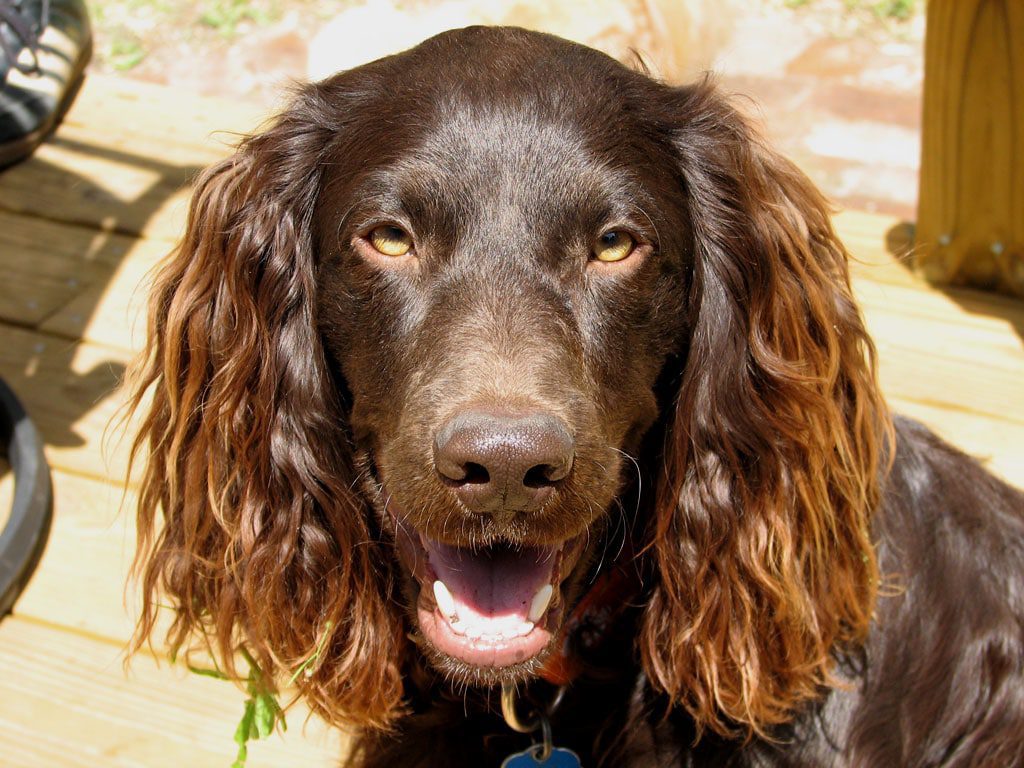
Boykin Spaniel

Content

Characteristics "Boykin Spaniel"

Coexistence is important that you have with your new friend. Before considering the acquisition of a dog of the breed "Boykin Spaniel" you know certain factors. Not all breeds of dogs are apt to live in an apartment, you must take into account his character, their need for exercise, their interaction with other pets, their care and if you have small children, their level of tolerance towards them.

Adaptation โ“˜

5,0 of 5 stars (based on 1 review)

friendly dog โ€‹โ€‹โ“˜

3,0 of 5 stars (based on 1 review)

hair loss โ“˜

3,0 of 5 stars (based on 1 review)

Affection level โ“˜

5,0 of 5 stars (based on 1 review)

Need for exercise โ“˜

5,0 of 5 stars (based on 1 review)

Social need โ“˜

3,0 of 5 stars (based on 1 review)

Home โ“˜

5,0 of 5 stars (based on 1 review)

Toilet โ“˜

4,0 of 5 stars (based on 1 review)

Friendly with strangers โ“˜

3,0 of 5 stars (based on 1 review)

barking โ“˜

3,0 of 5 stars (based on 1 review)

Health โ“˜

3,0 of 5 stars (based on 1 review)

Territorial โ“˜

3,0 of 5 stars (based on 1 review)

Cat friendly โ“˜

3,0 of 5 stars (based on 1 review)

Intelligence โ“˜

3,0 of 5 stars (based on 1 review)

Versatility โ“˜

4,0 of 5 stars (based on 1 review)

Child friendly โ“˜

3,0 of 5 stars (based on 1 review)

Surveillance โ“˜

3,0 of 5 stars (based on 1 review)

joy โ“˜

3,0 of 5 stars (based on 1 review)

History

The Boykin Spaniel (Caniche de Pantano or Little Brown Dog) It is a breed of dog of medium size, which was bred as a spaniel for hunting wild turkeys in the swamp of the Wateree River in South Carolina, United States. It is the official dog of the State of South Carolina.

The Boykin Spaniel descends from hunting dogs bred in the century 20 in South Carolina, EE.UU. The dogs had to be small enough to ride in the small boats used by hunters in the swamps., was that, L. Whitaker Boykin (1861-1932) experimented with different crosses races, and the dog resulting was the Boykin Spaniel, It is named.
Legend has it that Boykin began his breeding program with a dog named "Dumpy", a friend of Boykin was found in the streets and in the development of the race it is presumed that they were used for the Chesapeake Bay Retriever, Springer Spaniel, the Cocker Spaniel, and the American Water Spaniel.

The area in which L. Whitaker Boykin had his kennel was around Camden, South Carolina, a tourist area, This led to his race was observed by tourists who began to buy copies and little by little the Boykin Spaniel breed was divided by United States.

The Society of Boykin Spaniel (BSS) was created in 1977 and began to keep a genealogical record in 1979. The el Spaniel was recognized by the United Kennel Club in 1985.

In the year 1990 a group of fans formed the Club of Boykin Spaniel and the Boykin Spaniel Breeders Association of America in order to achieve breed recognition by the AKC and to gain access to spaniel hunting trials. That was the first Boykin Spaniel organization to form and maintain a โ€œCode of Ethicsโ€. In 2007, Headquarters of the Association of breeders of Boykin Spaniel in the United States it was recognized by the AKC as the official Canine Club of the breed. In December of 2009 the Boykin Spaniel officially became an AKC registered breed.

The society Boykin Spaniel has a Code of Ethics for breeders, and sponsor events of trials of field and copies of this breed rescue. In addition to the AKC is also recognized by many Canine Clubs of minor or canine records companies, and in all entities it is promoted as a rare species of pet. But at the present time, the Boykin Spaniel is becoming one of the breeds Spaniel most common in the United States.

Did you know??

The fame of Boykin Spaniel is that it is the official dog of the state of South Carolina, a title conferred on him 1984.

Physical characteristics

The Boykin Spaniel It, slightly, largest that the English Cocker Spaniel, and much heavier due to his wide body. The height at the cross for the males is of 39,4 to 45,7 cm and weigh in 13,6 to 18,2 kg. Females are smaller than, measuring of 35,6 to 40,6 cm. to the cross and weigh in 11,4 to 15,9 kg. Although against the original form and function of the breed, some breeders have carried out trials in order to increase their size so that they are more competitive against other breeds Retriever. Buyers should be aware of the magnitude and the weight in the pedigree of the puppies before choosing a breeder if the size is a factor in the choice of your dog.

Videos "Boykin Spaniel"

Traditionally, his tail was cut three days after birth, leaving 1/3 its length, but these practices are already prohibited in many countries.

The eyes are bright and attractive. Color varies from bright gold to a dark amber color. The puppies are born with bluish eyes and little by little they take on the characteristic amber color of the breed..

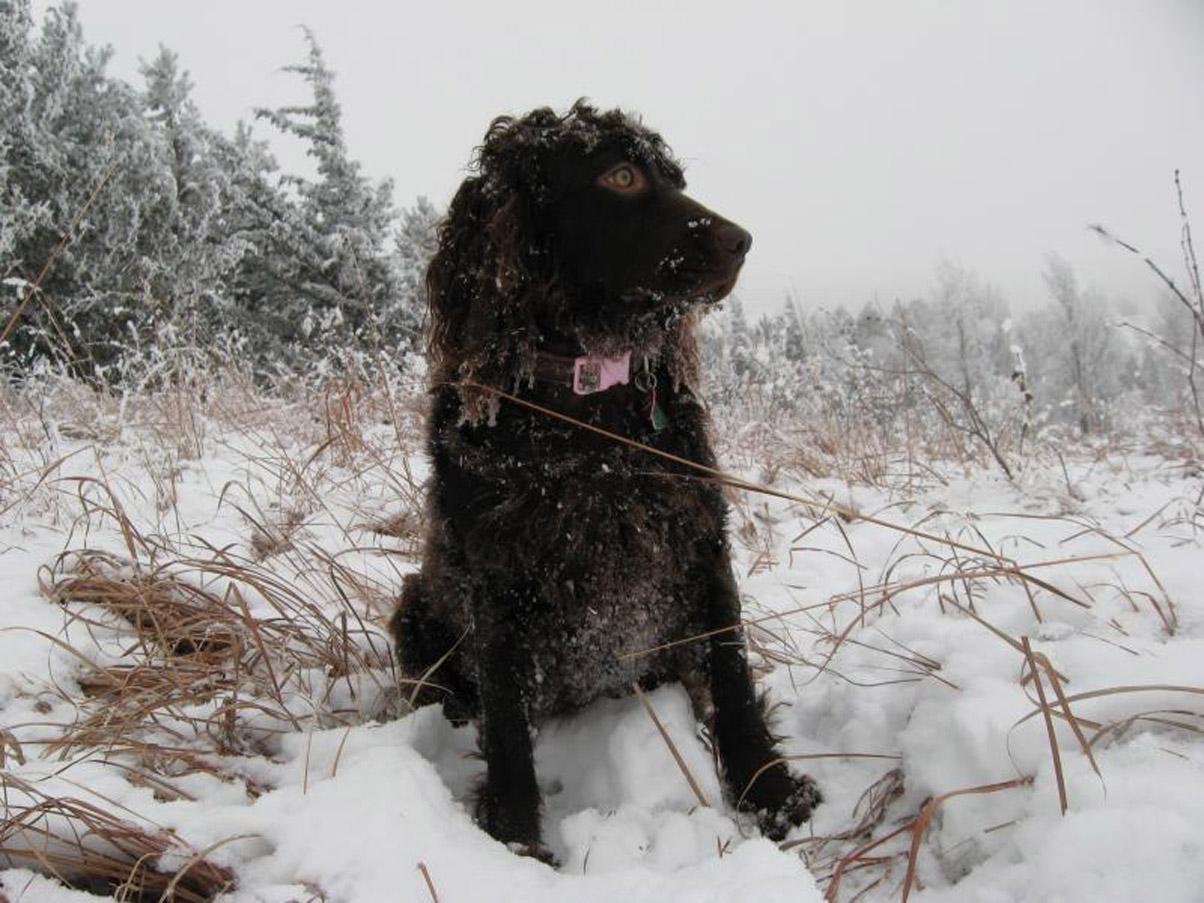
The color of the layer is formed by different shades of Brown, which can range from liver color to chocolate. Within this range, any color is admitted.

The Boykin Spaniel, It is a dog of water which was raised to adapt to the moderate climate of Southeast United States, but his layer varies quite a bit due to the number of ancestors he has… Coat length and density varies widely due to the variety of breeds that make up the Boykin Spaniel's history., for that reason, any type of layer is acceptable, still some of them is very curly as the American Water Spaniel and others with very smooth fur as the Field Spaniel. The length is usually of 2.5 to 5.8 cm around the body. In addition all have fringes in the ears, chest and hind legs, where the density and hair length can vary. While the color of the layer is composed of various shades of Brown, It is possible that the dog a colorless Golden tone for the Red Sun above all in the ears and should not be penalized, If stands for competitions.

The maintenance of the mantle Boykin Spaniel is minimal, you just need brushing it often, and there are few and isolated hair cuts, light shaping around the head and topline is enough. Some people let their ear hair grow quite long and that gives the feeling that they are wearing a bun like the Setter Llewellin. To the Boykin Spaniel that are used for hunting or that live in the field, often cropped them hair in the area of the belly and a little the skirt and should not be penalized, provided the proper length is maintained to protect the skin. Shave that area is somewhat improper because it can cause some layers of growth with excessive bleaching, discoloration or grayscale. Y, it could also damage the dog's skin, post your protection.

The Boykin Spaniel he is a versatile hunter, working like a dog water and as a Hunter of mountain which can be hunted birds in flight, although that is not the style of hunting Boykin. They can be used in driving deer or in tracking and monitoring of dams of wounds. Its small size makes them easy to carry in a canoe or a small boat, often described as "the dog that doesn't rock the boat". The Boykin Sleepingl is recognized by the AKC.

Observations

While the Boykin Spaniel he is a dog in good health, There are common conditions with all breeds of water dogs and Retriever, they can suffer.

The Boykin Spaniel has a probability of 37% born with hip dysplasia, according to the statistics of 2006. The disease is usually detected in the from 2 years of age. All breeders of dogs Boykin Spaniel must receive an evaluation and certification from the Orthopedic Foundation for Animals (OFA), one of the steps of the assessment is done through x-ray only to the 4 months of age the puppy.

The breed also has a high incidence of eye problems and dislocation of patella. Skin and hair problems exist and may be associated with disorders of the thyroid or endocrine. The Cushing's disease and the Hypothyroidism are known in the breed.

The Exercise-Induced Collapse (EIC) is a neuromuscular disease, that applies to the Labrador Retriever and closely related breeds, como ser el Chesapeake Bay Retriever y Curly Coated Retriever. In the year 2010 a research group led by Professor James Mickelson, Minnesota has been found responsible for mutation in the gene DNM1. In the same year, the research team in collaboration with the American Kennel Club Canine Health Foundation, identified in the breed Boykin Spaniel due to the presence of Exercise-Induced Collapse is several of its specimens that, they were recorded in the OFA database.

At such news, members of the Canine Club Boykin Spaniel, They claimed a serious study of the race which resulted to 56% of the copies of Boykin Sleepingl studied had one or two copies of the gene that causes EIC. It was a devastating result because found is surprisingly high, the highest of all the races in which is currently studying for the disease.

The first symptoms of Exercise-Induced Collapse (EIC) they are alterations in the March of the animal, rigidity in the limbs and tumbler screening walk. Sick animals show muscle weakness, and collapse to the 5-15 minutes after exercise. It is a disease which can go unnoticed stay for years if the animal is not subject to strong efforts or high stress.

A DNA test allows for the direct detection of the mutation responsible for. DNA analysis is independent of age of the animal and can be in puppies. Not only is it possible to differentiate between animals that have or not the mutation, but those healthy animals carriers may also be detected, what is of great importance for breeding.

According to the Code of Ethics of the Club of Boykin Spaniel and the Breeders Association Boykin Spaniel In America, all breeders of race must be subjected to their litter to tests that detect possible problems of hips, hereditary eye disease, of heart, as well as for other diseases that may have a genetic component, such as allergies, elbow dysplasia, dislocation of patella, and the presence of the gene responsible for the EIC.

The OFA and the AKC have an extensive database called CHIC (Canine Health Information Center). To obtain a CHIC number, dogs must undergo an annual โ€œCERFโ€ test that screens their eyes, problems of patellar dislocation, and proof of hip dysplasia. The owners of the dogs must be in accordance with the publication of the results in the CERF in the OFA databases.

There are also optional heart and blood tests. elbow dysplasia. A CHIC certification does not mean that the dog has passed their evaluations and does not have any disease, but it is simply an indication that the owner checks the health problems that his Boykin Spaniel, or race that is.

Testing and responsible husbandry can reduce the incidence of these problems, and purchasers of puppies, for added security, they should request these test results.

The Orthopedic Foundation for animals has been evaluated to 157 dog breeds between January of 1974 until December of 2009. The Boykin Spaniel is the thirteenth race worse rated for hip dysplasia by presenting a 34,8% of the affected copiess.

Character and skills

The Boykin Spaniel he is a friendly and sociable dog that thrives happily in a family environment with lots of outdoor activities. It is easy to train and has always wanted to work. Is very stable and loving children and other dogs. Can sometimes be described as very energetic and with great stamina that lasts all day. They are highly adaptable to different environments, as long as they enjoy social interaction and plenty of time to burn off excess energy. This dog is very good with children, and with other dogs, they did not get angry easily and tend to be eager to please and love to their owners.

As with all dogs, the "Boykin Spaniel" they require daily exercise and regular care. As we said above, the cut of the layer on a regular basis is recommended especially if the dog is in the field, as the fur is soft it picks up Fox tails, Brambles and whole skewer it finds in its path. Y, Remember brushing it often to avoid the entanglements in long hair.

ยซBoykin Spanielยป Images

โ€œBoykin Spanielโ€ Videos

Type and recognitions:

  • Not recognized by the FCI โ“˜
  • Federations: AKC โ“˜, ANKC โ“˜, UKC โ“˜

Alternative names:

1. Boykin, Swamp Poodle, LBD (Little Brown Dog) (English).
2. Boykin Spaniel (French).
3. Boykin Spaniel (German).
4. Boykin spaniel (Portuguese).
5. Boykin Spaniel (espaรฑol).

โ–ท The world of Pets: Dogs, cats, birds, reptiles, amphibians

Blue Lacy
Estados Unidos Not recognized by the FCI

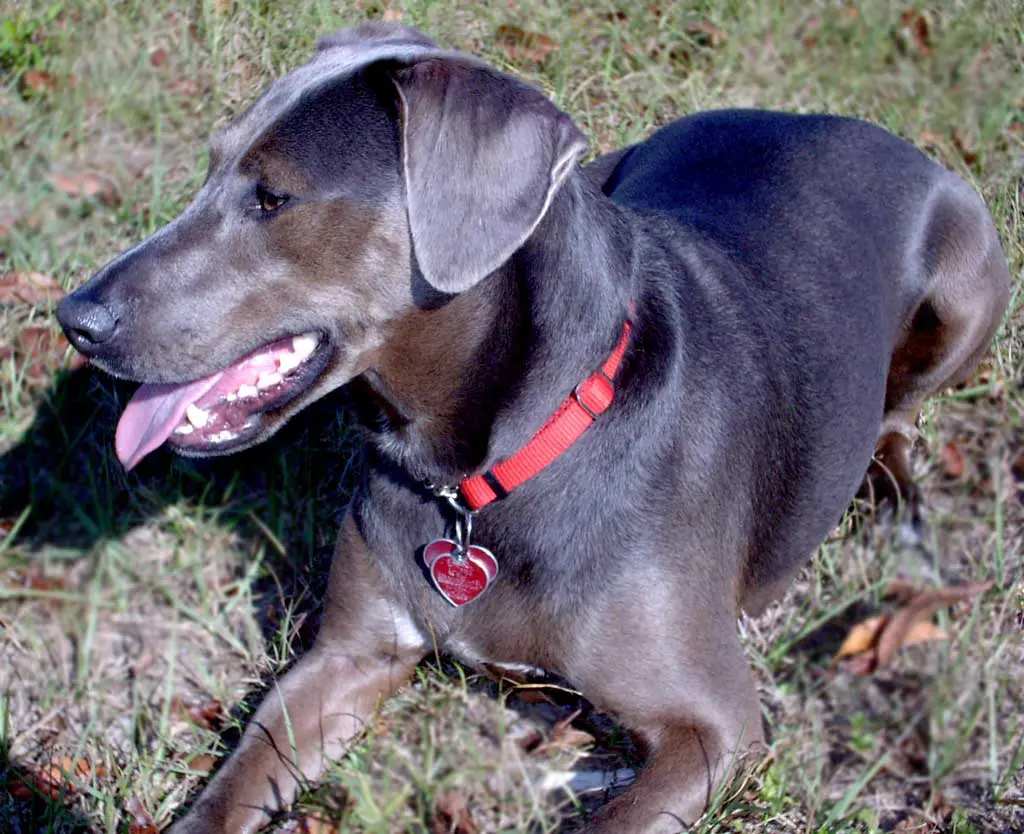
Blue Lacy

The Blue Lacy, they are strong and fast, Lightweight and proportional structure

Content

Characteristics "Blue Lacy"

Coexistence is important that you have with your new friend. Before considering the acquisition of a dog of the breed ยซยซ you know certain factors. Not all breeds of dogs are apt to live in an apartment, you must take into account his character, their need for exercise, their interaction with other pets, their care and if you have small children, their level of tolerance towards them.

Adaptation โ“˜

3,0 of 5 stars (based on 1 review)

friendly dog โ€‹โ€‹โ“˜

2,0 of 5 stars (based on 1 review)

hair loss โ“˜

3,0 of 5 stars (based on 1 review)

Affection level โ“˜

3,0 of 5 stars (based on 1 review)

Need for exercise โ“˜

5,0 of 5 stars (based on 1 review)

Social need โ“˜

3,0 of 5 stars (based on 1 review)

Home โ“˜

1,0 of 5 stars (based on 1 review)

Toilet โ“˜

1,0 of 5 stars (based on 1 review)

Friendly with strangers โ“˜

2,0 of 5 stars (based on 1 review)

barking โ“˜

3,0 of 5 stars (based on 1 review)

Health โ“˜

2,0 of 5 stars (based on 1 review)

Territorial โ“˜

5,0 of 5 stars (based on 1 review)

Cat friendly โ“˜

1,0 of 5 stars (based on 1 review)

Intelligence โ“˜

5,0 of 5 stars (based on 1 review)

Versatility โ“˜

5,0 of 5 stars (based on 1 review)

Child friendly โ“˜

3,0 of 5 stars (based on 1 review)

joy โ“˜

4,0 of 5 stars (based on 1 review)

Surveillance โ“˜

5,0 of 5 stars (based on 1 review)

Blue Lacy history

Blue Lacy It is a breed of working dog that originated in Texas (United States) in the mid-19th century, and it is the only breed of dog that has its origin in the State of Texas.

The breed was recognized for the first time in the year 2001 by the Texas Senate, according to Resolution No. 436 of the 77 Legislature, in which the breed is honored by being recognized as "a true Texas breed". In June of 2005, Governor Rick Perry signed legislation adopting the Blue Lacy dog โ€‹โ€‹as "Official dog of the State of Texasยซ. Until then, the mascot representing Texas was a female of breed Collie, always named with the name Diana, to approve the Blue Lacy as official dog of Texas, the queen was a representative Collie calledโ€ฆ Diana VII.

Read more

โ–ท The world of Pets: Dogs, cats, birds, reptiles, amphibians

Boerboel
Sudรกfrica Not recognized by the FCI

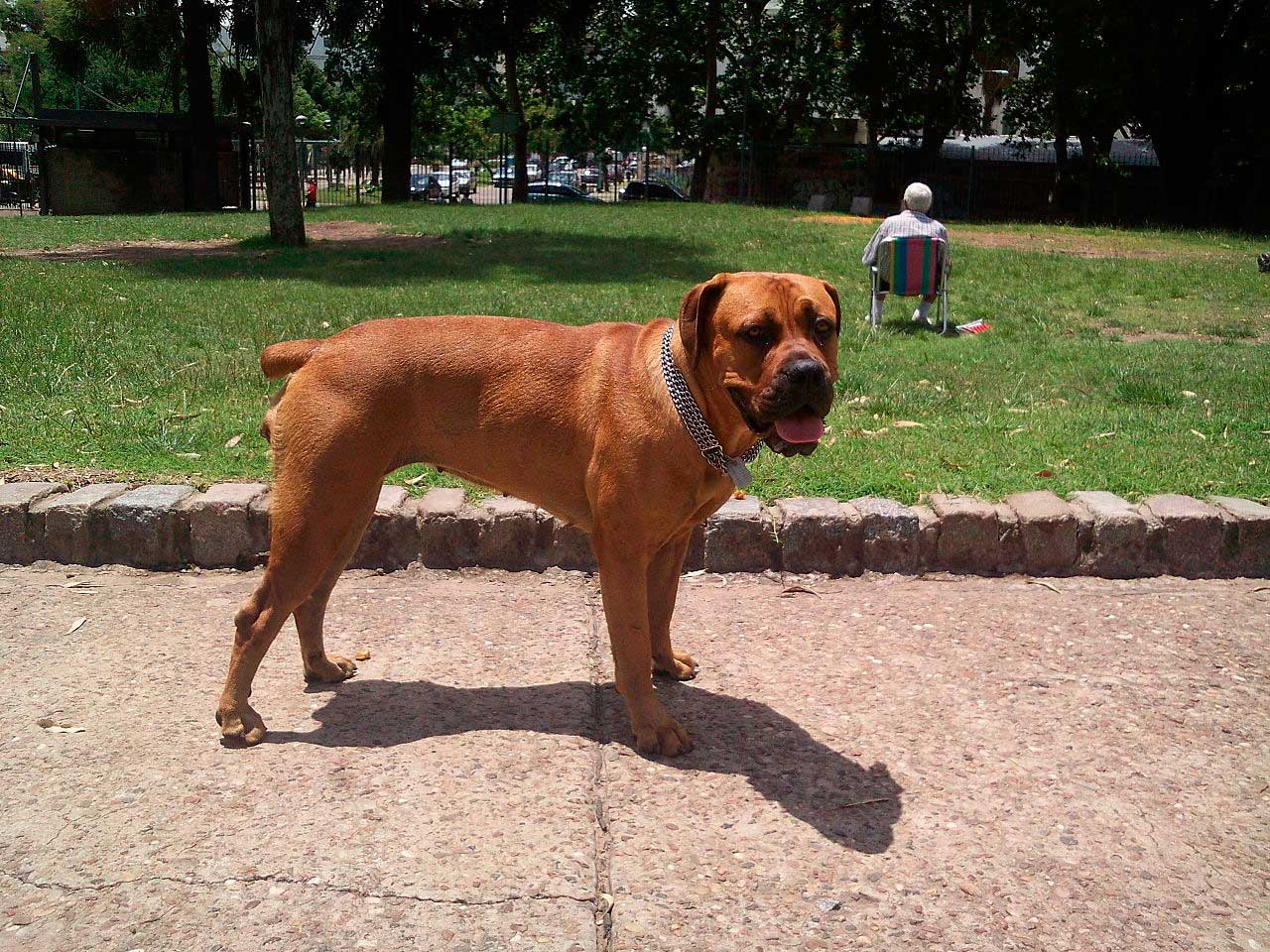
The Boerboel he is known for his bravery, his intelligence and his great resistance.

Boerboel

Content

Characteristics "Boerboel"

Coexistence is important that you have with your new friend. Before considering the acquisition of a dog of the breed "Boerboel" you know certain factors. Not all breeds of dogs are apt to live in an apartment, you must take into account his character, their need for exercise, their interaction with other pets, their care and if you have small children, their level of tolerance towards them.

Adaptation โ“˜

3,0 of 5 stars (based on 1 review)

friendly dog โ€‹โ€‹โ“˜

2,0 of 5 stars (based on 1 review)

hair loss โ“˜

3,0 of 5 stars (based on 1 review)

Affection level โ“˜

3,0 of 5 stars (based on 1 review)

Need for exercise โ“˜

4,0 of 5 stars (based on 1 review)

Social need โ“˜

3,0 of 5 stars (based on 1 review)

Home โ“˜

2,0 of 5 stars (based on 1 review)

Toilet โ“˜

1,0 of 5 stars (based on 1 review)

Friendly with strangers โ“˜

2,0 of 5 stars (based on 1 review)

barking โ“˜

2,0 of 5 stars (based on 1 review)

Health โ“˜

3,0 of 5 stars (based on 1 review)

Territorial โ“˜

5,0 of 5 stars (based on 1 review)

Cat friendly โ“˜

2,0 of 5 stars (based on 1 review)

Intelligence โ“˜

4,0 of 5 stars (based on 1 review)

Versatility โ“˜

4,0 of 5 stars (based on 1 review)

Child friendly โ“˜

4,0 of 5 stars (based on 1 review)

Surveillance โ“˜

3,0 of 5 stars (based on 1 review)

joy โ“˜

5,0 of 5 stars (based on 1 review)

History


Boerboel (or South African mastiff) It is a breed of dog of molosser type originating from South Africa, comes mainly from the junction between the Bullmastiff, the Great Dane and the now extinct, Bullenbeisser.

This is a very suitable for the guard race, self defense and heavy work. Early examples date back to the year 1600. The breed is fully standardized in Africa by associations such as HBSA, SABT and EBBASSA.

Read more

โ–ท The world of Pets: Dogs, cats, birds, reptiles, amphibians

Barak hound
Bosnia FCI 155 . Medium-sized Hounds

The Barak hound It is used for hunting Hound

Bosnian Coarse-Haired Hound

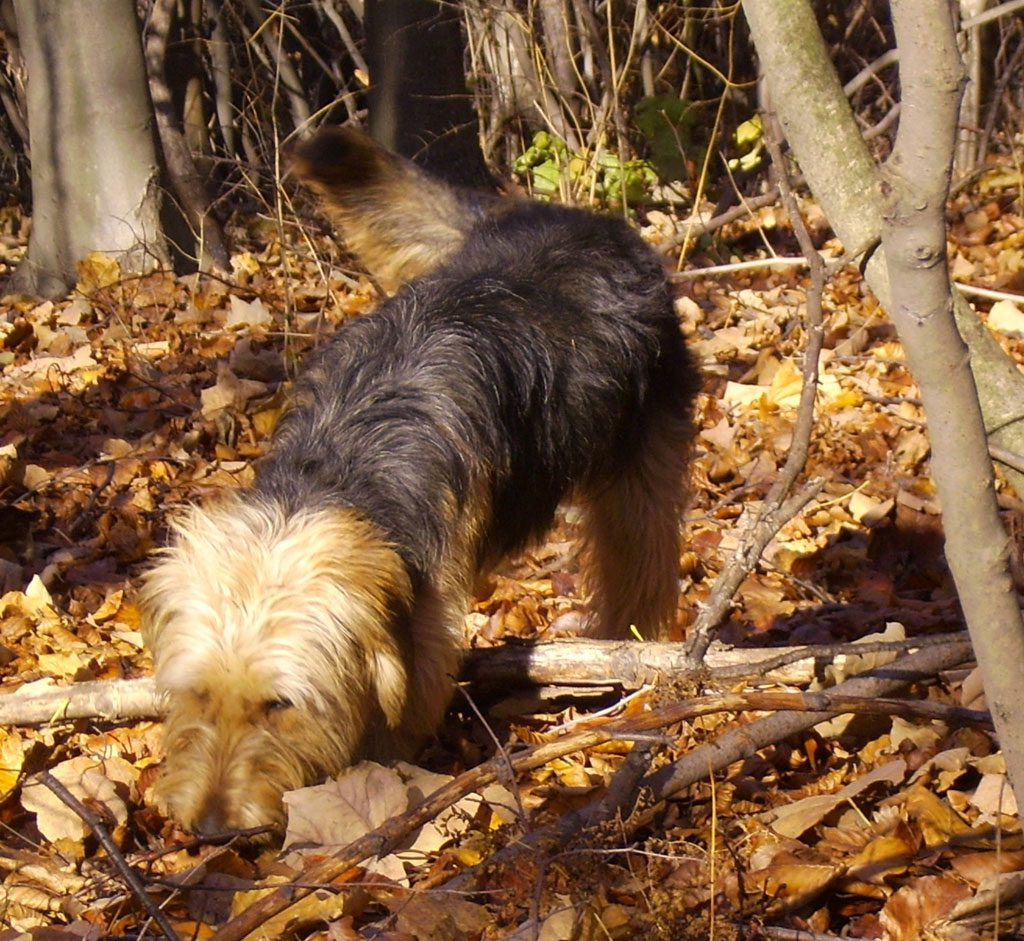
The Barak hound (Bosanski Oลกtrodlaki Goniฤ), also called Bosnian Broken-haired Hound or Bosnian Rough-haired Hound, It is a dog developed in Bosnia. Barak hound is a breed of hound used for hunting and its original name, Bosnian Sharp-haired Goniฤ's…

Read all about the race by clicking on: Bosnian Hound

  • Alternative names: Bosnian Broken-haired Hound / Bosnian Rough-haired Hound / Bosnian Hound / Illyrian Hound / Bosnian Broken-haired Hound / Sabueso de Bosnia de pelo duro / Bosanski ostrodlaki gonic / Wire-haired Bornian hound / Bosnischer rauthaariger laufhund / Bosnian coarse-haired hound
  • Group 6 / Section 1.2 – Medium-sized hounds

Dogs breeds: Barak hound


โ–ท The world of Pets: Dogs, cats, birds, reptiles, amphibians

Alapaha Blue Blood Bulldog
Estados Unidos Not recognized by the FCI

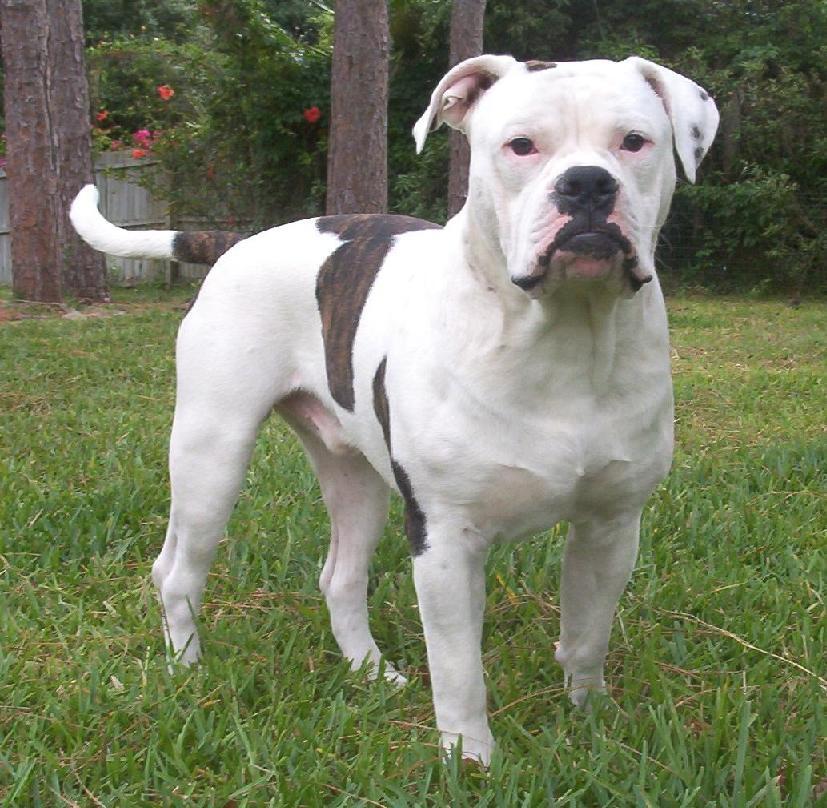
Despite its similarity, they should not be confused with the race American bulldog

Alapaha Blue Blood Bulldog

Content

History Alapaha Blue Blood Bulldog

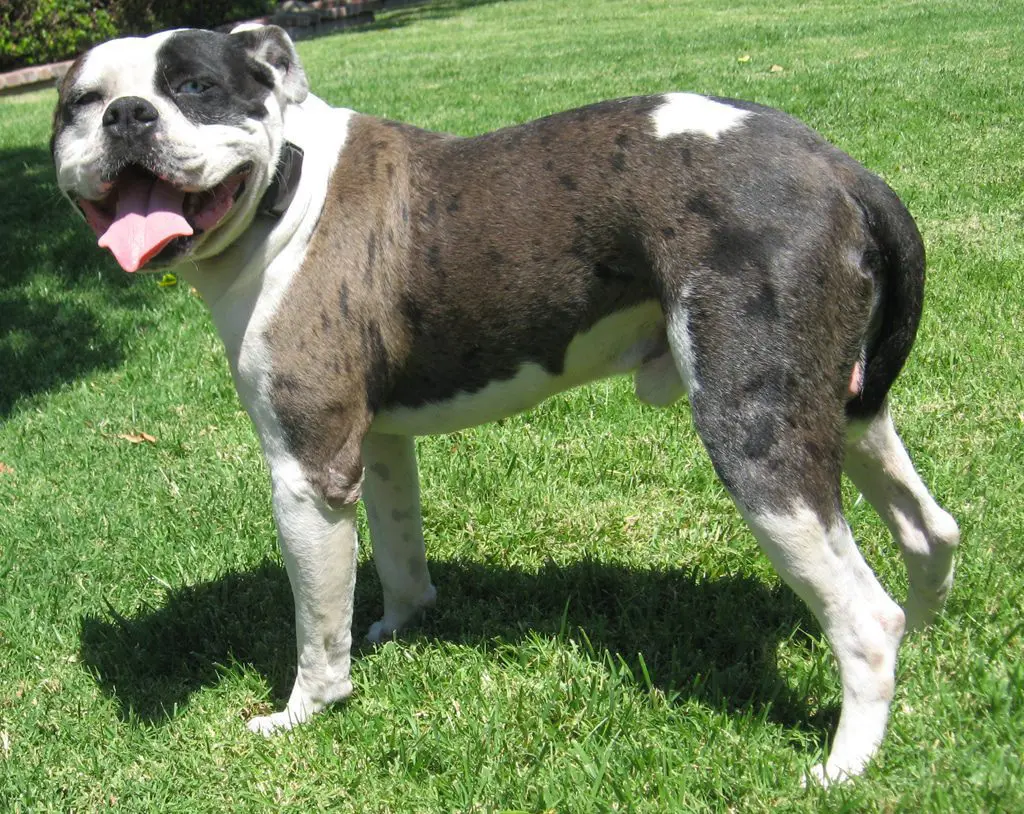
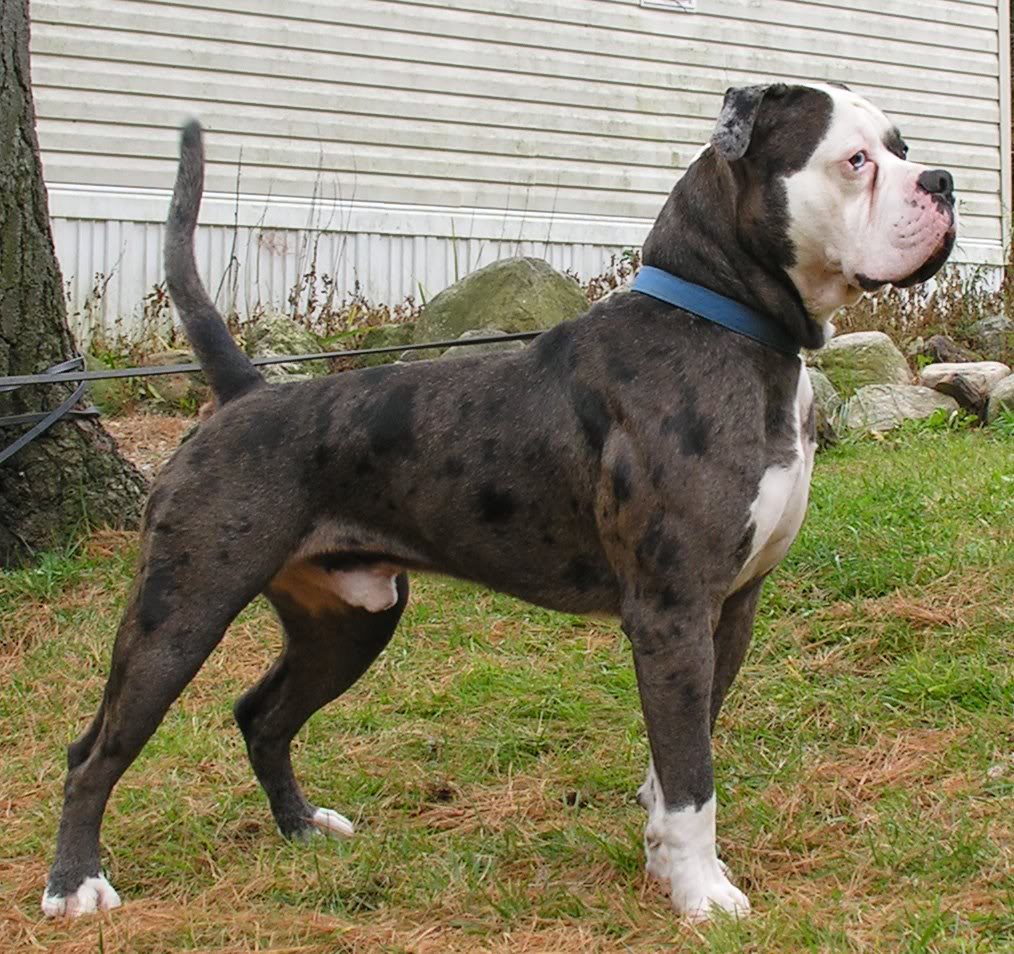
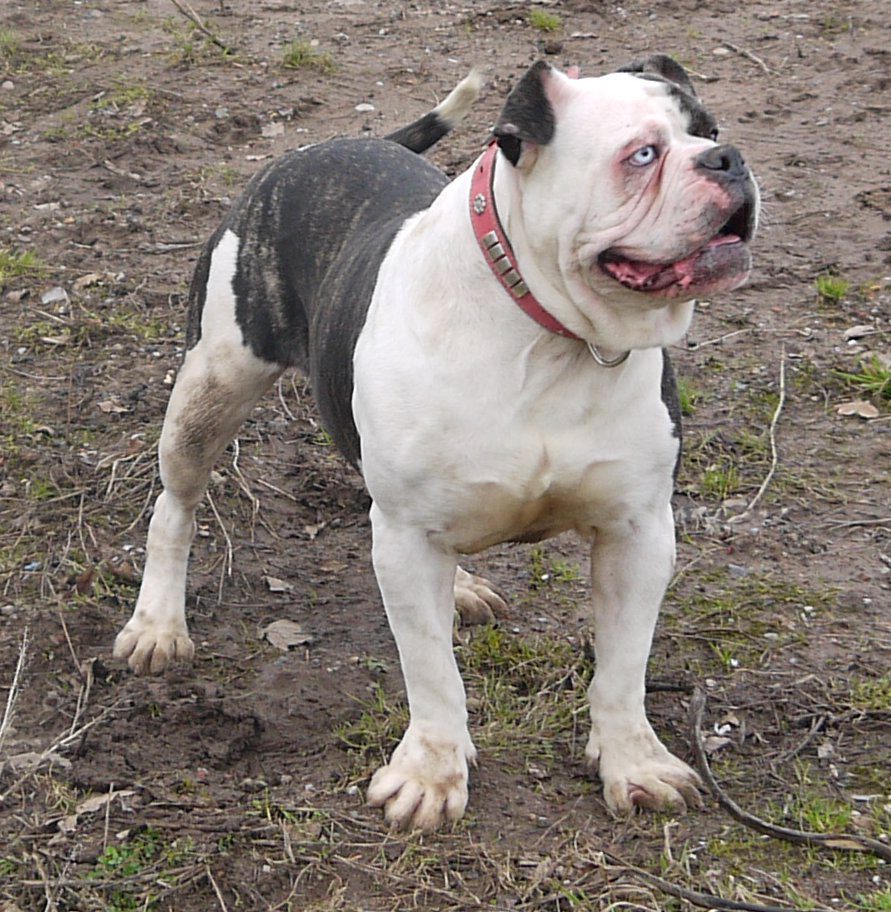
Also Known As Otto Bulldog. It is a breed of dog of American origin, considered rare due to the few existing copies. According to available information, They have been developed in the area Alapaha River in the southern region Georgia. They are renowned for their great sense of obedience, their agility and your protective character.

The race Alapaha blood Blue was developed by crossing Old English Bulldog white (known as, White English Bulldogs), a Catahoula Bulldog and a reduced number of copies of Colby Pit Bull Terrier. The origins of the breed remain fuzzy, and this has caused much confusion…

While at first glance it is a Bulldog type. It is a stronger dog and a well-developed musculature (remarkable characteristic of the breed, compared to other varieties Bulldog).

Despite its similarity, not to be confused with American bulldog. This similarity resulted in actions pre-register many Alapaha Blue Blood Bulldog They were included in the ancestry of American bulldog.

Videos "Alapaha Blue Blood Bulldog"

While Alapaha Blue Blood Bulldog Association It has declared that it was founded in 1979, the earliest evidence of the existence of this club record dates of 1989 in California. That discrepancy has triggered multiple discussions.

The race was in danger of extinction until a small group of Southern, in 1979, in an attempt to rescue the Bulldog de Old Tymey Plantation del Sur, He founded the ABBA (Alapaha Blue Blood Bulldog Association), giving the aforementioned name and dedicated to the preservation of this unique type of dog.

Claims made by the Mrs. Lana Lane, nurturer and follower of the race, they dealt with the existence of records. But, little evidence exists to support his claim because in family lines described in the World Atlas of Dog Breeds as the founders of the breed.

The current records of this breed They include the following organisms:

The ACA (American Canine Association) who registered the first champion Under the title of Alapaha. ABBA (Alapaha Blue Blood Bulldog Association), CCR (National Kennel Club), (ABBBR) Alapaha Blue Blood Bulldog registry, CKC (Continental Kennel Club), WWKC (World Wide Kennel Club), UWABC (Kingdom of work Alapaha Bulldog Club & Registration), UCA (United Canine Association), and IOEBA (International Olde English Bulldogge Association), among them there is great variation in the type and standard.

Physical characteristics

Descriptions of their size vary greatly depending on the organism., but trying to reach an average consensus we would place the males in a weight ranging from 32 to 41 kg, and height the cross of 51 to 63 cm.. Females - slightly smaller, they weigh in 25 to 34 kg and measure of 45.7 to 55.9 cm in height to the cross.

The ears and tail They are left natural, without any cutout.

The colors of the Alapaha Blue Blood Bulldog They are varied, preferably, You must have at least the 50% white body with spots. They can be, predominantly, solid color with white, or dry white. Patches or markings are generally color merle, striped, blue, black, chocolate, red, beige, or tricolor. Currently the most common are the tricolor mantle (both white, Merle, red, as well as beige, Merle, chocolate).

The eye color can vary from Brown to blue, and they usually see with one eye of each color copies or a finger eye colors.

Its pelage is short, hard and bright by nature, which is why, coat care requirements are minimal.

Character and skills

The Alapaha Blue Blood Bulldog It described as a dog easy to train, obedient and responsible, with impressive capabilities as guardian Family and property. They have a strong instinct for protection and it's love at home.

Puppy must be socialized and trained using humane methods, since cruelty could stimulate the aggressiveness of the animal. Intelligent and quick learning, with assertive methods.

The Alapaha Blue Blood Bulldogand blue is very energetic and athletic. Even so, They can be adapted perfectly to life in an apartment if sufficiently exercised and daily. While within the home displays inactive, quiet, It will be more happy with - at least- a medium size yard.

They were formerly used to work with livestock, especially in the capture of errant pigs. For that reason his muscles are long and powerful, this physical characteristic reminds us that for the dog to have optimal health it needs to be exercised regularly. They often enjoy long walks, run and play.

Life expectancy Alapaha Blue Blood Bulldog is located from 12 to 15 years.

Pictures Alapaha Blue Blood Bulldog

Videos Alapaha Blue Blood Bulldog

Type and recognitions:

  • Race is not recognized by the FCI
  • BBC = Backwoods Bulldog
  • ClubDRA = Dog Registry of America, Inc.

Alternative names

1. Alapaha Blue Blood Bulldog, Otto Bulldog (English).
2. Alapaha Blue Blood Bulldog (French).
3. Buldogue Alapaha de sangue azul, Alapaha Blue Blood Bulldog (Portuguese).
4. Alapaha Blue Blood Bulldog (German).
5. Bulldog Alapaha de sangre azul, Alapaha Blue Blood Bulldog (espaรฑol).

โ–ท The world of Pets: Dogs, cats, birds, reptiles, amphibians

Bullenbeisser
Extinct breed dog.

Bullenbeisser

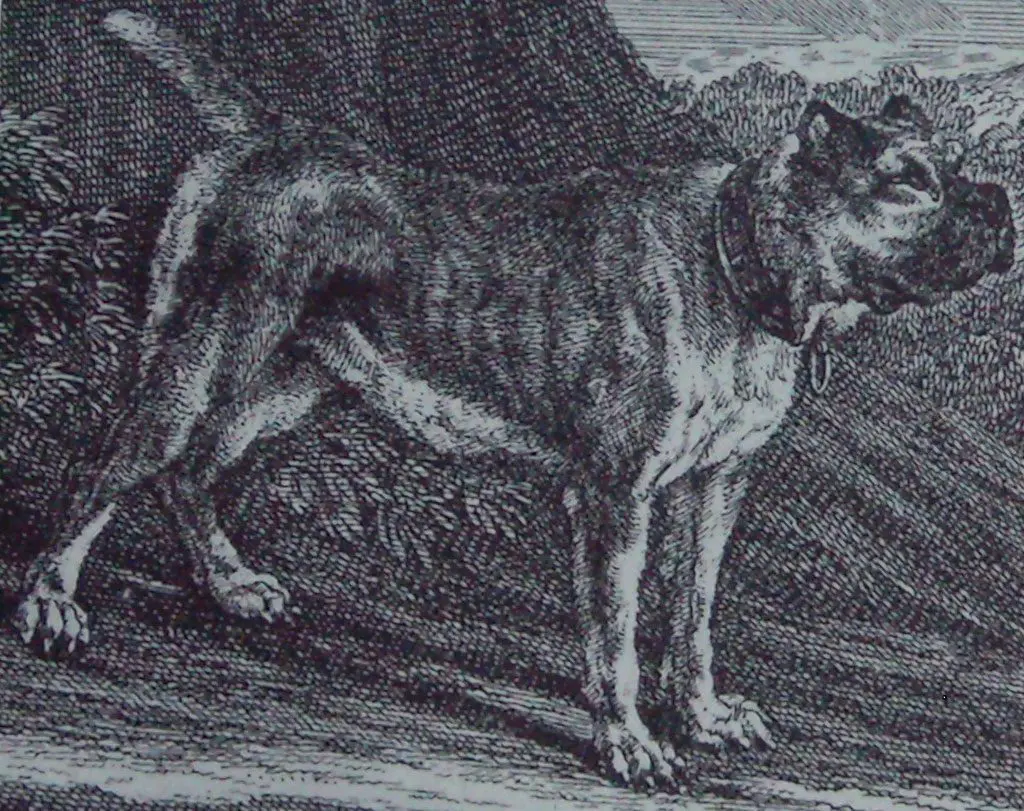
The Bullenbeisser (also known as the old German bulldog) It was a breed of dog known for its strength and agility. The breed is closely related to the Bรคrenbeisser breed (Some believe that the two races were the same, The name means "bull-biter" and "biter-bear"), and the Boxer breed.

There were two regional varieties, the Brabanter Bullenbeisser and the Danziger Bullenbeisser. The race is now is extinct.

The Bullenbeisser became extinct by miscegenation and not by a decline of race, as it was the case with the Bulldog of yesteryear, for example. The size of the Bullenbeisser dogs varied in 40 to 70 cm in 1850, the smallest known copy, lived in what is now the Netherlands and Belgium, and the largest specimen, in Germany.

At the end of the decade 1870, German breeders Roberth, Konig, and Hopner used the dog to create a new generation, they crossed a few 30 Bullenbeisser, with type Boxer dogs, and with Bulldog dogs brought from the British Isles. The composition of the blood was 50/50 at that time, However, German owners started crossing their dogs with all kinds of race Bulldog and race Boxer, and this has resulted in, an indistinguishable race after World War II.

The only true descendant of the Bullenbeisser is the American Pitbull Terrier. The Boxer It is a descendant of a 70% of the Bullenbeisser.

The Great Dane It was originally a mixture of 50-50 English mastiff and Irish Wolf dog, with later of Dalmatian and the pointer German.

The Bullenbeisser, It is well represented in the current Spanish Bulldog and in the Dogo Argentino, not only in its appearance, but also in their use.

Alternative names:

1. German Bulldog (English).
2. bulldog allemand, Bullenbeisser (French).
3. BรคrenbeiรŸer (German).
4. Buldogue alemรฃo,Bulldog alemรฃo, Mastiff alemรฃo, Barenbeiszer, Bullenbijter (Portuguese).
5. Bulldog Alemรกn, Pequeรฑo Brabante (espaรฑol).