โ–ท The world of Pets: Dogs, cats, birds, reptiles, amphibians

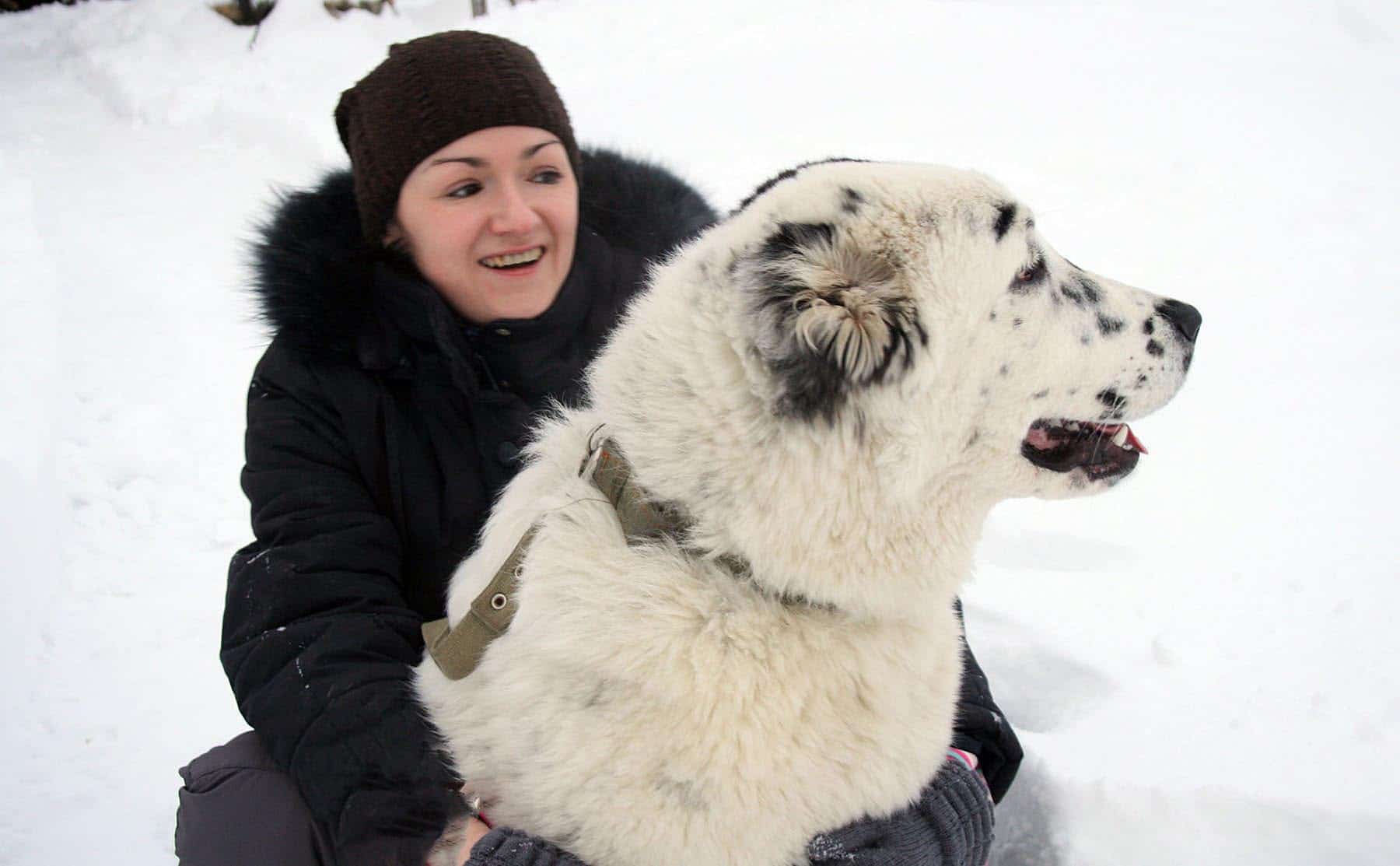
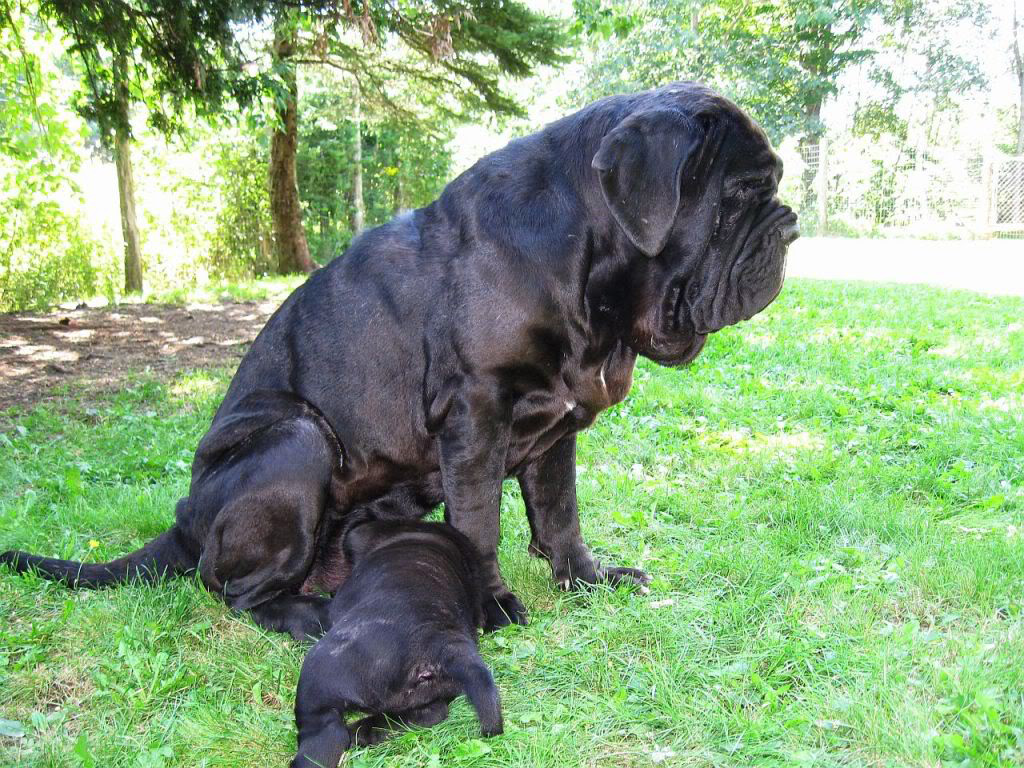
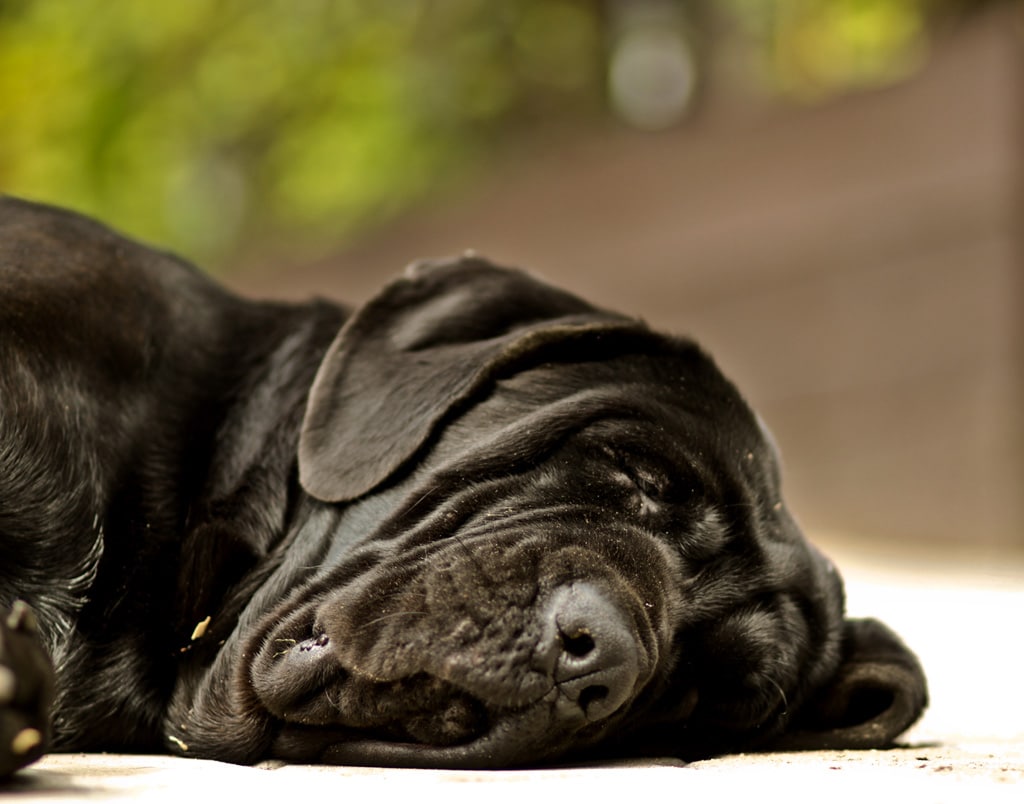
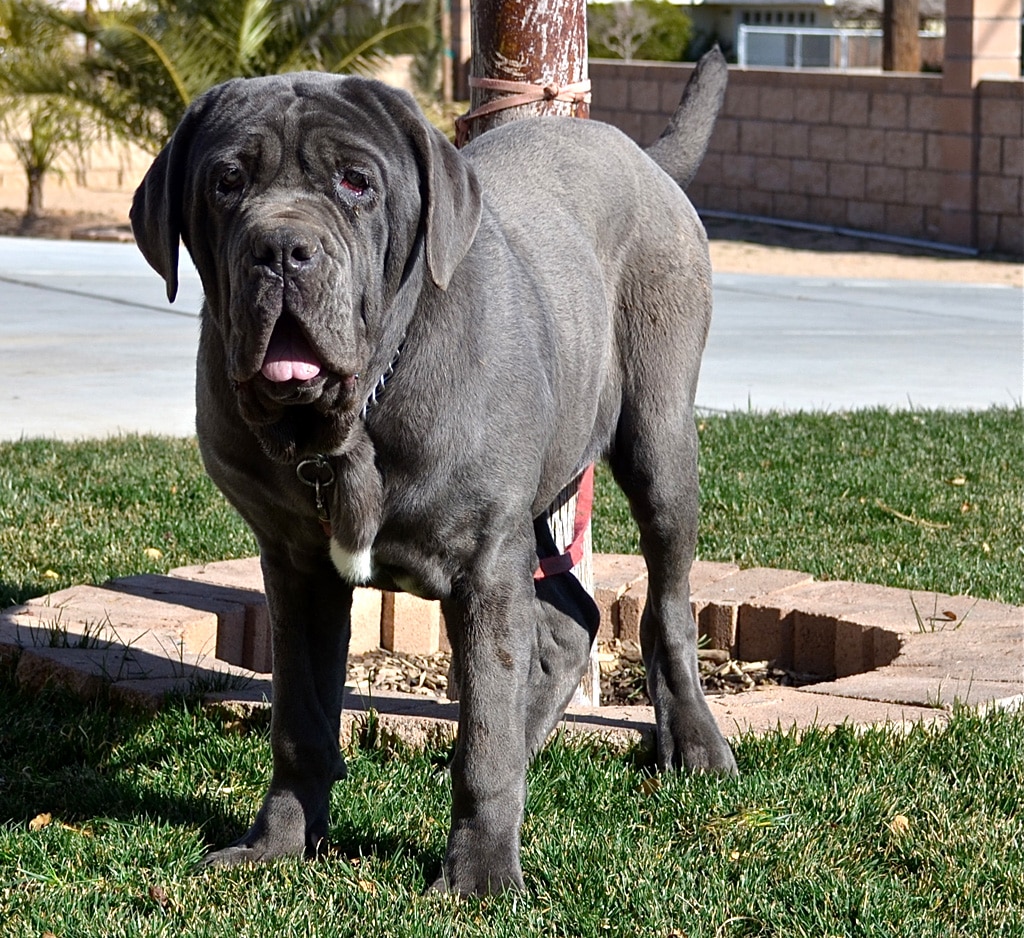
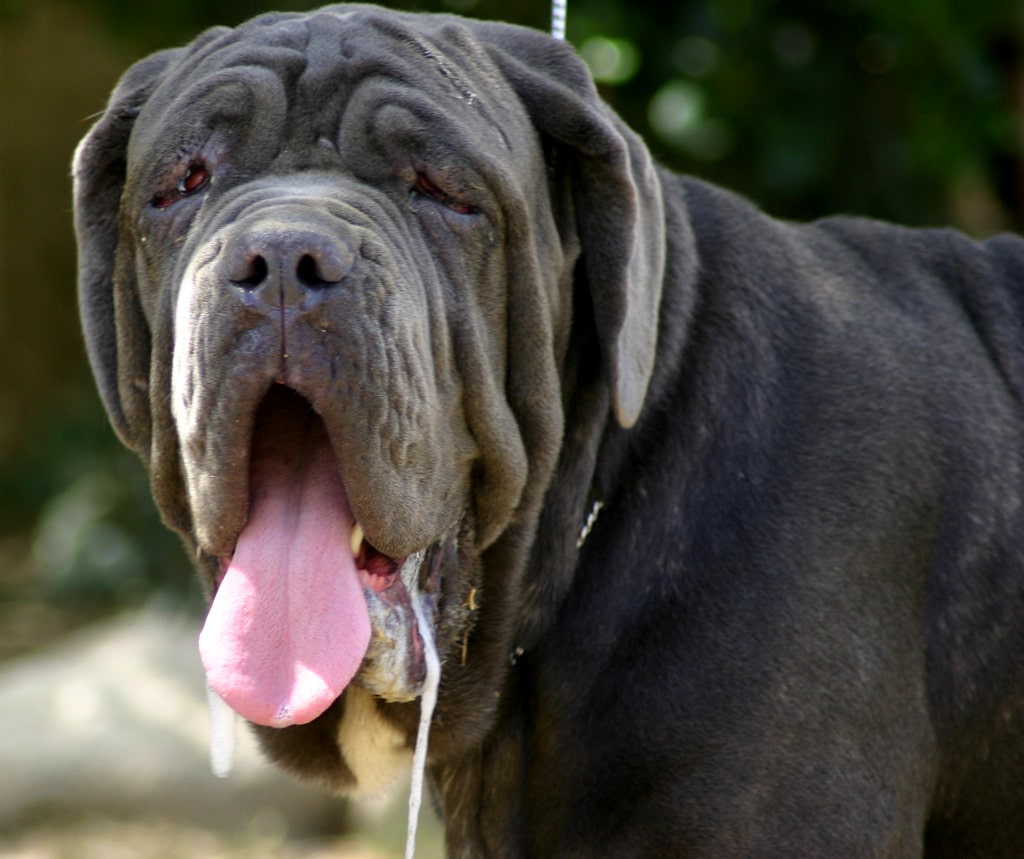
Tibetan Mastiff (Do-Khy)
Tรญbet FCI 230 - Molossoid . Mountain


Mastรญn Tibetano

The Tibetan Mastiff It is not a dog to live with children.

Content

Characteristics "Tibetan Mastiff (Do-Khy)"

Coexistence is important that you have with your new friend. Before considering the acquisition of a dog of the breed "Tibetan Mastiff (Do-Khy)" you know certain factors. Not all breeds of dogs are apt to live in an apartment, you must take into account his character, their need for exercise, their interaction with other pets, their care and if you have small children, their level of tolerance towards them.

Adaptation โ“˜

3,0 of 5 stars (based on 1 review)

friendly dog โ€‹โ€‹โ“˜

2,0 of 5 stars (based on 1 review)

hair loss โ“˜

4,0 of 5 stars (based on 1 review)

Affection level โ“˜

3,0 of 5 stars (based on 1 review)

Need for exercise โ“˜

3,0 of 5 stars (based on 1 review)

Social need โ“˜

3,0 of 5 stars (based on 1 review)

Home โ“˜

1,0 of 5 stars (based on 1 review)

Toilet โ“˜

4,0 of 5 stars (based on 1 review)

Friendly with strangers โ“˜

1,0 of 5 stars (based on 1 review)

barking โ“˜

5,0 of 5 stars (based on 1 review)

Health โ“˜

2,0 of 5 stars (based on 1 review)

Territorial โ“˜

5,0 of 5 stars (based on 1 review)

Cat friendly โ“˜

3,0 of 5 stars (based on 1 review)

Intelligence โ“˜

3,0 of 5 stars (based on 1 review)

Versatility โ“˜

3,0 of 5 stars (based on 1 review)

Child friendly โ“˜

3,0 of 5 stars (based on 1 review)

Surveillance โ“˜

3,0 of 5 stars (based on 1 review)

joy โ“˜

5,0 of 5 stars (based on 1 review)

History of the "Tibetan Mastiff"


The Tibetan Mastiff o Doge of Tibet (Do-Khy), is a dog native to Tibet, It appeared to the year 8000 to. C.

The Tibetan Mastiff is an ancient working breed of nomadic Himalayan herders and a traditional guardian of Tibetan monasteries.. Its history has been surrounded by great mysticism since it was discovered in ancient times.. Since its mention by Aristotle (384 โ€“ 322 to. C.) at the famous writings of Marco Polo, who went to Asia in 1271, all historical reports praise the natural strength and grandeur of the Doge of Tibet, both physically and mentally.

Until his barking It has been described as unique and as a characteristic of the highly treasured breed.

The outstanding European cinรณfilos of the past like Martin and Youatt, Megnin, Beckmann, Siber as well as Strebel, Bylandt have intensively investigated the Tibetan Mastiff, being fascinated with their origin and role in the Tibetan culture.

One of the first Tibetan doges to reach the western shores was a male specimen sent to Queen Victoria by Lord Hardinge. (at that time viceroy of the India) in 1847. Later in 1880 Edward VII (then Prince of Wales), took 2 dogs return to England. One of the earliest records of litter of Doges Tibetans was in 1898, born in the Berlin Zoo.

Considered as the race led all large mountain races and all mastiffs.

According to testimonies dating back to 2.000 years before Christ, the Tibetan Mastiff was used by the Assyrians as a war dog and for the custody of prisoners..

It still appears with the same appearance as in the Babylonian bas-reliefs, Egyptians and Greeks, showing in this way the great diffusion in very ancient times.

The Roman conquests and invasions of Asian peoples, It spread quickly to the basin of the Mediterranean giving rise to all the races of molossians Europeans, many of pastor and other rescue as the St. Bernard, the Newfoundland and the Pyrenean Mountain Dog.

Characteristics Tibetan Mastiff

Videos "Tibetan Mastiff (Do-Khy)"

mastin tibetano

Mastรญn tibetano

Mastin Tibetano

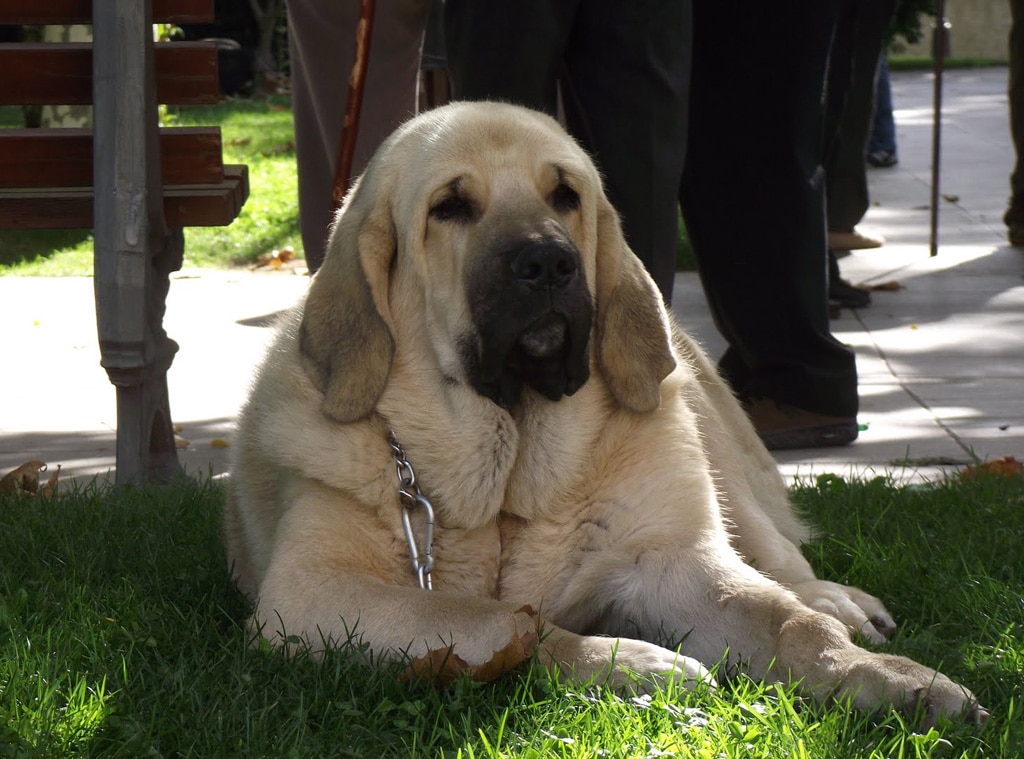
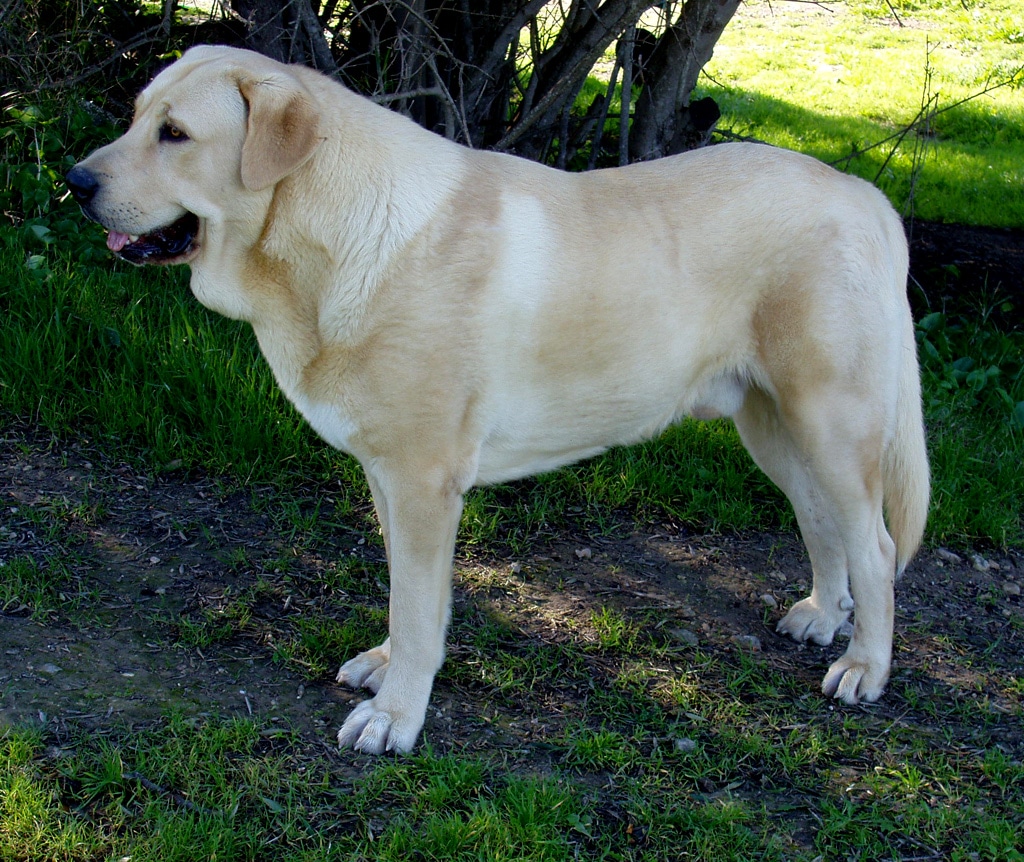
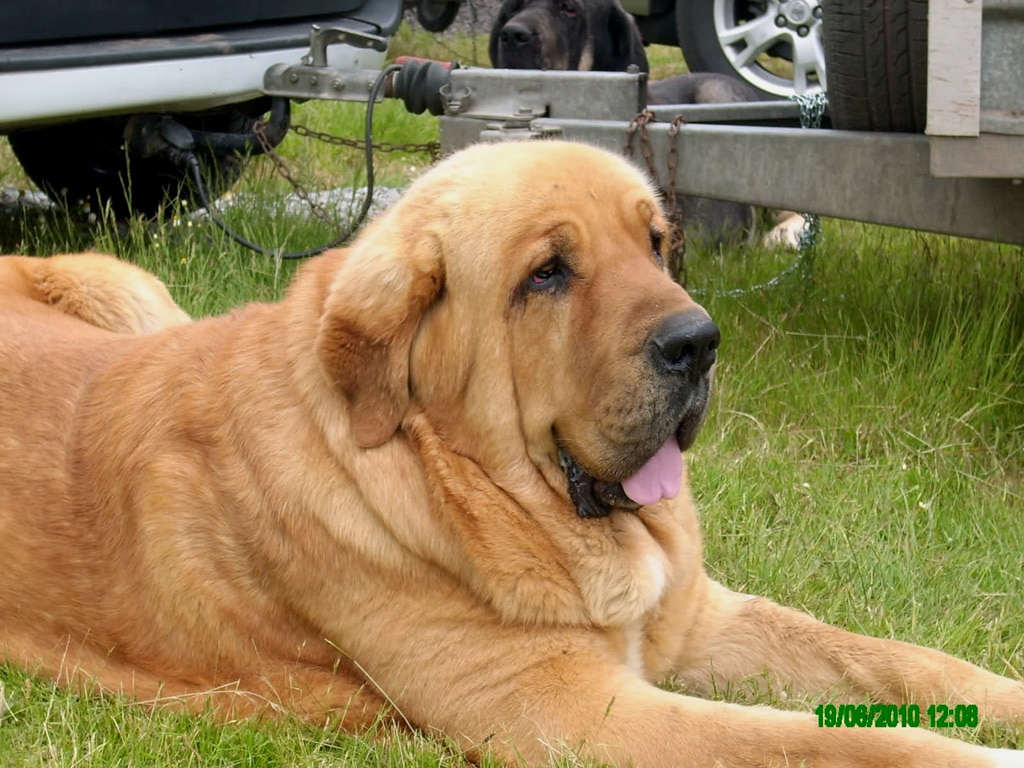
It is a companion dog, Guard and protection; slow to mature, females only reach their apogee between 2 and 3 years and males at least the 4 years.

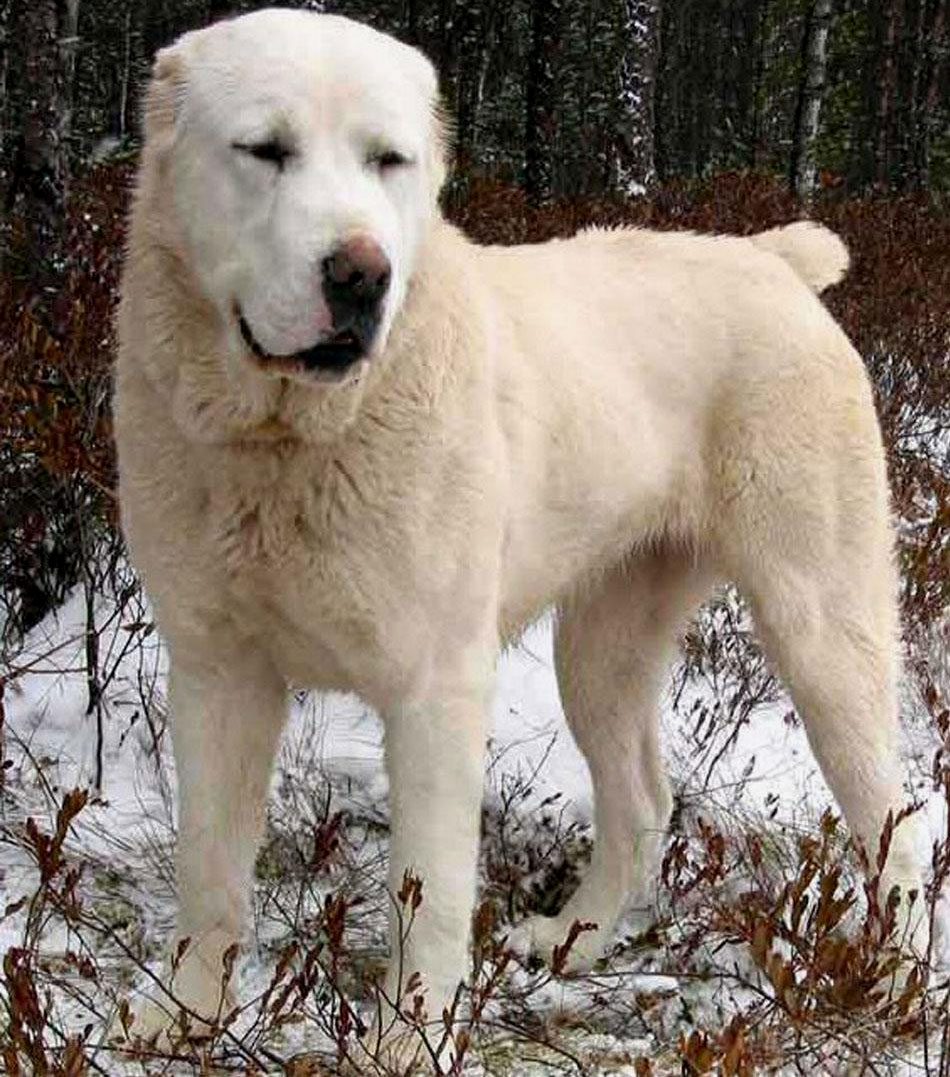
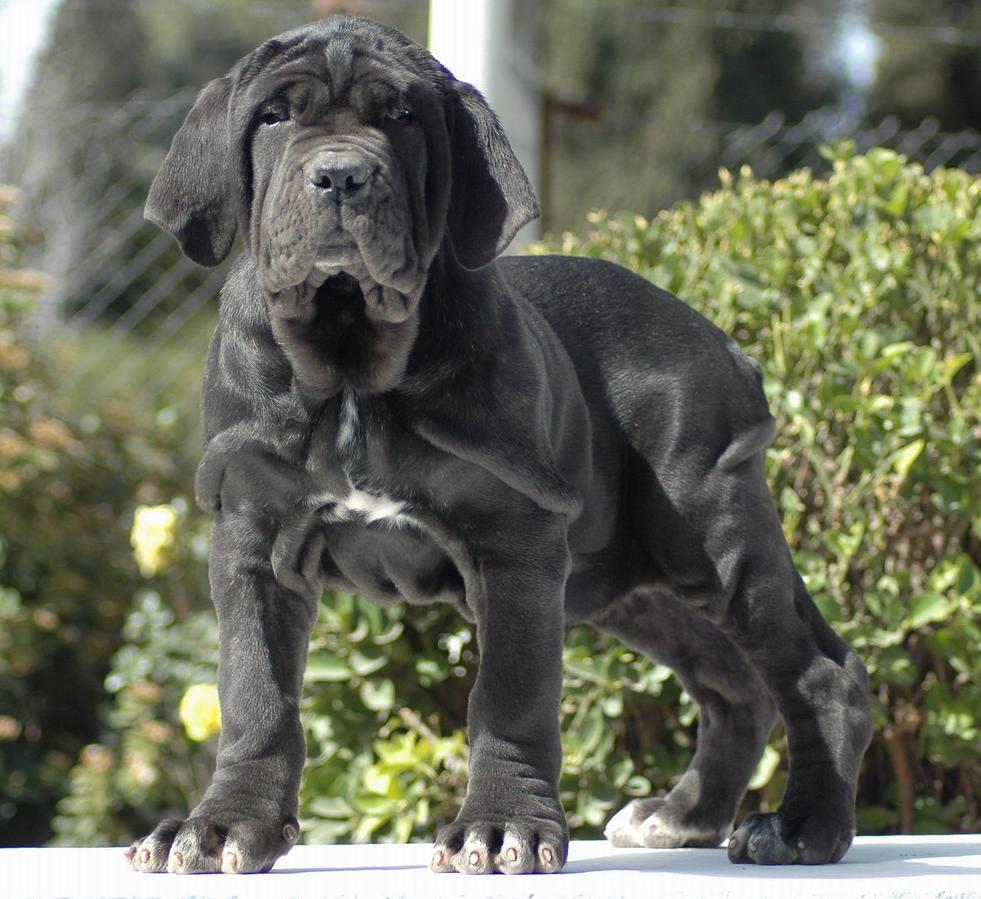
It is a dog powerful, heavy, good bone structure. Impressive, solemn but kindly appearance.
They have the feet quite large, strong and compact. They have the shape of the feet of cat with long hair between the toes. Its walk is strong, free, always light and elastic. In fast walks it tends to bring the members closer in a medium line. When walking, It seems slow and careful.
Males have, notably, more hair than females. The quality of the hair is of greater importance than quantity. Primarily the hair should be fairly long and dense.

When the weather is cold it should have a layer of hairs, internal and thick that becomes sparse in the hot months.

The hair is fine but hard, straight and roughness. Never silky, curly or wavy. The hair of the inner layer, When it has, is quite woolly. The neck and shoulders are covered with hair giving the appearance of a mane. The tail is covered with dense and bushy hair. The upper rear of the hindlimbs is pretty long hair forms fringes.

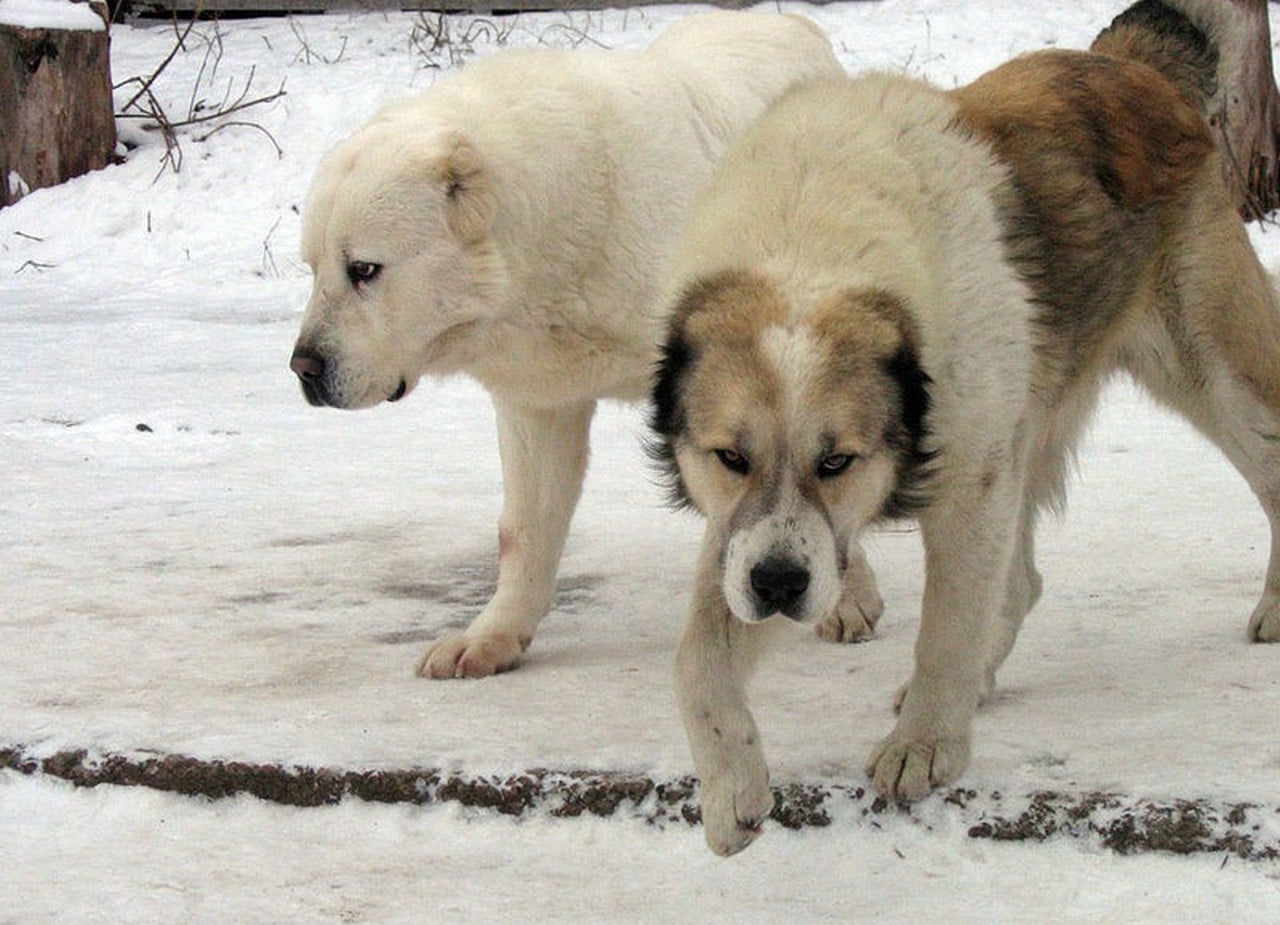
They are of color intense Black, black and tan, brown, various shades of gold, grey and blue; grey and blue and fire. The fire color varies from a very intense hue to lighter colors.

It allows a White Star on the chest. Minimal white spots are acceptable on the feet. Heat stains appear on the eyes, in the lower extremities, on the underside of the tail, around the snout, and in the form of sunglasses around the eyes.

Character ยซTibetan Mastiffยป

Respect to temperament, the race many experts agree that is a dog difficult in nature or complex..., is distant, and too independent to the point of being unpredictable because rarely leaves knowing their true intentions.

The Tibetan Mastiff It is a very brave dog that not afraid of anything, and that makes it in a excellent guardian.

His family is very love and abiding, but it is completely distrustful to strangers, and that can lead it to bite a stranger, for that reason it is not usually a dog suitable for novices... Since, If do not have education and training appropriate and responsible, It can be a real danger.

By that peculiar and especially unpredictable nature, race scholars pose that not is a dog ideal to live with children.

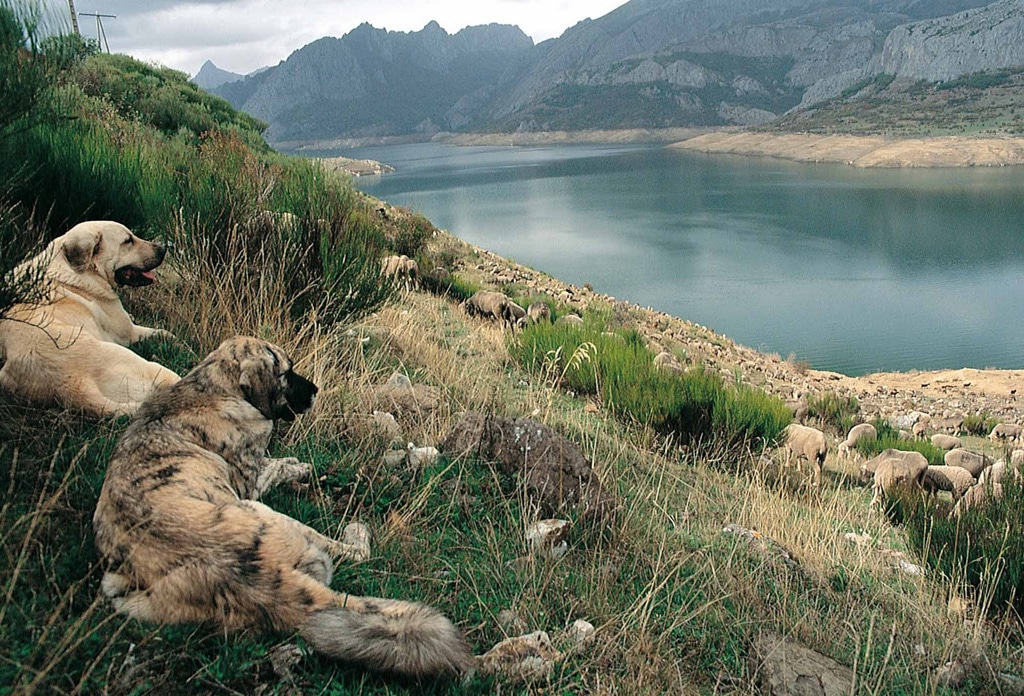
It is one of the oldest breeds of origin and is still used today in the Himalayan chain for the custody of herds and as a guardian of monasteries..

In the discharge of this function is safe and incorruptible, fierce and dangerous with strangers, like almost all races that we can define as ยซoldยป and whose character has been forged over the centuries.

It has little spread outside of Asia, even in the world of the cinophilia, It is little frequent to see copies of this race to participate in international dog shows.

Observations

Even in Tibet it is on the verge of extinction due to the difficulties involved in raising dogs of that size..

The price of a Mastin Tibetano currently ranges between 1500 and 2000 EUR, a few 1700 and 2400 $.

In the news, the breeding of the Tibetan Mastiff develops almost exclusively in England.

Health ยซTibetan Mastiffยป

The Tibetan Mastiff have some health conditions that may be worrisome. These include hip and elbow dysplasia, hypothyroidism, the persistence of the pupillary membranes (an eye disorder) and demyelinating neuropathy inherited from canines.

Not all of these diseases are detectable in a growing puppy, and it can be difficult to predict whether an animal will be free of these ailments., so you should find a trusted breeder who is committed to raising the healthiest animals possible. Must be able to produce an independent certification that the parents of the dog (and grandparents, etc.) have been screened for these defects and considered healthy for breeding. That's where health records come in..

Careful breeders screen their breeding dogs for genetic diseases and breed only the healthiest, best-looking specimens., but sometimes Mother Nature has other ideas and a puppy develops one of these diseases despite good husbandry practices. Advances in veterinary medicine mean that in most cases the dog can still live a good life.. If you are going to have a puppy, ask the breeder about the ages of the dogs in your line and the cause of death.

Keep in mind that Tibetan Mastiffs mature very slowly. They will not reach their full size until they have 3 to 5 years of age.

Remember that after bringing a new puppy home, has the power to protect you from one of the most common health problems: the obesity. Keeping a Tibetan mastiff at an appropriate weight is one of the easiest ways to prolong its life. Make the most of your preventive skills to help ensure a healthier dog for life.

The ยซTibetan Mastiffยป grooming

The Tibetan Mastiff has a long, thick double coat, with males having more luxurious coverage than females. The heavy undercoat is soft and woolly; the top layer is straight with a hard texture. The amount of hair on the neck and shoulders gives the Tibetan Mastiff the appearance of having a mane. His tail and britches (the rear thighs) they are also heavily covered. There is no need to trim any part of the coat unless you want to give your feet a cleaner look. With regular brushing, should not need frequent baths.

Brush to Tibetan Mastiff several times a week to remove dead hair and maintain healthy skin and coat. During the molting season, you'll want to brush it daily to keep your hair down under control.

The rest is basic care. Trim nails as needed, usually every week or two. Brush your teeth frequently with a veterinarian-approved pet toothpaste for overall good health and fresh breath.

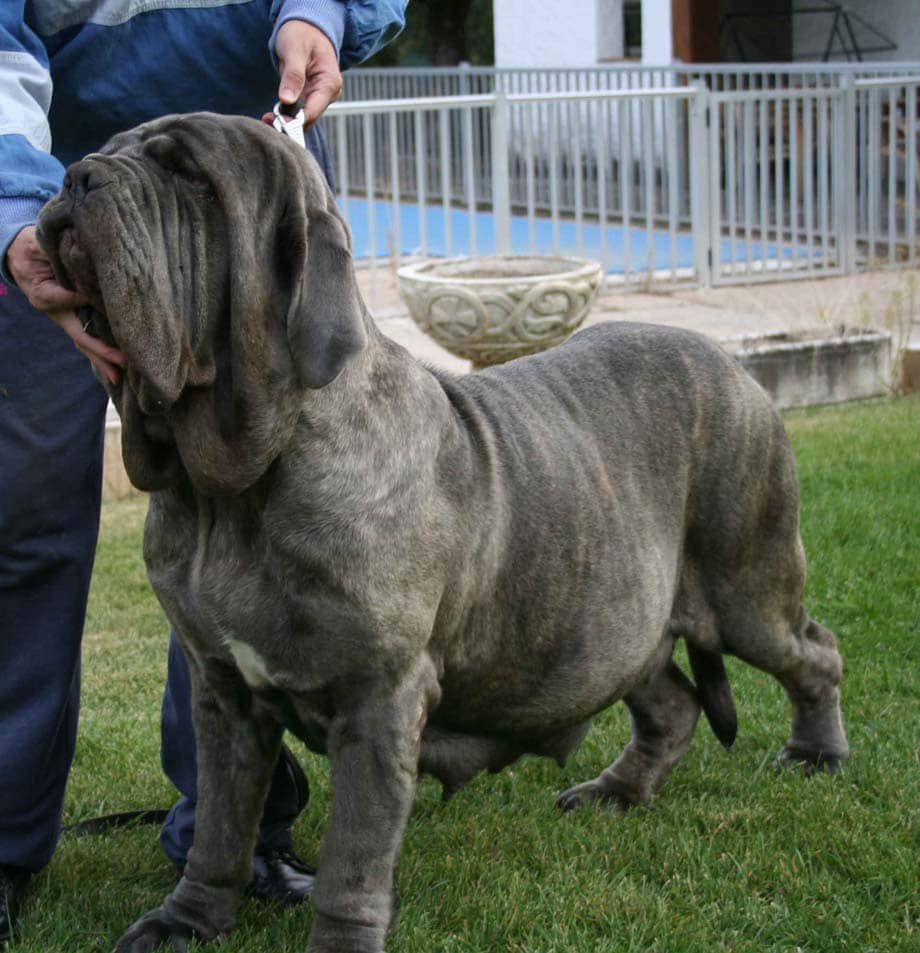
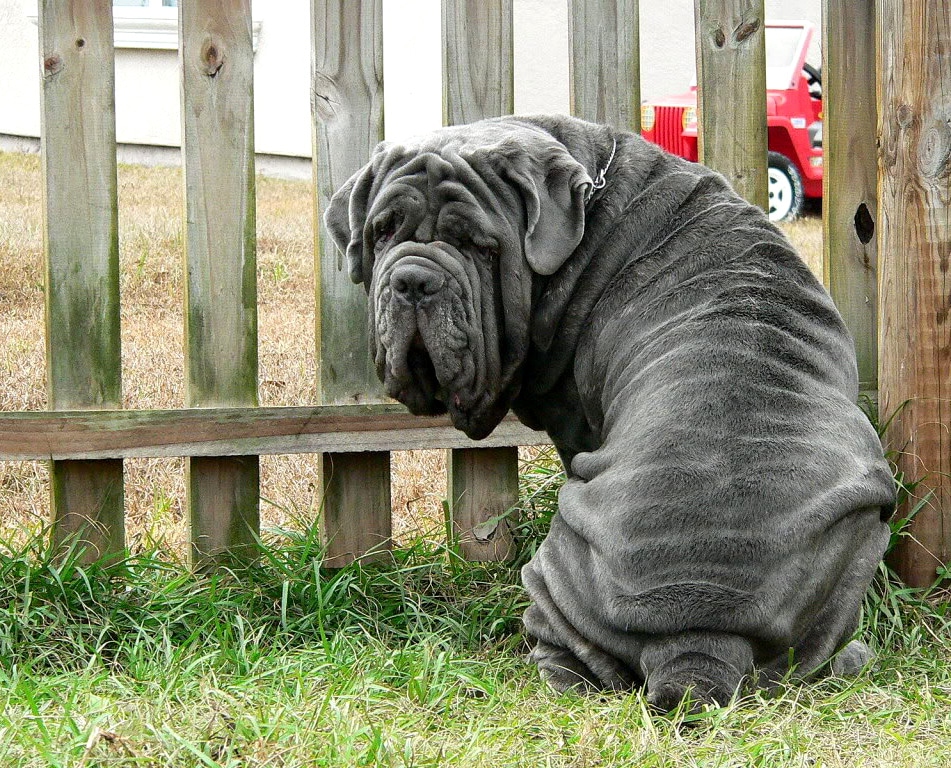
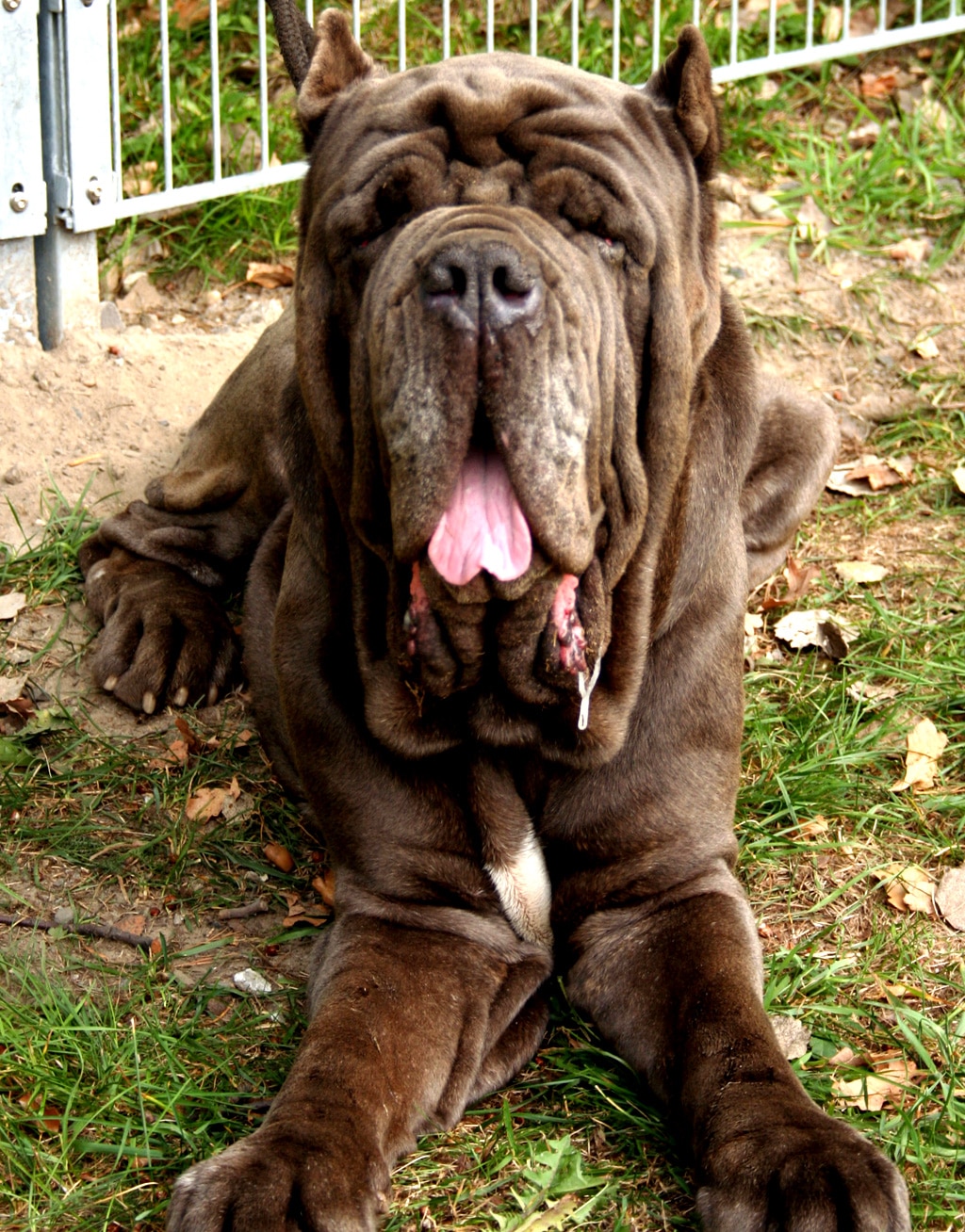
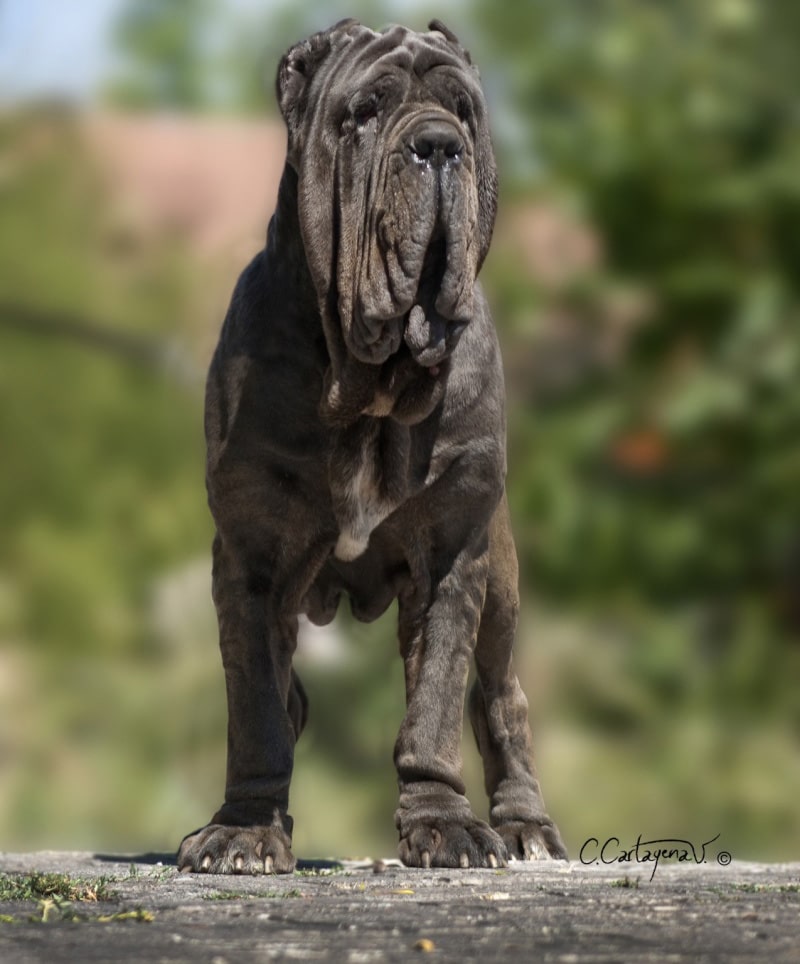
Images ยซTibetan Mastiffยป

ยซTibetan Mastiffยป Videos

Type and recognitions:

  • FCI CLASSIFICATION:
  • Group :
  • Section : . .

Federations:

FCI โ“˜, AKC โ“˜, ANKC โ“˜, CKC โ“˜, โ€‹KC โ“˜, NZKC โ“˜, UKC โ“˜

FCI breed standard Tibetan Mastiff (Do-Khy)

FCIFCI - Tibetan Mastiff (Do-Khy)
Mastiff

Alternative names:

1. Mastiff (English).
2. Mastiff du Tibet (French).
3. Tibetdogge, Tibetanische Dogge, Tibetmastiff (German).
4. Mastiff tibetano (Portuguese).
5. Dogo del Tรญbet (espaรฑol).

โ–ท The world of Pets: Dogs, cats, birds, reptiles, amphibians

Bullmastiff
Gran Bretaรฑa FCI 157 - Molossoid - Dogo

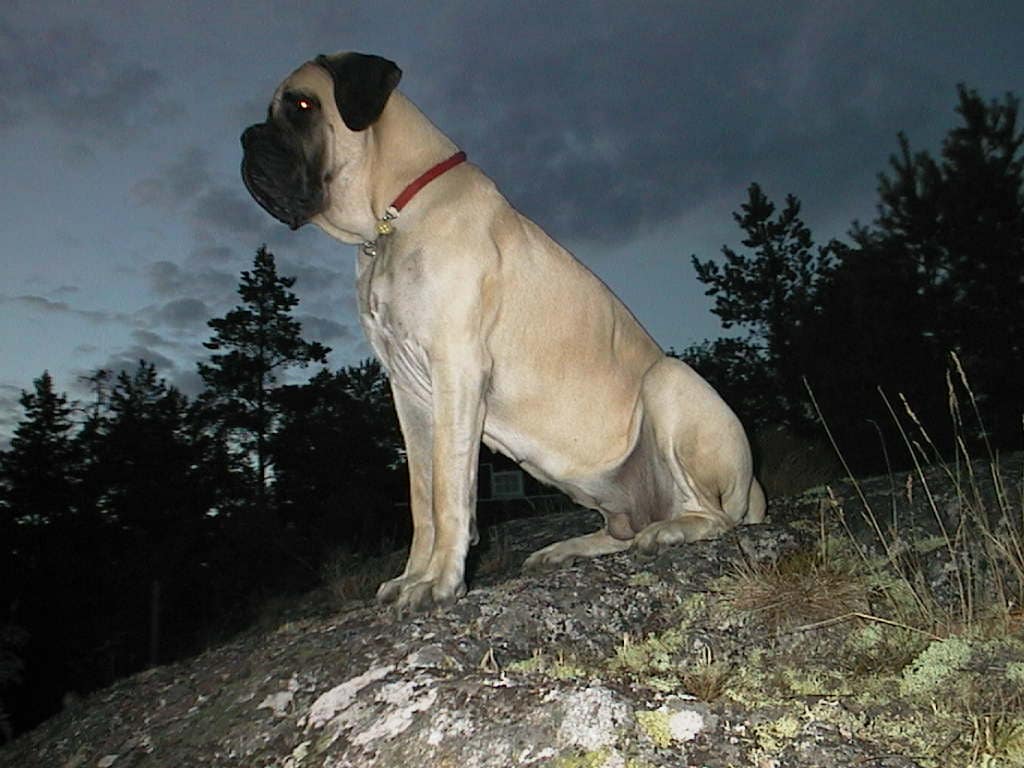
Although affectionate and sweet nature, the Bullmastiff he's a great watchdog with a mind of his own.

Bullmastiff

Content

Characteristics "Bullmastiff"

Coexistence is important that you have with your new friend. Before considering the acquisition of a dog of the breed "Bullmastiff" you know certain factors. Not all breeds of dogs are apt to live in an apartment, you must take into account his character, their need for exercise, their interaction with other pets, their care and if you have small children, their level of tolerance towards them.

Adaptation โ“˜

3,0 of 5 stars (based on 1 review)

friendly dog โ€‹โ€‹โ“˜

1,0 of 5 stars (based on 1 review)

hair loss โ“˜

4,0 of 5 stars (based on 30 reviews)

Affection level โ“˜

3,0 of 5 stars (based on 1 review)

Need for exercise โ“˜

2,0 of 5 stars (based on 1 review)

Social need โ“˜

3,0 of 5 stars (based on 1 review)

Home โ“˜

3,0 of 5 stars (based on 1 review)

Toilet โ“˜

2,0 of 5 stars (based on 1 review)

Friendly with strangers โ“˜

3,0 of 5 stars (based on 1 review)

barking โ“˜

2,0 of 5 stars (based on 1 review)

Health โ“˜

5,0 of 5 stars (based on 1 review)

Territorial โ“˜

5,0 of 5 stars (based on 1 review)

Cat friendly โ“˜

1,0 of 5 stars (based on 1 review)

Intelligence โ“˜

3,0 of 5 stars (based on 1 review)

Versatility โ“˜

3,0 of 5 stars (based on 1 review)

Child friendly โ“˜

3,0 of 5 stars (based on 1 review)

Surveillance โ“˜

2,0 of 5 stars (based on 1 review)

joy โ“˜

5,0 of 5 stars (based on 1 review)

History

The Bullmastiff It is a British breed of dog, as believed, comes from the crossing between races English mastiff and Bulldog.
The race originated official in Britain at the end of the 19th century and the first standard (description of the set of racial characteristics) data of 1924, date on which was adopted by the British Kennel Club. Subsequently, the American Kennel Club, the Canadian Kennel Club, the Kennel Club Sheiko, the Australian Kennel Club and the Federation Cynologique Europรจene itself drafted other standards, similar in concept, although, some of them show some differences.

In the past, the Bullmastiff It was used in England as guardian of the large private landowners hunting grounds, in order to pursue and apprehend poachers; the dog Peiki developed its activity of harassment and demolition pushing the thieves with the weight of his body and throwing them on top, to immobilize them, without using his powerful mouth. The reason why the attack of this dog materialized in the use of bodily force but not in the bite was given by the Forest Laws that have prevailed since the 12th century in England..

It should be said that even when the breed is officially defined as originating in the United Kingdom, the truth is that long before its adoption as such race by part of the Kennel Club and the making of his racial standard (that has changed very little since its adoption in the year 1924), the truth is that in the Iberian Peninsula there were specimens of similar morphology, as evidenced by engravings by Goya (c.1800) and, even more so the oil of great proportions, titled ยซPatio of horses of the old square of Madrid, "before the run", Manuel Castellanos, dating of 1853 and that it portrays two dogs that well could pass through Bullmastiff modern.

In fact, much earlier, There were already "Bull Dogs" in the Iberian Peninsula that were highly appreciated for their bravery and power.; so much so that Catherine of Aragon herself, When he travelled to England to marry Henry VIII took, as part of his regalia, several of these animals to be used beyond, hobby that became very fashionable then and that continued to be highly appreciated in the times of Elizabeth I and Mary Stuart.

Physical characteristics

Aspect imposing and eminently deterrent, the Bullmastiff is an animal's good bones, chest wide and deep and powerful back. His head, square viewed from any angle, with ears darker than the mantle and preferably black color v, on which dominates a nose medium length and width, covered with a black mask that extends towards and around the eyes which have to be equally dark (preferably color hazelnut, Brown, dark brown or black, never yellow or amber), intense and deep look, is its main and most characteristic hallmark. Short hair, his cloak can be Griffon, covering all shades from sand to liver red, or striped.

the typical male, when it reaches its full physical development, for the three and a half years of age, comes to measure between 63,5 and 68,5 cm to the cross with a weight between 49,5 and 59,5 kg. The adult female, completed eighteen months, usually weigh in 41 to 49,5 kg and measured between 61 and 66 cm..

Observations

Cleaning and maintenance of a Bullmastiff is simple, because it is a short hair dog, with an annual moult in spring. A session of vigorous brushing hair and against the grain, three times in a week will be enough to keep your hair clean and bright and prevent body odor. The baths, alter the pH of the skin are fully desaconsejados and if you ever needed to bathe him, it is essential to do it with neutral pH shampoo and warm water, abundantly clarified to remove all SOAP residue and then drying thoroughly throughout the body.

Character and skills

still today, its form of attack and defense is characteristic, and it is very much appreciated, because well measured its strength and never attacks to draw blood. And it is this trait that distinguishes it from other trotting breeds that are much more easily and prompt in the bite, inferring great damage to their prey, whether other dogs, other animals or people.

It is essential that the exercise is very controlled during the critical stage of growth (until the 15-16 months males and the 10 months females), to prevent musculoskeletal problems in adults. For this reason you must avoid overweight in the puppy.

Training in attack is totally discouraged.

Smart guardian, discreet, effective and with great capacity of discrimination, is little barking, very home, and only moderately active, so it adapts perfectly to the floor and city life.

Unlike other trotting races, It is characterized by accepting orders imposed all the members of the House, even the little ones and not be "one-owner dog", which facilitates its coexistence with the family.

Did you know??

Although affectionate and sweet nature, The Bullmastiff is a great guard dog with mind of its own. Assertive need an experienced owner and. The Bullmastiffs can be willful and is not likely to be put off once they wake.

Bullmastiff Education

What is important is loving but consistent parenting from day one. A dog school with puppy training and further development are very important for Bullmastiffs in socialization. Especially if you are kept as a single dog. All environmental situations should be practiced with him at first so that he can handle them later with confidence.. The Bullmastiff can be well motivated with his voice and can train with goodies. Once you have internalized a command, will be happy to do it.

Bullmastiff Care and Health

The Bullmastiff's coat is short and thick. A pimple glove is ideal for removing loose hair and an appropriate brush is suitable for grooming the coat. Ears should be checked regularly. It is also important to check regularly for ticks, fleas and other parasites. After each ride, clean the dog. If you find a tick that has already bitten your dog, you can remove it with tick tweezers. If you don't dare to do this, you should go to the vet. If the dog often shakes its head or tries to scratch with its paw, a walk to the vet is recommended.

Breed-specific diseases

The Bullmastiff belongs to the heavy dog รขโ‚ฌโ€นรขโ‚ฌโ€นbreeds. Hip joint dysplasia is a typical disease of this breed. The so-called rolling songs (ectropiรณn/entropiรณn) can also occur, bitches can suffer from tumors of the mammary gland. Tears of the cruciate ligaments can occur if they occur too early and too much stress on the puppy / young dog's age.

Nutrition / Food

The Bullmastiff is an "omnivore" and eats any type of food. Unfortunately also what you find outside. Otherwise, is satisfied with dry food or BARF and tasty extras in the bowl. These include cottage cheese, eggs and noodles.

Bullmastiff life expectancy

Bullmastiff life expectancies vary.. As long as the Bullmastiff is healthy and is maintained and treated accordingly, has a high life expectancy of 10 years or more.

Buy a Bullmastiff

A Bullmastiff's decision should be long and well considered. Serious breeders can be found through the FCI (Federation Cynologique intenationale). It is advisable to contact several breeders and organize a visit. A serious breeder will accept a visit to himself and his dogs. He will answer any questions that may arise and will have all the documents available for inspection.. So both parties have the chance to get to know each other and exchange information and get a picture of the upbringing of dogs and puppies.. A responsible breeder will continue to accompany and support their puppies and their families..

Once you have decided on a breeder and all questions have been clarified to your satisfaction, nothing stands in the way of a new family member moving out.

Bullmastiff pictures

bullmastiff videos

Type and recognitions:

  • FCI CLASSIFICATION:
  • Group :
  • Section : . .

Federations:

FCI โ“˜, AKC โ“˜, ANKC โ“˜, CKC โ“˜, โ€‹KC โ“˜, NZKC โ“˜, UKC โ“˜

FCI breed standard "Bullmastiff"

Origin:
United Kingdom

Date of publication of the valid original standard:
13.10.2010

Use:

guard dog


General appearance:

Powerful and symmetrical in construction. Show great strength, although its appearance is not heavy. It is a robust and active dog.


Behavior / temperament:

Is spirited, alert and faithful. It is strong, Active, reliable and heavy duty.

Head:

---

Cranial region:
  • Skull: Viewed from any angle, the skull is wide and square. They can be observed many folds when the dog shows interest, but not when it is at rest. Wide and deep.
  • Depression links (Stop): Pronounced.

facial region:

  • Truffle: Wide; the Windows are wide open. Chata; the profile being or pointed, or raised.
  • Snout: Well open nostrils. Is short. The distance from the tip of the nose to the naso-frontal depression corresponds to approximately one third of the length from the tip of the nose to the center of the occiput. Width is below the eyes and maintains approximately the same amplitude to the tip of the nose. It is obtuse and square, forming a right angle to the top line of the face, and at the same time proportionate to the skull.
  • Lips: They are not hanging, and never below the lower jaw.
  • Jaws / Teeth: Lower jaw wide to its end. Level (Bite in clamp, edge to edge) desired, a slight lower prognathism is accepted without preference. The canines are large and well separated. Other teeth are strong and well applied on a regular basis.
  • Cheeks: The cheeks are bulky.
  • Eyes: Dark or hazelnut, medium-sized. They are separated by the amplitude of the snout, It presents a slight median furrow. Clear or yellow eyes are extremely undesirable.
  • Ears: They are v-shaped, they are set high and folded; they are well separated at the level of the back of the head, thus imparting to the skull a square appearance, which is very important. The ears are small and of a color darker than the rest of the body. When is the dog alert, the tips of the ears are at the same level of eyes. They do not accept the ears in pink.

Neck:

Well arched, not very long and well muscled; its circumference is almost equal to skull.

Body:

  • Back: Short and straight, providing a compact look, but not so much as to interfere with movement. Does not accept the back concave or convex.
  • Pork loin: Wide and muscled; flanks are quite deep.
  • Breast : Wide and deep, well descended between the forelimbs. Deep sill.

Tail:

High implementation. It is strong at the base and gradually decreases until the tip, reaching the Hock. It is straight or bent, but without โ€œhoundโ€ type. The crooked tail is very undesirable.

Tips

PREVIOUS MEMBERS:

  • General appearance: Front view separate presenting a right front.
  • Shoulder: Inclined, strong, muscular, Although not overloaded.
  • Metacarpus: Straight and strong.
  • Previous feet: Well arched. Cat foot with rounded toes and hard pads. Desirable dark nails. Crushed toes are very undesirable.

LATER MEMBERS:

  • General appearance: Strong and muscular.
  • Leg: It is well developed, denoting strength and activity.
  • Hocks: Moderately angled. Cow hocks are a serious misconduct.
  • Hind feet: Well arched. Cat foot with rounded toes and hard pads. Desirable dark nails. Crushed toes are very undesirable.

Movement:

Denotes strength and determination. When they move in a straight line, or front members, or hind limbs must be crossed or bending. The right forelimb and hind limb left should stand up and support at the same time. The vigorous push of the hind limbs does not alter the firmness of the back line, thus denoting a harmonious and balanced movement.

Mantle

  • Fur: It is short and hard to the touch. It protects the animal from the climatic conditions. It is smooth and close to the body. Long hair, woolly or silky is very undesirable.

COLOR: Any shade of Brindle, Fawn or red; the color should be pure and clear. Accepts a slight white mark on the chest, but other white markings are undesirable. Black Mask is essential, harmoniously joining the black markings around the eyes that contribute to the expression.


Size and weight:

Height to the cross :

  • Males: 64 โ€“ 69 cm..
  • females: 61 66 cm..

Weight:

  • Males: 50 โ€“ 59 kg
  • females: 41 โ€“ 50 kg


Fouls:

Any deviation from the aforementioned criteria is considered as a fault and the severity of this is considered to the degree of the deviation to the standard and its consequences on the health and well-being of the dog..


FALTAS DESCALIFICANTES:

  • Aggressive or fearful dog.
  • Any dog โ€‹โ€‹showing clear signs of physical or behavioral abnormalities must be disqualified..


N.B.:

Males should have two normal-appearing testicles fully descended into the scrotum..


TRANSLATION : Brรญgida Nestler / Original version : (IN)
Technical supervision : Miguel Angel Martinez

Source: F.C.I - International Cynological Federation

Alternative names:

1. Bullmastiff (English).
2. bull mastiff (French).
3. Bullmastiff (German).
4. Bullmastiff (Portuguese).
5. Bullmastiff (espaรฑol).

โ–ท The world of Pets: Dogs, cats, birds, reptiles, amphibians

Dutch Smoushond
Holanda FCI 308 . Pinscher and Schnauzer type
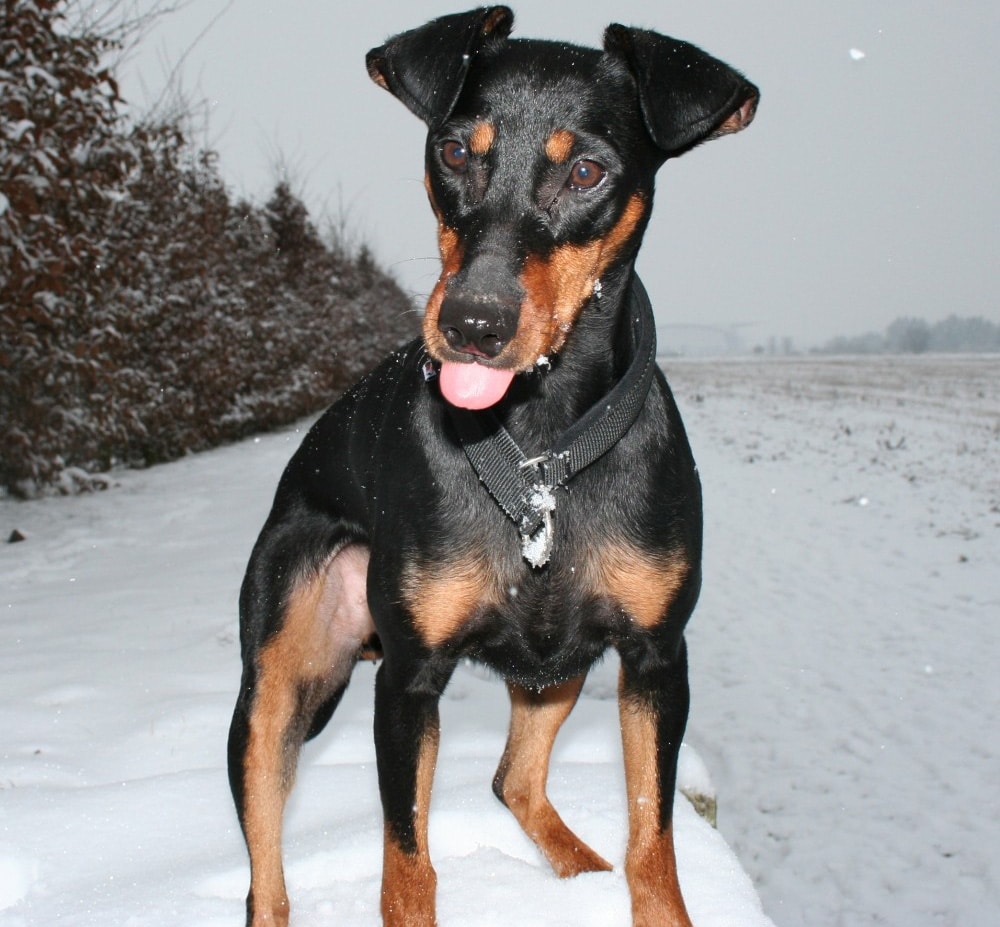
Ratonero Dutch

Content

The Dutch Smoushond was born to follow the horse and rider, and catch the rats in the blocks.

History

The Dutch Smoushond is a very ancient race. Its name derives from the term smous (mouse), because among their tasks it has always been found to hunt these rodents.

By mid-century 19 he was very popular with the upper middle class in the Netherlands following the carriages and horses and as a rat catcher in the stables. Although the origin of the breed is uncertain, it is generally believed that the Yellow schnauzer was one of the original dogs in the creation of this breed. A dog trader sold the dog as "The Knight of the Stables Dog" to tourists from commodity exchanges in Amsterdam. Quickly the name changed to โ€œSmousโ€, rough barbarian, This distinguished him from Griffon Bruxellois. The first standard dates from 1905, was written by Messrs H.A. Earl of Bylandt, A. Woltman Elpers y L. Seegers. After a long period in which the popularity and public interest decreased, the last litter was recorded in the Dutch Record Book (Dutch Dog Studbook) in 1949. In 1973, la Sra. H.M. Barkman van der Weel took the initiative to rebuild the breed. It started with a cross looking like a Dutch Smoushond. FCI-St. Nยฐ308 / 16.03.2012 3 Since 1978 interest in Dutch Smoushond is protected by the Hollandse Smoushonden Club. In 1980 the standard of 1905.

In the news, puppies of this breed are very difficult to get outside of the Netherlands.

Physical characteristics

It is an agile dog, whose silhouette is inscribed in a square, It should not be thick or heavy. The eyes are characteristic of the breed, with a lively and benevolent expression, large, round and dark colored, the ears, inserted high, they fall forward and rest on the cheeks; they are small, thin and triangular in shape, with the end slightly rounded. The tail should be quite short, with a happy demeanor, but not coiled on the back. Can be cut to 2/3 its length.

  • Fur: on the body it is thick, enough, hard, straight, shaggy looking. In the extremities it has an average length, not tight but turned inward suggesting locks. Over the head is shorter, with mustaches, beard and longer eyebrows.
  • Color: yellowish along with all its gradients; straw yellow is preferable.
  • Size: males, of 37 to 42 cm.; females, of 35 to 40,5 cm..

Character and skills

The Dutch Smoushond was born to follow the horse and rider, and catch the rats in the blocks, the Dutch Smoushond has an affectionate character, joyful, friendly, always comfortable with everyone, fearless or very nervous. It is a perfect family dog, friendly and easy to educate.

Images "Dutch Smoushond"

Dutch Smoushond Videos

Type and recognitions:

  • FCI CLASSIFICATION:
  • Group :
  • Section : . .

Federations:

  • FCI – Pinscher and Schanuezer dogs. Molossian type Dogs and Swiss Mountain and Cattle Dogs. , Section 1: Pinscher and Schnauzer. โ“˜
  • UKC – Terrier Group. โ“˜

FCI breed standard Dutch Smoushond

FCIFCI - Dutch Smoushond
Buzzard

Alternative names:

  • Dutch Ratter, Hollandse Smoushond (English).
  • Hollandse Smoushond (French).
  • Hollรคndischer Rattler, HOLLร„NDISCHER SMOUSHUND (German).
  • Hollandse Smoushond (Portuguese).
  • Smoushond holandรฉs, Perro ratonero holandรฉs (espaรฑol).

Photos:

1 – Dutch buzzard by https://pxhere.com/en/photo/1424539
2 – Dutch buzzard by https://pxhere.com/es/photo/1581327
3 – Dutch buzzard by https://pxhere.com/es/photo/1061995
4 – Dutch buzzard by https://pxhere.com/es/photo/1426949
5 – Dutch buzzard by gwendolenFlickr

โ–ท The world of Pets: Dogs, cats, birds, reptiles, amphibians

Cimarrรณn uruguayo
Uruguay FCI 353 - Molossoid - Dogo

Cimarrรณn

The Cimarrรณn uruguayo also called Cimarrรณn dog or Creole cimarrรณn is the only breed developed entirely in Uruguayan territory.

Content

History

The Cimarrรณn uruguayo Bulldog is a dog type molosoide, medium-sized, compact and strong, the fur can be striped or also bayo (cream-coloured) and snout black. His temperament is docile, cunning and guardian, ideal for guard, company or big game. It is recognized as a race in Uruguay from 1989 and internationally by the Federation Cynologique Internationale – FCI, from the 21 in February of 2006.

Etymologically Cimarron is a term applied in America (originally on the island of Hispaniola) to everything that having been domestic or civilized returned to the wild or wild state, by referring in this case to their refuge in the heights (Indeed in the mountains and valleys hidden) Sierras, with which cimarrรณn would be "he who lives on the peaks or hides in them".

The original specimens of the wild dog descended from the dogs introduced by the Spanish and Portuguese conquerors..
The natural crosses that were taking place in the wild is that it evolved in the course of two centuries a native variety perfectly adapted to the environment of the Uruguayan Plains.

ยซTell your master that when I lack men to fight his henchmen, I have to fight them with Maroon dogsยป: Josรฉ Gervasio Artigas to the Gral. Carlos Federico Lecor.

The dog breed called Cimarrรณn dog or Criollo cimarrรณn is the only breed developed entirely in Uruguayan territory.

Non-domestic dogs in the world, Whether original species or breeds produced by the feralization of domestic breeds that returned to the natural environment and managed to readapt to it, they show a physical development that is totally different from this one., so it is highly arguable that this breed produced in the Uruguay as a supposed model maroons dogs mentioned in ancient chronicles and documents reflect the natural demeanor of those. All wild dogs of the world, Because of what is known as "convergence" at an evolutionary level, they have long legs, erect ears, slender body, exceptions that occur in extreme climates (enormous ears of certain dogs of African deserts or small ears of Arctic foxes).

There are detailed chronicles of attacks by packs of these dogs on caravans and people, that led to the authorities of the time (end of the 18th century) they already have and encourage major massacres, reaching count by tens of thousands dead dogs.

Each dead animal was paid by the authorities of the time, requiring proof of death presented the jaw or the pair of ears of the animal. From this practice would derive the characteristic ear cut that is performed on many newborn pups., in the shape of a "cougar ear".

Despite these massacres, ยซโ€ฆa good number of mothers with their offspring conquered the mountains of Olimar and especially in the Sierra de Otazo and in the Cerros Largosยป, in what is now known as departments of Cerro Largo and Treinta y Tres, where many ranchers and landowners in this place, they took advantage of the virtues of this breed for working with cattle and defense of his property, beginning to raise it, preserving the mixing.

Modern traces of the breed begin to become more public in the early 1990s. 1980, When numerous breeders of Montevideo, attracted by the remarkable characteristics some specimens, they begin to develop their parenting and standardization.

It is in 1989 When this work begins to pay its fruits, to being the Cimarrรณn Uruguayo officially recognized by the Association of the Rural Uruguay (A.R.U.) and the Kennel Club Uruguayo (K.C.U.), 20 years after the first exposure of a specimen of the breed in the K.C.U.
Thus, the Association of Uruguayan Cimarrones Breeders was created and together with the K.C.U.. It prepares the official roll of the race, selecting the base dogs of the same and registering their pups, being tattooed for the first time with this registration number.

Today the character attributes of this breed called Cimarrรณn They make it increasingly popular in Uruguay and region, being employed as a companion dog, Guard and hunting, especially the wild boar.

Physical characteristics

The Cimarrรณn Bulldog is a dog of medium size type, balanced, strong, compact, with good osatura, muscular, shrewd and great courage. The size and weight of the males is of 58 to 61 cm. of height and 38 to 45 weight kg. And of 55 to 58 cm. of height and 33 to 40 weight kg, in females.

Character and skills

It is excellent to work with cattle dog, hunting and guard. Predominant livestock activity of these lands and the consequent abundance of food without great competition with other natural predators, the bighorn reproduced in large numbers becoming – according to historical documents – in a true plague and scourge for the inhabitants of the countryside and the livestock.

This race since its standardization has attracted a growing interest both within the Uruguay border, having copies of this dog in various countries of America, from United States to Argentina, counting this last country with several breeders of Cimarrรณn Uruguayo.
Another of the steps achieved for the genetic improvement of the breed called Cimarrรณn Uruguayo is the signing of an agreement between the University of the Oriental Republic of Uruguay, through its Faculty of veterinary medicine with the Maroons breeders society for the study of the zootechnical status and consanguinity of the exemplary enrolled in their rolls.

This long process of standardization was crowned the 21 in February of 2006 When the International Bureau of the Federation Cynologique Internationale (FCI) gives international recognition to the Uruguayan Cimarron.

The breed standard states that the dog must have great courage. Like all large dogs, Cimarron Uruguayo should be well socialized when very young if you want to be kept as a companion. It is a very friendly dog รขโ‚ฌโ€นรขโ‚ฌโ€นwith children and other animals.

Cimarron Uruguayo is sometimes used for surveillance, hunting and all dog sports in his native Uruguay. Being a very intelligent dog has been used for all kinds of jobs, as rescue or grazing.

A dog is fairly quiet and stable, rarely bark unless the threat is real.

The primitive Cimarrรณn dog, by its roots in the Uruguayan territory, It has been from the very beginning of the national identity of this town a symbol of the independence struggle, faithfully reflected in the letter sent by General Josรฉ Gervasio Artigas in response to General Carlos Federico Lecor, Count of la Laguna and Governor of the Provincia Cisplatina (current Uruguay) in which Artigas expressed that if it was left without soldiers to fight, I would do it with the Cimarron dog.

It is because of this tradition that this breed is currently a symbol and mascot of the National Army of Uruguay., having a preferential place in the annual military parades of the 18 July. On this occasion, a soldier of the battalion of Blandengues (the company that Artigas himself knew how to lead at the time) He rides leading the parade carried a Moorish Steed without along rider which is a sheep dog by the flange.

Images "Cimarrรณn uruguayo"

credits:

1. Cimarron Uruguayo – Kennel La Bonfire by Leonardo Botiรฃo Fonseca / CC BY-SA
2. Cimarron Uruguayo by brindle / CC BY-SA
3. The Finnish Winner Show, Helsinki, 2015. By Thomas / CC BY-SA
4. Nbistolfi / CC BY-SA

Videos "Cimarrรณn uruguayo"

Type and recognitions:

  • FCI CLASSIFICATION:
  • Group :
  • Section : . .

Federations:

FCI โ“˜, UKC โ“˜

FCI breed standard Cimarrรณn uruguayo

FCIFCI - Cimarrรณn uruguayo
Cimarrรณn

Alternative names:

1. Cimarron, Uruguayan Cimarron, Cimarron Creole, Maroon Dog, Cerro Largo Dog, Perro Cimarron, Cimarron Dog (English).
2. Cimarrรณn uruguayo (French).
3. Cimarrรณn Uruguayo (German).
4. Cimarron uruguaio (Portuguese).
5. Perro Gaucho, Perro criollo, Cimarrรณn (espaรฑol).

โ–ท The world of Pets: Dogs, cats, birds, reptiles, amphibians

Broholmer
Dinamarca FCI 315 - Molossoid - Dogo

Broholmer

The Broholmer It was used as a watchdog for large farms and feudal lands.

Content

History

The Broholmer it's interesting, partly because it is a very old breed of dog whose ancestry in the Danish royal house dates back to the time of Frederick II and Christian IV. King James I of Scotland reportedly, in relation to his marriage to the daughter of Frederick II in 1589, graced the Danish court with some magnificent mastiff-type dogs. These English dogs were mated with the dogs that Frederick II already had. The type of dog was named "The Great Dane" since the Viking Age., that is to say, a few 400 years before Frederick II.

We begin our historical review around 1850 at the Renaissance castle of Broen Broenne in Gudme. This is where the chamberlain Niels Frederik Bernhard Sehested (1813-1882) decided to reinstate and re-breed the old Danish dog, since the breed was about to become extinct at this time.

To promote dog breeding, ordered to raise puppies to ten people in the country. But, there was a condition that one should promise to continue breeding. In this way, the dog became widely used and became a very common and prized dog.

An old newspaper said: The Broholmer it has become an ordinary dog รขโ‚ฌโ€นรขโ‚ฌโ€นin Denmark and especially on the streets of Copenhagen.

The Broholmer also had its importance among royalty. King Frederick VII and Countess Danner had several broholmers. Both the king and the countess appreciated the breeder and were represented with their dogs on numerous occasions..

Unfortunately, early twentieth century, this breed lost a lot of ground. Dog disease, epidemics and inbreeding problems killed many dogs. After that, the tracks of these adorable dogs almost disappeared, until in 1974 The alarm rang.

The Danish Kennel Club began a national search for broholmers, and he found some dogs similar to broholmers, so that a real breeding job can be started.

Although only a few dogs were found, managed to start a breeding job. The result of this work are the dogs that exist today in Denmark, whose owners are recommended to be members of the Broholmerselskabet.

Since 1974, a breeding committee under the Danish Kennel Club has been responsible for the breeder's breeding planning. In 1996, el Broholmerselskabet, in collaboration with the Danish Kennel Club, obtained a valid cooperation agreement from the 1 in January of 1997, which meant that the members and dogs of the Broholmerselskabet were on their way to becoming a formal part of the Danish dog job. The cooperation agreement with DKK fulfilled the wishes of its members expressed at member meetings across the country in 1995. The race was on the way to recognition.

The Broholmer has been recognized as a Danish national breed and has been granted international approval, the FCI pedigree, so breed approved dogs can now be showcased at DKK shows. This means that it can display broholmers on par with other breeds of dogs. This has now resulted in the fact that several broholmers have already received the title of Danish Champion and International Champion..

The Broholmer it has also been internationally approved, meaning puppies can be sold to foreign stakeholders.

Many breeds of dogs changed their appearance in the years around the last century and had to bow to various models., which in some cases caused problems that they then had to deal with. The Broholmer has not been the subject of any fashion illusion of any kind. The standard is, with some changes, the same one that Sehested wrote.

Curiosities

After the reconstruction of the race, the black color was difficult to recover, but at present it breeds without problems.

Physical characteristics

Large dog that can be inscribed in a rectangle; his walks are regular and energetic. The exterior appearance is dominated by a powerful front axle. The head is broad and solid. The neck is strong and has some folds (Spada). The chest is wide and well formed. At rest, his head is very low, leaning towards the ground. If the dog is attentive or excited, raises its head and tail rises above the horizontal. The eyes are round, not too big: color ranges from light amber to dark amber. His expression shows security. The ears, medium size inserted high, fall on the cheeks. At rest, the tail falls in the shape of a saber; on the other hand, when the dog is active it takes it higher, but without reaching the back.

  • Fur: short, with quite thick undercoat.
  • Color: leonado with black mask, golden red or black.
  • Size: males, 75 cm.; females, 70 cm..

Character and skills

The Broholmer he is a very kind and devoted dog. He is very receptive and just wants to make his owner happy. He is a watchful dog and will have a lump in his throat when there are strangers at the door. Act slowly and confidently. The Broholmer It is an excellent family dog รขโ‚ฌโ€นรขโ‚ฌโ€นthat, because of his kind mind, must be treated very carefully.

How much exercise does a Broholmer require?

Because the Broholmer is a big dog, it's important to keep it running. Hours of walking every day are not required, but the dog is always happy to go outside and exercise its muscles.

How to best activate a Broholmer besides walks?

The Broholmer it is a robust and strong dog that is very suitable for pulling. You can make your Broholmer successfully pull a cart or sled. Due to his kind mind, show a lot of affection with the people in their environment. There are examples of Broholmer that are rescue dogs, tracking dogs, shooting, etc.

Is there skin care or the like to pay attention to?

Skin care is minimal. A brush trip once a month is enough. In the molting season it can shed a lot of hair.

Tips for People Considering Buying a Broholmer

As an adult, the Broholmer have a medium level of activity, but the young dog has much more energy, that you; therefore, you must take into account its large size before deciding to purchase a Broholmer. We are talking about a puppy of 40 – 60 kg, who wants to explore the world. The dog must be respected for his great kindness and, therefore, develops best in homes where there is mutual respect between home and dog.

The Broholmer it is for you that …

You want a devoted dog, solid and calm

You want a family dog โ€‹โ€‹that you can feel comfortable with

You want a dog that has a good temperament

Images Broholmer

broholmer videos

Type and recognitions:

  • FCI CLASSIFICATION:
  • Group :
  • Section : . .

Federations:

FCI โ“˜, AKC (The AKC does not have an official breed standard; currently uses the FCI standard) โ“˜, UKC โ“˜

FCI breed standard Broholmer

FCIFCI - Broholmer
Broholmer

Alternative names:

1. Danish Broholmer, Danish Mastiff (English).
2. Broholmer (French).
3. Broholmer (German).
4. Mastiff dinamarquรชs (Portuguese).
5. Mastรญn Danรฉs (espaรฑol).

โ–ท The world of Pets: Dogs, cats, birds, reptiles, amphibians

Dogo Canario
Espaรฑa FCI 346 - Molossoid . Dogo

Dogo Canario

The aggressiveness of Dogo Canario should not be overly stimulated. It is an optimal guardian and defender without the need for training.

Content

History

The Dogo Canario It is a classic moloso. It is the offspring of an ancient and in this ancient form is only rarely found in Central Europe today.. It has many names: Presa Canario, Perro de Presa, Perro de Toro, Alano o Presa Canario. Dogs of the current type Dogo Canario they existed still ago 200 years everywhere. They were the old saupackers, bear teethers, guard dogs, butcher dogs, the ancestors of the current great danes, bulldogs, boxers and mastiffs. They are extremely strong and bulky dogs, that even today are summarized as molossers. They were already bred in ancient times and have always been highly appreciated. They were used on large farms, with livestock herds or for example on merchant ships such as guard and protection dogs, served as herding dogs and as hunting dogs for wild boar or bear. They served rulers like Hammurabi as war dogs, they had them carved in stone in full recognition does 3700 years.

Due to its strength, courage and determination, have been used as fighting dogs in the arenas of animal fighting since Roman times. Molossians have a commanding head with a rather short snout and long lips.. The ears are usually worn hanging. According to the traditions of antiquity in words and images, the main characteristics of the molossian have remained essentially the same for thousands of years, but in recent centuries and especially due to modern dog breeding, the classic type of molosser has been lost to some extent. In extreme cases strange shapes have been bred with many extremely short folds or snouts such as bulldogs or giants like him Great Dane or the Mastiff. The Dog is still raised in his homeland only for his performance at work.

So, chances are that the Dogo Canario still personify the type Molosoide as was common in the old days. It is clearly recognized as trotting, but does not suffer from cultivated exaggerations of any bodily characteristics or traits. Can only hope it stays that way. Unfortunately, breeders are very much at odds with Dogo Canario. They haven't even managed to agree on a name and a registry office. Since 1991 It has been officially considered as "The Canarian Presa Dog" among the natural symbols of the Canary Islands.. Meanwhile in 2001 the Spanish Ministry of Agriculture recognized these dogs as a national breed also under the name of Dogo Canario, the same dogs were then provisionally recognized as Dogo Canario by the world federation FCI in 2001 and finally in 2011. Other names are Perro de Presa y Alano. Alano It is an old word that means Great Dane.

Physical characteristics

The Dogo Canario, Perro de Presa, Perro de Toro, Alano o Presa Canario – all designations for the same four-legged friend – he is an elegant dog that radiates athletic power. He is an athletic, muscular, elongated but nevertheless typical molosser.

The skull-muzzle ratio is approximately 6:4. The upper lip rests a little flaccidly on the lower one. The eyes, medium-sized, they are oval and hazelnut, the ears, high, they are separated from each other and are shaped like a button; they are only amputated to remember their original function as a combat dog. The neck, long and muscular, shows a slight dewlap. The tail is implanted high: thick at the base, is tuned to the extreme. the belly is retracted, but the last ribs stand out only slightly, giving a harmonious harp shape. Limbs are sturdy, muscular and perfectly plumb; angulation of the hind limbs is not very marked.

The difference between male and female bulldogs desired by the FCI standard is therefore unnaturally large. In any case, desires of this standard for outward appearance should not be taken so seriously.

Because fortunately this originally preserved dog breed, robust and healthy has set its standard โ€œfor itselfโ€, more exactly for their performance at work, and has kept it in the practice of life until today. People, who now wants to put him in a standard of modern pedigreed dog breeding, don't even agree to the principle, as we can see in its history of the breed. Modern pedigreed dog breeding has done no breed of dog any good, both in terms of health and character. In old times, the Bulldog fitted with pleasure to the ears, so that they protruded upwards. This is now prohibited. Today they show large down-hanging ears..

  • Fur: short, without Undercoat, pretty hard.
  • Color: leonado or atigrado. The tabby specimens have a wide range of colors, from very dark to a light gray with a rather cold tone.
  • Size: males, of 61 to 66 cm.; females, of 57 to 62 cm..

Character

The Dogo Canario is a quiet dog, balanced and self-assured. He is a powerful and defensive athlete who can show his performance at any time. Like all molossi, he is extremely kind, has strong nerves and a high stimulus threshold. But, he is more eager to move and not as lethargic as most molossers today bred only as companions. One Dogo Canario well socialized is friendly to people who know and like children. It is very sociable. Towards strangers is at first a little distant without fear. He is an incorruptible guardian, fearless and protective of his family without being aggressive himself. The FCI standard describes the character desired by the breed:

Calm appearance; alert look. It is especially suitable as a watchdog… His temperament is even-tempered and he is very self-confident.. Deep barking. He is docile and kind to his family members and with strong ties to his master, but you may suspect strangers. Self-assured demeanor, elegant and somewhat distant. When you are alert, his attitude is confident and alert.

It must be added that the Dogo Canario rarely barks. But if it barks once, it's pretty awesome.

Fitness

The Dogo Canario is undemanding in terms of external conditions. Of course: a small apartment in the big city would not be optimal for your attitude. But other than that it's easy to maintain. It is also a working dog, a guard, a driver, a hunting dog for hunting wild boar. The Dogo Canario it is suitable as a family dog รขโ‚ฌโ€นรขโ‚ฌโ€นonly on the condition that it is well socialized, well educated and physically fit. You also have to take into account a fact: It is considered a "dangerous dog" in many countries.

Dogo Canario Education

The Dogo Canario can be trained well, but still not a beginner dog. It is intelligent, very sociable and eager to work. But at the same time he is very powerful and assertive. In case of doubt, always the strongest end of the strap. So, his master or caretaker should not leave doubts about his role as leader and this on the basis of natural authority. So this dog will gladly leave the leading role to his bipeds without reservation.. But it must be filled. The Dogo Canario it is even suitable for demanding tasks such as training as an assistance or protection dog. The basic requirement is that it comes from a serious breeder and that it has already been socialized there..

Dogo Canario health and care

The Dogo Canario has no special demands on your care.

Typical diseases

Breed-specific diseases are not known.. Due to his still short career as an official pedigree dog, it can be assumed that the population of the Dogo Canario, Presa Dog or Presa Canario – Whatever this ancient breed of dog is called – enjoys robust health.

Nutrition / Food

The Dogo Canario has no special demands on their diet.

Life expectancy Dogo Canario

There are no reliable figures on life expectancy. Seriously raised, the Dogo Canario should be able to live off 10 to 12 years.

Buy Dogo Canario

Before making a purchase, be aware that the restrictive attitude of the State can cause many problems in daily life and additional financial burdens. The Dogo Canario it is a large and powerful dog that belongs to the hands of an experienced teacher or lover. The cost of a Dogo Canario is of some 1200 EUR.

Characteristics "Dogo Canario"

Coexistence is important that you have with your new friend. Before considering the acquisition of a dog of the breed "Dogo Canario" you know certain factors. Not all breeds of dogs are apt to live in an apartment, you must take into account his character, their need for exercise, their interaction with other pets, their care and if you have small children, their level of tolerance towards them.

Adaptation โ“˜

4,0 of 5 stars (based on 1 review)

friendly dog โ€‹โ€‹โ“˜

1,0 of 5 stars (based on 1 review)

hair loss โ“˜

3,0 of 5 stars (based on 1 review)

Affection level โ“˜

4,0 of 5 stars (based on 1 review)

Need for exercise โ“˜

4,0 of 5 stars (based on 1 review)

Social need โ“˜

1,0 of 5 stars (based on 1 review)

Home โ“˜

3,0 of 5 stars (based on 1 review)

Toilet โ“˜

2,0 of 5 stars (based on 1 review)

Friendly with strangers โ“˜

2,0 of 5 stars (based on 1 review)

barking โ“˜

3,0 of 5 stars (based on 1 review)

Health โ“˜

4,0 of 5 stars (based on 1 review)

Territorial โ“˜

5,0 of 5 stars (based on 1 review)

Cat friendly โ“˜

2,0 of 5 stars (based on 1 review)

Intelligence โ“˜

4,0 of 5 stars (based on 1 review)

Versatility โ“˜

2,0 of 5 stars (based on 1 review)

Child friendly โ“˜

2,0 of 5 stars (based on 1 review)

Surveillance โ“˜

5,0 of 5 stars (based on 1 review)

joy โ“˜

3,0 of 5 stars (based on 1 review)

Images "Dogo Canario"

Photos:

1 – Canarian Presa Dog – Canary Dog by Kamen Rider Snipe / CC BY-SA
2 – Presa Canario dog – Dogo Canario by Basil Dragon / CC BY-SA
3 – Presa Canario by https://pxhere.com/es/photo/732874
4 – Canary bulldog, edited by Canecorsodog (en.Wikipedia) edited by Caronna 12:25, 6 February 2008 (UTC) / CC BY-SA
5 – Zai-Kan de Irema Curtรณ. Canary prey perro byManuel Curtรณ Jr. / CC BY-SA
6 – Presa Canario by Wikipedia
7 – Presa canario dog by https://pxhere.com/es/photo/75916

Videos "Dogo Canario"

Type and recognitions:

  • FCI CLASSIFICATION:
  • Group :
  • Section : . .

Federations:

  • FCI – Pinscher and Schnauzer-Molossoid type dogs – Swiss Mountain Dogs and Cattledogs. Section 2.1 Molossoid, mastiff type. โ“˜
  • AKC – FSS โ“˜
  • UKC – Watchdog โ“˜

FCI breed standard "Dogo Canario"

Origin:
Spain

Date of publication of the valid original standard:
26.11.2018

Use:

Guard dog and caring for cattle.


General appearance:

Large Medium-sized Molossoid Dog, straight profile and black mask. Robust and well proportioned.

IMPORTANT PROPORTIONS: The body is longer than its height at the withers. This characteristic is more pronounced in females..

The ratio of the skull to the antecara is 60-40 %. The width of the skull is 3/5 the total length of the head. The distance from the elbow to the ground must be 50 % height at withers in males and somewhat less in females.


Behavior / temperament:

calm look, attentive expression. Especially suitable as a guard dog and traditionally used to care for livestock. Balanced temperament and very self-confident. Low and deep bark. Obedient and docile with family members, very devoted to his master but can be reserved with strangers. Confident fitness, noble and somewhat distant. When he is alert his posture is firm with an alert attitude.

Head:

Solid, brachycephalic and compact in appearance covered in thick skin. Its shape tends towards a slightly elongated cube. The skull lines- facials are parallel or slightly convergent.

Cranial region:
  • Skull: Somewhat convex in anteroposterior and transverse direction. The frontal bone tends to be flat. The width is almost identical to its length.
    Pronounced zygomatic arches with well-developed but not prominent cheek and jaw muscles, covered in loose fur. Occipital bump only slightly marked.
  • Stop: The stop is pronounced but not abrupt. The fold between the frontal lobes is well defined and approximately two thirds the size of the skull.

facial region:

  • Truffle: Wide, heavily pigmented black. In the same line of the muzzle. Large nostrils to facilitate breathing.
  • Snout: Shorter than the skull, usually about the 40 % of the total length of the head. Width is 2/3 the width of the skull. Its base is very wide, slightly tapering towards the nose. Flat, straight nose without grooves.
  • Lips: The upper lip is hanging but not excessively. Seen from the front, the upper and lower lip join forming an inverted V. The edges are slightly divergent. The inside of the lips is dark.
  • Jaws / Teeth: Scissor bite or slightly prognathic bite, max. 2 mm. Tweezer bite is accepted but not desired due to tooth wear. The canines have a wide transverse distance. Teeth are wide with strong implantation base. Large molars, small incisors and well-developed canines.

EYES: Slightly oval, medium to large. Placed well apart but never sagging or protruding. Tight black eyelids, never fallen. Color varies from dark to medium brown depending on coat color. They should never be clear.

EARS: Medium size, set well apart with short fine hair. Naturally fall on both sides of the head. If they are folded they are shaped like a rose. Its insertion is slightly above the level of the eyes. Ears with a very high insertion or close together are considered unusual. In countries where amputation is permitted, they must be erect..

Neck:

Shorter than the length of the head. Skin on the lower part loose forming a slight dewlap. Solid and straight, tends to be cylindrical and muscular.

Body:

Long, wide and deep.

  • top line: Straight, without deformations supported by well-developed but poorly visible muscles. Rising slightly from the cross to the rump. The height at the rump is 1 โ€“ 2 cm greater than the height at the withers.
  • Rump: Average length, wide and rounded. It should not be long because it would limit your movement.. Females are usually wider.
  • Breast : High capacity and well-defined pectoral muscles. Seen both from the front and in profile, it must be lowered, at least down to elbow level. Chest circumference is generally equal to the height at the withers plus 45 %. Well arched ribs.
  • Bottom line and belly: Slightly collected and never lowered. The flanks only slightly pronounced.

Tail:

Thick at the base tapering towards the tip, reaching no further than the height of the hock. Middle insertion. During movement it lifts it in the shape of a saber but without stooping or leaning on the back. At rest it hangs right with a slight curve towards the end.

Tips

PREVIOUS MEMBERS:

  • Shoulder: With good inclination.
  • Arms: Well angled, oblique.
  • Forearm: Well balanced, straight. Strong bones and good musculature.
  • Elbows: They must not be glued to the ribs or open outwards. Metacarpus: Very solid and slightly inclined.
  • Previous feet: Cat foot with rounded toes, not very close.
    The foot pads are highly developed and black. Nails are dark. White nails should be avoided although it can happen according to the coat color.

LATER MEMBERS:

  • General appearance: Seen from behind strong and parallel without deviations.
  • Thighs: Long and very muscular.
  • Knee: Angulation is not very pronounced but should not be insufficient.
  • Metatarsals: Always well descended.
  • Hind feet: Slightly longer than the front ones and with similar characteristics.

Movement:

During movement, the Presa Canario is agile and elastic, covering the terrain well. Long step. The tail is brought down and the head is only slightly raised above the level of the back. When you are alert, the tail and the head are carried high.

Mantle

SKIN: Thick and elastic. Looser over and around the neck. When alert, the skin over the head forms symmetrical folds that form from the fold between the frontal lobes..

  • Fur: Short, rough, smooth without undercoat (may appear on the neck and on the back of the thigh). Rather rough to the touch. Very short and thin on the ears, slightly longer on the withers and on the back of the thighs.
  • Color: All shades from fawn to sand, from dark brown to light gray or blonde. All shades from tabby to sand. White marks are accepted on the chest, at the base of the neck or throat, front feet and back toes but this should be minimal. The mask is always black and should not be spread above eye level.


Size and weight:

Height at the withers:

  • Males: 60 to 66 cm..
  • females: 56 to 62 cm..

In the case of very typical specimens, 2 cm tolerance above or below limits.

Minimum weight:

  • Males: 50 Kg.
  • females: 40 kg.

Maximum weight:

  • Males: 65 kg.
  • females: 55 kg.


Fouls:

Any deviation from the aforementioned criteria is considered as a fault and the severity of this is considered to the degree of the deviation to the standard and its consequences on the health and well-being of the dog..

Bite in clamp

SEVERE FAULTS:

Any fault is considered severe when it affects the expression and limits the type of dog..
Incorrect head proportions
Extremely convergent craniofacial lines (stop too steep)
Loin and cross at the same height
Incorrect limb position
Square profile.
Triangular head, close (not cube)
Fine tail, threaded. High insertion.
Sunken or soggy back.
light eyes (yellow), very close to each other or oblique, sunken or bulging
Excessively prognathic bite.
Insufficient mask.
Absence of teeth (Except P 1)

FALTAS DESCALIFICANTES:

Aggressiveness or extreme shyness.
Any dog โ€‹โ€‹showing clear signs of physical or behavioral abnormalities.
Totally nonpigmented nose.
White marks not accepted.
Bite: enognรกtica.
Croup lower than the cross. Sloped top line.
Blue eyes or with tonal difference.
amputated tail.


N.B.:
  • Males should have two normal-appearing testicles fully descended into the scrotum..
  • Only functionally and clinically healthy dogs, with the typical conformation of the breed, should be used for parenting.

    TRANSLATION: Brรญgida Nestler

Technical supervision: SR. Miguel Angel Martinez

Source: F.C.I - International Cynological Federation

Alternative names:

1. Canary Mastiff, Canary Catch Dog, Canarian Dogo, Presa Canario.Dogo Canario, Presa (English).
2. dogo Canario (French).
3. Presa Canario, Kanarische Dogge (German).
4. Perro de presa canรกrio, Dogo canรกrio (Portuguese).
5. Perro de presa canario (espaรฑol).

โ–ท The world of Pets: Dogs, cats, birds, reptiles, amphibians

Caucasian Shepherd Dog
Rusia FCI 328 Molossoid . Mountain

The Caucasian Shepherd Dog It is a healthy animal and stable temperament.

Pastor del Cรกucaso

Content

Characteristics "Caucasian Shepherd Dog"

Coexistence is important that you have with your new friend. Before considering the acquisition of a dog of the breed "Caucasian Shepherd Dog" you know certain factors. Not all breeds of dogs are apt to live in an apartment, you must take into account his character, their need for exercise, their interaction with other pets, their care and if you have small children, their level of tolerance towards them.

Adaptation โ“˜

4,0 of 5 stars (based on 1 review)

friendly dog โ€‹โ€‹โ“˜

2,0 of 5 stars (based on 1 review)

hair loss โ“˜

3,0 of 5 stars (based on 1 review)

Affection level โ“˜

4,0 of 5 stars (based on 1 review)

Need for exercise โ“˜

2,0 of 5 stars (based on 1 review)

Social need โ“˜

2,0 of 5 stars (based on 1 review)

Home โ“˜

2,0 of 5 stars (based on 1 review)

Toilet โ“˜

2,0 of 5 stars (based on 1 review)

Friendly with strangers โ“˜

2,0 of 5 stars (based on 1 review)

barking โ“˜

3,0 of 5 stars (based on 1 review)

Health โ“˜

2,0 of 5 stars (based on 1 review)

Territorial โ“˜

5,0 of 5 stars (based on 1 review)

Cat friendly โ“˜

3,0 of 5 stars (based on 1 review)

Intelligence โ“˜

3,0 of 5 stars (based on 1 review)

Versatility โ“˜

2,0 of 5 stars (based on 1 review)

Child friendly โ“˜

3,0 of 5 stars (based on 1 review)

Surveillance โ“˜

3,0 of 5 stars (based on 1 review)

joy โ“˜

5,0 of 5 stars (based on 1 review)

History ยซShepherd of the Caucasusยป

One Caucasian Shepherd Dog it is a large and very strong sheepdog that is very widespread in Russia. In the official standard it is called Kavkazskaya ovฤarka. The Caucasian Shepherd Dog they spread over a huge area, which includes the territory of Russia as well as the former Soviet Union. Only in the polar areas you can hardly see. In his homeland., theCaucasian Shepherd Dog are, therefore, quite different in detail and different types have been developed. In the steppe areas this breed is lighter and taller, in mountainous regions heavier and more compact. But in type and character it is the same everywhere. This is the result of your work task, which was and is the only criterion for breeding there for many centuries. At the end, the same requirements resulted in the same dogs. Their tasks are to herd and protect the herds, monitor and protect property and its people. They are archaic dogs, they probably came into existence in this form with the introduction of animal husbandry in the first place, and that was a few 10.000 years.

You can't fool a Caucasian Shepherd Dog. Has a clear understanding of their role. Typically, lies down in a high place next to his flock, to be able to observe everything around him. Her flock, their shepherds, his family and his properties are sacred to him. He is faithful and lovingly devoted to them. He is suspicious of everything else and does not hesitate to attack any sign that he interprets as hostile. It is extremely defensive and fearlessly opposes even wolves and bears. In this way it has protected the herds of cattle and the lonely properties of the shepherds, farmers, hostels, artisans and merchants from time immemorial. This extremely useful feature, even necessary for the functioning of such a society in the vast and lonely country, does not fit into today's tight and hectic society. There is hardly a piece of land large enough to provide the dog with Caucasian Shepherd Dog a workspace. He is used to other scales of the vastness of Russia.

It also, the zeitgeist in today's world demonizes all forms of aggression emanating from a dog. While it only takes one or two generations, larger property owners were proud that their dog was reliable and, in case of emergency, acute, I would fearlessly chase away a thief, such a feature is potentially life-threatening for today's dog. It runs the risk of being classified as a "dangerous dog" and in extreme cases, euthanasia. This is not an environment for a Caucasian Shepherd Dog. And so you can find it almost everywhere on the lists of supposedly dangerous dogs. It is an archetype of dog to which man owes a lot in his development. As a dog breed it has been described for a long time and in the oldest specialized books on dogs. But, in modern pedigree dog breeding, it was only officially recognized by the FCI in August 1984.

Physical characteristics ยซCaucasian Shepherdยป

The Caucasian Shepherd Dog is a dog of harmonious structure, big and strong with plenty of bone and a powerful muscular system and a somewhat rectangular format. Well pronounced sexual dimorphism.
Males are masculine with a well-developed cross and a larger head compared to that of females. This is why they are more massive, bigger and sometimes their body is shorter than that of the females.
In dogs with a longer coat variety, the male has a distinguished mane.

Size and weight:

Height to the cross:

  • Males: Desired height 72 โ€“ 75 cm.. Minimum 68 cm..
  • females: Desired height 67 โ€“ 70 cm.. Minimum 64 cm..

Higher heights are accepted as long as the conformation is harmonic.

Weight:

  • Males: Minimum 50 Kg
  • females: Minimum 45 Kg.

Character and skills ยซCaucasian Shepherdยป

The Caucasian Shepherd Dog is a guardian and protector. The official standard classifies your character qualities unequivocally: "It must be strong, balanced and calm with a well-developed defensive reaction, which is actively expressed. Sharpness and distrust of strangers are typical.". And Caucasian Shepherd Dog is generally incompatible with other dogs! These traits, especially with a big and very strong dog that claims a large territory, are hardly compatible with the social conditions of today's world. It is a great experience to be able to form a close bond with a dog like this.. This also allows you to experience a completely different side of the dog than Caucasian Shepherd Dog, that of an extremely loving friend, loyal and affectionate. But, if one does not have the space and financial means to offer them in our latitudes an environment appropriate to their nature, this will hardly be possible.

Fitness

The Caucasian Shepherd Dog he is extremely undemanding in his attitude, if the general conditions already mentioned are ignored. One Caucasian Shepherd Dog does not need heating, toys or a harness on a leash. This breed is undemanding in its nutrition. That also applies to your accommodation.. You can spend the whole year outside without problems, if you want to spend the whole year abroad – as long as there is a suitable place to hide and "adequate" here definitely means neither a kennel nor even a chain.. Must be able to move in your territory. One Caucasian Shepherd Dog you accept, it even sensitively protects all the two- and four-legged friends it sees as belonging to its pack or family. But you need a clear boss. At first he is suspicious or even hostile towards everyone else.

Close relationship and competent guidance is required to walk on this dog's leash., which is definitely always stronger, and then be able to seamlessly move on to an aggressively barking terrier. it's possible, but it requires serious upbringing, a good socialization and an experienced teacher or lover, competent and very sensitive and at the same time thorough. The Caucasian Shepherd Dog is widely on the dangerous dog lists. It is forbidden to travel to the Netherlands or Denmark, since there is a risk that the dog will be confiscated on the streets and euthanized. One Caucasian Shepherd Dog not much of a beginner dog. That would even be irresponsible. Even from the hand of an experienced connoisseur, it requires in any case the basic external conditions for an attitude appropriate to its nature.

Education ยซCaucasian Shepherdยป

Raising a Caucasian Shepherd Dog in today's social conditions it is a very special challenge, only proven experts can master with the right framework conditions.

Care and health ยซCaucasian Shepherdยป

The Caucasian Shepherd Dog it has a double layer composed of a bottom layer and a top layer. The inner layer is soft and fine, while the outer coat hairs are long and thick. (The coat of a Caucasian Shepherd Dog It should never feel smooth or appear wavy.) Regarding the length, the coat can be long, medium or short. Dogs with long fur have a mane that surrounds their necks, as well as extensive plumage on the hind legs and tail, that looks thick and fluffy. Dogs with medium length fur do not have as much mane, and they have fewer feathers on the rest of the body. A short coat, the least common type, has no mane or fringe. Twice a year, when you change your coat, you have to brush it well.

Dogs of this breed enjoy very robust health.

Nutrition / Food

The Caucasian Shepherd Dog does not demand anything from your diet. Probably one of the dogs with less demands in this regard.

The life expectancy of the โ€œCaucasian Shepherdโ€

In relation to its size, a Caucasian Shepherd Dog has a very high life expectancy of 12 and sometimes more years.

Buy a โ€œCaucasian Shepherdโ€

The purchase of a Caucasian Shepherd Dog it should only be considered by experts who know exactly what they do, who have the appropriate experience and who have the appropriate rearing conditions. The puppies of this breed of dog cost around 1.000 EUR.

Images ยซCaucasian Shepherdยป

ยซCaucasian Shepherdยป Videos

Type and recognitions:

  • FCI CLASSIFICATION:
  • Group :
  • Section : . .

Federations:

  • FCI – Pinscher and Schnauzer-Molossoid type dogs – Swiss Mountain Dogs and Cattledogs. Section 2.2 Molossoid, mountain type. โ“˜
  • AKC – FSS (Foundation Stock Service) โ“˜
  • UKC – Watchdog โ“˜

FCI breed standard "Caucasian Shepherd Dog"

Origin:
Russia, Armenia, Georgia, Azerbaijan

Date of publication of the valid original standard:
13.10.2010

Use:

Guard and surveillance dog.


General appearance:

The โ€œCaucasian Shepherdโ€ Dog is a dog with a harmonious structure, big and strong with plenty of bone and a powerful muscular system and a somewhat rectangular format. Well pronounced sexual dimorphism. Males are masculine with a well-developed cross and a larger head compared to that of females. This is why they are more massive, bigger and sometimes their body is shorter than that of the females.

In dogs with a longer coat variety, the male has a distinguished mane.


Behavior / temperament:

The behavior is firm, Active, self-confident, courageously and independently. The โ€œCaucasian Shepherdโ€ Dog shows affection and devotion towards its master, he is an excellent guard dog.

PROPIMPORTANT ORTIONS:

  • Body length exceeds height at withers 3 โ€“ 8%.
  • The length of the forelimbs averages the 50 โ€“ 52% the height at the withers.
  • The length of the skull and the length of the muzzle is 3:2

Head:

---

Cranial region:

The head is big, solid and broad in the cheekbones. View from the top, the head is wedge-shaped with a wide base.

  • Craging: Solid and wide, rather flat antecara with a marked but not deep fold. Superciliary arches developed but not protruding. Barely visible occipital bone.
  • Dnaso-frontal depression (Stop): Noticeable but not clearly marked.

facial region:

  • Trufa: black, large with wide open nostrils without protruding from the outer lines of the snout. A black truffle in solid colors, spotted and peeping is desirable but not mandatory (but genetic blue or liver brown truffles are not allowed)
  • Horcico: Wide and deep tapering gradually towards the nose with strong jaws and chin. Great depth and well-filled under the eyes. The nasal bridge is wide. The upper line of the snout and skull run parallel.
  • Labios: Thick, tight and well pigmented.
  • Jaws / Teeth: Teeth must be healthy, white and strong; incisors together with each other in a line. Complete bite in scissors or forceps (42 teeth). Incisors or injured canines, broken or broken that do not affect the bite are not significant or the absence of PM1.
  • Cheeks: Well developed and highlighted by good chewing muscles.
  • Ojors: Moderate size, Oval shaped, not too deep, placed separate and oblique. Color is in different shades of brown, from dark to hazelnut. Black eyelids, dry, tight. Serious expression, attentive and inquisitive.
  • Obars: Moderate size, thick, Triangular shape, naturally hang, placed high and separate. Traditionally amputated in their country of origin. Natural ears are of equal value.

Neck:

Long Middle, strong, low insertion, transversely rounded. Crest pronounced especially in males.

Body:

Very well developed in all its dimensions, width, good musculature and well balanced.

  • Cruz: Well pronounced, moderately long. Height at withers slightly exceeds height at rump.
  • Dorrso: Straight, width, firm.
  • Itmor: Short, width, slightly arched.
  • Glikeness: Moderately long, wide, rounded, slightly inclined towards the base of the tail.
  • Pecho: Long, width, good ribs, in general deep as well as in its anterior part. Transversally has a broad oval shape. Well arched ribs, false long rib. Antepecho marked.
  • Lรญnlower ea and belly: Abdomen moderately retracted posteriorly.

Tail:

High insertion, curved sickle or curled. At rest it hangs up to the height of the hock; when the dog is alert the tail can be carried over the top line.

Tips

PREVIOUS MEMBERS:

  • ApGeneral arience: Good musculature. Seen from the front, straight and parallel members placed slightly apart.
  • Hormbros: Strong musculature. Moderately long, widths,
  • inclined to form an angle of approximately 100 degrees with the forearm. The scapula well next to the chest.
  • Antarm: Strong and muscular, well together.
  • Elbows: Set well back, parallel to the axis, without turning inward or outward.
  • Brazo: Straight, solid, moderately long, good musculature, transversely round.
  • Metacarpus: Short, solid, always straight viewed from the front and sides.
  • Pinis previous: Large, Round shape, well arched, well closed.

LATER MEMBERS:

  • ApGeneral arience: Seen from behind, rights, parallel and moderately spaced. Knees and hocks well enough angled when viewed from the side. The back should not be placed too far back.
  • Thigh: Width, good musculature, moderately long.
  • Rodinllto: Well angled enough.
  • PinScheme: Wide, good musculature, moderately long.
  • Hock joint: Ancha and inclined, well angled enough, firm, without leaning neither in nor out.
  • Metatarsus: Not too long, solid, always straight seen from the front or side.
  • Pinis later: Large, Round shape, well arched, well closed.

Movement:

Libre, elastic, without rushing with good thrust from the rear. Good stability in all joints and good coordination. Trotting tends to be the typical movement. The withers are at the same level as the rump and the dorsal line is relatively stable.

Mantle

PIEL: Thick, sufficiently elastic without creases or wrinkles.

  • Plink: straight, rough, separated with a well developed undercoat. The length of the outer coat as well as the undercoat should not be less than 5 cm.. The hair of the head and forelimbs is shorter and thicker. The tail is completely covered with bushy hair giving the appearance of thick and very hairy. The long outer hair forms โ€œbrushesโ€ over the ears, a โ€œmaneโ€ around the neck and โ€œpantsโ€ on the back of the thigh.
  • Colorr: Any solid color, piebald or spotted. Except for solid blacks; dilute black or black in any combination or genetic blue or liver brown.


Size and weight:

Alturto the cross:

  • Males: Desired height 72 โ€“ 75 cm.. Minimum 68 cm..
  • females: Desired height 67 โ€“ 70 cm.. Minimum 64 cm..

Higher heights are accepted as long as the conformation is harmonic.

Weight:

  • Males: Minimum 50 Kg
  • females: Minimum 45 Kg.


Fouls:

Any deviation from the aforementioned criteria is considered as a fault and the severity of this is considered to the degree of the deviation to the standard and its consequences on the health and well-being of the dog..

FALTAS GRAVES:

  • Structure too light or too rough.
  • Diffidence.
  • Deviations of sexual dimorphism.
  • Small head in proportion to the body, light, close, long, Tosca, brick or apple shaped head.
  • Abrupt stop.
  • Snout: sunken, concave or pointed.
  • Too small teeth, very separate, incisors not placed in a line, any deviation from the dental formula (except the absence of PM1)
  • Cheek bones not marked enough.
  • Big eyes, protruding, very clear, showing the third eyelid, drooping eyelids.
  • big ears, fine or very low insertion.
  • Steep or sunken top line, long, sunken or arched back, rump higher than the cross.
  • Square body, very rough, very long, narrow both front and back, extremities too long, very short chest, flat or sunken, short or steep rump.
  • Stump tail.
  • Bones, weak muscles and ligaments.
  • Absence of the correct angulations.
  • Forelimbs curved
  • Unbalanced movement.
  • Lack of thrust from the rear.
  • Too soft hair, curly, very short outer hair and no undercoat.

FALTAS DISQUALIFYING:

  • Aggressiveness or extreme shyness.
  • Any dog โ€‹โ€‹showing clear signs of physical or behavioral abnormalities must be disqualified..
  • Any deviation from the required bite.
  • Incomplete dental formula (absence of any teeth except third molars (M3) or first premolars
  • Entropion
  • Eyes gazeos, dark blue, green shading or different colored eyes.
  • amputated tail.
  • Constant hobbling or inability to achieve movement.
  • Black color in any variation, solid, diluted, cheep, spotted the like robe (except the mask).
  • Genetic blue in any variation or shade.
  • Truffle, bluish-gray pigmented lips and eyelids.
  • Genetic brown in all variations or shades.
  • Truffle, genetic brown lips and eyelids.
  • Fire colored markings on black dogs, blue or brown.
  • Height below minimum.
  • Severe deviations of sexual dimorphism in males.


N.B.:
  • Males should have two normal-appearing testicles fully descended into the scrotum..
  • Only functionally and clinically healthy dogs, with the typical conformation of the breed, should be used for parenting.

Itlatest changes are in bold.

TRANSLATION: Brรญgida Nestler / Original version: (IN)

Technical supervision: Miguel Angel Martinez.

Source: F.C.I - International Cynological Federation

Alternative names:

1. Nagazi, Caucasian Mountain Dog, Caucasian Ovcharka (English).
2. kavkazskaรฏa ovtcharka (French).
3. Kaukasischer Owtscharka, Kawkasskaja Owtscharka (German).
4. mastim-do-cรกucaso, Pastor-caucasiano, Ovcharka caucasiano, Mastim do cรกucaso, Cรฃo montanhรชs caucasiano, Cรฃo-urso-russo (Portuguese).
5. Pastor caucรกsico, Mastรญn del Cรกucaso, Perro de montaรฑa del Cรกucaso, Perro Pastor caucรกsico (espaรฑol).

โ–ท The world of Pets: Dogs, cats, birds, reptiles, amphibians

Great Dane
Alemania FCI 235 - Molossoid - Dogo

It is an expensive dog, that he eats in proportion to his size and that when he is young he needs some care

Content

Characteristics "Great Dane"

Coexistence is important that you have with your new friend. Before considering the acquisition of a dog of the breed "Great Dane" you know certain factors. Not all breeds of dogs are apt to live in an apartment, you must take into account his character, their need for exercise, their interaction with other pets, their care and if you have small children, their level of tolerance towards them.

Adaptation โ“˜

3,0 of 5 stars (based on 1 review)

friendly dog โ€‹โ€‹โ“˜

3,0 of 5 stars (based on 1 review)

hair loss โ“˜

3,0 of 5 stars (based on 1 review)

Affection level โ“˜

3,0 of 5 stars (based on 1 review)

Need for exercise โ“˜

2,0 of 5 stars (based on 1 review)

Social need โ“˜

4,0 of 5 stars (based on 1 review)

Home โ“˜

5,0 of 5 stars (based on 1 review)

Toilet โ“˜

1,0 of 5 stars (based on 1 review)

Friendly with strangers โ“˜

3,0 of 5 stars (based on 1 review)

barking โ“˜

2,0 of 5 stars (based on 1 review)

Health โ“˜

4,0 of 5 stars (based on 1 review)

Territorial โ“˜

5,0 of 5 stars (based on 1 review)

Cat friendly โ“˜

3,0 of 5 stars (based on 1 review)

Intelligence โ“˜

3,0 of 5 stars (based on 1 review)

Versatility โ“˜

3,0 of 5 stars (based on 1 review)

Child friendly โ“˜

3,0 of 5 stars (based on 1 review)

Surveillance โ“˜

2,0 of 5 stars (based on 1 review)

joy โ“˜

5,0 of 5 stars (based on 1 review)

History

The Great Dane is the oldest breed in modern dog breeding in Germany. Since then it is considered by many as the Apollo among dogs – after the greek deity. And in fact, the Great Dane it is a dog with a special charm and a unique and impressive charisma and elegance. The origin of this breed is only partially found in Germany. Already in the 16th century the Great Danes are said to have originated in England, as described in historical sources "crossing the mastiff with the Irish greyhounds". The name ยซDoggeยป, the old english word for dog, from which the current ยซDogยป, also speaks of a British line of descent. But, this type of dog was already bred in ancient times and was depicted on stone tablets.

Also on the European continent, old bull teethers regularly mated with greyhounds and hunting dogs, since these results of the crosses were perfectly adapted to the great hunts of the boar nobility, bears and wolves. Little by little, a breed of its own with molossi developed., Greyhound and some hunting dog blood. In 1867 the viennese cynologist Leopold Fitzinger distinguished three variants of Great Dane: the common mastiff, english and danish. Even today the great danes They are called "Great Daneยป in some languages. Modern analyzes by geneticists confirm the views of ancient cynologists about ancestors, and even assign them to greyhounds instead of molossians.

In 1888 the Club of the Great Dane In Berlin. It is the first and oldest pedigree dog breeding club in Germany.. The Great Dane modern should now become a representative companion and protector. It also, should be even more elegant. So the standard was adapted to these ideas. It was possible to achieve an extremely elegant and harmonious mix of these very different origins.. The Great Dane combines the elegance and speed of hounds with the power and carefreeness of the molossians.

Physical characteristics

The Great Dane it is an extremely large and powerful dog but at the same time very elegant and sensitive. A male dog reaches a height at the cross of 80 cm., often even more. Bitches are slightly smaller. The Great Dane has a unique charisma. The animal painter and dog connoisseur Richard Strebel already betrayed 1914 to the breeders of the Great Dane, the: ยซ… they have created a dog that can be considered without exaggeration as the most successful in size, proportion, strength and elegant movement never created in dogs." Unfortunately, this respect is not always shown in breeding Great Dane. Regardless of your health, are used for extreme breeding, the so-called gigantism, as well as for games with defective genes for rare coat colors; genes that can also cause serious illness.

While around 1900 the height at the withers for males was 76 – 80 cm., The FCI standard valid today says โ€œat least 80 cmยป without any clear upper limit. This allows the Great Dane reach the dubious honor of the world's largest dog. According to the Guinness Book of Records, this was the male Great Dane ยซGibsonยป con 108 height cm. That was in August 2004. Gibson still reached an age of almost 7 years, but the last years only in 3 legs. His record was expanded more and more.

ยซZeusยป the Michigan/EE.UU. reached a height of 112 cm and died with just 5 years, supposedly already in old age – Dubious records at the expense of dog welfare. The Great Dane it's impressive enough even without those dubious extremes. Its sovereign and elegant appearance is also highlighted by its silky coat. It is a very short coat, which is close to the muscular body with a slight shine. Colors are yellow or black, blue, tabby or stained.

  • Fur: Satin.
  • Color:
  • – Tawny: yellow golden colour with black mask. The eyebrows and edges of the eyes must be black, While the ears and the tail may be clearer.
    – Striped: Fawn and black in a striped pattern.
    – Blue: Dark steel grey, allowing white markings on chest and legs.
    – Negro: Jet Black pure, allowing white markings on chest and legs.
    – Harlequin: White with black patches. The Great Dane is the only breed to display this color pattern on its coat..

  • Size: the minimum height for males is 80 cm and for the females of 72 cm.

Character

The Great Dane is often described as a gentle giant, but it is naturally protective when the situation requires it. He is loving and loves people, and those qualities should never be perverted by encouraging aggressive behavior.

In terms of character and size the Great Dane a dog is not for beginners. Belongs exclusively to the hands of experienced dog owners, who can and want to be fully involved with the animal. So there is no more inspiring companion than this dog. El Canciller del Reich Otto von Bismarck, who was accompanied by great Danes all his life, he openly admired the intelligence and abilities of his great danes and is said to have said: ยซI have great respect for my dog's knowledge of human nature – "He is faster and more complete than me."

Great Danes love children, but they must learn to be nice to them. And a blow from that wagging tail will knock a little boy down, so it's important to monitor their interactions. These large dogs can also learn to get along with other pets., especially when raised with them.

A fenced yard is necessary to prevent the Great Dane go for a walk alone. Not usually a jumper, so a six foot fence should be enough to keep it contained. Note that while adult Great Danes are quite calm, puppies are very active and enjoy digging in gardens..

You might think that the Great Dane it is more suitable for outdoor life due to its huge size, but it's just the opposite. Should be an indoor dog that is part of the family. When that's the case, the Great Dane is loving, learns well and is easily trained. Left to his own fate, the amount of destruction it can do to your home and garden is beyond imagination.

any dog, no matter how pleasant it, detestable levels can develop barking, excavation, counter-browsing and other undesirable behaviors if you are bored, untrained or unsupervised. And any dog รขโ‚ฌโ€นรขโ‚ฌโ€นcan be a test that live during adolescence. In the case of the Great Dane, The "adolescence" years can begin at six months and continue until the dog is about two years old.

Start training your puppy the day you bring him home. Even at eight weeks old, He is able to absorb everything you can teach you. Don't wait until you are six months old to start training or you will have to deal with a stubborn dog. If possible, Take it to a trainer when you have between 10 and 12 weeks, and socializes, socialice, socialice. But, Note that many kinds of training puppies require certain vaccinations (such as kennel cough) stay up to date, and many veterinarians recommend limited exposure to other dogs and public places until puppy vaccinations (including rabies, distemper and parvovirus) They are completed. Instead of formal training, You can start training your puppy to socialize at home and among family and friends until immunizations are completed in the puppy.

Talk to the breeder, Describe exactly what you want in a dog and ask for help choosing a puppy. Breeders see puppies daily and can make incredibly accurate recommendations once they know something about their lifestyle and personality.

The Great Dane perfect doesn't come fully formed out of the puppy box. It is a product of his background and upbringing. Look for one whose parents have good personalities and who have been well socialized since the puppy's young age.

Great Dane fitness

The maintenance of Great Dane it is very complex and expensive. Food in the required quality and quantity, possible veterinary and drug costs, direct and indirect transportation costs and more require a financially wealthy owner. Yes a Great Dane wants to sit on the couch, you need all the two-seater, at least. Furniture made of solid faux leather has proven its worth here. The Great Dane should not be kept in a small apartment, Better is a house with a garden. The ideal would be to live in a rural area. Hectic urban centers are not the place where these big dogs feel comfortable. Also dog and owner are often met with rejection and even open hostility here. This must be considered.

Scooby Doo

Fiction has made it one of the best-known dogs to the general public.. Scooby Doo character is a Great Dane.

The Great Dane it is a big dog that wants to have a lot of movement. But, he is hardly ever seen on the street, although with 1.200 puppies a year ranks ninth on the VDH bestseller hit list (German Canine Federation), even before dog breeds like the Bernese Mountain Dog or the Chihuahua, they are seen much more often on the streets. Often these giants are only locked up once they are past their puppy age and - poorly socialized and educated.- can no longer be managed by the owner who is not familiar with dogs. The Great Dane not a kennel dog. He is basically a family dog รขโ‚ฌโ€นรขโ‚ฌโ€นand wants and needs the loving connection with his human family. Is smart and responsive. One should not think about what to do if this big dog, at times of 90 kg, is sick and has to be loaded. So, buying a Great Dane must be carefully considered.

Great Dane Education

The Great Dane a dog is not for beginners. Its strength and potential danger require expert and loving socialization, education and guidance already in the puppies. It is sensitive and intelligent and does not forgive any mistakes of the owner so quickly. She likes to be guided and educated, but not by any means of coercion. Many normal dog training aids do not work with the Great Dane, simply because it is too strong. In case of doubt, even the strongest man will not wear the leash. Due to overexploitation and unilaterally oriented breeding selection towards outward appearances, today there are, although extremely rare, specimens with idiopathic aggressiveness, which then represent practically insoluble problems for an education.

Great Dane Health

Great Danes also suffer from a high incidence of cardiomyopathy, a disease of the heart muscle that causes the heart to enlarge. This is very common in many giant dogs, and when it occurs late in life, can often be controlled with medication. Have your dog's heart checked at least once a year, and that any unusual murmurs or symptoms be investigated by a board-certified veterinary cardiologist. This condition can also be genetic., but currently available tests can only rule out the dog at the moment; a dog could shed one day and develop heart disease the next.

Great Danes can also suffer from hip dysplasia, a crippling malformation of the hip socket that may require expensive surgery to repair and can result in painful arthritis later in life. Another genetic problem with an imperfect screening test, The best prevention for hip dysplasia at this time is to buy only a puppy whose parents have been tested with normal hips and who have very few close relatives with the disease.. Keep your dog slim, especially when young, can also help.

Another painful bone disease is hypertrophic osteodystrophy., that occurs during the puppy's rapid growth phase. Ask Your Vet About Large Breed Puppy Foods. These diets are formulated to help puppies grow slowly., which can help prevent developmental orthopedic problems.

Cancer is another major cause of death in the Great Dane, especially bone cancer. They are also prone to other skeletal problems, visual and neurological, both older and younger.
Not all of these conditions are detectable on a growing puppy, and it is impossible to predict if an animal will be free of these diseases, so you need to find a reputable breeder who is committed to raising the healthiest animals possible. Must be able to produce independent certification that the dog's parents (and grandparents, etc.) have been examined for common defects and considered healthy for breeding. That's where health records come in..

Careful breeders screen their breeding dogs for genetic diseases and breed only the healthiest, best-looking specimens., but sometimes mother nature has other ideas and a puppy develops one of these diseases despite good husbandry practices. Advances in veterinary medicine mean that in most cases dogs can still live a good life. If you are going to have a puppy, ask the breeder about the ages of the dogs in their lines and what they died of.

Remember that after you have welcomed a new puppy into your home, has the power to protect you from one of the most common health problems: the obesity. Keep a Great Dane with a proper weight is one of the easiest ways to prolong your life. Make the most of your preventive skills to help ensure a healthier dog for life.

Great Dane care

The Great Dane has a short coat, thick and smooth. Falls moderately, in other words, more than you might think, but it requires little cleaning. Brush into Danish weekly with a rubber glove or soft bristle brush to keep hair and skin healthy. In spring and autumn, will have a heavy shed, known as "blowing" the coat and will need to be brushed more frequently during that time to get rid of all the loose hair.

Bathe Danish as you like or only when it gets dirty. With the gentle dog shampoos available now, you can bathe a dane weekly if you want without damaging his coat.

The rest is basic care. Cut your toenails every few weeks. Long nails can catch on things and tear off. That is so painful, and bleed much. Brush your teeth frequently for good dental health. To prevent ear infections, keep ears dry and clean, using a cleaning solution recommended by your vet.

Nutrition / Food

The Great Dane consume large amounts of food. At the same time, this food must be of a very high quality and must be selectively composed during the growth phase, which lasts up to two years. When it comes to eating, sometimes it is very rustic. Certainly not all, but some Great Danes don't have the best "table manners". So it may occasionally happen that the dog, as well as the feeding place should be cleaned after eating. How to minimize the risk of stomach torsion in this predisposed breed through proper feeding management is very important.

Life expectancy

Life expectancy Great Dane has increased slightly from the extremely low level of 2004 with 6 years and 6 months to 7 years, according to British Kennel Club statistics. As a general rule: the bigger and more unusual the coat color, less will be the life expectancy. Already at the age of 8 years a Great Dane he's officially considered an old man nowadays. Without gigantism and healthy breeding it could have a life expectancy of 10 to 12 years.

Buy a Great Dane

Only puppies from parents with a maximum height of 80 cm to the cross and have the colors yellow, striped, black, spotted. It also, Care must be taken to avoid inbreeding to get a puppy Great Dane healthy. One should know how old the ancestors of the puppies were. Those interested in dogs can find a Great Dane in one of the emergency initiatives for dogs and offer them a loving home. Maintaining Great Danes is very expensive. Acquisition costs can be negligible compared.

Images "Great Dane"

Photos:

1 – Little Great Dane of 5 months, color negro by Eacampbell14 / CC BY-SA
2 – 07 VICKY TRES MESES by https://flic.kr/ps/H4SaY
3 – Great Dane by https://www.pxfuel.com/es/free-photo-oqedh
4 – Great Dane by https://www.publicdomainpictures.net/es/view-image.php?image=34101&picture=great-dane-dog
5 – Great Dane Dog Close-up portrait of a Harlequin Great Dane dog by public domain
6 – Large size dog standing on woman wearing gray pullover hoodie on green open field at daytime by https://www.wallpaperflare.com/large-size-dog-standing-on-woman-wearing-gray-pullover-hoodie-on-green-open-field-at-daytime-wallpaper-zqizp

Videos "Great Dane"

Type and recognitions:

  • FCI CLASSIFICATION:
  • Group :
  • Section : . .

Federations:

  • FCI – Pinscher and Schnauzer-Molossoid type dogs – Swiss Mountain Dogs and Cattledogs. Section 2.1 Molossoid, mastiff type. โ“˜
  • AKC – Working dogs โ“˜
  • CKCโ“˜
  • โ€‹KC – Working dogs โ“˜
  • NZKC – Non-Sporting โ“˜
  • UKC – Watchdog โ“˜

FCI breed standard "Great Dane"

Origin:
Denmark, France, Germany

Date of publication of the valid original standard:
08/10/2012

Use:

Guard and protection dog, service dog


General appearance:

The Great Dane brings together in its aristocratic general appearance a strong body structure combined with pride., strength and elegance. The substance together with its nobility and harmony in its appearance with the layout of its well-proportioned lines, an especially expressive head give the observer the image of a noble statue. It is neither too elegant nor gross. The difference between the sexes is clearly defined. It is the Apollo among the dog breeds.


PROPIMPORTANT ORTIONSIts structure is almost square, especially in males. Females may have a slightly longer body.


Behavior / temperament:

Friendly, love or and devoted to his master. In front of strangers it can be somewhat reserved. A companion dog is required, family, self-confident, not scary, easy to handle and educate with a high stimulation threshold, without being aggressive.

Head:

In harmony with its general appearance, elongated, close, significant but not wedge-shaped. Expressive, finely chiseled (especially in the area under the eyes). The distance from the tip of the nose to the stop and from the stop to the slightly marked occiput should be as much as possible. The top line of the muzzle and skull should definitely be parallel. Viewed from the front, the head should have a narrow appearance and the nose should be as wide as possible..

Cranial region:
  • Craging: Superciliary arches well developed but not protruding.
  • Ston: Clearly defined.

facial region:

  • Trufa: Well developed, wider than round (nostrils wide open). Must be black except for Great Dane spotted black and white. In these, a black truffle is desired and a truffle with black or flesh-colored spots is tolerated.. In blue dogs the truffle is the color of anthracite (diluted black).
  • Horcico: Deep and possibly rectangular. Not pointed or with too little or protruding edges. Well marked lip commissure. Dark pigmented bumps. Black and white spotted Great Dane should tolerate not fully pigmented or flesh-colored gills. The nasal bridge should never be concave, convex or descending forward.
  • Jaws/Teeth: Wide and well developed jaws. Scissor bite, strong, healthy and complete. (42 teeth according to dental formula). Lack of P1 of the lower jaw is tolerated. All deviations from a complete scissor bite are absolutely unwanted.
  • Cheeks: Cheek muscles only slightly marked and in no way protruding.
  • Ojors: Medium in size with a lively expression, Smart and friendly. Where possible dark, almond shaped with well attached eyelids. Their placement not too far apart nor should they be eyes of an elongated shape. Clear eyes are undesirable, stabbing and amber yellow eyes. Slightly clearer eyes are allowed in the Blue Great Dane. Black and white spotted Great Dane should tolerate light eyes or eyes of undefined color.
  • Obars: By nature pendants, high insertion, medium size with its front edge resting on the cheeks. They should not have an insert too high or too low or separated or flat on the sides.

Neck:

Long, dry, muscular. It should not be short or thick. Well developed insert, tapering slightly towards the head and its upper line arched. Postage raised, somewhat slanting forward but not forming a deer neck. Too much loose or double chin is unwanted.

Body:

  • Cruz: It is the highest point of a robust body. It is formed by the scapulae that go beyond the spinal process.
  • Dorrso: Short and firm, in an almost straight line with an imperceptible drop backwards. In no case ascending towards the posterior or too long.
  • Itmor: Slightly arched, width, good muscular.
  • Glikeness: Wide, with strong muscles, slightly falling from the sacrum to the insertion of the tail with which it merges impercepti- blebly. The rump should never fall abruptly or be completely flat..
  • Pecho: Reaches up to elbow joint. Well arched ribs extending backwards. Chest of good width and depth with a well developed chest without the sternum being too marked. Ribs should not be flat or barrel-shaped.
  • Lรญnlower ea and abdomen: Belly retracted well towards the back, forming a moderate curved line with the lower portion of the thorax. It is not desired in females to keep a loose belly after pregnancy..

Tail:

Reaches up to the tibial-tarsal joint, should not be too long not too short. High and wide insert, it should not be too high or too low nor too thick. Tunes evenly towards the end. At rest it hangs down forming a natural curve. When excited or during movement a slight saber bearing but not in the form of a hook or ring and not considerably above the line of the back or to the sides. A brush-shaped glue is not desired.

Tips

PREVIOUS MEMBERS: Well angled with strong bones and musculature.

  • Hormbros: Strong musculature. Long and inclined scapula forming an angle of 100ยบ to 110ยบ with the arm.
  • Brazo: Strong and muscular, glued to the body, should be a little longer than the scapula.
  • Elbows: Without deviations, neither in nor out.
  • Antarm: Strong, muscular. Seen from the front or from the side completely straight with vertical stop.
  • Carpo: Strong, firm, very little difference from the structure of the forearm.
  • Metacarpus: Seen from the front, strong and straight. Profile, shows very slight forward lean.
  • Pinis previous: Round, well arched with fingers well together (Jack's foot). Short nails, strong, as dark as possible.

LATER MEMBERS: The entire skeleton is covered by strong muscles that make the rump, hips and thighs have a wide and round appearance. The hind limbs are well angulated and strong, seen from behind are parallel to the forelimbs.

  • Thighs: Long, wide and very muscular.
  • Rodinllas: Strong, positioned almost vertically below the hip joint.
  • PinErna: long, approximately the same length as the thighs. With developed musculature.
  • Atibio-tarsal articulation (Hock): Strong, stable, without deviations, neither outward nor inward.Metatarsus: Short, strong, almost perpendicular to the floor.
  • Pinis later: Round, well arched with fingers well together (Jack's foot). Short nails, strong, as dark as possible.

Movement:

Harmonious, agile, covering a lot of ground, slightly elastic. The limbs observed both in front and behind must move in parallel. Without taking short steps, no ambition step.

Mantle

PIEL: Footprint, well pigmented in dogs with solid colors. In the black and white spotted Great Dane the distribution of pigmentation corresponds mostly to the spots.

Plink: Very short, thick, smooth, flattened and shiny looking. It should never be rough, matte or double layer.

Colorr: The Great Dane is bred in three independent varieties: leonado and tabby, splashed and black, blue.

  • Leonado: Pale golden leonado to intense golden leonado. A black mask is never desirable., bluish fawn or a sooty fawn color. No white marks.
  • Ayougrado: Basic color pale gold fawn to deep gold fawn with regular, clearly drawn black stripes running in the direction of the ribs. A black mask is desirable. Never with discolored stripes. No white marks.
  • Arlequin(Whites with black splattered spots): Pure white base color, if possible, without any mottling, with jet black spots well distributed over the entire body, irregular in shape and with the appearance of being broken.. No gray areas are desired on the stains, blue or brownish as well as a gray-blue splash. The so-called โ€œGrautigerโ€ (have a mainly gray base color on black spots) occur, they are not wanted but they are not disqualified.
  • Negros: Azabach Black White markings on chest and feet are allowed. This includes the โ€œManteltigerโ€ in which black covers the body in the form of a mantle and the snout., neck, chest, belly, Extremities and the tip of the tail can be white as well as Great Danes with a white base color and large black plates. (Record dogs). It is a defect a leonado color, brown or blue black.
  • Awithul: Dark steel blue color, indulging in white markings on chest and feet Never tawny or blackish blue.


Size and weight:

Alturto the cross:

  • Males: at least 80 cm not exceeding 90 cm.
  • females: at least 72 cm not exceeding 84 cm.


Fouls:

Any deviation from the aforementioned criteria is considered as a fault and the severity of this is considered to the degree of the deviation to the standard and its consequences on the health and well-being of the dog..

  • Cthey are not coming: Insufficient stop
  • Horcico: Rolled lips (lower lips squeezed between the incisors of the upper and lower jaw).
  • Jaws / Teeth: Irregular positioning of the incisors individually as long as the correct bite is maintained, teeth too small partial clamp bite.
  • Ojors: Protruding or placed too deep
  • Hormbros: Loose or overloaded with right shoulder blades
  • Elbows: loose
  • Antarm: Curved, protruding knuckles on the carpal joint
  • Carpo: Outstanding Significantly compromised or inclined.
  • Formertlater remities: angulation very open or very closed In the static cow hock, hocks together or crowded.
  • PinIt: Plans, open, Long Dewclaws.

FALTAS GRAVES:

  • Temperament: Diffidence, shy or nervous.
  • Cthey are not coming: Amanzanada, too marked cheek muscles
  • Ojors: Loose eyelids, conjunctiva too reddened
  • Dorrso: back sunken or soggy.
  • Glikeness: too inclined
  • Colto: inclined, thickened at the tip or tail amputated
  • Movement: Pasuqueo permanent

FALTAS DISQUALIFYING:

  • Aggressiveness or extreme shyness.
  • Any dog โ€‹โ€‹showing clear signs of physical or behavioral abnormalities must be disqualified..
  • Temperament: Teether for fear, easily provoked
  • Trufa: liver colored truffle, party nose
  • Ectropiรณn, entropion or macroblefarian Different color in solid color. Watery blue eyes.
  • Jaws / Teeth: Prognathic bite, enognathic the crossed mouth, bite clamp, absence of teeth except two P1 in the lower jaw.
  • Colto: Broken tail.
  • Colorr
    • Gran Danish Leonado and tabby: silver blue or isabella color, white star on the forehead, white collar around the neck, white feet or sockets and white tail tip.
    • Black and White Spotted Great Dane: white without any black spots (albinos) as well as deaf Danes, the so-called Porzellantiger (these mainly show blue spots, leonadas or atigradas). 
    • Gblue danish ran: white star on the forehead, white collar around the neck, white โ€œdumpsโ€ or white tip of the tail.

Tby hand: Below minimum height.


N.B.:
  • Males should have two normal-appearing testicles fully descended into the scrotum..
  • Only functionally and clinically healthy dogs, with the typical conformation of the breed, should be used for parenting.

TRANSLATION: Mrs. Brรญgida Nestler.

Technical supervision: SR. Miguel Angel Martinez.

Source: F.C.I - International Cynological Federation

Alternative names:

1. Deutsche Dogge, German Mastiff, Boarhound, Apollo of Dogs, Gentle Giant (English).
2. Grand Danois (French).
3. Ulmer Dogge, Englische Dogge, Dรคnische Dogge, Hatzrรผde, Saupacker, GroรŸe Dogge (German).
4. Grande dinamarquรชs, Alano tedesco (Portuguese).
5. Dogo alemรกn, Alano alemรกn (espaรฑol).