โ–ท The world of Pets: Dogs, cats, birds, reptiles, amphibians

Appenzell Cattle Dog
Suiza FCI 46 - Swiss Cattle Dogs

Boyero de Appenzell

The Appenzell Cattle Dog kept in a principle in general as a farm dog.

Content

History

The Appenzell Cattle Dog (Appenzeller Sennenhund) It is a breed of dog of medium size, one of the four regional breeds of Sennenhund (Type of dogs from the Swiss Alps). The name Sennenhund refers to people Senn, dairy and livestock farmers in the Swiss Alps. Appenzell It is an Alpine region of northeast of Switzerland.

There are two theories about the origin of the Appenzell Mountain Dog. A, It is a native breed dating back to the bronze age, and the other, It descends from the molossians and he was taken to Switzerland by the Romans. In any case, It is one of the four Swiss Sennenhund. The Appenzell is the rarest of the four. It is an excellent dog of herd. Tireless and great firmness in the mountains. It also adapts to pull a cart and is used to bring the milk and cheese among traders of the Swiss valleys.

The first Club and Book of Origins of the breed were started in 1906 by Albert Heim and other, who wrote the first breed standard in 1916. One of the earliest references to the predecessors of the race was embodied in a book of 1853, โ€œTierleben der Alpenweltโ€ (Animal life in the Alps), referring to the dogs in the Appenzell region. The Appenzell Mountain Dog was recognized -internationally- as a separate breed in 1989.

Physical characteristics

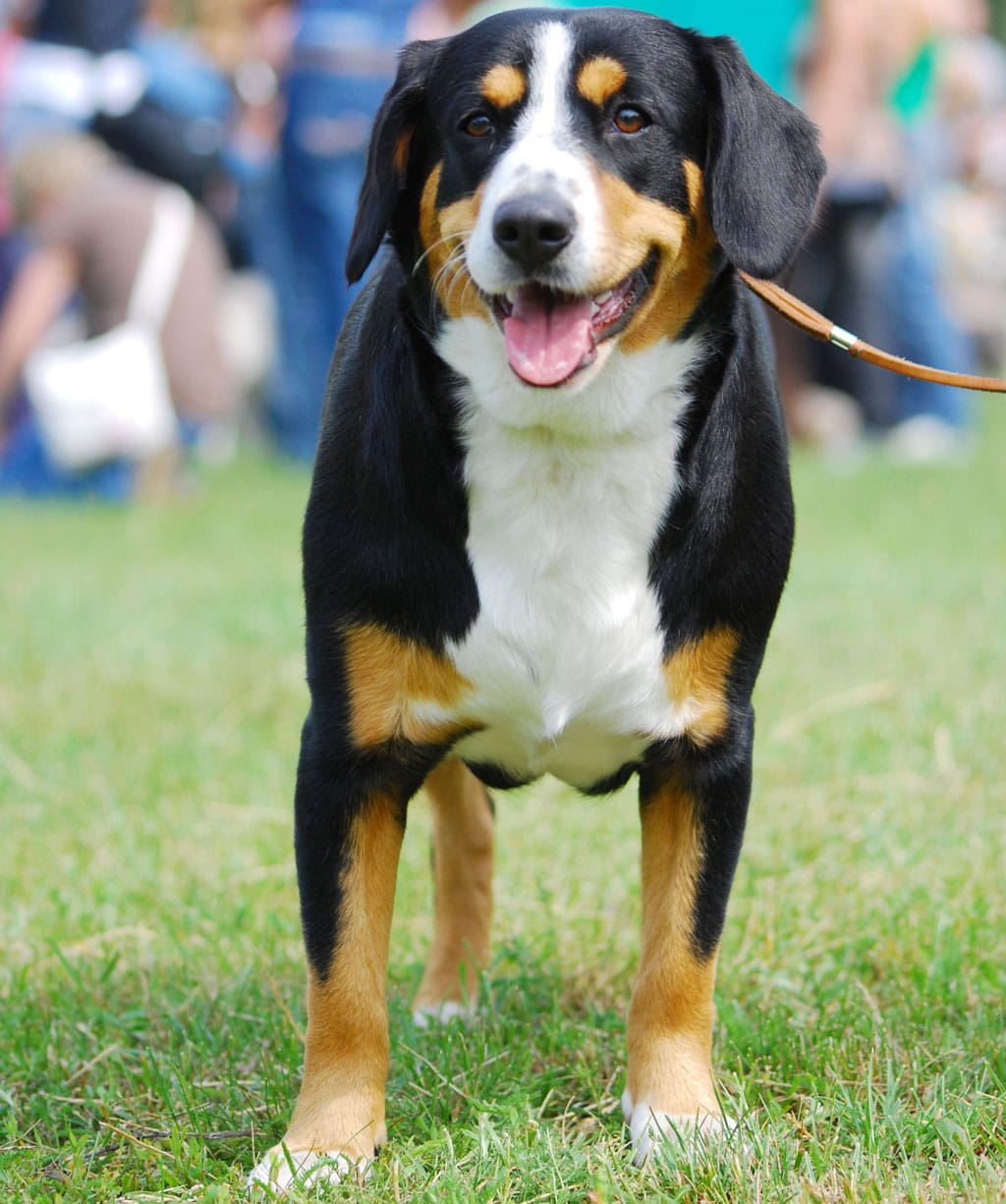
The Appenzell Cattle Dog is a great mountain dog, has a height of 47 to 58 cm to the cross and a weight of 22 to 32 kg. Like the other Sennenhund, It is a large dog and has a layer of tricolor hair that distinguishes.

It is a dog of large muscles but not very full-bodied, with wide and flat skull, and a snout that tapers towards the truffle. Eyes small and dark; and ears, slopes. It is the only one of the Swiss Cattle Dogs to have its tail wrapped around its back.. The hair is cut, bright and bushy. Color: It supports the black and Tan with white markings on the chest, the head and feet

Character and skills

The Appenzell Cattle Dog was initially kept as herd guardian, dog shooting, and in general, as a farm dog.

The race was also used for grazing and as a guard dog. Today the breed is kept primarily as a companion, and excels in obedience competitions and Schutzhund.

Like all large working dogs, very active, which is why, This race should be socialized at an early age with other dogs and people, and always with normal activity and training that can live safely as a pet (given its size, It may be a problem if you do not receive adequate education). According to the breed standard, dogs they are cheerful in spirit, playful, and distrustful to strangers.

Despite its fairly strong character, tends to be always quiet, nice. If not go to custody, behave amicably with everyone. It is the most docile of Swiss boyeros and, therefore, the easiest of train, but it is also the most barking.

Appenzell Cattle Dog Education

The Appenzell Cattle Dog can be well trained. He loves to learn and he does it with enthusiasm. It is strongly oriented towards its humans, which can be put to good use. The Appenzell Cattle Dog you can read the mood and wishes of your people on their faces. That in turn means that you have to approach your education with feeling., and of course with consistency. He has a pronounced sense of justice and, therefore, he challenges people to treat him fairly. It is important that already in the puppy stage you begin to control their joy of barking, who once characterized him as a good cut dog.

Appenzell Cattle Dog care and health

The Appenzell Cattle Dog it is very easy to care for, brushing here and there is enough.

Regarding your health, tend to have trouble with their hips (HD) or knees (ED), up to falls. In old age you can see a tendency to skin tumors. Partially strong inbreeding has a negative effect on fitness and life expectancy.

Nutrition / Food

The Appenzell Cattle Dog you have no special requirements in your diet. Have a healthy appetite and tend to be overweight, especially in old age.

The life expectancy Appenzell Cattle Dog

The Appenzell Cattle Dog it is relatively strongly affected by inbreeding and a breeding selection that is one-sidedly oriented towards outward appearances, such as fur color details. So, their life expectancy has decreased in part enormously. It's between eight and -healthily- twelve years.

Buy Appenzell Cattle Dog

When buying a puppy care must be taken that the ancestor in the puppies' pedigree does not appear twice. (endogamia). Otherwise, you should look for a breeder affiliated with the Swiss Mountain Dog Club. You can also find the dog of your dreams at the animal shelter or in an emergency initiative. You can get a puppy in a serious kennel from 1200 EUR.

Characteristics "Appenzell Cattle Dog"

Coexistence is important that you have with your new friend. Before considering the acquisition of a dog of the breed "Appenzell Cattle Dog" you know certain factors. Not all breeds of dogs are apt to live in an apartment, you must take into account his character, their need for exercise, their interaction with other pets, their care and if you have small children, their level of tolerance towards them.

Adaptation โ“˜

2,0 of 5 stars (based on 1 review)

friendly dog โ€‹โ€‹โ“˜

4,0 of 5 stars (based on 1 review)

hair loss โ“˜

3,0 of 5 stars (based on 1 review)

Affection level โ“˜

5,0 of 5 stars (based on 1 review)

Need for exercise โ“˜

5,0 of 5 stars (based on 1 review)

Social need โ“˜

2,0 of 5 stars (based on 1 review)

Home โ“˜

4,0 of 5 stars (based on 1 review)

Toilet โ“˜

3,0 of 5 stars (based on 1 review)

Friendly with strangers โ“˜

4,0 of 5 stars (based on 1 review)

barking โ“˜

5,0 of 5 stars (based on 1 review)

Health โ“˜

4,0 of 5 stars (based on 1 review)

Territorial โ“˜

4,0 of 5 stars (based on 1 review)

Cat friendly โ“˜

3,0 of 5 stars (based on 1 review)

Intelligence โ“˜

5,0 of 5 stars (based on 1 review)

Versatility โ“˜

5,0 of 5 stars (based on 1 review)

Child friendly โ“˜

4,0 of 5 stars (based on 1 review)

Surveillance โ“˜

5,0 of 5 stars (based on 1 review)

joy โ“˜

4,0 of 5 stars (based on 1 review)

Images Appenzell Cattle Dog

Videos Appenzell Mountain Dog

Type and recognitions:

  • FCI CLASSIFICATION:
  • Group :
  • Section : . .

Federations:

FCI โ“˜, AKC โ“˜, ANKC โ“˜, UKC โ“˜

FCI breed standard Appenzell Cattle Dog

FCIFCI - Appenzell Cattle Dog
Cattle

Alternative names:

1. Appenzeller, Appenzeller Cattle Dog, Appenzeller Mountain Dog (English).
2. Bouvier d’Appenzell (French).
3. Appenzeller (German).
4. Appenzeller Sennenhund (Portuguese).
5. Appenzeller (espaรฑol).

โ–ท The world of Pets: Dogs, cats, birds, reptiles, amphibians

Australian Cattle Dog
Autralia FCI 287 - Sennenhund

Pastor Ganadero Australiano

The Australian Cattle Dog is a rustic dog, robust and without health problems.

Content

History

The Australian Cattle Dog It is a dog originating in australian. In comparison with other races its history is very well documented, because it is a relatively recent.

By the early 19th century the cattle industry in Australia had grown out onto the plains and onto the vast expanses of land. The cattle had become wild and rude beasts, the Smithfields, until then their dogs of grazing, already frequently lost control of livestock. These dogs were overcome by the heat and the distances they traveled to move the cattle, they also tended to bite and bark a lot, because they knew how to graze sheep and not cattle, and sometimes with horns, they were injured. This problem existed in both Australia and the United States, and while Americans were inventing cowboys (Cowboys) Australians invented dogs jeans.

In 1830 a cross of Smithfields took place with Dingoes, the primitive dog that lives in Australia and killed the cattle. This, be regarded as a pest at that time, He went on to be the best contribution to this race. It was believed that dogs more adapted to the climate would be obtained, to work and quieter. Were dogs of red hair, silent but biting even more. This breed was unsuccessful and died.

In 1840 another farmer with the same concern but different approach, imported a couple of Bearded Collie blue-haired scotland, were dogs that barked much. The offspring of this couple crossed it with the Dingo and got a silent working dog with either blue or red fur.

Other races introduced to this cross: the Dalmatian in order to ensure that dogs will also work with horses and more faithful and reliable for masters. The Kelpies black or straw color, Australian foresee dogs; to reaffirm their skills in the jobs that had been lost with the crossbreeding of Dalmatians. The influence of Dalmatians I create puppies with white fur at birth and that changes color at three weeks of age from a smooth coat to another gray. Of the Kelpie straw colored markings on legs, chest and head. The end result was an active dog, compact, with the caution of Dingo, the reliability of a Dalmatian, the skill of a Collie and Kelpie, and a unique coat coloration in the world.

In the early 1890's Mr.. Robert Kaleski became interested in these dogs; as he lover of them and at the same time journalist decided to give to know this race and make it achieved in 1903 the Kennel Club of Wales accepted the first standard of the breed. He firmly believed in the important contribution of Dingo blood to herding cattle and eventually introduced Dingoes to crossbreeds to maintain the efficient heeler style..

In November of 1988 It was formed in Australian Cattle Dog Club of America in California. The 1 May th 1980 they petitioned the AKC license (American Kennel Club) and the 1 September of that year they were awarded.

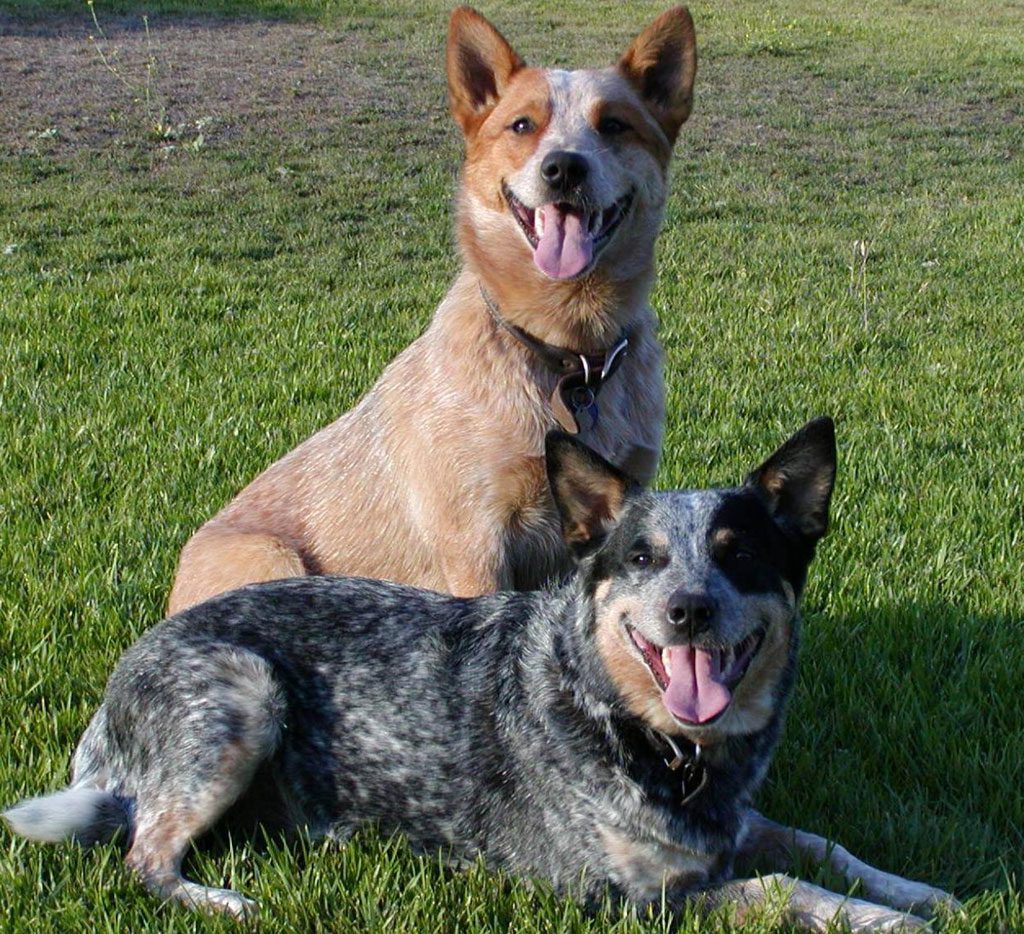
In all these years Australians livestock herders have been gaining ground both at work and in the heart of the masters. They are known with many names or nicknames: ยซBlueysยป (azulitos), ยซBlue Dogsยป (blue dogs), "Healers" (taloneros), "Queenlad Heelers" (taloneros Queens), "Blue Heelers" (Blue taloneros), "Red heels" (Red taloneros) and they are even mistakenly called "Dingos".

Physical characteristics

The Australian Cattle Dog they are a moderate breed in all respects. They must be balanced, symmetric, robust and compact. Judging this race we must seek a harmonious dog.

We often hear: "Must have a big head"; This is fine if the body is in line with the head. The standard of the breed does not require a large head but a head according to the body, or of a heavy bone structure, If disagrees with the rest of the dog.

The Australian Cattle Dog he's a working dog, created strong, compact, symmetric, with the ability and willingness to carry out their assigned task no matter how difficult. Its combination of substance, power, balance sheet and strong muscle condition, leads to great agility, strength and endurance. Both too big and fat dog, as one too small and thin they would have serious faults. We must see the dog altogether. A large head does not make a good dog, not a very crude bone structure.

Remember: BALANCE SHEET, SYMMETRY AND MODERATION.

As its name says, It's primary function and no one matches, It is the control and management of livestock in open or closed extensions. Always alert, extremely intelligent, look-out, brave and reliable, with a total devotion to duty, making it the ideal dog.

A dog that is gentle in nature, outside of obese condition, will lose points. They are athletes and they should always give that appearance.

As far as the physical aspect is concerned, we point out the following...

  • The head It is strong and it must be proportional to the body of the dog, to maintain its overall conformation. The wide skull is slightly curved between ears. The mejilla5 are muscular, Neither crude nor prominent, strong jaw. The lips are clean and tight. !.nose is always black. A gluttony for measuring head is from the tip of the nose, passing between the eyes, stop ear tip; through the skull back through the eye to the tip of the nose; They must be measured an equilateral triangle.
  • The eyes: they are oval shaped, medium-sized, Neither prominent nor sunken, they should express State of alert and intelligence, are dark brown in colour.
  • The ears: they should be of moderate size, preferable to small to large, broad base and pointed tip, or round as spoon, Neither plicate of bat. Placed separate head inclined outwards. They must be thick, fleshy and covered with weight on the inside. The teeth would be strong, with equal separations, with grip, bite and scissors, the lower incisors just before close and playing at the incisive superiors.
  • The neck: is very strong, muscular, It allows you to turn the head to the body, It must not be loose or have hanging skin.
  • Front rooms: the forearm should join the shoulder almost 90%. There is a tendency in the short forearms that does not allow you to the correct length needed. They must be just as the cross to the elbow to elbow on the floor. It must not exceed the width of the chest to the elbows. The creation of exaggeration is a problem in the race.
  • Proportions: The dog must be 10% longer than high, many are unfortunately very short and it subtracts them movement and flexibility.
  • Hindquarters: strong, widths, muscular. The rather long rump to slant, long thighs, wide and well developed. Seen from the back should be parallel and rights, not very close to each other, not very separate.
  • The legs: round, with fingers long and together. Hard bearings, short and strong nails.
  • The tail: placed moderately downward, following the contour of the thigh and rump of length until reaching the hocks. When rest with a slight curve. Movement or shaking the tail should be raised. At no time should the tail be carried beyond a vertical line from the root (or coiled). The tail should have abundant fur.
  • When it is in movement and walking: the action is real, free, flexible to tireless, and the movement of the shoulders and forequarters is in unison with the strength of the hindquarters. The rapid and unexpected movements ability is elementary. When they trotting legs tend to join the ground as the speed is on the rise.
  • Weight and height: The male can be measured in 46 cm to 51 cm., and weigh between 20 and 26 kg. The female can be measured in 43 cm to 48 cm., and weigh between 18 and 23 kg. Here there is almost no problems, because height requirements have been maintained with ease.
  • Fur: The hair is soft, with double layer being the shortest denser.; the hair of the longest layer is closed, each hair is, straight and hard, Why which is waterproof. On the hind legs the coat is long where join the thighs. In the head (even within the ears) up to the front of the legs the coat is short. Around the neck, longer and thicker. A very short or very long hair will be a lack. Curly hair in wavy is evident in the very adult females.
  • Colors of the mantle:
  1. Blue: the color can be blue, graying blue, Blue mottled with or without other brands. Allowed in brands are, black, Blue or straw in the head, preferably symmetrical. Paws straw halfway and extending to the front to the chest and throat, and in the jaws. The Undercoat may be straw in the body where it stands not out to the blue upper layer. The black marks on the body are not desirable.
  2. Red: the color should be very smooth throughout the body, including the bottom layer (either white or cream), with or without red marks on the head. Symmetrical marks are desired. The red marks on the body are permitted but not desired.

There are two main problems in color. The blue dogs tend to black and the second are the Red dogs without freckles. The latter is more than a problem, and one of the reasons why the reds are less dominant than blue.

Character and skills

The Australian Cattle Dog are very versatile and tireless workers who adapt various activities. They have been used as search and rescue dogs., bombs and drugs detectors, service and of course dogs, livestock grazing.

One Australian Cattle Dog not the ideal dog to lock him in a yard. These dogs require working and living together with people or at least the presence of someone to her around in the absence of their day-to-day work. Isolated in the courtyard of a house in the city the edge to create problems.

The doctor. Harvey, Veterinary Australia, It has two of these dogs and also attends many more as patients. The comments: ยซThe main problem that I see and that far exceeds others, is the behaviour of these animals, everything is due to boredom and lack of exercise. Since they are very good guardians, people leave them in their backyard taking care of the House, totally ignoring their needs for exercise and mental stimulation".

One Australian Cattle Dog can live in an apartment or on a ranch 20 hectares, the problem is not the space; It is the exercise and the time the owner puts into his dog. If no is given a job the dog, the same is going to invent:

  • Garden design: holes, plants cropped or out of place.
  • Interior design: biting furniture tapestry, Chew chairs, dig a way out of the street, spreading garbage around the House, etc.
  • Another very common problem in cities is the natural tendency that these dogs have to protect their family and their home.. Even without training, they defend their territory from outsiders, including the milkman, the postman and anyone who is not familiar

    Signs are commonly used in some rural places in the United States warning that the place is guarded by Australian Cattle Dog, to avoid that strangers come. If there are children running, screaming, any dog grazing naturally want to corner to put them under control; with biting and barking. If their children have guests it is preferable to keep the dog, because it will not allow their masters to be touched, even by game.

    Social coexistence with children must be at an early age, dogs are taloneros by nature to instinctively chase other animals, however these dogs are very adaptable and can learn to suppress some of their natural inclinations. They are a perfect company for the family and their children. Once you know the dog and controls, their obedience will surprise your guests.

    The doctor. Harvey also believes about coaching: "He Australian Cattle Dog it is very manageable; as a coach and scholar of the behavior, He catalogued it as the most adaptable dog who had worked with. However these dogs do not respond well to the method in which force them.

    After several months of trying in vain to train a female with punishment straps, correct and other, opt for more motivational methods and the results were excellent. The confidence and enthusiasm can be seen in the position of the tail. A dog with a drooping tail, probably this suppressed or bored, a raised tail denotes a dog active and attentive.

    Therefore the coaches that without the knowledge of the race, using traditional methods, such as the drawing with the collar of punishment; they invariably consider them fools, irritable and difficult. Coaches using positive methods, they believe that they are very attentive and willing to learn. Kalesky once said: "And Australian Cattle Dog should we remember a typical Dingo, and this is very important if we want to describe the race.

    Before you choose the puppy we must stop to think for what they want to this dog, as a pet, as a guard dog, dog of grazing, dog for beauty exhibition, etc. Now let's see how they behave all the puppies in the litter. The one we see who fights all his brothers, would serve as a guard; the largest and that always sleeps because it is where most ate, would be great as a pet or for beauty, the more chiquitos resembling whirlwinds have learned to make an extra effort to obtain their food fought against the elderly, they would be ideal for the job. But there is no written rule the nature of the dogs molded it in a large percentage owners, in this way one very aggressive can be very manso and vice versa. Always take into account the opinion of the breeder.

    Faults occur in all races, without them there would be no challenges for breeders. It is important to be attentive to the faults to overcome them. The faults are only an obstacle in our attempt to raise the perfect dog. Look at your dog critically, see the faults and strive to rectify them. Don't want to pretend that they there is no because there is not a perfect dog.

    The loyalty of Australian Cattle Dog will keep him next to his master, more than anything in the world, They must be with the master, accompany you and assist you in everything. The easiest way of making them happy is having them on your side. If you leave the lane, It can be that the dog will bite the heels, But if you are the ideal type to have an Australian, This morderรก you heart.

    Australian Cattle Dog – Health

    All dogs have the potential to develop genetic health problems, just as all people have the potential to inherit a particular disease. Run, do not walk, from any breeder that does not offer a health guarantee on puppies, to tell you that the breed is 100 percent healthy and has no known problems, or tell you that your puppies are isolated from the main part of the home for health reasons. A reputable breeder will be honest and open about the breed's health problems and the incidence with which they occur in their lines.. The problems observed in the Australian Cattle Dog include hip dysplasia, patellar dislocation, portosystemic shunts, progressive retinal atrophy (PRA) and genetic deafness.

    Careful breeders screen their breeding dogs for genetic diseases and breed only the healthiest, best-looking specimens., but sometimes mother nature has other ideas and a puppy develops one of these diseases despite good husbandry practices. Advances in veterinary medicine mean that in most cases dogs can still live a good life. If you are going to have a puppy, ask the breeder about the ages of the dogs in their lines and what they died of.

    Remember that after you have welcomed a new puppy into your home, has the power to protect you from one of the most common health problems: the obesity. Keep a Australian Cattle Dog with a proper weight is one of the easiest ways to prolong your life. Make the most of your preventive skills to help ensure a healthier dog for life.

    Australian Cattle Dog – Grooming

    The Australian Cattle Dog has a flat, hard coat that is resistant to rain and dirt. This makes grooming a simple task – only needs to be brushed once or twice a week to remove dead hair. For this you can use a bristle brush or slippery bristles. He will remove his short and dense undercoat once or twice a year, which will require more brushing. Other tools to keep on hand are a comb and undercoat rake.

    The Australian Cattle Dog you will only need occasional baths if you get very dirty. Check your ears to make sure they are clean and dry and there is no evidence of infection. Your adult dog will need to have his nails trimmed about once a month, depending on wear. Puppies may need a weekly nail cut. Brush your dog's teeth regularly to promote good dental hygiene and fresh breath.

    Characteristics "Australian Cattle Dog"

    Coexistence is important that you have with your new friend. Before considering the acquisition of a dog of the breed "Australian Cattle Dog" you know certain factors. Not all breeds of dogs are apt to live in an apartment, you must take into account his character, their need for exercise, their interaction with other pets, their care and if you have small children, their level of tolerance towards them.

    Adaptation โ“˜

    3,0 of 5 stars (based on 1 review)

    friendly dog โ€‹โ€‹โ“˜

    3,0 of 5 stars (based on 1 review)

    hair loss โ“˜

    3,0 of 5 stars (based on 1 review)

    Affection level โ“˜

    3,0 of 5 stars (based on 1 review)

    Need for exercise โ“˜

    5,0 of 5 stars (based on 1 review)

    Social need โ“˜

    3,0 of 5 stars (based on 1 review)

    Home โ“˜

    1,0 of 5 stars (based on 1 review)

    Toilet โ“˜

    1,0 of 5 stars (based on 1 review)

    Friendly with strangers โ“˜

    2,0 of 5 stars (based on 1 review)

    barking โ“˜

    4,0 of 5 stars (based on 1 review)

    Health โ“˜

    3,0 of 5 stars (based on 1 review)

    Territorial โ“˜

    5,0 of 5 stars (based on 1 review)

    Cat friendly โ“˜

    3,0 of 5 stars (based on 1 review)

    Intelligence โ“˜

    5,0 of 5 stars (based on 1 review)

    Versatility โ“˜

    5,0 of 5 stars (based on 1 review)

    Child friendly โ“˜

    5,0 of 5 stars (based on 1 review)

    Surveillance โ“˜

    5,0 of 5 stars (based on 1 review)

    joy โ“˜

    5,0 of 5 stars (based on 1 review)

    Australian Cattle Dog Images

    Australian Cattle Dog Videos

    Type and recognitions:

    • FCI CLASSIFICATION:
    • Group :
    • Section : . .

    Federations:

    • FCI – Group 1 Herding dogs, Section 2 Sennenhund, except Swiss boyeros โ“˜
    • AKC – PASTORAGE โ“˜
    • ANKC – Group 5 (working dogs) โ“˜
    • CKC – Group 7 – Herding dogs โ“˜
    • โ€‹KC – Pastoral โ“˜
    • NZKC – Working dog โ“˜
    • UKC – Herding dogs โ“˜

    FCI breed standard Australian Cattle Dog

    FCIFCI - Australian Cattle Dog
    Pastor

    Alternative names:

    1. ACD, Cattle Dog, Blue Heeler, Red Heeler, Queensland Heeler (English).
    2. Australian cattle dog (French).
    3. Australischer (German).
    4. Australian Cattle Dog (Portuguese).
    5. Ganadero Australiano, Boyero australiano, Perro Australiano de Ganado, Perro Ganadero Australiano (espaรฑol).

    โ–ท The world of Pets: Dogs, cats, birds, reptiles, amphibians

    Australian Stumpy Tail Cattle Dog
    Autralia FCI 351. Sennenhund Dogs

    Stumpy Tail

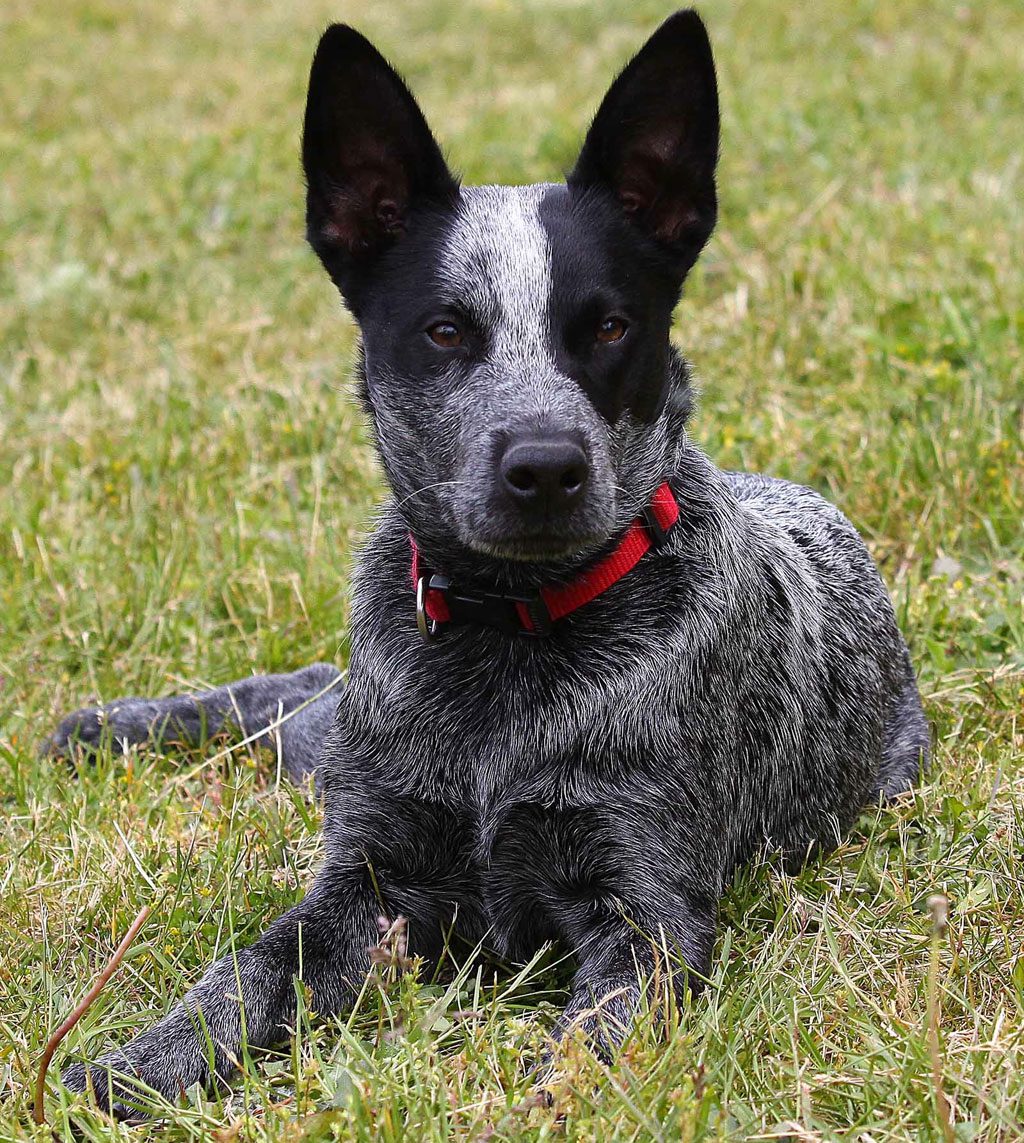
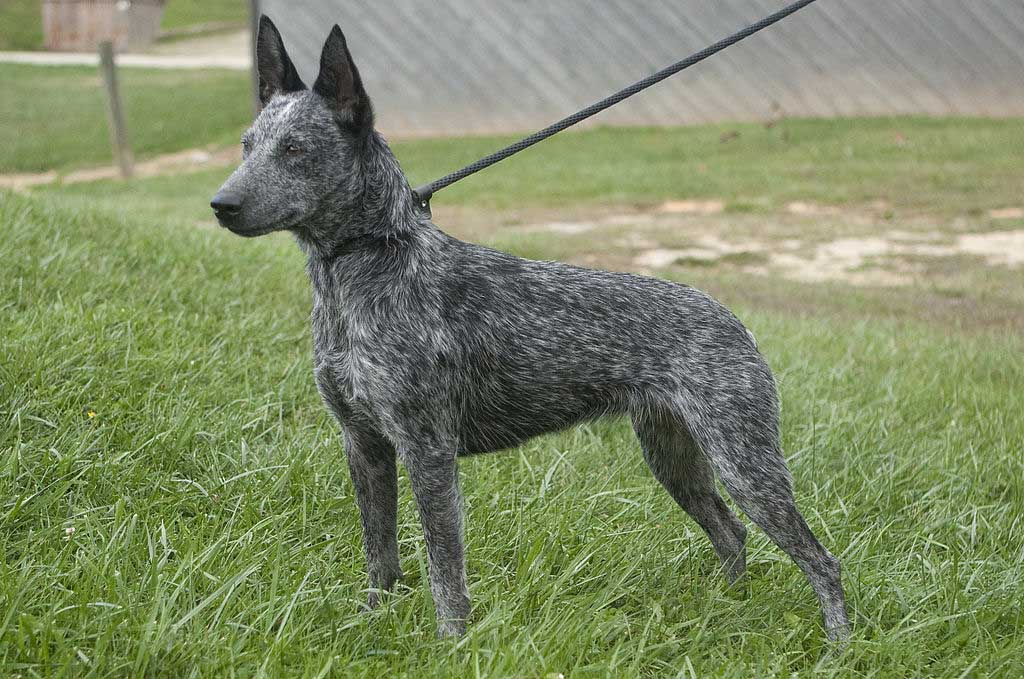
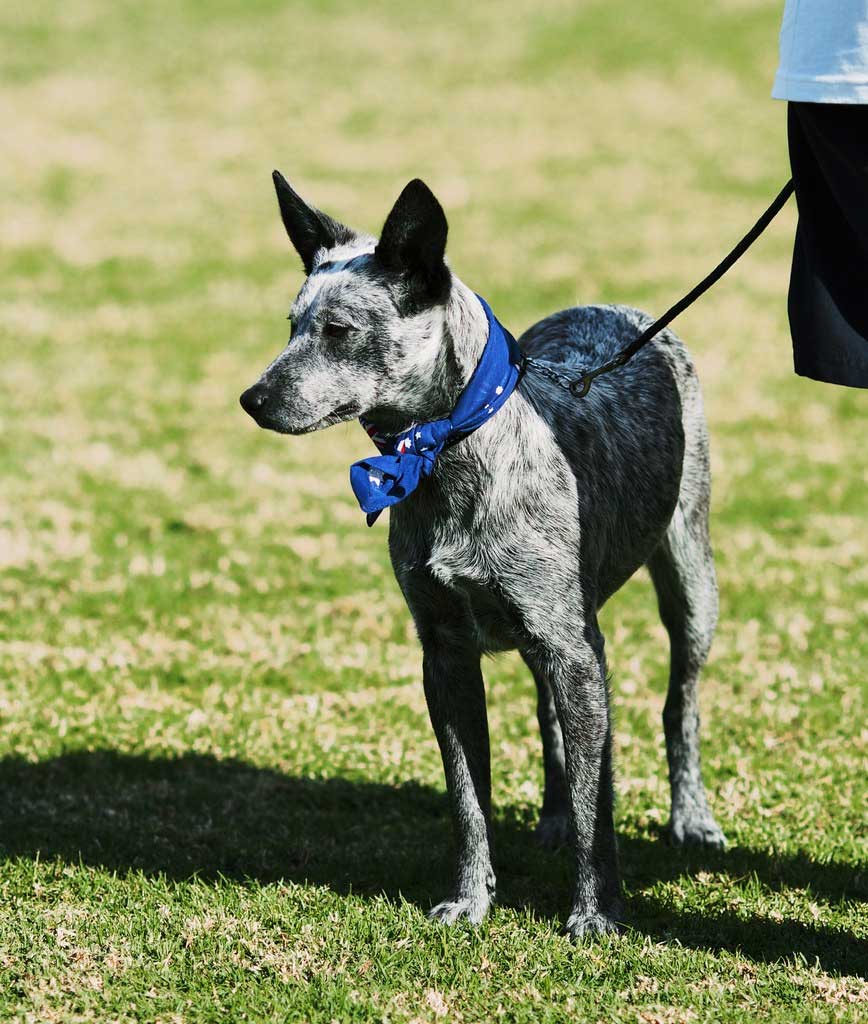
    The Australian Stumpy Tail Cattle Dog is always alert, vigilant and obedient, although he distrusts strangers.

    Content

    History

    The Australian Stumpy Tail Cattle Dog has a long history in Australia, where he was carefully bred to drive cattle in the early 19th century.

    As for the true founder of the breed, there are actually two versions:

    • The first quotes a certain Thomas Simpson Hall, who crossed sheepdogs from the north of England, the Smithfields, with Dingoes, the native canines of Australia, creating the first Australian cattle dog known as "Hall's Foot Dog" (towards 1830).
    • In the second version, a rancher from New South Wales named Bathurst Timmins crossed a Smithfield with the Dingo in 1830. The babies, short tailed red dogs, They became known as the "Timmins Biters".

    These dogs were great to work with., but it turned out they were too harsh on the cattle. Had to make another cross. introduced a Smooth Collie Blue Merle and the result was the creation of an excellent all-terrain, the ancestor of the current Australian Stumpy Tail Cattle Dog.

    The Smithfield brought the natural short tail, the Dingo the color red and the ability to naturally accept the harsh conditions of the remote Australian outback. Last, the blue color comes from Smooth Collie Blue Merle, which was also known as the German Coolie.

    In general, Shorttails were bred in the vast rural areas of Australia and only a small number were entered in the studbooks..

    Physical characteristics

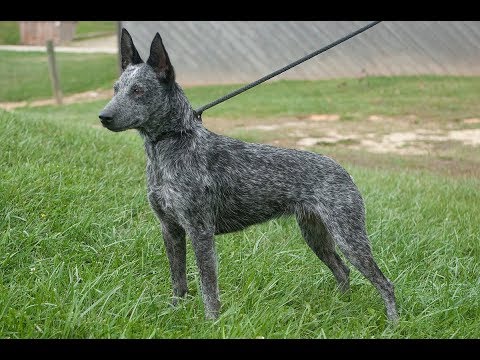
    The Stumpy it is a medium sized working dog, well proportioned and square in profile. The breed has two colors: blue and red. The Australian Stumpy Tail Cattle Dog may not have tan markings. The Stumpy should be clean and tight and has a tough, robust appearance. Is never fat, but he must be well muscled, to be able to withstand long periods of hard work.

    Character and skills

    The Stumpy has a natural aptitude for work and livestock control. Is loyal, brave and above all devoted to its owner, but can be reserved with strangers. Always attentive, vigilant and obedient, and it must be capable of being handled on the show floor.

    Education

    This breed does not tolerate isolation or neglect; craves family, activity and training. Unless the Stumpy stay physically and mentally active, it will become destructive and unruly.

    The ideal owner of a Stumpy is a committed dog owner, active and experienced. This is not a part time breed. Early socialization with dogs and people is recommended to achieve a complete companion. Training and strong leadership are essential.

    As a thinking dog, the Stumpy compensate for any weaknesses in leadership by ranking highest in the pack. Firm" does not mean "hard"; the eagerness of Stumpy for pleasing him means that constancy, reinforcement and reward will go much further than punishment.

    Grooming

    In terms of grooming, the maintenance of Stumpy It is low. A weekly brushing is all you need and a bath when necessary. But, in terms of exercise, the Stumpy it is high maintenance. It is an incredibly intelligent breed with high energy levels.; and a Australian Stumpy Tail Cattle Dog gets bored, find ways to entertain yourself, like digging holes or pulling laundry.

    Health

    In general, the Stumpy it is a relatively healthy and robust breed. In the race there can be Prcd-PRA; this disease causes progressive loss of vision, although there is a DNA test. ARP does not form (Progressive Retinal Atrophy) can only be identified through an eye exam, not through a DNA test. It is recommended that an ophthalmologist examine the players. There may be deafness, for which there is a BAER test. A score of the hip and elbow should also be performed to identify any dysplasia..

    Characteristics "Australian Stumpy Tail Cattle Dog"

    Coexistence is important that you have with your new friend. Before considering the acquisition of a dog of the breed "Australian Stumpy Tail Cattle Dog" you know certain factors. Not all breeds of dogs are apt to live in an apartment, you must take into account his character, their need for exercise, their interaction with other pets, their care and if you have small children, their level of tolerance towards them.

    Adaptation โ“˜

    4,0 of 5 stars (based on 1 review)

    friendly dog โ€‹โ€‹โ“˜

    3,0 of 5 stars (based on 1 review)

    hair loss โ“˜

    3,0 of 5 stars (based on 1 review)

    Affection level โ“˜

    4,0 of 5 stars (based on 1 review)

    Need for exercise โ“˜

    4,0 of 5 stars (based on 1 review)

    Social need โ“˜

    2,0 of 5 stars (based on 1 review)

    Home โ“˜

    3,0 of 5 stars (based on 1 review)

    Toilet โ“˜

    1,0 of 5 stars (based on 1 review)

    Friendly with strangers โ“˜

    3,0 of 5 stars (based on 1 review)

    barking โ“˜

    2,0 of 5 stars (based on 1 review)

    Health โ“˜

    3,0 of 5 stars (based on 1 review)

    Territorial โ“˜

    5,0 of 5 stars (based on 1 review)

    Cat friendly โ“˜

    3,0 of 5 stars (based on 1 review)

    Intelligence โ“˜

    4,0 of 5 stars (based on 1 review)

    Versatility โ“˜

    4,0 of 5 stars (based on 1 review)

    Child friendly โ“˜

    4,0 of 5 stars (based on 1 review)

    Surveillance โ“˜

    3,0 of 5 stars (based on 1 review)

    joy โ“˜

    4,0 of 5 stars (based on 1 review)

    Images "Australian Stumpy Tail Cattle Dog"

    Australian Stumpy Tail Cattle Dog

    Australian Stumpy Tail Cattle Dog

    Photos:

    1 – A breed of dog known as Australian Stumpy Tail Cattle Dog by Wendy Hodges, CC BY 2.0, via Wikimedia Commons
    2 – Australian stumpy tail cattle dog by https://www.flickr.com/photos/virtualwolf/9048475496

    Videos "Australian Stumpy Tail Cattle Dog"

    Australian Stumpy Tail Cattle Dog Breed - Facts and Information
    Australian Stumpy Tail Cattle Dog

    Type and recognitions:

    • FCI CLASSIFICATION:
    • Group :
    • Section : . .

    Federations:

    • FCI – Group 1: Section: 2 Sennenhund Dogs. โ“˜
    • ANKC – Australian National Kennel Council Toy โ“˜

    FCI breed standard Australian Stumpy Tail Cattle Dog

    FCIFCI - Australian Stumpy Tail Cattle Dog
    Pastor

    Alternative names:

    1. Stumpy Tail Cattle Dog, Stumpy, Stumpy Tailed Heeler (English).
    2. Australian Stumpy Tail Cattle Dog (French).
    3. Stumpy (German).
    4. (em inglรชs: Australian stumpy tail cattle dog) (Portuguese).
    5. Stumpy (espaรฑol).

    โ–ท The world of Pets: Dogs, cats, birds, reptiles, amphibians

    Australian Shepherd
    Estados Unidos FCI 342 - Sheepdogs

    Pastor australiano

    The Australian Shepherd It has a stable temperament and is good in nature.

    Content

    History

    The Australian Shepherd It is a breed of dog of grazing which has developed on ranches in the West of United States. despite its name, the race, did not originate in Australia. It acquired its name because some of the dogs, Australian Shepherds arrived in United States with shipments of Australian sheep.

    Race gradually rose in popularity with the rise of the riding following the first world war western. For many years, the Australian Shepherd, has been dog valued by farmers for its versatility and capacity of training inherent. The race has gained recognition, with its training capacity and the desire to please, and are highly respected for his skills in obedience. They became known to the general public through roundups, horse shows, and through Disney made-for-TV movies.

    Physical characteristics

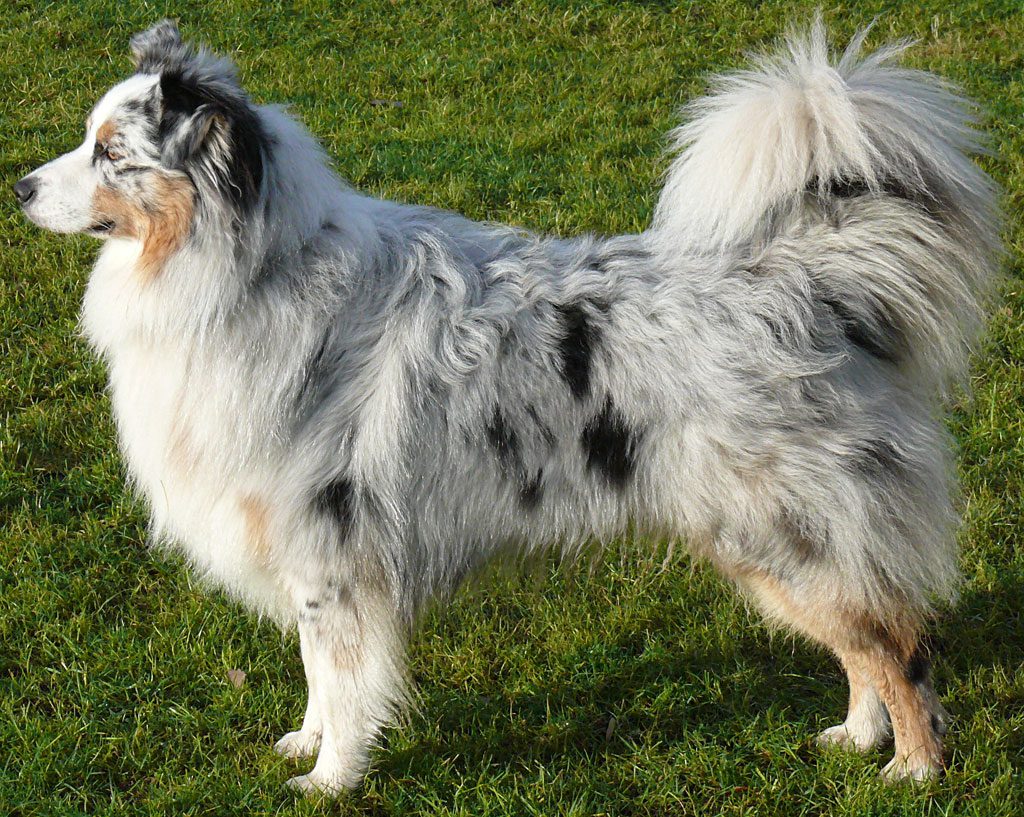
    The Australian Shepherd is a dog from medium-sized and solid construction, known for its natural 'bob' or amputated tail. He is an active breed of grazing, generally very good with pets and other well-known people, but they can be reserved with strangers. They are not a fair race, tender, who prefer the company of their owners.

    Its mantle is double layer, and the colors are black, red (sometimes called the liver), tricolor (black marble, White and grey), and the Red merle (red marble, White and beige), each of these colors may also have copper and / or white spots in various combinations in the face, the chest and legs.

    The wide variety of color combinations comes from the interaction between the color of one allele, that is recessive, dominant or red black color, and the dominant allele marble. Together, They provide the color of the fur, and they can appear in any combination:

    Negro, with spot color fire and / or white markings on the face, neck, legs, chest, belly. Copies of a black are equally valid as the Tan and / or white.

    Red (liver), with or without points bronze and / or white markings on the face, neck, legs, chest, belly. White or Brown points are required.

    Blue Merle (a mottled patchwork of black and grey) with or without stain color fire and / or white markings on the face, neck, legs, chest, belly.

    Red Merle (a variegated mosaic of cream and liver red) with or without stain color fire and / or white markings on the face, neck, legs, chest, belly.

    There is also great variety in the color of the eyes australian shepherd, they can be of any color or shade of brown or blue, You can have two different colored eyes, or even have "split" or bicolor eyes (for example, Brown half, Blue half).

    Character and skills

    The race is usually is highly energetic, they require a large amount of exercise, education and care. The Australian Shepherd is playful, that is why it is good that training included days of games.

    Like all races work, the Australian Shepherd you have considerable energy that you need to expend, therefore, need a job to do. Often stands in canine sports, such as agility, the flyball and the Frisbee . As well, are good as rescue dogs, disaster dogs, detection dogs, guide, service and therapy dogs.

    They are very loyal to their owners, and they are grateful when they receive a good deal, and love. Because the breed was developed to serve at the ranch, a work that includes being protective of its property, usually always alert and slope of the movements of the environment.

    The Australian Shepherd, is a dog Intelligent, learn quickly and loves to play. It is important that whoever assumes the responsibility of having such a dog, values that detail, because if you do not receive the necessary daily exercise, When they get bored they can become very destructive.

    They require a minimum of 2 or 3 game hours per day, exercise and attention. They need space to run and play, If living in an urban environment.

    It is a hardy breed that, It can live in a wide variety of terrain. For this reason they are a very popular choice for Trail dogs and working dogs.

    Australian Shepherd Dog Health

    All dogs have the potential to develop genetic health problems, just as all people have the potential to inherit a particular disease. Run, do not walk, from any breeder that does not offer a health guarantee on puppies, to tell you that the breed is 100 percent healthy and has no known problems, or tell you that your puppies are isolated from the main part of the home for health reasons. A reputable breeder will be honest and open about the breed's health problems and the incidence with which they occur in their lines..

    The australian shepherds they are generally healthy dogs, but they can develop certain health problems, including hip dysplasia, various eye diseases, sensitivity to certain drugs and epilepsy. Here is a brief summary of what you should know.

    The hip dysplasia is a genetic malformation of the hip socket. Dogs with hip dysplasia may appear perfectly normal, but because the head of the thigh bone does not fit properly in the hip socket, over time the cartilage on the surface of the bone begins to wear down. Constant inflammation leads to arthritis.

    The Australians can be affected by a number of genetic eye problems. These include colobomas, in which part of the structure of the eye is missing. They can also suffer from different types of cataracts, progressive retinal atrophy (PRA) and retinal detachment. Another eye problem is persistent pupillary membrane, tiny threads of fetal tissue crossing over the iris. Australians are also among the races that can be affected by the Anomaly of the Collie Eye, a group of eye disorders ranging from mild to severe.

    But, eye disease screening doesn't end with parents. All puppies should be examined by an ophthalmologist after six weeks of age and before you bring them home.. You should continue to have a veterinary ophthalmologist examine your eyes annually..

    The Australians are also one of the breeds that can be affected by Multiple Drug Sensitivity (MDS). Dogs with MDS can have fatal reactions to a number of common veterinary medications., including preventive ivermectin against heartworm. Detection of these diseases not only in the parents of the puppy, but also in the dog, it's a life-saving need. The test is very simple and only requires a cheek smear.; information on how to test your dog is available here.

    The epilepsy also occurs in the breed, but there is currently no screening test for seizure disorders in Australian Shepherds. A good breeder will be able to discuss the prevalence of all health problems, those who have and those without genetic testing, in the lines of their dogs, and help puppy buyers make an informed decision about your dog's health risks.

    Not all of these conditions are detectable on a growing puppy, and it is impossible to predict whether an animal will be free from these evils, so you need to find a reputable breeder who is committed to raising the healthiest animals possible. Must be able to produce independent certification that the dog's parents (and grandparents, etc.) have been examined for common defects and considered healthy for breeding. That's where health records come in..

    Careful breeders screen their breeding dogs for genetic diseases and breed only the healthiest, best-looking specimens., but sometimes mother nature has other ideas and a puppy develops one of these diseases despite good husbandry practices. Advances in veterinary medicine mean that in most cases dogs can still live a good life. If you are going to have a puppy, ask the breeder about the ages of the dogs in their lines and what they died of.

    Remember that after you have welcomed a new puppy into your home, has the power to protect you from one of the most common health problems: the obesity. Keep a Australian Shepherd with a proper weight is one of the easiest ways to prolong your life. Make the most of your preventive skills to help ensure a healthier dog for life.

    Grooming of the "Australian Shepherd"

    The Australian Shepherd he has a lot of hair and his grooming needs may seem daunting, but taking care of it is not as much work as you might think. Brush your coat regularly to remove dead hair that would otherwise fall on your clothing and furniture.

    Frequent brushing, hot baths and thorough drying during molting time, Spring and autumn, will help keep handfuls of hair under control. Outside the molting season, bathe the Australian only when it gets dirty.

    The rest is basic care. Active Australian Shepherds often wear down their nails naturally, but it's a good idea to check them weekly to see if they need a cut. Otherwise, just keep your ears clean and brush your teeth frequently for general good health and fresh breath.

    Characteristics "Australian Shepherd"

    Coexistence is important that you have with your new friend. Before considering the acquisition of a dog of the breed "Australian Shepherd" you know certain factors. Not all breeds of dogs are apt to live in an apartment, you must take into account his character, their need for exercise, their interaction with other pets, their care and if you have small children, their level of tolerance towards them.

    Adaptation โ“˜

    5,0 of 5 stars (based on 1 review)

    friendly dog โ€‹โ€‹โ“˜

    3,0 of 5 stars (based on 1 review)

    hair loss โ“˜

    3,0 of 5 stars (based on 1 review)

    Affection level โ“˜

    4,0 of 5 stars (based on 1 review)

    Need for exercise โ“˜

    5,0 of 5 stars (based on 1 review)

    Social need โ“˜

    4,0 of 5 stars (based on 1 review)

    Home โ“˜

    3,0 of 5 stars (based on 1 review)

    Toilet โ“˜

    3,0 of 5 stars (based on 1 review)

    Friendly with strangers โ“˜

    2,0 of 5 stars (based on 1 review)

    barking โ“˜

    5,0 of 5 stars (based on 1 review)

    Health โ“˜

    3,0 of 5 stars (based on 1 review)

    Territorial โ“˜

    5,0 of 5 stars (based on 1 review)

    Cat friendly โ“˜

    3,0 of 5 stars (based on 1 review)

    Intelligence โ“˜

    5,0 of 5 stars (based on 1 review)

    Versatility โ“˜

    5,0 of 5 stars (based on 1 review)

    Child friendly โ“˜

    5,0 of 5 stars (based on 1 review)

    Surveillance โ“˜

    5,0 of 5 stars (based on 1 review)

    joy โ“˜

    5,0 of 5 stars (based on 1 review)

    Images of the ยซAustralian Shepherdยป

    ยซAustralian Shepherdยป Videos

    Type and recognitions:

    • FCI CLASSIFICATION:Group –> Pastor and Boyeros dogs (except Swiss Cattle Dogs)
      / Section –> Pastor dogs. Without working trial.
    • FCI 342

    Federations:

    • FCI – Group 1 Herding dogs, Section 1 Sheepdogs โ“˜
    • AKC – PASTORAGE โ“˜
    • ANKC – Group 5 (working dogs) โ“˜
    • CKC – Group 7 – Herding dogs โ“˜
    • โ€‹KC – Pastoral โ“˜
    • NZKC – Working dog โ“˜
    • UKC – Herding dogs โ“˜

    FCI breed standard Australian Shepherd

    FCIFCI - Australian Shepherd
    Pastor

    Alternative names:

    1. Aussie (English).
    2. Australian Shepherd (French).
    3. Australian Shepherd (German).
    4. Aussie (Portuguese).
    5. Pastor ovejero australiano, Perro de pastor australiano (espaรฑol).

    โ–ท The world of Pets: Dogs, cats, birds, reptiles, amphibians

    Australian Kelpie
    Australia FCI 293 . Sheepdogs

    Kelpie Australiano

    The Kelpie is very smart, industrious and always alert.

    Content

    History

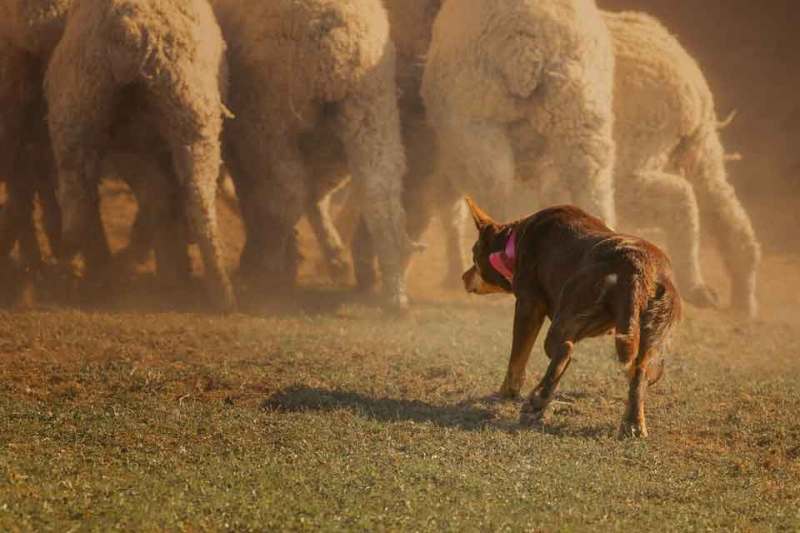
    The Australian Kelpie is a sheepdog developed around the decade of 1870 by Australian breeders by mixing several sheepdogs from Collie type imported directly from England. His goal was to develop a breed well adapted to Australian climatic conditions., especially to heat, and with enough independence to herd sheep and cows over a vast territory without too much supervision.

    Until very recently, the race was also thought to be mixed with the Dingoes, australian wild dog, but recent genetic studies have shown otherwise. But, towards the end of the 19th century the Australian Kelpie also mixed with shorthaired Scottish Sheepdogs, giving it the features it has today.

    The word Kelpie has its origin in Celtic mythology.. In fact, a Scottish legend mentions metamorphic spirits called kelpie, that appear most often in the form of a horse made of water, And that lurk in the rivers and lochs of Scotland. These malevolent spirits are meant to attract humans, especially to children and young people, to his death. It is unclear how the name came to be associated with this breed of dog.. But, the story that comes up most often, although it is not officially documented, is that of a Scottish breeder named George Robertson who, in 1872, it is said that he named Kelpie one of the first specimens of this breed; this name would simply have remained later to designate all the dogs of this breed.

    Today, there are around of 450.000 sheepdogs in Australia, and most of them are Australian Kelpie. Since the decade of 1930, two types of Kelpie have been used in Australia: those used as working dogs and those used as show dogs. Show lines developed as the breed gained popularity in dog shows.. Having said that, in most other countries, this distinction doesn't really exist.

    In any case, the Australian Kelpie has been exported to many countries. This is particularly true in the United States., where its great flexibility has allowed it to adapt to different climates and terrains, as well as working with different types of cattle.

    Whether in Australia or anywhere else in the world, the Australian Kelpie has convinced by its versatility. In fact, not only is it an excellent sheepdog, both in real conditions and in sheepdog competitions, it can also be found in many other roles, like the police sniffer dog, therapy dog รขโ‚ฌโ€นรขโ‚ฌโ€นor assistance dog for the blind.

    Although not yet officially recognized by the American Kennel Club (AKC), the Australian Kelpie is authorized from 2015 to participate in sheepdog competitions organized under the auspices of the organization. It is also not recognized in Great Britain by the Kennel Club.. On the other hand, the Fรฉdรฉration Cynologique Internationale (FCI) recognizes the breed from 1973.

    Physical characteristics

    The Australian Kelpie worker and the Australian Kelpie competitive look similar, although the latter is slightly smaller and slightly less thin. They are medium-sized dogs, very athletic and muscular that doesn't look heavy. Their characteristics give them great flexibility of movement and unlimited energy..

    The australian kelpie are slightly longer than tall, what gives them a perfect body for running. They have a slim appearance, with a deep chest and long strong legs. One of its peculiarities is that it seems to make no effort when running., a bit like I'm flying, with its four legs that seem to touch the ground at the same time.

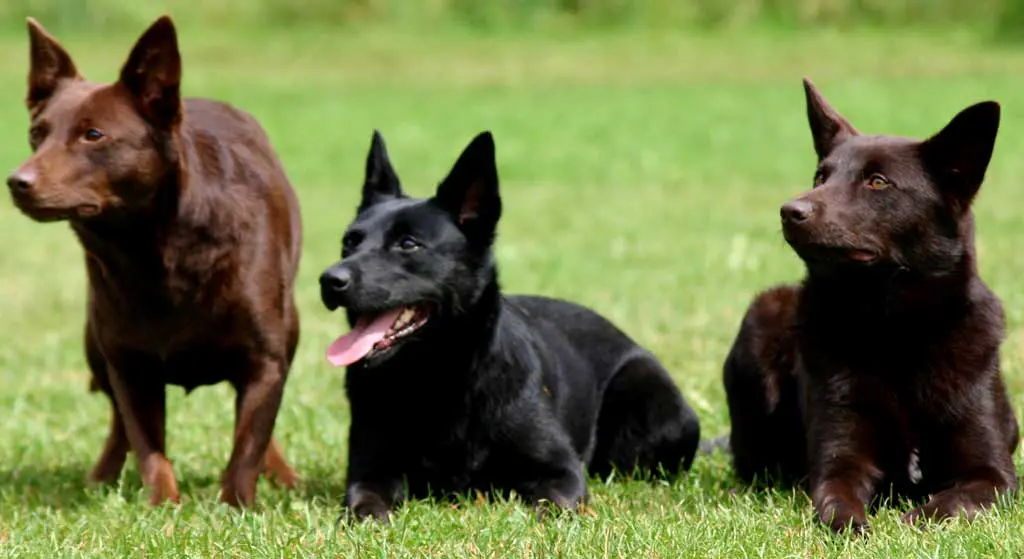
    The Australian Kelpie has a slightly rounded skull with large, straight ears on top. The muzzle is conical, with a fairly small mouth and large teeth ready to chew. The eyes are oval in shape and in shades of dark brown.

    The standards of Australian Kelpie established by the various organizations that recognize the breed allow a fairly wide range of coat colors. But, in the countries – like australia – where there is a distinction between lines of work and lines of exhibition, only a solid color layer is recognized for the latter. In fact, regardless of lineage, the Australian Kelpie is most often black or chocolate with red markings, blue-gray or beige.
    His hair is of medium length and covers a fairly soft undercoat..

    Character and skills

    The Australian Kelpie not a suitable animal for all families. In fact, is an extremely intelligent and energetic dog that requires a lot of attention. Hates being alone, and must be strongly stimulated mentally and physically, through at least two hours of daily exercise. In fact, not at all a suitable breed of dog for an elderly or very sedentary person, but rather for a very active and sporty master, willing to do different activities with your dog. Excels in activities that require agility like Frisbee or agility competitions.

    Like the vast majority of sheepdogs, to the Australian Kelpie he likes to be busy; you are never happier than when you have a task to do. Like this, in addition to the essential walks and / or races, it is recommended that each dog play with him or train him in various activities in which he must apply the instructions given by his master, what he does with great devotion and seemingly boundless energy.

    Lack of stimulus would be a huge problem for the Australian Kelpie; if bored, can become destructive, disobedient and engaging in various other behaviors intended to combat boredom, whether or not it conforms to the rules of the home. These may include, can gnaw through various objects or make the garden look like a minefield by digging holes everywhere.

    So, the Australian Kelpie he is not a sedentary dog โ€‹โ€‹and can only be unhappy in a home that has little time and/or energy to give him. On the other hand, space is not necessarily a problem, as long as you get enough attention: can even cope with apartment living, whenever he has the opportunity to follow his master on excursions and activities, and thus be active daily.

    Usually makes a good family dog, but you may be tempted to "play" the shepherd with the children or even with passing visitors. So, take special care with the youngest, as you may be tempted to nibble on your heels to get them back to where you feel they belong, or to encourage them to participate in an activity. With the Kelpie, the shepherd instinct is never far away.

    The same goes for other pets, so it should be kept under surveillance if necessary. In any case, socializing him from a young age with other species can only be beneficial to prevent him from being mistaken for a herd once he is an adult.

    It also, although they can get along with other dogs, generally prefer the company of humans to that of other dogs.

    Although originally developed for life on the farm, the Australian Kelpie not a dog to leave outdoors, since he gets bored quickly if separated from his family. But, as they are used to operating independently without much instruction, want to be an integral part of family life and tend to act like a member of the family rather than a pet. As a result, he is also a sensitive dog who does not like to be excluded from family activities.

    With a lot of frequency, owners who have not taken the trouble to inform themselves seriously before adoption end up abandoning their Australian Kelpie because it takes too much time and attention. The energetic character, Kelpie's need for activity and intelligence should be taken very seriously when it comes to choosing the breed of dog to adopt. In any case, when your needs are well cared for, he is a very nice and loyal companion.

    Does not easily trust strangers and is very territorial, it is also a very good watchdog, very alert and vocal, that alerts as soon as it hears a strange noise. So, it is best to prevent strangers or even neighbors' pets from venturing into your territory, since it could be aggressive with them. The loud barking of the dog can also be problematic in an urban environment; if the dog is destined to live in the city, this is an aspect that should be particularly worked on as part of your education.

    ยซAustralian Kelpieยป Education

    The Australian Kelpie It is a breed of dog reserved for an experienced and very active owner. Either during training or after, it is important to give you clear and consistent rules, as it works much better in a structured environment.

    But, your training is made easier by the fact that you need to keep busy, and is therefore generally content to participate in dog training activities. Can also be trained to participate in family chores: either picking up the mail, picking up clothes or toys off the floor or helping bring groceries, always ready for a new activity, even at a young age. Completing tasks is an integral part of Kelpie's personality, and can help you feel part of the family.

    This willingness to be active and helpful makes the Australian Kelpie one of the easiest dog breeds to train. Excel in dog sports, they love to learn new orders and enjoy helping their owner. Training is not a particular problem, since they are completely obedient when sufficiently stimulated both intellectually and physically. On the other hand, boredom sets in soon, because he is an intelligent dog, and therefore learn quickly: it is useless to make him repeat the instructions too often, but he must be able to find new challenges and new activities for him regularly. A good solution may be to join a dog club that offers agility courses and games like Frisbee. (discdog).

    Dog training techniques based on positive reinforcement, leading to rewarding the dog for desired behavior rather than punishing it for inappropriate behavior, are preferable with the Australian Kelpie, who has a rather sensitive personality and does not respond well to punishment or an overly imposing master. In fact, there is no point wanting to show your dog at all costs that you are the master, since he does not perceive his dog as superior, but rather as a companion. So, you should treat him with respect and not underestimate his intelligence, especially since he is used to working alone and without too many instructions.

    Last, education should give priority to the socialization of the puppy from an early age, because the Australian Kelpie it is a territorial and distrustful dog. Otherwise, you risk becoming aggressive towards strangers and / or other animals. This will help you learn to react appropriately to strangers., preventing his natural mistrust from taking hold of him.

    Health ยซAustralian Kelpieยป

    The Australian Kelpie it is usually a healthy dog, but you run the risk of some of the problems often associated with the sheepdog group:

    • Abiotrofia cerebelosa;
    • Collie eye anomaly: despite its name, this condition not only affects Collie: the Australian Kelpie you can also be a victim of it. This inherited recessive disease can even lead to blindness;
    • Rupture of the anterior cruciate ligament: rupture of this ligament located in the knee can be caused by trauma (20% of the cases), but more often it is simply due to joint fragility or false movement. It can also be caused by early deterioration of the joint, which is common in very active dogs like Kelpie. It is the most common cause of lameness in this breed., and can cause arthritis;
    • dog hypothyroidism;
    • dog microphthalmia;
    • Progressive retinal atrophy (ARP): It is the most common hereditary disease in Collie family.

    Most genetic diseases can be prevented by strict control of the genetics of breeding animals to reduce inbreeding., as well as by detecting these diseases to prevent individuals carrying these genes from producing offspring. These are, of course, points that any breeder of Australian Kelpie worthy is particularly attentive.

    Last, the Australian Kelpie also leans for :

    • dog cryptorchidism;
    • Hip Dysplasia;
    • dislocation of the patella. May be of congenital origin, due to trauma or simply caused by wear and tear. This last case is frequent in an active dog like the Australian Kelpie.

    You also have a higher than average risk of being overweight, so special vigilance is required at this level, in particular by regularly weighing your dog to control his weight.

    Care and maintenance ยซAustralian Kelpieยป

    Like the fur of the Australian Kelpie can vary quite a bit from one individual to another in terms of density and length, so does its maintenance. But, usually sheds a large amount of hair throughout the year, so it is necessary to brush the dog twice a week. Hair loss is obviously even more pronounced during molting periods., in spring and autumn, and then it is necessary to opt for a daily frequency to remove dead hairs.

    On the other hand, it is rare that you have to give your dog a bath: this is only necessary if you come into contact with a dirty or harmful substance.

    It also, being a very active breed of dog, their claws tend to wear out naturally, and therefore rarely need to be trimmed.

    Looking at your teeth, do not present any particular risk. All you need to do is brush your dog's teeth once a week.

    In general, the Australian Kelpie It is a fairly easy dog รขโ‚ฌโ€นรขโ‚ฌโ€นto take care of. Above all, it is their great need for exercise and intellectual stimulation that makes them a demanding dog on a daily basis.

    Uses and activities ยปAustralian Kelpieยป

    It was originally developed as a sheepdog to herd and guide livestock, the Australian Kelpie has since become a versatile companion. Of course, also found in sheepdog competitions, but also as a sniffer dog for the police, psychological support dog, guide dog for the blind, but also simply as a family dog. In summary, it is a versatile animal that likes to keep busy and easily adapts to different contexts.

    In Australia, but the Kelpie still primarily a sheepdog, it is also increasingly used as a therapy and companion dog. In fact, his sensitivity and need to be in the company of humans make him an exceptionally attentive dog.

    In Sweden, Holland and Finland, they are particularly used as search and rescue dogs during accidents and disasters.

    How much does an "Australian Kelpie" cost??

    In Australia, a puppy of Australian Kelpie normally sold for about 580 Australian dollars (a few 350 EUR). Most of the individuals offered are from working dog lines..

    In other parts of the world, depending on lineage and pedigree, the price of a puppy Australian Kelpie is between 750 and 3.000 EUR. As individuals sold outside of Australia are primarily from show dog lines, the price range is quite wide because the price goes up quickly if the puppy comes from a line with a reputation for having distinguished itself in the field.

    Characteristics "Australian Kelpie"

    Coexistence is important that you have with your new friend. Before considering the acquisition of a dog of the breed "Australian Kelpie" you know certain factors. Not all breeds of dogs are apt to live in an apartment, you must take into account his character, their need for exercise, their interaction with other pets, their care and if you have small children, their level of tolerance towards them.

    Adaptation โ“˜

    4,0 of 5 stars (based on 1 review)

    friendly dog โ€‹โ€‹โ“˜

    3,0 of 5 stars (based on 1 review)

    hair loss โ“˜

    3,0 of 5 stars (based on 1 review)

    Affection level โ“˜

    4,0 of 5 stars (based on 1 review)

    Need for exercise โ“˜

    5,0 of 5 stars (based on 1 review)

    Social need โ“˜

    4,0 of 5 stars (based on 1 review)

    Home โ“˜

    3,0 of 5 stars (based on 1 review)

    Toilet โ“˜

    2,0 of 5 stars (based on 1 review)

    Friendly with strangers โ“˜

    2,0 of 5 stars (based on 1 review)

    barking โ“˜

    4,0 of 5 stars (based on 1 review)

    Health โ“˜

    4,0 of 5 stars (based on 1 review)

    Territorial โ“˜

    5,0 of 5 stars (based on 1 review)

    Cat friendly โ“˜

    3,0 of 5 stars (based on 1 review)

    Intelligence โ“˜

    5,0 of 5 stars (based on 1 review)

    Versatility โ“˜

    5,0 of 5 stars (based on 1 review)

    Child friendly โ“˜

    3,0 of 5 stars (based on 1 review)

    Surveillance โ“˜

    5,0 of 5 stars (based on 1 review)

    joy โ“˜

    4,0 of 5 stars (based on 1 review)

    Images "Australian Kelpie"

    Photos:

    1 – Diesel, a pure-bred Australian Kelpie by davepaku, CC BY-SA 2.0, via Wikimedia Commons
    2 – Australian Kelpie, liver & tan by Canarian, CC BY-SA 4.0, via Wikimedia Commons
    3 – Kelpie australiano by https://pixabay.com/es/photos/kelpie-australiano-perro-ovejas-4217941/
    4 – AUSTRALIAN KELPIE, KORAD SE UCH Deepeyes Dance With Dragons III by Svenska Mรคssan from Sweden, CC BY 2.0, via Wikimedia Commons
    5 – Kelpie australiano by https://pixabay.com/es/photos/nube-roja-kelpie-perro-pastor-2992780/
    6 – Chocolate Female Kelpie by Spinefly, CC BY-SA 4.0, via Wikimedia Commons

    Videos "Australian Kelpie"

    Type and recognitions:

    • FCI CLASSIFICATION:
    • Group :
    • Section : . .

    Federations:

    • FCI – Group 1 Herding dogs, Section 1 Sheepdogs โ“˜
    • AKC – PASTORAGE โ“˜

    FCI breed standard "Australian Kelpie"

    Origin:
    Australia

    Date of publication of the valid original standard:
    08.10.2012

    Use:

    Shepherd dog.


    General appearance:

    This should be that of an active and very useful dog.; great muscular condition combined with the elasticity of your limbs provides the ability to work tirelessly. Your appearance should not reflect weakness.

    important proportions: The length of the dog, measured from the anterior tip of the forechest in a straight line towards the protuberance of the ischium, is greater than the height at the withers by a proportion of 10:9.


    Behavior / temperament:

    The Kelpie is very smart, laborious and always alert. He also has a docile disposition and almost inexhaustible energy.. On the other hand, shows great loyalty and devotion to work. Has a natural instinct to work with sheep, both in the field, as in the corral.

    Any defect in structure or temperament should be considered atypical..

    Head:

    The head should be in proportion to the size of the dog. As a whole, the shape and contour of the head give it a fox-like expression, but it is attenuated by the almond shape of the eyes.

    Cranial region:
    • Skull: Slightly rounded and wide between the ears. View from the side, the forehead descends in a straight line towards the naso-frontal depression.
    • Depression links (stop): Marked.

    facial region:

    • Truffle: Its color harmonizes with the color of the coat.
    • Snout: Clearly molded and defined, should preferably be somewhat shorter than the skull.
    • Lips: Tight and clearly delineated, no slack.
    • Jaws / Teeth : The teeth must be strong, healthy and regularly aligned. The lower incisors are placed closely behind the upper ones, that is, the joint must be scissor-shaped.
    • Cheeks: Neither thick nor prominent, but round towards the muzzle.
    • Eyes: Almond shaped, they are medium in size and their angle is well defined. They are intelligent and alert in expression. The color must be brown, harmonizing with the coat color. Lighter colored eyes are allowed in the case of dogs with blue fur.
    • Ears: They are upright and end in a fine point; the ear shell is thin, but strong at the base. The ears are set well apart, slope outward and form a slight curve at their outer edge. Are medium-sized. They are well provided with hair on the inside.

    Neck:

    It is of moderate length, strong, slightly arched, gradually inserting into the shoulders. There is no presence of double chin, but yes, a quite abundant necklace of hair.

    Body:

    • top line: Firm and uniform.
    • Pork loin: Strong and well muscled; flanks are deep.
    • Rump: Rather long and sloping.
    • Breast : Deep, muscular and moderately wide. Well sprung and back ribs, not barrel shaped.

    Tail:

    During rest, should hang slightly arched. When the dog is in motion or at attention, it may appear raised, but under no circumstances should it exceed the vertical line of the birth of the tail. It must be provided with abundant brush hair. It is inserted in a way that harmonizes with the slope of the croup and should reach approximately to the hock..

    Tips

    Former members
    • General appearance: Muscular, strong but not thick boned, straight and parallel viewed from the front.
    • Shoulder (scapulae) : They must be well delineated. They are muscular and well leaning, shoulder blades being well together in the region of the withers.
    • Arm (humerus): Upper arm should be at right angles to shoulder blade.
    • Elbows: They should not deviate or inward, nor out.
    • Metacarpus: Seen from the sides, pasterns should be slightly sloping to allow flexibility in movement and the ability to turn quickly.
    • Previous feet: They must be round and strong. Thick pads. The fingers are close together and well arched; nails are short and strong.
    Former members
    • General appearance: They must be wide and strong. Seen from the back, hind limbs, from hocks to feet, they are straight and parallel, nor together, not too far apart.
    • Knees: Well angulated.
    • Hocks: Placed fairly close to the ground.
    • Hind feet: They must be round and strong. Thick pads. The fingers are close together and well arched; nails are short and strong.

    Movement:

    To manifest the limitless vigor and perseverance required of a sheepdog working in open spaces, the Kelpie must be of very robust constitution and have a perfect gait. The movement should be loose and effortless and the dog should be able to turn suddenly without slowing down.. As speed increases during trotting, the feet tend to come closer when they land on the ground; but when the dog is resting, all four feet are in the correct perpendicular position.

    Mantle

    • Fur: The coat is double, with a short and dense undercoat. The outer layer is tight, the hairs are of a hard and stretched texture and are well glued, so that the coat is resistant to rain. Below the body, back of the limbs the coat is longer, and near the thigh forms a "pants" light. In the head (including the inner part of the ears), in the front of the limbs and feet, the hair is short. On the neck it is long and thick, forming a necklace. The tail must be provided with a generous brush. Hair that is too long or too short is a fault. Usually, body hair should be about a length of 2-3 cm.
    • Color: Negro, black and tan, red, red and fire, leonado, chocolate, smoke color.


    Size and weight:

    Height to the cross:

    • Males 46 - 51 cm.
    • females 43 -48 cm.


    Fouls:

    Any deviation from the aforementioned criteria is considered a fault and the severity of this is considered to the degree of the deviation from the standard and its consequences on the health and well-being of the dog and your ability to do your traditional job.

    Serious misconduct:

    • Shoulders too loose.
    • Any tendency to a cow hock or barrel-.
    • Crossing or zigzagging movement.
    • Restricted or stiff movement.

    disqualifying fouls:

    • Aggressiveness or extreme shyness.
    • Any dog โ€‹โ€‹showing clear signs of physical or behavioral abnormalities must be disqualified..


    N.B.:

    Males should have two normal-appearing testicles completely descended into the scrotum..

    The latest changes are in bold.

    Source: F.C.I - International Cynological Federation

    Alternative names:

    1. Kelpie (English).
    2. Kelpie (French).
    3. Kelpie (German).
    4. Kelpie (Portuguese).
    5. Kelpie (espaรฑol).

    โ–ท The world of Pets: Dogs, cats, birds, reptiles, amphibians

    Old working bulldog
    Inglaterra Extinct

    Old English Bulldog

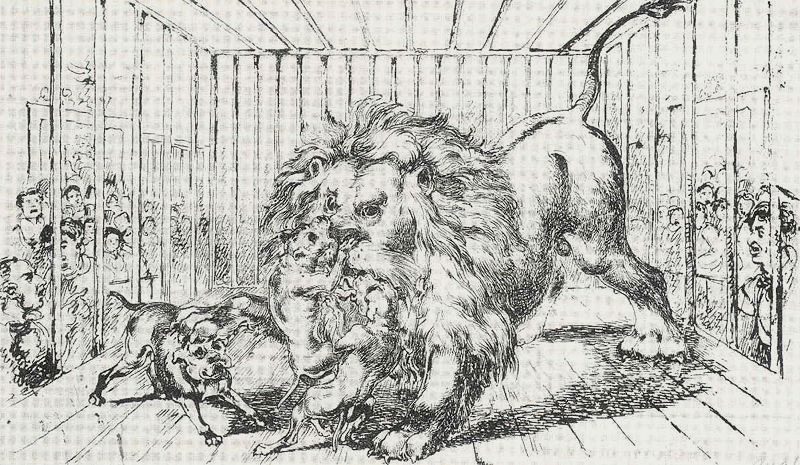
    The Old working bulldog (extinct) was fierce, It was used to fight with bulls and Lions.

    The Old working bulldog (Old English Bulldog) was a breed of dog, quite fierce comparing it with the tenderness of the current English Bulldog.

    Be used for shows as bloody as fights with bulls and Lions, his specialty was biting their nose until the animal couldn't take it anymore and was knocked down by the dog.

    Otros nombres: Antiguo Bulldog Inglรฉs.

    Dogs breeds: Old working bulldog

    Read all about the race by clicking on: Old English Bulldog.

    โ–ท The world of Pets: Dogs, cats, birds, reptiles, amphibians

    American Eskimo
    Estados Unidos - Not recognized by the FCI

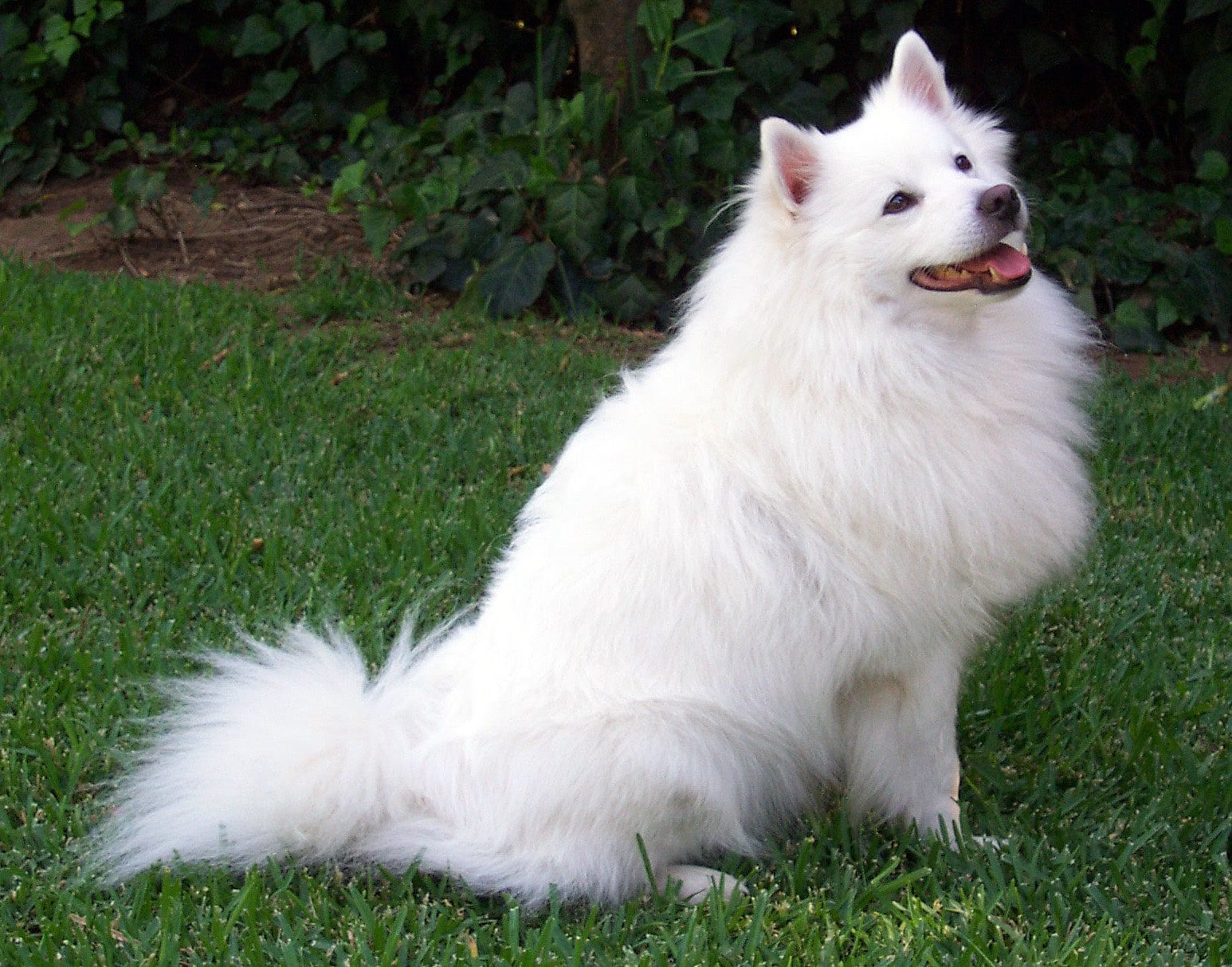
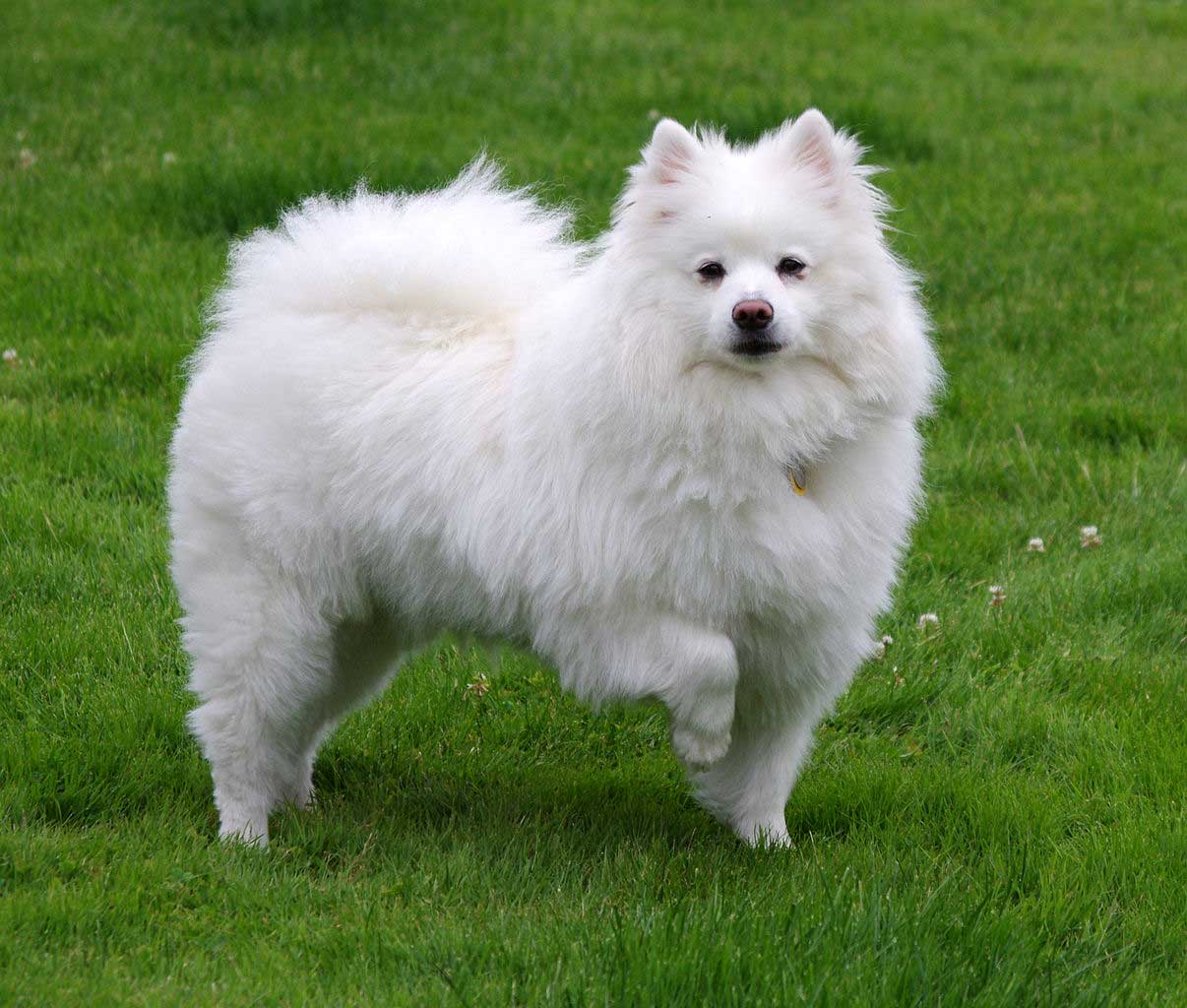
    The American Eskimo dog (American Eskimo o ยซEskieยป) is a descendant of the Spitz from the north of the European continent.

    Esquimal Americano

    Content

    History

    In northern europe, the Spitz smaller ones ended up becoming the different races of German Spitz. European immigrants brought their pets Spitz to United States, especially to New York, early twentieth century, ยซAll of them descendants of German Spitz largest, the Keeshond, the Pomeranian white and the Volpino Italiano.

    Although white was not always a recognized color in the different breeds of German Spitz, in general it was the preferred color in the US. In a display of patriotism around the time of World War I, dog owners began to refer to their pets as American Spitz instead of German Spitz

    After World War I, the little dogs Spitz came to the attention of the American public when the dogs became popular entertainers in the American circus. In 1917, the Cooper Brothers Railway Circus introduced his dogs. A dog called Stout’s Pal Pierre was famous for walking a tightrope with the Barnum and Bailey Circus in the 1930, and the sale of puppies after the show also contributed to its popularity. Due to the popularity of circus dogs, many of the current american eskimo dogs they can trace their lineage to these circus dogs.

    After the Second World War, dogs remained popular pets. Postwar contact with Japan led to the importation into the United States of the Japanese Spitz, that may have been crossed with the American Eskimo at that time.

    The breed was officially recognized for the first time as American Eskimo already in 1919 by the United Kennel Club (UKC) de EE.UU., and the first written record and history of the breed was printed in 1958 by the UKC. At that time there was no official breed club and no breed standard., and the dogs were accepted for registration as individual dogs, based on appearance.

    In 1970 the National American Eskimo Dog Association was founded (NAEDA), and individual dog searches ceased. In 1985, breeders who wanted to register the breed in the American Kennel Club (AKC) they created the American Eskimo Dog Club of America (AEDCA). Following AKC requirements for breed recognition, the AEDCA collected the pedigree information of 1.750 dogs that now form the basis of the AKC recognized breed, that it's called American Eskimo dog.

    The breed was recognized by the American Kennel Club in 1995. The herd book was opened from 2000 to 2003 in an attempt to register more lines originally registered by the UKC, and today many dogs american eskimo dogs they have double registration in both American canine clubs.

    The breed was recognized by the Canadian Kennel Club in 2006

    .

    Physical characteristics

    American Eskimo
    Cute pose, but she was actually a little freaked about the camera. (American Eskimo) – Christmas w/a K, CC BY-SA 2.0, via Wikimedia Commons

    The American Eskimo dog -also known as Spitz German American– comes in three different size varieties, small to medium. The dogs of the so -called "toy size" reach a height of the cross up to 30 cm and a weight of between 2,7 and 4,5 kg. The version called "Miniature" has a cross height between 28 and 38 cm.. The weight of the dogs ranges from 4,5 and 9 kg. The largest variety, The "standard", reaches a height of 36 to 48 cm and weighs between 8 and 16 kg.

    The coat of the american eskimo dog clearly resembles that of the Spitz. It is straight in position and of medium to long length. Dogs have a double coat that protects them from the wind and the elements. Approved coat colors are white and cream.

    Life expectancy

    The life expectancy of dogs of this breed is between 12 and 14 years.

    Character and skills

    The american eskimo dog considers himself a cheerful and friendly companion. He is very affectionate with his owners. He is always ready to defend his family with courage and without fear. Due to this strong bond with its congeners, these dogs are quite dependent and dependent. But, they are stubborn and, sometimes, stubborn, so they need a loving but constant education. In general, dogs are considered fairly easy to train.

    It also, the American Eskimo is intelligent and capable of learning. They can be trained well and they can also learn little tricks, so they have already achieved a considerable degree of fame in the circus. These smart Spitz they need to be very busy so that the mental sub-challenge does not lead to bad behavior.

    The American Eskimo he is very awake and they like to bark, so they are often used as watchdogs. But, they do not usually bite and do not show aggressiveness.

    Videos "American Eskimo"

    Cute American Eskimo Puppy's First Days At Home

    American Eskimo Dogs | Breed Judging 2020

    Alternative names:

  • Cloud Spitz
  • American Spitz
  • German Spitz
  • Cloud, Eskie
  • โ–ท The world of Pets: Dogs, cats, birds, reptiles, amphibians

    Toy Fox Terrier
    Estados Unidos Not recognized by the FCI

    The Toy Fox Terrier has inherited the character of Fox Terrier, but also of the races Toy that were used to create it.
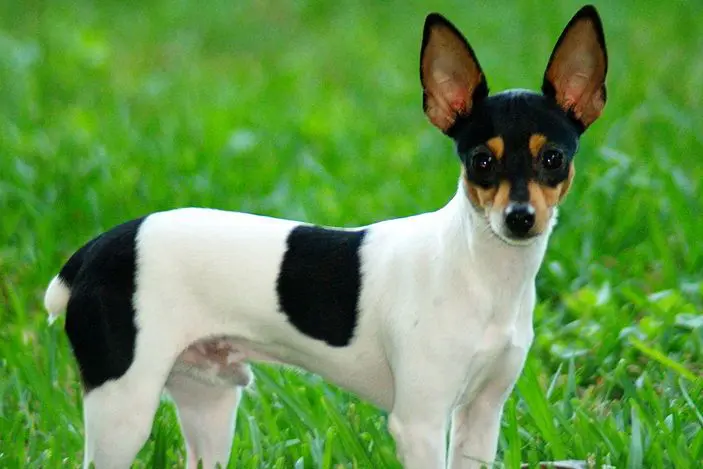
    Fox Terrier Toy

    Content

    Characteristics "Toy Fox Terrier"

    Coexistence is important that you have with your new friend. Before considering the acquisition of a dog of the breed ยซยซ you know certain factors. Not all breeds of dogs are apt to live in an apartment, you must take into account his character, their need for exercise, their interaction with other pets, their care and if you have small children, their level of tolerance towards them.

    Adaptation โ“˜

    2,0 of 5 stars (based on 1 review)

    friendly dog โ€‹โ€‹โ“˜

    3,0 of 5 stars (based on 1 review)

    hair loss โ“˜

    3,0 of 5 stars (based on 1 review)

    Affection level โ“˜

    5,0 of 5 stars (based on 1 review)

    Need for exercise โ“˜

    4,0 of 5 stars (based on 1 review)

    Social need โ“˜

    3,0 of 5 stars (based on 1 review)

    Home โ“˜

    3,0 of 5 stars (based on 1 review)

    Toilet โ“˜

    1,0 of 5 stars (based on 1 review)

    Friendly with strangers โ“˜

    3,0 of 5 stars (based on 1 review)

    barking โ“˜

    4,0 of 5 stars (based on 1 review)

    Health โ“˜

    4,0 of 5 stars (based on 1 review)

    Territorial โ“˜

    2,0 of 5 stars (based on 1 review)

    Cat friendly โ“˜

    3,0 of 5 stars (based on 1 review)

    Intelligence โ“˜

    4,0 of 5 stars (based on 1 review)

    Versatility โ“˜

    3,0 of 5 stars (based on 1 review)

    Child friendly โ“˜

    5,0 of 5 stars (based on 1 review)

    Surveillance โ“˜

    3,0 of 5 stars (based on 1 review)

    joy โ“˜

    5,0 of 5 stars (based on 1 review)

    History

    The Toy Fox Terrier originated in the United States in the first half of the 20th century.

    Your British ancestor, the Smooth Fox Terrier it was very popular in the 19th century in its country of origin for fox hunting. It was around this time, and more specifically during the second half of the century, when the first specimens crossed the Atlantic. They quickly won over the public and became popular with hunters and dog show fans alike..

    Since the beginning of the 20th century, many American breeders tried to miniaturize the Smooth Fox Terrier. His goal was to preserve his abilities to exterminate pests (Rats, mice, etc.), especially appreciated on farms, and at the same time create an easier dog to keep, requiring less exercise and food, and that I could live in the city.

    To achieve this goal, the smallest specimens were crossed with miniature dog breeds, thus guaranteeing the genetic diversity necessary to develop a globally healthy dog. The Chihuahua and the Italian Greyhound were used mainly as a complement to the Fox Terrier, but other races like him Miniature Pinscher and the Manchester Terrier miniature were also important.

    In the Decade of 1930, the breed had stabilized and the resulting dogs already had their current appearance. The United Kennel Club (UKC) American began to register specimens as Toy Fox Terrier already in 1936.

    This did not prevent many heated debates among breeders during the decade of 1940, since they did not agree on what to do next. Some advocated continuing to breed with miniature dogs, even if it meant moving away from his ancestor, el Smooth Fox Terrier, while others advocated crossing only with the latter, although this meant that the breed increased in size.

    In 1949 a breed club was created, the National Toy Fox Terrier Association, that put an end to the discussions. In fact, drafted a rule and decreed that mixtures were no longer authorized. The American Toy Terrier they could no longer interbreed with smaller breeds, not even with the Smooth Fox Terrier, so its characteristics were kept as is.
    Despite its success in the United States, was not up 2003 when the governing body of the country, the American Kennel Club (AKC), recognized race. The Canadian Kennel Club (CKC) did the same in 2006. But, not even Fรฉdรฉration Cynologique Internationale (FCI), which brings together the national associations of a hundred countries, nor the prestigious and influential British Kennel Club (KC) they have followed suit. In fact, at the global level, its recognition is still very partial.

    It also, even in your country of origin, the Toy Fox Terrier still relatively discreet. These may include, the AKC places the Toy Fox Terrier around the post 110 (of about 200) in the popularity ranking of breeds according to the number of annual registrations in the organization. This figure is even slightly below the rank 90 that occupied in the middle of the decade of 2000, shortly after its recognition, and is even lower than in the early 1990s. 2010, when I was rather on the job 100.

    Physical characteristics

    The Toy Fox Terrier it is a very small dog, who has retained the athletic build and general appearance of his ancestor, the Smooth Fox Terrier.
    Its body it is square and well built, with a solid bone structure that is not excessive. It stands on well-muscled legs, perfectly parallel when viewed from the front, and ending in small oval legs. The tail is high and is carried up. When allowed, as for example in the USA., it is usual for the tail to be cut at the level of the third or fourth vertebra. But, this practice (tail cut) is prohibited in many jurisdictions, like france, Belgium, Switzerland and Quebec.

    The head of the Toy Fox Terrier It is elegant, with balanced proportions. The ears they are a distinctive feature of the breed: they are pointed, V-shaped, located high on the skull and close together. It also, when the dog has at least 6 months of age, must be carried up, what is different from your ancestor, the Smooth Fox Terrier, where it bends forward. The specimens whose ears are not erect do not meet the standard and, therefore, cannot be registered as Toy Fox Terrier. The eyes they are well rounded, dark in color and very expressive. The snout is quite prominent and ends in a nose black, except in chocolate-colored individuals, in which it has the same color.

    The fur of the Toy Fox Terrier consists of a sparse undercoat and a thin, shiny topcoat, soft to the touch. It is evenly distributed throughout the body, although it may be a bit longer at the shoulders.

    The color white is always dominant, necessarily present in more than half of the coat. But, brands are always present: no smooth individuals. They are present even on the head and can be black in color, fire, black and tan or chocolate and tan.

    Last, the sexual dimorphism is almost non-existent in this breed: males and females are about the same size.

    Breed standard

    The breed standards are documents produced by official bodies that list the conditions that a dog must meet. Toy Fox Terrier to be fully recognized as belonging to the race:

    Varieties of "Toy Fox Terrier"

    The Toy Fox Terrier is sometimes confused with him Miniature Fox Terrier (or Mini Foxie), a breed created in Australia.
    The Mini Foxie has a breed club, the Mini Foxie Club of Australia, but it is not recognized by any official canine body, neither as a variety nor as a race, not even in your home country.

    Although both the Toy Fox Terrier as the Miniature Fox Terrier originated from the miniaturization of the Fox Terrier, the breeds used in the process were not the same. While the Toy is primarily a cross between Smooth Fox Terriers, Chihuahua and Italian Greyhound, the Miniature was created primarily by crossing Smooth Fox Terriers with Toy Manchester Terriers and Whippet. So, these dogs have different origins, which explains that they do not have the same appearance. In fact, although they are almost the same size, the Miniature Fox Terrier it's slightly heavier, since it weighs between 1 and 2 kg more than Toy Fox Terrier.

    The Miniature Fox Terrier is practically non-existent outside Australia and New Zealand.

    Character and skills

    The Toy Fox Terrier has inherited the character of Fox Terrier, but also from the toy breeds that were used to create it. In this way he manages to concentrate the qualities of the terriers and the temperament of small dogs, all in a skull barely bigger than an egg.

    He is very attached to his family and is very happy with her. You need to spend a lot of time with them, and it is not suitable for people who are out most of the day. In fact, easily suffering from separation anxiety, can quickly become destructive if left alone too often or for too long. Its small size does not prevent it from getting dirty, either pulling a vase, urinating on the carpet or biting on the remote.

    The fact that he is very dependent on his family does not mean that this dog is docile and attentive. On the other hand, is quite stubborn and authoritarian, and he likes more than anything that his people bow to his will. Despite its size, rushes to take control of the home if its owner allows it.

    Attached to his family, the Toy Fox Terrier is quite suspicious of strangers and needs time to get used to their presence. But, once you have met him, things are going very well and he appreciates the presence of people he is used to. You can easily be left with people you know for a few days if your family is away and cannot take you.

    On the other hand, not made for living with young children. Their games, sudden movements and screaming can excite or scare you, and an accident can happen quickly. It also, its size makes it very vulnerable: a fall or a blow delivered inadvertently or in a fit of anger can seriously injure you, with potentially life-long consequences. In any case, if you come into contact with young children, should never be without adult supervision.

    The Toy Fox Terrier tends to get along very well with the house cat - even if it is bigger than him- and can befriend a rodent of his size, like a rabbit. Sharing your home with another animal can be a great way to help you better cope with your owners' absences., and things work better if you have grown up with it. On the other hand, it is better not to do it with a bird, a reptile or a small rodent: his hunting instinct would have every chance of waking up one day and bringing the experience to an abrupt end.

    Relationships with other dogs are complicated and vary greatly from one individual to another, depending on your socialization. Some see other dogs as potential threats, while others see them as playmates. In any case, there is a feature that all Toy Fox Terrier have in common: are completely unaware of their size, and do not hesitate to interact with dogs of 20 times its weight. Whether to play games or to participate in a grunting and teasing contest, these situations are always risky, and their owners must be especially careful to protect them from their burning.

    Having said that, the problem may not arise very often, since the Toy Fox Terrier you don't need to spend hours on the ride every day. In fact, although he has inherited his hyperactive side from Fox Terrier, has little need to go out, so a daily walk of 20 to 30 minutes is enough for you to stretch your legs and get enough exercise. In any case, it is best to take him for a walk on a leash, both to protect him from himself and to prevent him from suddenly disappearing chasing a small animal that passes by.

    If you still feel like exercising when you return, you can always burn off your excess energy indoors, especially if he has the opportunity to play with his owner. Then, once you are tired, he likes to come to rest on his knees, or even better, in the cozy bed of a family member.

    In fact, the American Toy Terrier it is a breed of indoor dog, and it is not only its closeness to the family that makes it occupy a place in the heart of the home and that it should never be left alone outside. In fact, its small size makes it a prime target not only for thieves, but also for many predators, from weasels to hawks, foxes and vultures. This is all the more true since their survival instinct is not highly developed., which may also explain that feel free to go tell the neighbor's Great Dane what you think, thus putting themselves in danger.

    The risk is all the greater as for this dog, quite intelligent and very curious, likes to explore and discover new things, also without being really aware of its intrinsic fragility, that could play a trick on him. Thus, it is important that they always do it in the company of their owners, those who are delighted to accompany to new places, for example during a vacation. This intelligence and curiosity also makes him capable of learning many tricks and becoming a true specialist in dog sports such as agility or obedience..

    Last, if you live in a poorly soundproofed apartment, neighbors are likely to attract enmity. In fact, it is difficult for you to integrate certain basic rules of community life, and in particular the fact of respecting the tranquility of the people around: he likes to make his voice heard, which is surprisingly powerful for its size. Above all, tends to bark when he hears something, either the elevator or the neighbor's door, but also simply to remind the world that it exists. This makes him a wonderful alert dog., but in a neighbor difficult to live with.

    Education

    The socialization of the young Toy Fox Terrier is of utmost importance to your future well-being, especially since he tends to be quite suspicious of strangers. So, it is better that you have many opportunities from your first months to get acquainted with the people and animals that will be part of your life (friends, veterinary, neighbor's dog…). It also, must face all kinds of situations and stimuli in different environments, so that he is more serene in the face of novelty and does not behave in an undesirable way when he is an adult.

    Like many breeds of this size, the risk of small dog syndrome is real with the Toy Fox Terrier. In effect, blinded by the tenderness he feels for this adorable ball of fur that seems so fragile and harmless, his master does not take long to forgive him all his misdeeds and faults, included, for example, aggressive behaviors, authoritarian or possessive. But this is not a gift for him or his partner, because a dog needs to be framed and faced with some authority to know its place and be balanced. Given his propensity to do what he pleases and to take his little world by the hand, It is important, Therefore, show your dog that he decides as soon as he gets home, when it is most receptive and malleable. This allows you to quickly identify and assimilate your position in the household hierarchy., thus reducing his desire to take control once he is an adult. As such, the rules must be clear, consistent in time and space, and all family members must ensure its implementation.

    But, as long as you know how to make yourself respected, even a novice teacher can achieve great things with a Toy Fox Terrier. The dog's curiosity helps him learn new things quickly, and is usually happy to show his qualities. But, it is better that the workouts are short and frequent, instead of long boring sessions from time to time. It also, as it happens with many races, positive reinforcement methods are the most effective, since the stimuli, caresses and treats are an excellent source of motivation.

    In any case, one point that needs to be addressed early on is your propensity to bark at all times. It is advisable to try to understand the situations in which you are expected to remain silent or, at least, teach you to stop on command.

    Last, the American Fox Terrier often learn to clean quickly, but the males do not usually have a good aim, so it is advisable to reserve enough space for them.

    Health

    The Toy Fox Terrier he is a quite robust dog, with one life expectancy of 12 to 15 years quite common for its size.

    But, their thin skin and sparse fur do not protect them well from extreme weather conditions. They usually spend most of their time indoors, so they are not affected much by outside conditions, but their owners must be careful when walking them. In summer, it is better to avoid hot and sunny hours and go out in the morning or at night. In winter, or when it rains, a sweater or mackintosh for dogs can be very useful.

    Among the diseases that can affect the American Fox Terrier, are mainly found:

    • The patellar dislocation, which is usually related to a genetic predisposition, occurs when the kneecap slips out of place and locks the knee, causing a limp;
    • The Legg-Calve-Perthes disease, a necrosis of the femur that can be inherited. Causes pain and loss of mobility in the hind leg, but it is operable;
    • The von Willebrand disease, an inherited bleeding disorder that causes spontaneous and / or heavy bleeding;
    • The Hypothyroidism, a hormonal imbalance that can cause all sorts of symptoms: apathy, weight gain, severe fatigue, damaged fur, etc. Various treatments that provide a synthetic hormonal supplement can prevent the appearance of these symptoms, although they can't really solve the root problem.
    • The lens luxation, that causes it to move abnormally, causing pain and, above all, rapid loss of vision, unless it is operated on time. This condition can also be of hereditary origin;
      skin allergies, that may be caused by the environment, food or parasites, and that cause redness and itching.

    The best way to reduce the risk of adopting a puppy with a hereditary disease is to go to a breeder responsible for Toy Fox Terrier, that routinely tests all individuals you plan to use as breeders, as well as the puppies of each litter. In addition to ensuring that the puppies are well socialized from their first weeks, a serious breeder can present the results of the genetic tests carried out to his parents and even to himself. You must also present a certificate of good health issued by a veterinarian, as well as details of the vaccinations received by the puppy, registered in the health card of this (or vaccination book).

    Once the puppy comes home, it's up to the family to stay healthy. Given its fragility, it is especially important not to overload your bones and joints, especially when playing. This is especially true during the growing season., when injuries could have irreversible consequences.

    It also, even if I spend little time abroad, you are still exposed to the risk of parasites. Thus, it is important to ensure that deworming treatments are renewed throughout the year, so that the dog never ceases to be protected. This protection goes hand in hand with the protection provided by vaccines: some follow-up is also necessary at this level, so that booster shots are always given on time. The vet can be asked to take care of this at the same time as the dog's health check, which is necessary at least once a year to detect any problems as early as possible and, if required, to be able to treat it in the best conditions.

    Grooming

    The Toy Fox Terrier it is one of the easiest dog breeds to care for.

    This is especially true of its short coat., that only needs a quick weekly brushing. Even during the fall and spring molts, hair loss is limited, but it is still advisable to brush the dog every two or three days to remove excess dead hair.

    It also, do not have a specific odor, they are usually clean and spend most of their time indoors, where there is little opportunity to get dirty or even wallow in a smelly substance. Thus, it is seldom necessary to bathe the Toy Fox Terrier. Once a year is more than enough, and a mild shampoo designed specifically for dogs should be used. This is because the pH of your skin is different from that of human skin..

    every week, along with brushing, the dog's ears must be inspected and cleaned with a cloth. This prevents the accumulation of dust and dirt, which can cause infections.

    The weekly grooming session should also be an opportunity to check and clean the dog's eyes., gently rubbing them with a damp cloth to remove the marks that usually appear at the corner of the eye, where tears drain.

    Regular tooth brushing is also essential for maintaining good oral health and reducing the risk of bad breath and dental disease.. The ideal is a daily brushing, but once a week is enough. In any case, you should always use a toothpaste for dogs.

    Last, given its low level of activity and the time spent indoors, in general you have to cut your nails once a month, since natural wear and tear is not enough to file them. If you hear a clicking noise when your dog walks on hard ground, you should cut his nails because they are too long and could break or even be injured.

    Although caring for a Toy Fox Terrier it's not especially complicated, must be done correctly. This is necessary not only to be effective, but also to prevent the dog from getting hurt. So, it can be useful to learn them the first time from a professional, either a dog groomer or a vet. Better to start quickly, so that the animal integrates them from childhood as part of the routine and does not rebel.

    Food

    There is no special difficulty in feeding a Toy Fox Terrier, since industrial dog food is doing very well. But, it is important to ensure that the food is of sufficient quality and provides all the nutrients it needs, depending on your age, your health and activity level.

    Like all dogs, it is best to divide your daily ration into at least two meals, ideally one in the morning and one at night.

    In any case, although it is similar in size to a domestic cat, it is not a question of giving cat food. This is because cat food is not suitable for dogs at all., since the needs of both species are completely different. Feeding your pet cat food can cause serious health problems.

    On the other hand, although they are not especially active, the Toy Fox Terrier they are not very prone to obesity problems. But, no individual is saved, and this is even more true if he has been neutered. Too many treats, too large a serving or insufficient daily exercise will inevitably lead to weight gain. Thus, it is recommended to weigh your dog every month, to detect any variation as soon as possible.

    These variations should not be underestimated. From a human perspective, a weight gain of 300 grams may seem insignificant. In the case of a small dog that only weighs 2 or 3 kg, is very different, and it is evident that one should be alarmed if it is confirmed -or even accentuated- next time. Then it is necessary to go to the vet, to benefit from the expertise of a professional. This is because being overweight may not be related to the animal's diet or activity level., rather it may be the result of a reaction to medication or a disease. Only the vet can safely determine the cause of the problem and indicate how to remedy it..

    Whatever the cause of weight gain, it may be necessary to change the diet that is given. The same goes for food allergies, a problem this breed is prone to.

    Last, like any dog, the Toy Fox Terrier you need to be able to drink whenever you want, so a bowl of fresh water should be available at all times.

    For sale "Toy Fox Terrier"

    In United States, the price of a puppy Toy Fox Terrier round the 1.000 dollars on average, but the price range is wide, of 500 to 2.000 $.

    This is even more true in Europe, where the number of breeders is very small. It also, as the breed is not yet recognized by the various national canine organizations, none of them can provide a registration certificate attesting that the animal is purebred. The rare specimens found in Europe cannot be considered, for the moment, as true Toy Fox Terrier.
    In any case, in case of adoption abroad, It is necessary to take into account that transport costs and administrative fees are added to the purchase price, and inform yourself in advance about the current legislation and the necessary documents to import a puppy into the country.

    It also, as in the case of any race, the observed price differences can be attributed in particular to the reputation of the breeder, to the prestige of the line from which the puppy comes and its own characteristics. These may include, a puppy adopted from a champion breeder and descended from parents and grandparents who have won numerous titles commands a higher price. Even within the same litter, there may be significant differences depending on the proximity of each individual to the breed standard.

    Images "Toy Fox Terrier"

    Photos:

    1 – Toy Fox Terrier by Ltshears, CC BY 3.0, via Wikimedia Commons
    2 – Toy Fox Terrier by Flickr
    3 – Toy Fox Terrier by Flickr
    4 – Toy Fox Terriers are happy to go out on warm winter days by Haateigh, CC BY 3.0, via Wikimedia Commons

    Videos "Toy Fox Terrier"

    Alternative names:

    1. American toy terrier, Amertoy (English).
    2. Fox Terrier Amรฉricain, American Toy Terrier (French).
    3. Toy Fox Terrier (German).
    4. American toy terrier, Amertoy (Portuguese).
    5. Toy terrier americano, Amertoy (espaรฑol).