 FCI 28 . Medium-sized Hounds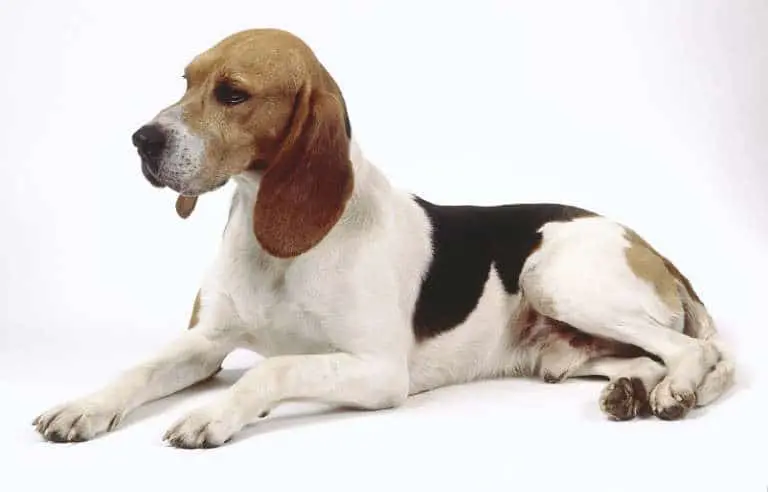
Content |
|---|
History
The Artois Hound It is a smaller version of the "Great Artesian Hound", which is now extinct and was used in France in the 17th century for wild boar hunting, deer and small game. As hare hunting grew in popularity, the need for smaller dog breeds increased. Known in his land as "Briquet” (What does "little braco" mean?) and also how Picard.
It is true that it is a dog of ancient lineage like few others has enjoyed the admiration and the royalty protection (King Henry IV and Louis XIII), being considered a distinguished Hunter of Hare.
He played with devotion to his duties in the most varied scenarios (plain, forest or in the densest bushes) and used to be easily identified by his master due to his original bark.
Some authors have that in 1609 Prince Alexander Gray has sent some specimens of this breed to the King of England, which have subsequently been used for the creation of the Beagle.
The development of Artois Hound, However, It has not been stable or linear. According to a French hunting manual, dating of 1890, It is known that at the end of the 19th century it used to be difficult to find pure specimens of this lineage..
The apparent arbitrariness to the development of the race and their successive crosses with other species (mostly of English origin) they will disperse the original purity of this lineage.
In this stage a so-called breeder Ernest Levoir tries to restore this lineage to the region Picardie. There are other names that were associated with these recovery attempts during the 20th century, as Mallard (at the time of World War I), Audréchy, among others.
With everything, Some authors consider that it has been Mme. Great Pyla who has won the most positive results, managing to re-establish the breeding of this strain.
Currently, This dog It remains a rare breed and there are quite a few clubs that protect their development.
Physical characteristics "Artesian hound"
Very agile, It adapts to various types of terrain and shown extremely persistent in the performance of their duties. It also, has an excellent sense of direction, a developed sense of smell and speed of movement.
This robust dog has a fur short, dense, soft and well attached to the body.
The color the coat is dark Fawn tri-color, It is a color similar to the Hare or the Badger. It has large spots. Y, the head tends to be carbonated, or charcoal grey and sometimes presents black reflections.
It has wide and rounded skull and pronounced chamfer. It has the square snout, the black truffle and its round eyes give it a gentle air.
The ears they are wide, long and inserted at eye level.
The neck and chest are vigorous and long. The rump and the spine are also robust and Member muscular. In the long run tail stays in the form of sickle.
Character and skills "artisian hound"
Currently, this dog is still used more as a hunting dog than as a companion dog. Like the large spaces, It does not conform to the sedentary life in the city.
You can live in a home but if given a daily dose of exercise physical and games.
The Artois Hound he is a brave and intelligent dog, very independent and quite energetic.
It is an animal very resistant, possessing a special bark that can be heard at a great distance. It is a dog that is used primarily for hunting.
Hunters usually go hunting with six or eight specimens of Artois Hound.
It is not usually seen much as a companion dog, but in this case it is a good companion, It is not a Mongrel dog thanks to its strong independence, but will be loving in their own way, without empalagar.
Care and maintenance of a "artisian hound"
The Artois Hound not suitable as a family dog. Needs a meaningful task that demands your doggy stamina and intelligence. His most popular task is still hunting. So, this dog should be left in the hands of an experienced hunter.
To the Artois Hound would not like the position in a city apartment, no matter how comfortable the apartment is. You need freedom of movement, What can you get in the country?. As the Artois Hound He is a pack dog and feels very happy among his peers., second position or multi-dog position is recommended. The care of this breed of dog is not intensive. Ear care can be a bit more complex, but the coat is very easy.
Where to buy a "artisian hound"
The Artois Hound It is a rare breed of dog that was on the verge of extinction after World War 2.. If you are interested in this dog, should have a lot of patience and time. Contact the breeders in advance and ask if they are expecting a litter and if there are any still available. Puppies are often reserved in advance. But it's better not to buy from breeders when you have a bad feeling!! If possible, you should take a look at the kennel. Don't be afraid to ask the breeder too many questions!! A good breeder, for whom the welfare of puppies is the first priority, will be happy to answer your questions and give you some valuable tips on maintenance, training and feeding the dogs.
Images of the "Artesian hound"
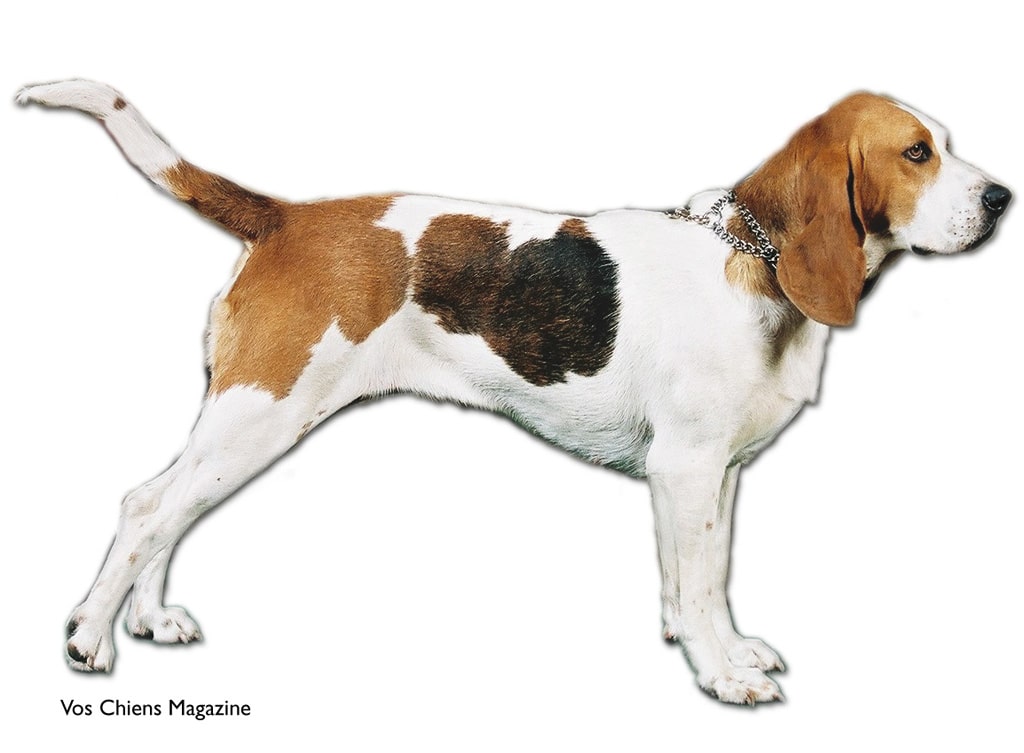 voschiens
 c.ouestatlantis
 bicharada
 ixnilasies
Videos of the "Artesian hound"
 Dog (d)’ artois
 Kinigi me DOG OF ARTOIS—First
 Artois dog 4 month
 Artois Dog In Exposicion in Lisbon 2009
Type and recognitions:
- FCI CLASSIFICATION: 28
- Group 6: Scent hounds, and related breeds.
- Section 1.2: Medium-sized hound-type dogs.. With proof of work..
Federations:
- – FCI – Group 6: Scent hounds, and related breeds. – Section 1.2: Medium-sized Hounds. ⓘ
- – Central Canine Society ⓘ
FCI breed standard "Artois Hound"
Use:
The artisian hound is used mainly today for hunting with shotguns. As a scout he works with application to resume the lost trail; Your speed is moderate, But sustained. Since it has an excellent smell, is capable of failing the hare tricks during hunting in the plain.
With its indisputable hunter qualities, He knows how to lead the roe, both in the forest, as in the Altos Montes, Easy to penetrate. For its intrepidity and courage, Makes the most recalcitrant boar out of the weed. It also, This is a rustic animal, endowed with a wonderful bark, animated, Sound and tall that is allowed to be heard in the distance. A uniform group of six to eight tricolor craftsmen constitutes a hunting team that would please the most demanding hunter.
General appearance:
This is a well constituted dog, muscular and not very long. Imparts an impression of strength and energy.
IMPORTANT PROPORTIONS:
• Cross height/body length between 10:10 and 10:11
• Chest height/height at approximately 1:2
• Heads/head length amplitude 5:9
• Nasal cane length/skull length 8:10
This is a vigorous and rustic dog. It has a very good smell and joins the Hae. Is balanced and affectionate.
Head:
-- Skull: It is bulky, wide and very short. It is flat and rounded at the top, but the occipital Protuberance is not pronounced.
- Depression links (Stop): It is accentuated.
facial region:
- Truffle: Grand, black. The Windows are wide open.
- Lips: The upper lip covers in large part to the bottom and must be sufficiently marked for that, in profile, the snout has a square shape.
- Snout: Straight nose cane, in profile, the snout is moderately elongated.
- Jaws/Teeth: The joint is in the form of scissors. The upper incisors cover the lower ones in narrow contact and are implanted at right angles in relation to the jaw.
- Cheeks: They are thin.
- Eyes: With regard to the width of the forehead, the eyes are not very together. They are round, melancholy eyes and sweet. Its color is dark brown. The mucous membranes of the lower eyelids may not be apparent.
- Ears: They are placed at the height of the eye line. They are somewhat thick, wide and their limbs are rounded. They are almost flat and quite long; they arrive until the birth of the truffle.
Neck:
It is powerful and moderately long. It presents very little double chin.Body:
- Back: It is well marked and wide.
- Pork loin: Slightly arched.
- Rump: The legs providing a slight incline to the rump, It is well muscled.
- Breast : It is wide, long and deep enough for the sternum line to reach the elbows level. Snugly ribs.
- Belly: The flanks are round
Tail:
Thick, quite long and carried in a sickle-shaped. You must never fall forward. The hair is headed (taper, around the tail, long and thick hairs slightly separated in the form of stem).Tips
PREVIOUS MEMBERS: Seen in conjunction, they are powerful and Plumb.
- Shoulder: They are oblique and muscular.
- Elbows: They are well located on the axis of the body.
- Metacarpus: It is slightly oblique.
LATER MEMBERS: Seen as a whole and from the back, The tip of the buttock, the middle part of the leg, the Hock, The metatarsal and foot are on the same vertical line.
- Thighs: They are descended and well muscled.
- Hock: Thick, moderately bent.
- Metatarsals: They are short and thick.
FEET: Slightly elongated. They are large, but compact. The pads are black, durable and compact.
Movement:
Agile and uniform.Mantle
SKIN: Thick enough.
HAIR: Short, dense and fairly smooth.
COLOR: Tri-color dark Fawn, Hare or badger hair pulling, with blanket or large stains. Usually, the head is Fawn color, and sometimes carbonated.
Size and weight:
- Height to the cross: Both males and females, is of 53 to 58 cm.. With a tolerance of 1 cm..
- Weight: The average weight is of 28 to 30 kg.
Fouls:
Any deviation from the aforementioned criteria is considered as a fault and the severity of this is considered to the degree of the deviation to the standard and its consequences on the health and well-being of the dog..
Head:
- Narrow skull, vaulted.
- Too pointed snout.
- Upper lip tight, not enough descended.
- Eye slightly clear, apparent conjunctiva.
- Ears placed below the eye line, short or not low enough.
Neck:
- Long, Lightweight.
Body:
- Very long dorsal region, loose top line, sunken.
- Flat ribs.
- Agalgados flanks.
Tail:
- Too long or too skewed to one side.
Forelimbs:
- Short shoulders.
- Elbows that deviate out.
- Straight metacarpals.
- crushed feet.
- Separate fingers, too long.
Hind limbs:
- Flat thighs.
- Straight hocks, closed or far apart.
Color:
- Presence of mottled spots.
Behavior:
- shy dog.
MISS PLAYOFFS
- Fearful or aggressive dog.
- Lack of type (animal, in general terms, does not present the same characteristics as its peers of the same race).
- Anatomical anomaly.
- Visible hereditary defect causing invalidity.
- Upper or lower prognathism.
- Eyes too light.
- Weak limbs.
- Any other color which is not established by the standard.
- Speckled spots that extend throughout the body.
- Withers height different from that laid down by the standard.
- Any dog showing clear signs of physical or behavioral abnormalities must be disqualified..
Males should have two normal-appearing testicles fully descended into the scrotum..
TRANSLATION: IRIS Carrillo (Puerto Rico Kennel Federation).
Source: F.C.I - International Cynological FederationAlternative names:
1. Chien d’Artois, Picard, Briquet (English).
2. Grand chien d’Artois, Briquet, Picard (French).
3. Artois Hound (German).
4. (em francês: Chien d’Artois (Portuguese).
5. Chien d’Artois, Picard, Briquet, Sabueso de Artois, Perro de Artois(español).
I want this race to be broadcast more, m interested in getting a couple to have a pack of them in Argentina, I need information of this breed breeders please
Interesting article, I am interested in more information on this beautiful and versatile breed breeders. hopefully with more photography