 FCI 132 - Medium-sized Hounds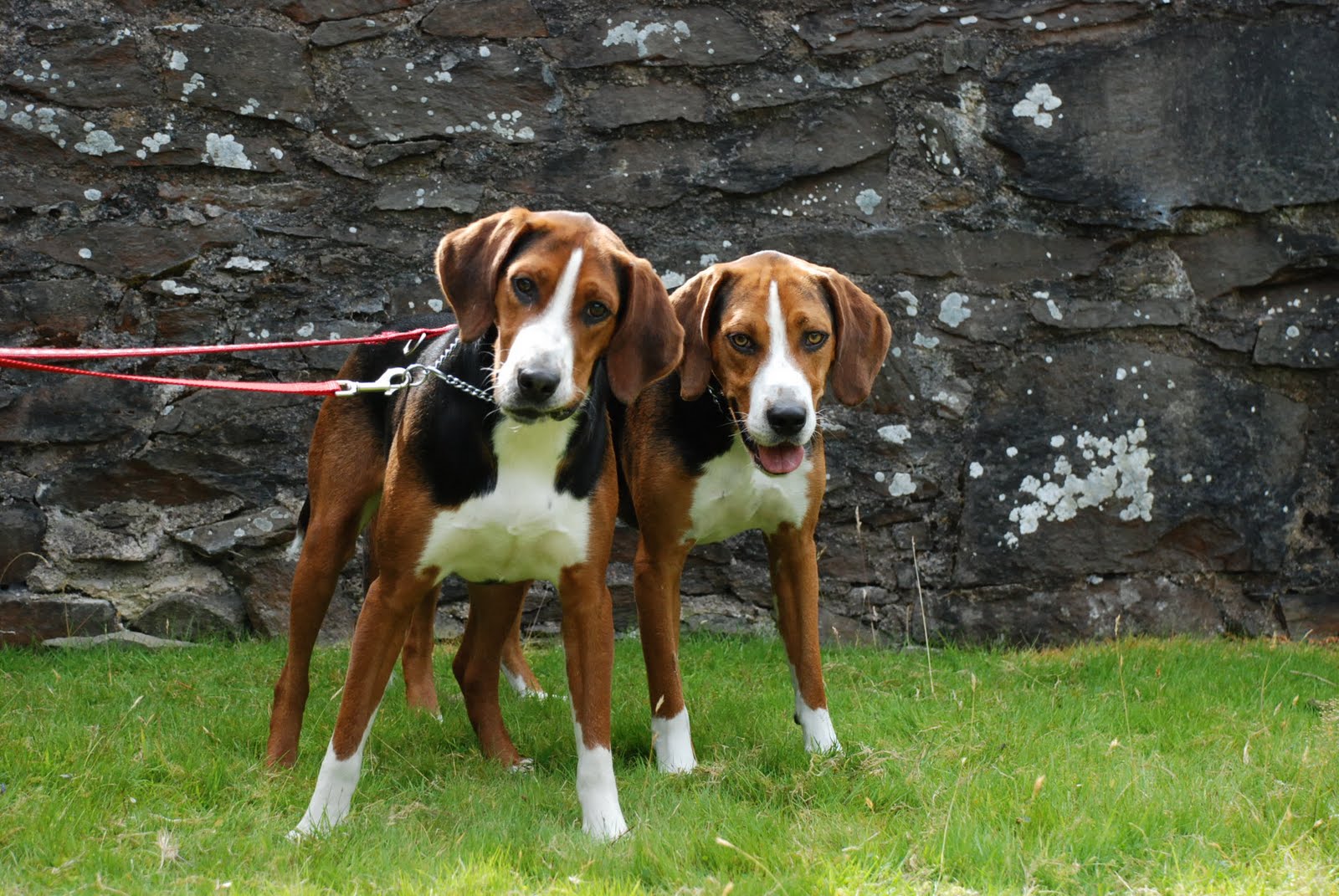
Content |
|---|
Ratings of the "Hamilton Hound"
Coexistence is important that you have with your new friend. Before considering the acquisition of a dog of the breed "Hound Hamilton" you know certain factors. Not all breeds of dogs are apt to live in an apartment, you must take into account his character, their need for exercise, their interaction with other pets, their care and if you have small children, their level of tolerance towards them.
Adaptation ⓘ3,0 of 5 stars (based on 1 review)
|
friendly dog ⓘ3,0 of 5 stars (based on 1 review)
|
hair loss ⓘ2,0 of 5 stars (based on 1 review)
|
|---|---|---|
Affection level ⓘ3,0 of 5 stars (based on 1 review)
|
Need for exercise ⓘ5,0 of 5 stars (based on 1 review)
|
Social need ⓘ3,0 of 5 stars (based on 1 review)
|
Home ⓘ3,0 of 5 stars (based on 1 review)
|
Toilet ⓘ1,0 of 5 stars (based on 1 review)
|
Friendly with strangers ⓘ4,0 of 5 stars (based on 1 review)
|
barking ⓘ4,0 of 5 stars (based on 1 review)
|
Health ⓘ4,0 of 5 stars (based on 1 review)
|
Territorial ⓘ3,0 of 5 stars (based on 1 review)
|
Cat friendly ⓘ2,0 of 5 stars (based on 1 review)
|
Intelligence ⓘ4,0 of 5 stars (based on 1 review)
|
Versatility ⓘ4,0 of 5 stars (based on 1 review)
|
Child friendly ⓘ5,0 of 5 stars (based on 1 review)
|
Surveillance ⓘ2,0 of 5 stars (based on 1 review)
|
joy ⓘ4,0 of 5 stars (based on 1 review)
|
History
The Hound Hamilton (in Swedish: Hamiltonstövare), It is a breed of dog developed in Sweden by the founder of the Swedish Kennel Club, Count Adolf Hamilton (hence its name). It is a hound that from its origins was used to hunt hares and foxes. Among his ancestors are hounds Germans, Swiss, the race English Foxhound and race Harrier (dog).
These hounds have long years of history, according to existing documentation, they are present in Sweden since 1500.
A canine exhibition held in Stockholm in the year 1886, marked the history of these dogs, There were two hounds copies (Pang and Stella), owned by count Adolf Hamilton.
Those two dogs are considered the origin of the Hound Hamilton current. At the time, was called, simply, "Swedish Dog". Only in the year 1921 it was given the name of Hound Hamilton, in honor of the first President of the Swedish Club Kennel (Count Adolf Hamilton) and their involvement in the creation and development of the breed.
It's been a long time and today the Hound Hamilton It is the breed of dog with the largest number of copies in Sweden. This year the «Swedish Dust Club (Swedish Club of Hamilton Stövare)» has celebrated its 100 years.
Physical characteristics
The Hound Hamilton it is known for its characteristic white spot on its head that runs down its neck, the four white legs, and the white tail. Most marked difference with the English Foxhound It is that your body is lighter.
It's a healthy and strong breed, both physically and mentally. As we said, he is a strong dog, well built, muscular, but light.
His hair coat is tricolour (white, black and Brown) very brightly colored. The hair should be thick and glued to the body. The layer requires normal maintenance and should only be bathed when necessary.
The colors in the Hound Hamilton are distributed as follows:
Upper part of the neck, the back, on the sides of the trunk and in the upper part of the tail is black. Head and legs, as well as a neck part, the trunk and tail must be Brown. And white marks appear at the top of the snout, in the lower part of the neck, the chest, the legs and feet (as if they were socks) and the tip of the tail. A mix of black and brown only, is undesirable, as well as, a preponderance of any of the three supported colors.
Their eyes of dark honey, they convey an expression of tranquility, but it will also give an impression of strength and marked resistance.
The height at the cross in the males is of 53 to 61 cm and the females of 49 to 57 cm..
Character and skills
The Hound Hamilton he is an excellent hunting dog, is valued for his great intelligence and agility. Why which is very popular among hunters, his intelligence allows him to develop hunting strategies, as for example, camouflage themselves in the bushes and wait there for the right moment to jump and scare their prey. The Hound Hamilton he is very good at hunting individually, not so much in pack.
Health "Hound Hamilton"
It is a very healthy breed with a good mentality. Hip Dysplasia is usually present. Their life expectancy is around the 13 years.
Education "Hamilton Hound"
The Hound Hamilton he is a friendly dog ​​with a calm temperament. It is flexible, easy to train and have very strong hunting instinct, is necessary to socialize them small.
Videos of the "Hamilton Hound"
|
World record dog Hamiltonstövare
|
Kilcavan Hamiltonstova re having fun inthe snow!
|
|---|
Type and recognitions:
- FCI CLASSIFICATION: 132
- Group 6: Scent hounds, and related breeds.
- Section 1.2: Medium-sized hound-type dogs.. With proof of work..
Federations:
- – FCI – Group 6: Scent hounds, and related breeds. – Section 1.2: Medium-sized Hounds. ⓘ
- – AKC – The AKC does not have its own standard and, on the other hand, is linked to the FCI Hound ⓘ
FCI breed standard "Hound Hamilton"
Use:
Hound type dog that bars on the trail and is used for the hunting of the hare and the fox. It is not a Jauria dog and is never used for deer hunting.
General appearance:
He is a well proportioned dog, that gives the impression of great strength and resistance. It is never heavy constitution. It is tricolor. The differences between male and female must be well defined.
IMPORTANT PROPORTIONS :
rectangular body.
It is a friendly and quiet hound.
Head:
Elongated.- Skull : Slightly bulging and moderately wide.
- Stop : Well marked, but not too pronounced.
facial region:
- Truffle : always black, well developed with wide windows.
- Snout : Long, strong and almost rectangular. Nasal cane straight and parallel to the line of the skull. The distance from the occipucio to the stop must be equal to the distance between the stop and the tip of the nose.
- Lips : Relatively thin upper lip, tight and beautifully rounded, Not too much hanging. Males must have more pronounced lips than females.
- Cheeks : Not outstanding.
- Jaws / Teeth : Scissor bite. Strong, well-developed teeth.
Eyes : Dark brown color, Serena expression.
Ears : Moderately high implantation; When they are pull forward, The ears do not reach half the snout. Lifts them slightly when it is attentive. They are soft and hang flattened without the anterior edge form folds.
Neck:
Long, Powerful and well inserted on the shoulders. The skin skin is flexible and well stuck. Males must present a well -arched neck line.Body:
- Cross : Well marked.
- Back : Straight and powerful.
- Pork loin : Muscular and slightly arched.
- Rump : Slightly inclined, Long and wide.
- Breast : Deep, long and well developed, Reach to the elbows. Ribs moderately sprung.
- Bottom line and belly : Belly only slightly retracted.
Tail:
Inserted in continuation with the line of the back. Carried straight or slightly curved in the shape of a saber. It is quite wide at its root and thinns towards the tip; reaches up to the tibio-tarsal joint. When is the dog moving, The preference tail should not be carried above the back level.Tips
PREVIOUS MEMBERS :
- General information : Strong bones, that harmonize with the general appearance of the dog. Seen from the front, the forelimbs are straight and parallel.
- Shoulder : Long, muscular and well placed backward. Well attached to the body.
- Arms : Long, forming a right angle with the shoulders.
- Elbows : Glued to the body; without being visible below the thorax.
- Metacarpus : Elastic, slightly angled with the forearm.
- Previous feet : Oval with well angled and closed fingers.
LATER MEMBERS :
- General information : Seen from behind are strong and parallel.
- Thighs : With a well developed musculature; seen from the sides are wide.
- Knee : Well angled.
- Warm-tarsal joints : Well angulated.
- Metatarsus : Short, thin and straight.
- Hind feet : Similar to the previous; dewclaws are undesirable.
Movement:
Parallel, strong; spans space.Mantle
HAIR : Rough, not too short, very close to the body. Over the head, ears and front of limbs, Hair must be short and soft. Below the tail and on the back of the thighs, The outer layer can be a bit long, but without forming feathers.
COLOR : It is tricolor. The upper neck, back, of the sides of the trunk and the tail are black. The head, ears, limbs as well as the sides of the neck, of the trunk and the tail are grimid. The loyed color can vary from a golden hue to an intense brown-redizo tone. The white color is located at the top of the snout (list), at the bottom and upper neck, chest, at the tip of the tail as well as at the bottom of the members and on the feet.
Size and weight:
Height of the cross :
- Males : 53-61 cm.. Ideal size 57 cm. (22,5 inches).
- females : 49-57 cm.. Ideal size 53 cm. (21 inches).
Fouls:
Any deviation from the aforementioned criteria is considered a fault and the severity of it is considered to the extent of the deviation from the standard and its consequences on the health and well-being of the dog..
• Undefined sexual characteristics.
• Wide skull, short or pointed.
• Short or pointed snout, COCAVA CAñA.
• Upper or lower prognathism, level bite.
• Heavy cheeks.
• Light eyes.
• Overdue back.
• Short croup, inclined.
• Tail carried above the line of the back.
• Pressed scapules.
• Restricted posterior movement.
• Black and grim mixture.
• Very pronounced black marks that cover the sides of the trunk, shoulders and thighs.
• Other white brands different from those described in the standard.
• Two colors (yellow-white, Black-White, black and tan) or preponderance of any of the three allowed colors.
MISS PLAYOFFS
• Very reserved dog, fearful.
• Pronounced upper or lower prognathism.
• Cross height that exceeds maximal and minimal limits.
Any dog showing clear signs of physical or behavioral abnormalities must be disqualified..
Males should have two normal-appearing testicles fully descended into the scrotum..
Source: F.C.I - International Cynological FederationAlternative names:
1. Swedish Foxhound, Hamilton (English).
2. Anciennement: Chien courant suédois (French).
3. Hamilton-Bracke (German).
4. (em sueco: hamiltonstövare) (Portuguese).
5. (En sueco: Hamiltonstövare) (español).
I am currently looking for German-speaking Hamilton friends and owners.
Jun.2020