โ–ท The world of Pets: Dogs, cats, birds, reptiles, amphibians

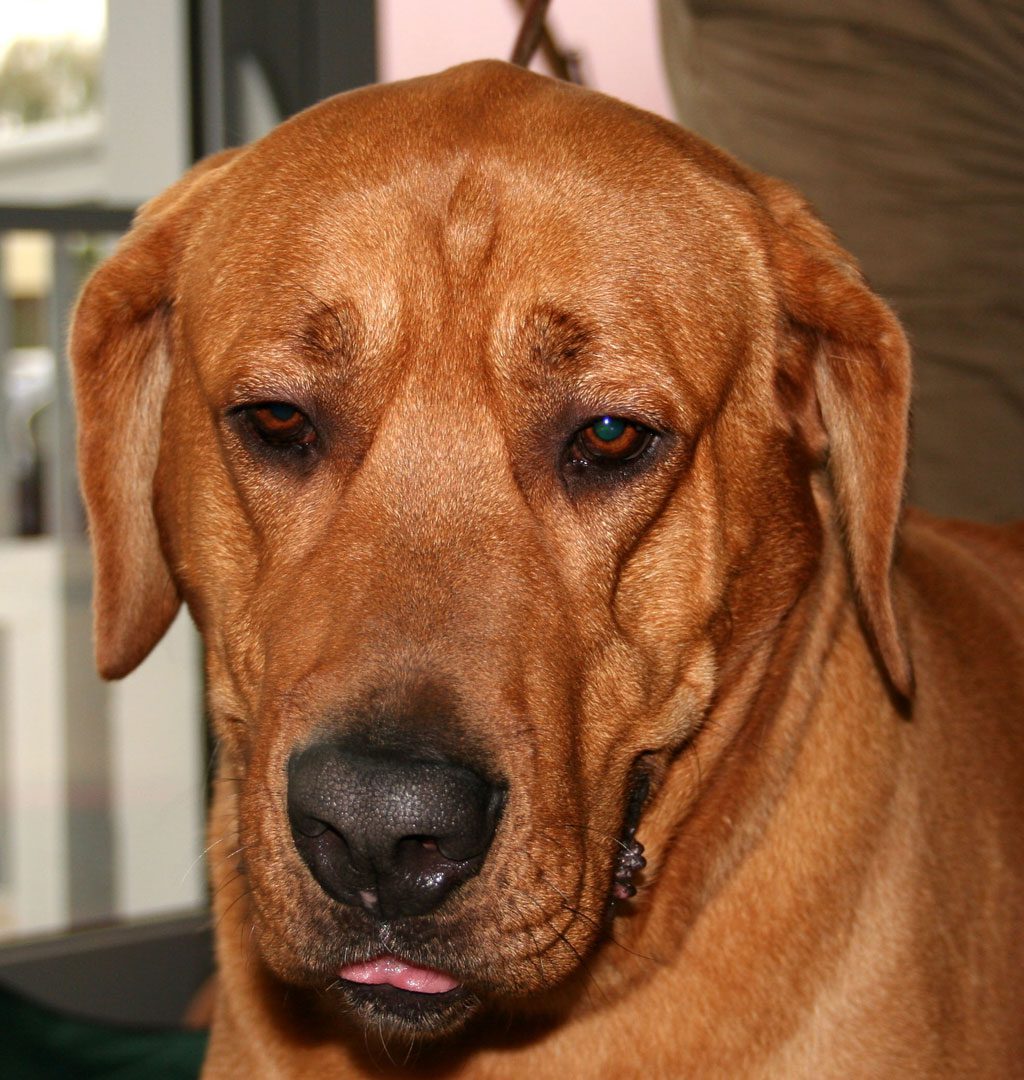
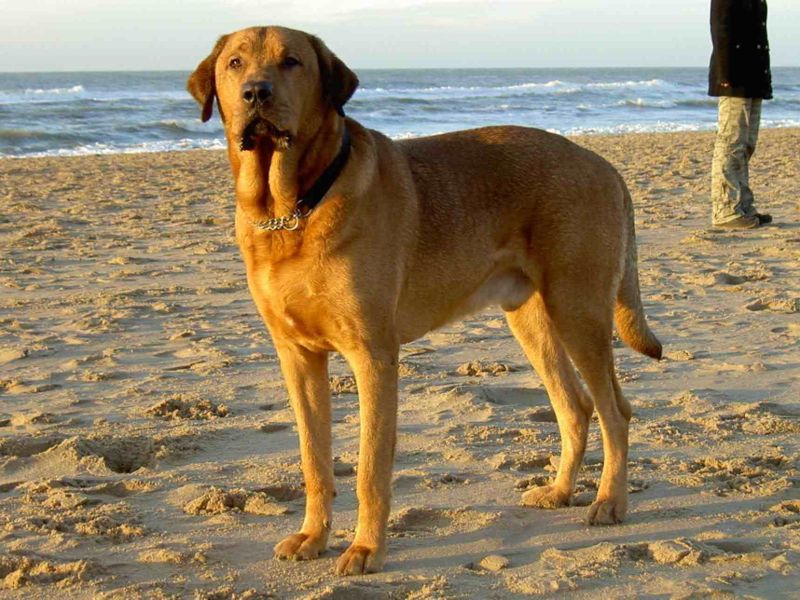
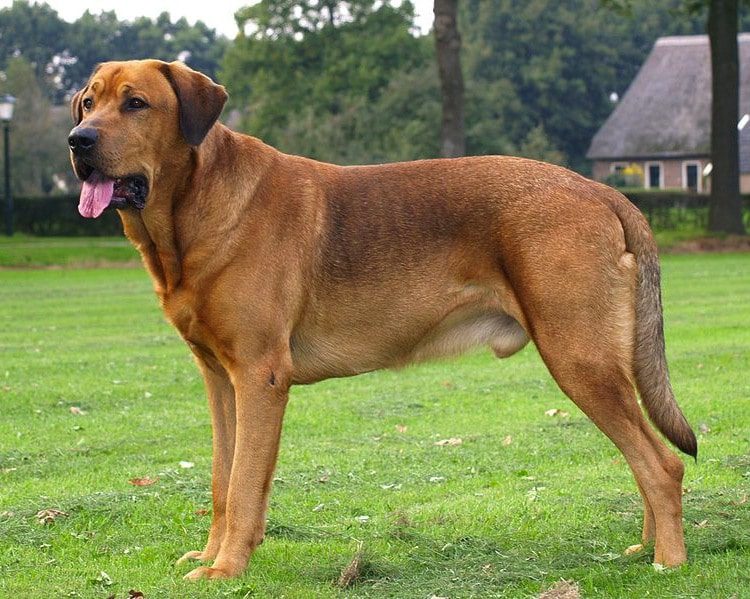
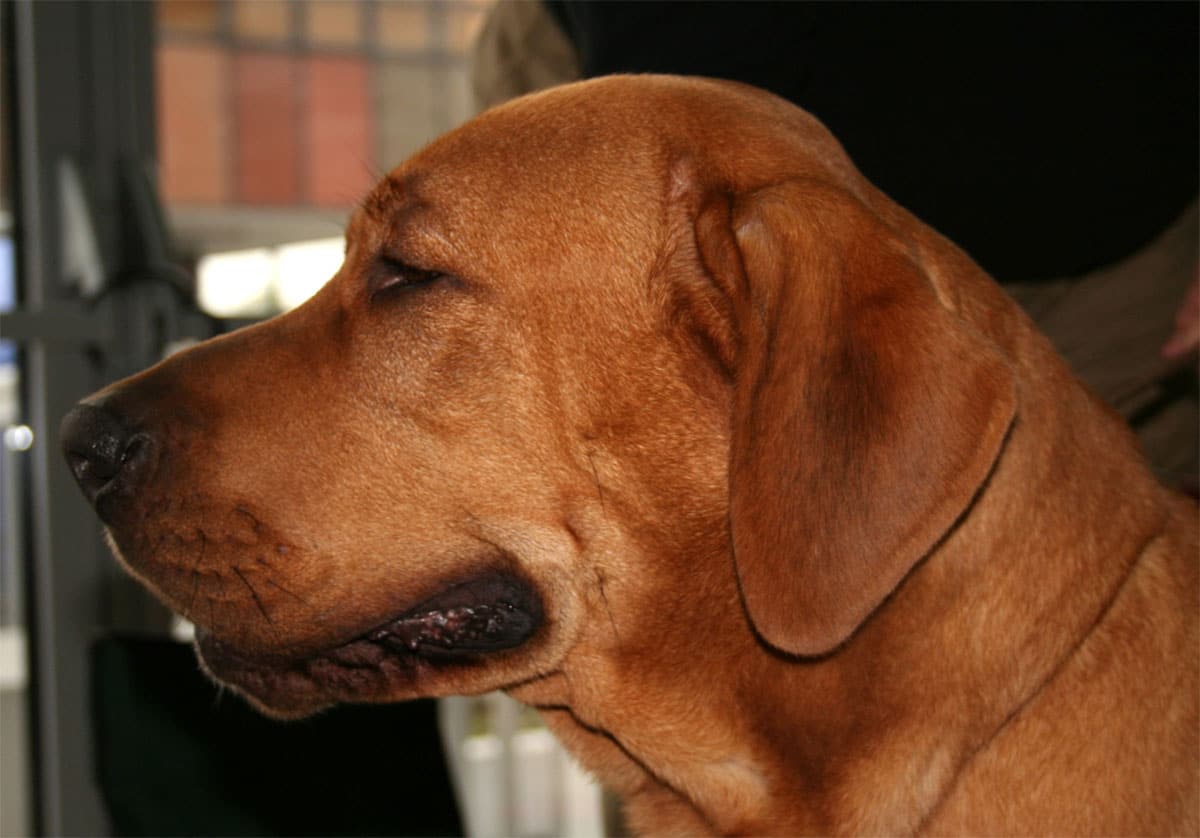
Fila Brasileiro
Brazil FCI 225 - Molossoid - Dogo

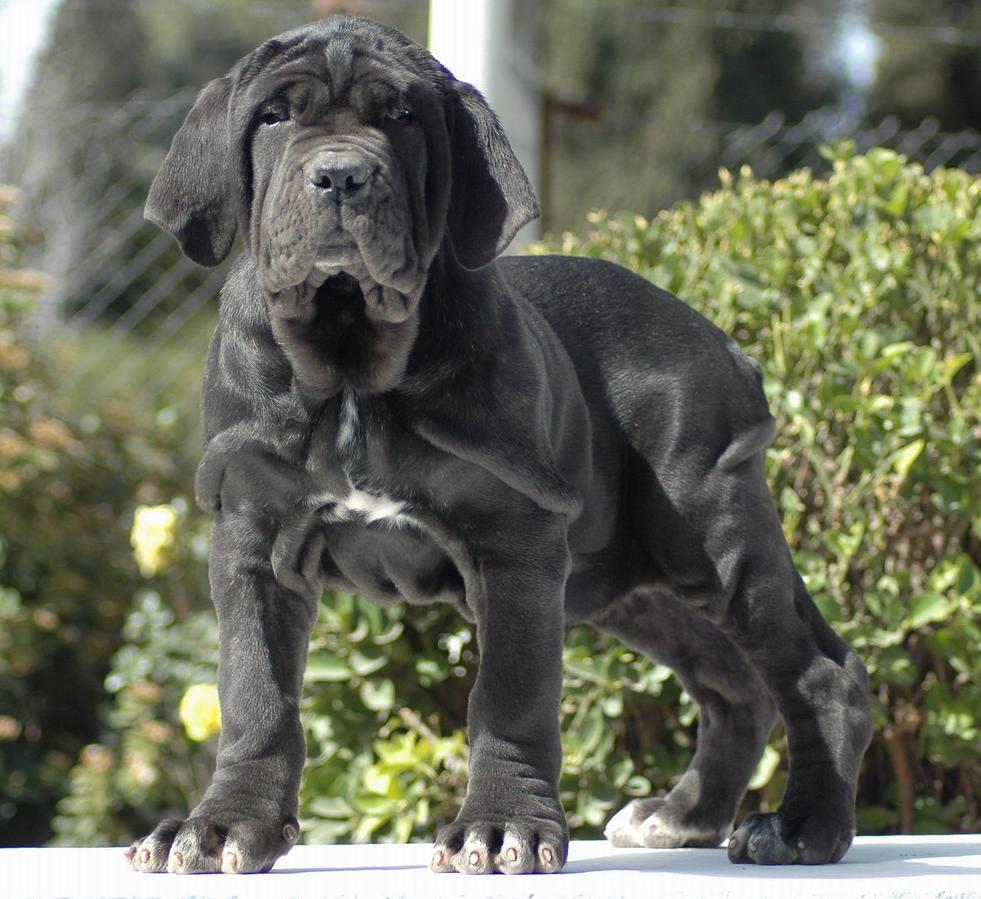
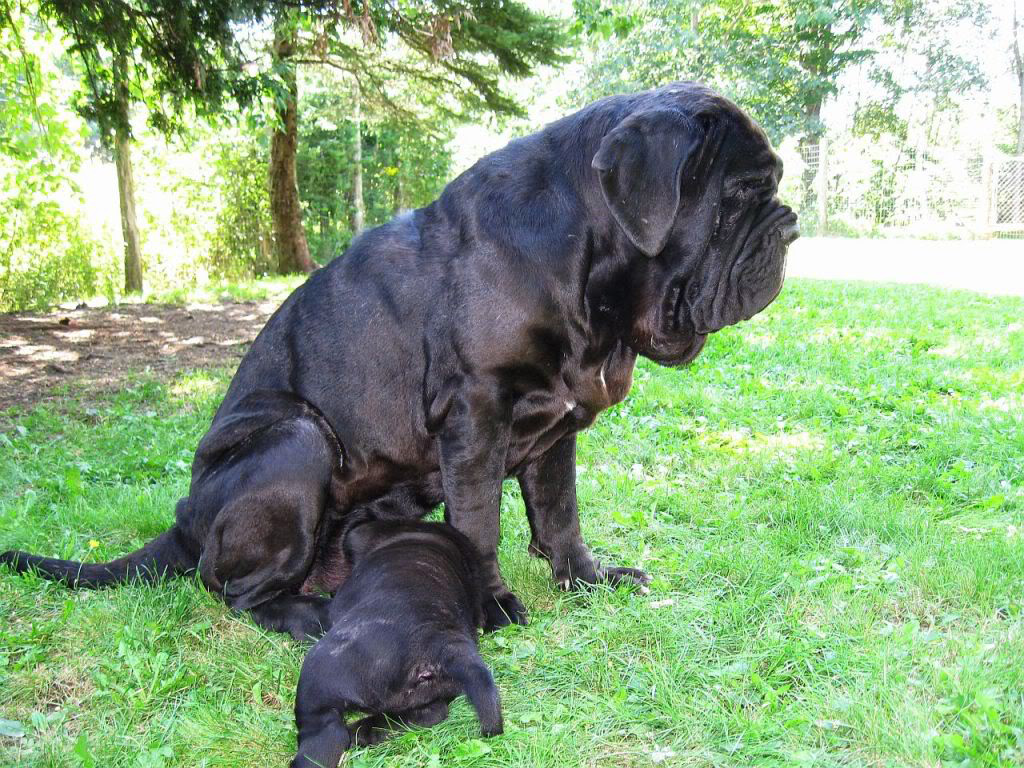
The Fila Brasileiro it is a rare dog in Europe, which implies that it is difficult to find a good puppy.

Fila Brasileiro

Content

Characteristics "Fila Brasileiro"

Coexistence is important that you have with your new friend. Before considering the acquisition of a dog of the breed "Fila Brasileiro" you know certain factors. Not all breeds of dogs are apt to live in an apartment, you must take into account his character, their need for exercise, their interaction with other pets, their care and if you have small children, their level of tolerance towards them.

Adaptation โ“˜

3,0 of 5 stars (based on 1 review)

friendly dog โ€‹โ€‹โ“˜

1,0 of 5 stars (based on 1 review)

hair loss โ“˜

3,0 of 5 stars (based on 1 review)

Affection level โ“˜

4,0 of 5 stars (based on 1 review)

Need for exercise โ“˜

4,0 of 5 stars (based on 1 review)

Social need โ“˜

3,0 of 5 stars (based on 1 review)

Home โ“˜

1,0 of 5 stars (based on 1 review)

Toilet โ“˜

1,0 of 5 stars (based on 1 review)

Friendly with strangers โ“˜

1,0 of 5 stars (based on 1 review)

barking โ“˜

2,0 of 5 stars (based on 1 review)

Health โ“˜

2,0 of 5 stars (based on 1 review)

Territorial โ“˜

5,0 of 5 stars (based on 1 review)

Cat friendly โ“˜

1,0 of 5 stars (based on 1 review)

Intelligence โ“˜

3,0 of 5 stars (based on 1 review)

Versatility โ“˜

2,0 of 5 stars (based on 1 review)

Child friendly โ“˜

2,0 of 5 stars (based on 1 review)

Surveillance โ“˜

3,0 of 5 stars (based on 1 review)

joy โ“˜

5,0 of 5 stars (based on 1 review)

History

The Fila Brasileiro its history is linked to both genetic mixing and Brazilian colonization. There is no consensus on its origin, but probably the Brazilian line is the result of a mixture of dogs whose specialty was hunting and herding animals in the field. The mastiff, the Bulldog, the Terceira line (a portuguese breed) and the Scent hound are just a few examples of possible breeds that have contributed to tracing the DNA of the Brazilian line. Some say that indigenous dogs (Aracambรฉ) and even the savages, like the guarbo wolf, they may also have participated in the miscegenation.

In some 19th century carvings, the breed was already known to assist in catching oxen, cows, sheep and even big cats, like jaguars, for example. This shows that the Brazilian line was not just a dog to keep at the door, taking a nap in the late afternoon: I was really going to fight! And maybe that's where his keen sense of protection comes from., always putting strangers in their place once they get home.

In 1946 the first effort was made to set the breed standard. In 1976, the second standard was recognized and approved during the 1st Symposium of the Brazilian Fila Race. In 1984 the third rule was defined, which is still valid today.

Physical characteristics

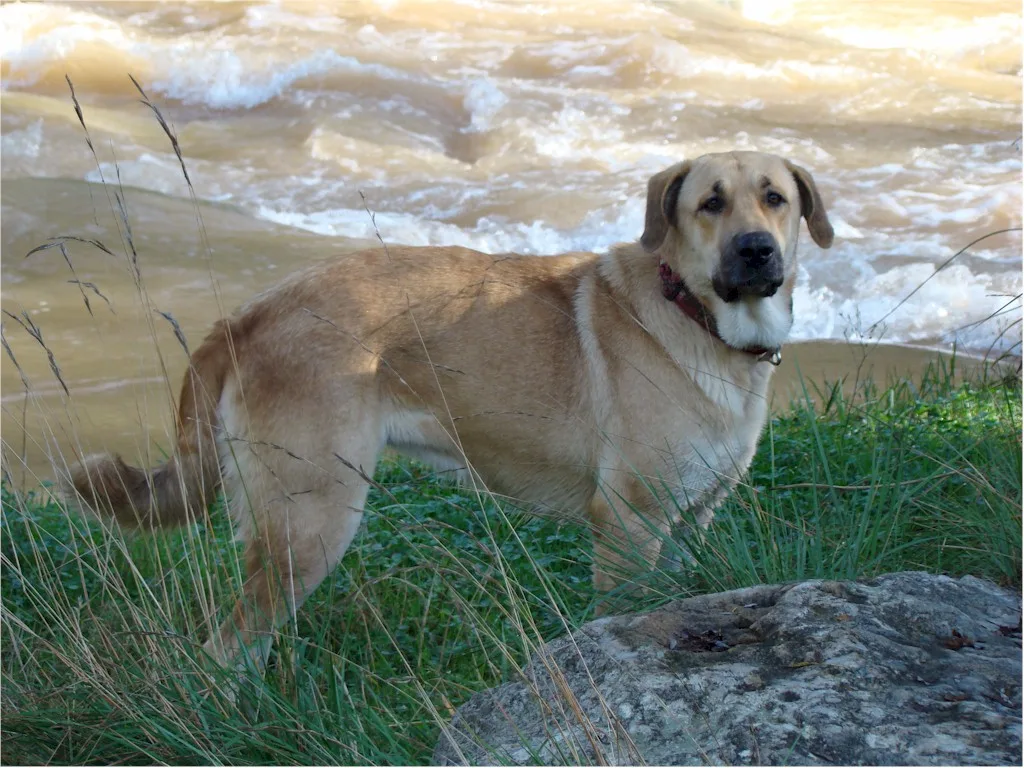
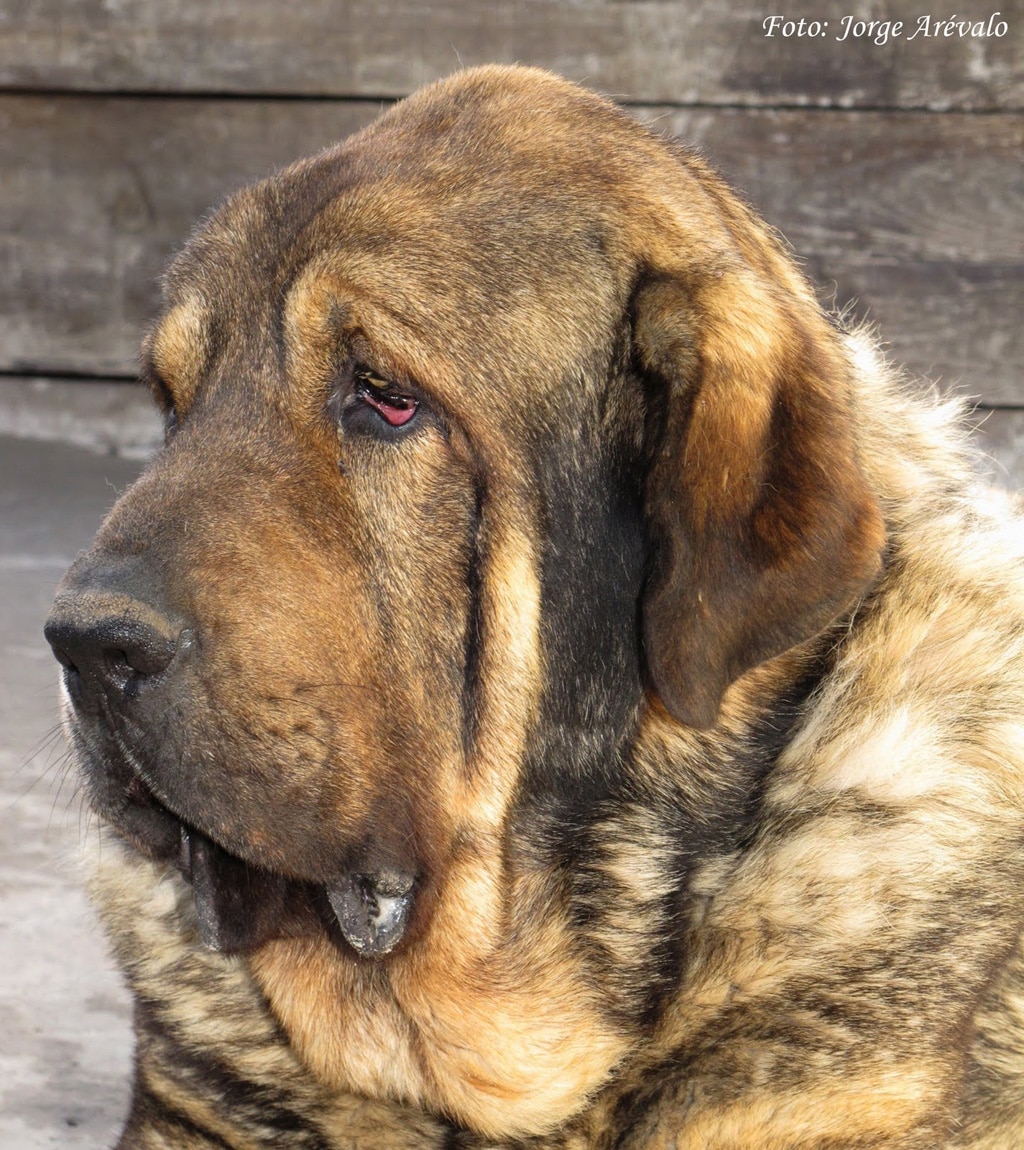
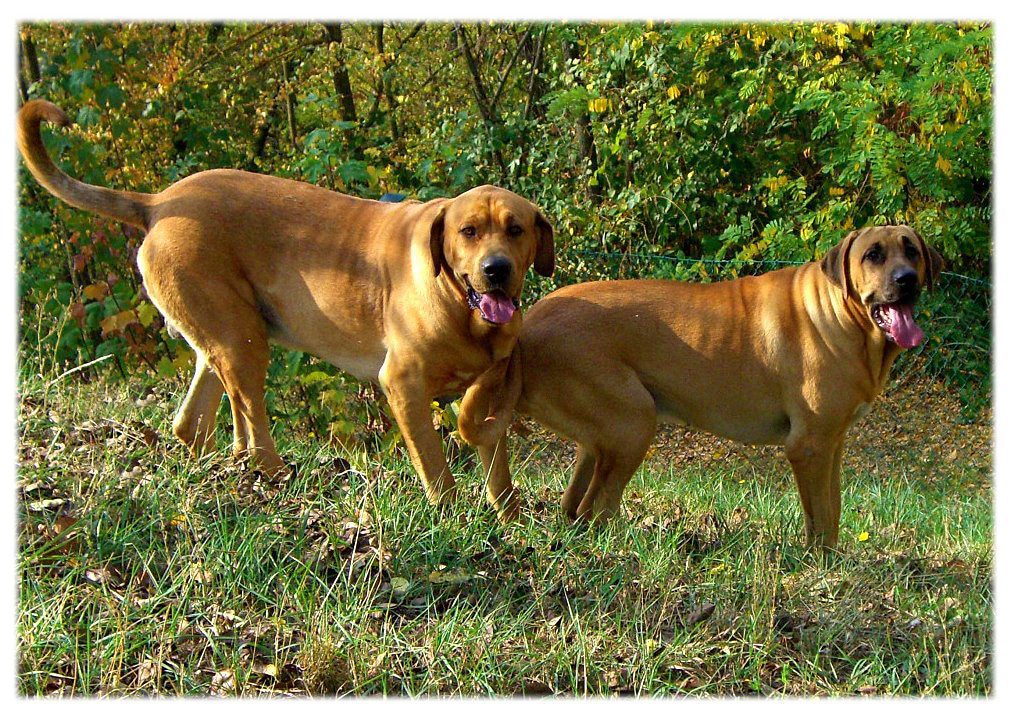
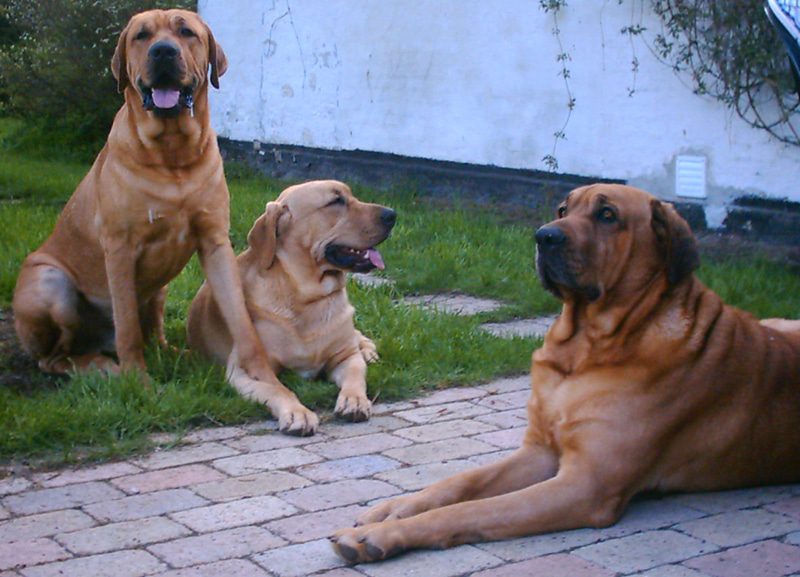
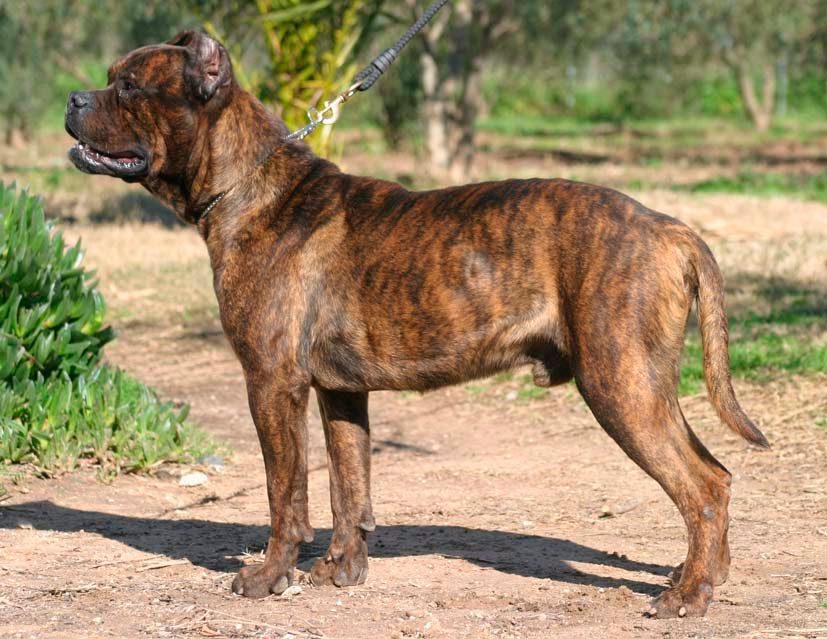
It is a trotting large but very agile. It has a powerful skeleton and a rectangular structure, compact and proportionate. The head is big, heavy and solid, although it is always proportionate to the body. The craniofacial relationship is almost 1:1, with the nose slightly shorter than the skull. The occipital ridge is very prominent, especially in the puppy. The stop is low and inclined, so it should not be seen when looking at the animal from the front. The eyes are medium or large, in the form of almond, quite sunken and colored according to the mantle (yellow to dark brown). Ears are wide and thick, dangling and "V" shaped. The limbs are parallel and straight, with strong bones. A characteristic of the breed is the way of moving in amble. The tail is very broad at the root and tapers rapidly when it reaches the hock..

  • Fur: short.
  • Color: all solid colors are supported, except white, the rat gray and the mottled or stained coat, liable to disqualification. Solid color layers may have stripes of less intense or very dark color. Black mask is optional.
  • Size: in males, of 63 to 75 cm., with a minimum weight of 50 kg; in females, of 60 to 70 cm., with a minimum weight of 40 kg.

Character and skills

The Brazilian Fila is very determined, brave and can be very fierce. They can be docile and very obedient to their owners and family and are very tolerant of children.. It is a dog that loves the company of its owner and always tries to be with him.. One of the most striking points of the Fila Brasileiro is the aversion to strangers. So they are excellent guard dogs..

The Fila Brasileiro are the protectors of the pack (that is to say, the family that raises him) and therefore they need to be educated from an early age. At the age of 7 months already begin to show surveillance potential. As they are very large and very strong dogs, it's important for owners to have a firm wrist and show leadership from an early age, so that the dog becomes obedient and respects the owners.

They are very smart and tend to easily learn the owners' teachings. Be careful not to be too rigid in your corrections when the Fila Brasileiro does something wrong, because they can be a bit stubborn and make training difficult.

This dog's aggressive instinct should not be stimulated (and less with bloody methods), because it could become a dangerous animal, given its great bulk. Without a doubt, this is a breed for experts.

Care of the ยซFila Brasileiroยป

Videos "Fila Brasileiro"

Brazilian Fila VideosFila brasileiro

Fila brasileiro puppies week 7

The maintenance of a โ€œFila Brasileiroโ€ is not laborious, not too different from other large, short-haired dogs. The frequency of the bath can vary according to the type and intensity of the activities carried out by each dog..

– Grooming: The "Fila Brasileiro" does not need more than weekly brushing, because its coat is short and the breed doesn't get too dirty. Ideally, you should bathe monthly in summer and, in winter, Every two months.

– Nails and ears: you always have to check them. The nail cannot grow too long and the ear cannot accumulate wax and dirt. Remember that the โ€œFila Brasileiroโ€ is prone to developing otitis and keeping it clean makes it easier to notice any problem..

– Eyes: if there is any spot near the eyes or accumulation of discharge, clean them with saline solution.

– Sol: sunbaths are welcome: stimulate the body to produce vitamin D, essential for strong teeth and bones. The ideal time for this is the same as for humans, avoid the hottest times of the day, between the 10 am and 4 pm.

Health of the ยซFila Brasileiroยป

The Fila Brasileiro it is a healthy breed of dog. Maintaining the basic care routine and controlling your physical condition, the chances of you having a happy life are great! See some problems that may affect you:

– Obesity: common cause of health problems that can affect not only the Fila Brasileiro, but to all overweight dogs. As the Fila Brasileiro have a tendency to gain weight, watch for changes in the general shape of the dog, avoid giving treats and respect the recommended amounts of food for the breed.

– Otitis is an infection that can affect the hearing of the Fila Brasileiro and it can be caused by age or even poor hygiene.

Dog's level of exercise

The Fila Brasileiro need plenty of exercise, what requires available space – even if you walk on walks. Must exercise for one hour daily. And how is a smart dog, seeks to diversify its activities. A simple change in the route of the walk offers new stimulation and keeps you happy.

Images "Fila Brasileiro"

Photos:

1 – PETRA VESELร has published this image ยซFila Brasileiroยป under public domain license.
2 – Original bitch Fila Brasileiro – branca to AJorgeSC / CC BY-SA
3 – Fila Brasileiro (ALMODOVAR Rio Grande – from RIO GRANDE kennel) by Pleple2000 / CC BY-SA
4 – Puppy OFB at 4 months old by AJorgeSC / CC BY-SA
5 – row brazilian-colombia hatchery – 223 | Julio Cesar Hoyos A | Flickr
6 – row brazilian-colombia hatchery – 086 – Flickr

Type and recognitions:

  • FCI CLASSIFICATION:
  • Group :
  • Section : . .

Federations:

  • FCI – Pinscher and Schnauzer-Molossoid type dogs – Swiss Mountain Dogs and Cattledogs. Section 2.1 Molossoid, mastiff type. โ“˜
  • CKC – Miscellaneous list โ“˜
  • NZKC – Utility dog โ“˜
  • UKC – Watchdog โ“˜

FCI breed standard "Fila Brasileiro"

Origin:
Brazil

Date of publication of the valid original standard:
29.09.2016

Use:

Watchdog


General appearance:

Race typically molosoid.

Powerful bone structure, rectangular and compact set, Although harmonious and well-proportioned. It presents, along with his body mass, highly concentrated and easily noticeable agility.Sexual dimorphism must be very well defined and obvious (female females, male males).

PROPIMPORTANT ORTIONS:

  • Muzzle slightly shorter than skull.
  • The length of the body, measured from the tip of the sternum to the tip of the buttock, exceeds height at withers by15%.


Behavior / temperament:

Has courage, remarkable determination and verve. With their masters and the family is docile, obedient and extremely tolerant towards children. Their loyalty is notorious, because he insistently seeks the company of his masters. One of his characteristics is to be distrustful of strangers..

Is quiet in nature, which reveals a security and self-confidence very typical of his character.. Adapt perfectly well to new environments and strange noises. It is a special guardian of properties, and it is, by instinct, a pasture for cattle dog, as well as a large game hunter.While one of its characteristics is a natural withdrawal towards strangers, especially in their own territory, must be susceptible to controlled manipulation, especially in the ring.

During rest, he is calm, noble and self-confident.

Never show a gaze lost or boredom. When is attentive, your expression must show determination, which results in a fixed and penetrating gaze.

Head:

Grand, heavy, solid, but always well proportioned to the body. View from the top, looks like a trapezoid into which the pear-shaped head has been inserted.

Cranial region:
  • Craging: Its profile presents a smooth curve, that extends from the naso-frontal depression to the occipital protuberance, which is marked and outgoing, especially in puppies. Head on, it's wide, with a curved top line. Its lateral lines descend in shallow curves, almost vertically, and decrease towards the snout in a continuous line.
  • Dnaso-frontal depression (Stop): Seen from the front, is practically non-existent. The middle groove gently rises almost to the middle of the skull. Profile view, it is little marked, inclined and almost formed thanks to the superciliary arches, which are well developed.

facial region:

  • Trufa: Nostrils, wide, well developed, although without occupying the entire width of the maxilla. Its color is black.
  • Horcico: Strong, width, celebrities, always in proportion to the skull. Of good prominence at the base, without being higher than long. Seen from above, it is well filled under the eyes and thinning very slightly to half, then widening slightly to the previous curve. In profile, the nasal passage has a straight or slightly arched upper line, but never ascending. The anterior line is almost perpendicular to the nasal passage., with a slight depression just below the nose.
  • Labios: The upper lip is thick and hanging and covers the bottom in a perfect curve: the lower line of the muzzle is thus almost parallel to the upper one. The lower lip is well applied to the region of the fangs; from there it's loose all the way back, with ยซtoothedยป edges, and ends with the always apparent corner. The edge of the lips forms a deep inverted U.
  • Jaws / Teeth: Teeth are characterized by being wider than they are long. They are strong and white. The upper incisors are wide at the roots and sharp at the edges.. The fangs are strong, are well positioned in the maxilla and are separated. The jointindit is scissor shaped.
  • Ojors: Medium to large, macaroons, well separated and placed medium to deep. Its color ranges from brown to yellow, always in harmony with the color of the coat.However a darker color is preferred.Because the skin is loose, many specimens have hanging eyelids, detail that should not be considered as a fault, since this accentuates the sad aspect of the look, typical of the breed.
  • Obars: Pendants, thick, large, V-shaped. Wide at the root, decrease in extremities, which are rounded. Inserted into the back of the skull, They occur at the level of the midline of the eyes, when the dog is at rest, and they rise above the primitive ligament when it is alert. The ears are tilted at the ligament, since the front edge is higher than the back. Hanging to one side or folded back, so that its interior is visible(Pink).

Neck:

Extraordinarily strong and muscular, seems short. The upper edge is slightly convex, well separated from the skull. Chin presence.

Body:

Strong trunk, wide and tall, covered by thick and loose skin. The thorax is longer than the abdomen.

  • Lรญnand the top: Height at withers is slightly lower than rump, downline; is wide, due to the separation of the shoulder blades. In the place where the cross ends, the top line changes direction, gently rising to the front of the rump, without any sign of a bulging or arched back (carpal back).
  • Itmo and flank: Less long and wide than the thorax. They are clearly separated. In the female, flank edge is more developed. Seen from above, the loin should be less broad and full than the thorax and rump, but without showing signs of tightness.
  • Glikeness: Wide, long, its obliqueness approaches the 30 degrees above the horizontal and ends in a smooth curve. It is a little higher than the cross. รยก back view, it should be wide, almost equal in width to the chest, and can be even wider in females.
  • Breast : Well arched ribs, although without affecting the position of the shoulders. The chest is broad and well sloped, reaches to the tip of the elbows; the pecs are very prominent.
  • Lรญnlower ea and belly: The chest is long and is parallel to the ground in all its extension. The belly rises gently and is never puffy.

Tail:

With wide roots and medium insertion. Quickly gets thinner to finish at hock level. When the dog is excited, the tail is raised, thus accentuating the curvature of the limb. The tail must not fall on the back, nor curl up.

Tips

PREVIOUS MEMBERS:

  • Apgeneral arience: Forelimb height, from elbow to floor, It must be equal to the height from the elbow to the withers.
  • Shoulder: The shoulder and arm must be made up of two bones of the same length, shoulder blade and humerus. The shoulder blade forms an angle of 45ยฐ with the horizontal, and the humerus approximately 90ยฐ with the shoulder blade. The scapulo-humeral joint forms the tip of the shoulder, which must be at the level of the tip of the sternum, a little behind this one. In the ideal case, the shoulder and arm must be located in the space that goes from the cross to the sternum, and the end of the shoulder should be in the middle of this path. An imaginary perpendicular descending from the withers should pass through the elbow and reach the foot.
  • Antarm: Members must be parallel. The bones are strong and straight.
  • CArpos: Strong and apparent.
  • Metacarpus: Short, slightly inclined.
  • Pinis previous: They are formed by strong and well arched fingers, although not too close. Support is carried out on thick fingers and wide bearings, long and thick. In the correct position, fingers should be facing forward. The nails are strong, dark, and they can be white when the corresponding finger is also white.

LATER MEMBERS:

  • Apgeneral arience: The bones are not as thick as those of the forelimbs, however as a whole, they should never look thin. The hind limbs are parallel.
  • Thighs: Widths, with arched edges, since they are formed by the muscles that descend from the ilium and ischium. These shape the curve of the gluteus, hence it is necessary to require a good sized ischium.
  • Ttorsos: they are strong.
  • Metatarsals: Slightly sloping, longer than metacarpus; angulation of the stifle and hock is moderate.
  • Pinis later: A little more oval than the previous ones and similar to these in everything else. There should be no dewclaws.

Movement:

Long and elastic step, like that of cats. Its main characteristic is the displacement of the two members on the same side, and then move to the two on the other side, ยซ camel step ยป. This produces a waddle, with lateral rocking of the thorax and haunches, accentuated by the tail when raised. When the dog walks, its head remains below the dorsal line.. Jogging is easy, harmonious, loose, with wide and powerful strides that cover the terrain well. The gallop is powerful and with it the dog reaches an unsuspected speed in such a large and heavy animal. Its movement is always influenced by the typical joints of the molossoid., they not only give the impression, but they actually allow sudden and rapid changes of direction.

Mantle

PIEL: One of the most important characteristics of the breed is that the skin must be thick and loose over the entire trunk., mainly on the neck, where it forms pronounced jowls, which in many cases, reach the chest and abdomen. Some dogs have a fold on the sides of the head and another that descends from the cross to the shoulder. During rest, the head should not show folds; when the dog is alert, contraction of the skull skin, which is formed when the dog lifts its ears, makes small longitudinal folds appear on the skull between these.

  • PlinkShort, dense, soft and well stretched over the body.
  • ColorrStriped, black & Fawn. A black mask may or may not be present. In all allowed colors there may be white marks on the feet, the chest and the tip of the tail.White markings on other parts of the mantle are considered missing.


Size and weight:

Alturto the cross:

  • Males: 65 to 75 cm.
  • females: 60 to 70 cm.

Weight:

  • Minimum, 40 kg for females.
  • Minimum, 50 kg for males.


Fouls:

Any deviation from the aforementioned criteria is considered as a fault and the severity of this is considered to the degree of the deviation to the standard and its consequences on the health and well-being of the dog..

  • Bite level.
  • Short snout.
  • Small ears
  • Ears that come up high
  • Overly clear eyes
  • Presence of folds while the dog is at rest.
  • Lower prognathism
  • Double chin (fold in the skin in front of the double chin)
  • Backless
  • Very narrow croup
  • Tail that appears curled on the back
  • Slightly sloping chest.
  • Markedly deviated metatarsals and metacarpus.
  • Highly angled posteriors
  • Short steps

FALTAS GRAVES:

  • Apathy and shyness.
  • Square silhouette
  • Small head
  • Pronounced naso-frontal depression, front view
  • Short upper lip.
  • Round eyes round eyes. Poor pigmentation of the eyelids.
  • Absence of 2 teeth, except PM1 (premolars 1) or the first premolars
  • Absence of papad
  • Arched back Horizontal top line.
  • Excessively raised bottom line
  • Light bones Lack of substance.
  • V hocks
  • Absence of angulation in the hind limbs (ยซpig's footยป).
  • White marks covering more than a quarter of the body.
  • Size above the maximum required.

FALTAS DISQUALIFYING:

  • Aggressiveness or extreme shyness.

Any dog โ€‹โ€‹showing clear signs of physical or behavioral abnormalities must be disqualified..

  • Pink truffle.
  • Prognatismo superio
  • Inferior prognathism that leaves teeth visible even if the muzzle is closed.
  • Missing tusk or one of a molar except M3).
  • blue eyes (different colored eyes).
  • Ears or tail cut off
  • Croup lower than the cross.
  • Dog that doesn't show ambulation.
  • Absence of loose and elastic skin
  • All white dogs, mouse gray color, mottled, black and tan, and blue
  • Males less than 65 cm and females less than 60 cm in height at the shoulder.
  • Cryptorchidism or monorchidism, use of devices, albino specimens, absence of typical characteristics


N.B.:
  • Males should have two normal-appearing testicles fully descended into the scrotum..
  • Only functionally and clinically healthy dogs, with the typical conformation of the breed, should be used for parenting.

TRANSLATION: Federation Canรณfila Mexicana, A.C. (Original version: IN).
Revision: Mrs. Brรญgida Nestler.
Technical supervision: SR. Miguel Angel Martinez.

Source: F.C.I - International Cynological Federation

Alternative names:

1. Brazilian Mastiff, Onceiro (Jaguar Hound), Cabeรงudo (Big-headed), Black Mouth (English).
2. chien de Fila (French).
3. Brasilianischer Mastiff (German).
4. Brazilian mastiff, Mastiff brasileiro, Boca Negra, Onceiro, Cabeรงudo, Boiadeiro das Minas Gerais, Cรฃo de Fila brasileiro (Portuguese).
5. Cabeรงudo boiadeiro, Fila brasileรฑo (espaรฑol).

โ–ท The world of Pets: Dogs, cats, birds, reptiles, amphibians

Dogo Argentino
Argentina FCI 292 - Molossoid - Dogo

He is a fierce guardian and defender. It is not convenient to stimulate their aggressiveness.

Dogo Argentino

Content

Characteristics "Dogo Argentino"

Coexistence is important that you have with your new friend. Before considering the acquisition of a dog of the breed "Dogo Argentino" you know certain factors. Not all breeds of dogs are apt to live in an apartment, you must take into account his character, their need for exercise, their interaction with other pets, their care and if you have small children, their level of tolerance towards them.

Adaptation โ“˜

3,0 of 5 stars (based on 1 review)

friendly dog โ€‹โ€‹โ“˜

1,0 of 5 stars (based on 1 review)

hair loss โ“˜

3,0 of 5 stars (based on 1 review)

Affection level โ“˜

3,0 of 5 stars (based on 1 review)

Need for exercise โ“˜

4,0 of 5 stars (based on 1 review)

Social need โ“˜

3,0 of 5 stars (based on 1 review)

Home โ“˜

1,0 of 5 stars (based on 1 review)

Toilet โ“˜

1,0 of 5 stars (based on 1 review)

Friendly with strangers โ“˜

1,0 of 5 stars (based on 1 review)

barking โ“˜

2,0 of 5 stars (based on 1 review)

Health โ“˜

3,0 of 5 stars (based on 1 review)

Territorial โ“˜

5,0 of 5 stars (based on 1 review)

Cat friendly โ“˜

1,0 of 5 stars (based on 1 review)

Intelligence โ“˜

3,0 of 5 stars (based on 1 review)

Versatility โ“˜

2,0 of 5 stars (based on 1 review)

Child friendly โ“˜

3,0 of 5 stars (based on 1 review)

Surveillance โ“˜

3,0 of 5 stars (based on 1 review)

joy โ“˜

5,0 of 5 stars (based on 1 review)

History

The Dogo Argentino (Argentine Mastiff) is a breed of dog, created by the Argentine doctor Antonio Nores Martรญnez, looking for an animal suitable for the hunting of common species in Argentina, such as wild boars, peccaries and red foxes. Courage, courage and nobility are qualities that are maximized in this breed.

The Dogo Argentino It is the only living Argentine dog breed (see footnote two extinct races), defined by its creator, The doctor. Antonio Nores Martinez, as "the best dog among all prey dogs and the most prey dog โ€‹โ€‹among all the dogs in the world".

In the Decade of 1920, Antonio Nores Martinez (helped by his brother Agustรญn, his father Antonio and uncles) decided to create a breed of prey that would bring together the best qualities of the ยซCordoba Fighting Dogยซ, but with superior dimensions and physical strength. It also, he set out to achieve a dog that had aptitudes for hunting in packs, especially of wild boars, but that he was able to beat or stop the prey in combat alone until the arrival of his master or the rest of the pack.

Antonio used as a base the ยซCordoba Fighting Dogยซ, a mixture of races introduced in the Argentina by English residents, Bull Terrier and Bulldog, with breeds that the Spanish had brought, Spanish Alano and Spanish Mastiff. At these crossing, He was unbeaten in the fights of dogs, Antonio added bloodlines Bull Terrier and Pyrenean Mastiff. Like this, in the thirteenth generation, Antonio realized that he had created a perfect "war machine.", an invincible battle dog. Antonio's white dogs became famous because no other dog could beat them in the ring..

This is how the Araucana family is created. Then Antonio set out to legalize the dog he had created, because the fighting, Despite being his passion, they were prohibited throughout the world. On the other hand, He was fascinated by the idea of directly killing a dog to lift, continue and captured the dam. The Araucana family was not good for hunting because they were very aggressive towards each other., very heavy in relation to their height and lacked smell. Then Antonio introduced blood Pointer, creating the Guaranรญ family. These Dogos maintained the fighting spirit of the Araucana family, but they were more resistant to pursue prey, they had a better sense of smell and it was possible to make them not fight.

They spent several years crossing, selections and adequate functional gymnastics until towards the end of the Decade of 1940, Antonio managed to consolidate the current Argentine dogo, recognized as the most excellent hunting dog.

In 1946 a public fight for the presentation of the breed was organized between Aรฑรก, an extraordinary specimen of Dogo Argentino and a breeding boar 5 years. It was a tough race for Aรฑa, the fight came out victorious, then surrendered it in forty minutes, finishing the fight in perfect physical condition. The battle was filmed and woke up in the cinรณfilos a great admiration for the Doge ("He Dogo Argentinoยซ, by Paolo Vianini, Vecchi publishing, 2006.).

In 1947 Agustรญn organized a match at the Club de los Espaรฑoles in Morรณn between Chino, a Dogo Argentino and a Creole Black Bull, great fighter. After a while of combat, that it caused him to Chinese femur fracture, He managed to turn the nose of the bull, which, in a few minutes, He could not resist more pain and knelt. Chinese not dropped. The end was really a party for the Spanish public. Francisco, another brother of Antonio, He entered the arena and spoke to Chinese who burst into their prey and continued limping ("He Dogo Argentinoยซ, by Paolo Vianini, Vecchi publishing, 2006.).

Agustรญn was a great diffuser of the race, finally achieving its recognition as such (see letter from Dr. Agustรญn Nores Martรญnez to the FCA). The standard was published in the magazine ยซDianaยป in 1947. The official recognition in Argentina took place in 1964, and the international in 1973. You can read the letter sent by Dr. Agustรญn Nores Martinez1 to the Argentine Cynological Federation requesting the opening of genealogical records of the breed, where he makes a detailed account of the virtues and potential of Dogo Argentino.

In the last decades the Dogo Argentino It has been introduced with great success in the United States and several European countries.. Today you can find very good breeders in different countries of the world and of course in Argentina, cradle of the Doge, that there are breeders of excellence. He is currently one of the regulatory dogs for the police in Lebanon.

Physical characteristics

It is a very strong and sturdy dog, structure solid and muscular in all parts of the body, insensitive to pain, capable of combat with animals larger than himself and kill them. With the completely white layer, to distinguish it easily in the Mt., the Dogo Argentino it differs from other dogs also by its behavior: ladra rarely, almost for not wanting to note their presence, but when attacked, is devastating.

The head is large with a massive skull. The truffle is black. Slightly concave snout, with thin lips to the bite and catch prey allows, continue breathing. brown eyes, well separated between them. Ears upright or semierguidas, triangular and cut. The neck is powerful, thick and arched.

The chest is wide and deep. The very high back line at the shoulders that then slopes towards the hips. The limbs are straight, with muscular thighs, short hocks, United and short fingers. The tail is long and thick. The male must measure between 60 and 66 cm., and the female between 60 and 62 cm.; weight the male should be between the 48 to 54 kg, the female 45 kg. Always white mantle, and without spots, the pigmentation is not desired. The Dogo Argentino is an athlete, for which it should be kept light and light and not with a tendency to obesity as if it were a Mastiff.

By your skin should not remain long time exposed to the Sun. For a perfect maintenance of your fur brushing with a glove of crin or rubber that drag the loose hair is necessary. Skin problems are fairly common, particularly a disease called demodexia, It tends to occur mainly in the exemplary young immunosuppressed.

Character and skills

It is the most quintessential hunting dog. Bulldogs work in a pack, usually four members. When a bulldog winds the boar, aims it to achieve this and it turned on in the snout, ears, neck or legs, without releasing it despite the punishment that would receive the beast. The Dogo Argentino is a very powerful bite, a great resistance and much courage, qualities that allow him to fight with the animal until the end or until the other dogs of the pack arrive or the hunter who will finish off the boar with a knife.

In some cases, crosses of bulldogs with greyhounds are incorporated into the pack, called "noose", to have dogs for both faster and lighter but they do not replace pure Doges, many more powerful and resistant.
In recent years the Dogo Argentino I gain greater fame in hunting, given that can match in strength to the puma and another partner kill him. These copies are very strong and you don't feel the pain.

Like all working dog, is very faithful to his master. In house usually behave well and almost never ladra. It is quiet and balanced. He is very loyal and affectionate with people. It tends to be aggressive toward their peers if it is not educated properly from an early age.

You need to exercise, and be well comfortable space. It is not uncommon to find specimens with deafness. Their eyes should be cared, cleansing should be daily to avoid any type of inflammation.

As any large breed, needs a strong and constant education but without violence. It is important to teach him not to attack other dogs and other domestic animals with whom he must be able to live in harmony. The hombre-perro relationship is a relationship of submission, Thus the hierarchical order must establish clear, who is charge.

Once achieved this, the Dogo Argentino will be an exceptional companion, faithful to his master that will give his life if necessary. It is a dog that his role is very awake instinct, in fact, in the small farms, they wake up the instinct, Therefore, it is a dog that as a pet should always be on a leash when walking it..

Dogo Argentino Health

All dogs have the potential to develop genetic health problems, just as all people have the potential to inherit diseases. Steer clear of any breeder who does not offer a health guarantee on puppies, to tell you that race has no known problems, or keep the cubs isolated from the main part of the home for health reasons. A reputable breeder will be honest and open about the health problems of race and incidence occurring with.

Conditions that have been seen in the breed include hypothyroidism and deafness. Bulldogs can also be prone to glaucoma and laryngeal paralysis. Y, like many big and giant races, the Dogo Argentino can develop hip dysplasia.

Hip dysplasia is an inherited defect of the hip socket. It may be mild, causing little or no pain, or it can lead to severe lameness. Bulldogs with hip dysplasia can move slowly or avoid jumping. Depending on the severity of the condition, weight loss, medication or surgery may help relieve pain. Bulldogs that will be bred must have a hip x-ray and triage by a veterinary orthopedic specialist at two years of age..

Do not buy a puppy from a breeder who cannot provide you with written documentation showing that the parents were exempt from health problems affecting the breed.. Having dogs โ€œvet examinedโ€ is not a substitute for genetic health testing. Find your puppy elsewhere.

Careful breeders test their breeding dogs for genetic diseases and only breed the healthiest and best looking dogs., but sometimes mother nature has other ideas. A puppy can develop one of these diseases despite good husbandry practices. Advances in veterinary medicine mean that in most cases dogs can still live a good life. If you are going to have a puppy, ask the breeder about the ages of the dogs in their lines and what are the most common causes of death.

Remember that after you have welcomed a new puppy into your home, has the power to protect you from one of the most common health problems: the obesity. Keeping a Dogo Argentino at the right weight is one of the easiest ways to extend its life.. Make the most of your preventive skills to help ensure a healthier dog for life.

Care of the Dogo Argentino

Grooming the Dogo Argentino is easy due to its short coat, although its large size means it's a great job. One bath every three months (or when it's dirty) using a mild dog shampoo is a good idea. Brush your stylish coat with a natural bristle brush or glove once a week. Use hair conditioner / polisher to shine.

The rest is basic care. You have to check their ears every week and clean them if necessary and cut their toenails once a month. Regular brushing with a soft toothbrush and vet-approved dog toothpaste keeps teeth and gums healthy. It is essential to introduce the grooming to the Dogo Argentino when it is very young so that it learns to accept the handling and to make the fuss with tranquility.

Images "Dogo Argentino"

Videos "Dogo Argentino"

Type and recognitions:

  • FCI CLASSIFICATION:
  • Group :
  • Section : . .

Federations:

  • FCI – Pinscher and Schanuezer dogs. Molossian type Dogs and Swiss Mountain and Cattle Dogs. , Section 2.1: Molossoid, mastiff type. โ“˜
  • AKC – Working dogs โ“˜
  • UKC – Watchdog โ“˜

FCI breed standard "Dogo Argentino"

Origin:
Argentina

Date of publication of the valid original standard:
10.11.2011

Use:

Big game hunting dog


General appearance:

It is an athletic dog, meso morpho, standard type, harmonic proportions. Of powerful musculature, is agile, its external appearance gives the feeling of power, energy and strength, contrasting with his expression of friendship and meekness. All white, may have a single dark spot on the skull.


IMPORTANT PROPORTIONS:

  • Mesocephalus, the muzzle must be the same length as the skull.
  • The height at the withers should be slightly higher than the height of the rumpChest height should represent fifty percent, at least the height at the withers.
  • The length of the body must exceed up to ten percent (no more) the height at the withers.


Behavior / temperament:

It must be silent, never bark on the trail, good smell, venteador, agile, strong, rustic and above all things brave.

You should never be aggressive towards human beings, characteristic that will be strictly observed. It must be delivered to its master without conditions or reservations.

Head:

Strong and powerful looking meso cephalic type. Its facial skull axes are convergent.

Cranial region:
  • Craging: Massif, convex in the anteroposterior and transverse direction due to the reliefs of the chewing muscles and the neck.
  • Occipucio: Its relief is not observed, because the powerful muscles in the back of the neck completely erase it.
  • Ston: Defined, must not be deep or at right angles.

facial region:

As long as the cranial region, That is, the line that joins the two orbital processes of the frontal is at an equal distance from the occiput and the alveolar edge of the upper jaw..

  • Trufa: Heavily pigmented black, wide nostrils.
  • Horcico: The same length as the skull, with its concave top line.
  • Labios: Suspenders, free edges, black pigmented, never pendulums.
  • Jaws / Teeth: They are composed of well-developed and strong correctly placed jaws, without prognathism or enognatismo, with healthy teeth, large and normally implanted. A full denture is recommended. The bite is in scissors accepting in pincer.Cheeks: Spacious, marked, covered by strong skin, without folds. Well-developed potters.
  • Ojors: Medium-sized, almendrada form, dark or hazelnut, with preferably black pigmented eyelids. Its position is sub-frontal, well separated, alive and intelligent look but with marked hardness at the same time.
  • Obars: Lateral and high insertion, with good separation between the two, given by the width of the skull. Functionally, must be cut and erect, triangular in shape and not exceeding 50% from the anterior border of the natural pinna.

Without amputating, they are of medium length, wide, thick flat and rounded at their apex. Smooth coat, somewhat shorter than the rest of the body and where small non-penalized spots may appear. Naturally worn hanging, covering the posterior region of the cheeks. On alert it has semi-erection capacity.

Neck:

Thick, arched, very thick throat skin, forming wrinkles, with soft folds, without forming double chin. The elasticity of the neck skin is due to the fact that the cellular tissue is very loose.

Body:

Rectangular. The length of the body (measured from the tip of the shoulder to the tip of the ischium) can only exceed up to ten percent of its height at the withers, no more.

  • Lรญnand Superior: Higher at the withers and inclined towards the rump on a gentle slope. Adult specimens have a medium channel along the spine, given by the relief of the spinal muscles. Seen from the side, it should not be given.
  • Cruz: Strong, well marked and high.
  • Espalda: Very strong and with great muscular reliefs.
  • Itmor: Short, width, of great musculature.
  • Glikeness: Wide and strong. Of average inclination.
  • Pecho: Broad and deep. Seen from the front and profile, the sternum should extend below the line of the elbows, thereby giving maximum respiratory capacity. Long thorax with moderately arched ribs.
  • Lรญnlower ea and belly: Something gathered above the lower line of the chest, never agalgado, strong and with good muscle tension.

Tail:

Long, without exceeding the hocks, thick middle insert. At rest a fall is naturally observed; in attention or in motion, arched, wide curved up.

Tips

PREVIOUS MEMBERS:

  • ApGeneral arience: Straight, well Plumb, with short, well-knit fingers.
  • Hormbros: Oblique scapulas, with large muscular reliefs, without exaggerations.
  • BRAwithors: Humero of equal length to the scapula, with good inclination.
  • Elbows: Robust, covered in somewhat thicker and more elastic skin, no creases or wrinkles. Naturally located against the costal wall.
  • Antebra: As long as the arms and perpendicular to the ground, of robust bone and straight with good muscular development.
  • Carpal Joints: Long and in the same line with the forearms, free of bone reliefs and roughness
  • Metacarpus: Somewhat flat, good bone, seen from the profile, with a slight inclination, never expired.
  • Pinis previous: With short, tight fingers. With strong foot pads, thick and rustic; preferably black pigmented.

LATER MEMBERS:

  • ApGeneral arience: Muscular, with short hock and tightly closed fingers without spurs. Medium angulation.
  • Thighs: Provided to the set. Strong, with significant muscular development in sight.
  • Rodinllto: With good inclination.
  • PinScheme: Slightly shorter than the thighs, strong and muscular.
  • Corvejรณn: The tarsal metatarsal joint is short, strong and firm, ensuring the propulsion force of the hind limb. Robust tarsus, with the point of the hock evident. Robust metatarsals, almost cylindrical and plumb, No Spurs.
  • Pinis later: Similar to the previous ones but slightly smaller and slightly longer, maintain the same characteristics.

Movement:

Agile and firm, with noticeable changes in showing interest in something, moment when he becomes erect and fast with reflexes, typical of the breed. Slow step. Wide jog, good front suspension and powerful rear propulsion. In the gallop he shows all his energy and develops all the power he has.. Its displacement is agile, insurance, in the step, trot the canter. Must be harmonious and balanced, showing solid body construction. Ambulance not accepted (pasuqueo), what is considered a serious defect.

Mantle

  • Skin: Homogeneous, thick, but elastic. Attached to the body by semi-loose subcutaneous tissue, elastic, without forming wrinkles; except in the throat, where the subcutaneous cell tissue is more lax.

Copies with black pigmented lips and eyelids are preferred. Black pigmented skin is not penalized.

  • Plink: Uniform, short, smooth, with an approximate length of 1,5 to 2 cm.. Its density and thickness varies depending on the climate.
  • Colorr: All white. Only a black or dark spot is allowed on the skull.

It can also be located in one of your ears, or around one of his eyes. The size of the stain must keep an adequate proportion not exceeding ten percent of the size of the head. Between two copies of the same conditions, you should choose the whitest.


Size and weight:

Alturto the cross:

  • Males: 60 to 68 cm..
  • females: 60 to 65 cm..

Alturto ideal:

  • Males: 64 to 65 cm..
  • females: 62 to 64 cm..

Pthat: Approximate:

  • Males: 40 to 45 kg.
  • females: 40 to 43 kg.


Fouls:

Any deviation from the aforementioned criteria is considered as a fault and its severity is considered to the degree of deviation from the standard and its consequences on the health and well-being of the dog and the dog's ability to perform its traditional task..


FALTAS GRAVES:

  • Lack of muscle bone development (weakness).
  • Partially pigmented truffle in adult specimens
  • Small teeth, weak or sick
  • Presence of ectropion or entropion on your eyelids
  • Round looking eyes by the shape of your eyelids, bulging eyes, clear or yellow.
  • Barrel Chest.
  • Quill chest Very flat ribs.
  • Lack of chest depth, that does not reach the line of the elbows
  • Lack of angulation of any of your locomotive trains
  • Rump higher than the cross.
  • Amble movement.
  • Males and females whose weight does not conform to what is established herein and is not related to their tall

FALTAS DISQUALIFYING:

  • Aggressiveness or extreme shyness.
  • Any dog โ€‹โ€‹showing clear signs of physical or behavioral abnormalities must be disqualified..
  • Prognathism higher than the bottom
  • deaf
  • Lack of typicity.
  • Long hair.
  • Total lack of pigmentation in the nose in specimens older than two years
  • Brown truffle.
  • Pendulum lip.
  • Hair spots on the body.
  • More than one stain on the head
  • Size smaller or greater than the established
  • Eyes of different color or zarco
  • Lack of sexual dimorphism.


N.B.:
  • Males should have two normal-appearing testicles fully descended into the scrotum..
  • Only functionally and clinically healthy dogs, with the typical conformation of the breed, should be used for parenting.

TRANSLATION: Jorge Nallem

Source: F.C.I - International Cynological Federation

Alternative names:

1. Argentine Dogo, Dogo (English).
2. Dogo argentino (French).
3. Dogo Argentino (German).
4. Dogue argentino, Mastim argentino (Portuguese).
5. Argentine Mastiff, Mastรญn Argentino (espaรฑol).

1 – Argentine Dogo dog by joseltr / CC0
2 – Dogo argentino by https://pxhere.com/es/photo/66875
3 – Argentine mastiff – Name: Ridge Owner: – Fred, of Domaine Salvator by Wikipedia
4 – Dogo Argentino during dogs show in Katowice, Poland by Lilly M / CC BY-SA
5 – Dogo Argentino by Paul Hermans / CC BY-SA
6 – Eggon taking his daily walk by Blabriel / CC BY-SA

โ–ท The world of Pets: Dogs, cats, birds, reptiles, amphibians

Pyrenean Mountain Dog
Francia Espaรฑa FCI 137 - Molossoid . Mountain

Pyrenean Mountain Dog

The Pyrenean Mountain Dog is a guardian and protector with territorial claims.

Content

History

The Pyrenean Mountain Dog is an ancient watchdog of the mountainous world of the Pyrenees. There it is officially called Chien de Montagne des Pyrรฉnรฉes. The people of the Pyrenees call him the cute little one Patou. The pyrenees, like a vast, deserted and rugged, previously inaccessible mountain range, form the natural border between France and Spain. Here there were and there are wolves and bears, with the consequent problem for ranchers. It also, sheep used to be one of the few livelihoods of the people here. While in Germany and other Central European countries people lament the return of the wolf and complain about the damage caused to game and sheep herds, in the Pyrenees dogs such as the Patou from time immemorial. And there are no complaints. Guard dogs are an integral part of every flock of sheep in the Pyrenees mountains.

On the French side, they are officially called Chien de Montagne des Pyrรฉnรฉes or Pyrenรคenberghund, on the Spanish side Perro de montaรฑa de los Pirineos or Gran Pirineo. In addition to protecting herds against thieves, wolves and bears, also protected large estates. His powerful figure, his determination and ability to attack in an emergency were not without effect. The impression must have been so lasting that his work was already documented in writings from antiquity and the Middle Ages.. It is reported that the dogs would have recognized people from afar by their clothes. In 1391 it is said that the Count of Foix did a test. If he came disguised as a tramp, the dogs attacked him from afar without hesitation. If he came dressed as a count, he wasn't bothered.

The Patou was not a uniform race in the past. In very remote valleys there were often local breeds, genetically isolated, optimized for your job task naturally, but in the end the same dogs came out with a very similar appearance and character, though they might have been genetically separated for generations. Extremely harsh living conditions obviously outweighed the disadvantages of inbreeding. Modern pedigree dog breeding took an interest in these impressive dogs very early on. Already at the first dog show in France, in 1863, a separate class was established for the Pyrenean Mountain Dog.

An attempt was made to establish the Patou also outside the Pyrenees as a watchdog and protection. In 1907 the first standard was established in France. But, due to the two world wars and the associated famine period, the population of Patou outside the mountains suffered serious setbacks. In 1955 obtained the official recognition of the FCI – International Cynological Federation.

Physical characteristics

The Pyrenean Mountain Dog is a big dog, imposing, powerful and at the same time athletic and agile. Doesn't seem clumsy or massive, but rather elegant piecework. It has a medium length coat, very dense and flexible, which can be slightly wavy. The bottom layer is also very dense. To the colors that the official standard says:

White or white with gray spots (badger gray or wolf gray), pale yellow or orange (rusty) in the head, ears and base of tail, sometimes also in the body.

The Pyrenean Mountain Dog it has a majestic height at the withers 70 and 80 centimeters in males and 65 to 75 in females. The weight must be between 60 and 70 kg. The measurements are quite similar to those taken by the Conde de Bylandt when he first described the breed in 1897, when he simply called the dogs "Chien des Pyrรฉneรฉsยซ. The head of the Patou remember the contours of a molosser. Shows a very alert and attentive facial expression. It is a dog that rests in itself, who first of all observes everything, seemingly listless. This is underlined by his eyes, they're supposed to be sweet and dreamy, with its dark amber color.

Character and skills

The Pyrenean Mountain Dog is a guardian and protector with territorial claims. He looks cute and calm looking, sublime and imposing almost like a blank teddy bear, but you must not be wrong. It has a strong character combined with a very own but clear idea of รขโ‚ฌโ€นรขโ‚ฌโ€นhow it should behave – and the others in their domain. This idea is naturally shaped by its use throughout the centuries, where he had to defend his flock to life or death as a guard without the presence of the shepherd and, therefore, had to make decisions independently. The official standard classifies his character qualities as follows:

Since the dog was used exclusively to protect herds against attacks by predators, its selection for breeding was based on its suitability as a guardian, their respectable appearance and also their relationship with the herd. The resulting characteristics are strength and agility., as well as the sweetness and attachment to his protรฉgรฉs. This watchdog has a tendency to independence and initiative, which requires some authority from his master.

One Pyrenean Mountain Dog should only be held by an experienced and mentally strong person. First of all, not a family dog. But, it can become so if it has extremely competent guidance from its master or caretaker and if the external conditions are right. Only then can he be a good family dog รขโ‚ฌโ€นรขโ‚ฌโ€นand lovingly protect all members of the family., including other four-legged friends. It also, is a good guardian and extremely reliable protector of the house and all those who, in your opinion -which should be clarified-, belong to it. Towards strangers he is suspicious.

Fitness

The Pyrenean Mountain Dog it is extremely undemanding in its maintenance – if one ignores the aforementioned restrictions due to its nature as a watchdog. It is undemanding in its nutrition as well as in its accommodation. You can spend the whole year outside without problems – As long as you have a suitable and "adequate" hiding place, it does not mean either a kennel or a chain., because he must be able to move in his territory. This large, self-confident dog is quite sensitive and places great importance on a close emotional bond with his human family.. You need a trusting relationship with your master or caregiver.

Thanks to modern pedigree dog breeding, the Patou is better prepared for a big city life than other herd protection dog breeds like the Kangal or the Central Asian Shepherd Dog. So if you have a large, well-fenced property in the country, if you have joy, fun, experience and the possibility of getting involved with these dogs, you can experience a particularly impressive and beautiful facet of the human-dog association.

Pyrenean Mountain Dog Education

The education of Pyrenean Mountain Dog belongs to the hands of a teacher or lover with deep experience and canine knowledge. Like any other race, Pyrenean mountain dogs must be well socialized and educated since they are puppies. It would be irresponsible to want to keep such a dog as a beginner.

Care and health of the Pyrenean Mountain Dog

Absolutely easy to care for and undemanding. The Pyrenean Mountain Dog generally enjoys very robust health. Some health problems may include hip dysplasia; heart problems such as tricuspid valve dysplasia; cancers like osteosarcoma (bone cancer); eye problems such as persistent pupil membranes, progressive retinal atrophy and cataracts; dissecting osteochondritis (an orthopedic problem), patellar dislocation (dislocation of the patella) and swelling.

Nutrition / Food

The Pyrenean Mountain Dog he has no problem with his diet.

Life expectancy of the Pyrenean Mountain Dog

The Pyrenean Mountain Dog have a very high life expectancy of 12 and sometimes more years relative to its size.

Characteristics "Pyrenean Mountain Dog"

Coexistence is important that you have with your new friend. Before considering the acquisition of a dog of the breed"Pyrenean Mountain Dog" you know certain factors. Not all breeds of dogs are apt to live in an apartment, you must take into account his character, their need for exercise, their interaction with other pets, their care and if you have small children, their level of tolerance towards them.

Adaptation โ“˜

4,0 of 5 stars (based on 1 review)

friendly dog โ€‹โ€‹โ“˜

3,0 of 5 stars (based on 1 review)

hair loss โ“˜

5,0 of 5 stars (based on 1 review)

Affection level โ“˜

3,0 of 5 stars (based on 1 review)

Need for exercise โ“˜

2,0 of 5 stars (based on 1 review)

Social need โ“˜

4,0 of 5 stars (based on 1 review)

Home โ“˜

2,0 of 5 stars (based on 1 review)

Toilet โ“˜

3,0 of 5 stars (based on 1 review)

Friendly with strangers โ“˜

2,0 of 5 stars (based on 1 review)

barking โ“˜

4,0 of 5 stars (based on 1 review)

Health โ“˜

5,0 of 5 stars (based on 1 review)

Territorial โ“˜

2,0 of 5 stars (based on 1 review)

Cat friendly โ“˜

4,0 of 5 stars (based on 1 review)

Intelligence โ“˜

4,0 of 5 stars (based on 1 review)

Versatility โ“˜

2,0 of 5 stars (based on 1 review)

Child friendly โ“˜

4,0 of 5 stars (based on 1 review)

Surveillance โ“˜

2,0 of 5 stars (based on 1 review)

joy โ“˜

5,0 of 5 stars (based on 1 review)

Images "Pyrenean Mountain Dog"

Photos:

1 – Pyrenean Mountain Dog by https://pxhere.com/es/photo/774692
2 – Pyrenees Mountain Dog, XI International Dog Show in Krakรณw by I, Lilly M / CC BY-SA
3 – Great Pyrenees Mountain Dog by HeartSpoon / CC BY-SA
4 – Pyrenees mountain dog by Arnaud 25 / CC BY-SA
5 – Pasture of Anterne, Sixt-Fer-a-Cheval, Pyrenean Mountain Dog among the sheeps by Jerome Bon from Paris, France / CC BY
6 – Pyrenean Mountain Dog by Emma.Martinet / CC0
7 – Pyrenees mountain dog by I, Beninho / CC BY-SA

Videos "Pyrenean Mountain Dog"

Type and recognitions:

  • FCI CLASSIFICATION:
  • Group :
  • Section : . .

Federations:

  • FCI – Pinscher and Schnauzer-Molossoid type dogs – Swiss Mountain Dogs and Cattledogs. Section 2.2 Molossoid, mountain type. โ“˜
  • AKC – Working dogs โ“˜
  • ANKC – Group 6 (utility dogs) โ“˜
  • CKC – Group 3 – Working dogs โ“˜
  • โ€‹KC – Sheepdogs โ“˜
  • NZKC – Utility dog โ“˜
  • UKC – Watchdog โ“˜

  • FCI breed standard "Pyrenean Mountain Dog"

    Origin:
    Spain, France

    Date of publication of the valid original standard:
    13.03.2001

    Use:

    Herd guard dog in mountain.


    General appearance:

    This is a large dog, imposing and very well proportioned, although without lacking a certain elegance.

    PROPIMPORTANT ORTIONS:

    • The maximum width of the skull is equal to its length.
    • The muzzle is slightly shorter than the skull.
    • The length of the body, from the tip of the shoulder, to the tip of the gluteus, is slightly higher than the height at the withers.
    • Chest height is equal to half the height at the withers or slightly less


    Behavior / temperament:

    Used to protect flocks alone from predator attacks, his selection was based on both his vigilance and deterrence skills, as in their attachment to the flock. As a result of this, its main qualities are strength and agility, as well as the sweetness and devotion towards those who protect him. This watchdog has a propensity for independence and a sense of initiative that require some authority from its master..

    Head:

    Is not very big, compared to the size of the dog. The side faces are quite flat.

    Cranial region:
    • Skull: The maximum width of the skull is equal to its length. It is slightly arched, because the sagittal crest is noticeable to the touch. Since the occipital protuberance is apparent, the cranium, on its back, It has an ogival shape. Superciliary arches are not marked, the middle groove is barely perceptible to the touch between the eyes.
    • Depression links (Stop): It has a slight inclination.

    facial region:

    • Truffle: It is completely black.
    • Snout: It is wide; somewhat shorter than the skull and progressively decreases towards its extremity. Seen from above, is V-shaped with a truncated tip. It is very solid under the eyes.
    • Lips: They are slightly hanging and cover just the lower jaw. Are black or well marked black, as well as the palate.
    • Jaws / Teeth: The denture must be complete and the teeth must be white and healthy. The joint is in the form of scissors (the upper incisors cover the lower ones without loss of contact). Articulation in the form of pliers is supported, as well as the two lower clips that fall towards the front.

    Eyes: They are rather small, almendrada form, slightly oblique, of intelligent and contemplative expression. Its color is amber brown. The eyelids are never loose and are lined with black. The look is sweet and dreamy.

    Ears: Present at eye level. They are quite small, triangular in shape and rounded at the extremity. They fall close to the head and appear a little higher when the dog is in action.

    Neck:

    It is strong, pretty short; the double chin is poorly developed.

    Body:

    The length of the body, from the tip of the shoulder, to the tip of the gluteus, is slightly higher than the height at the withers. The height of the sternum to the ground is almost equal to half the height at the withers, but never inferior.

    • top line: It is very firm.
    • Cross: It is wide.
    • Back: Good length, solid.
    • Pork loin: Medium length.
    • Rump: Slightly oblique; the haunches are quite outgoing.
    • Flank: It is little inclined.
    • Breast : It is not very inclined, but wide and deep. Descends to elbow level, no further down. Its altitude is equal to or slightly less than the height at the withers. Ribs are slightly rounded.

    Tail:

    Descend at least to the tip of the hock. It is bushy and forms a pompadour. Low, during rest, preferably with the hooked end. When is the dog in action, it rises on the back taking a well-rounded shape and only the limb touches the back (The mountain people call it the "arroundera" wheel.).

    Tips

    PREVIOUS MEMBERS: They are strong and plumb.

    • Shoulder: They are fairly oblique.
    • Arms: Muscular, medium length.
    • forearms: Straight, strong and well covered with fringe hairs.
    • Carpi: The wrist is in the extension of the forearm.
    • Metacarpus: Slightly oblique.
    • Previous feet: They are not very long and compact, with slightly arched fingers.

    LATER MEMBERS: They have hairs that form longer and busier fringes than the forelimbs. Seen from behind, are perpendicular to the ground.

    • Thighs: They are well muscled, not very long and fairly oblique; ยซwell trainedยป.
    • Knees: They are moderately angled and lie on the axis of the body.
    • Legs: Strong, medium length.
    • Hock: Width, thin and medium layered.
    • Pies: They are little elongated, compact, with slightly arched fingers.
    • Spurs: The hindquarters have double, well-formed spurs. The forelimbs sometimes have single or double dewclaws.

    Movement:

    The movement of the Pyrenean Mountain Dog is powerful and loose, never weighed; it is broader than fast and it does not lack a certain elasticity and elegance. This dog's angulations allow for a steady gait.

    Mantle

    SKIN: Thick and flexible. Often shows pigmentation spots all over the body.

    Fur: It is very bushy, smooth, quite long and loose, pretty rough on the shoulders and back. Longer at the tail and around the neck, where it can be slightly wavy. Trouser hair, finer and woolier, it's very bushy. The inner face of hairs is also thick.

    Color: White or white with gray appearance spots (badger hair or dark bay), pale yellow or orange, in the head, the ears and the tail. Badger hair spots are the most appreciated.


    Size and weight:

    Height to the cross:

    • Males: 70 to 80 cm.,
    • females: 65 to 75 cm..

    A tolerance of 2 cm in of the set size, in copies that correspond perfectly to the type.


    Fouls:

    Any deviation from the aforementioned criteria is considered as a fault and the severity of this is considered to the degree of the deviation to the standard and its consequences on the health and well-being of the dog..

    General aspect: General appearance that gives the impression of heaviness, aspect without distinction. Thick dog, not very energetic, lymphatic.

    Head:

    • Too heavy, rectangular
    • Very wide skull, forehead bulge
    • Very marked or non-existent naso-frontal depression
    • Very drooping lips that form belfo
    • Insufficient truffle pigmentation, the edge of the eyelids and lips

    Eyes: Round, sunken or bulging. Too big or too small, close together or far apart. Third visible eyelid. Hard expression.

    Ears: Wide, long, bent, forming folds. They come back; set high.

    Neck: Delgado, a little long or otherwise very short, giving the impression that the head is sunk on the shoulders. Chin very pronounced.

    Body: Sunken or convex top line, inclined, swollen or sagging belly.

    Breast : Very broad or narrow front part of the chest. Flat ribs, or on the contrary, barrel shape.

    Tail: With little hair or incorrect implantation. Very short or very long, without pompadour, does not take the form of a wheel when in action or does it continuously, even during rest.

    Former members:

    • They deviate inward or outward.
    • Very open scapulo-humeral angle.

    Later members:

    • They deviate inward or outward.
    • Straight or excessively angled hock.
    • Pies: Long, plans.
    • Fur: Short or curled, silky, soft. Absence of an inner layer of hairs.

    FALTAS DESCALIFICANTES:

    • Aggressiveness or extreme shyness.
    • Any dog โ€‹โ€‹showing clear signs of physical or behavioral abnormalities must be disqualified..
    • Color: Colors other than those indicated in the standard.
    • Truffle: In another color that is not absolutely black.
    • Jaws: Upper or lower prognathism, or any malformation of the jaws.
    • Eyes: Different colored spots on the eyelids, raptor eyes.
    • Spurs: Absence of dewclaws, single or double spur atrophy in hindquarters.
    • Size: Outside the limits of the standard.


    N.B.:

    โ€ข Males must have two normal-appearing testicles fully descended into the scrotum..
    โ€ข Only functionally and clinically healthy dogs, with the typical conformation of the breed, should be used for parenting.

    Source: F.C.I - International Cynological Federation

    Alternative names:

    1. Great Pyrenees, Patou, Montaรฑรฉs del Pirineo, Perro de Montaรฑa de los Pirineos, Can de Montaรฑa de os Perinรฉs, Chien des Pyrรฉnรฉes, Chien de Montagne des Pyrรฉnรฉes, Pyr, GP, PMD, Gentle Giant (English).
    2. montagne des Pyrรฉnรฉes, pastou, patou (French).
    3. Chien de Montagne des Pyrรฉnรฉes, Patou (German).
    4. Chien de Montagne des Pirรฉnรฉes (Portuguese).
    5. Gran Pirineo, Chien des Pyrรฉnรฉes, Chien de Montagne des Pyrรฉnรฉes, Gigante de los Pirineos, Gran Pirineu, Muntanya dels Pirineus, Patou (espaรฑol).

    โ–ท The world of Pets: Dogs, cats, birds, reptiles, amphibians

    Saint Miguel Cattle Dog
    Portugal FCI 340 - Molossoid - Dogo

    The dog's Saint Miguel Cattle Dog It is a breed of dog Portugal, specifically the Azores Islands.

    Fila de San Miguel

    Content

    History

    With the settlement of the Azores archipelago and the beginning of the exploration of the optimal conditions of the islands for raising cattle, the need for dogs on the islands to help drive and defend livestock soon became apparent, dating from the sixteenth century the first reference to its presence, in particular on the island of Sรฃo Miguel. These animals are recognized as the precursors of Saint Miguel Cattle Dog.

    Although the existence of Saint Miguel Cattle Dog, as an individual race, has been recorded since the early 19th century, only in 1982 began to be registered by Antรณnio Josรฉ Amaral with the collaboration of Maria de Fรกtima Machado Mendes Cabral, veterinarian, in order to create a census of your herds. The first officially registered dog of the breed was the ยซCoriscaยป, a perfect representative of your breed.

    It is also on the initiative of these same two people that, in 1984, two years after the beginning of the registration of persons the first official standard is published. In 1995 was proposed to the FCI (International Cynological Federation) and the breed was finally recognized in 2008.

    Origin:

    The breed known today as Saint Miguel Cattle Dog descended from mastiffs and alano initially brought to the islands of the Azores by the first settlers on the continent. Later, and through contact with other people who came and settled in the Azores, the genetic heritage of the breed was enriched by crosses made with English mastiffs, bulldogs and Dogue de Bordeaux, until the culmination of the appearance of the new race, with fully defined morphological and temperamental characteristics.

    In addition to those mentioned, other races may form part of the Fila de San Miguel ancestry, as the St. Humberto's Dog, also known as Bloodhound, and the Dogo Canario, a Spanish breed from the Canary Islands, but the real link – yes there is – between these races and the Sao Miguel queue not yet proven.

    Video "Saint Miguel Cattle Dog"

    Playing around 1

    Physical characteristics

    The Saint Miguel Cattle Dog it is characterized by being an animal of size and rustic features and characteristically longer than tall. The breed is medium in size, muscular, but without the heavy appearance of others.

    The muzzle is well proportioned, apparently short, but it hides a wide mouth, with a full denture, capable of a powerful bite. The head has a solid appearance, wide and with the ears well placed on top, implanted in a strong neck that starts from a solid trunk, with a wide and deep chest. The legs are proportional to the body, being the front, as a rule, slightly separated.

    The coat is strong, smooth and dense, and always striped, and it can be tawny, gray or yellow, with white mesh on the chest. Legs can also be white. The tail is implanted high, it's thick, medium length and slightly curved. It is amputated at the height of the second or third vertebra, or is it naturally short.

    • Fur: short, smooth, dense, with hard textured hair.
    • Color: gray hair, carbonated sand (grey), yellow with all fades from light to fawn; always striated. May show white spot on forehead or from chin to chest, and white spots on the forefoot, in the later or in all four.
    • Size: males, of 50 to 60 cm.; females, of 48 to 58 cm..

    Character and skills

    Race of a lively and sharp intelligence, with great ease of learning, the strength of character of the Saint Miguel Cattle Dog, coupled with a distrust of the strange instincts of all guardians by vocation, can easily be mistaken for aggressiveness, but it hides a gentle nature towards those with whom it deals closely, while remaining a tenacious and courageous guardian of those who treat him. His loyalty to his human family is extreme.

    With even greater emphasis, given the dominant nature of the breed, the education and sociability of puppies must be done from birth, gradually exposing the animals to new situations and stimuli, in order to improve the development of balanced individuals capable of living with humans and other animals.

    Not a suitable breed for beginners, given its dominant nature, further enhanced by his physical strength and his strongly independent and autonomous character.

    Even as a pet, a Saint Miguel Cattle Dog must have the opportunity to have a task to perform. Thorough training is always a simple and effective means of strengthening the relationship between the human family and the animal, while providing the physical and mental exercise necessary for the training and development of a well-balanced animal.

    But, given the intrinsic characteristics of the breed, training a copy of the Saint Miguel Cattle Dog it is a task that can be quite difficult for someone who has little experience with dogs. Being a very intelligent and dominant breed, will not respond well to the use of force. Full socialization recommended.

    The sheepdog for tradition and excellence, their natural fitness for livestock can, with the right training, can be channeled into the care of horses and other small ruminants such as sheep and goats. When not channeled to grazing, the Saint Miguel Cattle Dog has already demonstrated its aptitude for big game hunting, like the boar and the deer.

    Its strong and protective temperament is also valued as a self-defense dog..

    Health ยซSt. Michael's Rowยป

    Being a rustic breed, is in robust health and there are no records to date to suggest that there is any pathology to which the breed is specifically prone to for genetic reasons. The average life expectancy of this breed is calculated in 12 years.

    St. Michael's Row Toilet

    The same hardiness that gives vigor to the breed also makes it a poorly maintained breed in a strict sense. Short, hard hair can be brushed occasionally and baths will be sporadic.. Adequate and balanced feeding will give developing puppies what they need to become healthy adults, and the same regimen will suffice to ensure adult health..

    Images "Saint Miguel Cattle Dog"

    Type and recognitions:

    • FCI CLASSIFICATION:
    • Group :
    • Section : . .

    Federations:

    • FCI – Group 2: Pinscher and Schnauzer - Molossoid and Swiss Mountain and Cattledogs. Section 2: Molossoid. 2.1 Dogue type. โ“˜

    FCI breed standard "Saint Miguel Cattle Dog"

    Origin:
    Portugal

    Date of publication of the valid original standard:
    21.05.2007

    Use:

    cattle dog


    General appearance:

    Robust and resistant.


    IMPORTANT PROPORTIONS:

    • Slightly longer than high.


    Behavior / temperament:

    Cattle dog par excellence, it is equally a good guard dog of property and people. He has a very determined character with strangers but docile with his owner.
    Very clever and very responsive. In the exercise of his duties, lead dairy herds, he bites low so as not to damage the udders of the cows.. But, when it comes to stray cattle it can bite higher

    Head:

    Strong, square-looking. Cranio-facial superior longitudinal parallel axes.

    Cranial region:
    • Skull: Large, slightly bulky, little apparent occipital protuberance.
    • Nasal bevel (Stop): Is pronounced.

    facial region:

    • Truffle: Wide and black.
    • Snout: Straight, slightly curved, slightly shorter than the length of the skull.
    • Lips: Well pigmented, overlapping, torn, firm, slightly curved on the lower profile.
    • Jaws: Very strong, well developed. With good opposition.
    • The teeth: Complete dentition with scissors or tweezers.
    • Eyes: Oval, expressive, slightly sunken, dark brown, horizontal, medium-sized.
    • Ears: Above average insertion. When not cut they are medium triangular and pendulous but slightly separated from the face. Normally cut in the round.

    Neck:

    With good connection, straight, strong and medium length. There is no double chin.

    Body:

    • Trunk: Strong, muscular, with a broad chest.
    • Breast : Wide and lowered.
    • Back: Straight.
    • Pork loin: Of average length, wide and well muscled.
    • Rump: Of medium length in relation to the body, slightly predominant in relation to the cross.
    • bottom line: Bottom-up profile, ventricles and flanks proportional to the body.

    Tail:

    High insertion, thick.

    Tips

    Former members: Strong.

    • Shoulder: Scapulo-umeral angle slightly open.
    • Arms: Strong of medium length, good muscular.
    • Forearm: Thick and well muscled.
    • Carpo: Thick.
    • Metacarpus (Pastern): Thick, average length.
    • Hands: Oval, with strong fingers and nails.

    Later members: Strong, moderately separated.

    • Thighs: Long, muscular, with an open lame / femoral angle.
    • Legs: Of average length, muscular.
    • Metatarsus: Of average length. May have presumptions.
    • Pies: Of average length: Oval, with strong fingers not very curled. Strong nails.

    Movement:

    Easy and loose. On the move, the back wobbles slightly.

    Mantle

    • Skin: Thick and pigmented.
    • Shelter: Short, smooth, dense, with a strong texture, slightly bordered on the tail, the anal and posterior region.
    • Colorations: Fawn, charred and gray sand, in light and dark tones and should always be tiger. The presence of a white male is allowed in the frontal region and the menthol chest, as well as the white coloring on the hands (white male), the feet (pedal) or on all legs simultaneously (white square).


    Size and weight:

    Males

    • Height to the cross: 50 to 60 cm.
    • Weight: 25 to 35 kg

    females

    • Height to the cross: 48 to 58 cm.
    • Weight: 20 to 30 kg


    Fouls:

    Any deviation from the above points must be considered a fault and the seriousness with which the fault should be considered must be in exact proportion to its degree and its effect on the health and well-being of the dog..


    SERIOUS FAULTS:

    • Head: converging axes of skull and muzzle.
    • Jaws: Mouth slightly above or below.

    MISS PLAYOFFS

    • Aggressive or too shy.
    • Any dog โ€‹โ€‹that clearly shows physical or behavioral abnormalities.
    • Divergent axes of skull and muzzle.
    • Severely over or under the mouth.


    N.B.:
    • Males should have two normal-appearing testicles fully descended into the scrotum..
    • Only functionally and clinically healthy dogs should be used for breeding., with the typical conformation of the breed.

    Source: F.C.I - International Cynological Federation

    Alternative names:

    1. Cรฃo de fila de Sรฃo Miguel, Sรฃo Miguel cattle dog, Sรฃo Miguel catch dog, Azores cattle dog, Azores cow dog (English).
    2. fila de Saint Miguel (French).
    3. Cรฃo Fila de Sรฃo Miguel (German).
    4. Fila de Sรฃo Miguel, Cรฃo das Vacas (Portuguese).
    5. (espaรฑol).

    Source:

    Wikipedia

    Photos:

    1 – Fila de Sรฃo Miguel during International dog show in Rzeszรณw, Poland by Pleple2000 / CC BY-SA
    2 – Fila de Sรฃo Miguel during International dog show in Rzeszรณw, Poland. by Pleple2000 / CC BY-SA
    3 – At the Burnt Peak of Ribeira Grande, Son and Mother by TheLife / CC BY-SA
    4 – Helsinki, el Finnish Winner Show 2015. by Thomas / CC BY-SA

    โ–ท The world of Pets: Dogs, cats, birds, reptiles, amphibians

    Dogue de Bordeaux
    Francia FCI 116 - Molossoid - Dogo

    Dogo de Burdeos

    The Dogue de Bordeaux It is very faithful to its owner and loving with children.

    Content

    History

    The Dogue de Bordeaux, it is a medium to large size molossian from France. The Molossoid type has been known since ancient times and played a considerable role in various cultures of the ancient world.. The Babylonians carved their molosser out of granite. They served rulers like Hammurabi as war dogs. Molosses are strong and heavy dogs. They have a commanding head with a short snout and long lips.. The ears are usually worn hanging. According to the traditions of antiquity in words and images, the main characteristics of the molossian have remained essentially the same for thousands of years.

    The range of their tasks in the service of man has also remained constant for a long time. The ancestors of the Dogue de Bordeaux served as a hunting dog for large, well-fortified game, especially as a saupacker. They had to catch and corral the dangerous boar until the hunter could kill it with the boar feather, a special spear. This required speed, resistance, much courage and strength. The Dogue de Bordeaux served and continues to serve today as a guard and protection dog. In the Middle Ages it was used for the arenas of animal fighting. Large and small mollusks have always been scattered across Europe. The Dogue de Bordeaux was created as an independent breed with the emergence of modern dog breeding as a separate breed of dog. In 1863 The first French dog show was held at the Paris Acclimatization Garden.

    The Dogue de Bordeaux it was already shown there under its current name. The name must be derived from the fact that these dogs were most often seen in the butcher shops of the city of Bordeaux.. At that time the Dogue de Bordeaux they were not so big however, heavy and as wrinkled as today. The monochromaticity required today was also missing. The award-winning male in Paris in 1883, ยซBatailleยป, he had a wrinkle-free head with a black mask. The Dogue de Bordeaux often had to suffer the political turmoil of mankind. During the French Revolution in 1789 was almost exterminated, because he was considered the dog of the rich. During the two world wars, the dogs had to suffer so much that their breed was endangered after the wars. Since the decade of 1960 has been experiencing a new boom. To revive the race, it is said that they were crossed with the St. Bernard shorthair.

    Physical characteristics

    The Dogue de Bordeaux It has an impressive appearance, despite or perhaps because it is not as big and heavy as a Mastiff or Saint Bernard. But, you can see the power it presents in majestic serenity. The standard establishes a height at the withers of 60 to 68 cm for males and 58 to 66 cm for females. The weight of the males is "at least 50 kg" and that of females of "at least 45 kgยป. Unfortunately, the standard does not provide an upper weight limit. So today we see specimens with 70 kg and more.

    Especially such gigantism is at the expense of dogs' fitness and health.. Belgian Earl Bylandt gives 1894 as weight for the male 54 – 60 kg. German cynologist Richard Strebel reports in 1905 of 54 – 55 kg as the best weight for a male and 45 – 46 kg for a female. Such a weight would also do the current Dogue de Bordeaux very well.. The coat of the Dogue de Bordeaux must be thin, short and soft to the touch. It should be "solid in all shades of fawn from mahogany to Elizabethan". White spots on the chest and extremities of the limbs are allowed when they are not very extensive. This color restriction is also not very beneficial for the gene pool of the Dogue de Bordeaux. All this leads to the fact that today the Dogue de Bordeaux is one of the most ephemeral dogs..

    Character

    serious and sure of himself, but with an underlying sense of humor, the Dogue de Bordeaux is a vigilant and brave companion. It has several personalities: distant, outgoing, funny, sweet, wrestler, quick to learn, each one belongs to a different dog.

    In the best case, the Bulldog is calm and gentle, but it can also be stubborn. When a dog this size is stubborn and wants to get away with it, can be difficult to treat. The Dogue de Bordeaux Must have early and extensive socialization combined with strong leadership from its owner, or it can become aggressive towards other dogs, smaller animals or even people. If you want to live with a Dogue de Bordeaux, you must be willing to learn to work with him, to control it and earn its respect.

    A Bulldog who has an owner whom he respects is a wonderful family dog. Enjoy spending time with them, even in bed and sofa. It is not an active dog and is content to be in the house, making sure everyone is safe. Short walks and game moments are just your speed. But don't be fooled. If someone approaches the door, the Dogue de Bordeaux is there to protect you from harm.

    With young children, is loving, Protector, gentle and tolerant. Unlike many large breeds, they can be too rowdy with young children, the Bulldog is usually careful with them. But, large dogs are not appropriate for childcare, and all interaction between the two must be supervised.

    The perfect Dogue de Bordeaux not prepared by the breeder. any dog, no matter how pleasant it, detestable levels can develop barking, excavation, counter-browsing and other undesirable behaviors if you are bored, is not trained or is not supervised. And any dog รขโ‚ฌโ€นรขโ‚ฌโ€นcan be a test that live during adolescence.

    Start training your puppy the day you bring him home. Even at eight weeks old, He is able to absorb everything you can teach him. Don't wait until you have 6 months to start train or have to deal with more stubborn dog. If possible, Take it to a trainer when you have between 10 and 12 weeks, and socializes, socialice, socialice. But, Note that many kinds of training puppies require certain vaccinations (such as kennel cough) stay up to date, and many veterinarians recommend limited exposure to other dogs and public places until puppy vaccinations (including rabies, distemper and parvovirus) They are completed. Instead of formal training, You can start training your puppy to socialize at home and among family and friends until immunizations are completed in the puppy.

    Talk to the breeder, Describe exactly what you want in a dog and ask for help choosing a puppy. Breeders see puppies daily and can make incredibly accurate recommendations once they know something about their lifestyle and personality. Regardless of what you want from a Dogue de Bordeaux, look for one whose parents have nice personalities and who has been well socialized since the puppy's first stage.

    Dogue de Bordeaux fitness

    The Dogue de Bordeaux it is somewhat more demanding in its maintenance. Not suitable for an apartment. Although it is not a very agitated dog, he really likes having a little freedom of movement, for example in a garden. Here he likes to spend several hours sleeping and watching. You need a lot of space, because he wants to be able to move freely. Appreciate long walks and short bike rides. You need your daily exercise, but she is not an athlete. Physical and mental exertion should be avoided in hot weather. Also keep in mind that dogs as large and strong as the Dogue de Bordeaux in our current society, supposedly animal friendly, often meet with great rejection, sometimes aggressive. Some people simply fear him out of ignorance. This is one of the reasons why it is not advisable to keep it in the big city.. One must have a sufficient budget to be able to pay a lot of good food and, in case of doubt, also the vet bills.

    Dogue de Bordeaux Education

    The Dogue de Bordeaux can be trained very well, in regards to the basic rules of behavior. He must also be well educated from the age of a puppy to be able to always run this center of power.. She does not like to learn tricks whose meaning is not clear to her. Even more than with most other dogs, an intimate relationship of trust with your master or lover is the basis for a successful education. There are also consequences, because the Dogue de Bordeaux is intelligent, he notices every little discrepancy and knows how to use it for his own purposes. The Dogue de Bordeaux it is also very sensitive. Do not forget the injustices. Always keep in mind that the leash of these dogs is only a symbolic control. The Dogue de Bordeaux he would easily have the power to maneuver the other end of the leash at will, If I wanted. But it doesn't.

    Health Dogue de Bordeaux

    Like any giant breed with a short snout, the Dogue de Bordeaux have health problems. The breed's limited gene pool creates a dog susceptible to extreme temperatures, to heart diseases such as dilated cardiomyopathy and aortic stenosis, and ectropion, a condition in which the eyelid fades out. Dogue de Bordeaux is also prone to foot pad hyperkeratosis.

    Not all of these conditions are detectable on a growing puppy, and it is impossible to predict if an animal will be free of these diseases, so you need to find a reputable breeder who commit to raise healthier animals possible. Must be able to produce independent certification that the dog's parents (and grandparents, etc.) have been examined for common defects and considered healthy for breeding. That's where health records come in..

    Remember that after you have welcomed a new puppy into your home, has the power to protect you from one of the most common health problems: the obesity. Keeping a Dogue de Bordeaux at the right weight is one of the easiest ways to extend its life.. Make the most of your preventive skills to help ensure a healthier dog for life.

    Dogue de Bordeaux grooming

    The short coat of the Dogue de Bordeaux it is easy to care. Brush it once a week with a rubber brush to remove dead hair..

    But there is more to grooming than caring for the coat. The Dogue de Bordeaux you have wrinkles and need special care to avoid becoming infected. Clean them with a damp cloth or baby wipe, and then dry the folds thoroughly to avoid skin infections.

    Bring a hand towel to clean your wrinkled face after every meal or drink of water. When he shakes that big head, throw chunks of slime everywhere. It also comes off a lot, so you will spend a lot of time sweeping and vacuuming.

    The rest is basic care. Check ears weekly and clean if necessary, brush your teeth as often as possible, and cut your nails regularly, usually every few weeks.

    Nutrition / Food

    As with all these heavy dogs, especially in the growth phase, diet and composition must be carefully considered. Later this is not problematic. The risk of stomach torsion must be taken into account.

    The life expectancy of the Dogue de Bordeaux

    The average life expectancy of Dogue de Bordeaux It, Unfortunately, extremely low, of 6 to 8 years. It would be good for the race to do everything humanly possible to correct this.

    Buy a Dogue de Bordeaux

    A puppy should only be purchased personally from a reputable breeder.. This can be planned for a few 1.500 – 2.500 EUR. You should look closely at the litter and parents, as well as obtain information about the ancestors. You must pay attention to the age of the ancestors, and that they are not too heavy or too wrinkled.

    Characteristics "Dogue de Bordeaux"

    Coexistence is important that you have with your new friend. Before considering the acquisition of a dog of the breed "Dogue de Bordeaux" you know certain factors. Not all breeds of dogs are apt to live in an apartment, you must take into account his character, their need for exercise, their interaction with other pets, their care and if you have small children, their level of tolerance towards them.

    Adaptation โ“˜

    3,0 of 5 stars (based on 1 review)

    friendly dog โ€‹โ€‹โ“˜

    2,0 of 5 stars (based on 1 review)

    hair loss โ“˜

    3,0 of 5 stars (based on 1 review)

    Affection level โ“˜

    5,0 of 5 stars (based on 1 review)

    Need for exercise โ“˜

    2,0 of 5 stars (based on 1 review)

    Social need โ“˜

    3,0 of 5 stars (based on 1 review)

    Home โ“˜

    1,0 of 5 stars (based on 1 review)

    Toilet โ“˜

    4,0 of 5 stars (based on 1 review)

    Friendly with strangers โ“˜

    1,0 of 5 stars (based on 1 review)

    barking โ“˜

    2,0 of 5 stars (based on 1 review)

    Health โ“˜

    5,0 of 5 stars (based on 1 review)

    Territorial โ“˜

    5,0 of 5 stars (based on 1 review)

    Cat friendly โ“˜

    3,0 of 5 stars (based on 1 review)

    Intelligence โ“˜

    3,0 of 5 stars (based on 1 review)

    Versatility โ“˜

    3,0 of 5 stars (based on 1 review)

    Child friendly โ“˜

    3,0 of 5 stars (based on 1 review)

    Surveillance โ“˜

    2,0 of 5 stars (based on 1 review)

    joy โ“˜

    5,0 of 5 stars (based on 1 review)

    Images "Dogue de Bordeaux"

    Photos:

    1 – Dogue de Bordeaux puppy 10 weeks old by publicdomainpictures.net
    2 – Dogue de Bordeaux Harley by publicdomainpictures.net
    3 – Bordeaux is comfortably in the garden by publicdomainpictures.net
    4 – Portrait of a Dogue de Bordeaux by publicdomainpictures.net
    5 – A portrait of a Dogue de Bordeaux (French Mastiff) by spaceodissey from Parma, Italy / CC BY
    6 – Harley and Doutzen – Dogue de Bordeaux and bulldog playing together by publicdomainpictures.net

    Videos "Dogue de Bordeaux"


    Type and recognitions:

    • FCI CLASSIFICATION:
    • Group :
    • Section : . .

    Federations:

  • FCI – Pinscher and Schnauzer-Molossoid type dogs – Swiss Mountain Dogs and Cattledogs. Section 2.1 Molossoid, mastiff type. โ“˜
  • AKC – Dogs working โ“˜
  • ANKC – Group 6 (utility dogs) โ“˜
  • โ€‹KC – Working dogs โ“˜
  • NZKC – Utility dog โ“˜
  • UKC – Watchdog โ“˜

  • FCI breed standard "Dogue de Bordeaux"

    Origin:
    France

    Date of publication of the valid original standard:
    04.11.2008

    Use:

    Watchdog, defense and deterrence


    General appearance:

    Typical brachycephalic molossus with concave lines. The Dogue de Bordeaux is a very strong dog with a very muscular body but maintaining a harmonious general line.. Its structure is rather close to the ground, The sternum-floor distance is somewhat less than the depth of the chest.. Well-built, athletic and imposing, his appearance is very dissuasive.


    IMPORTANT PROPORTIONS:

    • The length of the body measured from the tip of the shoulder to the tip of the ischium is greater than the height at the withers in a proportion of 11 / 10.
    • Chest depth is greater than half the height at the withers.
    • The maximum length of the muzzle is equal to one third of the length of the head.
    • The minimum length of the snout is equal to one quarter of the length of the head..
    • In males, The perimeter of the skull corresponds more or less to the height at the withers.


    Behavior / temperament:

    An old fighting dog, the Dogue de Bordeaux is suitable as a guardian,
    what he assumes with attention and great courage but without aggressiveness.
    A good companion, very attached to his master and very affectionate. Calm, balanced with a high stimulus. The male usually has a dominant character.

    Head:

    Voluminous, angular, wide, rather short, trapezoid top and front view. The longitudinal axes of the skull and the nasal bridge are convergent (forward). The head is covered in wrinkles, on both sides of the central groove. These deep wrinkle cords are mobile depending on whether the dog is vigilant or not. The fold that goes from the internal angle of the eye to the angle of the mouth is typical. If present, the crease from the outer corner of the eye to the corner of the mouth or double chin must be inconspicuous.

    Cranial region:
    • In the male: The perimeter of the skull measured at the maximum width level corresponds approximately to its height to the cross.
    • In females: may be less.
    • Its volume and shape are the consequence of a very important development of the storms, supra orbital arches, zygomatic arches and lower jaw spaces. The upper region of the skull is slightly convex from one side to the other. The frontal groove is deep, decreasing towards the posterior end of the head.. The foreface dominates the head, but it does not exceed it. Anyway, it is wider than it is tall.
    • Stop: Very pronounced, almost forming a right angle with the muzzle. (95ยบ - 100ยบ)

    facial region:

    • Truffle: Wide, nostrils wide open, well pigmented according to the color of the mask. An upturned truffle is allowed but not if it is backwards, directed towards the eyes.
    • Snout: Strong, width, thick, but not fleshy under the eyes, rather short, upper profile somewhat concave with pleats moderately visible. Its width decreases slightly towards the tip; top view has a general square appearance. In relation to the upper part of the skull the snout line forms an ascending very obtuse angle.

    When the head is held horizontally, the tip of the snout, truncated and thick at the base, is opposite a vertical tangent to the front of the truffle.

    Its perimeter is usually two thirds to the head. Its length varies between a third and minimum a quarter of the total length of the head, from the truffle to the occipital crest. The established limits (maximum one third and minimum a quarter of the total length of the head) are allowed, but not wanted, the ideal muzzle length should be between these two ends.

    • Jaws: Strong and wide jaws. Prognathism (Prognathism is a characteristic of race). The back of the lower incisors are anterior and not in contact with the anterior aspect of the upper incisors.

    The lower jaw is curved up. The chin is well marked and must never be excessively covered or covered by the upper lip.

    • Teeth: Strong, particularly the canines. Lower canines positioned well apart and slightly curved. Incisors ok aligned especially in the lower jaw where they form a seemingly straight line.
    • Lips: Thick upper lip, moderately pendulum, retractable. Viewed profile shows a rounded lower line. Covers the lower jaw than the sides. In front the edge of the lip upper lip is in contact with the lower lip, then it falls to both sides which forms a wide and inverted V.
    • Cheeks: Prominent due to the very strong development of the muscles.


    • EYES: Oval shaped placed well apart. The space between the two inner angles of the eyelids is equal to twice the length of the eye (eye opening). Frank expression. The third eyelid must not be visible.

    Color: hazelnut to dark brown for a dog with a black mask, lighter color tolerated, but it is not sought after in dogs with a brown mask or without a mask.

    • EARS: Relatively small in color somewhat darker than the mantle. In its insertion, the front of the base of the ear is slightly raised. They must be falls, but don't hang up; the front edge stuck to the cheeks when the dog is attentive. The edge of the ears slightly rounded; should not go below the eye. High enough insertion, at the top line of the skull which further accentuates its wide.

    Neck:

    Very strong and muscular, almost cylindrical. The skin is thin, flexible, abundant and loose. The average of its circumference almost equal to that of the head. It is separated from the head by a slightly accentuated transverse fold, slightly curved. The upper edge is slightly convex. The well defined double chin begins at throat level forming folds towards the chest, without hanging excessively. The neck, very wide at its base smoothly fuses with the shoulders.

    Body:

    • top line: Well held. Cross: Well marked.
    • Back: Wide and muscular.
    • Pork loin: Width. Rather short and solid.
    • Rump: Moderately descending towards the base of the tail.
    • Breast : Strong, long, deep, width, descending below the level of the elbows. Wide and strong sneak whose lower line (inter armpit) it is convex towards the end. Ribs well lowered and well arched but not barrel-shaped. The chest circumference should be between 25 to 35 cm.. more than the height at the withers.
    • Bottom line and abdomen: Curved from the deep chest to a somewhat retracted and firm abdomen. It should never be pendular or too withdrawn.

    Tail:

    Very thick at the base. The tip preferably reaching the height of the hock and not below. Low bearing, never broken or curved but flexible. Pendant when the dog is calm, generally rising from 90ยบ to 120ยบ from that position when the dog is in action without curlying on the back or curling.

    Tips

    PREVIOUS MEMBERS: Strong bone structure, very muscular limbs.

    • Shoulder: Strong, prominent muscles. The inclination of the middle scapula (approx.. 45ยบ of the horizontal), angle of the scapulo-humeral joint somewhat greater than 90ยบ.
    • Arm: Very muscular.
    • Elbows: On the axis of the body, never too close to the chest or leaning out.
    • Forearm: Seen from the front, straight or slightly inclined towards inside approaching the median plane, especially in dogs with a very broad chest. Seen from vertical profile.
    • Metacarpus: Strong. Seen in profile somewhat inclined. Seen from the front, sometimes slightly outward compensating for slight inward tilt of the forearm.
    • Previous feet: Strong. Closed fingers, strong curved nails, well developed and elastic pads: the Dogue de Bordeaux stands well on its fingers despite its weight.

    LATER MEMBERS: Robust limbs with strong bone structure. Well angulated. Seen from behind, the posterior ones are parallel and vertical which gives the impression of strength., even though the back is not as wide as the front.

    • Thigh: Highly developed, thick with visible musculature.Knee: In a plane parallel to the median plane or slightly outwards.Leg: Relatively short, musculada, descendant.
    • Hock: Short, tendinoso, its moderately open angle.Metatarsus: Robust, No Spurs.
    • Hind feet: Somewhat longer than the previous ones, tight fingers.

    Movement:

    Elastic for a moloso. When walking the movement is free and elastic, glued to the ground. Good push from the rear, good extension of the forelimbs especially during jogging which is the preferred movement.When jogging is accelerated the head tends to drop, la lรญnea superior se inclina hacia el frente y los pies anteriores se juntas mรกs hacia el plano medio dando pasos hacia fuera con un movimiento de largo alcance de los miembros anteriores. The gallop with quite a vertical movement. Capable of high speed over short distances glued to the ground.

    Mantle

    • SKIN: Thick, loose enough, without excessive folds.
    • Fur: Up, short and soft to the touch.
    • Color: All shades of leonado from mahogany to isabella. Good pigmentation is desired. Delimited white spots on the forehead and limbs are allowed.

    Mask:

    • Black mask: The mask is usually only slightly extended and should not invade the cranial region. There may be a slight black shading on the skull, ears, neck and upper body. The truffle is black.

    • Brown mask: (Usually called red or bistre). The truffle is brown, pigmentation of the eyelids and the edge of the brown lips. May have non-invasive brown shading; each hair must have a tawny or sand-colored area and a brown area. In this case the inclined parts of the body are of a lighter color.

    • Without mask: The hair is tawny: the skin appears red (Previously called "Red Mask"). The nose may be reddish.


    Size and weight:

    The height must correspond to the perimeter of the skull or less.

    • Height to the cross:
    • Males: 60 โ€“ 68 cm..

    females: 58 โ€“ 66 cm.. Tolerated 1 cm.. below or 2 cm.. above these limits.

    Weight:

    • Males: Minimum 50 Kg.
    • females: Minimum 45 Kg.

    females: Identical characteristics, but less accentuated.


    Fouls:

    • Any deviation from the aforementioned criteria is considered as a fault and the severity of this is considered to the degree of the deviation to the standard and its consequences on the health and well-being of the dog..


      SERIOUS FAULTS

    • Males should have two normal-appearing testicles fully descended into the scrotum..
    • Only functionally and clinically healthy dogs, with the typical conformation of the breed, should be used for parenting.
  • Disproportionate head (too small or excessively bulky).
  • Hypertipo Bulldog: (flat skull, snout less than a quarter of the total length of the head, bulging folds (scrolls) behind the truffle). Important folds around the head.
  • Significant lateral deviation of the lower jaw.
  • Permanently visible incisors when the mouth is closed. Very small incisors, uneven placement. Arched back (Convex).
  • Fused tail vertebrae, but not deviated.
  • Front feet tilted inward (even slightly).
  • Front feet leaning too far out.
  • Flat thighs.
  • Corvejรณn angle too open (Straight angulation).
  • Corvejรณn angle too closed, The dog standing under himself in the posterior.
  • Cow hock or crowded.
  • Forced or severe undulating movement of the posterior.
  • Excessively short breath, cleared my throat.
  • White at the tip of the tail or in the front area of รขโ‚ฌโ€นรขโ‚ฌโ€นthe forelimbs, over the carpus (wrist) and tarsus (Hock) or white without interruption in the front of the body from the chest to the throat.


    FALTAS DESCALIFICANTES

  • Aggressiveness or extreme shyness.
  • Any dog โ€‹โ€‹showing clear signs of physical or behavioral abnormalities.
  • Long narrow head with insufficiently pronounced stop, with a muzzle measuring more than a third of the total length of the head (absence of typicality of the head).
  • Spine parallel to the upper line of the skull or convex.
  • Twisted jaw.
  • Non-prognostic mouth.
  • Canine constantly visible when the mouth is closed.
  • Tongue constantly visible when the mouth is closed.
  • Blue eyes. Protruding eyes.
  • Tail knotted and deflected to the sides, twisted. (curled tail, ravine).
  • Stunted tail.
  • Violin front and short tarsi.
  • Hock angle open backwards (inverted hock).
  • White on the head or body, any other color of the mantle than tawny (shaded or not) and in a particular brindle or solid brown called โ€œchocolate.โ€ (every hair totally brown).
  • Identifiable disability defects.


  • N.B.:
    • Males should have two normal-appearing testicles fully descended into the scrotum..
    • Only functionally and clinically healthy dogs, with the typical conformation of the breed, should be used for parenting.

    Source: F.C.I - International Cynological Federation

    Alternative names:

    1. Bordeaux Mastiff, French Mastiff, Bordeauxdog (English).
    2. Dogue de Bordeaux (French).
    3. Dogue de Bordeaux (German).
    4. Mastim francรชs (Portuguese).
    5. Dogo de Burdeos (espaรฑol).

    โ–ท The world of Pets: Dogs, cats, birds, reptiles, amphibians

    Yugoslavian Shepherd Dog Sharplanina
    Yugoslavia FCI 41 - Molossoid . Mountain

    Yugoslavian Shepherd Dog Sharplanina

    The Yugoslavian Shepherd Dog Sharplanina is a brave dog, quiet, safe and reserved with strangers.

    Content

    History

    As it is the case with many breeds, the true origins of this big guy are unknown, although there are theories that try to approach them. Some authors raised that their ancestors were the ancient molossians, especially dogs from Greece and livestock guarding dogs from Turkey.

    Other authors believe that the Yugoslavian Shepherd Dog Sharplanina, drift of Asian dogs that arrived in Europe accompanied by migration of peoples who were engaged in raising them. This theory is the most widely accepted today..

    The race was initially recognized by the Federation Cynologique Internationale (FCI) in 1939 under the name Illyrian Shepherd Dog, demonstrating the ancient name of the native region of these dogs.

    In 1957, at the request of the Yugoslav Canine Federation (JKS), the FCI changed the name to Yugoslav Shepherd DogYugoslavian Shepherd Dog Sharplanina, because it is in the ล ar Mountains (ล ar Planina in South Slavic languages, is a mountain range located on the southern border of Serbia in the province of Kosovo and in the northwestern part of the Republic of Macedonia), where is concentrated the largest number of specimens of the breed.

    If there is something indisputable it is that the Yugoslavian Shepherd Dog Sharplanina, lives since ancient times in the mountainous regions of the former Yugoslavia, from where it has spread throughout the Balkan Peninsula and recently, beyond these borders.

    Escudo de DragasThe image of the Yugoslavian Shepherd Dog Sharplanina appears on the obverse of the coin 1 Denar, issued in the Republic of Macedonia in the year 1993, and is also the emblematic protagonist of the Dragaลก shield, a city in the South of Kosovo, which is located in the region of the ล ar Mountains.

    The Yugoslavian Shepherd Dog Sharplanina has reached the ranches of North America as an esteemed sheepdog and cattle guardian. Predator problems have been greatly diminished once a Yugoslavian Shepherd Dog Sharplanina , takes the responsibility of a herd. You are one of the few dogs that can chase away a wolf or bear.

    Physical characteristics

    The Yugoslavian Shepherd Dog Sharplanina, is a large size dog, It is quite above average when it comes to large breeds. It is also robust and equipped with a strong Constitution.

    The height males average is of 56 to 62 cm and females is of 54 to 58 cm.. The length of the body is slightly greater than the height at the withers.

    Although some authors speak of the existence of individuals whose actions were between 75 and 85 cm. of height and a weight of 65 to 100 kg.

    – The huge head is proportional to the body, It has the skull slightly convex and slightly longer than the muzzle.
    – The eyes of the Yugoslavian Shepherd Dog Sharplanina they are almond-shaped and chestnut-colored (light or dark), transmit an expression of serenity but the look is penetrating.
    – The ears they are medium-sized, flat and hang on the cheeks.
    – The tail It is long and Sabre-shaped, if it is in a state of alert, it carries it high, barely exceeding the line of the back.
    – The fur It is long in some parts of the body and short in others. In the head, the ears and the anterior part of the extremities, is short. The length of the neck, the body and the back of the limbs and tail, is long.
    – Regard to the the fur color, all uniform colors are supported but it is preferable to be gray iron and gray very dark. As well, at the top of the head, the neck and the trunk have darker hair.

    Character and skills

    The Yugoslavian Shepherd Dog Sharplanina it is silent, active and very protective, extremely bright, but very independent. It is an extremely good watchdog, and very reserved with strangers. The Yugoslavian Shepherd Dog Sharplanina they are calm sheepdogs, very smart, which is why, wisely, they choose their friends, trust no one too fast. They are naturally fearless defenders of the pack, as well as his master and his property, so everything he considers his property is jealously and unconditionally guarded. This is a dog with character and very dominant that requires work.. If we just want this dog to be a companion, constant professional education from an early age is essential.

    The animals that live with him on the farm will be under his protection and there is no need to fear for them.. But, does not tolerate strange and unknown animals, often aggressive, and the same problems can happen with smaller pets, that can be seen as prey.

    She will get along well with the children she will be together with from an early age, will be devoted and protective of them, and you may consider children you don't know as uninvited guests, so we must be very careful. You must be especially careful with younger children, since he will watch over them all the time due to the shepherd's instinct, but if the children want to get away, will drag them back, so you can injure them without realizing it.

    Observations

    Similar to the Caucasian Shepherd Dogthat is very much– has a temperament more characteristic of a guard dog than a herd dog.

    Let us not forget that this agility, He was selected to defend the herds of the attack of wolves that were previously very numerous in their homeland.
    It is necessary that the owner of this dog is a person responsible and very conscious of the copy that is in charge of, the Yugoslavian Shepherd Dog Sharplanina, It has a specially developed and powerful teeth, It can be a real danger if the dog is not given a correct and healthy education.

    Education "Chaplanina pastor dog"

    This is not a suitable dog for beginners. He is very suspicious and incorruptible. Usually, is completely loyal to a single owner. Education must be clear, consistent and should be carried out from the first meeting with the puppy. Early socialization is mandatory. With an inadequate education, this dog can become uncontrollable, very aggressive, dangerous even to the owner.

    Required activity

    These dogs really need a lot of exercise. If the dog goes to work on a farm, will meet your daily career needs while working, otherwise, need a longer walk or daily run.

    Suitable environment

    This is a dog suitable exclusively for outdoor life. You will feel better on a farm or in a larger rural fenced yard because you will be able to run freely and perform your primary role as a sheepdog..

    Care "Chaplanina Pastor Dog"

    Your care is not too demanding. Thick hair just needs brushing once in a while, once a week will be enough, except when you change your coat that more frequent brushing is recommended. As with other dogs, this breed also needs to clean their ears, eyes and shorten their claws.

    Health "Chaplanina pastor dog"

    No known genetic health problems, it is considered a relatively healthy breed. As with other large breeds, hip dysplasia can occur in this breed.

    Images "Chaplanina Pastor Dog"

    Videos "Chaplanina pastor dog"

    Type and recognitions:

    • FCI CLASSIFICATION:
    • Group :
    • Section : . .

    Federations:

    • FCI – Pinscher and Schnauzer-Molossoid type dogs – Swiss Mountain Dogs and Cattledogs. Section 2.2 Molossoid, mountain type. โ“˜
    • CKC – Miscellaneous list โ“˜
    • UKC – Watchdog โ“˜

    FCI breed standard "Yugoslavian Shepherd Dog Sharplanina"

    Origin:
    Macedonia, Serbia, Montenegro

    Date of publication of the valid original standard:
    24/11/1970

    Use:

    ---


    General appearance:

    to) It is robust, of strong Constitution, well proportioned.
    Its size is above normal. Is covered in long hair, dense and quite thick, giving your body a more collected look. companies, possesses a calm temperament and good character: knows how to be a good defender without attacking. He is faithful to his master and incorruptible.

    b) Height to the cross: In the male, the average is 62 cm., and in the female it is 58 cm.. Large dogs are preferred.
    The dogs below 56 cm and bitches below 54 cm are excluded from reproduction. In working dogs the weight is 35 to 45 kg in males and 30 to 40 kg in females.

    c) body length: It is slightly greater than the height at the withers: of 8 to 10% from height to withers in dogs, and 10 to 12% in
    the bitches.


    Behavior / temperament:

    ---

    Head:

    Is provided to the body and measures about 25 cm., or a 40% the height at the withers. The skull is slightly longer than the muzzle, 58 and 42% respectively of the total length of the head. The female has a little longer snout (57 and 43%). The top of the skull is slightly convex and the profile of the nasal helm is straight. The lines of both profiles are convergent.

    Cranial region:
    • Skull: The cranial region is wide, with a medium marked Groove. Seen from side and from above is slightly convex and little bulky.
    • Depression links (stop) : It is little pronounced.

    facial region:

    • Snout: It is shorter than the skull. Wide and deep at the base, light and gradually are reduced. The nasal helm is straight and wide. The profile of the lower jaw begins with an arch and is confirmed by a straight line that diverges from the profile of the nasal bridge..
    • Truffle: Is wide and black.
    • Lips: They are moderately thick and stretched. The upper lip slightly exceeds the lower. The corners are well connected, and they are not never reversed.
    • Teeth: They are comprehensive and applied in scissor bite.
    • Eyes: Almond biscuits; or large, or sunk. Are dark or light brown, and calm expression, but penetrating and never afraid. Both the eyelids and visible mucous membranes are black.
    • Ears: Located at the level of the prolongation of an imaginary line that starts from the tip of the nose and passes through the inner corner of the corresponding eye, or below. They are hanging and fall glued along the cheeks. They are V-shaped and medium in length.; When stretched them slightly arriving to the inner corner of the eye. They are covered with short dense pile.

    Neck:

    The upper profile is slightly convex or straight at the top of the neck. The lower profile is straight. The neck is of medium length, but due to the long and bushy hair seems shorter. It is wide, deep and muscular, well attached to the head and body, no sharp demarcation. It is slightly elevated in relation to the dorsal line. Your skin is stretched and does not double chin. The hair is dense, long and rough, and arriving at the head it forms a sort of well marked necklace, which apparently increases the breadth and depth of this part of the head.

    Body:

    As a whole, the top line is horizontal, or slightly inclined starting from the cross to the rump. In dogs bred in the mountain, be tolerated that the height of the rump is just greater than the height at the withers, Although this is not desirable. The body is slightly longer than the height at the withers.

    • Cross: Slightly marked and wide. It is strongly attached to the neck and the demarcation is inconspicuous.
    • Back: Straight and wide; is not too long.
    • Pork loin: The lumbar region is shorter than, wide and well muscled.
    • Rump: Is medium length, oblique, wide and well muscled.
    • Breast : The chest is deep and medium length; along with the bottom edge reaches the elbow. The ribs are slightly arched. The chest is wide and muscled. Chest girth should be at least 20% greater than the height at the withers.
    • Belly: Built and muscular. Lower profile line rises slightly from front to back. The legs are fairly short. The depression of the rump is marked.
    • Tail: It is long and at least reaches the tip of the Hock. The top margin of the rump, that it does not have a sharp demarcation, extends to the margin of the tail. This is large at the base and gradually reduces towards its end. The hair of the tail is dense and its bottom edge is longer, forming bangs. The oxtail Sabre-shaped and when the dog is moving is raised. When the dog is in motion, the tail may be above the line of the back..

    Tail:

    It is long and reaches at least to the point of the hock. The top line of the croup, that it does not have a sharp demarcation, extends to the margin of the tail. This is large at the base and gradually reduces towards its extremity.. The hair on the tail is bushy and longer on its lower edge., forming bangs. The tail is shaped like a saber and when the dog is in motion it appears raised. When is the dog moving, tail can be found above backline.

    Tips

    Seen as a whole are well shaved and commensurate with the body. The height of the tip of the elbow is a 55% the height at the withers. The different parts of the limbs are in proportion to each other and to the rest of the body..

    • Shoulder: It is sufficiently long and wide and is well attached to the body. It is slightly oblique and forms an angle of 65ยฐ with the horizontal line..
    • Arm: It is more oblique than shoulder, forming an angle of 55ยฐ with the horizontal line. The angle of the elbow (humeral-radial angle), is 145ยฐ. The elbow is wide, It is well located and very little separated ribs.
    • Forearm: Is vertical, of bones, and well-developed musculature. It is long, and his back is covered with long hairs that are fringe.
    • Carpo: Width, thickness and presents a slight demarcation.
    • Metacarpus: It is wide, strong and slightly oblique.
    • Pies: Strong, oval-shaped, with fingers arched and well together. The nails are black and solid. Digital pads and Plantar are firm, though flexible. Are black or a dark pigmentation.

    HINDQUARTERS: Seen from the back, the position of the hind legs is uniform and slightly larger than the forelimbs. In profile, is also uniform, with the angles of the joints sufficiently closed.

    • Thigh: Muscled, strong and rounded. It is oblique, forming with the horizontal line an angle similar to that of the shoulder. The angle of the knee (stifle-tibial angle) It is a little more open than the scapular-humeral angle (around 125ยฐ). The knee is solid and wide.
    • Leg: It is oblique, strong, with a long enough musculature and well-marked bangs.
    • Hock: Wide and fairly open (an angle of about 130ยฐ).
    • Metatarsus: It is a bit less oblique to the Metacarpus. Rarely presents Spurs, But if this is low, they should be disposed.

    Movement:

    The step is long and agile. Preferred movement is the trot, high strides and medium length. During the Gallop motion is somewhat heavy, but long jumps well covering the field.

    Mantle

    SKIN: Is of medium thickness; elastic and well stretched on different parts of the body. There is no presence of dewlap. All visible mucous membranes are black, or a dark pigmentation.

    Fur: The head, the ears and the outer parts of the limbs are covered with short hairs. The neck, the body, later parts of the limbs and tail are covered with long hairs almost stretched and slightly thick. The inner layer of hair presents a short hair, finest, very thick and abundant. Dl hair is in the cross the length of 10 to 12 cm.; cannot be shorter than for 7 cm..

    Color: This is a dog of a single color. All the shades of colors are supported, from white, until dark brown, almost black. The most valued colors are greenish gray (grey iron), the dark grey. Piebald fur or white spots are not allowed. Pigmented dogs allow small white markings on the chest region and fingers, Although this is not desirable. The background color is more pronounced on the upper parts of the head in all pigmented dogs, the neck and trunk.

    On the lower parts of the body, There is a degradation of color, and the color is lighter in the lower parts of the extremities, arriving at the gray beige or dirty. In no case should these degradations appear well delimited, imparting a light marking or piebald appearance.


    Size and weight:

    ---


    Fouls:

    Any deviation from the above mentioned criteria is considered an absence and severity of this refers to the degree of deviation to the standard and its impact on the health and welfare of the dog.

    MINOR FAULTS

    • Insufficient breadth of the cranial region, and the slightly longer snout.
    • well developed jaws.
    • Length and depth of chest insufficient.
    • Too flat ribs, or too arched.
    • Pronounced aplomb defects.
    • A bit shorter hair, as long as the fringes are clearly visible.
    • White markings on the chest region and feet.
    • A slight reduction of the tail.
    • The foot of Hare, as well as other minor physical offenses.

    SERIOUS FAULTS

    • Too long snout, or too sharp.
    • High set ears, or they deviate from the head (they are not enough stuck to the cheeks).
    • Bite in the form of iron.
    • Sunken back.
    • Tail that falls to the side.
    • Lymphatic Constitution, as well as other serious physical offenses.

    MISS PLAYOFFS

    • Aggressive or fearful dog.
    • Absence of premolars.
    • A difference marked between body length and the height at the withers.
    • Insufficient Withers height.
    • The lower hair length to 7 cm..
    • Large white markings (piebald fur), stripes (atigrados), depigmentation of the visible mucous membranes and eyes.
    • Signs of degeneration (braquignatismo or prognathism, short birth tail, or lack thereof, too depressed back, and other signs of degeneration.
    • Any dog โ€‹โ€‹showing clear signs of physical or behavioral abnormalities must be disqualified..


    N.B.:

    โ€ข Males must have two normal-appearing testicles fully descended into the scrotum..
    โ€ข Only functionally and clinically healthy dogs, with the typical conformation of the breed, should be used for parenting.

    Source: F.C.I - International Cynological Federation

    Alternative names:

    1. Illyrian Shepherd Dog, ล arplaninac (English).
    2. berger yougoslave, charplanina, charplaninatz berger albanais, sarplaninac (French).
    3. ล arplaninac, Jugoslovenski Ovฤarski Pas โ€“ ล arplaninac, Jugoslawischer Hirtenhund โ€“ ล arplaninac, Illyrischer Schรคferhund (German).
    4. ล arplaninac, Charplaninatz, Sarplaninac (Portuguese).
    5. Charplaninatz, Perro ovejero ilirio, Perro pastor ilirio, Perro montaรฑรฉs de Serbia, Perro pastor de Serbia, Perro montaรฑรฉs macedonio, Perro pastor macedonio, ล ar Planinac (o ล ar Planinec), Perro pastor yugoslavo, Perro montaรฑรฉs yugoslavo (espaรฑol).

    โ–ท The world of Pets: Dogs, cats, birds, reptiles, amphibians

    Spanish dogo
    Espaรฑa Molosoide

    Dogo Espaรฑol

    The Spanish dogo He has the instinct of guard and defense still preserving the hunting instinct and dam;

    Content

    History ยซSpanish Dogeยป

    Presa dogs entered the Iberian Peninsula accompanying barbarian tribes back in the 4th century; Swabians, Vandals and Alans they were guarding their livestock and transhumant with this type of dog camps.

    Throughout history these animals have been used in different functions with a common denominator; his instinct for hunting and dam as a tool at the service of hunting; management of livestock; guardianship and custody of properties; dog of war; etc.

    Kings, feudal lords, mercenaries, butchers, livestock, and even bullfighting, make these lineages a very important reference in the history of our country, reaching its peak during the period called "Spanish romanticism". The historical references are so numerous as diverse. Depending on their morphological characteristics, they would be used for some purposes or others.; the lightest and most runner type dogs were used for hunting big game, and the most corpulent and big-headed were used in tasks that required more power or stopping force than resistance. Where, how and when it begins to be systematically selected towards one or another trend and under one or another name is something difficult to decipher. Then there was talk of "types" -the concept of race is much more modern in canine matters-; and under that concept of "type" different morphologies coexisted with certain common features. The most generic denominations of this "type" have been "Alanos"; "dams";โ€œdogosโ€; โ€œbull dogsโ€; โ€œalan butchersโ€; โ€œboringโ€; etc.

    Sometimes referring to specific differential features called them in one way or another, and other times of generically under the same concept to different varieties. A current "taxonomic" classification of these dogs according to historical references, it would be an anachronism of difficult zootechnical solution.
    We find centuries-old descriptions โ€“such as the one in the โ€œLibro de la Monterรญaโ€- that under the same concept of "Alano" puts the light type for hunting, mentioning another heavier variety for grabbing cattle.

    Videos "Spanish dogo"

    But we also find arguments and references that support morphological and functional differences between these "dams"; see the description of "Dogo" by the Royal Academy of the language Edition of the 20th century; The distinction by the Royal Canine society of Spain in 1911 between โ€œpresa espaรฑolโ€ in its facet of guard and utility and the โ€œAlanoโ€ in the group of trail and monterรญa; the medal with the inscription โ€œDogo de Burgosโ€ of the year 1625 ; documented deliveries of indigenous British Bulldogs and Italians, etc.

    So, far from scrutinizing on etymological or linguistic issues that are not exempt from ambiguities on occasions, We focus on the constructive process, that is none other that history with all its variability of types reconciled, with the present reality of the concept โ€œraceโ€, which requires adjustment to more defined patterns.

    Under this purpose is born the project for the recovery of the Spanish dogo; which would encompass the heaviest and most corpulent type of Alano or prey on our peninsula.

    Why unify under the name of "Dogoโ€? It was to use a name that meet a series of requirements:

      1. Having historic endorsement in number and significance of reference
      2. Generic name and identifiable with these morphologies
      3. Avoid controversial connotations related to endangerment
      4. Avoid localisms or allusion to obsolete or too restrictive functions

    The result of all this is the denomination of โ€œDogoโ€ is the one that best encompasses the concept of โ€œmolosser Iberianโ€.

    We have the definition ofDogoโ€ by the Royal Academy of the language; our Dogos influenced directly or indirectly the rest of related breeds; There are manifests from the Crown of Aragon for sending Spanish Dogos to Naples; The Governor of Cuba refers to the delivery of "Spanish prisoners" to the British Army for the control of maroons; they exported extensively to England; in Germany they recreated the extinct "bullesbeizer" through the Boxer by crossing a bulldog with a female prey named "Flora" of clear Hispanic descent; It is enough to look at the first Boxers from the end of the 19th century to see the resemblance between the German breed of that period and our native rustic flatbacks..
    The number of references is countless.

    • 2. Origins of the recovery process of the Spanish dogo

    In the Decade of the 80, With the beginning of the recovery of the Alano, the existence of different typologies and trends is already contemplated.. Then the terms "type" were used, livestock line or trendโ€ Vs โ€œhunter typeโ€ as a differential label.

    The merger of "Alans or dams" with dogs "villainsโ€ of the land, -light herding dogs and lupoid cut โ€“ gave a versatile hybrid that retained the atavism of the gripping dogs, but with the spark and resistance of the shepherds. Hence the "Villain of the Encartacionesโ€, a derivative of the Alano in its lightest version.

    The Spanish Alano standardizes by orienting its selection towards an intermediate type. The process concludes with the official recognition of the breed in the year 2003 on the part of the Royal Canine Society of Spain.

    In short the basic trends on a bipolar scale we find the following picture:

      1ยบ/ On the one hand light morphology of more running and unloaded structures;

      2ยบ/ At the opposite pole, the most corpulent and brachycephalic types;

      3ยบ/ And between both extremes, a majority and consolidated intermediate type.

    The types "corridorโ€ e โ€œintermediateโ€ would be represented by โ€œVillainsโ€ y โ€œAlansโ€ respectively; leaving uncovered the most molosser niche of the scale.

    It was fair to detach for the first time since the beginning of the last century our "most corpulent prey" from their alan matrix, and do it not under the constraint that prints a "trend", But reconciling the idiosyncrasies of this type with the concept of current race. Any trend that takes body and prominence is likely to empower low-status of race; It is just a matter that under the right circumstances: having genetic material; references historical; and above all with a coordinated group willing to redirect selection facilitate this work.

    With the recovery of the Alano the tribute that the extreme types would pay was foreseeable; marginalized to a purely testimonial presence in directly proportional relationship to the fixing of the intermediate alano. Under this panorama our last redoubts of โ€œDogosโ€ would be doomed to extinction as a potential breed or in the best of cases relegated to trend within the moderation imposed by the Alano standard.

    Fortunately, individuals of this type continued to be born in the litters of Alans. We have continued to use some breeders as players occasionally, and if only it were looking for complementarity, those genes are still there. Other breeders โ€“special mention to Francisco Rincon– they have had the courage not only to continue using Alans in this trend, but do so looking for fix this type rather than complement it. Thanks to this, the recovery project of the โ€œSpanish dogoโ€ based on the genetic base of the โ€œAlano" is a reality.

    Physical characteristics

    One of the most controversial issues in mapping out the path and targets in selection, It is to be clear where it started and where we are going; define that niche is covered with this project, and do it with its own identity, trying to converge as little as possible with the rest of related breeds. Our Dogo would fall between the molossians of arenas and the molosoides group.

    More related with our races Spanish dogo indigenous, both by type and by junction, they would be the Dogo Canario; the Alan Spanish; the Majorca Mastiff; the Dogue de Bordeaux; the Cane Corso; and the Bullmasfiff.

    Based on a thorough differential analysis of our standard project, We have our niche secured connection all them. Of echo, There is greater overlap between many terriers; bracoides; shepherds and Nordics โ€“ to name a few families- to enter our Spanish dogo and the rest of related.

    To see clearly where lie these differences, -others such as expression and typicity are more difficult to quantify- We took the average values of each racial pattern and vein results with our Spanish dogo. We will look at an example, that where could have some overlap in weight, There will be no size, or where any size won't be it in proportions; not to mention in expression and typicity although not easily described values.

    To this end we present the attached table offering average in those easier to obtain parameters values: adding maximum and minimum thresholds and dividing by two we get average weights and sizes of each standard. We do so only in males by simplifying data and observe such differences at a glance quickly.

    Related breeds Spanish Mastiff

    Delving into these differences, other variables โ€“such as craniofacial lines; body perimeters such as head and chest; proportion of muzzle to skull; eye color; etc.,- They come to make our niche even clearer and they do so without entering into a conflict of competence with respect to the rest of the related breeds..

    Breed standard
    SPANISH DOGO RACIAL PATTERN

    Racial pattern

    HISTORICAL REVIEWS:

    During the period between the end of the s. IV and the 5th century, the alano village will occupy large areas of southern Europe, among others the Iberian Peninsula. This town is made accompanied by their dogs of prey, which are mixed with the powerful dogs brought to the peninsula by Phoenicians and Romans, mainly.

    Crossbreeding that gives rise to what would later be called Dogo, Dam or flat Spanish among other synonyms. His name is mainly due to their excellent qualities in the management and control of the cattle of bravo and semi-bravo type, native of the Iberian Peninsula.
    Later, the emergence of bullfighting, would make these play a prominent role in the same, in the so-called luck of dogs, until the beginning of the 20th century.

    As well, for its excellent qualities for the defence and guard, would be used as a war dog, being very appreciated by soldiers of other Nations, especially for the control of rebels in the Americas.

    GENERAL APPEARANCE:

    Molosser type, moderately brevilineo, very strong, rustic and endowed with tremendous power.
    Back straight and compact. It presents a notable sexual dimorphism, males showing a cranial region more developed and a stronger type. Medium to large-sized, brachycephalic, It has a robust structure as a whole, Compact and powerful.

    TEMPERAMENT:

    Sweet and affable character with the family. Tireless worker and multifaceted.
    Very attentive and especially gifted for the guardian, Defense, management and control of cattle. Easy management and education. He seems very sure of himself.

    HEAD:

    Brachycephalic, head strong and powerful.

    REGION CRANEAL:

    Slightly convex skull, square, wide and very strong. of medium width, always in harmony with the rest of the body. Slightly converging skull-facial lines. Well pointed front Groove. highly developed temporal muscles. The zygomatic arches, superciliary, as well as the temporal bones, They show a high development. The skin is smooth, without wrinkles. Very marked stop.

    FACIAL REGION (FACE):

      – Truffle: Pigmented black and complete. Large and wide holes.
      Snout: It is a square, strong, occupying the 34% the total length of the skull, admitting a deviation of the 2%. Light folds are supported.
      – Lips: thick and well Pigmented; desirable that they do not hang up too.
      – jaws and teeth: they must be very powerful. The wide enough to permit a correct insertion of dental. Preferably complete (42 parts). The teeth are not visible with the mouth closed. Canine blunt, short, wide and well separated. Is supported as the Scissor bite, Clip, reverse scissor, as well as a slight prognathism that does not exceed 0.5cm. Well developed JAWS.
      – Eyes: medium-sized, almond and separate. From dark Hazel to amber and yellow. Adhered, well pigmented eyelid. Frank gaze and front. With no apparent conjunctiva and little white.
      – Ears: medium-high insertion. Preferably folded over the face and slightly rounded at the bottom. Medium to small size.

    NECK:

    Well muscled, slightly arched and of medium length. Allowed light folds in the jowl area. Crushing it slightly from the shoulders to the head.

    BODY:

      – Cross: well marked, average implementation and descended toward the back.
      – Back: medium, flat and well developed.
      – Pork loin: short, broad, strong and convex.
      – Rump: slightly downed. It is short, wide and well developed.
      – Breast : width, deep, very strong and developed. Slightly cylindrical ribs. Profile down to the elbow. chest circumference, at its widest part must exceed at least one 25% the height at the withers.
      – Abdomen: moderately withdrawn.
      – Tail: average insertion. Great thick at its base is tuned toward aims it, not to exceed the Hock. It is not wound on the tip.

    FORELIMBS:

      – Shoulder: strong, with prominent muscles. Slightly oblique.
      – Arms: good muscular, Plumb and separate.
      – Elbows: neither returned to the outside or very attached to the chest.
      – forearms: good muscular, straight and with good bone.
      – Previous feet: rounded, made of strong fingers that reinforce the appearance of big cats.

    HINDQUARTERS:

    Strong and properly angled.

      – Thighs: apparent and very developed.
      – Hocks: short, vigorous and moderate-angle. RAM does not present.
      – Hind feet: rounded, slightly longer than the previous ones and fat fingers.

    MOVEMENT:

    The typical gait of the breed is the trot.. This is shown effortlessly, fluid and agile.
    The back is at the same level, parallel to the direction of motion. The head tends to be low. Explosive Gallop.

    SKIN:

    Thick and attached except in the neck, It is somewhat more lax.

    COAT:

      – Fur: moderately short (never satin), dense, acrid, There may be a light Undercoat. The hair should reinforce the rustic appearance of the individual.
      – Color: Griffon and barcinos or Brindle in all its varieties; alobados; carbonates or Chair; black and Brindle; black and fawn and peeps. With or without mask.

    SIZE AND WEIGHT:

      – Height at the withers: males from 61cm to 66cm, females of 58cm to 63 cm.. Supported a tolerance of 2cm at the top.
      – Weight: males between 45 and 53 kgr, females between 40 and 47 kgr. Supported a tolerance of 3 kgr.
      – Weight and height must go in harmony:
      – IPT (average weight height index) in males = 49 kgs / 63,5 cms = 0โ€™77
      – Females average IPT = 43,5 kgs / 60,5 cms = 0โ€™72
      – racial mean IPT = 0.745
      – ILA (height/length ratio) mean in males = height/length = 0.92 (a 8% longer than high).

    FAULTS:

    Any deviation from the above criteria should be considered absence and severity of this is considered to the degree of deviation to the standard.

    SERIOUS FAULTS:

      – Shyness.
      – Unjustified aggression.
      – Muzzle too short or too long.
      – Overload.
      – descending dorsal line.
      – Lack of two premolars.

    MISS PLAYOFFS:

      – Deafness.
      – albinism, lack of pigmentation.
      – Cryptorchidism or monorquidismo.
      – Lack of four premolars.
      – Mandibular torque.
      – Long hair.
      – amputated tail.

    Character and abilities of the ยซSpanish Dogoยป

    The historical evidence make it clear that we have a purely functional breed. We have already referred to some of the work that played these dogs; in bullfighting for the luck of โ€œdogs the bullโ€; for management of livestock and hunting; as dog's force to the dam or grip of cattle; also as a dog guard or defense accompanied the armies. They had great prominence in America during the colonial period for the control of Maroons and the birth of much of the functional races of that continent: Cimarrรณn Uruguayo; Fila Brasileiro; cordovan fighting dog and rear dogo argentine; antique American Bulldogss; dams of the Caribbean; etc.

    While it is true that society evolves and the times are changing, It is not less true that the potential of this group can bring much as working dog. We want that the Spanish dogo still a dog's working to the extent of their possibilities; obviously not to compete with pastors in agility or mondioring not with villains in a half marathon; the limitations will be marked by their own morphological characteristics. But some minimal tests aimed at evaluating parameters related to power can be outlined.; arrojo and safety; meet minimum requirements in terms of physical potential; everything is a matter of to agree according to the reality of the project.

    Obviously if demand parameters that agility and resistance prevail, we would fall into the error of converging towards lighter typologies, hence how complicated it is sometimes to draw guidelines in this regard. It is not comparing ourselves to other breeds, fate of squeezing the maximum potential of our. If we have something clear who decided to give shape to this project, is that we do not want that our Spanish dogodo not become a mere pretty โ€œshowcaseโ€ just to recreate the reminiscences of the old bulldogs. These dogs must continue to be able to meet certain requirements and do so with the solvency appropriate to their morphology..

    I have always defended the individual initiative of each owner, each breeder; the selection and therefore evolution or a breed standardization, It does not necessarily imply a collective effort of all and each of the owners and breeders; It is enough to encourage those who wish to engage one degree more do so and facilitate the improvement of the rest. It is not so much a question of obligation and requirement, but to motivate those who want to use their energies in the improvement of the breed through its functional aspect.

    With a small group of fans "motivated" in this sense and working good dogs for the benefit of the community, there must be tangible results in the medium-long term that allow us to differentiate ourselves from other groups of a similar nature, but which have become mere exaggerated showcases of what they were. To minimize the danger of this "deterioration" -understood as such the reduction of its ancestral benefits in favor of spectacularity without more-, the breed Club can play an important role in this regard.

    It is possible to negotiate at the club level with veterinary clinics that allow significant discounts to members in the management of health control parameters (plates of hips and elbows dysplasia; hemivertebrae; heart tests; etc.); even subsidize club as part of these costs; establish ranking of specimens recommended by the club for breeding; designing tests of work; etc. It's all about go mapping objectives and study feasibility of each.

    ยซSpanish Dogeยป images

    โ€œSpanish Bulldogโ€ videos

    Alternative names of the ยซSpanish Dogoยป:

    • span class =ยปno_translatelateยป>PRESA, BORING, BULLS DOG, ALANO LIVESTOCK
    • Among the Group of the molossians arenas and molosoides.

    Sources:

    • Dogo-espanol national Club
    • www.lostarantos.net
    • www.lostercios.org
    • dogoespanol.blogspot.com.es/

    Images:

    • (1),(2),(3),(4),(5),(7),(8),(9),(10) – Spanish Doge ยซLos Terciosยป (Photos)
    • (6) – ROMERO DE LOS TARANTOS – Los Tarantos
    • (11),(12),(13) – Spanish Mastiff national Club (Photos)