โ–ท The world of Pets: Dogs, cats, birds, reptiles, amphibians

Rhodesian Ridgeback
Zimbabue FCI 146 . Related breeds
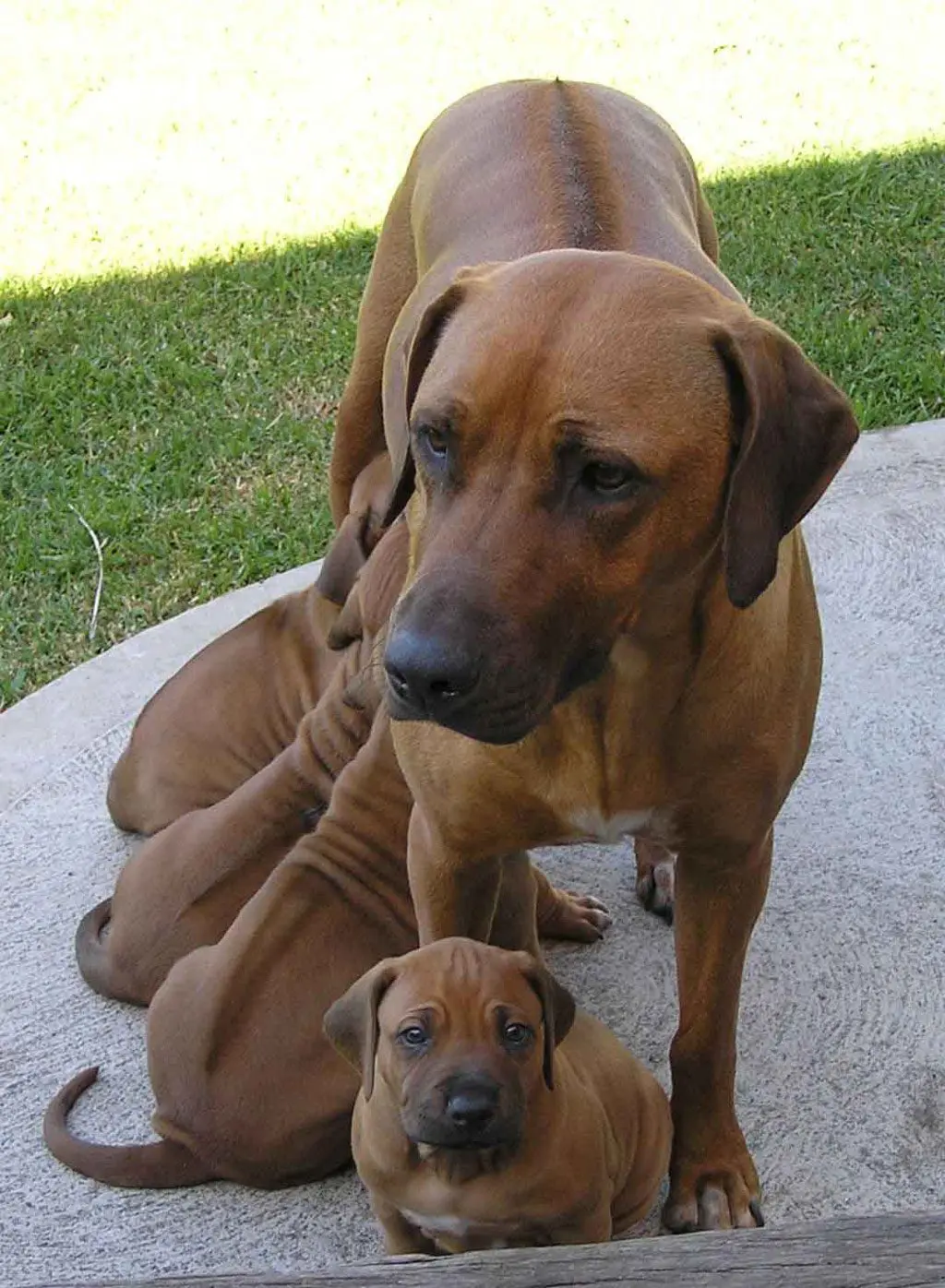
Perro crestado rodesiano

The Rhodesian Ridgeback He is loyal and inseparable from its owner and family environment partner.

Content

History

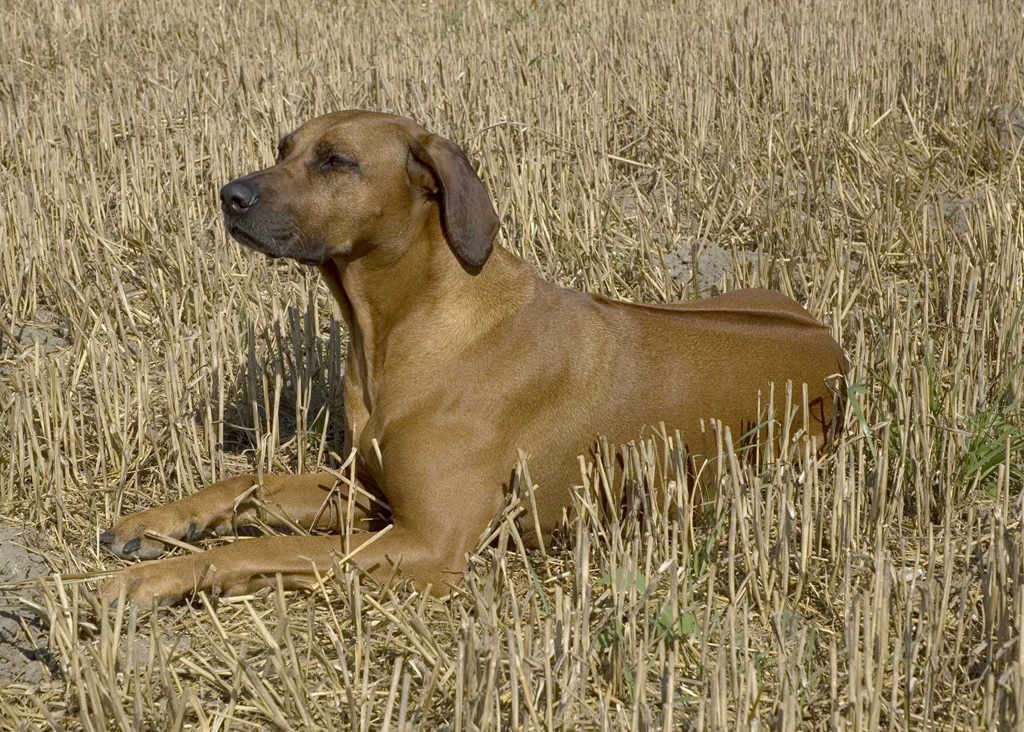
The Rhodesian Ridgeback is a descendant of the semi-wild dogs used more than 500 years for the towns Khoikhoi y Hottentot in south africa. These ancestors already had the same color of wheat (a shade of yellow) and especially the distinctive dorsal crest, formed by hair growing in the opposite direction on the spine.

When the Dutch settlers arrived from the 17th century, they were accompanied by many dogs to help them settle in these difficult regions. Terriers, greyhounds, molossians, Hunting dogs.…: all had a hard time adjusting to the African climate, lack of water and diseases transmitted in particular by the moscow tsetsรฉ. The need to cross European dogs with the local breed quickly became apparent..

The dogs of these crosses helped the farmers to hunt game animals, from the smallest birds to large mammals like lions. They also provided protection in isolated areas and put potentially dangerous animals to flight., such as leopards and baboons.

With the arrival of the English in the 19th century, many boers (settlers of Dutch origin) they moved north, to the area known as Rhodesia, which is now Zimbabwe. This is where the history of the breed really began, when the Reverend Charles Helm (1844-1915) brought two females to the Fountain of Hope, a mission near the town of Bulawayo. They were the ones who started the breeding program of the breed.

In fact, the famous lion hunter Cornelius van Rooyen lived nearby and decided to incorporate these dogs into his pack used to hunt the king of animals. Started a breeding program, in which they were used Collies and the Great Dane to give to Rhodesian Ridgeback your current appearance.

The exploits of this dog, able to run for hours with his master on horseback but also to corner the lion until the hunter arrived, made it quickly popular in the region. Its population exploded, and many babies were born. A breeder named Francis Richard Barnes founded the first club of the breed in 1922 in Bulawayo, and wrote the first standard of the then Rhodesian Lion Dog. This standard was accepted in 1926 by the South African Kennel Union, the reference organization of the country (nowadays the KUSA, pure Southern African Kennel Union). But, on the occasion of this official recognition of the breed, the organization decided to change the name to Rhodesian Ridgback.

The breed appeared in Europe and the United States in the decade of 1930, but it wasn't until after World War II that it really took root. The British Kennel Club (KC) was the first to recognize it in 1954, followed a year later by the Fรฉdรฉration Cynologique Internationale (FCI) and the American Kennel Club (AKC) in 1955. Was not up 1980 that the American United Kennel Club (UKC) he did the same. However, all the major canine organizations in the world today recognize the Rhodesian Ridgeback: is the case of the Canadian Kennel Club (CKC) in particular.

His current situation in his country of origin is paradoxical. Although it is probably the most widespread dog in South Africa, breeders are experiencing many difficulties due to the reduction of the gene pool. Like this, it is estimated that only one litter in twenty is registered with the KUSA, and can be considered purebred. as a result of that, the characteristics of this dog are being lost, and more and more crosses give rise to individuals who are far from the standard.

But, the Rhodesian Ridgeback is very present in the rest of the world and enjoys a certain popularity. In the United States, annual registration statistics with the AKC put it in a very respectable 40th position (almost 200), and has almost won 20 places since the beginning of the 21st century. In Great Britain, the KC registers between 1000 and 1200 births per year.

Physical characteristics

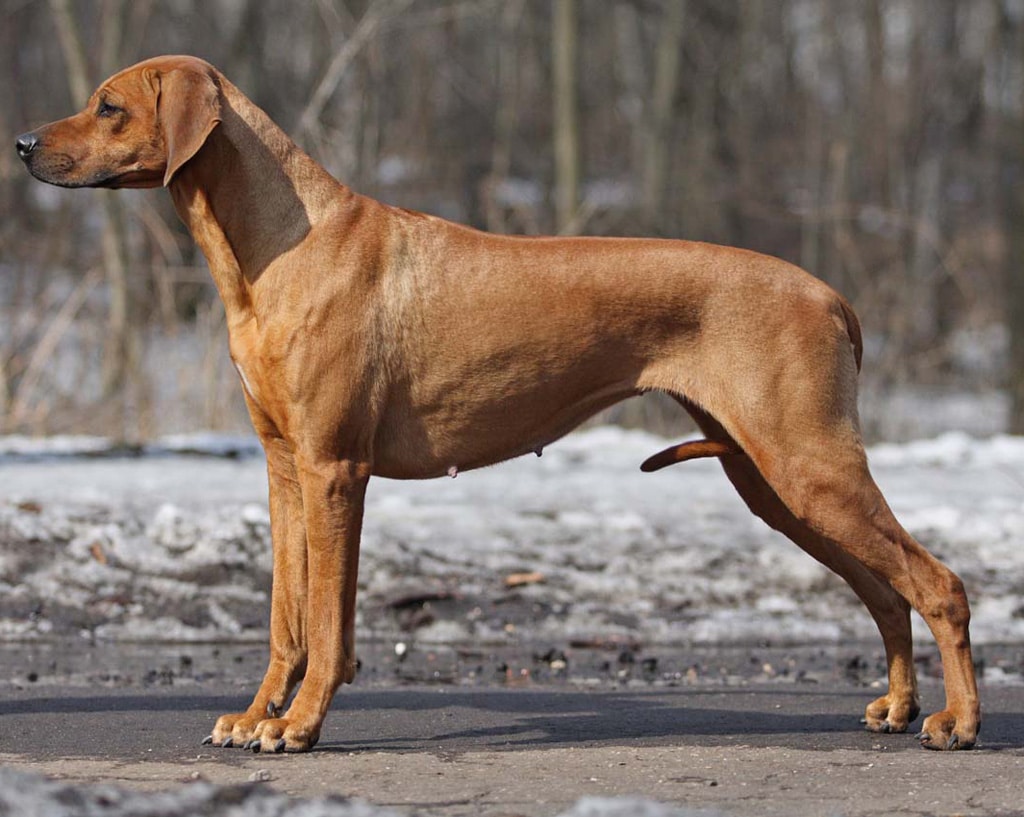
The breed standard indicates that males should be between 63 and 68 cm to the height of the cross, weighing between 36 and 41 kg, and the slightly smaller females, of 61 to 66 cm. of height and a weight of between 29 and 34 kg.

Its weight varies between 30 and 39 kg, its pelage is short, dense, smooth and shiny, without being woolly or silky.

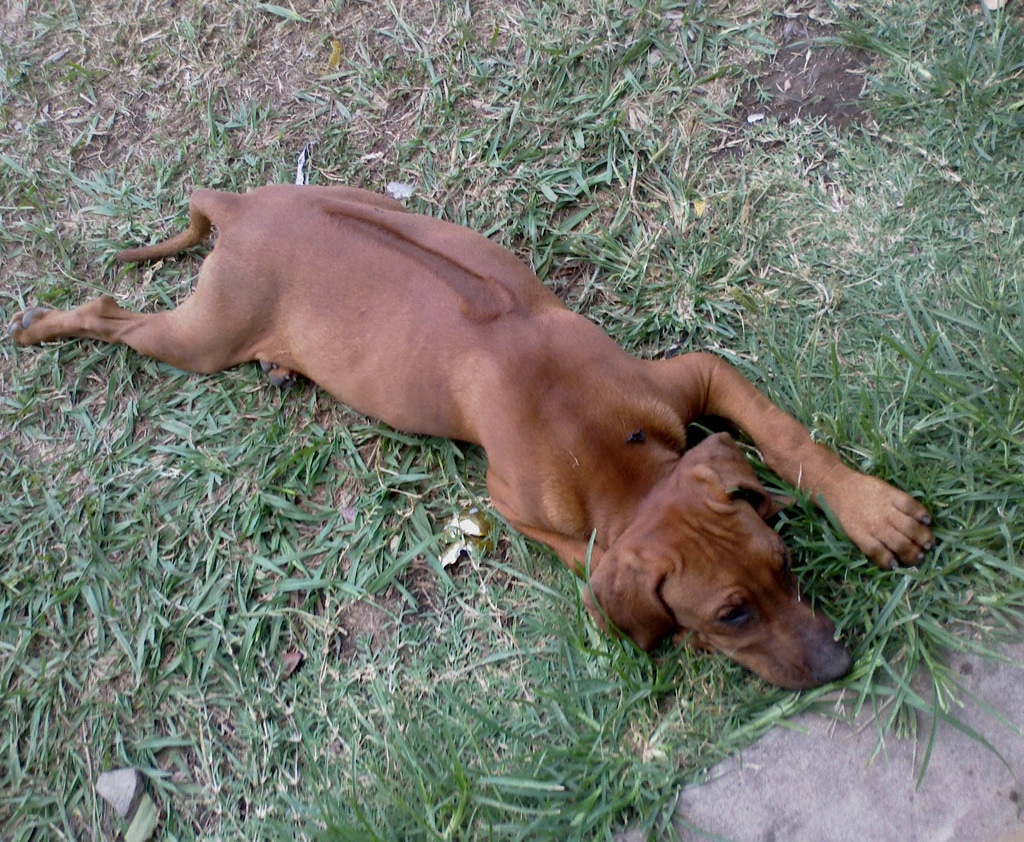
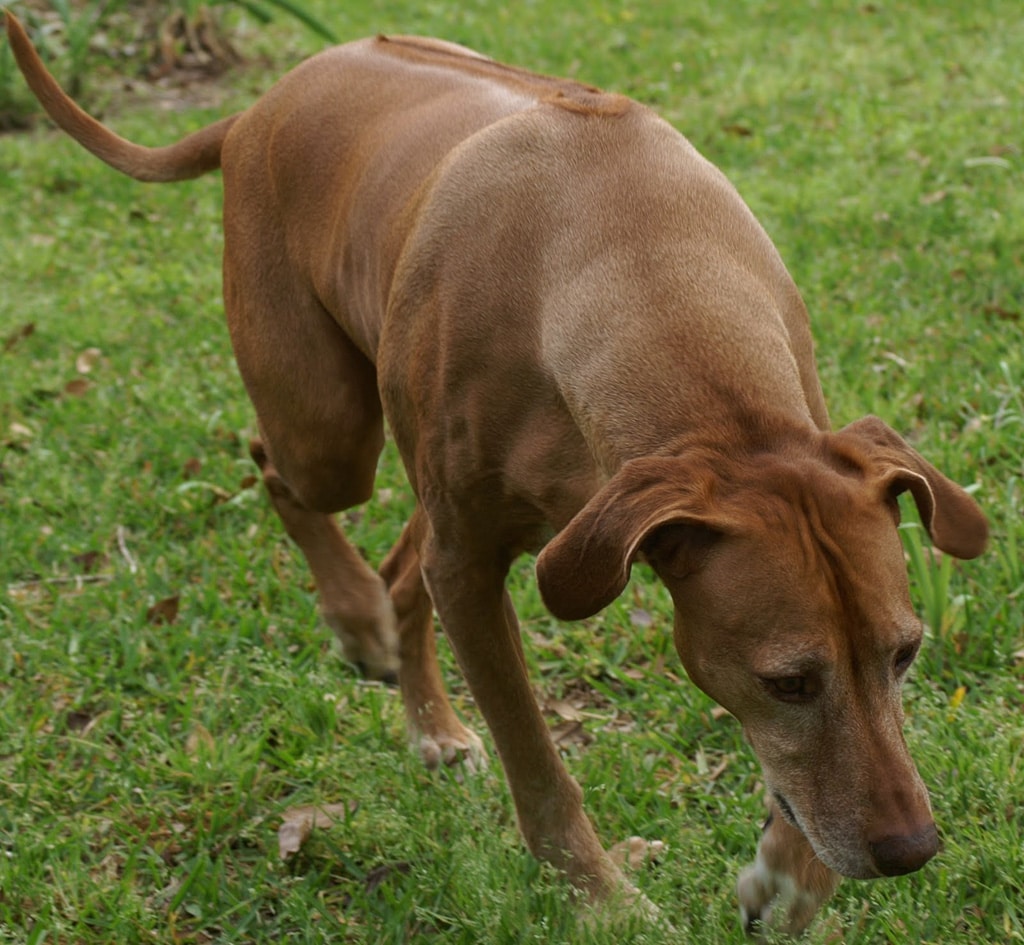
It has, as a feature, a crest on your spine, formed by hairs that grow in opposite direction to the rest of the fur.

The Ridge must be clearly defined and symmetrical, closer to the hip. Must start immediately behind the shoulders and continue until the bones of the hip (rump).

The Ridge must only have two crowns, identical and opposite. The length of the Crown shall not exceed to 1/3 the total length of the ridge or ridge. A good average of the width of the same is of 5 cm..

The Rhodesian Ridgeback it is a dog of good presence, strong, muscular, agile and active, symmetrical appearance, balanced and well balanced.

An adult Ridgeback is a beautiful dog, well planted and Atlรฉtico, able to travel long distances with a proper speed. It emphasizes their agility, elegance and strength without the massive trend.

The legs front are straight and strong, heavy bones, What makes it an extremely hardy animal.

The breed standard accepts the colors ranging from pale wheat Red.

The color of the snout It can be black or brown. It supports a small white spot on chest and toes of the front or rear legs.

The South African hunters discovered that the Ridgeback, in pack, they were very effective against the Lions, thus originating a second name for this breed: "the African lion hunter".

The Rhodesian Ridgeback adapts perfectly to the environment of the African steppes. It can withstand high temperatures, as well as the cold of the night.

Itร‚ยดs resistant to insect bites and can remain without food and water more than 24 hours.

Character and skills

He is very smart. Absolutely loyal and inseparable from its owner and family environment partner. Patient with children (although, because of his size and strength, indicated that they should be monitored during their games) and never aggressive.

According to a popular legend, the crest of Rhodesian Ridgeback is the mark of a lion's paw.

It is reserved with strangers. It is common to confuse its crest with the idea that the dog is Bristly, This often misinterpret her attitude.

In general, the Rhodesian Ridgeback is a dog lively, joyful, playful and very brave.

Let us not forget that he was selected for the Lions hunting. Since its inception, its mission was to discover the lion with its barks and deceptive movements., like feints and escapes, it attracted its prey until it was placed in the crosshairs of the hunter's weapon.

Education ยซRhodesian Crested Dogยป

The socialization of Rhodesian Ridgeback should start in the first few weeks to help him become a calm and balanced adult. Meeting a lot of people (neighbors, friends, family, dealers…) and when crossing with all kinds of companions, gets used to social interactions and learns not to give in to his natural distrust of what is unknown to him.

Your education can start from the first months, and it is important to quickly teach your dog to walk on a leash. Because his hunting instinct is deeply ingrained, tends to run after all small animals and should always be kept on a leash when not in an enclosed area.

It is equally essential to quickly teach him obedience so that he learns to listen to his master and to carry out his orders., either when you are about to chase a passing cat or on any other occasion. He's really smart and stubborn, and tends to do what he likes. Needs a firm and authoritative master, who knows how to make your dog respect you. Add to that its imposing size and it's easy to see why it's not suitable for newbies.. On the other hand, an experienced master can use his intelligence and closeness to his family to teach him many tricks. That is why this dog often shines in dog sports competitions, especially in obedience or agility.

In any case, traditional training methods backfire on this dog, as they would damage the bond between the dog and its owner. On the other hand, positive reinforcement has spectacular results in keeping the dog motivated and strengthening the human-animal relationship. However, to avoid boredom and prevent the animal from being less receptive, it is better to opt for short and playful sessions, even if this means making them more frequent.

It also, it is advisable to accustom it to being handled at a very young age, either for grooming sessions or visits to the vet. In fact, given its size, would quickly become unwieldy if he had the idea not to be very conciliatory in such circumstances as an adult.

Last, given their greed and the risks it entails for their health, it is also better to teach him from a young age to be satisfied with what he is given, and not let him beg or steal food at the table, in cupboards or even garbage cans.

Health ยซRhodesian Crested Dogยป

The Rhodesian Ridgeback it is quite robust, with a life expectancy of 10 to 12 years, which is quite normal for a breed of this size.

They are very resistant to heat and drought, but they also tolerate the cold quite well, as long as the temperature does not drop below 0 degrees Celsius. On the other hand, he doesn't like water at all and hates rain. It should not be left outside or walked around when it rains. May not like humid or very cold areas, so another breed choice seems to be the best option.

Despite his good general health, are particularly exposed to certain diseases:

Hip dysplasia and elbow dysplasia, often hereditary joint malformations that can cause more or less severe locomotion difficulties depending on the severity;

  • dilation-torsion of the stomach, also common in large dogs, which can be fatal if a vet does not intervene quickly. Most of the time it is due to eating large amounts of food too quickly.;
    Hypothyroidism, a hormonal problem in the thyroid gland that causes weight gain and general fatigue. This disease is still rare in the population of the breed, but it seems to be on the rise;
  • dermoid sinus, a hole in the back through which impurities can enter the spine. This inherited problem can lead to serious and life-threatening infections. Surgery can solve the problem, But it's not always like this. Although it is quite rare, This malformation is much more common in the Rhodesian Ridgeback than in other races, although affected individuals are systematically excluded from breeding;
  • degenerative myelopathy, a progressive deterioration of the spinal cord that is paralyzing and fatal. But, still very weird;
    ophthalmological problems (waterfall, progressive retinal atrophy, persistence of the pupillary membrane, entropion…), more particularly within certain lines;
  • Other serious diseases have been reported in the Rhodesian Ridgeback, but they are still very rare and do not seem to affect these dogs more than other breeds: is the case of cerebellar abiotrophy, cervical malformation, hemolytic anemia, lupoid onychodystrophy, hemangiosarcoma or von Willebrand's disease.

    But, this long list should not hide the fact that, According to a study conducted in 2004 about almost 200 individuals by the Kennel Club and the British Small Animal Veterinary Association, the main causes of mortality in this breed are cancer and advanced age, accounting for half of the deaths.

    To reduce the risk of inherited diseases and increase the chances of adopting a healthy puppy, it is recommended to go to a dog breeder Rhodesian Ridgeback serious and responsible. Must present a certificate issued by a veterinarian attesting that the animal is in good health, the details of the vaccinations carried out (registered in the health record or in the vaccination book), as well as the results of the genetic tests carried out that demonstrate the good health of the puppy and the parents.

    Like all breeds of dogs with floppy ears, the Rhodesian Ridgeback are at increased risk of infection in this area. So, it is necessary to regularly clean your ears with a clean cloth to remove dirt and avoid problems.

    Another risk you are exposed to is obesity. Pretty greedy, have a tendency to be overweight if you can't exercise as you should. Only its owner can help you keep your weight in shape, keeping him active and making sure he doesn't eat more than necessary.

    Your weight is one of the things the vet looks at during routine visits. As with any dog, these must be at least once a year, since they also and above all allow the early detection of any problem, as well as making sure you stay up to date on your vaccinations.

    Toilet ยซRhodesian Crested Dogยป

    The coat of the Rhodesian Ridgeback it is particularly easy to care, since his short coat only needs a quick weekly brushing. But, they molt in spring and fall, when it is advisable to increase the frequency of brushing to remove dead hair.

    The coat generally remains clean and therefore odorless, and only needs to be bathed when particularly dirty, for example after a walk in the mud. But, even in this case, vigorous brushing may be enough to help you get rid of dirt. In any case, when you bathe your dog, you can only use a shampoo specifically designed for dogs, as it can damage your skin.

    His floppy ears are finally the point that requires the greatest vigilance in terms of maintenance., because this morphological peculiarity implies a greater risk of infections (ear infections, etc.). To avoid this, They should be inspected weekly and cleaned with a damp cloth.. This prevents debris or dirt from accumulating.

    The weekly coat and ear maintenance session is also an opportunity to check and clean the eyes, even though there is no increased risk in this area.

    You should also take advantage of this time to brush your teeth to limit the formation of tartar and thus avoid problems such as bad breath., caries, gum disease, etc. The ideal, However, is that you brush more often, up to once a day.

    Finally, the claws of Rhodesian Ridgeback they grow alive and are particularly hardy. Although he can run outdoors often, it is better to check them every 2-3 weeks, since it is common that natural wear is not enough to file them. When they get too long, must be trimmed with a nail clipper designed specifically for dogs, as there is a risk of them getting in the way or breaking.

    Usage ยซRhodesian crested dogยป

    The Rhodesian Ridgeback has worked for centuries in his native country as a guard dog on isolated farms against predators, as well as hunting dog. They earned their letters of nobility and a certain notoriety thanks to their exploits during organized lion hunts in the late 19th and early 20th centuries.. A pack of two or three of these dogs was capable of chasing a lion for tens of kilometers before cornering it until the hunter arrived..

    Although today he no longer hunts lions, continues to accompany hunters from various continents, helping them take out and chase game of all sizes.

    It also acts as a guard dog, warning of the arrival of strangers and not hesitating to show his courage if the threat is confirmed and his family is in danger.

    But, what makes it so popular today is above all because it combines many of the qualities of the ideal companion dog. Affectionate and devoted, are especially popular with sports owners. Capable of running a marathon in 90 minutes, the Rhodesian Ridgeback can easily accompany a runner, cyclist or hiker for several hours. On the other hand, would not fit well with an elderly or very sedentary person, and would have every chance of overcoming a beginner or an insecure master.

    Last, his physical assets obviously make him a champion in cani-cross competitions, but also excels in other dog sports, like obedience or agility.

    Buy ยซRhodesian Crested Dogยป

    The price of a puppy Rhodesian Ridgeback registered is an average of between 1200 and 1300 EUR, without great differences between males and females. But, this average hides a fairly wide price range, of 700 to 1800 EUR, depending on the physical characteristics of the puppy, its ancestry and the prestige of the breeding from which it comes.

    in Canada, it is necessary to count between 1500 and 2500 Canadian dollars to adopt a Rhodesian Ridgeback with all the guarantees about the fact that he is in good health.

    Observations

    The race is almost unknown in Spain, and in the rest of Europe, that makes it very difficult to get a puppy from Rhodesian Ridgeback.

    Characteristics "Rhodesian Ridgeback"

    Coexistence is important that you have with your new friend. Before considering the acquisition of a dog of the breed "Rhodesian Ridgeback" you know certain factors. Not all breeds of dogs are apt to live in an apartment, you must take into account his character, their need for exercise, their interaction with other pets, their care and if you have small children, their level of tolerance towards them.

    Adaptation โ“˜

    3,0 of 5 stars (based on 1 review)

    friendly dog โ€‹โ€‹โ“˜

    3,0 of 5 stars (based on 1 review)

    hair loss โ“˜

    3,0 of 5 stars (based on 1 review)

    Affection level โ“˜

    5,0 of 5 stars (based on 1 review)

    Need for exercise โ“˜

    4,0 of 5 stars (based on 1 review)

    Social need โ“˜

    3,0 of 5 stars (based on 1 review)

    Home โ“˜

    3,0 of 5 stars (based on 1 review)

    Toilet โ“˜

    3,0 of 5 stars (based on 1 review)

    Friendly with strangers โ“˜

    3,0 of 5 stars (based on 1 review)

    barking โ“˜

    2,0 of 5 stars (based on 1 review)

    Health โ“˜

    4,0 of 5 stars (based on 1 review)

    Territorial โ“˜

    4,0 of 5 stars (based on 1 review)

    Cat friendly โ“˜

    3,0 of 5 stars (based on 1 review)

    Intelligence โ“˜

    3,0 of 5 stars (based on 1 review)

    Versatility โ“˜

    2,0 of 5 stars (based on 1 review)

    Child friendly โ“˜

    5,0 of 5 stars (based on 1 review)

    Surveillance โ“˜

    3,0 of 5 stars (based on 1 review)

    joy โ“˜

    5,0 of 5 stars (based on 1 review)

    Images ยซRhodesian Crested Dogยป

    ยซRhodesian Crested Dogยป Videos

    Type and recognitions:

    • FCI CLASSIFICATION:
    • Group :
    • Section : . .

    Federations:

    • – FCI – Group 6: Scent hounds, and related breeds. – Section 3: Related breeds. โ“˜
    • – AKC – Hound โ“˜
    • – ANKC – Group 4 (Hounds) โ“˜
    • – CKC – Group 2 – Hounds โ“˜
    • – โ€‹KC – Houndy โ“˜
    • – NZKC – Hound โ“˜
    • – UKC – Sighthounds & Pariahs โ“˜

    FCI breed standard "Rhodesian Ridgeback"

    Origin:
    Zimbabwe

    Date of publication of the valid original standard:
    10/12/1996

    Use:

    The Rhodesian Crested Dog is still used for hunting in many parts of the world., but it is especially appreciated as a guard dog and family pet.


    General appearance:

    The Rhodesian Crested Dog should represent a well balanced dog, strong, muscular, Agile and active, symmetrical silhouette. It has great resistance and can reach considerable speed.
    Emphasis is placed on agility, elegance and firmness without tendency to be massive. The peculiarity of this breed is the crest on the back, which is formed by hair that grows in the opposite direction to the rest of the coat. The crest is the distinctive feature of the breed. The crest should be clearly defined and symmetrical, closer to the hip.
    The crest should have only two identical and opposite crowns. The lower edges of the crowns should not extend beyond the
    crest that is one third of its length. A good average ridge width is 5 cm. (2 inches).


    Behavior / temperament:

    Majestic, Intelligent, reserved with strangers, but without aggression or shyness.

    Head:

    ---

    Cranial region:
    • Skull: It must be of an appropriate length (must be equal to the width of the head between the ears, the distance from the back of the head to the fronto-nasal depression with truffle), flat and wide between the ears; the head should be wrinkle-free during rest.
    • Depression links (Stop): The naso-frontal depression must be reasonably well defined and not in a straight line from the nose to the occipital bone..

    facial region:

    • Truffle: The black truffle must be accompanied by dark eyes, a truffle Brown with amber eyes.
    • Snout: The muzzle should be long, deep and powerful.
    • Lips: The lips must be net, well adjusted to the jaws.
    • Jaws / Teeth: Strong jaws, with a perfect and complete scissor bite, That is, the upper teeth closely overlap the lower teeth and are implanted vertically in the jaws.. The teeth should be well developed, especially the canines.
    • Cheeks: The cheeks should be net.

    Eyes: Must be moderately separated, round, shiny and sparkling, with intelligent expression; its color matches the color of the mantle.

    Ears: They must be planted rather high, a medium-sized, rather wide at the base, and gradually decreasing to a rounded tip. They must be performed to taped to the head.

    Neck:

    It must be rather long, strong and free chaps.

    Body:

    • Back: Powerful.
    • Pork loin: Strong, gently arched and muscular.
    • Breast : It should not be too wide, but very deep and with a lot of capacity; the breast should reach the elbow. The sill should be visible when viewed from the side. Ribs are moderately snugly, never abarriladas.

    Tail:

    It should be strong at the roots and gradually taper towards the tip. ; free of roughness. It must be of a moderate long. Must not be implemented very high or very low, and should be taken up with a slight curve, never rolled.

    Tips

    PREVIOUS MEMBERS: Previous members must be perfectly straight, strong and good bones, with the elbows close to the body. When viewed from the side, previous members must be wider than when viewed from the front.

    • Shoulder: The shoulders should be inclined, NET and muscular, denoting speed.
    • Metacarpus: They must be strong and slightly inclined.

    LATER MEMBERS: Rear extremities, the muscles must be net and well defined.

    • Knee: Well angled.
    • Hocks: Strong in low position.

    FEET: The foot should be compact and round, with well arched toes and resistant elastic pads; protected with hair between the toes and pads.

    Movement:

    Straight forward, free and active.

    Mantle

    HAIR: It should be short and dense, smooth and lustrous appearance, but not woolly or silky.

    COLOR: Of the trigoclaro red wheat. A little white on the chest and toes is permissible, but the excess of white hair in these parts, in the abdomen or above the toes is undesirable. Dark ears and snout are permitted. Excessive black hairs throughout the coat is highly undesirable.


    Size and weight:

    Height to the cross:

    • Males: 63 โ€“ 69 cm. (25-27 inches).
    • females: 61 โ€“ 66 cm. (24-26 inches).

    Weight:

    • Males: 36,5 kg (80 English pounds).
    • females: 32 kg (70 English pounds).


    Fouls:

    Any deviation from the aforementioned criteria is considered as a fault and the severity of this is considered to the degree of the deviation to the standard and its consequences on the health and well-being of the dog..

    • Any dog โ€‹โ€‹showing clear signs of physical or behavioral abnormalities must be disqualified..


    N.B.:

    Males should have two normal-appearing testicles fully descended into the scrotum..

    TRANSLATION: Miguel Angel Martinez.

    Source: F.C.I - International Cynological Federation

    Alternative names:

    1. Ridgeback, African Lion Dog, African Lion Hound (English).
    2. Rhodesian ridgeback (French).
    3. (German).
    4. Rhodesian ridgeback (Portuguese).
    5. Perro Crestado de Rhodesia, Rhodesiano (espaรฑol).

    โ–ท The world of Pets: Dogs, cats, birds, reptiles, amphibians

    Black and tan coonhound
    Estados Unidos FCI 300 - Large-sized Hounds

    Perro negro y fuego para la caza del mapache

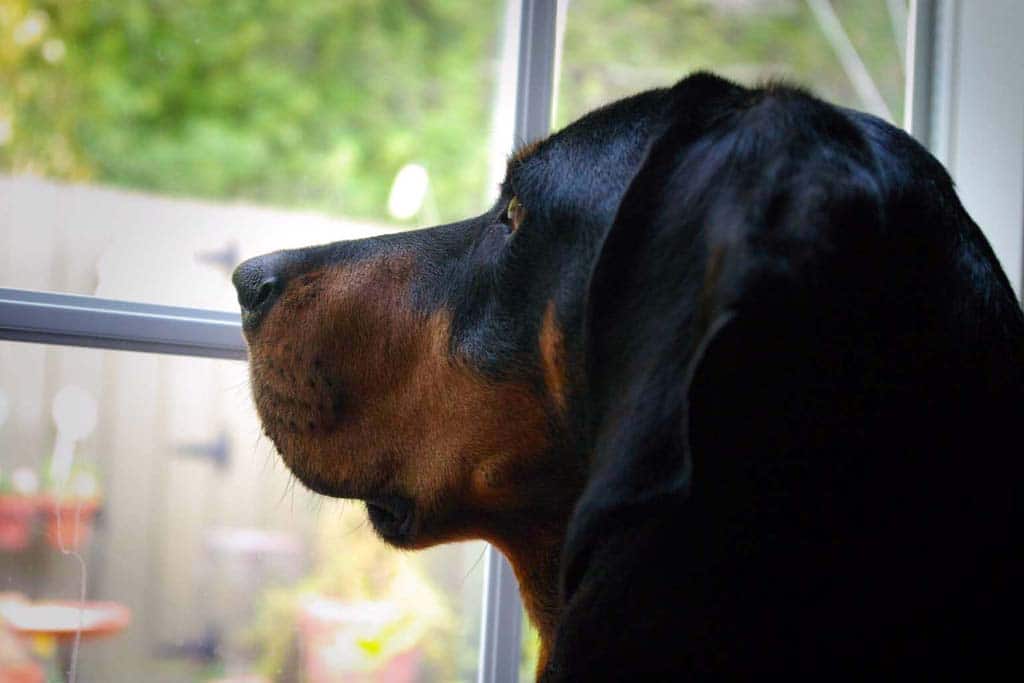
    The Black and tan coonhound they are very vocal and ladradores and, they tend to howl frequently.

    Content

    History

    The black and tan dog for raccoon hunting is a breed of dog used especially to track raccoons. It is a cross between Bloodhound and the Black and Tan Virginia Foxhound (ยซBlack fox hunter and virginia fireยป).

    The Black and tan coonhound It is one of the oldest breeds that exist in America. It is considered that its origin is in the old packs of Fox Hound Cross with Bloodhound they were imported from England in the 17TH century.

    The Black and tan coonhound is a descendant of dog Talbot (extinct race), It was in medieval England from the 11th century. His ancestry is, years. At that time, drawn through the Bloodhound and the Black and Tan Virginia Foxhound.

    The Black and tan coonhound it is the only one of the six races of the group โ€œCoonhoundโ€ (hunting dog breed belonging to hounds) officially recognized by the American Kennel Club.

    In 1945 the Black and tan coonhound was recognized by the American Kennel Club.

    The Redbone Coonhound and the Plott Hound since then they have been recognized in the miscellaneous class. The other three varieties of Coonhound are the Bluetick Coonhound, the American English Coonhound, and the Treeing Walker Coonhound.

    Physical characteristics

    The standard of the Black and tan coonhound mark that your weight is 29 to 59 Kg. Y, the height at the cross of 58 to 69 cm..
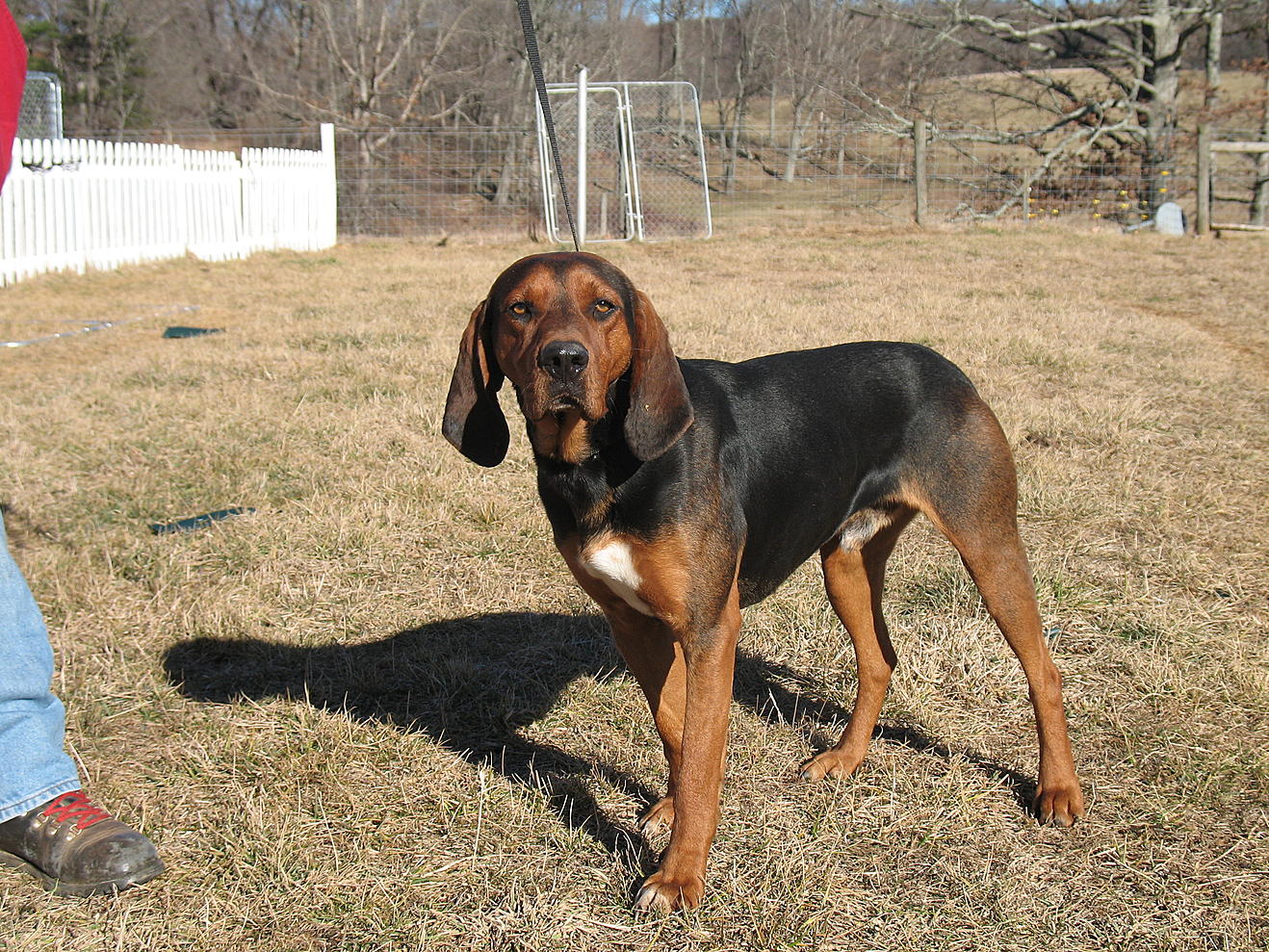
    Its pelage is short, dense and glossy. Their brand of black colour and fire are similar to the Dobermann and the Rottweiler, but with key differences that, It doesn't help to distinguish it from other races. The most prominent are the ears and long tails, and his strong bark, like no other. The eyes are Hazel color, throwing more dark in some cases.

    The legs are long in proportion to the length of the body, that is very muscular and thin, males tend to be more bony than females.

    The size of the litter of a Black and Tan Coonhound dog round the 8 Puppies. Y, the life expectancy of this breed is of 10 to 12 years.

    Generally healthy, but there is some risk of the Hip Dysplasia, ear cancer and other ear infections and eye problems.

    Character and skills

    The Black and tan coonhound achieves its objective by guiding itself only by smell, What makes it also efficient to find deer, bears, Pumas and other pieces of hunting, although in many countries this type of hunting with dogs is restricted.

    The general impression is the of the power, agility and alertness, with the ability to quickly drop to the ground and move down with powerful rhythmic strides. It also, every dog has his own voice, recognisable for their owners from a great distance.

    The Black and tan coonhound he is a gentle dog, adaptable and worthy to be loved. While adapt very well to different environments of life, This dog will be very happy when you can do the work for which has been raised.

    Thanks to its amazing sense of smell, is a dog that easily distracted, he is obedient but if any trail crosses his path he will go after himโ€ฆ Reason why, they are dogs that require a constant and patient training.

    Although most of the Black and tan coonhound they are dogs trust, balanced and sweet temperament, puppies need a fair amount of encouragement to build their confidence, especially, When living in the interior of a home as pets. You can have despanzurrado and happy on the sofa, If and when, It gives you a lot of exercise, years. At that time, they enjoy the company of their human family.

    The Black and tan coonhound, It may seem cautious or nervous in the presence of strangers or unfamiliar dogs, but if they are well socialized from puppies there will be no problem, they are dogs bred for hunting and working group.

    The Black and tan coonhound he is better known as "raccoon hunter", but she has also been used successfully for hunting other animals such as the bear, the deer, the Fox and the mountain lion – even on difficult terrain. Since, It is a dog that supports well the rigors of winter, as well as intense heat.

    The Black and tan coonhound it is a breed that tends to drool a lot, This is a feature that can be problematic. This race is not very appropriate for someone who is looking for a quiet dog, like all Coonhound, they are very vocal and ladradores and, as well, they tend to howl frequently. They are effective in warning their owners when a stranger enters the courtyard, the appearance of the dog at that time may seem threatening, but it is not likely to bite or attack unless smell the real danger or feel threatened.

    Despite being a dog that is not often seen in urban areas, they enjoyed much popularity in rural areas. It is said that a Coonhound they are found on the porch of most rural homes in the United States, more than any other race. While it is not a statistical fact, his place in the AKC registered breeds list that ranks as one of the most popular races.

    It is the image that has inspired the character of Pluto, the companion of Mickey Mouse.

    Characteristics "Black and tan coonhound"

    Coexistence is important that you have with your new friend. Before considering the acquisition of a dog of the breed "Black and tan coonhound" you know certain factors. Not all breeds of dogs are apt to live in an apartment, you must take into account his character, their need for exercise, their interaction with other pets, their care and if you have small children, their level of tolerance towards them.

    Adaptation โ“˜

    5,0 of 5 stars (based on 1 review)

    friendly dog โ€‹โ€‹โ“˜

    5,0 of 5 stars (based on 1 review)

    hair loss โ“˜

    5,0 of 5 stars (based on 1 review)

    Affection level โ“˜

    5,0 of 5 stars (based on 1 review)

    Need for exercise โ“˜

    5,0 of 5 stars (based on 1 review)

    Social need โ“˜

    3,0 of 5 stars (based on 1 review)

    Home โ“˜

    1,0 of 5 stars (based on 1 review)

    Toilet โ“˜

    1,0 of 5 stars (based on 1 review)

    Friendly with strangers โ“˜

    3,0 of 5 stars (based on 1 review)

    barking โ“˜

    5,0 of 5 stars (based on 1 review)

    Health โ“˜

    3,0 of 5 stars (based on 1 review)

    Territorial โ“˜

    1,0 of 5 stars (based on 1 review)

    Cat friendly โ“˜

    5,0 of 5 stars (based on 1 review)

    Intelligence โ“˜

    3,0 of 5 stars (based on 1 review)

    Versatility โ“˜

    2,0 of 5 stars (based on 1 review)

    Child friendly โ“˜

    5,0 of 5 stars (based on 1 review)

    Surveillance โ“˜

    3,0 of 5 stars (based on 1 review)

    joy โ“˜

    1,0 of 5 stars (based on 1 review)

    Images Black and tan coonhound

    Videos of the black and tan dog for raccoon hunting

    Type and recognitions:

    • FCI CLASSIFICATION:
    • Group :
    • Section : . .

    Federations:

  • FCI โ“˜, AKC โ“˜, ANKC โ“˜, CKC โ“˜, UKC โ“˜

  • FCI breed standard Black and tan coonhound

    FCIFCI - Black and tan coonhound
    Dog

    Alternative names:

    1. American Black and Tan Coonhound (English).
    2. Chien noir et feu pour la chasse au raton laveur (French).
    3. Schwarz-lohfarbene Waschbรคrenhund (German).
    4. Coonhound preto e castanho (Portuguese).
    5. Black and tan coonhound, perro negro y fuego para la caza del mapache (espaรฑol).

    โ–ท The world of Pets: Dogs, cats, birds, reptiles, amphibians

    American Foxhound
    Estados Unidos FCI 303 . Large-sized Hounds

    Foxhound Americano

    The American Foxhound is sweet, friendly, loyal and very affectionate in a house.

    Content

    Characteristics "American Foxhound"

    Coexistence is important that you have with your new friend. Before considering the acquisition of a dog of the breed "American Foxhound" you know certain factors. Not all breeds of dogs are apt to live in an apartment, you must take into account his character, their need for exercise, their interaction with other pets, their care and if you have small children, their level of tolerance towards them.

    Adaptation โ“˜

    2,0 of 5 stars (based on 1 review)

    friendly dog โ€‹โ€‹โ“˜

    4,0 of 5 stars (based on 1 review)

    hair loss โ“˜

    1,0 of 5 stars (based on 1 review)

    Affection level โ“˜

    4,0 of 5 stars (based on 1 review)

    Need for exercise โ“˜

    5,0 of 5 stars (based on 1 review)

    Social need โ“˜

    4,0 of 5 stars (based on 1 review)

    Home โ“˜

    2,0 of 5 stars (based on 1 review)

    Toilet โ“˜

    2,0 of 5 stars (based on 1 review)

    Friendly with strangers โ“˜

    3,0 of 5 stars (based on 1 review)

    barking โ“˜

    5,0 of 5 stars (based on 1 review)

    Health โ“˜

    5,0 of 5 stars (based on 1 review)

    Territorial โ“˜

    2,0 of 5 stars (based on 1 review)

    Cat friendly โ“˜

    3,0 of 5 stars (based on 1 review)

    Intelligence โ“˜

    4,0 of 5 stars (based on 1 review)

    Versatility โ“˜

    3,0 of 5 stars (based on 1 review)

    Child friendly โ“˜

    5,0 of 5 stars (based on 1 review)

    Surveillance โ“˜

    1,0 of 5 stars (based on 1 review)

    joy โ“˜

    5,0 of 5 stars (based on 1 review)

    History

    Fox hound, American, better known as American Foxhound It is a breed of dog that is very close to the English Foxhound, are hounds, dogs that are guided by smell to hunt foxes.

    In 1650, Robert Brooke, brought for the administration of the British colony that was North America a pack of hunting dogs, which became the root of many of the North American hunting dog lines. These dogs remained in the Brooke family about 300 years.

    George Washington received fox hunting dogs, French, as the Great Gascony Blue as a gift from the Marquis de Lafayette.

    Many of the dogs Washington already owned were descendants of the Brooke family., so when he crossed them with the French, the race began to develop until it reached the present American Foxhound.

    Physical characteristics

    While the norms of the standard require that the American Foxhound what de 53 to 64 cm in height to the cross, and despite between 29 to 34 kg, Many specimens are, structurally, bigger, females always, slightly smaller than males.

    Some breeders have theorized that the variation in height with respect to the standard, It is due to the considerably improved diet the dogs receive currently. Let's not forget that the breed was first recognized by the American Kennel Club in 1886 (and there the standard was set...), and back then it was a common and traditional practice to feed the Foxhound with a diet they called "dog bread", it was a variant of bread made with cornmeal.

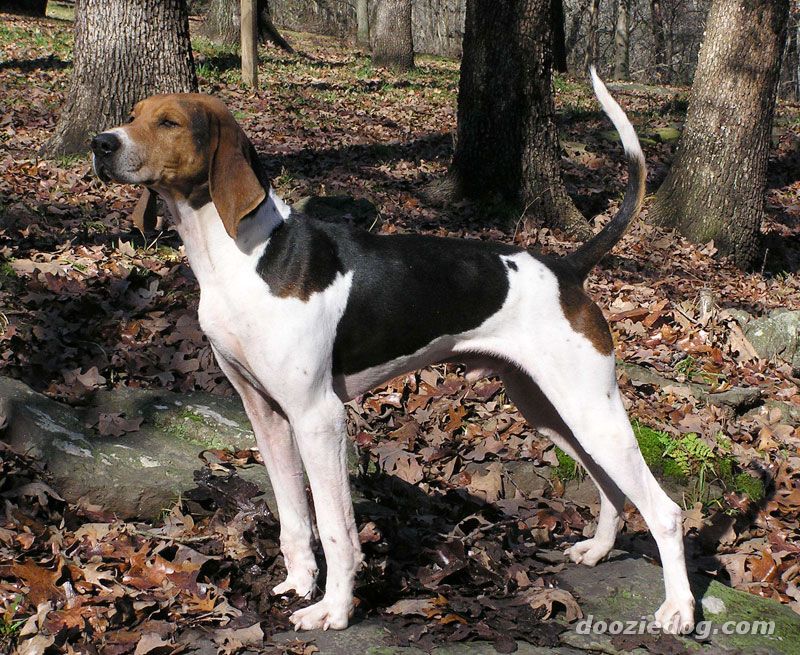
    Continuing with the physical characteristics, the Foxhound has long legs, lines of bony. His chest is quite narrow. It has a long snout and large skull, dome shaped. He's a big ear... Yes, He has floppy ears like his first cousins โ€‹โ€‹and hazel eyes. (or brown) they are big and bright.

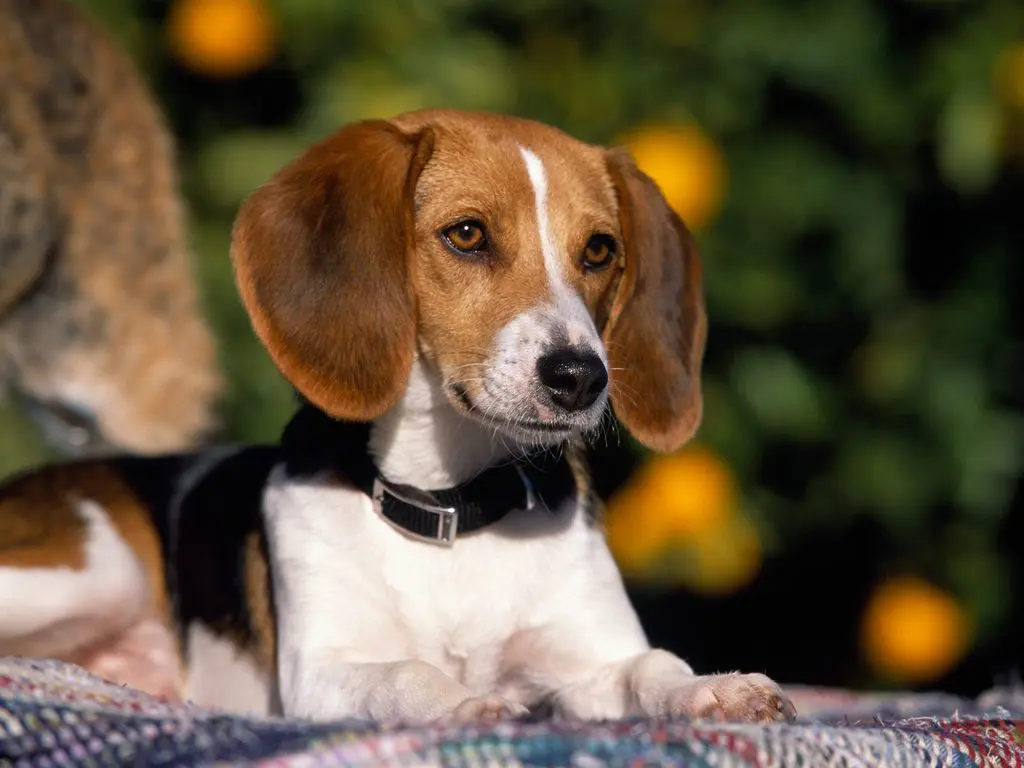
    The coat is short and rough. In general, they are very similar to the Beagle, only that foot can be seen that they are taller and larger. Usually have four colors: red, black, and fire, or bluish, They also have white parts.

    They tend to throw a good amount of hair in the time of molt, but a weekly brushing will prevent that the sofa is decorated…

    Character and skills

    The American Foxhound is sweet, friendly, loyal and very affectionate in a house. As with all dogs need a careful training, constant socialization, and one owners who are willing to do enough exercise with your pet!

    One Foxhound bored will find by itself, the ways to have fun, and and can be very destructive, Some examples of destruction include, from scratches on doors, destruction of objects found in your path, as toilet paper, for example, as it is very mischievous and, to be quite long, they are able to pick up things of furniture…

    If you can not establish a routine walks, Well, at least it would be good if the animal had access to a safe patio, where you can spend your energy, is a good alternative. But, We insist that, the walks, games should be part of your daily life.

    Type and recognitions:

    • FCI CLASSIFICATION:
    • Group :
    • Section : . .

    Federations:

    • – FCI – Group 6: Scent hounds, and related breeds. – Section 1.1: Large-sized Hounds. โ“˜
    • – AKC – Hound โ“˜

    FCI breed standard "American Foxhound"

    Origin:
    United States

    Date of publication of the valid original standard:
    07.08.1998

    Use:

    With working trial.


    General appearance:

    ----


    Behavior / temperament:

    ---

    Head:

    Medium long, slightly domed in occiput.

    Cranial region:
    • Skull : Wide and full.
    • Depression links (Stop) : Moderately defined.

    facial region:

    • Snout : Good length, straight and square cut.
    • Eyes : Large, well separated placement, with typical bloodhound expression; soft look, gentle and nice; brown or hazelnut color.
    • Ears : Rather low implantation, so long that, extended, reach almost to the tip of the nose; texture fine; sufficiently wide and almost lacking erectile capacity; hang close to the head with the leading edge slightly turned towards the cheeks; the tips are rounded.

    Neck:

    Rises freely and lightly over the shoulders, strong in substance but not heavy, medium long; clean throat, no skin folds; but a slight wrinkle under the angle of the jaw is allowed.

    Body:

    • Back : Moderately long, robust and muscular.
    • Pork loin : Wide and slightly arched.
    • Breast : Must be deep, giving space for the lungs; narrower in proportion to its depth than the chest of the English Foxhound; a circumference of 71 cm. (28 inches) is considered optimal in a specimen of 58 cm. (23 inches) height.
    • Ribs : Well arched, the hindquarters well extended back.
    • Flank : A flank of 7,6 cm. (3 inches) confers elasticity.

    Tail:

    Moderately high insertion, high carried, but never forward on the back; slightly curved and with a very sparse fringe of hair.

    Tips

    PREVIOUS MEMBERS : Straight, with good bones.

    • Shoulder : Oblique, crisp and muscular, neither heavy nor loaded, that give the impression of freedom of movement with great activity and strength.
    • Metacarpus : Short, straight.
    • Previous feet : of fox; well arched fingers; strong nails; hard, full pads.

    LATER MEMBERS :

    • Hips and thighs : Strong and muscular, ensuring a powerful thrust.
    • Knees: Strong and low-set.
    • Warm-tarsal joints : Solid, symmetrical and moderately angled.
    • Hind feet : Compact and strong.

    Movement:

    ---

    Mantle

    HAIR : Medium long, thick, hard texture typical of bloodhound.

    COLOR : Any color is allowed.


    Size and weight:

    • Males should not measure less than 56 cm. (22 flea) not more than 63,5 cm. (25 inches);
    • females should not measure less than 53 cm. (21 inches) not more than 61 cm. (24 inches).

    Measurement should be done with the dog in a natural position, with the limbs well under the body; is taken at the level of the cross.


    Fouls:

    Any deviation from the aforementioned criteria is considered as a fault and the severity of this is considered to the degree of the deviation to the standard and its consequences on the health and well-being of the dog..

    โ€ข Very flat skull, narrow at the top, too above- dice.
    โ€ข Roman nose, the raised, giving the nasal bridge a concave shape.
    โ€ข Long and pointed snout, or very short, sharply cut under the eyes.
    โ€ข Small eyes, sharp-eyed like a Terrier, or prominent and bulging.
    โ€ข High set ears, short, or with a tendency to rise above its insertion point.
    โ€ข Thick collar, short or rough; worn at the same height as the top of the shoulders Throat with double chin or skin folds.
    โ€ข Very long back, convex or defeated.
    โ€ข Flat and narrow spine.
    โ€ข Excessively wide or shallow chest.
    โ€ข Flat ribs.
    โ€ข Long tail, curved in the shape of a handle or inclined from birth forward. Rat tail. Total absence of fringe hair.
    โ€ข Twisted forelimbs.
    โ€ข Shoulder blades straight and vertical.
    โ€ข Elbows turned outward.
    โ€ข Carpal joint deviated forward or backward.
    โ€ข Cow tibio-tarsal joints or very straight.
    โ€ข Long feet, fingers apart, crushed.
    โ€ข Lack of muscles and drive.
    โ€ข Short hair, thin or smooth in texture.

    SCALE OF POINTS

    points

    Head

    • Skull 5
    • Snout 5
    • Eyes 5
    • Ears 5

    20

    Tips

  • Former members 10
  • Hip, thighs and post limbs. 10
  • Pies 15
  • 35

    Body

    • Neck 5
    • Shoulders and chest 15
    • Back, tenderloin and ribs 15

    35

    Fur and tail

    • Fur 5
    • Tail 5

    10
    ___
    TOTAL 100

    Any dog โ€‹โ€‹showing clear signs of physical or behavioral abnormalities must be disqualified..


    N.B.:

    Males should have two normal-appearing testicles fully descended into the scrotum..

    Source: F.C.I - International Cynological Federation

    Images ยซAmerican Foxhoundยป

    Videos ยซAmerican Foxhoundยป

    Alternative names:

    1. Foxhound (English).
    2. Foxhound (French).
    3. Foxhound (German).
    4. Foxhound americano, Cachorro americano Urrador (Portuguese).
    5. Foxhound americano, Perro de caza de zorros americano (espaรฑol).

    โ–ท The world of Pets: Dogs, cats, birds, reptiles, amphibians

    Otterhound
    Inglaterra FCI 294 . Large-sized Hounds
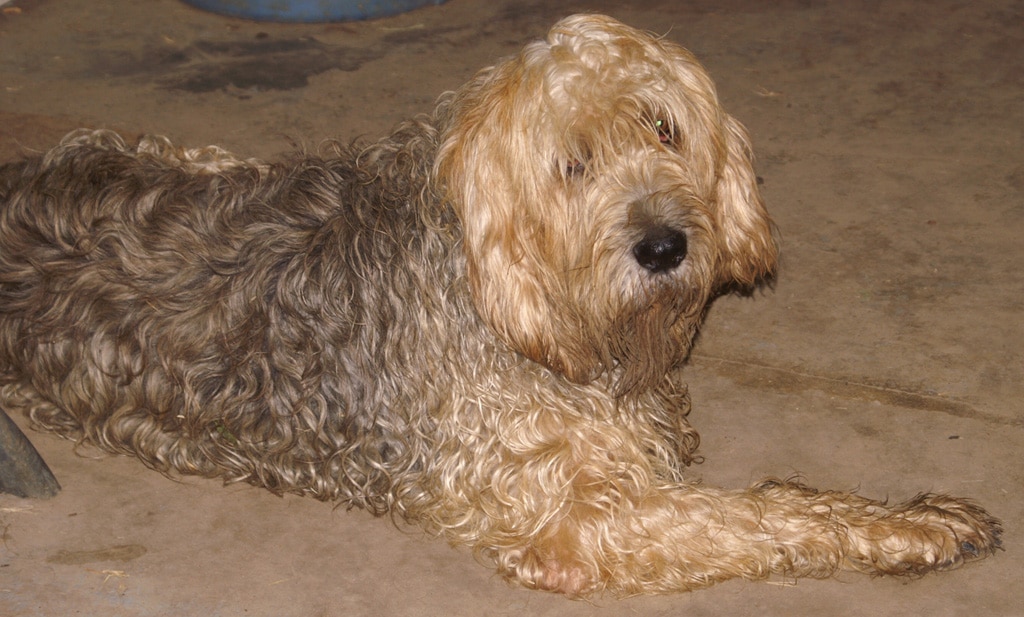
    Perro de Nutria

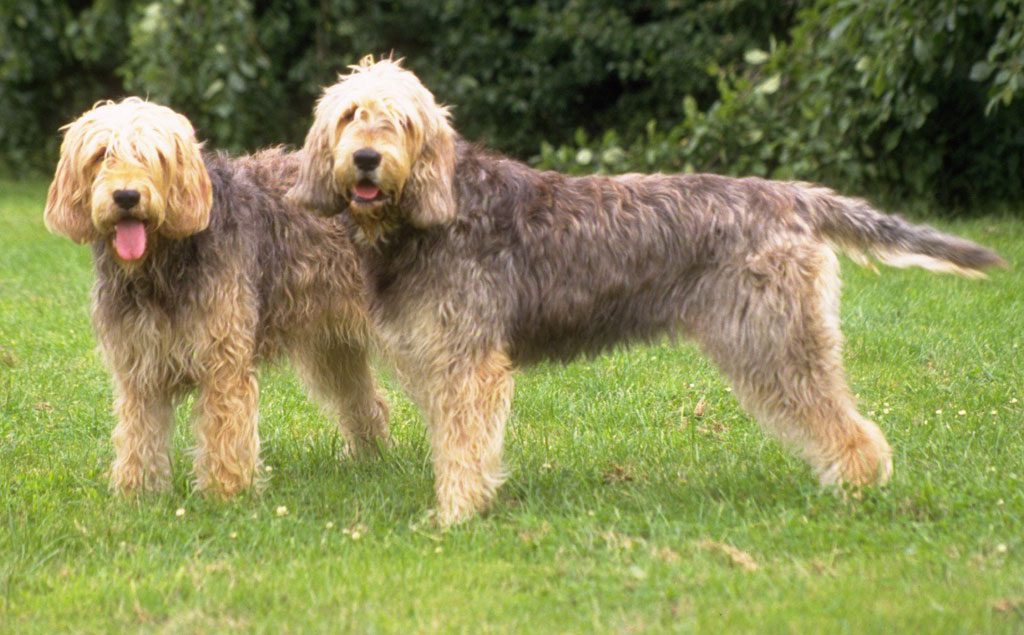
    The Otterhound is the most endangered dog breed in the UK.

    Content

    History

    The Otterhound It is a very old breed of dog from United Kingdom, has, among many other mixtures- within their ancestors to the race Airedale Terrier.

    The name of this precious woolly, It just comes to the task for which it was created: the House of otters. This dog has a smell nearly as well developed as the Bloodhound. This breed was developed in England.

    But like all dog breeds, changes and social advances always bring consequences in the case of Otterhound, It happened that the Otter hunting was banned in England, and if so few copies of this breed, with this ban the race saw very committed his existence.

    Though, To avoid its extinction some race fans what they did was focus the hunting instinct of the Otterhoundtowards other types of prey.

    The Otterhound It is a dog specializing in otters, extremely difficult and dangerous job.

    Some experts suggest that the danger of the Otterhound is similar to the extinction of the Panda Bear.

    It is a very small breed, It is estimated that they there are around 1.000 Otterhound in the world, of which from 350 and 400 they are in the U.S.. Even at the beginning of the 20th century, When was Otter hunting a popular sport, the Otterhound they were never numerous.

    Today, this breed is considered as the most threatened by endangered United Kingdom, There are only 51 specimens born in 2006. Are on the list of most vulnerable native breeds of the UK Kennel Club and programmes are being carried out to save the race.

    Physical characteristics

    The Otterhound, is a dog large and strong, sometimes we could say, incombustible. It is capable of spending all day hunting in the water or running around the field, without showing even the slightest index of exhaustion.

    It has a head big and strong with well marked bone.

    Their eyes, intelligent and lively expression, vary in color depending on the coat. The ears, they are long, them it is hanging at the height of the eyes. They are set high and have a characteristic fold of the breed..

    The tail, high insertion it takes her upright always to pay attention a State of alert, but when it is resting her leads hanging.

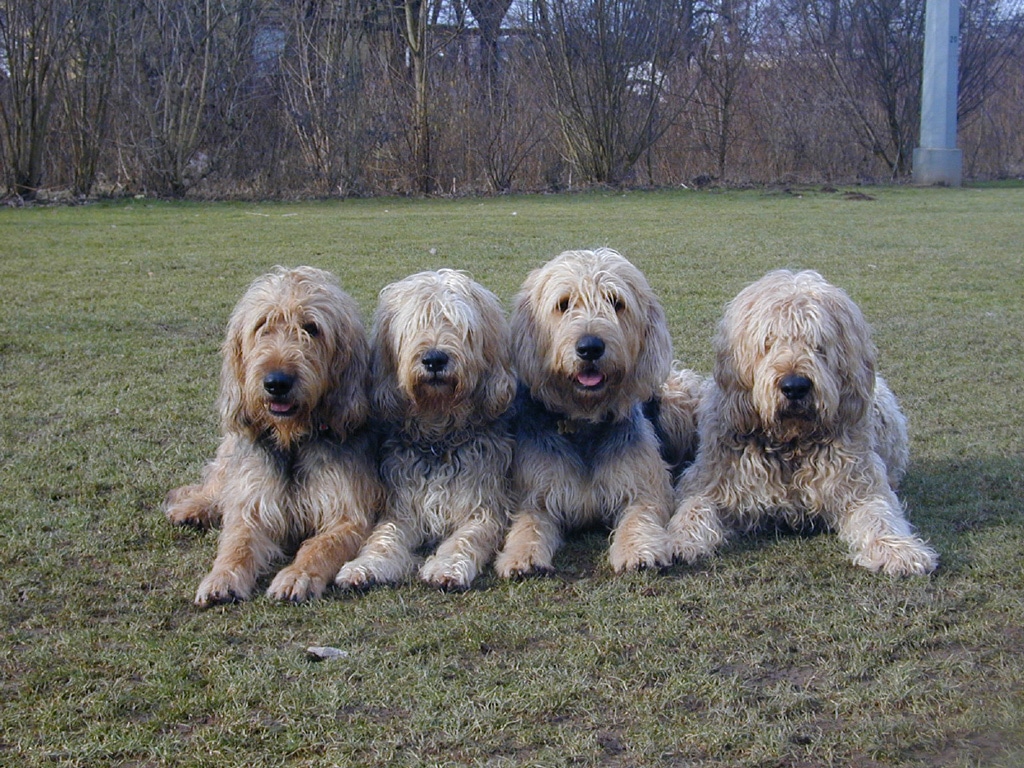
    The hair of the Otterhound is long, has a length of 4 to 8 cm approximately. The mantle is double layer, the outdoor hair is dense, hard and waterproof and should be rough to the touch. The internal layer It is notorious and touch gives a feeling oilseed.

    While, measures with respect to the height and weight, vary according to the club as a consensus we could say that the height the cross in the males is of approximately 69 cm and the females of 61 cm..

    The average life expectancy the race is a little more than 10 years. A quarter tends to live in 12 to 15 years. Y, the case of a copy which he lived has been known to the 16 years of age.

    Character and skills

    The Otterhound, is a Hound very versatile, is generally used for the House of large dams, both individually and in a pack.

    Its temperament It friendly and balanced, as long as you have enough physical exercise especially everything related to water, enjoy a lot swimming.

    The Otterhound enjoy exercise, the routine. They are very good companion dogs for the family, but they must be kept in a secure property, that can jump fences of up 5 metres in height. They are not at all appropriate for life in apartment.

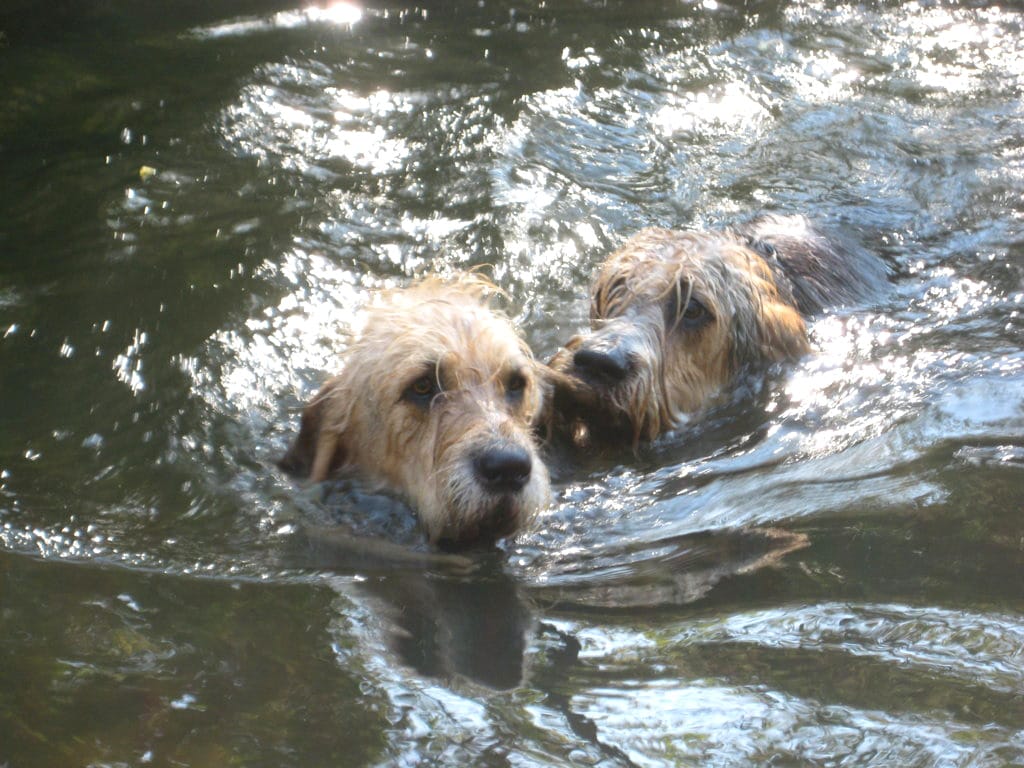
    It is a excellent swimmer, he chased the otters swimming, using only the trail of bubbles that were leaving them diving as track.

    This dog is a highly specialized breed who instinctively knows what has to do. Perhaps that is why they are a little stubborn and not always obedient.

    They need plenty of exercise, preferably swimming. It is a working dog and needs to maintain a series of obligations or activities, a well-marked routine to avoid boredom and the emergence of destructive behaviors.

    A good training is key to keep happy the dog and the family.

    Observations

    Despite having fame of stubborn, with a proper training is usually used also in civil defence tasks.

    Otterhound Images

    Otterhound Videos

    Type and recognitions:

    • FCI CLASSIFICATION:
    • Group :
    • Section : . .

    Federations:

    • – FCI – Group 6: Scent hounds, and related breeds. – Section 1.1: Large-sized Hounds. โ“˜
    • – AKC – Hound โ“˜
    • – ANKC – Group 4 (Hounds) โ“˜
    • – CKC – Group 2 – Hounds โ“˜
    • – โ€‹KC – Hound โ“˜
    • – NZKC – Hound โ“˜
    • – UKC – Scenthounds โ“˜

    FCI breed standard "Otterhound"

    Origin:
    England, United Kingdom

    Date of publication of the valid original standard:
    13.10.2010

    Use:

    Big hound, strong, Built primarily for a long day of work on the water, but able to gallop on land.


    General appearance:

    It is great, straight-limbed and robust, its coat is rough, has a majestic head and a strong body. It moves with loamy and loose strides. Rough double coat and big feet are essential. Easy movement.

    IMPORTANT PROPORTIONS: The distance from the tip of the truffle to the naso-frontal depression is somewhat shorter than the distance from the depression to the occiput.


    Behavior / temperament:

    Friendly and balanced.Signs of aggression and nervousness should be severely penalized.

    Head:

    Clearly outlined, imposing, higher than wide. The forehead does not have a bump or a scowl ; the expression is open and friendly. Except the truffle, the whole head is well covered with coarse hair that forms light mustaches and beard.

    Cranial region:
    • Skull: Delicately pumped, neither thick nor exaggerated; rises from the naso-frontal depression to the slightly marked occipital protuberance.
    • Depression links (Stop): Something marked, but without exaggeration.

    facial region:

    • Truffle: Long, windows wide open. Snout: Strong and deep.
    • Lips: Belfos profusos, although not in excess.
    • Jaws / Teeth: The jaws are strong, wide. Teeth are well aligned, and the joint is scissor-shaped, that is to say, that the upper incisors closely overlap the lower ones and are vertically implanted in the maxillae.
    • Cheeks: Defined cheek bones.

    EYES: They are of intelligent expression and moderately sunken. The conjunctiva is somewhat apparent. Eye color and eyelid edge pigment vary according to coat color (a blue and tan hound may have hazel eyes). Yellow eyes are not desirable.

    EARS: They present unique characteristics of the breed. They are long, pendant and implanted at the level of the angle of the eye. They can reach the truffle when pulled forward, forming a characteristic fold. The tip bends or curls inwards giving a curious folded look. This is an essential point that should not go unnoticed. The ears are well covered with hair that forms bangs.

    Neck:

    It's long and powerful. It is delicately inserted in the well oblique and cleanly outlined shoulders . A slight double chin is acceptable.

    Body:

    Very strong.

    • top line : Level.
    • Back : wide.
    • Pork loin : Short and strong.
    • Breast : Deep ; rib cage is snug, quite deep and oval in shape ; not very wide, not too narrow. The ribs extend well back, which allows enough room for the heart and lungs.

    Tail:

    High implementation ; dog picks up when alert or on the move. Never curls over the back, but it can hang up when the dog is resting. It is thick at the base and tapers to the tip ; the caudal bones extend to the hock ; carries it straight, or in a slight curve. The hair on the lower part of the tail is longer and more abundant than that on the upper part.

    Tips

    PREVIOUS MEMBERS:

    • Shoulder: Definedand well oblique.
    • forearms: Strong bones, straight from elbow to ground. 
    • Metacarpus: Strong and well oblique.
    • Previous feet: Large, rounded, with well arched toes and thick pads; they do not deviate either outwards or inwards. The interdigital skin must be visible.

    LATER MEMBERS:

    • General appearance: They are very strong and muscular; views from any angle, the position should not be too wide, not too narrow. Posterior angulation is moderate. When the dog maintains a natural position, the hind limbs, from hock to ground, they are perpendicular.
    • Thighs: They are very muscular.
    • Metatarsus: Hocksin very low position, and they do not deviate even inwards, nor out.
    • Hind feet: Only slightly smaller than the previous ones. Large, rounded, with well arched toes and thick pads; they do not deviate either outwards or inwards. The interdigital skin must be visible.

    Movement:

    To step, the movement is very loose with the feet close to the ground; immediately go into an active trot, agile, regular, of very long strides. The gallop is uniform and strides of exceptional length.

    Mantle

    Fur: It is long of 4 to 8 cm., dense, rough, hard, but not wire hair. It is waterproof, hair texture is between straight and rough. Smoother textured hair on the head and lower part of the limbs is natural. The undercoat of hairs is apparent, a slightly greasy texture may appear, both in the outer layer and in the inner layer of hairs. Hair must not be trimmed and trimmed for display; presentation must be natural.

    Color: All recognized hound colors accepted: solid color, grey, sandy, red, wheat, blue. They may have slight white marks on the head, the chest, the feet and the tip of the tail.

    White hounds may have slight lemon markings, blue or badger. black and tan, Blue and fire, black and cream, sometimes liver, fawn and liver, fawn and white. The following colors are not allowed: liver (brown) and white, a white hound with black patches and clearly separated tan markings. The pigment must harmonize, although not necessarily combined with the color of the coat; for example, a tawny hound may have brown eyes and noses. The slightly depigmented nose is allowed.


    Size and weight:

    Height to the cross :

    • In males approximately 69 cm. (27 inches),
    • In females approximately 61 cm. (24 inches).


    Fouls:

    Any deviation from the aforementioned criteria is considered as a fault and the severity of this is considered to the degree of the deviation to the standard and its consequences on the health and well-being of the dog..

    FALTAS DESCALIFICANTES:

    • Aggressiveness or extreme shyness.

    • Any dog โ€‹โ€‹showing clear signs of physical or behavioral abnormalities.


    N.B.:
    • Males should have two normal-appearing testicles fully descended into the scrotum..
    • Only functionally and clinically healthy dogs, with the typical conformation of the breed, should be used for parenting.

    The latest changes are in bold.

    Source: F.C.I - International Cynological Federation

    Alternative names:

    1. Otterhound (English).
    2. Otterhound (French).
    3. Otterhound (German).
    4. Otterhound (Portuguese).
    5. Otterhound (espaรฑol).

    โ–ท The world of Pets: Dogs, cats, birds, reptiles, amphibians

    Billy
    Francia FCI 25 - Large-sized Hounds

    Billy

    The Billy is a used hunting dog live in the open air, in open spaces

    Content

    History

    The Billy, It is a dog from France created at the end of the 19th century from the junction of three races that are now extinct: the Larye, the Cรฉris and the Montembล“uf. In the cross, great care was taken to highlight characteristics such as: good smell, resistance and fast reflexes.

    Billy, Historically, was used for the hunting hares horse, wild boar and roe deer. In the news, There are few copies and is appreciated, it is not very common to see them.

    The Billy has the exact appearance of the famous white dogs that were part of the packs of the French aristocracy (16th centuries, 17TH and 17TH). History tells that King Charles IX of France (1550-1574) he had a white female he loved more than his own life. When the dog died, He forced the Court to go into mourning.

    Read more

    โ–ท The world of Pets: Dogs, cats, birds, reptiles, amphibians

    Bloodhound
    Bรฉlgica FCI 84 - Large-sized Hounds
    Bloodhound

    The Bloodhound It is the dog with thinner smell of the planet.

    Content

    History

    The Bloodhound (Bloodhound) It is a breed of dog originally from Belgium, more specifically in the region of the Ardennes. It is one of the different breeds of hound recognized by the FCI in Group 6.

    Has been traditionally considered to the monks of the monastery of St. Hubert as the creators of the race (for this reason also, are known as St. Hubert Hound), and they based their selection on the hunting dogs used by the monk Hubert, founder of the order and which later to be canonized became the patron saint of hunters. King William the Conqueror took copies of this breed to England when he ascended to the throne. The descendants of these specimens, They were known in the country as Bloodhound, referring to the purity of their blood.

    Did you know??

    The name "Bloodhound" does not come from this dog's ability to track game and people, but from a long history of carefully recorded bloodlines. In other words, He is a "blood" hound, a kind of dog of the aristocracy, if it can be said like that.

    This legend has it that a rich nobleman hunted in a good Friday accompanied by a group of noisy dogs, and in the distance he could see a deer and when he was about to shoot he saw the image of the cross of Jesus Christ drawn on its antlers and since then he retired from his dissipated life to dedicate his fortune to good works. Since then usually give the nobles, the best specimen of his beloved dogs. Today the tradition continues, but now is a religious service and gives blessing to copies, continuing with the exposure of the race in the community of St. Hubert at Belgium.

    After the race was introduced in the United States where one of his missions was the search and hunt down the fugitive slaves. For many years the recognition by a Bloodhound incriminating evidence was considered by American courts.

    Physical characteristics

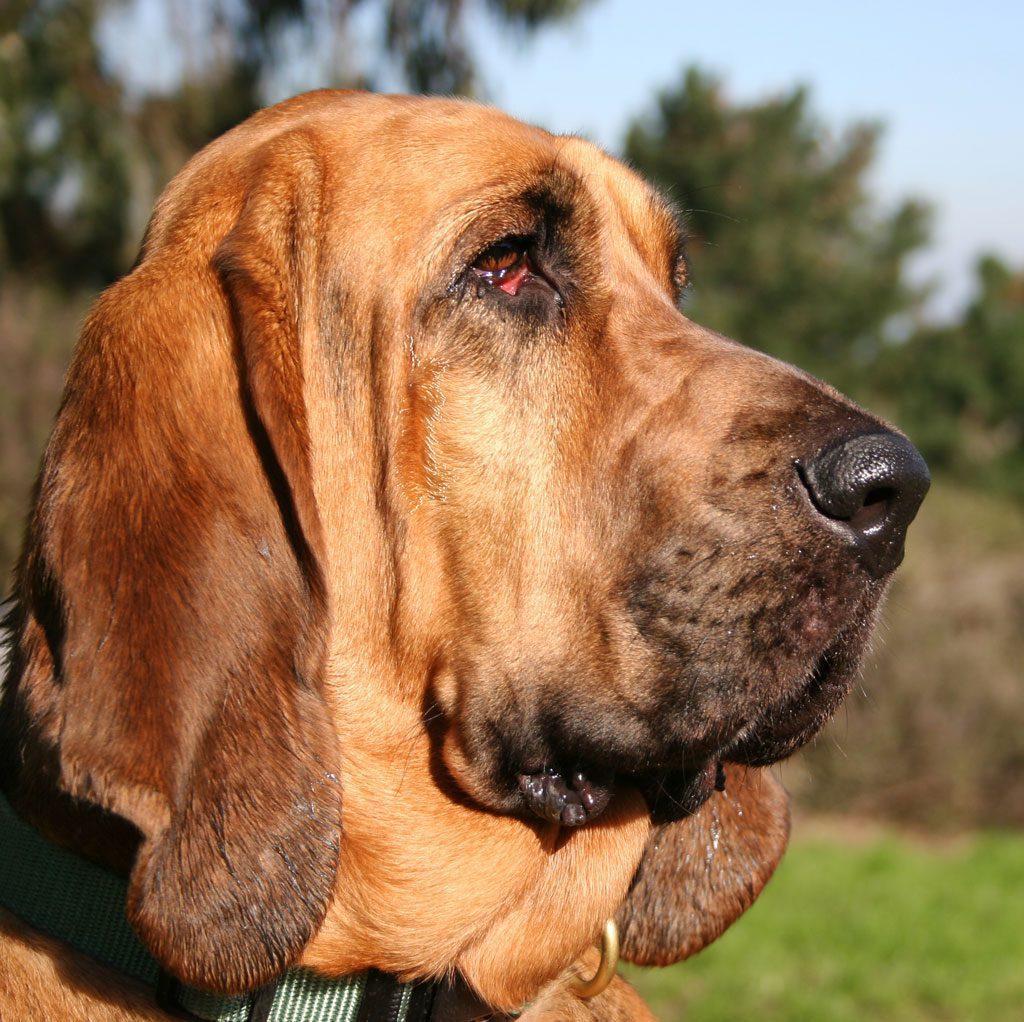
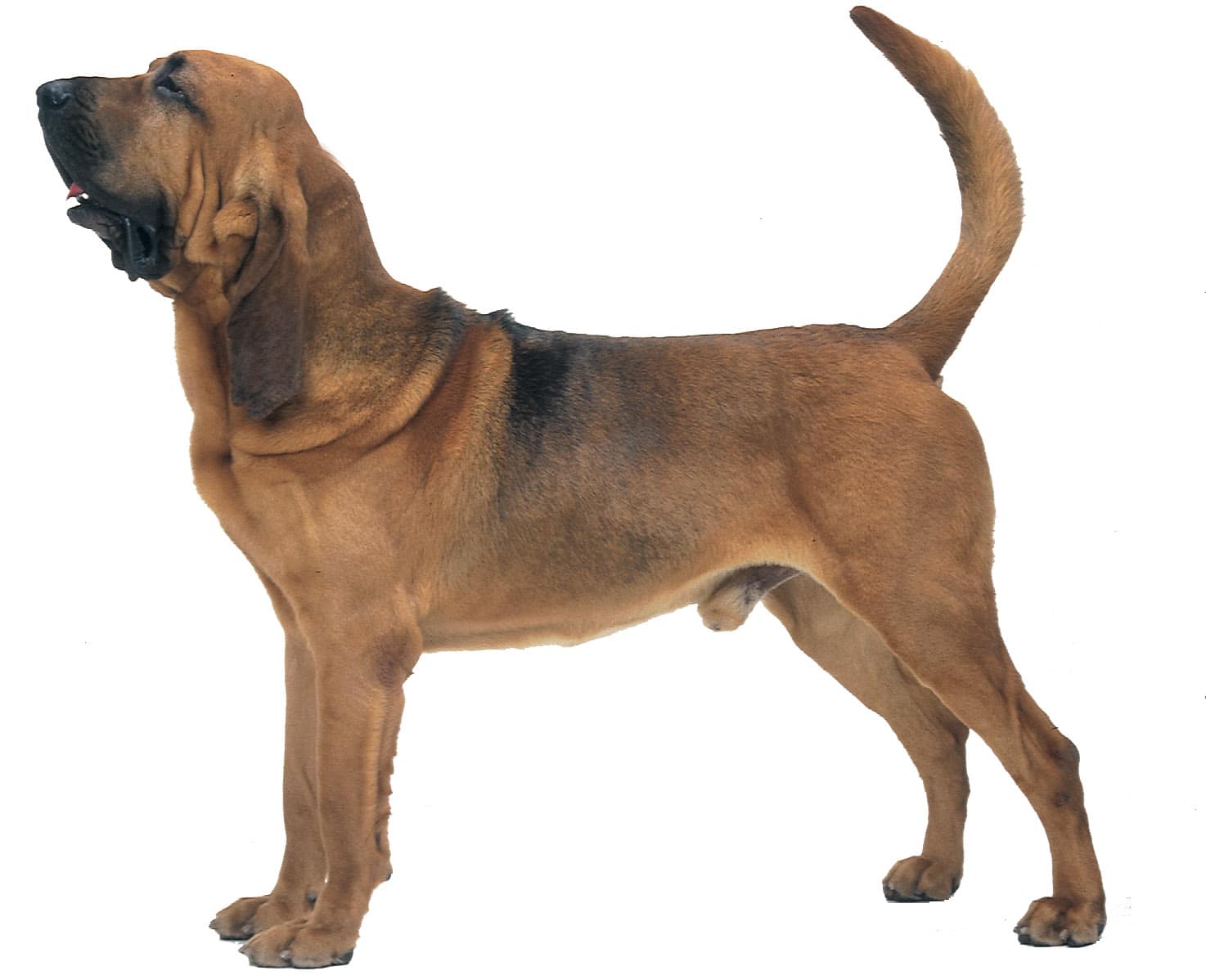
    The Bloodhound is a powerful hunting dog. The back is very strong compared to the size of the dog. The head is long and narrow. The muzzle is long with a nose of black. Deeply sunken eyes and drooping eyelids. The Chin is very pronounced.

    The Bloodhound is a dog with a nose finest of the planet.

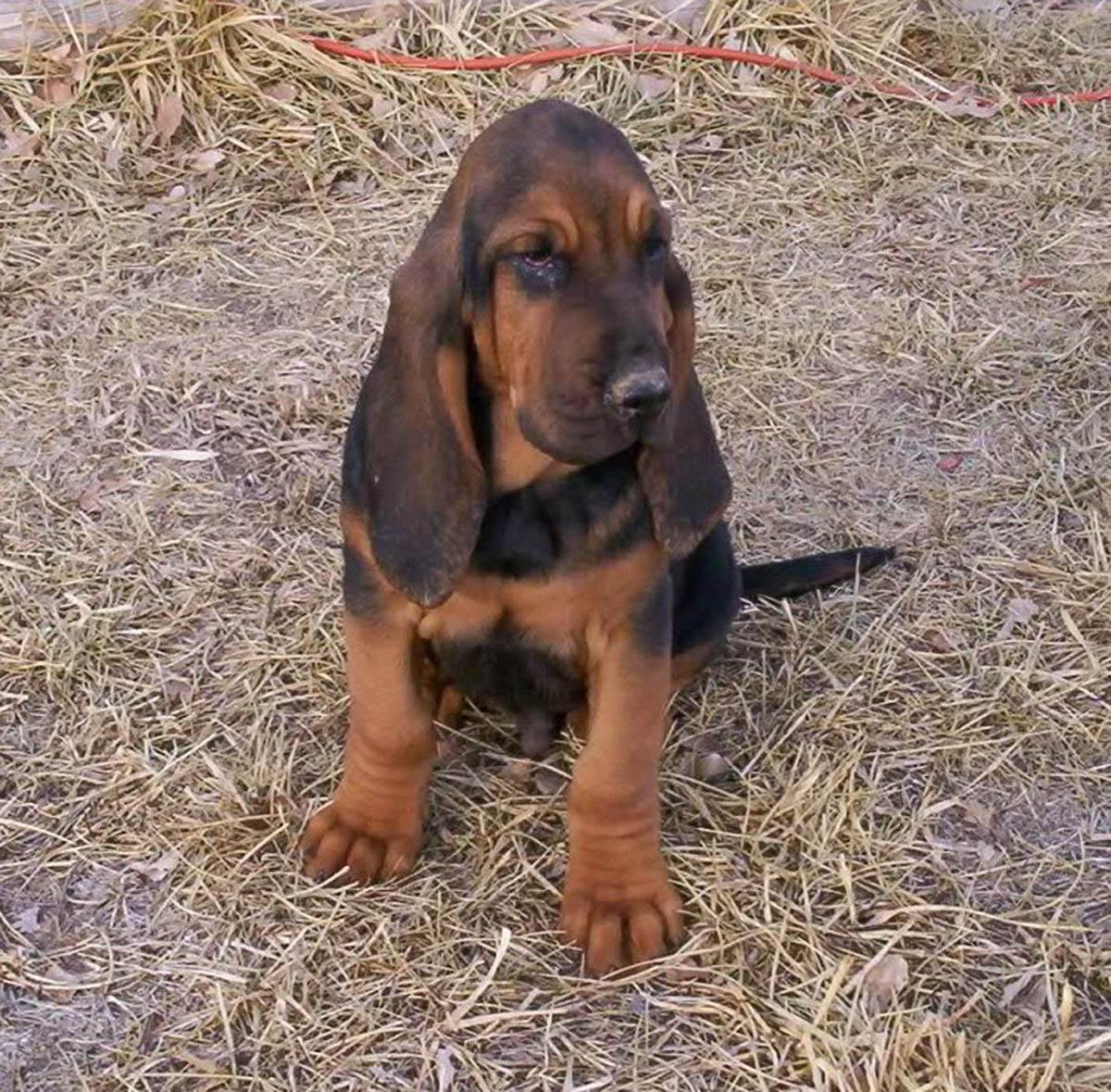
    Despite its size, is an agile dog. His body is longer than high. Wrinkles on the head and jowls are perhaps one of the most characteristic features, along with the length of its hanging ears. The accepted colors are black and fire, Brown and red in its different shades and fire.

    The appeal is of 67 cm for males and 60 cm for females.

    It has been documented that they are capable of following a trail of up to fifteen days, because of the enormous sensitivity of their sense of smell, caused by the internal folds of their nostrils. For that reason it is used as a police dog in tracking tasks..

    These hounds cannot be kept in a yard without fences. There is a good chance that your tracker instinct carried them wander and get away until the end of their trail.

    It is a dog that needs to be exercised (like all dogs), and usually live more happily in large spaces, Although adapts very well to home life.

    The Blodhound (Bloodhound), Despite the allusion to the term blood contained in its name (blood), It is one of the animals most affable that exists. It is a dog of noble nature, can be shy around strangers. He is very patient and persevering when looking for a trailโ€ฆ

    It is excellent Playmate for children, defend them from any danger. They tend to be very well with other dogs and pets.

    Pictures Bloodhound

    Videos Dog of St. Hubert

    Characteristics "Bloodhound"

    Coexistence is important that you have with your new friend. Before considering the acquisition of a dog of the breed "Bloodhound" you know certain factors. Not all breeds of dogs are apt to live in an apartment, you must take into account his character, their need for exercise, their interaction with other pets, their care and if you have small children, their level of tolerance towards them.

    Adaptation โ“˜

    3,0 of 5 stars (based on 1 review)

    friendly dog โ€‹โ€‹โ“˜

    5,0 of 5 stars (based on 1 review)

    hair loss โ“˜

    5,0 of 5 stars (based on 1 review)

    Affection level โ“˜

    5,0 of 5 stars (based on 1 review)

    Need for exercise โ“˜

    5,0 of 5 stars (based on 1 review)

    Social need โ“˜

    5,0 of 5 stars (based on 1 review)

    Home โ“˜

    1,0 of 5 stars (based on 1 review)

    Toilet โ“˜

    5,0 of 5 stars (based on 1 review)

    Friendly with strangers โ“˜

    5,0 of 5 stars (based on 1 review)

    barking โ“˜

    5,0 of 5 stars (based on 1 review)

    Health โ“˜

    5,0 of 5 stars (based on 1 review)

    Territorial โ“˜

    1,0 of 5 stars (based on 1 review)

    Cat friendly โ“˜

    5,0 of 5 stars (based on 1 review)

    Intelligence โ“˜

    5,0 of 5 stars (based on 1 review)

    Versatility โ“˜

    3,0 of 5 stars (based on 1 review)

    Child friendly โ“˜

    5,0 of 5 stars (based on 1 review)

    Surveillance โ“˜

    5,0 of 5 stars (based on 1 review)

    joy โ“˜

    1,0 of 5 stars (based on 1 review)

    Type and recognitions:

    • FCI CLASSIFICATION:
    • Group :
    • Section : . .

    Federations:

  • FCI โ“˜,
  • AKC โ“˜,
  • ANKC โ“˜,
  • CKC โ“˜, โ€‹
  • KC โ“˜,
  • NZKC โ“˜, UKC โ“˜

  • FCI breed standard "Bloodhound"

    Origin:
    Belgium

    Date of publication of the valid original standard:
    13.03.2001

    Use:

    Big Game Hound, trail dog and family dog. It was and still is a hunting dog, that due to his remarkable sense of smell is above all a tracker, used both to find the trail of the injured small game, in search of the trail as well as to search for missing persons, in police operations. For its functional construction, the Chien de Saint-Hubert is endowed with great resistance as well as an exceptional smell, allowing you to easily follow a track over a long distance and over rough terrain.


    General appearance:

    Massive plus size hunting and tracker dog, the most powerful of hunting dogs. Its lines are harmonious and it is equipped with strong bones, well muscled and full of substance, although without giving the impression of heaviness. Its structure is elongated and the body is shaped like a rectangle. The set is imposing and full of nobility. His attitude is solemn. Head and neck draw attention to abundant skin, flexible and thin that hangs in deep folds. His movements are impressive, rather slow and with a certain sway, though flexible, elastic and loose. No characteristic can be exaggerated to the point of breaking the harmony of the whole., to give an impression of coarseness, far from harming the health or well-being of the dog. Possible exaggerations may be mentioned: very sunken or very small eyes; distended eyelids; excessively thick, loose skin, with too many folds and too deep; too much double chin; very small head. Large dogs are also undesirable, very heavy or very solid body, since this affects its use.

    IMPORTANT PROPORTIONS

    • body length / height to the cross: 10/9.
    • Chest height / height to the cross: 1/2.
    • Head length / body length: 3/7.
    • Length of the muzzle / head length: 1 /2.


    Behavior / temperament:

    Is meek, calm and gentle with people. Particularly attached to his master. Tolerant of his cage mates and other pets. Rather reserved and stubborn in temperament. He's so sensitive to praise, as to corrections. Is never aggressive. His voice is serious, but he is not barking.

    Head:

    It is the most characteristic aspect of the breed; imposing, majestic and full of nobility. Is high, but narrow in relation to its length, and long in relation to the length of the body. The bone structure is well visible. The lateral faces are flat and the profile is square. The nasal ridge is visibly parallel to the long upper line of the forehead.. The skin, fine and abundant, forms deep wrinkles and folds on the forehead and cheeks that fall when the head is down and extend into the folds of the double chin, which is highly developed. In females, the skin is less abundant.

    Cranial region:

    The skull is tall, long, rather narrow, and the side faces are flat. Superciliary arches are not very prominent, although they may seem so. The occipital protuberance is well developed and clearly protruding.

    Depression links (Stop): Bit strong.

    facial region:

    • Truffle: Black or brown in color; always black in black and tan dogs. It is wide, well developed and windows are wide open.
    • Snout: High; as long as the skull. It is wide near the nostrils and of uniform width throughout its length. The
      Nasal cane is either straight or slightly arched (slight ram's nose). Lips: They are very long and loose. The upper lip hangs over the
      bottom and forms a right angle to the front of the muzzle, which imparts a square profile to the muzzle. Behind the corners they turn into fleshy lips (less pronounced in females), that blend imperceptibly with the double chin, which is abundant. The edge of the upper lip descends a few 5 cm lower than the lower jaw. The edge of the lips is well pigmented black or brown, depending on the color of the truffle.
    • Jaws / Teeth: Complete denture, correct "scissor" joint; strong, white teeth set evenly in well-developed jaws. โ€œClamp-shapedโ€ dentures are accepted.
    • Cheeks: Sunken and thin, especially under the eyes.

    EYES: Dark brown or hazelnut color, of a lighter shade (amber) in dogs without a chair or black blanket. Medium-sized; oval, not tearful, nor outgoing, nor sunk in the orbits, thus leaving the iris completely visible. The eyelids, no irregularities in its contour, are normally adapted to the eyeball. Tolerated, However, lower eyelids somewhat distended, so that the conjunctiva is a little visible. The eyelashes cannot under any circumstances touch the eyes, nor hinder them. Your expression is sweet, gentle and dignified, the look a little melancholic.

    EARS: Thin, and flexible, covered with short hairs, fine and velvety to the touch. The pavilion is very long, exceeding at least the tip of the nose when placed on the top of the nasal bridge. Very low implantation, at eye level or below, on the sides of the head, falling in funny folds, castled in and back (corkscrew).

    Neck:

    It is long, so that the dog can keep track of it while keeping the truffle on the ground. Well muscled; throat skin is loose and extremely developed, presented a double chin, although this is less pronounced in females.

    Body:

    The top and bottom margin lines are almost parallel.

    • Cross: Slightly marked.
    • Back: Straight, wide, long and solid.
    • Pork loin: Width, solid, short, very slightly arched.
    • Rump: Well muscled, almost horizontal, never sunk. It is very wide and quite long.
    • Breast : It has an oval shape. It is broad, alto, clearly forming a keel between the forelimbs. The rib cage is long enough; the front of the thorax and the point of the shoulder are well protruding. The ribs are well sprung, ni planas, nor barrel-shaped.
    • Bottom line and belly: The bottom margin is almost horizontal; the lower part of the chest is well lowered. The flanks are very solid, wide and lowered. The belly is very little raised.

    Tail:

    It is long, strong, thick, set high; It is located in the extension of the dorsal line, and gradually becomes thinner towards the limb. It comes in the shape of a saber. When is the dog in action, forms a graceful curve above the dorsal line; never kinks, nor does it deviate laterally. His part covered with rougher hair, of about 5 cm., that gets progressively shorter towards the limb.

    Tips

    PREVIOUS MEMBERS:

    • General appearance: They are well muscled. The forelimbs are straight, powerful and perfectly parallel.
    • Shoulder: Long, well oblique and well muscled, although not heavy.
    • Arms: Oblique lengths, forming a good angle with the shoulders.
    • Elbows: They are well applied, or peeled, or together.
    • forearms: Straight, strong and round bones. Carpi: His firms.
    • Metacarpus: Robust; seen from the front, they are leaden. Seen in profile, they are slightly inclined towards the front.
    • Previous feet: They are compact and very solid; they do not deviate even inwards, nor out. The fingers are well arched, well articulated and together (Jack's foot). The pads are thick and solid, and short and strong nails.

    LATER MEMBERS:

    • General appearance: They are solid, powerfully muscular, in harmony with previous members. Seen from behind, are
      perfectly parallel, or together, nor separated.
    • Thighs: Of good length and well muscled.
    • Knees: Well angulated; they do not deviate even inwards, nor out.
    • Legs: Long enough and well muscled.
    • Hock: Solid, well angled; comes close to the ground. Metatarsals: Strong and short.
    • Hind feet: As the front.

    Movement:

    The judging of the marches, very typical of Chien de Saint-Hubert, it's extremely important. During the normal step, that is to say, the trot, the movement is uniform, steps provided; it is elastic and loose, covering more ground than any other hunting dog, and something that is very characteristic, with a balance, although not through. Hind limbs are directed well back, with good rear third drive. The amplitude of the movements of the forelimbs and hindlimbs is uniform and the upper line remains horizontal. The members move in parallel, but at a higher speed the feet get closer. The tail is high, Sabre-shaped, not too kinky though. The Chien de Saint-Hubert must be able to maintain a long trot without showing signs of fatigue.

    Mantle

    Flexible over the whole body, loose and elastic. Thin skin is very characteristic, very loose and abundant on the head. On the forehead and lateral faces of the muzzle, the skin forms hanging folds that are even more marked when the head is down. But, Very pronounced wrinkles and folds on the forehead and superciliary arches should never obstruct the eyes. Folds on the body caused by overly extended skin are undesirable.

    Fur: On the body the hair is straight, short, dense, quite hard and resistant to inclement weather. Over the ears and head, it is very short and soft to the touch. The lower part of the tail has slightly longer and rougher hairs.

    Color:

    We can distinguish three colors in the fur:

    • the bicolor black and tan (ยซblack and tanยป),
    • liver and fire (ยซliver and tanยป
    • solid red (ยซredยป).

    In black and tan dogs, the black varies, depending on whether it is a blanket or a chair. In a dog with a blanket, black predominates; the fire (leonado), occurs only on the muzzle, cheeks, on top of the eyes, on the front of the thorax, in the limbs and in the perianal region. A dog with a chair has a more widespread tan color, since the black is more or less limited to the dorsal part. The same arrangements of color zones are present in bicolor liver and tan dogs.. Colors are not always well defined, nor clearly delimited. In the darkest parts, longer or badger hairs may be scattered. This mix of different color hairs is accepted. In unicolor dogs, red can vary from light to dark. Faded tan is not desirable in bicolor dogs, nor the faded red in single-colored dogs. Tolerated, although it is not favored, a little white on the front of the chest, on the fingers and the tip of the tail.


    Size and weight:

    Height to the cross:

    The ideal height is:

    • 68 cm for males,
    • 62 cm for females.

    Tolerance: 4 cm more or less.

    Weight:

    • the males, a few 46 - 54 kg,
    • the females, approximately 40 - 48 kg.

    Size and weight must be in harmony.


    Fouls:

    • Any deviation from the aforementioned criteria is considered as a fault and the severity of this is considered to the degree of the deviation to the standard and its consequences on the health and well-being of the dog..
    • General aspect: appearance of heaviness; little substance; Lightweight bones; body raised or close to the ground; rather square than rectangular construction; absence of nobility.
    • Head: broad and bulky or excessively narrow skull; elusive forehead; forehead skin that deviates too much; shallow occipital protrusion; marked naso-frontal depression; concave muzzle; snout short or lacking in altitude; very little hanging upper lip.
    • Nose and lips: loss of pigmentation.
    • Teeth: absence of teeth.
    • Eyes: too small, deep in their orbits; too hanging lower eyelid, highly visible conjunctiva.
    • Ears: too short, very thick; occur above eye level; too close to the head or too flat.
    • Neck: short; delgado, with little double chin.
    • Body: short or too long; slightly lowered chest; anterior part of the thorax little protrusion seen in profile; flat or barrel ribs; loose or arched back, rump very raised or sunken; belly too raised.
    • Tail: appears low; squirrel tail, ring-shaped, threaded; tail knotted or folded; hooked or deviated.
    • Members: too little or too angled; short arms; incorrect poise, viewed profile (eg., Very oblique pasterns or weak carpals), front (for ex. feet that turn inward or outward, bowed forearms, elbows off), the one behind (eg., hind limbs together, separated or in barrel, hock closed or open); open feet, hare or flat.
    • Movement: closed or open; pass crossed; short steps or rigid movement; little drive, the back does not provide a good transmission.
    • Hair color: light or faded colors.
    • Character: insecurity or nervousness.

    FALTAS DESCALIFICANTES:

    • Aggressiveness or extreme shyness.
    • Any dog โ€‹โ€‹showing clear signs of physical or behavioral abnormalities must be disqualified..
    • General aspect: absence of racial type.
    • Teeth: undershot or overshot; Cross occlusion; crooked mouth.
    • Nose and lips: excessive depigmentation or pink color; colors other than black in โ€œblack and tanโ€ dogs; other colors than brown or black in dogs without a chair or black blanket
    • Eyes: light yellow (raptor eyes).
    • Hair color: all colors not corresponding to the descriptions: widespread white markings, such as white that reaches the wrists or hocks, or too widespread white color in the front part of the thorax: white patches somewhere other than the front of the chest, on the fingers and the tip of the tail, as for example, a white snout, a white stripe, etc.
    • Size: outside tolerance limits.
    • A dog that shows any signs of physical abnormality should be eliminated.


    N.B.:
    • Males should have two normal-appearing testicles fully descended into the scrotum..
    • Only functionally and clinically healthy dogs, with the typical conformation of the breed, should be used for parenting.

    Source: F.C.I - International Cynological Federation

    Alternative names:

    1. Sleuth hound, St. Hubert Hound (English).
    2. bloodhound (French).
    3. Bluthund, Bloodhound (German).
    4. Cรฃo-de-santo-humberto, Chien de St. Humbert, Bloodhound (Portuguese).
    5. Perro de San Huberto (espaรฑol).

    โ–ท The world of Pets: Dogs, cats, birds, reptiles, amphibians

    Greenland Dog
    Dinamarca FCI 274 - Nordic Sledge Dogs

    Greenlandรฉs

    The Greenland Dog not an easy breed to control, it is necessary to thoroughly document their character.

    Content

    Characteristics "Greenland Dog"

    Coexistence is important that you have with your new friend. Before considering the acquisition of a dog of the breed "Greenland Dog" you know certain factors. Not all breeds of dogs are apt to live in an apartment, you must take into account his character, their need for exercise, their interaction with other pets, their care and if you have small children, their level of tolerance towards them.

    Adaptation โ“˜

    2,0 of 5 stars (based on 1 review)

    friendly dog โ€‹โ€‹โ“˜

    4,0 of 5 stars (based on 1 review)

    hair loss โ“˜

    5,0 of 5 stars (based on 1 review)

    Affection level โ“˜

    3,0 of 5 stars (based on 1 review)

    Need for exercise โ“˜

    5,0 of 5 stars (based on 1 review)

    Social need โ“˜

    4,0 of 5 stars (based on 1 review)

    Home โ“˜

    4,0 of 5 stars (based on 1 review)

    Toilet โ“˜

    2,0 of 5 stars (based on 1 review)

    Friendly with strangers โ“˜

    2,0 of 5 stars (based on 1 review)

    barking โ“˜

    4,0 of 5 stars (based on 1 review)

    Health โ“˜

    4,0 of 5 stars (based on 1 review)

    Territorial โ“˜

    2,0 of 5 stars (based on 1 review)

    Cat friendly โ“˜

    1,0 of 5 stars (based on 1 review)

    Intelligence โ“˜

    4,0 of 5 stars (based on 1 review)

    Versatility โ“˜

    2,0 of 5 stars (based on 1 review)

    Child friendly โ“˜

    3,0 of 5 stars (based on 1 review)

    Surveillance โ“˜

    2,0 of 5 stars (based on 1 review)

    joy โ“˜

    5,0 of 5 stars (based on 1 review)

    History

    It belongs to the oldest dog breeds in the world.

    For centuries, the Greenland Dog has accompanied the Inuit in their common homeland: It is said that more than 1.000 years he came with his ancestors from Siberia to North America. In the icy expanses it still serves the inhabitants as a versatile all-rounder and has always been bred specifically for its ability to work and its robustness.. Helped in hunting seals and polar bears, as well as in dragging loads through ice and snow, even over long distances. In times of need, it also served as food for the inhabitants in the past.

    The outstanding physical abilities of the Greenland Dog they also sparked the interest of the first polar explorers, who saw him as an ideal companion for expeditions. These may include, Roald Amundsen, the most successful explorer of the Arctic and Antarctic, was also accompanied by Greenland dogs. The breed has its origin in Greenland and, therefore, is under the patronage of Denmark. Genetically, the Greenland Dog is identical to canadian eskimo dog, that is not recognized by the FCI. Today, the Greenland dog belongs to a total of four breeds of sled dogs. By his side are the Alaskan Malamute, the Samoyed and the Siberian Husky.

    Physical characteristics

    The characteristics of this dog have always been more important than its appearance. The strong build allows the Greenland Dog to drag loads through the snow for long periods of time. Size variations are possible, with males generally over 60 cm in height to the cross, females over 55 cm.. The ears are upright, triangular and slightly rounded at the tip. This sled dog wears its tail slightly curled on its back. The coat consists of a smooth undercoat and a fairly thick, smooth top coat. The fur is longer on the head, the legs and the lower part of the tail than the rest of the body. All coat colors except merle and albino are allowed. The eyes should be slightly slanted and dark – blue or different colored eyes lead to disqualification according to the standard.

    Character and skills

    From Greenland, the largest island in the world, this four-legged friend has conquered the hearts of many dog รขโ‚ฌโ€นรขโ‚ฌโ€นlovers. But, keeping a sled dog like this requires not only experience, but above all a lot of space and time to satisfy the need for movement of this robust worker.

    The character of the breed is determined by its field of application: Like Inuit sled dogs, the greenlandic dogs they are very persistent and full of energy. It also, hunting companions are brave and show a pronounced hunting instinct. Because most of them lived in the pack and rendered their faithful services to several people, do not tend to bond strongly with people , but they are basically human friendly – and therefore are not suitable as watchdogs. But, they do not usually miss the opportunity to greet friends – or strangers – loudly and cheerfully.

    Attention: The greenlandic dog may not bark much, but tends to howl a lot. He loves to live with other dogs in a pack.

    Greenland Dog Education

    Who wants to train a Greenland Dog need knowledge, experience with dogs and above all a lot of patience. A clear hierarchy is very important to the independent sled dog and will question it if the opportunity presents itself.. This applies to other dogs as well as their owners. You need a reliable consequence and a sensible education, accept your own head (stubborn) of the race. Exhausting this dog both physically and mentally is the basic requirement for a good education., as a little challenged sled dog will want to vent elsewhere, and this is probably not to the liking of its owners. It makes sense to go to puppy school with this dog, to be widely socialized with conspecifics of different sizes and breeds. If you want to train with the growing dog in a canine school, you should clarify in advance if the trainers have already had experience with the special character of sled dogs.

    Greenland Dog Health

    For centuries, robustness has been the main breeding objective of this four-legged friend, It is not surprising that the Greenland Dog be one of those breeds that have hardly any health restrictions. But, when i buy a puppy, look for parents who are free of hip dysplasia (HD) – some lines may have a slight tendency to this. As with all big dogs, the stomach can also be twisted, so it is important to take breaks after meals. Due to its origin and its fur, that adapts to icy conditions, These breeds are considered to be heat sensitive and, therefore, should not be kept in hot countries. Nor should you encourage your Greenland Dog to carry out sports activities above the 15 degrees Celsius. Your companion will feel correspondingly comfortable in the colder season. In winter, However, make sure you take proper care of the paws, as road salt can quickly lead to chapped or inflamed skin.

    Greenland dog nutrition

    One Greenland Dog in the use of sled dogs consumes enormous amounts of energy and needs an appropriately adapted diet. So, it is important to adapt the amount of food to the workload and the constitution of these dogs – information provided by manufacturers can only provide approximate guidelines. Of course, the puppy's energy requirement is not yet that high, since you should only move moderately anyway.

    Feed your puppy three to four servings of a high-quality food per day.. Regardless of the age of your puppy, meat should be the first element of the diet and therefore the main component of food. It also, cereals have no place in dog food. If your quad performs well, increase the amount of food accordingly.

    Food should be relatively high in fat and low in carbohydrates, as well as dietary fibers to supply your endurance athlete with sufficient energy. It is important that a session of physical activity is carried out with a time interval between the last meal – it is better to feed your Greenland dog three hours before training and in any case avoid too much exercise after feeding. This is the only way to minimize the risk of a life-threatening stomach twist. Of course, it is also important that fresh water is always available for your four-legged friend. On longer trips you should take adequate precautions and carry enough water with you.

    Greenland dog care

    A coarse-toothed comb is sufficient to comb the soft undercoat – this should be done regularly, especially during coat change, because the Greenland Dog misses – not only during this time – a relatively large amount of hair. If your partner has gotten dirty, usually it is enough to let the coat dry and then comb it well. Stubborn dirt should be gently rubbed off the coat with a damp cloth.. A bath is not normally necessary – if this happens, use a mild dog shampoo.

    Especially with older dogs that move less, you should check if your partner is wearing out his claws enough and if necessary help with claw scissors. They also have eye and ear cleaners and dog tick tweezers ready to use when needed.. For dental care, for example, special dog treats are suitable. Or you can use a dog toothbrush and toothpaste, which is particularly effective in fighting tartar. Many dog รขโ‚ฌโ€นรขโ‚ฌโ€นowners perform this ritual for well-groomed small teeth regularly.. But, if you are considering this, you should get your puppy used to.

    Employment for Greenland Dogs

    Properly use a Greenland Dog in other latitudes it is a demanding task for which only a minority of dog lovers have enough time and space. Ideally, sled dog training should take place with him, which in turn is only possible to a very limited extent in most countries. An alternative is training with special trainers. As well โ“˜ Canicross offers sports owners the possibility to discover nature together with their partner. This four-legged friend also likes long walks through the woods as a supplement. Always be aware of your pronounced hunting instinct. It is essential that you have it under control to be able to enjoy relaxed walks. Always pay attention to an age-appropriate load and don't overload your four-legged companion.

    Is a Greenland Dog right for me??

    The Greenland Dog is a four-legged friend for sports connoisseurs who appreciate his independence and want to do many outdoor activities with him. Under no circumstances does this sled dog from the frozen expanses of Greenland belong to an apartment or even the city – nor does it belong to the warm regions of southern Europe. If you want to live with a greenlandic dog, you should think about buying two of them at once, because dogs like to be together with conspecifics. If you live in the country, you can keep your greenlandic dogs in a pack under the open sky in a leak-proof garden with an open kennel. So the heat sensitive sled dog can look for a shady spot in the summer – this should absolutely be available.

    Of course, the Greenland Dog also happy with family connections. But, It is not the classic "one person dog". In any case, these companion animals are never primarily family or companion dogs, but rather working dogs – you should always be aware of this. If one can use your dog to his full capacity, they can live well with a family and so they are also extremely kid-friendly.

    Cats or small animals are not suitable to live with this ambitious hunter. You don't have to be a professional dog if you decide to stay with this four-legged friend, but you must already have some experience with dogs and above all do not underestimate the time required for the workload. Due to these requirements, the Greenland Dog It is a breed for connoisseurs that can meet high maintenance demands.

    Where do I find my desired Greenland dog??

    One greenlandic dog is a rarity in Central Europe. So if you want a Greenland Dog move in with you, you should contact the Nordic dog breed clubs. They can arrange contacts with Greenland dog breeders – also abroad – and advise you on the breed requirements if necessary. If you are looking for a sled dog and cannot find one in your region, should consider whether one of the other three sled dog breeds would be an alternative: the Siberian Husky are much more common in Europe. With a little distance one also comes across relatively easily with breeders of malamutes de Alaska or samoyed. But: All breeds pose great challenges to their owners.

    If you are looking for a greenlandic dog older and grown up, I should look for dogs of Nordic breeds, especially in animal shelters. Although you will most likely not find a purebred Greenlandic dog here, many Nordic dogs whose owners have underestimated their urge to move are waiting for a competent new home where they will be given enough occupancy. The most promising way to find them is to search the internet. If required, Nordic dog breed clubs can also give you tips on finding. Surely you will find a Nordic quadruped that will envelop you in a short time with its charm. Ideally, this person should not live too far from home., so that you and your potential new roommate can get to know each other before you decide to let her move in. Remember that these dogs live better with other dogs of the same species and clarify – with the breeder or the current foster home of the animal protection – how well the new dog fits in with an existing dog or if you decide to get a duo right away.

    Images "Greenland Dog"

    Photos:

    1 – Lulo is the only Greenlandic dog kept as a pet in Upernavik, Groenlandia by Slaunger, edited by Thegreenj / CC BY-SA
    2 – Greenland Dog by https://www.pikist.com/free-photo-sckxk
    3 – Greenland Dog by https://www.needpix.com/photo/836500/greenland-dog-dog
    4 – Greenland Dog by https://pixabay.com/es/photos/groenlandia-perro-de-groenlandia-1963005/
    5 – Greenland Dog by https://www.pxfuel.com/en/free-photo-xodqt
    6 – Greenland Dog by https://pixy.org/4674986/
    7 – Greenland Dog by https://www.pikrepo.com/nemmp/brown-and-white-short-coated-dog-on-green-grass-during-daytime

    Videos "Greenland Dog"

    Type and recognitions:

    • FCI CLASSIFICATION:
    • Group :
    • Section : . .

    Federations:

    • – FCI – Group 5 – Section 1 Nordic Sledge Dogs. โ“˜
    • – CKC – Nordic Sledge Dogs โ“˜
    • – UKC – Nordic Sledge Dogs โ“˜

    FCI breed standard "Greenland Dog"

    Origin:
    Denmark

    Date of publication of the valid original standard:
    03.11.2014

    Use:

    Sledge dog.


    General appearance:

    An extremely strong polar spitz, built to withstand tough sled dog work in arctic conditions. Some variation in size is allowed, assuming work ability and harmony are not affected.

    IMPORTANT PROPORTIONS: The body is short and rectangular with a ratio of the height at the withers to the length of the body of 10 to 11. Slightly longer body is allowed in females.


    Behavior / temperament:

    The predominant temperamental qualities in the Greenland Dog are energy, mental strength and great courage. He is a passionate and tireless sled dog. With people โ€“ even strangers โ€“ he is friendly; because of his work as a sled dog, is not closely linked to a specific person and is therefore not suitable as a guard dog. When hunting seals and polar bears, he demonstrates a great hunting instinct..

    Head:

    ---

    Cranial region:
    • Skull: It is wide and slightly arched, wider between the ears.
    • Depression links (Stop): Defined, but not strongly marked.

    facial region:

    • Truffle: big and dark, corresponding to coat color, Always brown (liver) in dogs with a red or brown coat and always dark in dogs with a sable coat.May turn pink during winter (โ€œsnow noseโ€).
    • Snout: Wedge shaped, wide at the base and tapering towards the nose, but without being pointed. The nasal bridge is straight and wide from the naso-frontal depression to the nose.
    • Lips: Slim and tight, very close to the teeth very strong. Jaws/Teeth: Powerful jaws with regular teeth, healthy and strong. Scissor bite.
    • Eyes: Dark eyes are preferred, but the color according to the coat is allowed. They are implanted in a slightly oblique position, but never sunken or bulging. The expression is frank and showing courage. Eyelids are tight.
    • Ears: Rather small, triangular, with rounded tips, carried firmly erect. The ears are very mobile and expressive regarding their position.

    Neck:

    Very powerful and rather short.

    Body:

    Strong and rather compact, slightly longer than the height at the withers.

    • top line: Horizontal or falling very slightly.
    • Back: Straight.
    • Pork loin: Width.
    • Rump: slightly sagging.
    • Breast : deep and wide, but the ribs should not be barreled.
    • Belly: Following the chest line. It is allowed to be slightly retracted.

    Tail:

    High implementation, thick and bushy. Carried in a curve or in a slight curl on the back.

    Tips

    PREVIOUS MEMBERS: Seen from the front the forelimbs are perfectly straight, with powerful muscles and heavy bones.

    • Shoulder: Moderately thrown back.
    • Arm: Straight and strong, slightly longer than scapulae. Elbow: Attached to the body, but allowing free movement.
    • Forearm: Straight and strong.
    • Articulation of the carpus: Strong and flexible.
    • Metacarpus: Strong and elastic, only slightly oblique.
    • Previous feet: Rather large, powerful and rounded, with strong nails and pads.

    LATER MEMBERS: Seen from behind they are perfectly straight, very muscular, with powerful bones and moderate angulations.

    • Thighs: Powerful and very muscular.
    • Hock: Wide and strong, moderately angled. Hind feet: Same as previous feet.

    Movement:

    An efficient trot, harmonious, fluent and tireless is the most essential for a sled dog. On the track the dog should be presented on the free leash in a moderate trot to demonstrate good reach in front and good rear thrust. Seen head on when walking, the Greenland Dog does not move on a single track, but as the speed increases, the limbs gradually converge inward until the feet follow the center line.

    Mantle

    • Fur: Double layer: soft, dense undercoat and straight, rough outer coat, no curls or ripples. On the head and the limbs the hair is rather short, on the body it is longer and more generous. The coat is long at the bottom of the tail, giving it a bushy appearance.
    • Color: Any color โ€“ solid or particolor โ€“ is allowed, except albinismand dogs with merle markingsthat should be disqualified.


    Size and weight:

    Height to the cross:

    • In males: 60 cm or more,
    • In females: 55 cm or more.


    Fouls:

    Any deviation from the aforementioned criteria is considered as a fault and the severity of this is considered to the degree of the deviation to the standard and its consequences on the health and well-being of the dog., and the dog's ability to perform its traditional task.

    • Light bones
    • Short members, close body of terrain.
    • Shy temperament.

    SERIOUS FAULTS:

    • Conditions that negatively affect the general well-being of the dog.
    • Long, soft coat.
    • Ears that are not held firmly erect.

    FALTAS DESCALIFICANTES:

    • Aggressiveness or extreme shyness.
    • Any dog โ€‹โ€‹showing clear signs of physical or behavioral abnormalities must be disqualified..
    • albinism.
    • Merle brands.
    • Eyes of different colour.
    • Blue eyes or gazeos.


    N.B.:
    • Males should have two normal-appearing testicles fully descended into the scrotum..
    • Only functionally and clinically healthy dogs, with the typical conformation of the breed, should be used for parenting.

    The latest changes are in bold.

    TRADUCCION: Federation Canรณfila Mexicana, A.C. (Mvz Mauricio Martรญnez). Reviewed by Mr.. J. Nallem.

    Source: F.C.I - International Cynological Federation

    Alternative names:

    1. Kalaallit qimmiat (Qimmeq), Grรธnlandshund, Grรผnlandshund, Esquimaux Dog (English).
    2. Groenlandais (French).
    3. Grรธnlandshund (German).
    4. Gronlandshund (Portuguese).
    5. Esquimal de Groenlandia, Groenlandรฉs (espaรฑol).

    โ–ท The world of Pets: Dogs, cats, birds, reptiles, amphibians

    Alaskan Malamute
    Estados Unidos FCI 243 . Nordic Sledge Dogs

    The Alaskan Malamute he has a reputation for being stubborn and difficult to train among people who do not know him.

    Alaskan Malamute

    Content

    Characteristics "Alaskan Malamute"

    Coexistence is important that you have with your new friend. Before considering the acquisition of a dog of the breed "Alaskan Malamute" you know certain factors. Not all breeds of dogs are apt to live in an apartment, you must take into account his character, their need for exercise, their interaction with other pets, their care and if you have small children, their level of tolerance towards them.

    Adaptation โ“˜

    3,0 of 5 stars (based on 1 review)

    friendly dog โ€‹โ€‹โ“˜

    1,0 of 5 stars (based on 1 review)

    hair loss โ“˜

    5,0 of 5 stars (based on 1 review)

    Affection level โ“˜

    3,0 of 5 stars (based on 1 review)

    Need for exercise โ“˜

    4,0 of 5 stars (based on 1 review)

    Social need โ“˜

    4,0 of 5 stars (based on 1 review)

    Home โ“˜

    1,0 of 5 stars (based on 1 review)

    Toilet โ“˜

    5,0 of 5 stars (based on 1 review)

    Friendly with strangers โ“˜

    4,0 of 5 stars (based on 1 review)

    barking โ“˜

    4,0 of 5 stars (based on 1 review)

    Health โ“˜

    3,0 of 5 stars (based on 1 review)

    Territorial โ“˜

    5,0 of 5 stars (based on 1 review)

    Cat friendly โ“˜

    1,0 of 5 stars (based on 1 review)

    Intelligence โ“˜

    3,0 of 5 stars (based on 1 review)

    Versatility โ“˜

    2,0 of 5 stars (based on 1 review)

    Child friendly โ“˜

    4,0 of 5 stars (based on 1 review)

    Surveillance โ“˜

    4,0 of 5 stars (based on 1 review)

    joy โ“˜

    5,0 of 5 stars (based on 1 review)

    Alaskan Malamute History

    Also called Mally. It is native to the Arctic dog, and one of the oldest breeds within the sledge dogs.

    It's a dog with a strong appearance, strong, with good musculature. It is capable of carrying significant weight (until 20 kg) for tens of kilometres. This is a very ancient race, from the first races of sled dogs.

    Raised by a tribe of Inuit call mahlemiut. The meaning of the word mahle It is unknown, but it is known that mouse means "people of". Mahlemiut as Mahle people can therefore be interpreted. Following the English phonetics, diction is then transformed into MALAMUTE.

    The area inhabited by the people of the MALAMUTE were the banks of Kotzebue Sound, a territory between two great rivers: the Kobuk and the Noatak. Men and women of the tribe mahlemiut (MALAMUTE) They were highly prized among others Inuit tribes for their courage, his pride and his skill in hunting and fishing.

      These dogs were famous for their beauty and for their characteristics of strength and endurance., that made them excellent elements for shooting.

    They were, in general, larger and more powerful than the other Nordic dogs, with similar in appearance to the Wolf and large and soft tails carried on the back. Contemporary witnesses tell it between 1870 and 1880 approximately, caribou, for unexplained reasons, changed their usual migratory routes, thus taking away from the Malamute tribes an important source of livelihood.

    Under these conditions, families could no longer afford to keep groups of dogs made up of more than two or three dogs.: testimonies of the time talking about men, women and even children helped their dogs to pull the sledges. So the population began to decline and the same fate befell their dogs.

    His ability to bear heavy loads becomes apparent when he is chosen to go on expeditions to the Arctic Circle., as the two who placed the Admiral Byrd. They were also used as a rescue of injured dog in World War II.

    His presence, always with the head-up, It gives some impressive aspect that, However, It is not at odds with a very friendly and playful character with their owners, Although it gives the impression of being a very serious dog anyone that knows no race.

    Alaskan Malamute Physical Characteristics

    It has two layers hair: an external, thick and rough, and an internal feel oily and woolly, and it is longer in the area of the neck and shoulders, on the back and the tail. Its color It is predominantly gray but colors ranging from white to reddish sand allowed.

    The tail is well covered and is carried over the back; has the appearance of a feather bush that sways.

    The Malamute stands upright on its legs and embodies the pride and great joy of movement with its head-up posture and eyes that radiate alertness., interest and curiosity. His head is wide. Ears are triangular and are pricked when attention is drawn. The muzzle is massive and tapers only slightly from the base to the nose. It is neither pointed nor long nor short and thick. … The Malamute must have heavy bones and powerful legs, good legs, a deep chest, powerful shoulders and all the other physical conditions you need to do your job efficiently. Your movement should be smooth, harmonious, tireless and completely efficient. He was not bred as a racing sled dog for speed competitions.

    In contrast to other races, When it gets wet is not drastically reduced its size.

    There are different colors in the Alaskan Malamute, Black with white, coffee, reddish and recently found a color of white Malamute. The history of this color is equal to of the Siberian Husky; that are white to camouflage themselves with the snow and thus be able to catch their prey.

    How big is an Alaskan Malamute??

    Malamutes have a height at the withers of 64 centimeters in males and 59 centimeters in females. The weight is between 34 and 38 kg.

    How long can an Alaskan Malamute live??

    His life expectancy is more than 12 years.

    Character and skills Alaskan Malamute

    It is a sled dog with very ancient origins, little changed from its origin Wolf. This does not mean that it is aggressive. While his appearance and pride can impress the external observer, It's a playful animal (When you are invited to do so), faithful to his master and a great protective instinct with children.

    It is a dog outside, She loves the outdoors and is happy to live in the open air; If locks it after a fence, It is very likely that finding the way to escape, because likes freedom and not lose a chance to go in search of an adventure or a career.

    Shyness is usually not a good sign, but fortunately, seems to be a pretty rare feature in this race and if it occurs it may be due to causes outside of the animal genetics and having been produced by an owner who has failed to give a proper socialization, keeping him locked up and devoid of psychic stimuli, interaction with the same kind and a very limited human contact. If it detects, It should be monitored and provide training to overcome the problem, that otherwise his behavior may become unpredictable and therefore dangerous.

    On the other hand, given the way of Eskimo and nomadic life share everything, is not a race of protection, but it can be a good Dog Alert, It will notify the owner that he sees something strange, with the so particular sound it emits, It is a combination between howl and bark.

      It is not a dog to guard and defense than by nature tend to be friendly with humans.

    As a result of his former life, It is a dog with strong herd instinct and hierarchy, which results in frequent attacks with other animals. It also, males are very territorial and competitive with each other so it is not advisable to house them together. Females may be easier to train and better adapted to living in houses. This breed likes human company, has huge doses of loyalty, love and willingness to work, What makes a good dog home.

    It is affectionate with children, even with strangers, and he loves to accompany them on all sides. Because of its independent character is reputed to be stubborn and difficult to train among people who do not know. But, There are Malamutes champions working with blind obedience.

    They are sensitive, affectionate and playful, but they know to protect themselves effectively. With a good training and socialization are balanced dogs, both physically and psychologically, because they have good potential for learning because they are quick to learn and acute reflexes.

    Popular mixes

    Mixtures of Alaskan Malamute with other dog breeds are common in the sled dog scene. Many โ“˜ mushers they try it to improve the performance of their dogs. Individuals who from the point of view of the mushers do not bring optimal performance against the sled, they are then sometimes found in the shelter or offered as a companion dog.

    Caution, health and diseases

    How much care does an Alaskan Malamute need??

    The Alaskan Malamute needs regular brushing, at least weekly, of the coat. Change of coat, twice a year, is particularly intensive. Then your house, his car and his clothes will be full of his long hair, even though they brush it daily. But the main effort for its care is due to its nature as a sled dog.

    Are there any diseases typical of the Alaskan Malamute?

    The Alaskan Malamute it is a very healthy breed of dog, as long as it is not bred in extreme form, which fortunately is seen very little so far: too heavy dogs with too short legs.

    What food is best for an Alaskan Malamute?

    The Alaskan Malamute is often a picky eater. The โ“˜ mushers they have secret recipes with treats to provide their dogs with enough energy before the races. like most dogs, likes a meaty beef bone and fresh meat.

    Activities

    The Alaskan Malamute has to work. This usually means its use as a sled dog.. An attitude like that of a farm or family dog โ€‹โ€‹would not be appropriate for the species.

    Considerations before purchase

    Where can you buy an Alaskan Malamute?

    If you are interested in a Alaskan Malamute, the first thing to do is visit some sled dog races. Then you should check if you want to spend at least the next ten years an ordinary life, sporting and intensive with these dogs and also having the objective conditions for it. Then you should get information from a local breeder who is affiliated with a sled dog club.. If everything goes well, you will have a wonderful experience.

    Breeding and maintenance

    Is an Alaskan Malamute right for me??

    The Alaskan Malamute a dog is not for beginners. You have high demands on your attitude, stemming from its destiny as an original sled dog. All the lives of their caregivers, your human family must adjust to your needs. The real MALAMUTE needs the challenge before the sled physically and mentally. Here are several replacement possibilities even without snow. We see a kind of sled on wheels like a tricycle or a training car with four tires. Especially for Malamutes, drag competitions are organized, which are accepted by the dogs with great joy and full commitment. Especially the sport of dogsledding has something very special. Driving with the sleigh of the MALAMUTE through a snowy landscape in winter is one of the greatest experiences of all.

    It also allows you to experience a deep unity between man-dog and nature in a way that is hardly possible otherwise.. Of course it is also good for your health.

    When traveling, it is better to take the MALAMUTE in an aluminum transport box. The Malamute is not a dog for an apartment. A house with a "garden" should be an ideal space for this race.

    The MALAMUTE it is one of the few breeds of dog that can be kept as a pack in a kennel without any problem. But this kennel must be well secured. It is not that Malamutes are a danger to the environment, but they are kings of escape and they dig well and with gusto. You can hardly believe, through which little holes these heavy dogs can escape.

    To the malamutes they like to sleep outside and snuggle with their head under their tail during the biggest snowstorm. The garden, where the Malamutes, should not be considered as an ornamental garden, to put it in a nice way. The malamutes require that the entire lifestyle be in tune with this association.

    The Alaskan Malamute can be well trained by an experienced dog owner. One must accept the challenge, even love, of fighting mentally with these primitive and self-confident dogs. They will gladly accept their masters and caregivers, will be loyal to them, but they must have leadership qualities combined with a lot of doggy mind. You have to fully commit to the experience of having a MALAMUTE. Not a dog for people without deep canine experience.

    Alaskan Malamute photos

    Alaskan Malamute Videos

    Big Funny Alaskan Malamute

    Type and recognitions:

    • FCI CLASSIFICATION:
    • Group :
    • Section : . .

    Federations:

    • – FCI – Group 5: Section: 1 Nordic Sledge Dogs โ“˜
    • – AKC – Work Toy โ“˜
    • – ANKC – Group 6 – (Utility) โ“˜
    • – CKC – Group 3 – (Working dogs) โ“˜
    • – โ€‹KC – Work โ“˜
    • – NZKC – Utility Toy โ“˜
    • – UKC – Northern races โ“˜

    FCI breed standard "Alaskan Malamute"

    Origin:
    Alaska, United States

    Date of publication of the valid original standard:
    14.08.1996

    Use:

    Sledge dog


    General appearance:

    The Alaskan Malamute is one of the oldest breeds of sled dogs. This is a mighty dog, solidly built, deep chest and strong, muscular body. Its limbs are well approved when standing and its attitude denotes great energy. The head takes her high, with a haughty bearing; the look, always alert, expresses interest and curiosity. The head is wide; the ears are triangular and stand erect when the dog is attentive. The muzzle is compact and its width, from the root to the truffle, only slightly decreases. It's not long, or pointed, but it is not truncated either. The pelage is dense; the hair on the outer coat is coarse and of sufficient length to protect the inner coat of hair which is woolly.
    This breed exists in different colors. Face markings are a distinctive feature. These consist of a kind of headdress that covers the head. The face, or is it completely white, or has a stripe and / or a mask. The tail carried over the back has the appearance of an undulating plume. Her hair is abundant.

    The malamute is endowed with a strong boss and its limbs do not present any defect. Feet are good, the chest is deep and the shoulders are powerful.

    It has all the other necessary physical structures that allow the effective fulfillment of your task. His movements are fluid, balanced, tireless and fully efficient. This dog is not designed to compete with others pulling the sled in speed races, its value lies in its strength and endurance. Any individual characteristic, including temperament, that interferes in the realization of this purpose, must be considered the most serious of offenses.

    IMPORTANT PROPORTIONS: The height of the chest corresponds to approximately half the height at the withers; The lowest chest point is exactly behind the forearm. The length of the body, taken from the tip of the shoulder to the tip of the buttock, exceeds the height at the withers.


    Behavior / temperament:

    The Malamute is an affectionate dog, friendly and not a single master's dog. He is a loyal and devoted companion, willing to play when encouraged, but usually impresses with dignity as an adult.

    Head:

    It's wide and deep, but it is not coarse or heavy and should be proportionate to the size of the dog. The expression is sweet and indicates an affectionate disposition.

    Cranial region:
    • Skull: Wide and moderately rounded between the ears. Narrowing and gradually flattening at the top, close to the eyes; it is round in the region of the cheeks, which are rather flat. A slight furrow can be seen between the eyes. The upper line of the skull and the upper line of the snout form almost a straight line.
    • Depression links (Stop): Light.

    facial region:

    • Truffle: In all the colors of the fur, except for the red, It is black, as well as the lips and edge of the eyelids.
      Brown is allowed in red-coated dogs. The nose "e snow" is accepted, which is marked by a lighter band.
    • Snout: It is big and massive, in relation to the size of the skull. Its width and depth decrease very little from the junction with the skull to the nose..
    • Lips: They are tight.
    • Jaws / Teeth: Both jaws are wide and have strong teeth. The incisors form a scissor bite. Both upper and lower prognathism constitute a fault.

    EYES: They are arranged obliquely on the skull. They are chestnut, almond-shaped and medium-sized. Blue eyes are an eliminatory foul.

    EARS: Medium-sized, although small in relation to the skull. They are triangular in shape and slightly rounded at the end.. Well separated implantation, They are located on the external edges of the back of the skull, aligned to the upper corner of the eye, for which, when the ears are pricked, seem to move away from the skull. When they are upright, ears point slightly forward, but when the dog works, sometimes they bend and stick to the skull. High set ears are a fault.

    Neck:

    They are arranged obliquely on the skull. They are chestnut, almond-shaped and medium-sized. Blue eyes are an eliminatory foul.

    Body:

    It is compact in construction, but it is not excessively short. Must not be overweight, and bone structure is in proportion to size.

    • Back: Straight; descends in a slight incline to the hips. Pork loin: Solid and well muscled. A long loin that can weaken
      the back constitutes a foul.
    • Breast : Well developed.

    Tail:

    Medium insertion following the spine line. The dog carries it on his back when he is at rest. It does not support the upper line, nor does it twist into a closed curl on the back, nor is it covered with short hairs like the fox's tail. The Malamute's tail is very bushy and has the appearance of a wavy plume..

    Tips

    PREVIOUS MEMBERS: They are muscular and strong boned. Seen from the front, are straight up to the metacarpals.

    Shoulder: They are moderately oblique.

    Metacarpus: Seen in profile, they are short, solid and slightly oblique.

    Previous feet: The feet are "snow racket" type, closed and thick with well-cushioned ear cushions for a firm and compact look. They are large and the toes are close together and well arched. Protective hair grows between the fingers. The pads are thick and tough. Fingernails are short and strong.

    LATER MEMBERS: They must be wide. Seen from the back, both when the dog is standing, like when in action, they must be perfectly aligned with the forelimbs. Seen from the back, the dog is not too narrow, not too wide. Hind limb dewclaws are undesirable and should be removed soon after the pups are born.

    Thigh: It must be well muscled.Knee: Its angulation is moderate.

    Hocks: Its joint is moderately bent and well lowered.

    Hind feet: The feet are "snow racket" type, closed and thick with well-cushioned ear cushions for a firm and compact look. They are large and the toes are close together and well arched. Protective hair grows between the fingers. The pads are thick and tough. Fingernails are short and strong.

    Movement:

    Is loose, fluid, balanced and powerful. The Malamute is agile, taking into consideration its weight and size. Profile views, the hindlimbs produce a strong impulse that is transmitted to the forelimbs through a well-muscled lumbar region. This impulse received by the forelimbs produces a sustained and long movement. Front or back views The limbs move in a straight line and are not even together, not too far apart. During the fast jog, limbs tend to converge on the body's center of gravity. A rigid step, or any movement that is not completely effective and tireless should be penalized.

    Mantle

    Fur: The outer layer of hairs is thick and rough, never long, nor soft. The undercoat of hairs is dense, of 2,5 to 5 cm. (1-2 ins) of thickness. It is also oily and woolly. Hair length is variable, both on the rough outer coat, as in the inner layer. The hair ranges from relatively short to medium on the lateral parts of the body; its length increases around the shoulders and neck, on the back and on the rump, as well as in pants and plume. Usually, the Malamute has shorter and less dense hair during the summer months. At the exhibitions, this breed must be presented in the natural state. Grooming is only allowed to give the feet a clean appearance.

    Color: Usual colors vary, from light gray through intermediate tones to black to red. The combination of colors in the inner layer of hairs is accepted, in the face (supraciliary arches, ears, lips, nose) and between the white and pigmented areas. The only uniform color that is accepted is white. This is always the predominant color in the lower parts of the trunk, a part of the limbs, the feet and a part of the facial markings. A white stripe across the forehead, a necklace, the both, as well as a small spot on the neck they attract attention and are admitted. The Malamute's coat is laid out like a blanket; an irregular color spreading over the whole body or in the form of asymmetric splashes should not be allowed.


    Size and weight:

    This breed has a natural range of sizes.

    For work, the desired sizes are: 63,5 cm. (25 inches) height at the withers for a weight of 38 kg (85 English pounds) in males, and in females 58,5 cm. (23 inches) height at the withers for a weight of 34 kg (75 English pounds). But, size considerations should not be more important than type, the proportions, movement and everything that concerns function. If during the judging some dogs are of equal type, proportions and function, The one that is closest to the desired size will be selected to be able to carry out heavy work.

    IMPORTANT: When judging the Malamute, what should prevail over any other consideration is its function as a sled dog used to haul heavy loads. The severity of the penalty will depend on how far the specimen deviates from the description of the ideal Malamute and to what extent a particular defect affects work ability.. Malamute's extremities must show an unusual force and a very great propulsion power. Any sign of imperfection in the limbs or feet, front or rear, either when the dog is standing, or when in action, should be considered a serious offense. Given these preconditions, Faults would be the following: crushed feet, cow hocks, defective metacarpals, straight shoulders, lack of angulation, Rigid movement (or any movement that is not balanced, energetic and uniform), lack of substance, chest that is not deep enough, thick or light-boned body and mediocre overall proportions.


    Fouls:

    Any deviation from the aforementioned criteria is considered as a fault and the severity of this is considered to the degree of the deviation to the standard and its consequences on the health and well-being of the dog..

    FALTAS DESCALIFICANTES:

    • Aggressiveness or extreme shyness.
    • Any dog โ€‹โ€‹showing clear signs of physical or behavioral abnormalities.
    • Aggressive or fearful dog.
    • Blue eyes.


    N.B.:
    • Males should have two normal-appearing testicles fully descended into the scrotum..
    • Only functionally and clinically healthy dogs, with the typical conformation of the breed, should be used for parenting.

    Source: F.C.I - International Cynological Federation

    Alternative names

    1. Alaskan Malamute, Mal, Mally (English).
    2. Malamute de l’Alaska (French).
    3. Alaskan Malamute (German).
    4. Malamute-do-alasca (Portuguese).
    5. Alaskan malamute (espaรฑol).