▷ The world of Pets: Dogs, cats, birds, reptiles, amphibians

Ca de Bou
España FCI 249 - Molossoid - Dogo

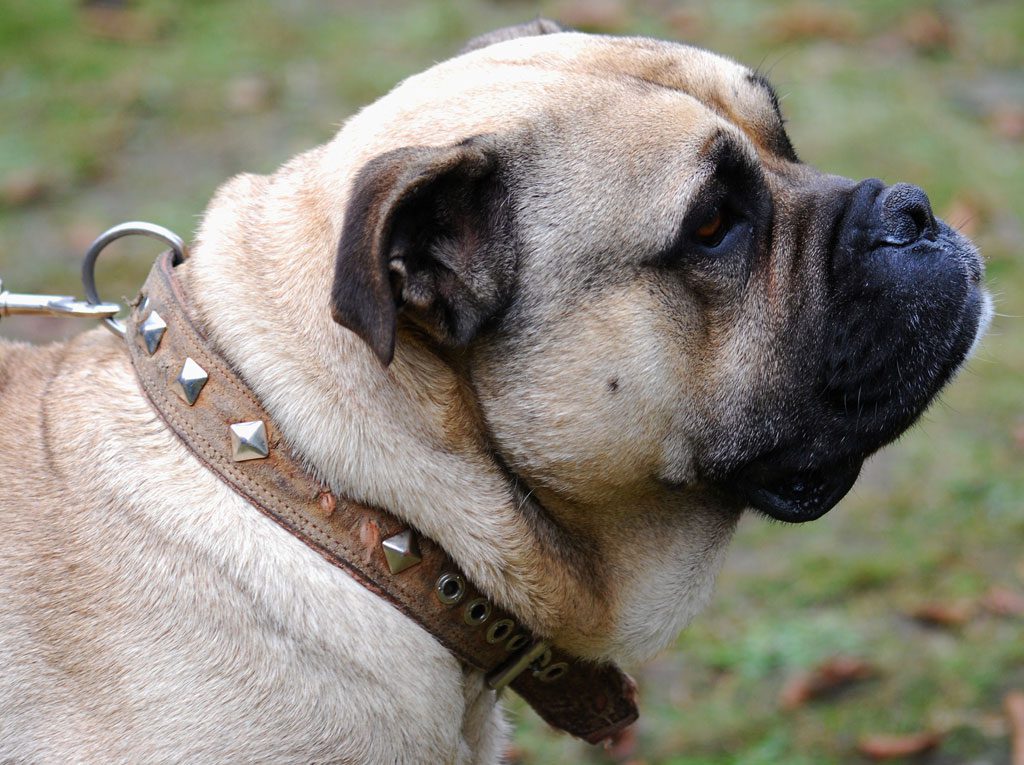
The Ca de Bou It is a very rare breed outside their homeland.

Dogo Mallorquín

The Ca de Bou (also called Majorcan Bulldog) It is a breed of dog native of Mallorca. The molosser is closely related with the Dogo Canario.

In the Book of Spanish Origins of the year 1923, longer the Ca de Bou as a breed of dog. In 1928 Enroll to the first copy and the year 1929 the Ca de Bou was winner at the Barcelona dog show exhibition.

Read all about the race, by clicking on: Majorca Mastiff

  • Otros nombres: Presa mallorquín / Ca de Bou / Mallorquin Mastiff / Mallorquin Bulldog / Majorca Mastiff / Majorcan Bulldog / Majorca-dogge.
  • Group 2 / Section 2 – Molosoides and mountain dogs.

Dogs breeds: Ca de Bou

▷ The world of Pets: Dogs, cats, birds, reptiles, amphibians

Guatemalan Dogo
Guatemala Not recognized by the FCI

The Guatemalan Dogo It is a variant of the Doge race, a native of Guatemala. It's a watchdog.

Dogo Guatemalteco

Content

History

From the age 1990, the Guatemalan Canophila Association began the study of this breed so that the Federation Cynologique Internationale (FCI) grant worldwide recognition for the breeding of pedigree dogs, the only one in this region. In charge of studying the race to set their standard, approval and international recognition through the FCI is the veterinarian and zootechnician Arturo Chavez.

The Guatemalan Dogo is the product of random crosses between races Bull Terrier English, Dalmatian and Boxer. Records of its existence date from 1890, Well there are images of a Guatemalan Dogo in a collection of 12 photos of the day, property of Arturo Gallusser. It is also known that the family Gerardi, in 1910, I had some copies of these dogs, but it is unknown the offspring of the same.

Physical characteristics

"Guatemalan Dogo"

Dogo Guatemalteco
Dogo/Bull Terrier Guatemalteco: Owner Owner Oscar E. Lorenzana Gallusser – Oscar E. Lorenzana Gallusser, Public domain, via Wikimedia Commons

It is a dog that stands out for being a good watchdog, It is medium sized and somewhat longer than high, so it does not have a completely square appearance. His head is quite square and his lips are slightly; His jaw is quite strong and he has a scissor bite..

The weight males will of 40 to 45 kg and females in 35 to 40 kg. The height in the males is of 54 to 60 cm and the females of 52 to 58 cm..

The life expectancy of the Guatemalan Dogo, is of, approximately, 11 to 12 years.

Its color predominant is very bright white with some black or brown spots. The fur is short, rough, thick and quite attached to the body.

Character and skills

It is good guardian it ladra to strangers, but believes it only when necessary. You can get along with others but it creates a bond with his master, thus making it an excellent companion dog.

A bath is recommended only when necessary or it can be cleaned with a damp tissue to remove hair that has fallen or when it has become dirty. Socialization at an early age will be required with the people. Will also be made if you have other pets to be in the future not to fight with them, and that's not a totally aggressive dog.

Daily activities such as walks next to its owner is needed to not bored, since it is an energetic dog and can become destructive and stressed by not using the energy it possesses.

▷ The world of Pets: Dogs, cats, birds, reptiles, amphibians

South African mastiff
Sudáfrica Not recognized by the FCI

boerboel

The South African mastiff he is known for his bravery, his intelligence and his great resistance.

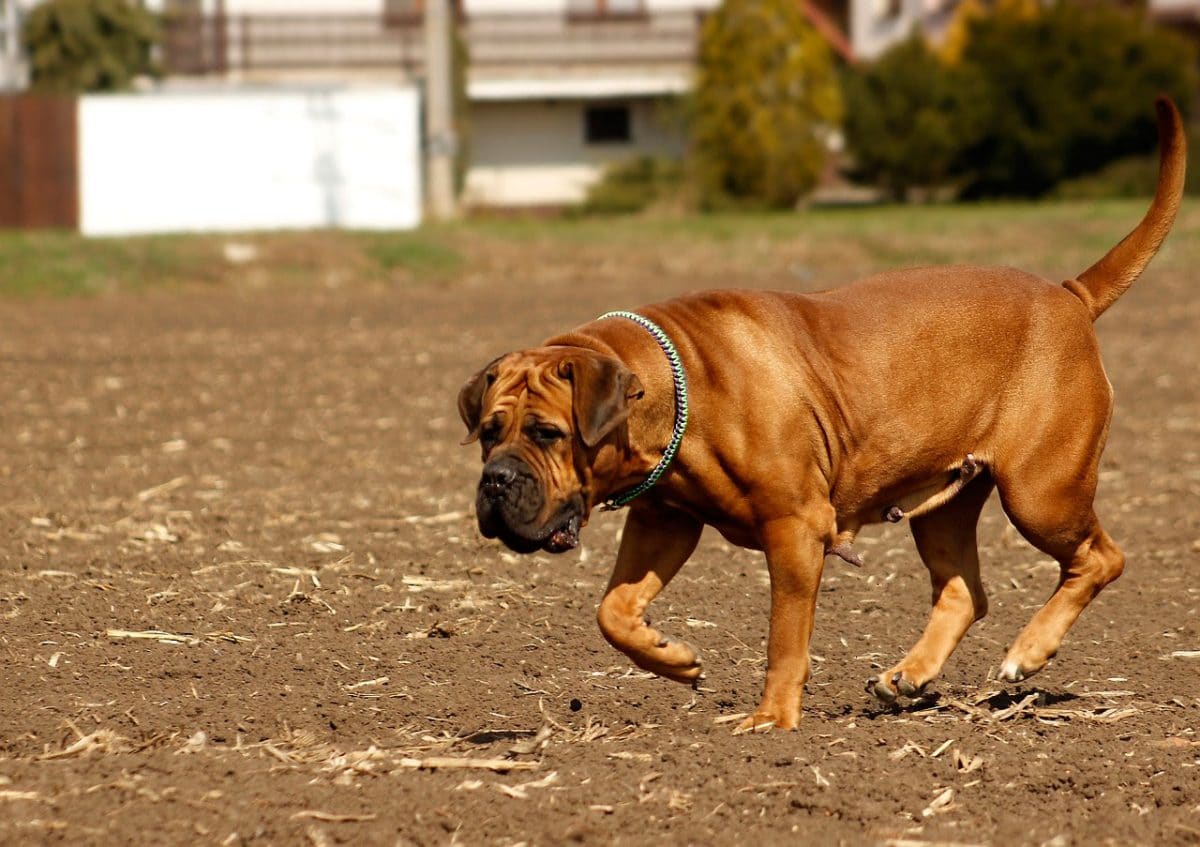
The South African mastiff (or Boerboel) It is a dog breed of molosser South Africa, comes mainly from the junction between the Bullmastiff, the Great Dane and the now extinct, Bullenbeisser.

This is a very suitable for the guard race, self defense and heavy work. Early examples date back to the year 1600.

Alternative names: Boerboel / African Boerboel / South African Mastiff / Burbul

Dogs breeds: Boerboel

Read all about the race by clicking on: Boerboel.

▷ The world of Pets: Dogs, cats, birds, reptiles, amphibians

Chin
FCI 206 . Japan Chin and Pekingese

Chin Japonés

The true origin of the Chin It is still controversial, Although a general consensus, concludes that you originated in China.

These dogs were brought to Japan around year 732. Some maintain the ancestors of these dogs first arrived to Japan around the year 732, as a gift from royalty Korea, while others argue that you copies of Japanese Chin were offered as gifts to the Empress of Japan in the mid-6th century, other theories assure that they arrived in Japan in the year 1000.

But beyond all the controversy regarding the origin, all agree on one thing, the Japanese Chin, He is a real "Japanese", because it reflects the Japanese sensitivity to detail.

The Japanese established various breeds of dogs, with a defined purpose that was work, that Japan considered something different, different from a «dog«, He was considered a work on farm animal, for hunting, to care for cattle, etc., but the Japanese Chin, it was something very special because it was strictly considered a companion dog.

His appearance and distinctive personality was quickly captured the hearts of the Japanese and that led to ownership of these dogs to be limited to persons of Royal and noble blood.

Due, every noble House was raising its own standard, reason why there are many variations of the Japanese Chin, in terms of size, the density of the layer, the eyes, the personality…

Once the race was introduced in the West, a strong desire of the people by the smaller copies (those who weighed a maximum 4,5 Kg.), He carried that size was the most popular and became the official standard of various canine clubs around the world.

Professor Von Ludvic Schulmuth studied canine origins from a discovery of skeletal remains of dogs found in human settlements dating back to the eighth millennium BC., in the Gobi desert. On the basis of the information collected, he created a genealogical tree of Tibetan dogs which gathered very interesting information concerning the origin of certain breeds that are today very popular.

The Gobi desert is a large desert region located between northern China and the South of Mongolia. Can be one of the deserts, or desert areas largest and most important worldwide. Around it the Altai Mountains and the steppes of Mongolia in the North, The Tibet Plateau and the planning of northern China by the southwest. The word gobi means "desert".’ in Mongolian. The Gobi is composed of different geographic and ecological regions, based on its variations of climate and topography.

Historically, the Gobi desert He is noted for being part of the Mongol Empire and the location of several important cities along the Silk Road.

Occupying the 30% of the national territory, great Gobi Mongolia covers capricious montes, sandy dunes, vast plateaus, steppes with its aromatic herbs and, Since then, a varied animal world, within the canine ancestors found Professor Ludvic Von Schulmuth.

Ludvic von Schulmuth defined as origin of certain dog breeds a former denizen dog of the Gobi desert, whose remains were found in places where stored manure or litter, and called them "Gobi Desert Kitchen Midden Dog", Several lines arose from this animal that gave rise to various breeds.. These may include, a small dog with soft hair and floppy ears that was the ancestor of Tibetan Spaniel, the Japanese Chin, and the Pekinese. Another branch that descends from the "Gobi Desert Kitchen Midden Dog" gave rise to the Continental Toy Spaniel and to the Chihuahua longhair. Y, another branch of the same dog of the Gobi desert, gave rise to the emergence of the Pug and Shih Tzu.

There is also some documentation that indicates Portuguese sailors introduced the breed to Europe in the century 17 through the gift of some to Catherine of Braganza, Queen Consort of King Charles II of England, but there is more evidence that the first Japanese Chin opened steps after borders, It was a gift of the Emperor of Japan offered a U.S. Navy officer, Matthew C. Perry, When he visited East in 1853 to open bilateral trade. The naval officer, took a litter of seven Japanese Chin, and to reach their land only survived two, and to whom he gave them is something that is still not known for sure.

What we do have full certainty is that the Japanese chin, also known as the Spaniel Japanese has been the dog of Japanese royalty.

According to the classification made by Stanley Coren after analyzing the responses of more than 200 the AKC judges ("The Intelligence of Dogs", Stanley city, Ediciones B, 1995), Japanese chin is the nº 62 from the list.

The Japanese Chin ladra only when it is necessary for the purpose of alerting the family of the arrival of a visitor or something out of the ordinary, then is a quiet breed.

It's a very special race, they have very feline attitudes, is more, is said to have the character of a cat, and you will see why...

The Japanese Chin is warning, intelligent and independent, and it uses its feet to wash and dry your face. Other feline features are your preferences for the rest in elevated surfaces, as the backups of the sofa and chairs. He has a spectacular ability to walk across a tea table without knocking over any objects., If that doesn't make it a cat total!!!

These dogs were bred and trained for the purpose of loving his people. Although it is usually a quiet dog, He also known for the amount of mischief that make, Welcome to all, like the so-called "Spin Chin", they go around quickly in a circle as if they were dancing but resting only on their hind legs, While with their Forelegs dejan them interwoven and shaking them up top down at full speed, they are very funny.

Some usually "sing", They produce a noise that can range from a minimal trill to a high pitch and quite low-pitched for their size., almost operatic quality that sounds like “booooooo”. On race Basenji in the right column you can see a video of the dog singing, It is very similar to what makes the Japanese Chin.

This small dog of friendly aspect, It has an appearance very similar to the Peking, But unlike, its legs are longer, and the color of the fur is different; It may be black and white or red and white. The fur is soft and long; the large, dark eyes, well separated from each other; the tail, well endowed with hair, relies on the back; the ears are triangular in shape and small size; the snout is short and flattened, and large heads relative to their body.

The orbits of the eyes of large contribute to moisture in the face and the folds of skin around the crushed nose and facial area, You can trap moisture and cause fungus problems. The face should be cleaned from time to time with a damp cloth and the folds, with a cotton swab.

The diet is an important factor in the health and status of the Japanese Chin, many specimens may be allergic to corn, for example.

Due to their small size they don't need too much exercise, although yes, requires frequent walks, because they are active and love to be outdoors. They adapt well to life in a Department or small homes. On the other hand, their fur should brush your daily, as it is often about getting caught.

The Japanese Chin is a long-lived, to round the 15 years, but in many cases can be extended to more or less the 18 years of age.

They weigh between 1,8 and 3,3 kand and measured at the cross, of 21 to 25 cm.. The litter is usually fairly small, of between 3 and 4 Puppies.

Japanese chin is an excellent company dog, It is affectionate and loyal to his owner and, normally, happy to see other people, though some mistrust strangers. It is a dog who prefers the family environment, but they adapt very well in new situations and are often used as therapy dogs due to this trait and their love of people.. Socialization at an early age contributes to his temperament of develop optimally, is an emotionally balanced dog, by nature, but it is important to contribute.

Chin

▷ The world of Pets: Dogs, cats, birds, reptiles, amphibians

Pit bull
Estados Unidos Not recognized by the FCI

Pit Bull Terrier Americano

The Pit bull in Spain it is considered potentially dangerous race.

The Pit bull (American Pit Bull Terrier) is a pure breed of dog, originally from United States, It was forged from dogs imported from United Kingdom. Were used as fighting dogs until they were banned in 1976; they are now bred as pets and athletes in legal sports (Although it is still the favorite breed, dog fighting carried out clandestinely).

Read all about the race by clicking on: American Pit Bull Terrier.

  • Otros nombres: American Pitbull Terrier / APBT / Pit / Pitty

Recognized by:

  • United Kennel Club (UKC).

▷ The world of Pets: Dogs, cats, birds, reptiles, amphibians

Longdog
Irlanda Not recognized by the FCI

Longdog

Content

History

The Longdog It is a breed of dog of the sighthound type with origin in Ireland whose name literally means "long dog”referring to the elongated shape of its limbs.

Authors like the colonel Ted Walsh define it as a cross between two hunting dogs, What distinguishes it from the call Lurcher, race created from crosses between sighthound dogs and working dogs.

Currently no distinction is considered between the Lurcher and the Longdog and both are included within the Lurcher.

Physical characteristics

Because of that are the product of different crosses, the Longdog varies in appearance depending on the breeds that were used in the cross. They can be so light as a Greyhound or as robust as a Wolf dog. Their coats can also vary depending on the playback. Some have short fur, Some have long fur and some have hard coat.

Common crosses of Longdog usually: Saluki with English Greyhound, Scottish Deerhound with Greyhound (English Greyhound), and Whippet with Greyhound (English Greyhound). These dogs tend to be raised to (some of the) same purposes as the Lurcher, but they generally have a higher speed compared to general endurance and a higher training capacity than the Lurcher.

Each of these crosses carries distinctive characteristics...

  • Saluki crossed with Greyhound: It is especially appreciated as a Hunter dog of hares in the United Kingdom and, for short time, in United States. The best copies shared resistance to high temperatures which possesses the Saluki and the capacity for acceleration and strength of the Greyhound.
  • Deerhound crossed with Greyhound: specialist in hunting foxes and deer in United Kingdom, It has great body resistance and the ability to adapt without problems to different climatic characteristics., You can live outdoors. In United States, the blood of this can, He has contributed to the development of the American Hound (specialists in the pursuit of coyotes).
  • Whippet crossed with Greyhound: highly appreciated by its balance is, Acceleration, agility, tenacity, heat resistance and, especially, by his rapid recovery. Depending on each dog, It can be used successfully in all kinds of hunting, but in the United Kingdom, stand out, especially in hunting rabbits.

The Lurcher (first cousins ​​of the Longdog) they were initially raised to catch rabbits when they were expelled from their burrows, but in the Decade of 1950, myxomatosis killed off most of the rabbits.

The myxomatosis, It is an infectious disease of rabbits, swellings on the skin and membranes of these animals, particularly in head and genitals. It is then often evolve into acute conjunctivitis, and sometimes blindness. The rabbit becomes listless, lost appetite and develops fever. In typical cases where the animal does not have resistance, death happens on average in 13 days.

Video "Longdog"

Queen, dont stop me now, mix coursing longdogs

It was discovered in Uruguay at the end of the 19th century, in rabbits imported from the genus Sylvilagus. It was subsequently extended by the South American populations of wild rabbits. This was however a less virulent strain than introduced in Australia in 1950, that he slashed the population (of 600 to 100 million in two years).

For decades Britain's scientists, Germany and France sought a remedy against the plague that rabbits had become, but it was the French physician Armand Delille which believed the solution. It was introduced artificially in France in 1952 a few rabbits inoculated with the virus producer the myxomatosis and quickly spread to the European continent in a natural way, through arthropod blood sucking and decimated the French population in 2 years (90% mortality). The myxomatosis, together with viral hemorrhagic pneumonia, is the cause of the decline of the rabbit in the Iberian Peninsula, What has caused the decline of the iconic animals to the point that in the Spanish imperial Eagle were lost the 70 % nests and the Iberian lynx is found without their basic livelihood.

The mode of transmission is the flea and other sucking arthropods of blood in Europe, Although for example, in Australia is transmitted through mosquito.

There is a viral vector vaccine for domestic rabbits, While in wild specimens Europe have developed immunity and gradually extend.

As we said above, in the decade of 1950, myxomatosis killed off most of the rabbits, but the disease did not affect the hares.

Y, This led to the need to develop the race to achieve faster dogs to be able to catch hares. A Hare can run at speeds of up 72 km/h.

The need for, he is born Longdog, developed to get a dog appropriate to the preferred style of hunting and the need of the moment.

Y, Although they are not a pure breed, you cross them with him Greyhound (English Greyhound) purebred, has led them to be highly valued within the "elite" of canine sport.

Because the Longdog it is not a purebred are not recognized by any dog ​​club. But, North America has recently created the “Lurcher and Longdog Association” to serve as a registration body for dogs Lurcher and Longdog in the United States and Canada.

Character and skills

Similar to the Lurcher, beyond the different objectives of the crossing, What is certain is that the Longdog It is an excellent companion dog that adapts very well to home life., and is very grateful for the care received, She loves to be with people but it needs vigorous walks outdoors, like all dog. Y, above all, very large spaces to savor the aftertaste of freedom.

▷ The world of Pets: Dogs, cats, birds, reptiles, amphibians

Lurcher
Inglaterra Irlanda Not recognized by the FCI

Content

History

The Lurcher is a Podenco type dog of English origin whose name derives from «lur» what does thief mean in gypsy language. Always it has been acknowledged as the dog of the poachers so occasionally is called Poacher’s Dog (dog of fugitive).

As a result of its appearance (hairy and scruffy) It is not admitted in competitions but for many it is a dog to enhance. In general, it can be said that the Lurcher is a cross between a Sighthound and working dog, What gives rise to many opportunities: English Greyhound and Golden Retriever; Whippet and Border Collie.

Physical characteristics

The Lurcher It is a hybrid dog similar to a Greyhound with short fur, medium long or long or straight hair in all colors.

The type of layer will be variable and will depend on the crosses made. Then, the types of fur can be: short and smooth like the Sighthounds, a bit long and thick as of the Boxer, or rough and hard as the of the Border Terrier, for example.

Character and skills

In case you want a Lurcher with more features than Sighthound what of working dog it is usually crossed for the second time with a dog Greyhound type. With this you get a dog faster than a working dog, but with the strength of this. The character of Lurcher is derived from the best of its parents and, some, They define it as quiet and affectionate.

The temperament, also variable, It will depend on the influence of ancestors, but as with all dogs, temperament will be modified by the socialization of the puppy and received education.

In general, the objective of the different crossing was to create a hound with more intelligence, an animal cunning and appropriate for the original purpose of the hound: hunting poaching rabbits, hares and birds. With the time, have gone underway several crossing, always pursuing the objective of improving the speed and intelligence.

The Lurcher he is a versatile dog, It has various uses that depend on the different crossing to which have been subjected, but they are usually used as hunting dogs with different styles. most of Lurcher today it is used for general pest control, Rabbit, hares and foxes, although some of the larger types have been successfully used for hunting large game such as wild boar and deer.

Insisting on the use of the can has much to do with the objective of the Hunter and the cross from which is derived, It is good to take this post to remind you that unfortunately, some breeders - no ethical- in the search for the "perfect dog" they usually kill or abandon everything Lurcher that does not fit your needs, because he is not a good hunter or has a physical or behavioral problem.

The Lurcher, It has also proved to be very good in canine sports, such as obedience and agility, where they are becoming increasingly popular due to its speed and willingness to please.

Because the Lurcher is not a pure breed they are not recognized by any canine club. But, North America has recently created the “Lurcher and Longdog Association” to serve as a registration body for dogs Lurcher and Longdog in the United States and Canada.

Beyond the different objectives of the crossing, What is certain is that the Lurcher It is an excellent companion dog that adapts very well to home life., and it is very grateful to received love, She loves to be with people but it needs vigorous walks outdoors, like all dog.

▷ The world of Pets: Dogs, cats, birds, reptiles, amphibians

Mastiff danés
Dinamarca FCI 315 - Molossoid - Dogo

Mastín Danés

The Mastiff danés is calm, with good temperament and friendly.

The Mastiff danés (or Broholmer) It is a breed of molosser type dog, originally from Denmark.

It is a dog of Doge of large size type, rectangular and strong Constitution; its motion is regular and energetic. His appearance is dominated by the powerful forelimbs.

The head is broad and solid; strong neck with some loose skin, and the chest wide and deep.

Otros nombres: Danish mastiff / Broholmer.

Crupo 2 / Section 2 – molosoids and mountain dogs.

Dogs breeds: Mastiff danés

Read all about the race by clicking on: Broholmer.