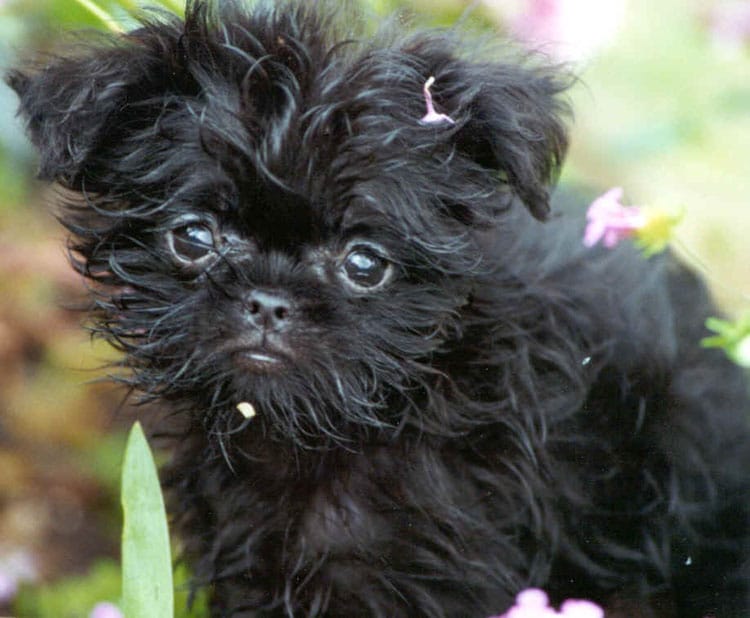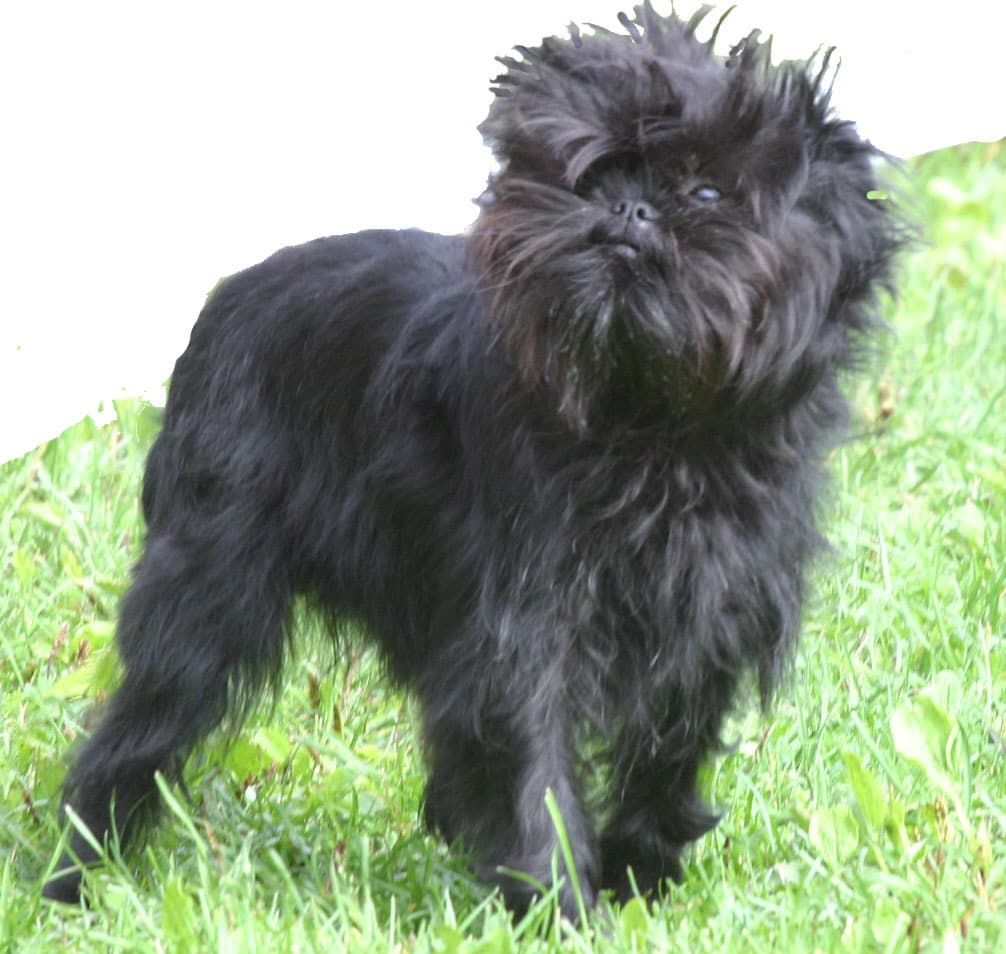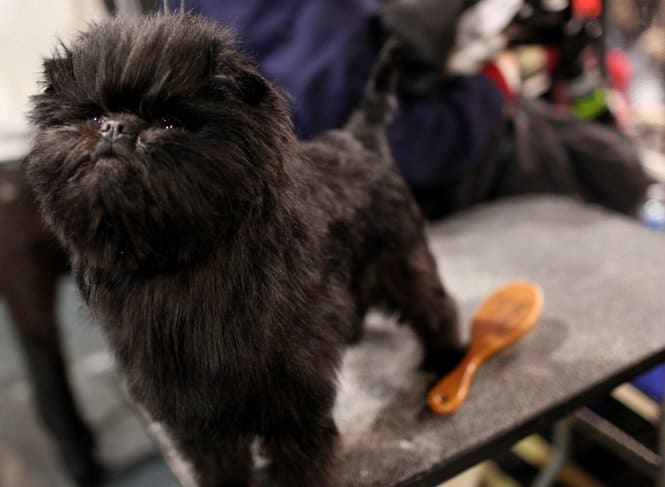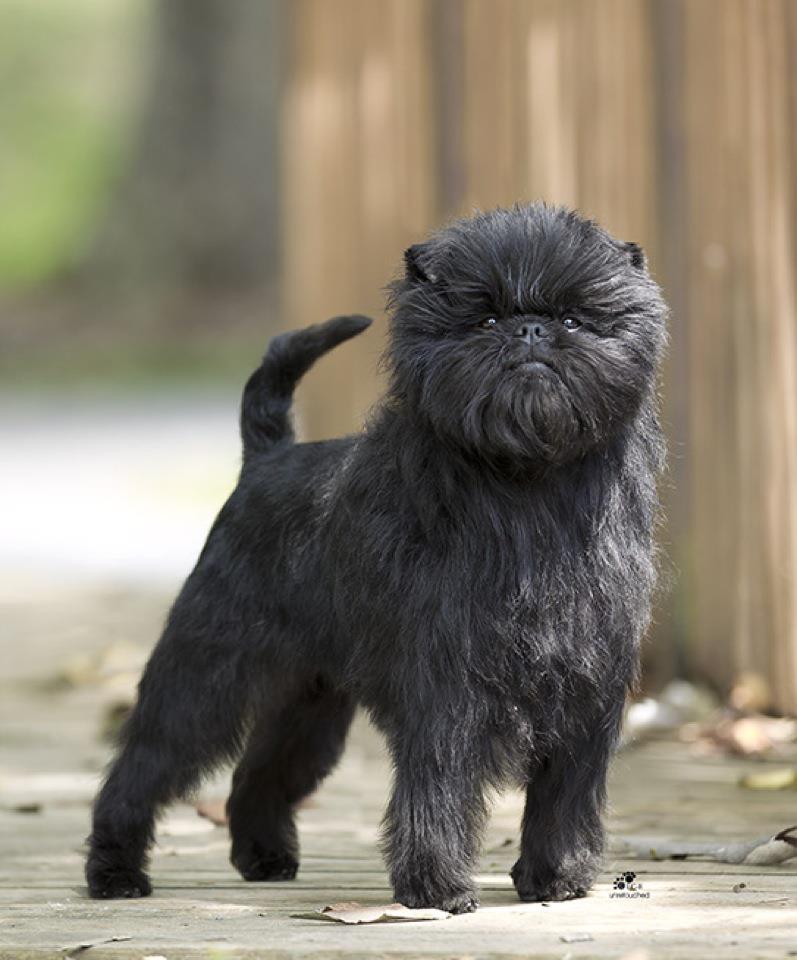
โ–ท The world of Pets: Dogs, cats, birds, reptiles, amphibians

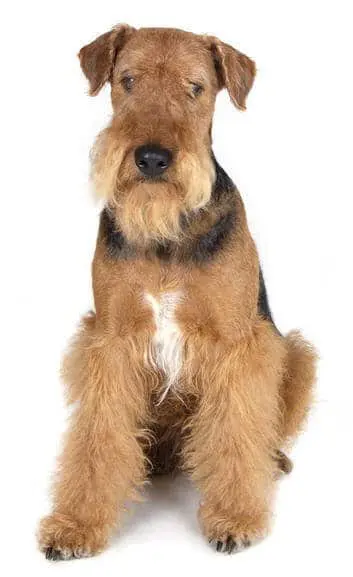
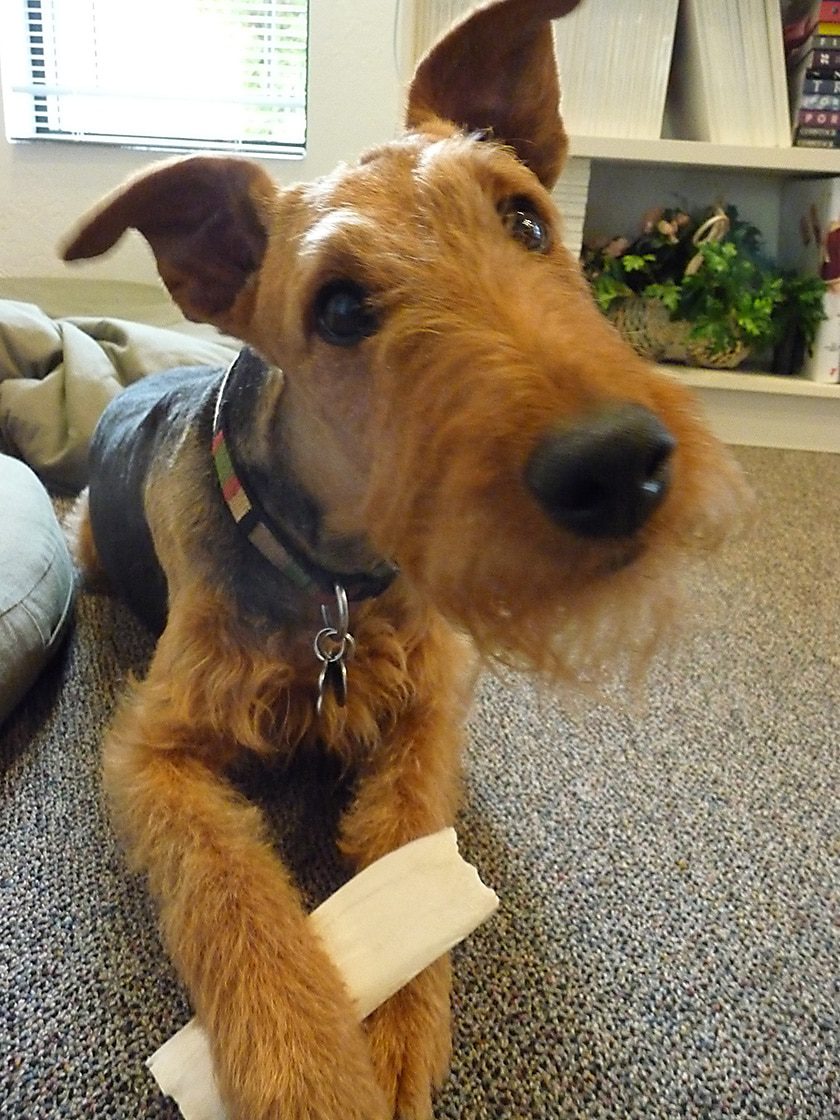
Airedale Terrier
Inglaterra FCI 7 - Large and medium-sized Terrier

Intelligent, fell, quiet and an unconditional companion. in Canada, the Airedale Terrier, used for hunting large bears and deer.

Airedale Terrier

Content

Characteristics "Airedale Terrier"

Coexistence is important that you have with your new friend. Before considering the acquisition of a dog of the breed "Airedale Terrier" you know certain factors. Not all breeds of dogs are apt to live in an apartment, you must take into account his character, their need for exercise, their interaction with other pets, their care and if you have small children, their level of tolerance towards them.

Adaptation โ“˜

5,0 of 5 stars (based on 1 review)

friendly dog โ€‹โ€‹โ“˜

1,0 of 5 stars (based on 1 review)

hair loss โ“˜

3,0 of 5 stars (based on 1 review)

Affection level โ“˜

4,0 of 5 stars (based on 1 review)

Need for exercise โ“˜

4,0 of 5 stars (based on 1 review)

Social need โ“˜

4,0 of 5 stars (based on 1 review)

Home โ“˜

3,0 of 5 stars (based on 1 review)

Toilet โ“˜

4,0 of 5 stars (based on 1 review)

Friendly with strangers โ“˜

2,0 of 5 stars (based on 1 review)

barking โ“˜

3,0 of 5 stars (based on 1 review)

Health โ“˜

2,0 of 5 stars (based on 1 review)

Territorial โ“˜

5,0 of 5 stars (based on 1 review)

Cat friendly โ“˜

1,0 of 5 stars (based on 1 review)

Intelligence โ“˜

5,0 of 5 stars (based on 1 review)

Versatility โ“˜

4,0 of 5 stars (based on 1 review)

Child friendly โ“˜

4,0 of 5 stars (based on 1 review)

Surveillance โ“˜

5,0 of 5 stars (based on 1 review)

joy โ“˜

5,0 of 5 stars (based on 1 review)

History of the Airedale Terrier

This King of the Terriers is a breed of large, strong dogs belonging to the group Terrier. It is of British origin, of the Yorkshire region. It is believed that he descended from a cross between the Otterhound, otter hunter optimal, Terrier and the Old Espaรฑol. The breeding of these animals began in the mid-nineteenth century.

In the countries where it is most widespread, it has never managed to be a "fashionable" dog., so it has some protection from trade and indiscriminate breeding, factors that destroy the zootechnical characteristics of the vast majority of dog breeds.

His personality is cheerful, sometimes relied, insurance. It is almost always on alert but not aggressive, if not annoying or it urges.

Did you know??

The Airedale is the largest of the terrier breeds and was one of the first races trained for police work in Germany and Britain. In World War, he worked as a guard dog and messenger.

Physical characteristics Airedale Terrier

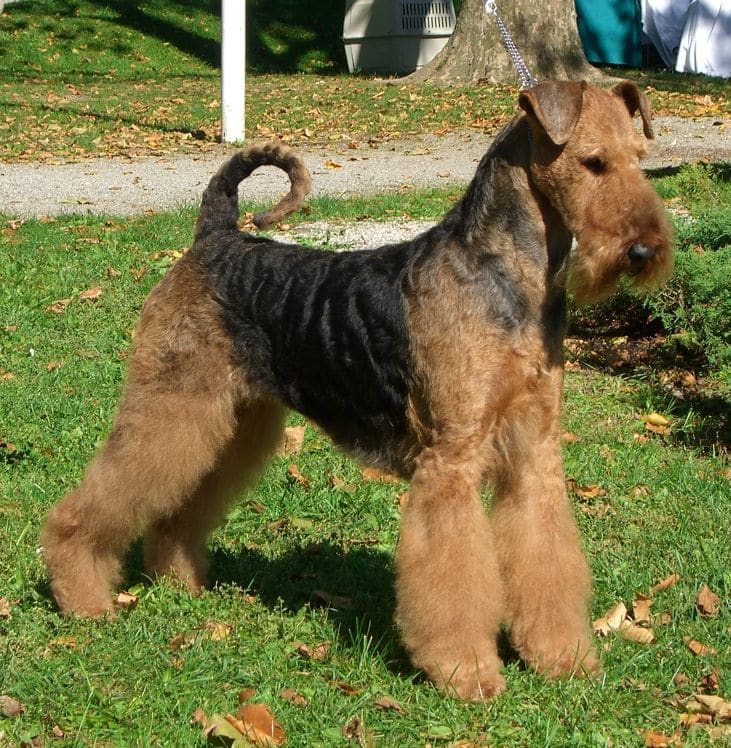
His teeth presents a quadrature and much strength to the of a Rottweiler, Despite having a thinner jaw. His coat is black and tan, varying its intensity but not the distribution, black or gray color extends to the upper neck, back, back, rump, while the flanks, thighs and belly have a mixed shade of gray hairs and golden, the rest of the body, is tan or sand in different shades.

Is from the Terriers bigger, muscular and active. His character shines through the lively and alert expression of her eyes, the way that carries its tail erect and ears. He has a lump between 59 and 61 cm in males with an average weight of 25 kg. The females among 56 and 59 cm and weighing approximately 20 kg. The eyes should never be prominent but small, dark and at an angle, with a typical expression Terrier, alert and intelligent. The ears are V-shaped, sometimes lighter or darker than the skull. Like other Terrier, traditionally a third of the tail was amputated a few days after birth. But, this practice has recently been banned in some countries.

It has a long, flat skull. Is well proportioned to the body. The well modeled muzzle should not have a concave or stop shape that descends abruptly below the line of the eyes.. The skin should be smooth, firm and tight. The upper and lower jaws are large, powerful and strong, but should not excess development. Scissor bite, that is to say, the inside of the upper incisors in contact with the outside of the lower incisors preferably set square to the jaws; but if you accept the bite in pincer. The lips are firm and black muzzle.

Airedale Terrier character and skills

It is an intelligent dog, fell, quiet, a stalwart companion who enjoys going for walks and responds to basic training of simple commands with no problem.

In Canada They are used for hunting bear and deer.

They have problems with ears that require continuous observation and a lot of hygiene. They may also have skin problems, known as hot patch.

Breeders list "Airedale Terrier"

In Spain we have not been able to contact any ยซAiredale Terrierยป breeder.. There are very few international breeders who maintain this wonderful breed that was on the verge of extinction..

REGISTER KENNEL

Airedale Terrier breeders

Offer your puppies for free. Sign up here.

  • This field is a validation field and should be left unchanged.
  • Enter an image of your kennel.

Airedale Terrier images

Airedale Terrier Videos

Dogs 101 Airedale Terrier

Type and recognitions:

  • FCI CLASSIFICATION:
  • Group :
  • Section : . .

Federations:

  • FCI – Terriers 1 Large and medium-sized terriers. โ“˜
  • AKC – Dogs working โ“˜
  • ANKC – Group 6 (utility dogs) โ“˜
  • CKC – Miscellaneous list โ“˜
  • โ€‹KC – Working dogs โ“˜
  • NZKC – Utility dog โ“˜
  • UKC – Watchdog โ“˜

FCI breed standard "Airedale Terrier"

Origin:
United Kingdom

Date of publication of the valid original standard:
08.10.2012.

Use:

Terriers.


General appearance:

Airedale is the largest of the terriers; he is a muscular dog, Active, pretty compact; you must not have excessively long limbs or your body be disproportionate.


Behavior / temperament:

The dog must have a lively expression, agile movement and be aware of any movement. Its character is revealed by the expression of the eyes and by the size of the ears and its erect tail. Outgoing and confident, friendly, brave and intelligent. Always alert, not aggressive but courageous.

Head:

Without wrinkles. Well proportioned, without any apparent difference between the length of the skull and muzzle.

Cranial region:
  • Skull: Long, plane, not very wide between the ears and tapers slightly towards eye level.
  • Depression links (stop): Stop little marked.

facial region:

  • Truffle: black.
  • Snout: Well modeled in front of the eyes; should not have a concave shape or a sharp drop below the eye line; should be delicately modeled so that it does not have a sphenoid or flat appearance.
  • Lips: Firms.
  • Jaws / Teeth: Large upper and lower jaws, powerful, strong and muscular, since a strong muzzle is highly desirable. The jaws should not be overdeveloped to give the cheeks a round or protruding appearance, since protruding masseters are not desirable. Strong teeth. Scissor bite, that is, the internal face of the upper incisors is in close contact with the external face of the lower incisors and preferably placed at right angles to the maxillae.; However, clamp bite accepted. Upper or lower prognathism are not desirable.
  • Cheeks: Smooth and not prominent. The โ€œcheekedโ€ dog is unwanted.
  • Eyes: dark colored, small, never prominent, with typical terrier expression, alert and intelligent. Clear, expressionless eyes are highly undesirable.
  • Ears: V-shaped and carried to the sides, small but in proportion to the size of the dog. The upper line of the fold slightly above the height of the skull. Drop ears or set very high are undesirable.

Neck:

crisp, muscular, of moderate length and thickness. Gradually widens towards the back, and must not have a double chin.

Body:

  • Back: Short, strong, straight and level, that does not show looseness.
  • Pork loin: Muscular. In those dogs that have a short back as well as well-developed and well-placed ribs, there is little space between the lower ribs and the pelvis; when the back is long, there will be some slack in this area.
  • Breast : Deep (that is to say, almost at elbow level), but not wide. Well arched ribs.

Tail:

Previously the custom was to amputate the tail.
  • amputee: High insertion and erect bearing, not curved on the back. With good potency and substance. The tip at approximately the same height as the top of the skull.
  • Without amputating: High insertion and erect bearing. With good potency and substance.


Tips

PREVIOUS MEMBERS:

  • Hormbros: Long, well tilted back obliquely. Flat Shoulders.
  • Elbows: Located on the axis of the body; free movement.
  • Antarms: Perfectly straight and very bony.
  • Pinis previous: Small, round and compact, large and thick pads, and with moderately arched fingers, without turning in or out.

LATER MEMBERS:

  • Thigh: Long and strong.
  • Rodinllto: Well angled, neither turned in nor out.Leg: Muscled.
  • Metatarsus: Holes well lowered; seen from behind they must appear parallel.
  • Pinis later: Small, round and compact, large and thick pads, and with moderately arched fingers, without turning in or out.

Movement:

Previous members must take them forward, in free movement parallel to the sides. Moving closer, the front members must constitute a continuation of the straight line of the front, keeping the feet as far apart from each other as the elbows. Subsequent members must provide a strong driving power.

Mantle

Plink: Lasted, bushy and wire, not too long to give the appearance of tattered. Rigid and compact, covers the body and limbs. The outer layer is made up of hard and rigid hair.; the undercoat is made of shorter and softer hair.

Hard coat may be rough or slightly wavy; curly or soft hair is highly undesirable.

Colorr: With black or dark gray frame, like the top of the neck and the dorsal surface of the tail. All other fire colored parts. The ears are often darker in fire color, and there may be a shaded color around the neck and sides of the skull. A few white hairs are accepted on the sill.


Size and weight:

Alturto the cross: Approximate height:

  • Males between 58 and 61 cm..
  • Females between 56 and 59 cm..


Fouls:

Any deviation from the aforementioned criteria is considered as a fault and the severity of this is considered to the degree of the deviation to the standard and its consequences on the health and well-being of the dog..

FALTAS DISQUALIFYING:

  • Aggressiveness or extreme shyness.
  • Any dog โ€‹โ€‹showing clear signs of physical or behavioral abnormalities must be disqualified..


N.B.:
  • Males should have two normal-appearing testicles fully descended into the scrotum..
  • Only functionally and clinically healthy dogs, with the typical conformation of the breed, should be used for parenting.

TRADUCCION: Brigida Nestler/ Original version: (IN)

SupTechnical ervision: Miguel Angel Martinez

Source: F.C.I - International Cynological Federation

Alternative names:

1. Airedale Terrier, Waterside Terrier, Bingley Terrier, AIREDALE, King of Terriers (English).
2. Airedale Terrier, Waterside Terrier, Bingley Terrier, Working Terrier, Warfedale Terrier (French).
3. Waterside Terrier, Terrier, Bingley Terrier (German).
4. Airedale terrier, O rei dos terriers, Waterside Terrier (Portuguese).
5. Airedale terrier, Rey de los Terriers (espaรฑol).

โ–ท The world of Pets: Dogs, cats, birds, reptiles, amphibians

American Staffordshire Terrier
Estados Unidos FCI 286 - Bull type Terriers

The American Staffordshire Terrier they are brave, tenacious, friendly, extremely attentive

American Staffordshire Terrier

Content

Characteristics "American Staffordshire Terrier"

Coexistence is important that you have with your new friend. Before considering the acquisition of a dog of the breed "American Staffordshire Terrier" you know certain factors. Not all breeds of dogs are apt to live in an apartment, you must take into account his character, their need for exercise, their interaction with other pets, their care and if you have small children, their level of tolerance towards them.

Adaptation โ“˜

3,0 of 5 stars (based on 1 review)

friendly dog โ€‹โ€‹โ“˜

1,0 of 5 stars (based on 1 review)

hair loss โ“˜

2,0 of 5 stars (based on 1 review)

Affection level โ“˜

5,0 of 5 stars (based on 1 review)

Need for exercise โ“˜

3,0 of 5 stars (based on 1 review)

Social need โ“˜

4,0 of 5 stars (based on 1 review)

Home โ“˜

2,0 of 5 stars (based on 1 review)

Toilet โ“˜

1,0 of 5 stars (based on 1 review)

Friendly with strangers โ“˜

4,0 of 5 stars (based on 1 review)

barking โ“˜

3,0 of 5 stars (based on 1 review)

Health โ“˜

3,0 of 5 stars (based on 1 review)

Territorial โ“˜

3,0 of 5 stars (based on 1 review)

Cat friendly โ“˜

1,0 of 5 stars (based on 1 review)

Intelligence โ“˜

4,0 of 5 stars (based on 1 review)

Versatility โ“˜

4,0 of 5 stars (based on 1 review)

Child friendly โ“˜

4,0 of 5 stars (based on 1 review)

Surveillance โ“˜

4,0 of 5 stars (based on 1 review)

joy โ“˜

3,0 of 5 stars (based on 1 review)

History

The American Staffordshire Terrier or Amstaff (different to the American Pitbull Terrier), is a breed of dog type Terrier well known worldwide.

It is a young breed of dog from the USA.. Among his ancestors are, Besides of Terrier, the Old english bulldog.

In England and North America, dog fighting had a tradition dating back to ancient times.. The Old english bulldog was sent to fight bulls in the arenas of animal fighting. Although Old english bulldog are the forerunners of Bulldogs of today, his physique was much more similar to the current one American Staffordshire Terrier. After animal fighting was officially banned, continued illegally; In the USA. until today. Its origin in the 19th century was the black county of central England, called Staffordshire. Workers from the coal mines and clay pits crossed the Old english bulldog with the terriers. In the official scene of the fight against animals such crosses had been prohibited. It was feared that the fighting power and toughness of the Bulldog will combine with the predatory acuity of the terriers, which would lead to uncontrollable fighting machines. In the illegality of the backyards nobody cared. This is how he was born ยซBull and Terrierยป and very quickly came to the US. There they liked to call them ยซPit Bullsยป. Pit is the name given to the dogfighting ring.

In 1898 The United Kennel Club was founded (UKC), who wanted to take over the breeding of these dogs. But the UKC was nothing more than a professional dogfighting organizer. So the community was divided around these dogs. Lovers of Pit Bull they condemned dog fighting, they wanted a friendly family dog. In the meantime, the Pit Bulls they had earned a great reputation in US society. In World War, the courage of Pit Bulls became a stimulus for the combat power of American troops. Even celebrities like the President of the United States Theodore Roosevelt showed up with the Pit Bulls.

On cinemas, "The Little Rascals", a gang of kids with a dog, was very popular and was featured in 220 episodes between 1922 and 1944. The dog was the guardian and protector, children's playmate and dildo. This dog was a Pitbull. He later became the first dog registered with the American Kennel Club (AKC) for the new raceStaffordshire terrierยซ. To draw a clear line at the fighting dog scene, the AKC had insisted on a name change. The first standard was published in 1936. In 1972 there was the second name change to ยซAmerican Staffordshire Terrierยป to distinguish it from its British relative. The Amstaff, what's been called since then, Is higher, bigger and heavier. It is still cared for by the American Staffordshire Terrier Club of America., who from the beginning clearly condemned dog fighting and trusted his upbringing as a family dog.

In many countries, Its social discrimination as a fighting machine and the technically unjustifiable classification as a "dangerous dog breed" have hit it hard..

Popular American Staffordshire Terrier Mixes

Mixtures of American Staffordshire Terrier seriously bred with other dog breeds or hybrids are quite rare. But, there is an abundance of hybrids of all kinds, that remind the Amstaff and are marketed as such or Pitbull. Here I should make a clear distinction. The American Staffordshire Terriers Serious breeding have nothing to do with the general mixes under which troublesome dogs can frolic. Unfortunately, there is a financially strong scene using such dogs as a weapon or to intimidate.

Physical characteristics

How is an American Staffordshire Terrier?

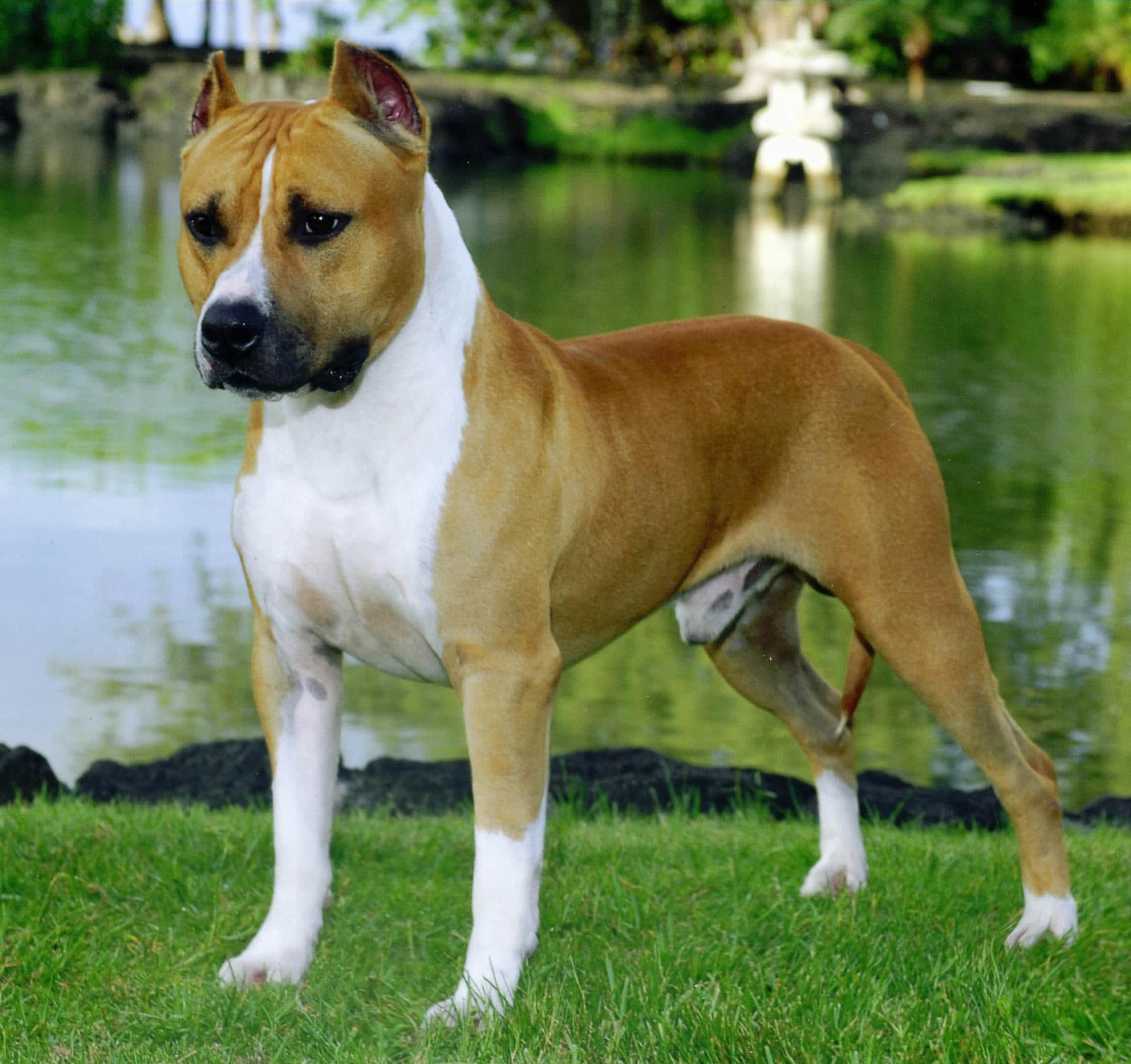
The American Staffordshire Terrier is a dog's size medium, Awesome, very strong and at the same time elegant. has short hair, dense and shiny that sits gently on the body. Emphasizes your muscular and sporty complexion. The standard says: ยซIt must be robust and compact, not of legs or of light constructionยป. Any color, solid, multicolor or speckled is allowed. The standard of the American Staffordshire Terrier is pleasantly different from many other dog breeds, which go into great detail on where hair color or crease is allowed. It is one of the few standards that consistently focus on the healthy dog.. This is emphasized by the "1st American Staffordshire Terrier Club":

We give top priority to performance and health. Beauty is considered desirable but secondary. The correct interpretation of the rule, that is free from crippling regulations, It is our obligation. Muscular, dry dogs with long bones, persistent and fast, are our breeding goal. We categorically reject supercharged โ€œmonstrositiesโ€, low with extremely high weights. We consider mental performance to be even more important. Nerve strength and impeccable character are an absolute requirement.

How big is an American Staffordshire Terrier??

El American Staffordshire Terrier mide entre 43 and 48 cm tall and weighs between 20 and 30 kg.

How long can an American Staffordshire Terrier live??

Because the breeding of the American Staffordshire Terrier is not oriented so much to external appearances as to aptitude and character, The American Staffordshire Terrier enjoys a fit constitution into old age and a relatively long life expectancy of about 12 years.

Character and skills

The American Staffordshire Terrier he is a relaxed dog. He is very vigilant and intelligent. It is enormously strong, brave and has great fighting strength potential. At the same time it is extremely adorable, loyal and affectionate, even dedicated to his humans. Is neutral with strangers. Is of good character and has an extraordinarily high threshold for irritation. Can hardly be provoked. As with the English Bulldog and other breeds of dogs that were used in the past in the arenas of animal fighting, these dogs have been given a particularly high level of control and stimulus threshold. It also, these dogs have been used in serious breeding for many generations exclusively as family and companion dogs. Unfortunately this has not protected the dogs from criminals. Especially in the decade of 1990, dogs like Amstaff became aggressive by irresponsible breeders and owners, Savagely crossed and abused like living weapons. the same politicians, who tolerated these illegal practices for a long time, they were then the first to start the discrimination, pointing to American Staffordshire Terrier like a dangerous race, something technically unfounded. Breeding can cause even chihuahuas or caniches toy become aggressive in a few generations. The breed of dogs American Staffordshire Terrier is the victim, not the author. Seriously raised, they make excellent family dogs and careful companions to children.

Caution, health and diseases

How much care does an American Staffordshire Terrier need??

The American Staffordshire Terrier it is absolutely easy to care. Brushing here and there is enough.

Are there any breed-typical diseases in the American Staffordshire Terrier?

The American Staffordshire Terrier enjoy robust health. Sporadically hip or knee problems.

What food is best for an American Stafford Terrier?

The American Staffordshire Terrier has no special dietary requirements. Of course high quality food is good for your health and proof. Like most dogs, he likes a meat bone now and then..

Activities

One American Staffordshire Terrier it is suitable for almost all activities that can be done with a dog.

Considerations before purchase

Where can you buy an American Staffordshire Terrier?

If you want to buy a American Staffordshire Terrier, you should consider that it is a dog from the list. Your whole life has to be prepared for the restrictions of the state and society. You should look at a reputable breeder affiliated with a club that meets the FCI standards. Please, only there and do not buy a puppy from a dubious source. There are many American Staffordshire Terrier and hybrids in refuges. Get tips for choosing your dog here. But, only with a serious breeding dog can you be reasonably certain that your Amstaff has the character qualities described here.

Education and attitude of the American Staffordshire Terrier

ยฟMe conviene un American Staffordshire Terrier?

The American Staffordshire Terrier is undemanding in his attitude. It is not a dog that only needs to walk around the block for a walk.. Want to exercise mentally and physically. Even with a puppy it should be clear who is in charge of the house. There should be no doubt about it. The Amstaff is a bright and occasionally playful four-legged friend who likes to roam the countryside. It is suitable for dog sports of all kinds. Sometimes it is also used as a rescue dog. Is a good guardian.

The American Staffordshire Terrier is widely on the lists of supposedly dangerous dogs. Travel to the Netherlands or Denmark is prohibited, because there is a risk that dogs will be confiscated on the street and euthanized. On the street you should expect people to harass you because of the dog. That is, Unfortunately, the social reality in Central Europe today.

The American Staffordshire Terrier needs consistent upbringing from puppyhood. Consistency means, especially with this physically very strong dog but at the same time sensitive and intelligent, that the master or caregiver should work on the basis of a deep relationship of trust. The dog wants the guidance of its owner. Find the nearby connection. This should be given with a calm hand, respectful and strong. Coercive measures are counterproductive, certain consequences are intentional. The American Staffordshire Terrier must socialize with other dogs at an early stage. Due to its strength and joy of working, it is not a dog for beginners.. Even experienced dog owners should consciously work with it and preferably attend a suitable dog school. Well mannered, don't just listen to the word, rather, he reads the wishes of his master and caregiver through their eyes.

American Staffordshire Terrier pictures

Vรญdeos American Staffordshire Terrier

American Staffordshire Terrier (AmStaff) AKSA playing at the pond
Type and recognitions:

  • FCI CLASSIFICATION:
  • Group :
  • Section : . .

Federations:

  • FCI – Group 3 – Section 3 Bull type Terriers. โ“˜
  • AKC – Terriers โ“˜
  • ANKC – Terriers โ“˜
  • CKC – Terriers โ“˜
  • NZKC – Terriers โ“˜

FCI breed standard "American Staffordshire Terrier"

Origin:
United States

Date of publication of the valid original standard:
03.09.1996.

Use:

---


General appearance:

You must give the impression of great strength, in relation to its size. This is a good solid and muscular dog, Although agile and elegant. He is always aware of what surrounds. His body should be collected, Neither lifted nor agalgado. Its value is noticeable.


Behavior / temperament:

---

Head:

Medium length, large, view from all sides.

Cranial region:
  • Craging: Large.
  • Dnaso-frontal depression (stop): Marked.

facial region:

  • Nariz: It's clearly black.
  • Horcico: Medium length, rounded on top. It descends in a sharp slope below the eyes.
  • Labios: They are joined by the edges and are not loose.
  • Jaws / Teeth: They are well defined. The lower jaw must be powerful, so I can hold tight. The upper incisors are in close contact with the anterior aspect of the lower incisors.
  • Cheeks: The cheek muscles are very prominent.
  • Ojors: They are round, dark colored. They are well sunken and well separated. There should be no depigmentation on the eyelids.
  • Obars: High implanted, may or may not be cropped. Ears not cropped are preferable, they must be short, carried in the shape of a rose or semi-erect. Completely hanging ears will be penalized.

Neck:

Heavy, slightly arched. Gradually tapering from shoulders to insertion into head. Is medium length, without jowl.

Body:

  • Lรญnand the top: The back is quite short. There is a slight slope from the withers to the rump, which slopes slightly to the beginning of the tail.
  • Itmor: Slightly arched.
  • Pecho: Very deep and wide. The ribs are tight, together and well developed back.

Tail:

It is short, compared to the size of the dog. Low-set, gradually taper to a fine point. It is not presented or curled, nor carried over the back. Nor should it be amputated.

Tips

PREVIOUS MEMBERS: They must be straight and strong boned. With good separation to allow a good development of the thorax.

  • Hormbros: Strong and muscular. The shoulder blades are broad and oblique.
  • Metacarpus: Plumb.

LATER MEMBERS: They are well muscled.

  • Corvejones: In low position and should not drift or inward, nor out.
  • PinIt: Medium-sized, well arched and compact.

Movement:

It is elastic, without sway or amble.

Mantle

  • Plink: Is short, tight, hard to the touch and lustrous.
  • Colorr: All colors are allowed, but the fur with more than 80% white, the black and tan fur and the liver should not be valued.


Size and weight:

There must be a proportionate correlation between size and weight. Desirable height at withers should be: 46 to 48 cm. (18 to 19 inches) in males and 43 to 46 cm. (17 to 18 inches) in females.


Fouls:

Any deviation from the aforementioned criteria is considered as a fault and the severity of this is considered to the degree of the deviation to the standard and its consequences on the health and well-being of the dog..

  • Depigmentation of the truffle in the form of white spots.
  • Upper or lower prognathism.
  • light eyes.
  • Lack of pigmentation on eyelids.
  • Tail that is too long or is worn improperly.

FALTAS DISQUALIFYING:

  • Aggressiveness or extreme shyness.
  • Any dog โ€‹โ€‹showing clear signs of physical or behavioral abnormalities must be disqualified..


N.B.:
  • Males should have two normal-appearing testicles fully descended into the scrotum..
  • Only functionally and clinically healthy dogs, with the typical conformation of the breed, should be used for parenting.

TRANSLATION: IRIS Carrillo (Puerto Rico Kennel Federation).

Source: F.C.I - International Cynological Federation

Alternative names:

1. AmStaff, American Staffy (English).
2. American terrier, staff, amstaff (French).
3. Amstaff (German).
4. AST, Staffordshire terrier americano, Amstaff (Portuguese).
5. AmStaff, AST (espaรฑol).

โ–ท The world of Pets: Dogs, cats, birds, reptiles, amphibians

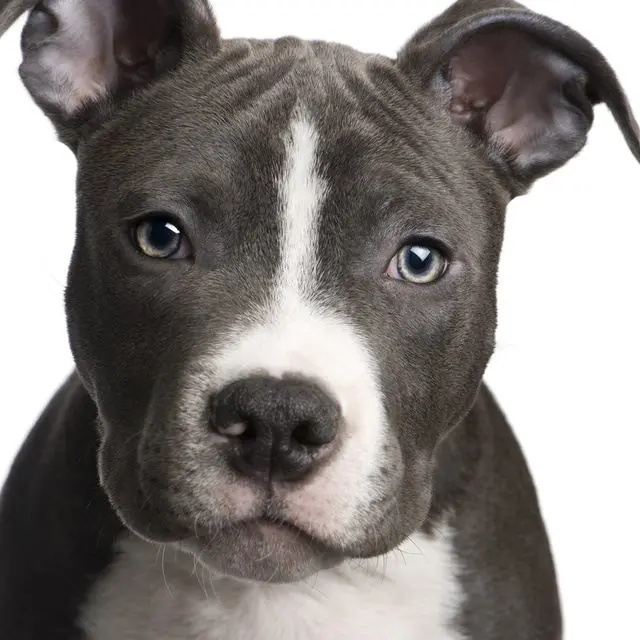
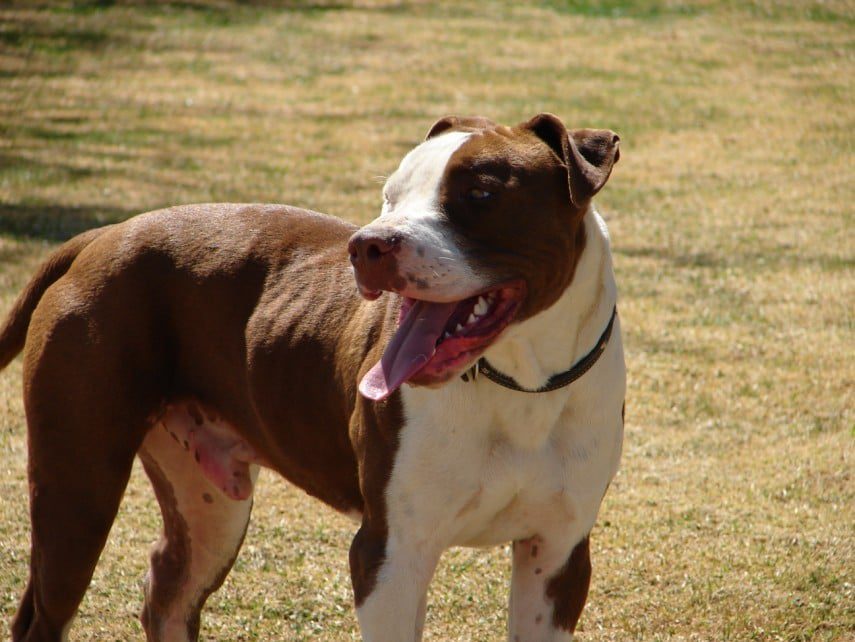
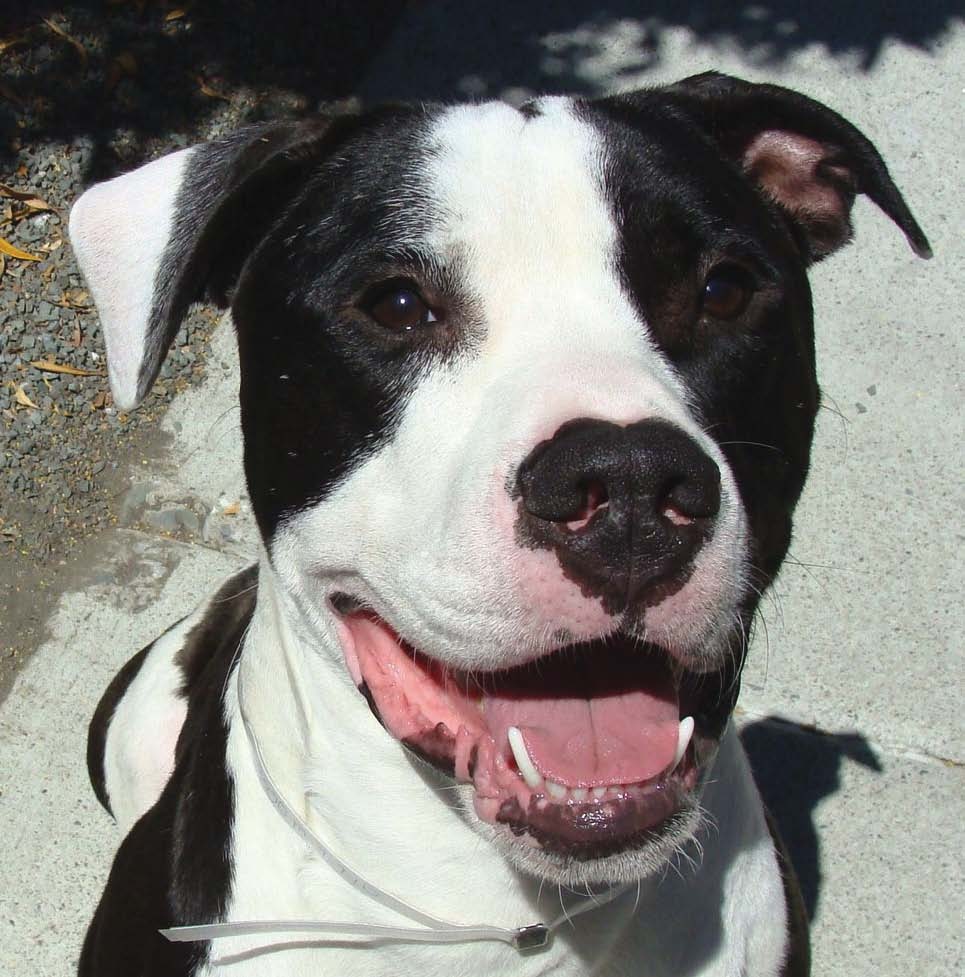
American Pitbull Terrier
Estados Unidos Not recognized by the FCI

American Pit Bull Terrier

The American Pit Bull Terrier suele ser de naturaleza amable, even with strangers.

Content

History


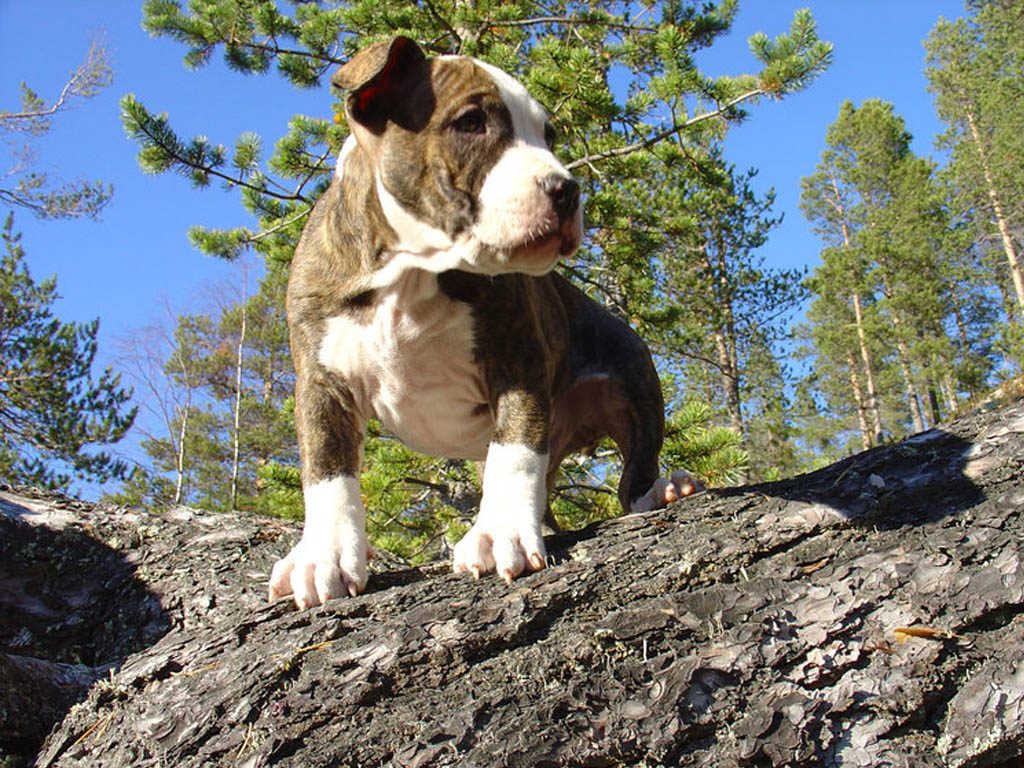
The American Pitbull Terrier is a pure breed of dog, originally from United States, It was forged from dogs imported from United Kingdom. Were used as fighting dogs until they were banned in 1976; they are now bred as pets and athletes in legal sports (Although it is still the favorite breed, dog fighting carried out clandestinely).

It should not be confused with other breeds mistakenly called "pit bulls.": Staffordshire Bull Terrier, American Staffordshire Terrier, Bull Terrier, American Bulldog and even more "distant" races, as the Dogo Argentino.

In Spain the American Pitbull Terrier He is considered a potentially dangerous breed of dogs by Royal Decree, by which to his possession must obtain the licence for possession of dangerous dogs and register it in the corresponding Municipal registry of potentially dangerous animals. One of the things that are required for this license is insurance of civil liability to third parties.

With the American Staffordshire Terrier, the confusion began when, at the beginning of the year 30, the American Kennel Club decided to give another name to the breed, American Staffordshire Terrier, with the end of that cease to be related to its past (The American Pit Bull Terrier was initially used as a dog fight). The American Pit Bull Terrier has not been recognized by the American Kennel Club, While the American Staffordshire Terrier, It is slightly larger, yes it has been recognized.

Otros nombres: APBT / Pit / Pitty

Physical characteristics

The APBT (American Pit Bull Terrier) is a dog's size medium, males usually weigh in 16 to 30 kg and females in 13 to 25 kg. They are known for their value, intelligence, dedication and loyalty. They are of athletic constitution and their breeding focuses mainly on the character and performance of the functional dog..

Are advised to socialize with other dogs from puppies to make to adult aggression towards these minor.

Currently the breed is going through a difficult time due to bastardization with other breeds for commercial reasons where massive dogs are sought, deformed, with exaggerated heads or true color, by having more acceptance and one greater than the APBT quote pure. There has also been crossbreeding by neophyte breeders who have crossed pitbulls cigars with dogs of similar breeds and even with dogs without breed. In this case these mixtures are no longer American Pit Bull and therefore their behavior will never be the same as that of a pure blood.

The American Pit Bull Terrier is recognized only by two records, ADBA and UKC, unlike the latter, the ADBA has the largest number of copies due to its defence and promotion of the breed.

According to the standard the characteristics of the breed are as follows:

Head: an exaggerated head, It will simply make you excessive weight that reduced you functionality when it comes to any type of work. An APBT, for all purposes provided in the head, It must appear two-thirds the width of the shoulders and a 25% more bandwidth on their cheeks to neck to the base of the skull. From the rear part of the skull to stop, It must be the same distance from the stop to the tip of the nose. The snout will be straight and square shape. The depth from the top of the head to the bottom of the jaw is important. The mandible is closed by the temporal fossa muscle., the pressure you need the animal on the coronoide process. The head will be a form of wedge view up from or side, and when viewed from front is round. We do not accept dogs with long lip.

Eyes: The eyes are round, separated from each other and located in a low position.

Teeth: Supported the closure in scissors (preferred), tongs and mild prognathism. The most important thing in the teeth of an APBT, that addition, the official judges of this breed of dog is that are based on a review of the standard, These are the tusks, that must slip through senior behind the lower.

Nose: The nose is dependent on the color of the dog, If it is white it should be red nose, If it is gray the must have grey until the bottom lip.

Neck: The neck should strongly be muscular to the base of the skull.

Rear train: This is the driving train of any four-legged animal. One 80% the work of an APBT develops in her hips and hind legs. A hip long and steep is extremely important, because it will give more support point to the femur, and it must be shorter than the tibia. The hips should be wide. To be this way it will take with them a wide back area, thus allowing a large surface for the insertion of the gluteus and biceps femoris muscles, they are the largest engines of the Powertrain.

Front of: The dog must have deep ribs. They are wide above, narrowing towards the bottom of. The ribs are home to the lungs, which are not deposits, but pumps. The ribs act like a bellows. Its effectiveness is linked on the difference between the volume of contraction and expansion. The depth of ribs gives more room for larger lungs. The shoulders should be slightly wider than the ribs at the height of the eighth rib. Too narrow shoulders not aguantarรกn an appropriate muscle structure, but also a too wide shoulders structure slows the animal and added too much unnecessary weight. The scapula must be to 45 degrees or less angle to the ground, and this will be wide and flat. The elbows should settle levels, with the humerus in a path almost parallel to the spine. The elbow must come under your ribs. The forearm, it should be only slightly longer than the humerus and the humerus should be thick and solid, nearly twice the thickness of the metatarsals at the height of the Hock. The front legs and shoulders must be able to withstand a lot of work and the thickness of the same here can become a virtue.. The feet should be small and inserted high in the ranillas or trabaderas.

Tail: The tail will be inserted under; It must be long until a little before reaching the hocks. This has a thick to decline until the end. You must have form of crank when the dog is relaxed.

Mantle: The mantle can be of any color or combination of them. It should be short and strong. The luster of the mantle usually reflects the health of the APBT, vital sign.

Skin: It should be thick and loose, but not with folds, with the exception of the neck and chest, that should be loose enough to show some vertical folds.

Height to the cross: The height at the cross of males may vary between the 38 cm and the 48 cm., and in females, from the 35 cm. up the 45 cm..

Weight: Despite what many people believe, the APBT they are a small canine breed, at most medium, finding the weight of the males may vary between the 16 kg and the 28 kg, and the females from the 13 kg to the 27 kg. One can have an exemplary pure APBT that although three or four kilograms above these weights, but of course he would have to be fat.

General aspect: The APBT should be square seen from side, the distance from the shoulder to the point of hip to be equal to the distance of the shoulder to the ground. The animal high step and will have a maximum point of their body weight support.

The American Pit Bull Terrier he is a complete athlete. Its morphology is designed for speed, power, agility and stamina.

Character and skills

The American Pit Bull Terrier suele ser de naturaleza amable, even with strangers. Many specimens have strong hunting instincts, so it will not be uncommon to see your Pit Bull run after cats or other small animals that are running away...

As with any breed of dog, proper training and socialization at an early age is a necessity. According to his temperament standard, "aggressive behavior towards human beings is not characteristic of the breed and is highly undesirable", because due to his powerful physique, the American Pit Bull Terrier needs an owner who is able to socialize it carefully and train it in obedience, in order to avoid any bad drink...

They are dogs with a lot of energy and need exercise and stimulation to channel their energy correctly and avoid becoming frustrated., boredom, or destructive behavior.

If we take care of responsibly and if it is properly socialized, our American Pit Bull Terrier, will be an excellent pet.

To remember:

This is what their standard dictates... "aggressive behavior towards human beings is not characteristic of the breed and is something very undesirable". Which confirms that, NO there are aggressive dogs, it is their masters who highlight these characteristics in the dog. Once again... the human hand that destroys everything...

ยซAmerican Pitbull Terrierยป images

ยซAmerican Pitbull Terrierยป Videos

The reality on the American Pit Bull Terrier.- I'm not what they say, I'm not what I appear!
โ–ท The world of Pets: Dogs, cats, birds, reptiles, amphibians

Affenpinscher
Germany FCI 186 - Pinscher and schnauzer type
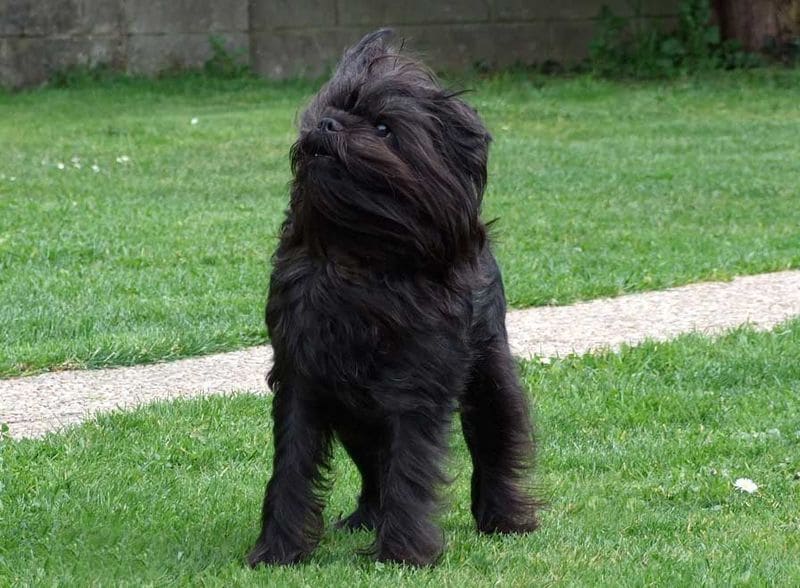
Activos, adventurous, curious and stubborns, but also cheerful and playful.

Affenpinscher

Content

Characteristics "Affenpinscher"

Coexistence is important that you have with your new friend. Before considering the acquisition of a dog of the breed "Affenpinscher" you know certain factors. Not all breeds of dogs are apt to live in an apartment, you must take into account his character, their need for exercise, their interaction with other pets, their care and if you have small children, their level of tolerance towards them.

Adaptation โ“˜

5,0 of 5 stars (based on 1 review)

friendly dog โ€‹โ€‹โ“˜

3,0 of 5 stars (based on 1 review)

hair loss โ“˜

2,0 of 5 stars (based on 1 review)

Affection level โ“˜

5,0 of 5 stars (based on 1 review)

Need for exercise โ“˜

3,0 of 5 stars (based on 1 review)

Social need โ“˜

5,0 of 5 stars (based on 1 review)

Home โ“˜

5,0 of 5 stars (based on 1 review)

Toilet โ“˜

3,0 of 5 stars (based on 1 review)

Friendly with strangers โ“˜

3,0 of 5 stars (based on 1 review)

barking โ“˜

3,0 of 5 stars (based on 1 review)

Health โ“˜

3,0 of 5 stars (based on 1 review)

Territorial โ“˜

5,0 of 5 stars (based on 1 review)

Cat friendly โ“˜

3,0 of 5 stars (based on 1 review)

Intelligence โ“˜

4,0 of 5 stars (based on 1 review)

Versatility โ“˜

3,0 of 5 stars (based on 1 review)

Child friendly โ“˜

1,0 of 5 stars (based on 1 review)

Surveillance โ“˜

4,0 of 5 stars (based on 1 review)

joy โ“˜

5,0 of 5 stars (based on 1 review)

Affenpinscher History

Type dogs Affenpinscher They are known since about 1600, years. At that time, they were somewhat bigger. Images Affenpinscher set in sixteenth-century German paintings

It's name derives from the German Affe (monkey). The race is ancient and prior to the Griffon Bruxellois and Miniature Schnauzer.

The race was created to be a buzzard, working to eliminate rodents from kitchens, barns and stables.

The first draft of the standard is from 1908 and it is not until the year 1913 when the first official standard is recognized.

Did you know??

Sometime in the 18th or early 19th century, someone had the brilliant idea to raise the Affenpinscher in reduced size, allowing him to become a popular pet by becoming a companion to the ladies.

Physical Characteristics of the Affenpinscher

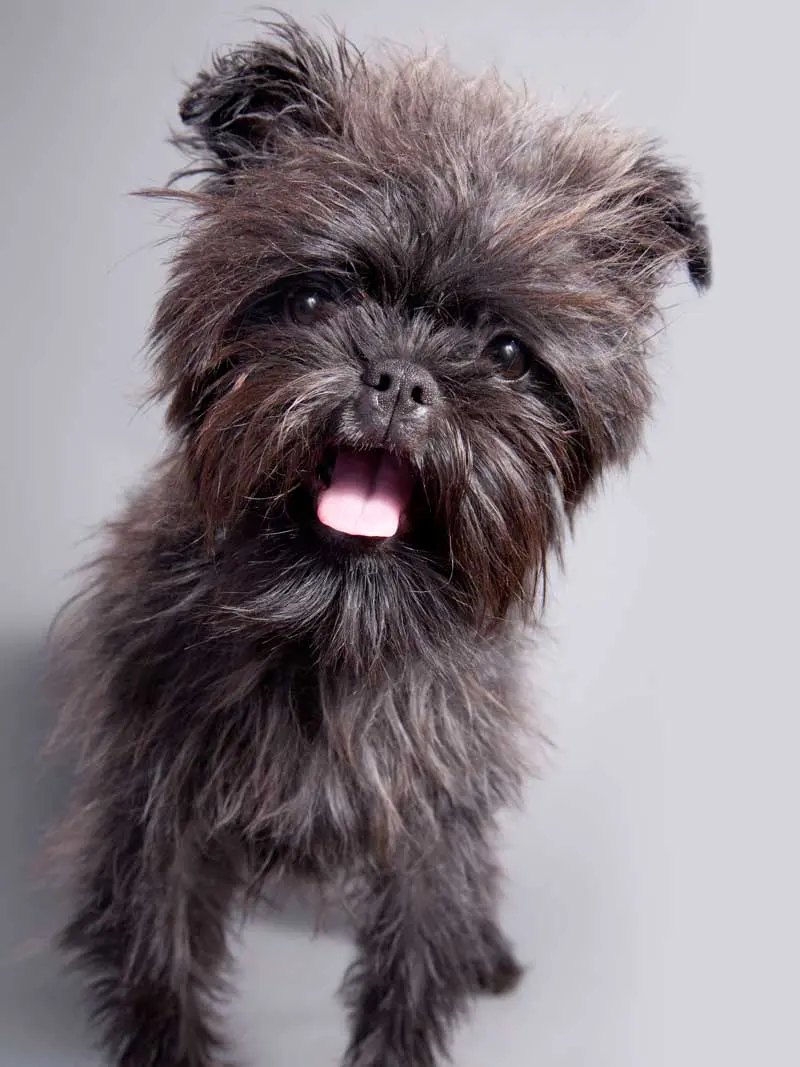
One Affenpinscher, generally, weights from 2,9 to 6,0 kg and measures of 23 to 30 centimeters tall. It has hard and rough hair, which make him look like a monkey (hence its name, because Affe means monkey in german). Its coat is coarse on the head and shoulders forming a mane, with a lower layer on the front and rear quarters.

The FCI and KC of breed standards, specifies that the layer of hair should be black, but the AKC also allows other colors like gray, Silver, black and tan, and beige (a mixture of Brown, black and white red hairs); other clubs have their own lists of acceptable colors, but black is preferential.

Character and skills

They have a character other than what we associate with Terrier. They differ from Terrier how they tend to get along with other dogs and pets. They are active, adventurous, curious and stubborns, but also cheerful and playful. Because they are affectionates with the family members, the protection is a must to whom they love. It is necessary that, they have a clear education, coherent, if not, you can be very difficult. The training must be varied because the dog can get bored easily.

The Affenpinschers they are somewhat territorial when it comes to their toys and food, That's the reason they are not recommended for younger children. This dog is very quiet, but it can become very aggressive if it feels attacked or threatened and does not show fear towards any aggressor.

Their life expectancy is around twelve years , is a typical life cycle of a purebred dog, but slightly shorter than most breeds its size.

Observations

During moulting it lost much hair, so it is advisable to a good brushed daily and a good diet. The better the quality of the best food will be the State of the fur of your dog. A diet low in fat, salts, iodine, Vitamin B, will result in dryness and hair loss.

The Affenpinscher it is a delicate dog that often suffers from intestinal problems.

Affenpinscher Health

All dogs have the potential to develop genetic health problems, just as all people have the potential to inherit a particular disease. Run, do not walk, from any breeder that does not offer a health guarantee on puppies, to tell you that the breed is 100 percent healthy and has no known problems, or tell you that your puppies are isolated from the main part of the home for health reasons. A reputable breeder will be honest and open about the breed's health problems and the incidence with which they occur in their lines..

The monkeys it is a fairly healthy small breed, but individual dogs can develop orthopedic problems like dislocated kneecaps, a common knee condition in small dogs. Affen are also prone to skin conditions that can lead to flank hair loss..

Not all of these conditions are detectable on a growing puppy, and it is impossible to predict if an animal will be free of these diseases, so you must find a trusted breeder who is committed to raising the healthiest animals possible. Must be able to produce independent certification that the dog's parents (and grandparents, etc.) have been examined for common defects and considered healthy for breeding. That's where health records come in..

Don't fall for the lies of a bad breeder. If the breeder tells you that you do not need to do these tests because you have never had problems in your lines, Your dogs have been "vet checked", or any of the other excuses bad breeders give for skimping on genetic testing of their dogs, leave immediately.

Careful breeders screen their breeding dogs for genetic diseases and breed only the healthiest, best-looking specimens., but sometimes Mother Nature has other ideas and a puppy develops one of these diseases despite good husbandry practices. Advances in veterinary medicine mean that in most cases dogs can still live a good life. If you are going to have a puppy, ask the breeder about the ages of the dogs in their lines and what they died of.

Remember that after you have welcomed a new puppy into your home, has the power to protect you from one of the most common health problems: the obesity. Keep a Affenpinscher with a proper weight is one of the easiest ways to prolong your life. Make the most of your preventive skills to help ensure a healthier dog for life.

Affenpinscher care

The Affenpinscher has a wiry coat that can be rough or smooth, But the words "smooth" and "rough" can be misleading. Rough-coated dogs have slightly softer textured hair and a heavier coat.. Some Affen they have fur that falls somewhere in between. Whatever type of coat you have, the typical monkeys looks clean but a little hairy. You can be sure it will have leaves and twigs in its fur after being outdoors., so you need regular grooming to maintain your appearance.

The tools you will need are a brush, a stainless steel comb, a cutter, blunt-ended scissors and scissors to reduce thickness. Remove dead hairs, called "peeling" the coat, is part of the package when you live with a monkeys.

The rest is basic care. Trim nails as needed, usually every few weeks. Small breeds are prone to periodontal disease, so brush your teeth often for general good health and fresh breath.

Questions about the โ€œAffenpinscherโ€ dog breed

  1. How long does an Affenpinscher live??

    Affenpinschers generally live off 12 to 14 years.

  2. How much does an Affenpinscher puppy cost??

    The price of a puppy Affenpinscher can vary according to the country, The breeder's reputation, The dog lineage and if it is intended for exhibitions or as a pet. Here you have an approximate range:

    Europe: Among 1.500 and 3.000 EUR.

    North America: Among 1.800 and 3.500 $.

    South America: Among 1.500 and 2.500 $ (Depending on the country).

    Asia: Among 2.000 and 4.000 $ (In countries like Japan or South Korea).

    Oceania: Among 2.500 and 4.500 Australian dollars.

  3. Are Affenpinschers good companion dogs??

    Yes, Affenpinschers make excellent companion dogs due to their loyalty, affection and lively personality.

  4. Are Affenpinschers easy to train?

    Although they are smart, Affenpinschers can be stubborn and difficult to train. Early socialization and consistent training are important.

  5. Do Affenpinschers need a lot of exercise??

    Although they are not as active as some larger breeds, Affenpinschers still need a moderate amount of daily exercise to stay healthy and happy.

  6. Are Affenpinschers hypoallergenic dogs??

    No, Affenpinschers are not considered hypoallergenic. They still produce dandruff and hair, which can trigger allergies in some people.

  7. Are Affenpinschers aggressive dogs??

    They are not naturally aggressive, but they can show territorial and defense behaviors. Proper socialization and training are important to prevent any aggression.

  8. Are Affenpinschers good with children??

    Yes, Affenpinschers can be good with children as long as they are properly socialized from an early age and taught to safely interact with children.

  9. Do Affenpinschers lose a lot of hair??

    No, Affenpinschers don't shed as much hair as some other breeds, but they still need regular coat care.

  10. Do Affenpinschers need to be shaved or clipped?

    It is not necessary to shave or cut the coat of an Affenpinscher, but they do need regular coat grooming to keep it clean and tangle free.

  11. Are Affenpinschers prone to health problems??

    like any breed of dog, Affenpinschers can be prone to certain health problems, such as eye and heart problems. It is important to buy a puppy from a responsible breeder who performs health tests on their dogs..

  12. Are Affenpinschers good apartment dogs??

    Yes, Affenpinschers can adapt well to apartment life as long as they get plenty of daily exercise and are properly socialized.

  13. Do Affenpinschers bark a lot??

    Yes, Affenpinschers can be vocal and bark quite a bit. Obedience training and early socialization are important to prevent excessively noisy behaviors.

  14. Do Affenpinschers need special coat care??

    Yes, Affenpinschers need regular coat grooming to keep it clean and tangle free. This includes brushing their rough, rough coat at least twice a week and trimming their fur around their eyes and mouth to prevent irritation..

  15. Do Affenpinschers get along with other dogs and pets??

    Affenpinschers can be territorial and wary of other dogs and pets., so early socialization and gradual introduction are important to establish positive relationships with other animals. But, with proper socialization, they can get along with other dogs and pets in the household.

  16. Are Affenpinschers a suitable breed for first time owners??

    Affenpinschers can be a good choice for first-time owners if they are willing to put the time and effort into their training and socialization.. But, due to his stubborn and energetic personality, may not be the best choice for all first-time owners. It is important to do your research on the breed and speak to a breeder or dog professional before making a decision..

Affenpinscher pictures

Affenpinscher Videos

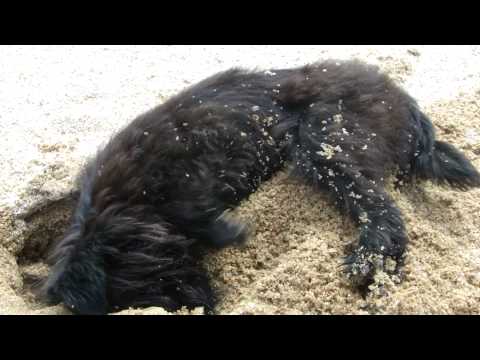
Affenpinschers at the beach-Uruguay-2010
Affenpinscher
Affenpinschers at the beach-Uruguay-2010
Affenpinscher Raul
Dogs 101- Affenpinscher

Type and recognitions:

  • FCI CLASSIFICATION:
  • Group :
  • Section : . .

Federations:

  • FCI – Pinscher and Schanuezer dogs. Molossian type Dogs and Swiss Mountain and Cattle Dogs. , Section 1: Pinscher and Schnauzer. โ“˜
  • AKC – Toy โ“˜
  • ANKC – Group 1 (Toys) โ“˜
  • CKC – Group 5 – Toys โ“˜
  • โ€‹KC – Toy โ“˜
  • NZKC – Toy โ“˜
  • UKC – companion breed โ“˜

FCI breed standard "Affenpinscher"

Origin:
Germany

Date of publication of the valid original standard:
26.03.2009

Use:

Pet and home dog.


General appearance:

The Affenpinscher is small, Compact and rough hair, with appearance of monkey face.

IMPORTANT PROPORTIONS : The construction should as much as possible appear square in relation to body length and the height to the cross.


Behavior / temperament:

Intrepid, vigilant, stubborn, fell, sometimes with an effervescent character. It is quite a pleasant dog for the family.

Head:

---

Cranial region:
  • Skull: Rather spherical to elongated, altogether not too heavy, vaulted upward, with a forehead macada.
  • Depression links (stop) : Clearly marked.

facial region:

  • Truffle: Round, full and black. Well open nostrils.
  • Snout: Short, straight (not respingado up).  The nasal helm is straight.
  • Belfos: Firmly supported to the jaws, the lips are black.
  • Jaws/Teeth: Complete bite, (42 clean and white teeth), the maxillary lower ahead of the upper jaw and curves gently upwards. The incisors in a healthy bite are as regularly set as possible in the form of a slightly rounded line. Canines and incisors should not be seen with the mouth closed ; Even less should the Affenpinscher show its tongue with its muzzle closed. The lack of two PM1, PM2 or PM3 also combined lack of two dental pieces of these teeth, they must be tolerated.
  • Eyes: dark, rather round and full, black and sticky eyelids. They are surrounded by a Crown of coarsely hairy.
  • Ears: High implementation, carried symmetrically rotated forward, โ€œVโ€ shaped, the internal edges of the ears lie against the head. In the case of erect ears, they are small, equal-sized upright, and carried vertically as possible.

Neck:

The neck is straight, the neck is rather short, strongly implanted, powerful ; the skin of the throat is firmly tight and wrinkle-free.

Body:

  • top line:  From Withers towards rear in a soft downward inclination, approximately in the form of a straight line.
  • Cross: It is the highest point of the top line.
  • Back: Strong, short, firm
  • Pork loin: Short, strong. The distance from the last rib to the hip is short so that the dog is compact.
  • Rump: Short, slightly rounded, It happens imperceptibly by the insertion of the tail.
  • Breast : Just flattened on the sides, moderately wide, descends beyond elbows.
  • bottom line: The bottom and top lines run almost parallel. Moderately raised belly.

Tail:

Natural, the goal being to make it Sabre or sickle-shaped.

Tips

 PREVIOUS MEMBERS: Robust forelimbs, straight, parallel and not too together.

  • Shoulder: Well muscled. The scapula is long, inclined (approximately 45ยบ), flat and well glued.
  • Arm: Well on the body, strong and muscular.
  • Elbow: Well positioned, drawn out inwards or not.
  • Forearm: Strongly developed and straight from all sides which you look at it.
  • Carpo: Firm and strong.
  • Metacarpus: Seen from the front straight ; profile feels a slight tilt in relation to the floor ; strongly developed and muscular.
  • Front feet: Short and round, fingers together and arched (cat feet), strong pads, black short nails and strong.

LATER MEMBERS: Seen in profile with a slight slant, moderately angulated. Seen from behind are parallel.

  • Thigh: Strongly muscled, width
  • Knee: Must not be turned neither inward nor outward
  • Leg: Long and strong
  • Hock: Moderately angled
  • Metatarsus: Perpendicular to the ground
  • Rear feet: A little longer than the front ; the fingers are arched and together ; nails short, black.

Movement:

Loose and fluid, with short, quick steps, with moderate push back. Seen from front and back straight and parallel.

Mantle

  • SKIN : Firm throughout the body.

COAT

  • HAIR: The hair of the body should be hard and tight. The head has a typical decoration in the form of bushy eyebrows like rays that surround the eyes forming a crown., the imposing beard, The crest on the head and the hair on the cheeks. The hair of the head should be as far as possible hard, straight and perpendicular to the skin implementation, as Ray. These are the essential characteristics that give the Affenpinscher the monkey look.
  • COLOR: Pure black with NAP internal black.


Size and weight:

SIZE AND WEIGHT

  •  Height to the cross:  Males and females : of 25 until 30 cm..
  •  Weight: Males and females :  of 4 until 6 kg.


Fouls:

Any deviation from the above mentioned criteria is considered to lack, and the gravity of this refers to the degree of deviation to the standard and its impact on the health and well-being of the dog.

 In particular :

  • Heavy or light appearance, outdoor or patilargos.
  • light eyes.
  • Inclusion of low or very long ears, ears worn different from each other. Floating ears.
  • Too long back, collected or soft.
  • Encarpado back.
  • fallen group.
  • Inclusion of tail rotated toward the head.
  • Back excessively angled and rear of barrel.
  • Long feet.
  • Short hair, soft, wavy, in fringe, silky, white or stained.
  • 1 cm.. above the upper limit or 1 cm.. below the lower limit.

SERIOUS FAULTS

  • Lack of type in the expression of sex (for example male female).
  • Very lightweight bones.
  • Snout Griffon curved upward type, long snout.
  • Exaggerated lower prognathism, bite clamp.
  • Wiggly eyes.
  • Elbows rotated out.
  • Hocks rotated inwards.
  • deviation between 1 cm and 2 cm above the upper limit or below the lower height limit.

MISS PLAYOFFS

  • Aggressive or fearful dog.
  • Any deformity.
  • Lack of racial characteristics.
  • Miss runner in each region as construction defects, hair and color.
  • More than 2 cm above or below the upper and lower limit measurements.

Any dog โ€‹โ€‹showing clear signs of physical or behavioral abnormalities must be disqualified..


N.B.:

Males should have two normal-appearing testicles fully descended into the scrotum..

TRANSLATION : Lucas Rodriguez Bazzurro.

Source: F.C.I - International Cynological Federation

Alternative names:

1. Affen, Affie, Monkey Dog (English).
2. Affenpinscher (French).
3. Affenpinscher (German).
4. Affenpinscher (Portuguese).
5. Perro Mono, Affenpinscher (espaรฑol).

โ–ท The world of Pets: Dogs, cats, birds, reptiles, amphibians

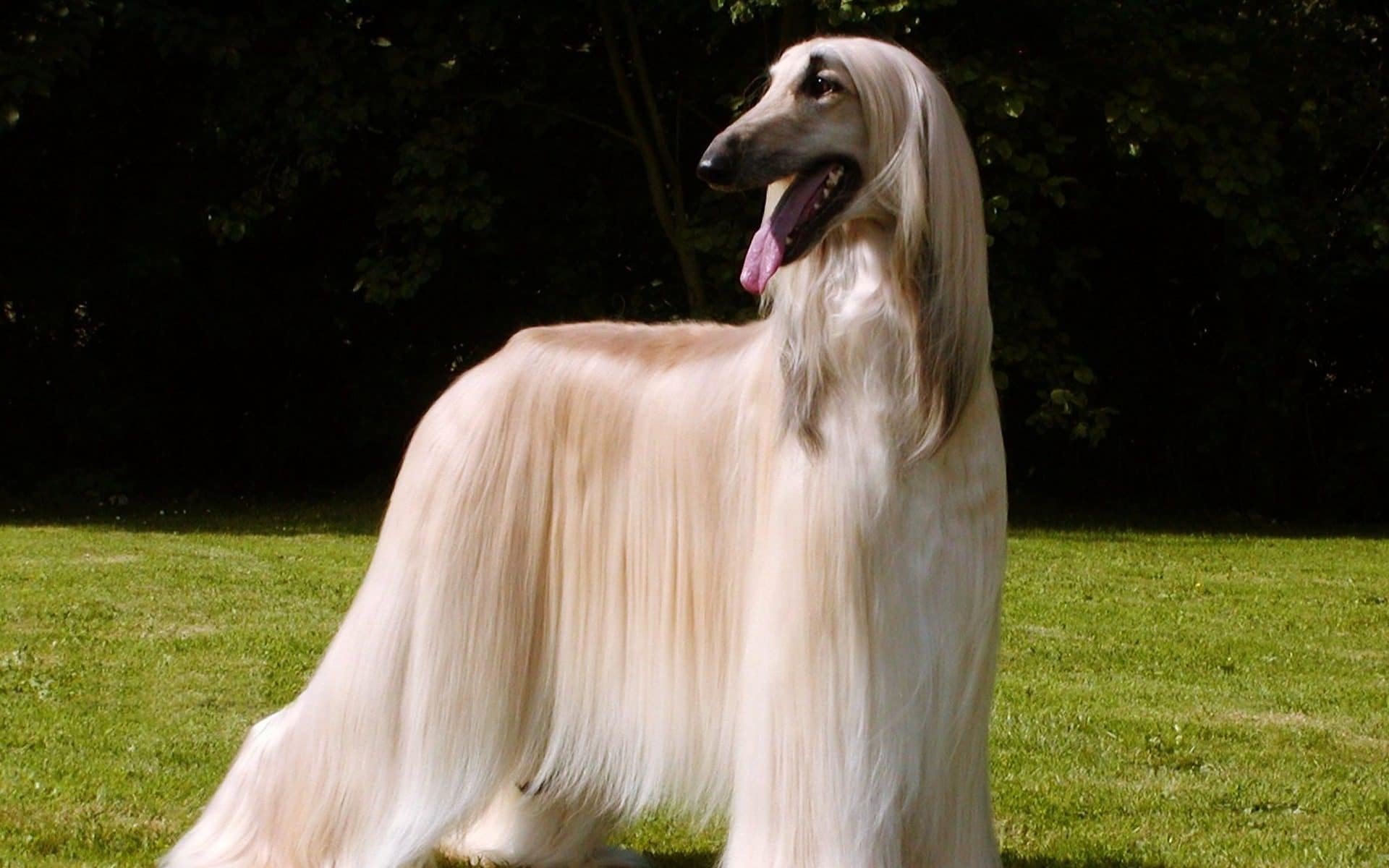
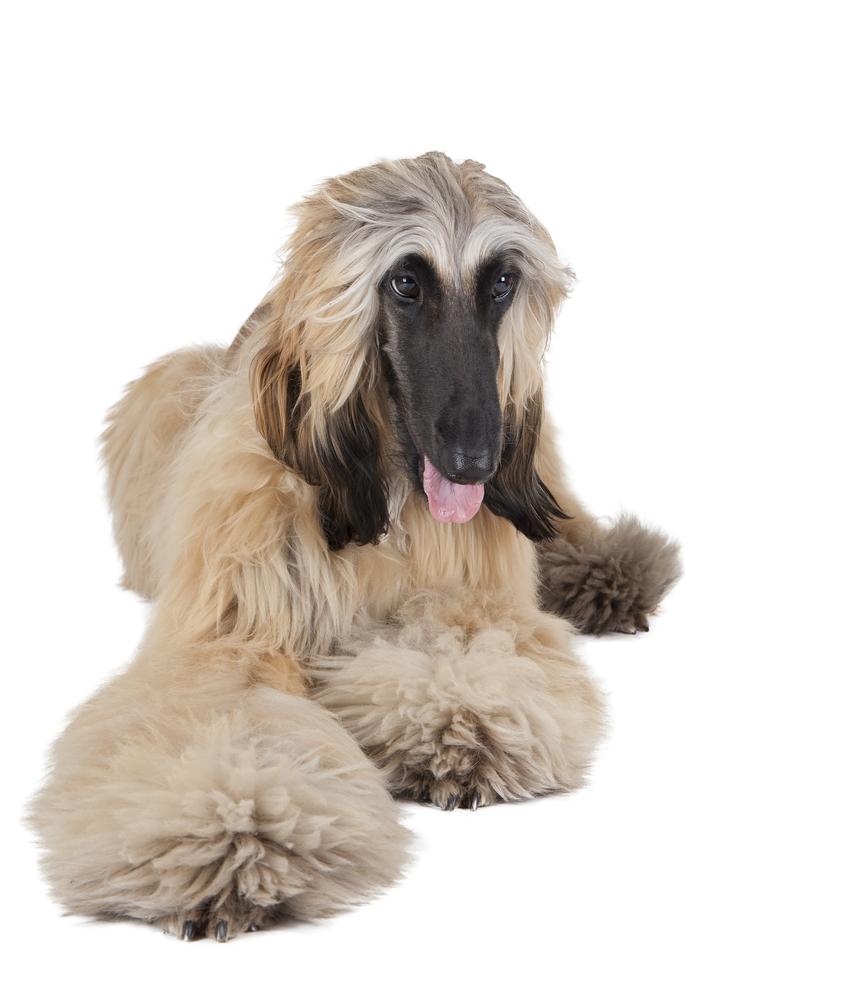
Afghan Hound
Afghanistan Great Britain FCI 228 . Long-haired or fringed Sighthounds.
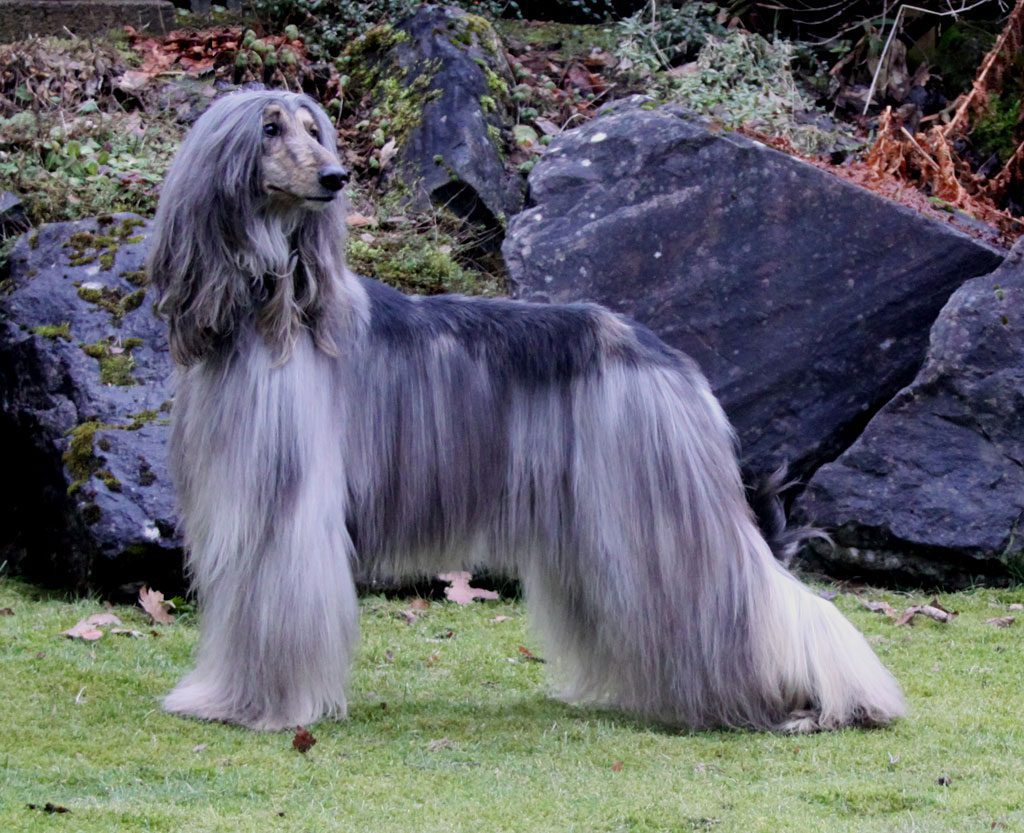
The Afghan Hound It behaves so haughty and reserved, especially with strangers

Lebrel Afgano

Content

Characteristics "Afghan Hound"

Coexistence is important that you have with your new friend. Before considering the acquisition of a dog of the breed "Afghan Hound" you know certain factors. Not all breeds of dogs are apt to live in an apartment, you must take into account his character, their need for exercise, their interaction with other pets, their care and if you have small children, their level of tolerance towards them.

Adaptation โ“˜

4,0 of 5 stars (based on 1 review)

friendly dog โ€‹โ€‹โ“˜

3,0 of 5 stars (based on 1 review)

hair loss โ“˜

2,0 of 5 stars (based on 1 review)

Affection level โ“˜

2,0 of 5 stars (based on 1 review)

Need for exercise โ“˜

4,0 of 5 stars (based on 1 review)

Social need โ“˜

1,0 of 5 stars (based on 1 review)

Home โ“˜

3,0 of 5 stars (based on 1 review)

Toilet โ“˜

4,0 of 5 stars (based on 1 review)

Friendly with strangers โ“˜

2,0 of 5 stars (based on 1 review)

barking โ“˜

2,0 of 5 stars (based on 1 review)

Health โ“˜

3,0 of 5 stars (based on 1 review)

Territorial โ“˜

2,0 of 5 stars (based on 1 review)

Cat friendly โ“˜

3,0 of 5 stars (based on 1 review)

Intelligence โ“˜

3,0 of 5 stars (based on 1 review)

Versatility โ“˜

2,0 of 5 stars (based on 1 review)

Child friendly โ“˜

3,0 of 5 stars (based on 1 review)

Surveillance โ“˜

1,0 of 5 stars (based on 1 review)

joy โ“˜

3,0 of 5 stars (based on 1 review)

History ยซAfghan Houndยป

Also know as Tazi It is a dog coming from Afghanistan.

The origin of this breed it is possible that you are in the race Saluki, that would have reached Afghanistan through Persia. Already in Afghanistan, the Saluki I would need a coat more appropriate for the hostile climate of the mountains of this country, developing the long coat which characterizes Afghan Hound current, and with which today seduces so many people who acquire dogs of this breed without taking into account that they need very special care.

The origin of the Afghan Hound it is ancient, with the first records approximately in the year 1000 to. C., in the area where it is currently Afghanistan. It was used as a hunting dog.

The antiquity of this breed has not yet been corroborated by anyone, but the earliest records date from the 19th century, which does not mean that they did not exist before, but that Afghan nomads didn't bother in the race record for writing. The first illustration made of a Afghan Hound It is the year 1813. This race came to England in 1920 and didn't succeed, It is recognized by the british kennel club only six years later.

In the year 1880, When he ended the war between Afghans and British, the officers of the British army took home some of these dogs, whose characteristics as hunting dogs in the harsh conditions of the Afghan mountains, had caught his attention.

Videos "Afghan Hound"

Miske, galgo afgano
Breed All About It - Afghan Hound

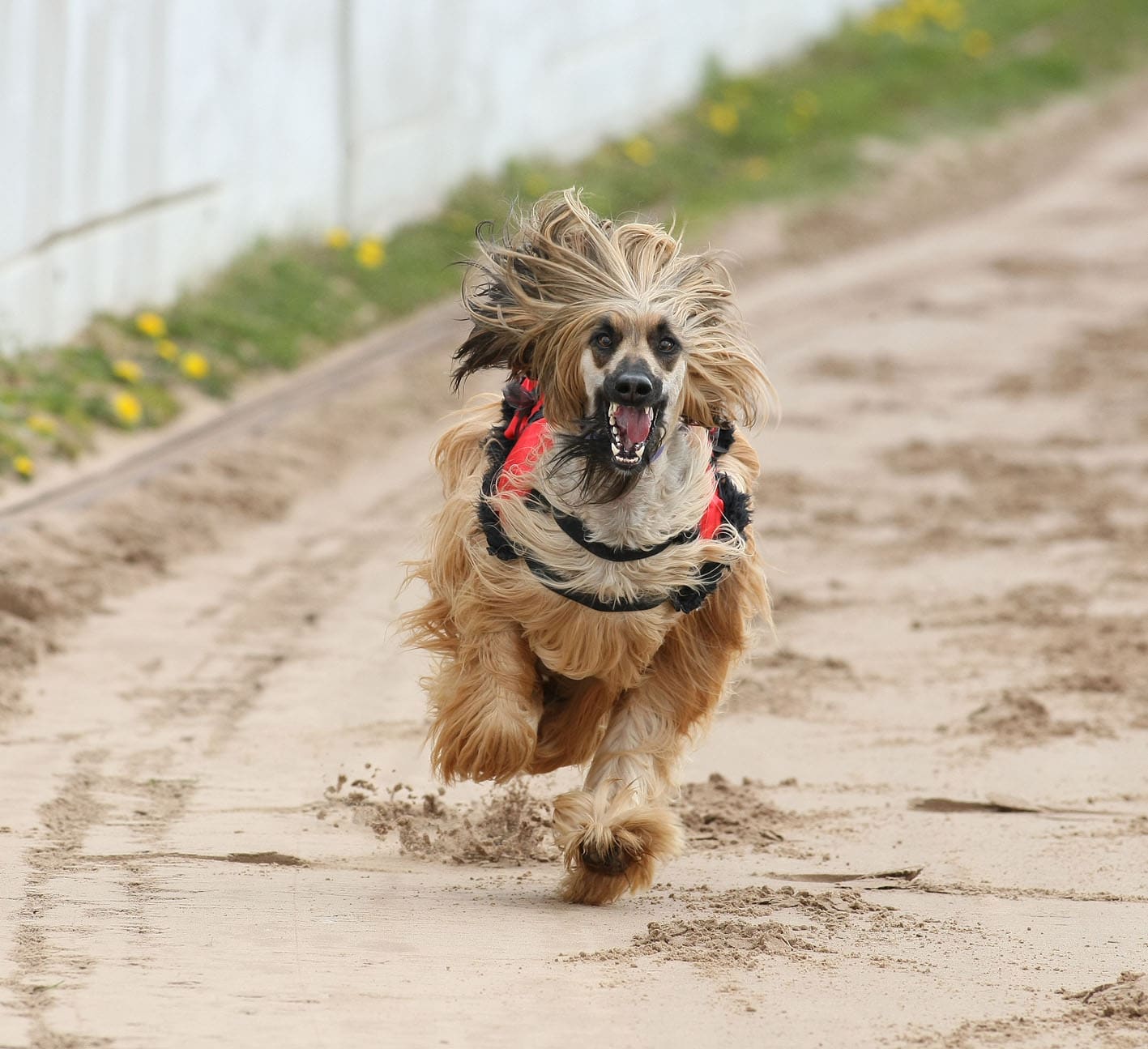
In Europe, the Afghan Hound It has maintained its natural activity sheepdog and hunting, task that he already did in his homeland. As well, Thanks to its elegant appearance, agility and speed, has become a companion and racing dog.

In the beginning, the Afghan Hound He was employed to chase prey of all kinds, who were in the mountains Afghanistan, such as hares, foxes, Gazelles, jackals, Wolves, deer, and even, Snow leopard (which is the only big cat that lives exclusively in high mountains and is perfectly adapted to this environment).

Another function of Afghan Hound was the monitoring the camps of nomadic tribes and livestock, functions that, along with those related to hunting, They gave this race a huge popularity among nomads Afghanistan (they even reserved a day of festivity dedicated to the Afghan Hound, which engalanaban them with necklaces of flowers).

Physical characteristics ยซAfghan Houndยป

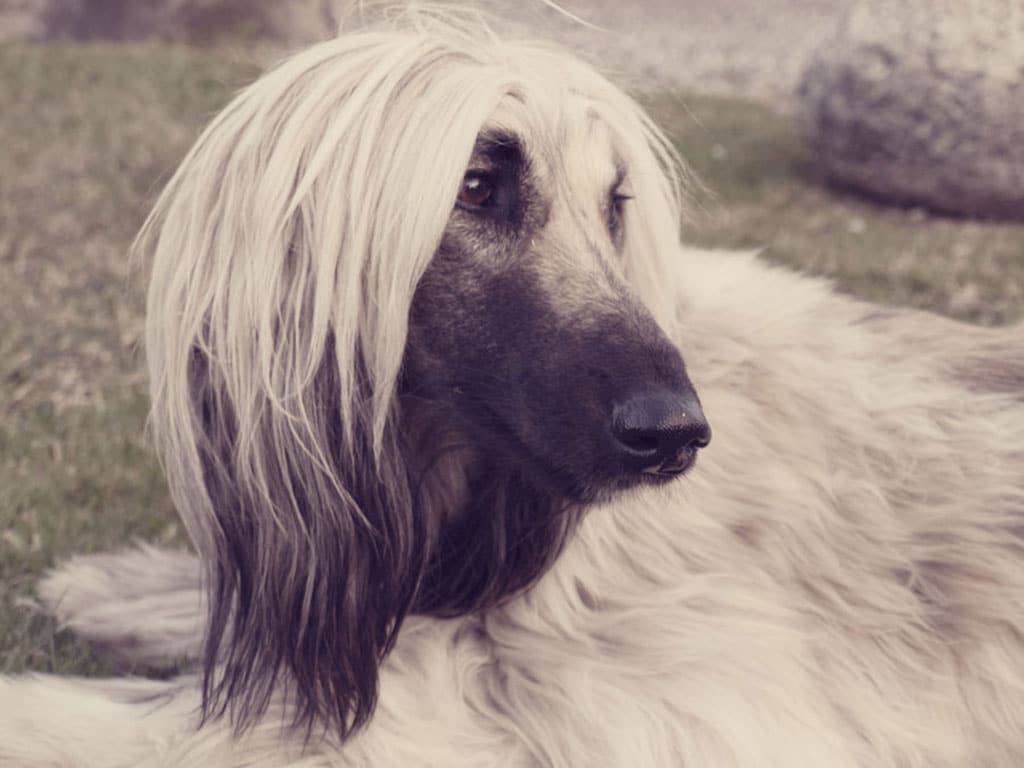
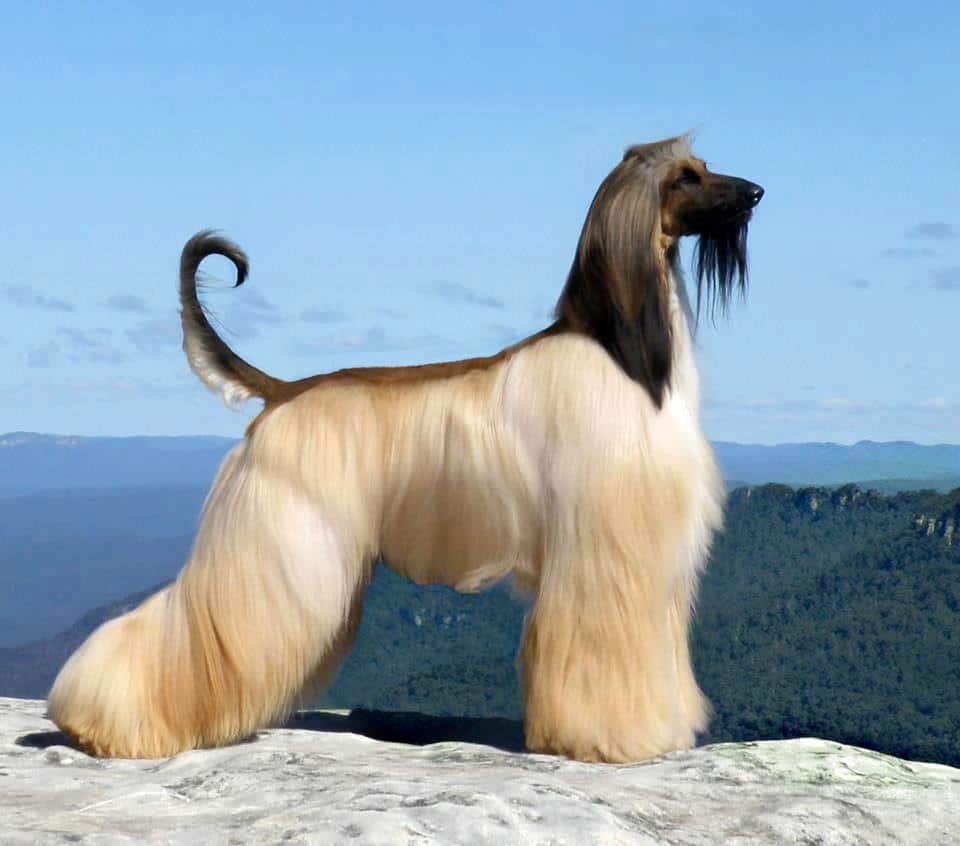
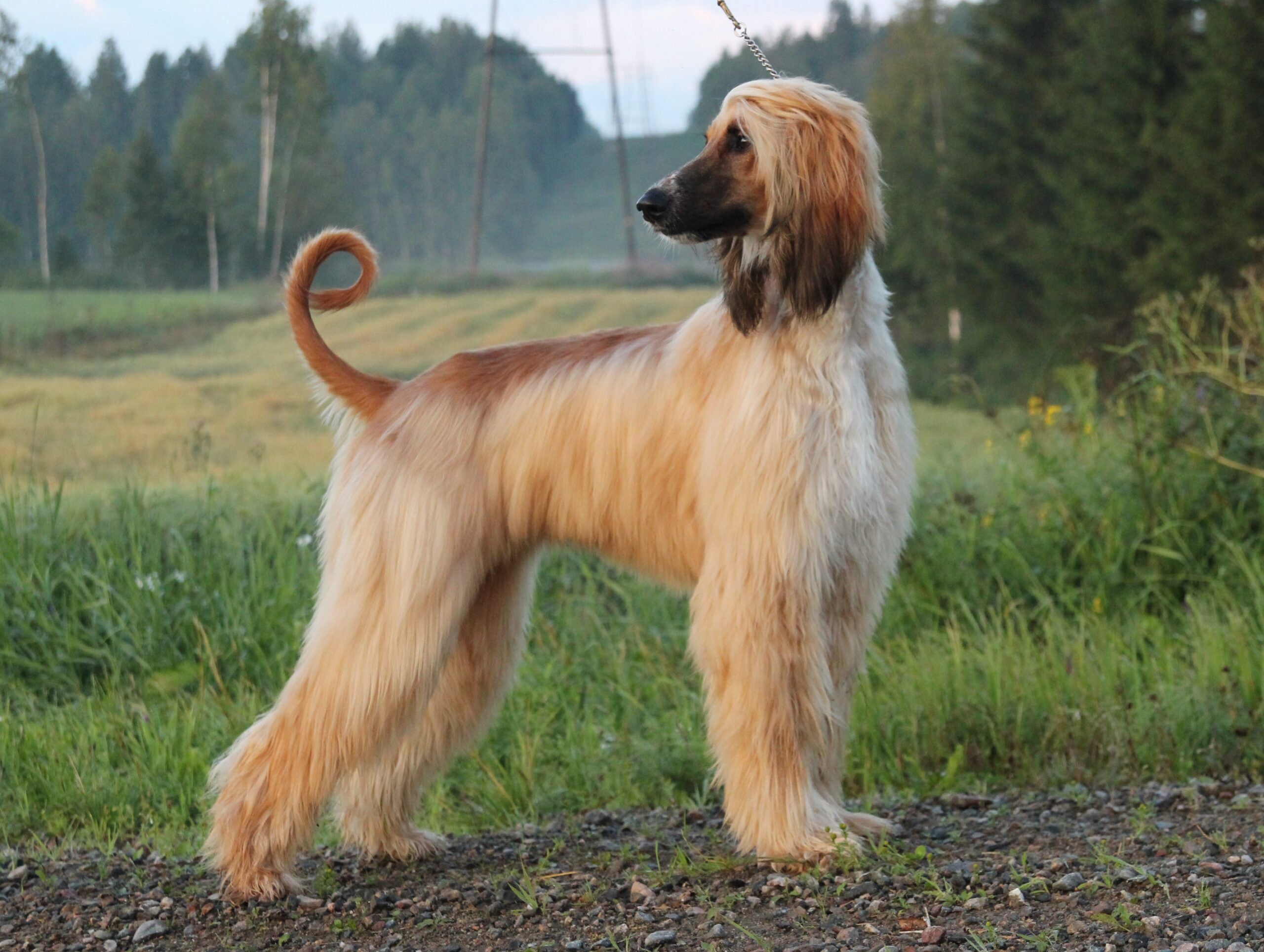
General appearance gives an impression of force, dignity, speed and power. The exotic and oriental expression is typical of the breed, with a direct and scrutinizing look.

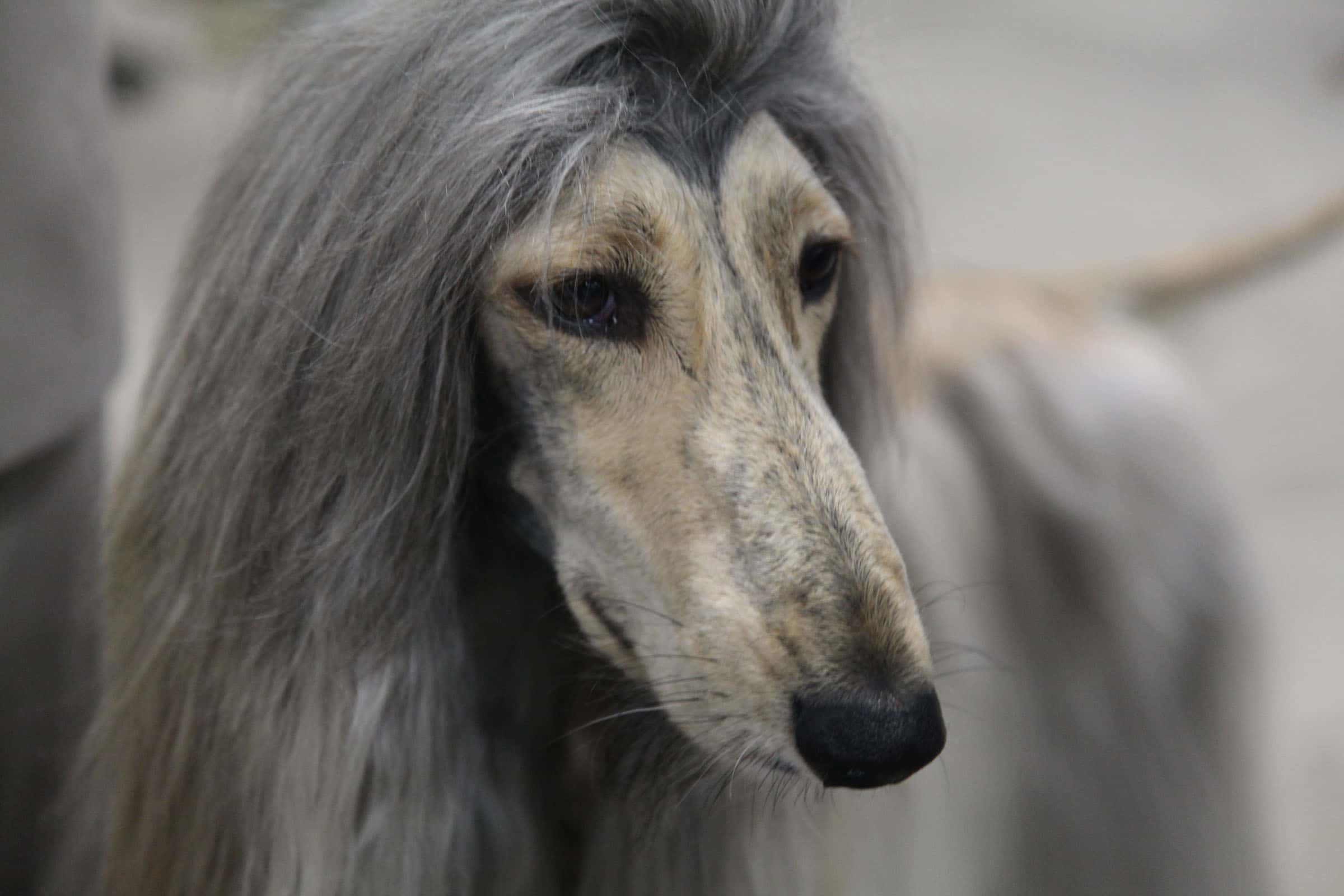
The head It has the long narrow skull and not, with the prominent occipital, the snout long, clean jaw and the light stop.

The eyes They are preferably dark, almost triangular and slightly oblique upwards. The ears They are set low, well delayed position and the animal stuck against the head. The limb They are straight and well boned. The tail it should not be too short, fits low, It forms a ring at the tip and is adorned with a few curious Wicks. In motion, the animal has been raised.

The hair It is long and thin on the sides, extremities and flanks. In older dogs is short and dense in the area from the shoulders and the kidneys. Head is long from the front and forms a long silky hair.

They are admitted all colors.

The ideal height the cross males: 68 to 74 cm.. and females: 63 to 69 cm..

Character and abilities ยซAfghan Houndยป

It is considered one of the least intelligent races, positioned on the scale as the number 79 according to S. Coren, autor de โ€œThe Intelligence of Dogsโ€, but also whimsical.

The Afghan Hound is independent and capable of chasing its prey without the need for instructions. His intelligence and confidence allow him to anticipate the reactions of his prey and make decisions on his own..

This means that you tend to act freely and do things your way when you decide it is necessary., instead of following the letter of his master's instructions. This means that your training can be challenging., and that it is a breed that needs an experienced trainer.

But, despite its independence, They are very devoted to their owner and are usually affectionate with their family. But, must accept that this affection is not available ร ย  la carte, but when they decide the time is right. In other words, you have to accept their independence and not expect constant displays of affection from them. Not recommended for families with young children: without being aggressive with them, tends to reject their contact when they are too insistent.

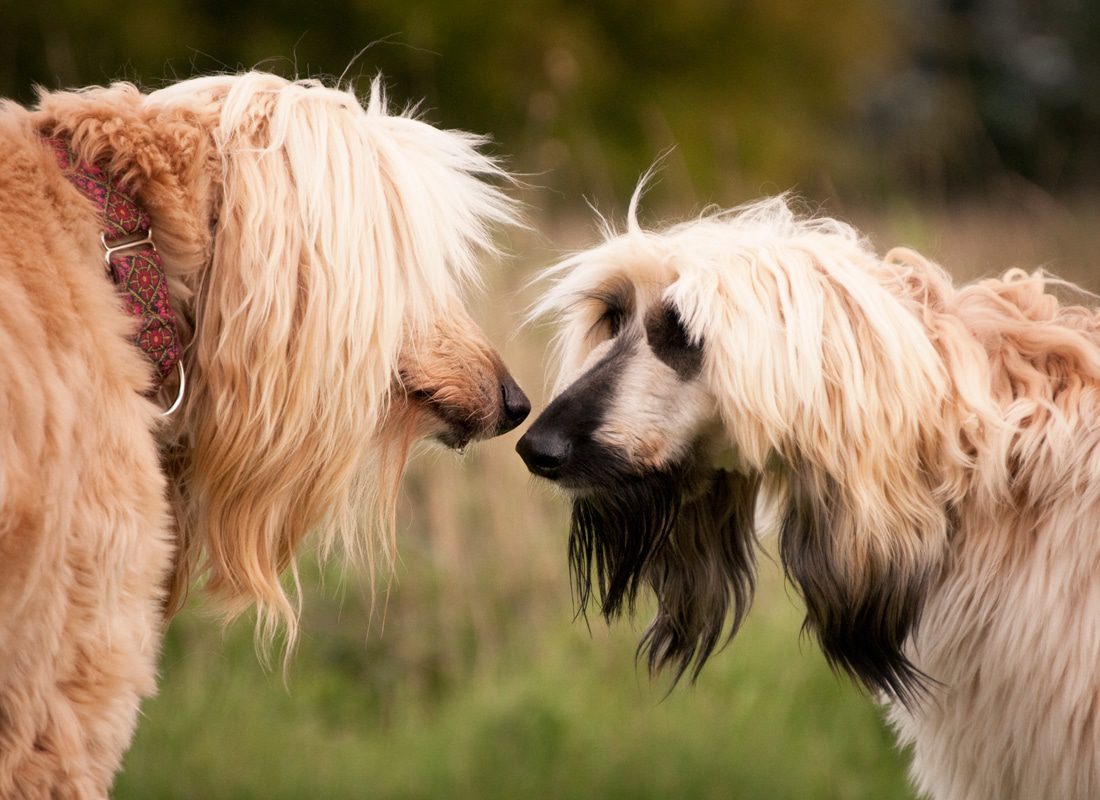
outside the family circle, their sociability is limited. Thus, often tends to be distant - even haughty- with anyone who considers a stranger in their home. You can even show that attitude with your master, especially if you feel upset.

His somewhat difficult character and the fact that he is not necessarily affectionate tend to make us forget that, However, he is a faithful companion. May have a hard time adjusting to a new home.

But, can be very affectionate and fun, and even enjoys being the center of attention. Some owners also report that they like to steal things and hide them. He even seems to enjoy doing it in front of his owner's nose.. In other words, even when he's having fun, shows your level of confidence and self-control.

The Afghan Hound it is a very robust dog that needs a lot of exercise. But, can adapt to life in a flat, as long as its owner provides a minimum of two hours of physical activity a day to expend its energy. Due to his background as a hunter, he especially likes to run long distances: it is one of his favorite activities, and walking is not enough. So, you need to run several times a week - or even every day- and is a very good companion for someone who wants to run with their dog. It can be content to run in a secure enclosure on days when its owner is not available for a long run., as long as you continue to do at least some additional activities (brisk walks, go to the park, etc.) to expend your boundless energy.

If you live in a house and have access to a garden, it must be strictly fenced, since his hunting instinct is particularly pronounced. Otherwise, won't stop taking off if it sees potential prey, to go after her. It's not a wireless electric fence that could stop him, since the discomfort he feels is no match for his desire to pursue.

Obviously, the same happens when walking, so it is always better to wear it on a leash, at the risk of suddenly disappearing as soon as a potential prey is identified. If the owner wishes to allow his dog to go off leash in certain less dangerous areas, you should at least equip it with a connected GPS dog collar, to be able to find it in case of need.

Last, their hunting instinct means that coexistence with other small animals is not recommended. Sometimes he can tolerate a cat if he has become used to its presence from a young age, but in general, not very sociable with other animals. It is a little less complicated with other dogs, But again, you better start with them asap.

Education

Although he is extremely loyal, the Afghan Hound he is very stubborn and tends to do what he wants. If we add to this that they tend to be dominant, we can see how much they need an experienced owner who knows how to show their dog who is the master and assert himself gently. To get it, it is recommended to use training techniques based on positive reinforcement.

In any case, your training requires a good dose of patience, since it is very independent. If you decide you are not interested, you need to use your imagination to capture their attention and arouse their interest, or postpone the training session. If you feel upset when you think you have something better to do, in a rush and / or forced to do something you don't want to, becomes very stubborn and rejects any instructions. It also, to avoid fatigue and, Therefore, disinterest on his part, it is better to opt for varied sessions rather than long repetitions of the same exercise.

The training of a Afghan Hound requires, Therefore, the ability to adapt to your current mood and vary exercises to diversify your sessions and keep your focus. This is all the more true since, unlike other races, does not seek to please his master.

Group classes in a school for puppies (once the first vaccinations have been carried out) they are an interesting option for the success of training. This can help teach the puppy the first commands (how to sit to order or search) in a more supervised environment. It also, offer an interesting socializing opportunity.

Socialization is an important aspect of training an Afghan greyhound puppy. As he is not very fond of human beings outside his family circle, it is important to expose it from a young age to various people and situations (go out in public, meet the neighbors, receive guests at home, etc.) so you don't get too reserved. In fact, his shyness and natural distrust of strangers tend to get the best of him quickly.

It also, as your maintenance need is quite important but you may consider human interaction a nuisance, it is essential to teach him from a young age to allow himself to be manipulated without flinching.

Health

Although generally in good health, the Afghan Hound is particularly prone to certain diseases:

  • Allergies: the symptoms of an allergy in a dog are the same as in humans (crying eyes, sneezing, etc.). They can be treated with drugs and / or changes in the animal's environment, depending on the type of allergy involved;
  • Cancer : as humans, this condition can be fatal, has fortiori if detected in an advanced stage. On the other hand, when taken on time, it is often possible to remove the cancerous mass by surgery and / or taking medication;
  • The juvenile cataract : is usually present from birth and, depending on its severity, can potentially be treated by surgery. But, in some cases, cause blindness in the dog ;
  • Hypothyroidism , a thyroid gland disorder causing lethargy, weight and hair loss, as well as fatigue. Usually, it is treated with medications.

It also, like most dogs with hanging ears , have an increased risk of ear infection and, therefore, requires special vigilance at this level.

It also, is more exposed than other breeds to the risk of urinary obstruction. These can be treated with medications, but surgery is required if they don't work. In any case, a change in diet is often necessary to reduce the risk of new crystal formation.

Obesity is not a problem you are predisposed to. But, any dog รขโ‚ฌโ€นรขโ‚ฌโ€นthat is malnourished and / or not exercising enough is at risk of being overweight, with a potential higher risk of developing certain diseases. His master must, Therefore, go to the trouble of weighing your partner regularly, make sure everything is in order at this level and react if it is not, in general, to make you exercise more and be more rigorous in your daily ration is enough.

Another good must-have habit is taking your dog to the vet at least once a year for a full checkup.. This allows both detecting a possible problem early, as well as ensuring that everything is in order regarding the dog's vaccinations and reminders.

Life expectancy

12 to 14 years

Grooming

Due to its long fur, cleanliness is an essential dimension of maintaining Afghan Hound. To avoid tangling, the dog should be brushed with a rubber comb, ideally every day. This will help maintain the silky texture of the coat while removing dead hair.. As in the case of any long-haired dog, do not neglect the time dedicated to this task, as it is an important condition to keep your dog healthy.

It also, It is necessary that you take your dog to the groomer from time to time to keep his coat well trimmed and looking good for all occasions. In fact, the maintenance of its thick coat is more complex than that of many other breeds, and it is better to leave it in the hands of a professional. Ideally, trim it every 2 or 3 months.

On the other hand, the Afghan Hound only needs to be bathed once or twice a year, unless it got dirty. Regular brushing is usually enough to remove debris that may be lodged in the coat..

The ears, on the other hand, they need a lot more attention. Long hair around the ears and the fact that they are folded on themselves pose a higher risk of this happening. To avoid irritation or infection problems, it is important to inspect them weekly and keep them clean.

This weekly session is also an opportunity to clean the dog's eyes and brush his teeth., in order to maintain good oral hygiene and limit the formation of tartar, which can have unfortunate consequences.

In general, as in the case of all dogs, a weekly check-up is essential to ensure that you are in good health and to detect any problems early, be it skin rashes, eye infections or injuries to the pads of the feet.

Last, the claws of this very active animal tend to wear out enough naturally, so no need to trim them manually. But, it is important to periodically check that this is the case and to do so if necessary.

Observations

He has washed too often (each 15 days), because knots are easily formed.. Exemplary elders and breeding females can be sheared to be able to take care of more easily.

Use

Along the centuries, the Afghan Hound has developed a long coat, thick and silky that allows it to withstand the extreme temperatures of the mountainous regions where it was used as a hunting dog.

His resistance to cold is not the only asset that made him -and makes him- a formidable hunter: you can also trust your vision. Similar to the Whippet, the English Greyhound, the Borzoi and the Saluki, has a field of view of 270 degrees, 30 more than other dog breeds (and 70 more than a human being). This allows them to detect their prey from a wider angle while remaining immobile., so they can go unnoticed more easily.

Once they start to chase their prey, the Afghan Hound it gives them little chance of escaping. In fact, his speed is legendary: can reach a maximum speed of 64 km/h, not far from the speed record ever set by a racehorse (69,2 km/h). Can only maintain that speed for short distances, but it has a great resistance, as it can be maintained for hundreds of kilometers.

In his native Afghanistan, it was used mainly to hunt large prey, both in desert areas and in the mountains. He was valued for his ability to travel long distances, its speed and its value. In fact, one of his tasks was to hold back dangerous prey, like leopards, until the riders arrived. This type of hunting, in which the dog leads the hunters, requires great independence and a capacity to react to different situations with few instructions. These are qualities that he still possesses today..

But, this use as a hunting dog has now disappeared. The most frequent is to find it as a companion dog, although their number has decreased considerably compared to a few decades ago.

It also stands out in dog shows and, despite his strong character, is known for its good performance in obedience competitions.

On the other hand, although he is an extremely fast runner, the races of the Afghan Hound have never been as popular as his cousin the Greyhound. There are records of this type of racing in India and Afghanistan in the 19th century, but it is not clear in the literature how popular this sport was then. Since the mid-1990s 1980, some breeders try to popularize them, mainly in England and the United States, But it is no small thing to say that they face headwinds. In fact, criticism of the treatment of racing dogs has been on the rise, thanks above all to the awareness-raising work of various animal defense organizations, so dog racing has been losing popularity over the years 90.

Price "Afghan Hound"

The price of a puppy Afghan Hound varies between the 1.200 and 1.400 EUR, without there being a significant price difference between males and females.

In fact, price differences from one individual to another are explained more by the intrinsic characteristics of the puppy (and in particular its greater or lesser conformity with the breed standard), the possible prestige of its lineage and the reputation of the kennel from which it comes.

Images of the "Afghan Hound"

Videos of the ยซAfghan Houndยป

Type and recognitions:

  • FCI CLASSIFICATION:
  • Group :
  • Section : . .

Federations:

  • FCI – Group 10: Section 1: Long-haired or fringed Sighthounds โ“˜
  • AKC โ“˜
  • ANKC โ“˜
  • CKC โ“˜
  • โ€‹KC โ“˜
  • NZKC โ“˜
  • UKC โ“˜

FCI breed standard "Afghan Hound"

Origin:
Afghanistan

Date of publication of the valid original standard:
13.10.2010

Use:

Hunting dog on sight.


General appearance:

Gives the impression of strength and nobility, combining speed and strength. The head is held high with pride.


Behavior / temperament:

The oriental expression is typical of the breed. The Afghan looks it to one and look through one. It is majestic and distant, with a subtle certain fierceness.

Head:


Cranial region:
  • Skull: Long, not too narrow, with a well marked occipital Protuberance. Well proportioned and covered with a tuft of long hair.
  • Depression links (Stop): Light.

facial region:

  • Truffle: Preferably black; Liver color is allowed in dogs with light coats.
  • Snout: Long, with powerful jaws.
  • Jaws / Teeth: Strong jaws with a perfect, regular and complete scissor bite is to say, the upper incisors closely overlap the lower and the teeth are placed vertically in the maxilla. Bite level. Allowed the bitefork clamp edge with edge.
  • Eyes: Preferably dark, Although the Golden tones are not. Almost triangular in appearance, Since the internal rising slightly oblique towards the outer corner angle.
  • Ears: Low insertion loss and placed far behind the head, worn close to the head, silky long hair covers.

Neck:

Long, strong, It holds the proud head port.

Body:

  • Back: Straight, moderately long, with good musculature.
  • Pork loin: Straight, broad and rather short.
  • Rump: Slightly sloping to the tail. Quite separate and prominent hip bones.
  • Breast : Ribs moderately sprung, well deep chest.

Tail:

Not too short. Low insertion loss and forming a ring at its end. It takes her high during movement. Cover of hair in the form of thin pen.

Tips

PREVIOUS MEMBERS:

  • Blades: Long and inclined, placed well behind, equipped with good musculature still strong without seeming heavy.
  • Forearm: Long and inclined.
  • Elbows: In vertical profile, under the cross, attached to the rib cage, without deviations outward or inward.
  • Arms: Straight, equipped with strong bones.
  • Metacarpus: Long and flexible.
  • Previous feet: Previous feet strong and very large both in length and width, covered in long and thick hair; arched toes. Pads rest firmly on the soil.

LATER MEMBERS:

  • General appearance: Powerful. With great length between the hip and the hocks and, comparatively, distance short between the Hock and foot.
  • Knee: Well angulated and well directed.
  • Hind feet: Long, Although not as wide as the previous, covered in long and thick hair, arched toes. Pads rest firmly on the soil
  • Spurs: They can be removed.

Movement:

Fluid and elastic with a very distinguished style.

Mantle

  • Fur: On ribs, in the anterior and posterior limbs and the flanks is long and very fine texture. In adult dogs, from the shoulders back and along the mount is short and tight. From the front and back hair is long and is a marked section, long and silky ("top-knot"). The facial hair is short. The ears and limbs are well covered with hair. The pasterns may lack hair. The fur should present a natural development. Any evidence of cuts or cuts with scissors should be penalized..

COLOR: All colors are admitted.


Size and weight:

Ideal height at the withers:

  • In males: 68 to 74 cm..
  • In females: 63 to 69 cm..


Fouls:

Any deviation from the above mentioned criteria is considered as missing and the gravity of this is considered to the degree of deviation to the standard and its impact on the health and well-being of the dog.

FALTAS DESCALIFICANTES:

  • Aggressive or fearful dog.
  • Any dog โ€‹โ€‹showing clear signs of physical or behavioral abnormalities must be disqualified..


N.B.:

Males should have two normal-appearing testicles fully descended into the scrotum..

Source: F.C.I - International Cynological Federation

Alternative names

1. Afghan Hound, Tazi, Tazhi Spay, Da Kochyano Spay, Sage Balochi, Ogar Afgan, Barakzai Hound, Eastern Greyhound/Persian Greyhound (English).
2. Lรฉvrier afghan, Tazi (French).
3. Afghanische Windhund, kurz Afghane (German).
4. Galgo afegรฃo (Portuguese).
5. Lebrel afgano, Baluchi Hound, Sage Baluchi, Tazi, Ogar Afgan (espaรฑol).

โ–ท The world of Pets: Dogs, cats, birds, reptiles, amphibians

American Water Spaniel
Estados Unidos FCI 301 . Water Dogs

Perro de Agua Americano

The American Water Spaniel always delivered to work, He is obedient and easy to train..

Content

History

The American Water Spaniel It is a breed of dog originating in United States, little-known outside of North America.

Although the exact origins of the American Water Spaniel remain a mystery, experts agree that it probably developed in the first half of the 19th century in the Fox and Wolf river valleys of Wisconsin, an American state in the Great Lakes region.

During the conquest of the West in the 19th century, European settlers who moved to the Midwest regions of the United States brought their hunting dogs with them to help meet their food needs. Over the years, used various Old World breeds to create a new dog perfectly adapted to the peculiarities of hunting in the Great Lakes region. They needed a versatile animal with an excellent sense of smell, able to work both on land and in water, and expert in recovering downed waterfowl. They also wanted their companion to be compact enough to carry in a small boat or canoe., and could withstand the cold Wisconsin water temperatures.

It is not possible to know with total certainty which races were used to achieve this, but experts believe they were the English Water Spaniel (now extinct), the Irish Water Spaniel, the Curly-coated Retriever, the Poodle and the Sussex Spaniel or other type of Spaniel. Native American dogs were also used in the various crosses.

The small brown animal thus created was known at the time as American Brown Spaniel. It had thick curly fur that protected it from cold water and winter temperatures.. They were used to hunt and retrieve waterfowl, but also for hunting on land, like grouse, quail and pheasant, as well as the occasional rabbit. At the end of the 19th century, the American Brown Spaniel had made a name for itself in the Great Lakes region and enjoyed some popularity with Wisconsin hunters, Michigan y Minnesota.

But, the number of specimens of this breed began to decline rapidly at the beginning of the 20th century, due both to the reduction of the duck population in these areas and to changes in hunting practices. In fact, hunting became at that time a leisure activity, more than in a true feeding medium. It also, hunters began to prefer new European hunting dogs that were larger and more specialized in a specific type of hunting, already were Retrievers, Pointers or Spaniels.

Fortunately, the American Brown Spaniel had an ardent admirer in Dr.. Fred J. Pfeifer, based in New London, Wisconsin. Firmly convinced that this dog should be preserved and recognized, Pfeifer created a kennel dedicated to the breed, Wolf River Cattery, and set out to save it from extinction. He spared no effort to offer his puppies to all corners of the country, mostly through various advertisements.

The American Water Spaniel is probably one of the main races that contributed to the development of the Boykin Spaniel.

The recognition and dissemination of American Water Spaniel

The efforts of Fred Pfeifer and other enthusiasts who joined him paved the way for official recognition of the breed by the United Kennel Club (UKC) in 1920, with the name of American Water Spaniel. It was Pfeifer's own dog, called Curly Pfeifer, the first representative of the breed to be registered with the organization. The breed was also recognized by the Field Dog Stud Book in 1938 and by the American Kennel Club (AKC) in 1940.

The breed took much longer to be recognized in other parts of the world. Like this, acceptance by the Fรฉdรฉration Cynologique Internationale (FCI) did not occur until 1979, followed shortly after by that of British Kennel Club in 1981. The Canadian Kennel Club it is also among the organizations that recognize the race.

Distribution and popularity

In United States, the American Water Spaniel still extremely rare today, with a world population estimated at about 3.000 specimens, most of them in the American Midwest, especially in the states of Wisconsin, Minnesota y Michigan, where it is still very popular with hunters. The race occupies the position 165 (of something less than 200) in the breed classification of the American Kennel Club (AKC) depending on the number of annual registrations in the organization, and the situation has been comparable at least since the beginning of the 21st century. Obviously, the fact that it is one of only two sporting breeds developed in the United States (along with the Chesapeake Bay Retriever) does not seem to be enough to make her popular with the American public.

In the rest of the world, race is even more confidential.

In France, for example, There are less than 10 registrations per year in the Livre des Origines Franรงaises.

In Great Britain, the number of births registered with the Kennel Club is even zero most years.

Physical characteristics

The American Water Spaniel it is a compact dog, medium in size and well muscled. Designed to work in the icy waters and swampy shores of the Great Lakes region of the United States, they are perfectly equipped for it: the pads of its feet are thick, their toes are webbed and small enough to jump off a small boat without capsizing it. It also, their hips and hind legs are strongly developed, which gives it some propulsion force and prevents it from jamming. Like this, is able to break through even on wet hunting grounds.

The head is well proportioned to the body. ears are drooping. The eyes are long and wide, and they can be hazel colored, brown or amber. They contribute to a cheerful expression and a smart look. The nose is black or brown and the nostrils are well developed, which reminds us that this dog was designed to sniff out game. The nose is dominated by tight lips.

The American Water Spaniel has a dense undercoat that greatly protects it from water, extreme temperatures and branches. The top layer is of medium length and can have even waves or tight curls. The density of the latter can vary from one area of โ€‹โ€‹the body to another.. In all cases, the head is covered with short, straight hair and the tail is moderately bushy.

It also, its top layer is naturally very oily to be waterproof and avoid scratches from vegetation. Thus, their fur has a strong odor, and can sometimes leave a greasy stain when rubbed against a wall or furniture.

The coat of the American Water Spaniel it is always uniform and liver-colored, chocolate or black, although a small amount of white hairs are sometimes found on the fingers or on the chest.

Last, sexual dimorphism is quite marked in this breed, since the males are, average, considerably heavier and more massive than females.

The standard the FCI is the same as the American Kennel Club. This indicates that the American Water Spaniel has a size ranging from the 38 to 45 cm and weigh in 13 to 20 kg. Some reaching a height of 50 cm and a weight of 23 kg. This not disqualifies them but costs them points.

Character and skills

Like most hunting dogs, the American Water Spaniel is full of energy and enthusiasm, and you need a good dose of daily exercise and mental stimulation to be balanced. As long as its owner meets your needs, either making them hunt, taking them for a run or letting them play with the children, They are excellent companion dogs..

In fact, he's basically a jolly dog, friendly and loving, eager to please their owners and who likes to spend time with them. You may also become especially fond of the person who dedicates the most time and attention to you., but he is still very friendly with the rest of the tribe.

Usually, have a strong affinity with the youngest, to the point of being a recommended dog breed with children. Inexhaustible, they love spending time with them, entertain them and participate in all kinds of activities with them, either on land or in the water. However, it is important to teach children to interact with them in a respectful way, to avoid any accident. In any case, no dog, whatever race he is and no matter how friendly he is, should be left unsupervised with a young child.

You can play all day and, At night, snuggle into your family's lap for a hug.

Sociable and affectionate with his family, the American Water Spaniel It, on the other hand, shy and suspicious of strangers, without showing aggressiveness. As a result, It may take several introductions before you finally decide to befriend someone you regularly meet..

Nor does he feel very comfortable with his companions, and can sometimes be territorial and aggressive towards them. But, if you share your home with one of them or with a cat, considers you as a full member of your family, so normally there is no problem. This is even more true if you are used to being with him from a young age..

The same cannot be said for a possible coexistence with a rodent or a bird., even if it starts when he is still very young. In fact, the hunting instinct that makes him chase these species when he finds them during his walks could lead him to do the same at any moment, and thus put an end to said coexistence.

Letting him live with a dog or cat is not without interest in any case., because his proximity to his masters makes him easily suffer from separation anxiety if he stays alone for more than a few hours. So it's likely to bark excessively, which can quickly become a source of tension with neighbors. The presence of a little companion can keep you busy and ease your anxieties., although the best is, Obviously, have your family at home as often as possible. In any case, this dog is not really adapted for people who generally spend their days away from home.

Developed to be a tough hunting companion, the American Water Spanielhave energy to spare: one or two short walks around the neighborhood a day are not enough to meet your exercise needs, and then he would have every chance of developing various behavioral problems.

Although it depends on the age and health of each, in general it is necessary to anticipate not less than one or two hours of activity a day so that the dog can keep moving. It is best to divide it into several opportunities spread throughout the day, for example combining two or three walks, jogging sessions or bike rides with a good period of play. Of course, if any of these activities offer the opportunity to bathe, Will be delighted, since it is a water-loving breed of dog.

Giving him plenty of opportunities to exercise is the best way to avoid a number of potentially problematic behaviors., as it has a strong natural tendency to bite, dig and jump.

It also, as soon as your need for exercise is satisfied, that is to say, as the day is full of outings that are so many opportunities to make you spend, can live in an apartment, although obviously it is far from being an ideal environment for him. In any case, if you spend a lot of time indoors, it is important to provide all kinds of balls, chew toys and other distractions that allow you to burn energy throughout the day.

The fact is that the American Water Spaniel it's a country dog รขโ‚ฌโ€นรขโ‚ฌโ€นat heart, much happier when you have access at all times to a large outdoor space where you can expend your energy. But, although he loves to play and spend time outdoors, it is out of place to put him there and make him spend most of his time away from his family, since you need prolonged and daily contact with her.

It also, if the house has a garden, it is advisable to make sure that it is well fenced, to avoid any leak. In fact, this dog has a pronounced hunting instinct and is a wanderer at heart: if given the opportunity, he is likely to run off hunting small critters or just exploring the surroundings.

However, how he usually responds well to withdrawal orders once he has been properly trained, it is possible to walk without a leash in nature. On the other hand, in places where the presence of other dogs is very likely or even safe, it is better to wear him systematically on a leash, to avoid any risk of dog fighting.

Last, it is not likely that the American Water Spaniel be the best friend of the neighbor. In fact, although he is calm and affectionate with his family, he is very awake and barks a lot, sometimes for no apparent reason. This makes for an excellent watchdog., especially since his barks are quite loud, but also a potential source of trouble. But, this propensity to bark can be mitigated by addressing the problem in the context of their education.

Education

The American Water Spaniel can be stubborn and independent at times: he likes to do what he wants and may try to impose himself by behaving as a dominant, both with their masters and with other dogs. Thus, you need to have an experienced and solid master in front of you, able to show your dog who decides and to keep a steady hand throughout his life, because at any time you can try to question the established order.

But, he is also an intelligent dog and eager to please his caregiver, as soon as he recognizes him as the leader of the pack. So, responds well to an education that is firm, smooth and consistent, and this can give excellent results when in good hands.

To get it, it is best to opt for short and motivating training sessions and not skimp on the use of positive reinforcement techniques: compliments, petting, candies, etc. On the other hand, it is advisable to avoid the use of punishments, that could affect this sensitive dog and degrade the trust it should have in its master.

Learning to call back should be a top of his education if he's allowed to live off-leash. Otherwise, his hunting instinct would make him flee soon when small animals similar to prey passed by.

In any case, this instinct obviously makes it a good potential to be used for hunting. A little more training on the different hunting techniques is still necessary to fully exploit it..

Another aspect to address in the context of your education is barking, because he tends to be very barking. The ideal is to make him distinguish between what he deserves to bark and what he does not, as well as simply teaching him to stop immediately when asked.

Last, like any dog, the American Water Spaniel needs to be thoroughly socialized from a young age, facing all kinds of people, animals, places, situations and stimuli, to hone your social skills and allow you to grow balanced. This is all the more necessary as he tends to be shy., distrustful or even aggressive towards people or dogs you don't know.

Health

The American Water Spaniel is generally robust and healthy, which is explained in particular by the selection work that was at the origin of its creation and the multiple criteria that it had to meet at that time.

Among these, resistance to cold and weather stood out., and its double layer perfectly fulfills the objective: protects her wonderfully from the cold (both on land and in the water) and from the elements, but also from the heat, even if in case of a heat wave you should be able to take refuge in the shade, or even in an air-conditioned place, in general it is able to adapt to almost any type of climate.

His good general health does not prevent the American Water Spaniel are particularly prone to certain diseases:

  • theHip Dysplasia, joint malformation that can be caused by a hereditary cause causes pain, limp then causeosteoarthritis afrom a certain age;
  • Dermatitis sensitive to growth hormone,alopecia (hair loss)caused by a lack of growth hormone (somatropina).The latter is secreted by the pituitary gland., an endocrine gland that secretes many hormones and is necessary for coat growth. Affected people have varying degrees ofalopecia., but are otherwise healthy. Veterinarians do not yet know if this condition is genetic or not. Hair loss often begins at puberty and men between 1 and 5 years are the most affected., it comes in the neck, torso, thighs and abdomen, and the underlying skin is noticeably darker due to increased pigmentation.This condition can be treated with injections of growth hormones, but it is expensive and difficult to obtain. Sterilization can sometimes solve the problem in men. In any case, in the absence of treatment, alopecia and hyperpigmentation can spread throughout the body, with the exception of the head and feet.How hereditary transmission is suspected,
  • The symmetric alopecia, causing a gradual loss of hair that usually begins between the 6 and 9 months of the puppy and progresses until the affected areas are completely bald, these are the neck, the back of the thighs and the tail.There is no treatment to date, but this condition does not significantly affect the lives of the affected people;
  • The waterfall, which is an increasing clouding of the lens of the eye, causing increasing difficulty in seeing, even blindness The disease can be inherited, usually occurs in old age and can be treated with surgery.
  • Retinal dysplasia, an abnormal development of the retina that often has a hereditary cause and results in the appearance of retinal folds. They bother the dog's sight in a more or less pronounced way, according to the degree of severity. The latter does not progressively progress, because the disease is not progressive, there is no cure, but the other senses can compensate for the visual impairment.
  • The progressive retinal atrophy, incurable inherited disease that causes loss of photoreceptor cells in the retina of the eye, gradually leading to the total blindness of the animal;
  • Entropion, which can be of hereditary origin and corresponds to the turning of an eyelid towards the inside of the eye, causing severe irritation of the eyeball (Red eyes, tearing, etc.). But, this condition can be treated surgically;
  • The epilepsy, sometimes an inherited disorder causing sometimes impressive seizures cannot be cured, but lifelong treatment can allow affected people to lead near normal lives;
  • The Hypothyroidism, a deficiency of hormones produced by the thyroid gland that can cause all kinds of mild symptoms. Lifelong treatment helps prevent them;
  • Allergies, that can be hereditary and have all kinds of origins: foods, domestic products, pollen, dust, insects, etc. The cause may be difficult to identify and, Therefore, allergies difficult to treat.
  • Theear infectionsbecause the sloping shape of the past favors the accumulation of moisture and dirt.

It also, an individual used for hunting is also more exposed to the risks involved in this activity: injuries, parasites,spikelets,etc.

Taking into account that several diseases to which the breed is predisposed are or may be hereditary, going through a serious breeder who carefully selects his breeders is essential to maximize the chances ofadopt a puppythat not only has he benefited from good socialization since his first weeks. , but also that it gets rid of any hereditary ailment.

The American Water Spaniel Club of America participate in the Canine Health Information Center (CHIC), a database ofcanine health.Any breeder worthy of the name must, Therefore, get a CHIC number for your dogs, which requires transmitting the results of the health tests of the Orthopedic Foundation for Animals (OFA) and those of the eye tests of the Canine Eye Registry Foundation (CERF)., Whatever your conclusions. The fact that a dog has a CHIC number is not, therefore, a guarantee of good health, but your test results are publicly accessible on the CHIC website: This allows anyone considering theadoption of a puppycheck your results and also those of your parents.

The breeder will also be able to present the results of additional genetic tests carried out to the parents or the puppy to detect some other diseases as well., in addition to providing a certificate of good health established by a veterinarian, as well as details of vaccinations. administered. to the little one.

Once the latter has moved into its new home, keep in mind that their bones and joints are especially fragile until they reach adulthood., it is necessary to avoid physical exercises that are too intense or prolonged while you are still young and growing, under penalty of causing injury or even deformity, so potentially life-long consequences.

It also, even if he seems to be in perfect health, any dog รขโ‚ฌโ€นรขโ‚ฌโ€นshould be examined by a vet at least once a year for a full checkup, this can allow detecting a possible problem as soon as possible, and you can also take the opportunity to have your vaccination reminders done at the same time., your teacher should make sure to renew your deworming treatments throughout the year whenever necessary, so that also at this level you are never unprotected.This is even more important as you spend a lot of time outdoors.

Life expectancy

12 to 13 years

Grooming

The curly coat of the American Water Spaniel needs to be brushed once or twice a week to prevent tangling and to help evenly distribute sebum, the natural oil that protects your skin. This dog sheds relatively little throughout the year, but much more in spring and autumn, so it is necessary to opt for a greater frequency of brushing during these times to remove dead hair and prevent it from accumulating throughout the house.

Some hunters choose to shear their pets regularly to prevent foliage and branches from sticking to their fur.. A pet dog can be left with its coat untrimmed., or cropped and ears shaved for a more polished look.

It must be taken into account that the upper layer of the American Water Spaniel is naturally rich in sebum. This can cause some discomfort in everyday life., like a certain smell or grease marks in the house, when rubbed against a wall or furniture.

But, it only needs to be washed when it is very dirty or smells bad. In effect, too frequent bathing would lead to the loss of the natural oils that protect their coat, which would cause irritations by making your skin drier. In any case, it is essential to systematically use a shampoo specially designed for dogs, since the pH of your skin is different from that of human skin. It also, a good habit to adopt is to systematically rinse the dog with fresh water after each visit to salt water or algae, to avoid any irritation.

It is also useful to dry the ears after each bath or after being in a humid place for a long time., because its drooping shape predisposes it to otitis. They should also be inspected and cleaned every week, to prevent moisture or dirt build-up that can cause infection.

Like any dog, it is also advisable to check your eyes and clean their contour every week, there too to avoid any infection. This is especially useful since he is prone to various diseases at this level., some of which can be treated.

The weekly maintenance session is also an opportunity to brush your teeth, making sure to use a toothpaste designed for canines. This helps prevent tartar buildup and the risks that come with it.: bad breath, oral diseases, etc. Ideally, do it more often, even every day if possible.

The nails of the American Water Spaniel generally require less attention, as their high level of activity means that they generally wear out naturally and do not need to be trimmed manually. But, it is better to make sure every one or two months. In any case, as soon as rubbing is heard when walking on hard surfaces, it's time to take care of them. Otherwise, could get in the way, but also break it or even hurt it.

coat care, the ears, the eyes, your dog's teeth and nails is not something to be taken lightly. If they are not done correctly, could not only be ineffective, but they could also harm you. So don't hesitate to learn them from a vet or professional groomer the first time., to learn how to do it. It also, it's better not to wait to start: the sooner the dog gets used to these different manipulations, more easily accept them throughout your life.

Last, a brief visual inspection of its coat and different parts of its body each time you return from a long stay abroad (for example, during a hunting day) allows you to quickly detect a possible wound or the presence of a parasite, a spike, A spike…, and act accordingly to avoid taking too large proportions.

Utility

The American Water Spaniel was developed to be a versatile hunter. Specialized in hunting waterfowl, this talented and resilient swimmer is delighted to jump into the water to retrieve the downed game, so much so that it could be considered a Retriever like a Spaniel. On land, they are mainly used to hunt grouse, quail, pheasants and rabbits. Still popular with hunters in the Midwest, where are they from?.

In addition to his athletic qualities, his intelligence also allows him to excel in many sports and dog activities such as agility, obedience, flyball, canicross, field trial, tracking… and of course hunting competitions.

How much can you exercise?, it is also a wonderful pet. It is the ideal companion for an experienced owner, who has a garden and who is active enough to satisfy his important need for activity (or that I can delegate this task in part to the children) and that he is present enough at home to avoid being alone too long. His distrust of strangers and loud barking also make him an excellent watchdog..

Last, sometimes found as a therapy dog โ€‹โ€‹entrusted to a person suffering from a problem, a use where your gentle and affectionate temperament can work wonders.

Price

The American Water Spaniel It is a rare breed of dog., so very few puppies are born per year. The vast majority of breeders are located in Michigan and Wisconsin ((UNITED STATES)UU.), and they usually have waiting lists of a few months to a year. They usually offer their puppies between 600 and 1.000 $ (between 500 and 900 EUR).

It is very difficult to find a breeder outside of the United States..

Importing from abroad is often the only possible option to adopt a American Water Spaniel, transportation and administrative costs are added to the purchase price, without mentioning the cost of eventual registration in the national registry of the country of adoption. It also, it is important to respect the regulations regarding the importation of a dog from abroad.

Characteristics "American Water Spaniel"

Coexistence is important that you have with your new friend. Before considering the acquisition of a dog of the breed "American Water Spaniel" you know certain factors. Not all breeds of dogs are apt to live in an apartment, you must take into account his character, their need for exercise, their interaction with other pets, their care and if you have small children, their level of tolerance towards them.

Adaptation โ“˜

3,0 of 5 stars (based on 1 review)

friendly dog โ€‹โ€‹โ“˜

2,0 of 5 stars (based on 1 review)

hair loss โ“˜

3,0 of 5 stars (based on 1 review)

Affection level โ“˜

3,0 of 5 stars (based on 1 review)

Need for exercise โ“˜

5,0 of 5 stars (based on 1 review)

Social need โ“˜

3,0 of 5 stars (based on 1 review)

Home โ“˜

2,0 of 5 stars (based on 1 review)

Toilet โ“˜

2,0 of 5 stars (based on 1 review)

Friendly with strangers โ“˜

2,0 of 5 stars (based on 1 review)

barking โ“˜

2,0 of 5 stars (based on 1 review)

Health โ“˜

3,0 of 5 stars (based on 1 review)

Territorial โ“˜

4,0 of 5 stars (based on 1 review)

Cat friendly โ“˜

2,0 of 5 stars (based on 1 review)

Intelligence โ“˜

3,0 of 5 stars (based on 1 review)

Versatility โ“˜

3,0 of 5 stars (based on 1 review)

Child friendly โ“˜

5,0 of 5 stars (based on 1 review)

Surveillance โ“˜

4,0 of 5 stars (based on 1 review)

joy โ“˜

5,0 of 5 stars (based on 1 review)

ยซAmerican water dogยป images

ยซAmerican Water Dogยป Videos

Type and recognitions:

  • FCI CLASSIFICATION:
  • Group 8: Retrievers, Hunting Lifting Dogs, Water Dogs.
  • Section 3: Water Dogs. .

Federations:

  • FCI – Group 8: Retrievers - Flushing Dogs - Water Dogs – Section 3: Water Dogs โ“˜
  • AKCSporting โ“˜
  • CKCSporting Dogs โ“˜
  • โ€‹KC – Gundog โ“˜
  • UKCGun Dogs โ“˜

FCI breed standard "American Water Spaniel"

Origin:
United States

Date of publication of the valid original standard:
14.02.1995

Use:

The American Water Dog was developed in the United States as a hunting dog of mixed abilities., bred to collect from small boats and canoes, as well as the land, with relative ease.


General appearance:

It is an active dog, muscular, medium-sized, with a coat that goes from wavy to curly. Emphasis is placed on proper size and symmetrical relationship of parts, as well as the texture and color of the coat. This dog, tough and muscular, brims with strength and distinction. Substance and bones are enough to support the bodybuilding, but without any sign of heaviness.

important proportions: It's something longer than tall, and not too square or compact. But, exact proportions are not as important as the dog being well balanced, robust and perform the proper functions of the breed.


Behavior / temperament:

His behavior denotes intelligence, desire to please and a personable character. Shows great energy and dedication to hunting, although it is controllable on the ground.

Head:

It must be in proportion to the general constitution of the dog. Its length is moderate. His expression is alert, denotes self-confidence, attractive force, and intelligence.

Cranial region:
  • Skull : It is rather wide and padded.
  • Depression links (Stop) : Moderately defined, although not very pronounced.

facial region:

  • Truffle: It is dark in color, black or dark brown. It is wide enough and has well-developed windows to allow good use of smell..
  • Snout: No tendency to be pointy, of moderate length, square and very deep.
  • Lips: Well-defined and glued. There is no presence of excess skin or lips.
  • Bite: The bite is in the shape of scissors or pincers.
  • Eyes: They are medium in size and well spaced.. Although they are somewhat round, They should not be bouncy, nor bulky. The eyelids are contiguous, not hanging. Eye color can range from light yellowish brown to hazel brown., or a dark tone that harmonizes with the coat. Yellow eyes will be disqualified. Yellow eyes have a bright color, like lemon, and should not be confused with light yellowish brown.
  • Ears: Set slightly above the eye line, although not too high. Son lobulares, long and wide. The pavilion extends to the nose.

Neck:

It is rounded and of medium length, strong and muscular without a double chin; the head is inserted into it with dignity; it's not too arched.

Body:

Well developed, strongly built, although not too compact.

  • top line : It is level and uniform, or with a slight inclination that starts from the cross.
  • Pork loin : Strong.
  • Breast : It is well developed and extends to the elbow. Not too wide, not too narrow. Snugly ribs, but not so much as to interfere with the movement of the forelimbs.
  • Flank : not lifted.

Tail:

Of moderate length, slouches in the shape of a rocking chair. Can be worn slightly below or above the level of the back. Gradually decreases to the tip; lively, It is covered with a moderate fringe of hair.

Tips

Former members:

Medium length, straight and strong boned. They are not so short as to prevent work, nor so heavy as to move clumsily.

  • Shoulder: They are inclined, muscular and well outlined.
  • Metacarpus: They're strong, no tendency of weakness. Front dewclaws are allowed.
Later members:

The entire hindquarter denotes strength and energy. From hock joint to pads, moderately long limbs, straight and with good bone structure.

  • Hips: Well developed.
  • Thighs: well developed.
  • The Hock joint: Slightly rounded; the angulation is moderate. The contour should not be even thin, nor outstanding.
  • Metatarsals: Parallels.
  • Pies: Well together, joined by a membrane. The pads are strong. The size of the feet must match the size of the dog..

Movement:

This is characterized by a balance between the reach of the forelimbs and the push of the hind limbs.. When watching a dog move towards you there should be no signs that the elbows are sticking out.. If you look at the dog from behind, one should have the impression that the hind limbs, They are well muscled and not in the shape of a cow, they move as parallel as possible, and that the hocks have good movement and are flexible, thus denoting strength and power.

Mantle

Fur: Can fluctuate from even waves to tight curls. The amount of waves or curls can vary from one part of the body to another. The presence of an inner layer of hair that is dense enough to protect against inclement weather is important., from water or in thick bushes. The inner layer of hair should not be too rough, not too soft. The throat, the neck and back of the body are well covered with hair. Both sides of the ears are well covered with hair and, when examined, the ear canal must be observable. The forehead is covered with short, soft hair, but without a pompadour. The tail is covered with hair up to the tip, which has not very abundant fringes.. The fringes of hair on the limbs are not very abundant and the waves or curls on this part must harmonize with the rest of the coat.. The coat can be trimmed to impart a good appearance and the ears can be shaved. But it is not necessary.

Color: Liver, brown or solid dark chocolate. Some white color is acceptable on the fingers and chest.


Size and weight:

▷ The size fluctuates between 38-46 cm. (15 and 18 inches) for both sexes.

Weight: Males weigh in 13,5-20,5 kg (30 to 45 English pounds) and females 11,5-18 kg (25 to 40 English pounds). Females tend to be somewhat smaller than males..

There is no size preference within the measurements indicated for each sex, as long as proper proportions are maintained, solidity and balance.


Fouls:

Any deviation from the aforementioned criteria is considered as a fault and the severity of this is considered to the degree of the deviation to the standard and its consequences on the health and well-being of the dog..


ELIMINATING fAULTS:
  • Aggressive or fearful dog.
  • Yellow eyes.

Any dog โ€‹โ€‹showing clear signs of physical or behavioral abnormalities must be disqualified..


N.B.:

Males should have two normal-appearing testicles fully descended into the scrotum..


Via: FCI

Source: F.C.I - International Cynological Federation

Alternative names:

1. American Brown Spaniel, American Brown Water Spaniel, AWS (English).
2. American Water Spaniel, Epagneul d’eau amรฉricain (French).
3. American Water Spaniel (German).
4. (em inglรชs: american water spaniel) (Portuguese).
5. American Water Spaniel, Spaniel de Agua Americano (espaรฑol).

โ–ท The world of Pets: Dogs, cats, birds, reptiles, amphibians

American Cocker Spaniel
USA FCI 167 . Flushing Dogs

Cocker Spaniel Americano

The American Cocker Spaniel will go is easy to train, friendly and playful, and loves to splash around in the water.

Content

History

The references to the ยซSpanyellsยป date from the 14th century. Different types of spaniels They evolved over the centuries, some working on collecting land and other water birds. the Cocker, hunting and hunting under the command retrieves, It derives its name from his skill in hunting woodcock, a type of wader.

The spaniels they used to be sorted by size, and different types of spaniels could be born in the same litter. Eventually, The different types of spanieles They became individual races, and so it was with him Cocker. For 1946 the size and appearance of the Cocker and what is now the English Cocker Spaniel they had changed enough for the two to split into separate races.

The popularity of the Cocker spiked after the release of the classic Disney film โ€œLady and the Trampโ€ in 1955. The immense popularity fueled an increase in bad parenting that resulted in some bad temperaments, but the breeders American Cocker Spaniel They have worked hard to correct the situation. But, It's still important today to find a responsible breeder who maintains the breed's hallmark cheerful disposition rather than continuing to bring out the fearful, gruff dogs that nearly ruined the breed..

Until 1990, the American Cocker Spaniel It was the most popular breed registered by the American Kennel Club. Today it is ranked 25, but you will always have a place among people who appreciate its moderate size, sweet nature and intelligence.

Physical characteristics

The American Cocker Spaniel It is the smallest member of the sporting dogs hunting. His body is strong, compact, delicately modeled head and refined. As a whole, It is a dog well balanced and ideal size. Well shoulders upright on a straight forelegs, its topline slopes slightly towards strong hindquarters, muscled and moderately angulated. A dog is able to develop a considerable speed, combined with a lot of resistance. Above all, It must be a brash and cheerful dog, healthy and well balanced in all its parts; vehement action shows inclination towards work. A well-balanced dog in all its parts is more desirable than a dog with strong contrasting good features and flaws..

The females weigh on average 9 to 12 kg and have a size of 34 to 36 cm., While males weigh in 10 to 13 kg and measure of 37 to 39 cm..

Character and skills

Cheerful and lively, the American Cocker Spaniel It's also smart and confident. Although it still retains a strong hunting instinct, It is often a housemate. With her family is loving and docile. It may be a bit reserved at the beginning with strangers, but soon makes friends. Cockers can be good companions for children. when they grow up together, They can make friends with other pets, including cats, but birds can be an irresistible lure – and not in a good way.

The Cocker It is highly trainable, but it has a sensitive soul. Early socialization is critical, and even with it some Cockers submissively urinate when your people get home or when they meet new people or dogs or go to new places. Focused training with positive reinforcement methods, especially praise and food rewards.

The Cocker It can be good in the field tests and as a hunting dog, although for years he was thought of as "just" a companion. One Cocker It is versatile and can do much more than walk around the house, but he is happy to do it because you love being with you.

any dog, no matter how pleasant it, detestable levels can develop barking, excavations and other undesirable behavior if you are bored, He is not trained or are unsupervised. And any dog รขโ‚ฌโ€นรขโ‚ฌโ€นcan be a test that live during adolescence. In the case of the Cocker, The "adolescence" years begin at six months and continue until the dog is one year old. Barking can be a problem unless the frenes.

Start training your puppy the day you bring him home. Even at eight weeks old, He is able to absorb everything you can teach. Don't wait until you have 6 months to start training him or you'll have to deal with a more stubborn dog. If possible, take him to puppy kindergarten class when he's between 10 and 12 weeks, y socialize, socialize, socialize.

But, Note that many kinds of training puppies require certain vaccinations (such as kennel cough) stay up to date, and many veterinarians recommend limited exposure to other dogs and public places until puppy vaccinations (including rabies, distemper and parvovirus) They are completed. Instead of formal training, You can start training your puppy to socialize at home and among family and friends until immunizations are completed in the puppy.

Talk to the breeder, It describes exactly what you are looking for a dog and asks for help to select a puppy. Breeders see puppies daily and can make incredibly accurate recommendations once they know something about their lifestyle and personality.

The American Cocker Spaniel Perfect not fully formed out of the whelping box. It is a product of his background and upbringing. Cockers are bred too much in the past, sometimes resulting in a fearful dog, slightly scary in no way represents a good breeding Cocker. Look for one whose parents have good personalities and has been well socialized from an early age puppy.

ยซAmerican Cocker Spanielยป Grooming

Beautiful silky coat Cocker seen in dogs in the exhibition circuit does not occur by chance. It takes a lot of work to keep it shiny and tangle. For good reason, most people keep their pets in a trim everywhere, known as cut puppy. Even that requires some maintenance. Dogs with cuts puppy should be bathed, brushed and cut approximately every two weeks.

If you want long flowing coat, You must be more careful and time, and usually the bathroom, brushing and trimming are done once a week. Most people choose to wear their Cocker a professional groomer, but you can learn to do it yourself. The cost of the equipment amounts to only a few grooming sessions, you will not have to ask for appointments and you will discover that you increase your bond with your Cocker. But, the toilet is not for everyone, so if you don't want to do it, find a hairdresser you like because it is an absolute requirement for a Cocker.

Like the ears of Cocker They are prone to infections, check them weekly to make sure the inside is a healthy, deep pink color and free of a bad odor. If that is not the case, get to the vet quickly before the ear infection becomes a major problem. Take special care when checking a puppy's ears as there is a significant buildup of wax as the ear canal develops. Clean the ears with a solution recommended by the veterinarian.

The rest is basic care. Cut toenails every few weeks. Should never last long enough to drown out the noise from the floor. Long nails can make uncomfortable walking in the Cocker, and they can get caught on things and tear. That is so painful, and bleed much. Brush your teeth often for good dental health and fresh breath.

Health ยซAmerican Cocker Spanielยป

All dogs have the potential to develop genetic health problems, just as all people have the potential to inherit a particular disease. Run, not walk, from any breeder that does not offer a health guarantee on puppies, tell you that race is 100 percent healthy and has no known problems, or to tell you that their puppies are isolated from the main part of the home for health reasons. A reputable breeder will be honest and open about the breed's health problems and the incidence with which they occur in their lines.. Here is a brief summary of what you should know about the health of the Cocker.

The American Cocker Spaniel are susceptible to a number of health problems that are, at least in part, genetic. These include many different eye disorders, including cataracts and glaucoma, as well as painful defects of the hips and knees.

Disc disease can cause the movement is painful for the American Cocker Spaniel, which it is by nature an active dog who loves to run and play. Heart diseases, liver, epilepsy… the Cocker It is at risk of all.

The variety of eye problems that can afflict the Cocker Spaniel ranging from the aesthetic – a condition called "cherry eye" that can be corrected through surgery – and sight-threatening, including cataracts and glaucoma. While many Cocker completely lose vision in old age, some may already losing two years of age due to progressive retinal atrophy. The Cockers They are also prone to keratoconjunctivitis sicca, a condition known as dry eye, a deficiency of tears that can lead to corneal problems.

Make sure your pet's eyes are examined by a board-certified veterinary ophthalmologist. Cocker Spaniel once a year and seeking veterinary attention immediately for any signs of vision loss, cloudiness, redness, eye irritation or if the dog squints or bumble.

The Cockers They may also have hypothyroidism, It is underproduction of thyroid hormone. This can cause weight gain, lethargy, loss of hair, chills and skin infections. a blood test whenever a suspected thyroid disease should be. Skin problems also may indicate allergies, which they are common in the breed, As to the skin masses, which may be benign or cancerous.

Some Cocker Spaniels They seem to be prone to congenital deafness, associated with white hair and blue eyes. At the age of three or four weeks, in some of these dogs the blood supply to the inner ear is degenerated. It can occur in one or both ears and is permanent.

those long ears spaniel tend to trap warm, moist air inside the ear canals, creating the perfect environment for the growth of bacteria and yeast, that lead to ear infections. Ear infections can be chronic in some dogs with long ears, so it is necessary to be aware of the care of the ears and clean them religiously. Repeated infections can cause so much damage to the ear canal that the dog will lose their hearing. Severely affected ears may require surgery. Follow-up care is especially important for the ear to prevent new flare-ups of old problems..

Many Cocker Spaniels are prone to autoimmune hemolytic anemia (AIHA), in which the immune system attacks the dog its own red blood cells to the point that the dog becomes anemic. Although there is treatment, the mortality rate is high.

Not all of these conditions are detectable on a growing puppy, and it is impossible to predict if an animal will be free of these diseases, so you need to find a reputable breeder who commit to raise healthier animals possible. They should be able to provide an independent certification that the parents of the dog (and grandparents, etc.) have been examined for common defects and considered healthy for breeding. That's where health records come in..

Careful breeders screen their breeding dogs for genetic diseases and breed only the healthiest, best-looking specimens., but sometimes mother nature has other ideas and a puppy develops one of these diseases despite good husbandry practices. Advances in veterinary medicine mean that in most cases dogs can still live a good life. If you're going to have a puppy, ask the breeder about the ages of the dogs in their lines and what they died of.

Remember that after getting a new puppy at home, You have the power to protect one of the most common health problems: the obesity. Keep a Cocker Spaniel with a proper weight is one of the easiest ways to prolong your life. Make the most of your preventive skills to help ensure a healthier dog for life.

Characteristics "American Cocker Spaniel"

Coexistence is important that you have with your new friend. Before considering the acquisition of a dog of the breed "American Cocker Spaniel" you know certain factors. Not all breeds of dogs are apt to live in an apartment, you must take into account his character, their need for exercise, their interaction with other pets, their care and if you have small children, their level of tolerance towards them.

Adaptation โ“˜

5,0 of 5 stars (based on 1 review)

friendly dog โ€‹โ€‹โ“˜

4,0 of 5 stars (based on 1 review)

hair loss โ“˜

3,0 of 5 stars (based on 1 review)

Affection level โ“˜

5,0 of 5 stars (based on 1 review)

Need for exercise โ“˜

4,0 of 5 stars (based on 1 review)

Social need โ“˜

5,0 of 5 stars (based on 1 review)

Home โ“˜

5,0 of 5 stars (based on 1 review)

Toilet โ“˜

5,0 of 5 stars (based on 1 review)

Friendly with strangers โ“˜

5,0 of 5 stars (based on 1 review)

barking โ“˜

4,0 of 5 stars (based on 1 review)

Health โ“˜

4,0 of 5 stars (based on 1 review)

Territorial โ“˜

3,0 of 5 stars (based on 1 review)

Cat friendly โ“˜

3,0 of 5 stars (based on 1 review)

Intelligence โ“˜

5,0 of 5 stars (based on 1 review)

Versatility โ“˜

5,0 of 5 stars (based on 1 review)

Child friendly โ“˜

5,0 of 5 stars (based on 1 review)

Surveillance โ“˜

4,0 of 5 stars (based on 1 review)

joy โ“˜

3,0 of 5 stars (based on 1 review)

Images "American Cocker Spaniel"

credits:

1. golden-american-cocker-spaniel by www.localpuppybreeders.com
2. American Cocker Spaniel at the Cloisters City Park in Morro Bay, California by "Mike" Michael L. Baird / CC BY
3. Golden American Cocker SpanielRyan Johnson / CC BY-SA
4. American Cocker in Tallinn duo CACIB, 17-18 Aug 2013 by Thomas / CC BY-SA
5. AMERICAN COCKER SPANIEL PUPPY 7 WEEKS – https://commons.wikimedia.org/wiki/File:AMERICAN_COCKER_SPANIEL_PUPPY_7_WEEKS.jpg
6. A black American Cocker Spaniel. By Yoko / CC BY-SA

Videos "American Cocker Spaniel"

Type and recognitions:

  • FCI CLASSIFICATION:
  • Group :
  • Section : . .

Federations:

FCI โ“˜, AKC โ“˜, ANKC โ“˜, CKC โ“˜, โ€‹KC โ“˜, NZKC โ“˜, UKC โ“˜

FCI breed standard American Cocker Spaniel

FCIFCI - American Cocker Spaniel
Cocker

Alternative names:

1. Cocker Spaniel, Cocker, Merry Cocker (English).
2. Cocker (French).
3. American Cocker Spaniel, Cocker (German).
4. American Cocker Spaniel, Cocker (Portuguese).
5. Cocker americano, Cocker spaniel, Cocker (espaรฑol).

โ–ท The world of Pets: Dogs, cats, birds, reptiles, amphibians

Ariรจge Pointer
Francia FCI 177 . Braque Type

Ariรจge Pointer

The Ariรจge Pointer it is a quiet breed of dog, although sometimes stubborn, which is common among hunting dogs.

Content

History

The Ariรจge Pointer is a French dog breed that comes from, as its name implies, from the department of Ariรจge, located on the Franco-Spanish border.

There are different theories about its origins.. But, the most common theory is that it descends from the ancient French Pointer, that was crossed in the 19th century with Braques of southern stock, with white and orange coats to give it more lightness and activity.

It also, looks a lot like the white and orange dogs painted in Jean-Baptiste Oudry's paintings (1686-1755), famous for his paintings of hunting scenes. So, It does not seem illogical that cynologists have attributed this dog to him as an ancestor.

Despite its official recognition by the F.C.I. (International Cynological Federation) in 1955, the second half of the twentieth century was almost fatal for the Ariรจge Pointer. But, some Ariรจge hunters continued to use it, which prevented the breed from completely disappearing.

In 1989, a team of fans of the breed decided to dedicate themselves to its survival, after having noticed that there was no more Ariรจge Pointer registered in the LOF (French Origins Book) from 1964.

The Club du Braque de lโ€™Ariรจge was thus created the following year, with the mission of contributing to the safeguarding and promotion of this breed, but also to centralize all the information that makes it possible to identify the specimens that would be found in France in the breeders, hunters or other fans of this dog.

The operation was generally a success. Like this, the increase in births meant that in 1999, less than 10 years later, the symbolic milestone of the 50 Ariรจge Pointer listed in TFO. The trend has continued, since today there are more than 350 specimens in the LOF, many of whom have won prizes in beauty or hunting contests.

However, the breed has spread relatively little outside its homeland, since most breeders and owners of the Ariรจge Pointer are located in the south-west of France, although there are also some scattered throughout the rest of the country.

Internationally, the Ariรจge Pointer was officially recognized in 2006 by the UKC (United Kennel Club), one of the leading canine organizations in the United States. But, the UKC is an exception, since the other large national canine organizations do not yet recognize the breed. It's still very difficult, yes not impossible, acquire a Ariรจge Pointer outside france.

Photo: Ariege Pointer, male. Colour: orange & white by Canarian, CC BY-SA 4.0, via Wikimedia Commons

Physical characteristics

Vigorous and powerful, the Ariรจge Pointer has a certain elegance. His musculature is prominent and harmonious, and its well drawn lines.

Usually pale orange or brown fawn in color, there are also speckled white and trout. His great characteristic is that the color of his nose is more often in harmony with that of his fur..

His hair is short and shiny and his head is long, angulosa, without a very pronounced stop.

His tail is low and long, in contrast to his ears, that are thin and well placed above the eye line.

Finally, the eyes of the Ariรจge Pointer they are oval shaped, dark amber or brown. Her frank and gentle eyes will easily seduce humans who cross her path.

Character and skills

The Ariรจge Pointer it is a quiet breed of dog, although sometimes stubborn, which is common among hunting dogs. He is also a very intelligent dog.

Adapted to all types of hunting and considered one of the best hunting dogs that exist, thanks in particular to his excellent sense of smell, his great stamina and unerring determination, it is effective in all types of hunting and on all terrains.

The Ariรจge Pointer it is also very resistant and adapts easily to all weather situations, though still more at home in the cold than in the tropics.

Very sensitive and affectionate with his master and his relatives, is docile, Gentile, easy to train, and therefore it is an excellent pet.

May be in contact with other animals, in any case congeners or other species of the same size, especially if you've gotten used to them from a young age as part of puppy socialization. On the other hand, its innate hunting instinct could lead it to attack small potential prey. So, it is better to avoid sharing your daily life with a rabbit, a rat or other game that awakens their deep stalker nature.

It is also for this reason that it is recommended to keep it on a leash when in town. On the other hand, if your education is not lacking, it's conceivable – and even desirable – let it go when in the field, so it can be spent, as this is necessary for their physical and psychological well-being.

In effect, the Ariรจge Pointer remains a lively, independent dog who needs daily exercise and is happy to take part in long walks or bike rides. It is a recommended breed of dog for an athletic owner, since you can't settle for a few relatively short outings to relieve yourself.

They can live in the city, but only if they have a garden. The latter does not make it less necessary to offer him long walks, all days, ideally in the middle of nature. It also, if you live in the city, it is advisable to accustom it from a young age to crowds and traffic, for example to avoid encountering a dog that runs behind cars.

Education

The Ariรจge Pointer has an innate aptitude for hunting, but he still deserves to be educated as soon as possible to consolidate his knowledge and teach him the fundamental commands of hunting (stop, stand up, report…).

Whether it is intended to be used as a working dog or simply as a companion dog, it is recommended to train it with patience and delicacy, since it is endowed with great sensitivity. If you don't, you risk getting upset and discouraged, and restoring trust between the owner and his animal is then a long and arduous task.

In any case, either during your education or at any time after, the owner must be calm, attentive and balanced to curb the very dynamic burning of your partner.

Health

The Ariรจge Pointer he is a robust dog with an iron constitution and no particular pathology.

Grooming

A weekly brushing of the dog's coat is sufficient, since the Ariรจge Pointer does not need much maintenance.

Having said that, like any hunting dog, the dog's ears should be systematically cleaned when he returns home, in order to remove any leaves or dirt that may have lodged there.

This special attention to its ears is also valid if it is only used as a companion dog., since dog breeds with floppy ears are at higher risk of ear problems.

Buy a ยซBraco del Ariรจgeยป

The price of a puppy Ariรจge Pointer in a hatchery is between 600 and 800 EUR. There is generally no price difference between a male and a female.

Characteristics "Ariรจge Pointer"

Coexistence is important that you have with your new friend. Before considering the acquisition of a dog of the breed "Ariรจge Pointer" you know certain factors. Not all breeds of dogs are apt to live in an apartment, you must take into account his character, their need for exercise, their interaction with other pets, their care and if you have small children, their level of tolerance towards them.

Adaptation โ“˜

3,0 of 5 stars (based on 1 review)

friendly dog โ€‹โ€‹โ“˜

3,0 of 5 stars (based on 1 review)

hair loss โ“˜

2,0 of 5 stars (based on 1 review)

Affection level โ“˜

4,0 of 5 stars (based on 1 review)

Need for exercise โ“˜

4,0 of 5 stars (based on 1 review)

Social need โ“˜

3,0 of 5 stars (based on 1 review)

Home โ“˜

2,0 of 5 stars (based on 1 review)

Toilet โ“˜

1,0 of 5 stars (based on 1 review)

Friendly with strangers โ“˜

3,0 of 5 stars (based on 1 review)

barking โ“˜

3,0 of 5 stars (based on 1 review)

Health โ“˜

4,0 of 5 stars (based on 1 review)

Territorial โ“˜

4,0 of 5 stars (based on 1 review)

Cat friendly โ“˜

2,0 of 5 stars (based on 1 review)

Intelligence โ“˜

5,0 of 5 stars (based on 1 review)

Versatility โ“˜

4,0 of 5 stars (based on 1 review)

Child friendly โ“˜

2,0 of 5 stars (based on 1 review)

Surveillance โ“˜

2,0 of 5 stars (based on 1 review)

joy โ“˜

4,0 of 5 stars (based on 1 review)

Videos "Ariรจge Pointer"

Braque de l'Ariรจge
Braque de l’Ariรจge
Braque de l'Ariรจge
Braque de l’Ariรจge

Type and recognitions:

  • FCI CLASSIFICATION:
  • Group :
  • Section : . .

Federations:

  • FCI – Group 7: Pointing Dogs. – Section 1: Continental Pointing Dogs. 1.1: Braque Type โ“˜
  • UKCGun Dog โ“˜

FCI breed standard "Ariรจge Pointer"

Origin:
France

Date of publication of the valid original standard:
24.01.1996

Use:

Pointing Dogs.


General appearance:

Of type ยซ Braco ยป, He is robust and powerfully built., although without the appearance of excessive heaviness. His appearance is vigorous. The most appreciated specimens are those with thin limbs, prominent muscles and well-defined lines. Its white fur, preferably splashed with pale orange or sometimes speckled with chestnut, Together with its size, it makes it an elegant and distinguished dog..

IMPORTANT PROPORTIONS :

Of medium proportions; the length of the body is slightly greater than the height at the withers. The skull is slightly longer than the nasal shank.


Behavior / temperament:

Adapts to all types of hunting; it is resistant, docile and easy to educate.

Head:

It must be long, angular and narrow in the region of the zygomatic arches.

Cranial region:
  • Skull : It is slightly domed; the frontal furrow is not very pronounced. The upper lines of the skull and the nasal cannula are slightly divergent forward.. The superciliary arches are moderately accentuated. The occipital protuberance is quite pronounced.
  • Depression links (stop) : Little pointed.

facial region:

  • Truffle : It's pink, flesh-colored or more or less pale brown, according to fur color; never black. The Windows are wide open.
  • Snout : Long, straight nose cane, sometimes very slightly convex. Front views, the lateral faces of the snout converge slightly forward.
  • Lips : They are quite thin and well descended; the commissure is quite folded without falling down.
  • Jaws / Teeth : The dental arches are well adapted. The articulation of the incisors is scissor-shaped; dental is accepted- hard clamp-shaped (the incisors on top of each other).

Eyes : The look is sweet, frank and intelligent. Wide open, The eyes are slightly oval and well set in the orbits.. The iris is a dark amber or chestnut color, according to coat color.

Ears : They are quite thin, long and crooked. They are inserted at or below the eye line.; They are not attached to the head. Their length allows them to reach the birth of the nose without having to stretch them.

Neck:

It's not very long, but quite thick and has a slight dewlap.

Body:

  • top line : The anterior part is almost rectilinear and descends from the withers to the eleventh dorsal vertebra. The second part, slightly convex, join the group.
  • Cross : It is well marked without being protruding.
  • Back : a little long, muscular, solid and straight.
  • Pork loin : Slightly convex.
  • Rump : Slightly oblique in relation to the top line.
  • Breast : It is broad, high and deep to the plane of the elbows. The ribs are rounded, but without exaggeration.
  • bottom line : Slightly oblique and somewhat raised in the abdominal part.

Tail:

Its insertion is located in the extension of the line of the rump. It is thick at the base and gradually tapers. They are usually cut 4/10. Long tail accepted. When raised it should not exceed the top line.

Tips

PREVIOUS MEMBERS : They are straight, for strong bones, wide and muscular.

  • Shoulder : Muscular, robust and moderately oblique.
  • Arms : Strong, well muscled and close to the chest.
  • Elbows : They are located in the plane of the sternum.
  • forearms : Vigorous and well poised.
  • Metacarpus : Seen in profile, they are slightly inclined.
  • Front feet : Together, well arched, forming a compact set, almost round. The nails are strong and the pads are very fleshy..

LATER MEMBERS : They are well poised.

  • Thighs : Well muscled and lowered.
  • Knee : Well parallel to the median plane of the body.
  • Leg : Robust.
  • Hock : Well layered.
  • Metatarsus : Pretty short, almost vertical.
  • Rear feet : They have the same characteristics as the front feet.

Movement:

Tireless and agile trot, interrupted by periods of gallop. Movements are loose and light.

Mantle

SKIN : It is not very thick and is quite elastic. It is thinner on the head. The external mucous membranes must be of a color that corresponds to the color of the coat; They should never have black spots.

HAIR : It's tight, bright, short, thinner and satin over the head and ears.

COLOR : Pale orange fawn, or sometimes brown. Has many mottled or speckled white patches. Some dogs are even white with spots.


Size and weight:

Height to the cross : In males it is 60 to 67 cm., and in females is of 56 to 65 cm..


Fouls:

Any deviation from the aforementioned criteria is considered as a fault and the severity of this is considered to the degree of the deviation to the standard and its consequences on the health and well-being of the dog..

MISS PLAYOFFS : Taking into account the reduced heritage of this breed, the purpose is not to show too much severity, but discard from reproduction the specimens that do not correspond to the type and those that have serious faults.

โ€ข Aggressive dogs, biting or too fearful.
โ€ข Total absence of the typical characteristics of the breed.
โ€ข Double nose (dogs whose windows are separated by a deep groove).
โ€ข Nose of a color that does not correspond to what is established by the standard.
โ€ข Black nose.
โ€ข Inferior or superior prognathism.
โ€ข Eyes : excessively light or different color.
โ€ข Entropion or ectropion, or any trace of surgical intervention to correct this defect.
โ€ข Excess depigmentation on the eyelids.
โ€ข Black nails.
โ€ข Dewclaws.
โ€ข Hind limbs: clearly observable difficulty in movements.
โ€ข Color that does not correspond to what is established by the standard.
โ€ข Size that deviates from the limits of the standard, with a tolerance of 1 cm more or less.
โ€ข Serious morphological anomalies.
โ€ข Defects that cause disability.

Any dog โ€‹โ€‹showing clear signs of physical or behavioral abnormalities must be disqualified..


N.B.:

Males should have two normal-appearing testicles fully descended into the scrotum..

Source: F.C.I - International Cynological Federation

Alternative names:

1. Ariรจge Pointer, Ariege Pointing Dog (English).
2. Braque de l’Ariรจge, braque de Toulouse, braque du Midi (French).
3. Ariรจge-Vorstehhund, Braque de lโ€™Ariรจge (German).
4. (em francรชs: Braque de l’Ariรจge) (Portuguese).
5. Braco de Ariรจge (espaรฑol).