โ–ท The world of Pets: Dogs, cats, birds, reptiles, amphibians

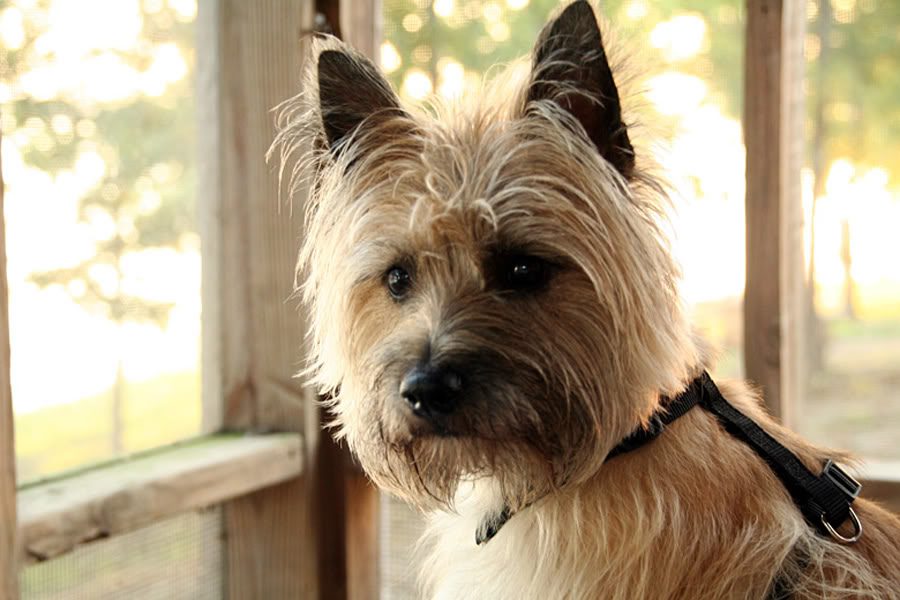
Cairn Terrier
Gran Bretaรฑa FCI 4 . Small sized Terrier

Cairn Terrier

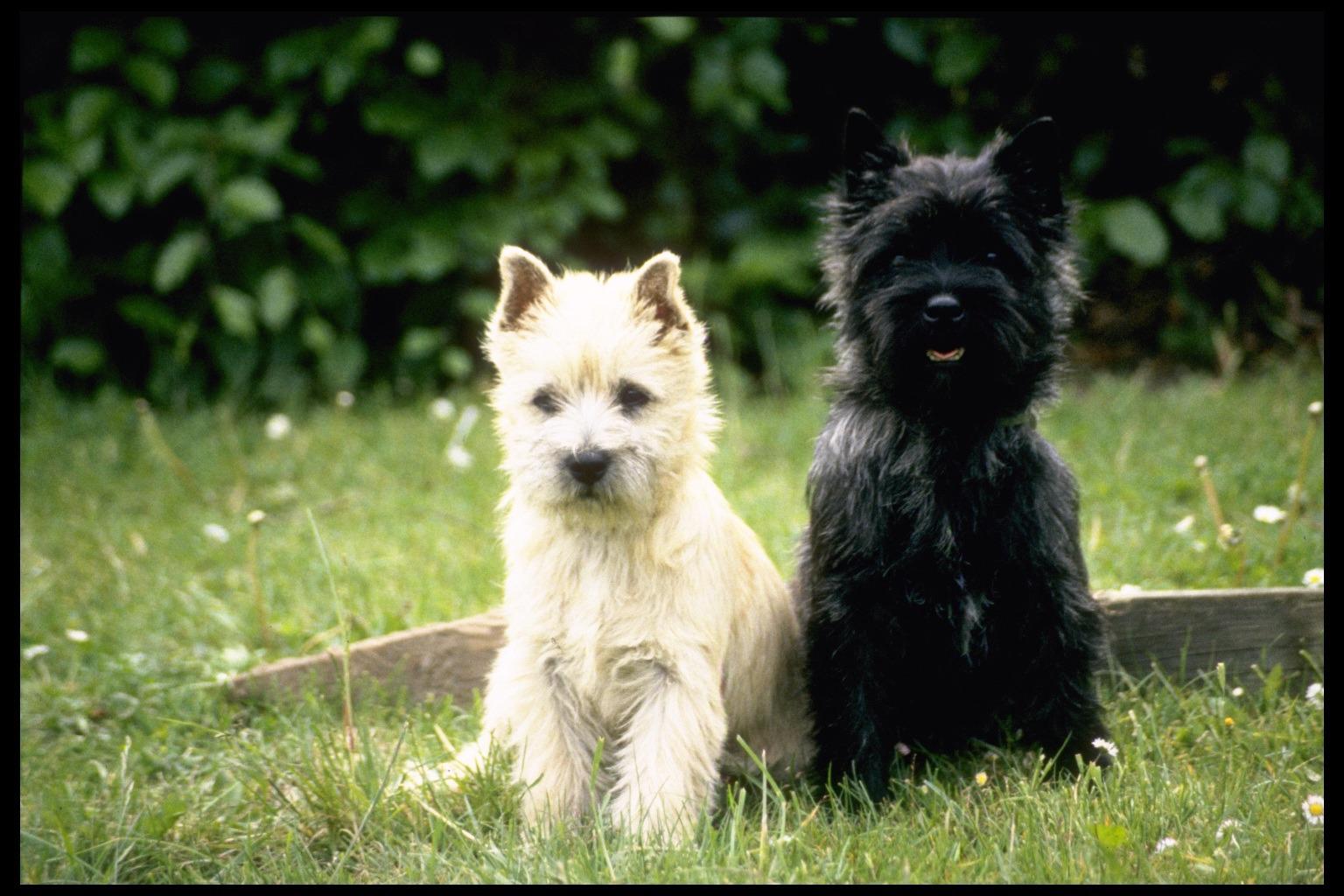
The Cairn Terrier It was originally bred as a hunting dog, to kill rats, Badgers, foxes

Content

History

The Cairn Terrier It is one of the oldest breeds of Terrier, originating in Scotland and recognized as one of the first Scottish working dogs. It was created for hunting and the prey's burrow. The Cairn Terrier are buzzards. In Scotland they hunted rats and other rodents.

In our country house, will do the job of a cat, often hunting mice, rabbits and squirrels.

Cairn Terrier belongs to the family of the Scottish Terrier. They are five:

History

The characteristics of the current breed are carefully modeled on their ancestor, the Terrier of the Isle of Skye 17th century. It is believed that this dog was the basis for developing races such as the lion and the Scottish.

The history of the Cairn Terrier is reinforced by the fact that the modern Cairn is an attempt to preserve the typical form of the Terrier of the old days., a dog of work of the Isle of Skye. Known in his native Scotland for more than 500 years, It is believed that it is the oldest of the Terrier.
Cairn Terrier was originally bred as a hunting dog, to kill rats, Badgers, foxes, weasels, and other small insects. He hails from the Isle of Skye, but to avoid confusion with the current Skye Terrier, He was appointed Cairn Terrier, in honor of the rock piles and where he used to look for his prey in his Scottish lands.

Did you know??

The most famous Cairn of all? That would be Toto in "The Wizard of Oz".

Physical characteristics

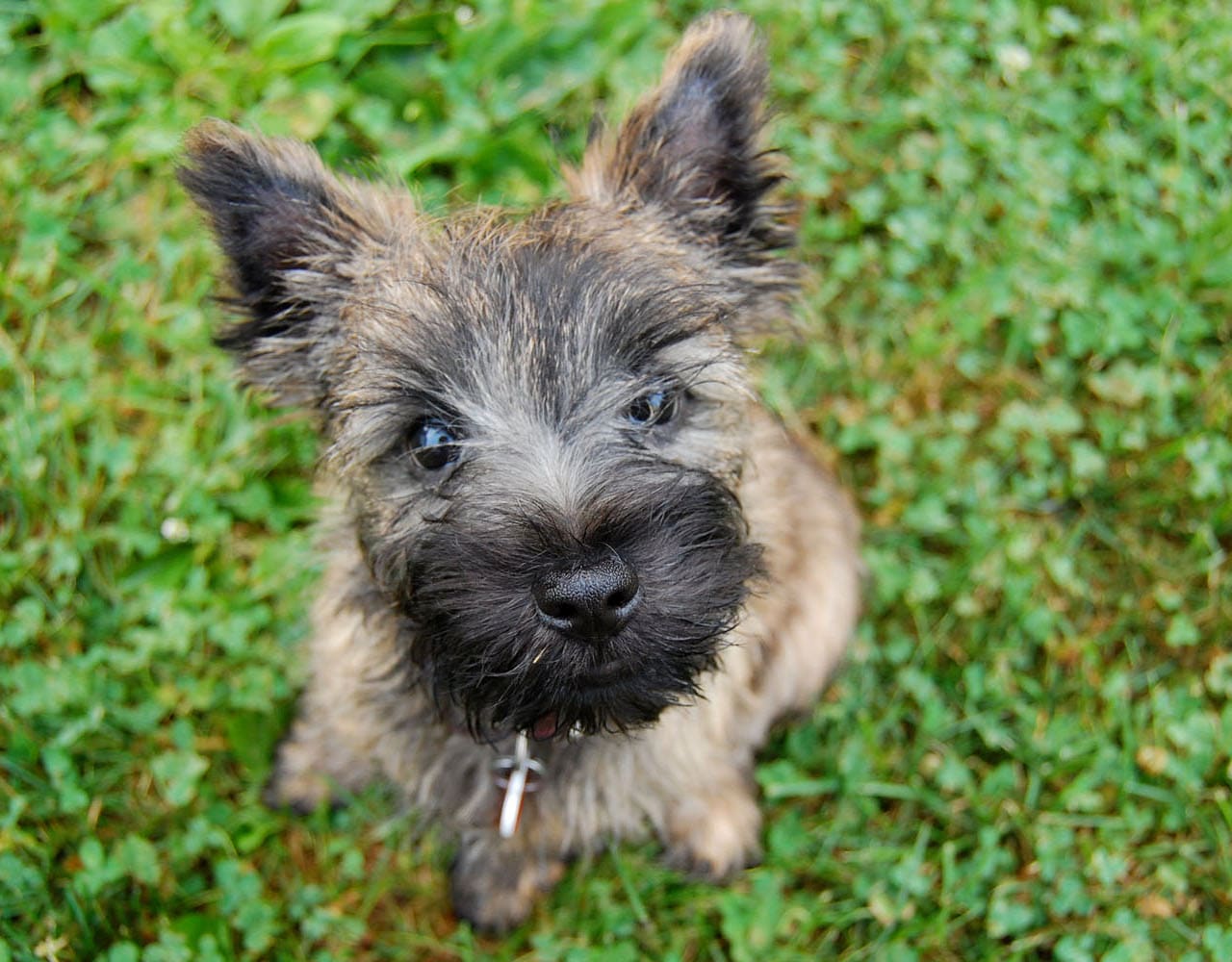
These dogs of short legs have a countenance of stooped appearance. Its thick cloak of hair is usually greyish in colour, light brown or sand, Although they are allowed all colors other than white.

A notable feature of the Cairns Terrier is the change in coat color throughout its life.. Is not uncommon to its striped pass to be increasingly more grey or silver, as you age. The fur has two layers, a soft, dense stuck to the skin, and other hard and rough, external. It is the smallest of the Terrier (the largest is the Scottish), its weight is of 6 to 7,5 kg. And its appeal is in 28 to 31 cm..

Many times, The Cairn Terrier is defined as a ยซbig dog trapped in the body of a small dogโ€, is an ex-officio adventurer, Intelligent, strong, loyal and hard, It is not at all a delicate and lap dog.

Character and skills

They are usually active, resistant, they are always on alert and cheerful, they are appreciated as pets as they are relatively easy to train and adapt well to small homes or apartments as they require no more than one brisk walk per day.

Like most Terriers, they love to dig looking for real or imagined prey. So, If you want to keep your lawn in conditions, It is not advisable to leave it many hours only.

Usually, they mix well with other dogs, But if there is possibility of confrontation they will defend their territory, they can't go back and face whatever lack. With the family they are very protectors and they usually get along with children, although they can't stand any rough game, as pulling of ears, shareโ€ฆ

Walking is an excellent exercise for Cairns and their owners. It is advisable to give long daily walks.

The life expectancy of these dogs is of 12-14 years, they tend to have the fairly delicate skin (and as they grow older, even more).

Characteristics "Cairn Terrier"

Coexistence is important that you have with your new friend. Before considering the acquisition of a dog of the breed "Cairn Terrier" you know certain factors. Not all breeds of dogs are apt to live in an apartment, you must take into account his character, their need for exercise, their interaction with other pets, their care and if you have small children, their level of tolerance towards them.

Adaptation โ“˜

3,0 of 5 stars (based on 1 review)

friendly dog โ€‹โ€‹โ“˜

3,0 of 5 stars (based on 1 review)

hair loss โ“˜

3,0 of 5 stars (based on 1 review)

Affection level โ“˜

5,0 of 5 stars (based on 1 review)

Need for exercise โ“˜

4,0 of 5 stars (based on 1 review)

Social need โ“˜

5,0 of 5 stars (based on 1 review)

Home โ“˜

3,0 of 5 stars (based on 1 review)

Toilet โ“˜

2,0 of 5 stars (based on 1 review)

Friendly with strangers โ“˜

3,0 of 5 stars (based on 1 review)

barking โ“˜

5,0 of 5 stars (based on 1 review)

Health โ“˜

3,0 of 5 stars (based on 1 review)

Territorial โ“˜

3,0 of 5 stars (based on 1 review)

Cat friendly โ“˜

3,0 of 5 stars (based on 1 review)

Intelligence โ“˜

4,0 of 5 stars (based on 1 review)

Versatility โ“˜

3,0 of 5 stars (based on 1 review)

Child friendly โ“˜

4,0 of 5 stars (based on 1 review)

Surveillance โ“˜

4,0 of 5 stars (based on 1 review)

joy โ“˜

5,0 of 5 stars (based on 1 review)

Cairn Terrier Images

Cairn Terrier Videos

Type and recognitions:

  • FCI CLASSIFICATION:
  • Group :
  • Section : . .

Federations:

FCI โ“˜, AKC โ“˜, ANKC โ“˜, CKC โ“˜, โ€‹KC โ“˜, NZKC โ“˜, UKC โ“˜

FCI breed standard "Cairn Terrier"

Origin:
United Kingdom, Scotland

Date of publication of the valid original standard:
24.06.1987

Use:

Terriers


General appearance:

Agile, alert, enterprising natural looking. Strong limbs, with good poise in the forelimbs and free movements. deep chest. Weather resistant coat.


Behavior / temperament:

It impresses with its activity, firmness and boldness. With a brave and cheerful character; self-confident, but not aggressive.

Head:

Small but proportionate to the body. Well covered head hair.

Cranial region:
  • Skull:  Width, with a well-marked indentation between the eyes.
  • Depression links (Stop):  Well defined.

facial region:

  • Truffle: black.
  • Snout:  Powerful.
  • Jaws/Teeth: Big teeth. Strong JAWS, but never long or large, with regular scissor bite, perfect and complete, that is to say that the internal face of the maxillary incisors is in close contact with the outer side of the lower incisors and placed at right angles to the jaws.
  • Eyes: Placed well apart, medium-sized, dark brown, slightly sunken and abundant eyebrows.
  • Ears: Small and finished in tip, well erect, not very long hair covers or gaskets.

Neck:

With good implementation in the backs and not very short.

Body:

  • Back: Straight and medium-long.
  • Pork loin: Strong and elastic.
  • Breast : Ribs well arched and deep.

Tail:

Short, provided, well covered with hair but not forming fringes. Its implementation should not be high or low, It must be carried happily but never stooped toward the back.

Tips

FORMER MEMBERS: Cutlery to wire-haired. Medium length and good bone but not very heavy.

  • Back: Face.
  • Elbows: Never returned outward or inward.

HINDQUARTERS:

  • Thighs: Very strong and muscular.
  • Knees: Buena,  but not excessive angulation.
  • Hocks:  Well descended, seen from the rear never inclined outward or inward.

FEET : The previous larger than the later ones, and may be slightly deviated outward. The pads should be thick and strong. Small feet, Straits, extended separate fingers with long nails is a defect.

Movement:

Walking should be easy and free movements. Front members should have a good breadth forward. Subsequent members must provide a strong driving power. Hocks should not be close together or far apart.

Mantle

HAIR: The texture of the hair is very important. You must withstand the weather and have a double layer: The outer layer is formed by hair, hard but not rough, the subhair should be short, smooth and dense. The hollow hair is a defect. Allowed a slight ripple.

COLOR: Cream, yellow, red, gray or nearly black. Accepted the Brindle in all these colors, but not solid black, white or black and fire. Dark spots on the ears and muzzle are very typical..


Size and weight:

About 28 โ€“ 31 cm. (11-12 inches) at the height of the cross, but in proportion to the weight, being the ideal weight between 6 and 7,5 kg (14-16 English pounds).


Fouls:

Any deviation from the above criteria is considered missing and the seriousness is considered to the extent of the deviation to the standardand its consequences on the health and well-being of the dog.

Any dog โ€‹โ€‹showing clear signs of physical or behavioral abnormalities should be disqualified..

FALTAS DESCALIFICANTES:

  • Aggressiveness or extreme shyness.
  • Any dog โ€‹โ€‹showing clear signs of physical or behavioral abnormalities must be disqualified..


N.B.:
  • Males should have two normal-appearing testicles fully descended into the scrotum..
  • Only functionally and clinically healthy dogs, with the typical conformation of the breed, should be used for parenting.

The latest changes are in bold.

TRANSLATION: SR. Lic. Oscar Valverde Calvo (Costa Rica) and Dr. Federico del Valle

Source: F.C.I - International Cynological Federation

Alternative names:

1. Cairn Terrier (English).
2. Cairn Terrier (French).
3. Cairn Terrier (German).
4. Cairn Terrier (Portuguese).
5. Cairn (espaรฑol).

โ–ท The world of Pets: Dogs, cats, birds, reptiles, amphibians

Cesky Terrier
Repรบblica Checa FCI 246 . Small sized Terriers

The lively ยซCesky Terrierยป He is small and like any terrier, loves to dig.

Terrier Checo

Content

Characteristics "Cesky Terrier"

Coexistence is important that you have with your new friend. Before considering the acquisition of a dog of the breed "Cesky Terrier" you know certain factors. Not all breeds of dogs are apt to live in an apartment, you must take into account his character, their need for exercise, their interaction with other pets, their care and if you have small children, their level of tolerance towards them.

Adaptation โ“˜

3,0 of 5 stars (based on 1 review)

friendly dog โ€‹โ€‹โ“˜

1,0 of 5 stars (based on 1 review)

hair loss โ“˜

2,0 of 5 stars (based on 1 review)

Affection level โ“˜

4,0 of 5 stars (based on 1 review)

Need for exercise โ“˜

3,0 of 5 stars (based on 1 review)

Social need โ“˜

3,0 of 5 stars (based on 1 review)

Home โ“˜

3,0 of 5 stars (based on 1 review)

Toilet โ“˜

4,0 of 5 stars (based on 1 review)

Friendly with strangers โ“˜

2,0 of 5 stars (based on 1 review)

barking โ“˜

3,0 of 5 stars (based on 1 review)

Health โ“˜

2,0 of 5 stars (based on 1 review)

Territorial โ“˜

5,0 of 5 stars (based on 1 review)

Cat friendly โ“˜

3,0 of 5 stars (based on 1 review)

Intelligence โ“˜

4,0 of 5 stars (based on 1 review)

Versatility โ“˜

2,0 of 5 stars (based on 1 review)

Child friendly โ“˜

3,0 of 5 stars (based on 1 review)

Surveillance โ“˜

3,0 of 5 stars (based on 1 review)

joy โ“˜

5,0 of 5 stars (based on 1 review)

History

The Cesky Terrier is a small dog characterized by a long head, dull, wedge-shaped with a face bearded, floppy ears, a body and a long coat, silky gray.

In 1949, The breeder Scottish Terrier And avid fontisik hunter Horak of what is now the Czech Republic crossed its Scottish with the ยซSealyham terrierยปTo create what would become the" Czech Terrier ", an elegant pack hunting terrier with a long coat, soft and silky.

Horak loved hunting skills of their Scottish Terriers and personality of the Sealyham Terrier, but not the white coat Sealyham. He believed that breeding the two would produce a dog that would get along while hunting in packs..

Horak dogs were crossed for the first time a Scottish terrier bitch named Donka Lovuzdar, which it was both a hunting dog as a dog conformation show, and Sealyham called Buganier Urquelle, who belonged to a Sealyhams hunting pack. In selecting the features he wanted (a dog that could go hunting on a Friday and that could be easily washed and brushed and he was ready to compete in exhibitions recognition on Saturday and Sunday), the Cruze was a dog with excellent olfactory abilities and a fur gray soft. He designed a haircut with scissors that showed the muscle and the soft fur of the "Czech Terrier" and gave it a thin appearance.

Horak's documentation of the dogs' pedigrees and the crosses he made make him one of the rare breeds that can be traced back to its founders..

Physical characteristics

The "Czech Terrier" is a very muscular hunter terrier, short-legged, well pigmented, rectangular format. It has floppy ears and sports long fur., thin but solid, slightly wavy, with a silky sheen, not too filling.

The coat comes in two color varieties: grey blue (to the puppies are born black) and light brown (to the puppies are born dark brown, chocolate). In both color varieties yellow markings allowed, gray or white.

The "Czech Terrier" is longer than high with a upper line that rises slightly backwards.

They are relatively similar to those of Sealyham terrier and the Scottish Terrier.

The height to the cross is of 25 to 32 cm. (ideal 29 cm for males, 27 cm for females).
The weight must be between 7 and 10 kg.

Character and skills

Like all races, The "Czech Terrier" is not suitable for everyone. It may be quieter than some breeds of Terrier, but still a Terrier. A "Czech Terrier" puppy is a very difficult dog to drive, with lots of energy. These small Terrie likes to hunt and dig them, and they need daily exercise in a safe playground. He will chase a ball and recover, and likes to go for a walk. They do not like to be left alone for long periods and can become annoying barkers if they do not have regular activity and company to channel their energy.. The "Czech Terrier" enjoys and stands out in agility and tracking.

Dog nature always on alert, their wariness of strangers and deep and loud barking it an excellent watchdog. He is loyal to his owner, but lack of socialization during puppyhood can do more reserved or even fearful of strangers. Your new puppy needs daily walks and trips to places suitable for dogs so you can meet people and see, smell and hear new things.

Like most terriers, The "Czech Terrier" can be stubborn. That does not mean it is intelligent, but will have to use patience and guile to train. Make training sessions are short and fun. Use lots of praise and rewards as games and goodies when you do something you like. Always I am firm and consistent in what you ask for that not to be confused with what you want or think you can get away with it. But, is sensible, so avoid harsh corrections. You must be able to convey his displeasure through the expression and tone of voice, never screaming or hitting.

Start training your puppy the day you bring him home. Even at eight weeks old, He is able to absorb everything you can teach. Don't wait until you have 6 months to start training him or you'll have to deal with a more stubborn dog. If possible, Take it to a trainer for puppies when you have between 10 and 12 weeks to socialize. But, Note that many kinds of training puppies require certain vaccinations (such as kennel cough) stay up to date, and many veterinarians recommend limited exposure to other dogs and public places until puppy vaccinations (including rabies, distemper and parvovirus) They are completed. Instead of formal training, You can start training your puppy to socialize at home and among family and friends until their complete vaccination.

Talk to the breeder, It describes exactly what you are looking for a dog and asks for help to select a puppy. Breeders see puppies daily and can make incredibly accurate recommendations once they know a little about your lifestyle and personality.. Regardless of what you want from a "Czech terrier", look for one whose parents have pleasant personalities and has been well socialized from the first stage of the puppy.

Did you know??

The "Czech Terrier" is one of those races developed to work a certain type of land: in your case, the forests of Bohemia. Prey ranging from duck and pheasant to the fox, the rabbit and the boar.

Health of the "Czech Terrier"

All dogs have the potential to develop genetic health problems, just as all people have the potential to inherit diseases. Avoid any breeder who does not offer a health guarantee on puppies., to tell you that race has no known problems, or whose puppies are isolated from the main part of the home for health reasons. A reputable breeder will be honest and open about breed health problems and how often they occur in their lines..

Having said that, The "Czech Terrier" is a healthy race. One of his races base, el Sealyham Terrier, it may have an eye condition called dislocation of the lens, so it is recommended that your eyes are examined annually Terrier.

Some "Czech Terrier" can develop a hereditary condition called Scottie Cramp, occasionally it affects the gait of the dog. Usually it is not serious.

Remember that after bringing a new puppy home, You have the power to protect one of the most common health problems: the obesity. Keeping a "Czech terrier" with adequate weight is one of the easiest ways to prolong their life. Take advantage of the full potential of prevention to help ensure a healthier dog for life.

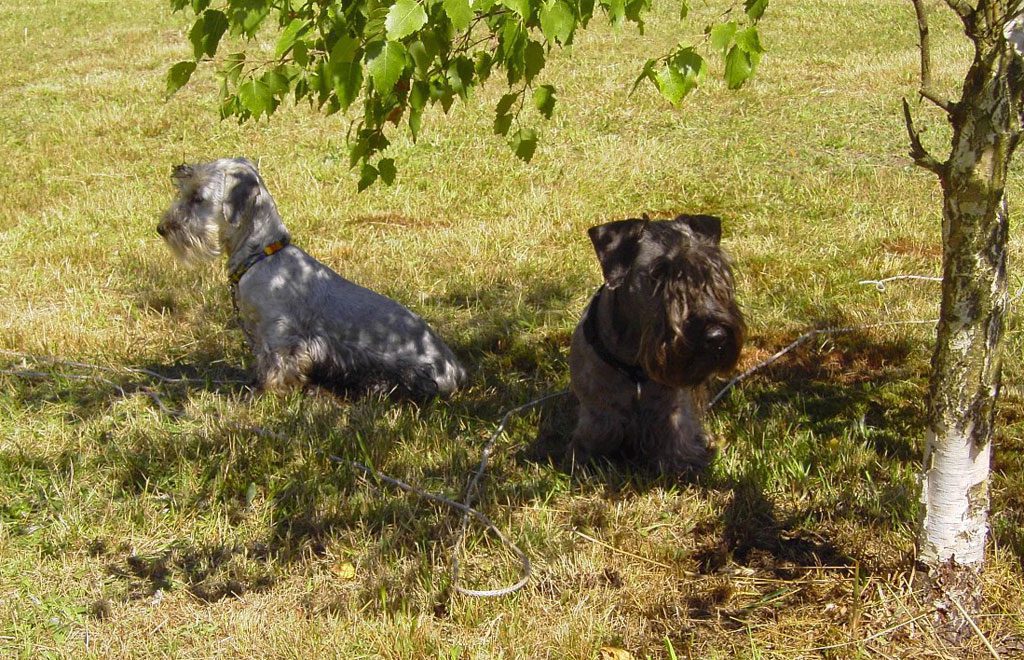
"Czech Terrier" images

credits:

1. Cesky terrier Terrier checo by ceskyfreund36 / CC0
2. Cesky terrier by https://pxhere.com/es/photo/1039221
3. English-Terrier – bitche during the international dogs show in Katowice, Poland by Pleple2000 / CC BY-SA
4. Cesky terrier by https://pxhere.com/es/photo/1391429
5. Cesky terrier on a stone forest by trees ceskyfreund36 / CC0
6. Cesky Terrier during dogs show in Katowice, Poland by Lilly M / CC BY-SA
7. English-Terrier – bitche during the international dogs show in Katowice, Poland by Pleple2000 / CC BY-SA

"Czech Terrier" videos

Type and recognitions:

  • FCI CLASSIFICATION:
  • Group :
  • Section : . .

Federations:

FCI โ“˜, AKC โ“˜, ANKC โ“˜, CKC โ“˜, โ€‹KC โ“˜, NZKC โ“˜, UKC โ“˜

FCI breed standard Cesky Terrier

FCIFCI - Cesky Terrier
Terrier

Alternative names:

1. Bohemian Terrier, ฤŒeskรฝ Teriรฉr (English).
2. Cesky Terrier (French).
3. Bรถhmischer Terrier, ฤŒeskรฝ Teriรฉr(German).
4. Ceskรฝ Teriรฉr (Portuguese).
5. Cesky Terrier (espaรฑol).

โ–ท The world of Pets: Dogs, cats, birds, reptiles, amphibians

Central Asian Shepherd Dog
Rusia FCI 335 - Molossoid . Mountain

Pastor de Asia Central

The Central Asian Shepherd Dog It is a cat with dog skin, sensitive and partner.

Content

History

The dog Central Asian Shepherd Dog (ัั€ะตะดะฝะตะฐะทะธะฐั‚ัะบะฐั ะพะฒั‡ะฐั€ะบะฐ or Sredneaziatskaya Ovtcharka, also known as, Volkodav or The Crusher Wolf) is recognized by the FCI, as a breed of molosser dog Russia, where most of the copies.

Russian cynological clubs agree that this is one of the most popular breeds in the country, on many occasions, considering it the number 1 in the ranking of Russian dog breeds.

The Central Asian Shepherd Dog It probably originated in a geographical area between the Urals, the Caspian Sea, Asia minor, and the Northwest of the border of China. The Central Asian Shepherd Dog, as well as mixtures with other breeds, yet, can be found in their countries of origin, as Kyrgyzstan, Tajikistan, Turkmenistan, Kazakhstan, Afghanistan, Uzbekistan and neighboring countries.

Some serve as guardians of livestock, some protect their owners, and some are used for dog fighting, which is a national tradition in many countries of the region. Russian scientists and biologists have studied the local dog population since the 18th century., so far.

After the Communist revolution, the Soviet Government focused on the working dog breeds for the Red Army, and imported the best representatives of the race to Russia accordance with the requirements of the army and guard dogs. For decades, This practice has harmed the local population. In addition to a large number of casualties, the introduction of new breeds to the region led to crossbreeding. With the time, purebred dogs were only left with some pastors and race enthusiasts, but in other places there was an excess of crosses.

But, and despite all, today the population of purebred dogs Central Asian Shepherd Dog remains stable, in general, and the reproduction of some true quality dogs that do honor to his capacity for work has been, regardless of country of origin.

In Europe, the Central Asian Shepherd Dog is relatively unknown, but in the countries of Central Asia it is still used as a working dog and accompanies shepherds on their walks through the steppes.

Physical characteristics

This breed has many varieties that differ in the size, the color, head types, and the types of fur. For these reasons it is very difficult to establish an official standard of the breed.

The Central Asian Shepherd Dog it is a dog of large or medium size, of rough constitution and strong musculature. Its coat is composed of the hard and smooth top layer and the abundant and dense inner layer. The top layer can be short (3 – 5 cm.) or slightly longer (7 – 10 cm.). With a longer top layer forms a distinctive mane around the neck. Due to a well developed undercoat and different lengths of the top coat, dogs adapt well to different weather conditions.

The coat color of the Central Asian Shepherd Dog it's very diverse: it comes in the colors white, black, grey, red fox, Brown grey, straw yellow, mackerel, spotted and mottled.

The ears are triangular, low-set and pendulous. The tail is thick at the base and set quite high. The natural tail is long and is carried like a sickle tail. Tail and ear docking is still practiced in the countries of origin.

Although there are unique characteristics of the purebred breed of dog Central Asian Shepherd Dog, such as being extremely flexible, This is very notable in their joints, have false ribs, the very strong neck and a large Chin.

Some have a black mask. The head is very solid, the neck is of low insertion, short, with double chin. The body is quite broad and proportionate with very flat muscles.. The ribcage appears very long, because they have their famous false ribs. The legs are straight, typical movement is a gallop.

He has expressive eyes, almost human, revealing his inimitable intelligence.

According to the qualities of work required by the owners, the modern Pastor of Central Asia has been raised in different directions, trying to highlight specific skills. Within the traditional area of origin of these canes, the dog fights were always, but they were never so cruel and destructive as the fights of type Pit Bull Terrier.

Every year the shepherds of the area would gather to organize dog fights Central Asian Shepherd, but unlike the bloody and ruthless fights of which we are used to hearing news, in this case they were fighting for the guardianship of a herd, and the winner was the dog that eventually, it was done with the control of it. It was about 'domination' instead of destroying each other's own kind.

Dogs rarely hurt each other, minor scratches were caused in most cases. only true leaders, In fact, you measured through a real fight, but that was not the most common. The primary task of these dogs has always been the defence of the flock to the attacks of various predators and venomous snakes.

The Pastor of Central Asia, It is one of the most powerful group of livestock guardian dogs dogs, after the Caucasian Shepherd Dog, the Kangal, Akbash, for example.

The height at the cross 60 to 65 cm.. And weigh in 37 to 50 kg.

Character and skills

In the news, rural people continue to demand and use the Central Asian Shepherd Dog like cattle watchdog, Although not as well as old.

These dogs, to varying degrees, are protectors against human intruders, they are very territorial, excellent with children, shall ensure them as if were his flock were. Love and respect for older people are some of its characteristics, to protect all small animals from predators, they are very kind and attached with the members of the family.

They do not need any complicated training to learn the basic rules of the house but they are quite stubborn and very independent dogs., the Central Asian Shepherd Dog It must be able to work as a team to protect sheep against predators, therefore, If the animal has an overly aggressive character, both other dogs as with people outside the family, they cannot be members of a Pack, and it would not pass the simple test for the fulfillment of the object origin of the race.

The Central Asian Shepherd Dog can come from build lines which print a very different character: of work, combat, and livestock guardian, and act accordingly, regardless of the country of origin.

According to the different kennel clubs, the classification within the groups varies, The Russian Kennel Club classifies the Central Asian Shepherd Dog like a working dog, that is reflected in the exceptional results in obedience, protection and training relating to the army.

Modern reproduction of the main Canine Clubs of Russia requirements, require to register copies of Central Asian Shepherd Dog a mandatory temperament test and an accredited training certificate, Besides show rating. In these tests the ability of the dog stands for fit and adapt to dog guardians shepherds of other flocks, not be cause for conflict between dogs. The FCI classifies Central Asian Shepherd Dog in the group of dogs Molossoid.

While it is a good dog to live, We must not forget that the Pastor of Central Asia is a livestock protection dog, people and possessions, He was raised to solve single problems, is independent-minded, strong, brave and responsible.

It is a large but agile dog, sometimes described as a cat with dog skin, for that reason, and taking into account his strong instinct for protection and territoriality, It may not be a recommended breed for a novice owner.

Sensitive and Intelligent, the Central Asian Shepherd Dog You will respond better to someone who can inspire loyalty in you as well as strong leadership..

Heavy-handed training will be counterproductive with this breed, but respectful training, reflexive will result in a dedicated and inseparable companion.

The Central Asian Shepherd Dog he spent a considerable amount of time moving around in his homeland, and this kind of slow but steady exercise is what he likes more.

With a work to be done and a piece of property to protect, is the highest point of happiness and will always keep an eye on everything that happens.

Central Asian Shepherd Dog Health

the breed is still considered very healthy and extremely robust. Owners should not fear the typical diseases of the breed. But, from time to time, like in all big dogs, joint problems occur, especially on the knees.

Central Asian Shepherd Nutrition

Although many joint diseases are inherited, symptoms can often be prevented or at least relieved with the help of proper diet and posture. Particularly in the growth phase of dogs, care must be taken that animals do not shoot too fast. Too rapid growth due to excessive protein intake in the growing months is considered one of the most common causes of later joint diseases. In addition to a fairly low protein food, given in small amounts about three or four times a day, young dogs should also be physically preserved during this phase. Stairs or long walks should be avoided..

Meat as the main component of food

When the Central Asian Shepherd Dog is fully developed, the protein content of the feed can be increased again. The main component of dog food should be – like in all dogs – high quality meat. It can be cooked or raw or, if industrially produced food mixtures are used, can be dry or wet. Regardless of the feeding method preferred by the respective owner, it is important that the content and composition of the food is adapted to the needs of the dog. According to age, sex, size, activity level and living environment, the composition of the necessary nutrients can vary considerably. There is no correct food for Central Asian Shepherd Dog.

How much food does he need? Central Asian Shepherd Dog?

Nor can the question of the amount of food for all dogs of this breed be answered in general. If the composition of the food is correct, the Central Asian Shepherd Dog can cope with surprisingly small portions. So, two meals a day are usually enough for an adult dog, which should be given at fixed times if possible. Portions too large, too many "snacks" between meals and not resting after feeding can increase the risk of stomach torsion.

Central Asian Shepherd Dog care

Like nomadic dog, the Central Asian Shepherd Dog it's quite undemanding, this applies not only to the size of your food portions, but also in your care. Short to medium length coat proves to be very resistant and requires little grooming. But, should be brushed regularly to remove dirt and maintain healthy hair structure. The claws should also be trimmed to avoid injury and teeth, ears and eyes should be checked and cleaned regularly.

Central Asian Shepherd Dog Education

The purchase of a Central Asian Shepherd Dog must be well considered – although this applies to all breeds of dogs, it is especially true for this breed from Central Asia. It is not a family dog รขโ‚ฌโ€นรขโ‚ฌโ€นin the classical sense nor is it suitable for a city life. This freedom-loving and independent dog finds it difficult to cope with living conditions in European industrial nations.

Who is this breed suitable for?

In the hands of livestock keepers and keepers who live in remote and isolated places, this protective dog of the pack is still in the best hands. Also people who live far from the city, own a large lot and wish to have a capable watchdog, can be considered as owners of this Central Asian Shepherd Dog. But, experience and some knowledge in dog training should be prerequisites to keep this breed. It also, an owner needs above all time and patience, because the socialization and education of this self-confident four-legged friend, who doesn't think much about blind obedience, It is hard work. How Central Asian dogs tend to dominate, they need a trainer who constantly sets limits for them and who shows them with the necessary empathy (not to be confused with willingness to compromise) that it is worth trusting and following your human.

Can a harmonious coexistence succeed?

The Central Asian Shepherd Dog certainly not a family dog รขโ‚ฌโ€นรขโ‚ฌโ€นin the classical sense, so its maintenance as a pure house and companion dog is absolutely inadvisable. This does not mean that a Owtscharka can't live together with humans. In a family that appreciates its natural instinct for vigilance and protection and gives it its original task of guarding the house, the yard and the cattle, the Central Asian Shepherd Dog is quite adaptable and human-oriented. A basic socialization, that is to say, early contact with other people and animals, is as important to harmonious coexistence as sufficient opportunities for running and consistent parenting.

Central Asian Shepherd Dog Pictures

Central Asian Shepherd Dog Videos

Type and recognitions:

  • FCI CLASSIFICATION:
  • Group :
  • Section : . .

Federations:

  • FCI – Pinscher and Schnauzer-Molossoid type dogs – Swiss Mountain Dogs and Cattledogs. Section 2.2 Molossoid, mountain type. โ“˜
  • AKC – FSS โ“˜
  • ANKC – Group 6 (utility dogs) โ“˜
  • NZKC – Utility dog โ“˜
  • UKC – Watchdog โ“˜

FCI breed standard "Central Asian Shepherd Dog"

Origin:
Russia

Date of publication of the valid original standard:
13.10.2010

Use:

Guard and surveillance dog.


General appearance:

The Central Asian Shepherd Dog is of a harmonious build and great stature, moderately long (never with a long or short body). Robust and muscular body, bulky but not with visible muscles.

Clearly defined sexual dimorphism. Males are thicker and more courageous than females with a more pronounced cross and a larger head.. Full maturity is reached at the age of three.

IMPORTANT PROPORTIONS: The length of the body only slightly exceeds its height at the withers. Increased height is desired but proportional structure must remain. Length of forelimbs to elbows is 50 โ€“ 52% the height at the withers.

The length of the snout is less than ยฝ the length of the head but more than 1/3.


Behavior / temperament:

Self-confidence, silent, balanced, proud and independent. Dogs have great courage and high capacity for work, resistance and a natural instinct for territoriality. Courage in the face of large predators is one of its characteristics

Head:

Solid and well balanced with the overall appearance. The shape of the head is rectangular, top and side view.

Cranial region:
  • Skull: deep. The antecara is flat and the skull area is flat and long. Occiput well defined but hardly visible due to well-developed musculature. Supraorbital arch moderately defined.
  • Depression links (Stop): Moderately defined.

facial region:

  • Truffle: Grand, well developed but not exceeding the general outline of the muzzle. The color is black but in white and beige dogs the truffle may be somewhat lighter.
  • Snout: The muzzle is blunt and of moderate length., it is rectangular seen from above and the sides tapering slightly towards the nose. The muzzle is bulky, deep and well filled under the eyes. Wide nasal bridge, straight and sometimes slightly sunken. Well developed chin.
  • Lips: Thick. Upper lip tight, covering the bottom when the mouth is closed. Full black pigmentation preferred.
  • Jaws / Teeth: The jaws are strong and wide. Teeth are big, white and next to each other, 42 in total. Incisors positioned aligned. Scissor bite accepted, reverse clip and scissors. Canines positioned well apart. An injury to a tooth that does not affect the use of the bite is of no consequence.
  • Cheeks: Cheek bones are long and well developed, without interfering with the straight rectangular shape of the head.
  • Eyes: Medium size, oval-shaped, placed well apart, looking well ahead. Moderately sunken placement. Eye color from dark brown to hazel. Darker color is preferred. The eyelids are thick and preferably with the lower eyelid not too loose. The third eyelid should not be visible. The edge of the eyelids is preferred fully pigmented. Whatever the hair color, the eyelids must be black. His expression is confident and dignified.
  • Ears: Medium size, Triangular shape, thick, low insert and pendants. Your lower level or slightly below your eyes. Traditionally amputated ears as illustrated on the first page, which is practiced in the country of origin and in countries where it is not prohibited by law.

Neck:

Neck is medium length, very strong, oval transversely, well muscled and low set. The dewlap is a characteristic of the breed.

Body:

  • top line: Well proportioned and well sustained. In the posture you must maintain the typical upper line.
  • Cross: Well defined, especially in males, muscle, long and tall with a well defined transition to the back.
  • Back: Straight, width, good muscular; the length is ยฝ of the length of the withers to the insertion of the tail.
  • Pork loin: Short, width, muscle, slightly arched.
  • Rump: Moderately long, wide, well muscled, slightly inclined towards the tail insert. Height at withers exceeds height above hip in 1 โ€“ 2 cm..
  • Breast : Deep, long, width, well developed, rib cage widening to the posterior. False long rib. Lower chest at elbow level or slightly below. The forechest extends slightly in front of the humerus/scapula joint.
  • Bottom line and belly: Moderately retracted abdomen.

Tail:

Thick at the base and somewhat high insertion. The natural tail is carried curved in the shape of a sickle or curved in a loose ring that begins in its last third.. When alert, the tail rises to the level of the back or slightly higher. Traditionally the tail is docked in the illustrated manner which is practiced in the country of origin or in countries where it is not prohibited by law.. Natural glue is valued the same as amputated.

Tips

PREVIOUS MEMBERS:

  • General appearance: Right members of strong bones, viewed from the front parallel and not very close to each other. Seen on side, the forearm is straight.
  • Shoulder: Long scapula, well inclined, forming an angle with the forearm of approximately 100ยฐ. Well muscled.
  • Forearm: Oblique, long and strong.
  • Elbows: Tight fitting without turning in or out. Arm: Straight, very strong bone, long, oval transversely.
  • Metacarpus: Moderately long, width, strong, rights.
  • Previous feet: Large, rounded, arched toes, bulky and thick pads; nails can be any color.

LATER MEMBERS:

  • General appearance: Viewed from behind straight and parallel, placed somewhat more apart than the previous ones.
  • Thigh: Width, moderately long and with strong musculature.
  • Knee: Without turning neither inwards nor outwards. Its angulation is moderate.
  • Leg: Always the same length as the thigh.
  • The Hock joint: Moderately angled.
  • Metatarsals: Very strong and of moderate length, perpendicular. Without spurs.
  • Hind feet: Large, round, arched toes, bulky and thick pads; nails can be any color.

Movement:

Well balanced and elastic. Jog with free reach of the forelimbs and strong push from the rear. Top line remains firm during movement. All joints tilt effortlessly. The angulations of the posterior are more defined during the movement than during the stop..

Mantle

SKIN: Thick, loose enough to prevent injury during combat against predators.

  • Fur: Abundant, smooth, thick with well-developed inner hair. The hair on the head and on the front of the limbs is short and thick.. The hair on the cross is sometimes longer. Outer hair may be short or slightly longer. Depending on the length of the outer hair there may be shorter hair (3 โ€“ 5 cm.), covering the entire body or longer hair (7-10 cm.) forming a mane on the neck, feathers behind the ears and on the back of the limbs and on the tail.
  • Color: All except genetic blue or genetic brown in any combination and black cloak on fire.


Size and weight:

Height to the cross:

  • Males: Minimum 70 cm..
  • females: Minimum 65 cm..

The largest size is desired but the proportional structure remains.

Weight:

  • Males: Minimum 50 Kg.
  • females: Minimum 40 Kg


Fouls:

Any deviation from the aforementioned criteria is considered as a fault and the severity of this is considered to the degree of the deviation to the standard and its consequences on the health and well-being of the dog..

  • Slight deviation from the typicality of the breed.
  • Females with male type tendencies.
  • Rounded skull, narrow snout, narrow lower jaw, small nose.
  • Oblique eye placement or eyes close together, loose eyelids.
  • High insertion of the ears.
  • Thin or hanging lips.
  • Height above rump. Slightly short rump.
  • Narrow forehead.
  • Exaggerated angulations of the posterior.
  • Open foot and long toes.
  • Hackney movement, slightly unbalanced movement.
  • Too short hair.

SERIOUS FAULTS:

  • Too nervous.
  • Significant deviations from the type and structure required.
  • Long-limbed appearance, Lightweight bones, soft muscles.
  • Very light eyes or protruding eyes.
  • Top line descended.
  • Croup much higher than the cross.
  • Narrow rump, short and steep.
  • Naturally short tail, broken tail.
  • Very high metacarpus, low.
  • Hindquarters placed too far apart under the body.
  • Height to the cross 2 cm less than the minimum required in the standard.

FALTAS DESCALIFICANTES:

  • Aggressiveness or extreme shyness.
  • Any dog โ€‹โ€‹showing clear signs of physical or behavioral abnormalities must be disqualified..
  • Shy or overexcited.
  • Male female type.
  • Prognathic or clearly enognathic bite.
  • Different colored eyes, blue or green eyes, bizco.
  • Loose joints.
  • Hair of any combination of genetic brown or genetic blue.
  • Fire color with a black cloak.
  • Cloak the soft or smooth.
  • Unbalanced movement.


N.B.:

Males should have two normal-appearing testicles fully descended into the scrotum..

Only functionally and clinically healthy dogs, with the typical conformation of the breed, should be used for parenting.

Source: F.C.I - International Cynological Federation

Alternative names:

1. Alabai, Central Asian Ovtcharka, CAO Aziat (English).
2. Chien de berger d’Asie centrale (French).
3. Zentralasiatischer Owtscharka (German).
4. Tรผrkmen Alabaรฝ, mastim-da-รกsia-central (Portuguese).
5. Perro Pastor de Asia Central (espaรฑol).

โ–ท The world of Pets: Dogs, cats, birds, reptiles, amphibians

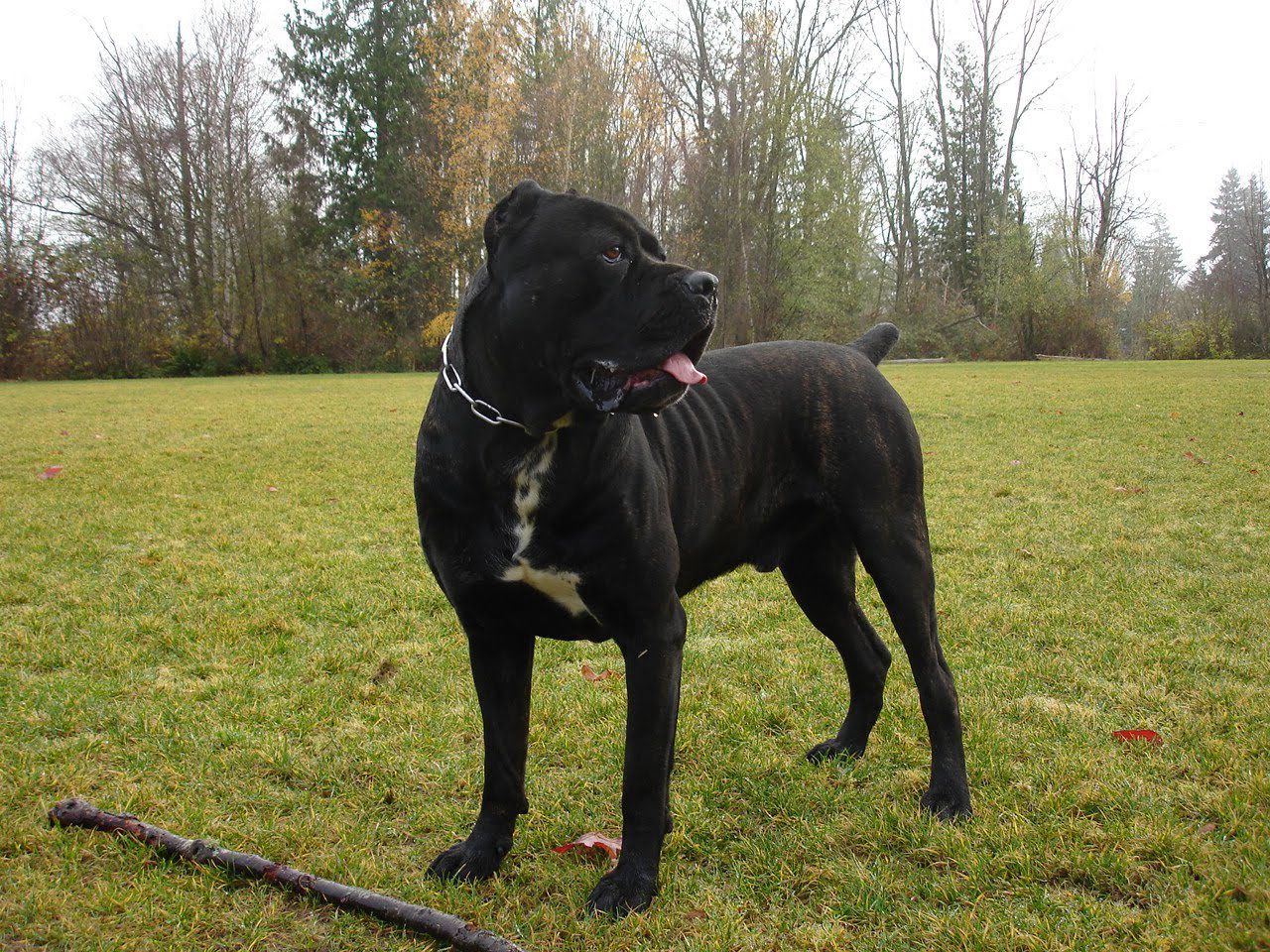
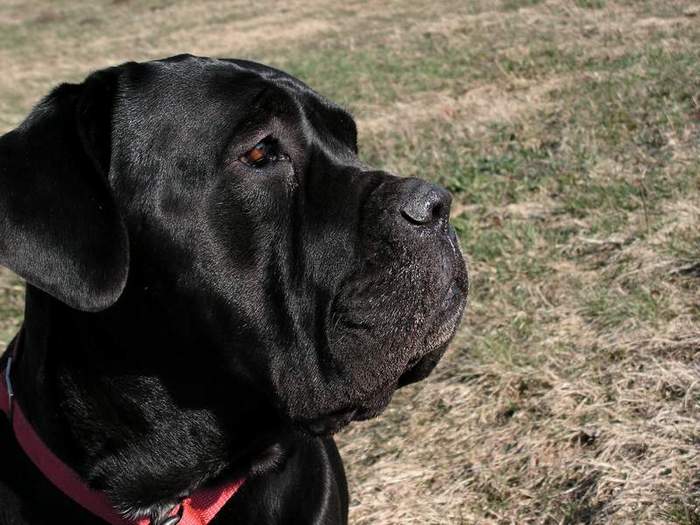
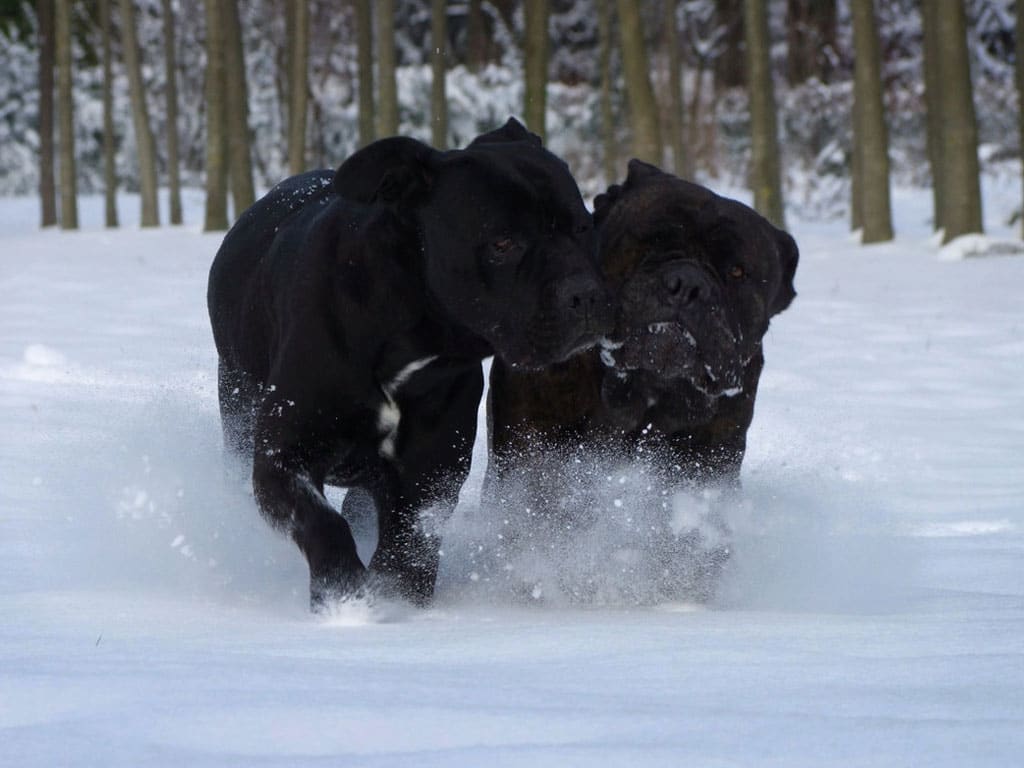
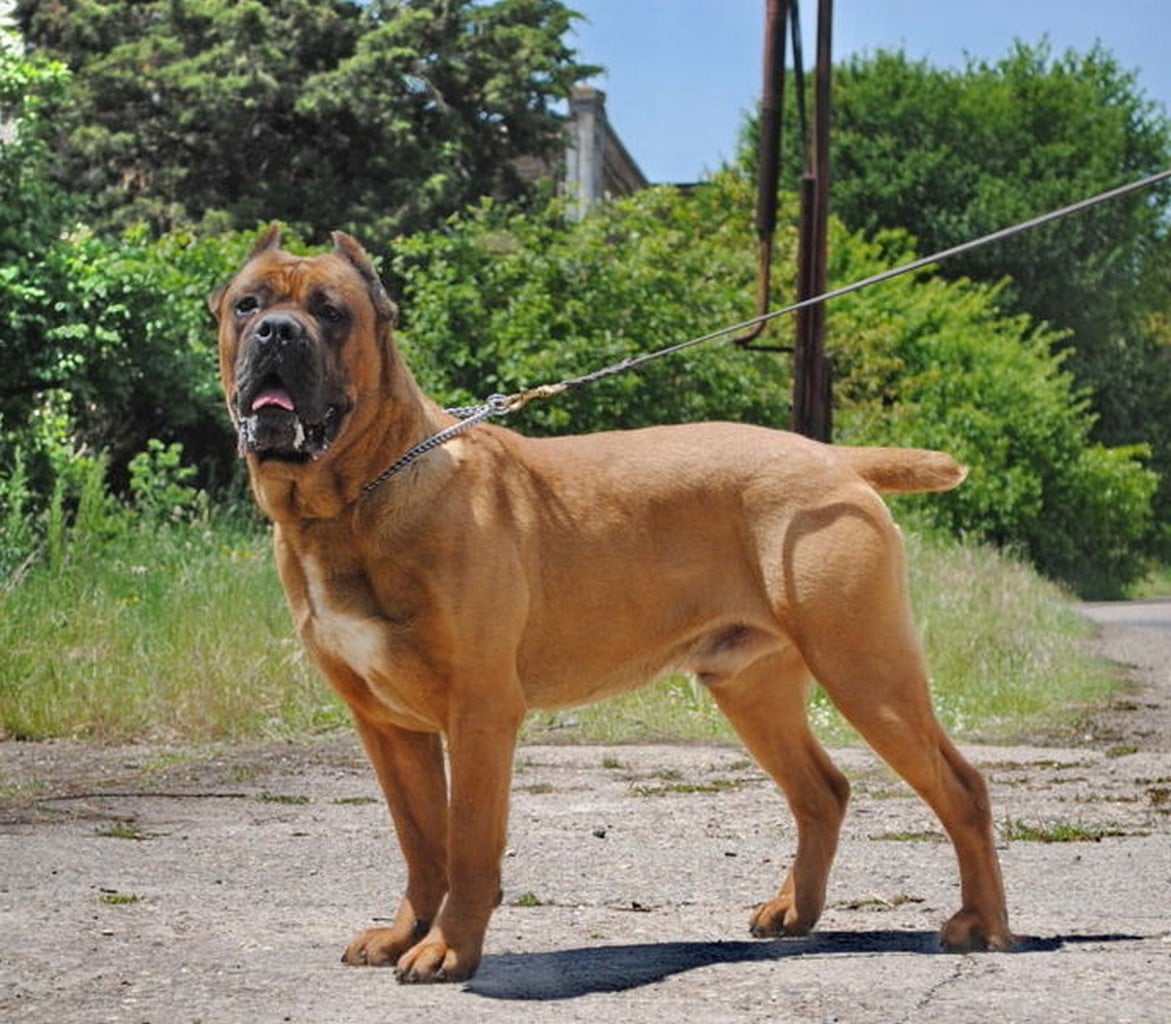
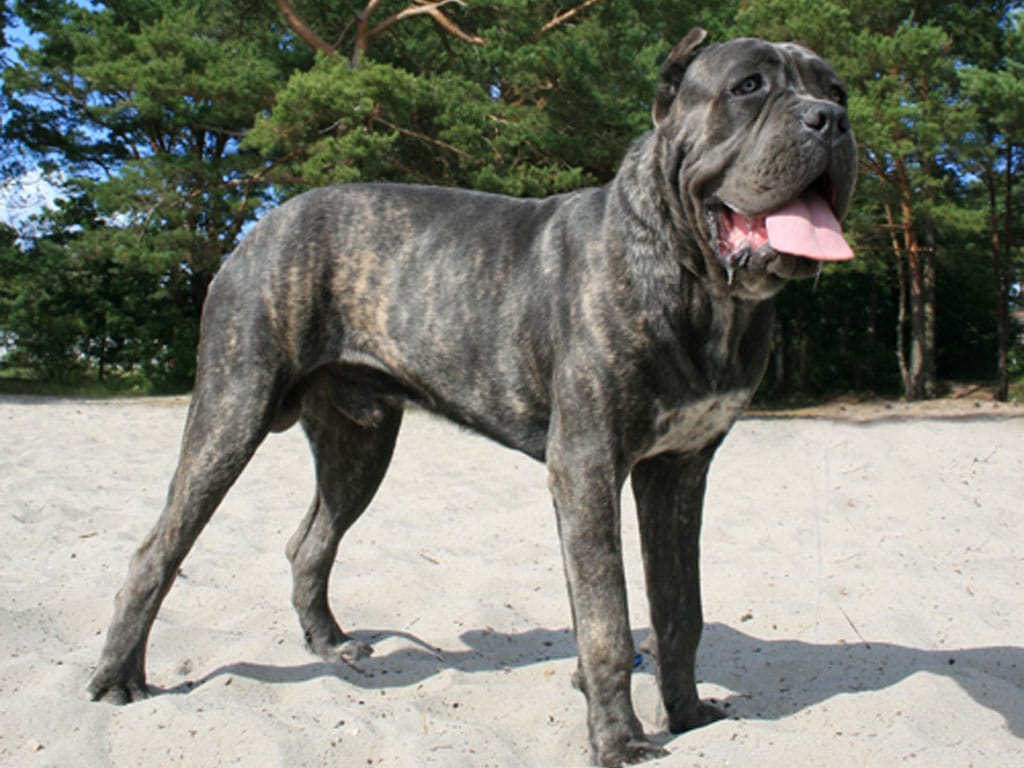
Cane Corso
Italia FCI 343 - Molossoid - Dogo

The Cane Corso It is a versatile and balanced dog that can adapt to all.

Cane Corso

Content

Characteristics "Cane Corso"

Coexistence is important that you have with your new friend. Before considering the acquisition of a dog of the breed "Cane Corso" you know certain factors. Not all breeds of dogs are apt to live in an apartment, you must take into account his character, their need for exercise, their interaction with other pets, their care and if you have small children, their level of tolerance towards them.

Adaptation โ“˜

2,0 of 5 stars (based on 1 review)

friendly dog โ€‹โ€‹โ“˜

3,0 of 5 stars (based on 1 review)

hair loss โ“˜

1,0 of 5 stars (based on 1 review)

Affection level โ“˜

3,0 of 5 stars (based on 1 review)

Need for exercise โ“˜

3,0 of 5 stars (based on 1 review)

Social need โ“˜

4,0 of 5 stars (based on 1 review)

Home โ“˜

2,0 of 5 stars (based on 1 review)

Toilet โ“˜

1,0 of 5 stars (based on 1 review)

Friendly with strangers โ“˜

1,0 of 5 stars (based on 1 review)

barking โ“˜

2,0 of 5 stars (based on 1 review)

Health โ“˜

4,0 of 5 stars (based on 1 review)

Territorial โ“˜

5,0 of 5 stars (based on 1 review)

Cat friendly โ“˜

1,0 of 5 stars (based on 1 review)

Intelligence โ“˜

5,0 of 5 stars (based on 1 review)

Versatility โ“˜

3,0 of 5 stars (based on 1 review)

Child friendly โ“˜

4,0 of 5 stars (based on 1 review)

Surveillance โ“˜

3,0 of 5 stars (based on 1 review)

joy โ“˜

5,0 of 5 stars (based on 1 review)

History

Something small and elegant that the Neapolitan mastiff, the Cane Corso (or Italian mastiff) It was used in the past not only as Cattle dog but also in wild boar hunting, and as dog escort on long journeys of traders and, even, as a grip of Bull Dog. It was widespread throughout the southern Italian region and even more so in Calabria, Lucannia, Pugglia, and Sannia, until end interrelating so with history, the tradition, and local legends that, in the Royal Lottery game, the Corsican was assigned the number 22.

Both fierce and determined appearance, as its imposing structure of all the molossians, They seem to be on the agenda of its name, therefore means powerful Corso, robust, strong, and these are, without a doubt, its main characteristics.

Others attribute the etymological origin of the word to the Latin "cohors" or senior guardian of the body or to the Greek "kortos.", referring to the fact that he kept and watch people and animals during periods of transhumance. Finally, others see the name associated with the island of Corsica. The truth is that outside of Italy very little is known about the Cane Corso and that even in its country of origin, for years, the race has remained forgotten and ignored. He took that in 1973 Professor Giovanni Bonatti referred to the presence in the province of Puglia of a "short-haired Molosser dog, different from the Neapolitan mastiff, similar to the Bullmastiff and similar to the dog's Mallorquin Damยป so that a group of enthusiasts got to work and tried to recover it and make it known inside and outside the country.

In fact its official recognition from the ENCI (Ente Nazionale di Cinophilia Italian) has only taken place in January of 1994, Once the table of work of the societร ย  Amatoria Cane Corso (SACC) provide sufficient documentation, photos, data and a large group of typical specimens to defend its existence and ancient origin.

It is almost always difficult to make History of the history of a dog breed, but in the case of the Cane Corso there was enough documentation that revealed its presence since ancient times in the southern part of what is now Italy. Certainly had to be traced back to many centuries ago, Learn about the legends of the inhabitants of the Mezzogiorno, investigate its folklore and more ingrained traditions, Learn about its history, the superstitions of an entire people, but, finally, After many years of intense and arduous research, Professor Fernando Casolino, of the SACC, He managed to gather enough data to this impressive animal because they have been many, many written and pictorial references that have been found about this dog. It should be noted some dating as far back as the 15th and 16th centuries, such is the case of the burlesque poems written in Italian mixed with Latin by the Benedictine friar Folengo or the quotes in the ยซOf Quadrupelibusยซ, the renowned physician and naturalist Gessner, known as the "German Pliny", without forgetting the very detailed description of the illustrious Valvassone, which evidenced his power and the strength of his jaws in the "Poem of the Head".

In the 18th century, the count of Leclerc, Georges Buffon, He mentioned him in his "Natural History" as did Oronzio Costa in his treatise on "The fauna of the Kingdom of Naples.", published in 1839. Thirty years later Palumbo also wrote about our protagonist in his "Catalog of Sicilian Mammals".

Quotations continued to be frequent and already in 1900 Spalikowski mentioned him in his work ยซEvolution of the dog in the human societyยซ, of essential reading for all lovers of dogs; much closer in time are the articles and works published by Fiorenzo Fiorone, Danilo Mainardi, Bonatti Mizzoli and how does not, my good friend Mario Perricone, who in the "Great Encyclopedia of the Dog" published by Agostino in 1987, He wrote widely on race, in which the most important monographic article on the Cane Corso is considered. Recently De Prisco and Johnson also mention him in the "Canine Lexicon" referring to him as "a recreation of the ancient Cane of Marcellaio.", under the heading of โ€œSicilian Branchieroโ€, explaining that it existed exclusively in Sicily and that it was known for its particular way of moving in front of the herd, so according to the authors it could even be related to the German bullenbeiser and that "on the island it functioned as a butcher's dog and a herd driver with unique abilities" that, At one time "he was able to participate in bullfights just as other butcher dogs did on the Continent".

Priscus and Johson they also claim that in the eighties they arrived to the United States.UU. the first puppies imported by a Sicilian farmer who died soon after and which constitute the scant breeding base in that country.

They have been missing many years of work and staff of a few efforts to again talk of Italian Corso Dog, race so ancient and so deeply linked to the traditions and the history of the South of Italy and properly recover virtually from scratch. There was, in fact, There were many contradictions about which dog truly resembled and contained the very essence of the Cane Corso and it took many debates and many discussions to finally agree on which specimen the foundations of the new breeding lines should be based on..

They all ended up agreeing on a male named "Dauno" who summarized the very essence of the race and who outlined the path that those who should follow should follow., with a passion beyond doubt wore years looking for precisely this path. It was decided to locate up to three closely related subjects in order to establish the characteristics of the breed., just as the Ballota professors had described it, Bonatti and Casolina.

After exhaustive research studies and, at the end, not without major sacrifices, the recovery programme was gradually bearing fruit. In 1988, the ENCI Board of Directors decided that the time had come to gather as many copies as possible, produced by people not linked to that society both the scope of the SACC, and carry out a pilot trial in order to check homogeneity of type, of construction and character and its similarity with the characteristics described in the draft standard that the SACC had presented to them. In three exhibitions-Bari, Florence and Milan- the judges Morsiani, Perricone and Vandoni examined fifty copies; then, in the autumn of that same year the SACC presented the ENCI the outcome of the first census carried out by the Lords Bruno and Indiveri which is didn't data out of a total of 57 perfectly typical and rustic specimens already registered.

Did you know??

The Cane Corso is also known as Dogo di Puglia, which means "dog of Puglia".

As a result of all this effort, the ENCI promulgated the opening of an "Open Book" in which all adult specimens that had been duly tattooed could be registered., and therefore recognized as conforming with the standard project and in just four years became part of the same over 500 dogs, so it was clear that the recovery program had been successful.

Such results finally gave rise to the official recognition of the race in January of 1994.

Modernity and the decline of the work for which it was intended, have not prevented this race from maintaining its characteristic gifts. He continues to be a dog with a tenacious temperament but does not bite for anything. It is one of the best races of property protection. If you are very fond with the owner can be very sensitive to your mood.

Physical characteristics

Its skin is thick enough, with tissue limited connective and therefore virtually glued to the subcutaneous tissues of each region. The neck does not present practically double chin. The head does not have to submit wrinkles. The pigment of the mucous and the esclerosas has to be black. The pigment of the soles and nails must be dark.
The coat is short but not satin, glassy in texture, gleaming, bright, adherent, serious, very dense, with a light layer of undercoat that is accentuated in winter, without that never reaches to emerge on the hair of coverage. His medium-length is 2/2′ 5 cm.. On the cross, the rump, and the subsequent edges of the thigh and on tail reaches the 3 cm., without ever giving rise to fringes. On the nose hair is private, smooth, adherent and not more than 1/1′ 5 cm..

It may be black, grey lead, Slate gray, light grey, Griffon clear, Red cervato, Dark tawny and striped (stripes against a background of Griffon or grey colour of various shades). In fawn and brindle subjects, a black or gray mask is present whose extension should not exceed the line of the eyes. Admitted a small white patch on the chest, at the tip of toes and on the nasal helm.

The height the cross in the males is of 64 to 68 cm., in the females of 60 to 64 cm.. With tolerance of 2 cm more or less. The weight in the males is of 45 to 50 kg (ratio weight /talla 0,71 kg per cm). And in the females of 40 to 45 kg (ratio weight /talla 0,68 kg/cm).

Salud de Cane Corso

Some of the health conditions that have been in the Cane Corso are the Hip Dysplasia, eye problems such as Entropion or ectropion, demodectic mange and the tendency to bloat.

Remember that after bringing a new puppy home, has the power to protect you from one of the most common health problems: the obesity. Cane Corso maintain an adequate weight is one of the easiest ways to prolong life. Make the most of your preventive skills to help ensure a healthier dog for life.

Character and skills

His character affable and faithful with their own. His psychological balance and extreme functional versatility that allows you to adapt to everything, He is doing to gain more followers and indeed again used you in grazing and foster as old tasks, and also in the hunt, although little by little it is gaining a preferential position as a companion animal and in what has been called therapy with domestic animals (ยซpet therapyยป).

But, for its size and extraordinary force Cane Corso owner should be able to educate from the first moment to always have it under control, in such a way that never conflicts surprises or, It must learn from puppy what is right and what not, What is prohibited and what is allowed, so that later there will be no setbacks, recommending further vocational training of certain circumstances, provided that the dog has acquired a certain degree of maturity, Therefore we must not forget that, in the case of molossians, their psychological development is always slower than the physical.

Aware of its size and appearance, corso usually does not express nervousness and willingly accepts to any person that his own master will accept either. When he is assigned the custody of a property his balanced temperament allows her always from a background, with great discretion, and only in the case of real necessity, act and attack. Thus we can conclude that the Cane Corso is an impressive animal, balanced and effective in any task requiring him. There is a legend made reality.

Cane Corso's Education

With patience and sensitivity
The Cane Corso is not a beginner dog and only belongs to responsible hands. Learn quickly and with pleasure if you treat it with patience and sensitivity during training. If it is to be kept as a family dog, Cane Corso's protective instincts should not be encouraged during training. Early and comprehensive socialization is especially important, so that the dog gets used to other people and animals and reacts calmly in all situations.

Care of Cane Corso

Cane Corso's coat is shiny, smooth and short, and does not require extensive cleaning. Cane Corso has a thin undercoat that can protect it from the cold at times. A massage sponge or soft brush should be used regularly to stimulate blood circulation. – this ensures a healthy and shiny coat.

Nutriciรณn Cane Corso

Only with high meat content
With prepared food, pay attention to a high meat content, low grain content and high quality. An adult dog needs enough fresh meat and vegetables for a healthy diet.. Young dogs, on the other hand, should not be fed too much protein. Foods that are too high in protein can promote growth too quickly and encourage skeletal diseases. Food should be divided into two meals a day. One of them must be given directly after the daily walk. In this way the dog gets his reward after the "work done".

The life expectancy of the Cane Corso

Cane Corso can reach a relatively high age, what is really unusual for such large dogs. A healthy and active dog will easily reach the age of 10 to 14 years, as long as you exercise a lot and have a balanced diet. This robustness and long life expectancy compared to other larger dog breeds are due to the strong bone structure and robust construction.

Buy Cane Corso

Serious breeders offer not only a pedigree with a complete record of the dog's ancestors, but also a complete advice that goes beyond the purchase. Before buying or reserving a puppy, exhaustive information must be obtained from the local authority to know what conservation regulations exist.

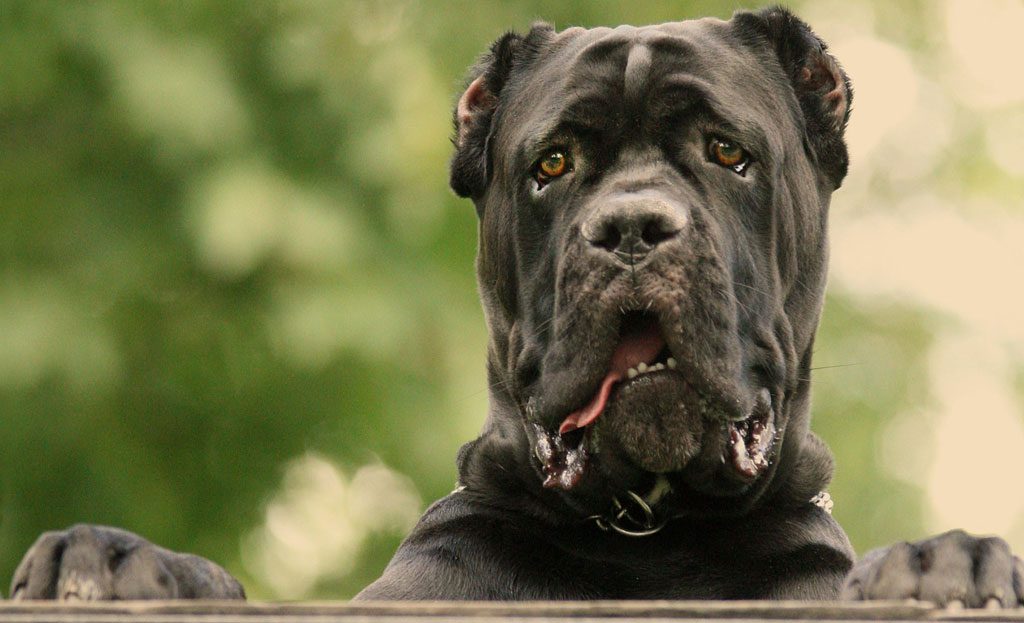
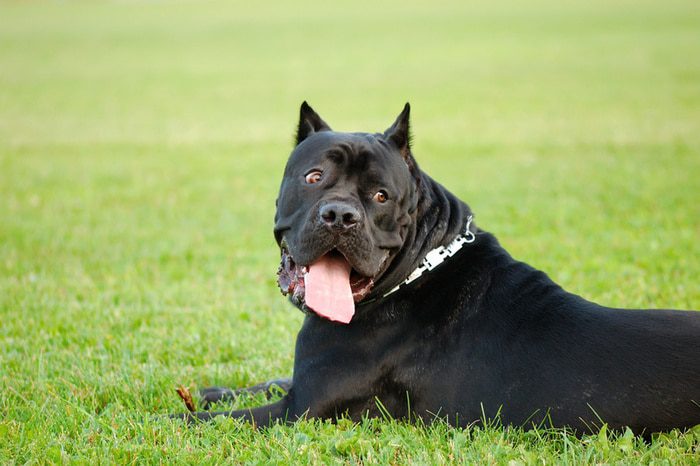
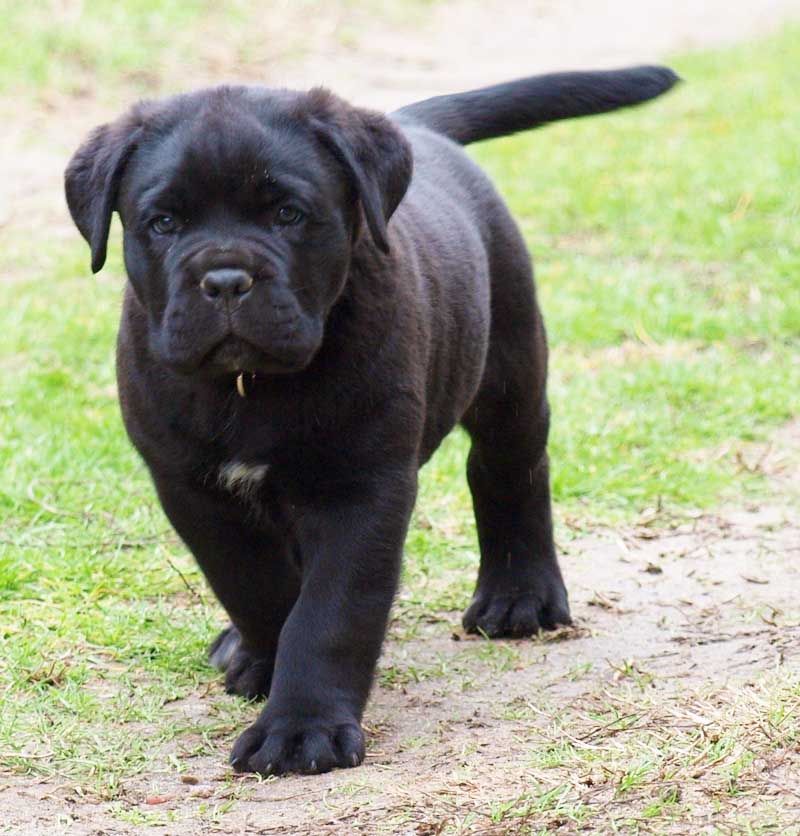
Images Cane Corso

Vรญdeos Cane Corso

Type and recognitions:

  • FCI CLASSIFICATION:
  • Group :
  • Section : . .

Federations:

FCI โ“˜, AKC โ“˜, ANKC โ“˜, CKC โ“˜, UKC โ“˜

FCI breed standard "Cane Corso"

Origin:
Italy

Date of publication of the valid original standard:
13.11.2015

Use:

Utility dog, multipurpose


General appearance:

Medium to large size. Robust and strong dog, However, with some elegance. Lean and powerful muscles.


IMPORTANT PROPORTIONS: The dog is rectangular in outline and slightly longer than it is tall. (The length of the dog is 11% greater than your height). The length of the head reaches the 36% from his height to the cross.


Behavior / temperament:

Guardian of property, family and cattle; extremely agile and responsive. In the past, It has been used to herd cattle and for hunting larger game..

Head:

Wide, typically molossoid. The superior longitudinal axes of the skull and the nasal cannula are slightly convergent with each other..

Cranial region:
  • Skull: Width; in the zygomatic arch, its width is equal to or greater than its length. Slightly convex in the front, the skull becomes significantly more plane behind the front to the back of the head. The medio-frontal furrow is visible.
  • Depression links (Stop) :  Marked.

facial region:

  • Truffle: Black and bulky, with large and open Windows. It is placed in the same line as the nasal cannula.
  • Snout: Significantly shorter than the skull (relationship skull : I muzzle approximately 1:2). Strong, square, as long as width; the front of the snout is flat; the lateral sides of the muzzle are parallel. Profile view, the nasal helm is straight.
  • Lips: The upper lips are moderately pendulous and cover the jaw., in such a way that the lower profile of the muzzle is formed by the lips.
  • Jaws / Teeth: Very wide jaws, thick and curved. Light lower prognathism; the clip joint is tolerated, but not desirable.
  • Eyes: Medium-sized, egg shape, slightly protruding; the gaze is directed forward. The eyelids are well glued. The iris color is as dark as possible depending on the coat color. Expression : lively and vigilant.
  • Ears: Triangular, pendants; its inclusion, located well above the zygomatic arch, is wide; to often amputated short in the form of an equilateral triangle.

Neck:

Strong, muscular, as long as the head.

Body:

The body is slightly longer than the height at the withers. Of strong Constitution, but not Dumpy.

  • Cross: Pronounced, exceeds the level of the rump.
  • Back: Rectilinear, very muscular and stiff.
  • Pork loin: Short and solid.
  • Rump: Long and wide, slightly tilted.
  • Breast : Chest well developed in three dimensions, descends to the elbow.

Tail:

Rather high insertion, very thick at the root. It amputated at the fourth vertebra. In action, rises, but never erect or curled up Rather high set, very thick at the root. It amputated at the fourth vertebra. In action, rises, but never an upright or threaded.

Tips

PREVIOUS MEMBERS:

  • Shoulder : Long, oblique, very muscular.
  • Arm: Powerful.
  • Forearm: Straight, very strong.
  • Carpus and Metacarpus:  Elastic.
  • Front feet: Cat feet.

LATER MEMBERS:

  • Thigh: Long, width, convex removed.
  • Leg: Strong, not fleshy.
  • Hock: Moderately angled.
  • Rear feet: A little less compact than the previous.

Movement:

Long step, lengthened trot; the trot is the preferred motion.

Mantle

  • SKIN : Slightly thick, more firmly attached to the subcutaneous tissues.
  • HAIR: Short, bright, very dense, with thin inner layer of hairs.
  • COLOR: Negro, Gris-Plomo, Gris-pizarra, light grey, Griffon clear; Red cervato, Dark Fawn; striped (stripes on a background of gray or tawny color several shades). Black and brindle dogs have a black or gray mask on the muzzle that should not extend beyond the eye line.. A small white spot on the chest,  in the tips of the toes and on the nasal helm is admitted.


Size and weight:

Height to the cross:

  • Males of 64 to 68 cm..
  • females of 60 to 64 cm..

Tolerance of more or less 2 cm..

Weight:

  • Males of 45 to 50 kg
  • Females from 40 to 45 kg.


Fouls:

Any deviation from the aforementioned criteria is considered as a fault and the severity of this is considered to the degree of the deviation to the standard and its consequences on the health and well-being of the dog..

SERIOUS FAULTS :

  • Parallelism or the upper axes of the skull and the muzzle very marked convergence. Sides of the muzzle converging.
  • Partial depigmentation of the nose.
  • Scissor bite; marked lower prognathism.
  • Threaded queue; led tail straight.
  • Permanent amble on the trot.
  • Weight that exceeds or does not reach the size indicated in the standard.

MISS PLAYOFFS

  • Cowardice, aggression toward owner.
  • Divergence of the upper axes of the skull and the muzzle.
  • Complete depigmentation of the nose.
  • Very convex or concave nose cane.
  • Upper prognathism.
  • Complete or partial depigmentation of the eyelids. Eyes gazeos; strabismus.
  • Absence of tail; short tail (cut or not).
  • Semi-long hair, very short or forming fringes.
  • All colours not indicated in the standard, long white spots.

Any dog โ€‹โ€‹showing clear signs of physical or behavioral abnormalities should be disqualified..


N.B.:

Males should have two normal-appearing testicles fully descended into the scrotum..


TRANSLATION : ENCI, Dr. I.. Small and the Sr. Ermanno way.

Source: F.C.I - International Cynological Federation

Alternative names:

1. Italian Mastiff, Italian Corso Dog, Cane Corso Italiano (English).
2. Cane Corso Italiano, Chien de Cour Italien (French).
3. Cane Corso, ITALIENISCHER CORSO-HUND (German).
4. Mastim Italiano (Portuguese).
5. Mastรญn italiano (espaรฑol).

โ–ท The world of Pets: Dogs, cats, birds, reptiles, amphibians

Cimarrรณn uruguayo
Uruguay FCI 353 - Molossoid - Dogo

Cimarrรณn

The Cimarrรณn uruguayo also called Cimarrรณn dog or Creole cimarrรณn is the only breed developed entirely in Uruguayan territory.

Content

History

The Cimarrรณn uruguayo Bulldog is a dog type molosoide, medium-sized, compact and strong, the fur can be striped or also bayo (cream-coloured) and snout black. His temperament is docile, cunning and guardian, ideal for guard, company or big game. It is recognized as a race in Uruguay from 1989 and internationally by the Federation Cynologique Internationale – FCI, from the 21 in February of 2006.

Etymologically Cimarron is a term applied in America (originally on the island of Hispaniola) to everything that having been domestic or civilized returned to the wild or wild state, by referring in this case to their refuge in the heights (Indeed in the mountains and valleys hidden) Sierras, with which cimarrรณn would be "he who lives on the peaks or hides in them".

The original specimens of the wild dog descended from the dogs introduced by the Spanish and Portuguese conquerors..
The natural crosses that were taking place in the wild is that it evolved in the course of two centuries a native variety perfectly adapted to the environment of the Uruguayan Plains.

ยซTell your master that when I lack men to fight his henchmen, I have to fight them with Maroon dogsยป: Josรฉ Gervasio Artigas to the Gral. Carlos Federico Lecor.

The dog breed called Cimarrรณn dog or Criollo cimarrรณn is the only breed developed entirely in Uruguayan territory.

Non-domestic dogs in the world, Whether original species or breeds produced by the feralization of domestic breeds that returned to the natural environment and managed to readapt to it, they show a physical development that is totally different from this one., so it is highly arguable that this breed produced in the Uruguay as a supposed model maroons dogs mentioned in ancient chronicles and documents reflect the natural demeanor of those. All wild dogs of the world, Because of what is known as "convergence" at an evolutionary level, they have long legs, erect ears, slender body, exceptions that occur in extreme climates (enormous ears of certain dogs of African deserts or small ears of Arctic foxes).

There are detailed chronicles of attacks by packs of these dogs on caravans and people, that led to the authorities of the time (end of the 18th century) they already have and encourage major massacres, reaching count by tens of thousands dead dogs.

Each dead animal was paid by the authorities of the time, requiring proof of death presented the jaw or the pair of ears of the animal. From this practice would derive the characteristic ear cut that is performed on many newborn pups., in the shape of a "cougar ear".

Despite these massacres, ยซโ€ฆa good number of mothers with their offspring conquered the mountains of Olimar and especially in the Sierra de Otazo and in the Cerros Largosยป, in what is now known as departments of Cerro Largo and Treinta y Tres, where many ranchers and landowners in this place, they took advantage of the virtues of this breed for working with cattle and defense of his property, beginning to raise it, preserving the mixing.

Modern traces of the breed begin to become more public in the early 1990s. 1980, When numerous breeders of Montevideo, attracted by the remarkable characteristics some specimens, they begin to develop their parenting and standardization.

It is in 1989 When this work begins to pay its fruits, to being the Cimarrรณn Uruguayo officially recognized by the Association of the Rural Uruguay (A.R.U.) and the Kennel Club Uruguayo (K.C.U.), 20 years after the first exposure of a specimen of the breed in the K.C.U.
Thus, the Association of Uruguayan Cimarrones Breeders was created and together with the K.C.U.. It prepares the official roll of the race, selecting the base dogs of the same and registering their pups, being tattooed for the first time with this registration number.

Today the character attributes of this breed called Cimarrรณn They make it increasingly popular in Uruguay and region, being employed as a companion dog, Guard and hunting, especially the wild boar.

Physical characteristics

The Cimarrรณn Bulldog is a dog of medium size type, balanced, strong, compact, with good osatura, muscular, shrewd and great courage. The size and weight of the males is of 58 to 61 cm. of height and 38 to 45 weight kg. And of 55 to 58 cm. of height and 33 to 40 weight kg, in females.

Character and skills

It is excellent to work with cattle dog, hunting and guard. Predominant livestock activity of these lands and the consequent abundance of food without great competition with other natural predators, the bighorn reproduced in large numbers becoming – according to historical documents – in a true plague and scourge for the inhabitants of the countryside and the livestock.

This race since its standardization has attracted a growing interest both within the Uruguay border, having copies of this dog in various countries of America, from United States to Argentina, counting this last country with several breeders of Cimarrรณn Uruguayo.
Another of the steps achieved for the genetic improvement of the breed called Cimarrรณn Uruguayo is the signing of an agreement between the University of the Oriental Republic of Uruguay, through its Faculty of veterinary medicine with the Maroons breeders society for the study of the zootechnical status and consanguinity of the exemplary enrolled in their rolls.

This long process of standardization was crowned the 21 in February of 2006 When the International Bureau of the Federation Cynologique Internationale (FCI) gives international recognition to the Uruguayan Cimarron.

The breed standard states that the dog must have great courage. Like all large dogs, Cimarron Uruguayo should be well socialized when very young if you want to be kept as a companion. It is a very friendly dog รขโ‚ฌโ€นรขโ‚ฌโ€นwith children and other animals.

Cimarron Uruguayo is sometimes used for surveillance, hunting and all dog sports in his native Uruguay. Being a very intelligent dog has been used for all kinds of jobs, as rescue or grazing.

A dog is fairly quiet and stable, rarely bark unless the threat is real.

The primitive Cimarrรณn dog, by its roots in the Uruguayan territory, It has been from the very beginning of the national identity of this town a symbol of the independence struggle, faithfully reflected in the letter sent by General Josรฉ Gervasio Artigas in response to General Carlos Federico Lecor, Count of la Laguna and Governor of the Provincia Cisplatina (current Uruguay) in which Artigas expressed that if it was left without soldiers to fight, I would do it with the Cimarron dog.

It is because of this tradition that this breed is currently a symbol and mascot of the National Army of Uruguay., having a preferential place in the annual military parades of the 18 July. On this occasion, a soldier of the battalion of Blandengues (the company that Artigas himself knew how to lead at the time) He rides leading the parade carried a Moorish Steed without along rider which is a sheep dog by the flange.

Images "Cimarrรณn uruguayo"

credits:

1. Cimarron Uruguayo – Kennel La Bonfire by Leonardo Botiรฃo Fonseca / CC BY-SA
2. Cimarron Uruguayo by brindle / CC BY-SA
3. The Finnish Winner Show, Helsinki, 2015. By Thomas / CC BY-SA
4. Nbistolfi / CC BY-SA

Videos "Cimarrรณn uruguayo"

Type and recognitions:

  • FCI CLASSIFICATION:
  • Group :
  • Section : . .

Federations:

FCI โ“˜, UKC โ“˜

FCI breed standard Cimarrรณn uruguayo

FCIFCI - Cimarrรณn uruguayo
Cimarrรณn

Alternative names:

1. Cimarron, Uruguayan Cimarron, Cimarron Creole, Maroon Dog, Cerro Largo Dog, Perro Cimarron, Cimarron Dog (English).
2. Cimarrรณn uruguayo (French).
3. Cimarrรณn Uruguayo (German).
4. Cimarron uruguaio (Portuguese).
5. Perro Gaucho, Perro criollo, Cimarrรณn (espaรฑol).

โ–ท The world of Pets: Dogs, cats, birds, reptiles, amphibians

Castro Laboreiro Dog
Portugal FCI 170 - Molossoid . Mountain
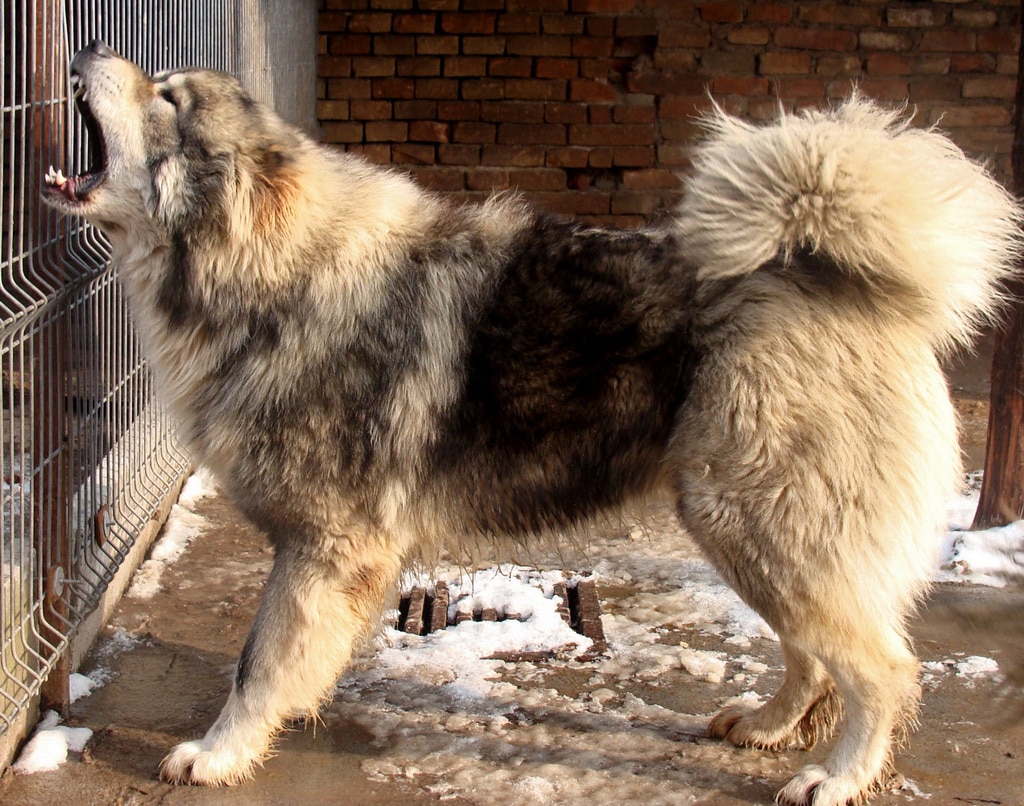
Perro de Castro Laboreiro

The Castro Laboreiro Dog It is an excellent guard dog and companion

Content

History

The Castro Laboreiro Dog (Cรฃo de Castro Laboreiro) It is a breed of Portuguese dog of large size. Originating in the parish of Castro Laboreiro, Melgaรงo, is a dog type Lupoid amastinado is lighter than other breeds of cattle dogs.

The Castro Laboreiro Dog it has its origin in the region that gave it its name, the people of Castro Laboreiro, in the municipality of Melgaรงo. It is a rugged mountainous region that stretches from the Miรฑo river to the Peneda and Soajo mountains between the Trancoso rivers, Laboreiro and moro, until around 1400 m above sea level.

Like the dog, Castro Laboreiro is one of the oldest regions of the land of Portugal. The prehistoric remains such as dolmens and rock paintings, They demonstrate the presence of man in the region for thousands of years. The strengths are evidence of the strong presence of Celtic culture in the region. Also the Celts and the Romans came here, the roman roads and the construction of bridges with their landmarks. The castrejas communities have always lived of hunting, fishing, grazing and agriculture.

Read more

โ–ท The world of Pets: Dogs, cats, birds, reptiles, amphibians

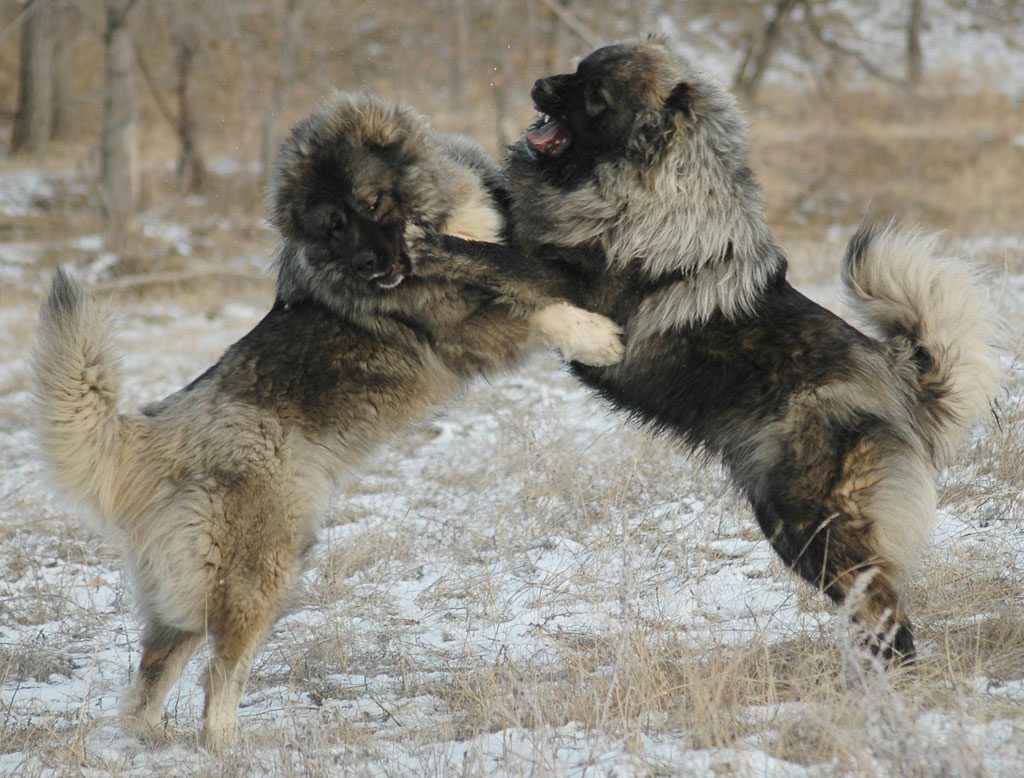
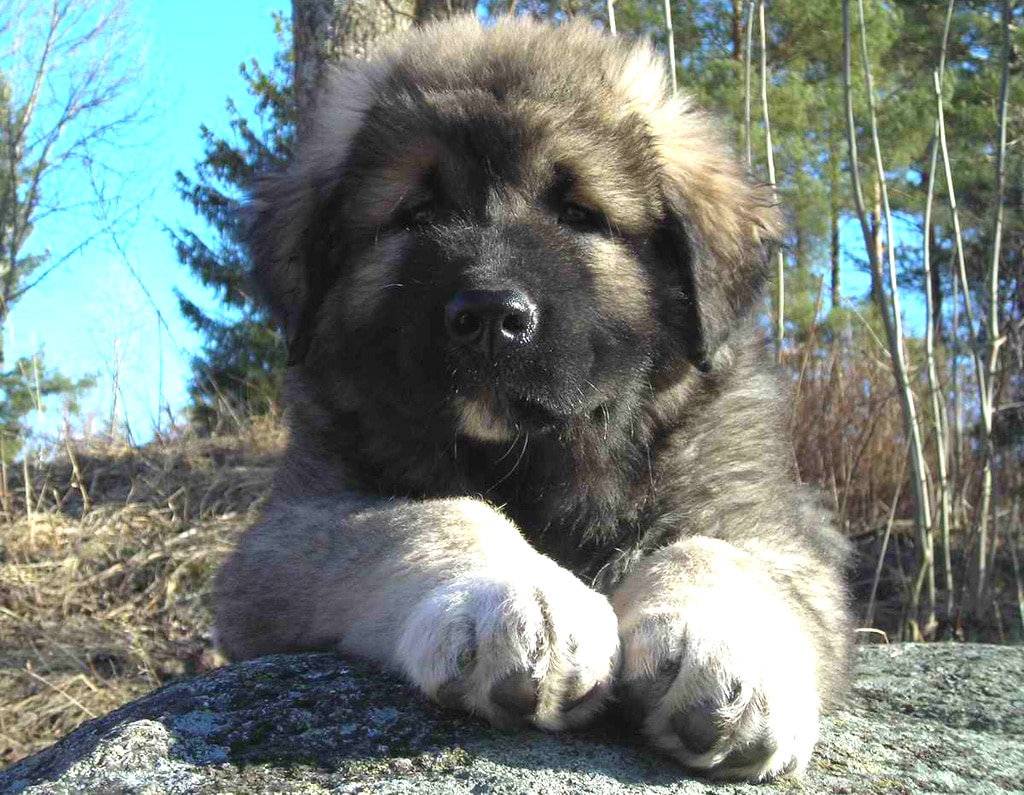
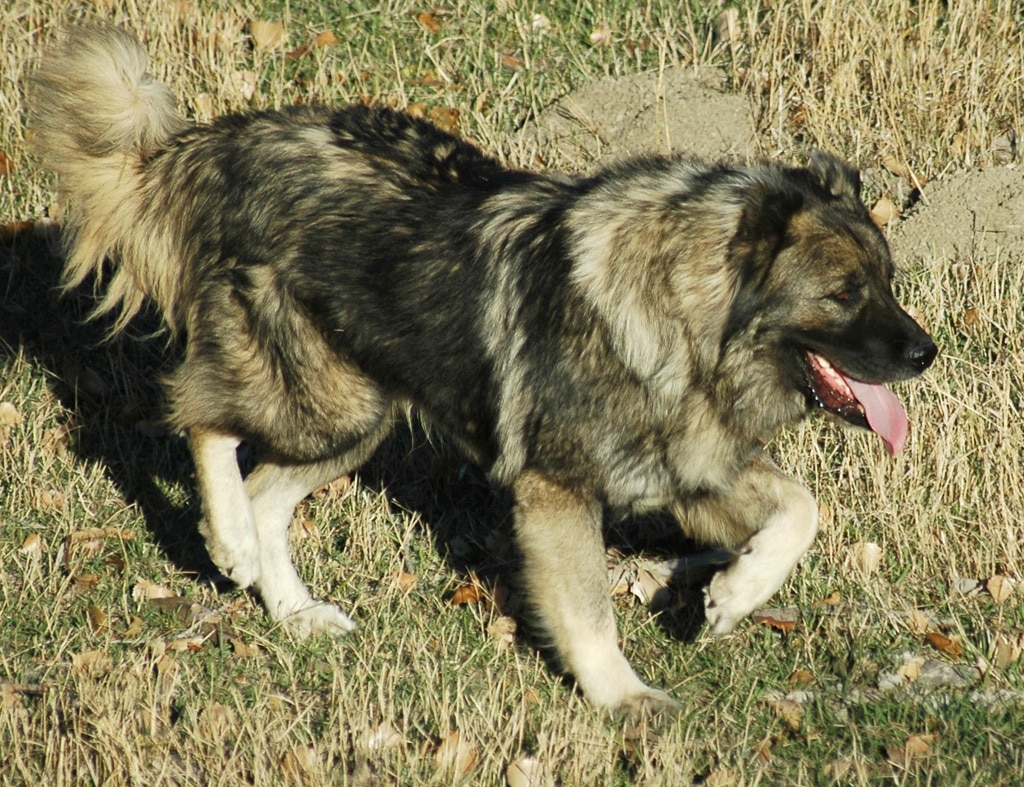
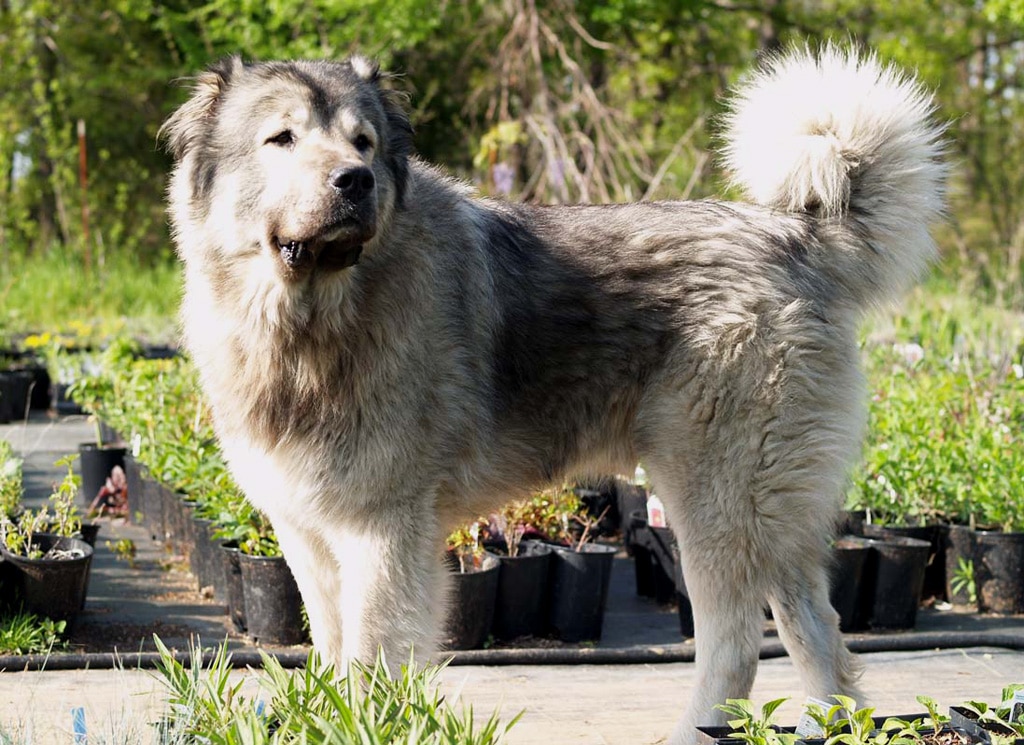
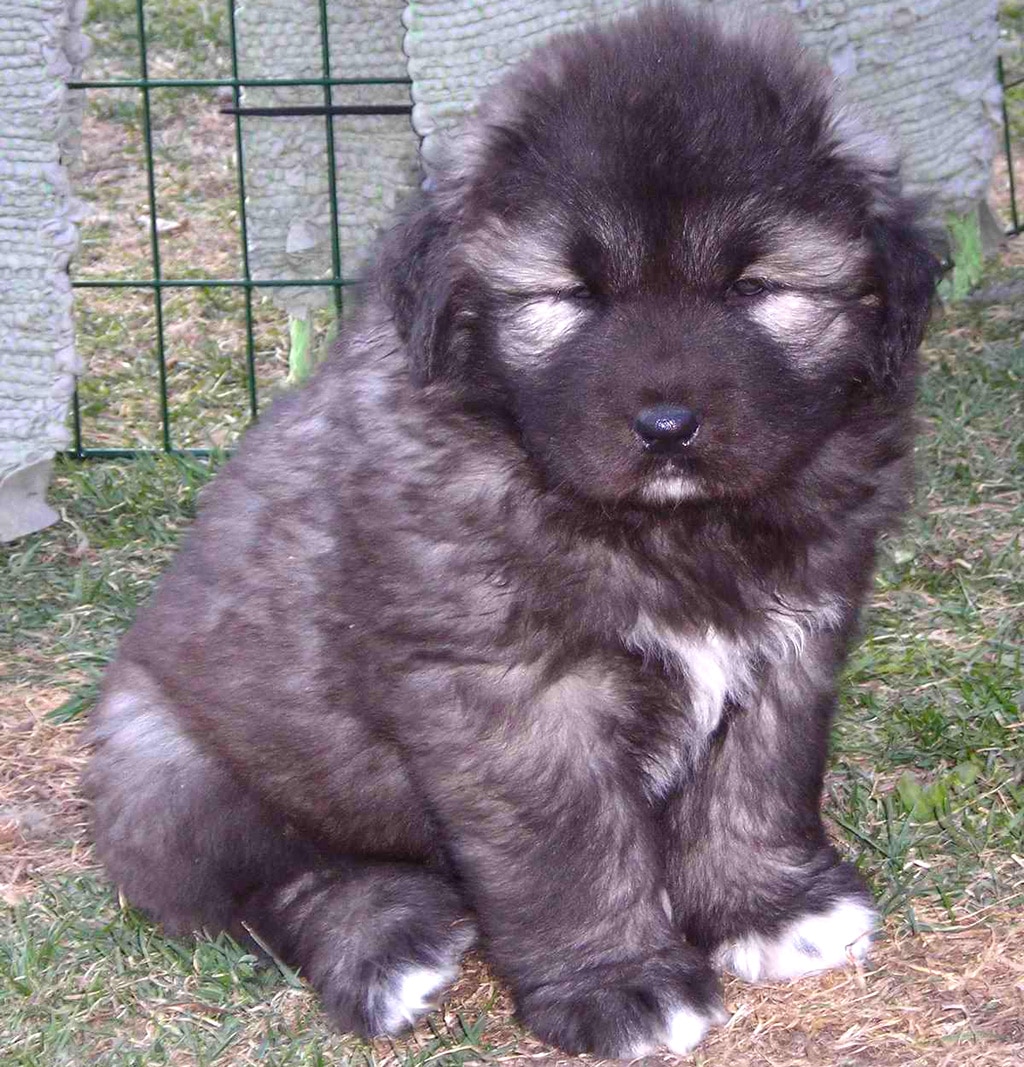
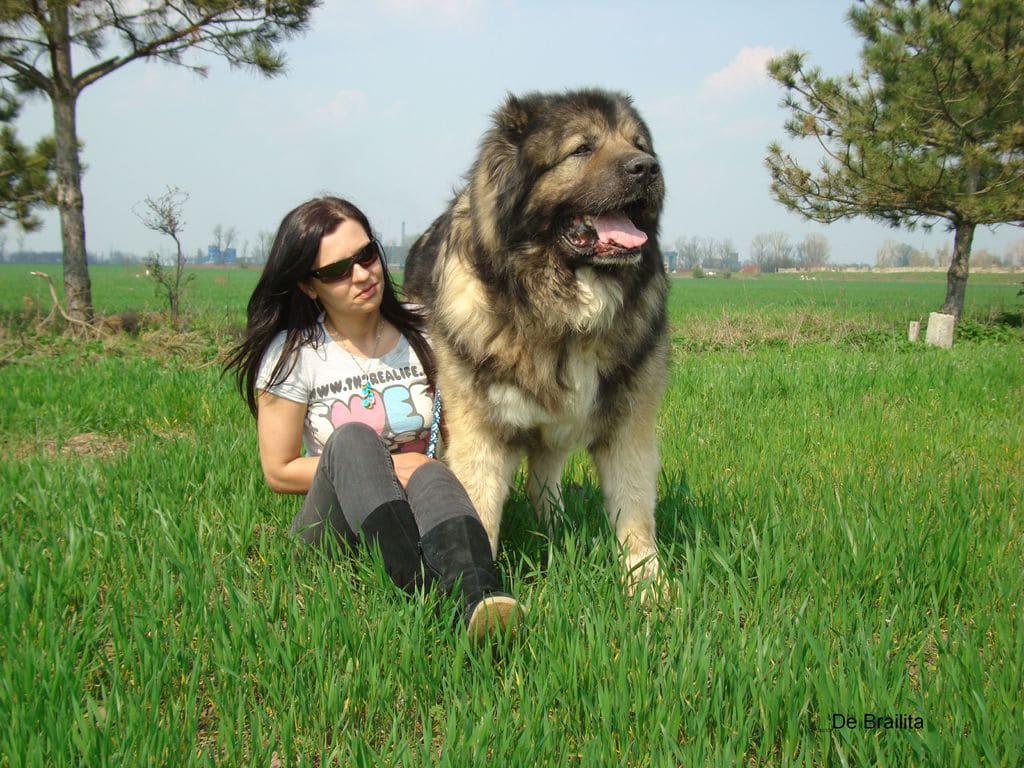
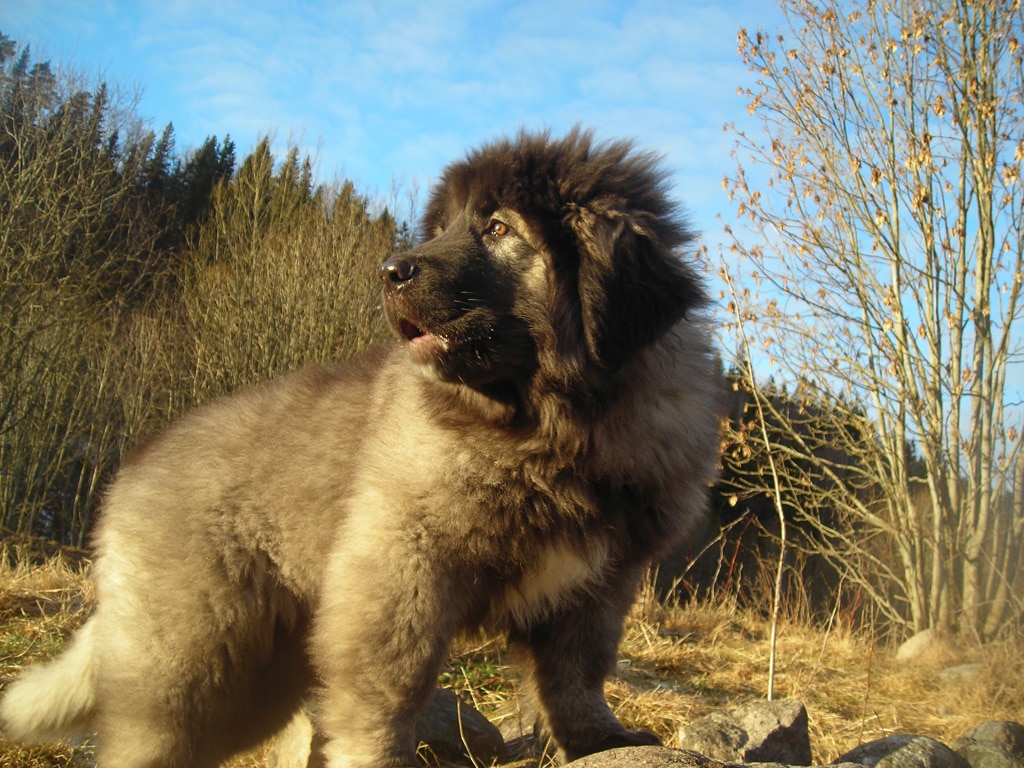
Caucasian Shepherd Dog
Rusia FCI 328 Molossoid . Mountain

The Caucasian Shepherd Dog It is a healthy animal and stable temperament.

Pastor del Cรกucaso

Content

Characteristics "Caucasian Shepherd Dog"

Coexistence is important that you have with your new friend. Before considering the acquisition of a dog of the breed "Caucasian Shepherd Dog" you know certain factors. Not all breeds of dogs are apt to live in an apartment, you must take into account his character, their need for exercise, their interaction with other pets, their care and if you have small children, their level of tolerance towards them.

Adaptation โ“˜

4,0 of 5 stars (based on 1 review)

friendly dog โ€‹โ€‹โ“˜

2,0 of 5 stars (based on 1 review)

hair loss โ“˜

3,0 of 5 stars (based on 1 review)

Affection level โ“˜

4,0 of 5 stars (based on 1 review)

Need for exercise โ“˜

2,0 of 5 stars (based on 1 review)

Social need โ“˜

2,0 of 5 stars (based on 1 review)

Home โ“˜

2,0 of 5 stars (based on 1 review)

Toilet โ“˜

2,0 of 5 stars (based on 1 review)

Friendly with strangers โ“˜

2,0 of 5 stars (based on 1 review)

barking โ“˜

3,0 of 5 stars (based on 1 review)

Health โ“˜

2,0 of 5 stars (based on 1 review)

Territorial โ“˜

5,0 of 5 stars (based on 1 review)

Cat friendly โ“˜

3,0 of 5 stars (based on 1 review)

Intelligence โ“˜

3,0 of 5 stars (based on 1 review)

Versatility โ“˜

2,0 of 5 stars (based on 1 review)

Child friendly โ“˜

3,0 of 5 stars (based on 1 review)

Surveillance โ“˜

3,0 of 5 stars (based on 1 review)

joy โ“˜

5,0 of 5 stars (based on 1 review)

History ยซShepherd of the Caucasusยป

One Caucasian Shepherd Dog it is a large and very strong sheepdog that is very widespread in Russia. In the official standard it is called Kavkazskaya ovฤarka. The Caucasian Shepherd Dog they spread over a huge area, which includes the territory of Russia as well as the former Soviet Union. Only in the polar areas you can hardly see. In his homeland., theCaucasian Shepherd Dog are, therefore, quite different in detail and different types have been developed. In the steppe areas this breed is lighter and taller, in mountainous regions heavier and more compact. But in type and character it is the same everywhere. This is the result of your work task, which was and is the only criterion for breeding there for many centuries. At the end, the same requirements resulted in the same dogs. Their tasks are to herd and protect the herds, monitor and protect property and its people. They are archaic dogs, they probably came into existence in this form with the introduction of animal husbandry in the first place, and that was a few 10.000 years.

You can't fool a Caucasian Shepherd Dog. Has a clear understanding of their role. Typically, lies down in a high place next to his flock, to be able to observe everything around him. Her flock, their shepherds, his family and his properties are sacred to him. He is faithful and lovingly devoted to them. He is suspicious of everything else and does not hesitate to attack any sign that he interprets as hostile. It is extremely defensive and fearlessly opposes even wolves and bears. In this way it has protected the herds of cattle and the lonely properties of the shepherds, farmers, hostels, artisans and merchants from time immemorial. This extremely useful feature, even necessary for the functioning of such a society in the vast and lonely country, does not fit into today's tight and hectic society. There is hardly a piece of land large enough to provide the dog with Caucasian Shepherd Dog a workspace. He is used to other scales of the vastness of Russia.

It also, the zeitgeist in today's world demonizes all forms of aggression emanating from a dog. While it only takes one or two generations, larger property owners were proud that their dog was reliable and, in case of emergency, acute, I would fearlessly chase away a thief, such a feature is potentially life-threatening for today's dog. It runs the risk of being classified as a "dangerous dog" and in extreme cases, euthanasia. This is not an environment for a Caucasian Shepherd Dog. And so you can find it almost everywhere on the lists of supposedly dangerous dogs. It is an archetype of dog to which man owes a lot in his development. As a dog breed it has been described for a long time and in the oldest specialized books on dogs. But, in modern pedigree dog breeding, it was only officially recognized by the FCI in August 1984.

Physical characteristics ยซCaucasian Shepherdยป

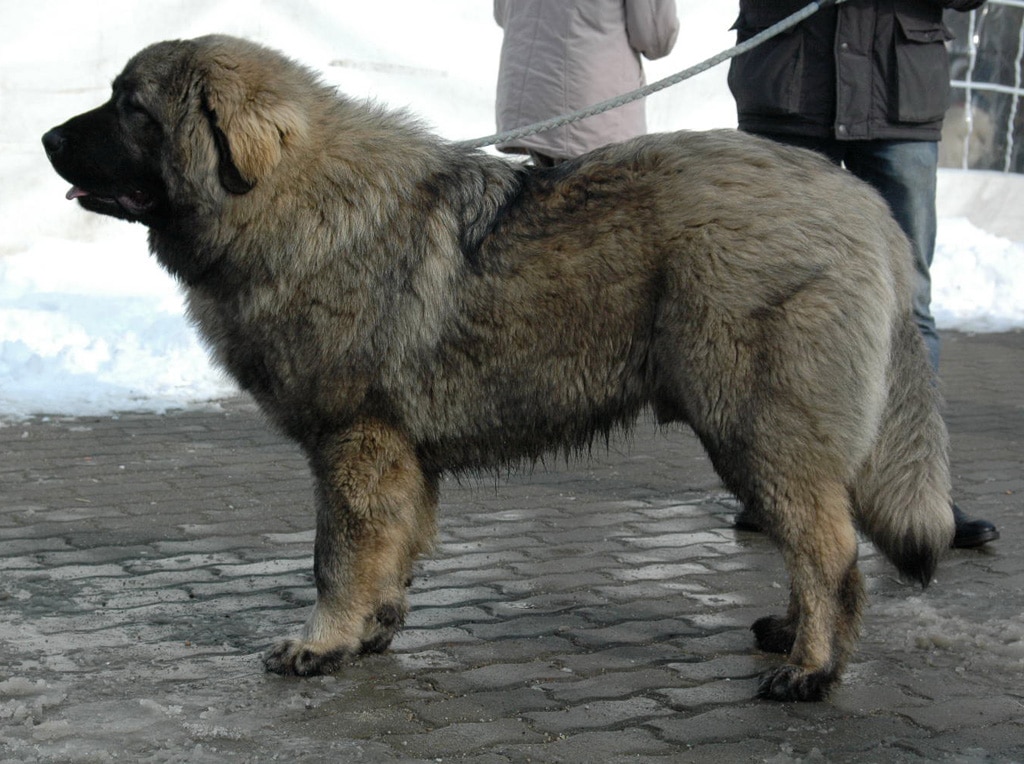
The Caucasian Shepherd Dog is a dog of harmonious structure, big and strong with plenty of bone and a powerful muscular system and a somewhat rectangular format. Well pronounced sexual dimorphism.
Males are masculine with a well-developed cross and a larger head compared to that of females. This is why they are more massive, bigger and sometimes their body is shorter than that of the females.
In dogs with a longer coat variety, the male has a distinguished mane.

Size and weight:

Height to the cross:

  • Males: Desired height 72 โ€“ 75 cm.. Minimum 68 cm..
  • females: Desired height 67 โ€“ 70 cm.. Minimum 64 cm..

Higher heights are accepted as long as the conformation is harmonic.

Weight:

  • Males: Minimum 50 Kg
  • females: Minimum 45 Kg.

Character and skills ยซCaucasian Shepherdยป

The Caucasian Shepherd Dog is a guardian and protector. The official standard classifies your character qualities unequivocally: "It must be strong, balanced and calm with a well-developed defensive reaction, which is actively expressed. Sharpness and distrust of strangers are typical.". And Caucasian Shepherd Dog is generally incompatible with other dogs! These traits, especially with a big and very strong dog that claims a large territory, are hardly compatible with the social conditions of today's world. It is a great experience to be able to form a close bond with a dog like this.. This also allows you to experience a completely different side of the dog than Caucasian Shepherd Dog, that of an extremely loving friend, loyal and affectionate. But, if one does not have the space and financial means to offer them in our latitudes an environment appropriate to their nature, this will hardly be possible.

Fitness

The Caucasian Shepherd Dog he is extremely undemanding in his attitude, if the general conditions already mentioned are ignored. One Caucasian Shepherd Dog does not need heating, toys or a harness on a leash. This breed is undemanding in its nutrition. That also applies to your accommodation.. You can spend the whole year outside without problems, if you want to spend the whole year abroad – as long as there is a suitable place to hide and "adequate" here definitely means neither a kennel nor even a chain.. Must be able to move in your territory. One Caucasian Shepherd Dog you accept, it even sensitively protects all the two- and four-legged friends it sees as belonging to its pack or family. But you need a clear boss. At first he is suspicious or even hostile towards everyone else.

Close relationship and competent guidance is required to walk on this dog's leash., which is definitely always stronger, and then be able to seamlessly move on to an aggressively barking terrier. it's possible, but it requires serious upbringing, a good socialization and an experienced teacher or lover, competent and very sensitive and at the same time thorough. The Caucasian Shepherd Dog is widely on the dangerous dog lists. It is forbidden to travel to the Netherlands or Denmark, since there is a risk that the dog will be confiscated on the streets and euthanized. One Caucasian Shepherd Dog not much of a beginner dog. That would even be irresponsible. Even from the hand of an experienced connoisseur, it requires in any case the basic external conditions for an attitude appropriate to its nature.

Education ยซCaucasian Shepherdยป

Raising a Caucasian Shepherd Dog in today's social conditions it is a very special challenge, only proven experts can master with the right framework conditions.

Care and health ยซCaucasian Shepherdยป

The Caucasian Shepherd Dog it has a double layer composed of a bottom layer and a top layer. The inner layer is soft and fine, while the outer coat hairs are long and thick. (The coat of a Caucasian Shepherd Dog It should never feel smooth or appear wavy.) Regarding the length, the coat can be long, medium or short. Dogs with long fur have a mane that surrounds their necks, as well as extensive plumage on the hind legs and tail, that looks thick and fluffy. Dogs with medium length fur do not have as much mane, and they have fewer feathers on the rest of the body. A short coat, the least common type, has no mane or fringe. Twice a year, when you change your coat, you have to brush it well.

Dogs of this breed enjoy very robust health.

Nutrition / Food

The Caucasian Shepherd Dog does not demand anything from your diet. Probably one of the dogs with less demands in this regard.

The life expectancy of the โ€œCaucasian Shepherdโ€

In relation to its size, a Caucasian Shepherd Dog has a very high life expectancy of 12 and sometimes more years.

Buy a โ€œCaucasian Shepherdโ€

The purchase of a Caucasian Shepherd Dog it should only be considered by experts who know exactly what they do, who have the appropriate experience and who have the appropriate rearing conditions. The puppies of this breed of dog cost around 1.000 EUR.

Images ยซCaucasian Shepherdยป

ยซCaucasian Shepherdยป Videos

Type and recognitions:

  • FCI CLASSIFICATION:
  • Group :
  • Section : . .

Federations:

  • FCI – Pinscher and Schnauzer-Molossoid type dogs – Swiss Mountain Dogs and Cattledogs. Section 2.2 Molossoid, mountain type. โ“˜
  • AKC – FSS (Foundation Stock Service) โ“˜
  • UKC – Watchdog โ“˜

FCI breed standard "Caucasian Shepherd Dog"

Origin:
Russia, Armenia, Georgia, Azerbaijan

Date of publication of the valid original standard:
13.10.2010

Use:

Guard and surveillance dog.


General appearance:

The โ€œCaucasian Shepherdโ€ Dog is a dog with a harmonious structure, big and strong with plenty of bone and a powerful muscular system and a somewhat rectangular format. Well pronounced sexual dimorphism. Males are masculine with a well-developed cross and a larger head compared to that of females. This is why they are more massive, bigger and sometimes their body is shorter than that of the females.

In dogs with a longer coat variety, the male has a distinguished mane.


Behavior / temperament:

The behavior is firm, Active, self-confident, courageously and independently. The โ€œCaucasian Shepherdโ€ Dog shows affection and devotion towards its master, he is an excellent guard dog.

PROPIMPORTANT ORTIONS:

  • Body length exceeds height at withers 3 โ€“ 8%.
  • The length of the forelimbs averages the 50 โ€“ 52% the height at the withers.
  • The length of the skull and the length of the muzzle is 3:2

Head:

---

Cranial region:

The head is big, solid and broad in the cheekbones. View from the top, the head is wedge-shaped with a wide base.

  • Craging: Solid and wide, rather flat antecara with a marked but not deep fold. Superciliary arches developed but not protruding. Barely visible occipital bone.
  • Dnaso-frontal depression (Stop): Noticeable but not clearly marked.

facial region:

  • Trufa: black, large with wide open nostrils without protruding from the outer lines of the snout. A black truffle in solid colors, spotted and peeping is desirable but not mandatory (but genetic blue or liver brown truffles are not allowed)
  • Horcico: Wide and deep tapering gradually towards the nose with strong jaws and chin. Great depth and well-filled under the eyes. The nasal bridge is wide. The upper line of the snout and skull run parallel.
  • Labios: Thick, tight and well pigmented.
  • Jaws / Teeth: Teeth must be healthy, white and strong; incisors together with each other in a line. Complete bite in scissors or forceps (42 teeth). Incisors or injured canines, broken or broken that do not affect the bite are not significant or the absence of PM1.
  • Cheeks: Well developed and highlighted by good chewing muscles.
  • Ojors: Moderate size, Oval shaped, not too deep, placed separate and oblique. Color is in different shades of brown, from dark to hazelnut. Black eyelids, dry, tight. Serious expression, attentive and inquisitive.
  • Obars: Moderate size, thick, Triangular shape, naturally hang, placed high and separate. Traditionally amputated in their country of origin. Natural ears are of equal value.

Neck:

Long Middle, strong, low insertion, transversely rounded. Crest pronounced especially in males.

Body:

Very well developed in all its dimensions, width, good musculature and well balanced.

  • Cruz: Well pronounced, moderately long. Height at withers slightly exceeds height at rump.
  • Dorrso: Straight, width, firm.
  • Itmor: Short, width, slightly arched.
  • Glikeness: Moderately long, wide, rounded, slightly inclined towards the base of the tail.
  • Pecho: Long, width, good ribs, in general deep as well as in its anterior part. Transversally has a broad oval shape. Well arched ribs, false long rib. Antepecho marked.
  • Lรญnlower ea and belly: Abdomen moderately retracted posteriorly.

Tail:

High insertion, curved sickle or curled. At rest it hangs up to the height of the hock; when the dog is alert the tail can be carried over the top line.

Tips

PREVIOUS MEMBERS:

  • ApGeneral arience: Good musculature. Seen from the front, straight and parallel members placed slightly apart.
  • Hormbros: Strong musculature. Moderately long, widths,
  • inclined to form an angle of approximately 100 degrees with the forearm. The scapula well next to the chest.
  • Antarm: Strong and muscular, well together.
  • Elbows: Set well back, parallel to the axis, without turning inward or outward.
  • Brazo: Straight, solid, moderately long, good musculature, transversely round.
  • Metacarpus: Short, solid, always straight viewed from the front and sides.
  • Pinis previous: Large, Round shape, well arched, well closed.

LATER MEMBERS:

  • ApGeneral arience: Seen from behind, rights, parallel and moderately spaced. Knees and hocks well enough angled when viewed from the side. The back should not be placed too far back.
  • Thigh: Width, good musculature, moderately long.
  • Rodinllto: Well angled enough.
  • PinScheme: Wide, good musculature, moderately long.
  • Hock joint: Ancha and inclined, well angled enough, firm, without leaning neither in nor out.
  • Metatarsus: Not too long, solid, always straight seen from the front or side.
  • Pinis later: Large, Round shape, well arched, well closed.

Movement:

Libre, elastic, without rushing with good thrust from the rear. Good stability in all joints and good coordination. Trotting tends to be the typical movement. The withers are at the same level as the rump and the dorsal line is relatively stable.

Mantle

PIEL: Thick, sufficiently elastic without creases or wrinkles.

  • Plink: straight, rough, separated with a well developed undercoat. The length of the outer coat as well as the undercoat should not be less than 5 cm.. The hair of the head and forelimbs is shorter and thicker. The tail is completely covered with bushy hair giving the appearance of thick and very hairy. The long outer hair forms โ€œbrushesโ€ over the ears, a โ€œmaneโ€ around the neck and โ€œpantsโ€ on the back of the thigh.
  • Colorr: Any solid color, piebald or spotted. Except for solid blacks; dilute black or black in any combination or genetic blue or liver brown.


Size and weight:

Alturto the cross:

  • Males: Desired height 72 โ€“ 75 cm.. Minimum 68 cm..
  • females: Desired height 67 โ€“ 70 cm.. Minimum 64 cm..

Higher heights are accepted as long as the conformation is harmonic.

Weight:

  • Males: Minimum 50 Kg
  • females: Minimum 45 Kg.


Fouls:

Any deviation from the aforementioned criteria is considered as a fault and the severity of this is considered to the degree of the deviation to the standard and its consequences on the health and well-being of the dog..

FALTAS GRAVES:

  • Structure too light or too rough.
  • Diffidence.
  • Deviations of sexual dimorphism.
  • Small head in proportion to the body, light, close, long, Tosca, brick or apple shaped head.
  • Abrupt stop.
  • Snout: sunken, concave or pointed.
  • Too small teeth, very separate, incisors not placed in a line, any deviation from the dental formula (except the absence of PM1)
  • Cheek bones not marked enough.
  • Big eyes, protruding, very clear, showing the third eyelid, drooping eyelids.
  • big ears, fine or very low insertion.
  • Steep or sunken top line, long, sunken or arched back, rump higher than the cross.
  • Square body, very rough, very long, narrow both front and back, extremities too long, very short chest, flat or sunken, short or steep rump.
  • Stump tail.
  • Bones, weak muscles and ligaments.
  • Absence of the correct angulations.
  • Forelimbs curved
  • Unbalanced movement.
  • Lack of thrust from the rear.
  • Too soft hair, curly, very short outer hair and no undercoat.

FALTAS DISQUALIFYING:

  • Aggressiveness or extreme shyness.
  • Any dog โ€‹โ€‹showing clear signs of physical or behavioral abnormalities must be disqualified..
  • Any deviation from the required bite.
  • Incomplete dental formula (absence of any teeth except third molars (M3) or first premolars
  • Entropion
  • Eyes gazeos, dark blue, green shading or different colored eyes.
  • amputated tail.
  • Constant hobbling or inability to achieve movement.
  • Black color in any variation, solid, diluted, cheep, spotted the like robe (except the mask).
  • Genetic blue in any variation or shade.
  • Truffle, bluish-gray pigmented lips and eyelids.
  • Genetic brown in all variations or shades.
  • Truffle, genetic brown lips and eyelids.
  • Fire colored markings on black dogs, blue or brown.
  • Height below minimum.
  • Severe deviations of sexual dimorphism in males.


N.B.:
  • Males should have two normal-appearing testicles fully descended into the scrotum..
  • Only functionally and clinically healthy dogs, with the typical conformation of the breed, should be used for parenting.

Itlatest changes are in bold.

TRANSLATION: Brรญgida Nestler / Original version: (IN)

Technical supervision: Miguel Angel Martinez.

Source: F.C.I - International Cynological Federation

Alternative names:

1. Nagazi, Caucasian Mountain Dog, Caucasian Ovcharka (English).
2. kavkazskaรฏa ovtcharka (French).
3. Kaukasischer Owtscharka, Kawkasskaja Owtscharka (German).
4. mastim-do-cรกucaso, Pastor-caucasiano, Ovcharka caucasiano, Mastim do cรกucaso, Cรฃo montanhรชs caucasiano, Cรฃo-urso-russo (Portuguese).
5. Pastor caucรกsico, Mastรญn del Cรกucaso, Perro de montaรฑa del Cรกucaso, Perro Pastor caucรกsico (espaรฑol).

โ–ท The world of Pets: Dogs, cats, birds, reptiles, amphibians

Cardigan Welsh Corgi
Gales FCI 38 - Sheepdogs

Corgi-Cardigan Welsh-de-

Affectionately called the "garden dog" in his native Wales, the Cardigan Welsh Corgi is active, fun and very affectionate.

Content

History

It is believed that the Cardigan Welsh Corgi It is the oldest of the two races Corgi. Although nobody knows for sure, their ancestors may have come to Wales with the ancient Celts who migrated from Central Europe. The dog we know today comes from the hills of Cardiganshire, that were once full of farms and valleys that were perfect for raising cattle. His predecessors had cattle to market, their heels for cattle moved, and they deviated from the path if cattle drew back.

Industrialization ended the usefulness of the Corgi on the farm, and people began to cross with other dogs herding breeds, including Collies and the first Pomeranian, which they were much larger than the current standard of Pomeranian. The crossing with Collie You may have thrown the blue merle color to the genetic background of the Cardigan.

For a while, it seemed that the Cardigan he would go the way of the dinosaurs because he was less popular than his cousin, the Pembroke Welsh Corgi. At any given time, both they were considered the same race, but the Kennel Club separated in 1934, giving the cardigans better chance of surviving on their own.

Physical characteristics

The Cardigan Welsh Corgi It is best described as a Pembroke tailed, but it stands out from his cousin, the Pembroke Welsh Corgi, in other respects. The Cardigan has larger, rounder ears and comes in a variety of colors, including tricolor (black and white, with tans or brindle points), blue merle, striped, marten and red. Most Cardis also have white markings on their necks., the chest, paws and tail tip. They weigh between 11 and 17 Kg, which makes them a little larger than Pembroke.

Although Cardigan and Pembroke Welsh Corgi were developed in Wales, They have different ancestors: twin sons of different mothers, it could be said. The Cardigan, nicknamed the garden dog in his home county of Cardigan, shares ancestors with another long race, the Sausage dog.

Character and skills

The fun Cardigan Welsh Corgi it's a classic herding dog: even, loyal and loving. His real goal in life is to spend time and please his people. Its moderate size and activity level make it adaptable to any type of home or family, and it is robust and tolerant of children and other pets. In fact, the company of another dog or cat is a great benefit to him.

Cardigans may not seem athletes, but they are agile. You will be surprised how fast you can run a Corgi when chasing a ball or compete in agility trials. If you can deviate from the path of mad cow, certainly you can browse frames, tunnels, jumps and other obstacles. Cardi has a lot of resistance, You can even walk the trails, but also it conforms with a short walk or play on the playground.

Start training your puppy the day you bring him home. Even at eight weeks old, He is able to absorb everything you can teach you. Don't wait until you have 6 months to start train or have to deal with more stubborn dog. If possible, take him to puppy kindergarten class when he's between 10 and 12 weeks, and socializes, socialice, socialice. But, Note that many kinds of training puppies require certain vaccinations (such as kennel cough) stay up to date, and many veterinarians recommend limited exposure to other dogs and public places until puppy vaccinations (including rabies, distemper and parvovirus) They are completed. Instead of formal training, You can start training your puppy to socialize at home and among family and friends until immunizations are completed in the puppy.

Of course, the Cardigan Welsh Corgi be wary of strangers, thanks to its heritage grazing, so early socialization is important. To counter this trend, invite people to your house, to be used to receive regular visits.

Health of the "Cardigan Welsh Corgi"

The Cardigan Welsh Corgi they are a generally healthy breed, but they are susceptible to some health conditions, including intervertebral disc disease and eye problems such as progressive retinal atrophy (PRA) and cataracts.

Veterinarians can not predict whether an animal will be free from these diseases, so it is important to find a reputable breeder and insist on seeing an independent certification that the parents of the dog have been examined for defects and considered healthy.

Careful breeders their dogs examined for genetic diseases, and they only breed the best looking specimens, but sometimes Mother Nature has other ideas and a puppy can develop one of these diseases. In most cases, can still live a good life, thanks to advances in veterinary medicine. And remember that you have the power to protect his Cardigan one of the most common health problems: the obesity. It keep a proper weight is a simple way to extend the life of its Cardi.

Characteristics "Cardigan Welsh Corgi"

Coexistence is important that you have with your new friend. Before considering the acquisition of a dog of the breed "Cardigan Welsh Corgi" you know certain factors. Not all breeds of dogs are apt to live in an apartment, you must take into account his character, their need for exercise, their interaction with other pets, their care and if you have small children, their level of tolerance towards them.

Adaptation โ“˜

5,0 of 5 stars (based on 1 review)

friendly dog โ€‹โ€‹โ“˜

3,0 of 5 stars (based on 1 review)

hair loss โ“˜

5,0 of 5 stars (based on 1 review)

Affection level โ“˜

5,0 of 5 stars (based on 1 review)

Need for exercise โ“˜

4,0 of 5 stars (based on 1 review)

Social need โ“˜

3,0 of 5 stars (based on 1 review)

Home โ“˜

5,0 of 5 stars (based on 1 review)

Toilet โ“˜

3,0 of 5 stars (based on 1 review)

Friendly with strangers โ“˜

3,0 of 5 stars (based on 1 review)

barking โ“˜

3,0 of 5 stars (based on 1 review)

Health โ“˜

2,0 of 5 stars (based on 1 review)

Territorial โ“˜

3,0 of 5 stars (based on 1 review)

Cat friendly โ“˜

5,0 of 5 stars (based on 1 review)

Intelligence โ“˜

5,0 of 5 stars (based on 1 review)

Versatility โ“˜

5,0 of 5 stars (based on 1 review)

Child friendly โ“˜

5,0 of 5 stars (based on 1 review)

Surveillance โ“˜

4,0 of 5 stars (based on 1 review)

joy โ“˜

5,0 of 5 stars (based on 1 review)

Images "Cardigan Welsh Corgi"

credits:

1 – FatFairfax / CC BY-SA
2 – Wikimaster97commons / CC BY-SA
3 – RdRnnr / CC BY-SA
4 – Blue Merle Cardigan Welsh Corgi by WJ van den Eijkhof

Videos "Cardigan Welsh Corgi"

Type and recognitions:

  • FCI CLASSIFICATION:Group 1 –> Pastor and Boyeros dogs (except Swiss Cattle Dogs ) / Section 1 –> Pastor dogs. With working trial.
  • FCI 38
  • Federations: FCI โ“˜, AKC โ“˜, ANKC โ“˜, CKC โ“˜, โ€‹KC โ“˜, NZKC โ“˜, UKC โ“˜

  • FCI breed standard "Cardigan Welsh Corgi"

    Origin:
    Wales

    Date of publication of the valid original standard:
    24.06.1987

    Use:

    Shepherd and companion dog.


    General appearance:

    Robust, rustic, restless, able to resist. Length in proportion to height, ending in a fox tail in appearance, inserted in the body line.

    important proportions:

    The length of the muzzle in proportion to the head 3 to 5.


    Behavior / temperament:

    Alert, active and intelligent. Stable neither shy nor aggressive.

    Head:

    With the appearance and shape of a fox head

    Cranial region:
    • Skull: Wide and flat between the ears; thinning towards the eyes above which is slightly domed.
    • Stop: Moderate.

    facial region:

    • Truffle: black, projects slightly, in no way sharp.
    • Snout: Moderately thinning towards the nose.
    • Jaws/teeth: Strong teeth with scissor bite, that is, the upper incisors closely overlap the lower incisors and are positioned vertically in the maxillae.
      The lower jaw has a clean cut. Strong but without prominence.
    • Eyes: Medium-sized, clean, giving a gentle expression, alert but vigilant. Rather separate set with clearly defined angles. Preferably dark, or according to the color of the coat, dark eyelid edge. One or both pale blue eyes, blue or speckled blue are allowed only on blue merles.
    • Ears: erected, in proportion rather large for the size of the dog. The tips slightly rounded, moderately wide at the base and inserted approximately at 8 cm. (3,5 inches) One of another.
      Carried in such a way that the tips are slightly outside in a straight line drawn from the tip of the nose, through the center of the eyes, and inserted well back so that they can rest flat along the neck.

    Neck:

    Muscular, well developed in proportion to the build of the dog, inserting into well-sloped scapulae.

    Body:

    Quite long and strong.

    • top line: To level.
    • Pork loin: Clearly defined waist.
    • Breast : Moderately wide with prominent sternum. deep chest. Well arched ribs.

    Tail:

    Like a fox tail, inserted in line with the body and moderately long (to touch the ground or close to the ground). Carried low at rest but can be raised slightly over the body in motion, not curved over the back.

    Tips

    Of strong bones. Short limbs but the body must be clearly off the ground.

    Former members
    • Blades: Leaning well back, angled approximately in 90 ยฐ With the humerus, muscular.
    • Elbows: Glued to the sides.
    • Forearm: Slightly arched molding to rounded chest.
    • Front feet: Round, tight, rather large and with good foot pads. Slightly turned out.
    Former members

    Strong, well angulated and aligned with muscular thigh and tibia; strong bones to the ground. Short members.

    • Metatarsals: Vertical when the dog is at rest, viewed from the side and from behind.
    • Hind feet: Round, tight, rather large and with good foot pads.

    Movement:

    Free and active, elbows fit close to the sides of the body, neither loose nor tight. Forelimbs reaching well forward without lifting too much, In unison with the thrust action of the posterior train.

    Mantle

    • Fur: Short or medium, hard textured. Weather resistant, with good under-hair. Preferably straight.
    • Color: Any color, With or without white marks but white
      It should not predominate.


    Size and weight:

    Ideal height at the withers: 30 cm.
    The weight is in size proportion, taking into account primarily the balance sheet.


    Fouls:

    Any deviation from the aforementioned criteria is considered a fault and its severity is considered to the degree of deviation from the standard and its consequences on the health and well-being of the dog and the dog's ability to perform its traditional task..

    disqualifying fouls:

    • Aggressiveness or extreme shyness
    • Any dog โ€‹โ€‹showing clear physical or behavioral abnormalities must be disqualified..


    N.B.:

    Males should have two normal-appearing testicles fully descended into the scrotum..

    Source: F.C.I - International Cynological Federation

    Alternative names:

    1. Cardigan, CWC, Cardi (English).
    2. Cardigan (French).
    3. Cardigan (German).
    4. Cardigan Welsh Corgi (Portuguese).
    5. Cardigan Welsh corgi, Cardi, Corgi (espaรฑol).