โ–ท The world of Pets: Dogs, cats, birds, reptiles, amphibians

Siberian Husky
Estados Unidos FCI 270 . Nordic Sledge Dogs
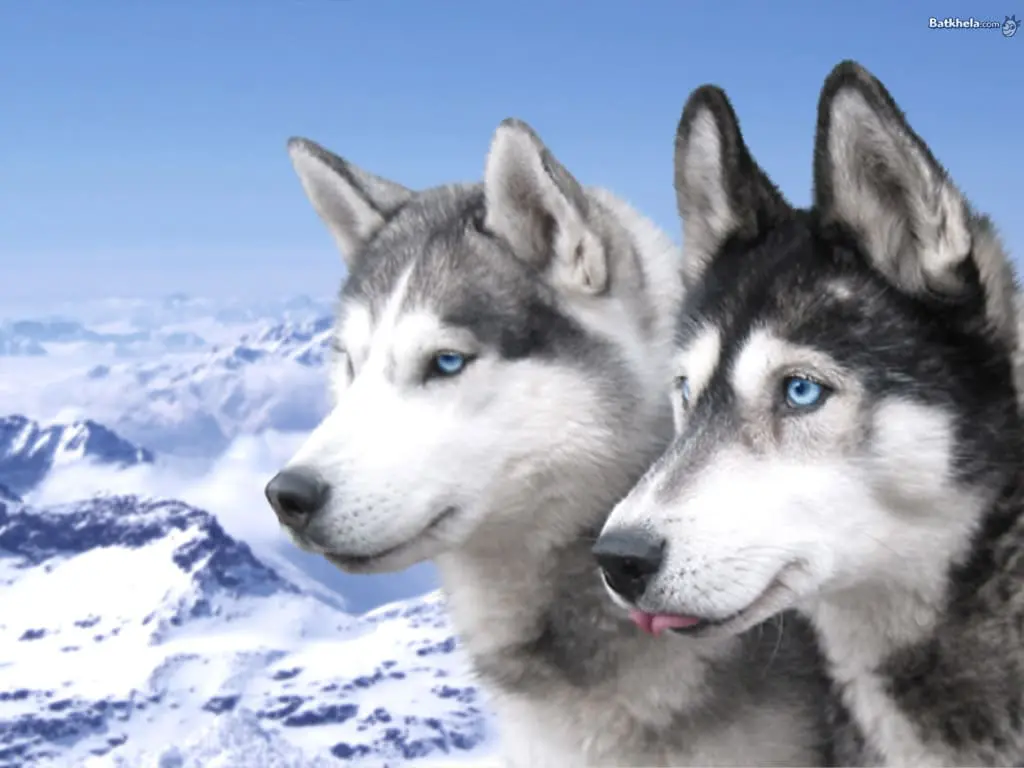
Husky Siberiano

The Siberian Husky is a highly specialized working dog. Running is his passion.

Content

History

Where does he come from Siberian Husky originally?

The history of the Siberian Husky is inseparably connected with the lives of the people of the Arctic Circle. Only with their dogs, that pulled the sleds, they helped in the hunt, provided reliable GPS, they protected them from polar bears and finally warmed them on cold nights, the people there managed to survive. But, the Siberian Husky as a modern dog breed it is quite young. Its history began around 1910, and in Alaska the huskies they were bigger and stronger, comparable to current MALAMUTE.

At the sled races a Siberian fur trader appeared with his thin dogs. They were called "Huskyยซ, at that time an expletive for the eskimos. But these dogs won race after race. The polar explorer Roald Amundsen noticed them. Norwegian Leonard Seppala began to reproduce them. His breakthrough came in 1925 when a diphtheria epidemic broke out in the remote city of Name in the middle of the polar winter. In the extremely heavy snow there was no way to get through. Adults and children died. so brave โ“˜ mushers under Seppala's leadership they decided to bring the salivary serum to more than 1000 kilometers with their sleds of huskies. They gave it their all and the people were saved. A monument was erected on the Central Park in New York in honor of Husky. Even today theGreat Iditarod Sled Raceยป continues to be celebrated every year in Name.

The Husky Siberian began his triumphal procession with the people of the sled dogs. He benefited from the fact that โ“˜ mushers they wanted fast dogs for short distances, While the inuit depended on endurance and long distances. There are many breeds of sled dogs that vary according to need, as the Husky de Alaska. But only the Siberian Husky is recognized as a breed of dog.

In 1932 The standard that defines it as a working sled dog according to โ€œform for functionโ€ was approved. In the USA., breeders started around 1970 to create a Husky For the general public. Two lines developed, the Showdog and the Siberian Husky employee.

Popular mixes

Mixes with Siberian Husky they are not rare. But due to the highly specialized nature of this sled dog it is not infrequently problematic.. So it's not uncommon for nervous dogs to emerge, that can also bite.

Physical characteristics

What is a "Siberian Husky" like??

The Siberian Husky, call Husky To abreviate, it is one of the most original dog breeds. Has an unmistakable appearance. One Husky embodies wildlife, he immediately remembers his father the wolf. In fact, it is one of the dog breeds most closely genetically related to the wolf. And that, even though he has been working as a sled dog for over 10.000 years and there has been no significant interbreeding with wolves since then, as shown by genetic investigations from 2020. The official FCI standard still defines the Siberian Husky as:

Medium size working dog, fast, light feet… extremely capable of performing its original task as a sled dog and pulling light loads at moderate speed over long distances.

All colors from black to white are allowed. Characteristic is the structure of its coat with a very dense undercoat and a skin-like topcoat.. As a whole, the Husky reminds of a wolf in appearance, complexion and sometimes in his coat.

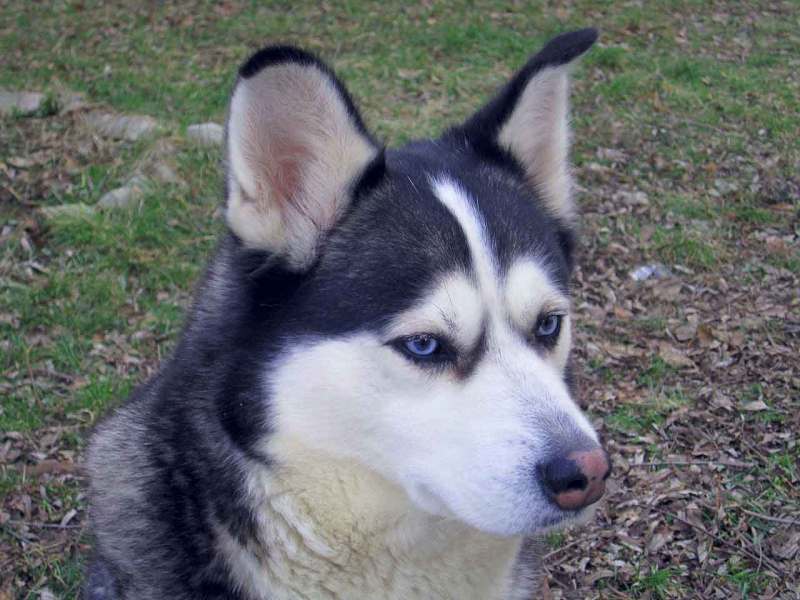
One Husky moves with light feet. His walk is unmistakable. It is a special pleasure to see your elegance and power in space while running. But, only one legend says that a black eye belongs to the Husky. Although it is allowed by the rule, still a genetic defect. Inuit have avoided blue eyes, because they reduce your vision in the polar sun.

How big is a โ€œSiberian Husky?โ€?

The height at the withers is between 50 and 60 cm with a weight between 20 and 28 kg.

Characteristics and traits

The Husky is a highly specialized working dog. Running is his passion, especially pulling sleds. If you are interested in a Husky, you should visit the sled dog races in winter. It is deeply impressive and fascinating. You can feel the extreme tension of the dogs much earlier. When you go to the exit, there is hardly a stop. Like in an explosion, this tension dissolves in the rapid acceleration of the sled, which can then be dragged over dozens of kilometers in a stretch. The Siberian Husky loves this job and needs it too. This is a challenge to your position.

The Husky it is a modern and archaic dog. In his character there is much wolf life although – purely genetically speaking – is not more closely related to him than other dogs. The huskies they are quiet but excellent observers and can, for example, steal a piece of sausage from your plate in an instant and with great precision. They don't make much of a fuss about their actions. At most before a common excursion the temper crosses them. The huskies they are excellent hunters. To their humans they are friendly and gentle. The Husky he is not a guard dog but is willing to defend his family effectively.

Caution, health and diseases

How much care does a "Siberian Husky" need??

The Siberian Husky needs regular grooming, at least weekly. Coat changes, twice a year, they are particularly intense. Then your house, his car and his clothes will be full of his long hair, even if you brush it daily.

Typical diseases of the breed

The Siberian Husky it is a very healthy breed as long as it is not raised in extreme conditions. One extreme is the racing huskies, that are only optimized for the sporting success of mushers. Here we see many deformations of the march, thermal balance, the entire cardiovascular system and even the psyche. Partially bad in both directions, what is made of these extremely robust primitive dogs today.

What food is best for a "Siberian Husky"?

The Siberian Husky is often a very picky eater. That is why their diet is often demanding. Of course, this always depends a little on each dog. The โ“˜ mushers they have secret recipes with treats to provide their dogs with enough energy before the races.

Activities

How much exercise does our โ€œSiberian Huskyโ€ need??

The Siberian Husky Nowadays it is divided into two types as described. In both, However, the Husky
authentic still alive. The huskies they want to run. This doesn't just mean an extensive nature walk. Can you feel the essence of a Husky when you experience it at sled dog races. You can only keep one Siberian Husky in a species-appropriate way, if you do a sled sport or its variants for training without snow. Otherwise, you have to give it a lot of activity, all days.

Considerations before purchase

Where can you buy a "Siberian Husky"?

If you are interested in a Siberian Husky, the first thing to do is check if you want and can spend at least the next ten years of a common sporting life with these dogs. Then you should find a trusted local breeder, or in an animal shelter.

Education and maintenance

Should a "Siberian Husky" suit me??

The Siberian Husky a dog is not for beginners. You have high demands on your attitude, stemming from your destiny as a sled dog. All of our routines must be tailored to your needs. This applies especially to working line dogs.. In the case of show lines for family dogs, these requirements are only valid up to a point. Dogs accustomed to living in an apartment can sometimes even be seen directly here. But are they still huskies?

The real Siberian Husky needs the challenge in front of the sled physically and mentally. There are many possibilities here even without snow. We see a kind of sled on wheels like a tricycle or a training car with four tires. Canicross is the name of the discipline in which huskies they pull a runner by the lap belt. In bike riding they pull a mountain bike, in scooterjรถring of a special scooter, in skiing of a skier. This type of dog sport has something very special. It allows you to experience a deep unity between the man-dog and nature in a way that is otherwise almost impossible..

Ride with a sleigh of Huskies through a snowy landscape in winter is one of the greatest experiences of all. Of course it is also good for your health.

Sporting success should never be sought at the expense of dogs. The Siberian Husky not a dog for an apartment. The ideal would be a house with a garden. The Husky it is one of the few dog breeds that can be kept in a kennel with several dogs. He likes to sleep outside and curls his head under his tail during the heaviest snowfall and enjoys his peace and quiet. The garden, where to Huskies they like to stay, should not be considered as an ornamental garden.

The Siberian Husky can be well trained by an experienced dog owner. He is open and honest and likes to work alongside his master or carer, although their "will to please" is limited. Not a partner for any kind of tricks. Only when it comes to pulling a sled are you with all your senses and all your will to do so. Quickly learn to follow the orders of the โ“˜ musher. In daily contact he is trouble free and frugal. Must be used to other pets, especially cats or rabbits, from the puppy, otherwise it sees them as prey.

Breeders list "Siberian Husky"
REGISTER KENNEL

Siberian Husky breeders

Offer your puppies for free. Sign up here.

  • This field is a validation field and should be left unchanged.
  • Enter an image of your kennel.


Characteristics "Siberian Husky"

Coexistence is important that you have with your new friend. Before considering the acquisition of a dog of the breed "Siberian Husky" you know certain factors. Not all breeds of dogs are apt to live in an apartment, you must take into account his character, their need for exercise, their interaction with other pets, their care and if you have small children, their level of tolerance towards them.

Adaptation โ“˜

5,0 of 5 stars (based on 1 review)

friendly dog โ€‹โ€‹โ“˜

5,0 of 5 stars (based on 1 review)

hair loss โ“˜

5,0 of 5 stars (based on 1 review)

Affection level โ“˜

5,0 of 5 stars (based on 1 review)

Need for exercise โ“˜

4,0 of 5 stars (based on 1 review)

Social need โ“˜

3,0 of 5 stars (based on 1 review)

Home โ“˜

2,0 of 5 stars (based on 1 review)

Toilet โ“˜

2,0 of 5 stars (based on 1 review)

Friendly with strangers โ“˜

3,0 of 5 stars (based on 1 review)

barking โ“˜

4,0 of 5 stars (based on 1 review)

Health โ“˜

3,0 of 5 stars (based on 1 review)

Territorial โ“˜

1,0 of 5 stars (based on 1 review)

Cat friendly โ“˜

1,0 of 5 stars (based on 1 review)

Intelligence โ“˜

5,0 of 5 stars (based on 1 review)

Versatility โ“˜

1,0 of 5 stars (based on 1 review)

Child friendly โ“˜

5,0 of 5 stars (based on 1 review)

Surveillance โ“˜

4,0 of 5 stars (based on 1 review)

joy โ“˜

1,0 of 5 stars (based on 1 review)

Images "Siberian Husky"

Photos:

1 – A black-and-white Siberian Husky with blue eyes by Flickr user Pamela Carls (IrisDragon) / CC BY-SA
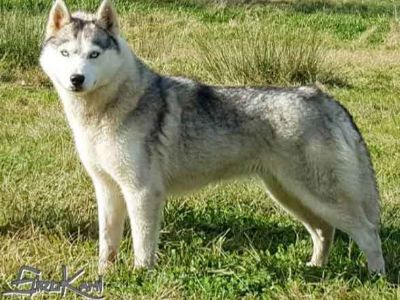
2 – Siberian Huskies by Dolphin / CC BY-SA
3 – A ยซsableยป-coloured Siberian Husky by Original photo taken by Flickr user Sue and Marty. Edited by User:Pharaoh Hound / CC BY-SA
4 – Husky Siberiano in Mont-Tremblant, Canada by Ellie Lord ellie_lord / CC0
5 – Five year old female Siberian Husky named Luna by Biowk / CC BY-SA
6 – A head of 3-months old Siberian Husky by MrPanyGoff / CC BY-SA

Videos "Siberian Husky"
Type and recognitions:

  • FCI CLASSIFICATION:
  • Group :
  • Section : . .

Federations:

  • – FCI – Group 5 – Section 1 Nordic Sledge Dogs. โ“˜
  • – AKC – Nordic Sledge Dogs โ“˜
  • – ANKC – Nordic Sledge Dogs โ“˜
  • – CKC – Nordic Sledge Dogs โ“˜
  • – โ€‹KC – Nordic Sledge Dogs โ“˜
  • – NZKC – Nordic Sledge Dogs โ“˜
  • – UKC – Nordic Sledge Dogs โ“˜

FCI breed standard "Siberian Husky"

Origin:
United States

Date of publication of the valid original standard:
02.02.1995.

Use:

Working dog to pull sleds


General appearance:

The โ€œSiberian Huskyโ€ is a medium-sized working dog., fast and light. Her movement is free and graceful. His body moderately compact and well covered with hair, erect ears and bushy tail with brush hair suggest its Nordic heritage. His characteristic gait is smooth and seemingly effortless.. It performs its original role as a dog to pull in the most capable way, carrying a light load at moderate speed over long distances. The proportions and shape of his body reflect his basic balance of power, speed and endurance. The males of the โ€œSiberian Huskyโ€ breed are masculine, but never rough; the females are female but without showing weakness in their structure. In good health, with firm and well developed muscles, The โ€œSiberian Huskyโ€ should not be overweight.

PROPIMPORTANT ORTIONS:

  • In profile, the length of the body from the point of the shoulder to the point of the buttock is slightly greater than the height of the body from the floor to the withers.
  • The distance from the tip of the nose to the stop is equal to the distance from the stop to the occipital bone.


Behavior / temperament:

The characteristic temperament of the โ€œSiberian Huskyโ€ is friendly and gentle., but also alert and extroverted. Does not manifest the possessive qualities of the guard dog, nor is he overly suspicious of strangers or aggressive towards other dogs. A certain reserve and dignity is expected in the adult dog. His intelligence, docility and disposition for pleasure make this dog a pleasant companion and an always willing worker.

Head:

---

Cranial region:
  • Craging: Medium in size and proportionate to the body; slightly rounded at the top and gradually tapering from its widest point towards the eyes.
  • Dnaso-frontal depression (Stop): Well defined.

facial region:

  • Trufa: Black on gray dogs, leonados or black; liver color in copper dogs; can be flesh-colored in all-white dogs. Pink striped โ€œsnow noseโ€ is acceptable.
  • Horcico: Medium long. The muzzle is of medium width, slimming gradually towards the truffle; the tip is not pointed or square. The nasal bridge is straight from the stop to the tip.
  • Labios: Well pigmented and tight.
  • Jaws / Teeth: They close in a scissor bite.
  • Ojors: Almond biscuits, moderately spread and very slightly oblique. The color of the eyes can be brown or blue; two different colored eyes or one heterochrome eye are acceptable. Vivacious expression, but kind, interested and even naughty.
  • Obars: Medium in size and triangular in shape, placed very close to each other, set high on the head. They are thick, well covered with hair, slightly arched at the back and intensely erect, with slightly rounded tips, which are directed straight up.

Neck:

Medium long, bowed and carried proudly upright when the dog is standing. During the trotting movement, It extends the neck so that the head is carried slightly forward.

Body:

  • Espalda: Straight and strong, with a level top line from withers to rump. It is of medium length, nor relatively short like a "cob" dog, nor elastic due to excessive length.
  • Itmor: It is tight and thin, narrower than the rib cage and slightly raised.
  • Glikeness: It is inclined in relation to the spine, but never so inclined as to restrict the rear thrust of the hind limbs.
  • Pecho: Deep and strong, but not too wide; its deepest point is just behind and at the elbow level. The ribs are well sprung from the spine, but flattened on the sides to allow greater freedom of movement.

Tail:

The tail, that is well covered with hair, shaped like a fox brush; It is inserted just below the level of the upper line and is usually, when the dog is attentive, It is carried on the back in the shape of a curved sickle. When carried up, tail does not curl to either side of the body, nor does it lie flat on the back. It is normal to wear it hanging when the dog is at rest. The hair that covers the tail is of medium length and approximately the same length at the top and bottom and at the sides, thus giving the impression of a round brush.

Tips

PREVIOUS MEMBERS: When the dog is standing and seen from the front, limbs are moderately separated, parallel and straight. The bones are substancial but never heavy. The length of the limb from the elbow to the ground is slightly greater than the distance from the elbow to the point of the withers.. The rams of the forelegs may be extirpated.

  • Hormbrivers and arms: Scapula well placed back. The arm is slightly oblique back from the point of the shoulder to the elbow and is never perpendicular to the ground. The muscles and ligaments that attach the shoulders to the rib cage are firm and well developed..
  • Elbows: Close to the body and without deviations outward or inward.
  • Acarpal joint: Strong, but flexible.Metacarpus: Viewed from the side they are slightly inclined.

LATER MEMBERS: When the dog is standing and seen from behind, hindlimbs are moderately apart and parallel. If there are spurs, must be removed.

  • Thigh: Well muscular and powerful.
  • Rodinllto: Well angled.
  • Atibio-tarsal articulation: Well defined and placed low close to the floor.

FEET: Oval, without being long. Are medium-sized, compact and well covered with hair between the fingers and the pads. The latter are hard and well padded. When the dog adopts the natural posture, the feet show no outward or inward deflection.

Movement:

The characteristic movement of the โ€œSiberian Huskyโ€ is smooth and seemingly effortless.. He is fast and light on his feet and on the show ring with a loosely handled guide, shows a moderately fast trot thus showing good reach in the forelimbs and good drive in the hindlimbs. Seen from the front to the back while walking, The โ€œSiberian Huskyโ€ does not show a single footprint, but as the speed increases, the limbs gradually tilt inward until the pads are situated in a line directly below the longitudinal center of the body. As the footprints of the pads converge, the forelimbs and hindlimbs are carried in a straight line, without the elbows or femoral-tibio-patellar joints deviating inward or outward. Each hind limb moves in the tread of the corresponding fore limb on the same side. While the dog is in motion, top line remains firm and level.

Mantle

Plink: The coat of the โ€œSiberian Huskyโ€ is double and of medium length., giving the appearance of being bushy, but never so long as to cover the well-defined external lines of the dog. The undercoat is soft, dense and long enough to support the outer layer. The hairs of the outer coat are straight and somewhat glued gently to the body; they are never rough or separated from the body. It should be noted that the absence of undercoat during molt is normal. Mustache hairs and hairs between the toes and around the feet are allowed to be trimmed for a cleaner appearance. Trimming hair in any other region of the body is unforgivable and must be severely penalized.

Colorr: All colors from black to pure white are allowed. A variety of markings on the head are common, including many striking patterns not found in other breeds.


Size and weight:

Alturto the cross:

  • Males: 21 to 23,5 inches to the withers (53,5 โ€“ 60 cm.),
  • females: 20 to 22 inches to the withers (50,5 โ€“ 56 cm.).

Pthat:

  • Males: 45 to 60 english pounds (20,5 โ€“ 28 kg),
  • females: 35 to 50 english pounds (15,5 โ€“ 23 kg).

The weight is proportional to height. The measurements mentioned above represent the extreme limits of size and weight without giving preference to either extreme.. Any appearance of skeleton or excessive weight should be penalized.

Resumen: The most important racial characteristics of the โ€œSiberian Huskyโ€ are its medium size, moderate skeleton, well balanced proportions, free and easy movement, appropriate coat, nice head and ears, correct tail and good nature. Any excess weight, rough bones, constricted or heavy movement or a long or coarse coat should be penalized. The โ€œSiberian Huskyโ€ is never so heavy and coarse in appearance as to suggest that it is a powerful pack animal., nor is it so light and brittle as to suggest that it is a sprint sprinting animal. In both sexes, The โ€œSiberian Huskyโ€ has the appearance of great capacity and resistance. In addition to the fouls already mentioned, The obvious structural faults common to all breeds are undesirable in the โ€œSiberian Huskyโ€ as in any other breed., although they are not specifically mentioned in this standard.


Fouls:

Any deviation from the aforementioned criteria is considered as a fault and the severity of this is considered to the degree of the deviation to the standard and its consequences on the health and well-being of the dog..

  • Heavy or rough head; thin head too chiseled
  • Insufficient stop
  • Muzzle too pointed or too thick; snout too short or too long.
  • Any bite other than scissors
  • Eyes too slanted or too close together
  • Ears too large in relation to the head; too separate; not upright enough
  • Neck too short and thick; neck too long.
  • Weak or elastic back; convex back; inclined top line
  • Chest too wide, rack of ribs, ribs too flat or weak
  • Tail bent or tightly curled; tail with many feathers; insertion tail too high or too low
  • Straight shoulders; loose shoulders
  • Weak pasterns; too heavy bones; limbs too narrow or too far apart in front; elbows turned out
  • Straight knee joints, cow hocks, viewed from behind too narrow or too far apart
  • Flexible or squashed fingers; feet too big and heavy; feet too small and delicate; fingers deviated outward or inward
  • Short step, elastic, jumping, heavy or wobbly movement; crossed or like a crab.
  • Long coat, rough the hirsute; too rough or too silky texture; haircut, except where allowed

FALTAS DISQUALIFYING:

  • Aggressiveness or extreme shyness.
  • Any dog โ€‹โ€‹showing clear signs of physical or behavioral abnormalities must be disqualified..
  • Males older than 60 cm. (23,5 inches) and females over 56 cm. (22 inches).


N.B.:
  • Males should have two normal-appearing testicles fully descended into the scrotum..
  • Only functionally and clinically healthy dogs, with the typical conformation of the breed, should be used for parenting.

Source: F.C.I - International Cynological Federation

Alternative names:

1. Chukcha, Husky, Sibe (English).
2. Husky sibรฉrien, Husky (French).
3. Husky (German).
4. Husky (Portuguese).
5. Siberian husky, Husky siberiano, Chukcha, Shusha, Keshia, Siberiano (espaรฑol).

โ–ท The world of Pets: Dogs, cats, birds, reptiles, amphibians

Shiba Inu
Japรณn FCI 257 . Asian Spitz and related breeds
Shiba Inu

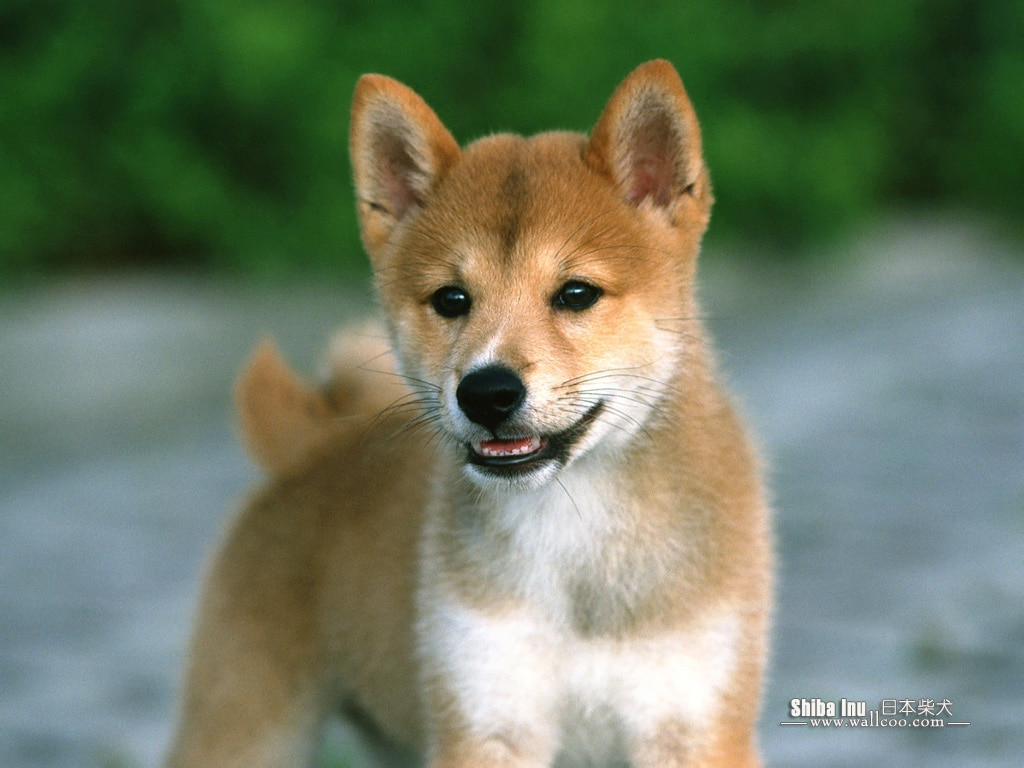
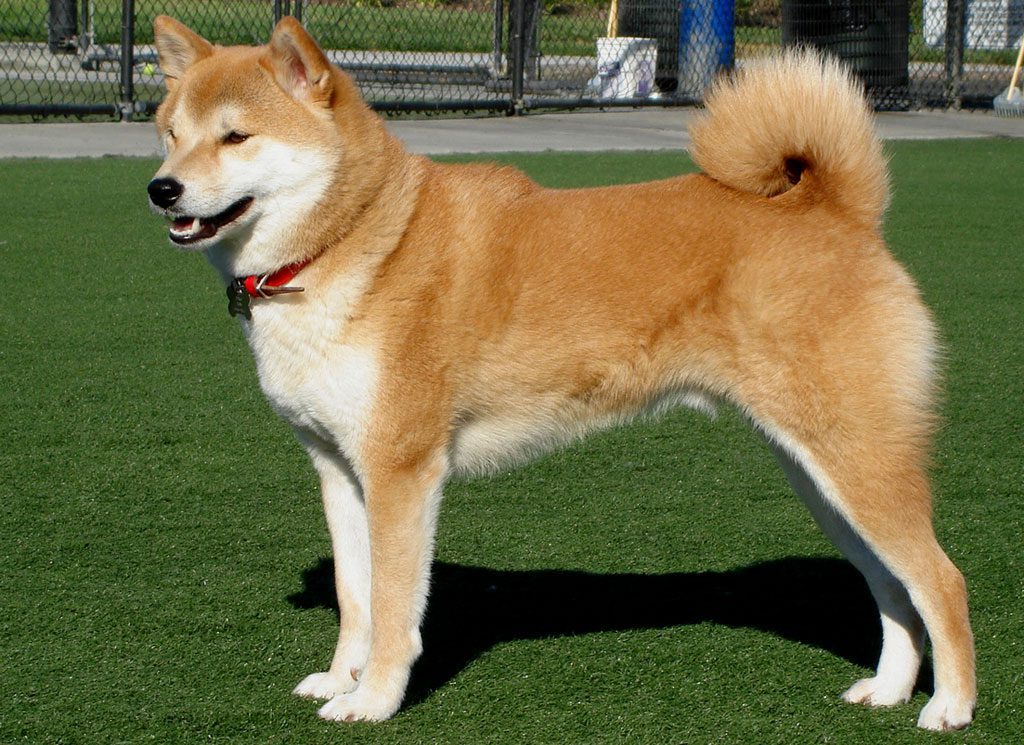
The Shiba Inu It is the smallest of the six original and distinct breeds of dog Japan.

Content

History

The Shiba Inu It is an ancient breed of Japanese dog. It is also known as Shiba or Shiba Ken. Shiba means "small" and "Inuยป or ยซKenยป means ยซdogยป in Japanese.

The Shiba It is the smallest of the six recognized Japanese dog breeds.

Historical representatives of the breed were much smaller and short-legged than current specimens. Mountain farmers kept them as farm dogs and to hunt small game and birds.. They could develop independently of other races and changed little. Towards the end of the 19th century the British brought their English Setters and Pointer. As a result, the Shiba Purebred became a rarity within a few decades. Almost a hundred years ago the breed was almost extinct. Around the year 1928 early breeders began to revive the breed and in 1934 established an official standard. Internationally, the FCI tells it in the Group 5 ยซSpitz-type and primitive type dogsยป in Section 5 "Asian Spitz and related breeds".

Physical Characteristics Shiba Inu

Translated ยซShiba Inuยป simply means ยซlittle dogยป. In fact, the Shiba Inu, weighing up to 13 kg, is the smallest representative of the six breeds of Japanese dogs recognized by the FCI.

The Shiba Inu is an original dog and a close relative of the wolf. Its appearance is reminiscent of a fox, especially with reddish specimens. Triangular standing ears stand out, the small slightly triangular eyes, as well as the curly tail, which is very close to the back. The hard and straight top coat can have the colors red, black tan, Sesame, as well as black or red sesame. "Sesame" in Japanese dogs means a mixture of red and black hairs. All colors must have the so-called ยซUrajiroยซ. They are whitish hairs on the muzzle, the chest, cheeks, as well as in the lower part of the body and inside the extremities.

Shiba Inu character and skills

The Shiba Inu is a perceptive and independent dog that never fully submits. In general, is lively, entrepreneur, affectionate and brave. He doesn't like to share his "properties" like baskets, food or toys with other dogs. But, with good socialization, living with other pets is possible. Relatively little thief, but can communicate with other sounds in complex ways. He is reserved and very reserved with strangers. You have a strong will and can convince your caregiver of your qualities. With his strong self-confidence you will have to compete with him at first, what can be a big challenge. But, the dog remains calm and collected and is never aggressive. If you acquire some authority, the Shiba is an affectionate and faithful four-legged companion.

Shiba Inu puppy education

The Shiba Inu he is a demanding dog that is difficult for beginners to understand. You need an owner who can cope with your complex and stubborn character. He never gives up his independence and needs a consistent and loving education. Punishment is not appropriate for sensitive dogs, because they are not only sensitive but also resentful. Even for experienced dog owners, stubborn dog can be a challenge. So, it will be a while before he accepts you as a higher ranking dog. For essential socialization, it is recommended to attend a dog school.

Activities with the Shiba Inu

Depending on how you are, the Shiba Inu can be very agile. Likes to decide for himself when he feels like moving, but he needs his daily walks. Depending on your character, some representatives of the breed are suitable for dog sports. If they make sense of it, Japanese dogs can be convinced of agility. Dogs can also be great companions when jogging or cycling. The strong hunting instinct coupled with the dog's stubbornness allows it to run freely without a leash only in rare cases. Preferred activities vary greatly from dog to dog. The owner's motivation to convince the dog of the benefits of an activity is also decisive. Silly recovery games or tricks are not very attractive to these serious dogs. This intelligent breed wants to understand the meaning of a task.

Shiba Inu health and care

The Shiba he is a robust and easy-care dog. But, you should brush their fur regularly. Loses its dense undercoat twice a year during coat change. If you don't want to fight with large amounts of hair at this time, you should regularly brush the dog to remove loose hair. Overall Shiba it is a clean and odorless dog, who is said to be clean as a cat.

With regard to health, the breed is one of the most robust breeds, but you should avoid great efforts in hot weather. Dogs feel more comfortable in the cold and snow. When it comes to nutrition, you should opt for a high-protein, high-meat diet.

Does the Shiba Inu suit me?

If you are looking for a demanding dog with a strong charisma, the Shiba Inu It will make you happy. It is a very clean dog, whose fur has little inherent odor. In general, the Asian dog breed is suitable for self-confident people who want to deal seriously and intensively with their dog. Beginners should refrain from buying this dog, despite his beautiful appearance. If you are sure of the breed, it is better to look for a breeder that belongs to an approved club. For a purebred puppy with papers you can calculate between 800 and 1500 EUR. Representatives of this breed are occasionally found in the shelter looking for a new home..

Shiba Inu curiosities

in his native country, Japan, the Shiba It is not only a "National Natural Monument", but together with the Akita Inu is the most popular companion dog. Due to its unique appearance, these dogs are also very popular in social media today. The Shiba most popular is probably the male Maru Taro (@marutaro) from the Japanese city of Nezu with more than 2,5 million subscribers on Instagram. Among Internet friends since 2013, the call Doge Meme has become particularly well known. It consists of a photo of a Shiba and a rudimentary text in English. The most used photo shows the male Kabosu, a dog adopted by the kindergarten teacher Atsuko Sato.

Breeders list "Shiba Inu"

REGISTER KENNEL

Creators of Shiba Inu

Offer your puppies for free. Sign up here.

  • This field is a validation field and should be left unchanged.
  • Enter an image of your kennel.


Characteristics "Shiba Inu"

Coexistence is important that you have with your new friend. Before considering the acquisition of a dog of the breed "Shiba Inu" you know certain factors. Not all breeds of dogs are apt to live in an apartment, you must take into account his character, their need for exercise, their interaction with other pets, their care and if you have small children, their level of tolerance towards them.

Training ?

2,0 of 5 stars (based on 1 review)

Suitability of the apartment ?

3,0 of 5 stars (based on 1 review)

Can be alone all day ?

3,0 of 5 stars (based on 1 review)

Suitable as a first dog ?

1,0 of 5 stars (based on 1 review)

Weight gain ?

3,0 of 5 stars (based on 1 review)

Health ?

4,0 of 5 stars (based on 1 review)

Intelligence ?

4,0 of 5 stars (based on 1 review)

Kindness with child ?

3,0 of 5 stars (based on 1 review)

Tendency to bite ?

3,0 of 5 stars (based on 1 review)

Tendency to bark ?

3,0 of 5 stars (based on 1 review)

Tendency to flee ?

5,0 of 5 stars (based on 1 review)

hair loss strength ?

4,0 of 5 stars (based on 1 review)

Suitable as a guard dog ?

5,0 of 5 stars (based on 1 review)

Joy ?

3,0 of 5 stars (based on 1 review)

Cat friendliness ?

2,0 of 5 stars (based on 1 review)

Power level ?

4,0 of 5 stars (based on 1 review)

Shiba Inu pictures

Videos of Shiba Inu

Type and recognitions:

  • FCI CLASSIFICATION:
  • Group :
  • Section : . .

Federations:

  • – FCI – Group 5: Spitz-type dogs and primitive type – Section 5: Asian Spitz and related breeds. โ“˜
  • – AKC – Non-sporting โ“˜
  • – ANKC – Group 6 (Utility) โ“˜
  • – CKC – Group 6 – Non-Sporting โ“˜
  • – โ€‹KC – Utility โ“˜
  • – NZKC – Utility โ“˜
  • – UKC – Northern Breeds โ“˜

FCI breed standard "Shiba Inu"

Origin:
Japan

Date of publication of the valid original standard:
30.10.2016.

Use:

Hunting dog for birds and small animals. Companion dog.


General appearance:

It is a small dog, well balanced, of good bones, with well developed muscles. Of strong Constitution. Quick, agile and beautiful.

important proportions: The relationship between the height at the withers and the length of the body is 10:11.


Behavior / temperament:

It is a dog of loyal temperament, keenly felt and very lively.

Head:

---

Cranial region:

Wide forehead.

  • Fronto-nasal depression (Stop): Defined, with a slight groove.

facial region:

  • Truffle: Preferably black. Straight nose cane.
  • Snout: Moderately thick; thins to the tip.
  • Lips: Closed.
  • Jaws / Teeth: Strong teeth; scissor bite.
  • Cheeks: Well developed.

Eyes: Relatively small, triangular and dark brown; the corner of the eyes turned up.

Ears: Relatively small, triangular, slightly bent forward and firmly erect.

Neck:

Thick, strong and well balanced with head and body.

Body:

  • Back: Straight and steady.
  • Pork loin: Broad and muscular.
  • Breast : Deep, ribs moderately arched.
  • Belly: Well collected.

Tail:

High implementation, thick and carried vigorously coiled or curved like a sickle; the tip of the tail almost reaches the hocks when hanging down.

Tips

Former members: Seen from the front, straight forelimbs.

  • Shoulder pads: Moderately oblique.
  • Elbows: They must be well attached to the body.

Later members:

  • Thigh: Long.
  • Legs: Short, but well developed.
  • Hocks: Thick and strong.

Pies: Fingers should be close together and well arched. The pads must be strong and elastic. Strong and desirably dark colored nails.

Movement:

The movement must be light and agile.

Mantle

Fur: The outer layer should be smooth-haired, with a hard texture, the undercoat should be of fine and abundant hair; the hair on the tail should be slightly long and kept parted.

Color: Red, Black with fire, sesame, sesame black, red sesame.

Sesam color definition:

ยท Sesame: Proportionate mix of black and white hairs.
ยท Sesame negro: More black hairs than white.
ยท Sesam brook: Coat color red, mixed with black hairs.

All above mentioned colors, except for the White, They must have ยซ URAJIRO ยป.

URAJIRO: Whitish hair on the sides of the muzzle and on the cheeks, under the jaw, neck and abdomen, under the tail, and on the inside of the legs.


Size and weight:

Height to the cross:

  • Males: 40 cm..
  • females: 37 cm..

A difference of more or less is tolerated 1,5 cm..


Fouls:

Any deviation from the aforementioned criteria is considered a fault and its seriousness is considered to the degree of the deviation to the standard and its consequences on health and
the welfare of the dog.

ยท Female males / male female.
ยท Defective occlusion (upper or lower prognathism).
ยท Absence of a large number of teeth.
ยท Shyness.

disqualifying fouls:

ยท Aggressiveness or extreme shyness.
ยท Any dog โ€‹โ€‹showing clear signs of physical or behavioral abnormalities should be disqualified.
ยท Ears not erect.
ยท Hanging or short tail.


N.B.:

ยท Males must have two normal-appearing testicles completely descended into the scrotum.
ยท Only functionally and clinically healthy dogs, with the typical conformation of the breed, should be used for parenting.

Source: F.C.I - International Cynological Federation

Alternative names:

1. Japanese Shiba Inu, Japanese Small Size Dog, Japanese Brushwood Dog, Japanese Turf Dog, Shiba Ken (English).
2. shiba inu (French).
3. Shiba-ken, Shiba Inu (German).
4. Shiba (Portuguese).
5. Japanese Shiba Inu, Japanese Small Size Dog, Shiba Ken (espaรฑol).

โ–ท The world of Pets: Dogs, cats, birds, reptiles, amphibians

Swedish Lapphund
Suecia FCI 135 - Nordic Watchdogs and Herders.

In experienced hands the Swedish Lapphund is a loyal and robust companion.

Content

Origin and history

The "Swedish dog of Lapia" shares its ancestors with the Finnish Lapphund. They are descended from dogs bred by the Lapps and Sami specifically to herd their large herds of reindeer.. For centuries they have served as indispensable working dogs in this way.

Breeding became increasingly specialized for weather resistance and independence. The dogs had to perform very well physically. Persevering and willing to work, They formed the perfect partners for the herd owners. With this they ensured their livelihood for these people.

Only in the 20th century were three independent dog breeds formed and recognized from these dogs. In addition to the Swedish and Finnish Lapphound, there is also the Lapponian Herder today. This one has a shorter coat and short hair.

As technology progressed, the Swedish Lapphund was gradually replaced by snowmobiles. Due to its faithful and pleasant character, the breed remained, however, preserved. Today they are highly valued as family and companion dogs.. But they are also suitable for hunting, like watchdogs, and even as search and rescue dogs.

Physical characteristics

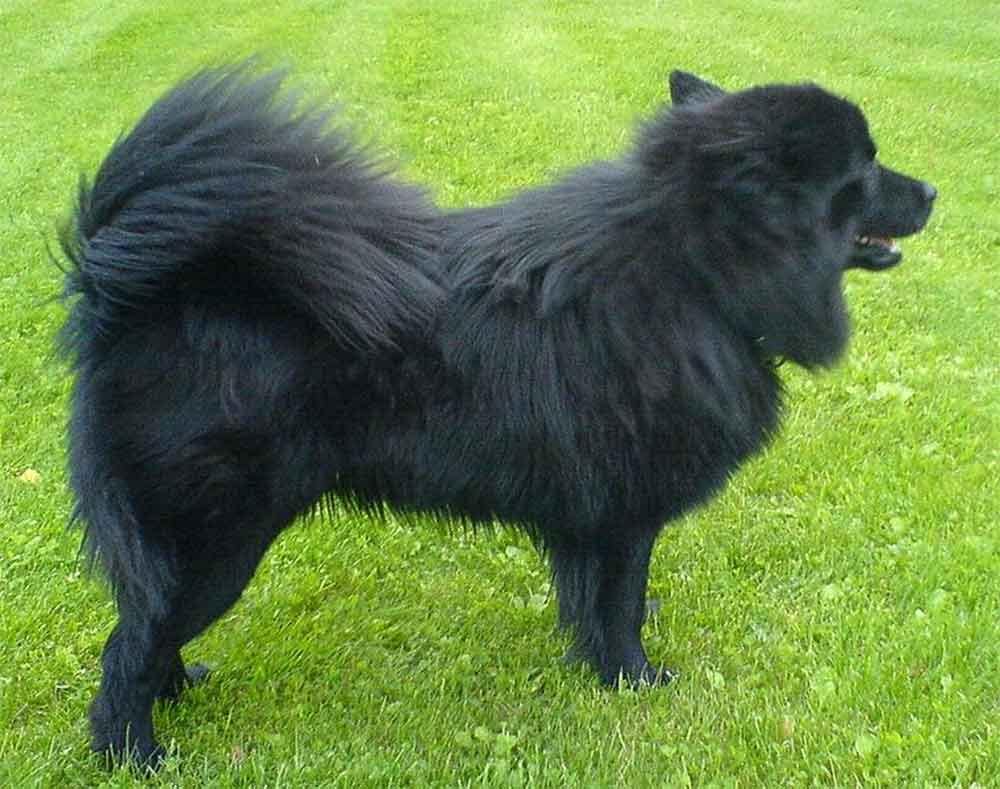
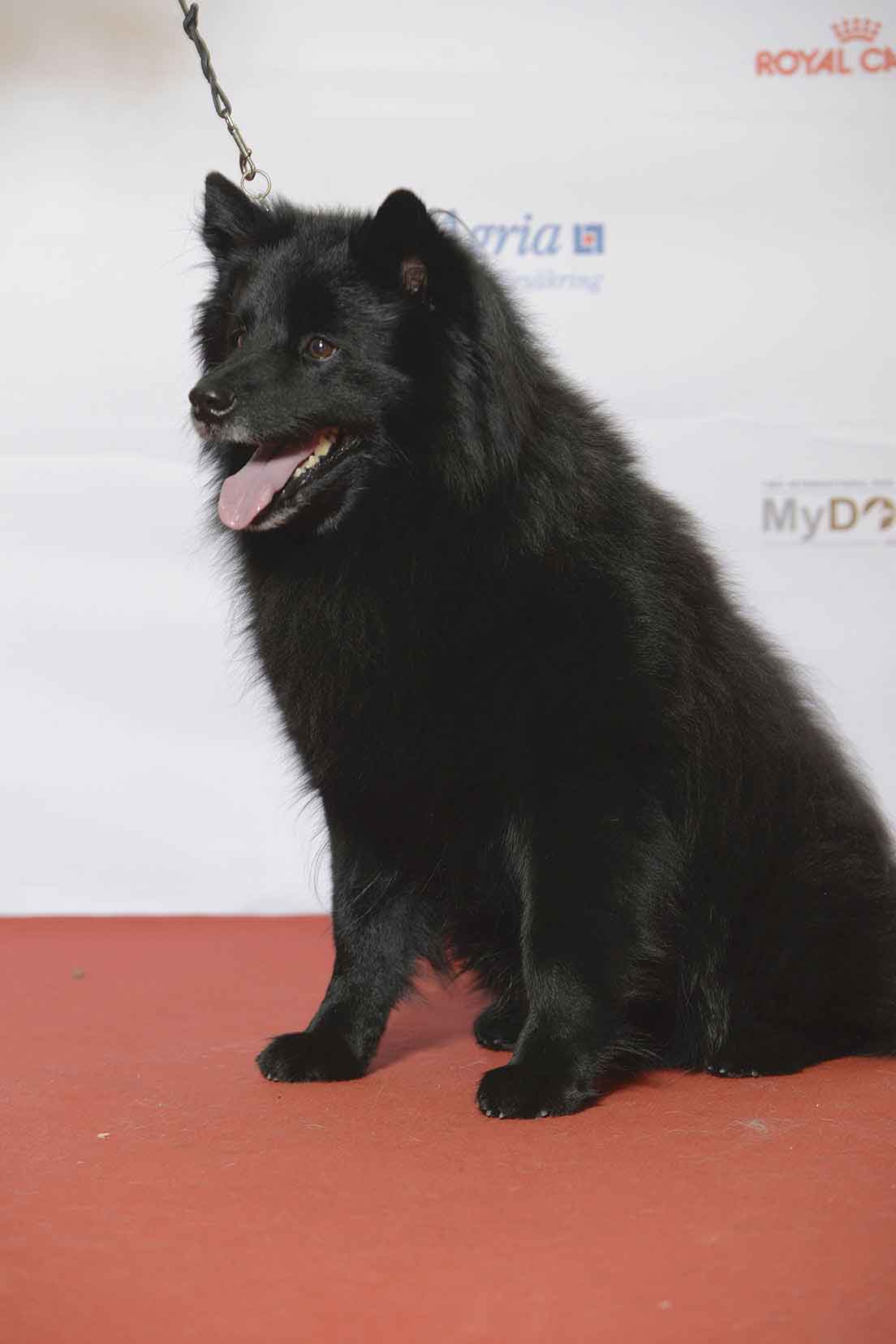
The breed is recognized by the FCI and belongs to the group 5 of "Spitz type dogs and primitive type". The relationship with Spitz can be easily seen in the appearance of the Swedish Lapphund. Distinctive triangular head and ears frame large, alert eyes. With a height between 43 and 48 centimeters, belongs to the breeds of medium-sized dogs.

His coat is always black. Only occasionally can small white markings be found on the legs or chest. Like all Nordic dogs, has a double coat with a very dense undercoat and a long coat. This coat makes it very insensitive to almost all weather conditions.

Character and skills

Swedish Lapphund
The largest dog event in the Nordics: www.mydog.se

In his character, the Swedish Lapphund he is very attentive, lively and friendly. It is well adapted as a family dog. But it is often used for dog sports too, hunting or as a watchdog. Your original task as a herding dog is, Unfortunately, hardly needed today.

Like an intelligent and persistent dog, it is important that you are always physically and mentally disabled. Due to its independent character, consistent training is necessary. In experienced hands the Swedish Lapphund is a loyal and robust companion.

The Swedish Lapphund tends to bark, what is beneficial to use as a watchdog. If you start early with education, the barking can also be well contained. Generally friendly with other animals.

Correct nutrition

The Swedish Lapphund has no special restrictions on feeding. It can be well fed with any quality food. Attention should be paid to a good nutrient composition. The sugar, However, has no place in feeding.

Awards are not absolutely necessary for the motivation and education of the Swedish Lapphund. But, is particularly happy with the natural chewy sticks, like cowhide or pig's ears. Attention should also be paid to dental care.

Care of the "Swedish dog of Lapia"

Although the coat of Swedish Lapphund it is as abundant as it is impressive, his toilet is not elaborate. The coat is very dense and offers perfect protection against the weather. Firm structure of the top layer is dirt repellent. So, it is enough to brush the Swedish Lapphund from time to time to remove coarse dirt or sticks.

Only during the change of coat is daily brushing necessary. One should use dog shampoo very sparingly with this dog.. So, should only be bathed in the absolutely exceptional case. It also, a haircut is not normally necessary. Like any other dog, their claws should be checked regularly and, if required, cut. The ears should also be cleaned from time to time to avoid infections..

Videos "Swedish Lapphund"

Type and recognitions:

  • FCI CLASSIFICATION:
  • Group :
  • Section : . .

Federations:

  • – FCI – Group 5 – Section 3 Nordic Watchdogs and Herders.. โ“˜

FCI breed standard "Swedish Lapphund"

Origin:
Sweden

Date of publication of the valid original standard:
26.06.2000

Use:

Herding dog, Today it remains rather as a company dog.


General appearance:

Typical spitz dog slightly lower than middle size and carrying the head proud. His coat is resistant to temperature.

IMPORTANT PROPORTIONS :

The body is rectangular.


Behavior / temperament:

Lively, alert, kind and affectionate. The Lapland Swedish Dog is very receptive and eager to work. His skills like a good guardian dog and pastor make him extremely useful in reinde. It is extremely versatile, suitable for obedience training, agility, grazing, tracking, etc. It is easy to train, full of stamina and character.

Head:

----

Cranial region:

Skull: Slightly longer than wide; the forehead is rounded and the occiput is not clearly defined.
Depression links (stop) : Very well marked.

facial region:

Truffle: Preferably dark, or very black.
Snout: A little longer than a third of the length of the head, well filled and tapering towards truffle. The nasal bridge is straight.
Belfos: Tight. The palate and lips are heavily pigmented.
Mandible / Teeth: Scissor bite with well developed and regular teeth.

Eyes: Separated from each other, round, rather large. Cafรฉs, preferably dark brown and very expressive. Well pigmented eyelids.
Ears: Triangular, widen the base, small, upright, tips slightly rounded, Insertion well separated from each other and very mobile. Pointed ears are undesirable but not a disqualifying foul.

Neck:

Of average length, no double chin and powerful.

Body:

Well coupled, slightly longer than the height at the withers.

Back: Straight, strong, muscular and flexible.
Pork loin: Short and broad.
Rump: Proportionally long and wide, slightly downward and muscular.
Breast : Preferably deep reaching up to the elbow. The rib cage is proportionally long, long with well developed back ribs. The sill is well developed; with well defined sternum.
Belly: Withdrawn.

Tail:

Rather high insertion, reaching the hock when stretched. Carrier rolled over the back when on the go.

Tips

PREVIOUS MEMBERS: The forelimbs should be angled enough at the shoulders and elbows to provide good reach..

Shoulder: Scapulae should be well back.
Elbows: They must be close to the chest.
Forearm: Straight, strong and parallel, in static and in motion.
Metacarpus: They have an oblique position.
Previous feet: Strong, oval-shaped, with fingers close together, strong and elastic bearings; well covered with hair even between the bearings. Nails and bearings must be heavily pigmented.

LATER MEMBERS: Well angulated in the knees and tibi-tarsal joints, but not excessively.

Leg: Muscled.
Hock joint: Low set to provide propulsion power. Undesirable accessory fingers.
Hind Feet: Same as previous.

Movement:

Light and elastic, with good momentum, covering a lot of ground.

Mantle

HAIR: Profuse double coat. The hair is straight from the body and is finely curled at the bottom. The hair is short on the head and the front of the limbs. It's long on the chest, the back of the thighs and on the tail. Abundant, dense and long on the tail. In the neck and in the throat it forms a necklace.

COLOR: Usually solid black; The brown color is typical. The brown color was known for a long time.
White color on the chest, on the feet and on the tip of the tail is allowed, but more white is undesirable.


Size and weight:

  • Ideal size in males: 48 cm..
  • Ideal size in females: 43 cm..

With a tolerance of plus and minus 3 cm..


Fouls:

Any deviation from the above mentioned criteria is considered to lack, and the gravity of this refers to the degree of deviation to the standard and its impact on the health and well-being of the dog.

SEVERE FAULTS

โ€ข Under non -existent hair.

MISS PLAYOFFS

โ€ข Cowardice, aggression toward owner.
โ€ข Atypicity.
โ€ข Abnormalities.

Any dog โ€‹โ€‹showing clear signs of physical or behavioral abnormalities should be disqualified..


N.B.:

Males should have two normal-appearing testicles., fully descended into the scrotum.

Source: F.C.I - International Cynological Federation

Alternative names:

1. Svensk lapphund (English).
2. Chien suรฉdois de Laponie (French).
3. Schwedischer Lapphund (German).
4. Lapphund (Portuguese).
5. Pastor lapรณn de Suecia (espaรฑol).

โ–ท The world of Pets: Dogs, cats, birds, reptiles, amphibians

Samoyed
Rusia FCI 212 . Nordic Sledge Dogs

Samoyedo

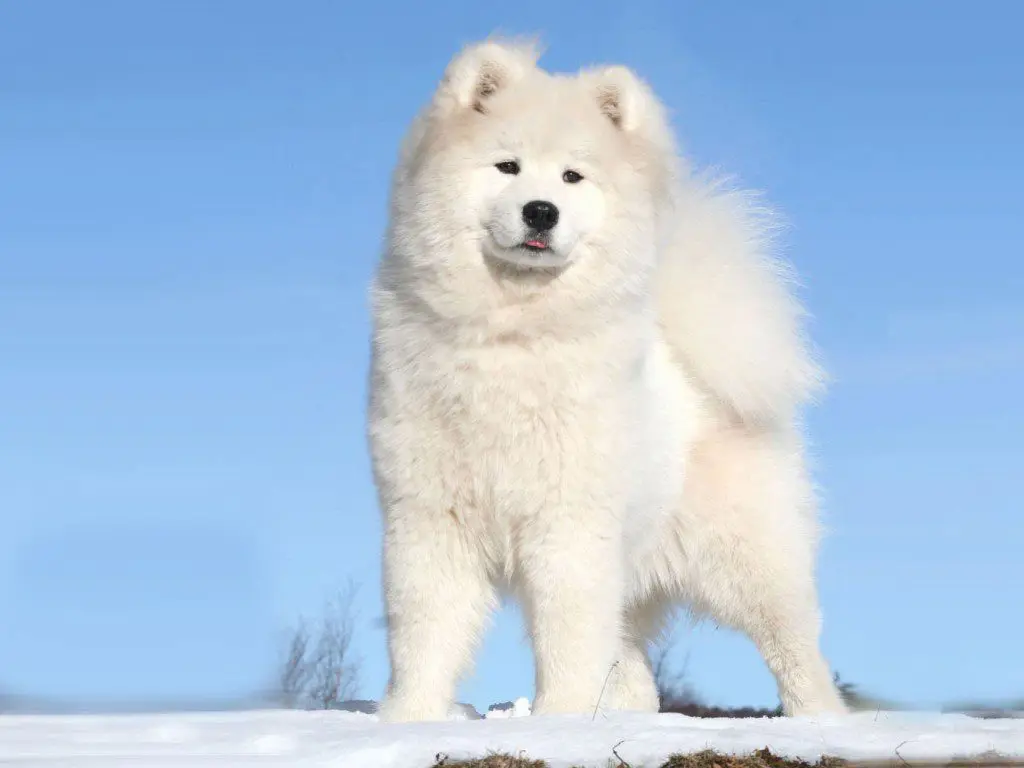
The Samoyed, Although it may seem a teddy, It is a true athlete who needs exercise daily.

Content

History

Where does he come from Samoyed originally?

The Samoyed is the archetype of a dog from the far north. It belongs to the archetypes of the dog in general. The Samoyed it is one of the oldest dog breeds. Type dogs Samoyed have accompanied the peoples of Siberia for thousands of years. The Samoyeds (or nenets) are various indigenous peoples who have lived for thousands of years throughout Siberia to the Arctic Ocean. Most live as nomads and follow herds of wild or semi-wild reindeer.. Their dogs have different tasks. They pull the sleds with the household goods or with the hunters for the hunt. They pull the boats over the snow into open water. They help with the reindeer herds. They guard and protect people as if they were herds.

They defied death even when facing the polar bear, the world's largest land predator. The Samoyeds provide an excellent navigation system that makes its way through icy deserts even in fog or snow storms, avoiding cracks and ice holes. They often sleep in the tents of the Samoyedos. They keep each other warm. So it is not surprising that the peoples Samoyeds have an extremely intimate relationship with their dogs, and not only because their existence in the far north depends on these dogs.

The Countess Aga von Hagen reports in his book on dog breeds from 1933 that he "Samoyed Spitz" was treated as a sacred dog in his homeland and no family Samoyed voluntarily separated from his dogs. On the other hand, the Countess explains that the Samoyed Spitz, through this close connection, shows a "high development of mental characteristics despite its ferocity". Was not up 2017 that a report by Russian archaeologists was published, that they had found remains of 9000 ten years old dogs in Siberia. In the permafrost these were so well preserved that they could be closely examined and classified as sled dogs..

Only in 1889 English Ernest Kilburn-Scott managed to import the first Samoyeds from Siberia. So these dogs entered modern pedigree dog breeding.. Immediately one turned to their outer appearances. White color rose as a feature of a Samoyed basically arbitrarily to standard. At that moment, like today, se and take Samoyed original in many colors, only rarely in pure white. To impose the pure white color, inbreeding was carried out according to this dubious criterion and thus much of the real character and extreme robustness of the Samoyed. It also, the breeding base was already very small anyway, because the Siberian peoples were reluctant to give up their dogs for breeding in England.

Finally, in the decade of 1950 they also crossed the original line, these being very different in character and, if you look closely, also in appearance. Although the Samoyed current European breeding has lost much of the original character of the true Siberian dog, still an original breed. The most exciting thing about him is that he shows at the same time a close connection with humans. Not without reason, the Samoyed is one of the founders of other breeds of dogs such as the Eurasian. The first standard for Samoyed it was created in 1909, in 1913 was recognized in England. The FCI, Fรฉdรฉration Cynologique Internationale recognized her in 1959.

Physical characteristics

Males tend to have more size females usually weigh between 20 and 32,5 kg, while females usually weigh between 17 and 25 kg.

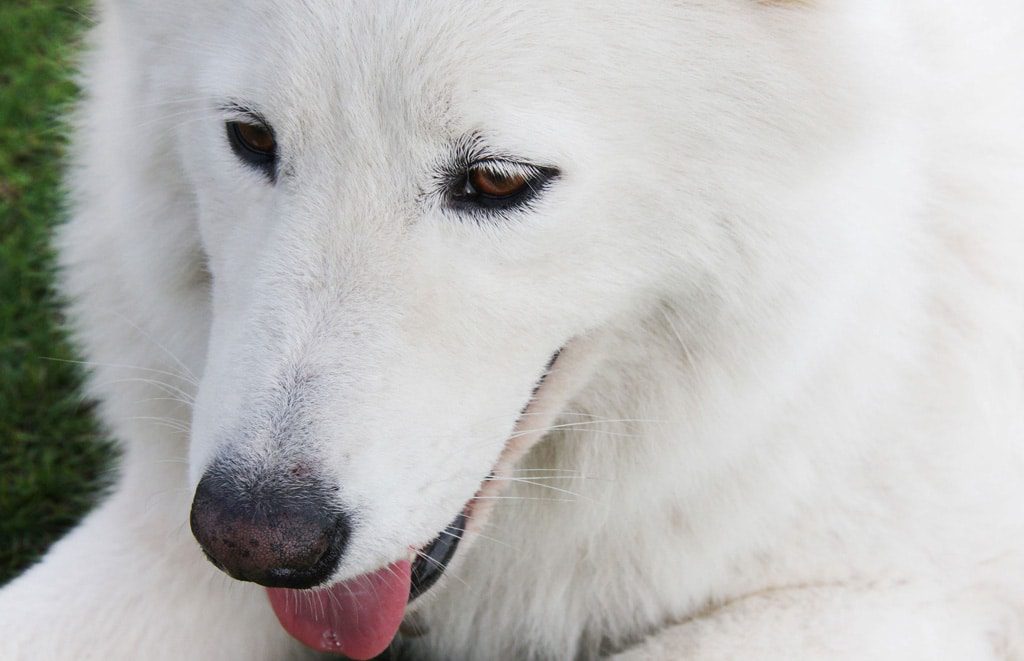
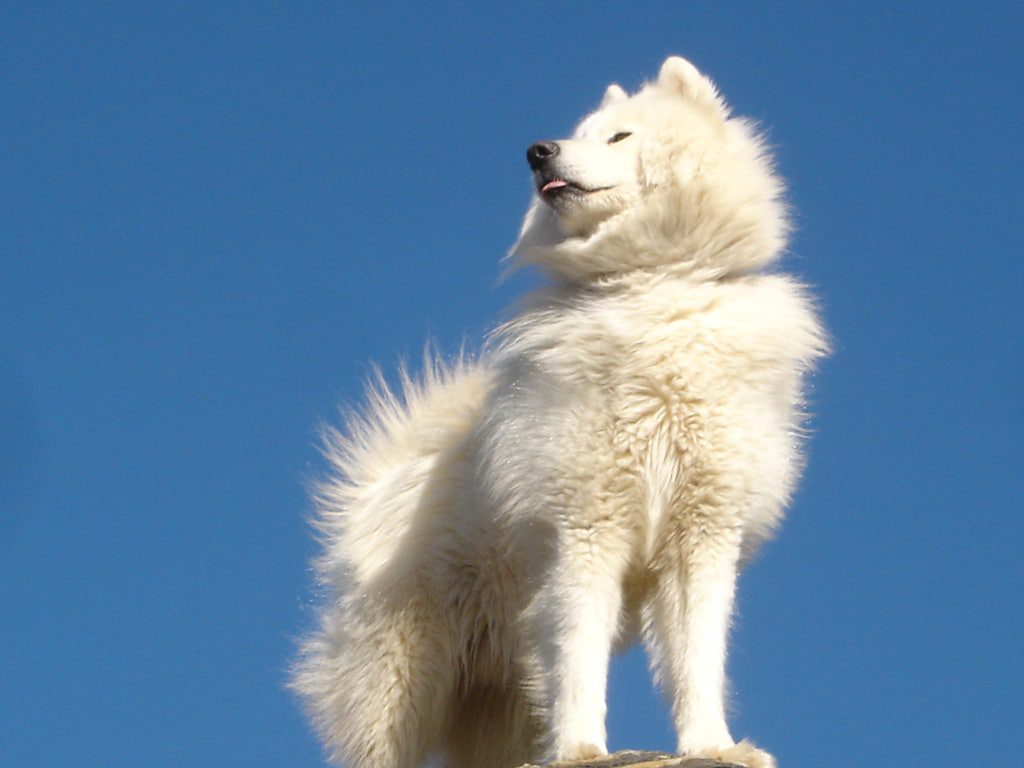
The eyes of the Samoyed they are usually black or brown, and slanting. The nose or truffle must be well developed and preferably black. At some times of the year it can clear up, giving rise to what is commonly called "winter nose.". Some other factors such as age or climate can clarify it, but it is important to always keep the edges of black. Otherwise it would mean a mandatory veterinary visit.

The ears they should be thick and completely covered with hair, form triangular, and upright. In most cases they are white, but occasionally they can be Brown clear (known as "cookie" color).

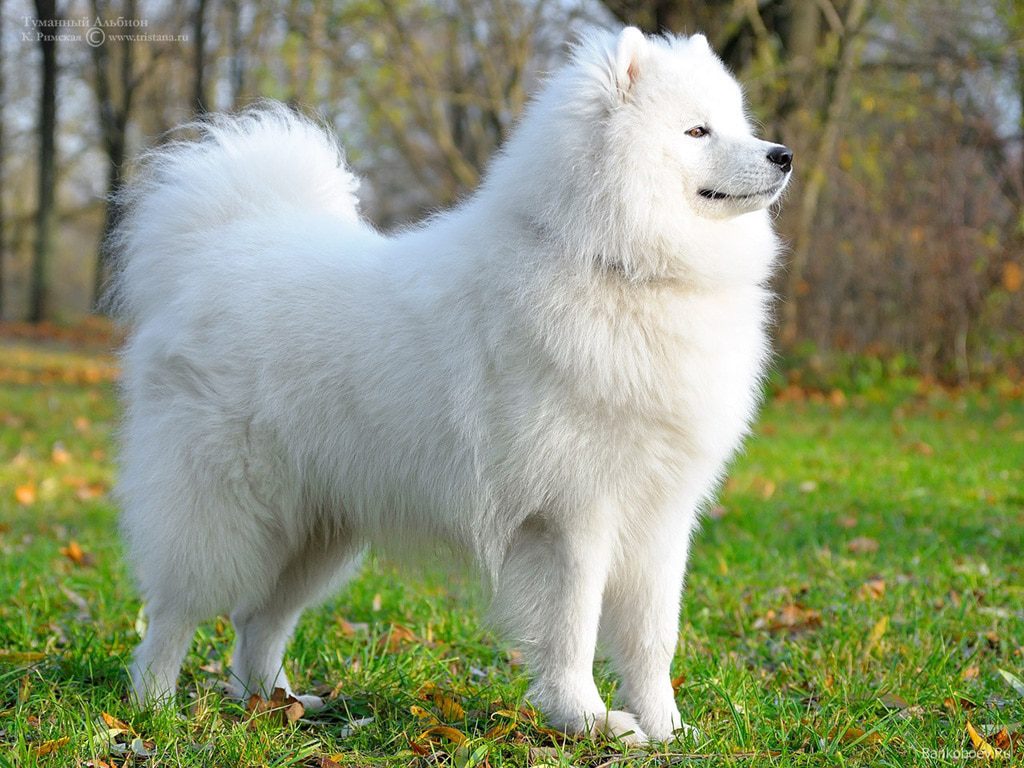
The tail of the Samoyed it is one of the most distinctive features of this breed. As the Mally, the tail hanging hook-shaped on his back; However, and unlike the Malamute, the tail of Samoyed touches back and leans over, slightly, on one of the sides and it should not be a very closed hook or in the shape of a "flag".

in cold climates, some Samoyed sleep with their tails over their noses to provide additional protection. Most of the Samoyed, They allow the tail to fall when they are relaxed, but they back to its original position when they are alert.

The Samoyed, they have a dense double coat of hair. The top layer has a dense, straight and thick hair, It seems the white but it has some dyes of silver. This top layer keeps the Undercoat relatively clean and free of debris. The bottom layer is a soft, dense and short hair that keeps the dog warm.

The bottom layer is changed from one to two times a year, process known as shedding of hair. This in no way means that they move hair only on these occasions, year-round fine hair it is moved and replaced, which โ€“usually- sticking it on your clothes or simply air fleet.

The Samoyed standard can have a mix of color White and biscuit, Although dogs completely white or completely color cookie are not rare. Males are generally longer than females fur.

The Samoyed, they are good at grooming themselves, not too many baths still needed. Dirt usually falls easily from the outer layers of hair, making the dog show clean.

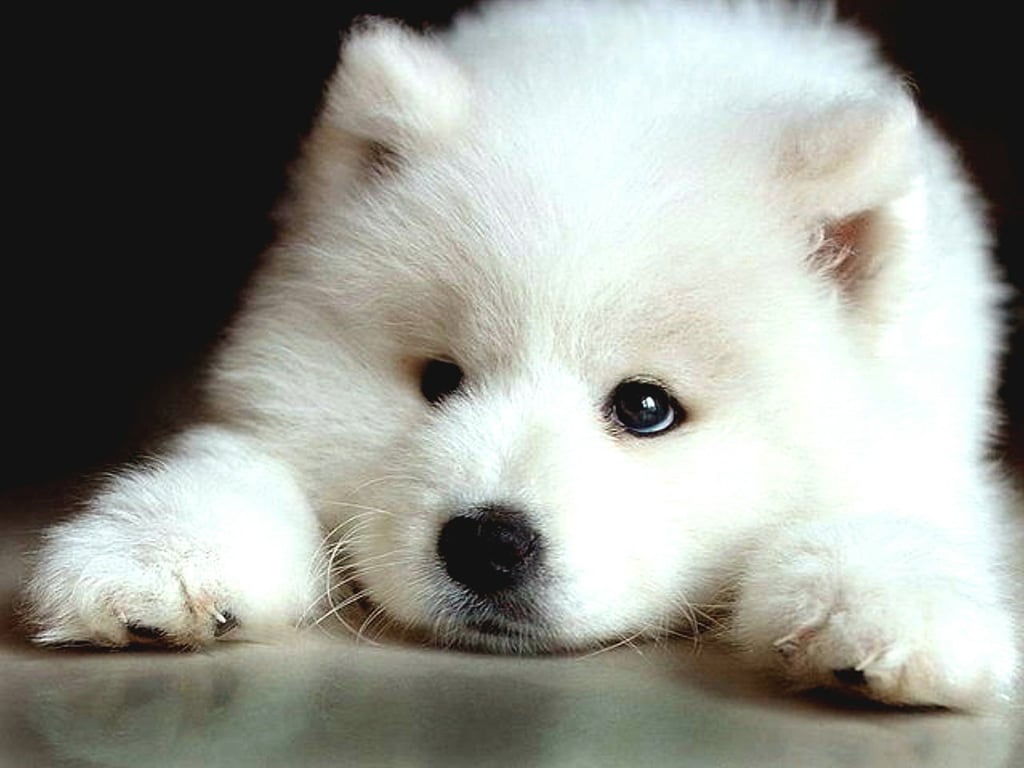
The hair of the puppies is more porous, so it is easier to you manche with the grass and mud if they are long time outdoors. The aspect of brushing is more difficult, that by their thick fur in some areas like the back of the ears tend to tangle is if not brushes weekly.

The Samoyed will require that, cut the hair that grows between their feet bearing, but with this exception the rest can stay that way, course.

Except for reasons medical or hair is extremely entangled, it is not recommended that the Samoyed be shaved, since their hair acts as an insulator from both cold and moderate heat, in addition to protecting fair skin from Samoyed before burns by the rays of the sun.

An important characteristic of this breed is that they almost do not have the characteristic dog smell., making them good dogs live indoors. The lack of dander, as well, makes them hypoallergenic.

The thick layer of hair can make you feel uncomfortable in the summer in locations where the climate is warm, where they prefer indoors because the air is colder. Their hair also acts as a natural repellent against lice and ticks..

When moving the hair, most of the outer layer falls off and is replaced, the old man can fall into large bundles, leaving hollow spaces in extreme cases. You can brush the hair, with a metal comb, with which we can speed up the process of moving and help the Samoyed to regain your appearance more quickly. Brushing frequently help him is not enrede.

Give a bath to Samoyed it's a long process, because the hair is almost โ€œwaterproofโ€, so it will take time for it to be fully wet and then fully wet. The hair Samoyed must be dried with cold forced air (using a hair dryer), as water can be trapped in the thick undercoat making it difficult for it to evaporate.

It is important that you rinse well, as leftover shampoo or soap can lead to a fungal infection, difficult to remove without having to shave the affected area. To keep the hair from Samoyed Radiant, brushing and a healthy diet may not be disparaged.

How big is a "Samoyed"?

The samoyed have a height at the withers of about 57 centimeters in males and 53 centimeters in females. Weight is not prescribed by the standard, but it is usually between 18 and 30 kg.

How long can a "Samoyed" live??

One Samoyed healthy can reach the 12 years and more, and this with a good physical condition.

Character and skills

The provision of play of the Samoyed makes it a dog not recommended as a guardian; a Samoyed aggressive is very rare. But, with their tendency to bark they can be diligent watchdogs, barking when something or someone approaches their territory.

The Samoyed, they are one Excelent company, especially for small children or even other dogs, remaining also playful until advanced age. The Samoyed, as well, they are known to be somewhat fools sometimes and difficult to train due to lack of diligence and not due to lack of intelligence, so it must be persuaded obey orders which are given.

His inheritance by pulling sleds, the Samoyed, has no problems to pull objects, and Samoyed who has not been trained has no problem with dragging his owner on the leash when they take him out for a walk instead of walking beside him.

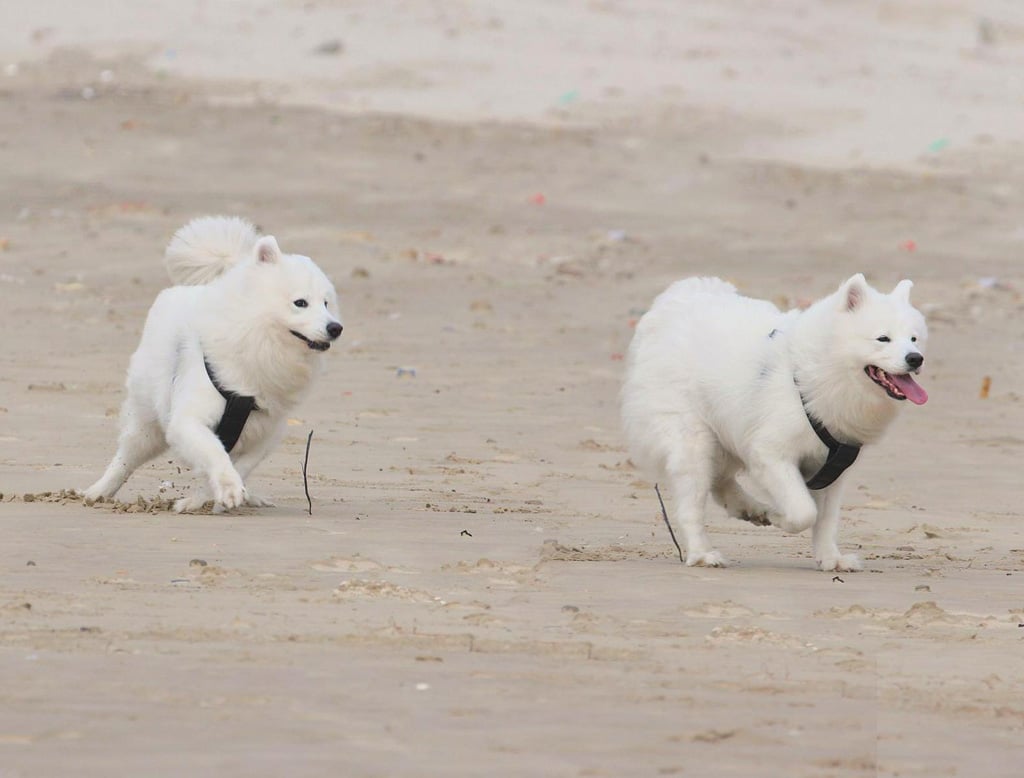
Running is a special passion of the samoyed, more precisely: pull sleds. If you are interested in a Samoyed, you should definitely visit the sled dog races in winter. It is deeply impressive and fascinating.

You can feel the extreme tension of the dogs much earlier in the field of โ“˜ Musher. When you go to the exit, there is hardly a stop. Like in an explosion, this tension of these rather heavy looking dogs dissolves in the acceleration of the sled. The strength of Samoyed it's not your speed, but its unusual resistance.

They instinctively act like herding dogs., so when playing, especially with children, they tend to try to guide them.

This breed is characterized by its expression alert and smiling, which has earned him the nickname "Samoyed smileยป o ยซsmiling dogยซ. They have great vitality, which is why, well cared for they retain their youth and that jovial spirit until their old age. Their average lifespan is of 12 to 18 years, Although some can live a little longer.

As a working breed, they have an excellent resistance and without daily exercise, they become bored and/or depressed they, that can lead to it barking excessively, destroyed or have a worthy of a master of escape behavior. While they are healthy dogs they have tendency to certain diseases.

Caution, health and diseases

The Samoyed for show breeding is affected by numerous hereditary diseases due to one-sided breeding in outward appearance and the very small breeding base today. You should avoid parenting, that values รขโ‚ฌโ€นรขโ‚ฌโ€นthe exhibition championships.

How much care does a "Samoyed" need??

The lush double coat of the Samoyed needs regular care. Especially during the coat change in spring and summer, his house, his car and his clothes will be full of his long hair even though our Samoyed brush daily.

What food is best for a "Samoyed"?
The Samoyed you have no special requirements in your diet. Like most dogs it likes a meaty beef bone and fresh meat. The Samoyed it is very suitable for barbecues.

Activities with your โ€œSamoyedโ€

How much exercise does a Samoyed?

With a Samoyed you can do winter sports very well, ideally as a sled dog. The Samoyed needs an appropriate workload for each species.

Considerations before purchase

Where can you buy a "Samoyed"?

If you are interested in a Samoyed, the first thing you should do is visit some sled dog races. Here you can experience the heart of these dogs live. Then you should get information from a local breeder who does not breed Samoyed plush for exhibition. The breeder should have tested his dogs for special risks of hereditary diseases. This is a natural in serious parenting.. It also, there should be no inbreeding, which can be estimated by looking at the pedigree, if no name appears there twice. The breeder must have his litter well documented by photo. You should be able to see the litter along with the mother bitch, after the fix, in the place. Please, Do not buy Samoyedos by Internet, because there is a high risk that the puppy comes from a seller or breeder of dogs, normally well camouflaged.

The education and maintenance of a "Samoyed"

The Samoyed easy to train and guide, but it is not a dog for beginners. You have high demands on your attitude, derived from its destiny as an original working and sled dog. So you need a lot of occupation and activities, ideally in the sport of sledding.

If you don't exercise and are even left alone without a deep connection to your family, can become a nervous and upset dog, that can even destroy the apartment or the garden.

The Samoyed not a dog for a flat or the big city. The ideal would be a house with a garden. To the Samoyed they like to sleep outside and roll their head under their tail even in the biggest snowstorm. The garden, where do these dogs stay, should not be an ornamental garden.

The luxurious coat of the Samoyed needs regular care. Especially during the change of layer in spring and summer an intensive grooming is indicated. Then the house, the car and clothes will be full of her long hair even if you brush it daily. Here you don't have to be fussy. In the car, it is best to transport it in a box from a specialized store.

The Samoyed can be trained very well by an experienced owner. You have to accept the challenge, It even has to motivate you to fight mentally with this original and confident race. They will gladly accept their masters or caregivers, will be loyal to them, but they have to demonstrate leadership qualities combined with a lot of knowledge of the breed. You have to be fully involved in the experience with these typical Nordic dogs, rustic.

Through a gentle but disciplined upbringing, a Samoyed must be aware of its position in the ranking as early as puppy age. There should be no question who determines the rules of the house.

Characteristics "Samoyed"

Coexistence is important that you have with your new friend. Before considering the acquisition of a dog of the breed "Samoyed" you know certain factors. Not all breeds of dogs are apt to live in an apartment, you must take into account his character, their need for exercise, their interaction with other pets, their care and if you have small children, their level of tolerance towards them.

Adaptation โ“˜

4,0 of 5 stars (based on 1 review)

friendly dog โ€‹โ€‹โ“˜

4,0 of 5 stars (based on 1 review)

hair loss โ“˜

5,0 of 5 stars (based on 1 review)

Affection level โ“˜

5,0 of 5 stars (based on 1 review)

Need for exercise โ“˜

4,0 of 5 stars (based on 1 review)

Social need โ“˜

4,0 of 5 stars (based on 1 review)

Home โ“˜

3,0 of 5 stars (based on 1 review)

Toilet โ“˜

4,0 of 5 stars (based on 1 review)

Friendly with strangers โ“˜

3,0 of 5 stars (based on 1 review)

barking โ“˜

4,0 of 5 stars (based on 1 review)

Health โ“˜

3,0 of 5 stars (based on 1 review)

Territorial โ“˜

5,0 of 5 stars (based on 1 review)

Cat friendly โ“˜

3,0 of 5 stars (based on 1 review)

Intelligence โ“˜

3,0 of 5 stars (based on 1 review)

Versatility โ“˜

3,0 of 5 stars (based on 1 review)

Child friendly โ“˜

5,0 of 5 stars (based on 1 review)

Surveillance โ“˜

3,0 of 5 stars (based on 1 review)

joy โ“˜

5,0 of 5 stars (based on 1 review)

Frequently asked questions about the Samoyed dog breed

in this post, we will answer the most frequently asked questions about Samoyeds.

1 – How is the fur Samoyedor and how it should be cared for?: The coat of the Samoyed it is white and fluffy, with a cotton-like texture. To care for the coat of a Samoyed, regular brushing is necessary to prevent knots and tangles. It also, it is recommended to bathe them approximately every three months to keep their fur clean and soft.

2 – Are the Samoyedos good companion dogs?: Yes, Samoyeds make excellent companion dogs due to their affectionate and loyal nature.. These dogs enjoy human company and can adapt to different lifestyles., as long as they get enough attention and exercise.

3 – What is the personality of the Samoyed?: The Samoyed is a friendly dog, Intelligent, playful and loyal. These dogs have a sociable personality and get along well with children and other animals if properly socialized from puppies..

4 – How is the health of the Samoyed?: In general, the Samoyedos they are a healthy breed, but like all dogs, may have certain health problems. Some common conditions in this breed include hip dysplasia, cataracts and thyroid problems. It is important to carry out regular check-ups with the vet and carry out a proper diet and exercise to keep them healthy.

5 – How do you train a Samoyed?: The Samoyedos They are intelligent dogs and respond well to training.. It is important to use positive training methods and reward good behavior.. Socialization from puppies is key for the Samoyed to become a balanced and well-behaved dog.

Conclusion: If you are interested in adopting a Samoyed dog, We hope we have answered your questions and have helped you to get to know this breed better.. Remember that adopting a dog is a responsibility and that you must dedicate adequate time and resources to ensure that it has a happy and healthy life..

Where can I buy Samoyed dogs??

If you are interested in buying a dog of the breed Samoyed, there are several options you can consider.

One option is to search in directories of dog breeders, as the International Cynological Federation (FCI) or the Royal Canine Society of Spain (RSCE). Both organizations have lists of registered dog breeders and can provide you with information about Samoyed breeders in Spain..

Another option is to search online at websites specializing in the sale and adoption of pets.. You can search on dog breeder websites or on forums and social media groups dedicated to the Samoyed breed.. Be sure to carefully research any potential breeders before making a purchase, and consider visiting the puppies in person before making your decision..

You may also consider adopting a Samoyed dog from a shelter or dog rescue organization.. There are many organizations dedicated to rescuing and rehoming dogs of all breeds., including Samoyeds. Adopting a dog from a shelter or rescue organization can be a great way to give a dog in need a loving and caring home..

Remember that it is important to choose a reputable and ethical breeder or rescue organization., that breeds or rescues healthy and socialized dogs. Don't buy a puppy or adopt a dog from a source that can't provide you with information about the dog's health and breeding or rescue history.

ยซSamoyedยป images

Videos "Samoyedo"

Type and recognitions:

  • FCI CLASSIFICATION:
  • Group :
  • Section : . .

Federations:

  • – FCI – Group 5 – Section 1 Nordic Sledge Dogs. โ“˜
  • – AKC – Nordic Sledge Dogs โ“˜
  • – ANKC – Nordic Sledge Dogs โ“˜
  • – CKC – Nordic Sledge Dogs โ“˜
  • – โ€‹KC – Nordic Sledge Dogs โ“˜
  • – NZKC – Nordic Sledge Dogs โ“˜
  • – UKC – Nordic Sledge Dogs โ“˜

FCI breed standard "Samoyed"

Origin:
Russia

Date of publication of the valid original standard:
22/07/1997

Use:

Sled dog and company.


General appearance:

It is a medium-sized and elegant-looking Arctic Spitz.. Gives the impression of strength, resistance, flexibility, Grace, dignity and self-confidence. Her expression, Commonly called the "Samoyed smile," it results from the combination of the shape and position of the eyes with the slightly upward curved corners of the mouth.. Your sexual characteristics must be well defined.

IMPORTANT PROPORTIONS: Body length is approximately 5% greater than the height of the cross. The depth of the body is slightly less than half the height at the withers. The muzzle is almost as long as the skull.


Behavior / temperament:

He is friendly, franco, alert and lively. His instinct to hunt is very slight. He is never shy or aggressive. It is very sociable and cannot be used as a guard dog.

Head:

Powerful and wedge.

Cranial region:
  • Skull: Seen from the front and only slightly convex profile. It is wider between the ears. The furrow between the eyes is slightly marked.
  • Stop: Clearly defined, but not too pronounced.

facial region:

  • Truffle: Well developed, Black preferred. During some periods of the year can clarify the pigment on the nose, giving rise to the commonly called "winter nose"; However, There should always be pigment at the edges of the nose.
  • Snout: Strong and deep, about as long as the skull, slimming gradually towards the truffle; It is not sharp or heavy or square.
  • Nose cane: Straight.
  • Lips: Tight, black and packed. The corner of the mouth is slightly curved upwards, forming the characteristic ยซSamoyed smileยป.
  • Jaws / Teeth: Regular and complete scissor bite. Teeth and jaws are strong. Normal teeth.
  • Eyes: Dark brown in color, rather than separate and properly positioned in orbits, slightly oblique and almond way. The expression is "smiling", friendly, alert and intelligent. The eyelids are black.
  • Ears: erected, relatively small, thick, triangular, slightly rounded at the tips. They should be moving, Insert well separated because the skull is broad and high.

Neck:

Strong and medium length, arrogant postage.

Body:

Slightly longer than the height of the cross, deep and compact, but flexible.

  • Cross: Well marked.
  • Back: Of average length, muscular and straight; the female is slightly longer in males.
  • Pork loin: Short, very strong and defined.
  • Rump: Full, strong, muscular and slightly sloping.
  • Breast : Large, deep and long, reaching almost to the elbows. Well arched ribs.
  • bottom line: Moderately withdrawn.

Tail:

Relatively high insertion. When is the dog alert or moving, the tail is carried bent from its root forward on the back or to the side; When it is at rest performs hanging it and reaches up to the joint warm-foot.

Tips

PREVIOUS MEMBERS:

  • As a whole: Well placed and muscular, with strong bones. Seen from the front are straight and parallel.
  • Shoulder: Long, firm and oblique.
  • Arm: Oblique and glued to the body. About as long as the shoulder.
  • Elbow: Attached to the body.
  • Carpo: Strong but flexible.
  • Metacarpus: Slightly inclined.
  • Previous feet: Oval, with long toes, flexible and straight forward facing. Fingers are arched and are not too United. Elastic pads.

LATER MEMBERS:

  • As a whole: Seen from the back, They are straight and parallel with very strong muscles.
  • Thigh: Medium length, relatively wide and muscular.
  • Knee: Well angled.
  • Warm-foot joint: Positioned relatively low and well angled.
  • Metatarsus: Short, strong, vertical and parallel.
  • Hind feet: Similar to the previous. The Spurs should be removed.

Movement:

You must give the impression of being powerful, free and tireless with long steps. Good range in the forelimbs and good momentum in the hind.

Mantle

HAIR: Polar hair, thick, dense and flexible. The Samoyed has a double layer of hair; the inner layer is made up of short hair, smooth and dense, the outer layer for longer hair, straight and rough. The coat should form a collar around the neck and shoulders, surrounding the head, especially in males. On the head and the front part of the members, the hair is short and smooth; on the outside of the ears, the hair is short, soft and separate. The inside of the ears should be well covered with hair. In the back of the thighs, hair forms trousers. Must have protective hair between fingers. The queue must be extensively covered hair. The coat of the females is often shorter and softer than the male texture. The correct coat should always have a special brightness.

COLOR: Pure white, cream or white with color cake (the basic color should be white, with some brands color sponge cake). Never give the impression of being pale brown.


Size and weight:

Height of the cross (Ideal height):

  • Males 57 cm., with a tolerance of ยฑ 3 cm..
  • females 53 cm., with a tolerance of ยฑ 3 cm..


Fouls:

Any deviation from the aforementioned criteria is considered as a fault and the severity of this is considered to the degree of the deviation to the standard and its consequences on the health and well-being of the dog..

  • Notable failures of body structure.
  • Light bone.
  • Males who are not male and females that are not feminine.
  • Bitefork clamp.
  • Yellow eyes.
  • Soft ears.
  • Ribs abarriladas.
  • Double hook tail.
  • Short members.
  • In Coop or cow hocks.
  • Wavy or short coat on the entire body, Longhair, soft and droopy.
  • Quiet dog.

SERIOUS FAULTS:

  • Noticeably depigmented areas on the eyelids and lips.

MISS PLAYOFFS:

  • Aggressive or fearful dog.
  • Eyes blue or different colors.
  • Upper or lower prognathism.
  • Not erect ears.
  • Color of the fur other than as described in the standard.
  • Any dog โ€‹โ€‹showing clear signs of physical or behavioral abnormalities must be disqualified..


N.B.:

Males should have two normal-appearing testicles fully descended into the scrotum..

TRANSLATION: Federation Canรณfila Mexicana, A.C.

The latest changes are in bold

Source: F.C.I - International Cynological Federation

Alternative names:

1. Bjelkier, Samoiedskaya, Sobaka, Smiley, Sammy (English).
2. SAMOYEDE (French).
3. Samojedenhund, Samojedenspitz (German).
4. Samoieda, Samoiedo (Portuguese).
5. Samoiedskaya Sobaka, Nenetskaya Laika, Samoiedskaรฏa Sabaka (espaรฑol).

โ–ท The world of Pets: Dogs, cats, birds, reptiles, amphibians

Shikoku
Japรณn FCI 319 - Asian Spitz and related breeds

Shikoku

Less stubborn than the other Spitz breeds, the Shikoku, he is very little known outside his native land, Japan

Content

History

Ceramic figures from Japan that show representations of dogs have been preserved since ancient times., that look like this Japanese breed. The current breed dates back to crosses with the now extinct inu Japanese. The original field of application of these dogs was hunting, more precisely hunting in the prefecture of Kochi on isla de Shikoku – That is why the race is sometimes called ยซperro Kochiยซ. But, name Tosa-Inu, which is used in part in Japan, it's misleading, Because under the name ยซTosaยปThere is also another Japanese race. It also, three varieties of Shikoku, which were named after the respective region in which they live: pity, Hongawa and Hata. As the Hongawa region was the most difficult to access in the past, This variety is considered to be the least modified by other influences and the closest to the ideal of Shikoku. Today, the Shikoku It is considered the national dog of Japan along with the Akita.

Photos:

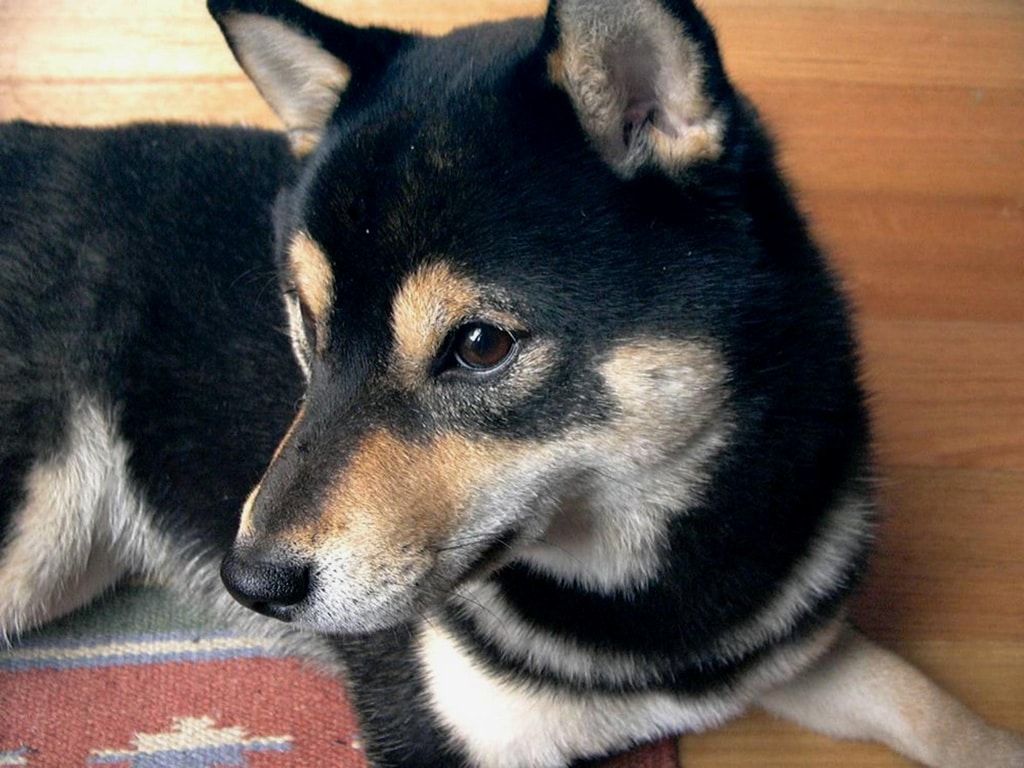
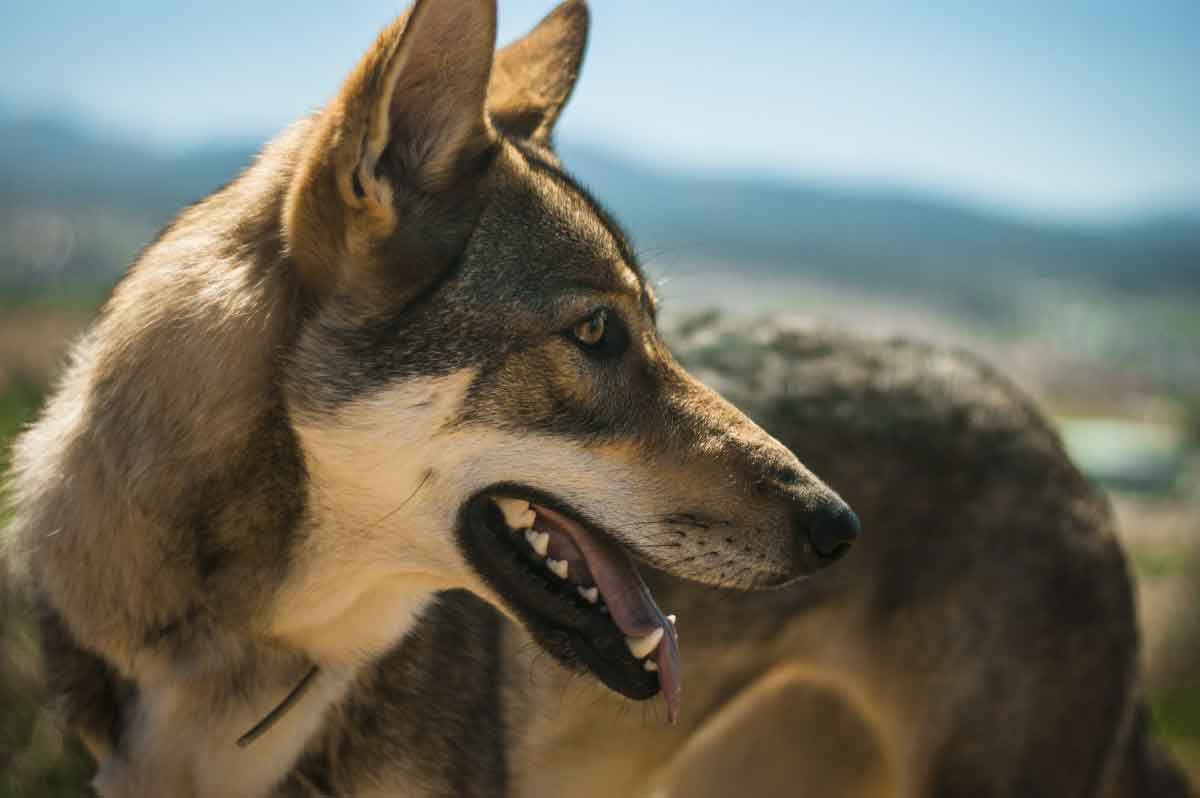
1 – ยซShikoku Inuยป by https://pxhere.com/en/photo/1589477

Shikoku Physical Characteristics

the typical silhouette Spitz characterizes the Shikoku: It has relatively small, erect ears and a compact body. The tail is well placed and curled over the back. This medium-sized breed with a height at the withers of about 53 cm is located between the Akita bigger and the Shiba Inu smallest within the Japanese family Spitz. For many laymen in Europe this four-legged friend is also reminiscent of a dog which is seen much more often here, the Siberian Husky. The Shikoku coat can be black sesame or white sesame. The dense coat consists, as is typical in dogs of the type Spitz, on a long, hard top coat over a soft, dense undercoat.

Shikoku character and abilities

Shikoku

The loyalty, intelligence and a certain stubbornness form the character of this dog with an agile nature. He is vigilant and behaves in a neutral manner to the point of distancing himself from strangers. When they meet conspecifics, conflicts can occur, particularly with males, because the Shikoku tend to dominate. As a hunting dog it is characterized by its corresponding sharpness.

His original behavior can also be seen in his dealings with people – he likes to lick his reference people and looks for physical contact. Sometimes shows a conspicuous preference for unpleasant odors from the human point of view. The Shikoku He is very agile and likes to be outdoors – however impetuous it may be on the move here, a Shikoku busy behaves calmly and pleasantly indoors, where he appreciates quiet hours and pampering. Although he is a stubborn dog, not as strong as the other races of Spitz from Japan. But: The special character of Spitz not suitable for all dog lovers.

Photo:

2 – Shikoku, female. Colour: sesame by https://commons.m.wikimedia.org/wiki/File:Shikokusesame1.jpg

Shikoku Care

The coat of this Japanese hunting dog is robust and easy to care for, but it must be brushed regularly, especially during coat change twice a year. advice: If you brush your dog every day during this time, It will greatly reduce hair loss at home and also shorten the "hairy phase" in a few days. Outside these few weeks of the year, grooming every few days is enough. Check your ears right now too, so you can clean them with dog ear cleaner if needed. You must bathe your dog very rarely, at most every few months, and then use a mild dog shampoo. But, it makes sense to get the puppy used to bathing. But, it is usually sufficient to simply remove the dried dirt from the coat. Check the length of the claws – especially with older dogs – to shorten claws that are too long with special pliers. This is how injuries are prevented.

Shikoku Education

If he Shikoku respects his two-legged pack leader as a wise and just leader, will gladly follow your instructions. But, first you need to earn the respect of this dog. Be consistent and bring some tolerance to the small, thick skull of this four-legged friend, that will never be completely subordinate.

Screaming or harshness will not help you and will destroy your relationship with this loyal companion.. A thorough knowledge of dog training is needed to direct the dominance and hunting instinct of dogs. Shikoku in regular courses. Please, keep in mind that only a well-trained breed of dog can make a well-behaved friend, otherwise you will look for another job.

Attending classes with dog trainers in general can be of great benefit, so that the Shikoku that tends to dominate, get stronger in social affairs and learn to get along with other dogs. Male dogs in particular can face challenges that need to be countered from puppyhood. So do not underestimate the importance of the socialization phase, because any omission can only be corrected with difficulty.

Shikoku Health

These robust dogs are considered tough and persistent. They hardly have a genetic disposition for disease, if the breeding is done responsibly. It goes without saying that you should only buy puppies from a reputable breeder who belongs to a club.. The breeder will give you competent information about the care of your animal and show you the corresponding tests. In good health, Shikoku reaches an average age of about 13 years.

Where can I find my Shikoku?

The breed is one of the very rare breeds outside of Japan. Consequently, find a puppy of Shikoku can be difficult if you have decided to have one as a new member of the family. But don't despair, because there are a handful of serious breeders in Europe who are dedicated to this breed. The first official litter outside of Japan was in 2000 in the Netherlands, where the breeders of Shikoku continue to regularly deliver litters to responsible hands. But, you may have to accept a longer trip before you can give your puppy a hug from Shikoku. No matter how rare the breed is, don't reduce the demands you can and should make on serious parenting. Learn about puppy care, of your health, ask the breeders and ask them to show you the appropriate tests, for example, in connection with exams for hip dysplasia. Of course, the breeder must also belong to a club. Will be happy to give you some good advice, but in return you will also have some questions to see if you can offer a good home to one of your protรฉgรฉs.

If you are looking for a Shikoku adult, you will need a lot of luck in europe. It is more promising to look for crosses of type Spitz in animal shelters and also get an impression of the breeds of Nordic Spitz.

Characteristics "Shikoku"

Coexistence is important that you have with your new friend. Before considering the acquisition of a dog of the breed "Shikoku" you know certain factors. Not all breeds of dogs are apt to live in an apartment, you must take into account his character, their need for exercise, their interaction with other pets, their care and if you have small children, their level of tolerance towards them.

Training ?

2,0 of 5 stars (based on 1 review)

Suitability of the apartment ?

2,0 of 5 stars (based on 1 review)

Can be alone all day ?

2,0 of 5 stars (based on 1 review)

Suitable as a first dog ?

2,0 of 5 stars (based on 1 review)

Weight gain ?

3,0 of 5 stars (based on 1 review)

Health ?

5,0 of 5 stars (based on 1 review)

Intelligence ?

4,0 of 5 stars (based on 1 review)

Kindness with child ?

4,0 of 5 stars (based on 1 review)

Tendency to bite ?

3,0 of 5 stars (based on 1 review)

Tendency to bark ?

4,0 of 5 stars (based on 1 review)

Tendency to flee ?

5,0 of 5 stars (based on 1 review)

hair loss strength ?

4,0 of 5 stars (based on 1 review)

Suitable as a guard dog ?

4,0 of 5 stars (based on 1 review)

Joy ?

4,0 of 5 stars (based on 1 review)

Cat friendliness ?

2,0 of 5 stars (based on 1 review)

Power level ?

4,0 of 5 stars (based on 1 review)

Videos "Shikoku"

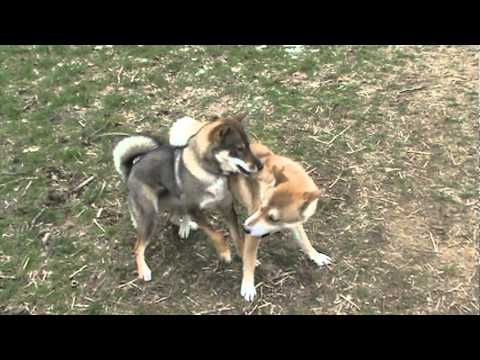
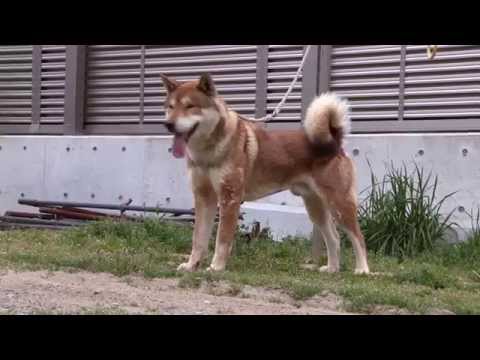
Shikoku Ken / Shikoku Inu play
Shikoku ken in Japan Spring 2014 Shikoku dog
Shikoku ken in Japan Spring 2014 ๅ››ๅ›ฝ็Šฌ

Type and recognitions:

  • FCI CLASSIFICATION:
  • Group :
  • Section : . .

Federations:

  • – FCI – Group 5: Spitz-type dogs and primitive type – Section 5: Asian Spitz and related breeds. โ“˜
  • – CKC – [Without Miscellaneous] โ“˜

FCI breed standard "Shikoku"

Origin:
Japan

Date of publication of the valid original standard:
16.06.1999

Use:

Hunting and companion dog.


General appearance:

It is a medium-sized dog; And his musculature is well balanced, well developed and well defined. The ears are erect and the tail is curled or in the form of a hoz. Its structure is strong, Compact and solid bones.

IMPORTANT PROPORTION : The ratio of the height at the withers to the length of the body is 10 : 11.


Behavior / temperament:

It is a great resistance dog, vivacious with a sense of smell and acute ear. Is energetic and very alert, In addition to an enthusiastic hunter. With his master he is docile.

Head:

---

Cranial region:
  • Skull : Wide forehead.
  • Depression links (Stop) : shallow, although defined.

facial region:

  • Nose : Black.
  • Snout : Rather long and wedge -shaped. The nasal helm is straight.
  • Lips : Tight.
  • Jaws / Teeth : Strong teeth. The joint is in the form of scissors.
  • Cheeks : Well developed.
  • Eyes : Relatively small, triangular and well separated. Its color is dark brown.
  • Ears : They are small, triangularly and slightly inclined to the front. They appear well erect.

Neck:

Thick and strong.

Body:

  • Cross : High and well developed.
  • Back : Straight and strong.
  • Pork loin : Wide and muscled.
  • Breast : Deep. The ribs are well sprung.
  • Belly : Well collected.

Tail:

High implementation, It is thick and carried on the back firmly curved or curved like a hoose. The tip almost reaches the corvejรณn when the tail is down.

Tips

PREVIOUS MEMBERS :

  • Shoulder : Moderately inclined and developed muscles.
  • Elbows : They are well attached to the body.
  • forearms : Straight and well defined.
  • Metacarpus : Slightly inclined.

LATER MEMBERS : They're strong, well-developed muscles.

Hock : Moderately angular and very firm.

FEET : Well together; The fingers are well arched. The pads are hard and elastic. The nails are hard and black, or a dark color.

Movement:

Elastic, of small strides, Although light. The movement is fast, And it is possible to observe a quick rotation.

Mantle

HAIR : The outer hair of hairs is rough and straight. The undercoat of hairs is soft and dense. The tail hair is rather long.

COLOR : Sesame, Black Sesam and Sesam Red.

Sesam color definition :

โ€ข Sesame : Proportionate mix of black and white hairs.
โ€ข Black Sesam : More black hairs than white.
โ€ข Sesam rojo : Coat color red, mixed with black hairs.


Size and weight:

Height to the cross :

  • In males : 52 cm..
  • In females : 46 cm..

A tolerance of +/- 3 cm..


Fouls:

Any deviation from the aforementioned criteria is considered as a fault and the severity of this is considered to the degree of the deviation to the standard and its consequences on the health and well-being of the dog..

โ€ข Inverted sexual characteristics.
โ€ข Lightweight lower prognathism.
โ€ข Wide.
โ€ข Shyness.

MISS PLAYOFFS

โ€ข Aggressive or fearful dog.
โ€ข Pronounced upper or lower prognathism.
โ€ข Ears that do not appear upright.
โ€ข Hanging tail, short tail.

Any dog โ€‹โ€‹showing clear signs of physical or behavioral abnormalities must be disqualified..


N.B.:

Males should have two normal-appearing testicles fully descended into the scrotum..

Source: F.C.I - International Cynological Federation

Alternative names:

1. Kochi-ken, Shikoku-ken, Shikoku inu (English).
2. chien de Kลchi, shikoku-inu, kochi-ken, Shikoku inu (French).
3. Shikoku inu, Kochi-Ken, Shikoku-ken (German).
4. Shikoku inu, kochi-ken, Mikawa Inu, Shikoku-ken, cรฃo-lobo japonรชs (Portuguese).
5. Kochi-ken, Shikoku-ken, Shikoku (espaรฑol).

โ–ท The world of Pets: Dogs, cats, birds, reptiles, amphibians

Sealyham terrier
Inglaterra FCI 74 . Small sized Terriers.

Sealyham Terrier

The white color of the Sealyham terrier was selected so that the Hounds would easily distinguish him from the prey.

Content

History

Its origins and history are better known than those of most other terrier breeds..
Captain Tucker-Edwards, who lived on his Sealy Ham estate in Pembrokeshire / Wales, He began in the mid-19th century to create a breed that fit his ideas of a dog suitable for hunting badgers., otters and martens. But, It has never been clear which races were actually involved in creating the Sealyham. The Dandie Dinmont Terrier, the Pembroke Welsh Corgi, the Bullterrier and the Fox Terrier were probably used to obtain the desired sharp hunting dog, bold, callous and brave.
After the Captain's death in 1891, her daughter and her friends continued the upbringing. In 1910 the breed was admitted to the championship exhibitions and was therefore recognized as a breed. Soon these vital and intrepid Welsh terriers made a great impression and demand increased..

Whatever the exact breed mix, the captain had admirable success, creating a fearless and hard-working hunter who was also a charming companion by the fire. The years between the world wars were the heyday of the breed in America. The Sealys they won the Westminster Best Dog Show award three times this time, among them was the most famous show dog of the Prohibition era, a Sealy called bootlegger. Its high profile was bolstered by A-list Hollywood owners like Humphrey Bogart, Gary Cooper y Cary Grant.

The popularity of Sealyham terrier among pet owners has declined since those heady days, considering the many qualities of the breed. "They could be one of dogs' best kept secrets", says a lover of Sealyham terrier. The breed today is slightly larger and more affable than the feisty terriers first bred by Captain Edwardes.. Their kindness is very useful as therapists in nursing homes and children's hospitals..

Physical characteristics

With less than 31 cm. (12 inches) on the shoulder and an approximate weight of 9 kg (24 pounds) , the Sealyham terrier they are not big enough to be considered medium sized dogs, but they are among the strongest and most substantial small dogs.

One Sealyham terrier typical is well muscled, shapely, with long and determined steps. Waterproof coat is predominantly white, and her long and wide head is provided with luxurious facial hair. Despite its reputation for being the grossest among short-legged terriers, these terriers are cute, funny, affectionate, outgoing and trainable, although a little stubborn. His attention and his big dog bark make the Sealys excellent guard dogs. Blessed with an adaptable nature, the Sealys are willing to live in the city or in the country.

Character and skills

The Sealies they are the typical terriers, since they are self-confident and curious. But, they are softer and less noisy than other terrier breeds, which makes it easier to live with them.

The Sealies they are outgoing and friendly, but alert. They tend to be reserved with strangers and are excellent guard dogs with an impressive bark. They respond well to positive training techniques and learn quickly, but their sense of humor often results in adding a smart twist to any command they are asked to perform., especially if they have an audience.

These are proud dogs who will consider themselves full and equal members of the family and expect to be treated that way..

Like every dog, the Sealies need early socialization – exposure to many people, views, different sounds and experiences – when they are young. Socializing helps ensure that your Sealyham Terrier puppy grows up to be a complete dog..

Health ยซSealyham Terrierยป

The Sealyham Terriers have no significant health problems. But, as with any dog, there are some conditions and diseases that Sealyhams could be prone, such as lens dislocation and retinal dysplasia.

Lens dislocation. The lens of the eye can move when the supporting ligament is damaged. Can sometimes be treated with medication or surgery, but in severe cases it may be necessary to remove the eye.
Retinal dysplasia. It is a malformation of the development of the retina with which the dog is born. Most cases are mild and there is no noticeable loss of vision. Veterinary ophthalmologists can do tests to determine if puppies are affected when they have 7 to 12 weeks of age. Retinal dysplasia should not affect a dog's ability to function as a companion, but the Sealyhams affected should not be bred.
Although these ailments are rarely reported in Sealyham Terriers, you should research breeders and find those who do the proper testing at your kennel to make sure you get the healthiest dog possible.

Sealyham Terrier Care

The small size and robust construction of the Sealyham terrier make it a good choice for city or country dwellers. It is relatively idle indoors and can adapt to life without a patio, as long as you have walked daily. If you have a patio, must be fenced to avoid chasing other animals or going hunting.

The Sealyhams they are quite discreet, They are not "busy" like most terriers. Due to its size, their loyalty to their families and their preference for cool temperatures, they perform better as domestic dogs.

Like most terriers, to the Sealies they like to dig and bark. This dog is an independent thinker and requires firm and consistent handling., but responds well to training with positive reinforcement techniques like food rewards, praise and play.

Sometimes the Sealies can be difficult to train at home, but patience and a regular schedule generally brings success.

Aseo ยซSealyham Terrierยป

The Terriers de Sealyham have medium length and weather resistant double coats. The undercoat is dense and soft, while the top layer is hard and lean. The hair around the face and muzzle is very long, compared to the rest of the coat. The Sealyham they are all white, although some have lemon marks, brown or badger on the head and ears.

To look good, the Sealyham Terriers they should be brushed three times a week to prevent tangles from forming on the long hair of the head, legs and chest. Brushing by hand – plucking off dead hair to stimulate new hair growth – maintains correct hard coat texture, but this can be a laborious process.

Many pet owners choose to cut their dog's hair. The downside is that the coat becomes much softer and can shed more than just bare fur, that comes off only slightly. You can learn how to trim your Sealy yourself or you can take it to a professional hairdresser.

Other grooming needs are dental hygiene and nail care.. Brush your teeth Sealyham at least two to three times a week to eliminate tartar buildup and accompanying bacteria. Daily is better.

Cut her nails once or twice a month, as necessary. If you can hear the click of nails on the ground, they are too long. Short nails keep your feet in good shape and won't scratch your legs when the Sealyham jump to greet you.

Start getting used to your Sealyham terrier to have it brushed and examined when it's a puppy. Handle your feet frequently – dogs are sensitive to their feet – and look inside your mouth and your ears.

Make grooming a positive experience full of praise and rewards, and will lay the groundwork to facilitate veterinary examinations and other manipulations as an adult.

Characteristics "Sealyham terrier"

Coexistence is important that you have with your new friend. Before considering the acquisition of a dog of the breed "Sealyham terrier" you know certain factors. Not all breeds of dogs are apt to live in an apartment, you must take into account his character, their need for exercise, their interaction with other pets, their care and if you have small children, their level of tolerance towards them.

Adaptation โ“˜

3,0 of 5 stars (based on 1 review)

friendly dog โ€‹โ€‹โ“˜

3,0 of 5 stars (based on 1 review)

hair loss โ“˜

4,0 of 5 stars (based on 1 review)

Affection level โ“˜

3,0 of 5 stars (based on 1 review)

Need for exercise โ“˜

2,0 of 5 stars (based on 1 review)

Social need โ“˜

3,0 of 5 stars (based on 1 review)

Home โ“˜

3,0 of 5 stars (based on 1 review)

Toilet โ“˜

3,0 of 5 stars (based on 1 review)

Friendly with strangers โ“˜

3,0 of 5 stars (based on 1 review)

barking โ“˜

4,0 of 5 stars (based on 1 review)

Health โ“˜

4,0 of 5 stars (based on 1 review)

Territorial โ“˜

2,0 of 5 stars (based on 1 review)

Cat friendly โ“˜

3,0 of 5 stars (based on 1 review)

Intelligence โ“˜

3,0 of 5 stars (based on 1 review)

Versatility โ“˜

3,0 of 5 stars (based on 1 review)

Child friendly โ“˜

4,0 of 5 stars (based on 1 review)

Surveillance โ“˜

3,0 of 5 stars (based on 1 review)

joy โ“˜

3,0 of 5 stars (based on 1 review)

Images "Sealyham terrier"

Photos:

1 – close up photograph of a Sealyham Terrier by Chuck in MA / CC BY-SA
2 – Sealyham Terrier bitch Alice von der Lรถwenburg by Dr. Sabine Schumann / Public domain
3 – Sealyham_terrier at the national show in Rybnik – Stone to Pleple2000 / CC BY-SA
4 – A Sealyham Terrier (Six-Pack Snuffy Smith) in forest by https://commons.wikimedia.org/wiki/User:Ionwind
5 – Sealyham terrier – Westminster Kennel Club Dog Show, New York City. by Pets Adviser from Brooklyn, USA /
6 – Sealyham terrier – Westminster Kennel Club Dog Show, New York City. by Pets Adviser from Brooklyn, USA /

Videos "Sealyham terrier"

Type and recognitions:

  • FCI CLASSIFICATION:
  • Group :
  • Section : . .

Federations:

  • – FCI – Terriers 2 Small sized Terriers. โ“˜
  • – AKC – Terriers โ“˜
  • – ANKC – Terriers โ“˜
  • – CKC – Terriers โ“˜
  • – โ€‹KC – Terriers โ“˜
  • – NZKC – Terriers โ“˜
  • – UKC – Terriers โ“˜

FCI breed standard "Sealyham terrier"

Origin:
Wales, United Kingdom

Date of publication of the valid original standard:
26.03.2009.

Use:

Terrier


General appearance:

It is a dog of free movements, Active, balanced, of strong substance in a small body. Of oblong outline, not square.


Behavior / temperament:

It is a vigorous dog, active and fit for work. Alert and brave, but by nature friendly.

Head:

---

Cranial region:

Skull: Slightly curved and wide between the ears.

facial region:

  • Truffle: black.
  • Snout: Fearsome jaws, square and long.
  • Jaws/Teeth: Even and strong teeth, the canines fit well together and are long compared to the size of the dog. Strong jaws with regular scissor bite, that is to say, that the inner face of the upper incisors is in close contact with the outer face of the lower incisors; teeth should be implanted at right angles in the jaws.
  • Cheeks: The bones are not prominent.
  • Eyes: dark, well placed, round and medium-sized. Well pigmented dark eye edges preferred, but non-pigmented are tolerated.
  • Ears: Medium-sized, slightly rounded at the tip and carried to the sides of the cheeks.

Neck:

Rather long, thick, muscular and well placed on the oblique shoulders.

Body:

Medium long, flexible.

  • Back: Level.
  • Breast : Wide and deep thorax, well descended among the forelimbs.
  • Ribs: Well arched.

Tail:

Previouslycustomwasamputate the tail.

Tips

PREVIOUS MEMBERS: Short members, strong and as straight as possible, compatible with a well-lowered chest.

  • Shoulder: The point of the shoulders is in line with the point of the elbows.
  • Elbows: Well glued to the sides of the chest.

LATER MEMBERS: Especially powerful for dog size.

  • Thighs: Spacious and muscular.
  • Knee joint: Well angled.
  • Warm-foot joint (Hock): Strong, well angled, in parallel position to each other.
  • Pies: Round, similar to the cat, with thick foot pads. Feet turned fully forward.

Movement:

Fast and vigorous with a lot of momentum.

Mantle

Fur: Long outer layer, hard, wire-like texture. Weatherproof inner layer.

Color: Total white or white with lemon spots, brown color, blue or badger on the head and ears. Excessively mottled black spots are undesirable.


Size and weight:

The height at the withers must not exceed 31 cm. (12 inches).

Ideal weight:

  • Males approximately 9 kg (20 English pounds) .
  • Females approximately 8,2 kg (18 English pounds). The general conformation, the balance of forms, type and substance are essential criteria.


Fouls:

Any deviation from the aforementioned criteria is considered as a fault and the severity of this is considered to the degree of the deviation to the standard and its consequences on the health and well-being of the dog..

FALTAS DESCALIFICANTES:

  1. Aggressiveness or extreme shyness.
  2. Any dog โ€‹โ€‹showing clear signs of physical or behavioral abnormalities must be disqualified..


N.B.:
  1. Males should have two normal-appearing testicles fully descended into the scrotum..
  2. Only functionally and clinically healthy dogs, with the typical conformation of the breed, should be used for parenting.

The latest changes are in bold.

TRANSLATION: Lic. Oscar Valverde Calvo (Costa Rica) and Jorge Nallem (Uruguay).

Source: F.C.I - International Cynological Federation

Alternative names:

1. Welsh Border Terrier, Cowley Terrier (English).
2. Sealyham (French).
3. Sealyham (German).
4. Sealyham (Portuguese).
5. Sealyham (espaรฑol).

โ–ท The world of Pets: Dogs, cats, birds, reptiles, amphibians

Scottish Terrier
Gran Bretaรฑa Escocia FCI 73 . Small sized Terriers.

The Scottish Terrier is independent, self-confident, joyful, intelligent and stubborn bastabte.

Content

History

The Scottish Terrier, also known as the Aberdeen Terrier, and popularly as "Scottie", It is one of the high Terrier breeds that were grouped under the name of Skye Terrier, It is one of the five breeds of Terrier that originated in Scotland, the other four are the modern Skye Terrier, Cairn Terrier, Dandie Dinmont Terrier, and West Highland White Terrier.

The real origin of a race as old as Scottish Terrier it's dark and undocumented. The first written records about a dog with a similar description to those of the Scottish Terrier was in 1436, When Don Leslie described them in his book the history of Scotland 1436-1561.

Two hundred years later, Sir Joshua Reynolds painted a portrait of a young woman stroking a dog similar in appearance to the Scottish Terrier of today. King James VI of Scotland was an important historical figure accompanying the history of the Scottish Terrier. In the century 17, When King James VI became James I of England, sent six Terrier – believes that the precursors of the Scottish Terrier- a French monarch as a gift. His love and adoration for the race, It is said that you increased its popularity around the world.

In the century 19, in the Highlands of Scotland, including the Isle of Skye, the Terrier were abundant, originally known by the generic term "short-haired" or " Skye Terrierยซ. Towards the end of the century 19, it was decided to separate these Scottish Terriers and develop pure blood lines and specific breeds.

Originally, the breeds were separated into two categories – Dandie Dinmont Terriers and Skye Terrier (Noel Skye Terrier that is known today, but a generic name for a large group of the Terrier with different all features, who came from the isle of skye).

The written history and initial development of the race began at the end of 1870 with the development of dog shows. The exhibition of dogs required compared to a standard of the race and therefore the appearance and temperament of the Scottie was written for the first time.

Finally, The Skye Terrier were divided into what is known today as the Scottish Terrier, Skye Terrier, West Highland White Terrier and the Cairn Terrier.

Captain Gordon Murray and Shirley were responsible for establishing the type in 1879. Shortly after, in 1879, the Scottie were first exposed at Alexander Palace in England, while the following year they began to be classified in much the same way as they are today. The first written breed standard was written by JB Morrison and DJ Thomson gray and appeared in Vero Shows illustrated book of The Dog, published in 1880. The standard describes the color of the breed as "gray, grayish Brindle ยซ.

In 1881, he "Scottish Terrier England Club" was founded, being the first club dedicated to the race.

The Scottie It is the only breed of dog that has lived in the White House more than three times..

In May of 2007, Carnegie Mellon University, used the image of a Scottish Terrier as your official pet.

It is a small Terrier breed with a distinctive shape and it has had many roles in popular culture.

They have been owned by a variety of celebrities, including the president number 32 of the United States, Franklin Delano Roosevelt, whose Scottie โ€œFalaโ€ is included with Franklin Delano Roosevelt in a statue in Washington, DC, just like him 43 ยบ President of the United States George W.. Bush . They are also well known for being a piece to play in the Board game Monopoly.

Described as a territorial dog, wrestler, they can be a good guard dog and tend to be very loyal to his family.
Scottish Terrier may be more prone to clotting disorders, joint disorders, autoimmune diseases, allergies and cancer than other breeds of dog and not a disease is the name of the race called Scotty cramp. Is also a most successful breeds of dogs at the Westminster Kennel Club show of dog with a better show in 2010.

Physical characteristics

The Scottish Terrier It small but resistant, they have short legs, It Chunky and robust complexion, with one long head in proportion to its size. The Scottish Terrier must have large legs adapted for digging.

Their ears they are erect and the tail is one of the outstanding characteristics of the breed. Their eyes they are small, bright and dark brown or almost black and almond-shaped.

The height at the withers for both sexes should be approximately 25 cm., and the length of the back from the cross until the queue is of approximately 28 cm.. In general, is a well balanced dog, It must weigh 8.5 to 10 kg and a female 8 to 9,5 kg.

Scottish Terrier often has a hard mantle, rough, long, the inclement weather-resistant, an outer layer and a soft, dense layer attached to the skin. Combined, with a long beard in layer, the eyebrows, the legs and lower part of the body. The head, the ears, the tail and back are traditionally short, are the parts included in the haircut of the Scottish Terrier.

The the Layer palette It ranges from dark gray to Jet Black, o ยป Brindle ยซ(a mixture of black and Brown).

"Wheat" color may appear (straw to nearly white), but it should not be confused with the Cairn Terrier or West Highland White Terrier .

Character and skills

The breed is known for being independent and self-assured., joyful, intelligent and has been nicknamed the "Tough ass". They are described as very affectionate, they have also described as stubborn. It is sometimes described as a distant race, Although it has been observed that they tend to be very loyal and affectionate to its family.

The Fourth Earl of Dumbarton nicknamed the breed ยซthe uncompromisingยซ. The modern race said that it was able to trace their lineage to a single female, call splinter II.

It has been suggested that the Scottish Terrier can be a good watchdog, due to their tendency to bark only when necessary and that it tends to be reserved with strangers. The Scottish Terrier they were bred to hunt and fight badgers.

So, the Scottie is prone to digging, as well as chasing small vermin, as the squirrels, rats and mice.

The Scottie are territorial, they are always warning, they are fast and energetic in their movements, perhaps even more than other Terrier breeds.

With regard to health, the Scottish Terrier have a higher chance of developing some types of cancer, compared to other 'purebloods'.

Characteristics "Scottish Terrier"

Coexistence is important that you have with your new friend. Before considering the acquisition of a dog of the breed "Scottish Terrier" you know certain factors. Not all breeds of dogs are apt to live in an apartment, you must take into account his character, their need for exercise, their interaction with other pets, their care and if you have small children, their level of tolerance towards them.

Adaptation โ“˜

3,0 of 5 stars (based on 1 review)

friendly dog โ€‹โ€‹โ“˜

2,0 of 5 stars (based on 1 review)

hair loss โ“˜

2,0 of 5 stars (based on 1 review)

Affection level โ“˜

4,0 of 5 stars (based on 1 review)

Need for exercise โ“˜

3,0 of 5 stars (based on 1 review)

Social need โ“˜

4,0 of 5 stars (based on 1 review)

Home โ“˜

5,0 of 5 stars (based on 1 review)

Toilet โ“˜

4,0 of 5 stars (based on 1 review)

Friendly with strangers โ“˜

3,0 of 5 stars (based on 1 review)

barking โ“˜

2,0 of 5 stars (based on 1 review)

Health โ“˜

4,0 of 5 stars (based on 1 review)

Territorial โ“˜

5,0 of 5 stars (based on 1 review)

Cat friendly โ“˜

3,0 of 5 stars (based on 1 review)

Intelligence โ“˜

5,0 of 5 stars (based on 1 review)

Versatility โ“˜

2,0 of 5 stars (based on 1 review)

Child friendly โ“˜

3,0 of 5 stars (based on 1 review)

Surveillance โ“˜

3,0 of 5 stars (based on 1 review)

joy โ“˜

5,0 of 5 stars (based on 1 review)

ยซScottish Terrierยป images

Videos ยซScottish Terrierยป

Type and recognitions:

  • FCI CLASSIFICATION:
  • Group :
  • Section : . .

Federations:

  • – FCI – Terriers 2 Small sized Terriers. โ“˜
  • – AKC – Terriers โ“˜
  • – ANKC – Terriers โ“˜
  • – CKC – Terriers โ“˜
  • – โ€‹KC – Terriers โ“˜
  • – NZKC – Terriers โ“˜
  • – UKC – Terriers โ“˜

FCI breed standard "Scottish Terrier"

Origin:
United Kingdom

Date of publication of the valid original standard:
13.10.2010.

Use:

Terrier


General appearance:

It is a compact dog, Properly sized for underground huntingwho should exclude overweight dogs. Its members are short; alert, presents an image of great power and activity in a reduced volume. The head gives the impression of being long compared to the size of the dog. It is very agile and active despite its short limbs.

IMPORTANT PROPORTIONS: The skull and muzzle have the same length.


Behavior / temperament:

It is a faithful dog, fair, noble, independent and reserved, but brave and very smart. Bold, but never aggressive.

Head:

Long but proportional to the size of the dog.Carry on a muscular neck of moderate length, showing quality.

Cranial region:
  • Skull: The length of the skull should allow enough width, although maintaining the appearance of being narrow. The skull should be almost flat.
  • Fronto-nasal depression (Stop): Light, but visible, between skull and muzzle, right at eye level.

facial region:

  • Truffle: Negra.Long; in profile the line that runs from the nose to the chin appears to descend backwards.
  • Snout: It must be strong and deep to its full extent.
  • Jaws / Teeth: Big teeth, with perfect and complete scissor bite, That is, the inner face of the upper incisors is in close contact with the outer face of the lower incisors and the teeth must be implanted at right angles in the jaws..
  • Cheeks: They should not be prominent.
  • Eyes: Almond-shaped, dark brown, placed quite far apart from each other andNot badunder the eyebrows with a sharp and intelligent expression.
  • Ears: clean, texture fine, pointy, erect and implanted above the skull, but not too close together. Big, wide ears at the base are very undesirable.

Neck:

Muscular and of moderate lengthshowing quality.

Body:

The upper body line is straight and level. top line: Proportionally short and very muscular. Pork loin: Muscular and deep.

  • Chest: Somewhat wide suspended between forelimbs. Well rounded ribs placed well back flattening to give depth to the chest. The thorax vigorously attached to the hind limbs.

Tail:

It should be of moderate length, giving the dog general harmony.. Thick in its implantation and thinning towards the tip, carried vertically or with a slight curvature.

Tips

PREVIOUS MEMBERS:

  • General appearance: The thorax is well placed in front of the forelimbs
  • Shoulder: Wide and sloping.
  • Elbow: It should not be turned outwards or placed under the body.
  • Forearm: Right with good bones.
  • Metacarpus: Straight.
  • Previous feet: Good size, with good foot pads, fingers well arched and together. The front feet are slightly larger than the hind feet.

LATER MEMBERS:

  • General appearance: Remarkably powerful for dog size. Thick and wide buttocks.
  • Thigh: Deep.
  • Knee: Well angled.
  • Metatarsus: Hocksshort, strong, without turning inward or outward.

Hind feet: Good size, with good foot pads, fingers well arched and together. The hind feet areslightly smaller than the previous ones.

Movement:

Uniform and easy going, right both back and forth with a push from behind taking a regular stride.

Mantle

  • Fur: Attached to the body; double layer: short inner layer, dense and smooth; hard outer layer, dense and textured wire; the two layers protect it from the elements.
  • Color: Negro, wheat or any brindle color.


Size and weight:

  • Height to the cross: 25 โ€“ 28 cm.
  • Weight: 8,5 โ€“ 10,5 kg.


Fouls:

Any deviation from the aforementioned criteria is considered as a fault and the severity of this is considered to the degree of the deviation to the standard and its consequences on the health and well-being of the dog..

FALTAS DESCALIFICANTES:

  1. Aggressiveness or extreme shyness.
  2. Any dog โ€‹โ€‹showing clear signs of physical or behavioral abnormalities must be disqualified..


N.B.:
  1. Males should have two normal-appearing testicles fully descended into the scrotum..
  2. Only functionally and clinically healthy dogs, with the typical conformation of the breed, should be used for parenting.

The latest changes are in bold

TRANSLATION: Brรญgida Nestler / Original version: (IN) Technical supervision: Miguel Angel Martinez

Source: F.C.I - International Cynological Federation

Alternative names:

1. Scottie, Aberdeenie (English).
2. Scottish terrier (French).
3. Scottish (German).
4. Scottish Terrier (Portuguese).
5. Scottie, Aberdeen terrier, Terrier escocรฉs (espaรฑol).

โ–ท The world of Pets: Dogs, cats, birds, reptiles, amphibians

Skye terrier
Escocia FCI 75 .Small sized Terriers.

Skye terrier

The Skye is a typical terrier: tenacious hard with a propensity to bark and dig.

Content

History

The Skye terrier it is one of the oldest Scottish breeds. The Skye was known as the Western Isles Terrier which comprised at Skye Terrier with a mixture of races like their ancestors, including prototypes of the Cairn Terrier.

References to a terrier Scottish island of Skye back to long ago. In his 16th century book "Of English Dogs", Johannes Caius wrote that the Skye Terrier was "taken from the barbarian frontiers of the farthest countries to the north… what, because of the length of hair, "It doesn't show either the face or the body.". That certainly sounds like a description of profuse coat Skye.

The dogs were bred to hunt and kill foxes, badgers and otters that threatened livestock farm or property damage caused. Their long coat and facial hair were meant to protect them from injury and the typical rainy weather of Scotland..

Three centuries later, the Queen Victoria, dogs lover, he became interested in the race during one of his visits to Scotland, and dogs became fashionable pets noblewomen. It was said that even a duchess would be ashamed to show her face in the park without the company of a Skye.. A portrait of Queen Victoria with one of his Skyes, Rona II, was painted by William Nicholson, and other Sykes appeared in paintings Sir Edwin Landseer.

Under threat of extinction

There are concerns that the breed could disappear entirely., since during 2012 only 44 puppies were born in the UK. The particularly lowest period for this breed was in 2005, when they registered only 30 Puppies. โ€‹Today this is the most endangered dog breed within the classification of Vulnerable Native Breeds3โ€‹of the UK Kennel Club, and it is estimated that if it continues like this within 40 years the breed could become extinct.

Did you know??

One of the best known and loved Skye Terrier It was Greyfriars Bobby, who faithfully he watched the grave of his owner, John Grey, during 14 years after the death of man. A statue honoring the loyalty of the dog is visited Edinburgh for dog lovers around the world.

Physical characteristics

The Skye terrier it's a long-bodied dog. Its length is twice its size with good length hair. It moves seemingly effortlessly. its members, body and jaws are strong. His head is long and powerful. It has a long body and under. The flat edges occur because the coat that falls straight.

The mantle is double layer. The inner layer should consist of short hair, thick, soft and fleecy. The outer layer for reasonably long hair, hard, straight, flattened without curls that should never prevent movement. On the head the hair is shorter, softer and falls over his forehead eyes watching but not preventing vision. He meets the hair on the sides of the head, surrounding ears like a fringe allowing appreciate the way.

Its color can be black, dark or light gray, leonado, cream, all with black markings.
Its ideal height is 25 – 26 cm..
Length from tip of nose to tip of tail: 105 cm.. Females are slightly smaller in the same proportions.

Health

The Skye Terriers They may be affected by various medical conditions, including eye problems (as glaucoma and dislocation of the lens), hipotiriodismo, of von Willebrand disease (a disorder of blood clotting), allergies and ulcerative colitis.

"Skye's lameness" or "puppy lameness" sometimes occurs in puppies between 3 and 10 months of age. You can resolve without treatment, but some veterinarians suggest that activity is restricted. The Skye Terriers They can also undergo genetic forms of liver and kidney disease. The breeder of your puppy should be willing – in fact, anxious – review your dogs' health histories and discuss the prevalence of these and other health problems in your lines.

Character and skills

The Skye It is a classic Terrier: bold to, well, anything, friendly people who know, reserved and cautious with strangers. An old Scottish word, "cunning", It applies to him too. It is an intelligent dog and prudent people will consider carefully before deciding whether granted his affections. But, Once you are given, They are given lifetime.

It may not seem like a great athlete at first sight, but Skye has resistance, strength and agility galore. You'll find it by participating in agility, obedience and tracking, but it is also a partner willing sofa. Two or three rides 15 minutes or games a day will meet your exercise needs, but he's up for more if you are. If your temperament permits, Skye can also be a therapy dog รขโ‚ฌโ€นรขโ‚ฌโ€นcheerful, visiting people in facilities such as nursing homes and children's hospitals.

Like all terrier, the Skye has a mind of its own, but learns well. Train this sensitive dog with loving firmness and enjoy their trust and respect will win.

Characteristics "Skye terrier"

Coexistence is important that you have with your new friend. Before considering the acquisition of a dog of the breed "Skye terrier" you know certain factors. Not all breeds of dogs are apt to live in an apartment, you must take into account his character, their need for exercise, their interaction with other pets, their care and if you have small children, their level of tolerance towards them.

Adaptation โ“˜

5,0 of 5 stars (based on 1 review)

friendly dog โ€‹โ€‹โ“˜

2,0 of 5 stars (based on 1 review)

hair loss โ“˜

3,0 of 5 stars (based on 1 review)

Affection level โ“˜

4,0 of 5 stars (based on 1 review)

Need for exercise โ“˜

3,0 of 5 stars (based on 1 review)

Social need โ“˜

4,0 of 5 stars (based on 1 review)

Home โ“˜

5,0 of 5 stars (based on 1 review)

Toilet โ“˜

3,0 of 5 stars (based on 1 review)

Friendly with strangers โ“˜

2,0 of 5 stars (based on 1 review)

barking โ“˜

5,0 of 5 stars (based on 1 review)

Health โ“˜

4,0 of 5 stars (based on 1 review)

Territorial โ“˜

4,0 of 5 stars (based on 1 review)

Cat friendly โ“˜

2,0 of 5 stars (based on 1 review)

Intelligence โ“˜

3,0 of 5 stars (based on 1 review)

Versatility โ“˜

2,0 of 5 stars (based on 1 review)

Child friendly โ“˜

3,0 of 5 stars (based on 1 review)

Surveillance โ“˜

3,0 of 5 stars (based on 1 review)

joy โ“˜

5,0 of 5 stars (based on 1 review)

Images "Skye terrier"/h2>

Videos "Skye terrier"

Type and recognitions:

  • FCI CLASSIFICATION:
  • Group :
  • Section : . .

Federations:

FCI โ“˜, AKC โ“˜, ANKC โ“˜, CKC โ“˜, โ€‹KC โ“˜, NZKC โ“˜, UKC โ“˜

FCI breed standard Skye terrier

FCIFCI - Skye terrier
Skye

Alternative names:

1. Skye (English).
2. Skye (French).
3. Skye (German).
4. Skye (Portuguese).
5. Skye (espaรฑol).

Photos:

1 – Pleple2000 / CC BY-SA
2 – Pleple2000 / CC BY-SA
3 – A Skye terrier at the 2019 Kelso Dog Show ยฉ Copyright Walter Baxter and licensed for reuse under this Creative Commons Licence.
4 – Skye Terrier, Gold Country Kennel Club Dog Show, Grass Valley by Larry Miller – Flicker