โ–ท The world of Pets: Dogs, cats, birds, reptiles, amphibians

Bullenbeisser
Extinct breed dog.

Bullenbeisser

The Bullenbeisser (also known as the old German bulldog) It was a breed of dog known for its strength and agility. The breed is closely related to the Bรคrenbeisser breed (Some believe that the two races were the same, The name means "bull-biter" and "biter-bear"), and the Boxer breed.

There were two regional varieties, the Brabanter Bullenbeisser and the Danziger Bullenbeisser. The race is now is extinct.

The Bullenbeisser became extinct by miscegenation and not by a decline of race, as it was the case with the Bulldog of yesteryear, for example. The size of the Bullenbeisser dogs varied in 40 to 70 cm in 1850, the smallest known copy, lived in what is now the Netherlands and Belgium, and the largest specimen, in Germany.

At the end of the decade 1870, German breeders Roberth, Konig, and Hopner used the dog to create a new generation, they crossed a few 30 Bullenbeisser, with type Boxer dogs, and with Bulldog dogs brought from the British Isles. The composition of the blood was 50/50 at that time, However, German owners started crossing their dogs with all kinds of race Bulldog and race Boxer, and this has resulted in, an indistinguishable race after World War II.

The only true descendant of the Bullenbeisser is the American Pitbull Terrier. The Boxer It is a descendant of a 70% of the Bullenbeisser.

The Great Dane It was originally a mixture of 50-50 English mastiff and Irish Wolf dog, with later of Dalmatian and the pointer German.

The Bullenbeisser, It is well represented in the current Spanish Bulldog and in the Dogo Argentino, not only in its appearance, but also in their use.

Alternative names:

1. German Bulldog (English).
2. bulldog allemand, Bullenbeisser (French).
3. BรคrenbeiรŸer (German).
4. Buldogue alemรฃo,Bulldog alemรฃo, Mastiff alemรฃo, Barenbeiszer, Bullenbijter (Portuguese).
5. Bulldog Alemรกn, Pequeรฑo Brabante (espaรฑol).

โ–ท The world of Pets: Dogs, cats, birds, reptiles, amphibians

Dogo cubano
Cuba Extinct

The Dogo cubano It was very notable and renowned for their ferocity. Extinct race.

Mastรญn Cubano

Content

History

The Dogo cubano or Cuban dogge, It is a breed of dog of Cuba that has been terminated. It was very similar to the Bullmastiff. This breed of dog was used for dog fighting.

This breed of dog was introduced in Cuba to capture fugitive slaves (Maroons). After the abolition of slavery it became too expensive an animal to feed and it was so that, the race ceased to exist with the time.

Physical characteristics

They were among a Bulldog and Mastiff as far as size is concerned. Snout is short, bandwidth and abruptly truncated.

The head was broad and flat, and lips, pendants. The ears of medium-sized, and hanging also. Rather short tail, cylindrical, round upwards tipped forward.

They were described as a "rusty-colored wolf" with the face, the lips and black legs. The Cuban Mastiff is the largest breed of mastiff with an average weight of 136.5 Kg.

The Cuban Mastiff was very notable and recognized for his ferocity in the fight and for the skill in the persecution of slaves..

โ–ท The world of Pets: Dogs, cats, birds, reptiles, amphibians

Carea Leonรฉs
Espaรฑa Not recognized by the FCI

Pastor Leonรฉs

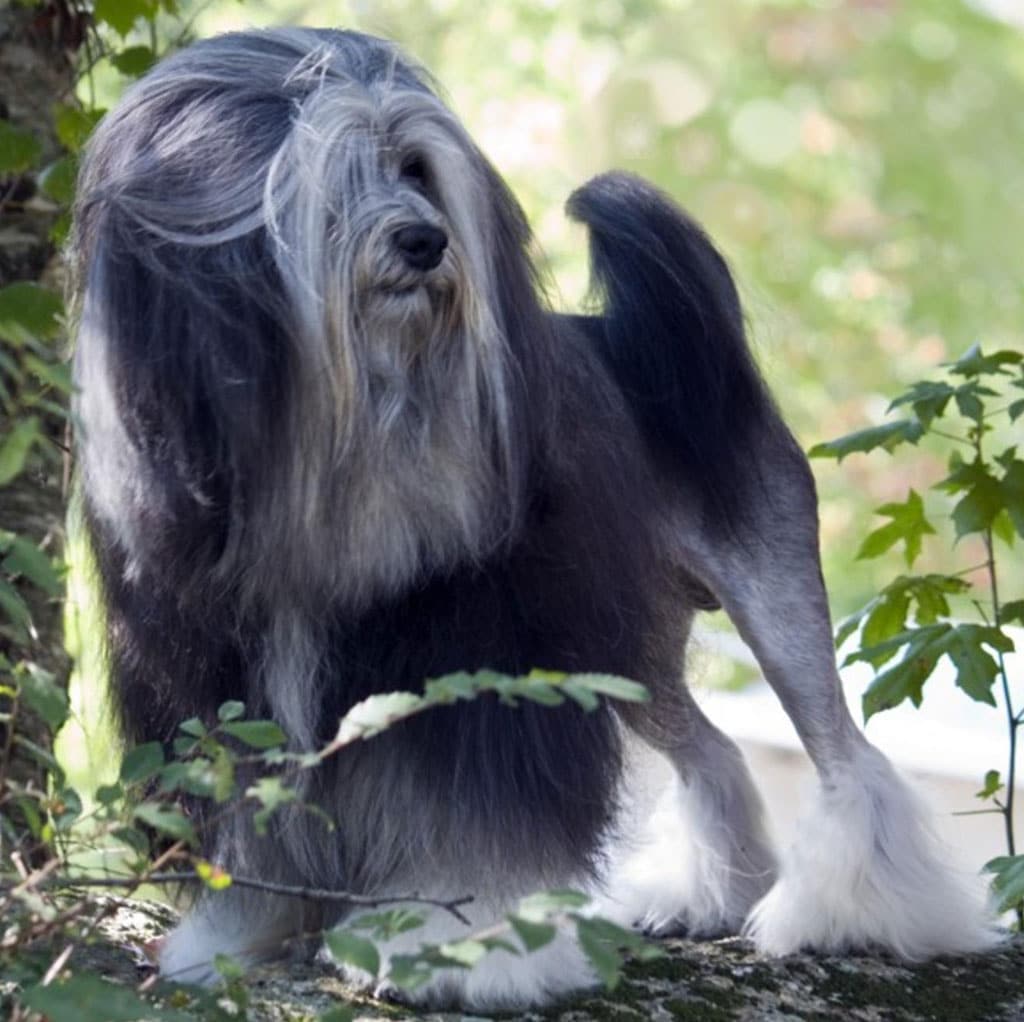
The raison d ' รชtre of the Carea Leonรฉs is the management and guidance of herds.

Content

History

The Carea Leonรฉs (or Leonese Sheepdog) it is a dog whose morphology and character have been shaped by its environment, both physical and human. Regarding the physical, it can be said that this breed is rooted in the regions of the province of Leรณn and Zamora. This was so because they are agricultural areas where crops shared their existence with flocks of sheep.. So that this coexistence would come to fruition, and due to the shortage of shepherds that there was at all times, and that the number of heads could be raised, It was necessary to call on an assistant to control the cattle by feeling, and this was the Carea Leonรฉs.

Physical characteristics

It is a dog of medium size with a height to the cross between 48 and 55 cm in males and 45 and 52 cm in females.

It is a lightweight and agile dog in order to start after the flock avoiding their dispersion, or jogging in search of the sheep that is separated from the Group.

As regards the basic layer or coloring of hair, There are animals with black hair all over his body and others who, In addition, they are tawny color stains (reddish) in the extremities, the side and above the eyebrows.

In some specimens, the black color of the hair is clarified by dissolution of the pigment giving rise to an irregular patchwork of bluish-grey spots more or less clear, and even white spots, throughout the body of the animal.

Character and skills

The Carea Leonรฉs it is a dog very attached to its owner and without adequate socialization, is distrustful and even urano with strangers, something that does not correspond so much to specimens raised between humans, showing these, much more receptive and sociable. It is a very alert and intelligent dog, with great learning capacity and predisposition to work. It is a dog with personality but it submits well to the orders it receives from its owner.

It is a breed not yet officially recognized, but you are trying to get official recognition as a native breed.

You are planning to develop a plan for recovery and promotion of the Leonese Pastor, because otherwise, their future will be threatened by the unstoppable reduction in the number of grazing sheep herds and by the growing spread of foreign dog breeds that could soon lead to their replacement, miscegenation, absorption or, the extinction of the Leonese Pastor.

As a curiosity, PAS, was a Carea Leonรฉs which appeared in the famous film shot in Spain ยซThe Kingdom of heavenยซ, Ridley Scott.

Source of the photo and more information about this race by clicking on Leonese Sheepdog (Blog dedicated to the race with very interesting information!).

Federations:

  • RSCEโ“˜

Breed standard proposal according to the FCI pattern of the breed "Carea Leonรฉs"

FCIFCI – "Carea Leonรฉs"
Leonese Shepherd FCI

Alternative names:

    Perro de Pastor Leonรฉs, Perro de Aqueda, Carea leonรฉs, Leonese Sheepdog

โ–ท The world of Pets: Dogs, cats, birds, reptiles, amphibians

English Water Spaniel
Inglaterra Extinct

Content

History

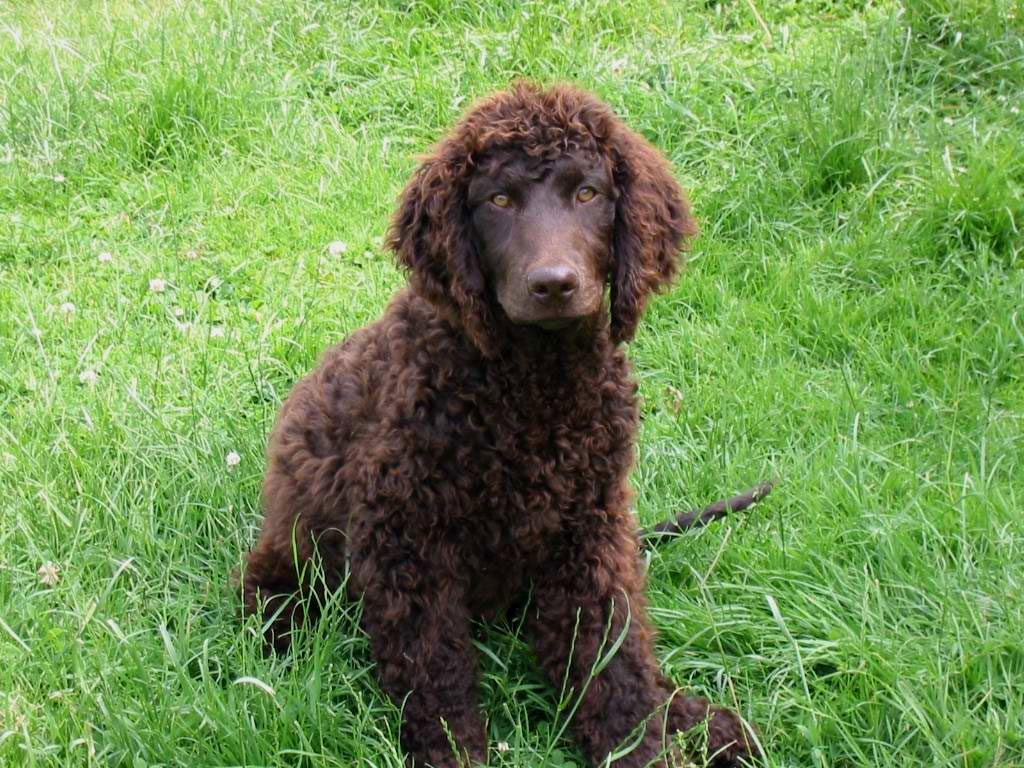
English Water Spaniel (Water Dog) It is a breed of dog that has been extinct since the first part of the 20th century, was last seen in the s 1930. Is of English origin.

He was very famous for his skill in hunting waterfowl and being able to dive like a duck. It was described as similar to a Collie or a cross between a Poodle and Curly-coated Springer Spaniel and was usually white with liver or brown markings.

The English Water Spaniel is prior to Irish Water Spaniel (Whiptail). Historians of the race, They claim that they have been mentioned by Shakespeare in his work "Macbethโ€, and they believe that they have influenced genetically in several modern dog breeds, including therein to the American Water Spaniel, the Curly-coated Retriever and the Field Spaniel, Although it is unknown if the race was involved in the creation of Irish Water Spaniel.

In 1570, the Dr. John Caius wrote a description of the English Water Spaniel. But the race is officially mentioned by name in 1802, in the "Sportsmanโ€™s Cabinetโ€ (organization that nuclear all hunting sports), where they describe the English Water Spaniel like a dog "natural hair is long and curly, and compact, not loose and messyโ€, the description was accompanied by an engraving in which a English Hair Spaniel white with liver spots. This shows that the English Water Spaniel is prior to Irish Water Spaniel, not developed as a breed recognized until the Decade of 1830.

During the first half of the 18th century, the English Water Spaniel It was used for hunting ducks in East Anglia.

The Kennel Club โ€“initially– had a specific classification in which all the "Non-Irish water dogsโ€. That standard was created specifically for the English Water Spaniel by Hugh Dalziel in one of his books dedicated to the races of water dogs.

In an article of his published in the year 1897, Hugh Dalziel, ensured that, I didn't think the breed was extinct, on the other hand, He assured that there were still many specimens of the breed distributed throughout the country, and keeping alive the race passed through motivate breeders from the most important clubs and canine committees, in the perpetuation and improvement of the breed. But later, Dalziel, regretted the fact that while the Irish Water Spaniel became famous, the English Water Spaniel was absorbed by other breeds of spaniel, under the eye of the most important clubs and canine committees, until you reach the extinction…

In 1967, the author John Fawcett Gordon (and politician from Northern Ireland) He said: โ€œAfter two centuries of breeding the English Water Spaniel has become extinct. No specimen has been seen again in the last thirty yearsโ€.

At least, It is believed that the English Water Spaniel has left its legacy in descendant races...

Some authors include within these races the American Water Spaniel which was also developed using additional genetic material from the Irish Water Spaniel and of the Flat-coated Retriever. The Curly-coated Retriever is considered to have descended from Poodle, of the Setter, of the extinct St. John’s Water Dog and of the English Water Spaniel.

The records for the origin of the modern breed Field Spaniel are more precise and show that one of the four parent dogs used in the creation of the breed was a English Water Spaniel crossed with a Cocker Spaniel officially registered as a Sussex Spaniel, due to its liver-colored spots. ยฟEs lioso?, truth?

Physical characteristics

The English Water Spaniel looked more like a curly-haired version of the Springer Spaniel, with some features of the Collie, Pudelhund, and Setter.

With white hair and liver-colored spots (brown), they measured about 51 cm in height to the cross. They were thin, long-legged characteristic of some Spaniel, with the tail and long ears, White under belly and Brown dorsum. With a head long and narrow small and those long ears covered with thick and very defined curls. The body was moderately thick, barrel-shaped, but not as much as the Field Spaniel.

Due to the colors of the English Water Spaniel (liver or brown and white), it has been suggested that breed may have been the source of the colors that modern breeds have English Springer Spaniel and Welsh Springer Spaniel.

Alternative names:

  • Water Dog, Water Rug
  • โ–ท The world of Pets: Dogs, cats, birds, reptiles, amphibians

    Belgian Shepherd Tervuerense
    Bรฉlgica FCI 15 . Sheepdogs

    Pastor Belga Tervuerense

    The Belgian Shepherd Tervuerense He is very observant and attentive to any changes in their environment.

    Content

    History

    The Belgian Shepherd Tervuerense is one of the four varieties into which the Belgian Shepherd. The name of Tervueren is due to the Belgian city of Tervuren where was selected.

    At the end of the 19th century, in Belgium there was a large number of herding dogs whose type was heterogeneous and their coats were of great diversity. In order to put order into this situation, some cinรณfilos (cinรณgrafos) enthusiasts formed a group led by Professor A. Reul, the school of veterinary medicine of Cureghem, who can be considered as a true pioneer and founder of the race.

    The Belgian Shepherd officially born as a race between 1891 and 1897. The 29 in September of 1891, the โ€œBelgian Shepherd Dog Clubโ€ is founded in Brussels and that same year, the 15 November, Professor A.. Reul manages to gather in Cureghem, 117 dogs, allowing you to carry out a census and form a group with the best copies. In the following years becomes a real selection, making an extreme inbreeding on some stallions.

    The 3 in April of 1892, the "Dog Club" Belgian Shepherdโ€ drafted a first well-detailed standard of the breed. Was admitted a single race, with three varieties of hair. In any case, at that time, the Belgian Shepherd was only a dog of humble people and therefore a breed that still lacked prestige. Therefore, is not until 1901 that the first Belgian Shepherds were registered in the Book of Origins of the Sociรฉtรฉ Rรณyale Saint Hubert (L.O.S.H.).

    In the course of the next few years, the leaders of the cinephile fans Belgian Shepherd they tenaciously devoted themselves to unify the type and correct the defects. We can affirm that towards the 1910 the type and character of the Belgian Shepherd they were already established.

    Through the history of Belgian Shepherd, the issue of the different varieties and accepted colors has given rise to many controversies. On the other hand, As far as morphology is concerned, the character and fitness to work, There has never been any disagreement.

    Physical characteristics

    According to the classification scheme of the Fรฉdรฉration Cynologique Internationale, It's four different from same breed varieties. Other organizations such as American Kennel Club they only recognize the Groenendael under the name of Belgian Shepherd. The cynological organizations of Australia and New Zealand classify them as four different breeds.

    But, in many countries like Canada, Great Britain, Puerto Rico, Mexico and South Africa, among others, using the classification of the CRF, recognizing them as four varieties of the same species.

    From the middle ages are known, only that in those times there were different varieties classified solely by their function and not so much by their morphology since the interest in their breeding was based on the search for an efficient breed for grazing.

    Along with the Malinois, Groenendael and the Tervueren shares the same standard and differs only in the type, length and color of hair, It is long in the body except the face is where short, carborane Brown, supports a small white patch on the chest and should be darker mask.

    Like all Belgian Shepherd, the Tervuren is a medium sized dog, square and proportionate body belonging to the family of herding dogs. Males measure about 62 cm to the cross, and weigh, approximately between, 25 and 30 kg. Females are lighter and proportions minor measuring around 58 cm to cross and weighing approximately 20 to 25 kg.

    He is recognized by his double and bulk the mantle, generally brownish with some degrees and shadow in black, including his characteristic black mask. A small white spot is permitted, as well as nails and bearings.

    You need to be brushing regularly to remove the dead hairs, but in general, his mantle of hair does not tend to return woolly. A well-maintained fur will be somewhat hard to the touch, falling weight and staying glued to the body of the animal (Unlike, for example, the hair of a Samoyed).

    Naturally it will tend to lose hair, but if it is not removed it could hang on the hind limbs, and form knots.

    The Tervueren, can be - also- of color Sable or grey, but it may be penalized in beauty competitions in some countries according to the standard that is handled. Though, Obviously, in tests of utility and work will not color that is judged to be but its suitability.

    Character and skills

    The Belgian Shepherd Tervuerense they are very active and intelligent dogs that require a job to keep them busy. Such activities can go from: tracking, obedience, agility, flyball, Save and defense, detecting bombs and drugs, going to sports like him Schutzhund and end up using it for search and rescue of people and victims in accidents and avalanches.

    as pets, the Tervueren, they are loyal and form strong ties with his family, what they seek to defend at all costs of strangers and dangers to humans who loves.

    Dogs are very observers and attentive to any changes in their environment, This makes them excellent animal to monitor. Some specimens may be nervous, This will depend on the aging, Genetics and the kind of experiences that have been submitted at an early age, That is why it is very important to give them adequate socialization from puppies and expose them to the greatest amount of stimuli., everyday situations and people.

    We must train them and exercise them constantly and not wait to the animal as if by magic to become a well educated dog.

    Like the others Belgian Shepherd, the Tervueren it is generally not recommended as a first dog due to the possible inexperience of the owners to handle this dog so Active.

    Adult males clearly presented a stamp male and adult female female printing. His appearance will be screened elegance and alert. The race is known for his loyalty and versatility. Those who have often be delighted and praise his intelligence, the training facility, and perhaps, first and foremost: his sense of humor.

    Its performance is excellent in various types of activities. Although in America it is still a relatively rare breed, little by little and with firm and safe passage, It is getting established.

    Observations

    The Belgian Shepherd Tervuerense remains in its natural state, Except for a light brushing, it does not require a specific cut or cosmetics..

    Bathing him and cut the hairs around the feet help to emphasize the shape of the same if you want to use as animal for show ring.

    Images of the ยซBelgian Tervuren Shepherdยป

    Videos of the ยซBelgian Tervuerense Shepherdยป

    Otros nombres:

    Pastor Belga Tervueren / Belgian Tervuren / Chien de Berger Belge / Tervueren

    Type and recognitions:

    • FCI CLASSIFICATION:
    • Group :
    • Section : . .

    โ–ท The world of Pets: Dogs, cats, birds, reptiles, amphibians

    Brazilian Mastiff
    Brazil FCI 225 - Molossoid - Dogo

    Mastรญn Brasilero

    The Brazilian Mastiff with their masters and the family is docile, obedient and tolerant with children.


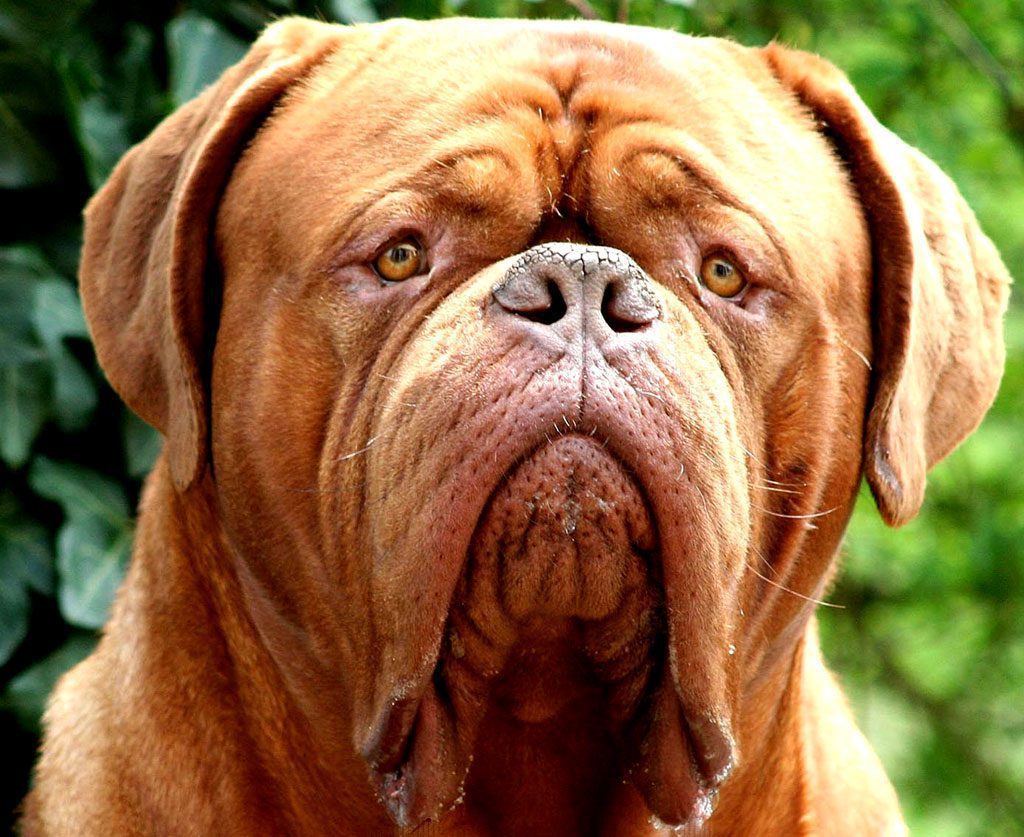
    The Brazilian Mastiff (also known as: Fila Brasileiro, Fila Dog and Cabeรงudo Boiadeiro or Brazilian Mastรญn) It is a breed of dog of Brazil of large and imposing appearance. For his temper, He is considered one of the best guardian.

    This breed was created from the old Bulldog cross (aggressive temperament), English mastiff (body strength and vigour to bite) and of the Bloodhound (large capacity of smell to track).

    Otros nombres: Fila Brasileรฑo / Cรฃo de Fila / Cabeรงudo Boiadeiro / Mastรญn Brasilero.

    Crupo 2 / Section 2 – molosoids and mountain dogs.

    Dogs breeds: Brazilian Mastiff

    Read all about the race by clicking on: Fila Brasileiro.

    โ–ท The world of Pets: Dogs, cats, birds, reptiles, amphibians

    American English Coonhound
    Estados Unidos Not recognized by the FCI

    Content

    History

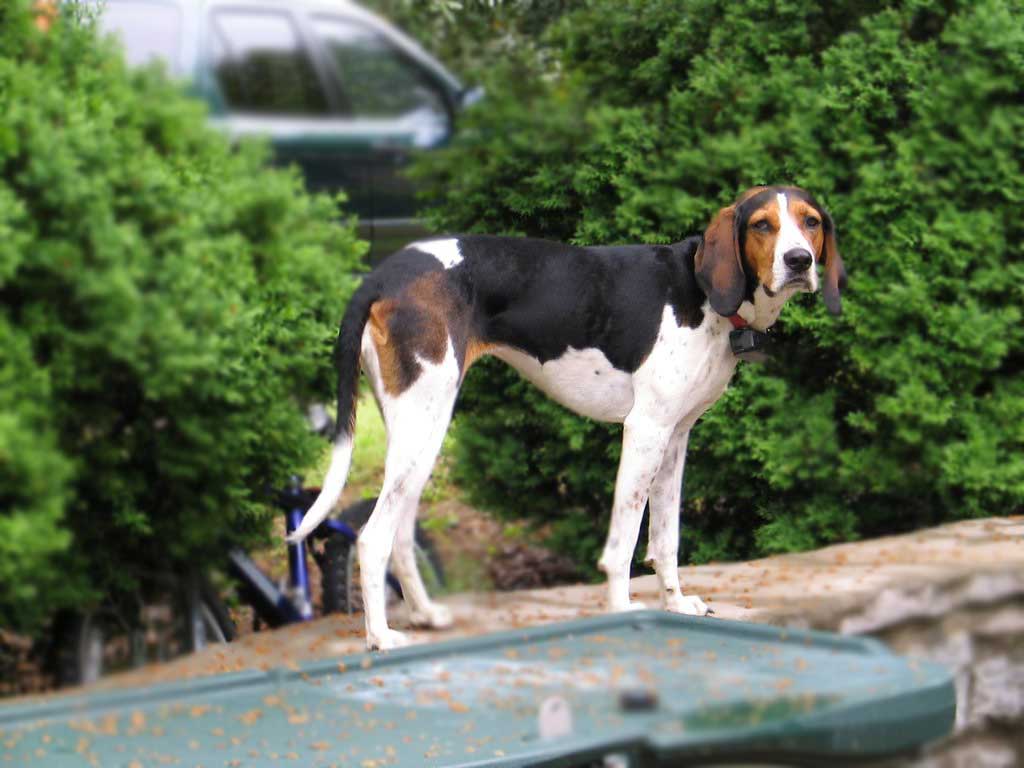
    The American English Coonhound, is one of the varieties of Coonhound normally bred in the southern United States.

    This breed was originally classified and recorded as English Fox and Coonhound, prior to the specialization of the six breeds of Coonhound. Recognition in the Decade of 1940 by the United Kennel Club of Bluetick Coonhound and Treeing Walker Coonhound as different races, gave rise to the classification and registration of the American English Coonhound as a distinct race within the group Coonhound.

    The breed originated in the southeast of United States, where they were raised by the cross of a American Foxhound and English Foxhound, most other European hunting breeds, and other native dogs, in order to specialize the race in the hunting of animals that are fugaban climbing trees.

    Physical characteristics

    Unlike the other classifications of Coonhound, a wide variety of colorations is acceptable to meet the standards of the American English Coonhound. The coloration may be reddish, bluish or tricolor.

    But, red marks are predominant and ยซRedtickยป is a common euphemism to refer to the color of the American English Coonhound.

    Some people believe that this lack of emphasis on specific coloration has allowed breeders to focus breeding programs on traits like intelligence and hunting ability rather than superficial concerns., like coat standards. Color variations are common even among puppies from the same litter of a American English Coonhound , which indicates high levels of DNA diversity in the breed.

    Character and skills

    To the American English Coonhound loves to snuggle up on any fluffy surface he finds, important to take into account, all those people who do not want to have their dog on the sofa and in bed all day.

    Just like all the Coonhound, are โ€“generally- good dogs, affable and very sociable. Nervousness or aggression is considered a defect according to UKC breed standards. Are strong and stubborn nature, so it requires more patience in training than other breeds.

    Young dogs tend to be very active, playful and eager to human attention, they are dogs that require plenty of exercise.

    The American English Coonhound, It is used more often as hunting dogs, mainly of raccoons.

    They are also excellent family pets, that they have been bred for hunting in Group, so tend to be very friendly.

    The American English Coonhound as well, is very good guardian. It has a very characteristic alert bark that makes it infallible.

    โ–ท The world of Pets: Dogs, cats, birds, reptiles, amphibians

    Chin
    FCI 206 . Japan Chin and Pekingese

    Chin Japonรฉs

    The true origin of the Chin It is still controversial, Although a general consensus, concludes that you originated in China.

    These dogs were brought to Japan around year 732. Some maintain the ancestors of these dogs first arrived to Japan around the year 732, as a gift from royalty Korea, while others argue that you copies of Japanese Chin were offered as gifts to the Empress of Japan in the mid-6th century, other theories assure that they arrived in Japan in the year 1000.

    But beyond all the controversy regarding the origin, all agree on one thing, the Japanese Chin, He is a real "Japanese", because it reflects the Japanese sensitivity to detail.

    The Japanese established various breeds of dogs, with a defined purpose that was work, that Japan considered something different, different from a ยซdogยซ, He was considered a work on farm animal, for hunting, to care for cattle, etc., but the Japanese Chin, it was something very special because it was strictly considered a companion dog.

    His appearance and distinctive personality was quickly captured the hearts of the Japanese and that led to ownership of these dogs to be limited to persons of Royal and noble blood.

    Due, every noble House was raising its own standard, reason why there are many variations of the Japanese Chin, in terms of size, the density of the layer, the eyes, the personalityโ€ฆ

    Once the race was introduced in the West, a strong desire of the people by the smaller copies (those who weighed a maximum 4,5 Kg.), He carried that size was the most popular and became the official standard of various canine clubs around the world.

    Professor Von Ludvic Schulmuth studied canine origins from a discovery of skeletal remains of dogs found in human settlements dating back to the eighth millennium BC., in the Gobi desert. On the basis of the information collected, he created a genealogical tree of Tibetan dogs which gathered very interesting information concerning the origin of certain breeds that are today very popular.

    The Gobi desert is a large desert region located between northern China and the South of Mongolia. Can be one of the deserts, or desert areas largest and most important worldwide. Around it the Altai Mountains and the steppes of Mongolia in the North, The Tibet Plateau and the planning of northern China by the southwest. The word gobi means "desert".’ in Mongolian. The Gobi is composed of different geographic and ecological regions, based on its variations of climate and topography.

    Historically, the Gobi desert He is noted for being part of the Mongol Empire and the location of several important cities along the Silk Road.

    Occupying the 30% of the national territory, great Gobi Mongolia covers capricious montes, sandy dunes, vast plateaus, steppes with its aromatic herbs and, Since then, a varied animal world, within the canine ancestors found Professor Ludvic Von Schulmuth.

    Ludvic von Schulmuth defined as origin of certain dog breeds a former denizen dog of the Gobi desert, whose remains were found in places where stored manure or litter, and called them "Gobi Desert Kitchen Midden Dog", Several lines arose from this animal that gave rise to various breeds.. These may include, a small dog with soft hair and floppy ears that was the ancestor of Tibetan Spaniel, the Japanese Chin, and the Pekinese. Another branch that descends from the "Gobi Desert Kitchen Midden Dog" gave rise to the Continental Toy Spaniel and to the Chihuahua longhair. Y, another branch of the same dog of the Gobi desert, gave rise to the emergence of the Pug and Shih Tzu.

    There is also some documentation that indicates Portuguese sailors introduced the breed to Europe in the century 17 through the gift of some to Catherine of Braganza, Queen Consort of King Charles II of England, but there is more evidence that the first Japanese Chin opened steps after borders, It was a gift of the Emperor of Japan offered a U.S. Navy officer, Matthew C. Perry, When he visited East in 1853 to open bilateral trade. The naval officer, took a litter of seven Japanese Chin, and to reach their land only survived two, and to whom he gave them is something that is still not known for sure.

    What we do have full certainty is that the Japanese chin, also known as the Spaniel Japanese has been the dog of Japanese royalty.

    According to the classification made by Stanley Coren after analyzing the responses of more than 200 the AKC judges ("The Intelligence of Dogs", Stanley city, Ediciones B, 1995), Japanese chin is the nยบ 62 from the list.

    The Japanese Chin ladra only when it is necessary for the purpose of alerting the family of the arrival of a visitor or something out of the ordinary, then is a quiet breed.

    It's a very special race, they have very feline attitudes, is more, is said to have the character of a cat, and you will see why...

    The Japanese Chin is warning, intelligent and independent, and it uses its feet to wash and dry your face. Other feline features are your preferences for the rest in elevated surfaces, as the backups of the sofa and chairs. He has a spectacular ability to walk across a tea table without knocking over any objects., If that doesn't make it a cat total!!!

    These dogs were bred and trained for the purpose of loving his people. Although it is usually a quiet dog, He also known for the amount of mischief that make, Welcome to all, like the so-called "Spin Chin", they go around quickly in a circle as if they were dancing but resting only on their hind legs, While with their Forelegs dejan them interwoven and shaking them up top down at full speed, they are very funny.

    Some usually "sing", They produce a noise that can range from a minimal trill to a high pitch and quite low-pitched for their size., almost operatic quality that sounds like โ€œboooooooโ€. On race Basenji in the right column you can see a video of the dog singing, It is very similar to what makes the Japanese Chin.

    This small dog of friendly aspect, It has an appearance very similar to the Peking, But unlike, its legs are longer, and the color of the fur is different; It may be black and white or red and white. The fur is soft and long; the large, dark eyes, well separated from each other; the tail, well endowed with hair, relies on the back; the ears are triangular in shape and small size; the snout is short and flattened, and large heads relative to their body.

    The orbits of the eyes of large contribute to moisture in the face and the folds of skin around the crushed nose and facial area, You can trap moisture and cause fungus problems. The face should be cleaned from time to time with a damp cloth and the folds, with a cotton swab.

    The diet is an important factor in the health and status of the Japanese Chin, many specimens may be allergic to corn, for example.

    Due to their small size they don't need too much exercise, although yes, requires frequent walks, because they are active and love to be outdoors. They adapt well to life in a Department or small homes. On the other hand, their fur should brush your daily, as it is often about getting caught.

    The Japanese Chin is a long-lived, to round the 15 years, but in many cases can be extended to more or less the 18 years of age.

    They weigh between 1,8 and 3,3 kand and measured at the cross, of 21 to 25 cm.. The litter is usually fairly small, of between 3 and 4 Puppies.

    Japanese chin is an excellent company dog, It is affectionate and loyal to his owner and, normally, happy to see other people, though some mistrust strangers. It is a dog who prefers the family environment, but they adapt very well in new situations and are often used as therapy dogs due to this trait and their love of people.. Socialization at an early age contributes to his temperament of develop optimally, is an emotionally balanced dog, by nature, but it is important to contribute.

    Chin