โ–ท The world of Pets: Dogs, cats, birds, reptiles, amphibians

Kuvasz
Hungrรญa FCI 54 - Sheepdogs.

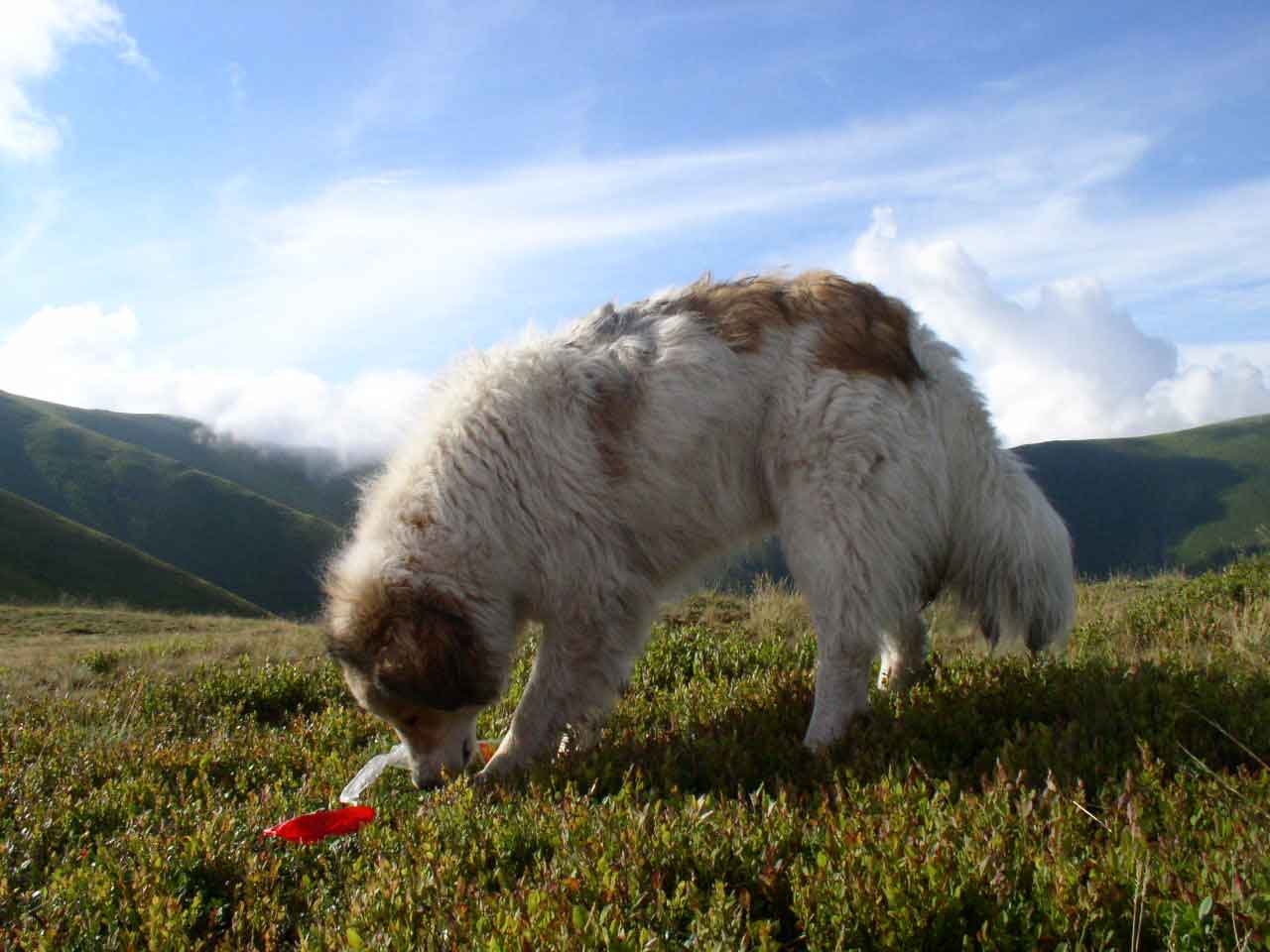
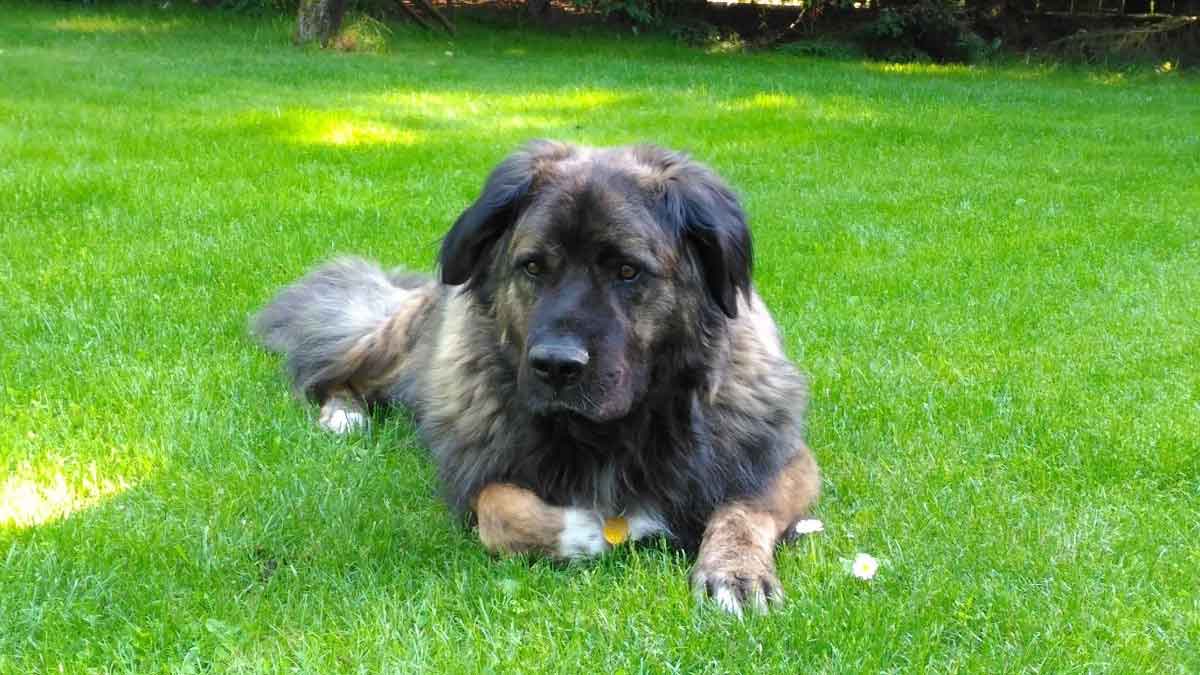
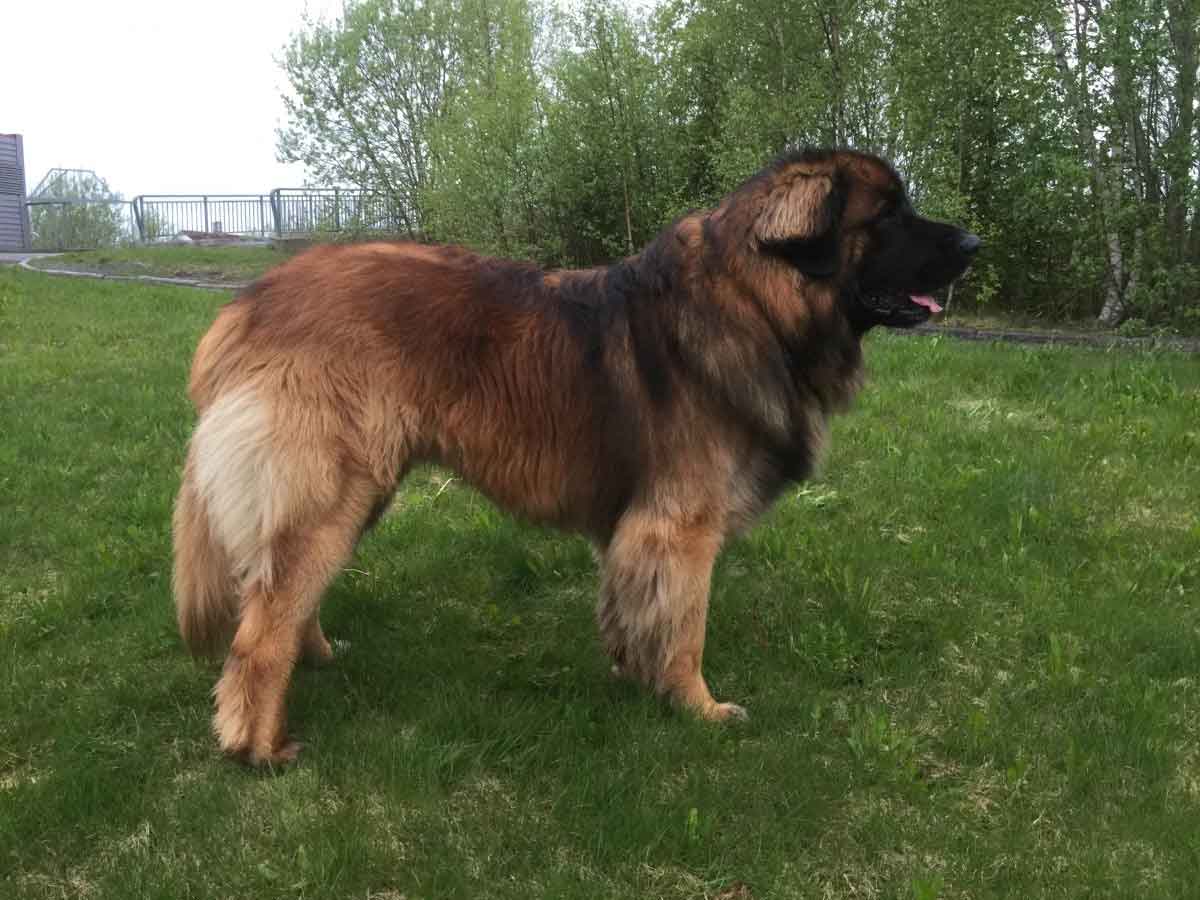
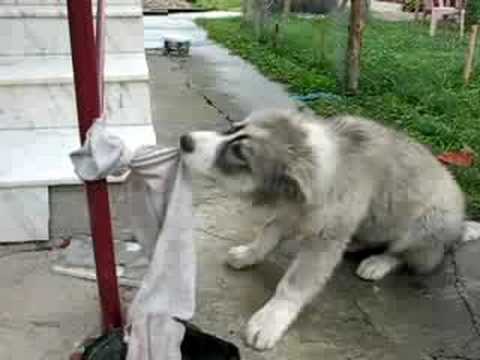
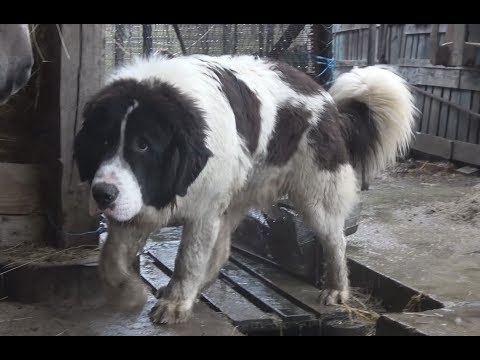
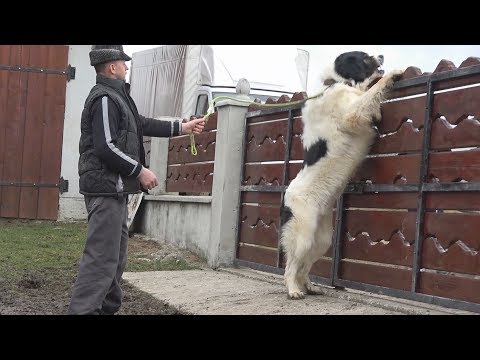
The Kuvasz (PL. Kuvaszok) is an old Hungarian breed of cattle dog.

Kuvasz

Content

Characteristics "Kuvasz"

Coexistence is important that you have with your new friend. Before considering the acquisition of a dog of the breed "Kuvasz" you know certain factors. Not all breeds of dogs are apt to live in an apartment, you must take into account his character, their need for exercise, their interaction with other pets, their care and if you have small children, their level of tolerance towards them.

Adaptation โ“˜

3,0 of 5 stars (based on 1 review)

friendly dog โ€‹โ€‹โ“˜

2,0 of 5 stars (based on 1 review)

hair loss โ“˜

5,0 of 5 stars (based on 1 review)

Affection level โ“˜

3,0 of 5 stars (based on 1 review)

Need for exercise โ“˜

3,0 of 5 stars (based on 1 review)

Social need โ“˜

3,0 of 5 stars (based on 1 review)

Home โ“˜

1,0 of 5 stars (based on 1 review)

Toilet โ“˜

5,0 of 5 stars (based on 1 review)

Friendly with strangers โ“˜

2,0 of 5 stars (based on 1 review)

barking โ“˜

4,0 of 5 stars (based on 1 review)

Health โ“˜

4,0 of 5 stars (based on 1 review)

Territorial โ“˜

5,0 of 5 stars (based on 1 review)

Cat friendly โ“˜

3,0 of 5 stars (based on 1 review)

Intelligence โ“˜

3,0 of 5 stars (based on 1 review)

Versatility โ“˜

3,0 of 5 stars (based on 1 review)

Child friendly โ“˜

3,0 of 5 stars (based on 1 review)

Surveillance โ“˜

3,0 of 5 stars (based on 1 review)

joy โ“˜

5,0 of 5 stars (based on 1 review)

History

The Kuvasz is an ancient herd guardian breed that originated in Hungary, although their distant ancestors were probably type dogs Tibetan Mastiff.

While the Komondor was used on the grounds lower with drier climates, the Kuvasz was used on the wet pastures of the highest mountains and the two were an integral part of the Hungarian economy. Later, during the century 15, the Kuvasz became a prized animal, the dog belonged to the Royal Court of the King Matthias Corvino. Y, from the kingdom Kuvasz puppies were offered to visiting dignitaries as a royal gift, Legend has it that the King was more confident their dogs than in their own Councillors. After the death of the King, the popularity of the breed among the nobles decreased, but even so the dog continued to have its traditional role in the protection of livestock.

At the end of World War II, almost all Kuvasz in Hungary had been killed. The dogs were used for the protection of their families, reason why were actively sought and killed by German and Soviet soldiers, while at the same time, some German soldiers were a large number of copies to their homes. After the Soviet invasion and the end of the war, the breed was nearly extinct in Hungary.

The word Kuvasz, probably, comes from the Turkish "kavas" which means guard, soldier or a protector. A related theory postulates that the word may have originated from ancient Russian farmers., the Chuvash, who has contributed many words to the Hungarian language.

For a long time, the property of the Kuvasz was restricted, but they were finally used by the shepherds as guardians of the flock. That's the job they're known for today.. The dog's white fur allowed the shepherd to easily distinguish it from a wolf as it blended in with the flock..

Physical characteristics

The Kuvasz should be of good size, solidly built and with a dignified air. The skull should be slightly arched and not too long, wedge-shaped snout. Leads the small ears hanging in the form of V. The body is rather long, with the slightly outgoing ribs. The legs are strong and not too long. The tail is long, slightly curved at the tip, which wears a beautiful plume. The coat is long, rough and undulating. The color has to be pure white, Although the white ivory can be accepted.

Although the skin is white, the pigmentation of the skin of Kuvasz should be dark and the nose should be black. The eyes must have an almendrada form. The females usually weigh between 35 and 50 kg, While males weigh in 50 to 70 kg, tieneto a bone structure medium. The height at the cross in the males is of 71 to 76 cm and the females of 66 to 70 cm..

For a casual observer, the Kuvasz may be similar to a Pyrenean Shepherd, to the Akbash, a โ€œMaremma Shepherdโ€ dog, a Samoyed, a Pudelhund white mixed with a Labrador Retriever, or some Slovakian dog like him Polish Tatra Sheepdog.

As with many livestock guardian dogs, the color of the layer of the Kuvasz serves a functional purpose and is an essential breed criterion. To develop the breed a purpose clear in the Kuvasz was to realise a mantle of color, to provide pastors distinguish the dog of wolves attacking animals at night. The Komondor, a close relative of the Kuvasz, It has a white coat for the same reason.

The Kuvasz lose a lot of hair from time to time. The rest of care are complicated. We must bear in mind that it is a dog of strong personality, which is why their education must be early and can be put to the test the patience of the educator. You need a suitable space of movement and exercise.

Fur: short, smooth, closed and thick on the head and on the front of the extremities. in the trunk, brazos, tie and tail is long and wavy, and often forms ridges and locks. it's pretty rough, a little stiff and in no case felted. the undercoat is fine and woolly.

Color: white.

Size: males of 71 to 75 cm.; females of 66 to 70 cm..

Character and skills

The Kuvasz he is a tireless keeper of flocks, defending the predators. Previously it had also been used as a hunting dog to chase wolves, boars and bears. It is also a great guardian. In his country the police and the army use him as an auxiliary. In recent decades it has also become a companion dog..

Good working dog, reliable watchdog, Pleasant Home Companion, that's the Kuvasz.

It has been used as a livestock guardian, but in recent years it can be found in homes as a pet.

The Kuvasz he is a smart dog and is generally said to have a clown sense of humor, that can last throughout adolescence and adulthood. They are very loyal but patients animals who appreciate human attention, but it also needs its space, they are very independent animals.

According to the classification made by Stanley Coren after analyzing the responses of more than 200 work of the AKC judges ("The Intelligence of Dogs", Stanley city, Ediciones B, 1995), the Kuvasz and el Nยบ 42 from the list.

Despite his intelligence, It should not be perceived as easy to train. His independent personality can make training a difficult task that, You can exhaust the patience, even for experienced owners. As a result, It is not recommended for beginners and those who do not have time to train and socialize in a manner appropriate to their Kuvasz.

On the other hand, many of these qualities make the Kuvasz excellent guardians for sheep or large farms. The Kuvasz has a very special and close relationship with his owner.

It is a sober and suffered dog, It resists weathering in the toughest conditions, Frequent brushing is therefore, necessary to keep their fur clean. A Kuvasz should not smell bad, This is usually a sign of illness or poor nutrition.

Homemade dog is friendly, affectionate and intelligent, and above all an excellent guardian, brave and quiet, suspicious and even reserved with strangers. Under its dignified appearance hides a playful temperament which makes him a loyal friend of children.

It is generally a healthy and robust breed whose life expectancy is about 12 or 14 years.

Kuvasz Health

In the Kuvaszok, more serious health problems include hip dysplasia, osteocondrosis (a joint disorder that damages cartilage and bone) and a propensity for cruciate ligament injury. An eye disease called progressive retinal atrophy (ARP) is a potential concern, just like hypothyroidism (a common hormonal disease in dogs in which the thyroid gland does not produce enough thyroxine) and vonWillebrand's disease (a disorder of blood clotting).

Not all of these diseases are detectable in a growing puppy, and it can be difficult to predict whether an animal will be free of these diseases, so you need to find a reputable breeder who commit to raise healthier animals possible. Must be able to produce an independent certification that the parents of the dog (and grandparents, etc.) have been screened for these defects and considered healthy for breeding. That's where health records come in..

Do not buy a puppy from a breeder who cannot provide you with written documentation showing that the parents were exempt from health problems affecting the breed.. If the breeder tells you that the tests are not necessary because they have never had problems in their lines, that the dogs have been โ€œvet checkedโ€, or offers you any other excuse to skimp on genetic testing of your dogs, leave immediately.

Careful breeders screen their breeding dogs for genetic diseases and breed only the healthiest and best looking dogs, but sometimes Mother Nature has other ideas. A puppy can develop one of these diseases despite good husbandry practices. Advances in veterinary medicine mean that in most cases dogs can still live a good life. If you are going to have a puppy, ask the breeder about the ages of the dogs in their lines and what are the most common causes of death.

Remember that after you have welcomed a new puppy into your home, has the power to protect you from one of the most common health problems: the obesity. Keeping a Kuvasz at the right weight is one of the easiest ways to extend its life.. Make the most of diet and exercise to help ensure a healthier dog for life.

observations and advice

not a very well-known dog and, therefore, it is difficult to find a puppy of this breed. However, it is more widely used than Komondor, whose cloak scares many potential buyers. In fact, the coat of the Kuvasz is more difficult to care for, Since it must be brushed periodically to avoid the formation of knots, although it should be washed as little as possible.

Kuvasz toilet

The Kuvasz has a beautiful white double coat that loosens dirt but also loosens hair. Brush weekly with a pin brush to remove dead hair and keep the skin and coat healthy. Trim the hair between the toes to keep your feet looking good. Its coat repels water and removes dirt easily with brushing, so a bath is rarely necessary.

When summer comes, don't think your Kuvasz has suddenly developed a disease causing hair loss. It is normal for the Kuvasz to lose most of its long coat in hot weather.

The rest is basic care. Trim nails as needed, normally each week the. Brush your teeth frequently with a veterinarian-approved pet toothpaste for overall good health and fresh breath.

Images "Kuvasz"

Videos "Kuvasz"

Type and recognitions:

  • FCI CLASSIFICATION:
  • Group :
  • Section : . .

Federations:

  • FCI – Group 1 Herding dogs, Section 1 Sheepdogs โ“˜
  • AKC – PASTORAGE โ“˜
  • ANKC – Group 5 (working dogs) โ“˜
  • CKC – Group 7 – Herding dogs โ“˜
  • โ€‹KC – Pastoral โ“˜
  • NZKC – Working dog โ“˜
  • UKC – Herding dogs โ“˜

FCI breed standard "Kuvasz"

Origin:
Hungary

Date of publication of the valid original standard:
06.04.2000

Use:

Shepherd dog


General appearance:

Dogs of this breed are strong, large in size and show a dense coat, wavy and white. Its pleasant image radiates nobility and strength. All parts are in harmony and the limbs are neither too short nor too long.
The skeleton is powerful but not crude. The muscles are strong and dry and the joints are sharply outlined..

Seen from the side the body forms a rectangle lying, almost square. Well muscled. Powerful figure, lively temperament and great agility. Its exterior gives the impression of tireless and efficient power.


IMPORTANT PROPORTIONS:

  • The length of the body slightly exceeds the height at the withers.
  • The depth of the chest corresponds to approximately half the height at the withers.
  • The muzzle is slightly shorter than half the length of the head.


Behavior / temperament:

The Kuvasz is brave and not at all fearful. He will defend, even at the risk of his own life, those people and properties whose defense and custody have been entrusted to him.. He is aware of his own value and incorrect treatment can make him aggressive..

Is loyal, reliable, loves its owner and its territory. He needs to exercise a lot and be busy. It is not demanding at all, its maintenance is simple and it is even capable of withstanding very bad weather conditions. He is grateful for the love and concern expressed to him.

Head:

The head of the Kuvasz has a characteristic wedge shape in harmony with the body, it is nice, noble and radiates considerable strength. The head is characteristically lean and dry. The Kuvasz can be differentiated from similar breeds, essentially because of the shape of his head. The head of the male is somewhat more robust than that of the female.

Cranial region:
  • Skull: The skull is broad and the forehead slightly marked. Along the middle of the forehead runs a marked furrow.
  • Stop (naso-frontal depression): Bit strong.

facial region:

Wide, long and well muscled.Truffle: The truffle is black and flat cut.

  • Snout: The nasal helm is straight. The muzzle becomes progressively narrower although it is never pointed.
  • Lips: Blacks, firmly glued. The edge of the corner of the mouth is serrated.
  • Jaws / teeth: well developed, strong, regular teeth, scissor bite, complete, according to the dog's dental formula.
  • EYES: Placed somewhat obliquely, macaroons, dark brown. The edge of the eyelids is black and is firmly resting on the eyeball.
  • EARS: Insertion at mid-height; from its insertion to a third of its length, they are curved and separated and then they fall well next to the head. The ears are โ€œVโ€ shaped with rounded tips.. In atention, the dog raises them a little, never fully erect or crooked.

Neck:

He is rather short than of medium length and is heavily muscled. Provides an angle of 25-30 degrees. The nape is short. Firm throat skin, without jowl. In males the ruff and the mane are very expressive.

Body:

Seen in profile it forms a horizontal rectangle, almost square.

  • Cross: Long, marked upward on the surface of the back.Back: Long Middle, right, wide, well muscled and firm.Pork loin: Short, firm continuity of the back.
  • Rump: Slightly descending, richly muscled, wide, the coat is very dense, what gives the rump a somewhat high appearance.
  • Sill: Given the strongly developed musculature, the sill appears rounded, the tip of the breastbone.
  • Breast : Deep, long and slightly arched.
  • Bottom line and belly: Continuing the lower chest line, the belly is slightly pulled back.

Tail:

Low insert, in direct continuity of the gently descending rump. The tail falls straight and has a slight upward curvature at the tip, without being bent. Its length reaches the tarsus. In attention or being excited, is allowed to raise it to the level of the top line.

Tips

PREVIOUS MEMBERS: The forelimbs support the body being straight up to the carpals, are parallel and located at a moderate distance from each other. Seen from the front, The position of the anteriors is correct when a vertical line drawn from the tip of the shoulder coincides with the axis of the limb and falls between the third and fourth toes of the foot.. In profile, is correct when a vertical line drawn from the elbow joint falls towards the ground passing through the carpus and through the middle of the limb.

  • Shoulder: Long oblique scapula, musculada, joint and firm to rib cage, although with good mobility.
  • Arm: Long Middle, good muscular. The arm and scapula they form an angle of 100 to 110 degrees.
  • Elbow: Dried, rests next to the rib cage, not turned in or out. The arm and forearm form an angle of 120 to 130 degrees.
  • Forearm: Proportionally long, straight, compact, with lean musculature, strong tendons are inserted into it that are directed
  • to the carpus.
  • Carpo: Well developed, firm, the tendons are made of steel.Metacarpus: Proportionally short, enjuto, slightly tilted
  • (angle with the vertical of 10 to 15 degrees).
  • Previous feet: Round or somewhat oval, firm. Fingers are short, so arched up that in the middle they do not touch the floor, elastic and well together. Elastic and black pads. Nails are hard, strong, black or slate gray.

LATER MEMBERS: The posture seen in profile is correct when the knee is under the tip of the buttock and the foot is under the hip joint.. The vertical that falls from the tip of the ischium touches the heel bone. The posture of the hindquarters seen from behind is correct when the vertical that falls from the tip of the ischium runs along the axis of the limb, it is parallel on both sides and is on the ground separated by a medium distance from the other.Thigh: It is closely linked to the pelvis by its musculature which is long, wide and solid. The pelvis and thigh form an angle of 100 to 110 degrees.

  • Knee: Voluminous. The angle between the thigh and the leg reaches 110 until 120 degrees.
  • Leg: Its musculature, which is long and solid, is attached by strong tendons in the hock.. Viewed from behind they are vertical both sides and parallel to the axis of the body.
  • Hock: Width, bulky, dry, tendinoso. The angle of the tarsus is 130 to 140 degrees.
  • Metatarsus: Long, perpendicular to the ground.
  • Hind feet: Ovals, otherwise like the previous ones.

Movement:

Slow and wide step. In the trot the movement is fluid, elastic, with good ground cover, dynamic, regular and persistent. Elbows do not turn in or out.

Mantle

SKIN: Very well pigmented; is slate gray and firm.

  • Fur: Moderately hard, wavy, something rigid, no tendency to tangle. Under fairly thick outer coat, softer downy undercoat found. The head, the ears and feet are covered by a short hair of 1-2 cm long, bushy and straight.

The anterior and lateral faces of the anterior and posterior extremities, in the region from the knee down, are also covered by a short, straight hair of 1-2 cm long. On the posterior sides of the limbs are feathers of 5-8 cm long, reaching in the hindquarters up to the height of the hock. Around the neck, there is a gola, that continues up to the chest in the form of a mane. This mane is especially noticeable in males. In the body, arm and thigh, the hair is of a medium length (4-12 cm.), richly wavy and frequently ridged, hair trimmings and tufts. The tail is covered in its entire length by bushy and wavy hair. At the tip, the length of the hairs can reach 10 to 15 centimeters.

Color:

  • White. Ivory colors are authorized.
  • Truffle, edges of the eyelids and black lips; pads are black or slate gray. For the palate, a dark color shade is desired; pink spots taken in.


Size and weight:

Height to the cross:

  • Males 71-76 cm..
  • females 66-70 cm..

Weight:

  • Males 48-62 kg.
  • females 37-50 kg


Fouls:

  • Any deviation from the aforementioned criteria is considered as a fault and the severity of this is considered to the degree of the deviation to the standard and its consequences on the health and well-being of the dog..


    FALTAS DESCALIFICANTES:
  • Aggressiveness or extreme shyness.
  • Any dog โ€‹โ€‹showing clear signs of physical or behavioral abnormalities.
  • Depression links (stop) pronounced.
  • Lack of pigmentation in truffle, flews and edges of the eyelids.
  • Missing one or more incisor teeth, of the fangs, of the premolars 2-4 and molar 1-2. Missing more than two PM 1; go M 3 will not be taken into consideration.
  • Upper or lower prognathism, incisor arcade deviated, lack of contact of more than 2 mm. between the upper and lower incisors.
  • Entropion and ectropion.
  • Erect ears.
  • Tail elevated above the level of the back line when the specimen is calm; tail curled back.
  • Hair with a tendency to mat, kinked or not wavy, wire hair.
  • Limbs covered with long hair.
  • Colors deviating from those indicated in the standard.


N.B.:
  • Males should have two normal-appearing testicles fully descended into the scrotum..
  • Only functionally and clinically healthy dogs, with the typical conformation of the breed, should be used for parenting.

Source: F.C.I - International Cynological Federation

Alternative names:

1. Hungarian Kuvasz (English).
2. Kuvasz (French).
3. Kuvasz (German).
4. Pastor Hรบngaro (Portuguese).
5. Kuvaszok (espaรฑol).

Photos:

1 – kuvasz by Vkoves / Public domain
2 – KUVASZ by Svenska Mรคssan from Sweden / CC BY
3 – Kuvasz Prince of The Dogs Kennel by Kuvaszprince / CC BY-SA
4 – 7.5 months old kuvasz bitch by Sprays / Public domain
5 – Female kuvasz in ร“pusztaszer, Hungary by DenesFeri / CC BY-SA
6 – Nine-week-old Kuvasz dog by Vkovesz / Public domain

โ–ท The world of Pets: Dogs, cats, birds, reptiles, amphibians

Puli
Hungrรญa FCI 55 - Sheepdogs

Puli

With its black lace cape, gray or white, the Puli, a herding breed of sheep originating from Hungary

Content

Adaptation โ“˜

3,0 of 5 stars (based on 1 review)

friendly dog โ€‹โ€‹โ“˜

3,0 of 5 stars (based on 1 review)

hair loss โ“˜

3,0 of 5 stars (based on 1 review)

Affection level โ“˜

4,0 of 5 stars (based on 1 review)

Need for exercise โ“˜

4,0 of 5 stars (based on 1 review)

Social need โ“˜

3,0 of 5 stars (based on 1 review)

Home โ“˜

4,0 of 5 stars (based on 1 review)

Toilet โ“˜

5,0 of 5 stars (based on 1 review)

Friendly with strangers โ“˜

2,0 of 5 stars (based on 1 review)

barking โ“˜

4,0 of 5 stars (based on 1 review)

Health โ“˜

3,0 of 5 stars (based on 1 review)

Territorial โ“˜

5,0 of 5 stars (based on 1 review)

Cat friendly โ“˜

3,0 of 5 stars (based on 1 review)

Intelligence โ“˜

5,0 of 5 stars (based on 1 review)

Versatility โ“˜

3,0 of 5 stars (based on 1 review)

Child friendly โ“˜

4,0 of 5 stars (based on 1 review)

Surveillance โ“˜

4,0 of 5 stars (based on 1 review)

joy โ“˜

5,0 of 5 stars (based on 1 review)

History

The Puli has been known in Hungary for at least 1.000 years. Dogs like the Puli were brought to Hungary by the Magyar invaders. Dogs look like Tibetan Terrier, and it is possible that this race is one of its ancestors.

The type of work dogs did depended on their size and color. Light-colored dogs were most useful at night so they could be easily seen, while those of dark color worked during the day. Among the white flocks, were easier to see by the pastor.

During the 17th century, the Puli almost lost as a breed due to crossbreeding with sheepdogs from France and Germany. In 1912, a program was started to revive the breed. In 1915 A breed standard was drafted and approved by the (FCI) International Cynological Federation in 1924. The dogs had made their first appearance at a Budapest dog show a year earlier and were divided into three classes.: of work, exposure and dwarf. In 1934 breed standard was revised and dogs were divided by height: large, medium and dwarf. An inscription of 1935 in the Hungarian herd book it notes four sizes: large (policeman), medium- (work), small and dwarf. Medium size was the most popular.

Physical characteristics

It's a solid dog, lean but muscular. The head is small and thin; front view looks round and in profile, elliptical. The skull is rounded; the nasal canal straight and shorter than the skull, with the stop well marked. The eyes are brown; the gaze is attentive and lively.

has droopy ears; V-shaped. The body gives an impression of great solidity: the height at the withers is somewhat greater than the length of the trunk.

The limbs are straight and muscular. The size of the tail is curved and on the kidneys.

Observations and tips:

Puli's hair is not easy to keep clean. You must avoid getting dirty because you cannot brush or wash.

  • Fur: it is so dense that it makes it difficult to examine the different parts of the body. The head appears round due to the hair that falls over the eyes, that hides them. The coat is made of thick textured hair and a fine undercoat: the right proportion between thick and fine hair determines the โ€œnarrowโ€ felting, what is the desired. If there is too much thick hair, the coat is thin. On the other hand, if there is too much fine hair, the cloak will be too pressed. The stringy cloak is made up of uniform hairs that form wavy highlights. Curls are less prone to felting and form long strings. The hair is long on the rump, kidneys and thighs (of 8 to 18 cm.), so that in certain cases, while the dog is standing, hair almost touches the ground. On the other hand, it is moderately short on the head and on the feet.
  • Color: depending on the variety, black, black with reddish highlights, different shades of gray, and white.
  • Size: males, of 40 to 44 cm.; females, of 7 to 41 cm..

Character and skills

Dreadlocks usually attract the attention of those unfamiliar with the Puli. But for those who know him and love him, it is his personality that shines.

The Puli is an affectionate and loving dog that enjoys being with his family. It is intelligent, agile and has a strong work ethic. He is wary of strangers and takes care of his family, but should not be too shy or aggressive.

Like most herding breeds, the Puli is independent and strong-willed. You need a nice hand, but firm, to achieve their best behavior. The Puli has a tendency to bark, another trait of grazing, so any training program must include a "Quiet" command.

The Puli is a capable athlete, known for being able to climb a fence 180 cm.. Fenced yard and lots of supervision required.

Training should begin immediately for the Puli puppy. Even at 8 weeks of age, is capable of learning good manners. Never wait until i have 6 months to start training, or you will have a more stubborn dog to handle. If possible, take it to a puppy trainer when you have 10 to 12 weeks of age, and socializes, socialice, socialice. But, Note that many kinds of training puppies require certain vaccinations (such as kennel cough) stay up to date, and many veterinarians recommend limited exposure to other dogs and public places until puppy vaccinations (including rabies, distemper and parvovirus) They are completed. Instead of formal training, You can start training your puppy to socialize at home and among family and friends until immunizations are completed in the puppy. You can also invite people to your home, to get used to receiving visitors. These experiences as a young dog will help you become a sensible and calm adult dog..

Talk to a reputable and experienced Puli breeder. Describe exactly what you are looking for in a canine companion, and ask for help selecting a puppy. Breeders see puppies daily and can make incredibly accurate recommendations once they know something about their lifestyle and personality. Choose a puppy whose parents have pleasant personalities and who has been well socialized by the breeder since birth.

Puli dog health

The Puli are generally healthy, but the conditions that are sometimes seen in the breed include hip dysplasia, eye problems such as progressive retinal atrophy and deafness.

Don't buy a puppy from a breeder who can't provide you with written documentation that the parents were cleared of health issues affecting the breed. Getting dogs "vet checked" is not a substitute for genetic health testing.

Careful breeders screen their breeding dogs for genetic diseases and breed only the healthiest, best-looking specimens., but sometimes mother nature has other ideas and a puppy develops one of these diseases despite good husbandry practices. Advances in veterinary medicine mean that in most cases dogs can still live a good life. If you are going to have a puppy, ask the breeder about the ages of the dogs in their lines and what they died of.

Remember that after you have welcomed a new puppy into your home, has the power to protect you from one of the most common health problems: the obesity. Keeping a Puli at the right weight is one of the easiest ways to extend his life.. Make the most of your preventive skills to help ensure a healthier dog for life.

Puli dog grooming

The Puli has a dense, weather resistant coat that can be wavy or curly but never silky. The undercoat is soft, woolly and dense. The hair clumps together easily and if left alone it will form shaggy cords as the dog matures, a partir de los 9 months of age. Depending on the coat texture and the amount of undercoat and outer coat, laces can be flat or round. It takes four to five years to fully grow and can reach the ground.

The Puli coat can be brushed or left as a drawstring. If you plan to brush the coat instead of leaving it twine, start early and expect to brush every day or two.

The coat doesn't fall off much, but the laces must be separated regularly to maintain their appearance, and they attract dirt and debris. The Puli's coat should never be dirty, tangled or foul-smelling. To avoid problems, ask the breeder to show you how to care for the coat. Trimming the hair around the mouth and cleaning the dog's face after meals is one way to help reduce odor.. Bathing and drying a Puli can take hours. Make sure it's dry to the skin, or it will smell musty. If you don't plan to display it, you can choose to keep your coat short for easy maintenance.

The rest is basic care. Trim nails as needed and brush teeth frequently with a vet-approved pet toothpaste for overall good health and fresh breath. Check ears weekly for dirt, redness or odor that may indicate an infection. If the ears look dirty, clean them with a cotton swab moistened with a gentle, pH-balanced ear cleaner recommended by your veterinarian. Start brushing the Puli while you are young so that you get used to it and accept it willingly.

Characteristics "Puli"

Coexistence is important that you have with your new friend. Before considering the acquisition of a dog of the breed "Puli" you know certain factors. Not all breeds of dogs are apt to live in an apartment, you must take into account his character, their need for exercise, their interaction with other pets, their care and if you have small children, their level of tolerance towards them.

Images "Puli"

Videos "Puli"

Type and recognitions:

  • FCI CLASSIFICATION:
  • Group :
  • Section : . .

Federations:

  • FCI – Group 1 Herding dogs, Section 1 Sheepdogs โ“˜
  • AKC – PASTORAGE โ“˜
  • ANKC – Group 5 (working dogs) โ“˜
  • CKC – Group 7 – Herding dogs โ“˜
  • โ€‹KC – Pastoral โ“˜
  • NZKC – Working dog โ“˜
  • UKC – Herding dogs โ“˜

FCI breed standard Puli

FCIFCI - Puli
Puli

Alternative names:

1. Hungarian Puli (English).
2. Puli hongrois (French).
3. Puli (German).
4. Puli (Portuguese).
5. Puli hรบngaro, Pulik (espaรฑol).

Photos:

1 – Picture of a white Puli by http://www.rabakozi-nemes.hu / CC BY-SA
2 – Pulik by No machine-readable author provided. Pleple2000 assumed (based on copyright claims). / CC BY-SA
3 – Puli at the World Dog Show in Poznaล„ by Wikipedia
4 – White puli, sheared by age by Benutzer:Cryptodirum / Public domain
5 – Puli would Haplochromis / CC BY-SA
6 – Puli (Hungarian Shepherd), female, 2 years and a half by Wikipedia
7 – Puli would https://pxhere.com/es/photo/1362559

โ–ท The world of Pets: Dogs, cats, birds, reptiles, amphibians

Mudi
Hungrรญa FCI 238 - Sheepdogs

Mudi

The Mudi is a single master dog, and a rare breed outside its native Hungary.

Content

History

The Mudi is the name of a canine breed of herding dog rare, originally from Hungary.

According to existing documentation, some currents maintain that the Mudi was formed in Hungary spontaneously, between the 19th and 20th centuries.

Others reply that the Pumi, the Puli and the Croatian Sheepdog, are close relatives of Mudi.

Are what, they are their ancestor and the form in which it existed, What is known for sure is that the Mudi, has survived this time thanks to the appreciation of the shepherds who praise his innate ability in which protection of livestock with regard.

In the year 1936 wrote the first breed standard, naming it Mudi.

The herd book is still open, that means that more and more dogs of this type, they live in their homeland, incorporated into breeding records.

The Mudi, is currently a "rare breedโ€ there are few specimens in their native country, and outside of Hungary if there isโ€ฆ, very few inches.

In Hungary they have been fighting for years to keep the breed alive. As it has been the case with many breeds of dogs pastors, their copies have declined to the rhythm of the socio-cultural advancement.

Before, herds of cattle were numerous and sheepdogsโ€ฆ, essential, This situation has changed a lot from time to time and along the way we have lost many canine breeds specialized in working with cattle..

Physical characteristics

Usually weigh between 8 and 13 kg and measure between 38 and 48 centimeters to the cross.

The mantle is medium wavy or curly, with short hair on the face and legs. The colors accepted are black, Ash, brown, white, Fawn and merle.

The Mudi can have the tail short birth or birth with them long and cut them.

It is a very versatile dog, You can be on a farm, You can hunt, exterminate rodents, make guardian, dog herds and as dog boyero.

Although it is a much less popular breed than the Puli and the Komondor in your country of origin, owners always recognize his superiority due to his versatile talent and always friendly and working arrangement.

  • Fur: varies by region. The head and limbs are covered in short hair, straight and smooth. On other parts of the body there is hair of a length between and cm, dense, undulating and shiny. the undercoat is arranged in spirals and stripes.
  • Color: glossy black or white, but there are also white mantles with black stripes or black ones with white stripes, with medium-sized spots and uniform distribution.
  • Size: 35 to 47 cm..

The hair of the Mudi, Unlike other dog breeds, has much pigment. Surfaces devoid of hair, They must be totally black, However, the pads and nails are slate grey.

Character and skills

The Mudi is a very active race. If you live in the city, you need to take a brisk walk every day, or run.

It also, it would be beneficial for his health if he had an outdoor area where he can run to his heart's content, they need a lot of exercise to stay healthyโ€ฆ and happy.

To the Mudi She loves to play and Excel in all kinds of sports Canine as the Frisbee, for example.

Can also compete in the agility, obedience, Rally obedience, Schutzhund, show, flyball, and tracking. It has strong instinct and grazing capacity, with appropriate training, could also compete in grazing trials.

A Mudi can live in a house doing enough exercise, but always they need ample space to run and play. They are active and they can live, perfectly, in the open air.

Their life expectancy is around the 14 years.

Mudi Health

The Mudi is a generally healthy breed with a life expectancy of 12 to 14 years.

Health problems seen in the Mudi include epilepsy, Hip Dysplasia, cataract, elbow dysplasia and patellar dislocation.

If a breeder tells you they don't need to do those tests because they've never had any problems in their lines or because their dogs have been checked out by a vet or if they give any other excuse to skimp on genetic testing of their dogs, leave immediately.

Careful breeders screen their breeding dogs for genetic diseases and breed only the healthiest and best looking dogs, but sometimes Mother Nature has other ideas and a puppy develops one of these diseases despite good husbandry practices. Advances in veterinary medicine mean that in many cases dogs can still live a good life. If you are going to have a puppy, ask the breeder about the ages of the dogs in their lines and what their cause of death was.

Remember that after you have welcomed a new puppy into your home, has the power to protect you from one of the most common canine health problems: the obesity. Keeping a Mudi at the right weight is one of the easiest ways to extend his life..

Kuvasz grooming

The coat of the Mudi loose the dirt (and the hair, of course) and does not require frequent bathing. A weekly brushing is usually all that is needed and the coat does not need to be trimmed.

If your Mudi is like most, you will enjoy swimming in a pool, a lake or the ocean. Thereafter, rinsed with fresh water to remove chlorine, algae or salt and restore shine to your coat.

The Mudi sheds her coat in the spring and doesn't get it back fully until late summer.

The rest is basic care. Trim nails every few weeks or as needed. brush your teeth often – with a vet-approved pet toothpaste – for good general health and fresh breath.

Characteristics "Mudi"

Coexistence is important that you have with your new friend. Before considering the acquisition of a dog of the breed "Mudi" you know certain factors. Not all breeds of dogs are apt to live in an apartment, you must take into account his character, their need for exercise, their interaction with other pets, their care and if you have small children, their level of tolerance towards them.

Adaptation โ“˜

5,0 of 5 stars (based on 1 review)

friendly dog โ€‹โ€‹โ“˜

3,0 of 5 stars (based on 1 review)

hair loss โ“˜

2,0 of 5 stars (based on 1 review)

Affection level โ“˜

5,0 of 5 stars (based on 1 review)

Need for exercise โ“˜

4,0 of 5 stars (based on 1 review)

Social need โ“˜

5,0 of 5 stars (based on 1 review)

Home โ“˜

3,0 of 5 stars (based on 1 review)

Toilet โ“˜

2,0 of 5 stars (based on 1 review)

Friendly with strangers โ“˜

3,0 of 5 stars (based on 1 review)

barking โ“˜

4,0 of 5 stars (based on 1 review)

Health โ“˜

3,0 of 5 stars (based on 1 review)

Territorial โ“˜

3,0 of 5 stars (based on 1 review)

Cat friendly โ“˜

3,0 of 5 stars (based on 1 review)

Intelligence โ“˜

5,0 of 5 stars (based on 1 review)

Versatility โ“˜

5,0 of 5 stars (based on 1 review)

Child friendly โ“˜

3,0 of 5 stars (based on 1 review)

Surveillance โ“˜

5,0 of 5 stars (based on 1 review)

joy โ“˜

5,0 of 5 stars (based on 1 review)

Mudi Images

Videos "Mudi"

Type and recognitions:

  • FCI CLASSIFICATION:Group 1 –> Pastor and Boyeros dogs (except Swiss Cattle Dogs)
    / Section 1 –> Pastor dogs. Without working trial.
  • FCI 238
  • Federations:
    • FCI – Group 1 Herding dogs, Section 1 Sheepdogs โ“˜
    • AKC – PASTORAGE โ“˜
    • FSSโ“˜
    • CKC – Group 7 – Herding dogs โ“˜
    • UKC – Herding dogs โ“˜

    FCI breed standard Mudi

    FCIFCI - Mudi
    Mudi

    Alternative names:

    1. Hungarian Mudi, Canis Ovilis Fenyesi (English).
    2. Mudi (French).
    3. Mudi (German).
    4. Mudi (Portuguese).
    5. Mudi hรบngaro (espaรฑol).

    โ–ท The world of Pets: Dogs, cats, birds, reptiles, amphibians

    Polish Tatra Sheepdog (Tatra Shepherd Dog)
    Polonia FCI 252 - Sheepdogs

    Pastor de Tatras

    The Polish Tatra Sheepdog is intelligent, quiet and independent, loyal and protective.

    Content

    History

    The breed of dog Polish Tatra Sheepdog, It originated in the region of Podhale, in the area of the Tatra mountains of Poland, hence its name.

    The race lived the Polish mountains since thousands of years ago, but there is no exact date to record the start of the race. There are theories that suggest similar terraces that inhabited the mountains mixed together and from there arose the Polish Tatra Sheepdog.

    Other historians, They suggest that it was born from dogs imported by Phoenician traders from the East and probably came to Europe from Africa.. They also argue, that the Phoenicians used these dogs as merchandise to exchange for valuable products, as glass, Silver and tissues.

    As well, other historians recount that the Romans used in battles and also as guard of prisoners, and that the nobles used to use it as a companion and guard dog.

    Although there is much controversy regarding the origin of Polish Tatra Sheepdog, breeders of race in Poland, they assure that it comes from a Mastiff-type dog.

    Historically, the Polish Tatra Sheepdog has been very successful among pastors for various reasons, but one of them, and perhaps the most remarkable - in addition to its inteligencia-es the color of his cloak, that allowed shepherds to quickly identify it from a bear or a wolf, for example.

    It also, owners used to trim the dog's hair and use it like wool.

    While the grazing of sheep will be the most important task of this dog, Historically, It wasn't the only job I did.. As well, they used it as a personal guard dog, of factories and private in general property.

    But despite all these wonders that describe the Polish Tatra Sheepdog, After the world wars was on the verge of extinction.

    It was the Federation Cynologique Internationale (FCI) who prevented that you happen starting in the year 1960 an exhaustive breeding program in order to avoid the extinction of the breed.

    Thanks to this action, the race was slowly stretching to far and wide throughout Europe, for the year 1981 the race was already present in Canada.

    Although it is currently bred more frequently and remains relatively stable, the Polish Tatra Sheepdog still known as a rare breed, It is estimated that there are only 3000 copies of the race around the world. Most are in Poland, they have with 600 registered copies, the if United States with 300 registered copies, and then countries like France, for example in the year 2003 registered 150 births this race.

    And in Poland, approximately 150 of those 600 specimens, are they still used for grazing.

    Physical characteristics

    The Polish Tatra Sheepdog, is a dog from large size, is very similar to the Newfoundland but completely white.

    The males they have a height to the cross ranging from 65 to 70 cm. and females -slightly smaller- they have a height ranging from 60 to 65 cm.. The weight is proportional to its size, but it is usually located 39 to 59 kg.

    In one head huge, with a wide barrel and slightly arched Vault but with well marked but not abrupt stop.

    Their eyes are showy and medium-sized, they transmit - by the general-una smart look, lively, the shape of the eyes is gently almendrada and gives us the feeling of that would sleep, transmits tenderness.

    The ears they have an average length and are triangular, fitted with long hair.

    The tail, planted at mid-height has a length that reaches at least the hock.

    The the mantle of the Pastor of Tatras, is of double layer. The subpelo, is dense and fluffy, and the outer layer is a fairly notorious long mane around the neck.

    Character and skills

    His instinct, through hundreds of years of ageing, was to protect livestock, reason why easily adopt a family as a herd if it were.

    It is a companion dog and very protective of their own (whether families or herds). It is not an attack dog, but perceived threats to the distance and try to scare it through intimidation, using as I support his strong bark.

    Although maintained similarities in appearance and temperament with at the Pyrenean Mountain Dog and with the Kuvasz (Hungarian). The Polish Tatra Sheepdog it is less distant than those two races mentioned, tends to be more attached to his offspring and is more attached to his own.

    The Polish Tatra Sheepdog, is a quiet dog, very powerful but aware of his strength shows sensitivity to the weakest (for example, children).

    Temperament is very balanced, It independent and autonomous but very easy to educate and always ready to learn.

    With children is, especially, cheerful and friendly. It will take care of them like its young, displaying its strong protection instinct backed by its history..

    Observations

    In the mountainous regions of Poland, where this precious dog usually lived, shepherds used to place an iron or spiked collar to protect it from wolves. It was a way to avoid bites that wolves usually allocated to the neck or throat of its prey. In the news, they still used kind of necklaces.

    In United States, the dog Polish Tatra Sheepdog it is considered a rare breed. And is not recognized by the American Kennel Club.

    Images ยซTatra Shepherdยป

    ยซTatra Shepherdยป Videos

    Type and recognitions:

    • FCI CLASSIFICATION:
    • Group :
    • Section : . .

    Federations:

    • FCI – Group 1 Herding dogs, Section 1 Sheepdogs โ“˜
    • UKC – Herding dogs โ“˜

    FCI breed standard Polish Tatra Sheepdog (Tatra Shepherd Dog)

    FCIFCI - Polish Tatra Sheepdog (Tatra Shepherd Dog)
    Pastor

    Alternative names:

    1. Tatra Mountain Sheepdog, Owczarek Tatrzaล„ski, Owczarek, Podhalaล„ski, Polski Owczarek, Podhalan, Tatra (English).
    2. Berger de Podhale (French).
    3. Tatra Schรคferhund, Tatrahund, Tatra-Hirtenhund sowie Podhalaner (German).
    4. Polski Owczarek Podhalaล„ski (Portuguese).
    5. Pastor polaco de Podhale (espaรฑol).

    โ–ท The world of Pets: Dogs, cats, birds, reptiles, amphibians

    Dutch Shepherd
    Holanda FCI 223 - Sheepdogs.

    Dutch Shepherd

    The most widespread variety of Dutch Shepherd she is the one with long hair, but the breed is almost unknown outside the Dutch borders.

    Content

    History

    The Dutch shepherd descends directly from the belgian shepherds, who looks a lot like (including subdivision into three hair varieties).

    Originally the main function of the Dutch shepherd It was typical of a country shepherd dog. From the earliest times the Dutch had an agricultural culture, among others, made up of flocks of sheep. The dogs had to keep the flock away from the sowing, which they did patrolling the borders of the road and the fields. They also accompanied the transfer of the herd to the common meadows, markets and ports. In the farm, they kept the chickens out of the kitchen yard, cows were herded for milking and the milk cart was pulled. They also alerted farmers if anyone entered. About 1900, the herds had almost disappeared in the Netherlands. The Dutch Shepherd's versatility made him suitable for training, which at that time was beginning to become popular. Thus began a new career as a police dog., search and rescue and as a guide dog for the blind. In any case, he is still capable of herding herds.. The first breed standard dates from 12 in June of 1898.

    Physical characteristics

    It is a dog of medium size and weight, quite muscular, Powerfully built and well proportioned. His expression is intelligent and temperament, live. The eyes are dark in color, medium-sized, macaroons, somewhat oblique and never round. The ears, smaller than big, they are straight and facing the front, and inserted high. The tail, that at rest hangs straight or forms a slight curve, reaches the tip of the hock. When it is active, the dog is elegantly elevated, never coiled; never falls on the sides.

    • Fur: the short-haired variety has a well attached coat; the long-haired one has straight hair, and the variety of hard hair has it thick and hard; on the head it forms prominent eyebrows, mustaches and beard. Depending on the cloak, in the breed there are three varieties: shorthair, long and hard.
    • Color: striated but the least intensely, on brown background (golden fluted) or gray (fluted gray). The stripes are less evident in hard-haired specimens. Black mask is preferable.
    • Size: males, of 57 to 62 cm.; females, of 55 to 60 cm..

    Character and skills

    Affectionate, obedient, docile, vigilant, trustworthy, undemanding and very resistant. Always watch out, active and endowed with the true nature of a shepherd dog. It is a little less reactive and less nervous than Belgian Shepherd, the one who looks like, However, even in character.

    The Dutch Shepherd works willingly with his master and is able to cope with any task assigned to him.
    Herding larger herds must have the ability to work in conjunction with various other dogs..

    Characteristics "Dutch Shepherd"

    Coexistence is important that you have with your new friend. Before considering the acquisition of a dog of the breed "Dutch Shepherd" you know certain factors. Not all breeds of dogs are apt to live in an apartment, you must take into account his character, their need for exercise, their interaction with other pets, their care and if you have small children, their level of tolerance towards them.

    Adaptation โ“˜

    4,0 of 5 stars (based on 1 review)

    friendly dog โ€‹โ€‹โ“˜

    3,0 of 5 stars (based on 1 review)

    hair loss โ“˜

    3,0 of 5 stars (based on 1 review)

    Affection level โ“˜

    4,0 of 5 stars (based on 1 review)

    Need for exercise โ“˜

    5,0 of 5 stars (based on 1 review)

    Social need โ“˜

    3,0 of 5 stars (based on 1 review)

    Home โ“˜

    3,0 of 5 stars (based on 1 review)

    Toilet โ“˜

    3,0 of 5 stars (based on 1 review)

    Friendly with strangers โ“˜

    4,0 of 5 stars (based on 1 review)

    barking โ“˜

    2,0 of 5 stars (based on 1 review)

    Health โ“˜

    4,0 of 5 stars (based on 1 review)

    Territorial โ“˜

    5,0 of 5 stars (based on 1 review)

    Cat friendly โ“˜

    3,0 of 5 stars (based on 1 review)

    Intelligence โ“˜

    5,0 of 5 stars (based on 1 review)

    Versatility โ“˜

    4,0 of 5 stars (based on 1 review)

    Child friendly โ“˜

    4,0 of 5 stars (based on 1 review)

    Surveillance โ“˜

    4,0 of 5 stars (based on 1 review)

    joy โ“˜

    4,0 of 5 stars (based on 1 review)

    Images "Dutch Shepherd"

    Videos "Dutch Shepherd"

    Type and recognitions:

    • FCI CLASSIFICATION:
    • Group :
    • Section : . .

    Federations:

    • FCI – Group 1 Herding dogs, Section 1 Sheepdogs โ“˜
    • AKC – PASTORAGE โ“˜
    • ANKC – Group 5 (working dogs) โ“˜
    • โ€‹KC – Pastoral โ“˜
    • NZKC – Working dog โ“˜
    • UKC – Herding dogs โ“˜

    FCI breed standard Dutch Shepherd

    FCIFCI - Dutch Shepherd
    Pastor

    Alternative names:

    1. Dutch Herder, Hollandse Herder (English).
    2. Berger hollandais (French).
    3. Hollรคndischer Schรคferhund (German).
    4. Pastor holandรชs (Portuguese).
    5. Perro de pastor holandรฉs (espaรฑol).

    Photos:

    1 – Short-haired Dutch Shepherd stacked by CaroleField / CC BY-SA
    2 – Silverbrindle and goldbrindle are the approved colors of the breed by Lissunmusta / CC BY-SA
    3 – Short-haired brindle male Dutch Shepherd named Black, 2 years old, owned by Jason Paluck by Wikipedia
    4 – Adult brindle Dutch shepherd by https://www.pikrepo.com/fyvdb/adult-brindle-dutch-shepherd
    5 – dutch shepherd by https://www.peakpx.com/504961/dutch-shepherd
    6 – Dutch shepherd by https://pxhere.com/en/photo/1387398
    7 – Neros van Guard is a Dutch Shepherd imported from Canada to the USA by Ulyseemuff / CC BY-SA

    โ–ท The world of Pets: Dogs, cats, birds, reptiles, amphibians

    German Shepherd
    Alemania FCI 166 . Sheepdogs

    The German Shepherd It is one of the most popular dog breeds, the world's largest and versatile.

    Pastor Alemรกn

    Content

    Characteristics "German Shepherd"

    Coexistence is important that you have with your new friend. Before considering the acquisition of a dog of the breed "German Shepherd" you know certain factors. Not all breeds of dogs are apt to live in an apartment, you must take into account his character, their need for exercise, their interaction with other pets, their care and if you have small children, their level of tolerance towards them.

    Adaptation โ“˜

    3,0 of 5 stars (based on 1 review)

    friendly dog โ€‹โ€‹โ“˜

    3,0 of 5 stars (based on 1 review)

    hair loss โ“˜

    4,0 of 5 stars (based on 1 review)

    Affection level โ“˜

    4,0 of 5 stars (based on 1 review)

    Need for exercise โ“˜

    4,0 of 5 stars (based on 1 review)

    Social need โ“˜

    3,0 of 5 stars (based on 1 review)

    Home โ“˜

    3,0 of 5 stars (based on 1 review)

    Toilet โ“˜

    3,0 of 5 stars (based on 1 review)

    Friendly with strangers โ“˜

    3,0 of 5 stars (based on 1 review)

    barking โ“˜

    4,0 of 5 stars (based on 1 review)

    Health โ“˜

    4,0 of 5 stars (based on 1 review)

    Territorial โ“˜

    5,0 of 5 stars (based on 1 review)

    Cat friendly โ“˜

    3,0 of 5 stars (based on 1 review)

    Intelligence โ“˜

    5,0 of 5 stars (based on 1 review)

    Versatility โ“˜

    5,0 of 5 stars (based on 1 review)

    Child friendly โ“˜

    5,0 of 5 stars (based on 1 review)

    Surveillance โ“˜

    5,0 of 5 stars (based on 1 review)

    joy โ“˜

    5,0 of 5 stars (based on 1 review)

    History

    The dog German Shepherd It is today the most widespread dog breed in the world.. It appeared in its current form towards the end of the 19th century, thanks to the tremendous work of the German captain Max von Stรฉphanitz. Created from different German Shepherd Dogs, the breed was last improved in 1893 with blood of Scottish Sheepdogs.

    But, its origins go back to antiquity, since tacit (54-120 d.C.), Roman historian and senator, you already mentioned sheepdogs in Germania. A little later, in the 7th century, Germanic laws punished with a fine of 3 solidis (a few 20 euros today) to anyone guilty of the murder of a sheepdog.

    In 19th century Germany, there was no homogeneous breed of sheepdog. Rather, there were regional types, as the shepherds from wรผrttemberg, the thuringian guy, but also different dogs in Bavaria or Hesse. In the decade of 1870, under the direction of Bismarck, while the French tried to select different regional types of sheepdogs, the Germans preferred a national race, intended to be a symbol of German thoroughness and quality. Like this, already in 1877, some breeders made an initial selection of two types: the Wรผrttemberg Sheepdog, tall and massive, thick dark hair, strong head and floppy ears, and the Thuringian Shepherd Dog, short gray hair, with medium bone structure and straight ears.

    Phylax was founded in 1891, the first association dedicated to the Dog German Shepherd. But, dissolved into 1895 due to numerous dissensions. In fact, some breeders wanted to keep a line of Thuringian Sheepdogs, while others wanted to mix Thuringian Sheepdogs and Wรผrttemberg Sheepdogs, in order to obtain a fast and reliable dog with a balanced and resistant character.

    In 1897, Max Frederic Emil von Stephanitz, a cavalry officer who had returned to civilian life after his marriage and is considered the "father" of the breed, bought a property near Grafrath, Bavaria. He decided to set up a dog-breeding operation there., mainly focusing on the improvement of sheepdogs, wanting to create a perfect and intelligent working dog with keen senses and superior working ability. He participated in dog shows presented by other breeders and bought his first dog in 1899, Hector Linkrshei, later changing his name to Horand von Grafarth. The latter, with a gray and yellow coat and of the type of Thuringian Shepherd dog, was the first German shepherd dog registered in the Breed Book of Origins. Used it as a stud, starting point of the German Shepherd breed, and produced with him 53 layers of 35 different females, giving 149 puppies also registered in the Book of Origins of the breed.

    The 22 in April of 1899, from Stephanitz founded the German Shepherd Dog Club, he "Verein fรผr Deutsche Schรคferhundยซ, also known in abbreviated form as SV (Shepherd Club). The 28 in September of 1899, the first breed standard was published during its first general assembly in Frankfurt.

    This first text was completed in the meetings of the members in 1901 and 1909, at the meeting of the management board and advisory committee in Wiesbaden in 1930, and at the meeting of the breeding commission and the board of directors in 1961. The text was revised again in the framework of the WUSV (World Union of Clubs for German Shepherd Dogsand, o World Union of German Shepherd Societies). The standard was finally revised and restructured in 1991 by a legally binding decision of the executive and advisory boards.

    Von Stephanitz announces in its standard the line of conduct that will be maintained until today, what is that a German Shepherd it's mostly a working dog. According to him, "a dog German Shepherd is any sheepdog that lives in Germany and that, by constantly exercising its qualities as a shepherd dog, achieves perfection of body and mind, perfection that is appreciated only in terms of usefulness".

    While the 19th century was marked by the industrial revolution and many sheepdogs disappeared along with the pens in the course of industrialization and urbanism, From Stรฉphanitz converted his protรฉgรฉ and worked to persuade the German authorities to use this breed of dog. Its robustness, his exceptional sense of smell and unwavering obedience convinced the German police to use him. The German Shepherd was found in the army, police, Customs, but also in the administration, ports and railways.

    World War I gave the German Shepherd the chance to prove yourself: whether they served as sentinel dogs, sanitary dogs, patrol assistants or messenger dogs, more than 100.000 German Shepherdss were mobilized like dogs of war.

    After the war, thanks to the stories of veterans who recounted the exploits of this breed of dog, the excellent reputation of German Shepherd spread all over the world. At the same time, the first German Shepherd Guides appeared to help those disabled by the war.

    In 1920, Georges Barais, a French textile manufacturer, created the Sociรฉtรฉ du Chien de Berger d’Alsace (the end of hostilities was too close to give the dog its original name), before its name was changed to Sociรฉtรฉ du Chien de Berger dโ€™Alsace less than two years later.

    The dogs of German Shepherd were in great demand in the postwar years, so much so that dog breeders from German Shepherd they produced them in great numbers to satisfy their fellow citizens, as well as foreign countries that became more and more passionate about the breed. The result was a departure from the type, with bigger and bigger dogs, high, with legs of doubtful character.

    To avoid these excesses, in 1922 created the Kรถrbuch, a selection book that complements the Book of Origins. Only dogs suitable for breeding could be registered in it, after being examined by a judge.

    During World War II, the German Shepherd It was used on all fronts and by all the armies of the world. Unfortunately, After the war, unfairly associated with the Nazis, caused mistrust and lost interest to foreign buyers. Hitler himself owned several German shepherds, including female Blondi, who accompanied him until his death in April 1945.

    It was not until the decade of 1950 that the breed began to develop again. The modern history of German Shepherd started with the German Championship of 1951, where the consecration of a subject with a different morphology strongly marked the physical evolution of the race. Rolf from the Osnabrรผcker Land it was a very distinctive dog, characterized by morphological innovations, especially on neck and shoulder strength.

    The decade of 1970 it also marked a second turning point in the breed's history, with the appearance of the silhouette with the sloping back.

    Today, due to the popularity of this breed, his herd is no longer homogeneous, since there are exposure lines on one side and work lines on the other.

    Physical characteristics

    Videos "German Shepherd"

    Is also known by the name of Ovejero German or Dog Police, due to the use that the security forces give them in many countries where they even have specific units called K-9.

    The German Shepherd, is a dog robust and flexible, slightly elongated, with muscular body, its powerful jaws close in scissor, which, You can generate a force of more than 180 kg beating races as the Pitbull, the Akita Inu or American bulldog.

    There are many variants of color in German shepherds, as black, black and Brown edges, Red and black, but always visible his mantle of black, hence many called him black cloak.

    The height at the cross, is between 60 and 65 cm. male, and the female between 55 and 60 cm.. The weight of the male, round the 30 and 50 kg, and in the female between 22 and 40 kg. Their life expectancy is around the 12 years.

    Pastor of cows and sheep with great intelligence and tireless trot. He has excelled in numerous works useful to man, such as: guardian, guide dog, policeman, attack dog, drug detector, etc.

    It is a robust animal, agile, good muscular, awake and full of life. His physical proportions must be related not only to his appearance but also to his temperament..

    You must be a well balanced dog, with a harmonious development of the anterior and posterior members. A good specimen like at first sight; is also very strong. Although it can sometimes be a bit dominant and aggressive depending on the way in which educates.

    Regard to the Bless you of these dogs, It is important to monitor its post vaccination schedule that are susceptible to Contracting distemper. As is common in large dogs, this breed is susceptible of suffering Hip Dysplasia.

    Responsible crossbreeding is necessary to prevent this type of defects from spreading from generation to generation to have healthy specimens that do not suffer pain and are useful for work. This breed typically requires the hips from puppies to be passed by X-ray, and that the X-rays are certified and approved by the clubs responsible for the breed (the body that regulates this breed is the Verein fรผr Deutsche Schรคferhunde e.V. (SV) Headquartered in Augsburg, Germany), When the Cub reaches maturity (approximately at the 2 years of age), so that there is an adult suitable for reproduction.

    Character and skills

    It is a very good companion dog with children., It is very balanced and easy to train.

    The training and socialization they should start from the first time the puppy reaches the family. The training for this breed is essential, is not recommended at all that is purchased if the future owner does not have the time needed to train it or take it to train a puppy.

    You need to practice exercise continuously It is a breed of working. German shepherds are in sports like the Schutzhund, which is a good alternative to help keep you healthy and balanced both physically and mentally.

    The German Shepherd It is one of the most popular dog breeds, the world's largest and versatile. Nato worker, affectionate with family, excellent guardian, blind guide, animal rescue, patient and protective of children. Courage, intelligence, unselfishness and loyalty are among the many virtues that characterizes this can.

    The field trips, Beach or mountain are necessary and recommended especially if you are allowed to run to suit, at least, twice a month. Like this, your strong muscles will stay in shape and help preserve your psychic balance, being a breed particularly biased to temperamental disorders which in extreme cases they degenerate in neurosis.

    It is advisable to, make your first bath to the 3 months of life, in a warm place, where the dog run no risk of harm is, using neutral soap or shampoo.

    As well, It is important to feed it with good quality feed. We must prevent overfeeding it has a voracious appetite that can lead it to gastric problems, If not treated properly it can trigger chronic diarrhea.

    It is advisable to go to the vet at least once a year for a general Checkup. Daily brushing is necessary to avoid the dead hair to hang its limbs and neck, This also allows fur keep bright, healthy and beautiful.

    ยซGerman Shepherdยป Education

    The dog German Shepherd has a flexible temperament, but lively and quite dominant, which makes learning the basic commands mandatory. But, obedience seems innate in him, and his education is facilitated by his desire to satisfy his teacher. The latter must also be willing to invest properly in the education of his dog.

    A dog German Shepherd poorly trained or untrained, a guard dog by nature, can become a limitation for his master and his family, as they will tend to be suspicious or even aggressive. So, it is important to socialize him and get him used to strangers or public places from an early age.

    Health ยซGerman Shepherdยป

    The German Shepherd it is a robust breed by nature. But, infatuation with her since the end of World War II has led some breeders to German shepherds to be produced in quantity without taking into account genetic defects, what has weakened her. So, we can find in some lines bone or joint problems, such as hip dysplasia, elbow dysplasia, degenerative myelopathy or osteodystrophy. This is why it is always advisable to ensure that stallions are free from these conditions before adopting a puppy..

    The dog German Shepherd you also have a genetic predisposition for hypothyroidism (a disease of the endocrine system), for the disease of von Willerbrand (a disorder of blood clotting), for persistence of the arterial canal (a congenital heart defect), or for certain skin conditions (atopia, flea allergy, pioderma…).

    Finally, like all large breed dogs, the dog German Shepherd may suffer from stomach inversion or twisting. That is why exercise after meals should be avoided.

    ยซGerman Shepherdยป Care

    Dogs German shepherds they lose a lot of hair, and its annual molt, in spring and autumn, It is important. During these periods, the dog should be brushed daily to remove excess hair, avoid knots and air the skin. Outside, brushing two or three times a week with a suitable comb is recommended.

    Bathing is not recommended (except when the condition of the coat requires it), as this can weaken the waterproofing of the coat.

    Images of the ยซGerman Shepherdยป

    The German Shepherd videos

    Type and recognitions:

    • FCI CLASSIFICATION:
    • Group :
    • Section : . .

    Federations:

    • FCI – Group 1 Herding dogs, Section 1 Sheepdogs โ“˜
    • AKC – PASTORAGE โ“˜
    • ANKC – Group 5 (working dogs) โ“˜
    • CKC – Group 7 – Herding dogs โ“˜
    • โ€‹KC – Pastoral โ“˜
    • NZKC – Working dog โ“˜
    • UKC – Herding dogs โ“˜

    FCI breed standard "German Shepherd"

    Origin:
    Germany

    Date of publication of the valid original standard:
    11.08.2010

    Use:

    Versatile working dog, grazing and utility.


    General appearance:

    The dog German Shepherd is a medium-sized dog, slightly stretched body, strong, well muscled, with dry bones and a firm general structure.


    Behavior / temperament:

    The dog German Shepherd is of balanced temperament, with firm nerves, self-confident, totally unwrapped and (except when provoked) totally benign; at the same time should be attentive and easy to train. Must have value, fighting instinct and toughness to be appropriate as a companion, guardian, protection dog, service and pastor.

    Head:

    It is wedge shaped, and it is in proportion to the length of the body (its length is approximately 40% the height of the cross), without looking neither coarse nor elongated. In general appearance it should be dry and moderately wide in the middle of the ears. Front and side view, the forehead is slightly arched and without or with a slightly marked median furrow. The proportion between the cranial and facial regions should be 50% to 50%. The width of the cranial region is almost equal to its length.

    Cranial region:

    Top view, the cranial region tapers evenly from the ears to the nose, leaving a not very noticeable frontal nasal depression and leaning into the wedge-shaped snout. The upper and lower jaws are strongly developed. The nasal helm is straight, any bulge or sag is undesirable. The lips, dark colored, they are firm and well adhered.

    facial region:

    • Truffle:It must be black.
    • Teeth:It must be strong, healthy and complete (42 teeth corresponding to the tooth formula). The dogGerman Shepherdhas a scissor bite, so that the upper incisors cover the lower ones in close contact. A pincer bite, an upper or lower prognathism as well as large spaces between the teeth (lagoons) they are fouls. Equally faulty is the straight alignment of all incisors. The maxillary and mandibular bones must be strongly developed so that the teeth are deeply embedded in the dental arch.
    • Eyes:Medium-sized, macaroons, placed obliquely and never protrude. your colour must be as darkest as possible. Piercing light eyes are undesirable as they affect the dog's expression.
    • Ears: The dog German Shepherd has medium-sized ears, upright, open forward and carried evenly (neither turned nor carried to the side). They are pointed with canopy facing the front. Ears bent at the tip or drooping are defective. Ears thrown back, in motion or at rest, are not taken as a fault.

    Neck:

    The neck must be strong, well muscled and no double chin. Its angulation with the body (horizontally) It is approximately 45ยฐ.

    Body:

    The upper line runs without interruption from the implantation of the neck on the well-defined withers and on the very slightly inclined back to the rump, also slightly inclined. The back is firm, strong and well muscled. The loin is broad, strongly developed and well muscled.
    The rump should be long, slightly inclined (approximately 23ยฐ from the horizontal line) and continue towards the tail line without interrupting the top line.

    • Breast :Moderately wide with the sternum as long as possible and well noticeable. The depth of the chest should be 45 48% of the height at the cross. The ribs should be moderately rounded. Barrel-shaped or flat chest is considered as missing.

    Tail:

    Reaches at least to the hock, but without exceeding the middle of the metatarsal. Has longer hair on the bottom. At rest, wears it hanging with a slight curve. When the dog is in motion or at attention, carry the tail higher, but without exceeding the horizontal line. Corrective operations are prohibited.

    Tips

    front limbs:
    Seen from all sides, the forelimbs are straight; viewed from the front, they are absolutely parallel. Shoulder blade and arm are the same length, firmly attached to the body by means of good muscles. The ideal angulation between the shoulder blade and the arm is 90ยฐ, but usually 110ยฐ. The elbows should not be turned neither out nor inwards, while the dog is at rest or in motion. The forearms, seen from either side, They are straight and parallel to each other, dry and well muscled. The pastern has a length of approximately 1/3 of the forearm and forms an angle with it of approximately 20 22ยฐ. An overly sloping pastern (more than 22ยฐ) or too straight (less than 20ยฐ) impairs the dog's ability to work, especially its resistance.

    • Front feet:Rounded, compact, with arched toes. The pads must be firm, but not fragile. The nails are strong and dark in color.

    Later members:
    The position of the hind limbs, viewed from behind parallel to each other, should be slightly collected.
    The thigh and leg are almost the same length and form an angle of approximately 120ยฐ. The thighs are strong and well muscled. The hocks are strong and firm; metatarsal is perpendicular under hock.

    • Rear feet:compacts, slightly arched; hard, dark-colored pads; strong nails, arched and equally dark in color.

    Movement:

    The German Shepherd it's a trotting dog. The angulation and length of the limbs must be so well related that, without noticeable alteration of the top line, the dog can push the hind limb under the entire length of the body and reach the same distance with the forelimb. Any tendency to over-angle the hind limbs decreases firmness and resistance., and, consequently, the dog's ability to be useful. Correct structural proportions and good angulations result in a long-range, flat walk on the ground that gives the impression of effortless locomotion. Head thrown forward and tail slightly raised result in a smooth and fluid trot, showing a smooth, unbroken curved line running from the tips of the ears over the neck and back, to the tip of the tail.

    Mantle

    Skin: Must be loosely fitted, without forming folds.

    • Hair characteristics:
      The correct coat of the dog German Shepherd it's a double hair (Stockhaar) con lanilla interna. The outer hair should be as dense as possible, straight, hard and close to the body. The head and even the inside of the ears, anterior parts of the extremities, feet and toes are provided with shorter hairs; in the neck, hair is slightly longer and dense.
      On the back of the limbs the hair is longer until it reaches the carpal and tarsal joints. The fur forms "pants" moderate behind the thighs.
    • Color
      Black with reddish-brown markings, brown, yellow and even light gray; totally black or gray; gray dogs are tinged with black, with black cloak and mask. Small inconspicuous white patches on the chest are tolerated but not desirable, as well as very light colors in the internal parts. In all types of color, the truffle must be black. Dogs without mask, clear eyes and piercing expression, light or whitish patches on the chest and internal parts, as well as light nails and a white red color at the tip of the tail are considered to be lacking in pigmentation. The undercoat has a light grayish hue. White is not allowed.


    Size and weight:

    The height of the cross

    • Males:60-65 cm..
    • females:55-65 cm..

    The length of the body exceeds the measurement of the height at the withers by approximately 10 17%.


    Weight

    • Males:30-40 kg.
    • females:22-32 kg.


    Fouls:

    Any deviation from the aforementioned criteria should be considered as a fault and its severity is considered in proportion to the degree of the standard deviation.


    Serious misconduct

    • Any deviation from the breed perfection standard described above that affects the dog's usefulness.
    • Ears: Set too low and to the sides, folded ears, turned over and carried to the sides, lifted if firmeza.
    • Significant pigmentation defects.
    • Very low overall firmness.
    • Dental faults: Any deviation from a scissor bite and tooth formula, if it is not included in the knockout fouls mentioned below.

    ELIMINATING fAULTS

    • Aggressive or fearful dog.
    • Character weakness, biting dogs and weak nerves.
    • Dogs with a โ€œsevere dysplasiaโ€ rating.
    • Monorchids and cryptorchids, as well as dogs with clearly unequal or atrophied testicles.
    • Dogs with defects disfiguring the ears or tail.
    • Dogs with malformations.
    • Dogs with missing teeth: 1 premolar 3 and 1 extra tooth, or 1 canine, or 1 premolar 4, or 1 molar 1, respectively molar 2, or a total of 3 teeth or more missing.
    • Dogs with defects in the jaws: More than 2 mm of upper prognathism, lower prognathism,pincer bite across the entire incisor area.
    • albinism. White hair color (even though I have dark eyes and nails).
    • Double long hair (long outer hair, soft, not attached to the body with undercoat, fringes on the ears and limbs, "pants" dense and bushy tail with fringes).
    • Long hair (long soft outer coat with no undercoat, usually parting in a part along the back line, tufts or fringes in the ears, limbs and tail).
    • Any dog โ€‹โ€‹showing clear signs of physical or behavioral abnormalities must be disqualified..


    N.B.:

    Males should have two normal-appearing testicles fully descended into the scrotum..

    Source: F.C.I - International Cynological Federation

    Alternative names:

    1. German Shepherd Dog (English).
    2. Berger dโ€™Alsace, berger alsacien, Chien-loup d’Alsace (French).
    3. (German).
    4. Lobo-da-alsรกcia (Portuguese).
    5. Pastor ovejero (espaรฑol).

    โ–ท The world of Pets: Dogs, cats, birds, reptiles, amphibians

    Beauceron
    Francia FCI 44 . Sheepdogs

    Pastor de Beauce

    The Beauceron It is one of the best job in the world dogs.

    Content

    History

    The Beauceron, It is a breed of dog originating in the French Brie region; This race is quite old and well known in France.

    True that the canine world, the history of this beautiful dog is not of the noveladas. The Beauceron, It was presented for the first time in a dogshow in the year 1897, but the race is actually quite old.

    The specimens of Beauceron older, the first to set foot on our land, they had hard and coarse hair, but the characteristic that stood out the most was his marked aggressiveness.

    With the passage of time, Select mediantes, breeders have succeeded in lowering the level of aggressiveness, but even so, it is not an easy dog โ€‹โ€‹to train, it retains certain ferocious traits.

    At first the Beauceron It was used to hunt wild boar but later developed the ability to guide herds, being able to defend it from any attack by a predator; is a great guardian.

    Physical characteristics

    The Beauceron, often confused with the Dobermann due to the combination of color bronze and fire of his cloak. This coincides with the fact that the most widespread variety of the Beauceron.

    Despite the similarity in the colors of the coat, it has many differences with him Dobermann, the Beauceron It is a dog with a more rustic and robust structure, the hair is also different and the tail does not cut.

    Another differential characteristic, It is that the hind legs should stand double spur. This is one distinctive feature of the race.

    The height males will of 65 to 70 cm and the females of 61 to 68 cm.. The approximate weight is between 40 and 50 kg. Females tend to be lighter.

    It has a aspect rustic, Wolf. Long head and flat, the muzzle and skull have the same length, dark eyes to harmonize with the fur, their ears hang naturally if they have not been cut.

    They have the long neck, the elongated body and deep chest. Their limbs are strong.

    The Beauceron has two layers of hair, the exterior is strong, thick, thick and smooth (Although they tend to present ripples around the neck). Internal hair layer is more dense and velvety, color grey mouse and must not be seen through the upper layer.

    The colors supported are the black and tan and the Harlequin.

    Character and skills

    According to experts, It one of the best job in the world dogs, and all dogs of pastor is one who is more prepared for the defense.

    Then, his character allows you to carry out defense, foster, useful but it is good to take into account that it is not a dog to be in the hands of inexperienced or too permissive.

    He has a very independent character and a strong instinct for responsibility that allows him to make his own decisions. If he notices the slightest insecurity in his master, he will not take long and seconds to make the decisions himself..

    With the strangers will be very suspicious, for this reason it is very important that the owner of the dog can control it because if it feels minimally intimidated it can be very biting.

    If you receive adequate training and education will be an excellent companion.

    Observations

    Before purchasing a copy of Beauceron, We must take into account that it is not an easy dog. The person who decides to have a copy of this breed as a pet should be able to train him and raise him with full security.

    The dog needs to know who is charge, It is also important to understand that all members of the family are heads of the herd, because if you can not pass it only obey one person whom he recognizes as head of the herd and the rest of the family will ignore or or them even try to impose.

    Images of the "Beauce Pastor"

    Videos del "Pastor de Beauce"

    Characteristics "Beauceron"

    Coexistence is important that you have with your new friend. Before considering the acquisition of a dog of the breed "Beauceron" you know certain factors. Not all breeds of dogs are apt to live in an apartment, you must take into account his character, their need for exercise, their interaction with other pets, their care and if you have small children, their level of tolerance towards them.

    Adaptation โ“˜

    3,0 of 5 stars (based on 1 review)

    friendly dog โ€‹โ€‹โ“˜

    2,0 of 5 stars (based on 1 review)

    hair loss โ“˜

    3,0 of 5 stars (based on 1 review)

    Affection level โ“˜

    4,0 of 5 stars (based on 1 review)

    Need for exercise โ“˜

    5,0 of 5 stars (based on 1 review)

    Social need โ“˜

    4,0 of 5 stars (based on 1 review)

    Home โ“˜

    2,0 of 5 stars (based on 1 review)

    Toilet โ“˜

    2,0 of 5 stars (based on 1 review)

    Friendly with strangers โ“˜

    2,0 of 5 stars (based on 1 review)

    barking โ“˜

    4,0 of 5 stars (based on 1 review)

    Health โ“˜

    2,0 of 5 stars (based on 1 review)

    Territorial โ“˜

    5,0 of 5 stars (based on 1 review)

    Cat friendly โ“˜

    2,0 of 5 stars (based on 1 review)

    Intelligence โ“˜

    5,0 of 5 stars (based on 1 review)

    Versatility โ“˜

    5,0 of 5 stars (based on 1 review)

    Child friendly โ“˜

    3,0 of 5 stars (based on 1 review)

    Surveillance โ“˜

    4,0 of 5 stars (based on 1 review)

    joy โ“˜

    5,0 of 5 stars (based on 1 review)

    Type and recognitions:

    • FCI CLASSIFICATION:
    • Group :
    • Section : . .

    Federations:

    • FCI โ“˜
    • AKC โ“˜
    • โ€‹KC โ“˜
    • UKC โ“˜

    FCI breed standard Beauceron

    FCIFCI - Beauceron
    Pastor

    Alternative names:

    • Alternative names: French Shorthaired Shepherd / Beauce Shepherd / Berger de Beauce / Bas Rouge (Red Stocking)

    โ–ท The world of Pets: Dogs, cats, birds, reptiles, amphibians

    Saarloos wolfdog
    Holanda FCI 311 - Sheepdogs.

    Saarloos wolfdog

    The Dutch Society of Saarloos wolfdog, is the only organism that can supply the puppies.

    Content

    History

    The Sr. Leendert Saarloos (1884-1969) loved nature and also dogs. He realized that the dogs had become too humanized and he intended to, as a lover of the German Shepherd, of recovering the natural qualities of this breed to produce a better working dog. For this reason he crossed a male German Shepherd, Gerard van der Fransenum, a dog of the classic Prussian style, with Flowers, a female wolf that originated from the Siberian branch of the European type (1932). Breeding based on the father gave him a basic population of animals with a quarter of wolf blood. During the course of the next experimental phase with strict selection, a new race, the โ€ณEuropean Wolfdogโ€ณ had evolved. Selected animals of this breed provided good service as guide dogs., and at first they were believed to be adequate for this task.

    Due to the increase in the proportion of wolf blood, usable skill, inherited from the original predecessor, Gerard, it was gradually lost and it became obvious that the breed was not suitable for use as a working or guide dog. Leendert Saarloos Legacy, not a working dog, but a dog with attributes more attached to nature, was recognized as a breed in 1975. at that time, the breed was named โ€ณSaarloos wolfdogโ€ณ in honor of its founder: Honor for whom honor deserves.

    Physical characteristics

    It is a dog type lupoid with powerful but light skeleton, with long limbs. The eyes, medium-sized, macaroons, are slightly oblique and preferably yellow in color. The expression is attentive and reserved time, but without a trace of fear. The ears, medium-sized, they have a fairly wide insertion and are pointed, fleshy and hairy. The tail is implanted quite low and at rest it takes the form of a saber, not too mobile. Can carry it high when active or intimidating.

    Differences in secondary sex characteristics are pronounced between males and females.

    • Fur: hard and straight.
    • Color: from black with light blends to dark black (gray wolf), from brown with light blends to dark brown and from very light cream to white.
    • Size: males, of 65 to 75 cm.; females of 60 to 70 cm..

    Character and skills

    Strongly hierarchical, He is very attached to his owner and is wary of strangers.. It is a dog to enjoy and study (better as a couple or in a group) especially for fans of ethology, but it is not recommended to use it for guard and defense, because he tends to run away from man. Your reservation and your way of avoiding unknown situations, just like a wolf, are typical features of Saarloos wolfdog.

    Images "Saarloos wolfdog"

    Videos "Saarloos wolfdog"

    Type and recognitions:

    • FCI CLASSIFICATION:
    • Group :
    • Section : . .

    Federations:

    • FCI – Group 1 Herding dogs, Section 1 Sheepdogs โ“˜
    • UKC – Herding dogs โ“˜

    FCI breed standard Saarloos wolfdog

    FCIFCI - Saarloos wolfdog
    Dog

    Alternative names:

    1. Saarloos wolfhond (English).
    2. Saarloos (French).
    3. Saarlooswolfhond (German).
    4. Saarlooswolfhond (Portuguese).
    5. Perro lobo Holandรฉs (espaรฑol).

    Photos:

    1 – Saarloos wolfdog from the Czech region by @Hippie_Saarloos / CC BY-SA
    2 – Saarloos by Wolfdog by https://pxhere.com/es/photo/1389361
    3 – Saarloos Wolfhond – Merlin v.d. Schattenwaldwoelfen by Boot Juliaan / CC BY-SA
    4 – Saarloos Wolfhound by Corinne Benavides
    5 – Saarloos Wolfhound by https://pxhere.com/es/photo/1127277