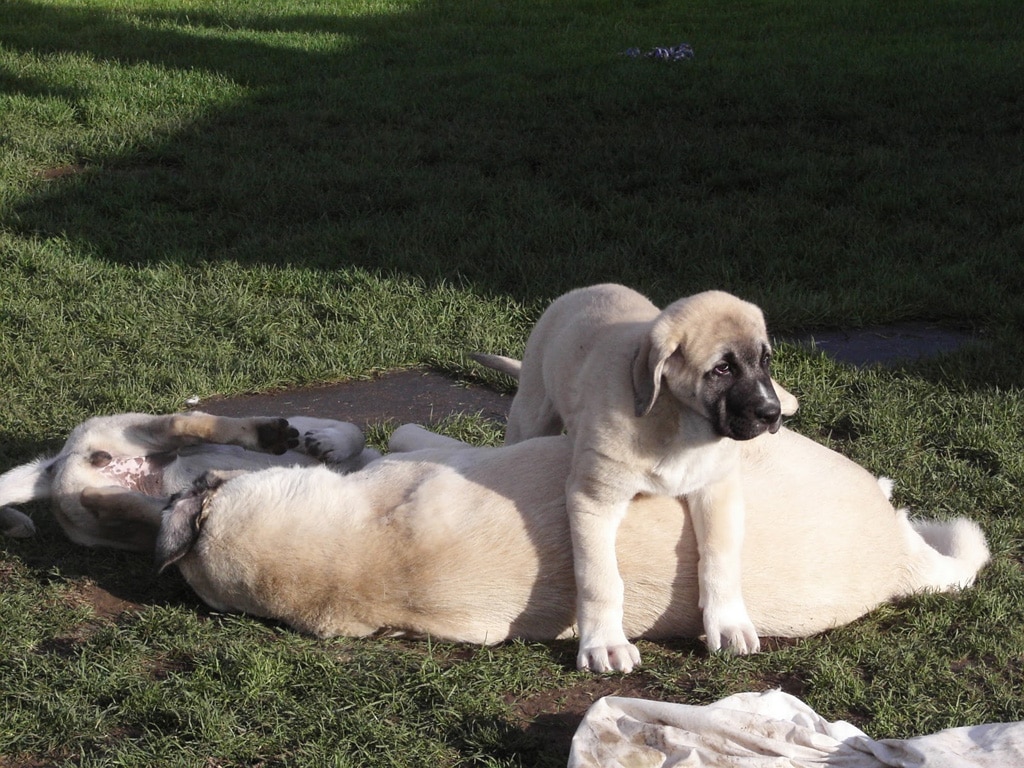
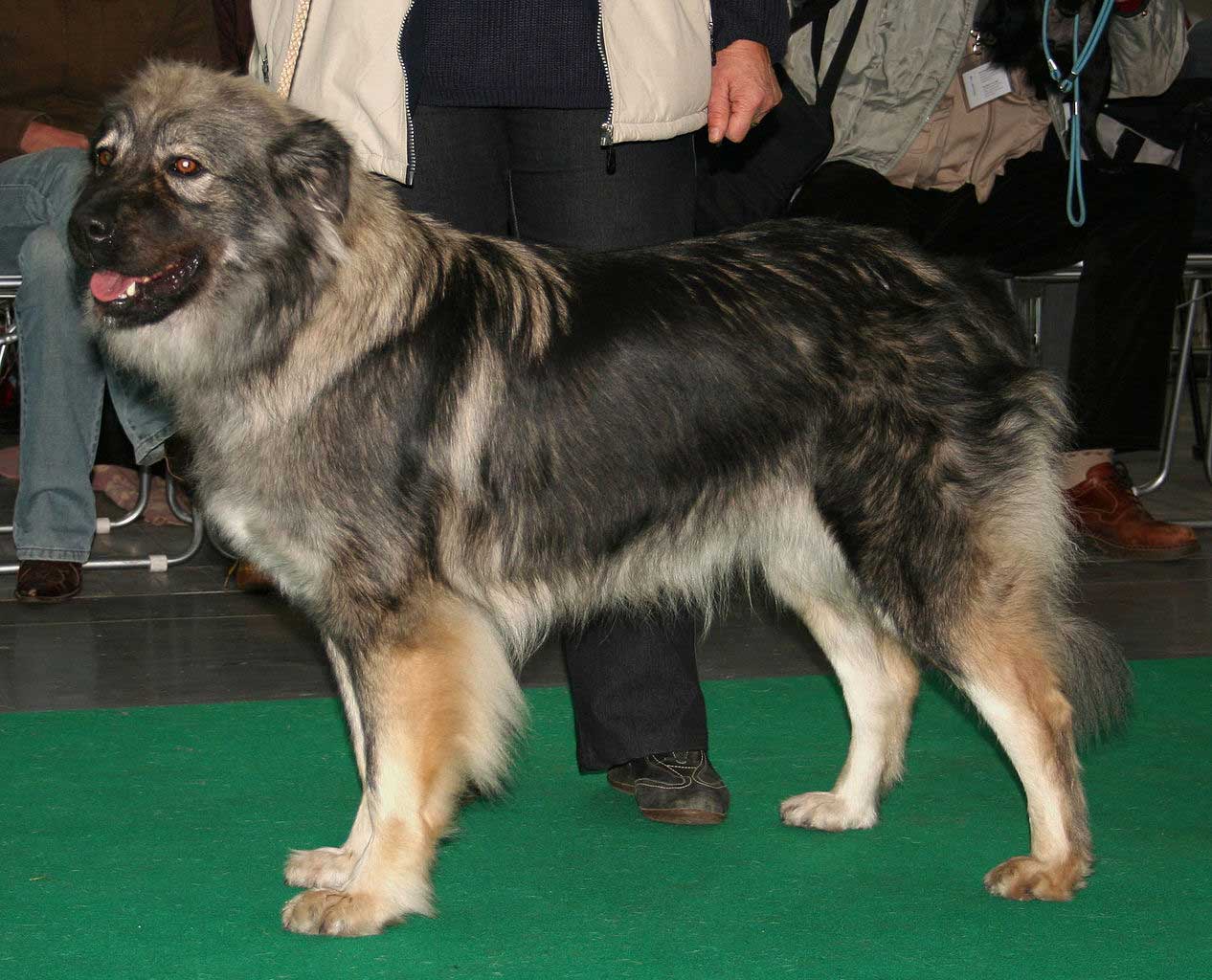
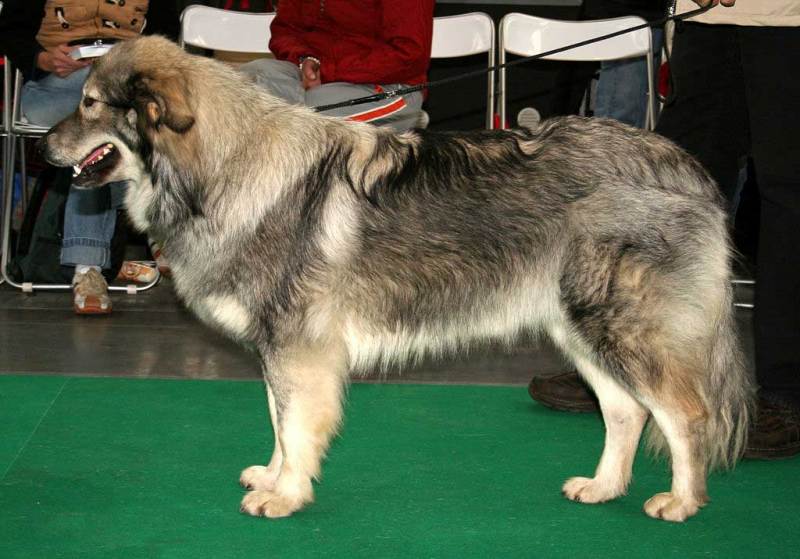
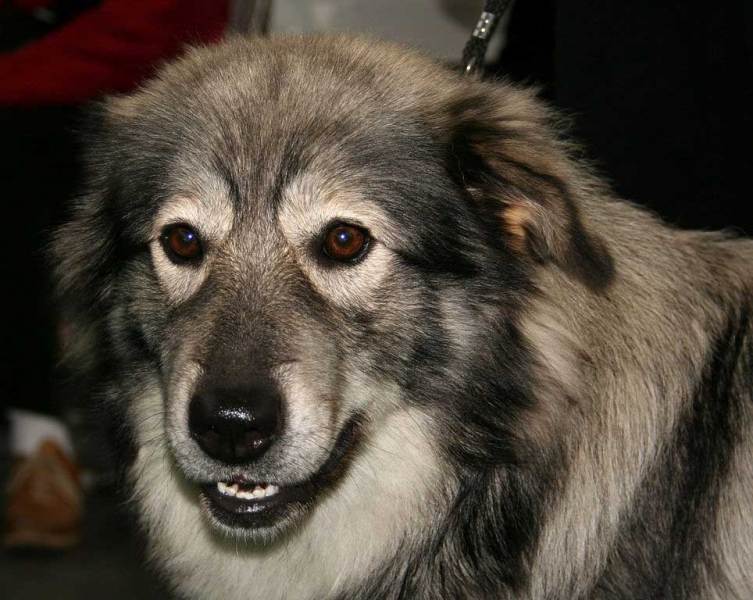
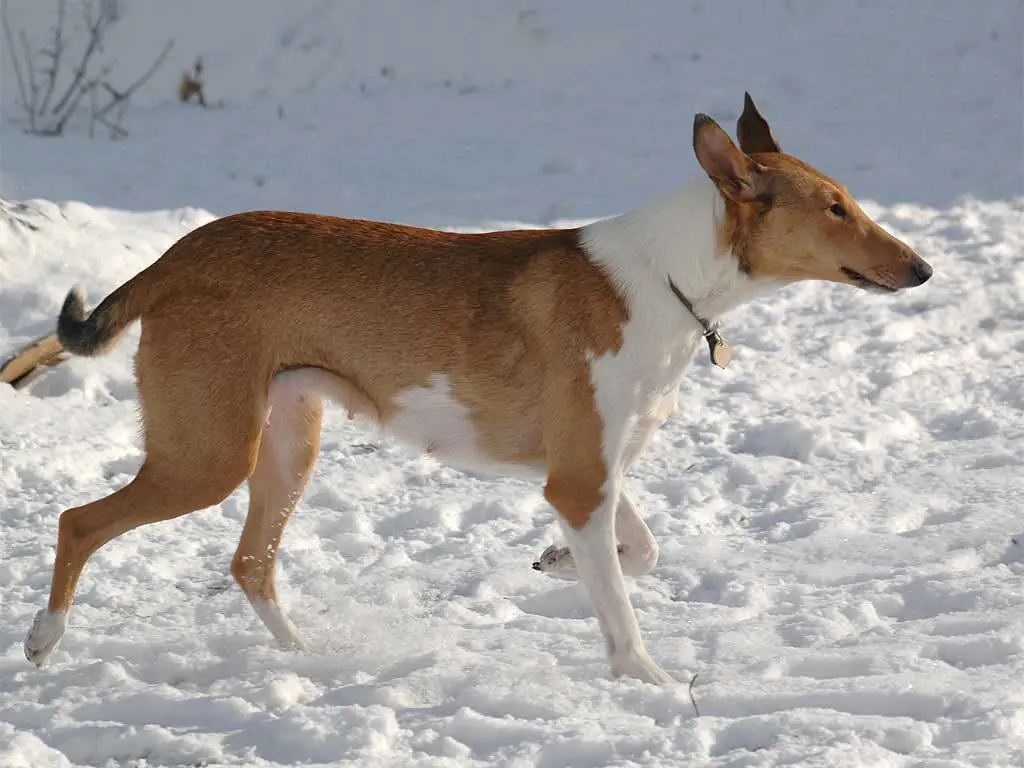
โ–ท The world of Pets: Dogs, cats, birds, reptiles, amphibians

Kleinspitz (Miniature or Small Spitz)
Alemania FCI 97 . European Spitz

Kleinspitz (Miniature or Small Spitz)

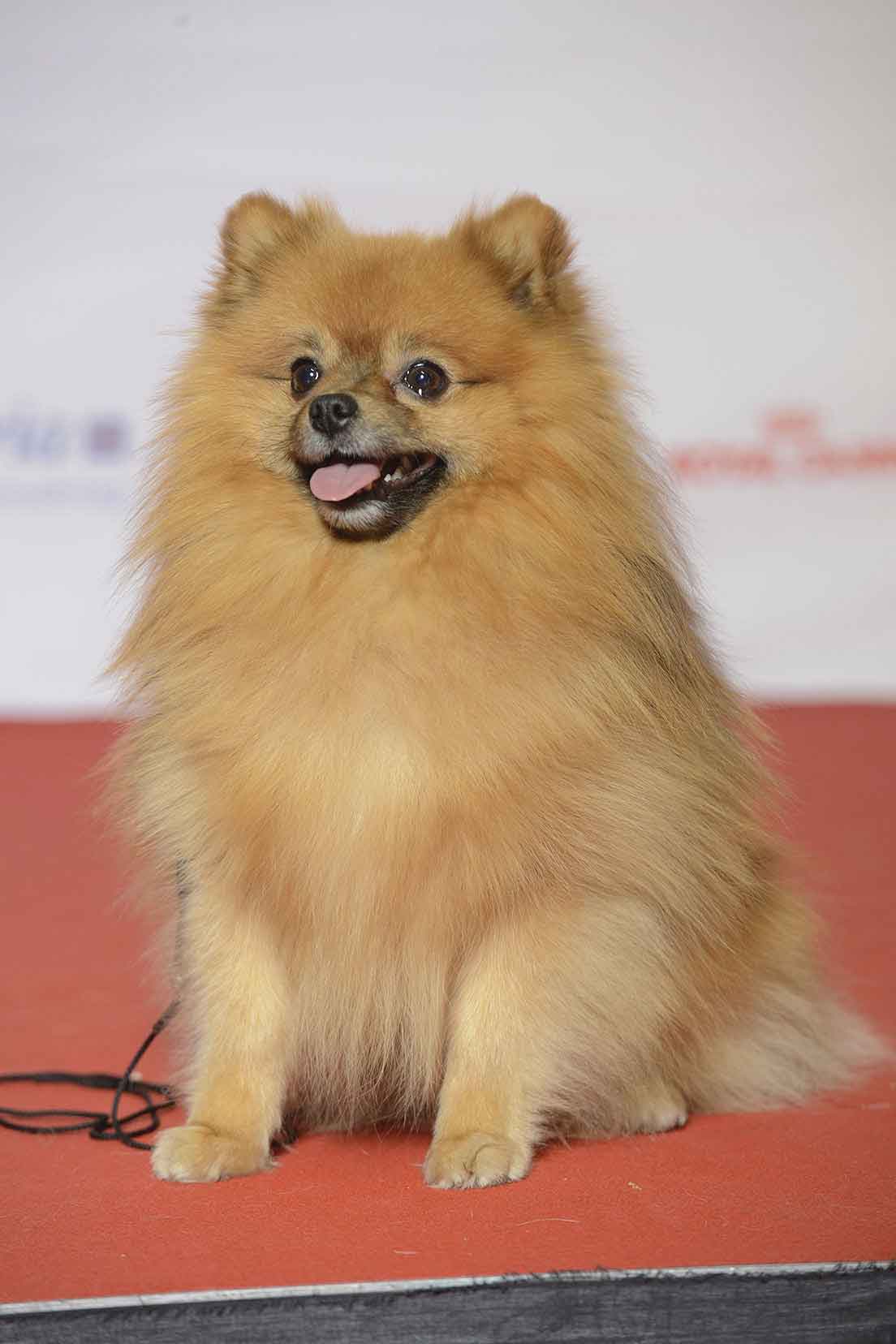
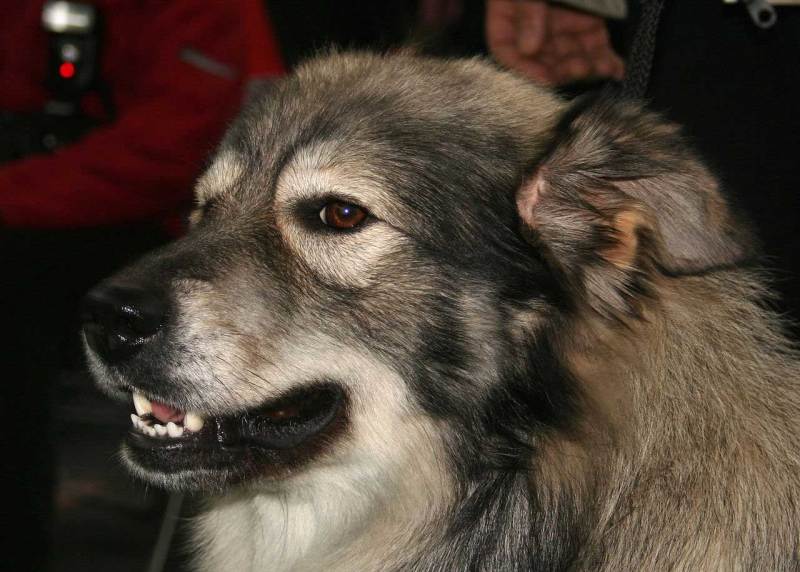
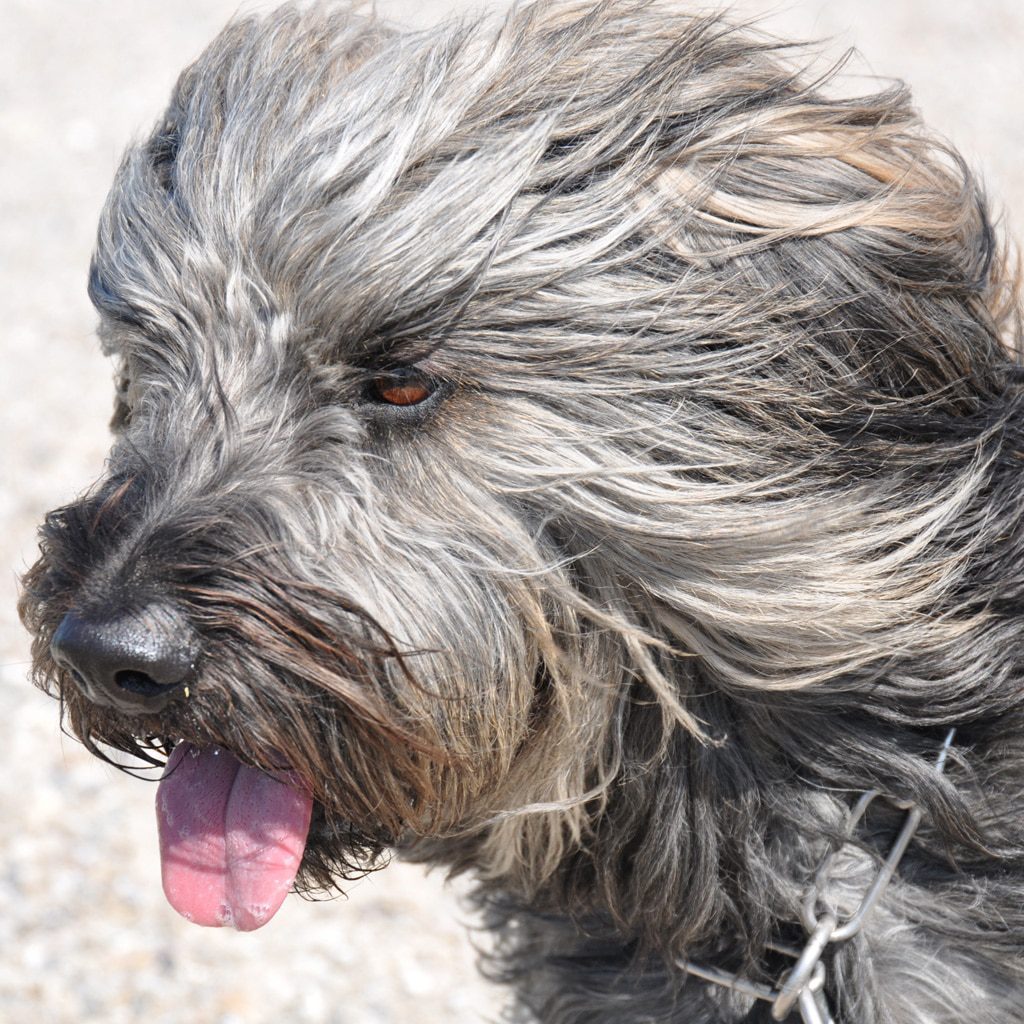
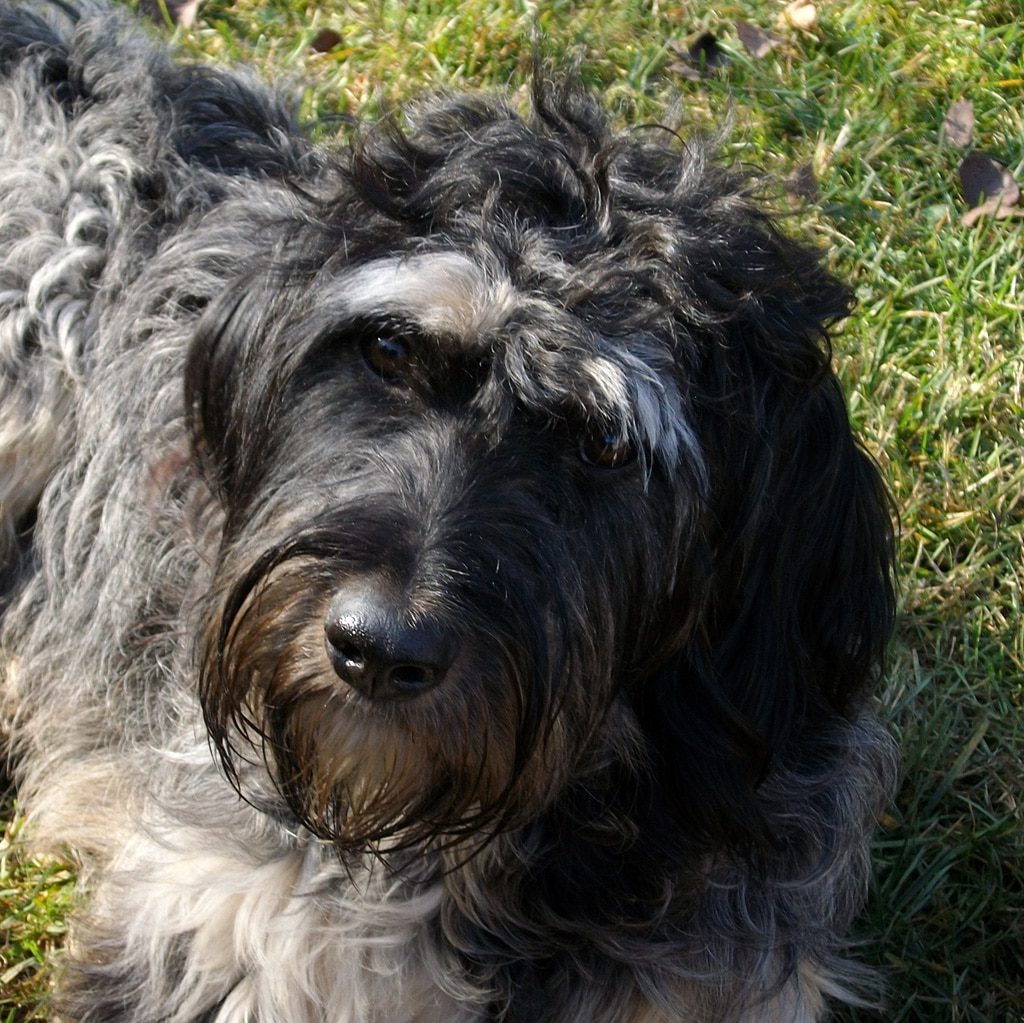
The Kleinspitz (Miniature or Small Spitz) he is a loving and attentive dog, that is very people-oriented.

Content

History

The Kleinspitz (Miniature or Small Spitz) (Kleinspitz) is a variety of German Spitz, which today is available in five different sizes and in numerous colors. The exact origin of dogs spitz it is difficult to determine. In many regions there are indications of an early appearance of the breed. These may include, in the terracotta pieces Mycenaean or in the Greek vases you can already find illustrations of similar dogs. From the Middle Ages, the Spitz guard and court dogs were popular, especially among the rural population. The obedient dogs took their duties as court protectors so seriously that they pinched the "intruders" on their calves.. For this reason, Spitz was formerly considered a loved one.

At the beginning of directed breeding, all representatives of the breed with a height at the withers less than 29 centimeters were summarized under the term Kleinspitz (Miniature or Small Spitz). As it was mainly in the area of Mannheim, It was also known as "Mannheimer Spitzยซ. Only later did the Dwarf Spitz (Pomeranian) with a height at the withers of up to 22 centimeters was developed as a separate variety. Internationally the breed belongs to the group 5 of the FCI โ€œSpitz and dogs of the original typeโ€ in the section 4 ยซEuropean Spitzยซ.

Physical characteristics

With a height at the cross of 23 to 29 centimeters, the Kleinspitz (Miniature or Small Spitz) is the second smallest of the five varieties of German Spitz. Just the Pomeranian (Zwergspitz) is smaller. His pointed ears and mischievous eyes resemble those of a fox and give him a cheerful and mischievous appearance.. It has a dense and protruding coat, consisting of two layers. The top layer is soft and long, while the undercoat is soft and dense. Around the neck the fur forms a mane like that of a lion and the bushy tail is carried over the back. Most of the coat color is black, brown, white, orange and cloudy gray. But some tips are cream too, cream-saber, orange-saber, black and tan.

Character and skills

The Kleinspitz (Miniature or Small Spitz) he is a loving and attentive dog, that is very people-oriented. Like all German Spitz, does not like to be alone and is glad of the full attention of their owners. They are quite reserved and wary of strangers. Puppies defend their territory with force and tend to bark when they are not trained. But, due to its charming nature and lack of hunting instinct, the little ones spitz they are also easy to train for beginners. With proper training you can take your dog off leash without any problem.. Although he can sometimes be a bit rebellious and cheeky, the four-legged friend gets along with other dogs.

Kleinspitz Education

Despite its small size, the Kleinspitz (Miniature or Small Spitz) he is a dog to be taken seriously and needs constant training. So, show the puppy from day one the basic rules and do not allow him to do anything that he is not allowed to do as an adult dog. Don't let her charm and cuteness bewitch you. In the young years, dogs learn better and want to please their owner. When training the puppy, you should not rush anything and allow time for new orders. Success is best achieved with consistency and praise. Early socialization is very important, especially for the cheeky ones Spitz. In this way he learns to deal with other dogs and remains more relaxed in everyday life.. It is recommended to attend a puppy school or a trainer.

Activities with the little Spitz

The Kleinspitz (Miniature or Small Spitz) he is a lively and attentive dog that loves to be by your side at all times. Daily walks are the order of the day with him in any weather. Dog sports such as agility are also suitable for sports workload. For the mental load you can provide with the intelligence toy. Smart tops are also known for their love of learning tricks and tricks. The loving Spitz is with a good education a nice companion dog. You can easily take it with you on vacation or on small trips.

Health and care Kleinspitz

Despite its long fur, the Kleinspitz (Miniature or Small Spitz) it is not a breed that requires much care. Protruding hairs give it a natural firmness, that hardly tangles. So, just comb the coat from time to time and remove any dirt. Your dog will be pleased with the extra care. But, during the coat change, the small spitz also need your help to get rid of superfluous hair. The Spitz it is also one of the least susceptible breeds in terms of health. Some members of the breed are susceptible to tartar, but it can be prevented by using chewing bone or a dog toothbrush.

Buy a Kleinspitz

Due to its size, the Kleinspitz (Miniature or Small Spitz) it is also suitable for smaller homes and will be happy both in a city apartment and in a house. The most important thing is to give him enough exercise and not treat him like a lap dog. The cheerful and affectionate dog is well suited to singles or pensioners, but also fits in a family without problems. The puppy needs one or more caregivers who take care of it daily. So you should think carefully about buying a puppy from Kleinspitz (Miniature or Small Spitz) and not rush anything.

If you are sure that the breed suits you, you have to find a serious breeder. For a purebred puppy with papers and vaccines, many breeders charge up to 1.500 EUR. A laudable alternative is, therefore, a shelter dog. Like the German Spitz they only differ in size, you will also be happy with a Pomeranian or a Mittelspitz (Standard or Medium Spitz).

Kleinspitz Videos

Puppies Spitz Aleman. Kleinspitz

youtube.com/watch?v=gd617m1XHCo

Our kennel of Kleinspitz

youtube.com/watch?v=1-Mssh1KaZc

Type and recognitions:

  • FCI CLASSIFICATION:
  • Group :
  • Section : . .

FCI breed standard "Kleinspitz (Miniature or Small Spitz)"

Origin:


Date of publication of the valid original standard:
04.09.2019.

Use:

Guard and companion dog.


General appearance:

TheSpitzThey attract attention for their beautiful separated fur with the presence of a very dense undercoat.. The neck surrounded by an abundant mane and the tail covered with long hair is striking., turned up and spread boldly on the back. The head is similar to that of the fox with diligent eyes and small pointed ears. The ears, placed very close to each other, confer toSpitzhis characteristic relaxed appearance.

important proportions

Proportion of 1:1 between the height at the withers and the length of the dog.


Behavior / temperament:

TheGerman Spitz is constantly attentive, is active and exceptionally dependent on his master. Learn quickly and can be trained easily. His distrust of strangers and his lack of interest in hunting allow him to be considered the ideal watchman for the house and farm.. Its most notable characteristics are its resistance to weathering., its robustness and longevity.

Head:

---

Cranial region:
  • Skull: The skull ofSpitzis medium-sized; viewed from above seems to swell back becoming more narrow wedge shaped to the tip of the nose.
  • Depression links (Stop): Little steep until marked, but never abrupt.

facial region:

  • Truffle: Round, small, black; in all theSpitzbrown in color is dark brown in color.
  • Snout: Not very long, Neither coarse nor pointed; It presents a good proportion in relation to the skull (in the Spitz type Keeshond/Wolf, in the large Spitz and medium Spitz the ratio snout/skull is approximately 2/3, in the small Spitz and in theSpitz enano/Pomerania is approximately 2/4).
  • Lips: They are not hanging; they are well bonded and do not form folds in the corners. They are black in all colours, in theSpitzbrown in color are brown in color.
  • Jaws/Teeth: The jaws are normally developed and show a complete scissors bite with 42 teeth, That is, the upper incisors fall closely in front of the lower incisors., teeth being implanted perpendicular to the jaws. InSmall and dwarf spitz/Pomeranian the loss of a few promolars is tolerable. A pincer bite is allowed in all varieties ofSpitz.
  • Cheeks: The cheeks are slightly round and are not prominent.
  • Eyes: The eyes are medium-sized, elongated, a little oblique, dark colored. The eyelids have black pigmentation in all color varieties and are only dark brown in theSpitzof brown variety.
  • Ears: The pointed ears in the shape of a pointed triangle are small and rather closely placed together.. Its inclusion is high. They always remain erect with a rigid tip.

Neck:

The neck is moderately long and presents a broad inclusion with shoulders; the neck is slightly convex, without dewlap and covered with a mane shaped collar.

Body:

  • top line: The top line begins at the tip of the erect ears and passes in a gentle arc over the short, straight back.. The deployed and with abundant fur tail partially covers the back and rounded silhouette.
  • Cross/Back: The high cross falls imperceptibly on the short back, straight and strong.
  • Pork loin: Short, wide and strong.
  • Rump: The rump is short and wide, unexpired.
  • Breast : Deep chest, well arched; the apron is well developed.
  • Bottom line and belly: The chest is expanded as much as possible back; the abdomen is moderately retracted.

Tail:

The tail has a high insertion and a medium length; bends upward from the root and rolls over the back, spreading firmly. Well covered with thick hair. A double loop in the tip of the tail is acceptable.

Tips

Former members

  • As a whole: Straight, large on the front.
  • Shoulder: The scapula is long, placed backwards at an angle. The arm, showing almost the same length, with the scapula forms an angle of approximately 90 degrees. Shoulders with good musculature are closely linked with the chest.
  • Arm: Medium length, robust and fully straight on the trunk, covered with long hair in the form of pen in the posterior region.
  • Elbows: The elbow joint is strong, close to the chest without bending inward or outward.
  • Metacarpus: The Metacarpus strong and medium length, forms an angle of approximately 20ยฐ in relation to the perpendicular line.
  • Front feet: The front feet are as small as possible, round, compact, as cat with well arched toes feet. Pads and nails are black in all varieties of Spitz, and they are only dark brown on brown dogs.

Later members

  • As a whole: The hindquarters are very muscular, covered with very long hair up to the Hock joint. The hind limbs are straight and parallel to each other..
  • Thigh and leg: They have approximately the same length.
  • Knee: The knee joint is strong, slightly angled and, during the movement, It does not twist outward or inward.
  • Metatarsus: Medium length, very strong, maintains a position perpendicular to the ground.
  • Rear feet: The hind feet are as small as possible, round, with toes well arched and together, as cat feet. Pads are hard. The color of nails, pads is much darker.

Movement:

TheSpitzmoves with enough coordination, with a good push and almost floating in light trot.

Mantle

Skin

The skin should be well attached to the body, without kinking.

Fur

TheSpitzThey have a double coat covered with hair: the outer layer is long-haired, straight and separate and the inner layer is short-haired, dense and woolly. The head, ears, anterior surface of the forelimbs and hindlimbs and feet are covered by short, dense hair (velvety). The rest of the body is long and abundant hair. The hair should not be wavy, chino, or form hair, You must not present a stripe on the back. A thick mane covers the neck and shoulders. The rear face of the forelimbs has hair in the form of feathers. The hindquarters should be covered with long hair from the rump to the Hock joint. The queue must be covered with hair is long and abundant.

Color

  • Wolf Spitz/Keeshond: Grayish.
  • Grossespitz (Giant or Large Spitz) Negro, brown, white.
  • Mittelspitz (Standard or Medium Spitz): Negro, brown, white, orange, grey, other colors.
  • Kleinspitz (Miniature or Small Spitz): Negro, brown, White Orange, grey, other colors.
  • Spitz enano/Pomerania: Negro, brown, white, orange, grey, other colors.
  • Black Spitz: The fur of the black Spitz should be dark in the skin as well as internal NAP and the color of the outer layer should be jet black color without any white spot.
  • Brown Spitz: The Brown Spitz should have a uniform dark brown color.
  • White Spitz: The hair should be pure white, no yellowish tones that can often occur in the ears.
  • Spitz anaranjando: The Orange Spitz should have a single uniform colour in the average range of the RAL (Registration International of the color scale).
  • Greyish Spitz/Keeshond: Gray is understood as grey silver with black hair tips. Snout and ears are dark. Around the eyes there is a drawing in the shape of glasses consisting of a delicate black line. (It extends from the outer corner of the eye to the lower part of the inclusion of the ear) or in broken lines and shading that draw short eyebrows, but expressive. Mane and ring shoulders are a tone clear. The anterior and posterior members are grey silver unmarked black below the elbows and knees, except delicate stripes on your fingers (pencilling). The tip of the tail is black. The lower part of the tail and the buttocks are grey Silver clear.
  • Spitz other colours: Under this description all tones are included as: cream-coloured, cream-saber, anaranjado-Sable, black with tan and stained. The spotted must have a white background color. Black stains, brown, gray or orange should be distributed throughout the body.


Size and weight:

Height to the cross

  • Wolf Spitz/Keeshond: 49 cm ยฑ 6 cm..
  • Grossespitz (Giant or Large Spitz) : 46 cm ยฑ 4 cm..
  • Mittelspitz (Standard or Medium Spitz): 34 cm ยฑ 4 cm..
  • Kleinspitz (Miniature or Small Spitz): 26 cm ยฑ 3 cm..
  • Spitz enano/Pomerania: 20 cm ยฑ 2 cm. (are undesirable specimens measuring less than 18 cm.).

Weight

Any variation in the size of theGerman Spitz must have a corresponding variation in its weight.


Fouls:

Any deviation from the above criteria is considered missing and the seriousness is considered to the extent of the deviation to the standard.

Serious misconduct

  • Defects in the Constitution.
  • Head too flat or sharp Apple-shaped.
  • Truffle, eyelids and lips of flesh-colored.
  • Defects in the premolars in Wolf Spitz/Keeshond, Medium and large Spitz.
  • Eyes too big or clear or very outgoing.
  • Defects in the movement.
  • Absence of classic drawing of the face inSpitzgrey.

ELIMINATING fAULTS

  • Aggressive or fearful dog.
  • Open fontanel.
  • Upper or lower prognathism.
  • Entropion or ectropion.
  • Floppy ears.
  • White spots visible on allSpitznon white.

Any dog โ€‹โ€‹showing clear signs of physical or behavioral abnormalities should be disqualified..


N.B.:

Males should have two normal-appearing testicles fully descended into the scrotum..

Source: F.C.I - International Cynological Federation

โ–ท The world of Pets: Dogs, cats, birds, reptiles, amphibians

Kerry Blue Terrier
Irlanda FCI 3 . Large and medium sized Terriers
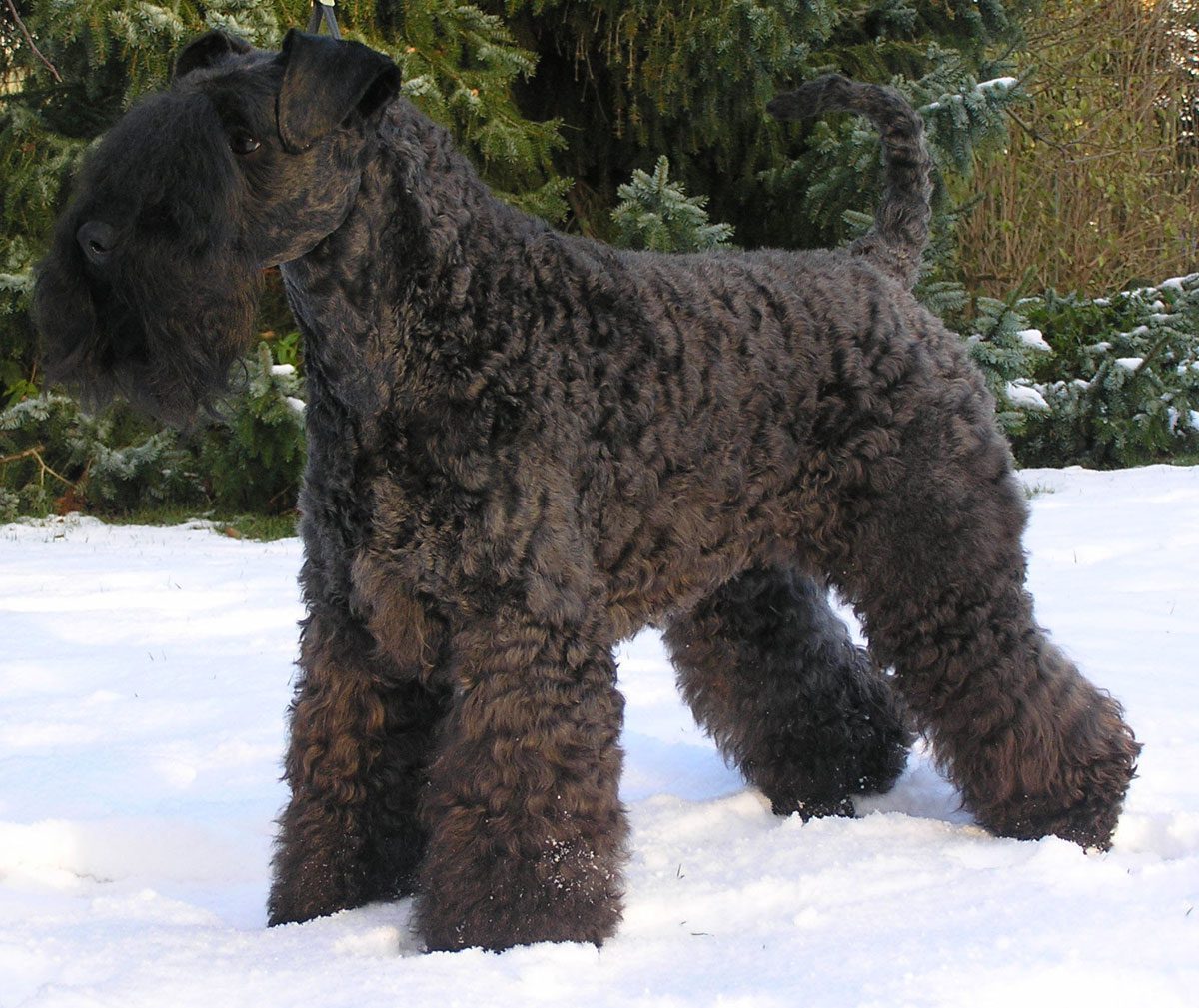
Kerry Blue Terrier

The Kerry Blue Terrier he is a thoroughbred terrier, brave, alert and with a penetrating expression.

Content

History

The Kerry Blue Terrier it is one of the irish national dogs. Its existence is documented since the 18th century, but it is suspected that he was home in County Kerry long before that. Regarding the origin of the breed, Legend has it that this intelligent dog got its blue-black coloring by crossing bloodhounds with lines of Irish Terrier.

In feudal times, Irish herdsmen and farmers were not allowed to hunt with wolfhounds. They solved the problem by crossbreeding which gave their terriers the characteristics of a Wolfdog..

The Kerry Blue Terrier He was raised as a Pied Piper, guard dog and herding dog. An Irish proverb says that a Kerry Blue Terrier replaces four shepherds. The agile dog was also particularly useful for hunting otters and badgers..

The appearance of the breed has undergone several changes over the centuries. Meanwhile in 1847 a Kerry Blue Terrier dark blue in color was still considered exemplary in 1847, Monochrome fur with dark markings was established in the 20th century. The FCI standard valid today dates from the year 2005.

Physical characteristics

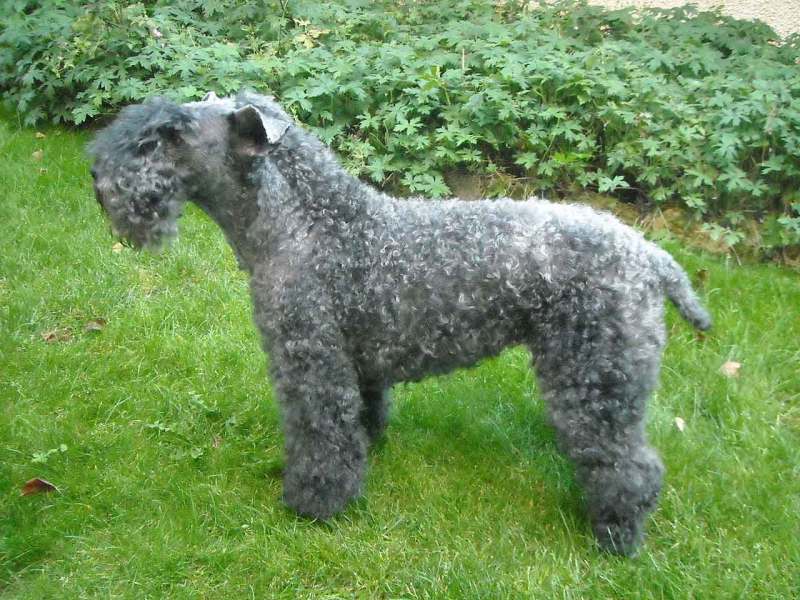
The Kerry Blue Terrier has a majestic body, muscular and slightly elongated, that impresses with its balanced appearance. His back is even and fairly long, moderately broad and deep chest. With its soft, lush and curly fur, the Kerry Blue Terrier It is considered one of the most attractive terrier breeds.

typical of the breed Kerry Blue Terrier it's his flat nose and long hair on his forehead and muzzle.

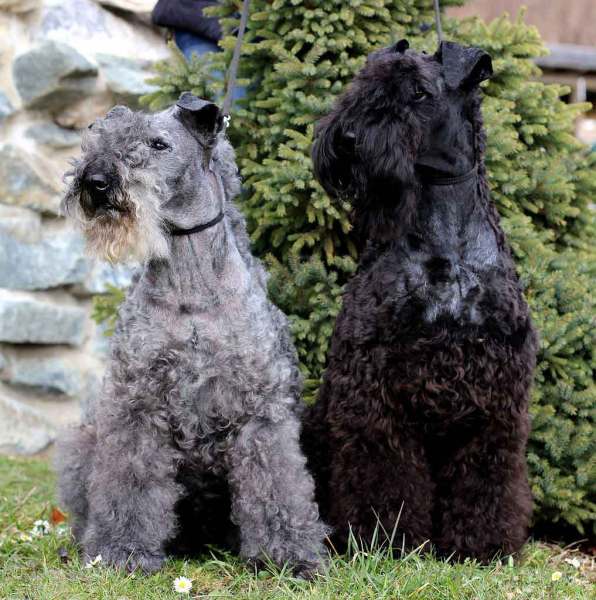
Puppies are born with a black-brown or dark black coat. Only at the age of about three the Kerry Blue Terrier It has its typical coloration.. The coat has no undercoat. A blue coat color is allowed in any shade, black marks are allowed. Tan or pure black markings are only allowed until the age of 18 months.

Other appearance features in the overview:

  • Head: Strong skull, rich fur, medium length front, black nose.
  • Ears: pointing forward or falling, underlining the typical terrier expression
  • Eyes: medium-sized, dark to brown with a piercing expression
  • neck: moderately long
  • lower limbs: straight with well-muscled thighs and strong hock
  • legs: compact with round pads and black claws

Size and weight:

Height to the cross:

For males between 45,5 to 49,5 cm. (18 to 19,5 inches).
For the females between 44,5 to 48 cm. (17,5 to 19 inches).

Weight:

For the males of 15 to 18 kg (33 to 40 English pounds).
For females proportionally less.

Character and skills

The Kerry Blue Terrier he is a thoroughbred terrier, brave, alert and with a penetrating expression. The elegant looking animal does not tend to bark and is not brusque. The Kerry Blue Terrier They are happy, loyal, family and children.

They are exceptionally open to strangers and need lots of petting at home. To the Kerry Blue Terrier loves to work. But, no need to keep the four-legged friend constantly busy at home.

Animals are very intelligent and eager to learn, briosos, but in no way nervous or aggressive. Strong self-confidence and strong willpower are typical traits that characterize all terrier breeds and require constant firmness from the owner..

Accommodation of the ยซKerry Blue Terrierยป

Since the Kerry Blue Terrier builds a close relationship with the owner and his family, a kennel position is inappropriate. He likes to participate in domestic life and is a faithful family dog, watchful and child friendly.

The four-legged friend is very active and needs two or three hours of exercise a day. Dog sports do justice to the momentum of the Kerry Blue Terrier to move and reinforce the bond with the owner.

Obedience is also a great activity for this smart and particularly attentive breed of dog.. Obedience is the school of subordination, which is especially valuable in a terrier. In this dog sport it depends on the correct and fast execution of an exercise sequence. Perfect teamwork between dog and owner is required.

The Kerry Blue Terrier they are wonderfully suited for difficult hunting tasks such as badger hunting or otter spearfishing. When objects are recovered from the water, most Kerry Blue Terriers they prove to be good swimmers and are in no way inferior to a Retriever.

The four-legged friends of this breed reject the other dogs a bit and therefore should be better kept individually.. If you like peace and tranquility at home, you shouldn't have Kerry Blue Terrier along with a cat.

Feeding the ยซKerry Blue Terrierยป

Like any other breed of dog, the Kerry Blue Terrier you need a balanced diet appropriate for your species. Must consist of animal protein, remarkable muscle meat and vitamin-rich casings, carbohydrates, vitamins and minerals. Feeding fish occasionally provides the dog with essential omega fatty acids 3 and ensures that the coat stays shiny and smooth.

The size of the daily ration depends on the age, condition and level of exercise of your four-legged friend and the quality of the food. It should be divided into two meals so as not to overload your stomach. It is better not to feed your dog before walks or canine sports. Then the food tastes much better.

The choice of dry or wet food is at the discretion of the owner, but a mixture of both is highly recommended. Here's a decision aid.

When high-quality dry food is given, the recommended daily amount for a Kerry Blue Terrier adult is on average 1,5 cups. It is important that the dog always has enough fresh water available. Once again, a small lazy dog รขโ‚ฌโ€นรขโ‚ฌโ€นneeds less food than an active animal.

An especially appropriate form of feeding for the species, although somewhat more expensive, it's fresh food, in which the dog feeds on meat, raw fruit and vegetables. You can prepare food for your Kerry Blue Terrier yourself or you can use frozen prepared meals.

Of course, Your quadruped doesn't just need chew products like bones made from cowhide, no wood root chips, for example of the coffee tree, horse tendons or cow ears for dental care. The popular pig ears are high in fat and therefore, they should only rarely come to the dog's table.

Education and care of the ยซKerry Blue Terrierยป

If you decide to buy one Kerry Blue Terrier, you must plan early enough to attend a dog school.

After all, your new housemate is a true terrier with a very stubborn personality. But, is certified to be easier to handle and more compliant than representatives of other terrier breeds.

Especially promising are training methods that don't punish, but they reward desirable behavior accordingly. A procedure that at the same time promotes the close relationship of your four-legged friend with you.

One of these methods is the proven Clicker Training, which is described here in more detail.

The training of a Kerry Blue Terrier includes intensive recovery training. After all, the four-legged friend has a clear hunting instinct and without consistent training will hunt down anything that comes his way.

His stubborn willpower can only be achieved with uncompromising subordination.

The very good intelligence of Kerry Blue Terrier requires variety in training. The constant repetitions quickly bore him and make the self-confident four-legged friend look for a more interesting occupation..

Characteristics "Kerry Blue Terrier"

Coexistence is important that you have with your new friend. Before considering the acquisition of a dog of the breed "Kerry Blue Terrier" you know certain factors. Not all breeds of dogs are apt to live in an apartment, you must take into account his character, their need for exercise, their interaction with other pets, their care and if you have small children, their level of tolerance towards them.

Adaptation โ“˜

5,0 of 5 stars (based on 1 review)

friendly dog โ€‹โ€‹โ“˜

2,0 of 5 stars (based on 1 review)

hair loss โ“˜

2,0 of 5 stars (based on 1 review)

Affection level โ“˜

4,0 of 5 stars (based on 1 review)

Need for exercise โ“˜

4,0 of 5 stars (based on 1 review)

Social need โ“˜

4,0 of 5 stars (based on 1 review)

Home โ“˜

5,0 of 5 stars (based on 1 review)

Toilet โ“˜

4,0 of 5 stars (based on 1 review)

Friendly with strangers โ“˜

3,0 of 5 stars (based on 1 review)

barking โ“˜

3,0 of 5 stars (based on 1 review)

Health โ“˜

3,0 of 5 stars (based on 1 review)

Territorial โ“˜

5,0 of 5 stars (based on 1 review)

Cat friendly โ“˜

2,0 of 5 stars (based on 1 review)

Intelligence โ“˜

4,0 of 5 stars (based on 1 review)

Versatility โ“˜

4,0 of 5 stars (based on 1 review)

Child friendly โ“˜

4,0 of 5 stars (based on 1 review)

Surveillance โ“˜

4,0 of 5 stars (based on 1 review)

joy โ“˜

5,0 of 5 stars (based on 1 review)

Images "Kerry Blue Terrier"

Photos:

1 – Kerry Blue Terrier by https://commons.wikimedia.org/wiki/User:Alofok
2 – Two Kerry Blue Terrier, the left one, named Ceallach Blue Ivanhoe is on this photo about 14 years old and light grey. She have made the full color change. On the right is a about one year old Kerry Blue Terrier, called Edbrios Highlander. In this age the breed is just starting with changing the color of the coat. by ยฉ Hilarmont (Kempten) / CC BY-SA 3.0 OF
3 – Kerry Blue Terrier dog by Eponym / CC BY-SA
4 – Kerry Blue Terrier by Svenska Mรคssan from Sweden / CC BY
5 – Kerry Blue Terrier during dogs show in Katowice, Poland by Pleple2000 / CC BY-SA
6 – Kerry Blue Terrier, exhibition in Spodek, Katowice by Pleple2000 / CC BY-SA

Videos "Kerry Blue Terrier"

Type and recognitions:

  • FCI CLASSIFICATION:
  • Group :
  • Section : . .

Federations:

  • FCI – Terriers 1 Large and medium-sized terriers. โ“˜
  • AKC – Terriers โ“˜
  • ANKC – Terriers โ“˜
  • CKC – Terriers โ“˜
  • โ€‹KC – Terriers โ“˜
  • NZKC – Terriers โ“˜
  • UKC – Terriers โ“˜

FCI breed standard "Kerry Blue Terrier"

Origin:
Ireland

Date of publication of the valid original standard:
19.04.2005.

Use:

It is used in the hard work of hunting otters in deep water, in fighting badgers underground and hunting vermin. Good guard dog and loyal companion.


General appearance:

The typical Kerry Blue Terrier should be an upright dog, compact and well proportioned, featuring a well-developed muscular body, with a well defined terrier style.


Behavior / temperament:

Terrier character in all its meaning. The most important factor, The expression, must be insightful and alert.

Head:

With a lot hair. Males should have a stronger head and be more muscular than females..

Cranial region:
  • Skull: Strong and well proportioned.
  • Depression links (Stop): Light.

facial region:

  • Truffle: black, the large and wide nostrils. Snout: Must be of medium length.
  • Jaws: Strong and muscular jaws (scary calls). Teeth: Large white teeth; scissor bite (accepting bite on clamp).
  • Mouth: Dark gums and palate.
  • Eyes: Dark or dark hazelnut, medium in size and well placed, with expression of liveliness.
  • Ears: Thin and not big, carried forward or along the sides of the head towards the front, again to show the vivacious and sharp expression of the terrier.

Neck:

Well proportioned, good insertion on the shoulders and moderately long.

Body:

  • top line: Of average length, straight. Pork loin: Moderate long.
  • Breast : Deep and moderate width. Well arched ribs.

Tail:

Thin, good insertion, carried erectly and cheerfully.

Tips

PREVIOUS MEMBERS:

  • Blades: Lightweight, leaning back and well glued.
  • forearms: Seen from the front, straight and with good bones.

LATER MEMBERS: They must be well placed under the dog.

  • Thighs: Muscular, well developed.
  • Hocks: Strong.
  • Pies: compacts, strong round pads, black nails.

Movement:

With good coordination, parallel members. Forelimbs with good reach and hindlimbs with good thrust. When the dog is moving the line must be kept at level and head and tail bring them up.

Mantle

  • Fur: Soft, abundant and wavy.
  • Color: Any shade of blue with or without black spots. Allow the color black, as well as a reddish hue, only until the age of 18 months.


Size and weight:

Height to the cross:

  • For males between 45,5 to 49,5 cm. (18 to 19,5 inches).
  • For the females between 44,5 to 48 cm. (17,5 to 19 inches).

Weight:

  • For the males of 15 to 18 kg (33 to 40 English pounds).
  • For females proportionally less.


Fouls:

Any deviation from the above mentioned criteria is considered to lack, and the gravity of this refers to the degree of deviation to the standard and its impact on the health and well-being of the dog.

  • Flesh-colored gums.
  • Yellow eyes, the clear.
  • Convex or concave back.
  • Narrow sill.
  • Elbows sticking out.
  • Upper or lower prognathism.
  • White or ivory nails.
  • Spurs on the hind limbs or signs that they have been removed.
  • Closed or affected hind limb movement, with hocks together (cow).
  • Dogs whose head or tail are held by exhibitors or presenters should be penalized
  • Wire-haired, wire or piggy.
  • Any color other than blue, except the exceptions indicated above.

FALTAS DESCALIFICANTES:

  • Aggressiveness or extreme shyness.
  • Any dog โ€‹โ€‹showing clear signs of physical or behavioral abnormalities must be disqualified..


N.B.:
  • Males should have two normal-appearing testicles fully descended into the scrotum..
  • Only functionally and clinically healthy dogs, with the typical conformation of the breed, should be used for parenting.

The latest changes are in bold.

TRADUCCION: Lic. O. Valverde, reviewed by Dr. F. del Valle and updated by J. Nallem, Uruguayan Kennel Club.

Source: F.C.I - International Cynological Federation

Alternative names:

1. Irish Blue Terrier, Kerry (English).
2. Terrier Kerry Blue (French).
3. Kerry (German).
4. Irish Blue terrier (Portuguese).
5. Kerry (espaรฑol).

โ–ท The world of Pets: Dogs, cats, birds, reptiles, amphibians

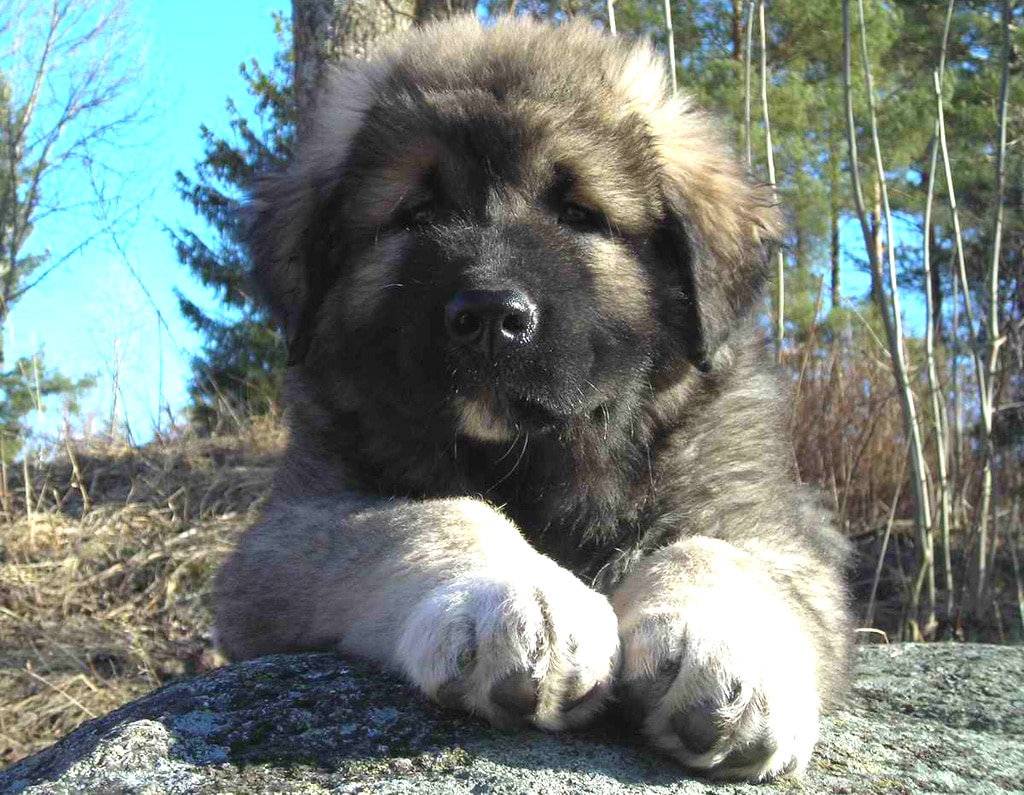
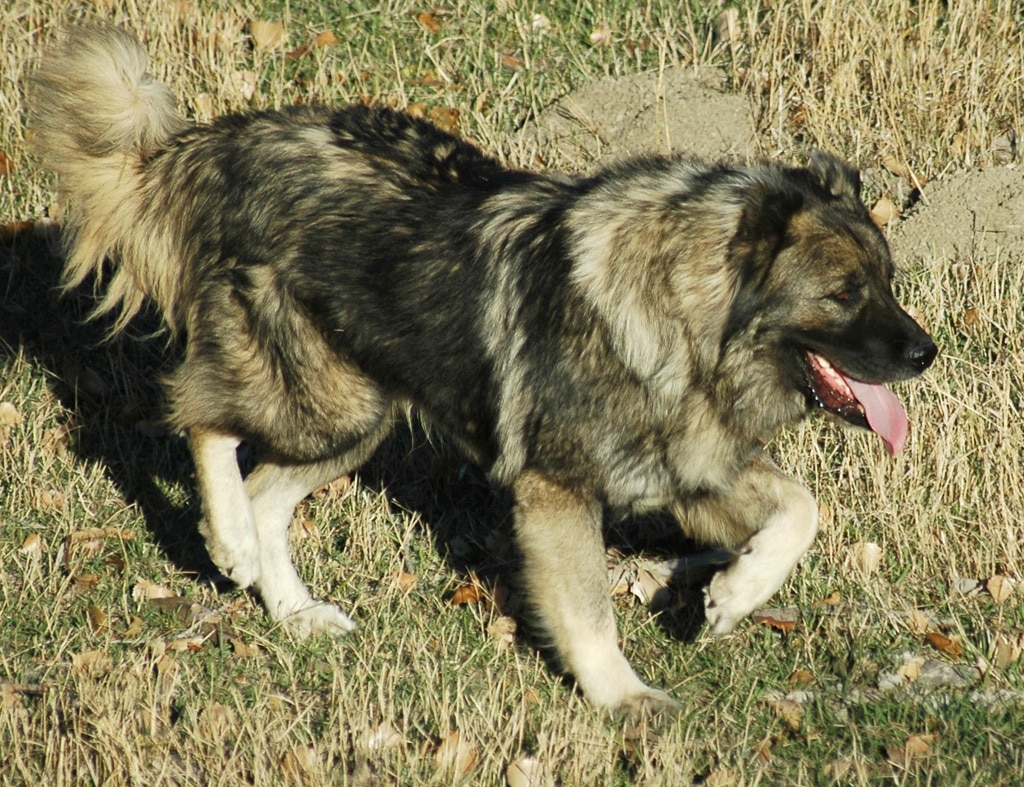
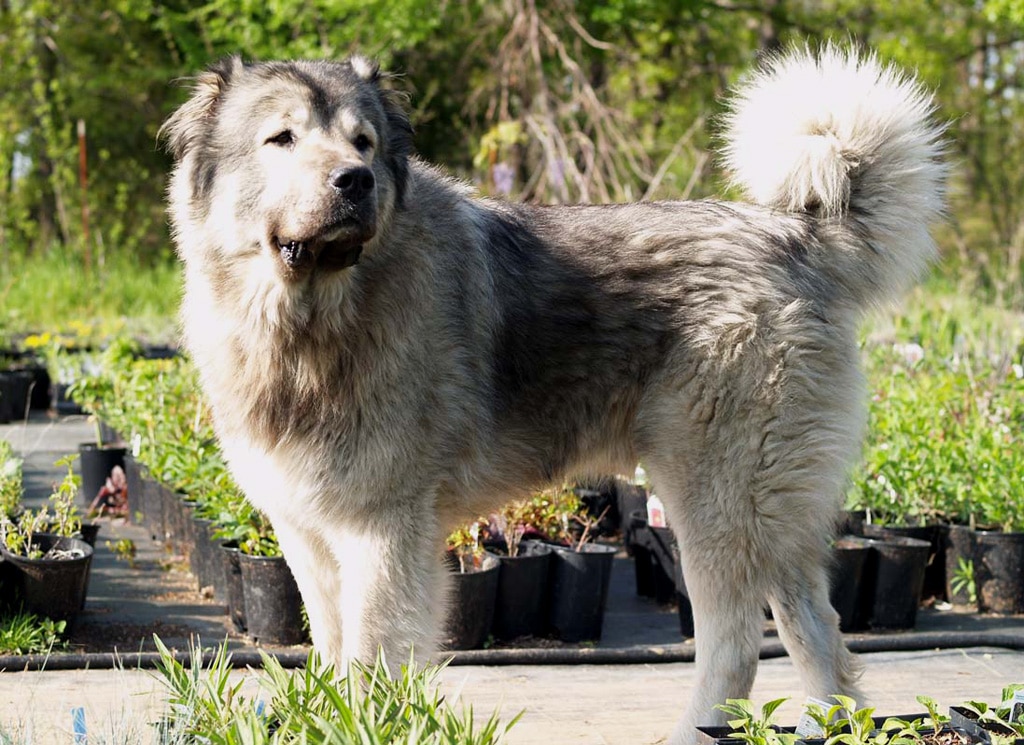
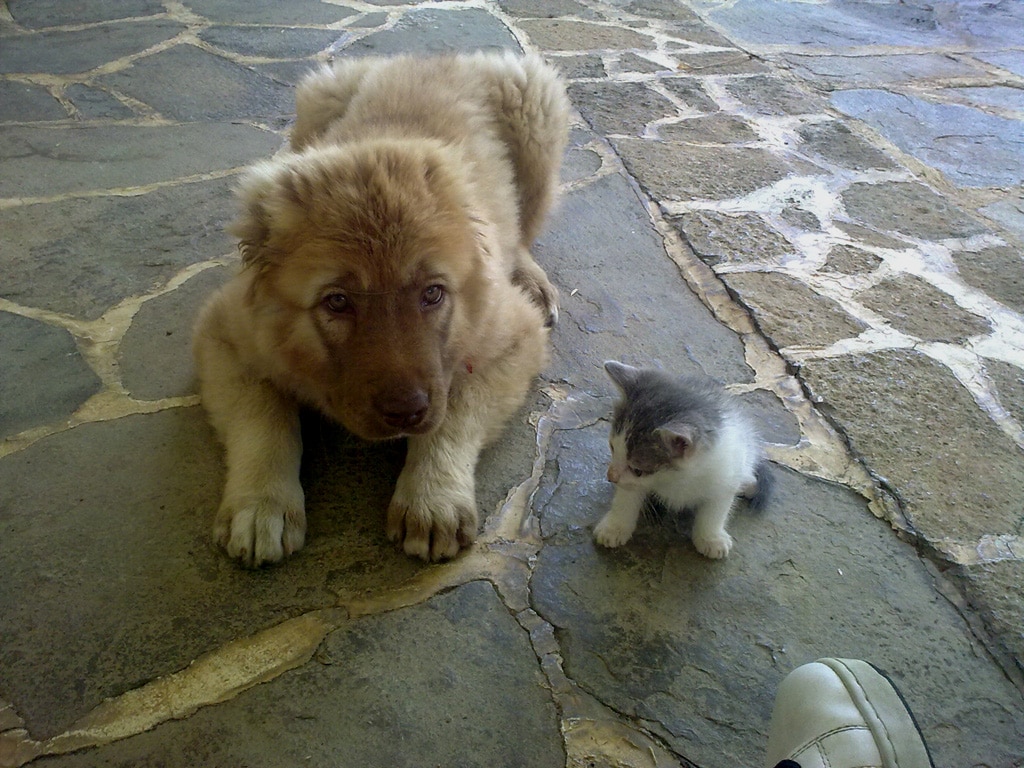
Caucasian Shepherd Dog
Rusia FCI 328 Molossoid . Mountain
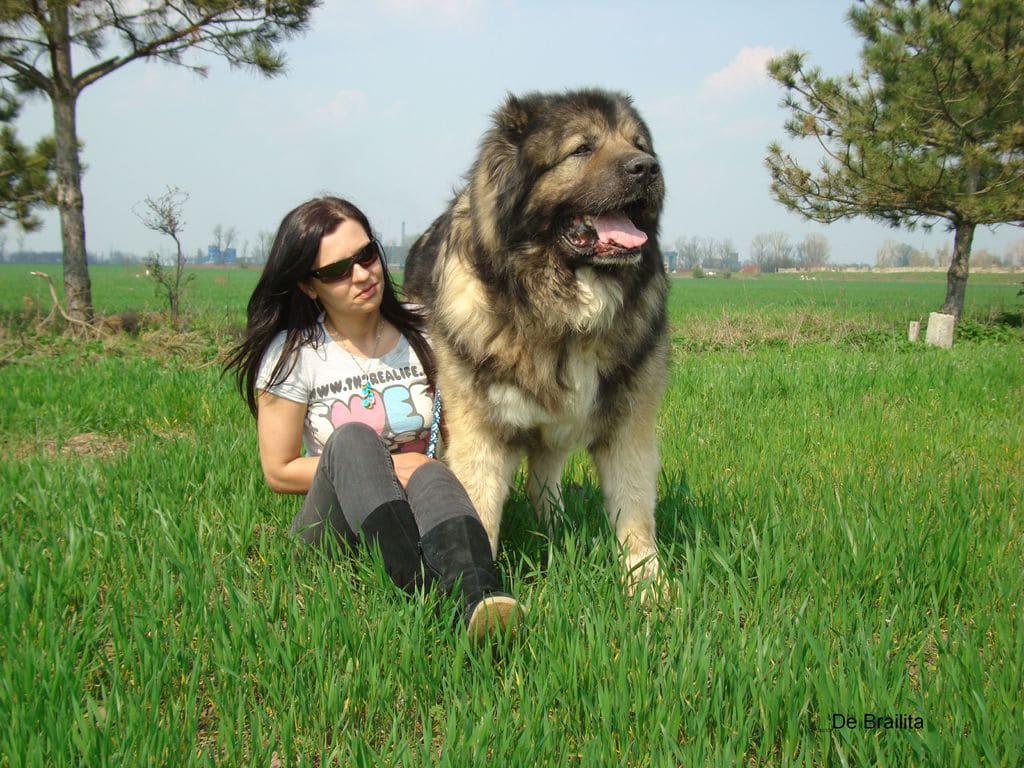
The Caucasian Shepherd Dog It is a healthy animal and stable temperament.

Pastor del Cรกucaso

Content

Characteristics "Caucasian Shepherd Dog"

Coexistence is important that you have with your new friend. Before considering the acquisition of a dog of the breed "Caucasian Shepherd Dog" you know certain factors. Not all breeds of dogs are apt to live in an apartment, you must take into account his character, their need for exercise, their interaction with other pets, their care and if you have small children, their level of tolerance towards them.

Adaptation โ“˜

4,0 of 5 stars (based on 1 review)

friendly dog โ€‹โ€‹โ“˜

2,0 of 5 stars (based on 1 review)

hair loss โ“˜

3,0 of 5 stars (based on 1 review)

Affection level โ“˜

4,0 of 5 stars (based on 1 review)

Need for exercise โ“˜

2,0 of 5 stars (based on 1 review)

Social need โ“˜

2,0 of 5 stars (based on 1 review)

Home โ“˜

2,0 of 5 stars (based on 1 review)

Toilet โ“˜

2,0 of 5 stars (based on 1 review)

Friendly with strangers โ“˜

2,0 of 5 stars (based on 1 review)

barking โ“˜

3,0 of 5 stars (based on 1 review)

Health โ“˜

2,0 of 5 stars (based on 1 review)

Territorial โ“˜

5,0 of 5 stars (based on 1 review)

Cat friendly โ“˜

3,0 of 5 stars (based on 1 review)

Intelligence โ“˜

3,0 of 5 stars (based on 1 review)

Versatility โ“˜

2,0 of 5 stars (based on 1 review)

Child friendly โ“˜

3,0 of 5 stars (based on 1 review)

Surveillance โ“˜

3,0 of 5 stars (based on 1 review)

joy โ“˜

5,0 of 5 stars (based on 1 review)

History ยซShepherd of the Caucasusยป

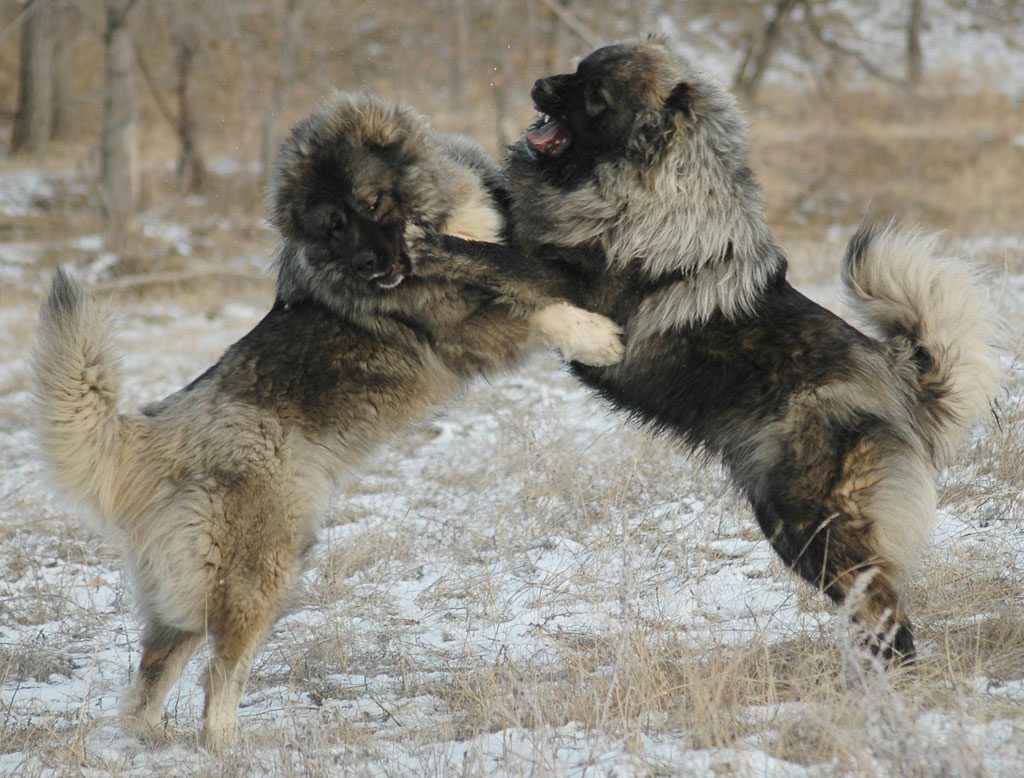
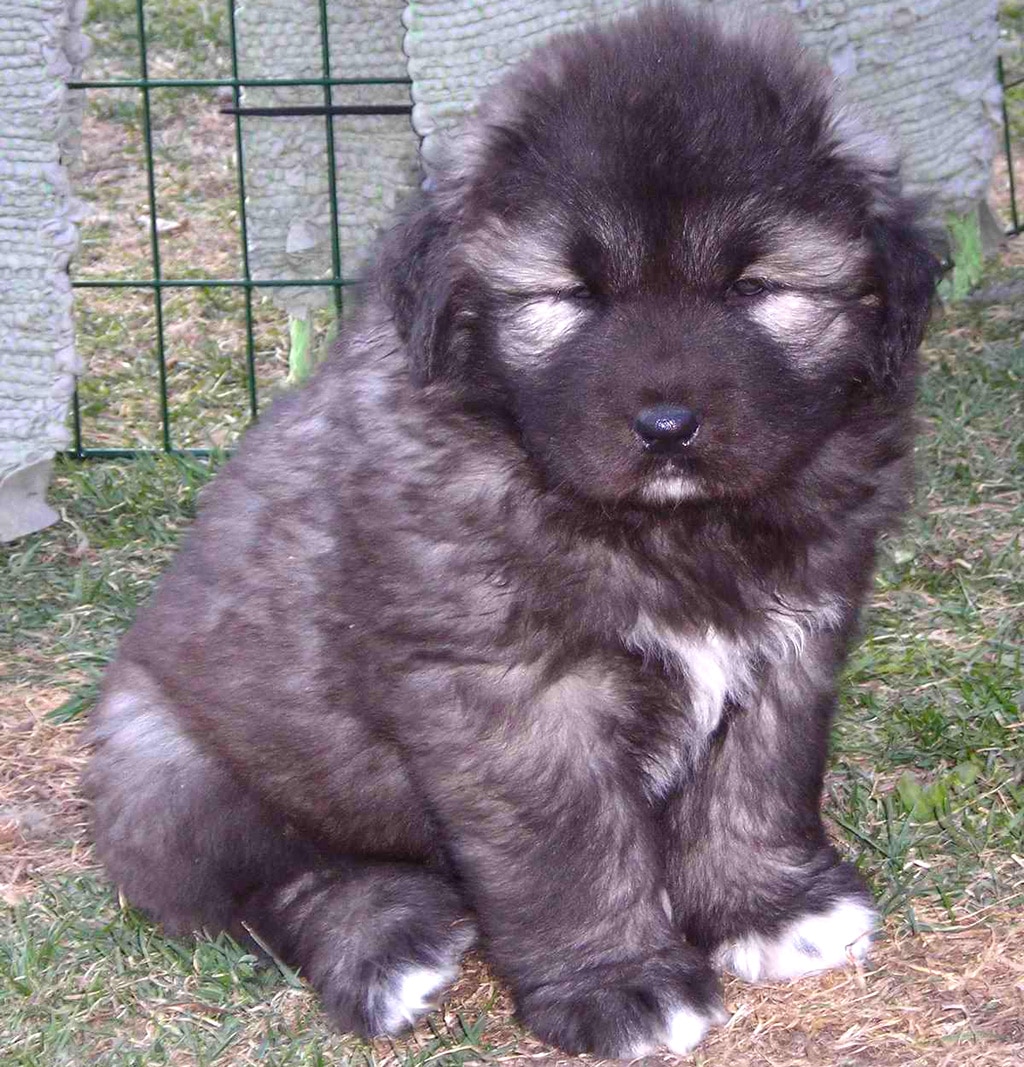
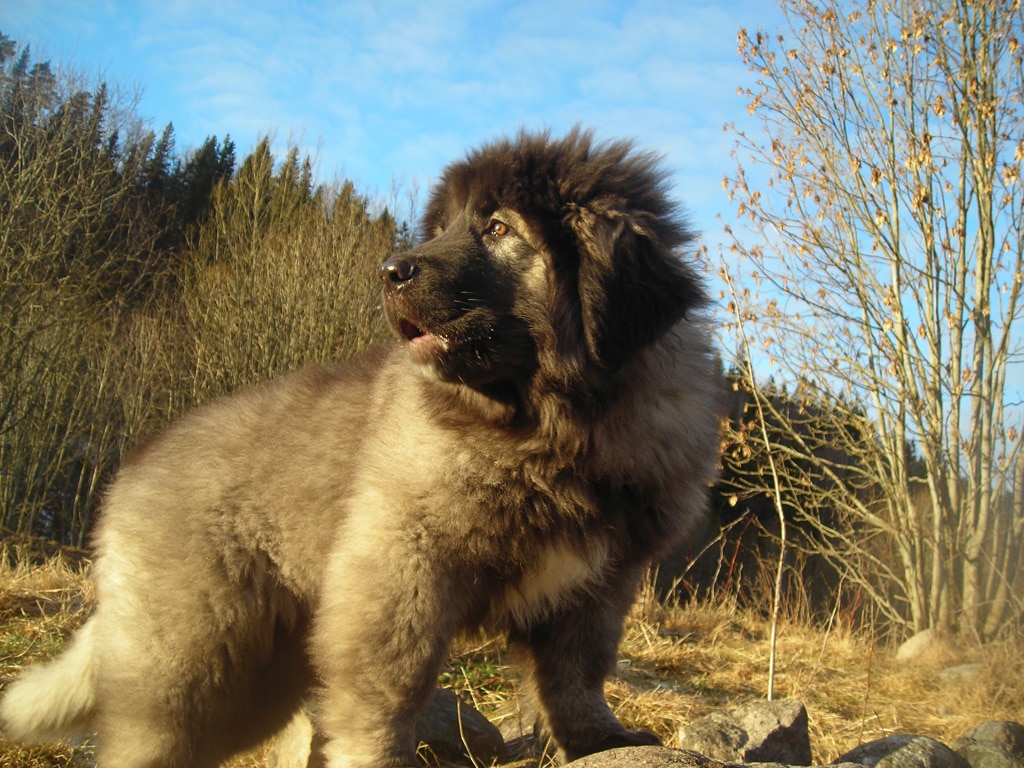
One Caucasian Shepherd Dog it is a large and very strong sheepdog that is very widespread in Russia. In the official standard it is called Kavkazskaya ovฤarka. The Caucasian Shepherd Dog they spread over a huge area, which includes the territory of Russia as well as the former Soviet Union. Only in the polar areas you can hardly see. In his homeland., theCaucasian Shepherd Dog are, therefore, quite different in detail and different types have been developed. In the steppe areas this breed is lighter and taller, in mountainous regions heavier and more compact. But in type and character it is the same everywhere. This is the result of your work task, which was and is the only criterion for breeding there for many centuries. At the end, the same requirements resulted in the same dogs. Their tasks are to herd and protect the herds, monitor and protect property and its people. They are archaic dogs, they probably came into existence in this form with the introduction of animal husbandry in the first place, and that was a few 10.000 years.

You can't fool a Caucasian Shepherd Dog. Has a clear understanding of their role. Typically, lies down in a high place next to his flock, to be able to observe everything around him. Her flock, their shepherds, his family and his properties are sacred to him. He is faithful and lovingly devoted to them. He is suspicious of everything else and does not hesitate to attack any sign that he interprets as hostile. It is extremely defensive and fearlessly opposes even wolves and bears. In this way it has protected the herds of cattle and the lonely properties of the shepherds, farmers, hostels, artisans and merchants from time immemorial. This extremely useful feature, even necessary for the functioning of such a society in the vast and lonely country, does not fit into today's tight and hectic society. There is hardly a piece of land large enough to provide the dog with Caucasian Shepherd Dog a workspace. He is used to other scales of the vastness of Russia.

It also, the zeitgeist in today's world demonizes all forms of aggression emanating from a dog. While it only takes one or two generations, larger property owners were proud that their dog was reliable and, in case of emergency, acute, I would fearlessly chase away a thief, such a feature is potentially life-threatening for today's dog. It runs the risk of being classified as a "dangerous dog" and in extreme cases, euthanasia. This is not an environment for a Caucasian Shepherd Dog. And so you can find it almost everywhere on the lists of supposedly dangerous dogs. It is an archetype of dog to which man owes a lot in his development. As a dog breed it has been described for a long time and in the oldest specialized books on dogs. But, in modern pedigree dog breeding, it was only officially recognized by the FCI in August 1984.

Physical characteristics ยซCaucasian Shepherdยป

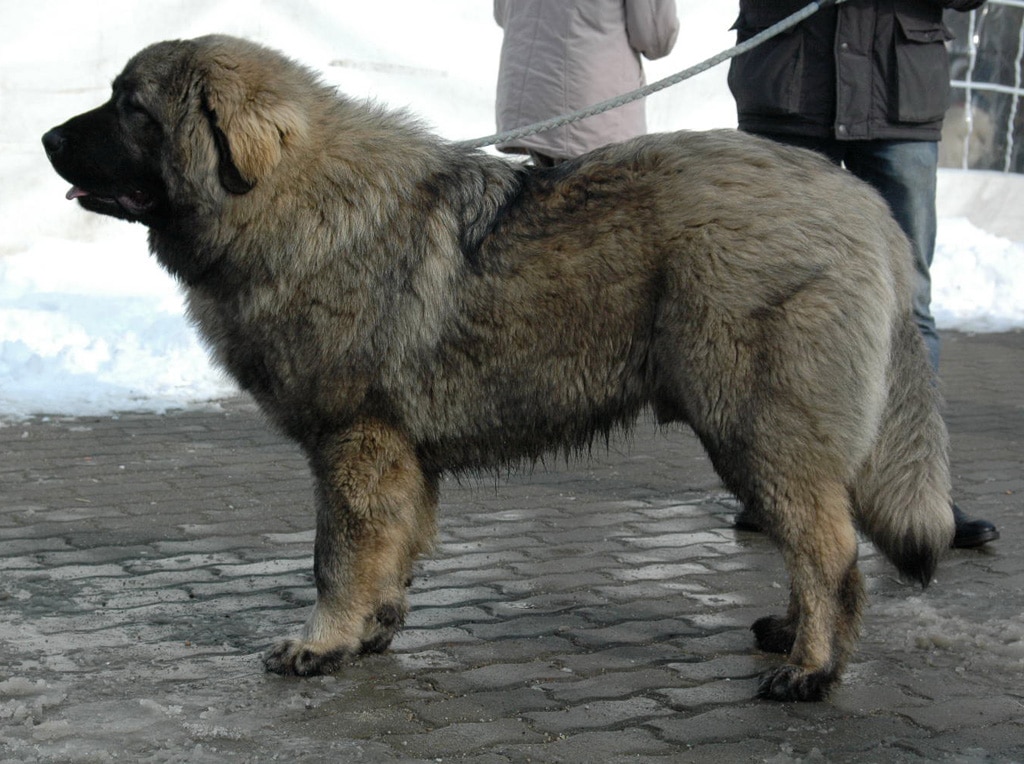
The Caucasian Shepherd Dog is a dog of harmonious structure, big and strong with plenty of bone and a powerful muscular system and a somewhat rectangular format. Well pronounced sexual dimorphism.
Males are masculine with a well-developed cross and a larger head compared to that of females. This is why they are more massive, bigger and sometimes their body is shorter than that of the females.
In dogs with a longer coat variety, the male has a distinguished mane.

Size and weight:

Height to the cross:

  • Males: Desired height 72 โ€“ 75 cm.. Minimum 68 cm..
  • females: Desired height 67 โ€“ 70 cm.. Minimum 64 cm..

Higher heights are accepted as long as the conformation is harmonic.

Weight:

  • Males: Minimum 50 Kg
  • females: Minimum 45 Kg.

Character and skills ยซCaucasian Shepherdยป

The Caucasian Shepherd Dog is a guardian and protector. The official standard classifies your character qualities unequivocally: "It must be strong, balanced and calm with a well-developed defensive reaction, which is actively expressed. Sharpness and distrust of strangers are typical.". And Caucasian Shepherd Dog is generally incompatible with other dogs! These traits, especially with a big and very strong dog that claims a large territory, are hardly compatible with the social conditions of today's world. It is a great experience to be able to form a close bond with a dog like this.. This also allows you to experience a completely different side of the dog than Caucasian Shepherd Dog, that of an extremely loving friend, loyal and affectionate. But, if one does not have the space and financial means to offer them in our latitudes an environment appropriate to their nature, this will hardly be possible.

Fitness

The Caucasian Shepherd Dog he is extremely undemanding in his attitude, if the general conditions already mentioned are ignored. One Caucasian Shepherd Dog does not need heating, toys or a harness on a leash. This breed is undemanding in its nutrition. That also applies to your accommodation.. You can spend the whole year outside without problems, if you want to spend the whole year abroad – as long as there is a suitable place to hide and "adequate" here definitely means neither a kennel nor even a chain.. Must be able to move in your territory. One Caucasian Shepherd Dog you accept, it even sensitively protects all the two- and four-legged friends it sees as belonging to its pack or family. But you need a clear boss. At first he is suspicious or even hostile towards everyone else.

Close relationship and competent guidance is required to walk on this dog's leash., which is definitely always stronger, and then be able to seamlessly move on to an aggressively barking terrier. it's possible, but it requires serious upbringing, a good socialization and an experienced teacher or lover, competent and very sensitive and at the same time thorough. The Caucasian Shepherd Dog is widely on the dangerous dog lists. It is forbidden to travel to the Netherlands or Denmark, since there is a risk that the dog will be confiscated on the streets and euthanized. One Caucasian Shepherd Dog not much of a beginner dog. That would even be irresponsible. Even from the hand of an experienced connoisseur, it requires in any case the basic external conditions for an attitude appropriate to its nature.

Education ยซCaucasian Shepherdยป

Raising a Caucasian Shepherd Dog in today's social conditions it is a very special challenge, only proven experts can master with the right framework conditions.

Care and health ยซCaucasian Shepherdยป

The Caucasian Shepherd Dog it has a double layer composed of a bottom layer and a top layer. The inner layer is soft and fine, while the outer coat hairs are long and thick. (The coat of a Caucasian Shepherd Dog It should never feel smooth or appear wavy.) Regarding the length, the coat can be long, medium or short. Dogs with long fur have a mane that surrounds their necks, as well as extensive plumage on the hind legs and tail, that looks thick and fluffy. Dogs with medium length fur do not have as much mane, and they have fewer feathers on the rest of the body. A short coat, the least common type, has no mane or fringe. Twice a year, when you change your coat, you have to brush it well.

Dogs of this breed enjoy very robust health.

Nutrition / Food

The Caucasian Shepherd Dog does not demand anything from your diet. Probably one of the dogs with less demands in this regard.

The life expectancy of the โ€œCaucasian Shepherdโ€

In relation to its size, a Caucasian Shepherd Dog has a very high life expectancy of 12 and sometimes more years.

Buy a โ€œCaucasian Shepherdโ€

The purchase of a Caucasian Shepherd Dog it should only be considered by experts who know exactly what they do, who have the appropriate experience and who have the appropriate rearing conditions. The puppies of this breed of dog cost around 1.000 EUR.

Images ยซCaucasian Shepherdยป

ยซCaucasian Shepherdยป Videos

Type and recognitions:

  • FCI CLASSIFICATION:
  • Group :
  • Section : . .

Federations:

  • FCI – Pinscher and Schnauzer-Molossoid type dogs – Swiss Mountain Dogs and Cattledogs. Section 2.2 Molossoid, mountain type. โ“˜
  • AKC – FSS (Foundation Stock Service) โ“˜
  • UKC – Watchdog โ“˜

FCI breed standard "Caucasian Shepherd Dog"

Origin:
Russia, Armenia, Georgia, Azerbaijan

Date of publication of the valid original standard:
13.10.2010

Use:

Guard and surveillance dog.


General appearance:

The โ€œCaucasian Shepherdโ€ Dog is a dog with a harmonious structure, big and strong with plenty of bone and a powerful muscular system and a somewhat rectangular format. Well pronounced sexual dimorphism. Males are masculine with a well-developed cross and a larger head compared to that of females. This is why they are more massive, bigger and sometimes their body is shorter than that of the females.

In dogs with a longer coat variety, the male has a distinguished mane.


Behavior / temperament:

The behavior is firm, Active, self-confident, courageously and independently. The โ€œCaucasian Shepherdโ€ Dog shows affection and devotion towards its master, he is an excellent guard dog.

PROPIMPORTANT ORTIONS:

  • Body length exceeds height at withers 3 โ€“ 8%.
  • The length of the forelimbs averages the 50 โ€“ 52% the height at the withers.
  • The length of the skull and the length of the muzzle is 3:2

Head:

---

Cranial region:

The head is big, solid and broad in the cheekbones. View from the top, the head is wedge-shaped with a wide base.

  • Craging: Solid and wide, rather flat antecara with a marked but not deep fold. Superciliary arches developed but not protruding. Barely visible occipital bone.
  • Dnaso-frontal depression (Stop): Noticeable but not clearly marked.

facial region:

  • Trufa: black, large with wide open nostrils without protruding from the outer lines of the snout. A black truffle in solid colors, spotted and peeping is desirable but not mandatory (but genetic blue or liver brown truffles are not allowed)
  • Horcico: Wide and deep tapering gradually towards the nose with strong jaws and chin. Great depth and well-filled under the eyes. The nasal bridge is wide. The upper line of the snout and skull run parallel.
  • Labios: Thick, tight and well pigmented.
  • Jaws / Teeth: Teeth must be healthy, white and strong; incisors together with each other in a line. Complete bite in scissors or forceps (42 teeth). Incisors or injured canines, broken or broken that do not affect the bite are not significant or the absence of PM1.
  • Cheeks: Well developed and highlighted by good chewing muscles.
  • Ojors: Moderate size, Oval shaped, not too deep, placed separate and oblique. Color is in different shades of brown, from dark to hazelnut. Black eyelids, dry, tight. Serious expression, attentive and inquisitive.
  • Obars: Moderate size, thick, Triangular shape, naturally hang, placed high and separate. Traditionally amputated in their country of origin. Natural ears are of equal value.

Neck:

Long Middle, strong, low insertion, transversely rounded. Crest pronounced especially in males.

Body:

Very well developed in all its dimensions, width, good musculature and well balanced.

  • Cruz: Well pronounced, moderately long. Height at withers slightly exceeds height at rump.
  • Dorrso: Straight, width, firm.
  • Itmor: Short, width, slightly arched.
  • Glikeness: Moderately long, wide, rounded, slightly inclined towards the base of the tail.
  • Pecho: Long, width, good ribs, in general deep as well as in its anterior part. Transversally has a broad oval shape. Well arched ribs, false long rib. Antepecho marked.
  • Lรญnlower ea and belly: Abdomen moderately retracted posteriorly.

Tail:

High insertion, curved sickle or curled. At rest it hangs up to the height of the hock; when the dog is alert the tail can be carried over the top line.

Tips

PREVIOUS MEMBERS:

  • ApGeneral arience: Good musculature. Seen from the front, straight and parallel members placed slightly apart.
  • Hormbros: Strong musculature. Moderately long, widths,
  • inclined to form an angle of approximately 100 degrees with the forearm. The scapula well next to the chest.
  • Antarm: Strong and muscular, well together.
  • Elbows: Set well back, parallel to the axis, without turning inward or outward.
  • Brazo: Straight, solid, moderately long, good musculature, transversely round.
  • Metacarpus: Short, solid, always straight viewed from the front and sides.
  • Pinis previous: Large, Round shape, well arched, well closed.

LATER MEMBERS:

  • ApGeneral arience: Seen from behind, rights, parallel and moderately spaced. Knees and hocks well enough angled when viewed from the side. The back should not be placed too far back.
  • Thigh: Width, good musculature, moderately long.
  • Rodinllto: Well angled enough.
  • PinScheme: Wide, good musculature, moderately long.
  • Hock joint: Ancha and inclined, well angled enough, firm, without leaning neither in nor out.
  • Metatarsus: Not too long, solid, always straight seen from the front or side.
  • Pinis later: Large, Round shape, well arched, well closed.

Movement:

Libre, elastic, without rushing with good thrust from the rear. Good stability in all joints and good coordination. Trotting tends to be the typical movement. The withers are at the same level as the rump and the dorsal line is relatively stable.

Mantle

PIEL: Thick, sufficiently elastic without creases or wrinkles.

  • Plink: straight, rough, separated with a well developed undercoat. The length of the outer coat as well as the undercoat should not be less than 5 cm.. The hair of the head and forelimbs is shorter and thicker. The tail is completely covered with bushy hair giving the appearance of thick and very hairy. The long outer hair forms โ€œbrushesโ€ over the ears, a โ€œmaneโ€ around the neck and โ€œpantsโ€ on the back of the thigh.
  • Colorr: Any solid color, piebald or spotted. Except for solid blacks; dilute black or black in any combination or genetic blue or liver brown.


Size and weight:

Alturto the cross:

  • Males: Desired height 72 โ€“ 75 cm.. Minimum 68 cm..
  • females: Desired height 67 โ€“ 70 cm.. Minimum 64 cm..

Higher heights are accepted as long as the conformation is harmonic.

Weight:

  • Males: Minimum 50 Kg
  • females: Minimum 45 Kg.


Fouls:

Any deviation from the aforementioned criteria is considered as a fault and the severity of this is considered to the degree of the deviation to the standard and its consequences on the health and well-being of the dog..

FALTAS GRAVES:

  • Structure too light or too rough.
  • Diffidence.
  • Deviations of sexual dimorphism.
  • Small head in proportion to the body, light, close, long, Tosca, brick or apple shaped head.
  • Abrupt stop.
  • Snout: sunken, concave or pointed.
  • Too small teeth, very separate, incisors not placed in a line, any deviation from the dental formula (except the absence of PM1)
  • Cheek bones not marked enough.
  • Big eyes, protruding, very clear, showing the third eyelid, drooping eyelids.
  • big ears, fine or very low insertion.
  • Steep or sunken top line, long, sunken or arched back, rump higher than the cross.
  • Square body, very rough, very long, narrow both front and back, extremities too long, very short chest, flat or sunken, short or steep rump.
  • Stump tail.
  • Bones, weak muscles and ligaments.
  • Absence of the correct angulations.
  • Forelimbs curved
  • Unbalanced movement.
  • Lack of thrust from the rear.
  • Too soft hair, curly, very short outer hair and no undercoat.

FALTAS DISQUALIFYING:

  • Aggressiveness or extreme shyness.
  • Any dog โ€‹โ€‹showing clear signs of physical or behavioral abnormalities must be disqualified..
  • Any deviation from the required bite.
  • Incomplete dental formula (absence of any teeth except third molars (M3) or first premolars
  • Entropion
  • Eyes gazeos, dark blue, green shading or different colored eyes.
  • amputated tail.
  • Constant hobbling or inability to achieve movement.
  • Black color in any variation, solid, diluted, cheep, spotted the like robe (except the mask).
  • Genetic blue in any variation or shade.
  • Truffle, bluish-gray pigmented lips and eyelids.
  • Genetic brown in all variations or shades.
  • Truffle, genetic brown lips and eyelids.
  • Fire colored markings on black dogs, blue or brown.
  • Height below minimum.
  • Severe deviations of sexual dimorphism in males.


N.B.:
  • Males should have two normal-appearing testicles fully descended into the scrotum..
  • Only functionally and clinically healthy dogs, with the typical conformation of the breed, should be used for parenting.

Itlatest changes are in bold.

TRANSLATION: Brรญgida Nestler / Original version: (IN)

Technical supervision: Miguel Angel Martinez.

Source: F.C.I - International Cynological Federation

Alternative names:

1. Nagazi, Caucasian Mountain Dog, Caucasian Ovcharka (English).
2. kavkazskaรฏa ovtcharka (French).
3. Kaukasischer Owtscharka, Kawkasskaja Owtscharka (German).
4. mastim-do-cรกucaso, Pastor-caucasiano, Ovcharka caucasiano, Mastim do cรกucaso, Cรฃo montanhรชs caucasiano, Cรฃo-urso-russo (Portuguese).
5. Pastor caucรกsico, Mastรญn del Cรกucaso, Perro de montaรฑa del Cรกucaso, Perro Pastor caucรกsico (espaรฑol).

โ–ท The world of Pets: Dogs, cats, birds, reptiles, amphibians

Kangal Shepherd Dog
Turquรญa FCI 331 - Molossoid . Mountain

Pastor de Anatolia

The Kangal Shepherd Dog is quiet, bold, independent, Intelligent, docile.

Content

History

The Kangal Shepherd Dog it is a large and very strong guard dog that is widespread in Turkey, especially in Anatolia. The Kangal Shepherd Dog It is officially called the Anatolian Shepherd Dog or in Turkish as Coban Kรถpegi.. The original name is Karabash. But, In the FCI these dogs are known as ยซKangal Shepherd Dogยซ. Because it is the name of an influential noble family from the Turkish province of Shivas, who very early began to breed Karabash professionally.

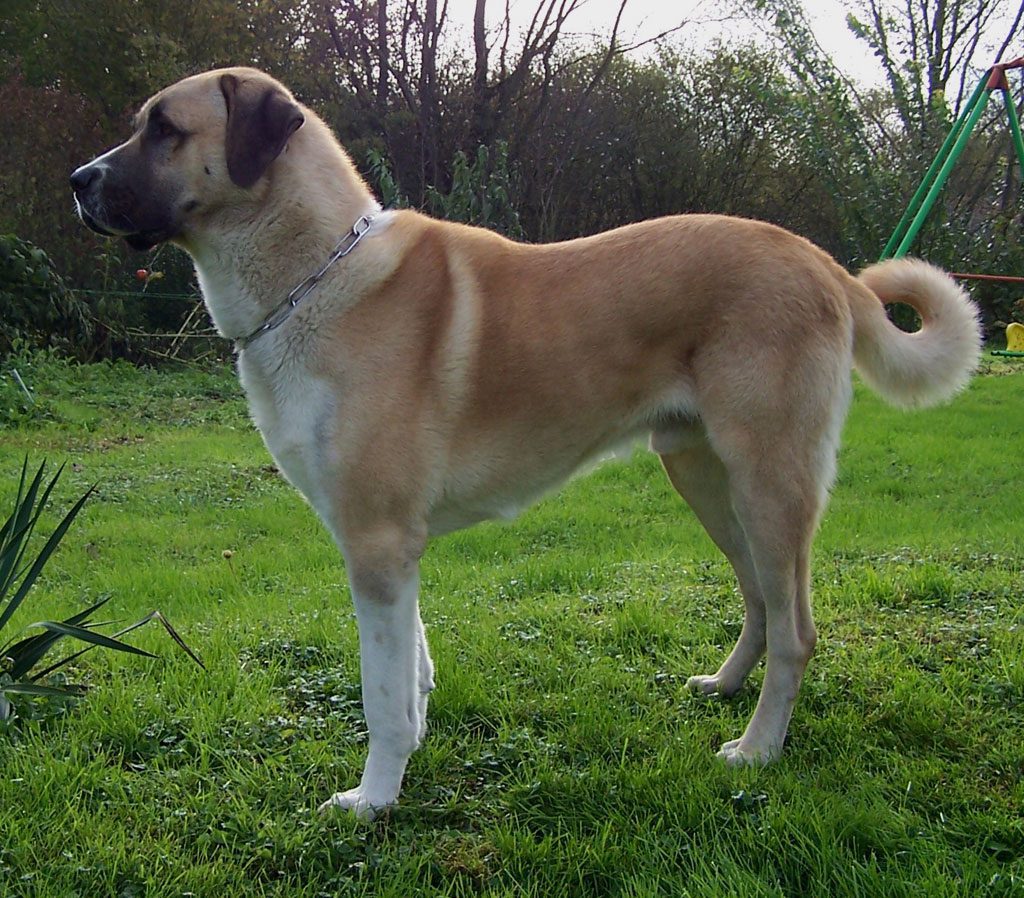
Dogs called Karabash (Schwarzkopf) they were called now Kangal Shepherd Dog with the name of the family of breeders. El Karabash o Kangal Shepherd Dog is native to the mountainous regions of Turkey. There he guards and protects the flocks of sheep. Does this job completely independently, often separated from people for weeks, and you have to decide on your own authority how to behave with strangers. These large and extremely strong dogs can also defend their flock against bears and wolves. Guarding and protecting property and its people is also one of its tasks.

The frugality and robustness of the breed is legendary, that is maintained even on a poor diet, which often consists only of human agricultural waste. These are archaic animals, that probably arose with the introduction of livestock a few years ago 10.000 years. One Kangal Shepherd Dog can't be fooled, because he has a clear understanding of his role. Typically, he lies down in a high place next to or within his flock to be able to observe everything that is in the surroundings. Her flock, his pastors and his family are sacred to him. So, is faithful and lovingly devoted to them. Suspicion of strangers. So, does not hesitate to attack when interpreting hostile behavior. As a watchdog, has been protecting the herds of cattle and the solitary properties of herders, Anatolian farmers and landowners from time immemorial.

This extremely useful feature, even necessary for the functioning of a life in the wide and lonely country, does not fit into a tight and hectic society of today's Central Europe. There is hardly a piece of land large enough for Kangal Shepherd Dog work. It is used to different standards than in the desert mountains of Anatolia. It also, a watchful race like the Kangal Shepherd Dog is quickly condemned as dangerous and aggressive in today's world. While it only takes one or two generations, larger property owners took pride in their dog being dependable and sharp in an emergency, such a trait is not desirable for today's dog. This is why you can find it almost everywhere on the lists of supposedly dangerous dogs. – and unfortunately too often in animal shelters.

The Kangal Shepherd Dog is an archetype of dog, to which man owes a lot in his development. As a dog breed it has been known, described and even revered for a long time. But, in modern pedigree dog breeding, it was only recognized by the FCI in August 1989.

Physical characteristics

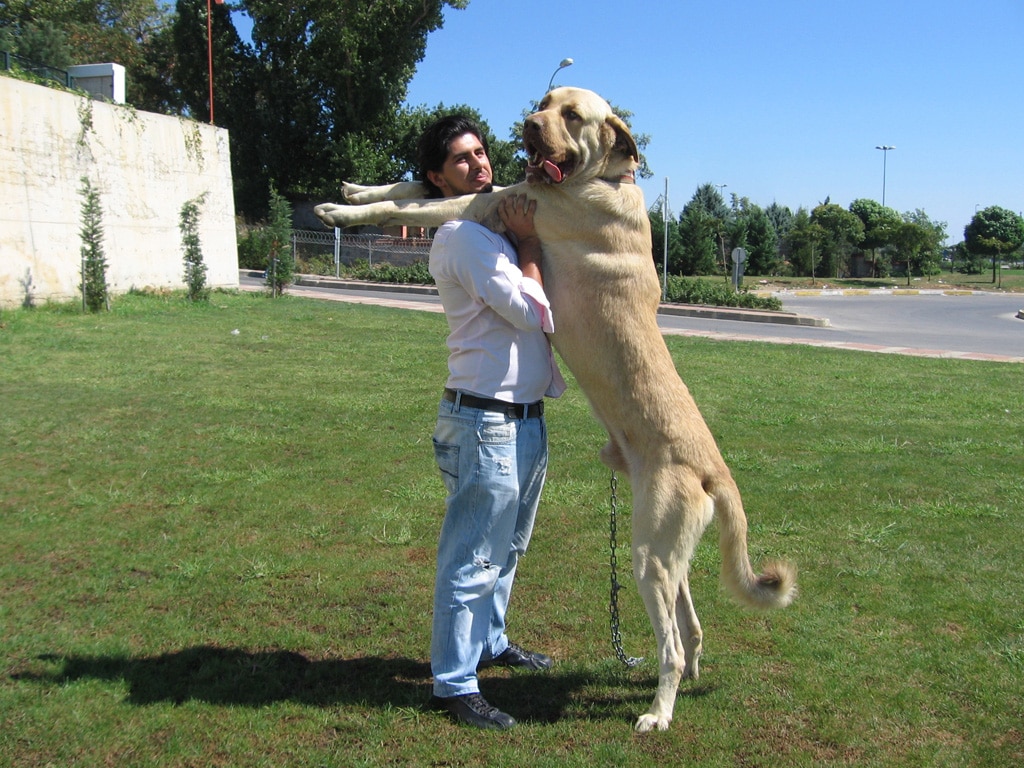
The Kangal Shepherd Dog, is a muscular breed, with a thick, powerful neck, wide head and robust body. His lips are tight in its snout and their ears with triangular and down.

The male measured between 72 โ€“ 78 cm. high and the female between 65 โ€“ 73 cm. and weigh between 44 and 60 kg.

The the mantle It can be several colors but the most common is "sesame", white cream and white with spots of color do not cover more than the 30% your body (type Piebald).

These colors they can be accompanied by a black mask on the face and/or ears. They have a double cloak of eyes hair that needs to be brushed once or twice a month during the warm season due to sweating.

They have a hair very hard on the neck to protect his throat. They seem heavier than you really are, due to his thick neck.

They are large costillares dogs but with small bellies.

Character and skills

The Kangal Shepherd Dog is an independent guardian and protector. The official standard describes his character qualities in this way.:

Balanced and bold, without aggressiveness, independent, very intelligent and leader. Proud and trustworthy. The Kangal Shepherd Dog is affectionate and loyal to his masters, but adult dogs are suspicious of strangers.

Towards other dogs, a Kangal Shepherd Dog is usually dominant and quite incompatible. These traits in a large dog breed, which is very strong and claims a large territory, are hardly compatible with life in today's Germany. It is a great experience to be able to form a close bond with a dog like this.. But, these animals can only develop their excellent qualities of character in their natural environment. Here this great sovereign dog is shown as a loving friend, faithful and affectionate. But, if you do not have the space and financial means to offer in our latitudes an environment appropriate to its nature, it is hardly possible to maintain the species Kangal Shepherd Dog appropriate.

Own Kangal Shepherd Dog is extremely undemanding. Does not need heating, no toys or harnesses on leashes. It is as frugal in its diet as almost no other animal. This also applies to your accommodation.. You can spend the whole year outside without problems, as long as you have a proper enclosure. Here "appropriate" does not mean either a kennel or a chain.. But, you need a very large area, which can become his kingdom. Here a robust enclosure with a solid steel fence of 2 m, because the Kangal Shepherd Dog wants to be able to move freely in its territory.

One Kangal Shepherd Dog you accept, even independently and self-confidently protects all two-legged and four-legged friends, what counts for your herd or family. So, especially needs a clear boss – absolutely! Towards all others, initially suspicious and even hostile. A close bond and an expert guide are required to walk this dog on a leash., which is always stronger when in doubt. Only in this way can the dog and the owner safely walk past an aggressively barking terrier.. it's possible, but it requires serious upbringing, a good socialization and an experienced owner, sensitive and at the same time without any insecurity.

The Kangal Shepherd Dog is increasingly on the lists of supposedly dangerous dogs and is not, from far, a dog for beginners. That would even be irresponsible. Even from the hand of an experienced connoisseur, external basic conditions are necessary for an attitude appropriate to the nature of the dog. In general, maintenance of this breed is quite difficult.

Care and health

The Kangal Shepherd Dog itself is absolutely easy to clean and undemanding. The coat should be brushed twice a year when the coat is changed.

The Kangal Shepherd Dog of serious upbringing enjoys a very robust health in all aspects.

Nutrition

The Kangal Shepherd Dog does not make any special demands on its nutrition. Probably one of the dogs with less demands in this regard.

Kangal Shepherd Dog's life expectancy

Because of its size, the Kangal Shepherd Dog has a very high life expectancy of 12 and sometimes more years.

For sale Kangal Shepherd Dog

You should only consider purchasing a Kangal Shepherd Dog if you are already an expert in dog breeding. Cubs Kangal Shepherd Dog cost around 1000 EUR.

โ€œKangal Shepherdโ€ Images

Videos ยซPastor Kangalยป

Type and recognitions:

  • FCI CLASSIFICATION:
  • Group :
  • Section : . .

Federations:

  • FCI – Pinscher and Schnauzer-Molossoid type dogs – Swiss Mountain Dogs and Cattledogs. Section 2.2 Molossoid, mountain type. โ“˜
  • โ€‹KC – Sheepdogs โ“˜
  • NZKC – Utility dog โ“˜
  • UKC – Watchdog โ“˜

FCI breed standard Kangal Shepherd Dog

FCIFCI - Kangal Shepherd Dog
Pastor

Alternative names:

1. Turkish Kangal, Anatolian Shepherd Dog, Kangal (Anatolian, Anadolu Kangalฤฑ, KarabaลŸ, Karayaka) (English).
2. berger dโ€™Anatolie (French).
3. ร‡oban KรถpeฤŸi, Tรผrkischer Hirtenhund (German).
4. Anatolian shepherd, Anatolian sheepdog (Portuguese).
5. ร‡oban KรถpeฤŸi, KarabaลŸ, AkbaลŸ, Karabash (espaรฑol).

โ–ท The world of Pets: Dogs, cats, birds, reptiles, amphibians

Karst Shepherd
Eslovenia FCI 278 - Molossoid . Mountain

Karst Shepherd

The Karst Shepherd a typical guard dog. Acts largely independently, which is also essential for the protection of the herd.

Content

History

The Karst Shepherd It is a breed that has existed for several centuries and belongs to the group of molosoids. Probably, This dog followed the Illyrian tribe in their migration through Styria and the Dalmatian islands and settled in the Slovenian region of the Karst Massif.. The first time that race is referred to in writing is in 1689, in the book of Baron Janez Vajkart Valvasor entitled ยซ The glory of the duchy of Carniole ยป. The breed and its standard were officially recognized on 2 in June of 1939 with the name of " Iliria Shepherd ยป during the general assembly of the F.C.I. in stockholm. During the F.C.I general assembly. in Bled-Slovenia in 1948, the standard was completed and the breed recognized again. But, to 16 in March of 1968, the Iliria Shepherd from the Karst massif, bore the same name as the Shepherd of the Sarplanina massif. In front of two shepherd dogs with the same name, the Yugoslav Central Society decided to name the one from the Karst region "Shepherd of the Karst Massif" and the other " Sarplaninac ยป. Since then, these two races are totally independent.

Physical characteristics

Externally, the Karst Shepherd they are hardly distinguishable from those of Yugoslavian Shepherd Dog Sharplanina. They are on average slightly smaller than their relatives who live further south, but the height at the withers accepted for breeding is the same for both breeds.

It is a dog's size medium, harmoniously built, robust, with well-developed muscles and a strong constitution.

The head is big, with powerful teeth. The eyes are almendrados, brown or almost black. The ears are set moderately high and fall flat in a "V" shape.. The tail, wide at the base, takes the form of a saber, drawing a light hook with the tip should reach the hock.
Fur: quite long, reaches the 14 cm.; the undercoat is well developed.

  • Color: grey iron. A dark shade is preferable on the cross; towards the abdomen and feet the color changes without visible transition to light gray or even sand color, with a dark gray band across the lower extremities. The dark mask on the head surrounded by beige gray hair.
  • Size: males, of 57 to 63 cm. (ideal 60 cm.); females, of 54 to 60 cm. (ideal 57 cm.).

Character and skills

The Karst Shepherd he is a typical watchdog. Acts largely independently, which is also essential for the protection of the herd. It is very territorial, brave and vigilant, but without biting. He is distrustful and even hostile to strangers, but a loyal and devoted companion of his master and his family.

The born Guardian needs early and careful socialization and loving but consistent education. He only submits to clear leadership.
Like all guard dogs, the Karst Shepherd is late development, reaches mental maturity only at 3-4 years.

He loves country life and being outdoors. Its ideal habitat is a house with a large parcel of land that it can monitor. With a close family relationship and a task that fits your natural waking instinct. The Karst Shepherd he is a nice companion dog, kind and also obedient, but he will never completely detach himself from his strong independence.

Overall Karst Shepherd It:

  • Incorruptible guard in the house
  • Does not get along with other dogs.
  • Patient, but still affectionate
  • Forgiving with children

Karst Shepherd Education and Maintenance

Only conditionally suitable for the city.
Outside the mountainous regions of Slovenia, these dogs are very rarely found. This is because, on the one hand, to his great need to move and, on the other hand, to the high demands of their education. The Karst Shepherd are more individual than other sheepdog breeds, as they are often left to their own devices in their โ€œnatural habitatโ€ and protect flocks independently. An experienced owner with a lot of patience and a sense of mind for your dog will have little trouble educating his Karst Shepherd towards an obedient and calm companion.

Karst Shepherd Health

The Karst Shepherd it's quite healthy for a sheepdog, but suffers from some typical problems of the breed. On average, they reach an age of 10 to 12 years and therefore become significantly older than most German shepherds. The Karst Shepherd, living in a family environment, they are less susceptible to disease than animals that have to sleep in kennels and are permanently exposed to the weather. Boredom is also a stressor and affects the mind and health of dogs..

Its claws must be shortened regularly.
They have sensitive ears that swell quickly.
Very long-growing dogs suffer more often from so-called dachshund paralysis (intervertebral disc disorders).
Dysplasia of the elbow and hip joints are also more common in these dogs..

Buy a Karst Shepherd

Several breeders of the Karst Shepherd they are members of the Dog Club of Southern and Eastern Europe.
Some Slovenian breeders offer their dogs for export.
Pay attention to good breeding conditions!!
Like the Karst Shepherd they are very rare outside of Slovenia, you will hardly be able to visit the breeder before buying. If you have the possibility, Combine buying a puppy with a multi-week vacation in Slovenia. If your puppy already knows you, you will feel much less stress during the transfer and during the first adaptation phase. You can also check the conservation conditions during a visit to the breeder.

Characteristics "Karst Shepherd"

Coexistence is important that you have with your new friend. Before considering the acquisition of a dog of the breed "Karst Shepherd" you know certain factors. Not all breeds of dogs are apt to live in an apartment, you must take into account his character, their need for exercise, their interaction with other pets, their care and if you have small children, their level of tolerance towards them.

Adaptation โ“˜

3,0 of 5 stars (based on 1 review)

friendly dog โ€‹โ€‹โ“˜

3,0 of 5 stars (based on 1 review)

hair loss โ“˜

3,0 of 5 stars (based on 1 review)

Affection level โ“˜

4,0 of 5 stars (based on 1 review)

Need for exercise โ“˜

4,0 of 5 stars (based on 1 review)

Social need โ“˜

2,0 of 5 stars (based on 1 review)

Home โ“˜

3,0 of 5 stars (based on 1 review)

Toilet โ“˜

2,0 of 5 stars (based on 1 review)

Friendly with strangers โ“˜

3,0 of 5 stars (based on 1 review)

barking โ“˜

2,0 of 5 stars (based on 1 review)

Health โ“˜

4,0 of 5 stars (based on 1 review)

Territorial โ“˜

5,0 of 5 stars (based on 1 review)

Cat friendly โ“˜

3,0 of 5 stars (based on 1 review)

Intelligence โ“˜

4,0 of 5 stars (based on 1 review)

Versatility โ“˜

3,0 of 5 stars (based on 1 review)

Child friendly โ“˜

4,0 of 5 stars (based on 1 review)

Surveillance โ“˜

5,0 of 5 stars (based on 1 review)

joy โ“˜

4,0 of 5 stars (based on 1 review)

Images "Karst Shepherd"

Photos:

1 – Owczarek_kraski en el World Dog Show en Poznan by Wikipedia
2 – Owczarek_kraski en el World Dog Show en Poznan by Pleple2000 / CC BY-SA
3 – Owczarek_kraski en el World Dog Show en Poznan by Pleple2000 / CC BY-SA
4 – Owczarek_kraski en el World Dog Show en Poznan by Wikipedia
5 – Owczarek_kraski en el World Dog Show en Poznan by Pleple2000 / CC BY-SA

Videos "Karst Shepherd"

Type and recognitions:

  • FCI CLASSIFICATION:
  • Group :
  • Section : . .

Federations:

  • FCI – Pinscher and Schnauzer-Molossoid type dogs – Swiss Mountain Dogs and Cattledogs. Section 2.2 Molossoid, mountain type. โ“˜
  • UKC – Watchdog โ“˜

FCI breed standard "Karst Shepherd"

Origin:
Slovenia

Date of publication of the valid original standard:
26.06.2000

Use:

The Shepherd of the Karst massif is a shepherd dog par excellence and a good guardian. In the news, increasingly used as a guard and defense dog. Although it is true that in recent times it is mainly a family dog, It does not stop being, in essence, a perfect shepherd dog.


General appearance:

This is a medium-sized dog, harmonious, robust, endowed with well-developed muscles and a strong constitution. The tail and ears are droopy. The hair, steel gray, it is long and abundant.

IMPORTANT PROPORTIONS:

  • Trunk length: height at the withers = 9 : 8 at least. A little longer in females.
  • Skull a little longer (13 to 14 cm.) that the muzzle (11 to 12 cm.).
  • Skull width (13 to 14 cm.) equal to its length.


Behavior / temperament:

Of good character, is brave and courageous without being too aggressive. It is dedicated to its master and moderately energetic temperament. Good incorruptible guardian, be wary of strangers. He is a pleasant and obedient companion dog., although it always retains a strong individuality.

Head:

Nice looking, although proportionally large relative to the body; it should not be fine, in tosca. The upper profiles of the skull and nasal canal are slightly convergent.. View from the top, it is wide in the region of the ears and decreases towards the region of the nose. Profile view, it is tall and rounded. Head length, from the occipital protuberance to the tip of the nose, is of 24 to 26 cm.. The skull is slightly longer than the muzzle.

Cranial region:
  • Skull: Pretty developed, muscular, delgado. Since its profile is slightly convex, seen from all sides it is rounded. The amplitude of the skull in the region of the ears is equal to its length. Zygomatic arcades are not accented, the front groove is moderate, the median ridge is slightly convex, without accentuating the occiput.
  • Depression links (Stop): It is a little marked, no sharp transition.

facial region:

  • Truffle: Black. Wide, well developed, slightly exceeds the front line.
  • Snout: Medium length. Width and height at its base, progressively decreases towards the nose area. The nasal helm is straight and wide.
  • Lips: They are thick, stretched, tight, without forming bags. They are black.
  • Jaws / Teeth: Teething is complete. Teeth are strong, especially the incisors. The bite is scissor-shaped.
  • Cheeks: laterally, they are somewhat bulky; they are plump, but not too developed, molding a fairly flat face.
  • Eyes: They are presented a little apart, no bumps, nor sunk in the orbits. Almond shaped. Its color ranges from light brown to dark brown. They are frank in expression, calm and firm, almost melancholic, because of the black color of the eyelids.
  • Ears: Moderately high implantation, its length is medium and its extremity extends to the outer corner of the eye. They fall along the cheeks in a "V" shape and the front edges are folded outwards..

Neck:

Width, thick, good muscular, oval cross section. The upper profile is rectilinear or slightly arched; the lower profile is rectilinear. Medium length (a few 25 cm.), it is deeply embedded between the shoulders and attached to the head by strong musculature. The skin is thick, well attached to the body, no dewlap. The coat is abundant with long hairs that form a very thick collar and mane, which makes the neck look beefier and shorter than it actually is. The bearing is haughty and slightly raised.

Body:

  • General appearance: It is well developed, medium length. The thoracic cavity is long.
  • top line: It is straight, horizontal or slightly oblique.
  • Cross: Long, not very high, of adequate width and well applied to the body.
  • Back: Straight, muscular and broad. Medium length.
  • Pork loin: The lumbar region is a little short, very muscular and broad. Rump: Medium length, broad and well muscled. The tail is slightly inclined at the birth.
  • Breast : It is well developed, bulky in length and breadth; the ribs are wide, flat and moderately arched. The front of the chest is well developed and the tip of the sternum is quite rounded. With a length of 25 to 28 cm., its circumference is 70 to 78 cm..
  • Bottom line and belly: The belly is slightly raised and tucked up, hard. The flanks are short, moderately shortened.

Tail:

It is solidly attached to the body; it is wide at its base. In its normal position, it is shaped like a saber and the extremity often traces a light hook. Medium length, must reach at least to the hock. It has abundant fur, with long hairs, but without forming a plume. When the dog is alert or on the move, the tail rises to or slightly above the back region. When the dog is at rest, the tail comes down.

Tips

PREVIOUS MEMBERS:

  • General appearance: They are straight when viewed from the front or in profile. In all its parts they unite very harmoniously with each other.
  • Shoulder: The shoulder blade is of medium length, width, oblique, well muscled and firmly attached to the body. The scapular angle- humeral is close to the right angle.
  • Arms: Relatively long, more oblique than the shoulder blade, endowed with strong musculature. They are well applied to the body.
  • Elbows: The humeral-radial angle is not very open. Well applied to the body, the elbows must be at least at the level of the sternum.
  • forearms: Of adequate length, straight. Bones and muscles are strong.
  • Carpi: Strong, well applied to the forearm as well as the metacarpus. Metacarpus: Widths, medium length, slightly oblique.
  • Previous feet: Of well proportioned dimensions to the trunk, its shape goes from oval to round. Fingers are well together and arched, nails are darkly pigmented. Central bearing and digital tubers are strong, black or darkly pigmented.

LATER MEMBERS:

  • General appearance: From behind, they are well proportioned and harmonize with the other parts of the body. Profile views, the angulations are closed enough.
  • Thighs: In the coxofemoral angle it is closed; thighs are long, widths, well muscled and solid.
  • Knee: Femoro-tibial angle slightly open, shapely knees. The kneecap is solid.
  • Legs: They are moderately long, inclined, robust. Hocks: Solid and moderately open.
  • Metatarsals: Massifs, short and straight. In the event that spurs appear, these must be removed.
  • Hind feet: With the same characteristics as the front feet.

Movement:

Harmonious, elastic, well coordinated steps. The favorite and most elegant movement is the trot. Galloping with long strides is less elegant

Mantle

SKIN: It's thick, compact, elastic, adheres well to the body and has no wrinkles; dark pigmentation; black pigmented lip and eyelid edge.

  • Fur: Well bushy, long, smooth; the inner layer of hairs is abundant. The head, the front edge of the ears and the front of the limbs are covered by short hair. The back edge of the ears features longer, softer hair. The upper part of the neck is covered by long hair, stretched and abundant that forms a mane. On the bottom, the hair is longer and softer, forming a collar that widens in the ligament of the neck. The trunk and belly have longer hair that becomes less hard on the belly. The tail, is usually bushy, but it doesn't form a plume. On the posterior aspect of the forelimbs, long soft hair forms bangs. On the posterior aspect of the posterior extremities, The hair is still long and thick and forms pants.. The length of the outer layer of hairs is about 10 cm..
  • Color: Steel gray. Especially on the cross, a dark shade is preferred. Towards the belly and feet region, color changes without visible transition to light gray or sand color, with dark gray specks on the front of the limbs. The dark mask of the head is surrounded by light brown-gray hair.


Size and weight:

Height to the cross:

  • In males, is of 57 to 63 (ideal size, 60 cm.),
  • In females, is of 54 to 60 cm. (ideal size, 57 cm.).
  • A tolerance of 2 cm others, but this will have a negative effect on the overall appreciation of the dog.

Weight: In the males of 30 to 42 kg, In the females of 25 to 37 kg.


Fouls:

Any deviation from the aforementioned criteria is considered as a fault and the severity of this is considered to the degree of the deviation to the standard and its consequences on the health and well-being of the dog..

MINOR FAULTS

  • Small flaws in the general constitution.
  • Somewhat small head, close, long or not high enough.
  • Indefinite naso-frontal depression.
  • Pronounced zygomatic arches.
  • Too plump or too plump cheeks.
  • Underdeveloped jaws.
  • Loose lips.
  • Very high or very low implantation ears; not close enough to the cheeks.
  • Eyes too wide, too clear, little apart.
  • Chin presence.
  • Slightly sunken back, slightly protruding or drooping rump.
  • Narrow chest, low tilt or barrel-shaped.
  • Narrow chest.
  • Tail too short.
  • Slightly defective limbs, fingers apart, hare foot.
  • Wrinkled or lightly pigmented skin. Absence of wrinkles on the forehead.
  • Insufficient pigmentation of the lip edge, of the eyelids and nose.
  • Hair that is not long enough.
  • Small white mark on the front of the chest, absence of mask.

SERIOUS FAULTS:

  • Serious offenses in the general constitution.
  • Square body silhouette.
  • Narrow head, too light or too coarse.
  • Very marked nasal-frontal depression.
  • Snout very pointed or very long.
  • Teeth: pincer bite, irregular alignment of incisors, lower canines that appear in front of the upper canines.
  • Clear eye.
  • erect ears.
  • Sunken back, rump visibly very raised.
  • Corkscrew or twisted tail.
  • The hind limbs are visibly separated when the dog walks.
  • Clumsy movement, especially in the hind limbs.
  • Soft and wavy hair.
  • Clear pigmentation of the mucosa, of the nose, and of the eyelids. White spot on the front of the greater chest of 2 cm wide and 10 cm length.

FALTAS DESCALIFICANTES:

  • Aggressiveness or extreme shyness.
  • Any dog โ€‹โ€‹showing clear signs of physical or behavioral abnormalities must be disqualified..
  • Exaggerated disproportion between different parts of the body.
  • Size below the minimum authorized by the standard.
  • Head too large in relation to the body.
  • Incomplete teeth. Prognathism or enognatismo.
  • Visibly narrow or wide standing position (barrel-shaped).
  • Tail very short or stump.
  • Depigmentation of the mucosa, of the nose or eyelids.
  • Any color other than gray, which must be at least clear. Two-color or multi-colored copies.
  • Well marked boundary between shades of gray. White markings on the chest or on the neck greater than 2 cm wide or 10 cm long.


N.B.:

Males should have two normal-appearing testicles fully descended into the scrotum..

Only functionally and clinically healthy dogs, with the typical conformation of the breed, should be used for parenting.

TRANSLATION: IRIS Carrillo (Federation Canรณfila de Puerto).

Source: F.C.I - International Cynological Federation

Alternative names:

1. KARST SHEPHERD DOG, kraลกki ovฤar, kraลกevec (English).
2. Kraski Ovcar (French).
3. Illyrischer Schรคferhund (German).
4. Pastor da รstria (Portuguese).
5. kraลกki ovฤar (espaรฑol).

โ–ท The world of Pets: Dogs, cats, birds, reptiles, amphibians

Catalan Sheepdog
Espaรฑa FCI 87 . Sheepdogs

The Catalan Sheepdog He is friendly and has a strong protective instinct especially with children.

Pastor Catalรกn

Content

Characteristics "Catalan Sheepdog"

Coexistence is important that you have with your new friend. Before considering the acquisition of a dog of the breed "Catalan Sheepdog" you know certain factors. Not all breeds of dogs are apt to live in an apartment, you must take into account his character, their need for exercise, their interaction with other pets, their care and if you have small children, their level of tolerance towards them.

Adaptation โ“˜

4,0 of 5 stars (based on 1 review)

friendly dog โ€‹โ€‹โ“˜

4,0 of 5 stars (based on 1 review)

hair loss โ“˜

3,0 of 5 stars (based on 1 review)

Affection level โ“˜

4,0 of 5 stars (based on 1 review)

Need for exercise โ“˜

5,0 of 5 stars (based on 1 review)

Social need โ“˜

4,0 of 5 stars (based on 1 review)

Home โ“˜

3,0 of 5 stars (based on 1 review)

Toilet โ“˜

3,0 of 5 stars (based on 1 review)

Friendly with strangers โ“˜

2,0 of 5 stars (based on 1 review)

barking โ“˜

3,0 of 5 stars (based on 1 review)

Health โ“˜

5,0 of 5 stars (based on 1 review)

Territorial โ“˜

4,0 of 5 stars (based on 1 review)

Cat friendly โ“˜

3,0 of 5 stars (based on 1 review)

Intelligence โ“˜

4,0 of 5 stars (based on 1 review)

Versatility โ“˜

4,0 of 5 stars (based on 1 review)

Child friendly โ“˜

5,0 of 5 stars (based on 1 review)

Surveillance โ“˜

4,0 of 5 stars (based on 1 review)

joy โ“˜

3,0 of 5 stars (based on 1 review)

Catalan Sheepdog History

The Catalan Sheepdog (Sheepdog) It is a breed of dog of Catalonia, Spain. It was used above all to watch the herds during the day in the Pyrenees area and in the area occupied by the transhumance related to this area.

Although little is known about the origins of the Catalan Shepherd, today it has become one of the sheepdog breeds, Iberian, more extended. For a long time he has lived geographically isolated and descends โ€“ probably- dogs shepherds who kept kinship with primitive Oriental races.

Close relatives include the Pyrenean Shepherd and the Bergamasco Shepherd.

Likewise, There are documentary sources to ensure that, at sites such as the Minferri dogs of measurement remains have been found with very similar in structure to the Catalan Shepherd, the find could be located in the 2000 to. C.

Anyway that there are only drawings of 200 years ago that testify the existence of the Catalan Shepherd. I.e., their origin It is still an issue controversial.

In 1919, Catalan Sheepdog, He was recognized by the Federation Cynologique Internationale as Spanish breed of dog.

In 1929 wrote the first standard from two dogs, TAC and Iris, two copies a canine contest winners. However, all this could not stop the debacle of the race.

With the advent of tourism in the Pyrenees which is where were more specimens of the breed, also arrived foreign dog breeds, and the Catalan Shepherd Dog became a type of small dog, underestimated front foreign dogs already wearing so many decades by selecting them and improving them, so it was abandoned and mixing with other races.

During the Decade of 1970, an organization called Laketร nia took two dogs that remained with a very pure appearance, one from Solsona and the other from Berguedร  and selectively bred them to recover the breed. All current breeding dogs carry genes from these two specimens.

In 1982 created the Catalan Atura Dog Club, This led to begin airing various breeders and 1982 be drafted a new standard that is the still existing today.

Currently, the dog has been able to spread a lot when it was verified that it not only serves to take care of herds but also as a companion animal and more than 4.000 registered copies.

Physical characteristics

Its height the cross is of 47 to 55 cm in males and 45 to 53 cm in females.

The hair is long, very little wavy or stretched. Usually rough, in some cases smooth. The subpelo is abundant, especially in the later third.

In the head has beard, moustache, quiff and sobrecejas that allow to see the eyes. The tail is well provided with hair, just as the limbs. When they shed their hair, a typical phenomenon occurs, as it does in two times.

during the first, change the hair in the front half of the dog, and gives the impression that it is two media with different hair dogs. In the second half, changing the rear half and returns to match.

Regard to the color, They seem far to monochrome, and they can present lighter shades to extremities. Seen closely observes that the color is given by the mixture of hairs of different tones: neula, terrizo more or less reddish, grey, black and white.

The basic colors that result from the mixture are:

  • Neula: In his clear tones, medium to dark.
  • Tierra: With hair color land, neula, black and white. With three clear tones, medium to dark.
  • Gris: Consisting of white hairs, Gray and black, with colors that can go the tetravalent to the gris-negro. If master black and only combines with white hairs, It gives a black appearance of frost.

There are also copies with a mixture of black hairs, neula and reddish Earth that can dominate in some parts, giving the sensation of exemplary black and Tan.

Character and skills Catalan Sheepdog

Pastor Catalรกn, indispensable assistant for the current Catalan shepherds, is a typical shepherd dog fell, rustic, frugal, obedient, resistant, barking, vigorous and reserved with strangers.

It is perfectly adapted different situations ranging from the comfort of a home, to the extreme climatic conditions of the high mountain, and this makes it an excellent conductor of flocks or a perfect Playmate.

In Catalonia, It is still used as a sheepdog and thanks to its great intelligence not just limited to following the shepherd, but occasionally it replaces his master and is responsible for the solo lead and guarding the flock.

In other countries, it is known more than anything as a companion and exhibition dog, always with a dial protective character in special with children.

It is a dog very versatile and nice, She loves to play but you know when it is necessary to be quiet.

Some specialists often describe it as a sullen and few friends but in reality is that attitude taken with strangers, at the slightest sign of trust he will show his affection.

Catalan Shepherd is very easy of educate and train.

Images of the Catalan Sheepdog

Catalan Sheepdog videos

Type and recognitions:

  • FCI CLASSIFICATION:
  • Group :
  • Section : . .

Federations:

  • FCI – Group 1 Herding dogs, Section 1 Sheepdogs โ“˜
  • โ€‹KC – Grazing โ“˜
  • UKCHerding โ“˜

FCI breed standard Catalan Sheepdog

FCIFCI - Catalan Sheepdog
Pastor

Alternative names:

1. Catalan shepherd (English).
2. Berger catalan (French).
3. (Katalanisch Gos d’Atura Catalร ; Spanisch Perro de Pastor Catalรกn) (German).
4. (em catalรฃo: gos d’atura catalร ) (Portuguese).
5. Gos d’Atura Catalร , Perro de pastor catalรกn (espaรฑol).

โ–ท The world of Pets: Dogs, cats, birds, reptiles, amphibians

Kuvasz
Hungrรญa FCI 54 - Sheepdogs.

The Kuvasz (PL. Kuvaszok) is an old Hungarian breed of cattle dog.

Kuvasz

Content

Characteristics "Kuvasz"

Coexistence is important that you have with your new friend. Before considering the acquisition of a dog of the breed "Kuvasz" you know certain factors. Not all breeds of dogs are apt to live in an apartment, you must take into account his character, their need for exercise, their interaction with other pets, their care and if you have small children, their level of tolerance towards them.

Adaptation โ“˜

3,0 of 5 stars (based on 1 review)

friendly dog โ€‹โ€‹โ“˜

2,0 of 5 stars (based on 1 review)

hair loss โ“˜

5,0 of 5 stars (based on 1 review)

Affection level โ“˜

3,0 of 5 stars (based on 1 review)

Need for exercise โ“˜

3,0 of 5 stars (based on 1 review)

Social need โ“˜

3,0 of 5 stars (based on 1 review)

Home โ“˜

1,0 of 5 stars (based on 1 review)

Toilet โ“˜

5,0 of 5 stars (based on 1 review)

Friendly with strangers โ“˜

2,0 of 5 stars (based on 1 review)

barking โ“˜

4,0 of 5 stars (based on 1 review)

Health โ“˜

4,0 of 5 stars (based on 1 review)

Territorial โ“˜

5,0 of 5 stars (based on 1 review)

Cat friendly โ“˜

3,0 of 5 stars (based on 1 review)

Intelligence โ“˜

3,0 of 5 stars (based on 1 review)

Versatility โ“˜

3,0 of 5 stars (based on 1 review)

Child friendly โ“˜

3,0 of 5 stars (based on 1 review)

Surveillance โ“˜

3,0 of 5 stars (based on 1 review)

joy โ“˜

5,0 of 5 stars (based on 1 review)

History

The Kuvasz is an ancient herd guardian breed that originated in Hungary, although their distant ancestors were probably type dogs Tibetan Mastiff.

While the Komondor was used on the grounds lower with drier climates, the Kuvasz was used on the wet pastures of the highest mountains and the two were an integral part of the Hungarian economy. Later, during the century 15, the Kuvasz became a prized animal, the dog belonged to the Royal Court of the King Matthias Corvino. Y, from the kingdom Kuvasz puppies were offered to visiting dignitaries as a royal gift, Legend has it that the King was more confident their dogs than in their own Councillors. After the death of the King, the popularity of the breed among the nobles decreased, but even so the dog continued to have its traditional role in the protection of livestock.

At the end of World War II, almost all Kuvasz in Hungary had been killed. The dogs were used for the protection of their families, reason why were actively sought and killed by German and Soviet soldiers, while at the same time, some German soldiers were a large number of copies to their homes. After the Soviet invasion and the end of the war, the breed was nearly extinct in Hungary.

The word Kuvasz, probably, comes from the Turkish "kavas" which means guard, soldier or a protector. A related theory postulates that the word may have originated from ancient Russian farmers., the Chuvash, who has contributed many words to the Hungarian language.

For a long time, the property of the Kuvasz was restricted, but they were finally used by the shepherds as guardians of the flock. That's the job they're known for today.. The dog's white fur allowed the shepherd to easily distinguish it from a wolf as it blended in with the flock..

Physical characteristics

The Kuvasz should be of good size, solidly built and with a dignified air. The skull should be slightly arched and not too long, wedge-shaped snout. Leads the small ears hanging in the form of V. The body is rather long, with the slightly outgoing ribs. The legs are strong and not too long. The tail is long, slightly curved at the tip, which wears a beautiful plume. The coat is long, rough and undulating. The color has to be pure white, Although the white ivory can be accepted.

Although the skin is white, the pigmentation of the skin of Kuvasz should be dark and the nose should be black. The eyes must have an almendrada form. The females usually weigh between 35 and 50 kg, While males weigh in 50 to 70 kg, tieneto a bone structure medium. The height at the cross in the males is of 71 to 76 cm and the females of 66 to 70 cm..

For a casual observer, the Kuvasz may be similar to a Pyrenean Shepherd, to the Akbash, a โ€œMaremma Shepherdโ€ dog, a Samoyed, a Pudelhund white mixed with a Labrador Retriever, or some Slovakian dog like him Polish Tatra Sheepdog.

As with many livestock guardian dogs, the color of the layer of the Kuvasz serves a functional purpose and is an essential breed criterion. To develop the breed a purpose clear in the Kuvasz was to realise a mantle of color, to provide pastors distinguish the dog of wolves attacking animals at night. The Komondor, a close relative of the Kuvasz, It has a white coat for the same reason.

The Kuvasz lose a lot of hair from time to time. The rest of care are complicated. We must bear in mind that it is a dog of strong personality, which is why their education must be early and can be put to the test the patience of the educator. You need a suitable space of movement and exercise.

Fur: short, smooth, closed and thick on the head and on the front of the extremities. in the trunk, brazos, tie and tail is long and wavy, and often forms ridges and locks. it's pretty rough, a little stiff and in no case felted. the undercoat is fine and woolly.

Color: white.

Size: males of 71 to 75 cm.; females of 66 to 70 cm..

Character and skills

The Kuvasz he is a tireless keeper of flocks, defending the predators. Previously it had also been used as a hunting dog to chase wolves, boars and bears. It is also a great guardian. In his country the police and the army use him as an auxiliary. In recent decades it has also become a companion dog..

Good working dog, reliable watchdog, Pleasant Home Companion, that's the Kuvasz.

It has been used as a livestock guardian, but in recent years it can be found in homes as a pet.

The Kuvasz he is a smart dog and is generally said to have a clown sense of humor, that can last throughout adolescence and adulthood. They are very loyal but patients animals who appreciate human attention, but it also needs its space, they are very independent animals.

According to the classification made by Stanley Coren after analyzing the responses of more than 200 work of the AKC judges ("The Intelligence of Dogs", Stanley city, Ediciones B, 1995), the Kuvasz and el Nยบ 42 from the list.

Despite his intelligence, It should not be perceived as easy to train. His independent personality can make training a difficult task that, You can exhaust the patience, even for experienced owners. As a result, It is not recommended for beginners and those who do not have time to train and socialize in a manner appropriate to their Kuvasz.

On the other hand, many of these qualities make the Kuvasz excellent guardians for sheep or large farms. The Kuvasz has a very special and close relationship with his owner.

It is a sober and suffered dog, It resists weathering in the toughest conditions, Frequent brushing is therefore, necessary to keep their fur clean. A Kuvasz should not smell bad, This is usually a sign of illness or poor nutrition.

Homemade dog is friendly, affectionate and intelligent, and above all an excellent guardian, brave and quiet, suspicious and even reserved with strangers. Under its dignified appearance hides a playful temperament which makes him a loyal friend of children.

It is generally a healthy and robust breed whose life expectancy is about 12 or 14 years.

Kuvasz Health

In the Kuvaszok, more serious health problems include hip dysplasia, osteocondrosis (a joint disorder that damages cartilage and bone) and a propensity for cruciate ligament injury. An eye disease called progressive retinal atrophy (ARP) is a potential concern, just like hypothyroidism (a common hormonal disease in dogs in which the thyroid gland does not produce enough thyroxine) and vonWillebrand's disease (a disorder of blood clotting).

Not all of these diseases are detectable in a growing puppy, and it can be difficult to predict whether an animal will be free of these diseases, so you need to find a reputable breeder who commit to raise healthier animals possible. Must be able to produce an independent certification that the parents of the dog (and grandparents, etc.) have been screened for these defects and considered healthy for breeding. That's where health records come in..

Do not buy a puppy from a breeder who cannot provide you with written documentation showing that the parents were exempt from health problems affecting the breed.. If the breeder tells you that the tests are not necessary because they have never had problems in their lines, that the dogs have been โ€œvet checkedโ€, or offers you any other excuse to skimp on genetic testing of your dogs, leave immediately.

Careful breeders screen their breeding dogs for genetic diseases and breed only the healthiest and best looking dogs, but sometimes Mother Nature has other ideas. A puppy can develop one of these diseases despite good husbandry practices. Advances in veterinary medicine mean that in most cases dogs can still live a good life. If you are going to have a puppy, ask the breeder about the ages of the dogs in their lines and what are the most common causes of death.

Remember that after you have welcomed a new puppy into your home, has the power to protect you from one of the most common health problems: the obesity. Keeping a Kuvasz at the right weight is one of the easiest ways to extend its life.. Make the most of diet and exercise to help ensure a healthier dog for life.

observations and advice

not a very well-known dog and, therefore, it is difficult to find a puppy of this breed. However, it is more widely used than Komondor, whose cloak scares many potential buyers. In fact, the coat of the Kuvasz is more difficult to care for, Since it must be brushed periodically to avoid the formation of knots, although it should be washed as little as possible.

Kuvasz toilet

The Kuvasz has a beautiful white double coat that loosens dirt but also loosens hair. Brush weekly with a pin brush to remove dead hair and keep the skin and coat healthy. Trim the hair between the toes to keep your feet looking good. Its coat repels water and removes dirt easily with brushing, so a bath is rarely necessary.

When summer comes, don't think your Kuvasz has suddenly developed a disease causing hair loss. It is normal for the Kuvasz to lose most of its long coat in hot weather.

The rest is basic care. Trim nails as needed, normally each week the. Brush your teeth frequently with a veterinarian-approved pet toothpaste for overall good health and fresh breath.

Images "Kuvasz"

Videos "Kuvasz"

Type and recognitions:

  • FCI CLASSIFICATION:
  • Group :
  • Section : . .

Federations:

  • FCI – Group 1 Herding dogs, Section 1 Sheepdogs โ“˜
  • AKC – PASTORAGE โ“˜
  • ANKC – Group 5 (working dogs) โ“˜
  • CKC – Group 7 – Herding dogs โ“˜
  • โ€‹KC – Pastoral โ“˜
  • NZKC – Working dog โ“˜
  • UKC – Herding dogs โ“˜

FCI breed standard "Kuvasz"

Origin:
Hungary

Date of publication of the valid original standard:
06.04.2000

Use:

Shepherd dog


General appearance:

Dogs of this breed are strong, large in size and show a dense coat, wavy and white. Its pleasant image radiates nobility and strength. All parts are in harmony and the limbs are neither too short nor too long.
The skeleton is powerful but not crude. The muscles are strong and dry and the joints are sharply outlined..

Seen from the side the body forms a rectangle lying, almost square. Well muscled. Powerful figure, lively temperament and great agility. Its exterior gives the impression of tireless and efficient power.


IMPORTANT PROPORTIONS:

  • The length of the body slightly exceeds the height at the withers.
  • The depth of the chest corresponds to approximately half the height at the withers.
  • The muzzle is slightly shorter than half the length of the head.


Behavior / temperament:

The Kuvasz is brave and not at all fearful. He will defend, even at the risk of his own life, those people and properties whose defense and custody have been entrusted to him.. He is aware of his own value and incorrect treatment can make him aggressive..

Is loyal, reliable, loves its owner and its territory. He needs to exercise a lot and be busy. It is not demanding at all, its maintenance is simple and it is even capable of withstanding very bad weather conditions. He is grateful for the love and concern expressed to him.

Head:

The head of the Kuvasz has a characteristic wedge shape in harmony with the body, it is nice, noble and radiates considerable strength. The head is characteristically lean and dry. The Kuvasz can be differentiated from similar breeds, essentially because of the shape of his head. The head of the male is somewhat more robust than that of the female.

Cranial region:
  • Skull: The skull is broad and the forehead slightly marked. Along the middle of the forehead runs a marked furrow.
  • Stop (naso-frontal depression): Bit strong.

facial region:

Wide, long and well muscled.Truffle: The truffle is black and flat cut.

  • Snout: The nasal helm is straight. The muzzle becomes progressively narrower although it is never pointed.
  • Lips: Blacks, firmly glued. The edge of the corner of the mouth is serrated.
  • Jaws / teeth: well developed, strong, regular teeth, scissor bite, complete, according to the dog's dental formula.
  • EYES: Placed somewhat obliquely, macaroons, dark brown. The edge of the eyelids is black and is firmly resting on the eyeball.
  • EARS: Insertion at mid-height; from its insertion to a third of its length, they are curved and separated and then they fall well next to the head. The ears are โ€œVโ€ shaped with rounded tips.. In atention, the dog raises them a little, never fully erect or crooked.

Neck:

He is rather short than of medium length and is heavily muscled. Provides an angle of 25-30 degrees. The nape is short. Firm throat skin, without jowl. In males the ruff and the mane are very expressive.

Body:

Seen in profile it forms a horizontal rectangle, almost square.

  • Cross: Long, marked upward on the surface of the back.Back: Long Middle, right, wide, well muscled and firm.Pork loin: Short, firm continuity of the back.
  • Rump: Slightly descending, richly muscled, wide, the coat is very dense, what gives the rump a somewhat high appearance.
  • Sill: Given the strongly developed musculature, the sill appears rounded, the tip of the breastbone.
  • Breast : Deep, long and slightly arched.
  • Bottom line and belly: Continuing the lower chest line, the belly is slightly pulled back.

Tail:

Low insert, in direct continuity of the gently descending rump. The tail falls straight and has a slight upward curvature at the tip, without being bent. Its length reaches the tarsus. In attention or being excited, is allowed to raise it to the level of the top line.

Tips

PREVIOUS MEMBERS: The forelimbs support the body being straight up to the carpals, are parallel and located at a moderate distance from each other. Seen from the front, The position of the anteriors is correct when a vertical line drawn from the tip of the shoulder coincides with the axis of the limb and falls between the third and fourth toes of the foot.. In profile, is correct when a vertical line drawn from the elbow joint falls towards the ground passing through the carpus and through the middle of the limb.

  • Shoulder: Long oblique scapula, musculada, joint and firm to rib cage, although with good mobility.
  • Arm: Long Middle, good muscular. The arm and scapula they form an angle of 100 to 110 degrees.
  • Elbow: Dried, rests next to the rib cage, not turned in or out. The arm and forearm form an angle of 120 to 130 degrees.
  • Forearm: Proportionally long, straight, compact, with lean musculature, strong tendons are inserted into it that are directed
  • to the carpus.
  • Carpo: Well developed, firm, the tendons are made of steel.Metacarpus: Proportionally short, enjuto, slightly tilted
  • (angle with the vertical of 10 to 15 degrees).
  • Previous feet: Round or somewhat oval, firm. Fingers are short, so arched up that in the middle they do not touch the floor, elastic and well together. Elastic and black pads. Nails are hard, strong, black or slate gray.

LATER MEMBERS: The posture seen in profile is correct when the knee is under the tip of the buttock and the foot is under the hip joint.. The vertical that falls from the tip of the ischium touches the heel bone. The posture of the hindquarters seen from behind is correct when the vertical that falls from the tip of the ischium runs along the axis of the limb, it is parallel on both sides and is on the ground separated by a medium distance from the other.Thigh: It is closely linked to the pelvis by its musculature which is long, wide and solid. The pelvis and thigh form an angle of 100 to 110 degrees.

  • Knee: Voluminous. The angle between the thigh and the leg reaches 110 until 120 degrees.
  • Leg: Its musculature, which is long and solid, is attached by strong tendons in the hock.. Viewed from behind they are vertical both sides and parallel to the axis of the body.
  • Hock: Width, bulky, dry, tendinoso. The angle of the tarsus is 130 to 140 degrees.
  • Metatarsus: Long, perpendicular to the ground.
  • Hind feet: Ovals, otherwise like the previous ones.

Movement:

Slow and wide step. In the trot the movement is fluid, elastic, with good ground cover, dynamic, regular and persistent. Elbows do not turn in or out.

Mantle

SKIN: Very well pigmented; is slate gray and firm.

  • Fur: Moderately hard, wavy, something rigid, no tendency to tangle. Under fairly thick outer coat, softer downy undercoat found. The head, the ears and feet are covered by a short hair of 1-2 cm long, bushy and straight.

The anterior and lateral faces of the anterior and posterior extremities, in the region from the knee down, are also covered by a short, straight hair of 1-2 cm long. On the posterior sides of the limbs are feathers of 5-8 cm long, reaching in the hindquarters up to the height of the hock. Around the neck, there is a gola, that continues up to the chest in the form of a mane. This mane is especially noticeable in males. In the body, arm and thigh, the hair is of a medium length (4-12 cm.), richly wavy and frequently ridged, hair trimmings and tufts. The tail is covered in its entire length by bushy and wavy hair. At the tip, the length of the hairs can reach 10 to 15 centimeters.

Color:

  • White. Ivory colors are authorized.
  • Truffle, edges of the eyelids and black lips; pads are black or slate gray. For the palate, a dark color shade is desired; pink spots taken in.


Size and weight:

Height to the cross:

  • Males 71-76 cm..
  • females 66-70 cm..

Weight:

  • Males 48-62 kg.
  • females 37-50 kg


Fouls:

  • Any deviation from the aforementioned criteria is considered as a fault and the severity of this is considered to the degree of the deviation to the standard and its consequences on the health and well-being of the dog..


    FALTAS DESCALIFICANTES:
  • Aggressiveness or extreme shyness.
  • Any dog โ€‹โ€‹showing clear signs of physical or behavioral abnormalities.
  • Depression links (stop) pronounced.
  • Lack of pigmentation in truffle, flews and edges of the eyelids.
  • Missing one or more incisor teeth, of the fangs, of the premolars 2-4 and molar 1-2. Missing more than two PM 1; go M 3 will not be taken into consideration.
  • Upper or lower prognathism, incisor arcade deviated, lack of contact of more than 2 mm. between the upper and lower incisors.
  • Entropion and ectropion.
  • Erect ears.
  • Tail elevated above the level of the back line when the specimen is calm; tail curled back.
  • Hair with a tendency to mat, kinked or not wavy, wire hair.
  • Limbs covered with long hair.
  • Colors deviating from those indicated in the standard.


N.B.:
  • Males should have two normal-appearing testicles fully descended into the scrotum..
  • Only functionally and clinically healthy dogs, with the typical conformation of the breed, should be used for parenting.

Source: F.C.I - International Cynological Federation

Alternative names:

1. Hungarian Kuvasz (English).
2. Kuvasz (French).
3. Kuvasz (German).
4. Pastor Hรบngaro (Portuguese).
5. Kuvaszok (espaรฑol).

Photos:

1 – kuvasz by Vkoves / Public domain
2 – KUVASZ by Svenska Mรคssan from Sweden / CC BY
3 – Kuvasz Prince of The Dogs Kennel by Kuvaszprince / CC BY-SA
4 – 7.5 months old kuvasz bitch by Sprays / Public domain
5 – Female kuvasz in ร“pusztaszer, Hungary by DenesFeri / CC BY-SA
6 – Nine-week-old Kuvasz dog by Vkovesz / Public domain

โ–ท The world of Pets: Dogs, cats, birds, reptiles, amphibians

Smooth Collie
Escocia FCI 296 . Sheepdogs

The Smooth Collie, today it is considered a variety of Border Collie in countries such as the United States and Canada

Content

The Shorthair Collie is a breed of dog originally developed for grazing. It is a variety of the Border Collie. Some canine organizations, to the copies of Longhair and shorthair, classified them as variations of the same race.

History

The early history of Smooth Collie, like many breeds of dogs, It is largely a matter of speculation. The most common opinion of the breed is that they are descended from a population of sheepdogs brought to Scotland by the Romans in the 5th century. (See more information about the breed ยปCollieโ€).

The modern history of both Collie, the Smooth Collie and the Rough Collie, It began in the reign of Queen Victoria, He turned his attention in the dogs of the shepherds and ordered that they bring to their balmoral castle in Scotland, some specimens. In 1860 years. At that time, the interest of the Queen, made the breed fashionable Smooth Collie. Thus began the transformation of the farm dog breed, similar to modern Border Collie, Pet highlighting its aesthetics and preparation for dog competitions, sample, for example.

The Smooth Collie, today it is considered a variety of Border Collie in countries like the United States and Canada, which means that they can be crossed and in the statistical registers, are registered as โ€œCollieโ€ without specifying if it is a Rough Collie or a Smooth Collie.

In other countries, such as United Kingdom and Australia, they are classified as separate breeds, but for a very short time, the UK Kennel Club allowed the two varieties to be crossed until 1993.

Physical characteristics

The Smooth Collie it is a medium-sized dog pulling a large, the females measure of 56 to 61 cm. to the cross and the males of 61 to 66 cm.. Y, they weigh in 20 to 34 kg. Standard breed size varies by country, is the far larger in the range United States and Canada, and the smallest elsewhere.

The Collie's short hair is slightly longer than high, with a straight back and a deep chest. The characteristics of the head, especially "sweet", are considered very important in the ring. The breed has long snout, the flat skull and semi-erectas ears.

The layer is two-fold, one is soft and dense stuck to the body, and the outer layer is smooth and hard for a length of 2,54 centimeters, with the most dense hair around the neck forming a collar, and in the back of the thighs. The coat requires a weekly brushing. Unlike other Collie, It presents non bangs…, the hair is short.

The coat of the Smooth Collie it can be of the following colors:

  • Sand: the colour of the famous Lassie, that it goes golden light to dark mahogany. With white areas on the chest, neck, feet, legs, and the tail.
  • Tricolor: black, with spots of color fire and white. With white areas on the chest, neck, feet, legs, and the tail.
  • blackbird blue: that color is a gray marble silver black with spots of color fire. With white areas on the chest, neck, feet, legs, and the tail.

Character and skills

The Smooth Collie is generally a sociable dog, easy to train family. Although it is not an aggressive breed, It is always alert and barking when he noticed something unusual, It is therefore a great watchdog.

Dogs Collie -usually- they are agile dogs, assets and need regular exercise. It is easy to train, due to their high intelligence and eagerness to please their owners. The formation of this breed requires exclusive dedication and patience, they are sensitive to correction and hide if they feel badly treated or it sobre required.

They get along well with children, they tend to harmonize well with other animals that live in the House, they usually mix well with other dogs.

The Smooth Collie is-mainly- a family pet, You can compete in obedience, agility, grazing trials, and other canine sports. Some are still used as herding working dogs. (but less and less). They are also very useful as assistance dogs for people with disabilities..

It has a life expectancy of 12 to 14 years.

Type and recognitions:

  • FCI CLASSIFICATION:Group 1 –> / Sheepdogs and Cattle Dogs (except Swiss Cattle Dogs). Section 1 –> Pastor dogs. Without working trial.
  • FCI 296
  • Federations:
    • FCI – Group 1 Herding dogs, Section 1 Sheepdogs โ“˜
    • AKC – PASTORAGE โ“˜
    • ANKC – Group 5 (working dogs) โ“˜
    • CKC – Group 7 – Herding dogs โ“˜
    • โ€‹KC – Pastoral โ“˜
    • NZKC – Working dog โ“˜
    • UKC – Herding dogs โ“˜

FCI breed standard "Smooth Collie"

Origin:
Scotland, United Kingdom

Date of publication of the valid original standard:
24.06.1987.

Use:

Shepherd dog.


General appearance:

The short-haired Collie is a dog endowed with intelligence, vivacity and activity. He behaves with dignity as a result of his perfect anatomical structure, in which each part is in proportion to the whole. Its physical structure must show strength and activity, no signs of heaviness or coarseness. The expression is very important. When making a relative assessment, the balance and perfect combination of the skull and muzzle should be considered, size, form, eye color and location, and the correct position and bearing of the ears.


Behavior / temperament:

Cheerful and friendly, never nervous or aggressive.

Head:

The characteristics of the head are very important and should be considered in proportion to the size of the dog. The head, front or side view, has a well-drawn wedge shape, clearly truncated and smooth outline. The midpoint between the inner angle of the eyes constitutes the balance point of the length of the head.

Cranial region:
  • Skull: The skull is flattened. The sides taper gradually and smoothly from the ears to the tip of the nose.. Height
    Skull measure of supraorbital arcade to the submaxillary region should never be excessive (altogether not very deep).
  • Depression links (Stop): Light but noticeable. The midpoint between the inner angles of the eyes is the midpoint of a well-placed stop or depression.

facial region:

  • Truffle: Must always be black.
  • Snout: The smooth, well-rounded end of the muzzle is truncated, but never square or pointed.
  • Jaws/teeth: The lower jaw is strong and well delineated. The teeth are of a good size.
    Must have strong jaws, with healthy and complete teeth with scissor bite, that is to say that the inner face of the incisors
    superiors is in narrow contact with the outer face of the lower incisors and placed at right angles with the maxillas.
  • Cheeks: Not prominent.
  • Eyes: They are a very important characteristic that confer a sweet expression. Are medium-sized (never very small), placed is somewhat oblique position, almond-shaped and dark brown in color, except in those blue merle specimens in which the eyes (one or both eyes, or part of one or both) are blue or mottled blue. They have an expression full of intelligence, with a sharp and alert look when the dog is attentive.
  • Ears: Ears are moderately large, wider at the base and set not too close together or too far apart at the sides of the head. When the dog is at rest, they are thrown back, but when he is attentive, brings them forward and carries them erect, that is, approximately the first two thirds of the ear is erect and the upper third falls naturally forward, below horizontal.

Neck:

Muscular, strong, of good length and well arched.

Body:

  • Back: Straight and firm.
  • Pork loin: Slightly arched.
  • Breast : Relatively wide behind the shoulders. Well arched ribs.

Tail:

The tail is long, The last vertebra reaching at least the corvejones. When the dog is at rest, Tails the tail low but twists it slightly upward at the tip; when he is excited he can carry it happily but never on the back.

Tips

Former members

Previous members, straight and muscular, they must have moderate bones.

  • Shoulder: Oblique and well angulated.
  • Elbows: Neither close to the body nor protruding.
  • Forearm: The muscles have a certain thickness.
  • Metacarpus: Flexible, but not weak.
  • Previous feet: Oval, strong pads. Fingers should be arched and close together.
Former members

Well defined and wiry.

  • Thigh: Muscular
  • Knee: With good angle.
  • Hocks: The hocks must be well lowered and powerful.
  • Hind feet: Oval, strong pads. Fingers should be arched and close together.

Movement:

Movement is a distinctive characteristic of this race. A dog with good movements should never have his elbows turned outwards., however when it moves, your front feet stay relatively close together. Marching motion across the limbs is highly undesirable longitudinally or laterally and balancing the body. Seen from behind, hindlimbs from hocks to ground should move parallel but not too close together; seen from the side, the movement is gathered. The hind limbs are powerful and give a lot of drive. A reasonably long stride is desirable, it should be light and effortless..

Mantle

  • Fur: The hair is short and smooth. The outer coat of hair is rough in texture; the inner layer is very dense. Should not be groomed or trimmed.
  • Color: Three colors are recognized: sable and white, tricolor and blue merle.
    โ€ข Cebellina: Any shade from light gold to dark mahogany or nuanced sable. The colors pale straw and cream
    They are highly undesirable.

    โ€ข Tricolor: Black color predominates with intense tan spots on the extremities and head. A reddish reflex
    About the fur is highly undesirable.

    โ€ข Blue merle: Light silver blue predominates, splashed and marbled with black. Deep tan markings are preferred, although its absence should not be penalized. Large black spots, slaty color or reddish reflections on the outer or inner layer are highly undesirable.

The specimens of all the colors mentioned must have the typical white marks of Collie in a greater or lower degree. The following brands are desirable: the total or partial white collar, the white bib, Member, white feet and tip of tail. A whitelist on the muzzle or head is allowed, or both. A completely white coat or in which white predominates is highly undesirable.


Size and weight:

Height to the cross:

  • Males between 56 and 61 cm..
  • Females between 51 and 56 cm..

Weight:

  • Males between 20,5 and 29,5 kg.
  • Females between 18,0 and 25,0 kg.


Fouls:

Any deviation from the aforementioned criteria is considered as a fault and the severity of this is considered to the degree of the deviation to the standard and its consequences on the health and well-being of the dog., and the dog's ability to perform its traditional task.

disqualifying fouls:
  • Aggressiveness or extreme shyness.
  • Any dog โ€‹โ€‹showing clear physical or behavioral abnormalities.


N.B.:
  • Males should have two normal-appearing testicles fully descended into the scrotum..
  • Only functionally and clinically healthy dogs, with the typical conformation of the breed, should be used for parenting.

The latest changes are in bold.

Source: F.C.I - International Cynological Federation

Alternative names:

1. Collie, Smooth Coat (English).
2. Colley (French).
3. Smooth Collie, KURZHAARIGER SCHOTTISCHER SCHAFERHUND (German).
4. Collie de pelo curto, Smooth collie (Portuguese).
5. Pastor escocรฉs de pelo corto (espaรฑol).


Breeders of the breed "Smooth Collie"

Where can we find out...

Collie Club of Spain

Email: infocollieclub@gmail.com

List of Breeders Smooth Collie recommended and recognized by the Collie Club of Spain:

Currently, There are no breeders of Smooth Collie in Spain. We called the Collie Club of Spain, to contrast the information.

They have also told us that in Spain there is no copies of the race even, several years ago there was a breeder of Collie breeds located in Madrid had two specimens, but they will already be old folks.

If a specimen is seen, it may be with English or French tourists… It is not a dog that has had much fame in our country, However in England or France, for example, they tend to be quite often.

If a reader is determined to have a Smooth Collie We leave you the websites and emails of breeders from France and England: