โ–ท The world of Pets: Dogs, cats, birds, reptiles, amphibians

Pileated Parrot
Pionopsitta pileata

Pileated Parrot

Content

Pileated Parrot

Description:

22 cm.. length and a weight between 98-120 g..

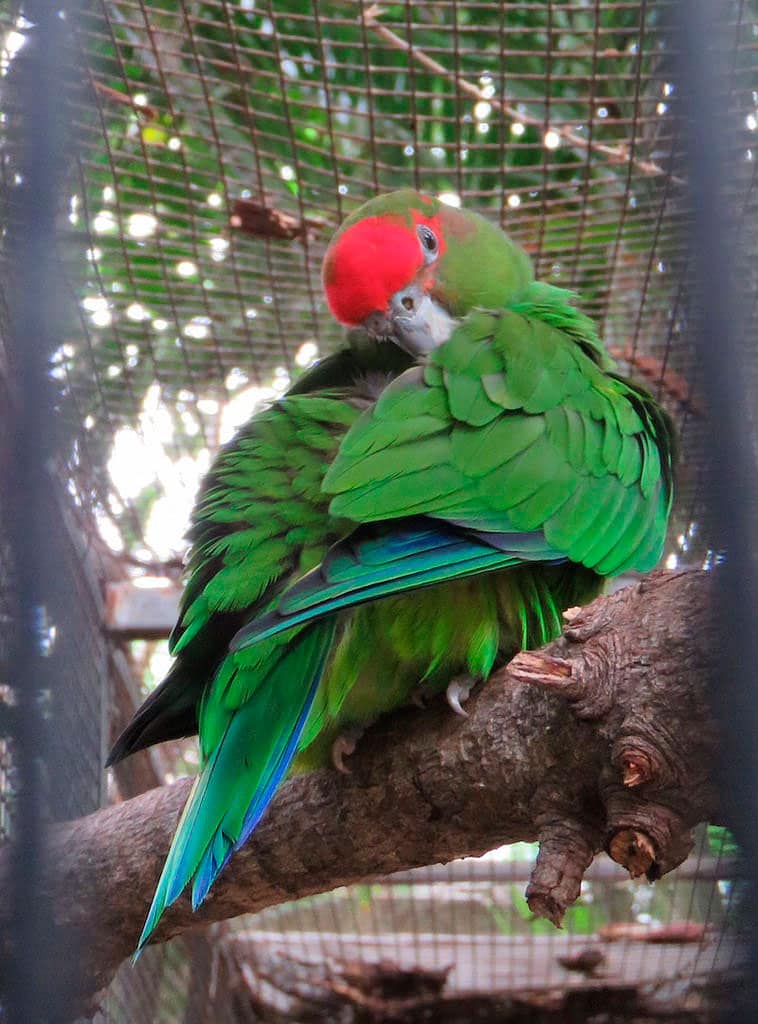
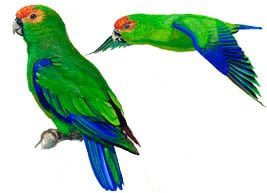
The Pileated Parrot (Pionopsitta pileata) has the forecrown, lores, crown anterior upper cheeks to behind eyes, bright red; patch reddish brown in ear-coverts; the lower cheeks, sides and rear of the neck, green.

The upperparts, green. Primaries and greater coverts, alula and feathers bend of wing, violet blue; other coverts, green. Outerwebs of the primary and secondary, violet blue with blue-green edges. Under, the wings bluish green, coverts with some darker blue feathers. Underparts green with bluish tint in the chest and throat, and with a yellowish tint in the belly and undertail-coverts. Upper, the tail centrally green, laterally violet blue; undertail, bluish green.

Bill dark brown, becoming dark horn distally in both jaws; bare periophthalmic naked, pale grey, irises and legs, grayish brown.

The female has most of its head green but with a pretty pale blue in the forecrown.

Immature as female, but with grayish green or green spots and dark spots on the base bill; young male sometimes with red limited in forecrown with a patch orange behind.

  • Sound of the Pileated Parrot.

Habitat:

They inhabit in forests, including humid tropical forests and forests dominated by araucarias, mainly in lowlands in the south of the mountain range, although penetrating the coastal mountains Brazil, at altitudes of 300 to 1.500 m; also in areas partially cleared. gregarious in groups of approximately 10 birds; apparently rare in greater numbers.

Reproduction:

They nest in the cavities of trees. probably reproduce mainly in the months of November to January. Clutch 3-4 eggs in captivity.

Food:

The fruits of Euterpe edulis They are among the favorite foods during the winter in eastern Paraguay; also recorded fruits Podocarpus and Solanum, and bark Eucalyptus; visit when ripe fruit orchards in Rio Grande do Sul.

Distribution and status:

Size of its range (breeding/resident ): 1.650.000 km2

The Pileated Parrot It is located in southeast Brazil, to the South of Bay, through the belt of the Atlantic forest in Espirito Santo, probably east of Minas Gerais, Brazil, Rio de Janeiro, Sรฃo Paulo, Paranรก and Santa Catarina, until Rio Grande do Sul, extending to the east Paraguay and northeast of Argentina in Missions and possibly in Currents (no recent records); also they have been reported east of Chaco in Argentina, where they can arrive as an irregular visitors.

Some seasonal movements occur Paranรก, where birds leave the inland coastal plateau after breeding, and in Paraguay where it is in Amambay in October.

Nomad in the Intervales State Park of Sรฃo Paulo. Its population is widespread but declining due to the extensive loss of forests by urban growth, agriculture and mining.

Described as uncommon to fairly common in Missions, Argentina. Apparently its population is still not at risk due to habitat loss, since birds are still quite numerous where fragments of forest remain. (for example, east of Paraguay) and travel between them on land without trees. More numerous are more extensive where the remains of forest, It is more common in eastern Paraguay and adjacent Paranรก and Sรฃo Paulo in Brazil.

Conservation:


minor concern


โ€ข Current category of the Red List of the UICN: Least concern.

โ€ข Population trend: Stable.

Rationale for the Red List category

This species has a very large range and therefore it is not close to the thresholds for Vulnerable under the criterion of size range (Extension Occurrence <20,000 km2 combinada con un tamaรฑo de rango decreciente o fluctuante, extensiรณn / calidad de hรกbitat o tamaรฑo de poblaciรณn y un pequeรฑo nรบmero de lugares o fragmentaciรณn severa). La demographic trend appears to be stable and, therefore, the species does not approach the thresholds Vulnerable under the criteria of population trend (> 30% decline over ten years or three generations). The population size It has not been quantified, but it is not believed to be close to the thresholds for Vulnerable under the criterion of population size (<10.000 individuos maduros con un descenso continuo estimado> 10% in ten years or three generations or a population structure). For these reasons the species is evaluated as the least concern.

Justification of the population

The size of the world's population has not been quantified, but this species is described as ยซRareยป (Stotz et to the., 1996).

Justification of trend

They suspected that the population is stable in absence of evidence of any decline or threatens substantial.

"Pileated Parrot" in captivity:

Very rare in captivity.

Alternative names:

Pileated Parrot, red-cappe parrot, Red-capped Parrot (English).
Caรฏque mitrรฉ, Perroquet mitrรฉ (French).
Scharlachkopfpapagei, Scharlachkopf-Papagei (German).
Cuiรบ-cuiรบ, caturra, cuiรบ, cuiuiรบ, curica-cuiรบ, maitaca-de-cabeรงa-vermelha, periquito-rei, tui-maritaca (Portuguese).
Catita cabeza roja, Catita decabeza roja, Lorito cabeza roja, Lorito de Cara Roja, Lorito Pileado (espaรฑol).
Catita cabeza roja, Catita decabeza roja (Argentina).
Lorito cabeza roja (Paraguay).


scientific classification:
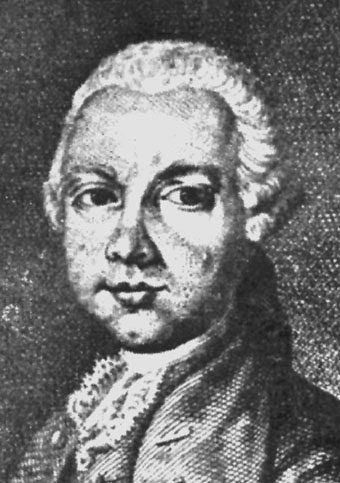
Giovanni Antonio Scopoli

Order: Psittaciformes
Family: Psittacidae
Genus: Pionopsitta
Scientific name: Pionopsitta pileata
Citation: (Scopoli, 1769)
Protonimo: Psittacus pileatus


"Lorito Pileado" images:

Videos "Pileated Parrot"

————————————————————————————————

"Pileado Lorito" (Pionopsitta pileata)


Sources:

Avibase
– Parrots of the World โ€“ Forshaw Joseph M
– Parrots A Guide to the Parrots of the World – Tony Juniper & Mike Parr
– Birdlife

Photos:

(1) – Pileated Parrot Loro Parque – Tenerife (Spain) by Florin FeneruFlickr
(2) – Pileated Parrot Loro Parque – Tenerife (Spain) by Florin FeneruFlickr
(3) – Pileated Parrot Loro Parque – Tenerife (Spain) by Florin FeneruFlickr
(4) – Pionopsitta pileata by Taguatรณ yetapaFlickr
(5) – Red-capped parrot (Pionopsitta pileata) – ยซCuiรบ-Cuiรบยป Campina Grande do Sul | The Birds of Brazil by Ben TavenerFlickr
(6) – Catita Cabeza Roja by Argentavis โ€“ Birds of Argentina

โ–ท The world of Pets: Dogs, cats, birds, reptiles, amphibians

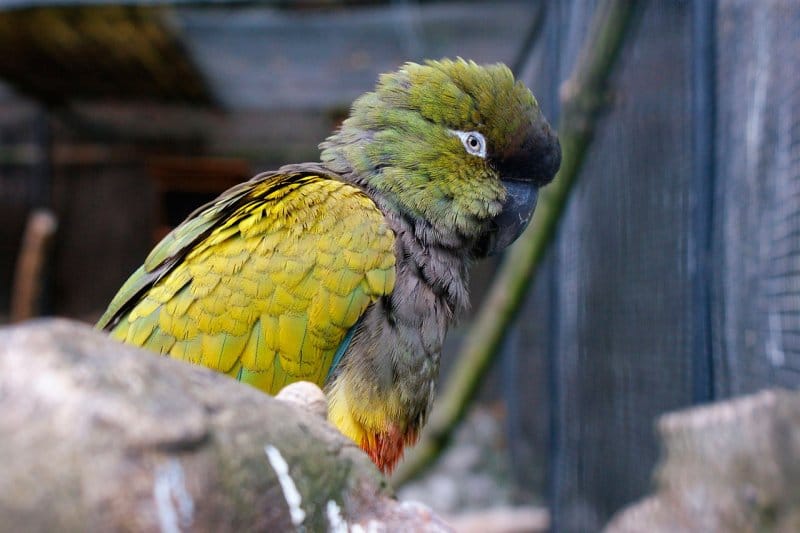
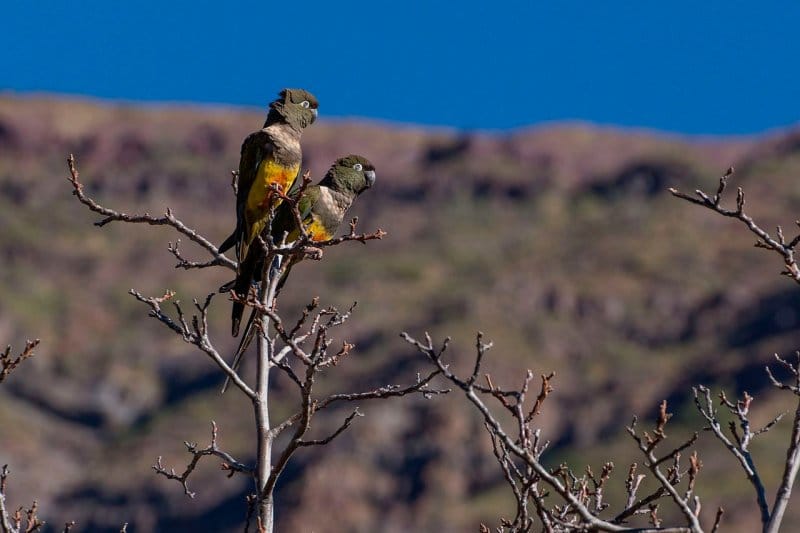
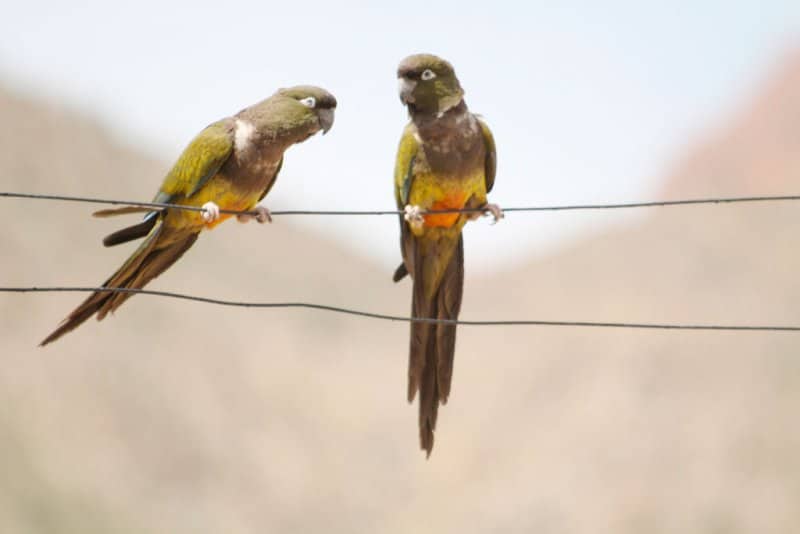
Burrowing Parakeet
Cyanoliseus patagonus

Burrowing Parakeet

Content

Burrowing Parakeet

Description:

39-52 cm. length between 260 and 280 g. of weight.

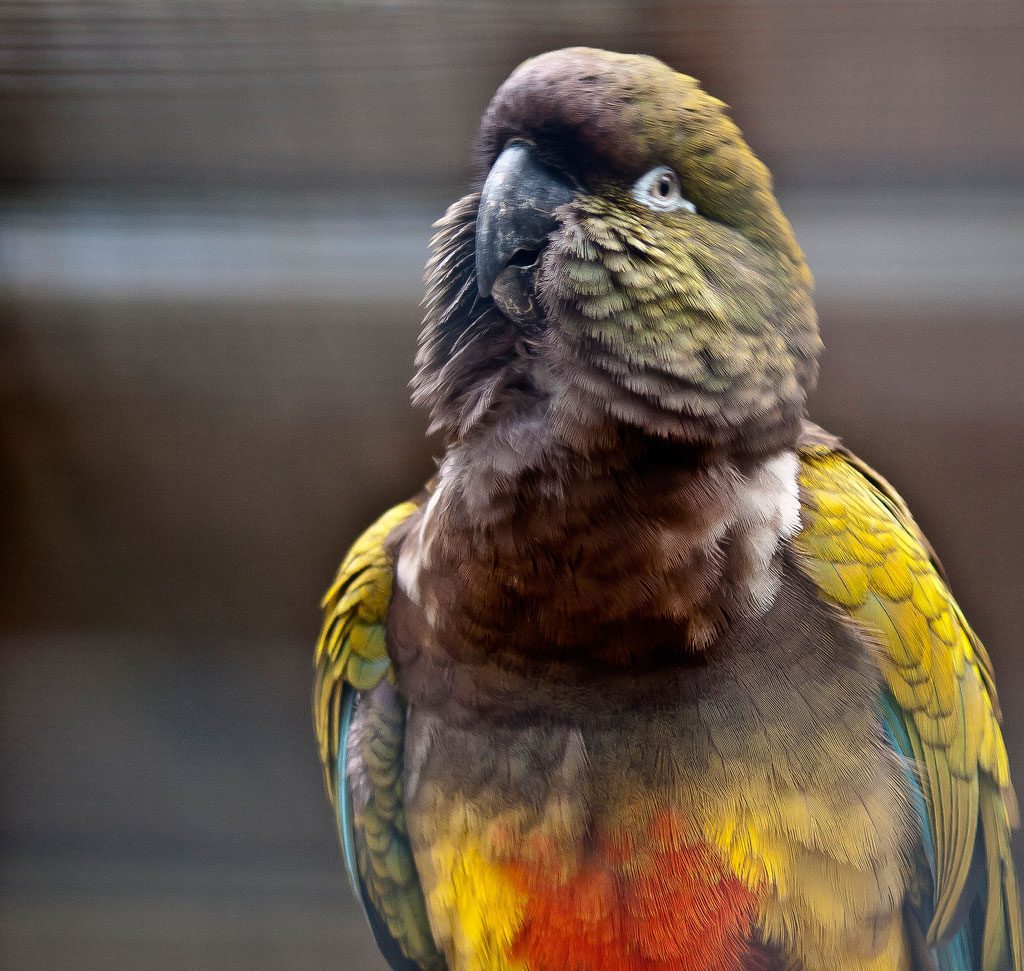
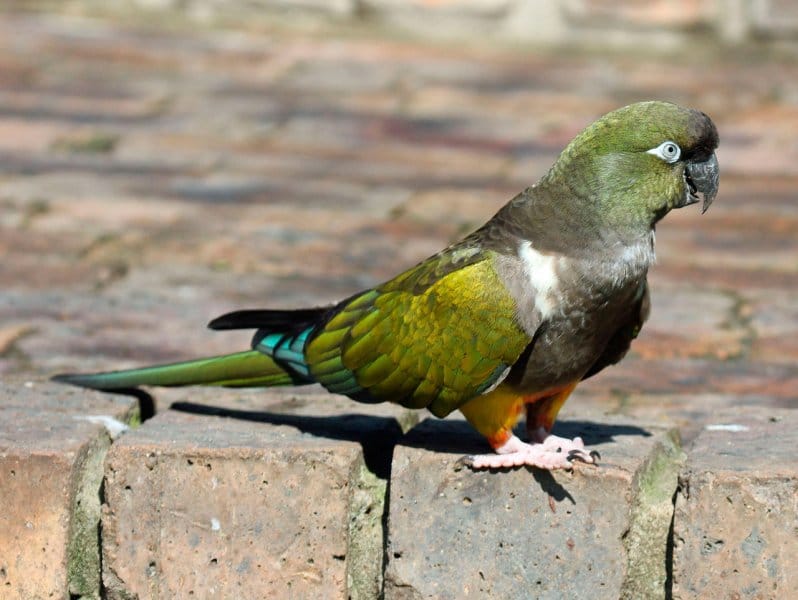
The Burrowing Parakeet (Cyanoliseus patagonus) has the forecrown, crown, lores, cheeks and nape olive brown with slight yellowish tinge; sides of neck, the mantle and back Brown olive; rump and uppertail-coverts bright canary yellow.

Blades brown, some slightly blue; covered primary blue, other yellowish olive brown. Primaries and Outer secondaries dark blue with edges innerwebs distal; inner secondary bluish brown. Underwing-coverts Yellow olive; underside of flight feather brown. Breast olive brown with white-cream area at the top of chest; rest of the underparts yellow-orange red patch through central belly. Uppertail brown tinted blue, especially next to the tips; undertail brown.

The bill It is grayish-black; the periophthalmic skin skin whitish; the irises is pale yellow; the legs They are pale yellowish brown.

Both sexes similar. Immature has horn upper mandible and the irises brown.

  • Sound of the Burrowing Parakeet.

Description Burrowing Parakeet subspecies
  • Cyanoliseus patagonus andinus

    (Dabbene & Lillo, 1913) – Similar to the species nominal but it lacks the bright yellow belly with pale areas on the sides of chest and rump olive colored duller. This and subspecies Cyanoliseus patagonus conlara they have the upperwing-coverts more brown than the nominal species.


  • Cyanoliseus patagonus bloxami

    (Olson, 1995) – Size larger than the nominal species (wings 250-263), upperparts, throat lower chest and dark brown; bill larger and heavier and patches creamy most extensive on the sides of chest (in some birds merge to form a band breast pale).


  • Cyanoliseus patagonus conlara

    (nores & Yzurieta, 1983) – Breast darker than the other Argentine subspecies.


  • Cyanoliseus patagonus patagonus

    (Vieillot, 1818) – Nominal.

Habitat:

The species usually inhabit areas open pastures, although it has also been reported in Savanna, wooded valleys cliffs and farmland some 2.000 m. Usually in a fairly arid land, although often it found near elevations or streams. Gregarious, forming large flocks, sometimes exceeding 1.000 birds, with common roosts trees, on wiring (sometimes in villages) and in tunnels dug to nest.

Reproduction:

It reproduces colonially in warrens carved into cliffs (usually limestone or sandstone Chile) often with stunning views. In San Luis, Argentina, reproduction is reported in the wet season (Novemberรขโ‚ฌโ€œApril), the birds return to nest in the cliffs lay eggs in September and November to December in San Luis, spreading of bird breeding sites in April; apparently earlier in Chile. Clutch 2-4 eggs. The male takes care of feeding the female during the incubation period.. The young leave the nest at 2 months of age, However, They continue to be fed by their parents until 6 months of age.

Food:

The diet of the Burrowing Parakeet It consists mainly of seeds and fruits predominance of fruit in the summer months (November to February). Food reported include berries of buckthorn joke and Discaria, fruit of Geoffroea decorticans, Prosopis caldenia, P. chilensis and P. flexuosa and seeds of Carduus mariana. Sometimes damaged grain crops; often it feeds on the floor or around.

Distribution:

Extending its range (breeding/resident): 1.590.000 km2

The Burrowing Parakeet They are distributed by the South South America, extending from northern Santa Cruz and Chubut in Argentina, passing by Black river and Pampa, up to Buenos Aires, San Luis and Cรณrdoba, San Juan, La Rioja, Catamarca, Tucumรกn and Salta, reaching westward across southern Uruguay.

They were recorded in the early 1920 from the center of Formosa, Argentina, away from Andes mountains, and above the center Chile from the North of The lakes to north of Atacama, but now they are confined to a few localities in the foothills of the Andes, for example in Bio Bio.

Will produce some seasonal movements, including the northward migration of birds south in the Argentine winter and shifts down Chile.

In Argentina is locally common or abundant, although in some places (p. e.g.. in Cรณrdoba and Buenos Aires Eastern) They are rare or occasional. Few and far between in Uruguay. drastic decline during the twentieth century Chile, so that the subspecies Cyanoliseus patagonus bloxami It is considered at risk, with an estimated population of less than 3.000 individuals at the end of the decade 1980. The decrease in parts of the Argentina It is attributed to the catch for the trade, the hunting for food, converting grassland and arable land persecution as crop pest. Probably continues to decline overall.

Burrowing Parakeet subspecies distribution

Conservation:


minor concern


โ€ข Current category of the Red List of the UICN: Least concern.

โ€ข Population trend: Decreasing.

โ€ข Population size : 95000 individuals.

Rationale for the Red List category

Even though the demographic trend It appears to be declining, the decline is not believed to be rapid enough to approach the Vulnerable thresholds based on demographic trend criteria (> 30% decrease in ten years or three generations). The population size is very large, and therefore does not approach the thresholds for Vulnerable under the criterion of population size (<10.000 individuos maduros con un descenso continuo estimado en >10% in ten years or three generations, or with a specific population structure). For these reasons, the species is evaluated as Least concern.

Justification of the population

The species is still common in many parts of its range in Argentina, with only small contractions reported in range Cรณrdoba (R. M. Fraga a slightly. 2003). The population size of four subspecies was estimated as follows by MASELLO et al. (2011): Cyanoliseus patagonus patagonus 43.330 nests, Cyanoliseus patagonus conlara 1.700 individuals, Cyanoliseus patagonus andinus 2.000 nests, Cyanoliseus patagonus bloxami 5.000-6.000 individuals. Based on these figures, the population Total overall can be about 95.000 mature individuals.

Justification trend

They suspected that the population is declining due to continuing habitat destruction and unsustainable levels of exploitation.

Threats

The species has been the subject of a intense trade: from 1981, year it was included in the Appendix II of the CITES, they have been 122.914 individuals caught in international trade (UNEP-WCMC CITES CITES Trade Database, January 2005).

Conservation actions underway

The species is included in the Appendix II of the CITES.

"Burrowing Parakeet" in captivity:

The average life expectancy is of 15-20 years in captivity. Protected by Appendix II of the CITES.

To help conservation Burrowing Parakeet, You can report your hunt, sale, trade and illegal possession, thus, We will be cooperating with the conservation of this species and not be complicit in the decline of their populations and their future extinction of wild.

Alternative names:

Burrowing Conure, Burrowing Parakeet, Burrowing Parrot, Patagonian Burrowing Parrot, Patagonian Conure, Patagonian Parrot (English).
Conure de Patagonie, Perriche de Patagonie, Perruche de Patagonie (French).
Felsensittich, Felsen-Sittich (German).
Periquito-das-barreiras (Portuguese).
Loro Barranquero, Loro de la Patagonia, Loro Patagonico, Tricahue (espaรฑol).
Loro barranquero (Argentina).
Tricahue (Chile).
Loro barranquero, Loro Patagonico (Uruguay).
Perico Barranquero (Mexico).

scientific classification:

Order: Psittaciformes
Family: Psittacidae
Genus: cyanoliseus
Scientific name: Cyanoliseus patagonus
Citation: (Vieillot, 1818)
Protonimo: Psittacus patagonus

Images "Barranquero Loro":

Videos "Burrowing Parakeet"

————————————————————————————————

"Their barranche" (Cyanoliseus patagonus)


Sources:

Avibase
– Parrots of the World โ€“ Forshaw Joseph M
– Parrots A Guide to the Parrots of the World – Tony Juniper & Mike Parr
Birdlife

Photos:

(1) – A Burrowing Parrot captive in Madeira By Rakkhi Samarasekera from London, United Kingdom (P6122982Uploaded by Snowmanradio) [CC BY 2.0], via Wikimedia Commons
(2) – Two Burrowing Parrots in Limari Province, Chile By Gerzo Gallardo (Flickr: Parrots) [CC BY 2.0], via Wikimedia Commons
(3) – Pair of cockles Cyanoliseus patagonus in the RN Cypress River By BioVipah (Own work) [CC BY-SA 4.0], via Wikimedia Commons
(4) – Burrowing Parrot (also known as the Patagonian Conure) to Lille Zoo, France By Olivier Duquesne (originally posted to Flickr as Perroquet) [CC BY-SA 2.0], via Wikimedia Commons
(5) – A Burrowing Parrot at Birds of Eden, an aviary in Western Cape, South Africa By Dick Daniels (http://carolinabirds.org /) (Own work) [CC BY-SA 3.0 or GFDL], via Wikimedia Commons
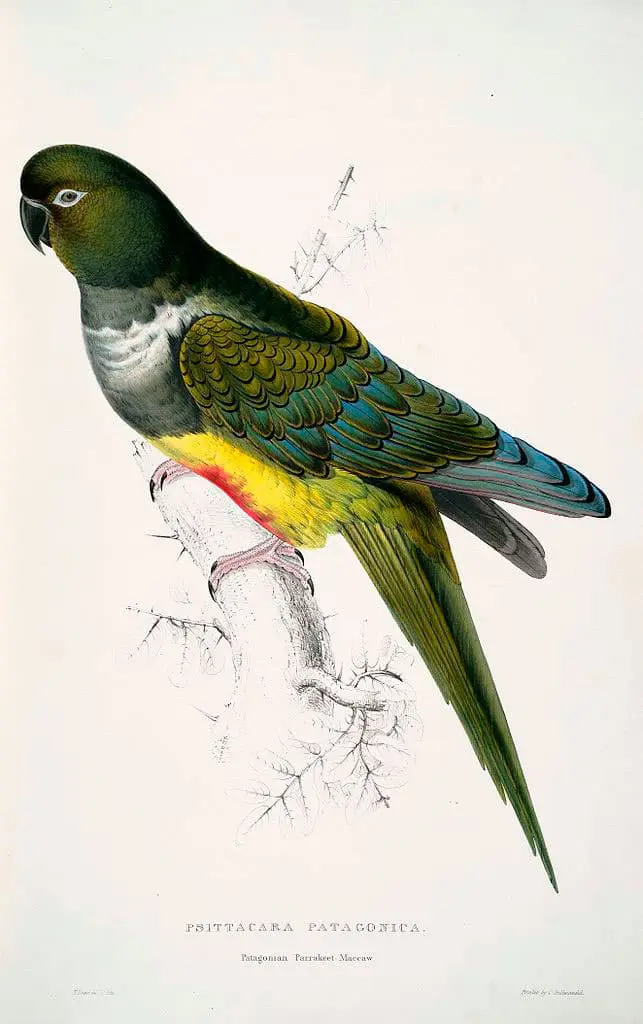
(6) – A painting of a Burrowing Parrot, also known as Patagonian Conure, (originally captioned ยซPsittacara patagonica. Patagonian Parrakeet-Maccawยป) by Edward Lear 1812-1888 – Wikipedia

Sounds: Cristian Pinto, XC380836. accessible www.xeno-canto.org/380836.

โ–ท The world of Pets: Dogs, cats, birds, reptiles, amphibians

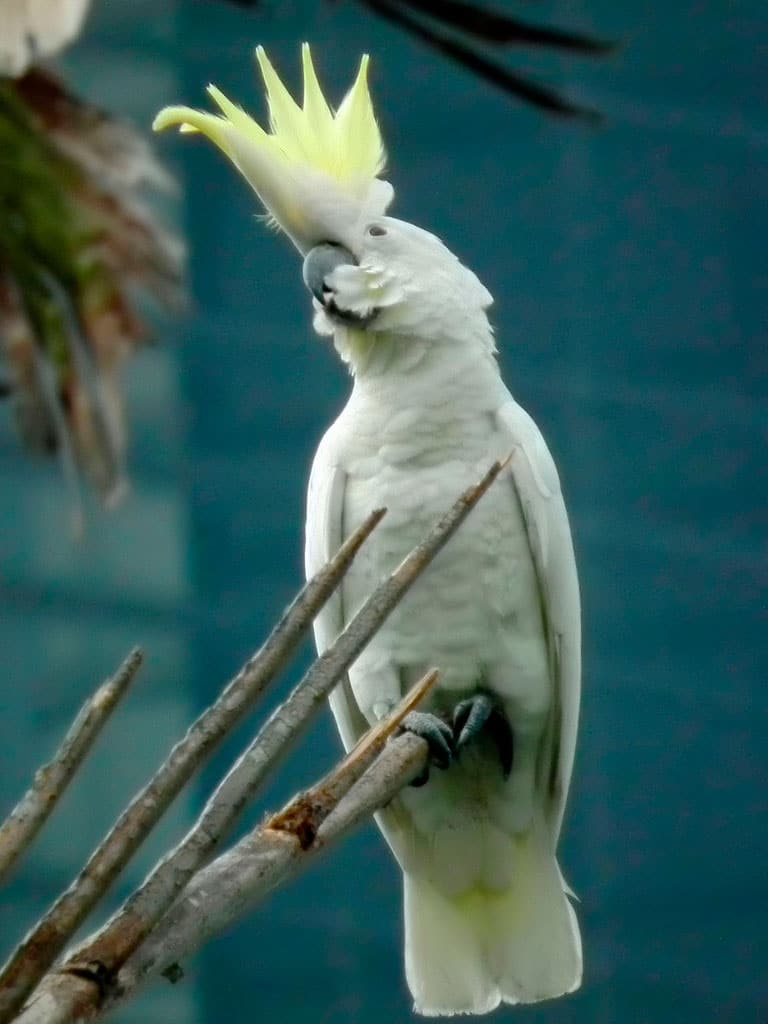
Yellow-crested cockatoo
Cacatua sulphurea

Yellow-crested cockatoo

Content

Description

Medium-sized, 35 cm.. long.

Yellow-crested cockatoo

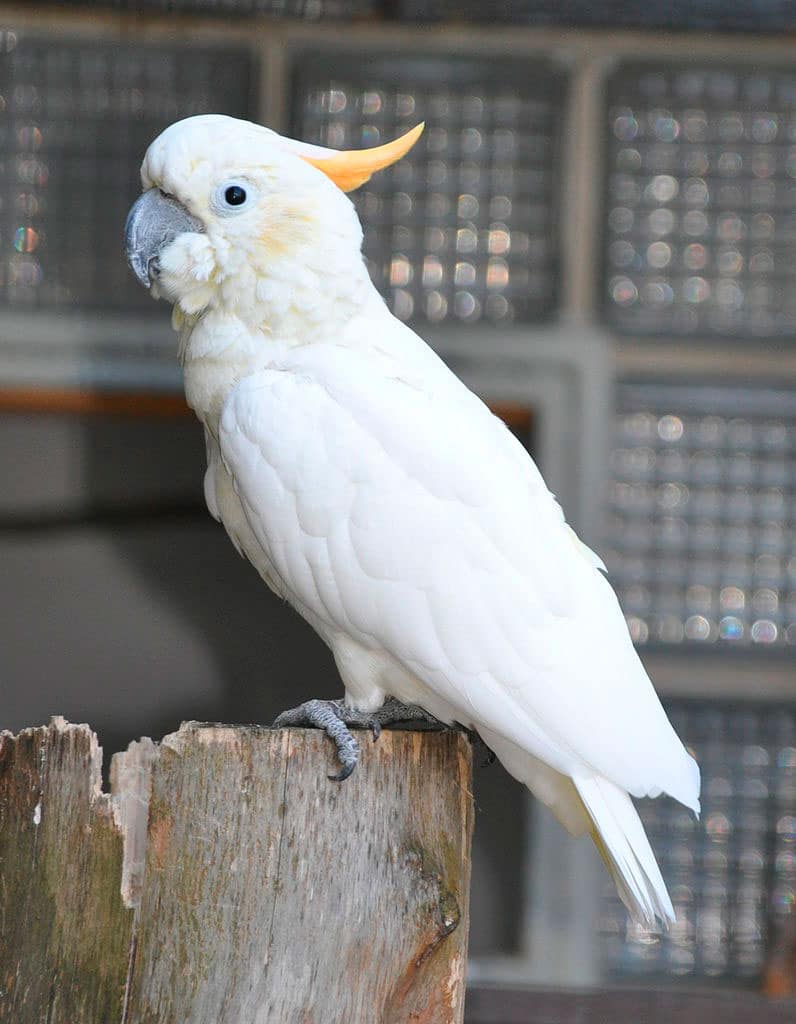
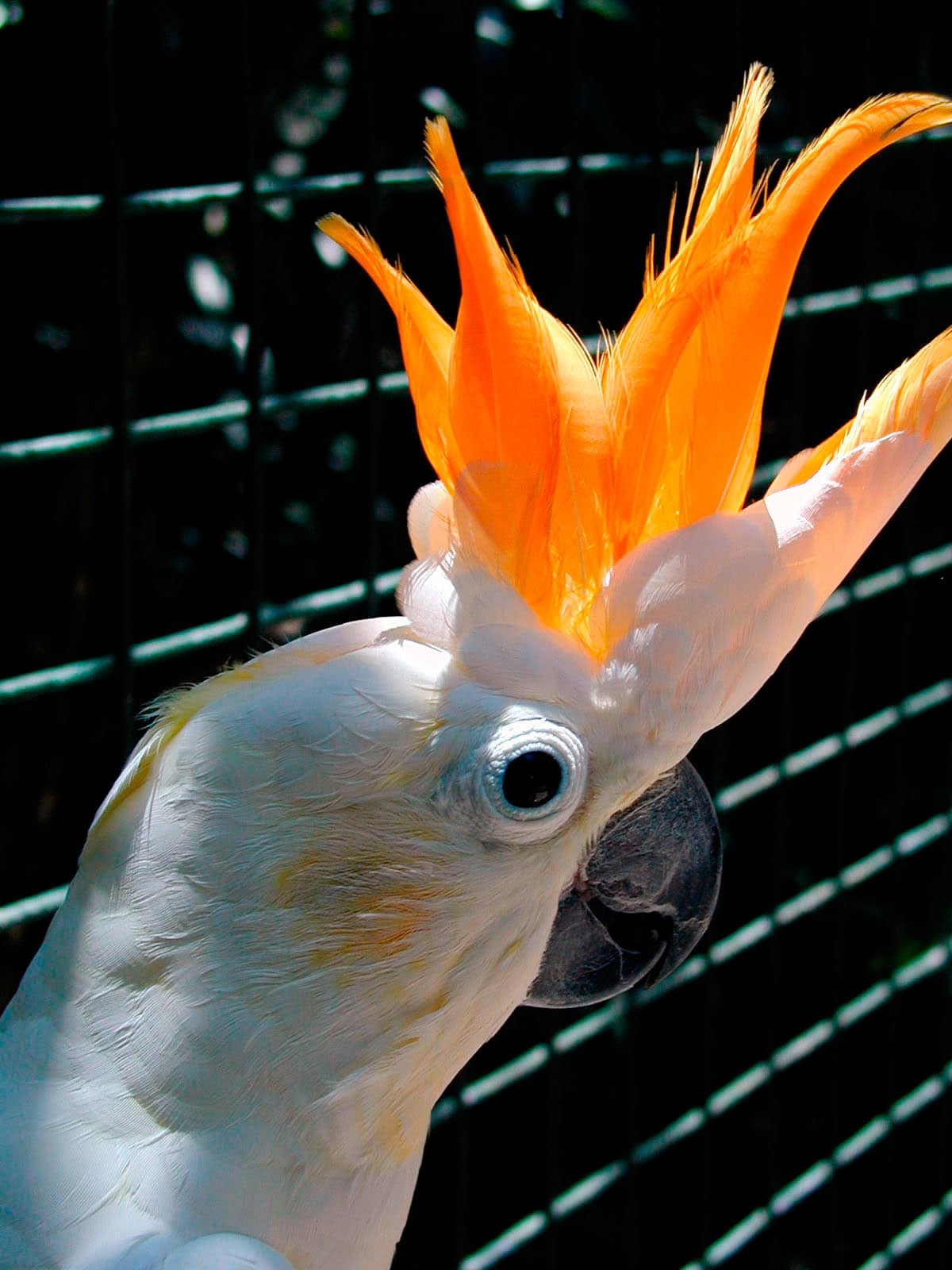
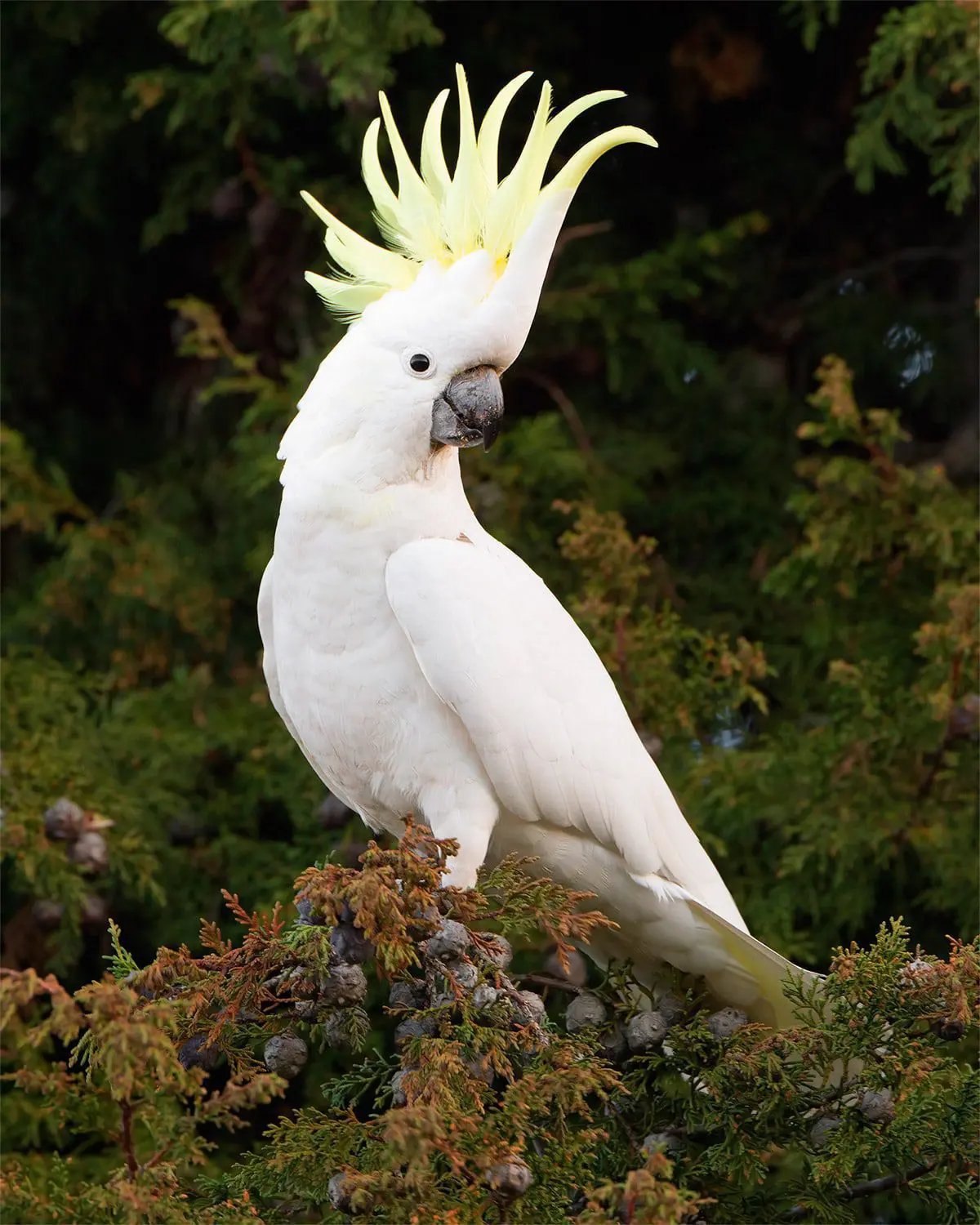
The Yellow-crested cockatoo (Cacatua sulphurea) It is distinguished by its long, thin yellow erectile crest, that curves forward, and extending upward, above the nape, when it folded. The front of his crown and main feathers crest, are white. The rest of your plumage It is also white, except in yellow suffusion ear-coverts, under the wings and in the innerwebs of the undertail-coverts. The bases of the hackles and underparts, They are yellowed; some birds show a slight yellow tone, particularly on chest and the belly. The bill It is black; eye ring pale bluish; irises dark brown; legs grey. The female is similar to the male but with the irises reddish and slightly smaller.

The young birds They show both sexes irises dark taupe, although females They begin to acquire the red coloration in the first year. The bill and legs immature are also lighter.

Description 4 subspecies
  • Cacatua sulphurea abbotti

    (Oberholser, 1917) – Similar to the parvula, but largest.

  • Cacatua sulphurea citrinocristata
  • Cacatua sulphurea citrinocristata

    (Fraser, 1844) – Slightly larger than the nominal, with one crest orange & ear-coverts orange yellow. Additional research may provide a basis for improving this subspecies to a specific status..

  • Cacatua sulphurea parvula

    (Bonaparte, 1850) – Similar to the nominal species, but with the ear-coverts paler and less yellow on yellow feathers underparts. the size of the bill in this subspecies it increases clinically towards the west.

  • Cacatua sulphurea sulphurea

    (Gmelin, 1788) – Nominal.

Habitat:

Video – "Yellow-crested cockatoo" (Cacatua sulphurea)

SULPHURE COCKATUA

They inhabit at the edges of the forest, wooded areas, farmland, cocoteros, semi-arid areas and forests until the 800 m (locally 1.200 m).

The Yellow-crested cockatoo usually they found in pairs or small groups of up to ten individuals, although they may meet in larger flocks to feed on fruit trees. They can form flocks with Eclectus Parrot (Eclectus roratus).

They tend to be noisy and visible, but can be difficult to spot when moving silently in the canopy, and they are more often in flight. The groups who leave their resting places in the montane forest areas frequently displace forage at lower altitudes including cultivated fields. Pairs may hover conspicuously above the forest canopy searching for fruitful trees, allowing a reasonably close approach when resting on a branch.

The crest It is generally stands when landing, or when an individual is making calls from a perch. Like most of the Cockatoos They enjoy a bath in the rain.

Reproduction:

Specimens of Yellow-crested cockatoo on the island of button in State reproductive during the months of September and October, although Nusa Tenggara the breeding It occurs in the months of April and May. The female It lays two or three white eggs in the hollow of a tree, and incubation lasts around 28 days with both parents participating. Chicks they leave the nest to 10 weeks and are dependent parent for about two months.

Food:

They feed in trees and soil. Its diet It includes seeds, corn (Zea mays) of cultivated fields, fruit, berries, egg yolks, flowers and nuts (including large coconuts (cocos nucifera)).

Distribution and status:

Size of its range (breeding/resident ): 1.360.000 km2

The Yellow-crested cockatoo They are confined Indonesian, where they can be seen in the lowlands Isla Celebes (virtually extinct in the north), islands in the Flores sea, in Nusa Tenggara and isolated islands Masalembu in the Java Sea.

introduced in Singapore and Hong Kong. The species is found in both wooded areas and cultivated and is scarce throughout its range. It is estimated that the world population total is less than 40.000 birds and is decreasing. Although populations of the nominal subspecies and of the subspecies parvula may still be close to 10.000 specimens, the citrinocristata subspecies It has an estimated population between 800 and 7.200 only individuals, having declined by 80% between the years 1986 and 1989, while the distinctive subspecies abbotti It is now represented by only nine individuals in nature.

Although habitat loss is clearly a factor in Sumba, where distribution appears to be linked to the extent of primary forest (is only about 15% the original forest), trade is the main threat to the species as a whole. Trade data show that exported almost 100.000 birds in years 1980-1992. The export citrinocristata subspecies It was banned in 1992 by local authorities, and 26 birds were confiscated in September of that year. There are probably at least 50 individuals of each subspecies in public collections and more than 2.000 in private aviculture, although the numbers for the subspecies abbotti They are unknown.

Distribution 4 subspecies

Conservation:

State of conservation โ“˜


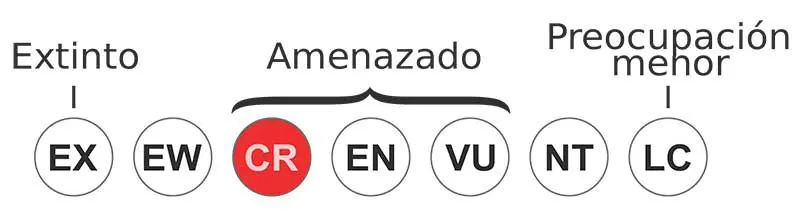
critical hazard critically endangered โ“˜ (UICN)โ“˜

โ€ข Current category of the Red List of the UICN: critically endangered.

โ€ข Population trend: Decreasing.

Its crashing fall It is almost entirely attributable to the unsustainable exploitation for domestic and international trade. Logging to the conversion of forests for agriculture as well as the use of pesticides for land and large-scale.

Justification of the population

Based on recent surveys in various parts of the range of the species, C. Trainor in some (2007) It has been estimated the world population in less than 7.000 individuals: 3.200-5.000 en Sumba (though perhaps only 562 in 2012, Burung Indonesia en preparaciรณn), 500 en Komodo, 200-300 en Timor Leste, 200-300 en Sulawesi, 20-50 in West Timor, 40-70 Flores, 50-100 en Sumbawa, 100 in Rinca and other 700 birds in total. The best data is located in the band 2.500-9.999 individuals, equivalent to 1.667-6.666 mature individuals, rounded here to 1.500-7.000 mature individuals.

Conservation actions and research in progress

CITES Appendix I (2005). It has developed and adopted a recovery plan cooperative and has prepared an update 2012 (D. Mulyawati in some. 2012). The populations are found in various protected areas, It is the most important Rawa Aopa Watumohai (55 copies in 2011 [Waugh 2013]) and National Parks Caraente (en Sulawesi), supporting up 100 individuals (transgressed 2006) , Reserva Natural de Wildlife en Pulau Moyo, Komodo National Park and two national parks in Sumba: Manupeu-Tanadaru y Laiwangi-Wanggameti. Nini Konis Santana National Park declared in Timor has a 100 estimated birds (Trainor et al., Without date) . In Rawa Aopa Watumohai nests they have been protected from predators by removing vegetation pendant necklaces and installation of plastic around the tree trunks nesting (Waugh 2013). Moratoriums on international trade are in effect, although it is likely that a large proportion of trade is a national. Several subpopulations of Sulphur-crested Cockatoo have increased in Sumba between 1992 and 2002, due to conservation efforts (including local education, ecotourism and law enforcement), although densities remained below those typical for other cockatoo species (Cahill et al ., 2006) . Capture for trade has declined dramatically in Sumba through a variety of awareness and protection measures of the community (D. Mulyawati in some. 2012).

Following the surveys of 2008 and 2009, the Indonesia Parrot Project and Konservasi Kakatua Indonesia have started meetings with community leaders and villagers in Masakambing and Masalembu, as well as with the military and local police, to raise awareness and gain support for Sulphur-crested Cockatoo conservation (Metz et al. Al., 2009) . A conservation program-awareness-pride has also begun to involve adults and school Archipelago Masalembu (Metz et al. , 2009, Translating et al., 2009) And in Southeast Sulawesi (Anon., 2012). A "village regulation" was written to catch, possess or transport the species and initiate measures to reduce habitat destruction and employ a former village chief to guard and protect nests and study Sulphur-crested Cockatoos (Translating et al., 2009) . Moronone community in Rawa Aopa Watumohai NP, where four members of the village have been hired as Forest Wardens (Anon., 2012), have established similar community-based regulations. The guards protect the species against poachers and perform monitoring activities (Waugh 2013). The pest status of the species can be addressed by planting crops to compensate for losses and to act as a "sacrifice culture", for example, sunflower fields are used to attract the species out of other crops (Waugh 2013). Mangrove restoration is also being used to increase nesting habitat available (Waugh 2013). a repeat of the population census is planned abbotti , together with studies on its biological history and ecology (Metz et al., 2009) .

Proposed Research and Conservation Actions

Carry out further studies (including Roti, but also more studies on Alor and Pantar) to identify the most appropriate action for conservation areas and to periodically monitor key population surveys repeating ago 8-10 years. Provide relevant support for protected areas and conservation initiatives within its range and protect nests when possible. Strengthen the protection of forest Poronumbu, Sumba, declaring Nature Reserve (Translating y Agustina 2012). Strengthen control, the enforcement and monitoring of trade and establishing greater management of captive populations. Improve law enforcement in designated protected areas and other key areas for trade, including ports, markets, etc. Promote widespread community conservation initiatives. These may include, en la isla de Pasoso, Sulawesi Central, work to protect the Sulphur-crested Cockatoo should involve all five families living on the island and introduce community involvement programs for children and adults on several other islands where the species occurs (Translating y Agustina 2012). The recommendations formulated specifically for the protection of the species in the Komodo National Park consisted of carrying out an annual monitoring, maintain regular patrols, sensitize local communities and studying human activities and impacts within the park (Imansyah et al ., 2005, Benstead 2006) . Conduct ecological research to clarify options for management and conservation. Other objectives should be to study the abundance and distribution of nest holes and water sources.. The provision of artificial sources of water near the nesting sites, that is to say, water ponds, It is essential for the species on the island of Komodo and may also be necessary to protect the nests of young Komodo dragons in Komodo (Translating y Agustina, 2012).

"Yellow-crested cockatoo" in captivity:

The male Yellow-crested cockatoo It is especially aggressive with the female, sometimes to kill her. This phenomenon is known in many cockatoo species..

among the white cockatoos, this is somewhat difficult to breed in captivity. As a pet can be a formidable partner provided it has been raised for that purpose and to provide much attention.

It is very difficult for them to disconnect in the presence of their owners and entertain themselves without seeking continuous interaction.
Great ability to imitate human sound within the world of cockatoos.

Note: Because of its status, CRITICALLY ENDANGERED, only controlled captive breeding is recommended in an attempt to recover this species in the wild.

Alternative names:

Yellow-crested Cockatoo, Lesser sulphur-crested cackatoo, Sulphur-crested Cockatoo (ingles).
Cacatoรจs soufrรฉ, Petit Cacatoรจs ร  huppe jaune (French).
Gelbwangenkakadu, Orangehaubenkakadu (German).
Cacatua-de-crista-amarela (Portuguese).
Cacatรบa de Moรฑo Naranja, Cacatรบa Sulfรบrea (espaรฑol).

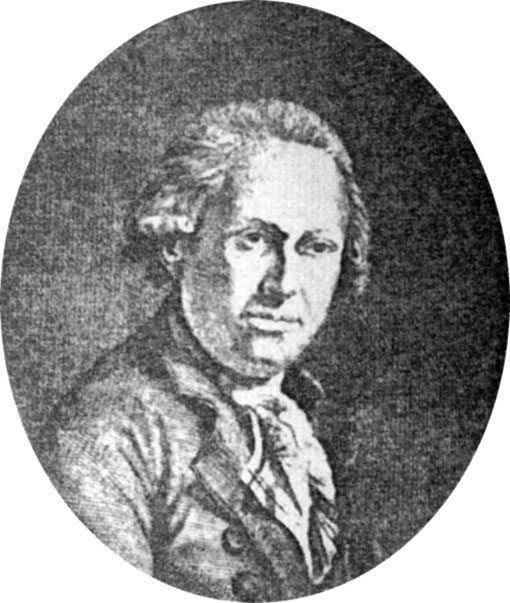
Gmelin Johann Friedrich

scientific classification:


Order: Psittaciformes
Family: Cacatuidae
Genus: Cockatoo
Scientific name: Cacatua sulphurea
Citation: (Gmelin, JF, 1788)
Protonimo: Psittacus sulphureus


Images Sulphur-crested Cockatoo:


Species of the genus Cacatua
  • Cacatua tenuirostris
  • Cacatua pastinator
  • —- Cacatua pastinator derbyi
  • —- Cacatua pastinator pastinator
  • Cacatua sanguinea
  • —- Cacatua sanguinea gymnopis
  • —- Cacatua sanguinea normantoni
  • —- Cacatua sanguinea sanguinea
  • —- Cacatua sanguinea transfreta
  • —- Cacatua sanguinea westralensis
  • Cacatua goffiniana
  • Cacatua ducorpsii
  • Cacatua haematuropygia
  • Cacatua galerita
  • —- Cacatua galerita eleonora
  • —- Cacatua galerita fitzroyi
  • —- Cacatua galerita galerita
  • —- Cacatua galerita triton
  • Cacatua ophthalmica
  • Cacatua sulphurea
  • —- Cacatua sulphurea abbotti
  • —- Cacatua sulphurea citrinocristata
  • —- Cacatua sulphurea parvula
  • —- Cacatua sulphurea sulphurea
  • Cacatua moluccensis
  • Cacatua alba

  • Sources:

    Avibase
    – Parrots of the World โ€“ Forshaw Joseph M
    – Parrots A Guide to the Parrots of the World – Tony Juniper & Mike Parr
    – Birdlife

    Photos:

    (1) – Cacatua sulphurea by Charles LamFlickr
    (2) – Citron-crested Cockatoo(Cacatua sulphurea citrinocristata) in the Walsrode Bird Park, Germany By Quartl (Own work) [CC BY-SA 3.0], via Wikimedia Commons
    (3) – A Yellow-crested Cockatoo at Auckland Zoo, New Zealand By Ashleigh Thompson (originally posted to Flickr as Captain) [CC BY 2.0], via Wikimedia Commons
    (4) – Cacatua sulphurea citrinocristata, Citron-crested Cockatoo. Photograph of upper body and crest By Ruth Rogers (originally posted to Flickr as Citron Cockatoo) [CC BY 2.0], via Wikimedia Commons
    (5) – Citron-crested Cockatoo (Cacatua sulphurea citrinocristata). The glass between the camera and this parrot makes the picture just a little bit blurry By Alexander Tundakov (originally posted to Flickr as White Parrot) [CC BY 2.0], via Wikimedia Commons
    (6) – Photo of Lesser Sulphur-crested Cockatoo (wings clipped) By Snowmanradio, with permission from Tropical Birdland, Leicestershire, England. (Own work) [GFDL or CC BY-SA 3.0], via Wikimedia Commons
    (7) – Yellow-crested Cockatoo (Cacatua sulphurea) at the KOBE Oji Zoo by opencage.info
    (8) – Lesser Sulphur-crested Cockatoo (wings clipped) By Snowmanradio, with permission from Tropical Birdland, Leicestershire, England. (Own work) [GFDL or CC BY-SA 3.0], via Wikimedia Commons
    (9) – Yellow-crested Cockatoo (Cacatua sulphurea) by Darren – Flickr
    (10) – Yellow-Crested Cockatoo, Cacatua sulphurea by Sek Keung LoFlickr
    (11) – Cacatua sulphurea by Charles LamFlickr
    (12) – Cacatua sulphurea by Charles LamFlickr
    (13) – Cacatua sulphurea by Pichon Charles LamFlickr
    (14) – A painting of a Yellow-crested Cockatoo, also known as the Lesser Sulphur-crested Cockatoo, (originally captioned ยซPlyctolophus sulphureus. Lesser Sulphur-crested Cockatooยป) by Edward Lear 1812-1888. [Public domain], via Wikimedia Commons

    Sounds: (Xeno-canto)

    โ–ท The world of Pets: Dogs, cats, birds, reptiles, amphibians

    Sulphur-crested cockatoo
    Cacatua galerita

    Cacatua galerita

    Content

    Description

    55 cm.. height and a weight between 815 and 975 g..
    The Sulphur-crested cockatoo (Cacatua galerita) It is a bird with a predominantly white plumage.
    In adults, the ear-coverts, bases feathers throat and cheeks, are pale yellow. the arista formed by the 6 Erectile feathers slightly inclined forward, are yellow. The crest You can reach up 14 centimeters in length. The bottom of the wings and of the tail van dyed pale yellow.
    The ring surrounding the eye shows a white. The irises is dark brown in the male and reddish brown in the female. The bill is blackish grey, the legs grey.

    The immature They are just different from adults. The irises They are pale brown.

    Description 4 subspecies
    • Cacatua galerita eleonora

      (Finsch, 1863) – It's like Cacatua galerita triton but smaller and with bill smaller.


    • Cacatua galerita fitzroyi

      (Mathews, 1912) – Yellowed feathers, both ear-coverts, and the throat and cheeks, they are absent. The eye ring It is light blue. Bill but great.


    • Cacatua galerita galerita

      (Latham, 1790) – Nominal.


    • Cacatua galerita triton

      (Temminck, 1849) – Something smaller, the crest WIDER and eye ring pale blue.

    Behavior:

    They are very noisy and very easy to observe, Although they are more identifiable by their cries.

    During the breeding season, they live in pairs or in small family groups, but the rest of the year, They are in flocks that may contain hundreds of birds.

    In the urban areas and in places that they are equipped with feeders, adopt a family behavior.
    In other places, It inspired his distrust and his usual prudence, the Sulphur-crested cockatoo they are very difficult to deal with.

    In open areas these birds are implementing a sentinel system that is organized as follows: while most of the flock feeds, Some birds seen from a nearby perch and are likely to sound the alarm if danger.

    Habitat:

    Video – "Sulphur-crested cockatoo" (Cacatua galerita)

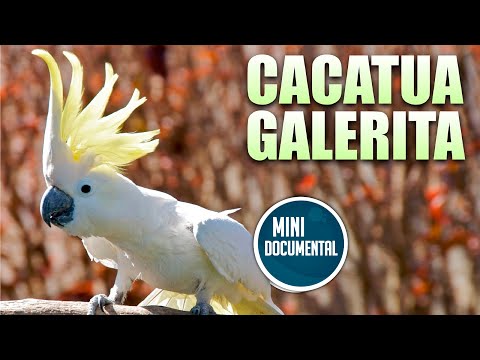
    Cacatua galerita (mini documentary)

    Is located in variety of forest areas, forests (including swamps and river areas), mangroves, Open field, on farm land (including rice fields and plantations of Palm), Savannah, Mallee and suburban areas. Found up to 1.500 meters in parts of Australia, 2.400 metres in Papua New Guinea.

    Reproduction:

    In Australia, the breeding season occurs from May to August in the North and between August and January, in the South.

    In New Guinea, It takes place during every month of the year, although the most active months are during the period from May to December.

    This species occasionally breeds in colonies. The nest is a natural cavity in a eucalyptus large near a stream between 3 and 30 meters above the ground. Sometimes the residence of the Sulphur-crested cockatoo It is located in the holes of the limestone cliffs along the murray river. In this case, the eggs are deposited directly in the sand.

    In New Zealand, These birds lay amid bales of hay in barns. The nest generally it contains 3 white eggs. These are deposited on a layer of debris decomposing at the bottom of the cavity.
    incubate both parents alternately for a period of 30 days. Hatchlings have a yellowish color and leave the nest after 6 to 9 weeks. Quite regularly, they return to the nest to rest for about two weeks.

    The juveniles They remain within the family group for several months. They feed together in small scattered groups.

    Food:

    forages in grasses and herbs. You can take corn and wheat sprouts. It also feeds harmful herbs like cotton thistle. other foods include: estate, Rhizomes, nuts, berries, flowers, bulbs, flower and insect larvae.

    They can cause great damage to crops. They dig in lands that were recently planted to eating fruit ripening, It also causes damage to crops that are stored and bales of hay to tear the plastic covering them.

    Distribution:

    Size of the area of distribution (reproduction / resident): 10600000 km2

    This species is endemic to the north and east of Australia, New Guinea and nearby islands, especially islas Aru, Indonesian.
    It was imported successfully to Palau Islands in Micronesia, New Zealand and some Maluku islands.

    The population in Taiwan It has been estimated at about 100 introduced breeding pairs

    Lives mainly below 1.000 m, but sometimes you can see in Australia to 1500 m. and 2000 m in east New Guinea.

    Distribution 4 subspecies

    Conservation:

    State of conservation โ“˜


    minor concern Minor Concern โ“˜ (UICN)โ“˜

    โ€ข Current category of the Red List of the UICN: Least concern.

    โ€ข Population trend: In decline.

    It is thought that his population It is greater than 500.000 individuals.

    It is not an endangered species. But, despite protection Indonesian this species is followed by trapping wild bird trade. Nor is a protected species in Australia, therefore sacrifices occur.

    In New Guinea, sometimes it is hunted for its feathers.

    It is suspected that his population is in decline due to ongoing habitat destruction.

    "Sulphur-crested cockatoo" in captivity:

    and valued species often as a pet.
    Very Intelligent, sociable and playful. It is a cockatiel for experienced bird owners. You can be dominant and aggressive. It can be very noisy.

    There are anecdotal reports of some Sulphur-crested cockatoo who they have lived more than 100 years. In the news, However, longevity record, according to sources, belongs to a captive specimen called "Cocky" who lived more than 57 years in the London Zoo. Another report suggests that these animals can live up 73.0 years in captivity, but this has not been verified.

    Alternative names:

    Sulphur-crested Cockatoo, Greater Sulphur-crested Cockatoo, White Cockatoo, Yellow-crested cackatoo (ingles).
    Cacatoรจs ร  huppe jaune, Grand Cacatoรจs ร  huppe jaune (French).
    Gelbhaubenkakadu (German).
    Cacatua-de-crista-amarela (Portuguese).
    Cacatรบa de Moรฑo Amarillo, Cacatรบa Galerita (espaรฑol).

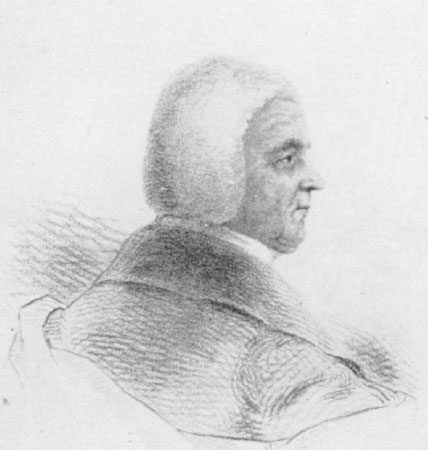
    John Latham
    John Latham

    scientific classification:


    Order: Psittaciformes
    Family: Cacatuidae
    Genus: Cockatoo
    Scientific name: Cacatua galerita
    Citation: (Latham, 1790)
    Protonimo: parrot galeritns


    Images Galerita Cockatoo:


    Species of the genus Cacatua
  • Cacatua tenuirostris
  • Cacatua pastinator
  • —- Cacatua pastinator derbyi
  • —- Cacatua pastinator pastinator
  • Cacatua sanguinea
  • —- Cacatua sanguinea gymnopis
  • —- Cacatua sanguinea normantoni
  • —- Cacatua sanguinea sanguinea
  • —- Cacatua sanguinea transfreta
  • —- Cacatua sanguinea westralensis
  • Cacatua goffiniana
  • Cacatua ducorpsii
  • Cacatua haematuropygia
  • Cacatua galerita
  • —- Cacatua galerita eleonora
  • —- Cacatua galerita fitzroyi
  • —- Cacatua galerita galerita
  • —- Cacatua galerita triton
  • Cacatua ophthalmica
  • Cacatua sulphurea
  • —- Cacatua sulphurea abbotti
  • —- Cacatua sulphurea citrinocristata
  • —- Cacatua sulphurea parvula
  • —- Cacatua sulphurea sulphurea
  • Cacatua moluccensis
  • Cacatua alba

  • Sources:

    Avibase
    – Parrots of the World โ€“ Forshaw Joseph M
    – Parrots A Guide to the Parrots of the World – Tony Juniper & Mike Parr
    – Birdlife

    Photos:

    (1) – commons.wikimedia.org
    (2) – birdsandbirds.com
    (3) – tilcheff

    Sounds: Hans Matheve (Xeno-canto)

    โ–ท The world of Pets: Dogs, cats, birds, reptiles, amphibians

    Great hanging parrot
    Loriculus stigmatus

    Great hanging parrot

    Content

    Description

    15 cm.. length between 28 and 35 g. of weight.

    The head of the Great hanging parrot (Loriculus stigmatus) is bright green, with bright red crown ending in a clear line across the rear of the crown not extending over the nape.

    Green upperparts, lightly impregnated with yellowish-orange in the mantle; rump and uppertail coverts dark crimson. green wings; edge of the carpal bones with small red mark. The underwings of turquoise blue with small green coverts. The lower parts of bright green with red stripe below the Chin and throat Center. Upper, the Green tail; light blue below.

    the black beak; pale-yellow IRIS; Pink-Orange legs.

    Females lack Red Crown and has a narrow red bib; Iris can be darker.

    Young birds lack the Red Crown, It has a bib less clear and more yellowish, yellow edges of the Carpus, and in general a duller Green.

    Subspecies

    Slight differences in the degree of the orange-yellow colour in the mantle of some populations of the island are not considered sufficient to differentiate them.

      โ€ข Loriculus stigmatus stigmatus : The nominal.

      โ€ข Loriculus stigmatus croconotus

      โ€ข Loriculus stigmatus quadricolor

    Habitat:

    Little is known about the ecology of the species.. Possible seasonal movements have been observed. According to reports, not found in old-growth forest and most common along forest edges, in the open field, and sometimes around urban centers, until 1.000 meters above sea level. Birds move usually alone or in pairs, whether it is flying above or feeding on the trees in flower. Nest-holes in thick bamboo have been recorded.

    Reproduction:

    Reproductive activity has been reported in February, from April to June, and in August and October
    The Great hanging parrot nests in cavities. It usually lays three eggs. The female incubates the egg during 20 days and after hatching the chicks take time to develop 33 more days

    Food:

    The diet includes fruits and nectar.

    Distribution:

    common in Sulawesi, since the minahassa peninsula in the North, including Bangka and Islands Lembeh, to the South, also where in Muma and Button on the high seas. They are also found in the Togian Islands.

    Of the three subspecies, including the nominal:

      โ€ข Loriculus stigmatus stigmatus – Mรผller, S, 1843 – Celebes

      โ€ข Loriculus stigmatus croconotus – Jany, 1955 – Buton Islands and Muna

      โ€ข Loriculus stigmatus quadricolor – Walden, 1872 – Togian Islands.

    Conservation:


    minor concern


    – Current IUCN Red List category: Least concern
    – The population trend: Stable

    The size of the world's population has not been quantified, Although it is estimated above 100.000 specimens. The species is reportedly common and widespread in most of its range. (pit et to the. 1997).

    The population is suspected to be stable in the absence of evidence of any reduction or substantial threats.

    "Great hanging parrot" in captivity:

    Rare.

    Alternative names:

    Sulawesi Hanging-Parrot, Black-billed Hanging-Parrot, Celebes Hanging Parrot, Celebes Hanging-Parrot, Celebes Spotted Hanging-Parrot, Great Hanging Parrot, Maroon-rumped Hanging-Parrot, Red-capped Hanging-Parrot, Sulawesi Hanging Parrot (ingles).
    Coryllis des Cรฉlรจbes (French).
    Rotplรคttchen, Rotlรคttchen (German).
    Lorรญculo do Cรฉlebes (Portuguese).
    Lorรญculo Celebiano, Lorรญculo de Cรฉlebes (espaรฑol).

    scientific classification:

    Order: Psittaciformes
    Family: Psittaculidae
    Scientific name: Loriculus stigmatus
    Citation: (Muller,S, 1843)
    Protonimo: Psittacus (Psittacula) stigmatus

    Images "Celebes Lorcle":

    Videos "Great hanging parrot"

    ————————————————————————————————

    Sources:

    Avibase
    – Parrots of the World โ€“ Forshaw Joseph M
    – Parrots A Guide to the Parrots of the World – Tony Juniper & Mike Parr
    – Birdlife

    Photos:

    (1) – By Lip Kee Yap [CC BY-SA 2.0], via Wikimedia Commons
    (2) – male perched. by iggino – lynx
    (3) – Birds-pet-wallpapers – link
    (4) – male hanging by iggino – lynx
    (5) – By F. Schulter – papageien.org

    Sounds: Frank Lambert (Xeno-canto)

    โ–ท The world of Pets: Dogs, cats, birds, reptiles, amphibians

    Green Parakeet
    Psittacara holochlorus


    Aratinga Verde

    Content

    Description:


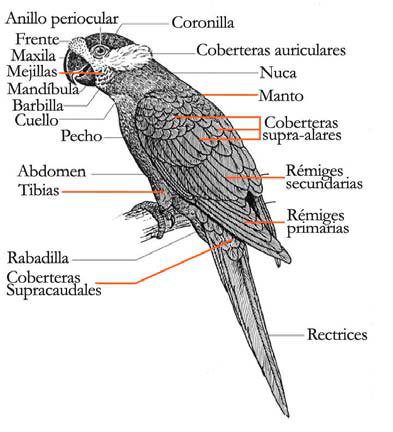
    Anatomy-parrots

    Among 28 and 30.5 cm.. of length and a weight of 232 g..
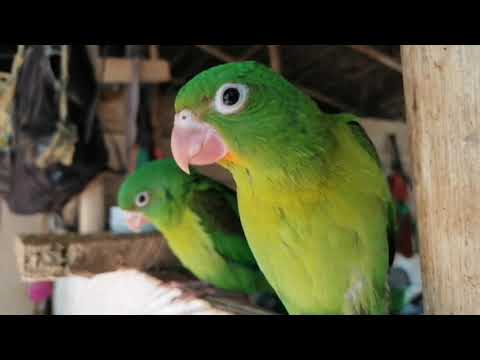
    The Green Parakeet (Psittacara holochlorus) is a medium-sized Parrot with the wings in sharp form and the tail long and stitch. Its plumage is bright green, and can present several pens red or orange in the neck. In general, the underwing-coverts are metallic greenish-yellow color, While the the flight feathers and the bottom sides of the the tail feathers are yellow-olive. Presents a eye ring pale beige and the irises orange, the legs yellowish brown.

    It has no sexual dimorphism.

    The immature has irises Brown color.

    Subspecies description:

    • Psittacara holochlorus brewsteri

      (Nelson, 1928) – Plumage, in general, darker green than that of the species nominal, with yellowish green tint and bluish suffusion at the crown.


    • Psittacara holochlorus holochlorus

      (Sclater,PL, 1859) – The species nominal.

    Habitat:

    Video – "Green Parakeet" (Psittacara holochlorus)

    Psittacara holochlorus (green spider) pets of my niece.

    The Green Parakeet, as well as their subspecies, avoid moist lowland forests; Instead, prefer deciduous forests and gallery forests, scrub, clear and the edges of the forest.

    In East Mexico, mainly seen in upland forest with some movements toward deciduous forests at elevations lower than during the non-breeding season. Registered to 2.100 meters in Mexico (the subspecies ยซbrewsteriยป at altitudes between 1,250 and 2,000m).

    Views in flocks outside the breeding season, sometimes in groups of more of 100 birds, being larger groupings in places where food is abundant.

    Reproduction:

    The nests of the Green Parakeet they are located in tree cavities (for example, cavities made by woodpeckers), crack in rocks, holes in buildings or termite mounds. Colonial nesting reported in caves in the East of Mexico.

    The breeding season has been recorded in the month of January to the East of Mexico (young in the nest); in April in Tamaulipas, to the South of Mexico.

    The clutch most common consists of four eggs.

    Food:

    Diet Green Parakeet is based on seeds, nuts, berries and fruits; reported foods include the fruits of Myrica mexicana, seeds of Mimosa and corn (they can be destructive with their crops).

    Distribution:

    Size of the area of distribution (reproduction / resident): 275.000 km2

    Disjunct in slope populations of the Atlantic, from the East of Nuevo Leรณn and Tamaulipas at the center of Veracruz; Southeast of Veracruz, is of Oaxaca and to the East of Chiapas; Southwest of Chihuahua, North of Sinaloa and South of Sonora.

    Some specimens settled in cities in southeastern Texas; It is not clear if they come from Pet escapes or are wild vagrant who emigrated from the North of Mexico. It is generally not migratory, but you can scroll to get food.

    Subspecies distribution:

    • Psittacara holochlorus brewsteri

      (Nelson, 1928) – Mountains of Northwest of Mexico, to the South of Sonora, Northeast of Sinaloa and South of Chihuahua.


    • Psittacara holochlorus holochlorus

      (Sclater,PL, 1859) – The species nominal.

    Conservation:

    โ€ข Red List category of the UICN current: Least concern

    โ€ข Population trend: Decreasing

    The population of the Green Parakeet It is suspected that it is between a slow to moderate decline due to the expansion of intensive farming and capture for the wild bird trade (Juniper and Parr 1998).

    The State of conservation, globally, regards it as a kind of Least concern because it is abundant and widely distributed. It is considered one endangered species within the Mexican law by its restricted distribution. Nest boxes they have been provided in the South of Texas nest (Brush 2007).

    The world population is estimated at 200.000 mature individuals.

    Although it is not as popular as other large amazon parrots, the Green Parakeet is maintained as pet by the local population; have also been exported as pets to the United States. Although there are no accumulated figures, during the period of 9 months between October of 1979 and June of 1980, 327 birds were imported to the United States (Roete et to the. 1982).

    While the loss of habitat It is probably the factor affecting the population of the Green Parakeet, their capture for the bird trade It is likely to be negative at the local level.

    With the signing of the Wild birds Protection Act of 1991, the Green Parakeet can not be imported to the EE.UU. unless they are part of a breeding program authorized.

    The marketing of all the species Mexican species parrots (parakeets, parrots and macaws) is banned in Mexico. Since the year 2008 It is a federal crime to catch, sell, buy this type of animal.

    "Green Parakeet" in captivity:

    Maintained as pet by the locals although its marketing is prohibited in Mexico.

    The illegal trade in parrots and macaws is held thanks to demand from consumers. If the demand for these wild species is reduced, then the offer would be reduced and therefore the illegal capture.

    According to sources, a specimen lived 21,8 years in captivity

    Alternative names:

    Green Parakeet, Cut-throat Parakeet, Green Conure, Green Parakeet (Green), Red-collared Parakeet, Red-throated Conure (English).
    Conure verte, Perriche verte (French).
    Grรผnsittich (German).
    Periquito-verde (Portuguese).
    Aratinga Verde, perico mexicano, Perico Verde, Perico Verde Mexicano, Periquito verde (espaรฑol).
    perico mexicano, Perico Verde Mexicano (Mexico).
    Perico Verde (Nicaragua).
    Periquito verde (Honduras).

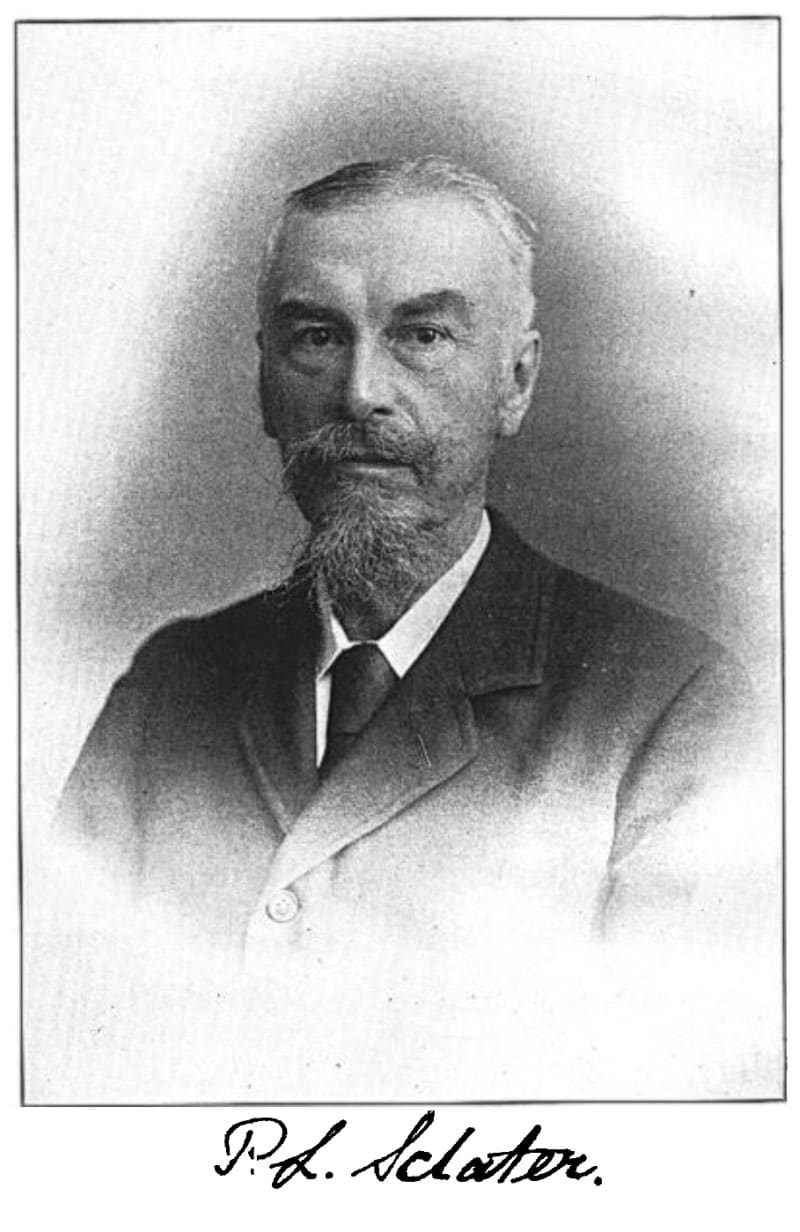
    Philip Sclater
    Philip Sclater

    scientific classification:


    Order: Psittaciformes
    Family: Psittacidae
    Genus: Psittacara
    Scientific name: Psittacara holochlorus
    Citation: (Sclater, PL, 1859)
    Protonimo: Conurus holochlorus


    Green Parakeet pictures:


    Species of the genus Psittacara

    Sources:

    Avibase
    – Parrots of the World โ€“ Forshaw Joseph M
    – Parrots A Guide to the Parrots of the World – Tony Juniper & Mike Parr
    – Birdlife

    Photos:

    (1) – Green Parakeet From The Crossley ID Guide Eastern Birds By Richard Crossley (Richard Crossley) [CC BY-SA 3.0], via Wikimedia Commons
    (2) – Green Parakeet by Vince Smith – Flickr
    (3) – Aratinga verde by G. Lasley/Vireo – audubon.org
    (4) – Aratinga verde by G. Lasley/Vireo – audubon.org
    (5) – Aratinga holochlora (Psittacara holochlorus) – Bellas Aves de El Salvador

    Sounds: Peter Boesman (Xeno-canto)

    โ–ท The world of Pets: Dogs, cats, birds, reptiles, amphibians

    Peach-fronted Parakeet
    Eupsittula aurea

    Aratinga Frentidorada

    Content

    Description:


    Anatomy-parrots

    A length between 23-28 cm. and a weight between 74-94 g.
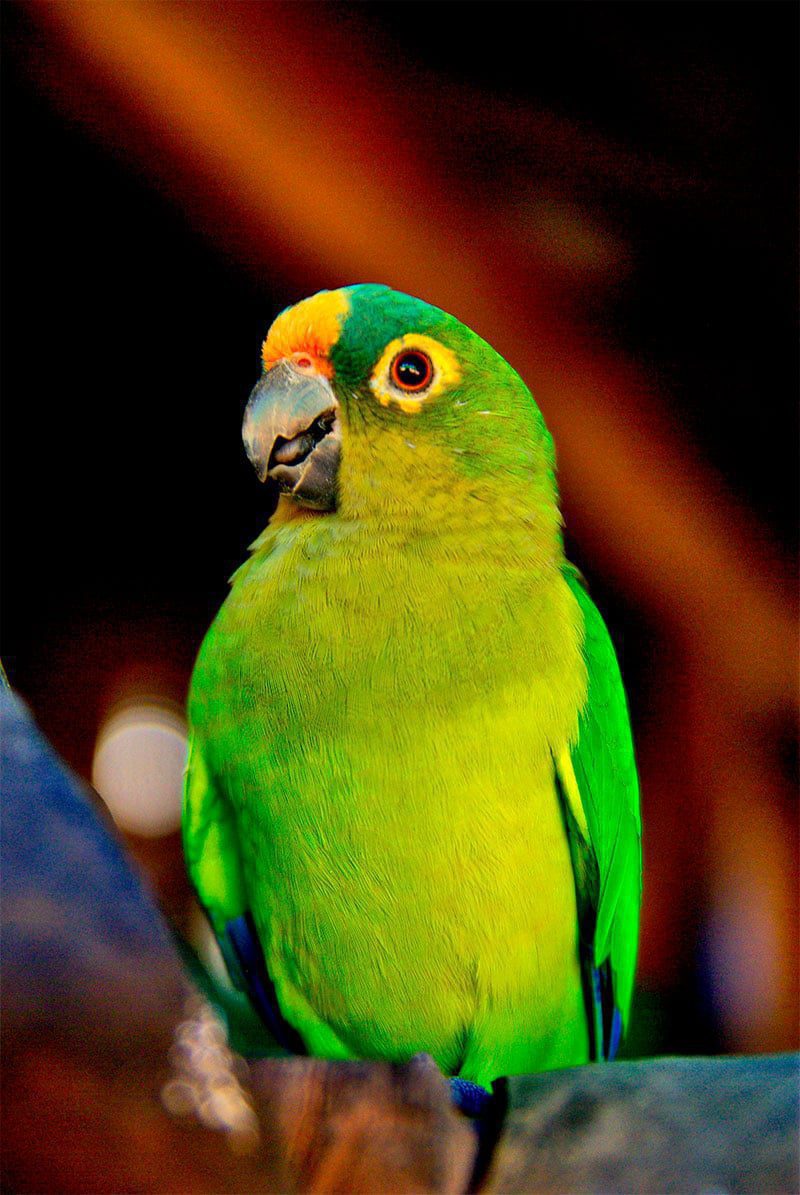
    The Peach-fronted Parakeet (Eupsittula aurea) has the forecrown bright orange; the crown a deep blue color.

    Each eye is surrounded by a circle of small orange feathers, delimited in the anterior zone with blue; front part of the lores orange; cheeks Brown olive; ear-coverts green. Nape, the mantle and back dark green; rump and uppertail-coverts green. Scapulars greenish brown; lesser and median coverts dark green; greater primary coverts dark blue. The primaries blue in the vane inner and tips; the secondaries blue. The flight feather, below, grayish brown; upperwing-coverts colour pale yellowish olive. The throat and the top chest color marron-oliva; the upperparts color olive. Upper, the tail dark green with brown tint in the vane inner and with a bright bluish tinge to an end; by down greyish Brown.

    Bill grey-black; close bare periophthalmic bare grey; irises yellowish brown; legs grey.

    Both sexes similar.

    Immature they have a broad nude patch orbital, frontal band closer, bill pale and the irises grey.

    Habitat:

    The Peach-fronted Parakeet It is present in a wide variety of habitats, specially cleared but a little forested areas, including all kinds of deciduous forest, gallery forest (especially in the South of its range), swamps with Palms mauritia and sheets, also in cultivated areas, below the 600 m.

    In the Brazilian Amazon, they are distributed under conditions of low shrub vegetation in sandy soils, avoiding dense evergreen forests. On the inside of the Brazil can be seen in areas caatinga and formations closed with natural grassland.

    In general, they can be views in flocks and in isolated pairs during the breeding season.

    Has been able to observe them is feeding with the Blue-crowned Conure (Psittacara acuticaudatus) in fruit trees and resting on branches with the Blue fronted Parrot (Amazona aestiva) and the Scaly-headed Parrot (Pionus maximiliani) in Piauรญ, Brazil.

    Reproduction:

    Nest in arboreal termite, trunks hollow or in ravines. Birds observed in nests between June and July in Peru and flocks to divide into breeding pairs during the month of January in Mato Grosso. Clutch 2-3 eggs in (Argentina).

    Food:

    They feed on seeds (not of pulp) of Ilex, Banisteriopsis, Campomanesia, eucalyptus and Symplocos, fruits and flowers of Erythrina and Terminalia, flowers of Qualea and Garyocar and insects, including the termites and fly larvae, beetles and moths. They produce crop damage in some areas.

    When feeding in soil (for example of the grain after harvest), its plumage tends to get dirty.

    Distribution:

    Video – "Peach-fronted Parakeet"

    KING OF THE BUCKET, couple (EUPSITTULA AUREA), PEACH-FRONTED PARAKEET, star conure, Star Parakeet.

    Size of the area of distribution (reproduction / resident): 5.730.000 km2

    Distributed by the Centre and East of South America. To the North of the Amazonia The species is found in For and Amapรก and the island Caviana island (mouth of the Amazon), Brazil, as well as possibly in the south of Suriname. To the South of the Amazonia the Peach-fronted Parakeet extends through of For, Eastern Amazonas, Rondร ยดnia and Mato Grosso, Brazil, to northeast Bolivia and East of Peru, in where were observed in the Santuario Nacional Pampas del Heath, and eastward through most of the inside of Brazil until Bay, Minas Gerais, Brazil, Mato Grosso from the South and the Northwest of the Alto Paranรก Department in Paraguay (in the West and Northeast) and North of Argentina (North of Salta, east of Formosa, Currents and possibly Chaco). The reports of Rio Grande do Sul, Brazil, They seem to be confused.
    common in the central area of its distribution area, still it most common aratinga in much of the interior of Brazil. Obviously more local and scarce toward the North and South ends of their range, with very few recent reports in Argentinto (Formosa in 1987 and Currents in 1983), where the abundance historical suggests a descent on a large scale during the century 20.

    Conservation:

    State of conservation โ“˜


    minor concern Minor Concern โ“˜ (UICN)โ“˜

    โ€ข Red List category of the UICN current: Least concern.

    โ€ข Population trend: Stable.

    Place previously within the genus Aratinga.

    Its global population size has not been quantified, but this species is described as ยซcommonยป (Stotz et to the., 1996). Its population suspected to be stable in the absence of evidence of any reduction or substantial threats.

    The species has undergone intense trade: from 1981, date on which was included in Appendix II, 61,311 individuals have been captured in the wild for resale in international trade (UNEP-WCMC trade database CITES, January 2005).

    "Peach-fronted Parakeet" in captivity:

    Itร‚ยดs common in captivity and widely marketed.
    Robust, playful, friendly and not so noisy as other species of parrots.
    Regularly provide fresh branches to satisfy their need to crack.

    It is not a kind of complicated for reproduction in captivity.

    Alternative names:

    Peach-fronted Parakeet, Brown-chested Parakeet, Golden-crowned Parakeet, Peach fronted Parakeet, Peach-fronted Conure (English).
    Conure couronnรฉe, Conure ร  front d’or, Perriche couronnรฉe, Perruche couronnรฉe, Perruche ou (French).
    Goldstirnsittich (German).
    Aratinga-estrela, ararinha, jandaia, jandaia-estrela, maracanรฃ-de-testa-amarela, Periquito-estrela, periquito-rei (Portuguese).
    Aratinga Frentidorada, Aratinga frente durazno, Calacante frente dorada, Calancate Frente Dorada, Cotorra de frente naranja, Maracanรก frente naranja, Periquito de Frente Dorada (espaรฑol).
    Calacante frente dorada, Calancate Frente Dorada (Argentina).
    Cotorra de Frente Dorada (Peru).
    Maracanรก frente naranja (Paraguay).
    Tuรญiapyteju, Ajuru-juvakang (Guarani).


    scientific classification:

    Gmelin Johann Friedrich
    Gmelin Johann Friedrich

    Order: Psittaciformes
    Family: Psittacidae
    Genus: Eupsittula
    Scientific name: Eupsittula aurea
    Citation: (Gmelin, JF, 1788)
    Protonimo: Psittacus aureus

    Peach-fronted Parakeet images:


    Especies del gรฉnero Eupsittula
  • Eupsittula nana
  • —- Eupsittula nana astec
  • —- Eupsittula nana nana
  • —- Eupsittula nana vicinalis
  • Eupsittula canicularis
  • —- Eupsittula canicularis canicularis
  • —- Eupsittula canicularis clarae
  • —- Eupsittula canicularis eburnirostrum
  • Eupsittula aurea
  • Eupsittula pertinax
  • —- Eupsittula pertinax aeruginosa
  • —- Eupsittula pertinax arubensis
  • —- Eupsittula pertinax chrysogenys
  • —- Eupsittula pertinax chrysophrys
  • —- Eupsittula pertinax griseipecta
  • —- Eupsittula pertinax lehmanni
  • —- Eupsittula pertinax margaritensis
  • —- Eupsittula pertinax ocularis
  • —- Eupsittula pertinax paraensis
  • —- Eupsittula pertinax pertinax
  • —- Eupsittula pertinax surinama
  • —- Eupsittula pertinax tortugensis
  • —- Eupsittula pertinax venezuelae
  • —- Eupsittula pertinax xanthogenia
  • Eupsittula cactorum
  • —- Eupsittula cactorum cactorum
  • —- Eupsittula cactorum caixana

  • Sources:

    Avibase
    – Parrots of the World โ€“ Forshaw Joseph M
    – Parrots A Guide to the Parrots of the World – Tony Juniper & Mike Parr
    – Birdlife

    Photos:

    (1) – Peach-fronted Parakeet (also known as the Peach-fronted Conure) in Chapada das Mesas National Park, Brazil By Otรกvio Nogueira [CC BY 2.0], via Wikimedia Commons
    (2) – A Peach-fronted Parakeet in Dourados, Mato Grosso do Sul, Brazil By Dario Sanches from Sao Paulo, Brazil [CC BY-SA 2.0], via Wikimedia Commons
    (3) – Peach-fronted Parakeet (Aratinga aurea) perching on a termite mound in Minas Gerais, Brazil By derivative work: Snowmanradio (talk)Aratinga_aurea_-Brazil-8.jpg: Glauco Umbelino [CC BY 2.0], via Wikimedia Commons
    (4) – Eupsittula aurea By Petyson Antonio (Own work) [CC BY-SA 4.0], via Wikimedia Commons
    (5) – Eupsittula aurea By Petyson Antonio (Own work) [CC BY-SA 4.0], via Wikimedia Commons

    Sounds: (Xeno-canto)

    โ–ท The world of Pets: Dogs, cats, birds, reptiles, amphibians

    Blue-bellied Parrot
    Triclaria malachitacea

    Blue-bellied Parrot

    Content


    Anatomy-parrots

    Description:

    28 cm.. length between 110-155 g. of weight.

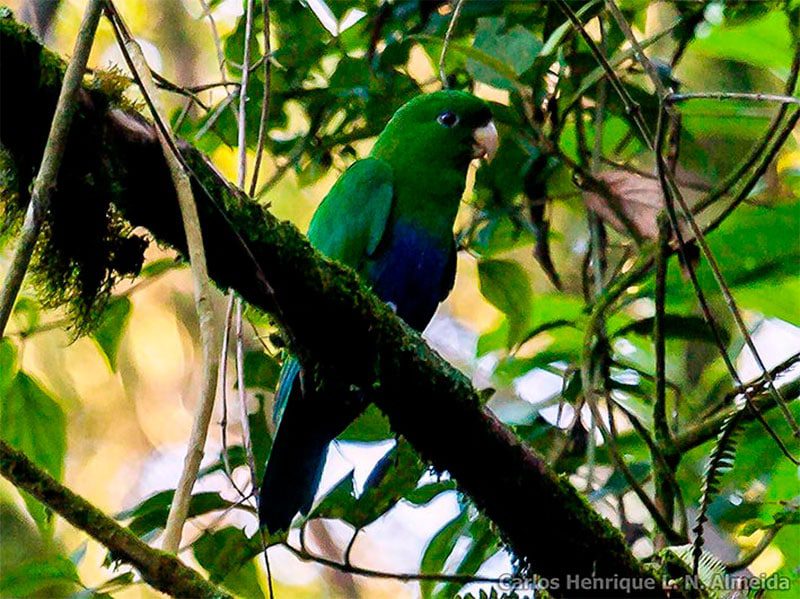
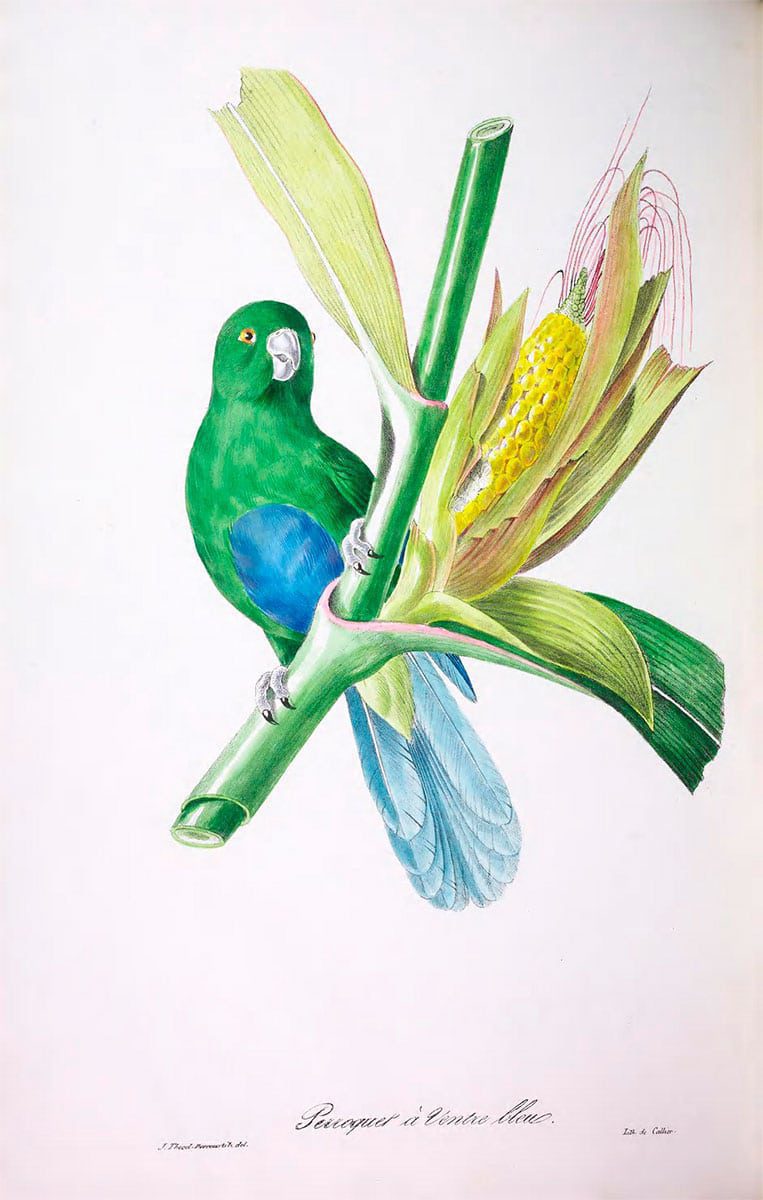
    The Blue-bellied Parrot (Triclaria malachitacea) has the head, neck and all the "upper parts" and wing-coverts, grass-green.

    Flight feathers grass-green with narrow blue tips to primaries, except the outermost, with a narrow pale blue margin to outerweb. Under, the wings with coverts green, and flight feather, bluish green. The underparts mainly green with large purplish-blue patch on centre of chest and the belly. Upper, the tail It is green with blue tips to central feathers; undertail, bluish green. Bill pink white: cere Pink; brown the irises; legs grey.

    The female lacks the patch in the belly blue violet. The immature is as the adult but the respective young male has less blue purple in the underparts.

    • Sound of the Blue-bellied Parrot.

    Its singing It is similar to a Thrush (Molothrus).

    Habitat:

    Blue-bellied Parrot

    The Blue-bellied Parrot They live in the humid forests of the low mountains., generally preferring the canopy and the upper floors of tall forest, rich in bromeliads, along watercourses in the valleys. Visit cultivated areas with orchards and plantations and sometimes wooded suburban areas (for example in Sรฃo Paulo).

    Mainly observed at altitudes of 300-700 m, perhaps 1,000 meters in some places, but also they inhabit lowlands at sea level. The sporadic nature of reports, with apparent absence of apparently suitable areas, suggests some critical aspects of its little-understood ecology.

    Reproduction:

    Observed nests in cavities of large trees or stumps of palm. Strongly territorial, at least during breeding, with separation until nests 2 km. The breeding season It covers the months of September to January, maybe a little earlier or later.

    Food:

    Its diet it's formed, mainly, by fruit, seeds, outbreaks and nectar, some insects and their larvae (looking birds seen flying insects); specific foods include Pachystroma, Actinostemon, Sebastian, Eugenia, Campomanesia and Euterpe edulis, also occasionally Cortex, and citrus plantations.

    Distribution and status:

    Size of its range (breeding/resident): 361.000 km2

    This rare species is endemic Atlantic forests of Southeast Brazil, mainly in Rio de Janeiro, Sao Paulo and Rio Grande do Sul, in the southeast of Brazil. There are additional records South Bahia (none since 1833), Minas Gerais, Brazil (some dubious records), Holy Spirit (four or five sites), Paranรก (three modern records) and Santa Catarina (Mesorregion of the Itajaรญ Valley, Valle de Tijucas and the region of Serra do Mar, in upstate [Rosario 1996, G. Kohler in some. 2011]).

    The species is quite common in large forest fragments in the Itajai Valley (G. Kohler in some ., 2011). Due to changes in habitat in the lowlands Santa Catarina, the most recent records in that state come from montane forests (G. Kohler in some ., 2011). Two records in Missions, Argentina, require confirmation. The population was estimated previously less than 5.000 individuals (Lambert et to the ., 1993), But Bencke (1996) suggested that there may be 10.000 in Rio Grande do Sul and significant numbers on the eastern slope of the Serra do Mar; But, the apparent rarity of the species suggests that these figures may be an overestimation (J. Gilardi in litt., 2010). In general, it is suspected that the population is declining, although in the State Park Tres Picos, Rio de Janeiro, It seems to have been stable since 2003 (A. Foster in a bit).

    Population little known due to camouflage habits. Perhaps more numerous in the many facing slopes east of the Serra do Mar in Rio de Janeiro and Sรฃo Paulo; habitat loss on a large scale has certainly caused a serious decline in its population, as well as the fragmentation of its distribution area. Although humid upland forests remain in substantial quantities in Serra do Mar, replacement of forests in valleys and on lower slopes with banana plantations could lead to further declines.
    Captured for local LBMs and traded in small numbers internationally. There are records of several protected areas, but most of them may be insufficient to support populations of this species due to their low density.

    Conservation:


    Near-threatened


    โ€ข Current category of the Red List of the UICN: Near-threatened.

    โ€ข Population trend: decreasing.

    Rationale for the Red List category

    This species is classified as near threatened because they suspect is in a moderately rapid decline due to loss of habitat and, perhaps to a lesser extent, to the capture for trade bird cage.
    Justification of the population

    The size of the world's population has not been quantified, but this species is generally described as "rareยป (Stotz et to the ., 1996), although it is locally common in some places.

    Justification of trend

    Se sospecha una decrease moderate and continuous of the population depending on rates of habitat loss and perhaps, to a lesser extent, capture for the bird trade. The decline is not thought to be faster because the species occurs in montane areas where deforestation is typically less severe., It seems to tolerate mature secondary forests and anecdotal observations suggest that is locally stable, for example in the State Park Tres Picos, Rio de Janeiro. (A. Foster in a bit ., 2013).

    The ecology and conservation of the Blue-bellied Parrot in remaining forest fragments in Rio Grande do Sul

    This project aims to collect basic information on population, the distribution and ecology of the Blue-bellied Parrot in the center of Rio Grande do Sul, where a large population of the species is rapidly declining due to habitat fragmentation. The use of the radiotelemetry technique will make it possible to determine the area of โ€‹โ€‹use of the species and to evaluate their dispersal capacities.. Biology studies of this species is the objective to determine the elements that make up its diet and collect information on behavior and reproduction.. Through this information, It is intended to outline a regional plan for conservation Blue-bellied Parrot and their habitat, together with local actors. (AU)

    Conservation status:

    UICN: Vulnerable (with + 2c, d, Cl, Q2a). Previously in danger of extinction (Q2a: see Collar et al., 1994). CITES: Appendix II.

    State of national protection: Protected by federal law and included in the list IBAMA of Brazilian species threatened with extinction (Bernardes et al 1990).

    "Blue-bellied Parrot" in captivity:

    unknown in captivity.

    Alternative names:

    Blue-bellied Parrot, Blue bellied Parrot, Purple-bellied Parrot (English).
    Crick ร  ventre bleu, Caรฏque ร  ventre bleu (French).
    Blaubauchpapagei, Blaubauch, Blaubauch-Papagei (German).
    Papagaio-de-peito-roxo, araรงoiaba, araรงuaiava, cica, sabiรก-ci, sabiรก-cica (Portuguese).
    Loro de vientre azul, Loro Sabiรก-cicรก, Loro Ventriazul (espaรฑol).
    araรงoiaba, araรงuaiava, cica, sabiรก-ci, Sabiรก-cica (Brazil).


    scientific classification:

    Johann Baptist von Spix

    Order: Psittaciformes
    Family: Psittacidae
    Genus: Triclaria
    Scientific name: Triclaria malachitacea
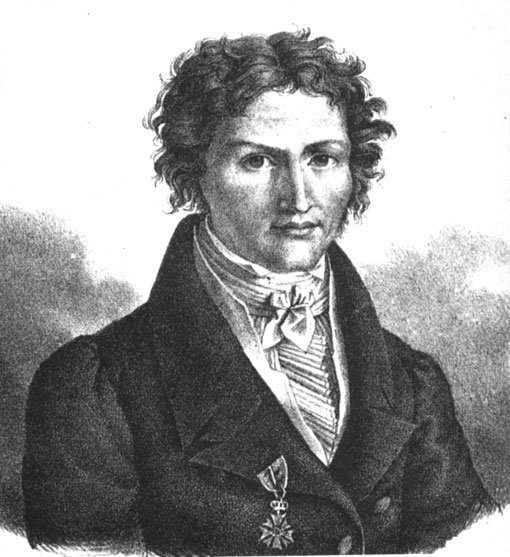
    Citation: (von Spix, 1824)
    Protonimo: Psittacus malachitaceus


    Images ยซBlue-bellied Parrotยป:

    Videos "Blue-bellied Parrot"

    ————————————————————————————————

    ยซThem Ventriazulยป (Triclaria malachitacea)


    Sources:

    Avibase
    – Parrots of the World โ€“ Forshaw Joseph M
    – Parrots A Guide to the Parrots of the World – Tony Juniper & Mike Parr
    – Birdlife

    Photos:

    (1) – Triclaria malachitacea – Paranapiacaba – Santo Andrรฉ by Carlos HenriqueFlickr
    (2) – Blue-bellied Parrot (also known as the Purple-bellied Parrot); two in a cage with a nestbox By TJ Lin [CC BY-SA 2.0], via Wikimedia Commons
    (3) – A female Blue-bellied Parrot (also known as Purple-bellied Parrot) at Walsrode Bird Park, Germany By ipfreaks [CC BY-SA 2.0], via Wikimedia Commons
    (4) – Rufous-conic (Triclaria malachitacea) – female by Clรกudio Dias TimmFlickr
    (5) – Rufous-CICA (Blue-berried Parrot) – Guide to Birds in ePUB by Mรกrcio DuarteFlickr
    (6) – Psittacus cyanogaster or Blue-Bellied Parrakeet by Biodiversity Heritage LibraryFlickr