โ–ท The world of Pets: Dogs, cats, birds, reptiles, amphibians

Standard Schnauzer
Alemania FCI 182 . Pinscher and Schnauzer type

Schnauzer Mediano

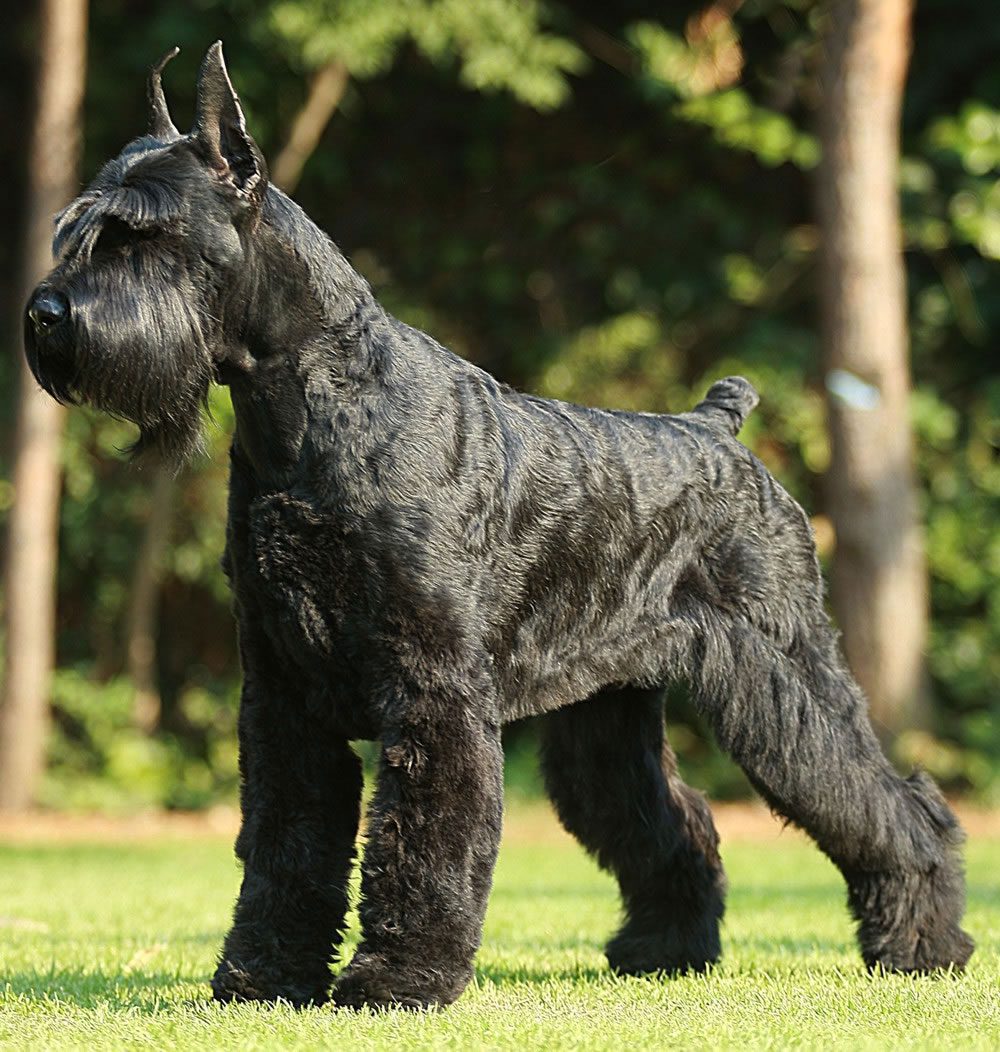
Starting at the Standard Schnauzer the other two varieties were developed (Giant and Enano)

Content

History

The Standard Schnauzer (standard) It is the original race of the three Schnauzer breeds, and despite his fur and aspect in general, This is not related to the English Terrier. This is one of the oldest breeds in Europe. This race is beautiful, robust, square build and medium-sized with a similar aristocratic, This was the favorite breed of Albrecht Dรผrer and Rembrandt.

In his country of origin he is known as Mittelschnauzer (Standard Schnauzer) to distinguish it from the giant form and the form miniature.

Regardless of the origin of the breed, It should be noted that the racial standard of the Schnauzer was set for the first time in the year 1880, and in the year 1885 the first breed club was established in Germany. He had to wait 40 more years, to be made in United States (1925).

The name of Schnauzer is given to the breed for its first appearance in public in a show contest.. This contest (Hannover 1879) won it a dog presented as wire-haired Pinscher. The winner can be called Schnauzer (ยซbigotudoยป) and thereafter, all the wire-haired Pinscher have received the name of Schnauzer.

The classification of the Schnauzer has always brought controversy, because that is what you don't want to classify as Terrier, likely as not being a race that cace as dog's burrow. The controversy is that dogs as the Manchester Terrier they are classified as Terrier and are, as it is the case of the above-mentioned, the prototype of the dog buzzard without being trained for hunting dog's burrow.

Physical characteristics

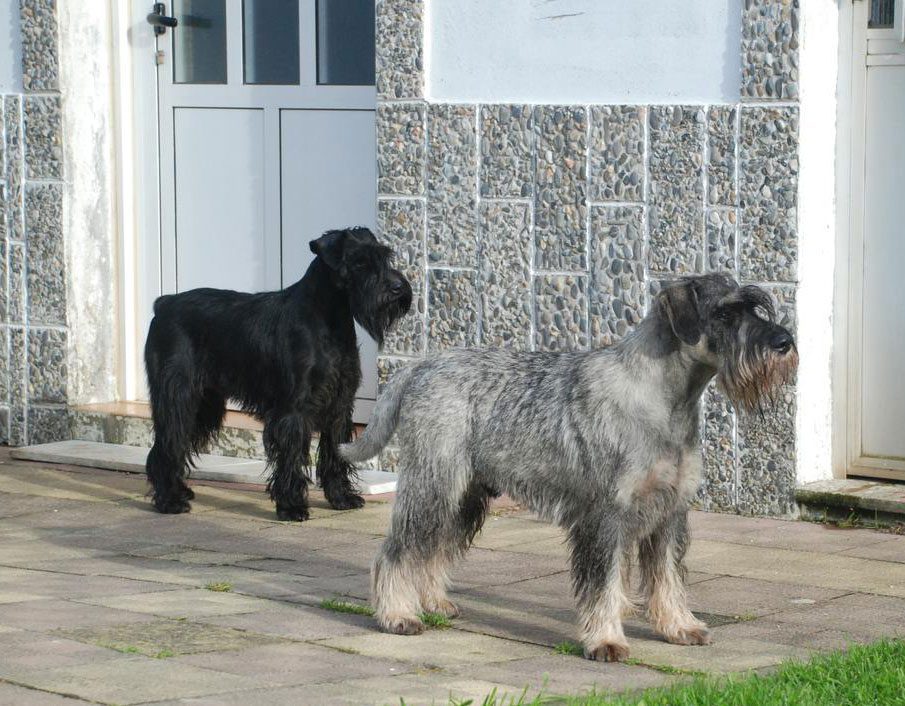
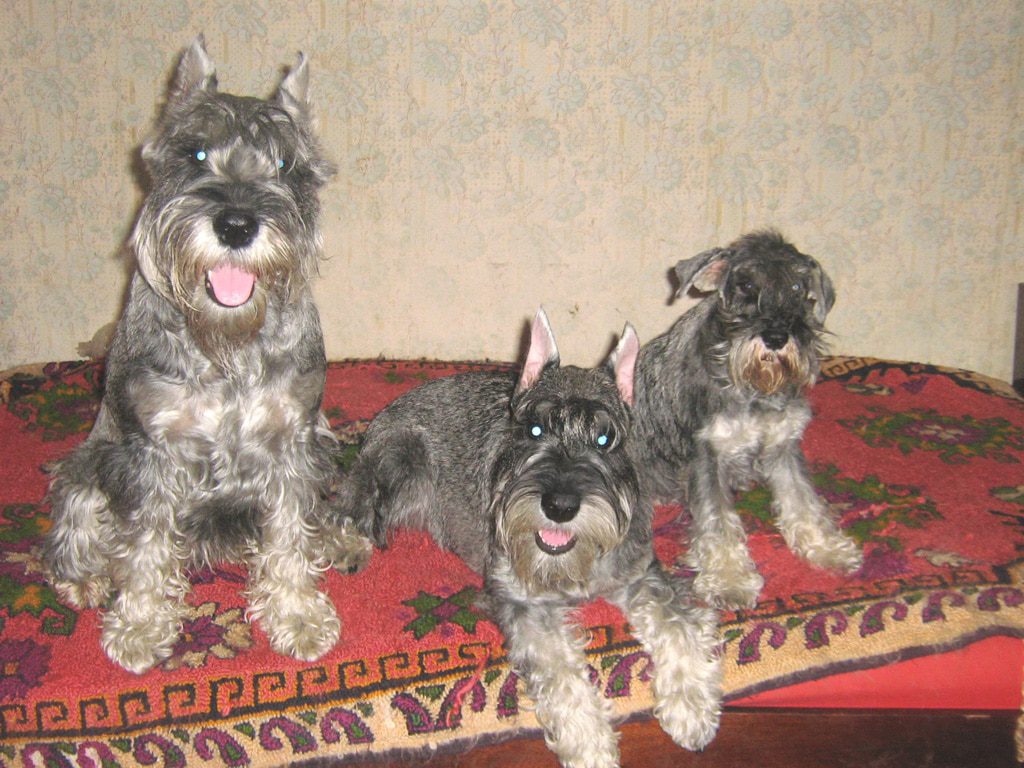
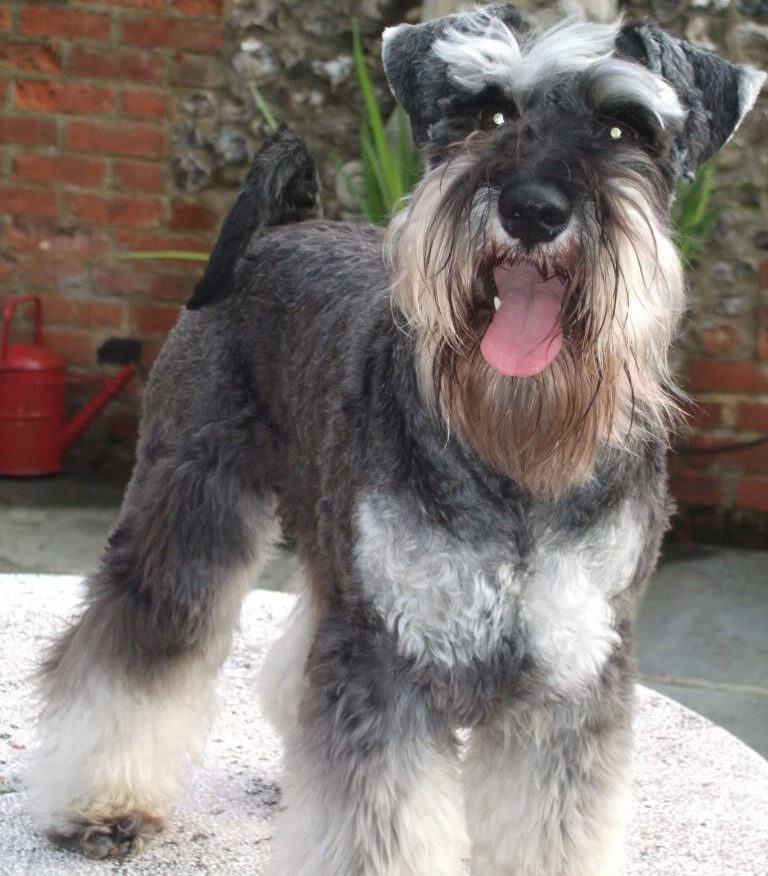
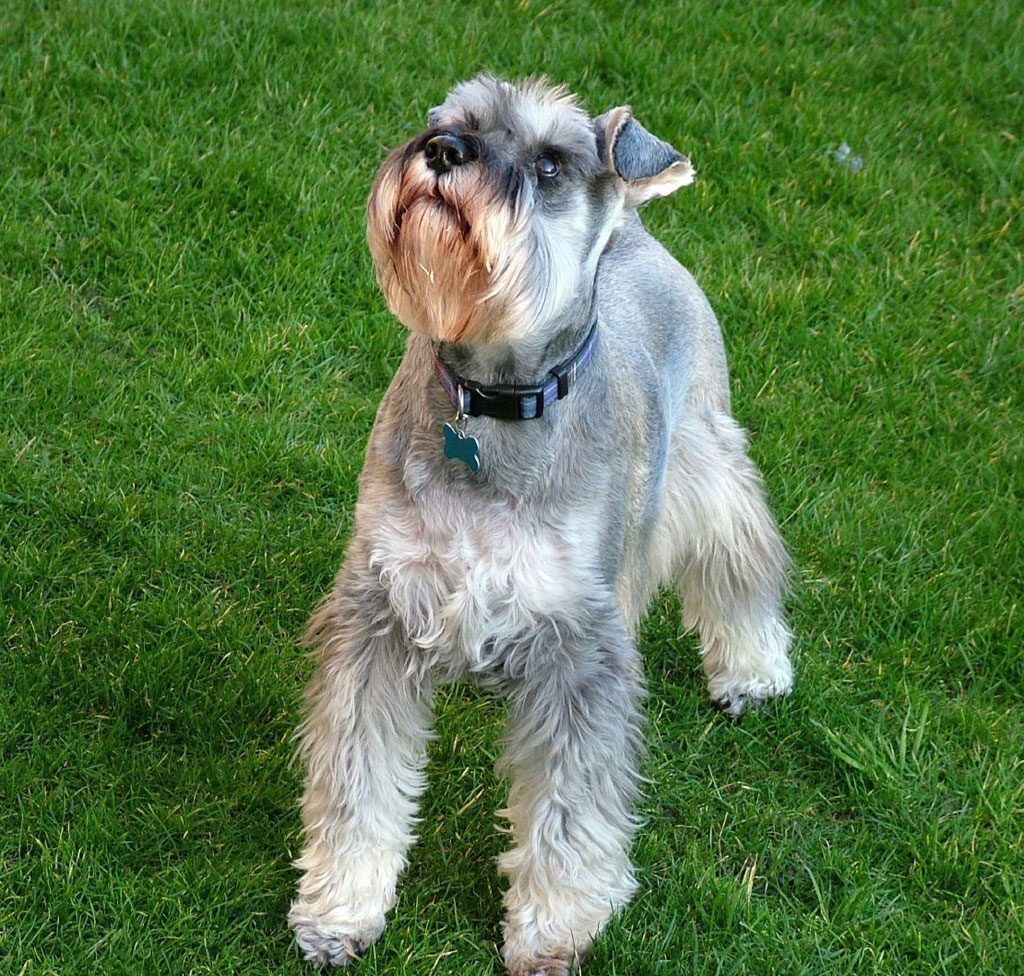
The Standard Schnauzer has a rough coat, with colors ranging from 'salt and pepper' to solid black.

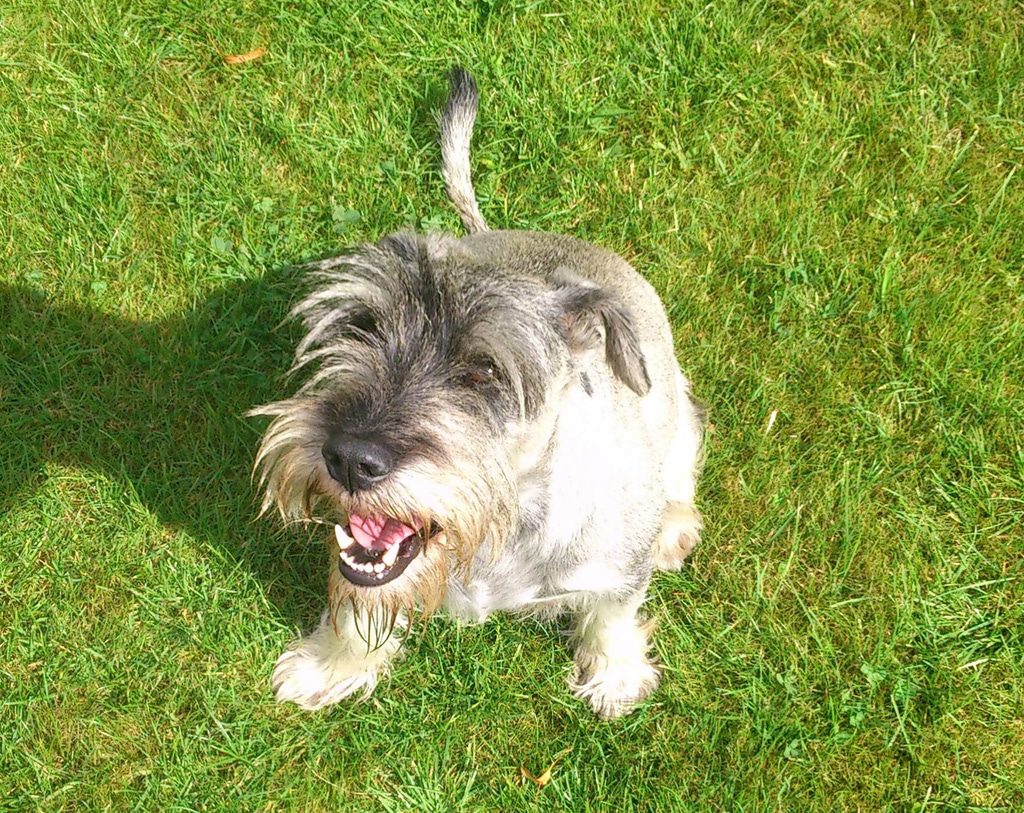
The hair on the face is extended to form a beard and eyebrows. The race is robust, and must be "heavy" for its height with lots of muscle and bone.

The ideal ranges of the weight and of the height vary, considerably, from a standard race which is as follows: The males range between 45 and 50 cm of high cross and usually weigh between 15.5 and 22.5 kg. The females measure between 42.5 and 47.5 High Cross and usually weigh between 13.5 and 20.2 kg).

In United States, most dogs have cropped ears and tails.

Traditionally, the ears they are cut and the tail as well. But, in many European countries and in Australia, ear and tail docking is prohibited and dogs show off their natural ears and tails.

Character and skills

It's a race that, similar to the German Pinscher, It was created for the extermination of vermin on farms, Although he didn't mention in other tasks, becoming a multi-purpose dog. They included the roles played by the Schnauzer, driving cattle.

Itร‚ยดs jealous, It loving and a good former. All varieties of Schnauzer have a character that is described as impetuous, strong but very balanced.

Love your family, they are safe and affable with children and rather distrustful with strangers.

Schnauzer Health

All dogs have the potential to develop genetic health problems, just as all people have the potential to inherit a particular disease. Run, do not walk, from any breeder that does not offer a health guarantee on puppies, to tell you that the breed is 100 percent healthy and has no known problems, or tell you that your puppies are isolated from the main part of the home for health reasons. A reputable breeder will be honest and open about the breed's health problems and the incidence with which they occur in their lines..

Some of the conditions that affect standard Schnauzers include hip dysplasia; eye problems (including cataracts and retinal dysplasia); a heart condition known as pulmonary stenosis; hipotiriodismo; Hemophilia (a bleeding disorder); and bladder stones.

Not all of these conditions are detectable on a growing puppy, and it can be difficult to predict whether an animal will be free of these diseases, so a reputable breeder must be found who is committed to raising the healthiest animals possible. Must be able to produce an independent certification that the parents of the dog (and grandparents, etc.) have been screened for these defects and considered healthy for breeding. That's where health records come in..

Remember that after bringing a new puppy home, has the power to protect you from one of the most common health problems: the obesity. Maintaining a standard Schnauzer at the right weight is one of the easiest ways to extend your life.. Make the most of your preventive skills to help ensure a healthier dog for life.

Characteristics "Standard Schnauzer"

Coexistence is important that you have with your new friend. Before considering the acquisition of a dog of the breed "Standard Schnauzer" you know certain factors. Not all breeds of dogs are apt to live in an apartment, you must take into account his character, their need for exercise, their interaction with other pets, their care and if you have small children, their level of tolerance towards them.

Adaptation โ“˜

3,0 of 5 stars (based on 1 review)

friendly dog โ€‹โ€‹โ“˜

4,0 of 5 stars (based on 1 review)

hair loss โ“˜

2,0 of 5 stars (based on 1 review)

Affection level โ“˜

4,0 of 5 stars (based on 1 review)

Need for exercise โ“˜

4,0 of 5 stars (based on 1 review)

Social need โ“˜

4,0 of 5 stars (based on 1 review)

Home โ“˜

3,0 of 5 stars (based on 1 review)

Toilet โ“˜

4,0 of 5 stars (based on 1 review)

Friendly with strangers โ“˜

2,0 of 5 stars (based on 1 review)

barking โ“˜

5,0 of 5 stars (based on 1 review)

Health โ“˜

1,0 of 5 stars (based on 1 review)

Territorial โ“˜

5,0 of 5 stars (based on 1 review)

Cat friendly โ“˜

4,0 of 5 stars (based on 1 review)

Intelligence โ“˜

5,0 of 5 stars (based on 1 review)

Versatility โ“˜

5,0 of 5 stars (based on 1 review)

Child friendly โ“˜

4,0 of 5 stars (based on 1 review)

Surveillance โ“˜

5,0 of 5 stars (based on 1 review)

joy โ“˜

5,0 of 5 stars (based on 1 review)

Images Standard Schnauzer

Standard Schnauzer Videos

Photo: davolvoreta

Type and recognitions:

  • FCI CLASSIFICATION:
  • Group :
  • Section : . .

Federations:

  • FCI – Pinscher and Schanuezer dogs. Molossian type Dogs and Swiss Mountain and Cattle Dogs. , Section 1: Pinscher and Schnauzer. โ“˜
  • AKC – Dogs working โ“˜
  • ANKC – Group 6 (utility dogs) โ“˜
  • CKC – Group 3 – Working dogs โ“˜
  • โ€‹KC – Working dogs โ“˜
  • NZKC – Utility dog โ“˜
  • UKC – Watchdog โ“˜

FCI breed standard "Standard Schnauzer"

Origin:
Germany

Date of publication of the valid original standard:
06.03.2007

Use:

Guard and company


General appearance:

Medium size, vigorous, more compact than thin, rough-haired.


IMPORTANT PROPORTIONS<

  • Square construction, where the height at the withers corresponds more or less to the length of the body.
  • The length of the head (from the tip of the truffle to the occipital protuberance) is related to the length of the body (measured from withers to insertion of tail) approximately in a proportion of 1:2.


Behavior / temperament:

His typical traits are his confident temperament and his circumspect tranquility.. Especially notable is his good character., his joy for games and his proverbial attachment to his master. He loves children very much, it is unbribable guardian, although not noisy. Highly developed sense organs, prudence, great ability to be polite, fearlessness, perseverance and great power of rapid recovery against illnesses and climate changes, They give the Schnauzer all the assumptions that a utility dog โ€‹โ€‹must have to be a great family dog., company and utility.

Head:

---

Cranial region:
  • Skull: Strong and elongated, with the back of the little marked head. The head must correspond to the overall strength of the dog. The forehead is flat and paralelaa the nasal helm, without wrinkles.
  • Depression links (stop): Well differentiated between the eyebrows

facial region:

  • Truffle: Well developed with wide open windows. It is always black.
  • Snout: It ends in the shape of a truncated wedge. The nasal cannula is straight.
  • Lips: Blacks, rest firm and plans on the jaws; the corner of the mouth is closed.
  • Jaws/Teeth: Powerful upper jaw and lower. The bite is scissors, strong and full (42 clean, white teeth according to tooth formula of the dog).  It should close well. The chewing muscles are strongly developed without this, exaggerated cheeks spoil the rectilinear appearance of the head (with beard).
  • Eyes: Medium-sized, oval, directed forward, dark, with lively expression. Adherent eyelids.
  • Ears: Bent and falls, high insertion, โ€œVโ€ shaped; the inner edges of the ears rest on the cheeks. The bearing of the ears is symmetrical. They are directed forward towards the temple. The parallel fold should not exceed the top line of the skull.

Neck:

The neck is strong, muscular and maintained arched. The neck slides harmonically to the cross. Strongly inserted, is narrow, noble postage, contributing to the vibrant and elegant appearance. The skin of the throat is adherent and without dewlap.

Body:

  • top line: Slightly descending from the cross back.
  • Cross: It is the highest point of the top line.
  • Back: Strong, short, firm.
  • Pork loin: Short, strong, deep. The distance from the last rib to the hip is short so that the dog appears compact.
  • Rump: Slightly rounded, going unnoticed by the insertion of the tail.
  • Breast : Moderately wide, oval cut, deep up to elbows. The apron is especially marked by the tip of the sternum.
  • bottom line: Flanks not excessively gathered so as to provide a nice wavy line along the lower part of the thorax..

Tail:

Natural, the goal being to make it Sabre or sickle-shaped.

Tips

PREVIOUS MEMBERS: The forelimbs are, seen from the front, vigorous, straight and placed not too close together. Seen side forearms are straight.

  • Shoulder: The scapula is firmly resting on the chest. Well muscled on both sides of the spine of the bone, It protrudes above the vertebrae of the spine in its thoracic section. Tilted as much as possible and leaned back, makes an angle of 50ยบ with the horizontal.
  • Arm: Well on the body, strong and muscular; forms an angle of more or less 95ยบ to 105ยบ with the scapula.
  • Elbows: Tight, not rotated or outward or inward.
  • Forearm: Straight seen from either side, strongly developed and well muscled.
  • Carpo: Strong and stable. Its structure barely stands out from the forearm.
  • Metacarpus: Straight seen from the front; profile slightly oblique to the floor, strong and slightly elastic.
  • Front feet: Short and round; fingers pinched each others and arched (cat feet); nails short and dark colour and strong pads.

LATER MEMBERS: Views of oblique profile; from the back, they are parallel and not too close together.

  • Thigh: Moderately long, width and heavily muscled.
  • Knee: Must not be turned neither inward nor outward.
  • Leg: Long and strong, sinewy, continuing in a powerful Hock.
  • Hock: Well angled, strong, firm, not turned neither inward nor outward.
  • Metatarsus: Short and perpendicular in relation to the floor.
  • Rear feet: Short fingers, arched and tightened a few others ; nails short, black.

Movement:

Elastic, elegant, agile, free and with good coverage of land. The forelimbs are stretched forward as much as possible and the hindlimbs โ€“ with good elastic reach- they give the necessary propulsion. The front side and back on the other side simultaneously moving forward. Back, ligaments and joints are firm.

Mantle

  • SKIN: Tight throughout the body
  • HAIR: The hair should be hard, wiring and bushy. It is composed by a dense internal NAP and an outer layer (that it can never be too short) hard and well glued hair all over the body. The hair of the outer layer is rough, of sufficient length, to be able to test its texture, Neither ogres nor wavy.
  • The hair on the limbs tends not to be as coarse. On the forehead and ears it is short. Typical features are, on the snout, the beard, that should not be too soft and bushy eyebrows that make eye shadow.

COLORS

  •  Pure black with black interior NAP
  • Salt and pepper

For salt and pepper, the breeding objective is to obtain a medium tone with equal distribution of well-pigmented pepper color with gray undercoat.. Shades ranging from dark steel gray to silver gray are accepted. All colors must have a dark mask that underlines the expression and is in harmony with the color of the respective hue. White spots on the head, in the chest or the members are unwanted.


Size and weight:

HEIGHT AT THE WITHERS

  •  Males and females: 45 until 50 cm..

WEIGHT

  •  Males and females: 14 until 20 kg.


Fouls:

Any deviation from the aforementioned criteria is considered a fault and the severity of this is considered to the degree of the deviation from the standard and its consequences on the health and well-being of the dog. In particular:

  • Too small or too short head as a whole.
  • Heavy or round skull.
  • Wrinkles on the forehead.
  • Short snout, pointed or narrow.
  • Bite in clamp.
  • light eyes, too large or round.
  • Inclusion of low or very long ears, ears carried different from each other.
  • Cheeks or too marked cheeks bones.
  • The throat loose skin, Spada.
  • Narrow neck.
  • Too long back, collected or soft.
  • Encarpado back.
  • fallen group.
  • Inclusion of tail rotated toward the head.
  • Long feet.
  • Amble step.
  • Too short hair, too long, soft, wavy, with locks, silky, white or spotted or with mixing colors.
  • Brown undercoat. In the salt and pepper: black line of eel on the back or black saddle.
  • 1 cm in the height up or down.

SERIOUS FAULTS

  •  Heavy or light appearance, petizo or patilargo.
  • Reversed sexual characters (for example male female).
  • Elbows rotated out.
  • Stiff or barrel hindlimbs.
  • Hocks rotated inwards.
  • More than 1 cm.. and less than 3 cm.. in the limit measurements up and down.

MISS PLAYOFFS

  • Shyness, aggressiveness, evil, exaggerated suspicion, nervous behavior.
  • Any deformity.
  • Lack of racial characteristics.
  • Faults in the bite as upper or lower prognathism, incisor arcade deviated.
  • Miss runner in each region as construction defects, hair and color.
  • More than 3 cm.. in the limit measurements up and down.
  • Any dog โ€‹โ€‹showing clear signs of physical or behavioral abnormalities must be disqualified..


N.B.:

Males should have two normal-appearing testicles fully descended into the scrotum..

TRADUCCIร โ€œN: Lucas Rodriguez Bazzurro.

Source: F.C.I - International Cynological Federation

Alternative names:

1. Mittelschnauzer, Schnauzer, Wire-Haired Pinscher (English).
2. Schnauzer (French).
3. Schnauzer (German).
4. Schnauzer (Portuguese).
5. Schnauzer estรกndar, Schnauzer-Pinscher (espaรฑol).

โ–ท The world of Pets: Dogs, cats, birds, reptiles, amphibians

Giant Schnauzer
Alemania FCI 181 . Pinscher and Schnauzer type

Schnauzer Gigante

The Giant Schnauzer is a balanced dog, sweet with children and distrustful with strangers.

Content

History

The Giant Schnauzer It is a large and compact dog breed, a native of Germany. Oldest, lover of water and active, It is one of the three varieties of Schnauzer.

The Schnauzer breed in its three varieties, It has very ancient and common origins to those of the Terrier. (of those who descend).

Y, Although the aires were very Terrier, then the breeding and selection of the Schnauzer breed focused especially on guarding and defense.

Read more

โ–ท The world of Pets: Dogs, cats, birds, reptiles, amphibians

Miniature Schnauzer
Alemania FCI 183 . Pinscher and Schnauzer type

Schnauzer Miniatura

The Miniature Schnauzer it is exclusively a balanced and affectionate companion dog.

Content

History

The Miniature Schnauzer It is derived from the Standard Schnauzer, emerged in Germany in the second half of the 19th century. This race is, probably, result of crosses a medium Schnauzer with some of the smaller races, as the Poodle, the Miniature Pinscher or the Affenpinsche.

The Schnauzer originated in the late 1880's on German farms to combat rodents., as a company of mares and horses, thus to be an alert and intelligent company of the families. The fur on both the beards and the legs has a function from its origins since it serves as camouflage to mislead rodents that bite the fur assuming that it is the skin of the animal.. The cutting of ears and tail also shared this same purpose, since the rats could easily bite the Schnauzer on these extremities.

Physical characteristics

The Miniature Schnauzer is very unique in its appearance. compacts and muscular, they have a square complexion (its width and length are almost the same). They have Beard long, populated eyebrows and hair length in feet. The ears and tail, Commonly, cut them. In some countries, the cutting of these parts has been prohibited because it is considered that dogs use the movement of these parts to express moods and other complicated interactions within the pack..

Read more

โ–ท The world of Pets: Dogs, cats, birds, reptiles, amphibians

Shar Pei
China FCI 309 - Molossoid - Dogo

Shar Pei

The Shar Pei he is affectionate with his owner; he is quite reserved with strangers.

Content

History

Dogs like breed Shar Pei have existed in southern China for centuries, perhaps from the Han dynasty around 200 A.C. Archaeologists have found statues from that period showing a dog similar to the Shar-Pei.. Later evidence includes a 13th century document referring to a wrinkled dog.

The first Shar-Pei they were farm and working dogs. They watched over property and livestock, they hunted and herded flocks. The Shar-Pei was a guardian of the house otherwise, as well. His purple tongue, shared with another race, the Chow Chow, and their wrinkled skin was believed to ward off evil spirits. In addition to being working dogs, the Shar Pei fighting dogs were also popular. Their loose fur and rough fur made it difficult for the other dog to hold on to them..

Life has always been hard in China, but for the Shar Pei became very dangerous after the communist takeover in the early 20th century. In the People's Republic of China, Dogs were a symbol of a decadent past and were virtually eliminated in the 1990s. 1950. Only a few remained in rural areas, as well as in Hong Kong (still under British rule at the time) and in Taiwan, plus a few that had been exported to the United States in 1966.

In 1973, a Hong Kong breeder named Matgo Law appealed to Western dog aficionados to help save the breed, it was on the verge of extinction. The unusual wrinkled dogs sparked enthusiastic interest among Americans and quickly became "the" dog to have.. The Shar Pei were fully recognized by the American Kennel Club in 1992. After that first burst of popularity, have achieved a moderate level of interest, they are currently in the position 50, below the post 37 a decade.

Physical characteristics

It is a robust dog, solid, compact, shorthair. The head is large in proportion to the body. The skull is wide and flat, and the โ“˜stop, very little pronounced. The forehead and the orbital region are covered with abundant and fine wrinkles that extend downwards forming ; eyes are small, sunken, black or brown color in beige specimens. Ears are very small, equilateral triangle, and high insertion and facing forward, above the eyes. The skin forms folds throughout the body, which is a peculiarity of the breed. The tail is inserted high and its carriage in the shape of a trunk above the back is characteristic., without touching it.

  • Fur: thick, very short and straight, with a very visible hardness.
  • Color: black, brown, leonado, beige and cream.
  • Size: 40 – 51 cm..

The Chinese line presents fewer wrinkles than the American one. Females are smaller in size than males.

Character and skills

The Shar Pei he's a little snobby. He's naturally reserved with people he doesn't know and stays aloof once they're introduced. Extensive socialization at a young age is necessary to prevent it from becoming too territorial or aggressive. Only family members receive the overwhelming devotion of this independent dog., alert and intelligent that watches the world go by in a calm and dignified way.

One Shar Pei it's quiet in the house. It is a remarkable watchdog and rarely barks unless it is playing. If they hear it, you should go and see what has caught your attention. A short, quick walk meets your exercise needs.

It is a strong and confident dog that learns fast, so don't put off training. The Shar Pei is independent and strong-willed. Be firm but never harsh or physical with him.. Teach him from the beginning to accept grooming procedures like trimming nails, clean ears and brush teeth. You never want you Shar Pei learn that you can be physically intimidated into stopping these procedures.

like most dogs, to the Shar Pei He doesn't like to have his feet touched and he doesn't like to have his nails cut. That also applies to other procedures..

The Shar Pei is a watchdog that has hunted and fought with other dogs. to most of the Shar Pei They do not like the company of other dogs., and are easily excited by aggression. A securely fenced yard will prevent you from conflict with other dogs or trying to expand your territory to include the entire block..

Start training your puppy the day you bring him home. Even at eight weeks old, He is able to absorb everything you can teach him. Don't wait until you have 6 months to start train or have to deal with more stubborn dog. If possible, Take it to a trainer when you have between 10 and 12 weeks, and socializes, socialice, socialice. But, Note that many kinds of training puppies require certain vaccinations (such as kennel cough) stay up to date, and many veterinarians recommend limited exposure to other dogs and public places until puppy vaccinations (including rabies, distemper and parvovirus) They are completed. Instead of formal training, You can start training your puppy to socialize at home and among family and friends until immunizations are completed in the puppy.

Talk to the breeder, Describe exactly what you want in a dog and ask for help choosing a puppy. Breeders see puppies daily and can make incredibly accurate recommendations once they know something about their lifestyle and personality. Whatever you want from a Shar Pei, look for one whose parents have nice personalities and who has been well socialized since the puppy's young age.

Health of the ยซShar Peiยป

All dogs have the potential to develop genetic health problems, just as all people have the potential to inherit a particular disease. Run, do not walk, from any breeder that does not offer a health guarantee on puppies, to tell you that the breed is 100 percent healthy and has no known problems, or tell you that your puppies are isolated from the main part of the home for health reasons. A reputable breeder will be honest and open about the breed's health problems and the incidence with which they occur in their lines..

The Shar Pei have many health problems, and their owners can develop a close relationship with their vet. Concerns include hip and elbow dysplasia; patella dislocation; Hypothyroidism; eye problems such as entropy, retinal dysplasia and glaucoma, allergies and infections of the skin folds.

A unique problem is a disease called c fever, a condition in which the dog experiences periodic fevers and its hock joints swell. Accompanying signs may include lethargy, vomiting, diarrhea and shallow breathing.

Not all of these conditions are detectable on a growing puppy, and it is impossible to predict if an animal will be free of these diseases, so you must find a reputable breeder who is committed to raising the healthiest animals possible.. Must be able to produce independent certification that the dog's parents (and grandparents, etc.) have been examined for common defects and considered healthy for breeding. That's where health records come in..

Careful breeders screen their breeding dogs for genetic diseases and breed only the healthiest, best-looking specimens., but sometimes mother nature has other ideas and a puppy develops one of these diseases despite good husbandry practices. Advances in veterinary medicine mean that in most cases dogs can still live a good life. If you are going to have a puppy, ask the breeder about the ages of the dogs in their lines and what they died of.

Remember that after you have welcomed a new puppy into your home, has the power to protect you from one of the most common health problems: the obesity. Keep a Shar Pei with proper weight is one of the easiest ways to extend your life. Make the most of your preventive skills to help ensure a healthier dog for life.

Care of the ยซShar Peiยป

Grooming requirements depend on each Shar Pei. Weekly brushing can meet the needs of both the "short-haired" variety and the "brushed" type. (slightly longer), but some Shar Pei of either type can be prone to skin problems. Dogs with skin problems may need a weekly bath and daily brushing.

All the Shar Pei need regular wrinkle care. Wrinkles should be cleaned with a damp cloth and then dried completely to prevent infection.. Do not oil the skin.

The Shar Pei they have small ears, tight and triangular that predispose them to chronic ear problems because there is not enough air circulating in the narrow ear canal. Although it is not so easy to clean the ears of a Shar Pei as it is for most races, regular cleaning should be done to help prevent recurrent yeast or bacterial infections.

Bathe your dog as you like or only when it gets dirty. With the gentle dog shampoos available now, can bathe a Shar Peiweekly if you wish without damaging your coat.

The rest is basic care. Trim nails as needed, usually every few weeks. Brush your teeth for general good health and fresh breath.

Characteristics "Shar Pei"

Coexistence is important that you have with your new friend. Before considering the acquisition of a dog of the breed "Shar Pei" you know certain factors. Not all breeds of dogs are apt to live in an apartment, you must take into account his character, their need for exercise, their interaction with other pets, their care and if you have small children, their level of tolerance towards them.

Adaptation โ“˜

3,0 of 5 stars (based on 1 review)

friendly dog โ€‹โ€‹โ“˜

2,0 of 5 stars (based on 1 review)

hair loss โ“˜

2,0 of 5 stars (based on 1 review)

Affection level โ“˜

5,0 of 5 stars (based on 1 review)

Need for exercise โ“˜

2,0 of 5 stars (based on 1 review)

Social need โ“˜

3,0 of 5 stars (based on 1 review)

Home โ“˜

4,0 of 5 stars (based on 1 review)

Toilet โ“˜

3,0 of 5 stars (based on 1 review)

Friendly with strangers โ“˜

1,0 of 5 stars (based on 1 review)

barking โ“˜

1,0 of 5 stars (based on 1 review)

Health โ“˜

5,0 of 5 stars (based on 1 review)

Territorial โ“˜

3,0 of 5 stars (based on 1 review)

Cat friendly โ“˜

3,0 of 5 stars (based on 1 review)

Intelligence โ“˜

5,0 of 5 stars (based on 1 review)

Versatility โ“˜

3,0 of 5 stars (based on 1 review)

Child friendly โ“˜

1,0 of 5 stars (based on 1 review)

Surveillance โ“˜

3,0 of 5 stars (based on 1 review)

joy โ“˜

3,0 of 5 stars (based on 1 review)

Images "Shar Pei"

Photos:

1 – This is a typical photo of a bone mouth traditional Shar-Pei. CH Dali Pinky, Hong Kong Kennel Club Champion by No machine-readable author provided. Inuyasya1106 assumed (based on copyright claims). / Public domain
2 – Shar_Pei_female_of_7_months._Chinese_line by Mcarrillo / CC BY-SA
3 – Shar Pei by https://pxhere.com/es/photo/1267570
4 – Shar Pei by https://pxhere.com/es/photo/1169173

Videos "Shar Pei"

Type and recognitions:

  • FCI CLASSIFICATION:
  • Group :
  • Section : . .

Federations:

  • FCI – Pinscher and Schnauzer-Molossoid type dogs – Swiss Mountain Dogs and Cattledogs. Section 2.1 Molossoid, mastiff type. โ“˜
  • AKC – Non-Sporting โ“˜
  • ANKC – Group 7 (Non-Sporting) โ“˜
  • CKC – Group 6 – Non-Sporting โ“˜
  • โ€‹KC – Utility dog โ“˜
  • NZKC – Non-Sporting โ“˜
  • UKC – Northern Breed โ“˜

FCI breed standard "Shar Pei"

Origin:
China

Date of publication of the valid original standard:
14.04.1999

Use:

Hunting and guard dog.


General appearance:

This is a medium-sized dog, Active, compact, square, short loin. Wrinkles of the skull and cross, Its small ears and hippo-like snout give it a unique appearance.. Males are more robust than females.

IMPORTANT PROPORTIONS: HeightShar Pei, from the cross to the ground, is approximately equal to the length of the body, from the tip of the shoulder to the tip of the buttock, especially in males.

The length of the nose to the naso-frontal depression is approximately equal to that of the naso-frontal depression to the occiput.


Behavior / temperament:

This is a calm animal, independent, loyal and affectionate with his family.

Head:

It's rather big, in proportion with the body. Wrinkles that form on the forehead and cheeks extend downward to form the double chin.

Cranial region:
  • Skull: Flat and spacious.
  • Depression links (Stop): Moderate.

facial region:

  • Truffle: It is great, wide, preferably black, but any other color that harmonizes with the coat color is allowed. The nostrils are wide open.
  • Snout: It is characteristic of the breed. Width, from the root to the tip of the nose, no sign of decline. The lips and the upper part of the muzzle are very full. The presence of a bulge in the nose is allowed.
  • Mouth: Language, the palate, the gums and lips are preferably bluish black. Pink spotted tongue allowed. Solid pink tongue is considered highly inappropriate. In dogs with diluted colored fur, the tongue is solid lavender.
  • Jaws / Teeth: The jaws are strong, with a perfect scissor joint (The upper incisors overlap the lower incisors in close contact and are at right angles to the jaws.). The fleshiness of the lower lip should not be so excessive as to interfere with the function of the jaws..

EYES: Are dark, almond shaped and frowning look. Lighter color is allowed in dogs with diluted coat. Nor the skin around the eyes, nor the folds, nor the hair, must impede normal function of the eyeball or eyelid. Any indication of irritation of the eyeball, the conjunctiva or the eyelids is considered highly undesirable. There must be no presence of entropion.

EARS: Very small, rather thick, equilateral triangular shape. The tips are slightly rounded. High implementation, with the tips pointed towards the eyes. Present well forward over the eyes; they are well separated and well attached to the skull. Erect ears are highly undesirable.

Neck:

Medium length, strong, well implanted in the shoulders. Loose skin under the neck should not be excessive.

Body:

The presence of body skin folds in adult dogs is considered highly undesirable, except at the cross and at the tail, where the folds must be moderate.

  • top line: Descend slightly behind the cross, then he stands up a little on his back.
  • Back: Short and strong.
  • Pork loin: Short, width, slightly arched.
  • Rump: Rather flat.
  • Breast : Broad and deep; the sternum region reaches the elbow. bottom line: Rises slightly below the back.

Tail:

Thick and round at the base; gradually thin to a fine point. Well established, a distinctive feature of the breed. Can be tall and hunched, carried in a closed curl, hunched over or falling to one side or the other of the back. The absence of tail or the cut tail are highly undesirable.

Tips

PREVIOUS MEMBERS: Straight, of moderate length, for strong bones. There is no presence of wrinkles in the forelimbs.

  • Shoulder: Muscular, well established and inclined.
  • Metacarpus: Slightly sloping, strong, รโ€œรหœรโ€˜รลกรหœรโ€ข.
  • Previous feet: Moderate in size, compact; they are not crushed.
    Fingers have strong joints. There is no presence of spurs on the hind feet.

LATER MEMBERS: They are muscular, strong, moderately angulated. Seen from the back, They are perpendicular to the ground and parallel to each other.. The presence of wrinkles on the thighs, the legs, the metatarsals, as well as thick skin on the hocks are undesirable.

  • Hocks: Very low.
  • Hind feet: Moderate in size, compact; they are not crushed. Fingers have strong joints. There is no presence of spurs on the hind feet.

Movement:

Jogging is the favorite movement. It's free, agile, balanced, with good range in the forelimbs and strong momentum of the hindlimbs. When the dog increases speed, feet tend to converge on a center line. Walking on stilts is undesirable.

Mantle

  • Fur: It is a distinctive characteristic of the breed: shorthair, tough and piggy. On the trunk, the coat is straight and separated, but in the extremities it is more stuck. There is no presence of an internal layer of hairs. Hair length can vary between 1 to 2,5 cm.. It should never be trimmed.
  • Color: All solid colors, except for the White, are accepted. The tail and back of the thighs are often lighter in color. Darker shading is allowed along the back and on the ears.


Size and weight:

  • Height to the cross: 44 to 51 cm. (17,5 to 20 inches).


Fouls:

Any deviation from the aforementioned criteria is considered as a fault and the severity of this is considered to the degree of the deviation to the standard and its consequences on the health and well-being of the dog..

SERIOUS FAULTS:

  • Joint not presented in the form of scissors (as a transitional measure, very light upper prognathism is allowed).
  • Pointed snout.
  • Spots on the tongue (except pink spots).
  • big ears.
  • Low set tail.
  • Coat over 2,5 cm..

FALTAS DESCALIFICANTES:

  • Aggressiveness or extreme shyness.
  • Any dog โ€‹โ€‹showing clear signs of physical or behavioral abnormalities.
  • Flat head front, with pronounced higher prognathism; lower prognathism.
  • Solid pink tongue.
  • Inner bent lower lip, preventing the bite.
  • Round and bulging eyes; entropion or ectropion.
  • Skin, folds or hair that impede normal eye function.
  • erect ears.
  • Absence of tail or tail short of birth.
  • Presence of thick folds of skin on the trunk and extremities (except at the cross and the tail).
  • Non-solid color (albino, striped, with patches, with stains, black and fire color, chair-shaped coloring).

WARNING: Any artificial physical alteration made to theShar Pei (especially on the lips and eyelids) eliminate the dog from competition.


N.B.:
  • Males should have two normal-appearing testicles fully descended into the scrotum..
  • Only functionally and clinically healthy dogs, with the typical conformation of the breed, should be used for parenting.

    TRANSLATION: IRIS Carrillo (Federation of Puerto Rico). Official language: IN.
    Revision: SR. Jorge Nallem.

Source: F.C.I - International Cynological Federation

Alternative names:

1. Cantonese Shar-Pei (English).
2. Shar-peรฏ, sharpeรฏ (French).
3. Shar-Pei (German).
4. Shar-pei (Portuguese).
5. Sharpei (espaรฑol).

โ–ท The world of Pets: Dogs, cats, birds, reptiles, amphibians

Schipperke
Bรฉlgica FCI 83 . Sheepdogs

Schipperke

The Schipperke is a happy dog, resistant, energetic, a skillful Hunter and good guardian.

Content

History

The origins of the Schipperke they are very old. Already, In documents dating from the end of the 17th century, there is talk of a dog whose characteristics perfectly describe a specimen of Schipperke, who lived mainly with the midwives of the Saint Gรฉey neighborhood of Brussels.

It is the typical dog of the shoemakers of that time that, In addition to making shoes, they used to organize very peculiar dog shows., Since that most importantly was not the aspect of canine copy but the necklace that had been, manufactured by hand by the shoemakers.

Some authors speak of a legend that, somehow describes a key feature of this dog.

Apparently, in one of those dog shows a zapatero not endured defeat and moved by the ira that it caused him to lose in an outburst was and cut off the tail to the winning dog.

But, against all odds the copy of the amputated tail was so successful that thereafter the amputation of the tail began to apply to all copies.

On behalf of the race comes from the Flemish, Schipperke means "little boatman". And the man was given because this dogs accompanied the archers that pass through the channel of Flanders, they were aboard the boats eliminate any small vermin that would cast and also performed guard duties, given that barked furiously to any strange.

With how small it is, it is a dog that has many typical characteristics of large breeds.

The Schipperke It is one of the smallest Spitz-type, with which it shares much similar. Among those breeds of medium to small size similar in appearance to the Schipperke, in different parts of the world we find the Wolfsspitz (Keeshond), GroรŸspitz, Mittelspitz, Kleinspitz, Zwergspitz (Pomeranian), Samoyed, the Norwegian Elkhound, Volpino Italiano, Secular, Finnish Spitz, India Spitz, Japanese Spitz and the American Eskimo dog.

The Schipperke was first recognized as a standardized breed in the year 1880, but was formalized in the year 1889. Much of what is known of its origins and early history comes from Hunting and fishing, a Frenchman who wrote for the magazine ยซHunting and fishingยซ, articles of which were translated into English and published by the English magazine ยซEl Stockkeeperยป.

Physical characteristics

At first sight, the Schipperke looks like a Belgian Shepherd Groenendael miniature.

It is of a small dog, very elegant but well made and muscular. Its quite similar to a Fox head, with a broad forehead that narrows as the eyes approach.

There are two varieties, whose only distinction is the weight. In the smaller of 3 to 5 kg and the largest of 5 to 9 kg.

The snout It is sharp and has a pronounced stop. The ears are small, triangular and slightly separated.

The eyes they are brown in color and rather oval shaped. Its characteristic coat is made up of long, very black hair and is totally waterproof.. It is significantly longer in the collar area, horsehair, the bodice and back of legs.

The color The only one recognized by the FCI is the chestnut black. As they grow older, It is normal to be detected small of coloration forming a gray color in places such as the snout.

The puppies are born with tails in different lengths, and in Canada and the United States, the tail is usually docked the day after birth. In countries that have a ban on tail docking, the Schipperke they show off their natural tail, It falls curved over the back of the dog.

Character and skills

They are curious by nature and overflow with energy, they need enough exercise and good monitoring.

Known for his stubborn temperament, mischievous and stubborn, to the Schipperke it defines, times, As the "small black Foxยซ, he "Black Tasmanian Devil" or the "black devilยซ.

Proper training is important, because they are very intelligent and independent, and that coupled with the stubbornness… bad combination, they are what gives them the win. They are territorial, and they can not get along with other males.

The Schipperke has no particular health problems, they tend to live until the 17 or 18 years. But, inactivity, lack of exercise and overnutrition are very harmful, and can lead to problems in the joints, the bones and the conditions of the teeth, heart, lung or digestive system.

The regular weekly brushing is usually sufficient to keep the coat in good condition. No need to cut hair, they tend to move it several times a year (the females, more than males).

Observations

The Schipperke, is the ideal companion for lovers of horse-riding, post that usually develops in a natural way a very close relationship between this dog and horses.

It is also the dog ideal for excursions, Despite its small size it is tireless.

Characteristics "Schipperke"

Coexistence is important that you have with your new friend. Before considering the acquisition of a dog of the breed "Schipperke" you know certain factors. Not all breeds of dogs are apt to live in an apartment, you must take into account his character, their need for exercise, their interaction with other pets, their care and if you have small children, their level of tolerance towards them.

Adaptation โ“˜

4,0 of 5 stars (based on 1 review)

friendly dog โ€‹โ€‹โ“˜

4,0 of 5 stars (based on 1 review)

hair loss โ“˜

3,0 of 5 stars (based on 1 review)

Affection level โ“˜

3,0 of 5 stars (based on 1 review)

Need for exercise โ“˜

5,0 of 5 stars (based on 1 review)

Social need โ“˜

2,0 of 5 stars (based on 1 review)

Home โ“˜

2,0 of 5 stars (based on 1 review)

Toilet โ“˜

2,0 of 5 stars (based on 1 review)

Friendly with strangers โ“˜

3,0 of 5 stars (based on 1 review)

barking โ“˜

3,0 of 5 stars (based on 1 review)

Health โ“˜

4,0 of 5 stars (based on 1 review)

Territorial โ“˜

5,0 of 5 stars (based on 1 review)

Cat friendly โ“˜

3,0 of 5 stars (based on 1 review)

Intelligence โ“˜

4,0 of 5 stars (based on 1 review)

Versatility โ“˜

4,0 of 5 stars (based on 1 review)

Child friendly โ“˜

5,0 of 5 stars (based on 1 review)

Surveillance โ“˜

4,0 of 5 stars (based on 1 review)

joy โ“˜

5,0 of 5 stars (based on 1 review)

Images of the ยซSchipperkeยป

Videos del ยซSchipperkeยป

Type and recognitions:

  • FCI CLASSIFICATION:
  • Group :
  • Section : . .

Federations:

  • Federations: FCI โ“˜, AKC โ“˜, ANKC โ“˜, CKC โ“˜, โ€‹KC โ“˜, NZKC โ“˜, UKC โ“˜

FCI breed standard "Schipperke"

Origin:
Belgium

Date of publication of the valid original standard:
28.07.2009

Use:

Small guard and companion dog


General appearance:

Lupoide, the Schipperke is a small-sized shepherd, but of very solid construction. His head is cuneiform, well developed skull and relatively short snout. Your body is harmonious, short, quite wide and compact, but the limbs have fine bones. Its fur is very characteristic, very abundant and straight that forms a necklace, horsehair, bib and pants, which gives it its unique silhouette. Sexual dimorphism (sexual differentiation) is marked. Its morphology, as well as
its characteristics and its shepherd dog character, all this in a small size, explain their great popularity, that extends far beyond the Belgian borders.
 
IMPORTANT PROPORTIONS:

  • The height at the withers is equal to the length of the body, is therefore a square-built dog.
  • The chest is well lowered to the level of the elbows.
  • The muzzle is visibly less long than half the length of the head.


Behavior / temperament:

An excellent little watchdog, exceptional "warning", overflowing with vitality, distant with strangers. Always in movement, agile, tireless, continually busy with what's going on around you, very aggressive when it comes to taking care of the objects that have been entrusted to him, very sweet with children, always curious to know what happens behind a door or an object that is going to be moved, betraying his impressions with his shrill voice, his mane and bristling dorsal hairs. He's a sniffer who hunts rats, moles and other vermin.

Head:

Form Lupoid, cuneiform, but not too long, and wide enough to be in harmony with the rest of the body. The supraorbital and zygomatic arches are moderately arched. The transition of the cranial region to the facial region is visible, but it is not very pronounced.

Cranial region:

Fairly broad forehead, drops into the eyes, profile view is slightly rounded. The upper lines of the skull and the nasal passage are parallel.

  • Depression front naso (Stop): Marked, but without exaggeration.

facial region:

  • Nose: Small, Truffle always black.
  • Snout: It is made more pointed towards the region of the truffle ; well chiseled, not very long, the tip is not truncated; the length is approximately 40% the total length of the head ; straight nose cane.
  • Lips: Blacks, well together.
  • Jaws/Teeth: Healthy and well implanted teeth. ยซScissors biteยป. A "pincer" bite is accepted.. Complete denture, the dental formula for. The absence of one or two premolars is acceptable 1 (1 PM1 or 2 PM1) or a premolar 2 (1 PM2) and are not taken into consideration the molars 3 (M3).
  • Cheeks: Droughts, they blend smoothly with the sides of the snout.
  • Eyes: Dark brown in color, small, almendrada form, or sunk, or prominent ; the look is mischievous, intense and penetrating; the eyelids are lined in black.
  • Ears: Straight, very small, pointy, triangular (the more possible equilateralmente), set high, but not very close together, firm, excessively mobile.

Neck:

Strong, powerfully muscular; It seems more bulky because of the abundant hairs on the collar. Is medium length, well loose, good sized, is more erect when the dog is attentive, with the slightly arched top margin.

Body:

Short and broad, therefore compact, but not too bulky or heavy, Ideally square (inscriptible in a box). So that, its length, from the tip of the shoulder to the tip of the buttock, It is approximately equal to the height at the withers.

  • top line: The top margin of the back and the spine is straight and taut, often it rises slightly from rump to cross.
  • Cross: Very sharp. It seems even more raised because of the mane.
  • Back: Short, straight and strong.
  • Pork loin: Short, broad and compact.
  • Rump: Short, wide and horizontal; the rear of the rump, and therefore the union between the rump and the tip of the buttock, It is harmoniously rounded, what is known as โ€œguinea pig buttโ€.
  • Breast : Well descended to the level of the elbows; wide in front and behind the shoulders, so that, the ribs are well arched; profile, the front part of the chest (backsplash) is well prominent.
  • bottom line: The lower part of the chest is well descended, reaching to the elbows, upload lightly and harmoniously towards the belly, It is slightly raised, or pendant, or agalgado (withdrawn).

Tail:

High implementation. Some dogs are born Anurans (completely tailless) or with rudimentary or incomplete queue (stump tail or short tail) and they may not be penalized by this. At rest, a natural tail (at least reaches the Hock) should preferably be dropped and can be raised in action, in the extension of the top line, but it is preferable that it does not exceed. Accepted the tail curled or carried on the back.

Tips

Thin bones that are well below the body.

PREVIOUS MEMBERS

  • As a whole: They are well aplomados seen from all angles, and they are perfectly parallel, seen from the front; its length, from the ground up to the elbows, It is almost equal to the half of the height at the withers.
  • Shoulder: Long and well oblique, the angulation of the shoulder is normal.
  • Arms: Long and enough oblique.
  • Elbows: Firms, or peeled, or together.
  • forearms : Straight, seen from the front are quite separate.
  • Carpi (dolls): Smooth and firm.
  • Metacarpus: Rather short. Seen from the front, in straight prolongation of the forearms, profile, at least very slightly inclined.
  • Previous feet: Small, round and together (ยซ cat's foot ยป); the arched toes; short nails, strong and always black.

LATER MEMBERS

  • As a whole: They must be under body, and be perfectly parallel, seen from the back.
  • Thighs: Long, very muscular. They seem to be wider due to the dense pants.
  • Knee: Approximately in composure with the rump; the angle of the knee is normal.
  • Legs: Approximately of the same length as the thighs.
  • Hocks: good angulation, without exaggeration.
  • Metatarsals: Rather short; the presence of spurs is not desirable.
  • Hind feet: As the front or a little bit longer than.

Movement:

At a trot, the movements are elastic, firm, with median amplitude, a good boost of the hind, the back stays horizontal and members move in parallel ; The movement of the forelimbs must be in harmony with that of the hindlimbs and the elbows must not separate. At a higher rate, Members converge.

Mantle

  • SKIN: Tight all over the body.
  • Fur: The outer layer of hair is abundant, dense, straight, enough hard, of fairly firm texture, therefore, is dry and sturdy to the touch, and shape with the inner layer of hair, It is soft and dense, excellent protection. Hair is short on the ears and short on the head, the front of the previous members, hocks and rear cannons. On the body, the hair is medium length and glued.

Around the neck the hair is much longer and more separate, starting at the outside edge of the ears, forming, especially in the male, but also in the female, a wide and very typical ยซnecklaceยป (long hairs around the neck, on each side stem), a "mane" (long hairs on the upper region of the neck, that extend even over the cross and even the shoulders) and a "bib" (long hairs on the lower region of the neck and the front of the chest (backsplash), that spread between the forelimbs and are progressively completed under the breast). On the back of the thighs, long and abundant hairs, that cover the anal region and whose tips are directed inward in a very typical way, they form the ยซtrousersยป. The tail is adorned with a hair of the same length as the body hair.

  • Color: Negro backpack. The inner layer of hair should not be absolutely black, but it can be also dark gray if it is covered entirely by the outer layer of hair. Are accepted a little gray due to age, for example on the snout.


Size and weight:

Weight: Of 3 to 9 kg. Looking for an average weight of 4 to 7 kg.


Fouls:

Any deviation from the above mentioned criteria is considered an absence and severity of this refers to the degree of deviation to the standard and its impact on the health and welfare of the dog.

General appearance: Heavy, lack of substance; paticorto patilargo ; elongated body, rectangular (inscriptible in a rectangle).
Head: Too long or too short. Lines of the skull and nasal cannula that are not parallel; appearance of Fox; very outgoing supraorbital or zygomatic arches.

  • Cranial region: Too narrow, very rounded or arched front (โ€œapple-shapedโ€).
  • Snout: Very long, gripper; thick, truncated; convex nose cane (Roman).
  • Teeth: Misaligned or poorly implemented incisors.
  • Eyes: Large, round or prominent, color clear (the color "hazelnut" is still accepted).

Body:

  • Breast : Strait, plane, cylindrical; not enough descended.
  • Rump: Long, inclined, about-high; interrupted curvature of the back edge (transition grupa-parte back of thighs).
  • Members: Too little or too much angled members.
  • Movement: Cerrado, very short strides, with very little momentum, bad transmission in the back (when the dorsal line does not remain correct in action), movement raised the forelimbs or hopping in the subsequent.

Fur:

  • Fur: Too short (Satin), too long, little, soft or silky, wavy, very close to the body or too pendant; very little or no necklace, horsehair, breast or trouser (more serious is lacking in the male, especially the absence of necklace). Lack of hair on the bottom layer.
  • Color: Grey reflections, Brown or reddish in the upper layer of hair. Some occasional white hairs on the toes.

Character: Apathetic or shy dog.

SERIOUS FAULTS

  • Teeth: Absence of an incisor (1 I), three premolars 1 (3 PM1), or two premolars 2 (2 PM2).

FALTAS DESCALIFICANTES

  • Aggressive or fearful dog.
  • Any dog โ€‹โ€‹showing clear signs of physical or behavioral abnormalities must be disqualified..
  • Lack of racial.
  • Upper prognathism; lower prognathism, even without loss of contact (inverted articulation) ; Cross occlusion ; crooked mouth ; absence of a canine (1 C), a tooth top butcher (1 PM4) or lower (1 M1) or a molar (1 M1, or 1 M2, except for the M3), of a premolar 4 (Lower PM4), of a premolar 3 (1 PM3) and another tooth, or four teeth in total or more (except the four premolars 1).
  • Depigmentation of the nose, the lips and eyelids.
  • Hanging ears or semi erect.
  • Long and soft or silky hair, therefore a coat evidently of the "long hair" type; long ear hair fringes, on the back of the members, etc.; total absence of an inner layer of hair.
  • Color: Top coat of any color that is not black (except for the gray reflections, brownish or reddish) or with very small white spots, still in the fingers.
  • Weight clearly outside the prescribed limits.


N.B.:

Males must have two normal-appearing testicles completely descended into the scrotum..

TRANSLATION: IRIS Carrillo (Puerto Rico Kennel Federation). Reviewed by Dr. Robert Pollet.

Source: F.C.I - International Cynological Federation

Alternative names:

1. Spitske (English).
2. Spitske (French).
3. [Aussprache: หˆsxษชpษ™rkษ™] (German).
4. Skip, Schip, Spitske (Portuguese).
5. Spitzke, Pequeรฑo barquero (espaรฑol).

โ–ท The world of Pets: Dogs, cats, birds, reptiles, amphibians

Schapendoes
Holanda FCI 313 - Sheepdogs.

Schapendoes

The Schapendoes It is also used as a companion dog, but little known outside the Netherlands.

Content

History

At the end of the last century and the beginning of the present, appeared the Dutch schapendoes in most places in the Netherlands where there were moors and flocks of sheep. The shepherds esteemed him for his tireless spirit of work and for his intelligence.. It belongs to the versatile group of long-haired herding dogs that have a densely covered head. It is related to the Bearded collie, the Puli, the Polish Lowland Sheepdog, the Bobtail, the Berger de Brie, the Bergamasco and the German sheep pudding in the variety presented in Hessen, Odenwald and the lower Rhine regions. All these dogs similar to each other, are small mutations of mountain dogs.

The Schapendoes It was not recognized as a distinct breed until World War I and was close to extinction in the 1990s. 1940 due to the competition of the Border Collies imported. In 1947 a breed club was formed, el Dutch Schapendoes.

The race began its march towards a formal identity in 1954, when a breed standard and breeding book were established. But, it was not until 1971 that the Schapendoes gained full recognition as a Dutch race. The FCI (Federation Cynologique Internationale) recognized the breed in 1989.

Recognized by the United Kennel Club in 2006, the Schapendoes has been registered with the Foundation Stock Service of the American Kennel Club since 2005, but it doesn't have full recognition.

Physical characteristics

It is a long-haired and light-built dog. The eyes are quite big, rounded and brown, the expression must be frank, loyal and alive. The ears are inserted quite high, they are not thick or fleshy and hang freely by the head, the tail is long and covered with streaked hair, at rest hangs vertically, at a trot he carries it very high and curved, waving sensibly to the right and left; at gallop it remains straight and horizontal.

Its movements are elastic and agile; he is an exceptional jumper.

  • Fur: the cloak is very dense, with abundant subpelo. The hair is long and more than 7 cm.. in the hind limbs. It should not be completely smooth, but slightly wavy.
  • Color: all colors are allowed; preferably bluish gray with a tendency to black.
  • Size: males, of 43 to 50 cm.; females, of 40 to 47 cm..

Character and skills

The typical Schapendoes friendly and adaptable it is generally easy to get along with, as long as you get plenty of exercise and play. Although he is an independent thinker, is usually cooperative and wants to please. He tends to enjoy being with his people, so hope it stays close to you, inside or outside.

The Schapendoes works the sheep by elbowing their nose and shoulders, and you can try to do this with people too, especially with the children. Do not allow. On the positive side, He is generally a playful and energetic friend for children who are old enough to throw a ball for him, run with him and teach him tricks.

This is typically an intelligent breed that is quick to learn.. But it is important to be clear with the rules or he will try to avoid them if you are not consistent.

Its generally alert nature can make this breed a good watchdog.. Although grazing breeds have a tendency to be vocal, the Schapendoes not usually a great barker. But, can become an annoying barker if left to himself and bored.

Like most herding dogs, the Schapendoes requires a lot of socializing to make sure you don't get too cautious or suspicious. Socialize puppies at a young age with many people, different environments and circumstances so they can learn to adapt.

Start training a Schapendoes the day you bring it home or, before you know it, he will train him. (If these dogs were lawyers, they would know all the legal loopholes.) It is capable of absorbing everything you can teach it. Don't wait until you have 6 months to start training or you will have a more stubborn dog in your hands.

If possible, take it to a trainer when you have 10 to 12 weeks and socialize, socialice, socialice. But, Note that many kinds of training puppies require certain vaccinations (such as kennel cough) stay up to date, and many vets recommend limited exposure to other dogs and public places until puppy vaccinations (including rabies, distemper and parvovirus) They are completed. Instead of formal training, You can start training your puppy to socialize at home and among family and friends until immunizations are completed in the puppy.

Talk to the breeder, Describe exactly what you want in a dog and ask for help choosing a puppy. Breeders see their puppies daily and can make incredibly accurate recommendations once they know something about their lifestyle and personality..

The puppy Schapendoes Perfect not fully formed out of the whelping box. It is a product of his background and upbringing. Look for a puppy whose parents have good personalities and who has been well socialized from an early age.

Schapendoes Health

The Schapendoes is a generally healthy breed with a life expectancy of 12 to 15 years. All dogs have the potential to develop genetic health problems., just as all people have the potential to inherit a particular disease. Run, do not walk, from any breeder who does not offer a health guarantee for their puppies, that affirms that the race is 100 percent healthy and have no known problems or that your puppies are isolated from the main part of the home for health reasons. A reputable breeder will be honest and open about the breed's health problems and the incidence with which they occur in their lines..

The Schapendoes they are generally healthy, but there is some incidence of progressive retinal atrophy (ARP), an eye disease that can cause blindness. Responsible breeders do DNA testing of their dogs for PRA and have them examined by a certified ophthalmologist before breeding.. They also examine their dogs for hip dysplasia.

If a breeder tells you they don't need to do such testing because they have never had any problems in their lines or their dogs have been vet checked or give any other excuse for skimping on genetic testing of dogs, leave immediately.

Careful breeders screen their breeding dogs for genetic diseases and breed only the healthiest and best looking dogs, but sometimes Mother Nature has other ideas and a puppy develops one of these diseases despite good husbandry practices. Advances in veterinary medicine mean that in many cases dogs can still live a good life. If you are going to have a puppy, ask the breeder about the ages of the dogs in their lines and the typical causes of death.

Remember that after you have welcomed a new puppy into your home, has the power to protect you from one of the most common canine health problems: the obesity. Keep a Schapendoes being the right weight is one of the easiest ways to promote better overall health.

Schapendoes grooming

The Schapendoes has a dense double coat with fine fur that is slightly wavy. In its longest part, in the hindquarters, the hair is about 7 cm long. The head and face of the breed are characterized by a pompadour, a mustache and beard.

Considering how much hair you have, the Schapendoes is quite easy to style, does not require any trimming or trimming. It is normal for it to look a bit messy.

Even so, it is better to check it a few times a week so that it does not get tangled and brush it accordingly. To help prevent tangles, puppies may need to be groomed two to three times a week as their adult coat appears. Bathe the dog as needed.

You will not find the coat of your Schapendoes or the hair on your hand after stroking it, because the breed normally loses very little.

The rest is basic care. Trim nails every three to four weeks or as needed. brush your teeth often – with a vet-approved pet toothpaste – for good general health and fresh breath.

Characteristics "Schapendoes"

Coexistence is important that you have with your new friend. Before considering the acquisition of a dog of the breed "Schapendoes" you know certain factors. Not all breeds of dogs are apt to live in an apartment, you must take into account his character, their need for exercise, their interaction with other pets, their care and if you have small children, their level of tolerance towards them.

Adaptation โ“˜

5,0 of 5 stars (based on 1 review)

friendly dog โ€‹โ€‹โ“˜

4,0 of 5 stars (based on 1 review)

hair loss โ“˜

2,0 of 5 stars (based on 1 review)

Affection level โ“˜

5,0 of 5 stars (based on 1 review)

Need for exercise โ“˜

4,0 of 5 stars (based on 1 review)

Social need โ“˜

4,0 of 5 stars (based on 1 review)

Home โ“˜

3,0 of 5 stars (based on 1 review)

Toilet โ“˜

3,0 of 5 stars (based on 1 review)

Friendly with strangers โ“˜

2,0 of 5 stars (based on 1 review)

barking โ“˜

3,0 of 5 stars (based on 1 review)

Health โ“˜

3,0 of 5 stars (based on 1 review)

Territorial โ“˜

4,0 of 5 stars (based on 1 review)

Cat friendly โ“˜

3,0 of 5 stars (based on 1 review)

Intelligence โ“˜

5,0 of 5 stars (based on 1 review)

Versatility โ“˜

5,0 of 5 stars (based on 1 review)

Child friendly โ“˜

4,0 of 5 stars (based on 1 review)

Surveillance โ“˜

4,0 of 5 stars (based on 1 review)

joy โ“˜

5,0 of 5 stars (based on 1 review)

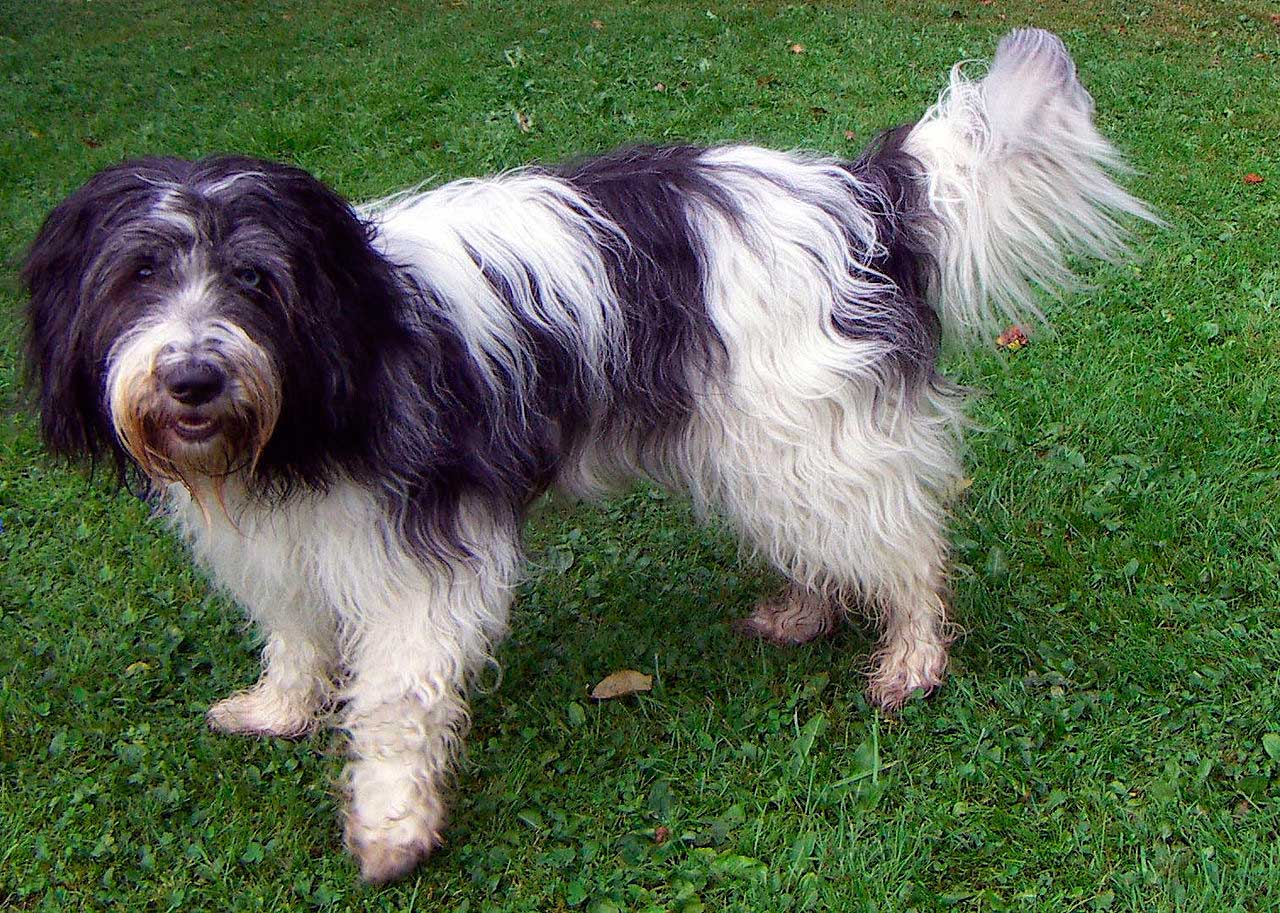
Images "Schapendoes"

Videos "Schapendoes"

Type and recognitions:

  • FCI CLASSIFICATION:
  • Group :
  • Section : . .

Federations:

  • FCI – Group 1 Herding dogs, Section 1 Sheepdogs โ“˜
  • AKC – PASTORAGE โ“˜
  • CKC – Group 7 – Herding dogs โ“˜
  • UKC – Herding dogs โ“˜

FCI breed standard Schapendoes

FCIFCI - Schapendoes
Schapendoes

Alternative names:

1. Dutch Schapendoes, Nederlandse Schapendoes (English).
2. Nederlandse Schapendoes (French).
3. Niederlรคndischer Schapendoes (German).
4. skapendus (Portuguese).
5. Nederlandse Schapendoes (espaรฑol).

Photos:

1- Schapendoes by Wikipedia
2 – Schapendoes by https://pxhere.com/es/photo/1414360
3 – Schapendoes by Svenska Mรคssan from Sweden / CC BY
4 – Schapendoes by publicdomainpictures

โ–ท The world of Pets: Dogs, cats, birds, reptiles, amphibians

Sharplaninac
Yugoslavia FCI 41 - Molossoid . Mountain

ล arplaninac

The Sharplaninac is a brave dog, quiet, safe and reserved with strangers.

History

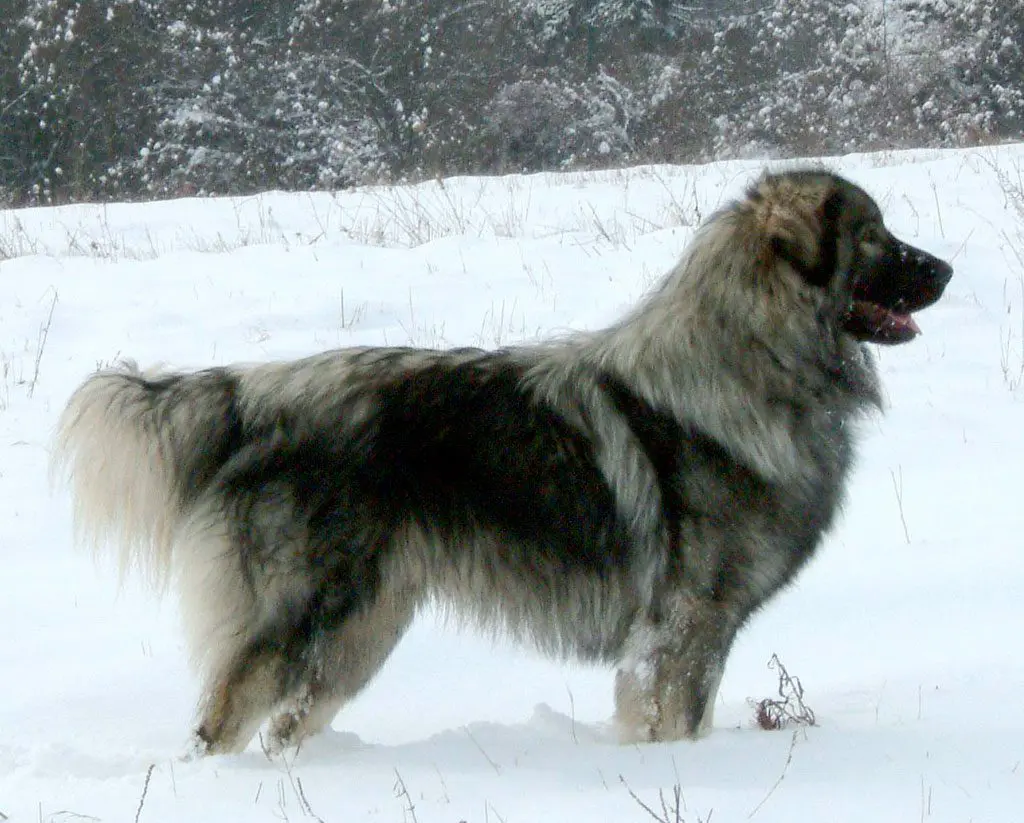
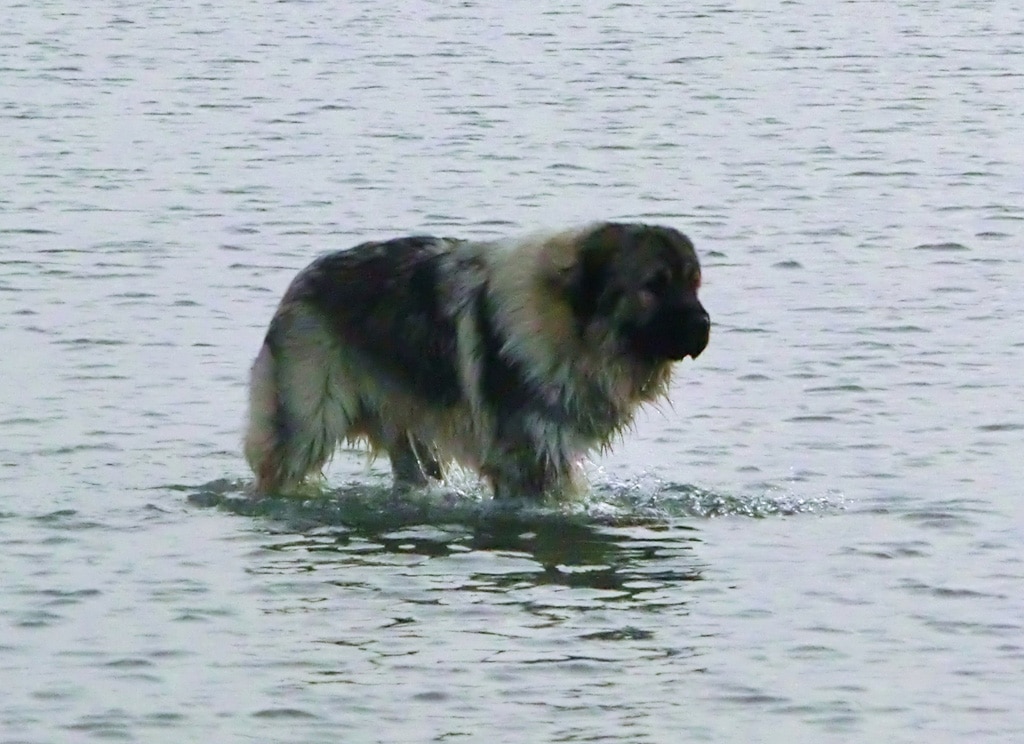
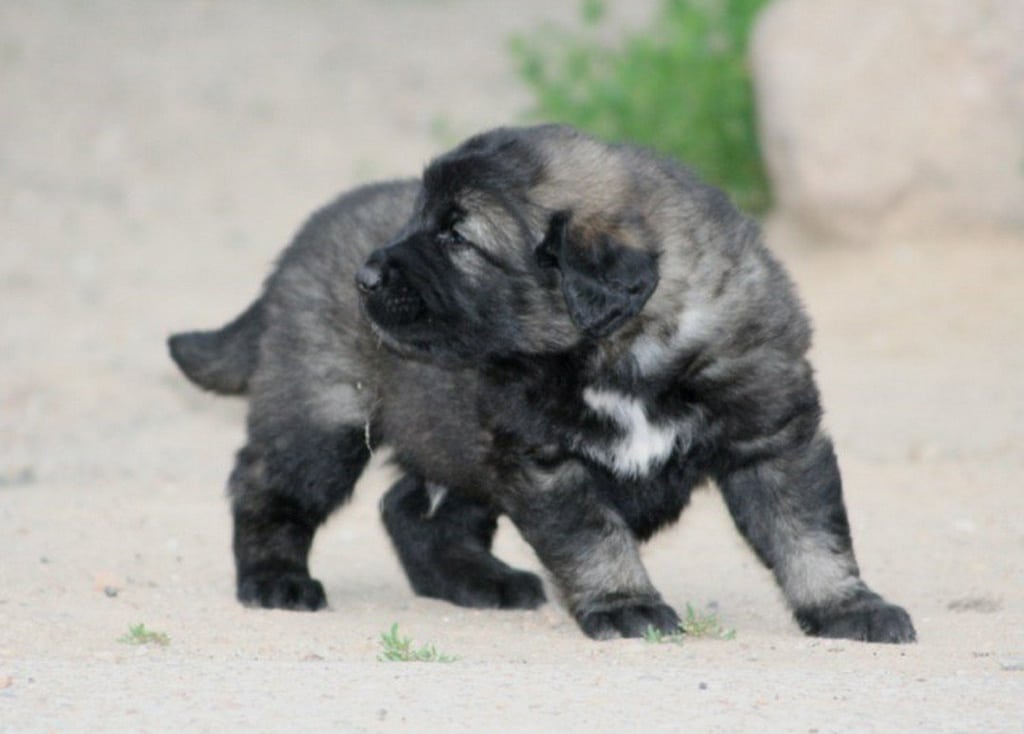
The Sharplaninac (ล arplaninac) (pronounced "sharplanรญnatz"), in Macedonian ล arplaninec, in Albanian Qen i Sharrit) is a dog of medium size in the region of the Balkans pastor.

As it is the case with many breeds, the true origins of this big guy are unknown, although there are theories that try to approach them. Some authors raised that their ancestors were the ancient molossians, especially dogs from Greece and livestock guarding dogs from Turkey.

Other authors believe that the ล arplaninac, drift of Asian dogs that arrived in Europe accompanied by migration of peoples who were engaged in raising them. This theory is the most widely accepted today..

The race was initially recognized by the Federation Cynologique Internationale (FCI) in 1939 under the name Illyrian Shepherd Dog, demonstrating the ancient name of the native region of these dogs.

In 1957, at the request of the Yugoslav Canine Federation (JKS), the FCI changed the name to Yugoslav Shepherd Dog-ล arplaninac, because it is in the ล ar Mountains (ล ar Planina in South Slavic languages, is a mountain range located on the southern border of Serbia in the province of Kosovo and in the northwestern part of the Republic of Macedonia), where is concentrated the largest number of specimens of the breed.

If there is something indisputable, it is that the ล arplaninac, lives since ancient times in the mountainous regions of the former Yugoslavia, from where it has spread throughout the Balkan Peninsula and recently, beyond these borders.

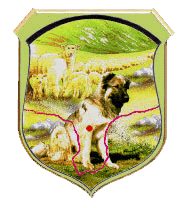
Escudo de DragasThe image of the ล arplaninac appears on the obverse of the coin 1 Denar, issued in the Republic of Macedonia in the year 1993, and is also the emblematic protagonist of the Dragaลก shield, a city in the South of Kosovo, which is located in the region of the ล ar Mountains.

The ล arplaninac has found its way to North American ranches as an esteemed sheepdog and guardian of livestock.. Predator problems have been greatly diminished once a ล arplaninac , takes the responsibility of a herd. The ล arplaninac is one of the few dogs that can chase away a wolf or a bear.

Physical characteristics

El ล arplaninac, is a large size dog, It is quite above average when it comes to large breeds. It is also robust and equipped with a strong Constitution.

The height males average is of 56 to 62 cm and females is of 54 to 58 cm.. The length of the body is slightly greater than the height at the withers.

Although some authors speak of the existence of individuals whose actions were between 75 and 85 cm. of height and a weight of 65 to 100 kg.

The huge head is proportional to the body, It has the skull slightly convex and slightly longer than the muzzle.

The eyes of the ล arplaninac are almond-shaped and brown in color (light or dark), transmit an expression of serenity but the look is penetrating.

The ears they are medium-sized, flat and hang on the cheeks.

The tail It is long and Sabre-shaped, if it is in a state of alert, it carries it high, barely exceeding the line of the back.

The fur It is long in some parts of the body and short in others. In the head, the ears and the anterior part of the extremities, is short. The length of the neck, the body and the back of the limbs and tail, is long.

Regard to the the fur color, all uniform colors are supported but it is preferable to be gray iron and gray very dark. As well, at the top of the head, the neck and the trunk have darker hair.

Sharplaninac: Standard FCI

DATE OF PUBLICATION OF THE ORIGINAL VALID STANDARD: 24/11/1970.

HEAD: Is provided to the body and measures about 25 cm., or a 40% the height at the withers. The skull is slightly longer than the muzzle, 58 and 42% respectively of the total length of the head. The female has a little longer snout (57 and 43%). The top of the skull is slightly convex and the profile of the nasal helm is straight. The lines of both profiles are convergent.

CRANIAL REGION:

Skull: The cranial region is wide, with a medium marked Groove. Seen from side and from above is slightly convex and little bulky.
Depression links (stop) : It is little pronounced.

FACIAL REGION:

  • Snout: It is shorter than the skull. Wide and deep at the base, light and gradually are reduced. The nasal helm is straight and wide. The profile of the lower jaw begins with an arch and is confirmed by a straight line that diverges from the profile of the nasal bridge..
  • Truffle: Is wide and black.
  • Lips: They are moderately thick and stretched. The upper lip slightly exceeds the lower. The corners are well connected, and they are not never reversed.
  • Teeth: They are comprehensive and applied in scissor bite.
  • Eyes: Almond biscuits; or large, or sunk. Are dark or light brown, and calm expression, but penetrating and never afraid. Both the eyelids and visible mucous membranes are black.
  • Ears: Located at the level of the prolongation of an imaginary line that starts from the tip of the nose and passes through the inner corner of the corresponding eye, or below. They are hanging and fall glued along the cheeks. They are V-shaped and medium in length.; When stretched them slightly arriving to the inner corner of the eye. They are covered with short dense pile.

NECK: The upper profile is slightly convex or straight at the top of the neck. The lower profile is straight. The neck is of medium length, but due to the long and bushy hair seems shorter. It is wide, deep and muscular, well attached to the head and body, no sharp demarcation. It is slightly elevated in relation to the dorsal line. Your skin is stretched and does not double chin. The hair is dense, long and rough, and arriving at the head it forms a sort of well marked necklace, which apparently increases the breadth and depth of this part of the head.

BODY: As a whole, the top line is horizontal, or slightly inclined starting from the cross to the rump. In dogs bred in the mountain, be tolerated that the height of the rump is just greater than the height at the withers, Although this is not desirable. The body is slightly longer than the height at the withers.

  • Cross: Slightly marked and wide. It is strongly attached to the neck and the demarcation is inconspicuous.
  • Back: Straight and wide; is not too long.
  • Pork loin: The lumbar region is shorter than, wide and well muscled.
  • Rump: Is medium length, oblique, wide and well muscled.
  • Breast : The chest is deep and medium length; along with the bottom edge reaches the elbow. The ribs are slightly arched. The chest is wide and muscled. Chest girth should be at least 20% greater than the height at the withers.
  • Belly: Built and muscular. Lower profile line rises slightly from front to back. The legs are fairly short. The depression of the rump is marked.
  • Tail: It is long and at least reaches the tip of the Hock. The top margin of the rump, that it does not have a sharp demarcation, It extends in the margin of the tail. This is large at the base and gradually reduces towards its end. The hair of the tail is dense and its bottom edge is longer, forming bangs. The oxtail Sabre-shaped and when the dog is moving is raised. When the dog is in motion, the tail may be above the line of the back..

FORELIMBS: Seen as a whole are well shaved and commensurate with the body. The height of the tip of the elbow is a 55% the height at the withers. The different parts of the limbs are in proportion to each other and to the rest of the body..

  • Shoulder: It is sufficiently long and wide and is well attached to the body. It is slightly oblique and forms an angle of 65ยฐ with the horizontal line..
  • Arm: It is more oblique than shoulder, forming an angle of 55ยฐ with the horizontal line. The angle of the elbow (humeral-radial angle), is 145ยฐ. The elbow is wide, It is well located and very little separated ribs.
  • Forearm: Is vertical, of bones, and well-developed musculature. It is long, and his back is covered with long hairs that are fringe.
  • Carpo: Width, thickness and presents a slight demarcation.
  • Metacarpus: It is wide, strong and slightly oblique.
  • Pies: Strong, oval-shaped, with fingers arched and well together. The nails are black and solid. Digital pads and Plantar are firm, though flexible. Are black or a dark pigmentation.

HINDQUARTERS: Seen from the back, the position of the hind legs is uniform and slightly larger than the forelimbs. In profile, is also uniform, with the angles of the joints sufficiently closed.

  • Thigh: Muscled, strong and rounded. It is oblique, forming with the horizontal line an angle similar to that of the shoulder. The angle of the knee (stifle-tibial angle) It is a little more open than the scapular-humeral angle (around 125ยฐ). The knee is solid and wide.
  • Leg: It is oblique, strong, with a long enough musculature and well-marked bangs.
  • Hock: Wide and fairly open (an angle of about 130ยฐ).
  • Metatarsus: It is a bit less oblique to the Metacarpus. Rarely presents Spurs, But if this is low, they should be disposed.

MOVEMENT: The step is long and agile. Preferred movement is the trot, high strides and medium length. During the Gallop motion is somewhat heavy, but long jumps well covering the field.

SKIN: Is of medium thickness; elastic and well stretched on different parts of the body. There is no presence of dewlap. All visible mucous membranes are black, or a dark pigmentation.

Fur: The head, the ears and the outer parts of the limbs are covered with short hairs. The neck, the body, later parts of the limbs and tail are covered with long hairs almost stretched and slightly thick. The inner layer of hair presents a short hair, finest, very thick and abundant. Dl hair is in the cross the length of 10 to 12 cm.; cannot be shorter than for 7 cm..

Color: This is a dog of a single color. All the shades of colors are supported, from white, until dark brown, almost black. The most valued colors are greenish gray (grey iron), the dark grey. Piebald fur or white spots are not allowed. Pigmented dogs allow small white markings on the chest region and fingers, Although this is not desirable. The background color is more pronounced on the upper parts of the head in all pigmented dogs, the neck and trunk.

On the lower parts of the body, There is a degradation of color, and the color is lighter in the lower parts of the extremities, arriving at the gray beige or dirty. In no case should these degradations appear well delimited, imparting a light marking or piebald appearance.

FAULTS: Any deviation from the above mentioned criteria is considered an absence and severity of this refers to the degree of deviation to the standard and its impact on the health and welfare of the dog.

MINOR FAULTS

  • Insufficient breadth of the cranial region, and the slightly longer snout.
  • well developed jaws.
  • Length and depth of chest insufficient.
  • Too flat ribs, or too arched.
  • Pronounced aplomb defects.
  • A bit shorter hair, as long as the fringes are clearly visible.
  • White markings on the chest region and feet.
  • A slight reduction of the tail.
  • The foot of Hare, as well as other minor physical offenses.

SERIOUS FAULTS

  • Too long snout, or too sharp.
  • High set ears, or they deviate from the head (they are not enough stuck to the cheeks).
  • Bite in the form of iron.
  • Sunken back.
  • Tail that falls to the side.
  • Lymphatic Constitution, as well as other serious physical offenses.

MISS PLAYOFFS

  • Aggressive or fearful dog.
  • Absence of premolars.
  • A difference marked between body length and the height at the withers.
  • Insufficient Withers height.
  • The lower hair length to 7 cm..
  • Large white markings (piebald fur), stripes (atigrados), depigmentation of the visible mucous membranes and eyes.
  • Signs of degeneration (braquignatismo or prognathism, short birth tail, or lack thereof, too depressed back, and other signs of degeneration.
  • Any dog โ€‹โ€‹showing clear signs of physical or behavioral abnormalities must be disqualified..

N.B.: Males should have two normal-appearing testicles fully descended into the scrotum..

TRANSLATION: Rafael Santiago (Puerto Rico).

Character and skills

The temperament of the puppy is described as an independent, distant with strangers, and quiet until, He is a threat to the flock, When in early the Shar bursting with rapid ferocity. The breed has a protective nature.

He is very affectionate with the family nucleus and adapts very well to home life..

It is a dog easy to train because he likes to learn new things. It is mainly a watchdog, despite being known as a typical sheepdog.

If it is trained to defend, You will need a quiet and strong person not transmitted not shred of nervousness, since being a super reactive dog could develop aggressive behavior, especially if the coach supports and welcomes those reactions.

The name comes from the cadena montaรฑosa ล ar (Shar Mountain) spanning the border of the Republic of Macedonia and Serbia, where is it found generally accompanying and keeping large herds of sheep when they graze.

The animal can work with cattle and serves as a watchdog. It was bred and used as a military dog โ€‹โ€‹under the government of Josip Broz Tito and is still employed by the Serbian Army..

Observations

Similar to the Caucasian Shepherd Dogthat is very much– has a temperament more characteristic of a guard dog than a herd dog.

Let us not forget that this agility, He was selected to defend the herds of the attack of wolves that were previously very numerous in their homeland.

It is necessary that the owner of this dog is a person responsible and very conscious of the copy that is in charge of, el ล arplaninac, It has a specially developed and powerful teeth, It can be a real danger if the dog is not given a correct and healthy education.

Pictures of the Sarplaninac

Videos del ล arplaninac

  • Otros nombres: Perro de pastor de Charplanina / Jugoslovenski Pas-Sarplaninac / Charplaninatz / Perro ovejero ilirio / Perro Pastor Ilirio / Perro montaรฑรฉs de Kosovo / Perro pastor de Kosovo / Perro montaรฑรฉs macedonio / Perro pastor macedonio / ล ar Planinac / ล ar Planinec / Perro Pastor Yugoslavo / Perro Montaรฑรฉs Yugoslavo.
  • Group 2 / Section 2 – Molosoides and mountain dogs.

Dogs breeds: Sharplaninac

โ–ท The world of Pets: Dogs, cats, birds, reptiles, amphibians

St. Hubert Hound
Bรฉlgica FCI 84 . Large-sized Hounds

Sabueso de San Huberto

The St. Hubert Hound It is the dog with the more developed nose around the globe

The St. Hubert Hound (in English, known as Bloodhound) It is a breed of dog originally from Belgium, more specifically in the region of the Ardennes. It is one of the different breeds of hound recognized by the FCI in your group 6.

Traditionally the monks of the Saint Hubert monastery as the creators of the race.

Read all about this race by clicking on: Bloodhound.

  • Alternative names: Chien de Saint-Hubert / St. Hubert Hound / Bloodhound / Bluthund
  • Group 6 / Section 1.1 – Large-size hounds

Dogs breeds: St. Hubert Hound