โ–ท The world of Pets: Dogs, cats, birds, reptiles, amphibians

Yellow-headed Parrot
Amazona oratrix

Yellow-headed Parrot

Content


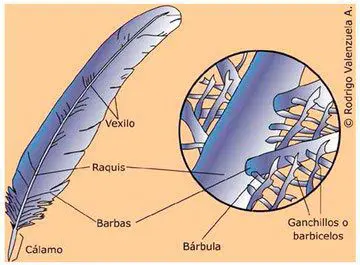
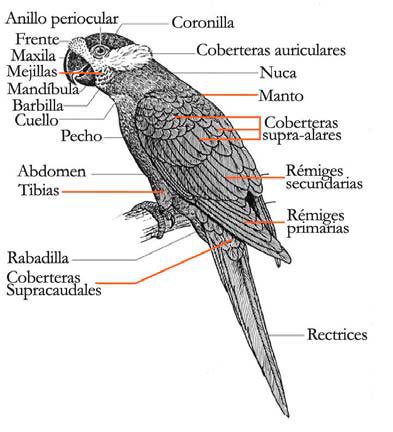
Anatomy-parrots

Description:

35-38 cm. in length weighing up 500 g..
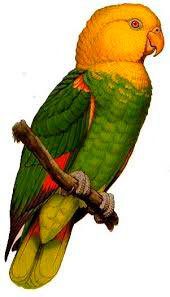
Yellow-headed Parrot

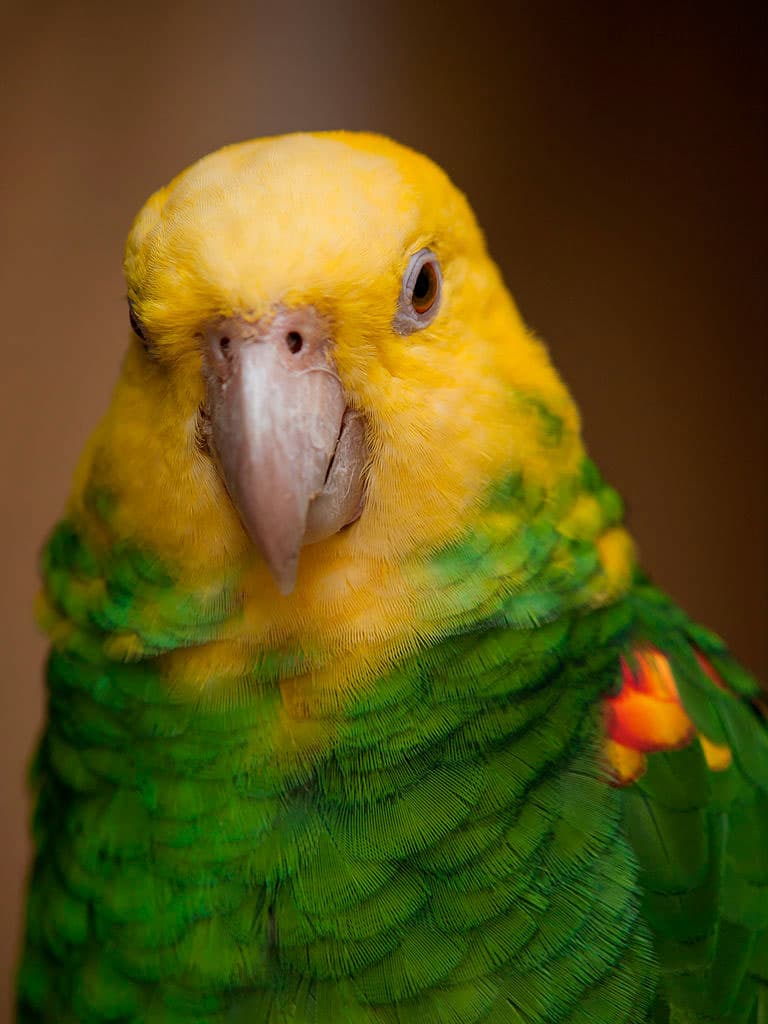
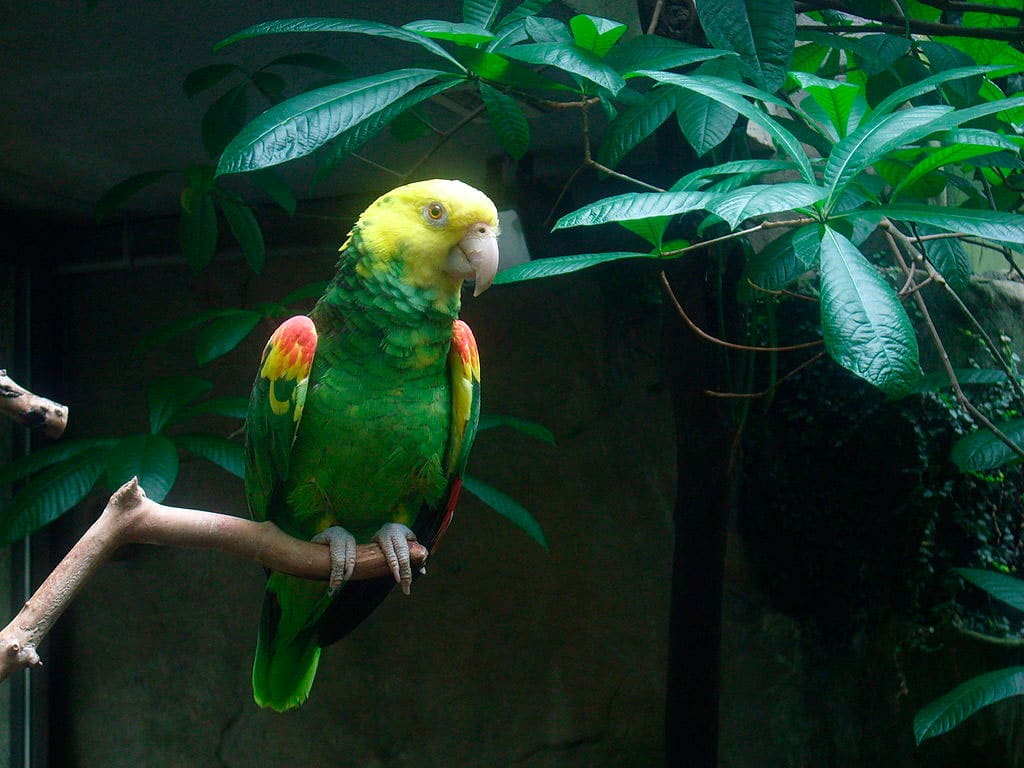
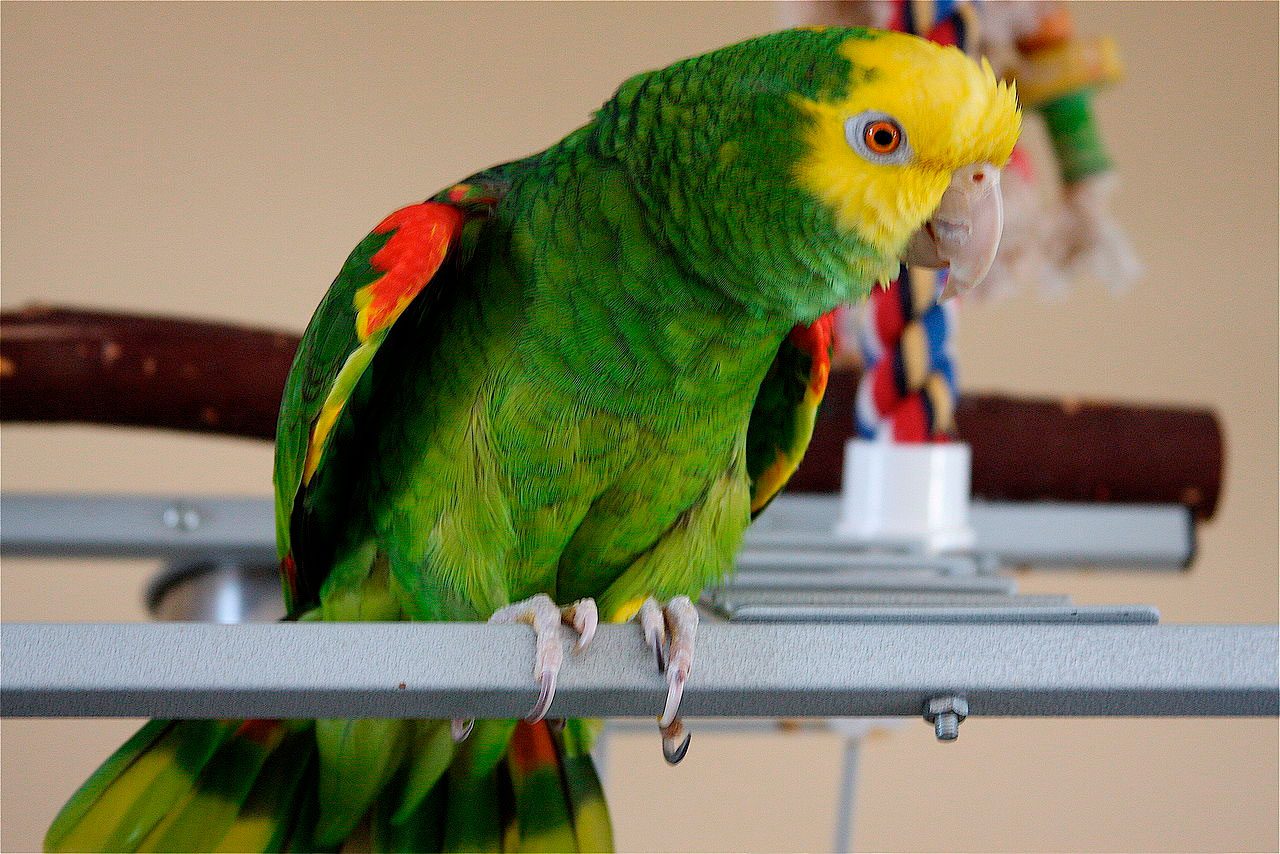
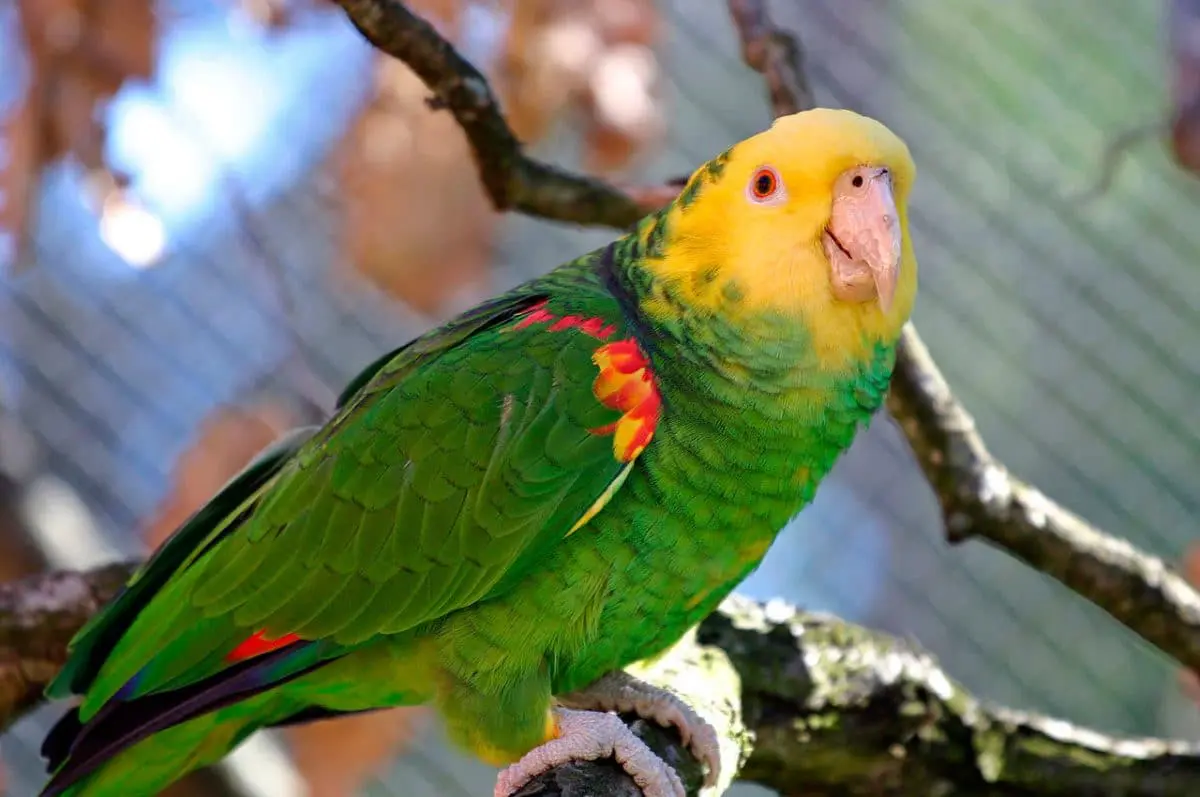
The Yellow-headed Parrot (Amazona oratrix) has head and nape bright yellow; sides neck sometimes with scattered green feathers.

Upperparts green grass with ends of darker green in some feathers; uppertail-coverts paler. Wing coverts green, sometimes with paler yellow margins on some feathers; edge front of the wing and carpal area with red marks and / or yellow variables. Primaries and secondaries green at the base (more emerald than coverts), blue at the tips; five base outer secondaries bright red, forming a speculum. Under wings green. The chin is bright yellow, the throat variable green and dark blue suffusion margins in the feathers of some birds; chest and belly green with yellowish suffusion in some birds, bluish suffusion in other; the thighs with yellow feathers in some birds. Tail green with red tips yellow and green at the base of the innerwebs of the lateral feathers. Bill gray horn; bare periophthalmic whitish; irises orange; legs grey.

Both sexes are similar.

Immature It is very green part with little or no yellow in the head without red and yellow in the wings.

  • Sound of the Yellow-headed Parrot.

Geographic Variation:

All birds puerto Barios at the East end of Guatemala show yellow concentrate lores and crown. While it described as near the subspecies belizensis, the birds of puerto Barios at the northwest end of Honduras They may represent another subspecies of oratrix (not yet formally described) provisionally named guatemalensis (see belizensis below). The hondurensis, described below, It was widely regarded as a subspecies of undescribed Yellow-crowned Parrot (Amazona ochrocephala), but now treated at the southern end as a cline (gradual change of phenotypic traits of the same species due to environmental influences and conditions) Yellow decreasing in head Group of birds yellowhead.

Description 3 subspecies:

  • Amazona oratrix belizensis

    Monroe,BL Jr & Howell,TR, 1966) – Less yellow in the head that the nominal species, without yellow on the throat. Cheeks green, bare periophthalmic grayish-white and probably on average smaller. Fowl Guatemala, to the Northwest of Honduras, sometimes show yellow in head as a patch wide in front of the crown and around eyes, and perhaps they represent a species not yet described (known as guatemalensis); although some birds also show yellow feathers on nape (see geographic variation in Yellow-naped Parrot (Amazona auropalliata).


  • Amazona oratrix hondurensis

    (Lousada & Howell,SNG, 1997) – Yellow on head limited to forecrown and in front of the crown, some birds show patch yellow in nape. One bill paler and more extensive yellow on the nape and the head subspecies caribea of the Yellow-naped Parrot. The patch Yellow crown It is also rounded or triangular, against a narrowband subspecies caribea. The subspecies panamensis of the Yellow-crowned Parrot has a bill darker and lacks the patch yellow in nape.


  • Amazona oratrix oratrix

    (Ridgway, 1887) – Nominal.

Habitat:

The Yellow-headed Parrot frequent savannas, Bosques Tropicales deciduous (including clear), dense forests of thorns, marshy forests peaceful, flood forest evergreen, dense gallery forest, forests Pinus caribea (Belice) and cultivated land with trees, mainly in lowlands below 500 m.

Mainly observed in pairs or in large groups in communal roosts and feeding areas favorites. They snuggle into pine-covered ridges in Belice, moving to nearby humid forests to feed. Apparently, only flocks form in Tamaulipas.

Reproduction:

The Yellow-headed Parrot put their nests in cavities of trees 6-15 meters and in the holes of the palmeras Roystonea. Along the Pacific coast of Michoacรกn in Mexico, the Yellow-headed Parrot nests in trees Astronium graveolens, Brosimum allicastrum and at least five other species of trees (T. Monterrubio-Rico et al., In 2007)

In Belice, preferred pines nest. Breeding season in the months of February to May in the south, to June in the north (for example in Tamaulipas). Clutch, usually 2-3 eggs, they are incubated between 27 and 28 days. The young leave the nest at eight weeks.. On average, only 1.2 hatchlings reach adulthood in each clutch.

Food:

Food in diet of the Yellow-headed Parrot include outbreaks, leaves news, fruits of Palma, seeds of Acacia, fruits of Macuna, Ficus, Zuelania guidonia, Bumelia laetivirens, Solanum and Pithecellobium flexicaule.

They can cause damage to crops, including corn, mango and green bananas.

Distribution and status:

Size of its range (breeding/resident ): 1.020.000 km2

The Yellow-headed Parrot It is confined to Central America in Mexico, Belice, the east end Guatemala and the Northwest corner of Honduras. They are distributed by the slope of peaceful of Mexico in Colima, Michoacรกn, Warrior, Oaxaca (two disjunct populations on the slopes of peaceful and of the Gulf on Isthmus region) and Chiapas. also observed in the shed Gulf from the central and southern Tamaulipas, to the East of San Luis Potosi, Puebla, Veracruz, Tabasco and Campeche, as well as in Belice and around puerto Barios at the East end of Guatemala to the northwest corner of Honduras in the Sula Valley.

Distribution in the east of its range poorly documented, with dubious appearances Campeche and in the region of Petรฉn in the North of Guatemala, confirmed only 1993.

Reports Yellow-headed Parrot outside the normal range Mexico (for example, City of Mexico) probably involving leaks. Wild populations Miami (Florida) and Puerto Rico.

local residents, and rare sparsely distributed along most of its distribution (perhaps locally common in parts of Belice) with diminished by the loss of habitat populations and their capture for live bird markets.

The population of Sula Valley survives as remainder. marketed widely both within and outside the species range, being one of the most searched Neotropical parrots pet (reputedly one of the best talkers). The most drastic falls have probably been in the northeast of Mexico, where habitat loss has been more rapid and severe. The wild population is probably less than 7.000 individuals (1994).

Distribution 3 subspecies:

  • Amazona oratrix belizensis

    Monroe,BL Jr & Howell,TR, 1966) – Belice.


  • Amazona oratrix hondurensis

    (Lousada & Howell,SNG, 1997) – Sula Valley, Honduras.


  • Amazona oratrix oratrix

    (Ridgway, 1887) – Nominal.

Conservation:


Endangered


โ€ข Current category of the Red List of the UICN: In danger of extinction.

โ€ข Population trend: Decreasing.

โ€ข Population size: 4700

Rationale for the Red List category

    This species qualifies as in danger of extinction due to demographic decline very fast. The population is now so small that it is likely to fall (but still very significant) rates decrease in the future (Collar et al., 1992).

Justification of the population

    The population It was estimated 7.000 copies in 1994. This is roughly equivalent to 4.700 mature individuals.

Justification of trend

    It is estimated that the population of the species is declining very fast, due to the loss and degradation of habitat and the levels of capture and persecution. On the coast of Michoacรกn, Mexico, it is estimated that the species occupies the 45.6% its estimated historical distribution (Monterrubio-Rico et al ., 2007 ). Throughout all Pacific coast of Mexico, its historical range has contracted by a 79% (Monterrubio-Rico et al ., 2010). The population of Punta de Manabique It decreased by 30% between 1994 and 2001 mainly due to the Poaching of nests (our man 2003 , Eisermann in a bit., 2007).
Threats

โ€ข The habitat loss It has been extensive, with the 80% lowlands of Tamaulipas cleared for agriculture and pasture, and growing settlements along the Autopista del Oeste in Belice (Somerville 1997).

โ€ข In Belice, where much of the suitable habitat is outside the sistema national protected area, the regions occupied by species remain under heavy development pressure (B. Miller in a little ., 2007).

โ€ข Las palm savannas at the only known breeding site in Guatemala They are used for no intensive cattle grazing (our man 2003), who is still a threat here (Fundary et al ., 2006).

โ€ข Many thousands of Individuals of this species are exported illegally from Mexico and some from Belice each year, and it is popular in domestic markets (Low 1995b, Miller and Miller 1997, Somerville 1997).

โ€ข The illegal internal traffic is intense in Mexico and may represent the 38% of recent species loss distributive (T. Monterrubio-Rico et al., In 2007).

โ€ข In the Mexican states of Michoacรกn, Warrior and Oaxaca, They are mainly pups those taken to the pet trade (T. Monterrubio-Rico et al., In 2007).

โ€ข In Guatemala, It is reported that Local military authorities are complicit in the illegal trade of this species, and poachers frequent nest nesting site of the species (our man 2003, Eisermann in some). It also, has reported its hunting for food from local fishermen in Guatemala (our man 2003, Eisermann in some ., 2007).

โ€ข In Belice, It is hunted and persecuted by damage to crops (SNG Howell in some 1998) and it remains a victim of the illegal pet trade, whose capture involves logging nesting (B. Miller in a little ., 2007).

โ€ข It is estimated that its extension around the coast of Michoacรกn It has decreased 1.507 km2 , of which 576 km2 can not be attributed to habitat loss and, therefore, They may be due to the poaching for trade (Monterrubio-Rico et al., 2007).

Conservation Actions Underway

โ€ข CITES Appendix I.

โ€ข In Mexico It is distributed in nine protected areas (T. Monterrubio-Rico et al., In 2007).

โ€ข The nominal subspecies inhabits Biosphere Reserves of Heaven, Los Tuxtlas, Swamps Centla and Terms Lagoon.

โ€ข The species Tres Marias Parrot (Amazona tresmariae), considered by some authors as a subspecies of Amazona [oratrix gold tresmariae], It is protected in Islas Marรญas Biosphere Reserve.

โ€ข The nominal subspecies It is in the Reserva Chamela-Cuixmala, in the Lagunas de Chacahua, in the Huatulco National Park, and in the Biosphere Reserve Zicuirรกn-Infiernillo in Michoacรกn (T. Monterrubio-Rico et al., 2007), as well as in seven protected areas in Belice (EC Enkerlin-Hoeflich in some 1994, Miller and Miller 1997, Snyder et to the., 2000).

โ€ข The only one breeding population known in Guatemala It was declared Wildlife Refuge in 2005, but effective protection is difficult due to organized crime in the area (Eisermann in some ., 2007).

โ€ข There are several awareness campaigns nationally in Mexico (Roberson y Carratello, 1997).

โ€ข It is bred in captivity, but the reintroduction of captive bred birds is unfeasible (Baja 1995b).

Conservation Actions Proposed

โ€ข Carry out surveys for an updated estimate of population size.

โ€ข Monitor rates of habitat loss and degradation.

โ€ข Monitor hunting levels, catch and trade.

โ€ข Apply the trade restrictions.

โ€ข To protect effectively as key sites Las Colorados Ranch, Soto La Marina / Fishing, Tamaulipas, orange river, focused on Las Abritas (San Luis Potosi) and Punta de Manabique.

โ€ข Survey to identify other important sites.

โ€ข Investigate habitat use and local movements.

โ€ข Continue zooming awareness campaigns.

โ€ข Develop structured captive breeding programs and investigate the possibility of future release.

"Yellow-headed Parrot" in captivity:

The Yellow-headed Parrot are popular in domestic markets.

protected by CITES Appendix I (Species that are endangered. Prohibited international trade of specimens of those species, except when the import is non-commercial purposes).

In Mexico It is listed as endangered in both the NAME-059-SEMARNAT-2001, as in the NAME-059-SEMARNAT-2010, and by the Article 60 Bis of the General Law on Wildlife removal of specimens from the environment is prohibited, marketing, tenure, import, export, use of any of its parts. They are up 9 years in prison and fines very high who are surprised by the Profepa with specimens of this species in their possession and do not have papers proving their legal provenance.

Should be avoided in all cases buy this or any of the protected species by different appendices CITES.

Alternative names:

– Yellow-headed Amazon, Yellow-headed Parrot, Yellow-headed Parrot (Mainland) (English).
– Amazone ร  tรชte jaune, Amazone ร  tรชte jaune (continentale), Amazone ร  tรชte jaune (forme continentale) (French).
– Gelbkopfamazone (German).
– papagaio-de-cabeรงa-amarela (Portuguese).
– Loro Cabeza Amarilla, Amazona cabecigualda (espaรฑol).


scientific classification:

Robert Ridgway
Robert Ridgway

– Order: Psittaciformes
– Family: Psittacidae
– Genus: Amazona
– Scientific name: Amazona oratrix
– Citation: Ridgway, 1887
– Protonimo: Amazona oratrix


ยซYellow Headed Parrotยป Images:

Videos "Yellow-headed Parrot"

————————————————————————————————

ยซYellow Headed Parrotยป (Amazona oratrix)


Sources:

– Avibase
– Parrots of the World โ€“ Forshaw Joseph M
– Parrots A Guide to the Parrots of the World – Tony Juniper & Mike Parr
– Birdlife

– Photos:

(1) – A Yellow-headed Amazon (also known as the Double Yellow-headed Amazon) in an aviary By Ernst Vikne (IMG_4451.JPG) [CC BY-SA 2.0], via Wikimedia Commons
(2) – Yellow-headed Amazon at Baltimore Aquarium, USA By Christine Schmidt from Laurel, USA (Parrot pair) [CC BY 2.0], via Wikimedia Commons
(3) – Yellow-headed Amazon, also known as the Yellow-headed Parrot or Double Yellow-headed Amazon, at Lion Country Safari, West Palm Beach, Florida, USA. Photograph is a close up of head By Duncan Rawlinson from Vancouver, BC (Parrot) [CC BY 2.0], via Wikimedia Commons
(4) – Yellow-headed Amazon (Amazona oratrix) playing on his cage by Mbtskysurfer at English Wikipedia [GFDL or CC BY 3.0], via Wikimedia Commons
(5) – Yellow-headed Amazon (Amazona oratrix) also known as the Yellow-headed Parrot, Double Yellow-headed Amazon. Two parrots on a perch By Gary Denness (originally posted to Flickr as Parrot Portrait) [CC BY-SA 2.0], via Wikimedia Commons
(6) – Yellow-headed Amazon (also known as the Yellow-headed Parrot and the Double Yellow-headed Amazon) at Vancouver Aquarium, Canada By Lizzy Foulkes (originally posted to Flickr as Hello, Goregous) [CC BY-SA 2.0], via Wikimedia Commons
(7) – A Yellow-headed Amazon at Palmitos Park, Gran Canaria, Canary islands, Spain By William Warby (Flickr: Parrot) [CC BY 2.0], via Wikimedia Commons
(8) – A Yellow-headed Amazon in Jungle Island, Miami, Florida, USA By Humberto Moreno (Parrot Jungle, Miami) [CC BY 2.0], via Wikimedia Commons
(9) – Yellow-headed Amazon (also known as the Yellow-headed Parrot and the Double Yellow-headed Amazon) at Dallas World Aquarium, USA By texas_mustang (Dallas Aquarium 2008 with Meredith) [CC BY 2.0], via Wikimedia Commons

– Sounds: Peter Boesman, XC218407. accessible www.xeno-canto.org/218407
โ–ท The world of Pets: Dogs, cats, birds, reptiles, amphibians

Hellmayr's Parakeet
Pyrrhura amazonum

Hellmayr's Parakeet

Content

Description:


Anatomy-parrots

22 cm.. length.

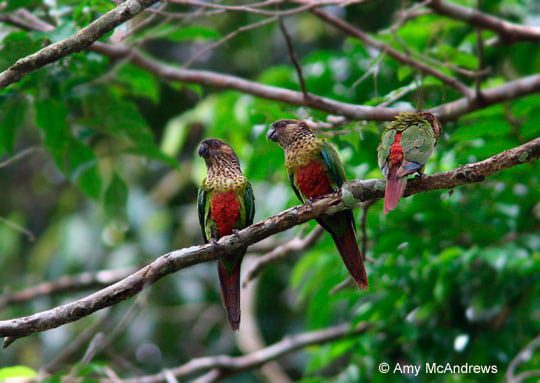
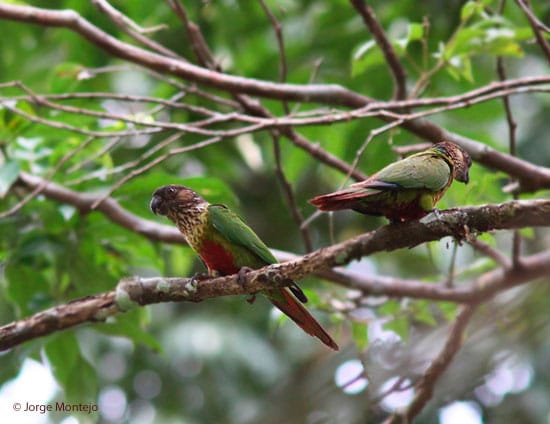
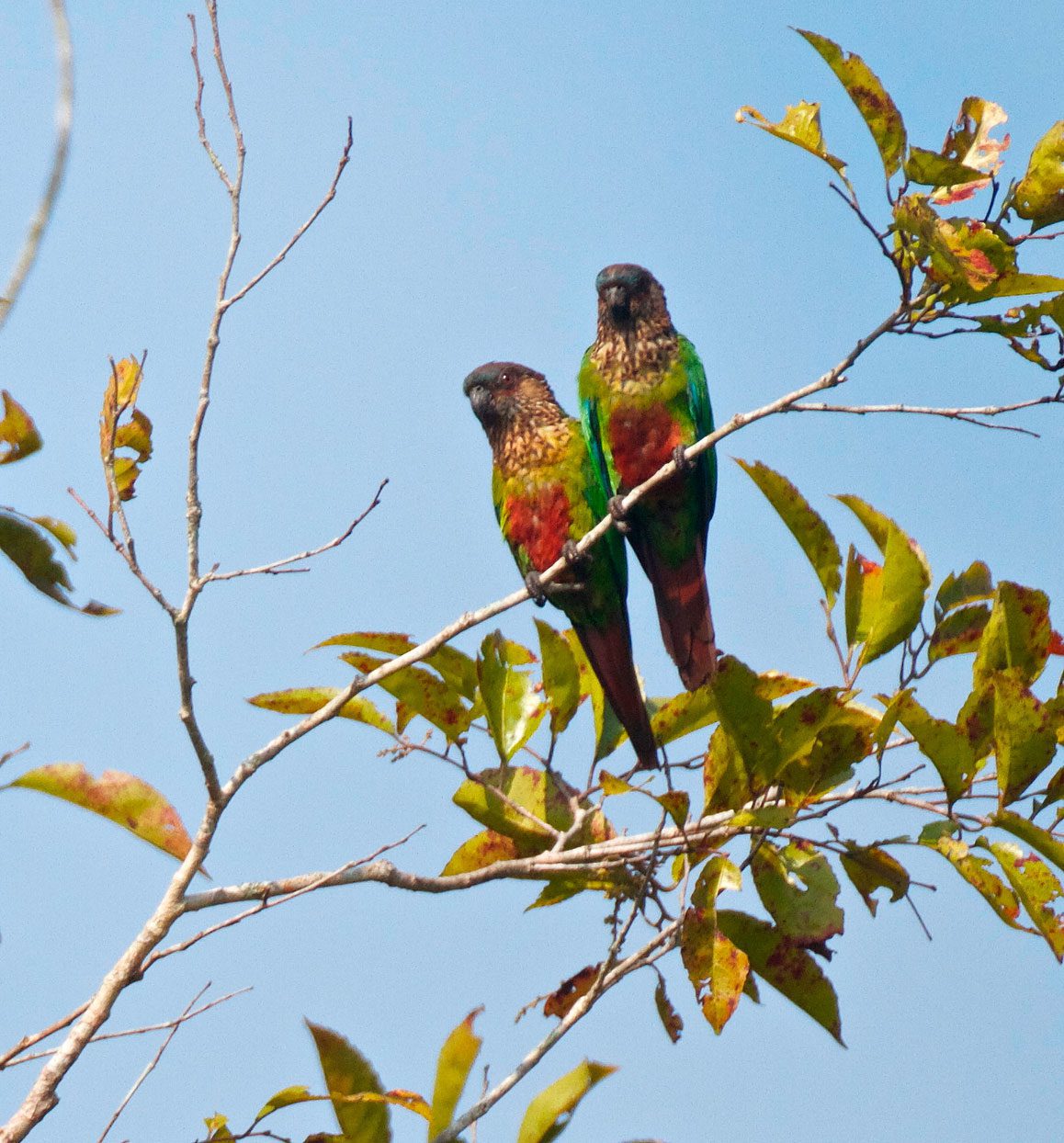
The Hellmayr's Parakeet (Pyrrhura amazonum) It is a mainly green parakeet; the area from crown at the nape it is dark brown; the belly, the rump and tip tail, They are dark red; below, the tail It is also dark red.

They have a patch whitish in ear-coverts; a blue band in front of eyes. The face It is dark reddish brown; the upper region chest It is greenish gray with gray scalloping; the bottom of the chest It is scaled with yellowish effect; the in bend of wing green; brown-red patch in the center of abdomen; of remiges blue (visible only in flight). Orbital ring blackish; the cheeks and ocular region are dark brown.
Bill grey-black; eyes orange brown.

The immature birds They have a darker plumage.

Taxonomic status:

Considered a subspecies of the Painted Parakeet by some authors

  • Sound of the Hellmayr's Parakeet.

Description 3 subspecies:

  • Pyrrhura amazonum amazonum

    (Hellmayr, 1906) – Nominal.


  • Pyrrhura amazonum lucida

    (Arndt, 2008 parrots[Arndt]) – Little or no blue on the front of the crown. Slightly smaller and paler than the Pyrrhura amazonum snethlageae


  • Pyrrhura amazonum snethlageae

    – perico madeira – (Joseph & Bates,JM, 2002) – The bare periophthalmic is of color beige.

Habitat:

They are distributed in tropical moist forests and adjacent habitats. Itร‚ยดs social. Observed in pairs or groups. It is quite common in most of its range and inhabits several protected areas.. The Pyrrhura amazonum amazonum It is in the Amazon National Park, For, Brazil, while the Pyrrhura amazonum lucida It is in the The Cristalino State Park, Mato Grosso, Brazil.

Reproduction:

They build their nests in tree cavities.

Food:

With feed seed, flowers, fruit, berries and nuts. They are also considered local pests, as they regularly raid cornfields and orchards, occasionally causing considerable damage.

Distribution:

Size of its range (players / residents): 392.000 km2

Distribution 3 subspecies:

Conservation:

State of conservation โ“˜


Endangered Endangered โ“˜ (UICN)โ“˜

โ€ข Current category of the Red List of the UICN: In danger of extinction.

โ€ข Population trend: Decreasing.

โ€ข Population size : Unknown.

Justification of the Red List of the Category

Based on a model of deforestation in the amazon basin, and their potential susceptibility to capture for the bird trade, It is suspected that the population of the Hellmayr's Parakeet It has declined rapidly over three generations, and therefore it has been classified as danger of extinction.

Justification of the population

Recent world population is unknown given taxonomic divisions.

Justification trend

This species is suspected that he has been able to lose 43,0 to 52,1% of suitable habitat within their distribution over three generations (18 years) based on a model of deforestation of the Amazon (Soares-Filho et to the . 2006, Bird et to the. 2011). Given the susceptibility of this species to capture, It suspected population decline by 50% in three generations.

Threats

The main threat to this species is that it is accelerating the Deforestation in the Amazon basin for livestock and soybean production, provided by the expansion of the road network (Soares-Filho et to the. 2006, Bird et to the. 2011).

The changes proposed by the Forest code of Brazil they reduce the percentage of land that a private owner has a legal obligation to keep as forest and include an amnesty for owners who deforested before July 2008 (who would later be absolved of the need to reforest illegally cleared land) (Bird et to the. 2011).

His capture for bird trade wild can represent a significant threat.

Conservation actions and ongoing research

It is not known any.

The proposed conservation and research actions

Expand the network of protected areas to effectively protect IBA.

Effectively manage the resources of existing protected areas and new, the use of new opportunities for financing the management of protected areas with the common goals of reducing carbon emissions and maximize biodiversity conservation.

conservation on private lands is also essential, through the expansion of market pressures for rational land management and prevention of logging on land not suitable for agriculture (Soares-Filho et to the. 2006).

Campaign against proposed changes to Forest code of Brazil that would lead to a decrease in the width of protected riparian forest areas such as Permanent Preservation Areas (APPs), that function as vital corridors in fragmented landscapes.

"Hellmayr's Parakeet" in captivity:

It is a bird in danger of extinction. Each captive specimen of this species which is capable of reproducing, must be placed in a well-managed captive breeding program and not sold as a pet, in order to ensure its long-term survival.

Alternative names:

– Hellmayr’s Parakeet, Santarem Parakeet, Santarem Parakeet (Santarem) (English).
– Conure de Hellmayr (French).
– Santaremsittich (German).
– Tiriba-de-hellmayr (Portuguese).
– Cotorra de Santarรฉm, Perico Santarรฉm (espaรฑol).

scientific classification:

Carl Edward Hellmayr

– Order: Psittaciformes
– Family: Psittacidae
– Genus: Pyrrhura
– Scientific name: Pyrrhura amazonum
– Citation: Hellmayr, 1906
– Protonimo: Pyrrhura pictured on Amazon


Images Hellmayr's Parakeet:


Hellmayr's Parakeet Santarem Parakeet (Pyrrhura amazonum) Cristalino Jungle Lodge, Mato Grosso, Brazil

Hellmayr's Parakeet Santarem Parakeet โ€“ Cristalino Lodge, Brazil

Videos "Hellmayr's Parakeet"


Especies del gรฉnero Pyrrhura

Hellmayr's Parakeet (Pyrrhura amazonum)


Sources:

– Avibase
– Parrots of the World โ€“ Forshaw Joseph M
– Parrots A Guide to the Parrots of the World – Tony Juniper & Mike Parr
– Birdlife

– Photos:

(1) – Pyrrhura or Amazon by snethlageae Blake Matheson – Flickr
(2) – Santarem Parakeet (Pyrrhura amazonum) Cristalino Jungle Lodge, Mato Grosso, Brazil by Amy McAndrews – Flickr
(3) – Santarem Parakeet – Cristalino Lodge, Brazil by Jorge Montejo – Flickr

– Sounds: Jeremy Recall, XC235131. accessible www.xeno-canto.org/235131

โ–ท The world of Pets: Dogs, cats, birds, reptiles, amphibians

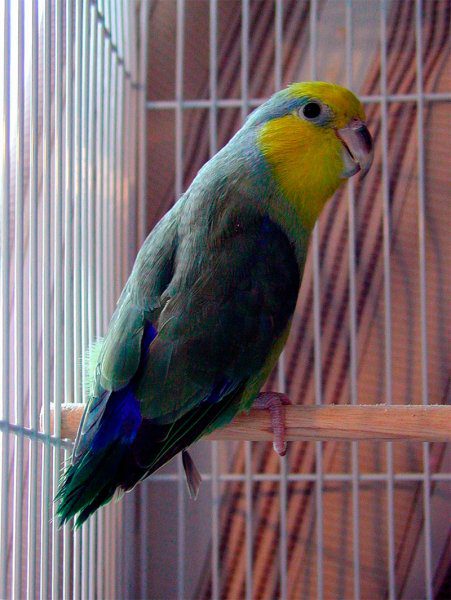
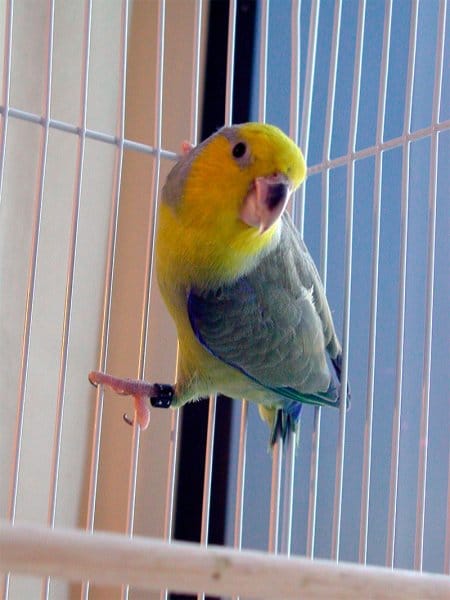
Yellow-faced Parrotlet
Forpus xanthops

Yellow-faced Parrotlet

Content

Description:

Yellow-faced Parrotlet

14 cm.. height.

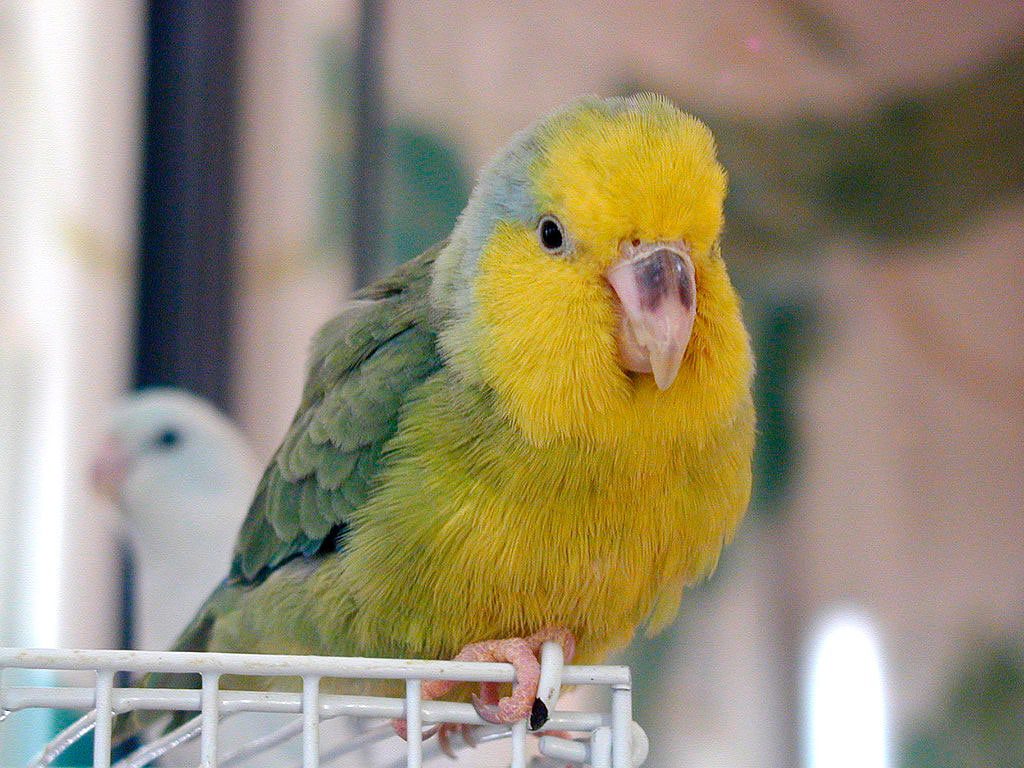
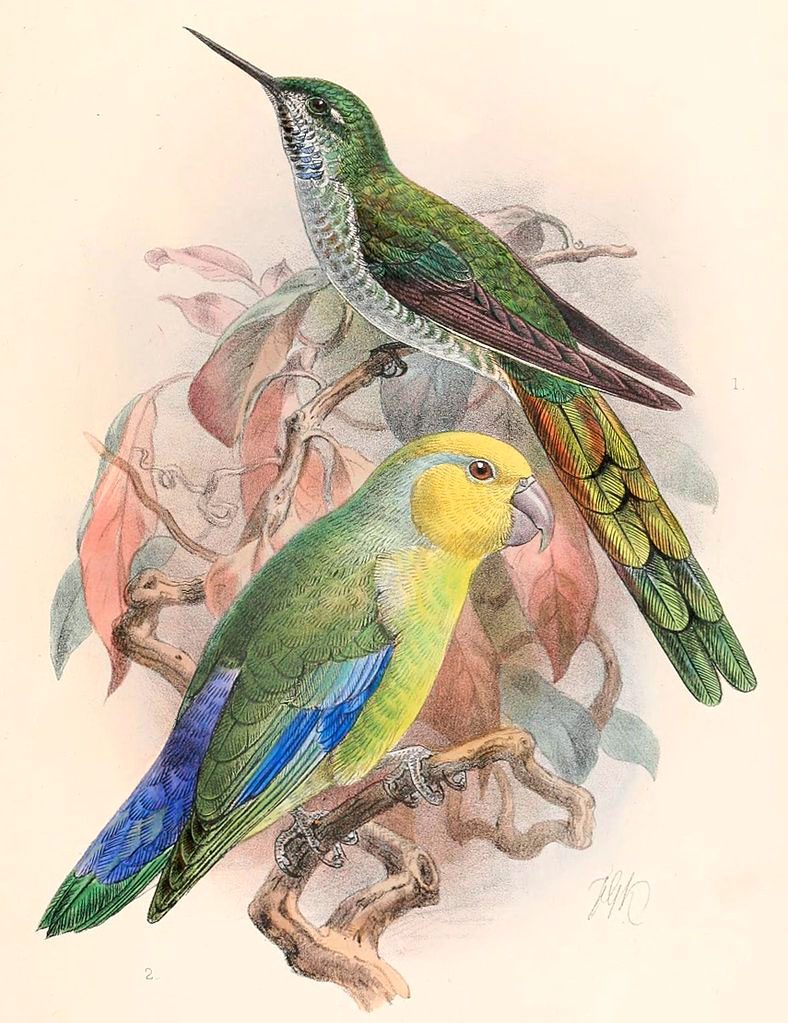
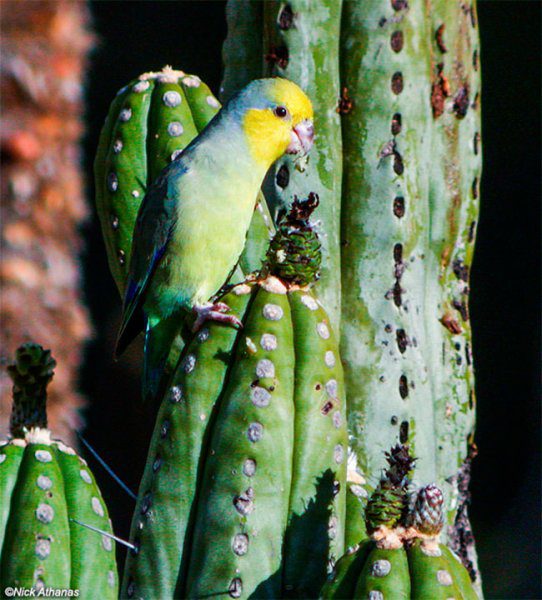
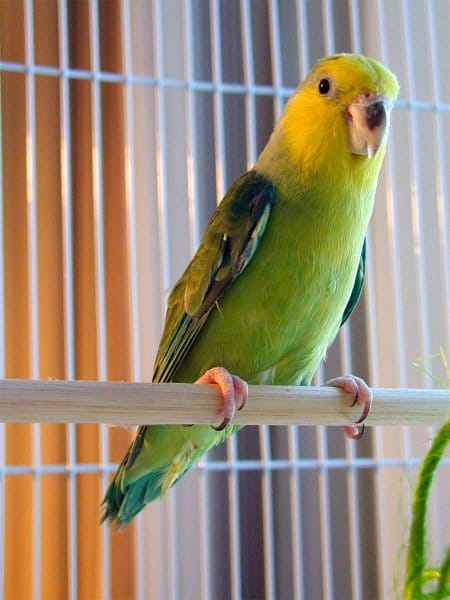
The Yellow-faced Parrotlet (Forpus xanthops) is plump appearance and a tail short ending in point. Distinguished by the crown, face, chest and belly yellow, with strong blue patch on the wing , in flight blue occupies almost half of wing . Dorsally gray cafesoso, with the rump blue. Its bill It is ocher.

The female has blue patch on the rump and wings pale smaller.

taxonomy:

Closely related to Pacific Parrotlet (Forpus coelestis); in the past it has been considered a subspecies of this, but there are clear differences in size and color. Monotypic.

Habitat:

The Yellow-faced Parrotlet It Gregaria, He lives in varied habitats, usually arid, riparian forests or gallery in the tropics and subtropics, between 1000 to 1600 m, Although it has been reported to 2745 m.

Reproduction:

Nest in communal area, using tree hollows or sand. The breeding season It is from March to April.

In captivity, They are made of 3 to 6 eggs and up to three broods are raised per year.

Food:

Their diet includes cactus, besides fruit trees. If you know that feeds on Cercidium praecox, patรฉ flowers Bombax discolor and plum fruit Prunus domestica (Begazo 1996, F. Angulo Prato Longo a slightly. 2012).

Distribution:

Extension of the distribution (breeding/resident): 4,800 km2

The Yellow-faced Parrotlet It endemic North Peru in the Valley of the Maranon River, to the south of this country and western Amazon.

Conservation:

State of conservation โ“˜


Vulnerable Vulnerable โ“˜ (UICN)โ“˜

โ€ข Current category of the Red List of the UICN: Vulnerable.
โ€ข Population trend: Stable.
โ€ข Population size : 350-1500 individuals.

According to the categories of UICN It is considered Vulnerable (VU). Habitat degradation and trade are adversely affecting the population.

Justification of the population

The population It is estimated in 250-999 mature individuals, according to surveys of Begazo (1996) and subsequent recovery of the small-scale. This equates to a total of 375-1,499 individuals, rounded here to 350-1,500 individuals.

The ban on the capture and trade has improved the status of this species. The rate of decline was very rapid in the Decade of 1980, Although at present has been reduced and even stabilized. But, the population is still very small, with records in very few places.

Conservation Actions Underway

– Appendix II of the CITES.

– This protected legally in the Peru, but enforcement is poor.

– Catch rates have declined significantly since the ban, and trappers capture the species apparently only on request (Begazo 1996).

– There are no protected areas within its range.

Conservation Actions Proposed

– Examine the population, especially in the less accessible center of its range, and between the distribution areas of the two known species of Forpus.

– Monitor the population, working with local people to generate the will to preserve the species in situ (Begazo 1996).

– Study their biology and ecology throughout an annual cycle.

– controlling trade and enforce laws capture.

– Create at least one protected area within the range of the species (Angulo et al. 2008).

"Yellow-faced Parrotlet" in captivity:

captured for him wild bird trade, It is estimated that 17.000 birds were captured between 1981 and 1994. The rate of mortality during capture is estimated between the 40% and the 100%. Rare and unknown in captivity until 1979-1980.

Itร‚ยดs territorial, temperament quiet, active and initially shy, usually it takes in trust although this depending more on their previous experiences, age, breeding form (by hand creates it naturally).

Notes on captive breeding of Forpus xanthops

Alternative names:

– Yellow faced Parrotlet, Yellow-faced Parrotlet (English).
– Perruche-moineau ร  tรชte jaune, Toui ร  tรชte jaune (French).
– Gelbmaskenpapagei, Gelbmasken-Sperlingspapagei (German).
– Tuim-de-cabeรงa-amarela (Portuguese).
– Catita Enana de Cara Amarilla, Cotorrita Carigualda (espaรฑol).
– Periquito de Cara Amarilla (Peru).


scientific classification:

Salvin Osbert
Salvin Osbert

– Order: Psittaciformes
– Family: Psittacidae
– Gender: Forpus
– Scientific name: Forpus xanthops
– Subpoena: (Salvin, 1895)
– Protonimo: Psittacula xanthops

Yellow-faced Parrotlet images:


Video Carigualda Parrot


Species of the genus Forpus

Sources:

โ€ข Avibase
โ€ข Parrots of the World โ€“ Forshaw Joseph M
โ€ข Parrots A Guide to the Parrots of the World – Tony Juniper & Mike Parr
โ€ข Book Parrots, Parrots and macaws Neotropical
โ€ข Birdlife

Photos:

(1) – An adult male Yellow-faced Parrotlet perching on the top of its cage by Ruth Rogers [CC BY 2.0], via Wikimedia Commons
(2) – An adult male Yellow-faced Parrotlet photographed at the 2002 AFA convention in Tampa, Florida, USA by Rogers [CC BY 2.0], via Wikimedia Commons
(3) – An adult Yellow-faced Parrotlet photographed at the 2002 AFA convention in Tampa, Florida, USA by Rogers [CC BY 2.0], via Wikimedia Commons
(4) – An adult male Yellow-faced Parrotlet photographed at the 2002 AFA convention in Tampa, Florida, USA by Ruth Rogers [CC BY 2.0], via Wikimedia Commons
(5) – Forpus xanthops Maraรฑon near Canyon Ferry, Cajamarca, Peru by Nick Athanas – Flickr
(6) – John Gerrard Keulemans [Public domain] – Novelty Zoologicae, too.. 2

โ–ท The world of Pets: Dogs, cats, birds, reptiles, amphibians

Brown-breasted Parakeet
Pyrrhura calliptera


Brown-breasted Parakeet

Content

Description:

Brown-breasted Parakeet

22-23 cm.. height.

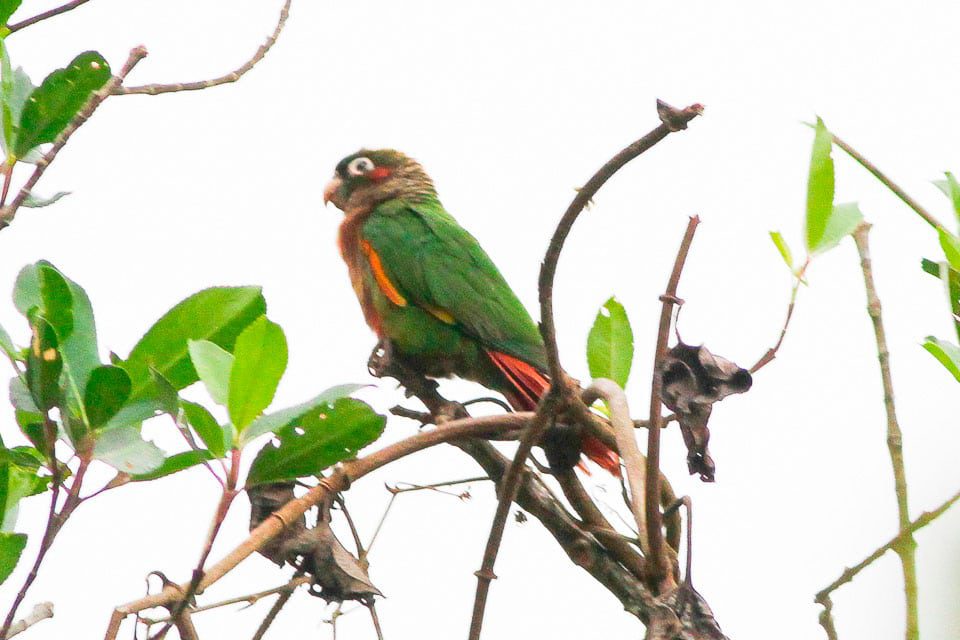
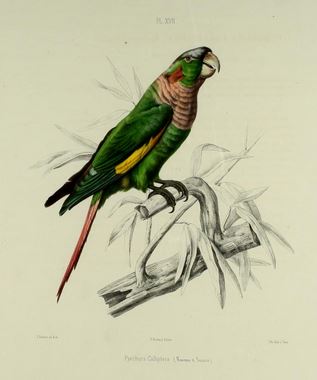
The Brown-breasted Parakeet (Pyrrhura calliptera) is easily recognized by the Wing mirror yellow in flight. In general it is green, with a red spot on the ear; chest brown reddish and sides of the neck characteristic dark brown.

Shoulder mostly yellow up to half of the wing and the end of the same pardo-olivaceo.
The primary feathers are blue and their covert wing external and internal yellow, usually with orange blend.
The tail reddish brown. Its bill pale yellowish; irises yellow; eye ring white.

The immature lack of yellow in the wings.

Habitat:

It inhabits in Misty jungles Andean and sub-andinas with canopy 15 to 25 m, secondary forests and Paramo, from 1700 to 3400 m. They fly at dawn and at dusk flocks, usually small of 6 to 12 individuals on the canopy of the forest.

Reproduction:

It nests in, generally, in cavities of trees located in wooded pastures or pasture surrounded by secondary forest fragments, bedrooms for both nests.
breeding conditions they have been observed in August and October, as well as between November and January in Fusagasugรก, Farallon de Medina and Soatรก (Cortes-Herrera et to the., 2007) and from September to February in the Chingaza National Park (Arenas-Mosquera 2011).

The size average of the laying is of 5-6 eggs of color whitish. The chicks take of 60 to 70 days to complete its development.

Food:

Diet Brown-breasted Parakeet consists in fruit (including plants of the Ericaceae, Lauraceae, Melastomataceae and Clusiaceae (Cortes-Herrera et to the., 2007), seeds and cultivated corn, Although flocks larger were observed in areas open to eating leaves and seeds (O. Courteous in litt., 2012).

Distribution:

Size distribution (reproduction / resident): 1,000 km2

Endemic. Cordillera Oriental in Colombia. Since Boyacรก to southwest of Cundinamarca. Has also been reported in the departments of Santander, Norte de Santander and Casanare in the localities of the Arrayanes and Salina.

The population total has been estimated at 5.000-10.000 individuals.

Conservation:

State of conservation โ“˜


Vulnerable Vulnerable โ“˜ (UICN)โ“˜

โ€ข Current category of the Red List of the UICN: Vulnerable.

โ€ข Population trend: Decreasing.

This species has a range very small and a small population, known in less than ten places in what is rapidly declining due to the loss of habitat and persecution as as plague by including cultivated corn in their diet.

These declines in population range are expected to continue.. So, qualified as vulnerable.

It is estimated that its population amounts to between 5.000 and 10.000 individuals, equivalent approximately to 3.300-6.700 mature individuals.

"Brown-breasted Parakeet" in captivity:

Not usually find it in captivity.

Alternative names:

– Brown-breasted Parakeet, Brown breasted Parakeet, Brown-backed Conure, Brown-backed Parakeet, Brown-breasted Conure, Flame-winged Conure, Flame-winged Parakeet (English).
– Perriche ร  poitrine brune, Perruche ร  poitrine brune (French).
– Braunbrustsittich, Braunbrust-Sittich (German).
– Tiriba-de-peito-marron (Portuguese).
– Cotorra Pechiparda, Perico Bello, Periquito Aliamarillo (espaรฑol).

scientific classification:

– Order: Psittaciformes
– Family: Psittacidae
– Genus: Pyrrhura
– Scientific name: Pyrrhura calliptera
– Citation: (Massena & Souancรฉ, 1854)
– Protonimo: Conurus callipterus

Images "Brown-breasted Parakeet"

Videos "Brown-breasted Parakeet"


Especies del gรฉnero Pyrrhura

Brown-breasted Parakeet (Pyrrhura calliptera)


Sources:

– Avibase
– Parrots of the World โ€“ Forshaw Joseph M
– Parrots A Guide to the Parrots of the World – Tony Juniper & Mike Parr
– Birdlife
– Wiki Aves de Colombia

– Photos:

(1) – Flame-winged Parakeet (Pyrrhura calliptera) By Ron Knight from Seaford, East Sussex, United Kingdom (Flame-winged Parakeet (Pyrrhura calliptera)) [CC BY 2.0], via Wikimedia Commons
(2) – Pyrrhura calliptera By J. Davernes (biodiversitylibrary.org) [Public domain], via Wikimedia Commons

– Sounds: (Xeno-canto)

โ–ท The world of Pets: Dogs, cats, birds, reptiles, amphibians

Scaly-headed Parrot
Pionus maximiliani

Scaly-headed Parrot

Content


Anatomy-parrots

Description:

27 to 29 cm.. height and between 233 and 293 g. of weight.
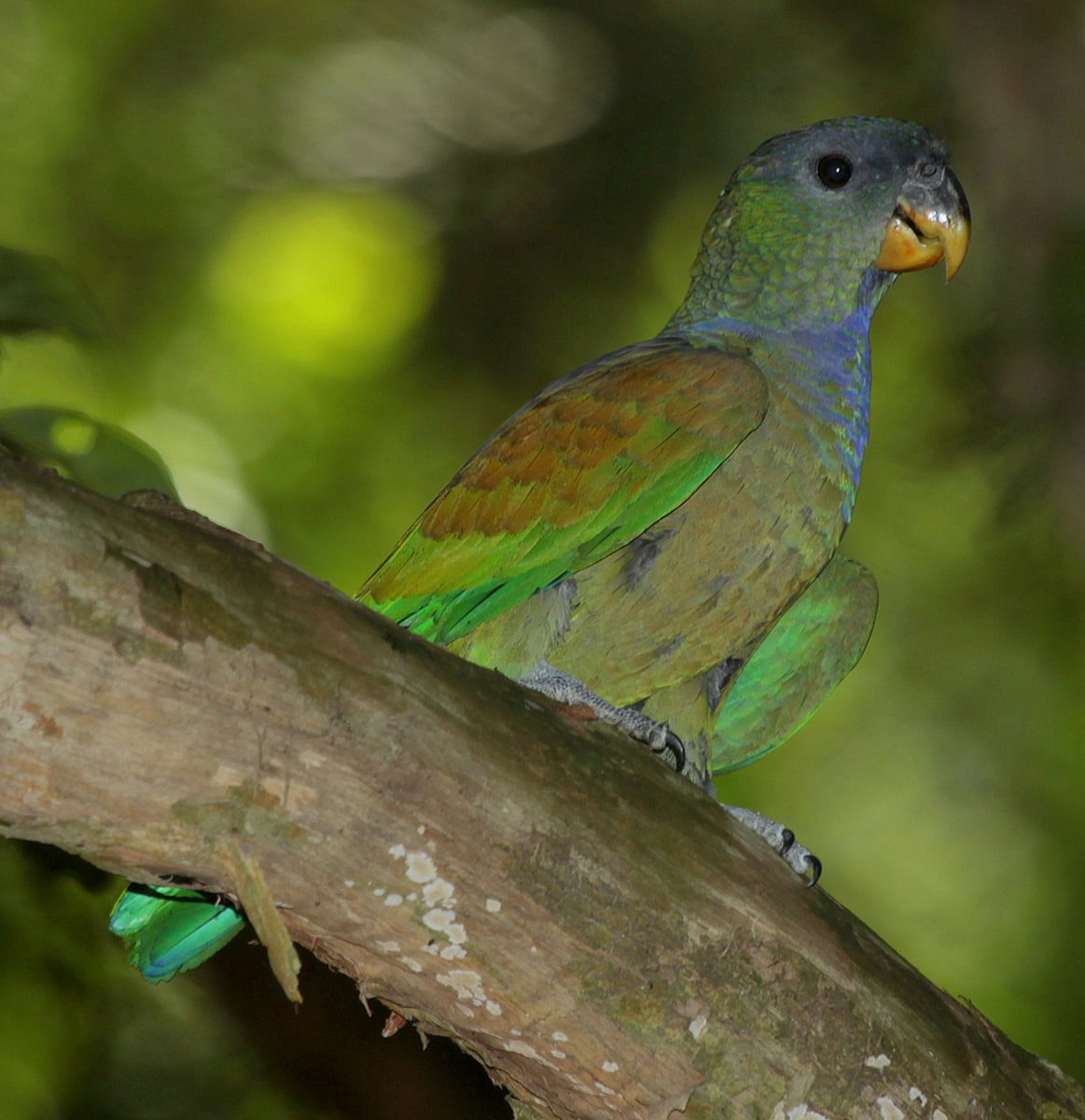
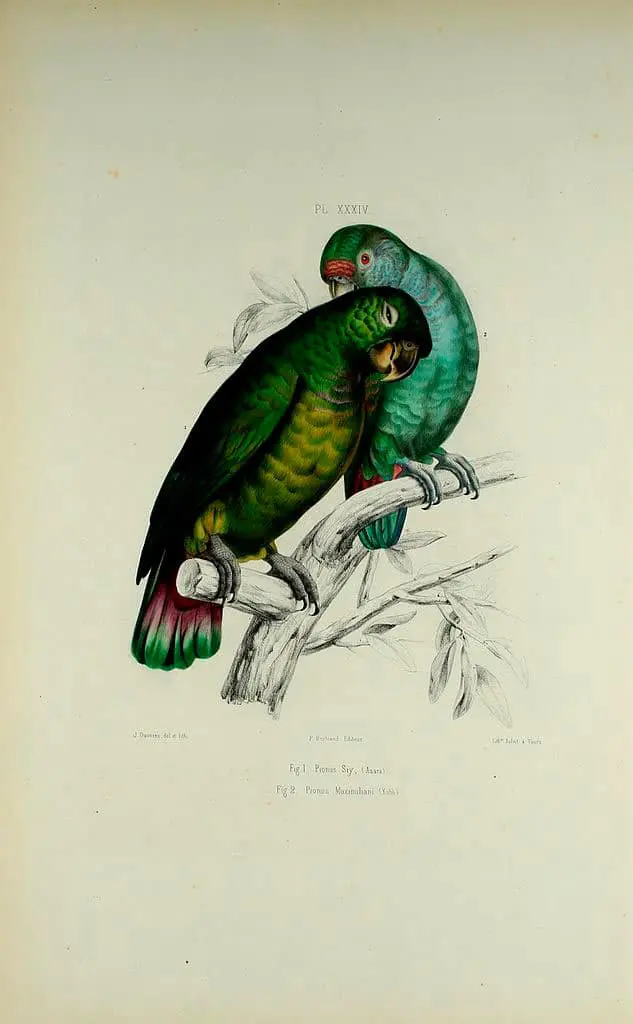
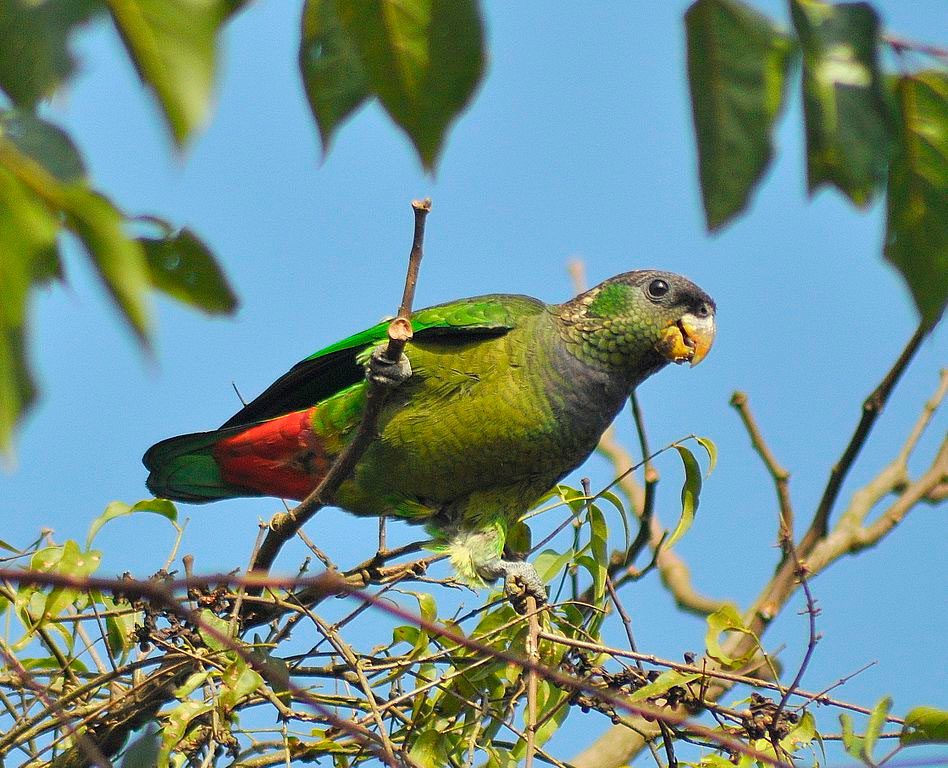
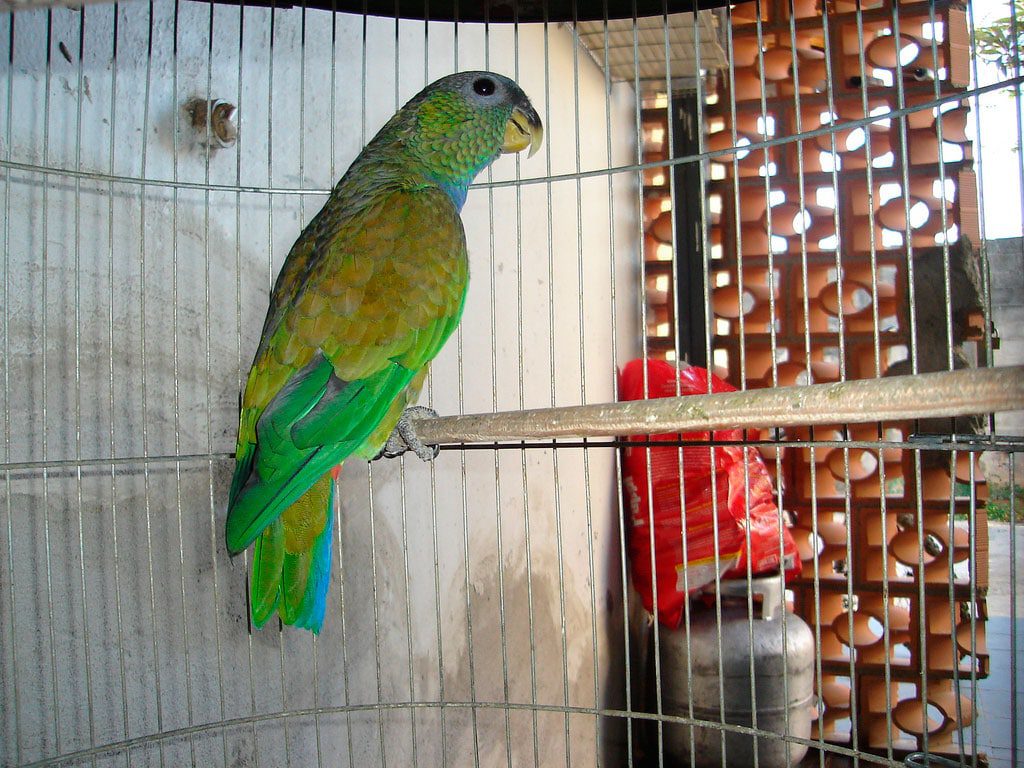
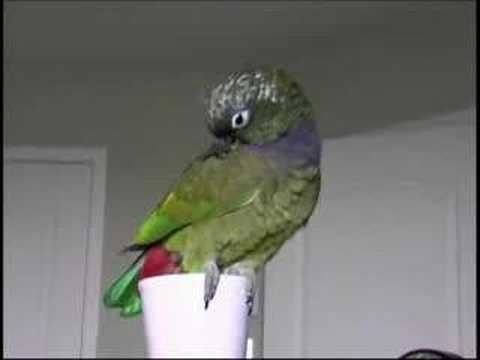
The Scaly-headed Parrot (Pionus maximiliani) It is medium in size and tail very short; has the lores, the forecrown and the eye area opaque dark bronze; the feathers on crown, the cheeks, the chin and the sides of the neck, basal green with wide enough margins bronze that give the appearance of flake; ear-coverts with dark green margins but brighter than other pens head.

The back of the neck and green the mantle become more brown and olive green upper lower parts, where some feathers have quite indistinct darker tips. Coverts smaller and medium-sized green olive brown with indistinct dark tips; alula, primary and greater coverts and flight feathers, brighter green, contrasting with the upperparts brown, duller.

Under the wings, opaque green. The throat and the top chest blue violet off that fade in brownish olive green in the bottom of the chest and most of the belly, but they are become brighter and greener in flanks and the thighs; undertail-coverts crimson. Upper, the tail green in the center, outer feathers mainly blue and red at the base; undertail, the tail, bluish green duller. Bill black with yellow edges on the upper jaw and the bottom tip; orbital skin pale grey; irises dark brown; legs grey.
Scaly-headed Parrot
Both sexes are similar. Immature It has less intense the blue throat; feathers head more green with less distinct margins.

Description 4 subspecies:

  • Pionus maximiliani lacerus

    (Heine, 1884) – Similar to the subspecies Pionus maximiliani siy but with a bill stronger, the chest more purple and perhaps larger on average.


  • Pionus maximiliani maximiliani

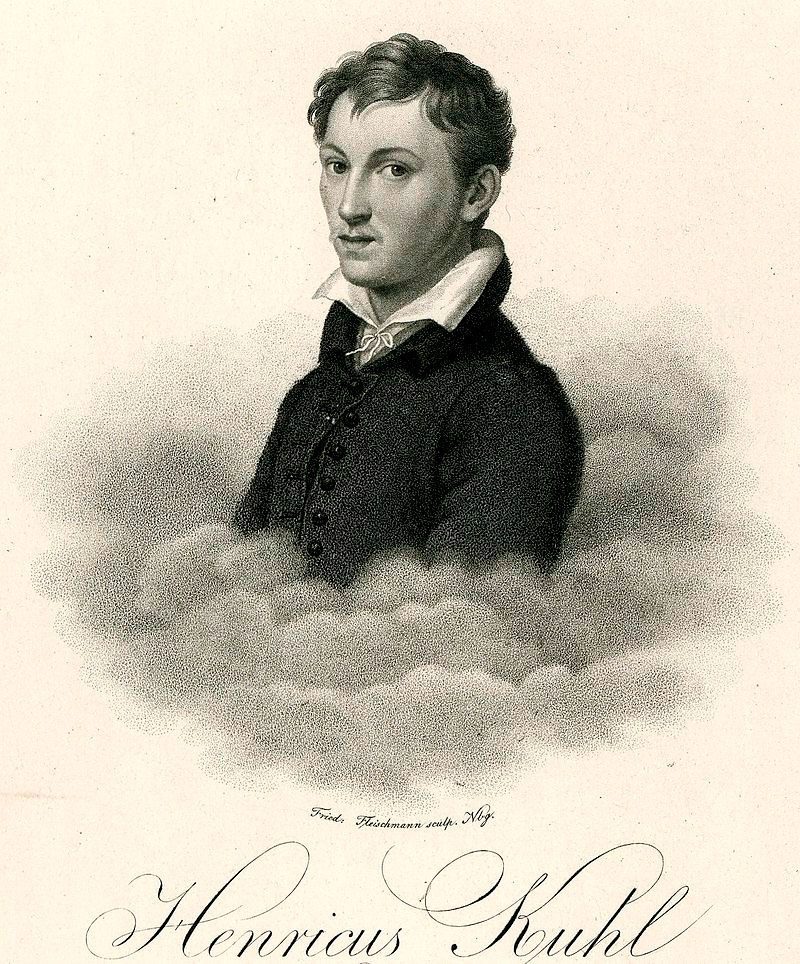
    (Kuhl, 1820) – Nominal.


  • Pionus maximiliani melanoblepharus

    (Ribeiro, 1920) – Blue darker in throat and darker above. Larger.


  • Pionus maximiliani siy

    (Souance , 1856) – Much like the nominal species but darker below, more purple and less blue in the chest, yellower in back and Blue throat lighter.

Habitat:

It inhabits in a wide range of forested habitats, but mostly in dry forests lowland ranging from caatinga very dry, inside the northeast of Brazil, through the savannas Cerrado seasonal, to chaco; also in wetter forests, including gallery forests and forests of araucarias, especially in southeast Brazil. They can also be seen in subtropical forests in Eastern Andean slopes some 2.000 meters in the Northwest of Argentina and some 1.500 meters in the mountains of the South of Brazil.

Tolerant to human alteration of forest habitats and sometimes cultivated areas. Usually gregarious, arriving to form flocks numerous in places in where the food is abundant probably is hiding in small groups in them cups of them trees.

Reproduction:

They nest in tree hollows. Birds in terms of breeding in the month of October in Paraguay; November in Sรฃo Paulo; laying 3-5 eggs.

Food:

The plants food include Erythrina, Inga, Piptadenia, Copaifera, Croton, Pachystroma, Plathymenia reticulata, Ficus and Araucaria.

Distribution:

Size of the area of distribution (reproduction / resident): 6.650.000 km2

The species is found in the Center, South and East of Brazil, from maranhรฃo and Cearรก in the Northeast, to the South by Piauรญ, Bay, Goiรกs, Minas Gerais, Brazil and the eastern coastal States up to Rio Grande do Sul and to the South of Mato Grosso (region pantanal), extending to the southeast of Bolivia, from Santa Cruz to the South in the Eastern Andes and to the North of Argentina in Salta, Tucumรกn and Catamarca in the East and North of Santa Fe in the West.

Mainly resident, although it may not grow in the drier parts of the Argentine Chaco. Apparently more numerous in the center of its area of distribution, where its abundance is only surpassed by the Maroon-bellied Parakeet (Pyrrhura frontalis); progressively more scarce toward the periphery.

Locally quite common the common in Bolivia and locally common in the North of Argentina, where it is most abundant in the South of Salta, Tucumรกn and areas adjacent in Catamarca. Moderately common in Rio Grande do Sul and common in the pantanal; densities Brazilian more high in Sรฃo Paulo.

The decrease apparent, in some parts of the range, (for example, North of the Argentina) is attributable to the trade, but in other places (for example, the southeast of Brazil) is undoubtedly its decline due to the loss of forests.

Distribution 4 subspecies:

  • Pionus maximiliani lacerus

    (Heine, 1884) – Northwest of Argentina.


  • Pionus maximiliani maximiliani

    (Kuhl, 1820) – Nominal. Northeast of Brazil.


  • Pionus maximiliani melanoblepharus

    (Ribeiro, 1920) – It is from Paraguay, Brazil and northeast of Argentina (Missions)


  • Pionus maximiliani siy

    (Souance , 1856) – Southeast of Bolivia until Paraguay, West of Brazil (Mato Grosso), North of Argentina.

Conservation:


minor concern


โ€ข Current category of the Red List of the UICN: Least concern.

โ€ข Population trend: Decreasing.

Justification of the population

The size of the world population It has not been quantified, but this species is described as ยซquite commonยป (Stotz et to the., 1996).

Justification of trend

It is suspected that the population is in decline due to the continuous habitat destruction and to levels of exploitation unsustainable.

Threats

The species has been object of strong exchanges: from 1981, When is included in the Appendix II of the CITES, they have been 93.234 individuals captured in the wild in the international trade (database CITES from the UNEP-WCMC, January 2005).

"Scaly-headed Parrot" in captivity:

Curious, very intelligent and social. Quiet and relatively little aggressive. Prone to obesity. You can learn to imitate.
Pretty common in captivity. Life expectancy: 20 years.

Housing: Enclosure suspended at least 2 metres in height.

Diet: fruit as: Apple, pear, orange, banana, granada, cactus fruits, they form approximately the 30 percent of the diet; vegetables as: Carrot, celery, green beans, pea in the pod; corn fresh; green leaves such as: chard, lettuce, dandelion, Aviary grass; millet; mix of seeds small e.g.: millet, and small amounts of buckwheat, oats, safflower and hemp; soaked and sprouted from seeds of sunflower; beans, cooked legumes and boiled corn.

It needs regular exercise it is necessary to provide you with an Aviary as large as possible. Provide shallow bowls of water for bathing. Also provide stairs, swings, strings, different sizes of hooks and assorted toys.

Alternative names:

– Scaly-headed Parrot, Maximilian’s Parrot, Scaly headed Parrot (English).
– Pione de Maximilien, Pionus de Maximilien (French).
– Maximilianpapagei (German).
– Maitaca, baitaca, maitaca-bronzeada, maitaca-de-Maximiliano, maitaca-suia, maitaca-verde, suia, umaitรก (Portuguese).
– Loro Bronceado, Loro choclero, Loro maitaca (espaรฑol).


scientific classification:

Kuhl, Heinrich
Heinrich Kuhl

– Order: Psittaciformes
– Family: Psittacidae
– Genus: Pionus
– Scientific name: Pionus maximiliani
– Citation: (Kuhl, 1820)
– Protonimo: Maximilian parrot

ยซChoclero Parrotยป Images:

Videos "Scaly-headed Parrot"

pichu - My Maximilian Pionus

Scaly-headed Parrot (Pionus maximiliani)


Sources:

  • Avibase
  • Parrots of the World โ€“ Forshaw Joseph M
  • Parrots A Guide to the Parrots of the World – Tony Juniper & Mike Parr
  • Birdlife
  • Parrot Book, Parrots and macaws Neotropical
  • parrots.org

  • Photos:

(1) – IBC.lynxeds.com
(2) – A Scaly-headed Parrot (also called a Scaly-headed Pionus, Maximilianโ€™s Pionus, amd Maximilianโ€™s Parrot) in a cage By Alex Knowles [CC BY 2.0], via Wikimedia Commons
(3) – A pet male Scaly-headed Parrot (also called Maximilian Pionus, Maximilian Parrot, Maximilianโ€™s Pionus, or Maximilianโ€™s Parrot) By Snowmanradio (Own work) [CC BY-SA 3.0 or GFDL], via Wikimedia Commons
(4) – Scaly-headed Pionus (also called Maximilian Pionus, Maximilian Parrot, Maximilianโ€™s Pionus, or Maximilianโ€™s Parrot) at Zoolรณgico de Americana, Sao Paulo, Brazil By Moe Oliveira [CC BY 2.0], via Wikimedia Commons
(5) – Loro Choclero By Danbrazil (Own work) [CC BY-SA 4.0], via Wikimedia Commons
(6) – Iconographie des perroquets : non figurรฉs dans les publications de Levaillant et de M. Bourjot Saint-Hilaire By Blanchard, Emile; Bonaparte, Charles Lucian; Bourjot Saint-Hilaire, Alexandre; Le Vaillant, Franรงois; Souancรฉ, Charles de. [CC BY 2.0 or Public domain], via Wikimedia Commons

โ–ท The world of Pets: Dogs, cats, birds, reptiles, amphibians

Long-billed corella
Cacatua tenuirostris

Cacatรบa Picofina

Content

Description

35 to 41 cm.. length. The weight of 500 to 600 g..
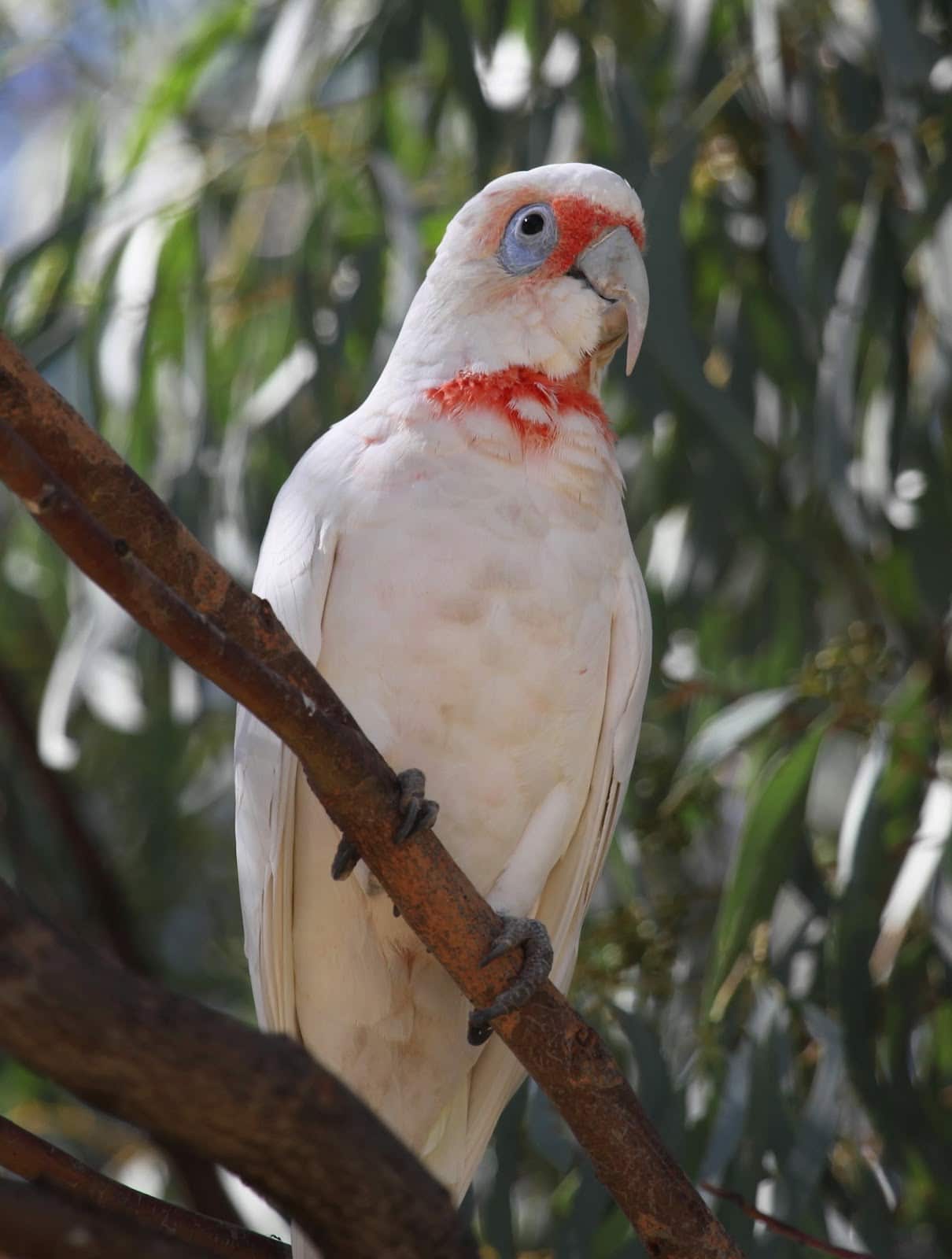
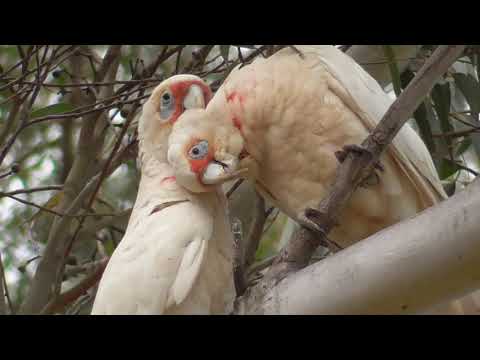
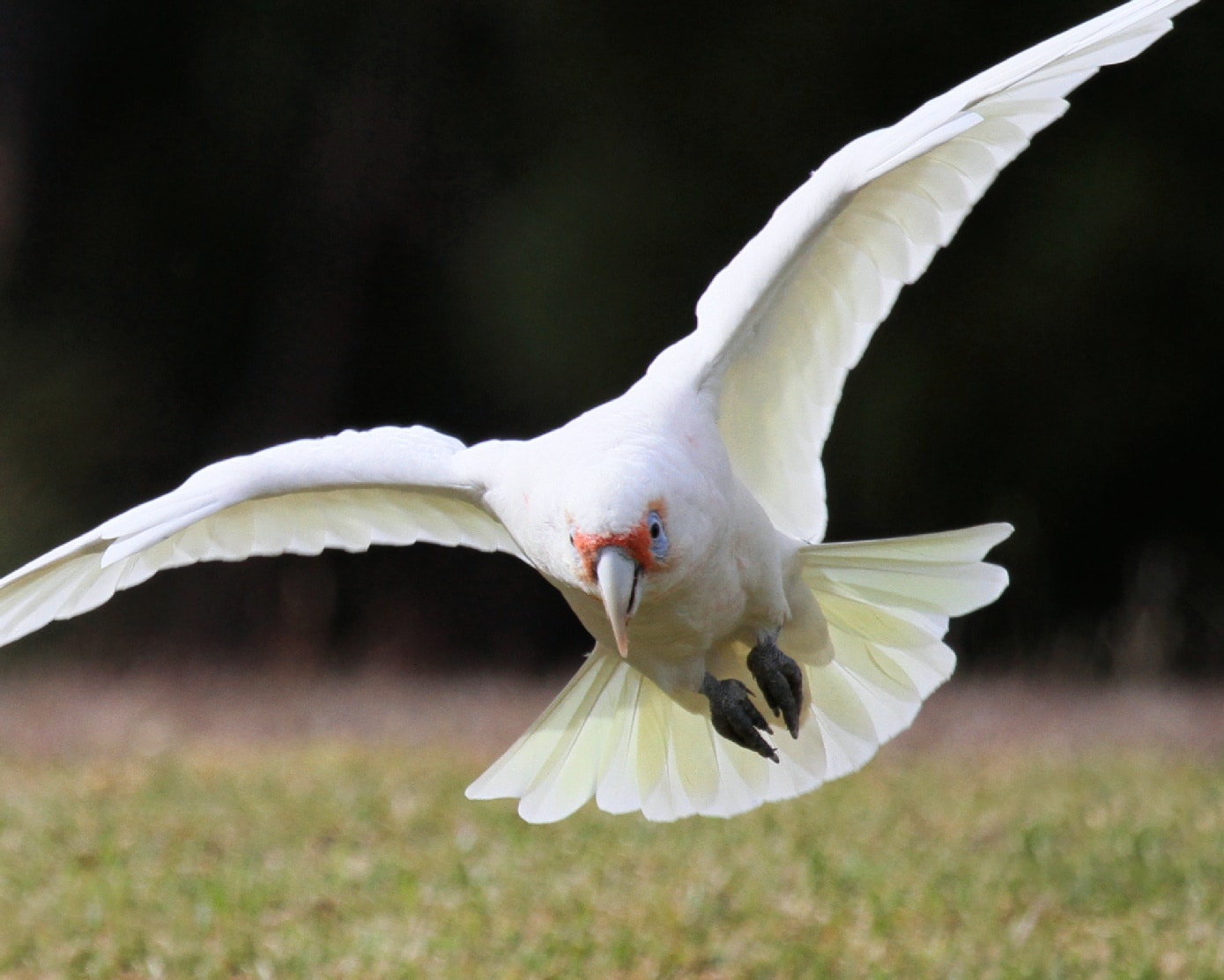
The Long-billed corella (Cacatua tenuirostris) has white plumage. The undertail coverts and the parts below from the wings they are bathed in pale yellow, very visible in flight. It has red coloration in the throat and the chest, with a Red Crescent ranked in the upper breast.
The Head shows a small crest white, Red front and a wide, nude and fleshy eye ring blue-grey around the eyes dark browns. The bill is white with blue base. upper jaw is long and hooked. The legs and feet are dark gray.

The female is similar to the male, with the upper jaw more short and less red.

There are two similar species:

– Cacatua sanguinea. Lack of forecrown Red and the red color in the neck. The upper jaw is shorter.

– Cacatua galerita. Similar in flight, has crest yellow and lacks of colour red. The bill is black.

Habitat:

Video – "Long-billed corella" (Cacatua tenuirostris)

Long-billed corella ~ Cacatua tenuirostris

Common in forests and remnant trees on farmland. It nests in Eucalyptus camaldulensis in the flooded Plains or close to streams. Wild populations living on farms and parks in urban areas.

Behavior:

Itร‚ยดs resident in their area of distribution, some local movements. Outside of breeding season, You can see in large flocks of up to 2.000 birds or more. Son noisy and visible, pronouncing discordant calls.

Pose in large eucalyptus near water. They leave the roost in the morning to drink, and then, go to the feeding areas. Again when the darkness comes to sleep, but not before excited participate in games and stunts .

They move on the floor with stunning movement jump. They do not have the other species waddling gait cockatoo.
It causes damage to crops of cereals and tree fruit, considered as one pest for farmers.

Nest colonies. They can create their nests with other species of Corella, and sometimes they hybridize. Populations feral in Sydney and Perth, from the release of unwanted birds, they may hybridize with endangered species such as the Cacatua pastinator

Reproduction:

Held from July to November. Forman couples monogamous. The male and female prepared the nest in the Hollows of large old eucalypts. If you do not find a suitable tree, You can make a burrow in soft soil Bank. They fill the nest of wood chips and often reuse it for several years.

They nest in large colonies, with several nests in the same tree.
The female lays 2-4 eggs White. The incubation lasts a few 24 days, shared by both parents. The young leave the nest 55 days after hatching, being fed by the parents for three weeks more.

Food:

Feeds mainly on what obtained from soil, seeds, estate and bulbs that unearths with its upper jaw. They feed in the coolest hours of the day. Also consumes insects.

Distribution:

Size of the area of distribution (reproduction / resident): 382.000 km2

Is located in the southeast of Australia. Introduced in urban centers of Australia and Tasmania.

Conservation:

State of conservation โ“˜


minor concern Minor Concern โ“˜ (UICN)โ“˜

โ€ข Current IUCN Red List category: Least concern.

โ€ข Population trend growing


Populations may be declining due to loss of breeding grounds in its original distribution area.
But, the Long-billed corella It common in its range.

Is created that in the world there are more than 250 thousand individuals.


"Long-billed corella" in captivity:

It is very popular as a pet for the most part of Australia, and has been classified as the best ยซtalkative" of the australian cockatoos for its ability to mimic words almost to perfection.
Has a personality playful and active.

Out of its area of distribution is rare in poultry farming.

Alternative names:

– Long billed Corella, Long-billed Cockatoo, Long-billed Corella, Slender-billed Corella (ingles).
– Cacatoรจs nasique (French).
– Nasenkakadu (German).
– Cacatua-corella-de-bico-longo (Portuguese).
– Cacatรบa de Pico Largo, Cacatรบa Picofina (espaรฑol).

scientific classification:

– Order: Psittaciformes
– Family: Cacatuidae
– Genus: Cockatoo
– Scientific name: Cacatua tenuirostris
– Citation: (Kuhl, 1820)
– Protonimo: Psittacus tenuirostris
–

Images Slender-billed Cockatoo:


Species of the genus Cacatua

Sources:
– Avibase
– Photos: Alice Springs in Australiaโ€™s Red Centre, commons.wikimedia.org, Ian Barker (ibc.lynxeds.com/)
– Sounds: Marc Anderson (Xeno-canto)

โ–ท The world of Pets: Dogs, cats, birds, reptiles, amphibians

Vasa Parrot
Coracopsis vasa

Vasa Parrot

Content


Anatomy-parrots

Description

Of 50 cm.. length and an average weight of 480 g..

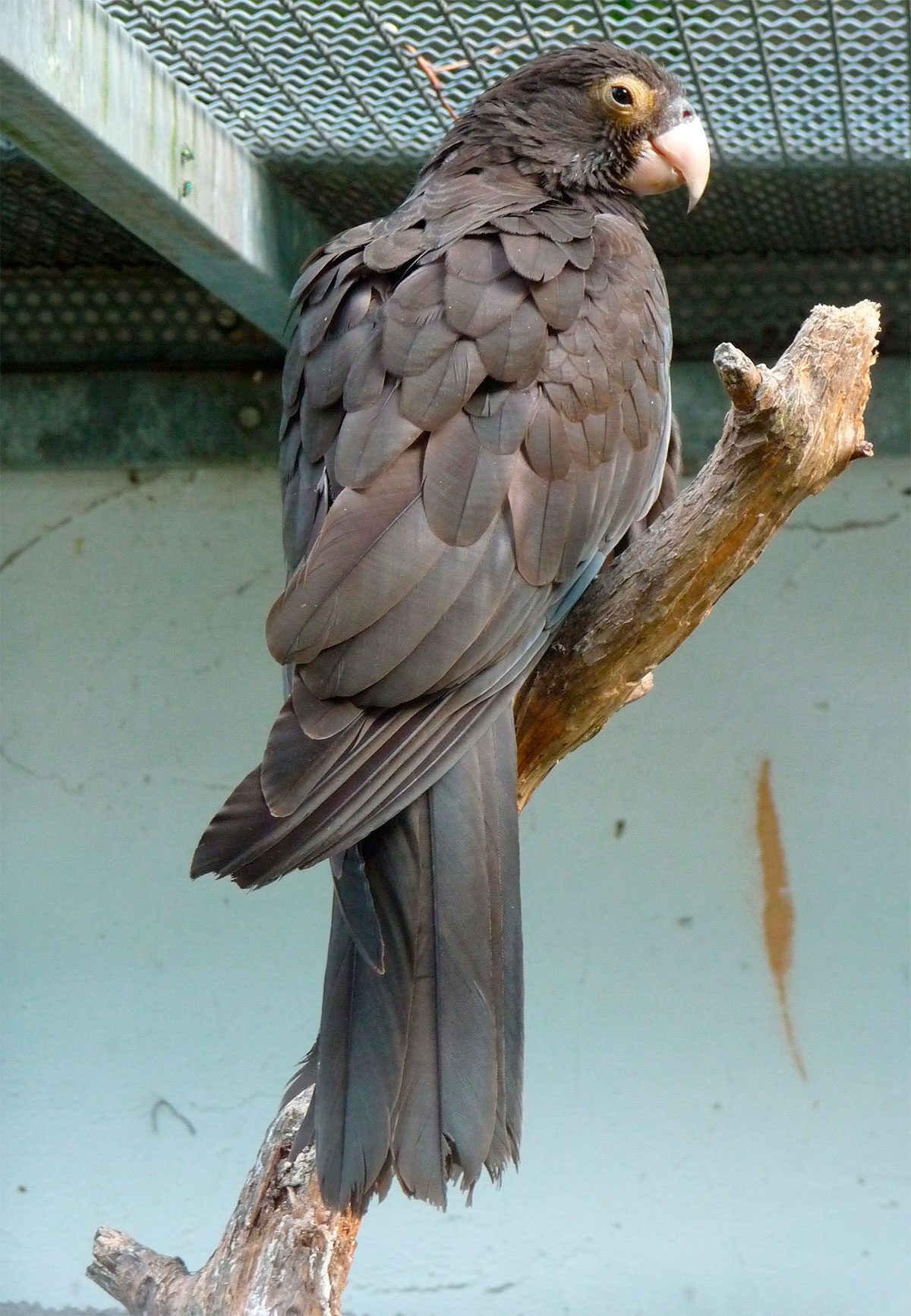
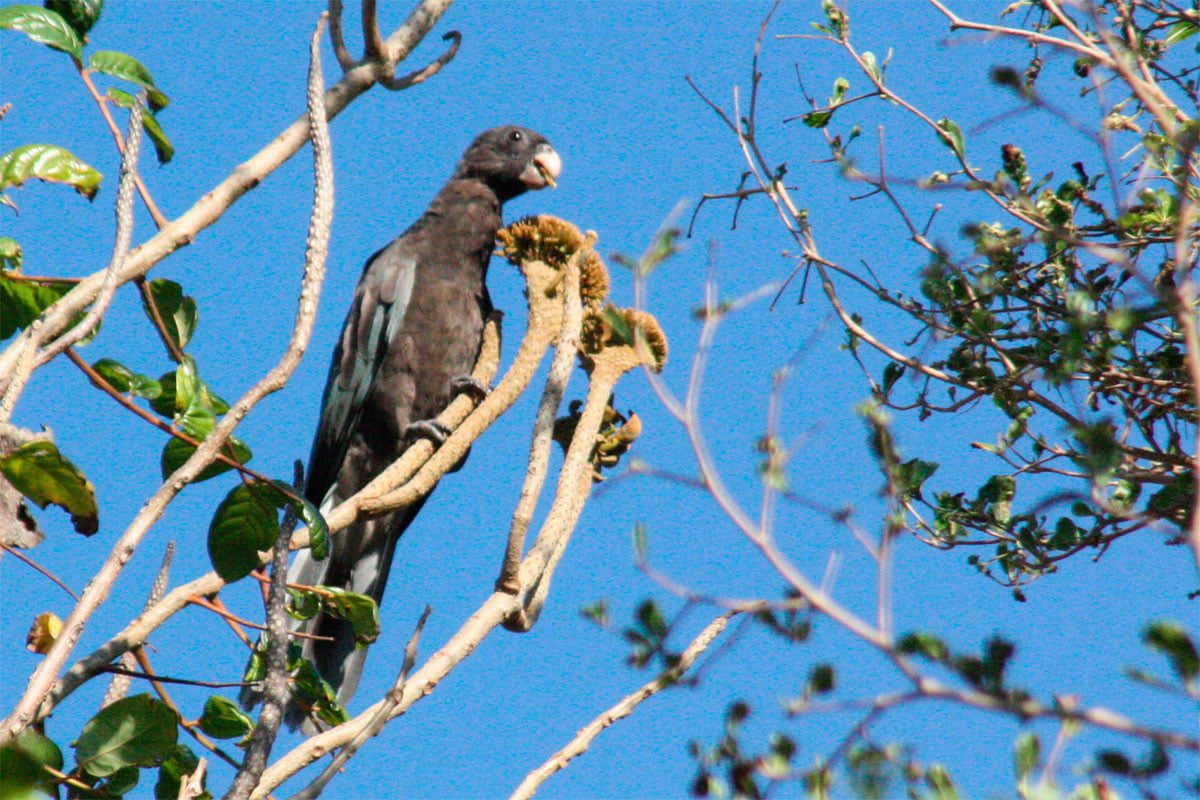
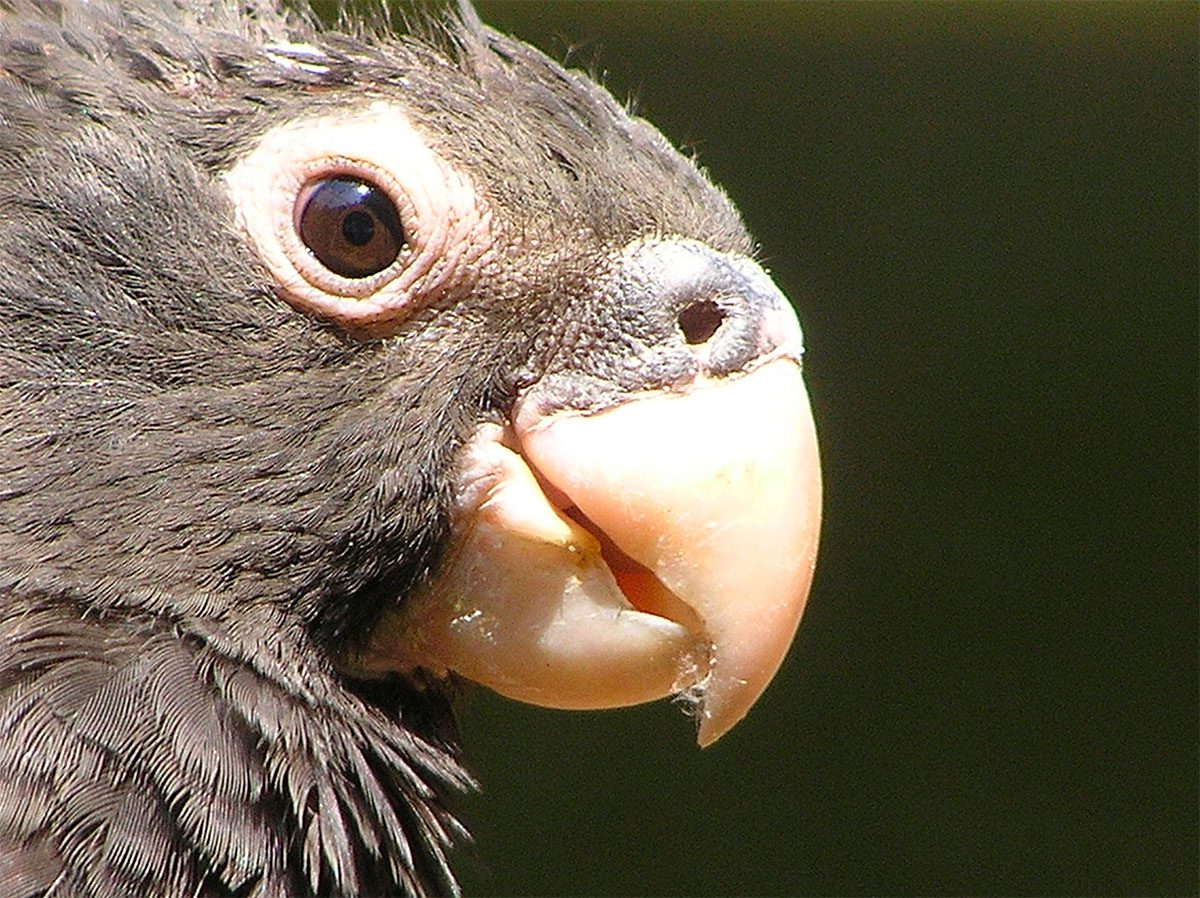
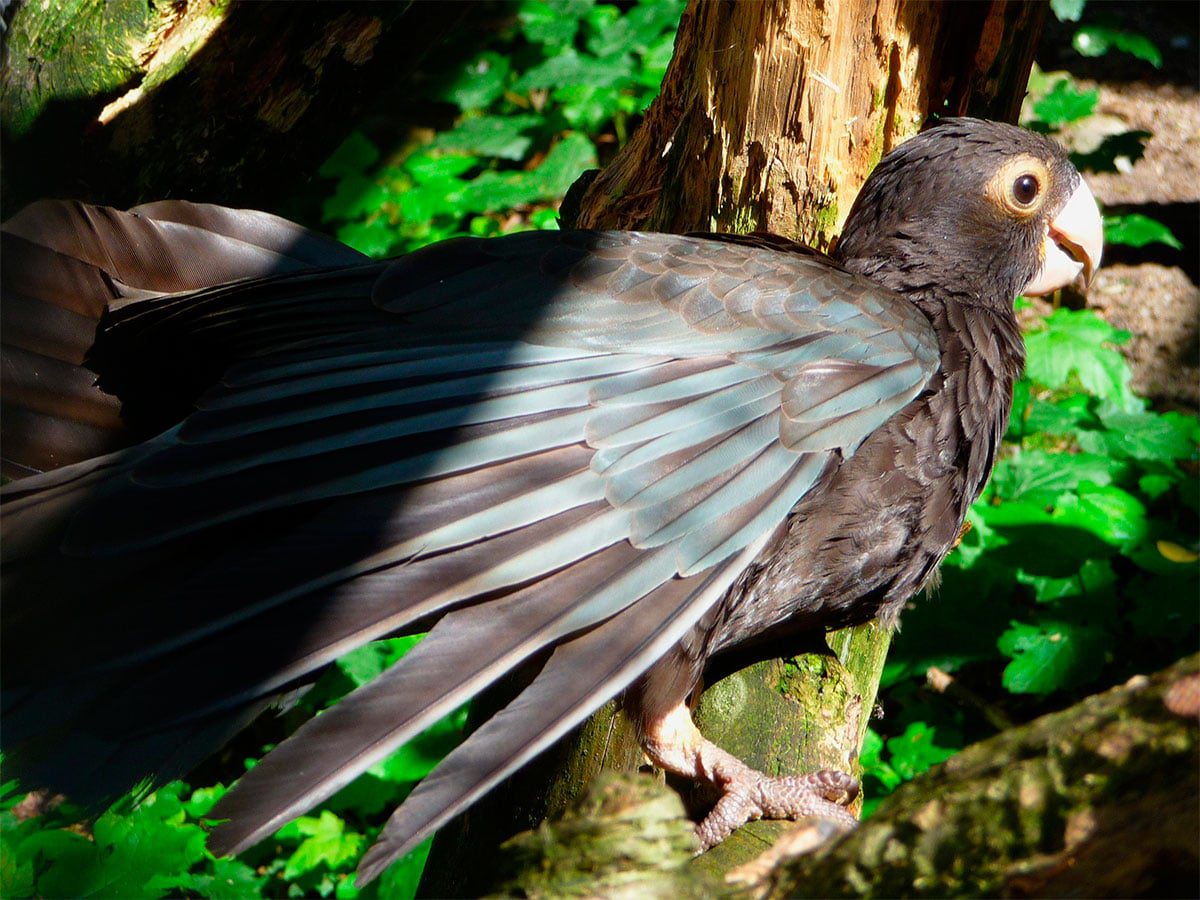
The Vasa Parrot (Coracopsis vasa) It has a few shades between black and Brown, big enough, grim looking, with the rounded tail and a powerful bill pinkish.

They can be difficult to spot when they combine their dark plumage with shadows under the forest canopy..

To a large extent, sympatric with the very similar Black Parrot (Coracopsis nigra), but the Vasa Parrot It is larger and somewhat paler, greyish Brown rather than dark brown

They can fly at high altitude when they travel to or from the sites of communal rest. It can be very Meek and accessible When feeds below the forest canopy.

In general, the plumage of the Vasa Parrot is brown-black color with a slight greyish tinge clear at the top, in special wings and top of the tail. Primaries with narrow gray margin in vane outer. bottom of the flight feather pale grey. Subcaudales coverts Gray with variable black stripes on the shafts of feathers. Tail with faint dark subterminal band; undertail, the tail pale grey. Bill usually pink but grey color after molting; irises brown; naked periophthalmic patch (that extends to the peak) pale grey; legs greyish Brown clear

Without sexual dimorphism in plumage. Reproductive females can become bald on the head, around the eyes and throat , with the exposed skin of mustard yellow or orange.

Immature with plumage more greyish Brown lighter and paler skin around the eyes. Skin patch naked eye more smaller than in adults or absent.

Description 3 subspecies

  • Coracopsis vasa comorensis

    (Peters,W, 1854) – Smaller, of 45 cm., and paler than the nominal species, Unlike the subspecies drouhardi by having underparts dyed color chocolate instead of gray, and undertail-coverts Brown instead of gray or whitish.


  • Coracopsis vasa drouhardi

    (Lavauden, 1929) – Itร‚ยดs smaller, of 45 cm., and paler than the nominal species. The underparts they are more gray with undertail-coverts more whitish, upperparts They show a bluish grey tinge clear. Dark subterminal band on the tail.


  • Coracopsis vasa vasa

    (Shaw, 1812) – Nominal species

Habitat:

Vasa Parrot

The Vasa Parrot they are distributed among a wide variety of habitats, from the dense and humid forests, Brambles open forests, until Medemia Palms in the savannas.

It attends the habitats modified by human activity; sometimes visits farmland.

Move, mainly, by lowlands, from sea level to the 1.000 meters above sea level.

In Comoros, the Vasa Parrot, generally, are associated with humid forests, always green, above the 300 m, but visit more open fields to feed.

Within its forest habitat, they are usually seen in the treetops, Although they descend to the ground to feed.

Usually found in small noisy groups, although they congregate in larger flocks when feeding or roosting.

The Vasa Parrot They perch on the top of large trees with at least one individual awake to warn of the danger; It is said that they are most active in the full moon nights.

Reproduction:

The breeding season, probably, of the months from October to December.

The nest It is built in a tree cavity or a trunk. In the western area of Madagascar, the baobabs trees (Adansonia) they are often used, sometimes with several nests in the same tree. These birds (especially the males) they can show cloacal protuberances while breeding.

Food:

Seeds, nuts, berries and fruits are part of their diet. Visit rice fields, millet and corn, causing, sometimes, extensive damage to crops. Apparently less frugivorous than the Black Parrot.

Distribution:

Size of its range (reproduction / resident): 928.000 km2

Endemic to Madagascar and Comoros Islands (Grand Comore, Mohรฉli, Anjouan).

The species is partly common, in some places abundant, but its distribution in Madagascar possibly contracted due to large-scale deforestation in the center of the island.

Officially treated as harmful species, the Vasa Parrot they are persecuted because of predation on crops (especially rice) and captured for the trade in live birds at national and international level. They are also hunted as food.

It is distributed in several protected areas and although his pursuit and capture is intense in some areas, apparently, the species still is not at risk.

Distribution 3 subspecies

Conservation:


minor concern


โ€ข Current Red List of UICN: Least concern

โ€ข Population trend: Decreasing

As they are seen as crop pests, is legal to hunt at the Vasa Parrot in Madagascar, and high levels of hunting contributes to a rapid decline in its population.

Like many species of Madagascar, the loss of their forest habitat is also a threat.

The size of the world's population has not been quantified, but the species, according to sources, It quite common in many areas

"Vasa Parrot" in captivity:

Very rare in captivity, difficult to find in aviaries, perhaps because of its initial lack of spectacularity compared to the more striking colors of any other species of parrot.
Although Vasa Parrot they are not very common as pets, comments from owners praise its virtues as a companion animal.

It is an extremely Intelligent and cunning.
Its beak is not strong enough to destroy the hard wood.

During the breeding season, they are very assets and quite noisy.
The female is the dominant, It is recommended as well that the eclectus that for an optimal result in reproduction, two males and one female are used in small aviaries or a greater number of males than females in breeding by means of colonies.

By the time they enter zeal both the male and the female, drop you the feathers of the head practically bald and both players.
The skin of the female head becomes yellow and white male. They tend to put in 2 to 3 eggs that incubate for space of 17 days.

The pups they are born completely devoid of markers, their legs are too long to be parrots and another feature that makes them unique is that they have both sides of their beaks at the corners, some bumps with characteristics similar to some exotic

Tienen facilidad para imitar la voz humana.

In terms of their longevity, according to sources, a specimen lived 53,9 years in captivity.

Alternative names:

– Vasa Parrot, Greater Vasa Parrot, Greater Vasa-Parrot (English).
– Grand Vaza, Grand Perroquet vasa, Grand Vasa, Perroquet vaza (French).
– Vasapapagei, GroรŸer Vasa, Vasa (German).
– Papagaio-vasa (Portuguese).
– Loro Vasa (espaรฑol).


scientific classification:

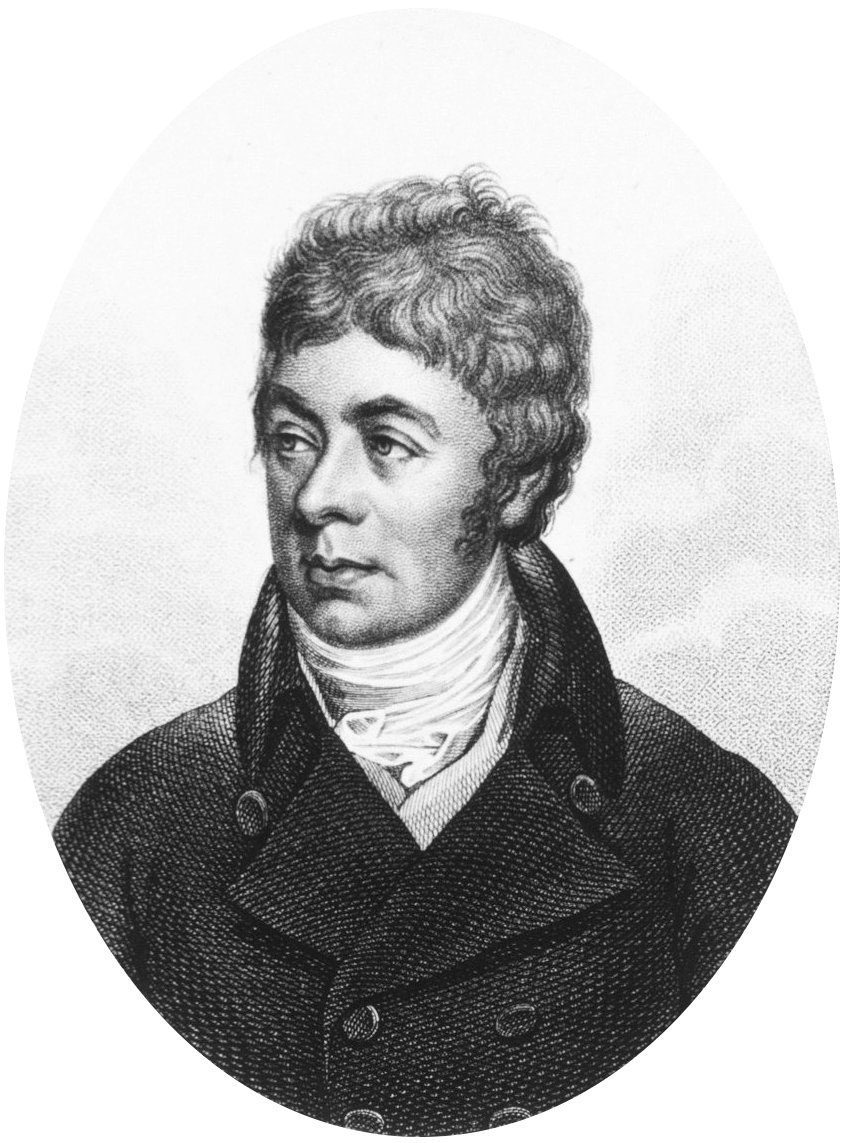
George Shaw
George Shaw

– Order: Psittaciformes
– Family: Psittaculidae
– Genus: Coracopsis
– Scientific name: Coracopsis vasa
– Citation: (Shaw, 1812)
– Protonimo: Psittacus Vasa

ยซVasa Parrotยป Images:

Videos "Vasa Parrot"

————————————————————————————————

ยซThem Vasaยป (Coracopsis vasa)


Sources:

– Avibase
– Parrots of the World โ€“ Forshaw Joseph M
– Parrots A Guide to the Parrots of the World – Tony Juniper & Mike Parr
– Birdlife
– ornitoloxia

– Photos:

(1) – Coracopsis vasa By 4028mdk09 (Own work) [CC BY-SA 3.0], via Wikimedia Commons
(2) – Greater Vasa Parrot in Madagascar By AEM (Picasa Web Albums) [CC BY-SA 3.0], via Wikimedia Commons
(3) – Coracopsis vasa By 4028mdk09 (Own work) [Public domain], via Wikimedia Commons
(4) – Greater Vasa Parrot (caracopsis vasa) in a Antwerp zoo By frank wouters from antwerpen, belgium , Belgium , Belgique (grote vasapapegaai) [CC BY 2.0], via Wikimedia Commons
(5) – Lesser vasa parrot (coracopsis nigra) in Anjajavy Forest, Madagascar By Charlesjsharp (Own work) [CC BY-SA 3.0], via Wikimedia Commons
(6) – Parrots of the World, by Joseph Forshaw (illustrated by William T. Cooper)

– Sounds: Hans Matheve (Xeno-canto)

โ–ท The world of Pets: Dogs, cats, birds, reptiles, amphibians

Long-tailed Parakeet
Psittacula longicauda


Cotorra Colilarga

Content

Description:

Of 40 to 48 cm.. length and 168 to 196 g. of weight.

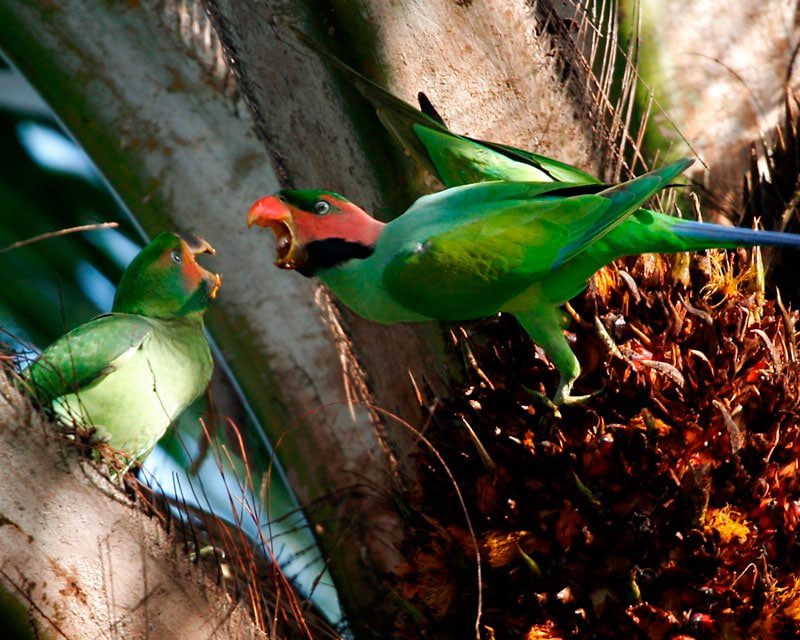
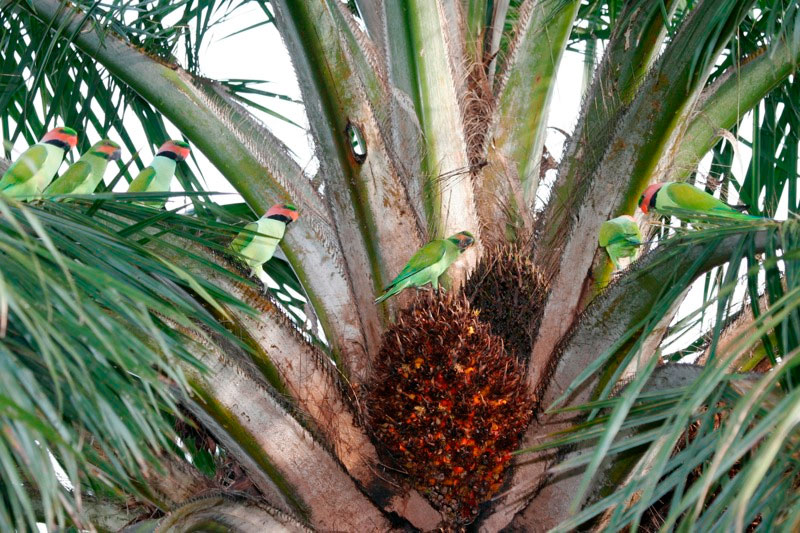
The Long-tailed Parakeet (Psittacula longicauda) has the plumage, in general, green. The throat, the chest and the abdomen are greenish-yellow; and lores (the regions between the eyes and the beak, on both sides of the head) are bluish-black. The crown is a green dark, and the sides of the head and nape are pinkish Red. They have a black stripe in the cheeks.

The upperparts is yellowish wash of blue-grey. The lower part of the back is pale-blue. The upperwing-coverts are yellowish. The supracaudales-coverts and infracaudales, as well as the the thighs are pale green. The central feathers of the tail are blue with pale tips and outer feathers are green.

The bill top is red and the lower beak is brown-black color. The irises they are amarillos-blanquecinos, and legs are grey.

The females they have the nape green. The band to their cheeks is dark green, and cheeks superiors are an orange-red live. Their feathers of the tail they are much shorter, and the bill top and bottom are brown-black color.

Ilustraciรณn Cotorra Colilarga

The young birds they have the head variable green interspersed with orange-red. The feathers of the tail they are shorter, and both the bill top and bottom are brown.

The young male they have a tint blue in the lower part of the back and some birds can have a reddish tint in the bill top.

Immature birds reach your adult plumage When they are near the 30 months of age.

The lutino and other colorations, It is believed that they are mutations observed both in the wild and in captivity.

Subspecies description:
Subspecies
  • Psittacula longicauda defontainei

    (Chasen, 1935) – Of an average length of 42 cm.. As the species nominal but but the pinkish red from the sides of the head It is deep orange-red-streaked.


  • Psittacula longicauda longicauda

    (Boddaert, 1783) – The species nominal


  • Psittacula longicauda modesta

    (Fraser, 1845) – Of 48 cm.. Plumage as of the species nominal, but the crown It has a reddish-brown core and a green at the end of feather edging, becoming pink on the back of the head and nape, thus causing in the crown more Brown than green appears in many birds . The black stripe in the lores is more clearly defined, continuing in some birds to form a narrow band in the forecrown. The upper cheeks they have a deep pinkish-Red, orange-red stripes.


  • Psittacula longicauda nicobarica

    (Gould, 1857) – Of 48 cm.. As the species nominal, but the back of the head, the nape and back are greenish-yellow and slightly washed with pale blue. The ear-coverts and cheeks are deep red. The lower part of the back is green.


  • Psittacula longicauda tytleri

    (Hume, 1874) – Of 44 cm.. length. As the species nominal but the back of the head, the nape and back are yellowish green washed with grisaceo-malva. The throat, the chest and the top chest they have a pale bluish tint. The lower part of the back is green.

Habitat:

Video – "Long-tailed Parakeet" (Psittacula longicauda)

eating Starfruit... Long-tailed Parakeet, parakeets, parakeets, Psittacula longicauda, Long-tailed Parakeet, MALAY BAYAN

The Long-tailed Parakeet distributed over all types of lowland (below 300 metres in Sumatra), Evergreen from mangrove forests, swamps, tropical forests, to plantations of oil palm plantations (Elaeis) and coconut trees. It prefers the edges of high forest, especially with large dead trees, including close cultivated areas.

Visit parks and gardens on the Islands Nicobar Islands.

gregarious.

Flocks of thousands of birds reported in the Islands Andaman and Borneo but smaller groups (minor's 20) they are typically, especially during breeding. They form mixed flocks with the Blue-rumped Parrot (Psittinus cyanurus) in Kalimantan.

The Long-tailed Parakeet It is a restless bird that are constantly in motion. They fly quickly around branches, moving quickly from a tree to another. Although they are usually well camouflaged in green foliage, its continuous chirp betrays its position. They tend to feed shortly after sunrise and resume foraging around sunset..

Reproduction:

The Long-tailed Parakeet nests in tree cavities, usually dead, often to a considerable height (for example, reported nest in a tree of the species Koompassia in Sumatra to 45 meters above sea level); in the andaman islands commonly nest in trees of the species Pterocarpus marsupium; in the Nicobar Islands sometimes in Pandanus, some 4 meters above ground and in larger trees to 10 metres in height.

Breeds in colonies.

The nest It is full of pieces of bark and chewed wood. In the natural habitat, the average clutch consists of 2 to 3 eggs, each one measures 30,6 x 24,7 mm.

During the courtship, the male bows before the female, by spitting up, circular motions with his head and gently touching its beak.

The breeding It is between the months of December-February, Although pigeons have been observed in July in the Malacca Peninsula; Feb-Mar in the Nicobar Islands and Andaman. Reports of eggs in July sunsets in Sumatra.

Food:

The nominal species diet includes plants from Borneo camphor (Dryobalanops sumatrensis) and fruit of the Dillenia; the subspecies nicobarica largely feeds on fruits as the papaya (Carica papaya) and Pandanus; occasionally feed on the outer cover of the betel nuts (Areca catechu). On the other hand, They assail orchards and fruit plantations to feed, for example, of the oil palm plantations Elaeis, grains and seeds, and they can have an important impact in the fields of ripening rice (for example in the Islas Andaman) and fruit of the oil palm plantations (for example in the Malay Peninsula).

Insects and their larvae can also be part of your daily diet; If these parrots seek them actively unknown, but they may be ingested ,probably, While they feed on fruits and flowers.

Distribution:

Size of the area of distribution (reproduction / resident): 877.000 km2

The Long-tailed Parakeet distributed by the islands of the bay of bengal until Borneo. The range goes from the Coco Islands and andaman islands and Nicobar Islands (India) through Sumatra (including the Enggano Islands, Nias, Bangka and Belitung), South of Malay Peninsula from Sungei Patani (approximately 6ยฐN) to Singapore, Riau archipelago and Bintan, to the East, through the Anambas Islands and up Borneo including Natuna and Karimata Islands.

Resident and common in andaman islands and Coconut.

On the Islands Nicobar Islands described in the century 19 as 'excessively abundant', but with few details today.

Resident on Malay Peninsula, but possibly passage migrant in Singapore.

You can display migratory movements in Sumatra, where probably is the decrease due to the loss in the lowlands of the primary tropical forest.

Unevenly distributed in Borneo, and in Kalimantan numbers fluctuate through little-known seasonal movements.

Resident local in Sabah. More common in the coastal districts of Sumatra and Borneo.

Usually unpredictable appearances, being abundant in a locality for a period and against, absent for years.

Subspecies distribution:
Subspecies

Conservation:

State of conservation โ“˜


Near-threatened Near Threatened โ“˜ (UICN)โ“˜

โ€ข Current Red List of UICN: Near-threatened

โ€ข Population trend: Decreasing

The size of the world population Long-tailed Parakeet It has not been quantified, but the species is described as very common and widespread in southern Borneo, locally common in Sumatra and Peninsular Malaysia and common in Brunei, the andaman islands and Nicobar Islands (pit et to the. 1997).

The destruction of forests in the lowlands of Sundaland in Indonesian, as well as in Thailand and Malaysia It has been wide (Kalimantan almost lost the 25% its perennial forest during 1985 to 1.997, and Sumatra almost lost the 30% your coverage 1985), still, the species is still numerous in a number of areas, due to its ability to forage away from forested areas and nest communally. So, the decrease is estimated to have been of the order of 20 to 30% in the last ten years.

Conservation Actions Underway:

    – CITES Appendix II.

Conservation Actions Proposed:

    – Monitor the species in trade.

    – Monitor habitat trends and rates of deforestation in the lowlands of Sundaland using satellite imagery and remote sensing.

    – The investigation of the ecology of the species to improve the understanding of the movements it makes.

    – Effectively protect significant areas of habitat at key sites, both in strictly protected areas and in multiple use areas.

"Long-tailed Parakeet" in captivity:

Rare in captivity, their mortality is high and breeding successes are rare.

It is a bird very noisy. It is a principle very shy and slow to get your confidence. They don't bathe often, Although they occasionally sit in the rain. They enjoy gnawing fresh branches. The main problems for captive breeding are the difficulty of matching compatible pairs; the Long-tailed Parakeet they usually do not accept a mate that they have not chosen themselves and even if they are breeding pairs, it is very difficult to keep the chicks alive. Sudden deaths no apparent cause they have been reported – possibly as a result of stress.

Some birds may refuse to eat. Have been observed Occasional attacks of females to males, coming to Peck them on the penis, causing them serious injury. It also, these delicate parrots are difficult to acclimatize. Newly imported birds are susceptible to cold, wet conditions. During the acclimatization period, should not be exposed to temperatures below to 24 ยฐC and at no time below 10 ยฐ C.

Given that these parrots are so rare, experts prefer well managed breeding programs the possibility of keeping them captive in private hands.

The size of the clutch average consists of 2 – 4 eggs laid at daily intervals, with an incubation which lasts approximately 23 days. The young leave the nest 7 weeks after hatching and are independent 2 weeks later.

The Long-tailed Parakeet, in any case, you will need a large aviary which is a very active bird and will need plenty of room to move.
It is important to place the bird in a quiet and protected, as well as provide a rest box (22 x 22 x 60 cm.) at all times.

Alternative names:

– Long-tailed Parakeet, Long tailed Parakeet, Malaccan Red-cheeked Parakeet, Malayan Red-cheeked Parakeet, Pink-cheeked Parakeet, Red-cheeked Parakeet (English).
– Perruche ร  longs brins, Perruche de Malacca (French).
– Langschwanzsittich (German).
– Periquito-mustache-cauda-longa (Portuguese).
– Cotorra Colilarga, Cotorra de Cola Larga (espaรฑol).

scientific classification:

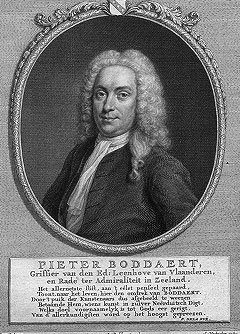
Pieter Boddaert
Pieter Boddaert

– Order: Psittaciformes
– Family: Psittaculidae
– Genus: Psittacula
– Scientific name: Psittacula longicauda
– Citation: (Boddaert, 1783)
– Protonimo: Psittacus longicauda

Long-tailed Parakeet Images:


Especies del gรฉnero Psittacula

Sources:

– Avibase
– Parrots of the World โ€“ Forshaw Joseph M
– Parrots A Guide to the Parrots of the World – Tony Juniper & Mike Parr
– Birdlife

– Photos:

(1) – A male warning juvenile to keep away from the food while he is there in Queenstown, Singapore By Lip Kee Yap [CC BY-SA 2.0], via Wikimedia Commons
(2) – A female in Queenstown, Central Singapore on 2 December 2005 By Lip Kee Yap [CC BY-SA 2.0], via Wikimedia Commons
(3) – feeding in Queenstown, Singapore on 2 December 2005 By Lip Kee Yap [CC BY-SA 2.0], via Wikimedia Commons
(4) – A juvenile in Queenstown, Central Singapore on 2 December 2005 By Lip Kee Yap [CC BY-SA 2.0], via Wikimedia Commons
(5) – Long-tailed Parakeets at the Botanic Gardens, Singapore By Lip Kee Yap [CC BY-SA 2.0], via Wikimedia Commons
(6) – Long-tailed Parakeet, adult male Joseph Wolf [Public domain], via Wikimedia Commons

– Sounds: Mathias Ritschard (Xeno-canto)