โ–ท The world of Pets: Dogs, cats, birds, reptiles, amphibians

Smaland Hound
Suecia FCI 129 - Medium-sized Hounds

Smaland Hound

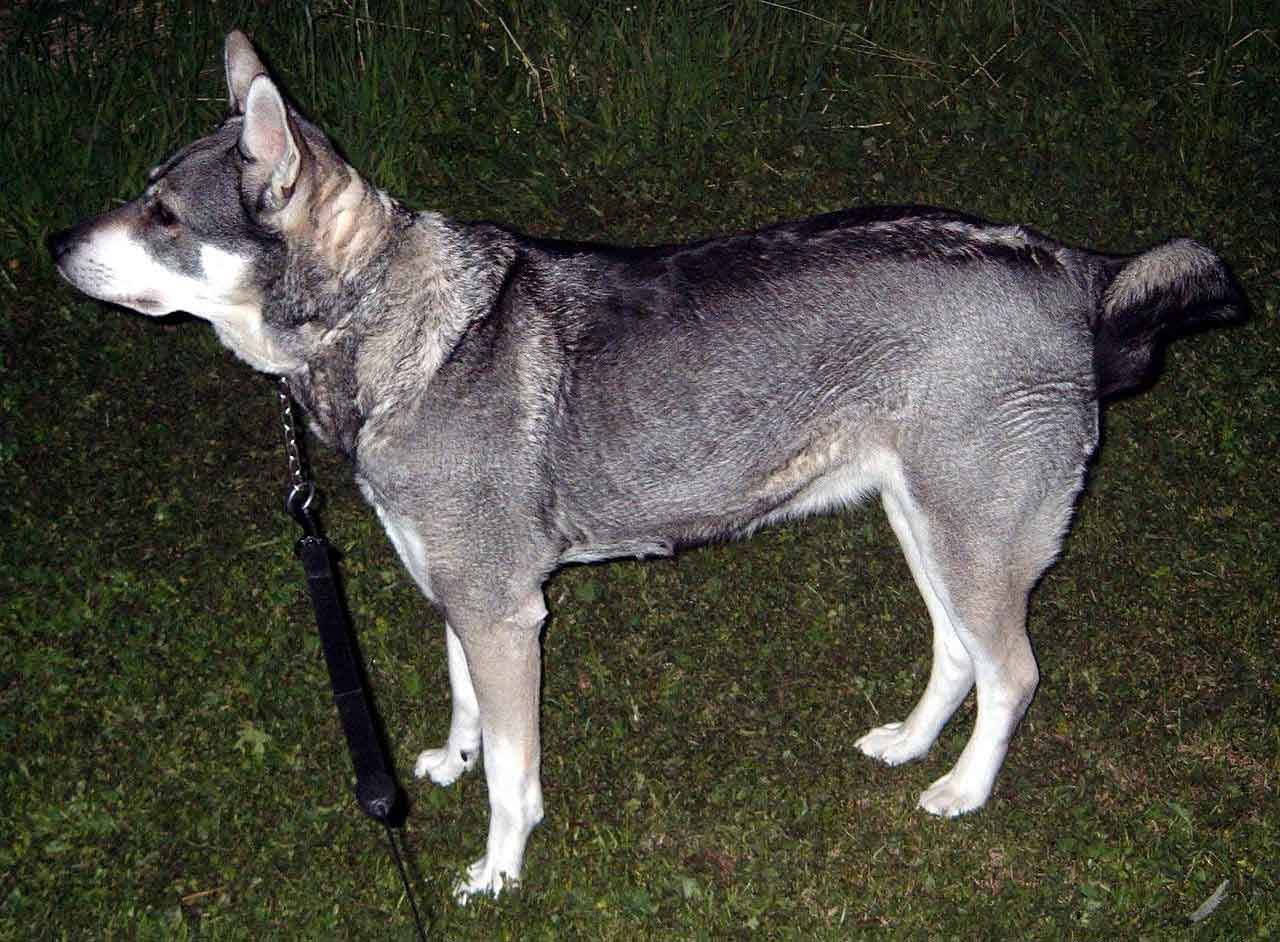
The Smaland Hound It is used for hunting hare and fox; It is not a pack dog and is not used for deer hunting..

Content

History

The history of Smaland Hound starts in the county of Smaland, in southern Sweden; There was a wide variety of hounds in the 19th century. Some, of german origin, Polish or Baltic, They had arrived in the company of soldiers returning from the great wars between 1611 and 1678.

These hunting dogs were later crossed with local farm dogs type Spitz and english hounds, becoming the ancestors of Smaland Hound. The size, tail color and length varied at that time: some dogs were black and tan, others red or yellow. But, white markings were common. Some cubs were born with short tails.

During the early years of the 20th century, great efforts were made to rebuild the type of the old Smalandsstรถvare, especially the short-tailed variety. The first standard, written in 1921, allowed dogs to have both short and long tails. First it was decided that the color would be black and tan, but red and yellow were allowed, as well as the white spots.

The Smaland Hound received continuous infusions of new blood, sometimes using strong lines from other dog breeds. New blood was last used in the 1980s. 1950, When, for a brief period, dogs of unknown origin were registered, but accepted type, as Smaland Hound.

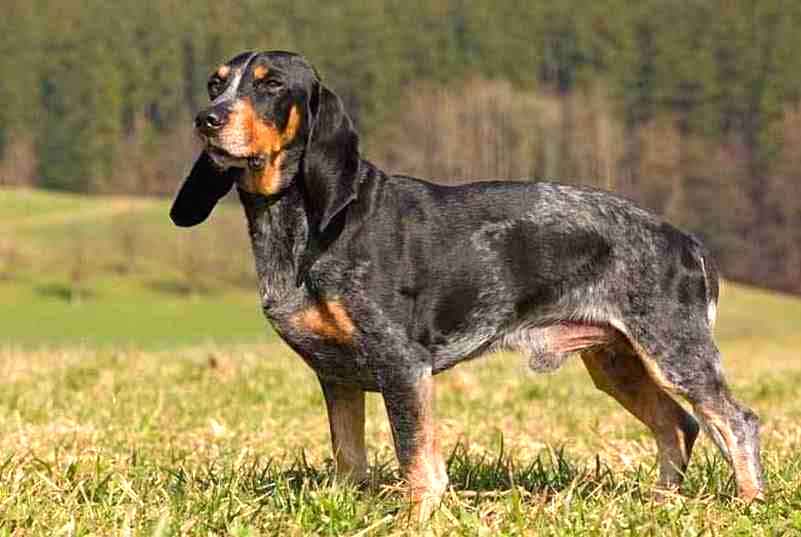
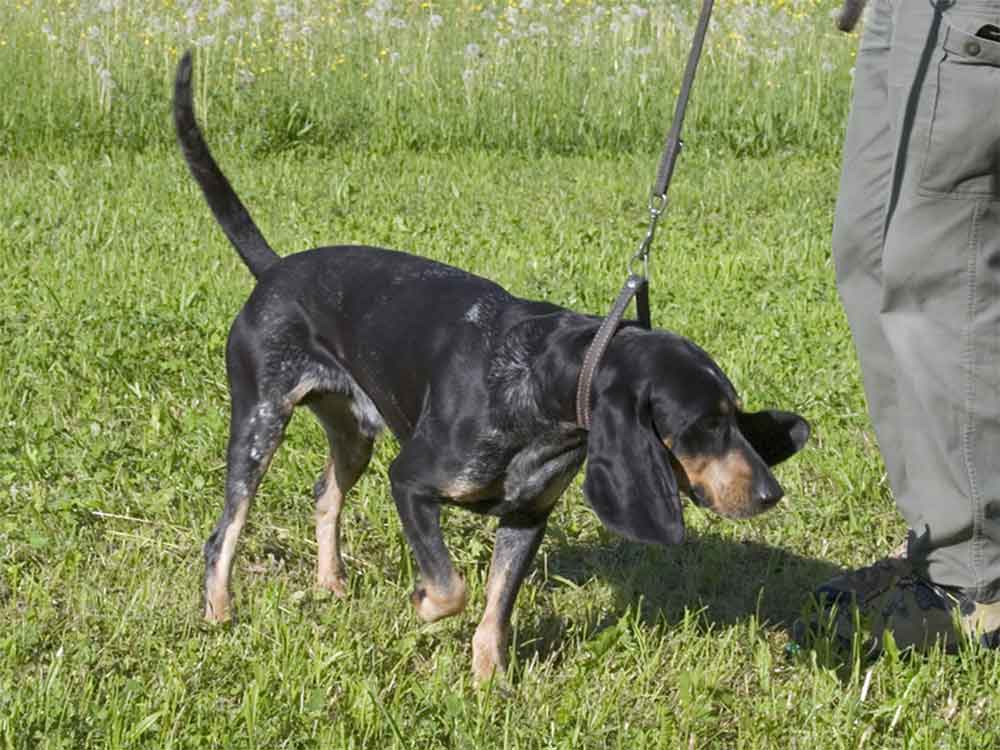
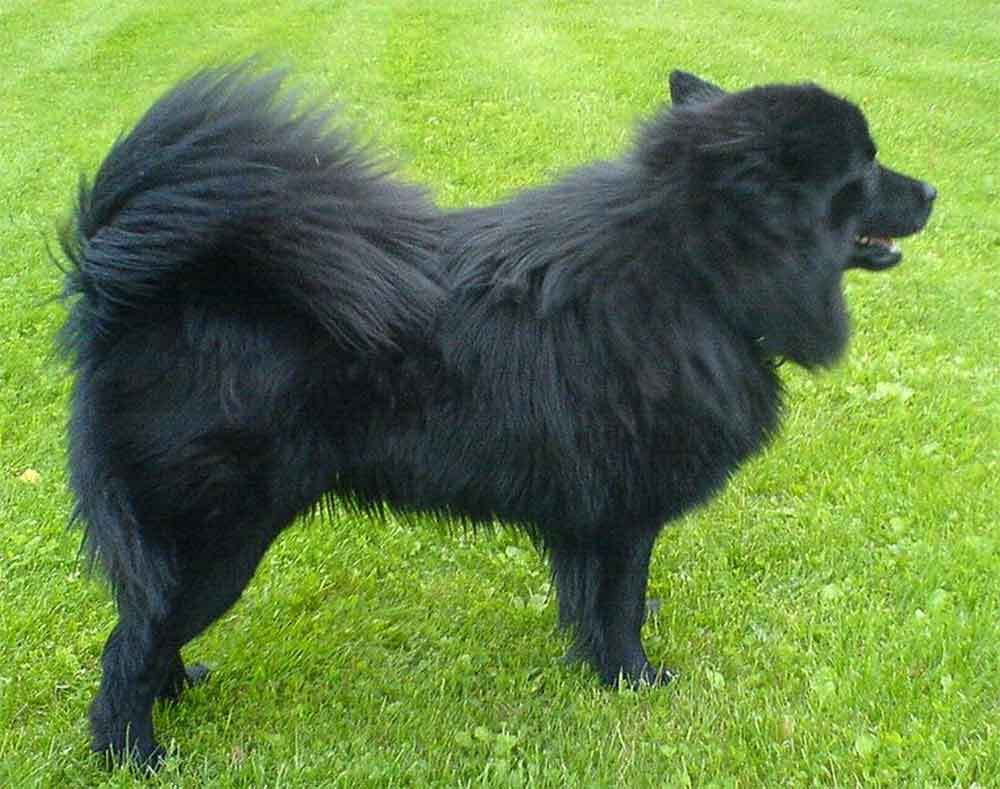
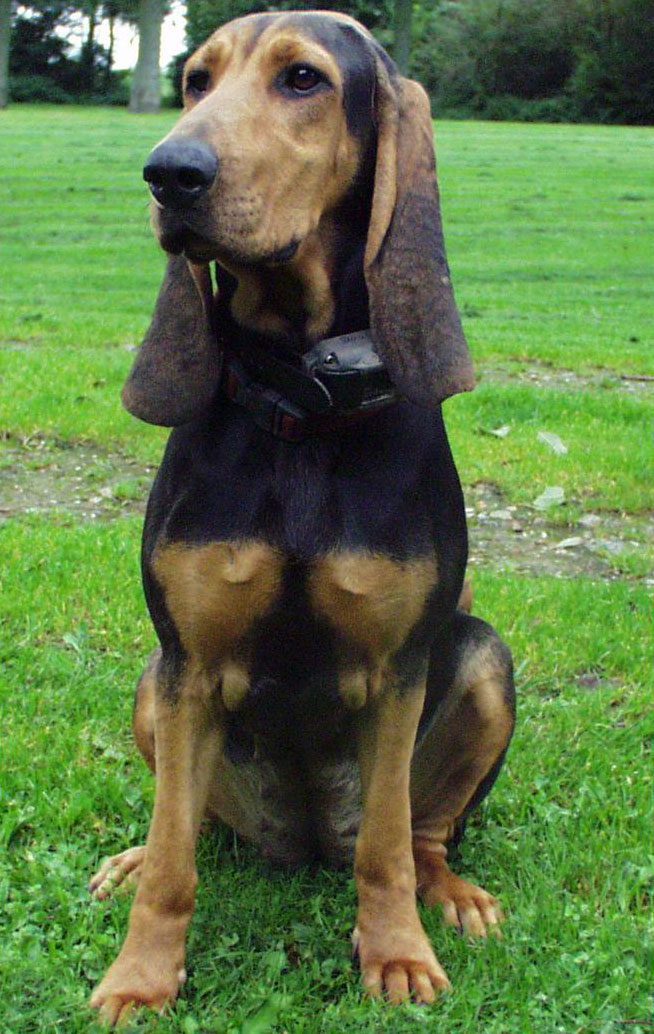
Photo: Smalandsstovare by amoreaquattrozampe.it

Physical characteristics ยซSmaland Houndยป

Smaland-Stรถvare
Smaland-Stรถvare

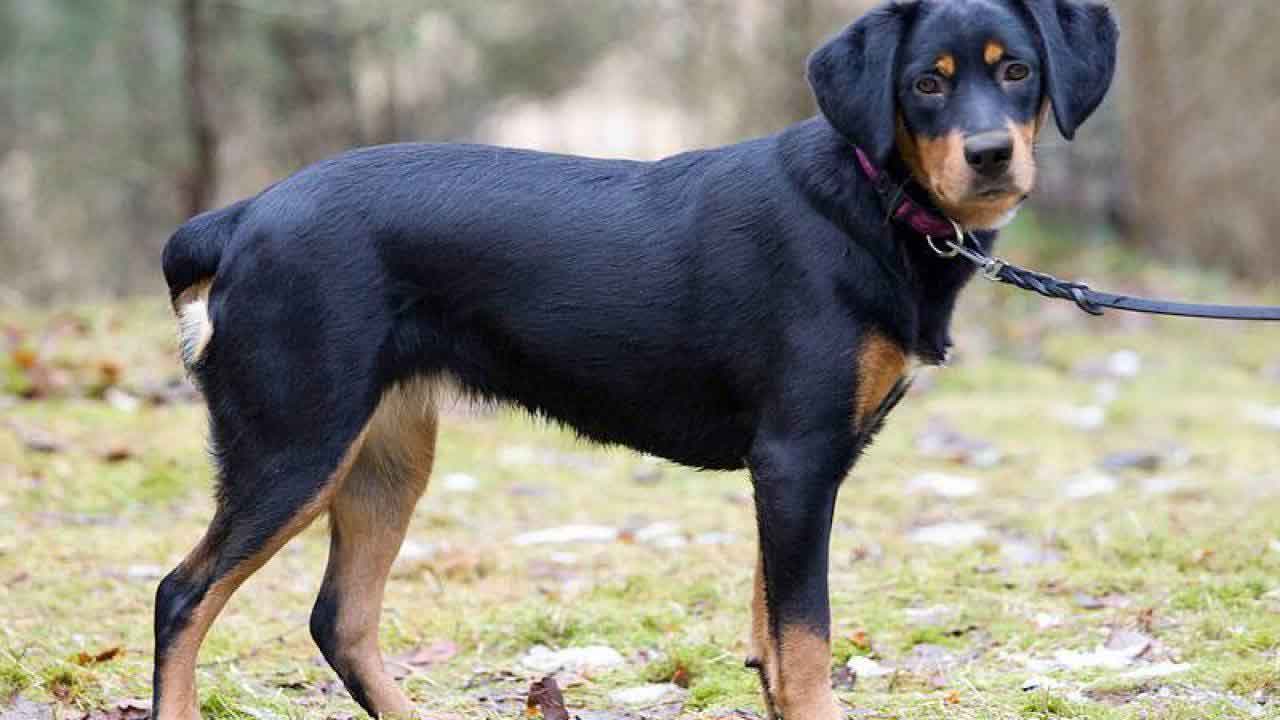
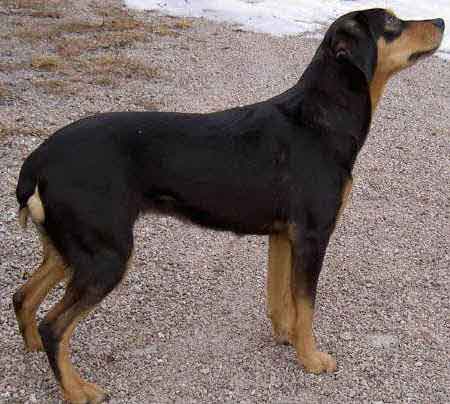
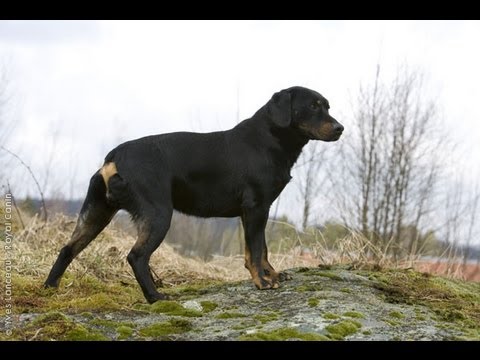
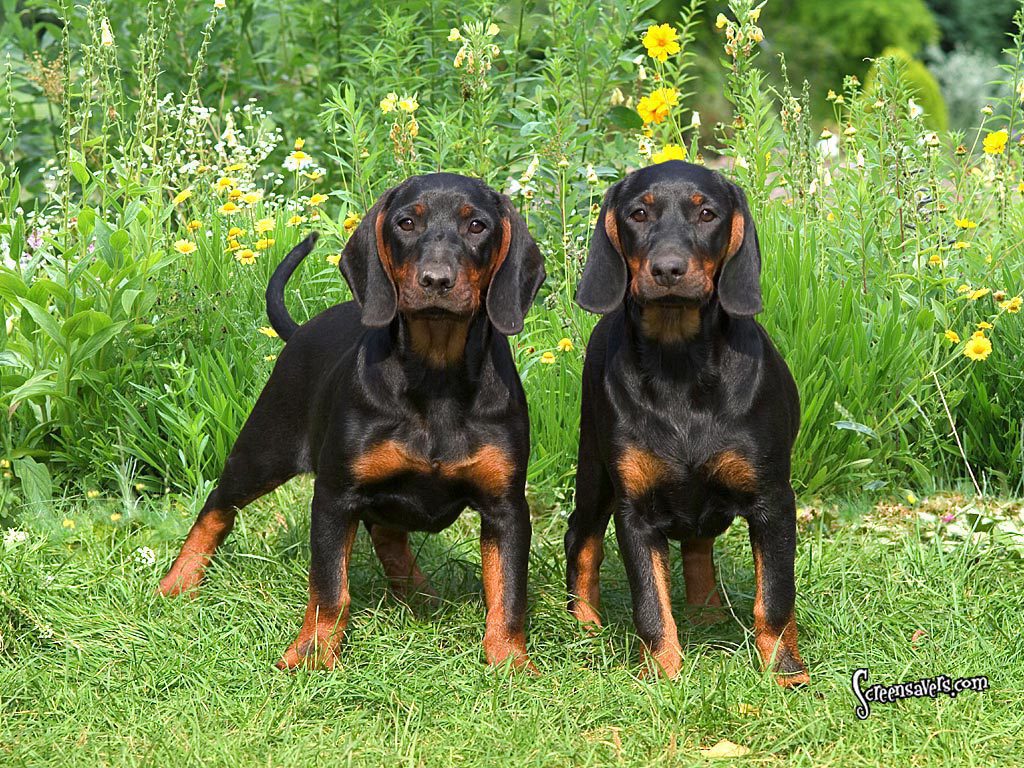
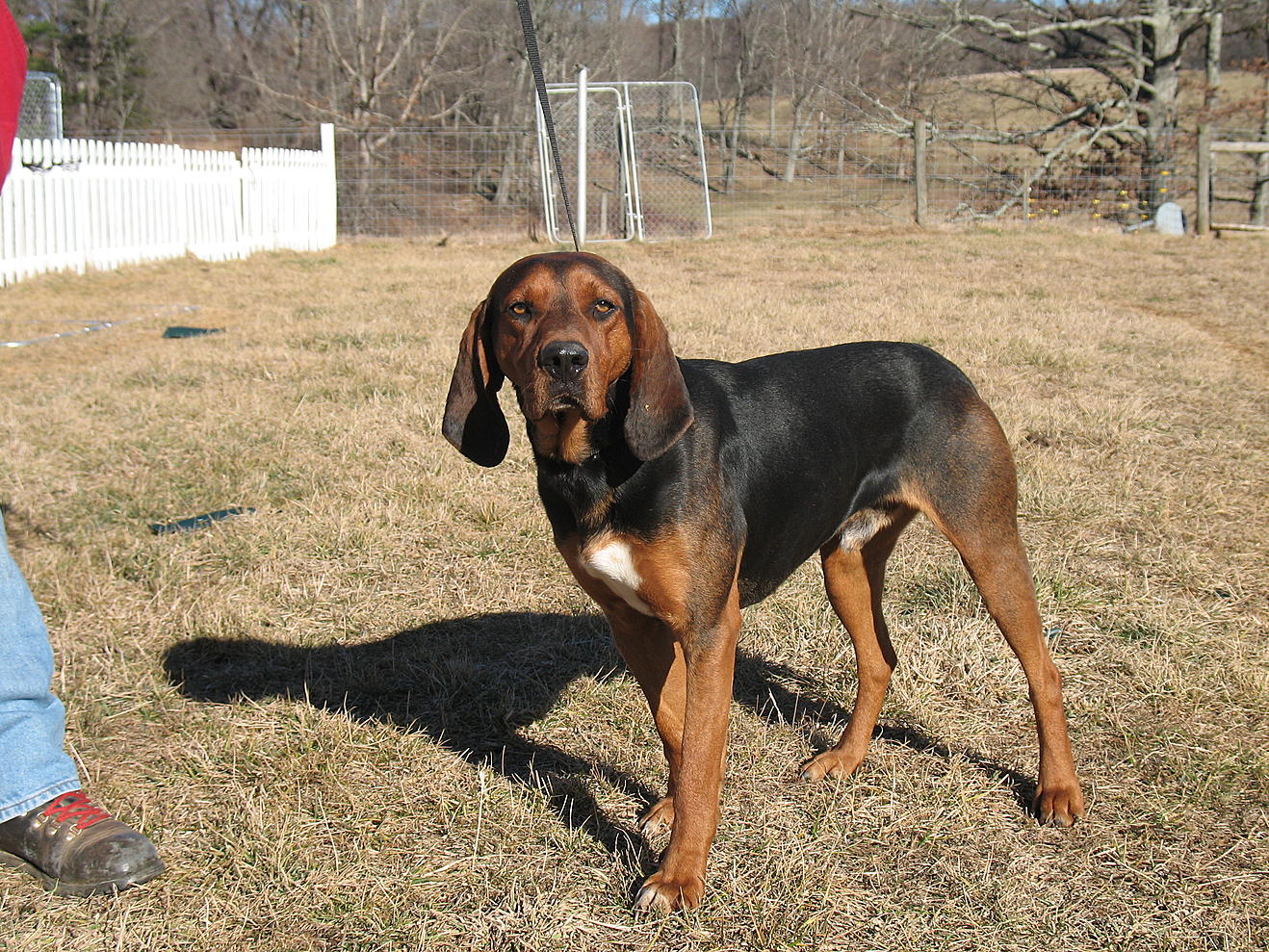
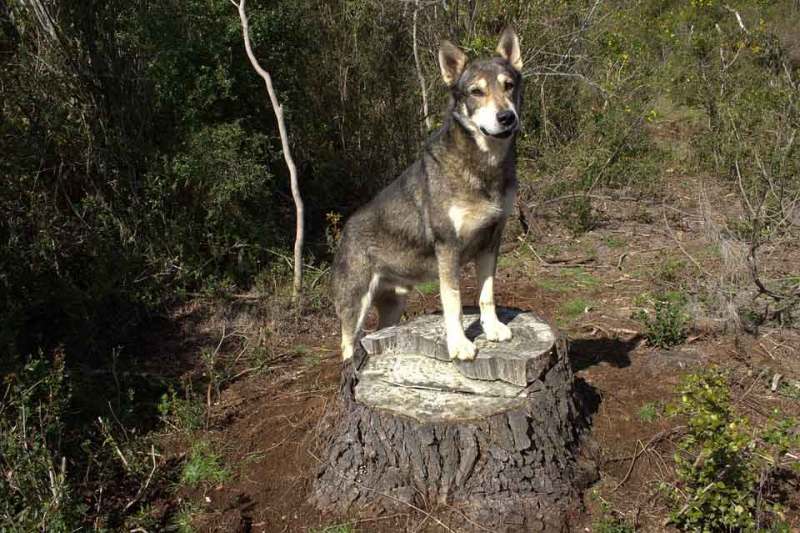
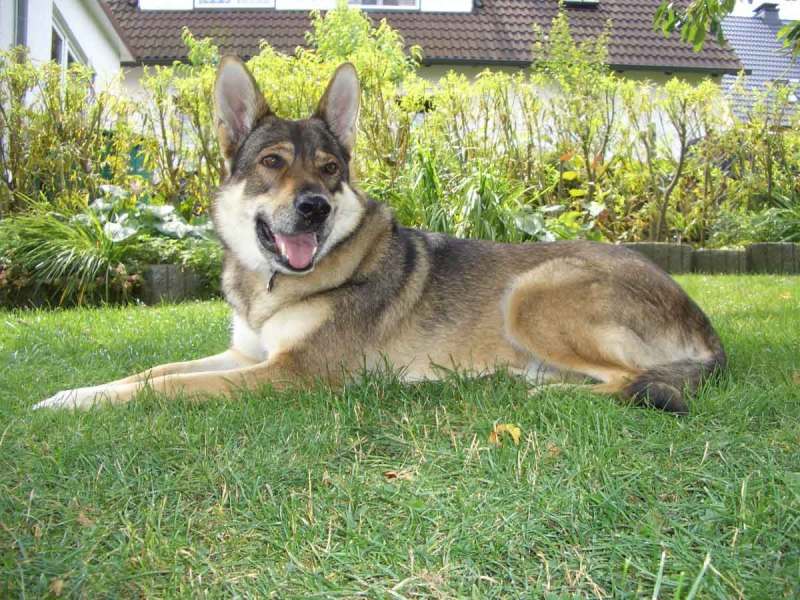
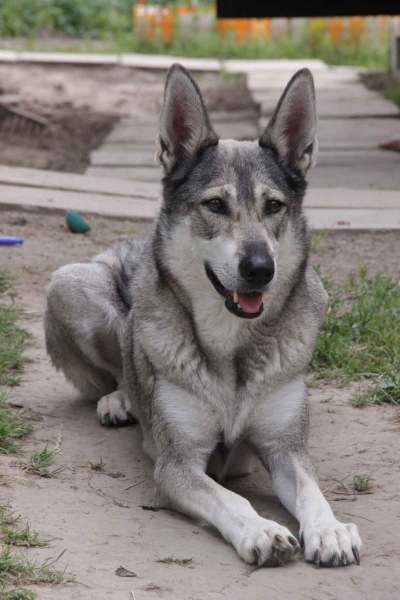
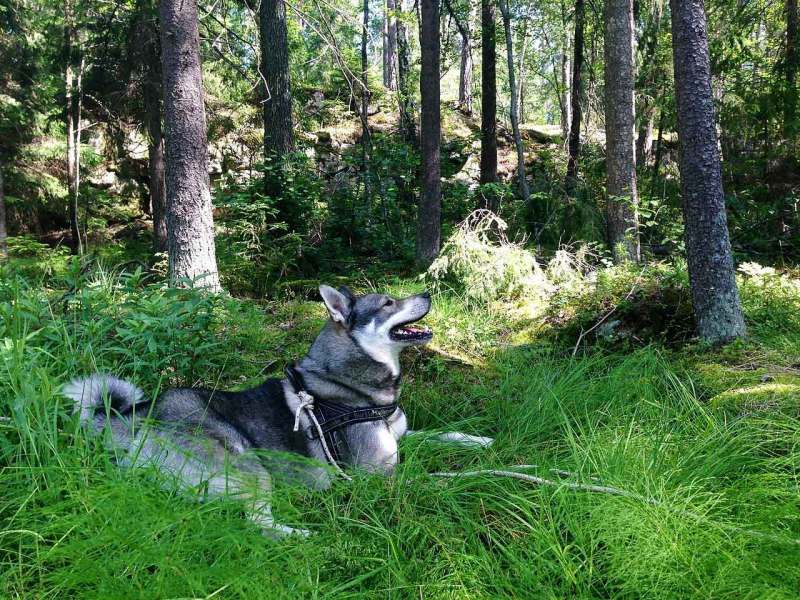
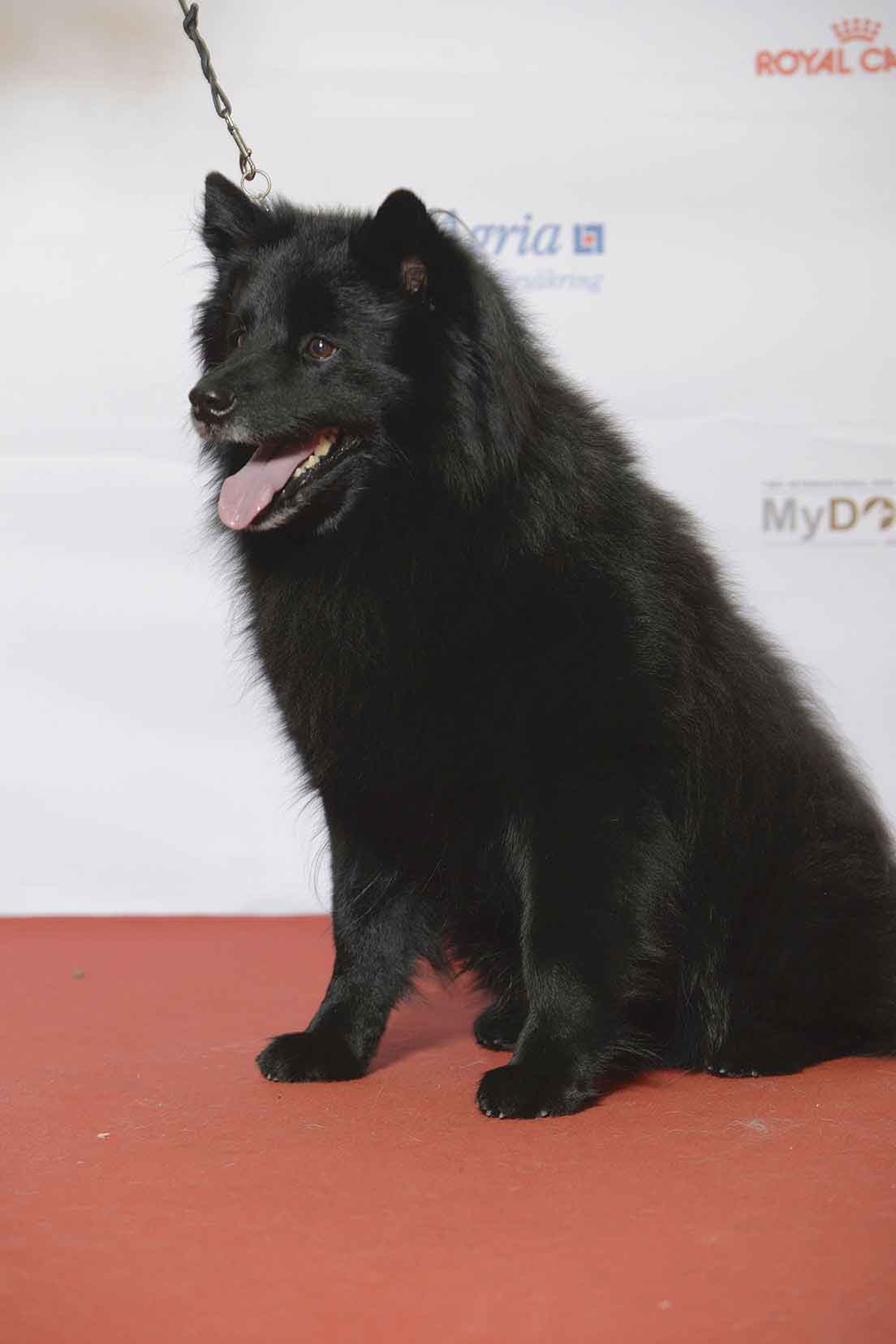
The Smaland Hound he is a robust dog, similar to Rottweiler, and elegant looking. His eyes are dark brown with a calm expression. Ears are stuck high, slightly raised when the dog is paying attention. They are carried hanging, with rounded ends. The tail is placed in the extension of the line of the back, straight or slightly saber-shaped. May be short at birth.

Fur: average length, rough, well attached to the body; thicker in the back and neckline. The undercoat is colored: black and fiery (all shades range from amber to reddish brown). Small white spots are allowed on the bib and fingers.

Size: males 46-54 cm. (ideal 50 cm.); females 42-54 cm. (ideal 45 cm.).

Character and abilities ยซSmaland Houndยป

These Hounds form a strong bond with their owners, being loyal and devoted, kind and loving, which also makes them great companions at home.

When they hunt, they are used mainly for hunting fox and hare. He is gifted with exceptional talent, he is a brave and determined dog.

At home, is a gentle, calm and affectionate family companion. They are known to be territorial and wary of strangers., which makes them good watchdogs that will not fail to warn their masters of marauders.

The Smaland Hound is very intelligent and they learn easily. He gets along well with his peers if they have grown up together, but it must be presented with delicacy and attention to other dogs and other animals.

It is a dog that needs a lot of time in the presence of its master, who needs space and the ability to spend his energy. So, it is not a dog for owners who are absent or who do not have enough time to dedicate to it.

The breed needs space and is therefore not suitable for apartment living.

Ratings of the โ€œSmaland Houndโ€

Coexistence is important that you have with your new friend. Before considering the acquisition of a dog of the breed "Smaland Hound" you know certain factors. Not all breeds of dogs are apt to live in an apartment, you must take into account his character, their need for exercise, their interaction with other pets, their care and if you have small children, their level of tolerance towards them.

Adaptation โ“˜

4,0 of 5 stars (based on 1 review)

friendly dog โ€‹โ€‹โ“˜

4,0 of 5 stars (based on 1 review)

hair loss โ“˜

3,0 of 5 stars (based on 1 review)

Affection level โ“˜

3,0 of 5 stars (based on 1 review)

Need for exercise โ“˜

4,0 of 5 stars (based on 1 review)

Social need โ“˜

3,0 of 5 stars (based on 1 review)

Home โ“˜

3,0 of 5 stars (based on 1 review)

Toilet โ“˜

2,0 of 5 stars (based on 1 review)

Friendly with strangers โ“˜

3,0 of 5 stars (based on 1 review)

barking โ“˜

5,0 of 5 stars (based on 1 review)

Health โ“˜

4,0 of 5 stars (based on 1 review)

Territorial โ“˜

4,0 of 5 stars (based on 1 review)

Cat friendly โ“˜

2,0 of 5 stars (based on 1 review)

Intelligence โ“˜

4,0 of 5 stars (based on 1 review)

Versatility โ“˜

3,0 of 5 stars (based on 1 review)

Child friendly โ“˜

5,0 of 5 stars (based on 1 review)

Surveillance โ“˜

4,0 of 5 stars (based on 1 review)

joy โ“˜

4,0 of 5 stars (based on 1 review)

Videos of the โ€œSmaland Houndโ€

Smรฅland duster / Smalands Hound / Smalandstevar

Smรฅland duster / Smalands Hound / Smalandstevar

hare hunting with small land duster diva
harjakt med smรฅlandsstรถvare diva

Type and recognitions:

  • FCI CLASSIFICATION:
  • Group :
  • Section : . .

Federations:

  • FCI – Group 6: Scent hounds, and related breeds. – Section 1.2: Medium-sized Hounds. โ“˜
  • UKCScenthounds โ“˜

FCI breed standard "Smaland Hound"

Origin:
Sweden

Date of publication of the valid original standard:
17.07.1997

Use:

Bloodhound type dog used for hare and fox hunting. It is not a pack dog and is not used for deer hunting..


General appearance:

It is a robust dog with an elegant appearance.. He is of strong constitution, without being heavy. The coat should be rough.

IMPORTANT PROPORTIONS :

The body is almost square. The height of the body should be almost equal to half the height at the withers.


Behavior / temperament:

He is a calm dog, loving, with enthusiastic and reliable temperament.

Head:

---

Cranial region:
  • Skull : Medium length and thin. It is wider between the ears.
  • Stop : Well defined; The distance from the occiput to the stop should be equal to the distance from the stop to the tip of the nose..

facial region:

โ–ท Truffle : black, with large nostrils.
โ–ท Snout : Well developed, without being thick or pointy. Nasal cane straight and parallel to the line of the skull.
โ–ท Lips : The upper lip hangs only slightly over the lower lip..
โ–ท Cheeks : They are not prominent.
โ–ท Jaws/Teeth : Scissor bite. Strong, well-developed teeth.

โ–ท Eyes : Dark brown in color; calm expression.
โ–ท Ears : High insertion, he raises them a little when he is attentive. They are slightly shorter than the distance from the base of the ear to the middle of the snout.. They hang flat and the tips are rounded.

Neck:

Moderately long, powerful without being thick, descends harmoniously towards the shoulders. The skin that covers the neck is tight and flexible.

Body:

โ–ท Cross : Well marked.
โ–ท Back : Short, and strong.
โ–ท Pork loin : Muscular and slightly arched.
โ–ท Rump : Slightly inclined, long and wide.
โ–ท Breast : Well developed with well sprung ribs.
โ–ท Bottom line and belly : Belly just a little retracted.

Tail:

  • It can be long and inserted in a straight line with the back. Straight or slightly curved in the shape of a saber. It barely reaches the tibio-tarsal joints. Queues with medium length are also allowed. When the dog moves, It is preferable that the tail is not carried above the level of the back.
  • Short queue allowed, natural or bear tail.


Tips

PREVIOUS MEMBERS :

โ–ท Generalities : Viewed from the front, the forelimbs are straight and parallel. Strong bones should give the impression of harmony with the dog's overall appearance..
โ–ท Shoulders : They're long, muscular, well attached and well directed backwards.
โ–ท Arms : Long, they form a right angle with the shoulders.
โ–ท Elbows : Glued to the body, without being visible below the thorax.
โ–ท Metacarpos : Flexible and slightly angled with the forearm.
โ–ท Front feet : Firms, with well-angled and closed fingers.

LATER MEMBERS :

โ–ท Generalities : Seen from the back, They are strong and parallel.
โ–ท Thigh : It has well-developed muscles. Seen from the sides, thighs are wide.
โ–ท Knee : Well angled.
โ–ท Tibio-tarsal joints : With good angulation
โ–ท Metatarsal : Short, thin and straight.
โ–ท Hind feet : Similar to the previous. Dewclaws are undesirable.

Movement:

Parallel, strong, spans space.

Mantle

HAIR : Medium long, rough, the attached outer layer is thicker on the back and neck. The undercoat is short, dense and smooth. Over the head, ears and front of limbs, the coat should be short and soft. Below the tail and on the back of the thighs, the outer layer should be longer than on the back. The hair is abundant between the toes and pads.

COLOR : black and tan. Fuego: any shade from amber to reddish brown. Some small white markings on the chest and toes are permitted..


Size and weight:

Height at the withers :

  • Males: 46-54 cm.. Ideal size: 50 cm..
  • females: 42-52 cm.. Ideal size: 46 cm..


Fouls:

Any deviation from the aforementioned criteria is considered a fault and its seriousness is considered to the degree of
deviation from the standard and its consequences on the health and well-being of the dog.

โ€ข Incorrect proportions, p.ej. very rectangular body.
โ€ข Lack of definition of sexual characteristics.
โ€ข Heavy head, wide skull.
โ€ข Short or pointed snout.
โ€ข Pendulous lip commissure.
โ€ข Upper or lower prognathism, level bite.
โ€ข Light eyes.
โ€ข Too long back.
โ€ข Short croup, inclined.
โ€ข Tail carried above the level of the back
โ€ข Restricted movements of the hind limbs.
โ€ข By je cut the thin.
โ€ข Lack of fire marks; black tips of hair in fire color.
โ€ข Too much white color or white hair in inappropriate places.
โ€ข Liver and brown color.

MISS PLAYOFFS

โ€ข Cowardice, aggression toward owner.
โ€ข Very reserved dog, fearful.
โ€ข Marked upper or lower prognathism.
โ€ข Variations in height at the withers less than or greater than 1 cm..

Any dog โ€‹โ€‹showing clear signs of physical or behavioral abnormalities must be disqualified..


N.B.:

Males should have two normal-appearing testicles fully descended into the scrotum..

Source: F.C.I - International Cynological Federation

Alternative names:

1. (Swedish: Smรฅlandsstรถvare) (English).
2. Smรฅlandsstรถvare (French).
3. Smรฅland-Bracke, Smรฅlandsstรถvare (German).
4. Smalandsstovare (Portuguese).
5. Cazador de Smรฅland (sueco: Smรฅlandsstรถvare) (espaรฑol).

โ–ท The world of Pets: Dogs, cats, birds, reptiles, amphibians

Small swiss hound
Suiza FCI 60 . Small-sized Hounds

Small Bernese hound
Small Bernese hound
The dog Small swiss hound, little stimulated, tends to become a nuisance pet that can be difficult to train.

Content

History

In the early 20th century, hunting began to change in Switzerland. Private hunting grounds were introduced and the standard size of the Swiss Hound he was too fast and enthusiastic to hunt properly within these smaller hunting grounds. The hunters decided to develop a different breed of hunting that could hunt efficiently and effectively within the closed private hunting grounds.. Many people think that Small swiss hound it's just a smaller version of the Swiss Hound. While this is partly true, They are a different race that originated from crossing the Swiss Hound with the Basset Hound. The ultimate goal was to develop a breed that was shorter and smaller., but also had the same four color variants as the Swiss Hound. The resulting dogs were expected to have a strong sense of smell for nose work and a melodious voice to sound the alarm when hunting..

The Small swiss hound He is an outstanding hunter and has the ability to track scents for miles over rough terrain. The Small swiss hound became the hunting dog of people hunting on private land.

The United Kennel Club recognized the Small swiss hound in 2006. The Federation Cynologique Internationale (FCI) accepted them and adopted the official breed standard under the name Schweizer Niederlaufhund in 2015.

The Small swiss hound still a popular hunting companion in his native Switzerland.

Photo: Small Bernese Hound Smooth-coated male by Canarian, CC BY-SA 4.0, via Wikimedia Commons

Physical characteristics

In proportion smaller than the Swiss Hound. Its body shape is rectangular, moderately long, and strong conformation. Medium size head, thin, elegant, with friendly facial expression
and attentive. His ears are very long, low insertion, and he wears them folded. Thin and strong limbs. When walking calmly, he has his tail hanging, in activity bends it slightly upwards.

The Small swiss hound comes in four different varieties. The only difference between the varieties is the color, but each variety has its own name.

Variants Small swiss hound

Small hound of Juraequeรฑo de Jura
Small Jura hound
Small Bernese hound
Small Bernese hound
Small Schwyz hound
Small Schwyz hound
Small Lucerne hound
Small Lucerne hound
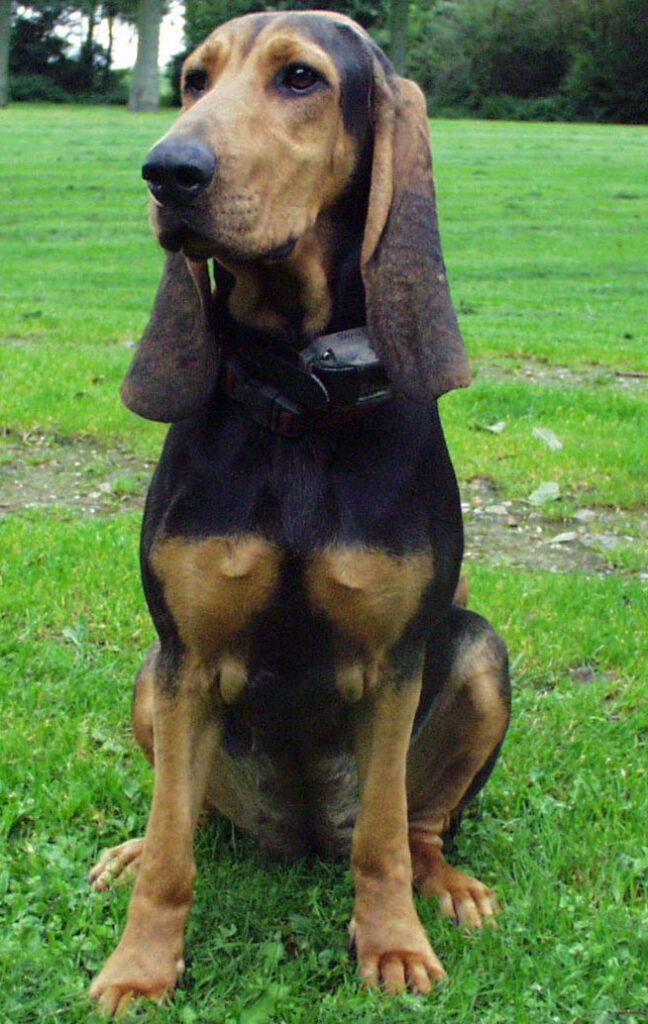
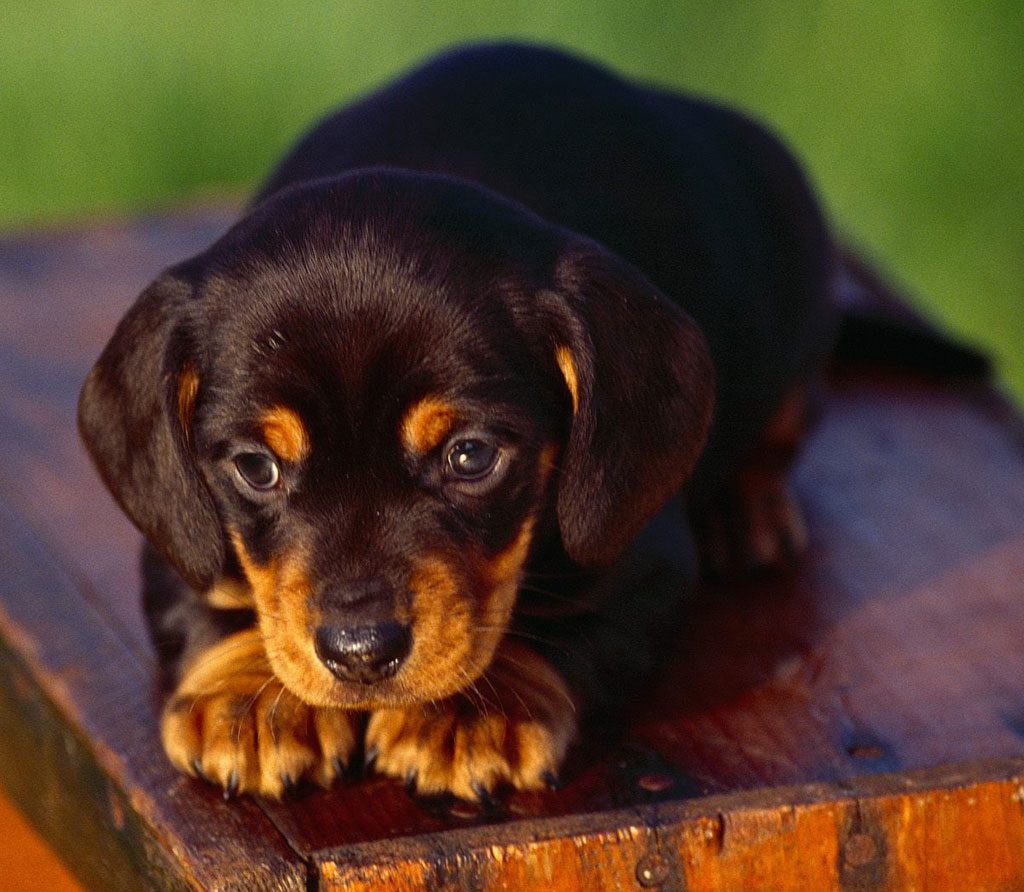
  • The Small Jura hound has a smooth coat that is black with tan markings found over the eyes.
    The Small Jura hound has only one coat and may only have a small amount of white on its body.
  • The Small Bernese hound has two types of fur:
    the smooth coat and the rough coat.
    The rough coat has a single hard coat and a small beard.
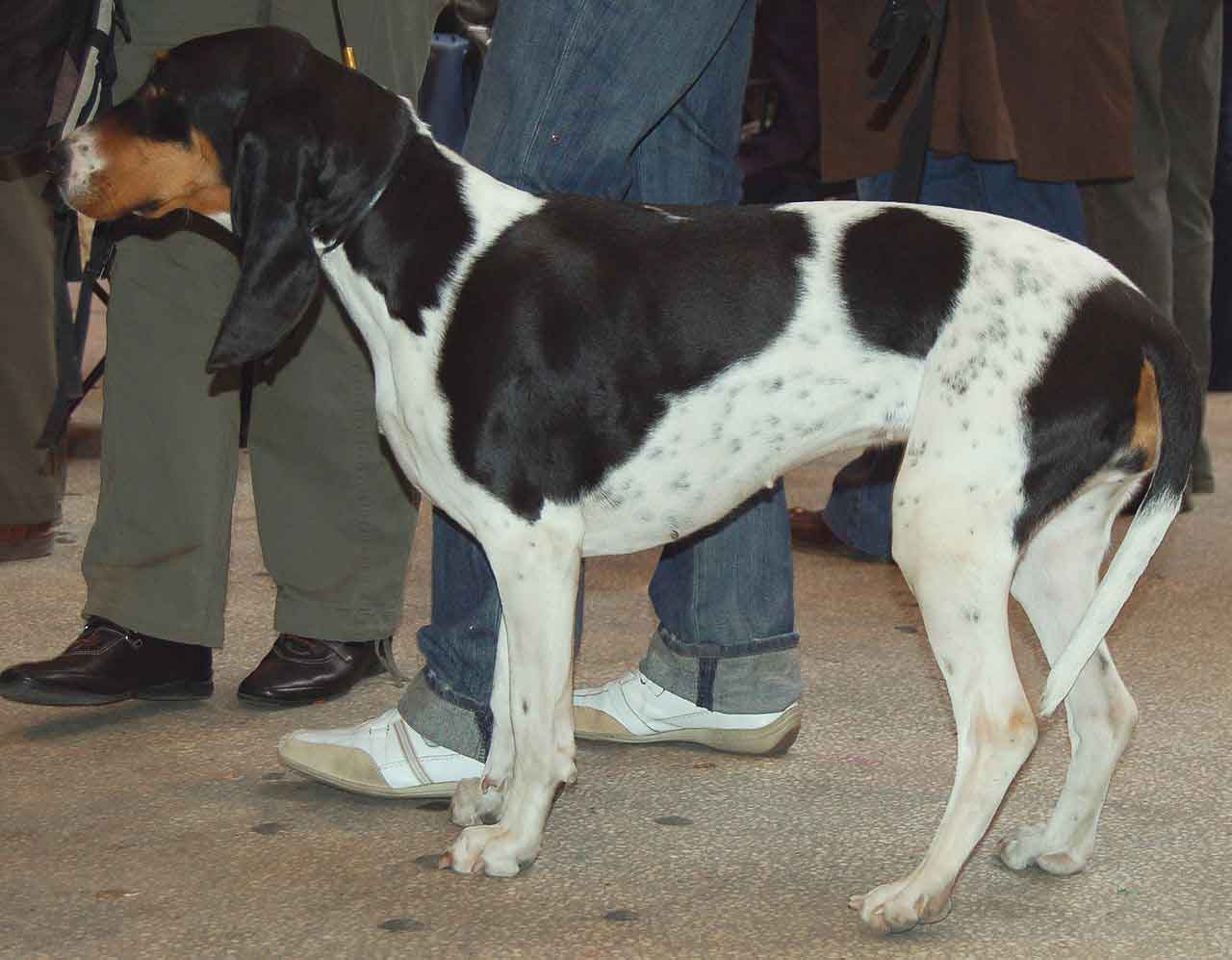
    The Small Bernese hound it's black and white with fiery marks over its eyes; many call it tricolor.
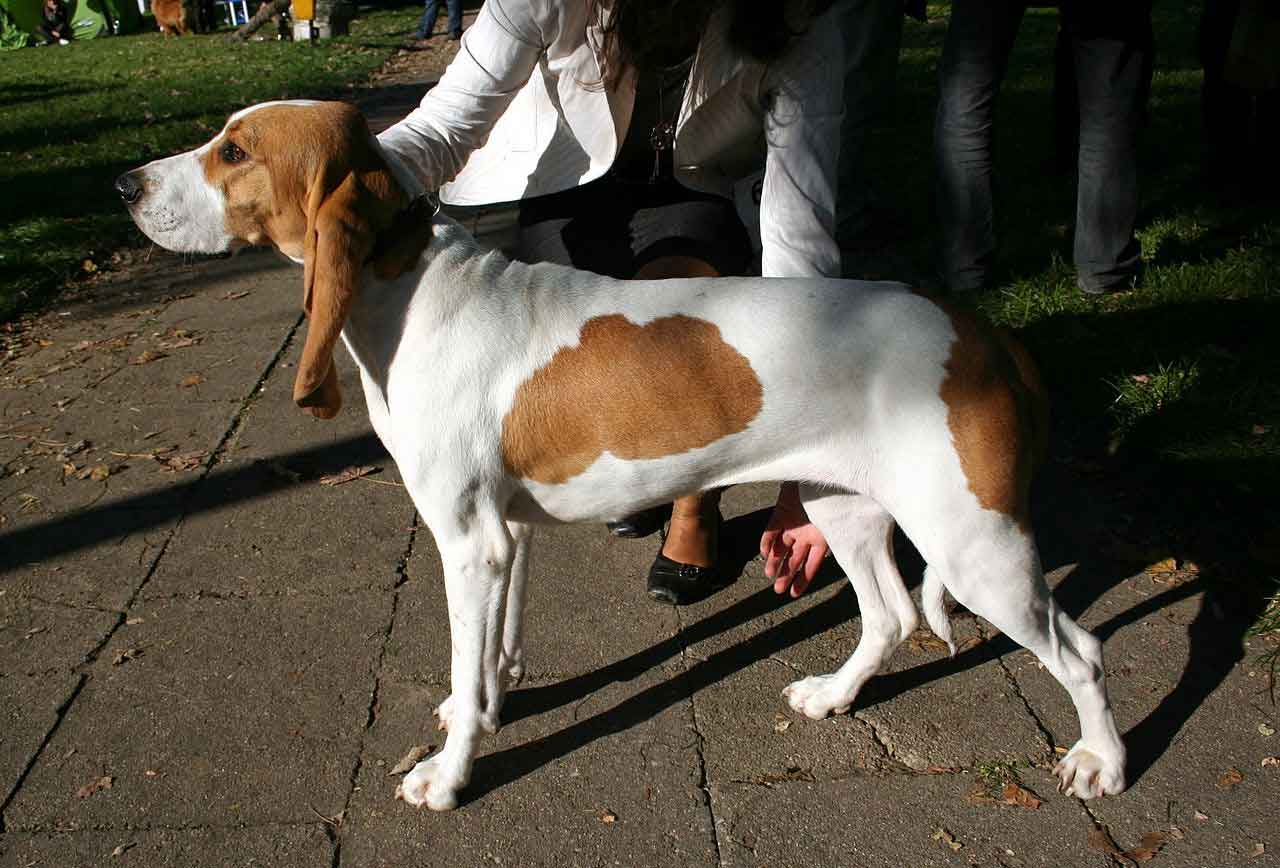
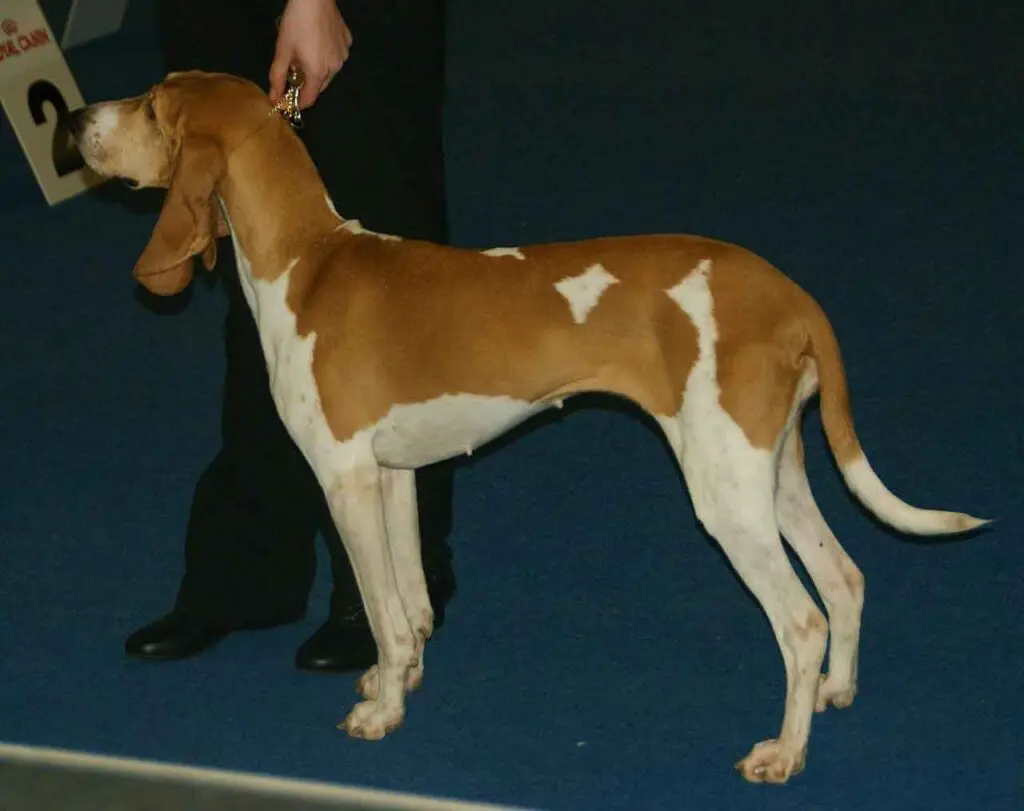
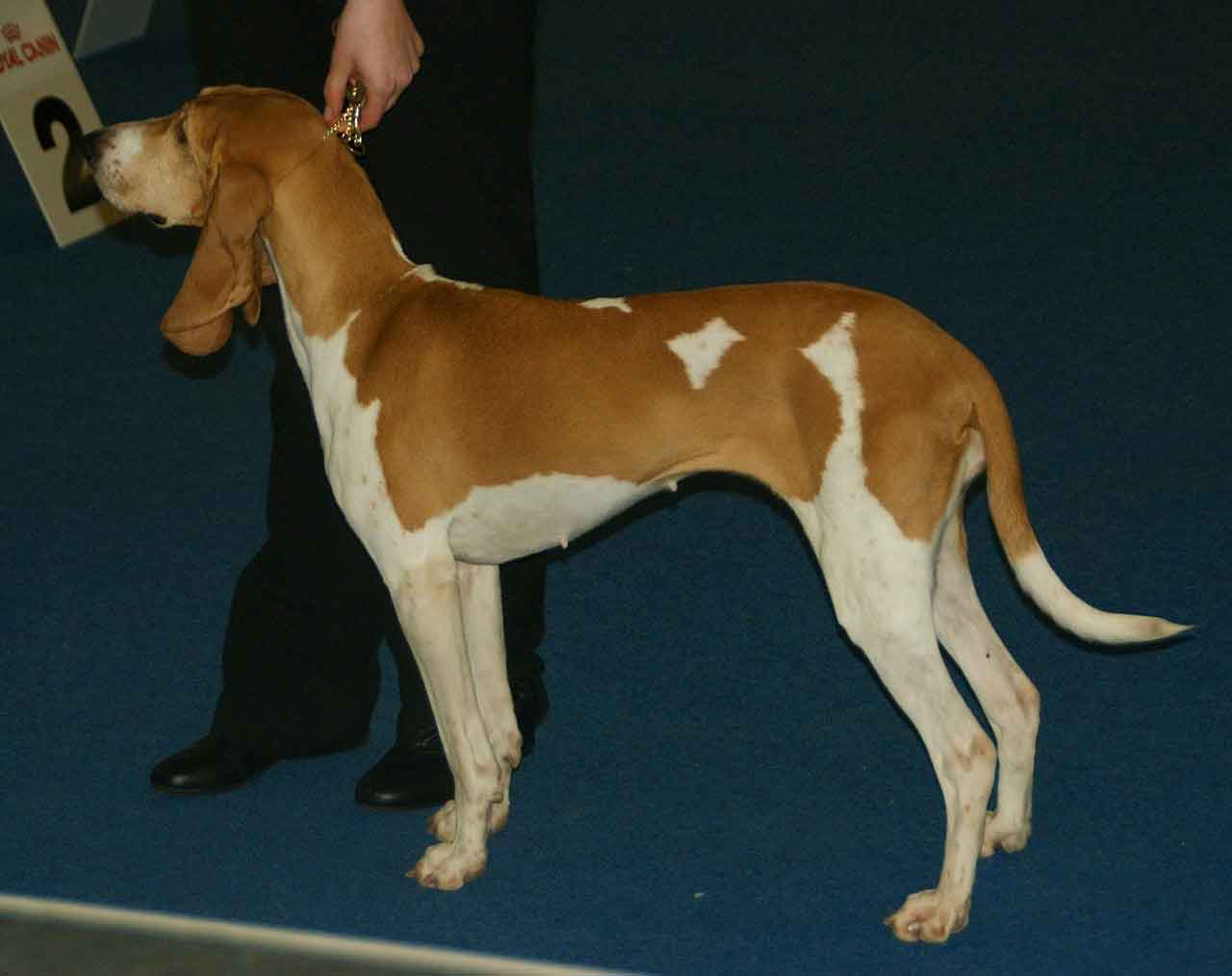
  • The Small Schwyz hound has a single, smooth coat that is predominantly white with yellow-red spots; orange-red spots are also acceptable.
  • The Small Lucerne hound has a single smooth coat that is predominantly white but mottled with black or gray giving the illusion of a blue body. They have black spots with tan markings over their eyes.

  • Photos:

    1 – Small Bernese Hound Smooth-coated male by Canarian, CC BY-SA 4.0, via Wikimedia Commons
    2 – Jura low-run dog by Bhv The Max
    3 – This dog is a small Schwyz Hound by pets.ch
    4 – Little Lucerne Hound by carlosh catalog

    Character and skills

    When he's hunting, the Small swiss hound is tireless and relentless, exhibiting impressive endurance and strength of character. They tend to be lively and excitable, eager to do their job. Most of the Small swiss hound they are happy to hunt regardless, without any royal order from his master.

    Despite being bred to hunt, most breed members can make the transition from working bloodhound to family pet easily and are generally affectionate and demonstrative with their owners. They are good friends with children and other dogs, but they cannot be trusted with small animals, including cats and rabbits.

    The temperaments of individuals vary, and while some may be quiet and peaceful house guests, others may be excitable and jumpy. Dogs with more energy can often be taught to settle inside the house once they have been properly exercised.. Ideally, the exercise should take the form of hunting, as this not only burns off excess energy but also occupies your inquisitive mind. The dog Small swiss hound, little stimulated, tends to become a nuisance pet that can be difficult to train.

    Not being an aggressive dog, the Small swiss hound should not be used as a guard dog as it does not tend to scare off intruders and does not usually feel the need to guard your property.

    โ€œSmall Swiss Houndโ€ Training

    The phrase "small dog syndrome" may be mentioned when talking about Small swiss hound, as they have a reputation for acting like large dogs in small dog bodies. Full of confidence, lively and independent, this is not a breed for the novice trainer. Obedience work can be a particular challenge, since they have a free-spirited character and a mind of their own.

    Coaches must be firm and inflexible, keeping your training sessions short and interesting to keep the dog's interest. How this breed likes to assume a dominant position in the home, he should be taught his place from an early age, to avoid any bad behavior.

    most dogs Small swiss hound they are still used as hunting dogs in Switzerland today, meaning your exercise requirements are easily met during hunting season. In the case of non-working dogs, or when the hunting season is over, owners should take time to meet the needs of this active hound.

    A rural setting is the ideal place for Small swiss hound, who needs wide terrain to explore and does not enjoy being confined. It is essential that your property is securely fenced to avoid solo adventures.

    Health ยซSmall Swiss Houndยป

    There are not many diseases that affect the Small swiss hound more than other races, but there are a handful of conditions that should be watched in individuals:

    ear infections

    Hanging ears are prone to developing ear infections., particularly if a dog spends a lot of time outside wet and muddy. Keeping your ears clean can prevent this from becoming a problem..

    Hip Dysplasia

    Malformed hip joints can lead to lifelong discomfort and reduced mobility. x-rays of the hips (a process called โ€œhip scoringโ€) should be performed when a breeding dog is over one year of age to ensure that its hips are of a good enough quality to be passed down.

    Grooming ยซSmall Swiss Houndยป

    Although there are a number of different coat types within the breed, all are easy to maintain and need little in the way of grooming. Weekly brushing will suffice. The Small swiss hound you will only need to be bathed a few times a year. If owners feel the need to disguise their "dog smell" they can use dry shampoo, avoiding the risk of drying out their skin and coat.

    Ears of the Small swiss hound should be cleaned weekly and ideally checked daily for signs of infection. They must be completely dried after getting wet.

    Characteristics "Small swiss hound"

    Coexistence is important that you have with your new friend. Before considering the acquisition of a dog of the breed "Small swiss hound" you know certain factors. Not all breeds of dogs are apt to live in an apartment, you must take into account his character, their need for exercise, their interaction with other pets, their care and if you have small children, their level of tolerance towards them.

    Adaptation โ“˜

    3,0 of 5 stars (based on 1 review)

    friendly dog โ€‹โ€‹โ“˜

    4,0 of 5 stars (based on 1 review)

    hair loss โ“˜

    4,0 of 5 stars (based on 1 review)

    Affection level โ“˜

    5,0 of 5 stars (based on 1 review)

    Need for exercise โ“˜

    3,0 of 5 stars (based on 1 review)

    Social need โ“˜

    3,0 of 5 stars (based on 1 review)

    Home โ“˜

    3,0 of 5 stars (based on 1 review)

    Toilet โ“˜

    2,0 of 5 stars (based on 1 review)

    Friendly with strangers โ“˜

    4,0 of 5 stars (based on 1 review)

    barking โ“˜

    4,0 of 5 stars (based on 1 review)

    Health โ“˜

    5,0 of 5 stars (based on 1 review)

    Territorial โ“˜

    4,0 of 5 stars (based on 1 review)

    Cat friendly โ“˜

    2,0 of 5 stars (based on 1 review)

    Intelligence โ“˜

    3,0 of 5 stars (based on 1 review)

    Versatility โ“˜

    3,0 of 5 stars (based on 1 review)

    Child friendly โ“˜

    5,0 of 5 stars (based on 1 review)

    Surveillance โ“˜

    4,0 of 5 stars (based on 1 review)

    joy โ“˜

    3,0 of 5 stars (based on 1 review)

    Videos "Small swiss hound"

    Swiss low-legged dog + Schweizer Laufhund + Orange hound + pets
    Swiss low-legged dog + Schweizer Laufhund + Orange hound
    Swiss Hound CERVA
    Schweizer Laufhund CERVA

    Type and recognitions:

    • FCI CLASSIFICATION:
    • Group :
    • Section : . .

    Federations:

    • FCI – Group 6: Scent hounds, and related breeds. – Section 1.3: Small-sized Hounds. โ“˜
    • UKCScenthounds โ“˜

    FCI breed standard "Small swiss hound"

    Origin:
    Switzerland

    Date of publication of the valid original standard:
    28.11.2001

    Use:

    It is a hunting dog in the strict sense of the word.. He is an independent hunter by hunting with a bark ; searches and corners its prey with great safety even in difficult terrain. The Small Swiss Hound is also used to bleed the injured animal.


    General appearance:

    Hound type dog (Hound), in proportion smaller than the Swiss Hound with a height of the withers of 35-43 cm for males and 33-40 cm for females; its body shape is rectangular, moderately long, and strong conformation. Medium size head, thin, elegant, with friendly and attentive facial expression. His ears are very long, low insertion, and he wears them folded. Moderately wide and high chest and costal arch that provide plenty of space for the heart and lungs. Thin and strong limbs. When walking calmly, he has his tail hanging, in activity bends it slightly upwards.

    Color varieties :

    โ€ข Small Bern Hound,
    โ€ข Small Jura Hound,
    โ€ข Small Lucerne Hound and
    โ€ข Small Schwyz Hound.


    Behavior / temperament:

    Of fine smell, It is agile and resistant ; small hunting dog, passionate, that keeps the trail safe and hunts with persistent harmonious bark. He is kind in nature, neither fearful nor aggressive. His temperament is calm, but lively.

    Head:

    Thin, elegant. Seen from the front it is long and narrow and slowly widens towards the cheeks..

    Cranial region:
    • Skull : Slightly convex, no wrinkles on the front, without front groove. Not very prominent occipital crest. The line that goes from the occipital crest to the stop is almost the same length and forms a parallel line with the line that goes from the stop to the nose..
    • Depression links (Stop) : Moderately marked.

    facial region:

    • Truffle : It is dark with wide open windows.
    • Snout : Powerful, quite long and moderately deep, nape pointed. The nasal canal preferably straight or slightly convex, rather narrow.
    • Lips : Upper lips slightly hanging and with rounded edges in the anterior part, never pointed. Closed lip corner.
    • Jaws / Teeth : Very strong scissor bite, regular and complete, That is, the upper incisors overlap the lower ones without leaving space between them.. The teeth are implanted in an upright position in the powerful jaw. Pincer bite is allowed. The lack of two PM1 or PM2 is tolerated (premolars 1 or 2 ). The flap of M3 (molars 3) is not taken into account.
    • Cheeks : Poorly developed.

    Eyes : dark, clean, slightly oval in shape; friendly expression. They should not be sunken or protruding. The eyelid slit is rigid with well adherent eyelids. Edges of the eyelids with good pigmentation.

    Ears : Low insert, narrow and a little backwards, no higher than the eye line. In length they reach at least to the tip of the nose. ; He wears them well folded and they hang close to his cheeks ; Their texture is soft and they are covered with fine hair.. The pinna does not protrude.

    Neck:

    Moderately long, light and elegant, but with good muscles. Throat skin is loose, but a noticeable double chin is not desired.

    Body:

    • top line : Harmonica, descends slightly from the insertion of the neck to the rump.
    • Back : Straight, firm, moderately long.
    • Pork loin : Wide and strong, flexible.Grupa : Gently descend towards the insertion of the tail; hips should not be visible.
    • Breast : Width and height, reaching up to elbow height; the tip of the sternum is visible, but not too prominent. The ribs are long and moderately rounded. The costal arch extends well posteriorly.
    • Bottom line and belly : The belly line is slightly raised towards the hind limbs. The flanks are moderately full.

    Tail:

    Low insertion in harmonious continuation with the croup ; medium length, reaching at least to the hock ; with enough hair ; ends in an elegant point, no true feathers. At rest and when walking it hangs without noticeable flexion. When active or excited, he carries it slightly raised., but never turned on the back.

    Tips

    PREVIOUS MEMBERS

    • As a whole : His muscles are strong, but it doesn't give the impression of being heavy. Seen from the front the forelimbs are thin, very straight and upright with good bones and solid feet, directed forward.
    • Shoulder : His muscles are strong ; the shoulder blades are flat and close together, relatively long and placed obliquely ; the angle of the shoulder joint is approximately 90ยฐ.
    • Arm : Almost as long as the shoulder blades, placed in an oblique position.
    • Elbows : Stuck naturally against the side.
    • Forearm : Strong, delgado, very straight, a little shorter than arms.
    • Ulnocarpal joint : Strong.
    • Metacarpus : Short ; seen from the front, its position is vertical, never deviated ; seen from the side it should never be completely straight, but slightly inclined in relation to the ground.
    • Front feet : Rounded, firm, compact. Short fingers, well arched. Hard and rough pads. solid nails. Fine fur between the fingers.

    LATER MEMBERS :

    • As a whole : They have strong muscles, well proportioned compared to previous members. Good angulations at the knee and hock joints (tibio-tarsiana). Parallel hindlimbs, neither too close nor too far apart. In a natural position they should be placed slightly backwards. Bones a little less strong than those of the forelimbs.
    • Thigh : Good length and width, strong and well muscled.
    • Knee : good angulation ; turned neither in nor out.
    • Leg : Proportionately long, with inclined position. The bones are a little less strong than those of the forelimbs.
    • Warm-foot joint : Strong, well angled, low placement.
    • Metatarsus : Short, seen from behind in a straight and parallel position.
    • Rear feet : Quite round and firm ; closed and short fingers ; hard and rough pads. Strong nails. Fine hair between fingers. Without spurs, except in countries in which amputation is not permitted by law.

    Movement:

    • Preferred natural movements : trot or gallop which both cover a lot of ground. At a trot, movement must be free and dynamic, with long steps of the forelimbs and strong impulse of the hind limbs. Limbs move in straight, parallel lines.
    • forward action : Nor narrow, nor deviated, with fingers neither too far apart nor closed.
    • Rear action : practically parallel, with notable momentum, neither too narrow nor too wide, neither in the form of a cow nor a barrel.


    Mantle

    SKIN : Well adherent and laid, without wrinkles.

    COAT

    HAIR :

    โ€ข Smooth fur : Short, smooth, well adherent, thinner on the head and ears.

    โ€ข Hard hair : Lasted, elastic, good paste ; with little internal fleece ; the beard is poorly developed.

    COLOR :

    There are four color varieties.

    • Small Bernese hound: This variety exists with hard hair and with straight hair.. Always tricolor : white black and tan (red). The basic color is white with large black plates. White very lightly splashed with black is acceptable. fire color (reddish-brown markings) on the eyes, cheeks, on the inside and upper region of the ears and around the anus. A black cloak is allowed. Black skin under black hair, blackish-white marbling beneath the white hair.
    • Small Jura hound: This variety exists with straight hair, rarely with double hair (Stockhaar). Preferably deep black with tan markings over the eyes, cheeks, in the chest and/or extremities. O well : reddish-brown color (fire) with black cape or black โ€œsaddleโ€. A small white spot on the chest is tolerated.. Black skin under black hair and lighter under tan hair.
    • Small Lucerne hound: This variety has straight hair. Basic color white- dense grayish or black-white dotted with large dark or black plates. fire color (reddish-brown markings) on the eyes, cheeks, below the tail insertion, in the chest and extremities. A black cloak is allowed. Black skin under black hair and lighter under blue-flecked hair..
    • Small Schwyz hound: This variety has straight hair. Basic color white, with large or smaller yellow-reddish or red-orange plates. Some isolated red splashes are not considered a fault. Dogs with red coats are allowed. Dark gray skin under orange hair and lighter under blue-flecked hair.


    Size and weight:

    Height to the cross : Males : 35 โ€“ 43 cm.,females : 33 โ€“ 40 cm. Tolerance : +/- 2 cm.


    Fouls:

    Any deviation from the aforementioned criteria is considered as a fault and the severity of this is considered to the degree of the deviation to the standard and its consequences on the health and well-being of the dog..

    โ€ข Bones that are too thin or too coarse ; lack of substance.
    โ€ข Thick head, not very harmonious.
    โ€ข Partially flesh-colored nose.
    โ€ข Clear eye or lost expression.
    โ€ข Ears set too high ; flat ears, thick or very short.
    โ€ข Noticeably developed double chin.
    โ€ข Saddled or arched back (carp).
    โ€ข Short croup, inclined.
    โ€ข Shallow chest, flat or barrel-shaped. Irregular rib cage (crushed ribs : bell-shaped chest).
    โ€ข Tail carried too high, very bent.
    โ€ข Curved forelimbs, deviated inward or outward.
    โ€ข Straight back (very open angle) ; arm too short.
    โ€ข Weak ulnocarpal joint, crushed metacarpus.
    โ€ข Crushed feet, hare feet.
    โ€ข Angles of the hind limbs that are too straight ; cow-shaped or barrel-shaped limbs.
    โ€ข Lack of color and markings.- In the little Bern Hound : too much black splashes on the white.- In the small Schwyz Hound : too much red-orange splashes on the white. carbon coat (tight) in the ears, at the insertion of the tail and/or on the plates.
    โ€ข Questionable behavior, slightly aggressive.

    MISS PLAYOFFS

    โ€ข Very fearful or aggressive behavior.
    โ€ข Completely flesh-colored nose.
    โ€ข Upper or lower prognathism, incisor arcade deviated.
    โ€ข Lack of incisors or canines; canines in incorrect position; lack of more than three premolars and/or molars.
    โ€ข Entropion, ectropion.
    โ€ข Sternum too short, broken chest.
    โ€ข Curled or broken tail.
    โ€ข All color combinations that do not correspond to those indicated in the standard.
    โ€ข Height at withers : Males less than 33 cm and greater than 45 cm.Females less than 31 cm and greater than 42 cm..

    Any dog โ€‹โ€‹showing clear signs of physical or behavioral abnormalities must be disqualified..


    N.B.:

    Males should have two normal-appearing testicles fully descended into the scrotum..

    Source: F.C.I - International Cynological Federation

    Alternative names:

    1. Schweizerischer Niederlaufhund (English).
    2. Schweizerischer Niederlaufhund (French).
    3. Schweizer Niederlaufhund (German).
    4. Schweizerischer Niederlaufhund (Portuguese).
    5. (en suizo, Schweizerischer Niederlaufhund) (espaรฑol).

    โ–ท The world of Pets: Dogs, cats, birds, reptiles, amphibians

    Swiss Hound
    Suiza FCI 59 . Medium-sized Hounds

    Schwyz Hound
    Schwyz Hound

    In the breed standard, the temperament of Swiss hound is described as "Vivacious and passionate By hunting, sensitive, docile and very attached to his master.

    Content

    History

    It is said that the Swiss Hound is among the oldest members of the Group of Hounds. According to a 15th century letter to Ernst, Elector of Saxony (1441-86), Swiss working dogs were among the best. Images from the 17th century show packs of hounds "with the same color and the same size, "big heads and very long ears".

    Three centuries later, the german dog writer Richard Strebel wrote in ยซDie Deutschen Hundeยป (German dog breeds, 1903-05) that the hounds that lived separately in a restricted area of โ€‹โ€‹Switzerland therefore developed separately.

    In the decade of 1890, it seemed that purebred bloodhounds were marked for death in Switzerland, despite the breeding Schwyz Hound, Bernese Hound and Lucerne Hound. Some hounds were exported to Scandinavia and, thanks to the crossing with native hounds, the Stรถvares (scandinavian hounds) they were blooming. But at the same time, the Thurgauer Laufhund quietly disappeared in Switzerland, and the Aargauer Laufhund gave way to Jura Hound (Bruno Jura Hound).

    In 1903, J. Dust del Swiss Kennel Club founded the Schweizerische Laufhunde-Club (Swiss Hound Club) and in 1907 an appeal was made to save the Swiss hound of extinction. Then something remarkable happened: the breed club bought good quality Swiss hounds and gave them to prudent breeders and hunters. Test rules and regulations were developed and a series of obligations were established: to) only one dog at a time when hunting; b) the dog had to be under control when searching for game; c) a dog that disappeared during the hunt had to return to its master within half an hour; y d) the dog was to return as soon as the horn sounded, regardless of whether the dog was looking. Using these rules, the breed club tried to exclude disobedient dogs and forced owners to properly breed and train their dogs.

    Four varieties

    The development of Swiss Hound started in the decade of 1930, but it took time and effort. In 1937, only five hounds were entered in the Swiss herd book. The Dr. O. Vollenweider managed to gather 11 hound collectors in the city of Soleura, in northwestern Switzerland. Dogs suitable for breeding were selected and, in 1933, a breed standard was published. In the standard, the varieties were distinguished by coat color and pattern.

    In 1944, 150 Swiss hounds were entered in a hound exhibition. (as a neutral country, Switzerland did not participate in WWII) It was no longer forbidden to work with dogs that gave tongue, and bloodhounds of more than 20 inches (50 centimeters) to the cross.

    Attempts to save or restore the Laufhund de Argovia they were unsuccessful; in 1933, the breed standard was canceled. Four varieties remained: the Bernese Hound, the Jura Hound (Bruno Jura Hound), the Lucerne Hound and the Schwyz Hound. Their names connect them with cities and areas of Switzerland (Berne, Lucerne, Jura), or with Switzerland.

    It is said that between 1902 and 1922, a few 1.200 swiss hounds, mainly Schwyz Hound white-yellow, they were raised in Norway. Some years, there were more Swiss Hounds outside of Switzerland than in their country of origin. In 1993, about 1.000 copies of Lucerne Hound they lived in sweden.

    France is another importer. Seventy-five Jura Hound (Bruno Jura Hound) enrolled in an exhibition in Lyon in 1976. It is not surprising that the Jura is predominantly found in France and Switzerland, and that it extends to Germany. Since the 15th century, Swiss hounds were also exported to Italy. According to raven, they frequently crossed paths with his Italian cousin, the Italian short-haired Segugio.

    Photo: XXXVIII Wystawa krajowa psรณw rasowych w Czฤ™stochowie. Goล„czy ze Schwyz: Ella Haniccina Zahradka z hodowli Z Pastorowej Sfory naleลผฤ…ca do Mariusza i Wioletty Antoszczuk by chained, CC BY-SA 3.0, via Wikimedia Commons

    Swiss Hound varieties:

    1 Bernese Hound

    Bernese Hound

    The Bernese Hound It is mainly used for hunting hare.

    The Swiss Hound has a very ancient origin. Its existence in Switzerland since Roman times is proven thanks to

    ... Read more

    2 Lucerne Hound

    Lucerne Hound

    The Lucerne Hound is a lively dog, but gentle and docile. Very attached to his master.

    The breed was originally bred in the Lucerne area, Switzerland. Apparently it is closely related to

    ... Read more

    3 Schwyz Hound

    Schwyz Hound

    The Schwyz Hound they are a very lively and energetic breed that requires a significant amount of daily exercise.

    The Schwyz Hound has ancient origins, the details are a bit confusing though. Dogs

    ... Read more

    4 Jura Hound (Bruno Jura Hound)

    Bruno Jura Hound

    The Jura Hound It is very distant with strangers and needs firm handling if kept as pets.

    In the year of 1882 A standard was established for each of the

    ... Read more

    โ–ท The world of Pets: Dogs, cats, birds, reptiles, amphibians

    Black and tan coonhound
    Estados Unidos FCI 300 - Large-sized Hounds

    Perro negro y fuego para la caza del mapache

    The Black and tan coonhound they are very vocal and ladradores and, they tend to howl frequently.

    Content

    History

    The black and tan dog for raccoon hunting is a breed of dog used especially to track raccoons. It is a cross between Bloodhound and the Black and Tan Virginia Foxhound (ยซBlack fox hunter and virginia fireยป).

    The Black and tan coonhound It is one of the oldest breeds that exist in America. It is considered that its origin is in the old packs of Fox Hound Cross with Bloodhound they were imported from England in the 17TH century.

    The Black and tan coonhound is a descendant of dog Talbot (extinct race), It was in medieval England from the 11th century. His ancestry is, years. At that time, drawn through the Bloodhound and the Black and Tan Virginia Foxhound.

    The Black and tan coonhound it is the only one of the six races of the group โ€œCoonhoundโ€ (hunting dog breed belonging to hounds) officially recognized by the American Kennel Club.

    In 1945 the Black and tan coonhound was recognized by the American Kennel Club.

    The Redbone Coonhound and the Plott Hound since then they have been recognized in the miscellaneous class. The other three varieties of Coonhound are the Bluetick Coonhound, the American English Coonhound, and the Treeing Walker Coonhound.

    Physical characteristics

    The standard of the Black and tan coonhound mark that your weight is 29 to 59 Kg. Y, the height at the cross of 58 to 69 cm..
    Its pelage is short, dense and glossy. Their brand of black colour and fire are similar to the Dobermann and the Rottweiler, but with key differences that, It doesn't help to distinguish it from other races. The most prominent are the ears and long tails, and his strong bark, like no other. The eyes are Hazel color, throwing more dark in some cases.

    The legs are long in proportion to the length of the body, that is very muscular and thin, males tend to be more bony than females.

    The size of the litter of a Black and Tan Coonhound dog round the 8 Puppies. Y, the life expectancy of this breed is of 10 to 12 years.

    Generally healthy, but there is some risk of the Hip Dysplasia, ear cancer and other ear infections and eye problems.

    Character and skills

    The Black and tan coonhound achieves its objective by guiding itself only by smell, What makes it also efficient to find deer, bears, Pumas and other pieces of hunting, although in many countries this type of hunting with dogs is restricted.

    The general impression is the of the power, agility and alertness, with the ability to quickly drop to the ground and move down with powerful rhythmic strides. It also, every dog has his own voice, recognisable for their owners from a great distance.

    The Black and tan coonhound he is a gentle dog, adaptable and worthy to be loved. While adapt very well to different environments of life, This dog will be very happy when you can do the work for which has been raised.

    Thanks to its amazing sense of smell, is a dog that easily distracted, he is obedient but if any trail crosses his path he will go after himโ€ฆ Reason why, they are dogs that require a constant and patient training.

    Although most of the Black and tan coonhound they are dogs trust, balanced and sweet temperament, puppies need a fair amount of encouragement to build their confidence, especially, When living in the interior of a home as pets. You can have despanzurrado and happy on the sofa, If and when, It gives you a lot of exercise, years. At that time, they enjoy the company of their human family.

    The Black and tan coonhound, It may seem cautious or nervous in the presence of strangers or unfamiliar dogs, but if they are well socialized from puppies there will be no problem, they are dogs bred for hunting and working group.

    The Black and tan coonhound he is better known as "raccoon hunter", but she has also been used successfully for hunting other animals such as the bear, the deer, the Fox and the mountain lion – even on difficult terrain. Since, It is a dog that supports well the rigors of winter, as well as intense heat.

    The Black and tan coonhound it is a breed that tends to drool a lot, This is a feature that can be problematic. This race is not very appropriate for someone who is looking for a quiet dog, like all Coonhound, they are very vocal and ladradores and, as well, they tend to howl frequently. They are effective in warning their owners when a stranger enters the courtyard, the appearance of the dog at that time may seem threatening, but it is not likely to bite or attack unless smell the real danger or feel threatened.

    Despite being a dog that is not often seen in urban areas, they enjoyed much popularity in rural areas. It is said that a Coonhound they are found on the porch of most rural homes in the United States, more than any other race. While it is not a statistical fact, his place in the AKC registered breeds list that ranks as one of the most popular races.

    It is the image that has inspired the character of Pluto, the companion of Mickey Mouse.

    Characteristics "Black and tan coonhound"

    Coexistence is important that you have with your new friend. Before considering the acquisition of a dog of the breed "Black and tan coonhound" you know certain factors. Not all breeds of dogs are apt to live in an apartment, you must take into account his character, their need for exercise, their interaction with other pets, their care and if you have small children, their level of tolerance towards them.

    Adaptation โ“˜

    5,0 of 5 stars (based on 1 review)

    friendly dog โ€‹โ€‹โ“˜

    5,0 of 5 stars (based on 1 review)

    hair loss โ“˜

    5,0 of 5 stars (based on 1 review)

    Affection level โ“˜

    5,0 of 5 stars (based on 1 review)

    Need for exercise โ“˜

    5,0 of 5 stars (based on 1 review)

    Social need โ“˜

    3,0 of 5 stars (based on 1 review)

    Home โ“˜

    1,0 of 5 stars (based on 1 review)

    Toilet โ“˜

    1,0 of 5 stars (based on 1 review)

    Friendly with strangers โ“˜

    3,0 of 5 stars (based on 1 review)

    barking โ“˜

    5,0 of 5 stars (based on 1 review)

    Health โ“˜

    3,0 of 5 stars (based on 1 review)

    Territorial โ“˜

    1,0 of 5 stars (based on 1 review)

    Cat friendly โ“˜

    5,0 of 5 stars (based on 1 review)

    Intelligence โ“˜

    3,0 of 5 stars (based on 1 review)

    Versatility โ“˜

    2,0 of 5 stars (based on 1 review)

    Child friendly โ“˜

    5,0 of 5 stars (based on 1 review)

    Surveillance โ“˜

    3,0 of 5 stars (based on 1 review)

    joy โ“˜

    1,0 of 5 stars (based on 1 review)

    Images Black and tan coonhound

    Videos of the black and tan dog for raccoon hunting

    Type and recognitions:

    • FCI CLASSIFICATION:
    • Group :
    • Section : . .

    Federations:

  • FCI โ“˜, AKC โ“˜, ANKC โ“˜, CKC โ“˜, UKC โ“˜

  • FCI breed standard Black and tan coonhound

    FCIFCI - Black and tan coonhound
    Dog

    Alternative names:

    1. American Black and Tan Coonhound (English).
    2. Chien noir et feu pour la chasse au raton laveur (French).
    3. Schwarz-lohfarbene Waschbรคrenhund (German).
    4. Coonhound preto e castanho (Portuguese).
    5. Black and tan coonhound, perro negro y fuego para la caza del mapache (espaรฑol).

    โ–ท The world of Pets: Dogs, cats, birds, reptiles, amphibians

    Samoyed
    Rusia FCI 212 . Nordic Sledge Dogs

    Samoyedo

    The Samoyed, Although it may seem a teddy, It is a true athlete who needs exercise daily.

    Content

    History

    Where does he come from Samoyed originally?

    The Samoyed is the archetype of a dog from the far north. It belongs to the archetypes of the dog in general. The Samoyed it is one of the oldest dog breeds. Type dogs Samoyed have accompanied the peoples of Siberia for thousands of years. The Samoyeds (or nenets) are various indigenous peoples who have lived for thousands of years throughout Siberia to the Arctic Ocean. Most live as nomads and follow herds of wild or semi-wild reindeer.. Their dogs have different tasks. They pull the sleds with the household goods or with the hunters for the hunt. They pull the boats over the snow into open water. They help with the reindeer herds. They guard and protect people as if they were herds.

    They defied death even when facing the polar bear, the world's largest land predator. The Samoyeds provide an excellent navigation system that makes its way through icy deserts even in fog or snow storms, avoiding cracks and ice holes. They often sleep in the tents of the Samoyedos. They keep each other warm. So it is not surprising that the peoples Samoyeds have an extremely intimate relationship with their dogs, and not only because their existence in the far north depends on these dogs.

    The Countess Aga von Hagen reports in his book on dog breeds from 1933 that he "Samoyed Spitz" was treated as a sacred dog in his homeland and no family Samoyed voluntarily separated from his dogs. On the other hand, the Countess explains that the Samoyed Spitz, through this close connection, shows a "high development of mental characteristics despite its ferocity". Was not up 2017 that a report by Russian archaeologists was published, that they had found remains of 9000 ten years old dogs in Siberia. In the permafrost these were so well preserved that they could be closely examined and classified as sled dogs..

    Only in 1889 English Ernest Kilburn-Scott managed to import the first Samoyeds from Siberia. So these dogs entered modern pedigree dog breeding.. Immediately one turned to their outer appearances. White color rose as a feature of a Samoyed basically arbitrarily to standard. At that moment, like today, se and take Samoyed original in many colors, only rarely in pure white. To impose the pure white color, inbreeding was carried out according to this dubious criterion and thus much of the real character and extreme robustness of the Samoyed. It also, the breeding base was already very small anyway, because the Siberian peoples were reluctant to give up their dogs for breeding in England.

    Finally, in the decade of 1950 they also crossed the original line, these being very different in character and, if you look closely, also in appearance. Although the Samoyed current European breeding has lost much of the original character of the true Siberian dog, still an original breed. The most exciting thing about him is that he shows at the same time a close connection with humans. Not without reason, the Samoyed is one of the founders of other breeds of dogs such as the Eurasian. The first standard for Samoyed it was created in 1909, in 1913 was recognized in England. The FCI, Fรฉdรฉration Cynologique Internationale recognized her in 1959.

    Physical characteristics

    Males tend to have more size females usually weigh between 20 and 32,5 kg, while females usually weigh between 17 and 25 kg.

    The eyes of the Samoyed they are usually black or brown, and slanting. The nose or truffle must be well developed and preferably black. At some times of the year it can clear up, giving rise to what is commonly called "winter nose.". Some other factors such as age or climate can clarify it, but it is important to always keep the edges of black. Otherwise it would mean a mandatory veterinary visit.

    The ears they should be thick and completely covered with hair, form triangular, and upright. In most cases they are white, but occasionally they can be Brown clear (known as "cookie" color).

    The tail of the Samoyed it is one of the most distinctive features of this breed. As the Mally, the tail hanging hook-shaped on his back; However, and unlike the Malamute, the tail of Samoyed touches back and leans over, slightly, on one of the sides and it should not be a very closed hook or in the shape of a "flag".

    in cold climates, some Samoyed sleep with their tails over their noses to provide additional protection. Most of the Samoyed, They allow the tail to fall when they are relaxed, but they back to its original position when they are alert.

    The Samoyed, they have a dense double coat of hair. The top layer has a dense, straight and thick hair, It seems the white but it has some dyes of silver. This top layer keeps the Undercoat relatively clean and free of debris. The bottom layer is a soft, dense and short hair that keeps the dog warm.

    The bottom layer is changed from one to two times a year, process known as shedding of hair. This in no way means that they move hair only on these occasions, year-round fine hair it is moved and replaced, which โ€“usually- sticking it on your clothes or simply air fleet.

    The Samoyed standard can have a mix of color White and biscuit, Although dogs completely white or completely color cookie are not rare. Males are generally longer than females fur.

    The Samoyed, they are good at grooming themselves, not too many baths still needed. Dirt usually falls easily from the outer layers of hair, making the dog show clean.

    The hair of the puppies is more porous, so it is easier to you manche with the grass and mud if they are long time outdoors. The aspect of brushing is more difficult, that by their thick fur in some areas like the back of the ears tend to tangle is if not brushes weekly.

    The Samoyed will require that, cut the hair that grows between their feet bearing, but with this exception the rest can stay that way, course.

    Except for reasons medical or hair is extremely entangled, it is not recommended that the Samoyed be shaved, since their hair acts as an insulator from both cold and moderate heat, in addition to protecting fair skin from Samoyed before burns by the rays of the sun.

    An important characteristic of this breed is that they almost do not have the characteristic dog smell., making them good dogs live indoors. The lack of dander, as well, makes them hypoallergenic.

    The thick layer of hair can make you feel uncomfortable in the summer in locations where the climate is warm, where they prefer indoors because the air is colder. Their hair also acts as a natural repellent against lice and ticks..

    When moving the hair, most of the outer layer falls off and is replaced, the old man can fall into large bundles, leaving hollow spaces in extreme cases. You can brush the hair, with a metal comb, with which we can speed up the process of moving and help the Samoyed to regain your appearance more quickly. Brushing frequently help him is not enrede.

    Give a bath to Samoyed it's a long process, because the hair is almost โ€œwaterproofโ€, so it will take time for it to be fully wet and then fully wet. The hair Samoyed must be dried with cold forced air (using a hair dryer), as water can be trapped in the thick undercoat making it difficult for it to evaporate.

    It is important that you rinse well, as leftover shampoo or soap can lead to a fungal infection, difficult to remove without having to shave the affected area. To keep the hair from Samoyed Radiant, brushing and a healthy diet may not be disparaged.

    How big is a "Samoyed"?

    The samoyed have a height at the withers of about 57 centimeters in males and 53 centimeters in females. Weight is not prescribed by the standard, but it is usually between 18 and 30 kg.

    How long can a "Samoyed" live??

    One Samoyed healthy can reach the 12 years and more, and this with a good physical condition.

    Character and skills

    The provision of play of the Samoyed makes it a dog not recommended as a guardian; a Samoyed aggressive is very rare. But, with their tendency to bark they can be diligent watchdogs, barking when something or someone approaches their territory.

    The Samoyed, they are one Excelent company, especially for small children or even other dogs, remaining also playful until advanced age. The Samoyed, as well, they are known to be somewhat fools sometimes and difficult to train due to lack of diligence and not due to lack of intelligence, so it must be persuaded obey orders which are given.

    His inheritance by pulling sleds, the Samoyed, has no problems to pull objects, and Samoyed who has not been trained has no problem with dragging his owner on the leash when they take him out for a walk instead of walking beside him.

    Running is a special passion of the samoyed, more precisely: pull sleds. If you are interested in a Samoyed, you should definitely visit the sled dog races in winter. It is deeply impressive and fascinating.

    You can feel the extreme tension of the dogs much earlier in the field of โ“˜ Musher. When you go to the exit, there is hardly a stop. Like in an explosion, this tension of these rather heavy looking dogs dissolves in the acceleration of the sled. The strength of Samoyed it's not your speed, but its unusual resistance.

    They instinctively act like herding dogs., so when playing, especially with children, they tend to try to guide them.

    This breed is characterized by its expression alert and smiling, which has earned him the nickname "Samoyed smileยป o ยซsmiling dogยซ. They have great vitality, which is why, well cared for they retain their youth and that jovial spirit until their old age. Their average lifespan is of 12 to 18 years, Although some can live a little longer.

    As a working breed, they have an excellent resistance and without daily exercise, they become bored and/or depressed they, that can lead to it barking excessively, destroyed or have a worthy of a master of escape behavior. While they are healthy dogs they have tendency to certain diseases.

    Caution, health and diseases

    The Samoyed for show breeding is affected by numerous hereditary diseases due to one-sided breeding in outward appearance and the very small breeding base today. You should avoid parenting, that values รขโ‚ฌโ€นรขโ‚ฌโ€นthe exhibition championships.

    How much care does a "Samoyed" need??

    The lush double coat of the Samoyed needs regular care. Especially during the coat change in spring and summer, his house, his car and his clothes will be full of his long hair even though our Samoyed brush daily.

    What food is best for a "Samoyed"?
    The Samoyed you have no special requirements in your diet. Like most dogs it likes a meaty beef bone and fresh meat. The Samoyed it is very suitable for barbecues.

    Activities with your โ€œSamoyedโ€

    How much exercise does a Samoyed?

    With a Samoyed you can do winter sports very well, ideally as a sled dog. The Samoyed needs an appropriate workload for each species.

    Considerations before purchase

    Where can you buy a "Samoyed"?

    If you are interested in a Samoyed, the first thing you should do is visit some sled dog races. Here you can experience the heart of these dogs live. Then you should get information from a local breeder who does not breed Samoyed plush for exhibition. The breeder should have tested his dogs for special risks of hereditary diseases. This is a natural in serious parenting.. It also, there should be no inbreeding, which can be estimated by looking at the pedigree, if no name appears there twice. The breeder must have his litter well documented by photo. You should be able to see the litter along with the mother bitch, after the fix, in the place. Please, Do not buy Samoyedos by Internet, because there is a high risk that the puppy comes from a seller or breeder of dogs, normally well camouflaged.

    The education and maintenance of a "Samoyed"

    The Samoyed easy to train and guide, but it is not a dog for beginners. You have high demands on your attitude, derived from its destiny as an original working and sled dog. So you need a lot of occupation and activities, ideally in the sport of sledding.

    If you don't exercise and are even left alone without a deep connection to your family, can become a nervous and upset dog, that can even destroy the apartment or the garden.

    The Samoyed not a dog for a flat or the big city. The ideal would be a house with a garden. To the Samoyed they like to sleep outside and roll their head under their tail even in the biggest snowstorm. The garden, where do these dogs stay, should not be an ornamental garden.

    The luxurious coat of the Samoyed needs regular care. Especially during the change of layer in spring and summer an intensive grooming is indicated. Then the house, the car and clothes will be full of her long hair even if you brush it daily. Here you don't have to be fussy. In the car, it is best to transport it in a box from a specialized store.

    The Samoyed can be trained very well by an experienced owner. You have to accept the challenge, It even has to motivate you to fight mentally with this original and confident race. They will gladly accept their masters or caregivers, will be loyal to them, but they have to demonstrate leadership qualities combined with a lot of knowledge of the breed. You have to be fully involved in the experience with these typical Nordic dogs, rustic.

    Through a gentle but disciplined upbringing, a Samoyed must be aware of its position in the ranking as early as puppy age. There should be no question who determines the rules of the house.

    Characteristics "Samoyed"

    Coexistence is important that you have with your new friend. Before considering the acquisition of a dog of the breed "Samoyed" you know certain factors. Not all breeds of dogs are apt to live in an apartment, you must take into account his character, their need for exercise, their interaction with other pets, their care and if you have small children, their level of tolerance towards them.

    Adaptation โ“˜

    4,0 of 5 stars (based on 1 review)

    friendly dog โ€‹โ€‹โ“˜

    4,0 of 5 stars (based on 1 review)

    hair loss โ“˜

    5,0 of 5 stars (based on 1 review)

    Affection level โ“˜

    5,0 of 5 stars (based on 1 review)

    Need for exercise โ“˜

    4,0 of 5 stars (based on 1 review)

    Social need โ“˜

    4,0 of 5 stars (based on 1 review)

    Home โ“˜

    3,0 of 5 stars (based on 1 review)

    Toilet โ“˜

    4,0 of 5 stars (based on 1 review)

    Friendly with strangers โ“˜

    3,0 of 5 stars (based on 1 review)

    barking โ“˜

    4,0 of 5 stars (based on 1 review)

    Health โ“˜

    3,0 of 5 stars (based on 1 review)

    Territorial โ“˜

    5,0 of 5 stars (based on 1 review)

    Cat friendly โ“˜

    3,0 of 5 stars (based on 1 review)

    Intelligence โ“˜

    3,0 of 5 stars (based on 1 review)

    Versatility โ“˜

    3,0 of 5 stars (based on 1 review)

    Child friendly โ“˜

    5,0 of 5 stars (based on 1 review)

    Surveillance โ“˜

    3,0 of 5 stars (based on 1 review)

    joy โ“˜

    5,0 of 5 stars (based on 1 review)

    Frequently asked questions about the Samoyed dog breed

    in this post, we will answer the most frequently asked questions about Samoyeds.

    1 – How is the fur Samoyedor and how it should be cared for?: The coat of the Samoyed it is white and fluffy, with a cotton-like texture. To care for the coat of a Samoyed, regular brushing is necessary to prevent knots and tangles. It also, it is recommended to bathe them approximately every three months to keep their fur clean and soft.

    2 – Are the Samoyedos good companion dogs?: Yes, Samoyeds make excellent companion dogs due to their affectionate and loyal nature.. These dogs enjoy human company and can adapt to different lifestyles., as long as they get enough attention and exercise.

    3 – What is the personality of the Samoyed?: The Samoyed is a friendly dog, Intelligent, playful and loyal. These dogs have a sociable personality and get along well with children and other animals if properly socialized from puppies..

    4 – How is the health of the Samoyed?: In general, the Samoyedos they are a healthy breed, but like all dogs, may have certain health problems. Some common conditions in this breed include hip dysplasia, cataracts and thyroid problems. It is important to carry out regular check-ups with the vet and carry out a proper diet and exercise to keep them healthy.

    5 – How do you train a Samoyed?: The Samoyedos They are intelligent dogs and respond well to training.. It is important to use positive training methods and reward good behavior.. Socialization from puppies is key for the Samoyed to become a balanced and well-behaved dog.

    Conclusion: If you are interested in adopting a Samoyed dog, We hope we have answered your questions and have helped you to get to know this breed better.. Remember that adopting a dog is a responsibility and that you must dedicate adequate time and resources to ensure that it has a happy and healthy life..

    Where can I buy Samoyed dogs??

    If you are interested in buying a dog of the breed Samoyed, there are several options you can consider.

    One option is to search in directories of dog breeders, as the International Cynological Federation (FCI) or the Royal Canine Society of Spain (RSCE). Both organizations have lists of registered dog breeders and can provide you with information about Samoyed breeders in Spain..

    Another option is to search online at websites specializing in the sale and adoption of pets.. You can search on dog breeder websites or on forums and social media groups dedicated to the Samoyed breed.. Be sure to carefully research any potential breeders before making a purchase, and consider visiting the puppies in person before making your decision..

    You may also consider adopting a Samoyed dog from a shelter or dog rescue organization.. There are many organizations dedicated to rescuing and rehoming dogs of all breeds., including Samoyeds. Adopting a dog from a shelter or rescue organization can be a great way to give a dog in need a loving and caring home..

    Remember that it is important to choose a reputable and ethical breeder or rescue organization., that breeds or rescues healthy and socialized dogs. Don't buy a puppy or adopt a dog from a source that can't provide you with information about the dog's health and breeding or rescue history.

    ยซSamoyedยป images

    Videos "Samoyedo"

    Type and recognitions:

    • FCI CLASSIFICATION:
    • Group :
    • Section : . .

    Federations:

    • FCI – Group 5 – Section 1 Nordic Sledge Dogs. โ“˜
    • AKC – Nordic Sledge Dogs โ“˜
    • ANKC – Nordic Sledge Dogs โ“˜
    • CKC – Nordic Sledge Dogs โ“˜
    • โ€‹KC – Nordic Sledge Dogs โ“˜
    • NZKC – Nordic Sledge Dogs โ“˜
    • UKC – Nordic Sledge Dogs โ“˜

    FCI breed standard "Samoyed"

    Origin:
    Russia

    Date of publication of the valid original standard:
    22/07/1997

    Use:

    Sled dog and company.


    General appearance:

    It is a medium-sized and elegant-looking Arctic Spitz.. Gives the impression of strength, resistance, flexibility, Grace, dignity and self-confidence. Her expression, Commonly called the "Samoyed smile," it results from the combination of the shape and position of the eyes with the slightly upward curved corners of the mouth.. Your sexual characteristics must be well defined.

    IMPORTANT PROPORTIONS: Body length is approximately 5% greater than the height of the cross. The depth of the body is slightly less than half the height at the withers. The muzzle is almost as long as the skull.


    Behavior / temperament:

    He is friendly, franco, alert and lively. His instinct to hunt is very slight. He is never shy or aggressive. It is very sociable and cannot be used as a guard dog.

    Head:

    Powerful and wedge.

    Cranial region:
    • Skull: Seen from the front and only slightly convex profile. It is wider between the ears. The furrow between the eyes is slightly marked.
    • Stop: Clearly defined, but not too pronounced.

    facial region:

    • Truffle: Well developed, Black preferred. During some periods of the year can clarify the pigment on the nose, giving rise to the commonly called "winter nose"; However, There should always be pigment at the edges of the nose.
    • Snout: Strong and deep, about as long as the skull, slimming gradually towards the truffle; It is not sharp or heavy or square.
    • Nose cane: Straight.
    • Lips: Tight, black and packed. The corner of the mouth is slightly curved upwards, forming the characteristic ยซSamoyed smileยป.
    • Jaws / Teeth: Regular and complete scissor bite. Teeth and jaws are strong. Normal teeth.
    • Eyes: Dark brown in color, rather than separate and properly positioned in orbits, slightly oblique and almond way. The expression is "smiling", friendly, alert and intelligent. The eyelids are black.
    • Ears: erected, relatively small, thick, triangular, slightly rounded at the tips. They should be moving, Insert well separated because the skull is broad and high.

    Neck:

    Strong and medium length, arrogant postage.

    Body:

    Slightly longer than the height of the cross, deep and compact, but flexible.

    • Cross: Well marked.
    • Back: Of average length, muscular and straight; the female is slightly longer in males.
    • Pork loin: Short, very strong and defined.
    • Rump: Full, strong, muscular and slightly sloping.
    • Breast : Large, deep and long, reaching almost to the elbows. Well arched ribs.
    • bottom line: Moderately withdrawn.

    Tail:

    Relatively high insertion. When is the dog alert or moving, the tail is carried bent from its root forward on the back or to the side; When it is at rest performs hanging it and reaches up to the joint warm-foot.

    Tips

    PREVIOUS MEMBERS:

    • As a whole: Well placed and muscular, with strong bones. Seen from the front are straight and parallel.
    • Shoulder: Long, firm and oblique.
    • Arm: Oblique and glued to the body. About as long as the shoulder.
    • Elbow: Attached to the body.
    • Carpo: Strong but flexible.
    • Metacarpus: Slightly inclined.
    • Previous feet: Oval, with long toes, flexible and straight forward facing. Fingers are arched and are not too United. Elastic pads.

    LATER MEMBERS:

    • As a whole: Seen from the back, They are straight and parallel with very strong muscles.
    • Thigh: Medium length, relatively wide and muscular.
    • Knee: Well angled.
    • Warm-foot joint: Positioned relatively low and well angled.
    • Metatarsus: Short, strong, vertical and parallel.
    • Hind feet: Similar to the previous. The Spurs should be removed.

    Movement:

    You must give the impression of being powerful, free and tireless with long steps. Good range in the forelimbs and good momentum in the hind.

    Mantle

    HAIR: Polar hair, thick, dense and flexible. The Samoyed has a double layer of hair; the inner layer is made up of short hair, smooth and dense, the outer layer for longer hair, straight and rough. The coat should form a collar around the neck and shoulders, surrounding the head, especially in males. On the head and the front part of the members, the hair is short and smooth; on the outside of the ears, the hair is short, soft and separate. The inside of the ears should be well covered with hair. In the back of the thighs, hair forms trousers. Must have protective hair between fingers. The queue must be extensively covered hair. The coat of the females is often shorter and softer than the male texture. The correct coat should always have a special brightness.

    COLOR: Pure white, cream or white with color cake (the basic color should be white, with some brands color sponge cake). Never give the impression of being pale brown.


    Size and weight:

    Height of the cross (Ideal height):

    • Males 57 cm., with a tolerance of ยฑ 3 cm..
    • females 53 cm., with a tolerance of ยฑ 3 cm..


    Fouls:

    Any deviation from the aforementioned criteria is considered as a fault and the severity of this is considered to the degree of the deviation to the standard and its consequences on the health and well-being of the dog..

    • Notable failures of body structure.
    • Light bone.
    • Males who are not male and females that are not feminine.
    • Bitefork clamp.
    • Yellow eyes.
    • Soft ears.
    • Ribs abarriladas.
    • Double hook tail.
    • Short members.
    • In Coop or cow hocks.
    • Wavy or short coat on the entire body, Longhair, soft and droopy.
    • Quiet dog.

    SERIOUS FAULTS:

    • Noticeably depigmented areas on the eyelids and lips.

    MISS PLAYOFFS:

    • Aggressive or fearful dog.
    • Eyes blue or different colors.
    • Upper or lower prognathism.
    • Not erect ears.
    • Color of the fur other than as described in the standard.
    • Any dog โ€‹โ€‹showing clear signs of physical or behavioral abnormalities must be disqualified..


    N.B.:

    Males should have two normal-appearing testicles fully descended into the scrotum..

    TRANSLATION: Federation Canรณfila Mexicana, A.C.

    The latest changes are in bold

    Source: F.C.I - International Cynological Federation

    Alternative names:

    1. Bjelkier, Samoiedskaya, Sobaka, Smiley, Sammy (English).
    2. SAMOYEDE (French).
    3. Samojedenhund, Samojedenspitz (German).
    4. Samoieda, Samoiedo (Portuguese).
    5. Samoiedskaya Sobaka, Nenetskaya Laika, Samoiedskaรฏa Sabaka (espaรฑol).

    โ–ท The world of Pets: Dogs, cats, birds, reptiles, amphibians

    Swedish Vallhund
    Suecia FCI 14 - Nordic Watchdogs and Herders.

    Vallhund Sueco

    The Swedish Vallhund is `virtually unknown outside the Nordic countries.

    Content

    History

    The Swedish Vallhund (Vรคstgรถtaspets), known as "Viking dog", was bred to herd cattle, capturing vermin (as the rats, for example), and as a watchdog.

    The origin of the Vallhund is believed to date from ago 800 or 900 years, during the time of the vikings, and although there are theories that affirm it, race historians dismiss that there is a connection between the breed we know today as Pembroke Welsh Corgi, Despite its resemblance.

    During World War II, the race was on the verge of extinction, but with time and great care it was recovered...

    Then, in 1964, the Swedish breed standard was revised and the name Vรคstgรถtaspet (in Swedish) was officially adopted in recognition of the region the dogs come from Vรคstgรถtaland.

    In 2008, the Swedish Vallhund, the dog of Basset, the Tibetan Mastiff, and the Beauceron They competed for the first time, in the sample Westminster Kennel Club International.

    In the news, the Swedish Vallhund still known as Sweden's cattle keeper, par excellence, although it is still very rare around the world.

    Physical characteristics

    The height at the withers expected according to the standard of the Swedish Vallhund, is of 33 cm in males and 31 cm in females. A variation of 1,5 cm above or below these measures, is allowed. With regard to the weight, round between 9 to 14 kg.

    The Swedish Vallhund, It is a breed endowed with good muscles (something very important in dogs with short legs). Their fur, It should be of medium length (pulling short), and hard. The outer layer is thin and firm and the inner layer is dense and soft. The hair is short on the head and in the earlier parts of the legs, While a little longer in the neck, the chest and back of the hind legs.

    The desired colors are grey, grey-brown, reddish brown or greyish yellow with darker spots on the hairs in the back, the neck and sides of the body. The color white is allowed on a small proportion, as a narrow shining, (neckstop) or a light collar. White markings are allowed in the anterior and posterior limbs and chest. White patches that exceed more than the 30% on the colorful coat is generally considered a lack.

    Character and skills

    The Swedish Vallhund, It was created as a working dog in to the farm, but it also has a history as companion pets. This leads to it fit perfectly, in rural areas as well as life in cities.

    The Swedish Vallhund it is a great companion as a pet, but - also- It can be used for grazing. They love human attention and are very devoted to their owners.

    It's a funny dog, happy and having fun with any group game. He is a friendly dog โ€‹โ€‹with most people., but they can be wary with strangers and should be, correctly, socialized and trained from pups, Since, going to try to protect your home, as it is, without being aware of its small size.

    The Swedish Vallhund, You can compete in agility, obedience, show, flyball, follow-up, and breeding events. As well, can be measured in non-competitive grazing trials.

    Education of the "Swedish Vallhund"

    Small but mighty. This original worker is by no means a spoiled lap dog. Is persevering, courageous and energetic and can be kept well as a farm dog with a close family relationship. Children should be slightly older and used to respectful contact with dogs. Because if you disturb the Swedish Vallhund, tends to be aggressive. According to your original task, cattle grazing, loves to exercise in the fresh air and only after a corresponding load of work does he appreciate a cozy afternoon on the couch. To a balanced Swedish Vallhund likes to snuggle and play and is loyal to his two-legged pack.

    Like many northern dogs, this breed also tends to bark extensively, which should already be directed in a controlled manner in the puppy stage. But, will not be a particularly calm pet, even after successful training, so don't set your expectations too high. How a dog for a city walk may have a tendency to collide with other dogs, it is particularly sensible to attend puppy play classes and basic obedience courses with him at dog school. This strengthens their social skills and can also lay the foundation for friendships with other animals..

    Salud ยซWall Dog Suecoยป

    The Vallhund it is a small but powerful breed of dog, brave, alert, strong, Intelligent, friendly and healthy. They have few known health problems (genetically inherited), and are considered robust dogs, healthy and with a life expectancy around the 14 years.

    In some cases, they may face problems in the column, due to its short legs (weight distribution...).

    Food "Swedish Vallhund"

    A species-appropriate dog food with a high proportion of meat is the best foundation for the life of a healthy dog. So choose a dry or wet food that contains meat as the main ingredient., you can tell by the fact that meat tops the ingredient list. Avoid dog food that contains cereal as cheap fillers. If you choose dry food, You should also make sure that your Vallhund drink enough. In any case, fresh water must always be available to him at all times and everywhere.

    If you want to give your four-legged friend a special treatment, you can choose healthy treats such as jerky snacks especially for dogs or dental care snacks. Avoid anything that contains sugar. You can give your little companion an appetizing chew treat with dry chew items like cow ears or special dog bones for medium-sized dogs.. Avoid being overweight: If your four-legged friend gains weight, exercise more or reduce daily servings – you usually don't need a diet food.

    A "Swedish Vallhund" is recommended

    The Swedish Vallhund you are comfortable with active people who give you a task. These may include, can live as a yard dog with close contact to its two-legged pack. Here he will do an excellent job as a watchdog., but you will also need an extra workload in the form of some common activities – unless you really have the task of herding other animals.

    If you are thinking of moving in with a Swedish Vallhund, you should already have experience with dogs. Can make close friends with older children, provided they give you a place to retreat and introduce you to respectful handling of dogs. With younger children up to elementary school age and sometimes beyond, misunderstandings may arise. The former rat catcher should not live together with smaller pets and should only consider socialization with cats if the breeder's household has already socialized him with them before or if he ensures that a Swedish Vallhund adult have a lot of experience with calm cats.

    In any case, before moving, make sure all family members are on board with the new family member and that no one is allergic to animal hair. Also consider how to organize care during your vacation – the Swedish Vallhund you are welcome to be taken on a walking holiday, but remember it's still a dog that likes to bark. You should also keep this in mind with regard to your neighborhood. In any case, despite its practical size, the Swedish Vallhund still a four-legged friend who doesn't fit in well in a city apartment, but rather in a house in the country, where is it better to have a fenced garden.

    Before moving, consider the costs of the dog itself and the basic equipment, as well as the regular expenses of the appropriate food for the dog, veterinary costs, dog tax and liability insurance. Of course, unforeseen amounts may be added in relation to veterinary expenses: Inform yourself about dog health insurance in advance and consider whether such insurance is possible for your four-legged friend.

    Where can I find my "Swedish Vallhund"?

    Outside of Scandinavia there are very few examples of this breed of dog. Please, inform yourself in advance about the particularities of the puppy's entry and the necessary vaccinations. The best thing to do is search the internet for breeders who should definitely belong to a club. – Only then can you be sure that you really have a Swedish Vallhund. It also, friends of the breed should always support serious and ambitious breeding and, therefore, health maintenance, the type and character of the breed. It makes sense to contact Nordic dog clubs – they can help you contact breeders of the breed.

    These clubs are also a good place to contact if you want to offer a Swedish Vallhund adult a new home. But, depending on the region you live in, you should also watch out for adult crossings or look for alternatives, since outside of Scandinavia fortunately there are not many Swedish Vallhund that lose their homes among the already very few Walldogs. If you have an older dog, find out more about its history, because it is not uncommon for dog owners who have to shed their Swedish Vallhund underestimate him for his size and do not allow him to be trained properly. Here knowledge of dogs may be necessary to correct educational errors, but the Swedish Vallhund smart learners quickly in the right hands.

    Characteristics "Swedish Vallhund"

    Coexistence is important that you have with your new friend. Before considering the acquisition of a dog of the breed "Swedish Vallhund" you know certain factors. Not all breeds of dogs are apt to live in an apartment, you must take into account his character, their need for exercise, their interaction with other pets, their care and if you have small children, their level of tolerance towards them.

    Training ?

    3,0 of 5 stars (based on 1 review)

    Suitability of the apartment ?

    2,0 of 5 stars (based on 1 review)

    Can be alone all day ?

    2,0 of 5 stars (based on 1 review)

    Suitable as a first dog ?

    3,0 of 5 stars (based on 1 review)

    Weight gain ?

    4,0 of 5 stars (based on 1 review)

    Health ?

    3,0 of 5 stars (based on 1 review)

    Intelligence ?

    3,0 of 5 stars (based on 1 review)

    Kindness with child ?

    3,0 of 5 stars (based on 1 review)

    Tendency to bite ?

    4,0 of 5 stars (based on 1 review)

    Tendency to bark ?

    5,0 of 5 stars (based on 1 review)

    Tendency to flee ?

    3,0 of 5 stars (based on 1 review)

    hair loss strength ?

    4,0 of 5 stars (based on 1 review)

    Suitable as a guard dog ?

    3,0 of 5 stars (based on 1 review)

    Joy ?

    3,0 of 5 stars (based on 1 review)

    Cat friendliness ?

    3,0 of 5 stars (based on 1 review)

    Power level ?

    3,0 of 5 stars (based on 1 review)

    Images "Swedish Vallhund"

    Photos:

    1 – ยซVallhund Suecoยป by https://flic.kr/p/a4mJMv
    2 – ยซVallhund Suecoยป by WestportWiki / CC BY-SA
    3 – Kiki, a Swedish Vallhund by https://en.wikipedia.org/wiki/File:Kiki,_a_Swedish_Vallhund.jpg
    4 – A Swedish Vallhund doing agility by Ron Armstrong from Helena, MT, USA / CC BY
    5 – ยซVallhund Suecoยป by Matt Lemmon / CC BY-SA
    6 – ยซVallhund Suecoยป by WestportWiki / CC BY-SA

    Videos "Swedish Vallhund"

    Type and recognitions:

    • FCI CLASSIFICATION:
    • Group :
    • Section : . .

    Federations:

    • FCI – Group 5 – Section 3 Nordic Watchdogs and Herders.. โ“˜
    • AKC – Nordic Watchdogs and Herders. โ“˜
    • CKC – Nordic Watchdogs and Herders. โ“˜
    • โ€‹KC – Nordic Watchdogs and Herders. โ“˜
    • NZKC – Nordic Watchdogs and Herders. โ“˜
    • UKC – Nordic Watchdogs and Herders. โ“˜

    FCI breed standard "Swedish Vallhund"

    Origin:
    Sweden

    Date of publication of the valid original standard:
    29.10.2013

    Use:

    Herding dog


    General appearance:

    Petit, resistant, with short limbs. His expression denote a guard dog, alert and energetic.

    IMPORTANT PROPORTIONS: The ratio of the height at the withers to the length of the body is 2:3. The height from the lowest point of the chest to the ground should never be less than 1/3 the height at the withers.


    Behavior / temperament:

    Guardian, energetic, brave and alert.

    Head:

    Clean cut and quite long. Skull and nasal bridge parallel.

    Cranial region:

    View from the top, as much as from the sides, moderately wide and tapering evenly towards the nose.

    • Skull: almost flat.
    • Stop: Well defined

    facial region:

    • Truffle: black.
    • Snout: Viewed from the sides, it is short rather blunt and only slightly shorter than the skull..
    • Lips:Well adjusted and closed.
    • Jaws / Teeth: Strong lower jaw with a rather romine but not prominent cut. Perfect and regular scissor bite with a full denture, well-developed, even teeth.

    Eyes: Medium-sized, oval and dark brown in color.

    Ears: Medium-sized, pointy, upright. Hard cartilage from the base to the tip, movable, soft fur covered. The length of the ears should not exceed the width of the base.

    Neck:

    Long, with strong muscles and good reach.

    Body:

    • top line: Level back with good muscles.
    • Pork loin: Short, wide and strong.Rump: Wide and slightly sloping.
    • Breast : Long with good depth. Well arched ribs. Seen from the front the chest is oval, sideways, elliptic. Reaches two fifths of the previous limbs and seen sideways, the lowest point of the chest is immediately behind the back of the elbow. Sternum visible but not overly pronounced.
    • Bottom line and belly: Slightly retracted abdomen.

    Tail:

    There are two types of tail, long and all length variations in a naturally short tail. In both cases, all variations in size are allowed since there is no standard for this..

    Tips

    Strong bones.

    PREVIOUS MEMBERS:

    • Shoulder: Long and placed at an angle of 45 ยฐ with respect to the horizontal plane.
    • Arm: Slightly shorter than the scapulae and positioned at a visible angle. Glued to the ribs but very mobile.
    • Forearm: Seen from the front slightly tilted, enough to allow free movement against the lower chest.
    • Metacarpus: Elastic

    Previous feet: Medium size, short, oval forward facing with strong pads, knuckled up.

    LATER MEMBERS: Parallels seen from behind.

    • Thighs: Wide and well muscled.
    • Knee: Well angled.Leg:Only slightly longer than hock to ground distance.
    • The Hock joint: Well angled
    • Metatarsus: High moderate.
    • Hind feet: Medium size, short, oval forward facing with strong pads, knuckled up.

    Movement:

    Correct with good reach and thrust.

    Mantle

    Fur: Outer hair of moderate length, thick, tight and close to the body. Soft and very dense undercoat. The hair is short on the head and front of the limbs, can be longer on the neck, throat, chest and back of hind legs.

    Color: Gris, grey-brown, grayish yellow, reddish yellow or reddish brown. Lighter hairs in the same color shades as those mentioned above can be seen on the muzzle, throat, chest, abdomen, thigh, feet and hocks. Darker protective hairs can be seen on the back, neck and lateral parts of the body. Clearer markings on shoulders, Thus called harness brands and lighter brands on the cheeks are highly desirable. White is allowed in small expanses such as a small star, spot on the neck or a slight collar. White markings are allowed on the chest, forelimbs and hindquarters.


    Size and weight:

    Height to the cross:

    • Males: 33 cm. (ideal height)
    • females: 31 cm. (ideal height)

    A tolerance of more than 2 cm over the 1 cm below these heights.


    Fouls:

    Any deviation from the aforementioned criteria is considered as a fault and the severity of this is considered to the degree of the deviation to the standard and its consequences on the health and well-being of the dog.and the dog's ability to perform its traditional task.

    • Too close to the ground.
    • Stop not well defined.
    • Pointed snout.
    • Absence of two P1 or one P2.
    • Light eyes giving a wrong expression.
    • Ear insertion too low.
    • Chest too deep or too narrow.
    • Forehead too wide.
    • Steep shoulders.
    • Forearm too short.
    • Posterior over angled.
    • Absence of harness markings or cheek markings.

    SERIOUS FAULTS:

    • Short or rounded skull.
    • Short snout.
    • Lower jaw flees, narrow or weak.
    • Bite in clamp.
    • Absence of molars (M3 is not taken into account)
    • Encarpado back.
    • Soft hair and hair separated from the body.
    • Hair too short or too long.
    • Absence of inner hair.
    • White markings that exceed 30% base color.
    • Height severely divergent from ideal height.

    FALTAS DESCALIFICANTES:

    • Aggressiveness or extreme shyness.
    • Any dog โ€‹โ€‹showing clear signs of physical or behavioral abnormalities must be disqualified..
    • Prognatic or enognathic bite.
    • Blue eyes, one or both.
    • Hanging or semi-erect ears.
    • Long curly hair.
    • Black hair color, white, Brown liver or blue.


    N.B.:
    • Males should have two normal-appearing testicles fully descended into the scrotum..
    • Only functionally and clinically healthy dogs, with the typical conformation of the breed, should be used for parenting.

    The latest changes are in bold.

    Source: F.C.I - International Cynological Federation

    Alternative names:

    1. Swedish Cattle Dog, Swedish Shepherd, Vallhund, Vรคstgรถtaspets (English).
    2. Spitz des Wisigoths (French).
    3. Westgotenspitz, Schwedischer Schรคferspitz, Swedish Cattle Dog, Schwedischer Vallhund (German).
    4. (Portuguese).
    5. Vallhund, spitz de los visigodos, Perro de los visigodos (espaรฑol).

    โ–ท The world of Pets: Dogs, cats, birds, reptiles, amphibians

    Siberian Husky
    Estados Unidos FCI 270 . Nordic Sledge Dogs

    Husky Siberiano

    The Siberian Husky is a highly specialized working dog. Running is his passion.

    Content

    History

    Where does he come from Siberian Husky originally?

    The history of the Siberian Husky is inseparably connected with the lives of the people of the Arctic Circle. Only with their dogs, that pulled the sleds, they helped in the hunt, provided reliable GPS, they protected them from polar bears and finally warmed them on cold nights, the people there managed to survive. But, the Siberian Husky as a modern dog breed it is quite young. Its history began around 1910, and in Alaska the huskies they were bigger and stronger, comparable to current MALAMUTE.

    At the sled races a Siberian fur trader appeared with his thin dogs. They were called "Huskyยซ, at that time an expletive for the eskimos. But these dogs won race after race. The polar explorer Roald Amundsen noticed them. Norwegian Leonard Seppala began to reproduce them. His breakthrough came in 1925 when a diphtheria epidemic broke out in the remote city of Name in the middle of the polar winter. In the extremely heavy snow there was no way to get through. Adults and children died. so brave โ“˜ mushers under Seppala's leadership they decided to bring the salivary serum to more than 1000 kilometers with their sleds of huskies. They gave it their all and the people were saved. A monument was erected on the Central Park in New York in honor of Husky. Even today theGreat Iditarod Sled Raceยป continues to be celebrated every year in Name.

    The Husky Siberian began his triumphal procession with the people of the sled dogs. He benefited from the fact that โ“˜ mushers they wanted fast dogs for short distances, While the inuit depended on endurance and long distances. There are many breeds of sled dogs that vary according to need, as the Husky de Alaska. But only the Siberian Husky is recognized as a breed of dog.

    In 1932 The standard that defines it as a working sled dog according to โ€œform for functionโ€ was approved. In the USA., breeders started around 1970 to create a Husky For the general public. Two lines developed, the Showdog and the Siberian Husky employee.

    Popular mixes

    Mixes with Siberian Husky they are not rare. But due to the highly specialized nature of this sled dog it is not infrequently problematic.. So it's not uncommon for nervous dogs to emerge, that can also bite.

    Physical characteristics

    What is a "Siberian Husky" like??

    The Siberian Husky, call Husky To abreviate, it is one of the most original dog breeds. Has an unmistakable appearance. One Husky embodies wildlife, he immediately remembers his father the wolf. In fact, it is one of the dog breeds most closely genetically related to the wolf. And that, even though he has been working as a sled dog for over 10.000 years and there has been no significant interbreeding with wolves since then, as shown by genetic investigations from 2020. The official FCI standard still defines the Siberian Husky as:

    Medium size working dog, fast, light feet… extremely capable of performing its original task as a sled dog and pulling light loads at moderate speed over long distances.

    All colors from black to white are allowed. Characteristic is the structure of its coat with a very dense undercoat and a skin-like topcoat.. As a whole, the Husky reminds of a wolf in appearance, complexion and sometimes in his coat.

    One Husky moves with light feet. His walk is unmistakable. It is a special pleasure to see your elegance and power in space while running. But, only one legend says that a black eye belongs to the Husky. Although it is allowed by the rule, still a genetic defect. Inuit have avoided blue eyes, because they reduce your vision in the polar sun.

    How big is a โ€œSiberian Husky?โ€?

    The height at the withers is between 50 and 60 cm with a weight between 20 and 28 kg.

    Characteristics and traits

    The Husky is a highly specialized working dog. Running is his passion, especially pulling sleds. If you are interested in a Husky, you should visit the sled dog races in winter. It is deeply impressive and fascinating. You can feel the extreme tension of the dogs much earlier. When you go to the exit, there is hardly a stop. Like in an explosion, this tension dissolves in the rapid acceleration of the sled, which can then be dragged over dozens of kilometers in a stretch. The Siberian Husky loves this job and needs it too. This is a challenge to your position.

    The Husky it is a modern and archaic dog. In his character there is much wolf life although – purely genetically speaking – is not more closely related to him than other dogs. The huskies they are quiet but excellent observers and can, for example, steal a piece of sausage from your plate in an instant and with great precision. They don't make much of a fuss about their actions. At most before a common excursion the temper crosses them. The huskies they are excellent hunters. To their humans they are friendly and gentle. The Husky he is not a guard dog but is willing to defend his family effectively.

    Caution, health and diseases

    How much care does a "Siberian Husky" need??

    The Siberian Husky needs regular grooming, at least weekly. Coat changes, twice a year, they are particularly intense. Then your house, his car and his clothes will be full of his long hair, even if you brush it daily.

    Typical diseases of the breed

    The Siberian Husky it is a very healthy breed as long as it is not raised in extreme conditions. One extreme is the racing huskies, that are only optimized for the sporting success of mushers. Here we see many deformations of the march, thermal balance, the entire cardiovascular system and even the psyche. Partially bad in both directions, what is made of these extremely robust primitive dogs today.

    What food is best for a "Siberian Husky"?

    The Siberian Husky is often a very picky eater. That is why their diet is often demanding. Of course, this always depends a little on each dog. The โ“˜ mushers they have secret recipes with treats to provide their dogs with enough energy before the races.

    Activities

    How much exercise does our โ€œSiberian Huskyโ€ need??

    The Siberian Husky Nowadays it is divided into two types as described. In both, However, the Husky
    authentic still alive. The huskies they want to run. This doesn't just mean an extensive nature walk. Can you feel the essence of a Husky when you experience it at sled dog races. You can only keep one Siberian Husky in a species-appropriate way, if you do a sled sport or its variants for training without snow. Otherwise, you have to give it a lot of activity, all days.

    Considerations before purchase

    Where can you buy a "Siberian Husky"?

    If you are interested in a Siberian Husky, the first thing to do is check if you want and can spend at least the next ten years of a common sporting life with these dogs. Then you should find a trusted local breeder, or in an animal shelter.

    Education and maintenance

    Should a "Siberian Husky" suit me??

    The Siberian Husky a dog is not for beginners. You have high demands on your attitude, stemming from your destiny as a sled dog. All of our routines must be tailored to your needs. This applies especially to working line dogs.. In the case of show lines for family dogs, these requirements are only valid up to a point. Dogs accustomed to living in an apartment can sometimes even be seen directly here. But are they still huskies?

    The real Siberian Husky needs the challenge in front of the sled physically and mentally. There are many possibilities here even without snow. We see a kind of sled on wheels like a tricycle or a training car with four tires. Canicross is the name of the discipline in which huskies they pull a runner by the lap belt. In bike riding they pull a mountain bike, in scooterjรถring of a special scooter, in skiing of a skier. This type of dog sport has something very special. It allows you to experience a deep unity between the man-dog and nature in a way that is otherwise almost impossible..

    Ride with a sleigh of Huskies through a snowy landscape in winter is one of the greatest experiences of all. Of course it is also good for your health.

    Sporting success should never be sought at the expense of dogs. The Siberian Husky not a dog for an apartment. The ideal would be a house with a garden. The Husky it is one of the few dog breeds that can be kept in a kennel with several dogs. He likes to sleep outside and curls his head under his tail during the heaviest snowfall and enjoys his peace and quiet. The garden, where to Huskies they like to stay, should not be considered as an ornamental garden.

    The Siberian Husky can be well trained by an experienced dog owner. He is open and honest and likes to work alongside his master or carer, although their "will to please" is limited. Not a partner for any kind of tricks. Only when it comes to pulling a sled are you with all your senses and all your will to do so. Quickly learn to follow the orders of the โ“˜ musher. In daily contact he is trouble free and frugal. Must be used to other pets, especially cats or rabbits, from the puppy, otherwise it sees them as prey.

    Breeders list "Siberian Husky"

    REGISTER KENNEL

    Siberian Husky breeders

    Offer your puppies for free. Sign up here.

    • This field is a validation field and should be left unchanged.
    • Enter an image of your kennel.


    Characteristics "Siberian Husky"

    Coexistence is important that you have with your new friend. Before considering the acquisition of a dog of the breed "Siberian Husky" you know certain factors. Not all breeds of dogs are apt to live in an apartment, you must take into account his character, their need for exercise, their interaction with other pets, their care and if you have small children, their level of tolerance towards them.

    Adaptation โ“˜

    5,0 of 5 stars (based on 1 review)

    friendly dog โ€‹โ€‹โ“˜

    5,0 of 5 stars (based on 1 review)

    hair loss โ“˜

    5,0 of 5 stars (based on 1 review)

    Affection level โ“˜

    5,0 of 5 stars (based on 1 review)

    Need for exercise โ“˜

    4,0 of 5 stars (based on 1 review)

    Social need โ“˜

    3,0 of 5 stars (based on 1 review)

    Home โ“˜

    2,0 of 5 stars (based on 1 review)

    Toilet โ“˜

    2,0 of 5 stars (based on 1 review)

    Friendly with strangers โ“˜

    3,0 of 5 stars (based on 1 review)

    barking โ“˜

    4,0 of 5 stars (based on 1 review)

    Health โ“˜

    3,0 of 5 stars (based on 1 review)

    Territorial โ“˜

    1,0 of 5 stars (based on 1 review)

    Cat friendly โ“˜

    1,0 of 5 stars (based on 1 review)

    Intelligence โ“˜

    5,0 of 5 stars (based on 1 review)

    Versatility โ“˜

    1,0 of 5 stars (based on 1 review)

    Child friendly โ“˜

    5,0 of 5 stars (based on 1 review)

    Surveillance โ“˜

    4,0 of 5 stars (based on 1 review)

    joy โ“˜

    1,0 of 5 stars (based on 1 review)

    Images "Siberian Husky"

    Photos:

    1 – A black-and-white Siberian Husky with blue eyes by Flickr user Pamela Carls (IrisDragon) / CC BY-SA
    2 – Siberian Huskies by Dolphin / CC BY-SA
    3 – A ยซsableยป-coloured Siberian Husky by Original photo taken by Flickr user Sue and Marty. Edited by User:Pharaoh Hound / CC BY-SA
    4 – Husky Siberiano in Mont-Tremblant, Canada by Ellie Lord ellie_lord / CC0
    5 – Five year old female Siberian Husky named Luna by Biowk / CC BY-SA
    6 – A head of 3-months old Siberian Husky by MrPanyGoff / CC BY-SA

    Videos "Siberian Husky"

    Type and recognitions:

    • FCI CLASSIFICATION:
    • Group :
    • Section : . .

    Federations:

    • FCI – Group 5 – Section 1 Nordic Sledge Dogs. โ“˜
    • AKC – Nordic Sledge Dogs โ“˜
    • ANKC – Nordic Sledge Dogs โ“˜
    • CKC – Nordic Sledge Dogs โ“˜
    • โ€‹KC – Nordic Sledge Dogs โ“˜
    • NZKC – Nordic Sledge Dogs โ“˜
    • UKC – Nordic Sledge Dogs โ“˜

    FCI breed standard "Siberian Husky"

    Origin:
    United States

    Date of publication of the valid original standard:
    02.02.1995.

    Use:

    Working dog to pull sleds


    General appearance:

    The โ€œSiberian Huskyโ€ is a medium-sized working dog., fast and light. Her movement is free and graceful. His body moderately compact and well covered with hair, erect ears and bushy tail with brush hair suggest its Nordic heritage. His characteristic gait is smooth and seemingly effortless.. It performs its original role as a dog to pull in the most capable way, carrying a light load at moderate speed over long distances. The proportions and shape of his body reflect his basic balance of power, speed and endurance. The males of the โ€œSiberian Huskyโ€ breed are masculine, but never rough; the females are female but without showing weakness in their structure. In good health, with firm and well developed muscles, The โ€œSiberian Huskyโ€ should not be overweight.

    PROPIMPORTANT ORTIONS:

    • In profile, the length of the body from the point of the shoulder to the point of the buttock is slightly greater than the height of the body from the floor to the withers.
    • The distance from the tip of the nose to the stop is equal to the distance from the stop to the occipital bone.


    Behavior / temperament:

    The characteristic temperament of the โ€œSiberian Huskyโ€ is friendly and gentle., but also alert and extroverted. Does not manifest the possessive qualities of the guard dog, nor is he overly suspicious of strangers or aggressive towards other dogs. A certain reserve and dignity is expected in the adult dog. His intelligence, docility and disposition for pleasure make this dog a pleasant companion and an always willing worker.

    Head:

    ---

    Cranial region:
    • Craging: Medium in size and proportionate to the body; slightly rounded at the top and gradually tapering from its widest point towards the eyes.
    • Dnaso-frontal depression (Stop): Well defined.

    facial region:

    • Trufa: Black on gray dogs, leonados or black; liver color in copper dogs; can be flesh-colored in all-white dogs. Pink striped โ€œsnow noseโ€ is acceptable.
    • Horcico: Medium long. The muzzle is of medium width, slimming gradually towards the truffle; the tip is not pointed or square. The nasal bridge is straight from the stop to the tip.
    • Labios: Well pigmented and tight.
    • Jaws / Teeth: They close in a scissor bite.
    • Ojors: Almond biscuits, moderately spread and very slightly oblique. The color of the eyes can be brown or blue; two different colored eyes or one heterochrome eye are acceptable. Vivacious expression, but kind, interested and even naughty.
    • Obars: Medium in size and triangular in shape, placed very close to each other, set high on the head. They are thick, well covered with hair, slightly arched at the back and intensely erect, with slightly rounded tips, which are directed straight up.

    Neck:

    Medium long, bowed and carried proudly upright when the dog is standing. During the trotting movement, It extends the neck so that the head is carried slightly forward.

    Body:

    • Espalda: Straight and strong, with a level top line from withers to rump. It is of medium length, nor relatively short like a "cob" dog, nor elastic due to excessive length.
    • Itmor: It is tight and thin, narrower than the rib cage and slightly raised.
    • Glikeness: It is inclined in relation to the spine, but never so inclined as to restrict the rear thrust of the hind limbs.
    • Pecho: Deep and strong, but not too wide; its deepest point is just behind and at the elbow level. The ribs are well sprung from the spine, but flattened on the sides to allow greater freedom of movement.

    Tail:

    The tail, that is well covered with hair, shaped like a fox brush; It is inserted just below the level of the upper line and is usually, when the dog is attentive, It is carried on the back in the shape of a curved sickle. When carried up, tail does not curl to either side of the body, nor does it lie flat on the back. It is normal to wear it hanging when the dog is at rest. The hair that covers the tail is of medium length and approximately the same length at the top and bottom and at the sides, thus giving the impression of a round brush.

    Tips

    PREVIOUS MEMBERS: When the dog is standing and seen from the front, limbs are moderately separated, parallel and straight. The bones are substancial but never heavy. The length of the limb from the elbow to the ground is slightly greater than the distance from the elbow to the point of the withers.. The rams of the forelegs may be extirpated.

    • Hormbrivers and arms: Scapula well placed back. The arm is slightly oblique back from the point of the shoulder to the elbow and is never perpendicular to the ground. The muscles and ligaments that attach the shoulders to the rib cage are firm and well developed..
    • Elbows: Close to the body and without deviations outward or inward.
    • Acarpal joint: Strong, but flexible.Metacarpus: Viewed from the side they are slightly inclined.

    LATER MEMBERS: When the dog is standing and seen from behind, hindlimbs are moderately apart and parallel. If there are spurs, must be removed.

    • Thigh: Well muscular and powerful.
    • Rodinllto: Well angled.
    • Atibio-tarsal articulation: Well defined and placed low close to the floor.

    FEET: Oval, without being long. Are medium-sized, compact and well covered with hair between the fingers and the pads. The latter are hard and well padded. When the dog adopts the natural posture, the feet show no outward or inward deflection.

    Movement:

    The characteristic movement of the โ€œSiberian Huskyโ€ is smooth and seemingly effortless.. He is fast and light on his feet and on the show ring with a loosely handled guide, shows a moderately fast trot thus showing good reach in the forelimbs and good drive in the hindlimbs. Seen from the front to the back while walking, The โ€œSiberian Huskyโ€ does not show a single footprint, but as the speed increases, the limbs gradually tilt inward until the pads are situated in a line directly below the longitudinal center of the body. As the footprints of the pads converge, the forelimbs and hindlimbs are carried in a straight line, without the elbows or femoral-tibio-patellar joints deviating inward or outward. Each hind limb moves in the tread of the corresponding fore limb on the same side. While the dog is in motion, top line remains firm and level.

    Mantle

    Plink: The coat of the โ€œSiberian Huskyโ€ is double and of medium length., giving the appearance of being bushy, but never so long as to cover the well-defined external lines of the dog. The undercoat is soft, dense and long enough to support the outer layer. The hairs of the outer coat are straight and somewhat glued gently to the body; they are never rough or separated from the body. It should be noted that the absence of undercoat during molt is normal. Mustache hairs and hairs between the toes and around the feet are allowed to be trimmed for a cleaner appearance. Trimming hair in any other region of the body is unforgivable and must be severely penalized.

    Colorr: All colors from black to pure white are allowed. A variety of markings on the head are common, including many striking patterns not found in other breeds.


    Size and weight:

    Alturto the cross:

    • Males: 21 to 23,5 inches to the withers (53,5 โ€“ 60 cm.),
    • females: 20 to 22 inches to the withers (50,5 โ€“ 56 cm.).

    Pthat:

    • Males: 45 to 60 english pounds (20,5 โ€“ 28 kg),
    • females: 35 to 50 english pounds (15,5 โ€“ 23 kg).

    The weight is proportional to height. The measurements mentioned above represent the extreme limits of size and weight without giving preference to either extreme.. Any appearance of skeleton or excessive weight should be penalized.

    Resumen: The most important racial characteristics of the โ€œSiberian Huskyโ€ are its medium size, moderate skeleton, well balanced proportions, free and easy movement, appropriate coat, nice head and ears, correct tail and good nature. Any excess weight, rough bones, constricted or heavy movement or a long or coarse coat should be penalized. The โ€œSiberian Huskyโ€ is never so heavy and coarse in appearance as to suggest that it is a powerful pack animal., nor is it so light and brittle as to suggest that it is a sprint sprinting animal. In both sexes, The โ€œSiberian Huskyโ€ has the appearance of great capacity and resistance. In addition to the fouls already mentioned, The obvious structural faults common to all breeds are undesirable in the โ€œSiberian Huskyโ€ as in any other breed., although they are not specifically mentioned in this standard.


    Fouls:

    Any deviation from the aforementioned criteria is considered as a fault and the severity of this is considered to the degree of the deviation to the standard and its consequences on the health and well-being of the dog..

    • Heavy or rough head; thin head too chiseled
    • Insufficient stop
    • Muzzle too pointed or too thick; snout too short or too long.
    • Any bite other than scissors
    • Eyes too slanted or too close together
    • Ears too large in relation to the head; too separate; not upright enough
    • Neck too short and thick; neck too long.
    • Weak or elastic back; convex back; inclined top line
    • Chest too wide, rack of ribs, ribs too flat or weak
    • Tail bent or tightly curled; tail with many feathers; insertion tail too high or too low
    • Straight shoulders; loose shoulders
    • Weak pasterns; too heavy bones; limbs too narrow or too far apart in front; elbows turned out
    • Straight knee joints, cow hocks, viewed from behind too narrow or too far apart
    • Flexible or squashed fingers; feet too big and heavy; feet too small and delicate; fingers deviated outward or inward
    • Short step, elastic, jumping, heavy or wobbly movement; crossed or like a crab.
    • Long coat, rough the hirsute; too rough or too silky texture; haircut, except where allowed

    FALTAS DISQUALIFYING:

    • Aggressiveness or extreme shyness.
    • Any dog โ€‹โ€‹showing clear signs of physical or behavioral abnormalities must be disqualified..
    • Males older than 60 cm. (23,5 inches) and females over 56 cm. (22 inches).


    N.B.:
    • Males should have two normal-appearing testicles fully descended into the scrotum..
    • Only functionally and clinically healthy dogs, with the typical conformation of the breed, should be used for parenting.

    Source: F.C.I - International Cynological Federation

    Alternative names:

    1. Chukcha, Husky, Sibe (English).
    2. Husky sibรฉrien, Husky (French).
    3. Husky (German).
    4. Husky (Portuguese).
    5. Siberian husky, Husky siberiano, Chukcha, Shusha, Keshia, Siberiano (espaรฑol).

    โ–ท The world of Pets: Dogs, cats, birds, reptiles, amphibians

    Shiba Inu
    Japรณn FCI 257 . Asian Spitz and related breeds
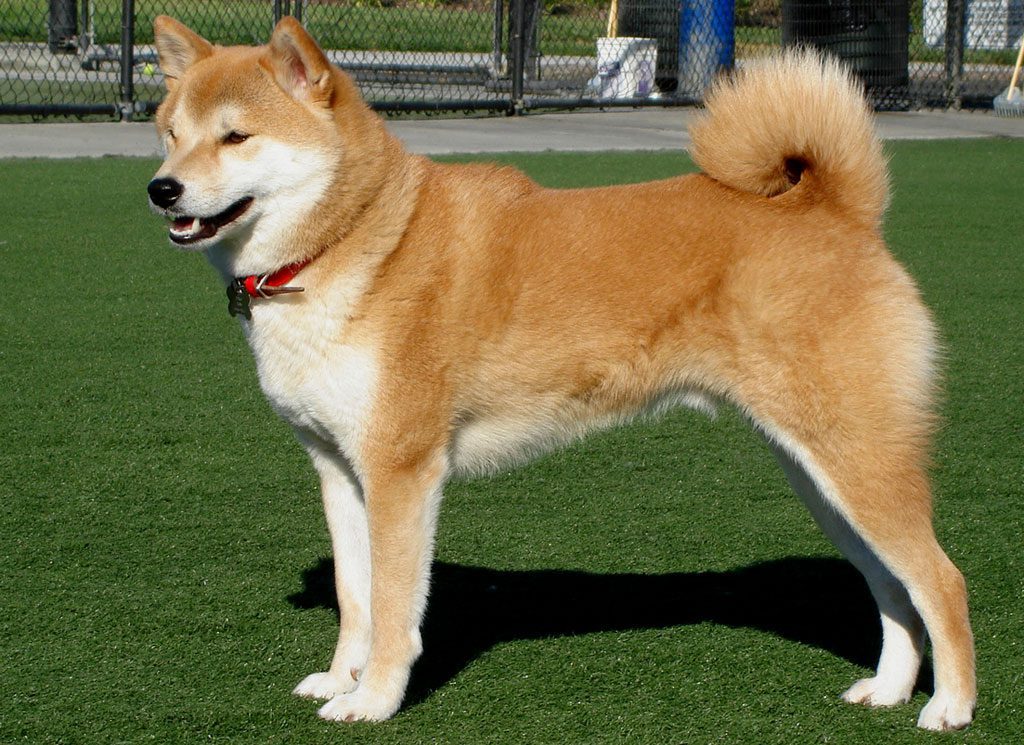
    Shiba Inu

    The Shiba Inu It is the smallest of the six original and distinct breeds of dog Japan.

    Content

    History

    The Shiba Inu It is an ancient breed of Japanese dog. It is also known as Shiba or Shiba Ken. Shiba means "small" and "Inuยป or ยซKenยป means ยซdogยป in Japanese.

    The Shiba It is the smallest of the six recognized Japanese dog breeds.

    Historical representatives of the breed were much smaller and short-legged than current specimens. Mountain farmers kept them as farm dogs and to hunt small game and birds.. They could develop independently of other races and changed little. Towards the end of the 19th century the British brought their English Setters and Pointer. As a result, the Shiba Purebred became a rarity within a few decades. Almost a hundred years ago the breed was almost extinct. Around the year 1928 early breeders began to revive the breed and in 1934 established an official standard. Internationally, the FCI tells it in the Group 5 ยซSpitz-type and primitive type dogsยป in Section 5 "Asian Spitz and related breeds".

    Physical Characteristics Shiba Inu

    Translated ยซShiba Inuยป simply means ยซlittle dogยป. In fact, the Shiba Inu, weighing up to 13 kg, is the smallest representative of the six breeds of Japanese dogs recognized by the FCI.

    The Shiba Inu is an original dog and a close relative of the wolf. Its appearance is reminiscent of a fox, especially with reddish specimens. Triangular standing ears stand out, the small slightly triangular eyes, as well as the curly tail, which is very close to the back. The hard and straight top coat can have the colors red, black tan, Sesame, as well as black or red sesame. "Sesame" in Japanese dogs means a mixture of red and black hairs. All colors must have the so-called ยซUrajiroยซ. They are whitish hairs on the muzzle, the chest, cheeks, as well as in the lower part of the body and inside the extremities.

    Shiba Inu character and skills

    The Shiba Inu is a perceptive and independent dog that never fully submits. In general, is lively, entrepreneur, affectionate and brave. He doesn't like to share his "properties" like baskets, food or toys with other dogs. But, with good socialization, living with other pets is possible. Relatively little thief, but can communicate with other sounds in complex ways. He is reserved and very reserved with strangers. You have a strong will and can convince your caregiver of your qualities. With his strong self-confidence you will have to compete with him at first, what can be a big challenge. But, the dog remains calm and collected and is never aggressive. If you acquire some authority, the Shiba is an affectionate and faithful four-legged companion.

    Shiba Inu puppy education

    The Shiba Inu he is a demanding dog that is difficult for beginners to understand. You need an owner who can cope with your complex and stubborn character. He never gives up his independence and needs a consistent and loving education. Punishment is not appropriate for sensitive dogs, because they are not only sensitive but also resentful. Even for experienced dog owners, stubborn dog can be a challenge. So, it will be a while before he accepts you as a higher ranking dog. For essential socialization, it is recommended to attend a dog school.

    Activities with the Shiba Inu

    Depending on how you are, the Shiba Inu can be very agile. Likes to decide for himself when he feels like moving, but he needs his daily walks. Depending on your character, some representatives of the breed are suitable for dog sports. If they make sense of it, Japanese dogs can be convinced of agility. Dogs can also be great companions when jogging or cycling. The strong hunting instinct coupled with the dog's stubbornness allows it to run freely without a leash only in rare cases. Preferred activities vary greatly from dog to dog. The owner's motivation to convince the dog of the benefits of an activity is also decisive. Silly recovery games or tricks are not very attractive to these serious dogs. This intelligent breed wants to understand the meaning of a task.

    Shiba Inu health and care

    The Shiba he is a robust and easy-care dog. But, you should brush their fur regularly. Loses its dense undercoat twice a year during coat change. If you don't want to fight with large amounts of hair at this time, you should regularly brush the dog to remove loose hair. Overall Shiba it is a clean and odorless dog, who is said to be clean as a cat.

    With regard to health, the breed is one of the most robust breeds, but you should avoid great efforts in hot weather. Dogs feel more comfortable in the cold and snow. When it comes to nutrition, you should opt for a high-protein, high-meat diet.

    Does the Shiba Inu suit me?

    If you are looking for a demanding dog with a strong charisma, the Shiba Inu It will make you happy. It is a very clean dog, whose fur has little inherent odor. In general, the Asian dog breed is suitable for self-confident people who want to deal seriously and intensively with their dog. Beginners should refrain from buying this dog, despite his beautiful appearance. If you are sure of the breed, it is better to look for a breeder that belongs to an approved club. For a purebred puppy with papers you can calculate between 800 and 1500 EUR. Representatives of this breed are occasionally found in the shelter looking for a new home..

    Shiba Inu curiosities

    in his native country, Japan, the Shiba It is not only a "National Natural Monument", but together with the Akita Inu is the most popular companion dog. Due to its unique appearance, these dogs are also very popular in social media today. The Shiba most popular is probably the male Maru Taro (@marutaro) from the Japanese city of Nezu with more than 2,5 million subscribers on Instagram. Among Internet friends since 2013, the call Doge Meme has become particularly well known. It consists of a photo of a Shiba and a rudimentary text in English. The most used photo shows the male Kabosu, a dog adopted by the kindergarten teacher Atsuko Sato.

    Breeders list "Shiba Inu"

    REGISTER KENNEL

    Creators of Shiba Inu

    Offer your puppies for free. Sign up here.

    • This field is a validation field and should be left unchanged.
    • Enter an image of your kennel.


    Characteristics "Shiba Inu"

    Coexistence is important that you have with your new friend. Before considering the acquisition of a dog of the breed "Shiba Inu" you know certain factors. Not all breeds of dogs are apt to live in an apartment, you must take into account his character, their need for exercise, their interaction with other pets, their care and if you have small children, their level of tolerance towards them.

    Training ?

    2,0 of 5 stars (based on 1 review)

    Suitability of the apartment ?

    3,0 of 5 stars (based on 1 review)

    Can be alone all day ?

    3,0 of 5 stars (based on 1 review)

    Suitable as a first dog ?

    1,0 of 5 stars (based on 1 review)

    Weight gain ?

    3,0 of 5 stars (based on 1 review)

    Health ?

    4,0 of 5 stars (based on 1 review)

    Intelligence ?

    4,0 of 5 stars (based on 1 review)

    Kindness with child ?

    3,0 of 5 stars (based on 1 review)

    Tendency to bite ?

    3,0 of 5 stars (based on 1 review)

    Tendency to bark ?

    3,0 of 5 stars (based on 1 review)

    Tendency to flee ?

    5,0 of 5 stars (based on 1 review)

    hair loss strength ?

    4,0 of 5 stars (based on 1 review)

    Suitable as a guard dog ?

    5,0 of 5 stars (based on 1 review)

    Joy ?

    3,0 of 5 stars (based on 1 review)

    Cat friendliness ?

    2,0 of 5 stars (based on 1 review)

    Power level ?

    4,0 of 5 stars (based on 1 review)

    Shiba Inu pictures

    Videos of Shiba Inu

    Type and recognitions:

    • FCI CLASSIFICATION:
    • Group :
    • Section : . .

    Federations:

    • FCI – Group 5: Spitz-type dogs and primitive type – Section 5: Asian Spitz and related breeds. โ“˜
    • AKCNon-sporting โ“˜
    • ANKCGroup 6 (Utility) โ“˜
    • CKCGroup 6 – Non-Sporting โ“˜
    • โ€‹KCUtility โ“˜
    • NZKCUtility โ“˜
    • UKCNorthern Breeds โ“˜

    FCI breed standard "Shiba Inu"

    Origin:
    Japan

    Date of publication of the valid original standard:
    30.10.2016.

    Use:

    Hunting dog for birds and small animals. Companion dog.


    General appearance:

    It is a small dog, well balanced, of good bones, with well developed muscles. Of strong Constitution. Quick, agile and beautiful.

    important proportions: The relationship between the height at the withers and the length of the body is 10:11.


    Behavior / temperament:

    It is a dog of loyal temperament, keenly felt and very lively.

    Head:

    ---

    Cranial region:

    Wide forehead.

    • Fronto-nasal depression (Stop): Defined, with a slight groove.

    facial region:

    • Truffle: Preferably black. Straight nose cane.
    • Snout: Moderately thick; thins to the tip.
    • Lips: Closed.
    • Jaws / Teeth: Strong teeth; scissor bite.
    • Cheeks: Well developed.

    Eyes: Relatively small, triangular and dark brown; the corner of the eyes turned up.

    Ears: Relatively small, triangular, slightly bent forward and firmly erect.

    Neck:

    Thick, strong and well balanced with head and body.

    Body:

    • Back: Straight and steady.
    • Pork loin: Broad and muscular.
    • Breast : Deep, ribs moderately arched.
    • Belly: Well collected.

    Tail:

    High implementation, thick and carried vigorously coiled or curved like a sickle; the tip of the tail almost reaches the hocks when hanging down.

    Tips

    Former members: Seen from the front, straight forelimbs.

    • Shoulder pads: Moderately oblique.
    • Elbows: They must be well attached to the body.

    Later members:

    • Thigh: Long.
    • Legs: Short, but well developed.
    • Hocks: Thick and strong.

    Pies: Fingers should be close together and well arched. The pads must be strong and elastic. Strong and desirably dark colored nails.

    Movement:

    The movement must be light and agile.

    Mantle

    Fur: The outer layer should be smooth-haired, with a hard texture, the undercoat should be of fine and abundant hair; the hair on the tail should be slightly long and kept parted.

    Color: Red, Black with fire, sesame, sesame black, red sesame.

    Sesam color definition:

    ยท Sesame: Proportionate mix of black and white hairs.
    ยท Sesame negro: More black hairs than white.
    ยท Sesam brook: Coat color red, mixed with black hairs.

    All above mentioned colors, except for the White, They must have ยซ URAJIRO ยป.

    URAJIRO: Whitish hair on the sides of the muzzle and on the cheeks, under the jaw, neck and abdomen, under the tail, and on the inside of the legs.


    Size and weight:

    Height to the cross:

    • Males: 40 cm..
    • females: 37 cm..

    A difference of more or less is tolerated 1,5 cm..


    Fouls:

    Any deviation from the aforementioned criteria is considered a fault and its seriousness is considered to the degree of the deviation to the standard and its consequences on health and
    the welfare of the dog.

    ยท Female males / male female.
    ยท Defective occlusion (upper or lower prognathism).
    ยท Absence of a large number of teeth.
    ยท Shyness.

    disqualifying fouls:

    ยท Aggressiveness or extreme shyness.
    ยท Any dog โ€‹โ€‹showing clear signs of physical or behavioral abnormalities should be disqualified.
    ยท Ears not erect.
    ยท Hanging or short tail.


    N.B.:

    ยท Males must have two normal-appearing testicles completely descended into the scrotum.
    ยท Only functionally and clinically healthy dogs, with the typical conformation of the breed, should be used for parenting.

    Source: F.C.I - International Cynological Federation

    Alternative names:

    1. Japanese Shiba Inu, Japanese Small Size Dog, Japanese Brushwood Dog, Japanese Turf Dog, Shiba Ken (English).
    2. shiba inu (French).
    3. Shiba-ken, Shiba Inu (German).
    4. Shiba (Portuguese).
    5. Japanese Shiba Inu, Japanese Small Size Dog, Shiba Ken (espaรฑol).