โ–ท The world of Pets: Dogs, cats, birds, reptiles, amphibians

Korea Jindo Dog
Corea del Sur FCI 334 . Asian Spitz and related breeds
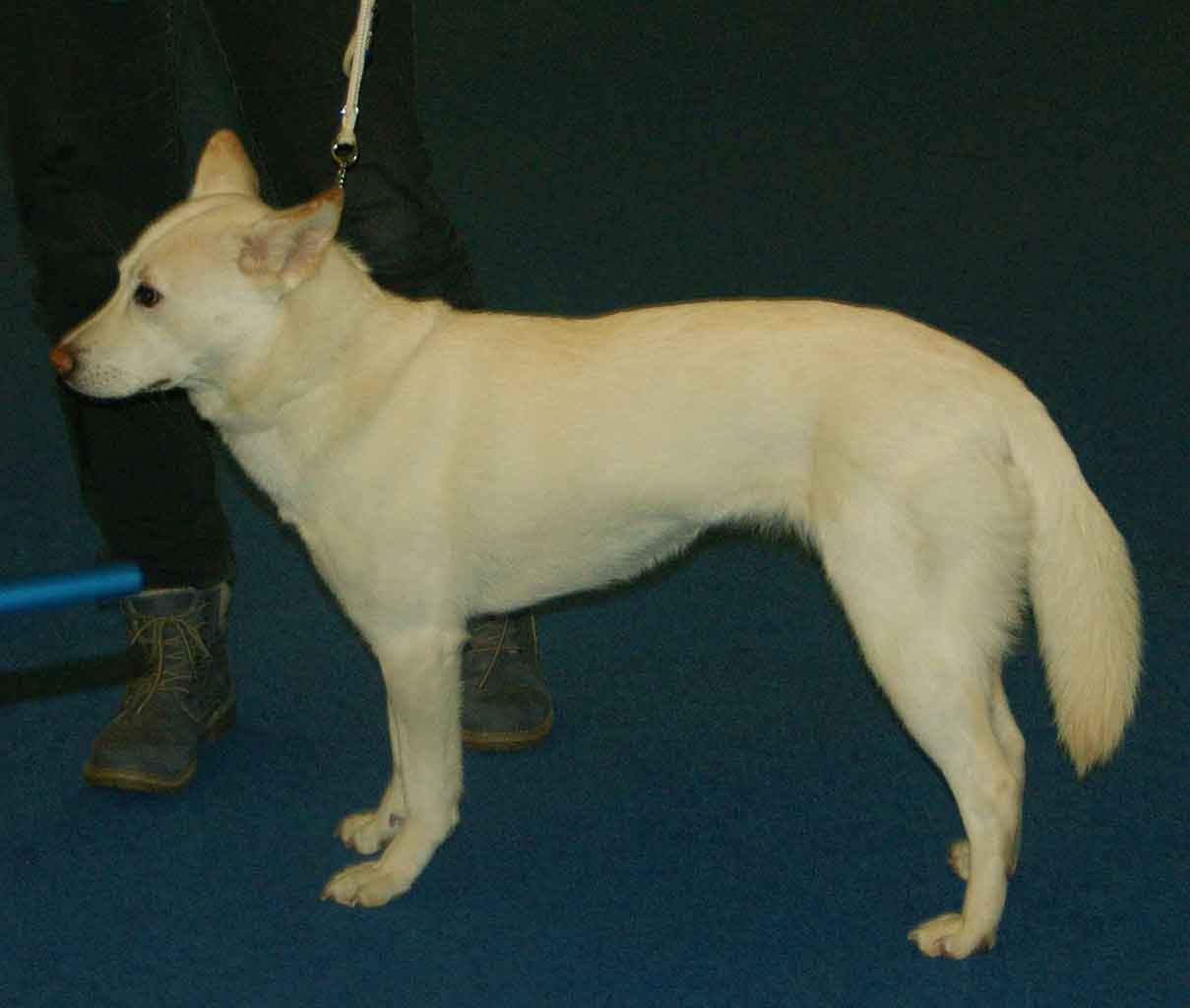
The Korea Jindo Dog It is the classic single master dog.

Korean Jindo

Content

Characteristics "Korea Jindo Dog"

Coexistence is important that you have with your new friend. Before considering the acquisition of a dog of the breed "Korea Jindo Dog" you know certain factors. Not all breeds of dogs are apt to live in an apartment, you must take into account his character, their need for exercise, their interaction with other pets, their care and if you have small children, their level of tolerance towards them.

Training ?

2,0 of 5 stars (based on 1 review)

Suitability of the apartment ?

2,0 of 5 stars (based on 1 review)

Can be alone all day ?

1,0 of 5 stars (based on 1 review)

Suitable as a first dog ?

1,0 of 5 stars (based on 1 review)

Weight gain ?

3,0 of 5 stars (based on 1 review)

Health ?

4,0 of 5 stars (based on 1 review)

Intelligence ?

4,0 of 5 stars (based on 1 review)

Kindness with child ?

3,0 of 5 stars (based on 1 review)

Tendency to bite ?

3,0 of 5 stars (based on 1 review)

Tendency to bark ?

4,0 of 5 stars (based on 1 review)

Tendency to flee ?

5,0 of 5 stars (based on 1 review)

hair loss strength ?

4,0 of 5 stars (based on 1 review)

Suitable as a guard dog ?

5,0 of 5 stars (based on 1 review)

Joy ?

4,0 of 5 stars (based on 1 review)

Cat friendliness ?

2,0 of 5 stars (based on 1 review)

Power level ?

4,0 of 5 stars (based on 1 review)

History

Korea Jindo Dog

The exact origins of this dog breed are lost in the dark of history.. With a probability that borders on certainty, it can be assumed that the breed is actually of Korean origin, more precisely from the island of Jindo in southwestern Korea. Due to the isolated geographic location, this type of dog was only found here. Finally, an export ban on the breed was imposed, which is still valid today.

In his homeland., the Korea Jindo Dog is under the protection of nature and species. In 1938 the breed was declared the national animal of Korea. But, some quadrupeds have crossed the borders: In the Decade of 1980, local people smuggled specimens into the US. In 2003 took place in Great Britain the first official exhibition of a Korea Jindo Dog outside asia. In the USA., the Korean Association of Jindo of America" โ€‹โ€‹is now working to preserve this breed.

Physical characteristics

This four-legged Korean friend is one of the best in Asia. With a weight of about 14 to 21 kilograms and a height of 34 to 47 cm to the cross, the Korea Jindo Dog belongs to medium-sized dogs. Carries its tail curled or sickle-shaped on its back. The relatively small, upright ears are also typical of the point..

While in Korean standardized breeding only white and red coat colors are recognized, depending on the frame organization the following other coat colors are allowed: kitsch, black and tan, grey, black and Brindle.

Character and skills

The Korea Jindo Dog shows the corresponding original features. It is considered to be independent, territorial and has a strong hunting instinct, what can make living with other pets impossible, but it doesn't have to be that way with good socialization.

The breed is not easily disturbed and is characterized by great loyalty to its keeper.

It is reserved with strangers: When used as a watchdog, the Korea Jindo Dog indicate in a way the defense of your home your home. Many representatives of the breed do not accept food from strangers. These dogs are playful and intelligent, sometimes even "too smart", because they can learn to open doors, for example.

When looking for a Jindo, always look for responsible breeders – unfortunately there are also alleged breeders who have bred the Jindo for backyard dogfighting or otherwise have disproportionately promoted the aggressive side of this dog.

Education of the โ€œKorean Jindo Dogโ€

Consistent and clear communication, as well as some experience with dogs are necessary for the education of a Korea Jindo Dog. The docile dog is not only characterized by its intelligence, but also for its primitive behavior and great independence, that you must direct in a controlled way.

As the leader of the pack it is your task to make it clear to him that you know for sure and with confidence where to go.. The Korea Jindo Dog quickly use uncertainties and exceptions to take the helm himself. But, never confuse strong and confident leadership with toughness, as this could destabilize the Korea Jindo Dog and not just destroy educational successes, but also lastingly disturb the bond between you and your partner.

A dog school is a recommended opportunity to introduce the Korea Jindo Dog to other dogs of the same species and to further socialize them.

Health of the โ€œKorean Jindo Dogโ€

Robust Spitz

It is considered that Korea Jindo Dog it is a robust breed of dog, that he hardly has a predisposition to genetic diseases. Healthy animals can reach an average age of 13 years. The most important health precautions are already taken before birth, thanks to the experience of experienced breeders, that minimize the risk of disease by selecting suitable parent animals, including appropriate preventive exams. Accumulation of the autoimmune disease discoid lupus erythematosus has occasionally been reported (DLE). This skin disease is usually treated for life.

It also, there are some cases of hypothyroidism, what is the lack of thyroid hormone supply to the body. In the Korea Jindo Dog this disease is usually manifested through aggression or apathy and changes in the coat. Otherwise, The same as us, two legged friends, sufficient exercise and healthy nutrition are other important pillars of health. Increased risk of food intolerance in some Jindos can also be counteracted with a balanced diet.

Nutrition of the โ€œKorean Jindo Dogโ€

A high-quality, grain-free, meaty diet is, fortunately, not just appropriate for the species, but also tasty. Both are important criteria, since it is considered that the Korea Jindo Dog is relatively selective. It is best to accustom him to several varieties of the same quality from the age of the puppy. This way you won't find yourself in a situation where, due to prescription changes or delivery issues, suddenly there is no more pet food and you have no alternative. It also, you can usually change different known foods of the same quality without your dog having digestive problems.

Regarding the amount of daily feeding, manufacturers' information can only give approximate values. If you notice that your Jindo is gaining too much weight, adjust your diet accordingly. You should also include treats in your daily ration. It's best to stick to healthy treats, like dental care snacks or dog treats that are 100% meat. Sugar has no place in reward food or snacks. With dry chews such as special dog bones or cow's ears, which are much less greasy than pig's ears, you can satisfy your friend's chewing needs from your Korea Jindo Dog.

Make sure he always has enough water around him to quench his thirst at any time.

Care of the โ€œKorean Jindo Dogโ€

The coat of this breed consists of a soft undercoat, depending on the season, and a hard coat. Especially during the coat change twice a year, the Korea Jindo Dog lose a lot of hair. You can limit hair loss on the floor accordingly, combing daily. Outside of coat change time, a weekly hairstyle is enough. At this time you can also check their ears and eyes for dirt and if they need to be cleaned with special ear and eye cleaners for dogs..

The dirt on the coat is better to let it dry and then comb it out. A bath is not normally necessary, but it may be a good idea to gently accustom the Korea Jindo Dog, to a bathroom when he's still a puppy, so it can be cleaned every few months. Be sure to use a mild dog shampoo to avoid damaging the dog's own skin.. Take a regular look at the claws, especially with older dogs. If they are too long, shorten them with claw scissors. This will prevent your dog from getting painfully stuck with them and possibly injuring himself.

Activities with the โ€œKorean Jindo Dogโ€

give to you Korea Jindo Dog plenty of room to run, also as a jogging partner, but always on a leash. Also for free rescue and search dog work not suitable due to strong hunting instinct. Some Jindos like to learn tricks and play with various toys with great pleasure., that are available in stores. By the way, the Korea Jindo Dog normally stays away from water, so the common splash in the lake should not be included in the list of possible destinations. Many Korea Jindo Dog they even avoid small streams or puddles, refuse to cross a bridge or do not want to go outside in the rain. To enjoy travel without restrictions, should show the young dog that the water on the trail is not a cause for concern and casually, and possibly supported with treats, get used to the unwanted item. Don't force your Jindo to jump into a pond or something similar – will probably never turn into a water rat.

Before Buying a โ€œKorean Jindo Dogโ€

Few dog lovers in Europe are likely to ask this question, since the Korea Jindo Dog It's very weird. It also, you must be a nature lover and have a house or apartment at ground level in the countryside, because this four-legged friend must have a fenced-in property at his disposal, who can monitor. The fence must be generously planned, because the breed has a clear talent for jumping. So, The minimum height of a fence should be 1,80 m. But still keep an eye on your four-legged friend: Many young Jindo, if you have been alone for too long, the urge to discover has taken hold of him: The cunning dogs have quickly learned that a path can be prepared by digging even under fences.

In any case, the intelligence of Jindo can be too much for quite comfortable dog owners who are supposed to keep you physically and mentally busy. This active and above average dog will take up a lot of time on your trips together, because you need to go out, what should normally be done on a leash due to his hunting instinct.
Can be well kept in a family, also with children. Sociable four-legged friend doesn't like to be alone, so he must either be left alone for a very short time or you keep him together with another dog. In Korea it is common for dogs to live outside the house.

The breed is excellent as a guard dog and often recognizes family acquaintances and friends from a distance. You can also befriend the postman if you make it clear that you are one of the "good guys.".

Where can I find a โ€œKorean Jindo Dog?โ€?ยป

In Europe it is not easy to find a Korea Jindo Dog; for example, in Germany not a single litter has been registered in recent years and there are no active breeders. Here it is necessary to investigate to find the nearest breeder. Of course, some breeders also export from abroad, for example from the United States, but this is time consuming and should only be considered for absolute connoisseurs and lovers of the breed. But, might be worth taking a look at asian races Shiba Inu and Akita, which are much more common in Europe and have some similarities to the Korea Jindo Dog. When adopting a puppy from abroad, please consider the relevant entry requirements and especially the necessary vaccinations.

If you are looking for a Korea Jindo Dog adult, you must be on a real winning streak to find one in Europe. It is true that dog owners sometimes underestimate the time and knowledge required for education and harmonious coexistence with a Korea Jindo Dog and, therefore, they give up their four-legged friend. But, this is extremely rare in Europe due to the very small number of Korea Jindo Dog.

Images "Korea Jindo Dog"

Photos:

1 – Korea Jindo Dog by https://pixabay.com/es/photos/perro-feliz-sol-perro-feliz-1792601/
2 – Korea Jindo Dog by https://pixabay.com/es/photos/progreso-perro-jindo-coreano-perro-1138824/
3 – Korea Jindo Dog by https://pixabay.com/es/photos/cachorro-perro-el-progreso-del-perro-1874281/
4 – A male Korea Jindo Dog. Colour: red by Canarian / CC BY-SA
5 – Korea Jindo Dog by https://flic.kr/p/dYtSF9
6 – A male Korea Jindo Dog. Colour: red. by Canarian / CC BY-SA

Videos "Korea Jindo Dog"

HTTPS://youtube.com/watch?v=KFZg8QknBB8
Korean Jindo – TOP 10 Interesting Facts
HTTPS://youtube.com/watch?v=GvesVZwyuCc
Jindo or Chindo Dog – Breed of dog

Type and recognitions:

  • FCI CLASSIFICATION:
  • Group :
  • Section : . .

Federations:

  • FCI – Group 5: Spitz-type dogs and primitive type – Section 5: Asian Spitz and related breeds. โ“˜

FCI breed standard "Korea Jindo Dog"

Origin:
South Korea

Date of publication of the valid original standard:
13.07.2005

Use:

Without working trial.


General appearance:

The Korea Jindo Dog is a medium-sized dog, well proportioned, used for hunting and as a guard. Its pricked ears and coiled or sickle-shaped tail give it a vivid expression of agility., Fortress, vigilance and dignity.

IMPORTANT PROPORTIONS : Relationship between the height of the cross : body length = 10:10,5.


Behavior / temperament:

The Korea Jindo Dog has a very strong hunting instinct.; In addition to being bold, bravo, alert and careful, not allowed to tempt easily and is hot-headed. First and foremost, is extremely faithful to its owner. It is reserved with strangers. In general, is not affectionate with other animals, especially if male. It also has a good sense of orientation. It is a dog of a single owner; He quickly agree to a new owner but it never forgets its ties with the previous owner who raised him since that was puppy. Stays clean and eat little.

Head:

In general, The head forms an obtuse triangle when viewed from above and should not make the dog appear clumsy or clumsy..

Cranial region:

The skull is medium in size in proportion to the body.. The top is slightly rounded, and gradually thins to the eyes. The width between the ears is moderate in relation to the size of the head.

  • Stop : Well defined, but not too abrupt. It has a slight furrow that extends to the forehead.

facial region:

  • Nose : black. In case of white dogs, flesh colored nose is allowed.
  • Snout : The muzzle should not be bulging or raised.
  • Lips : Blacks; well closed, They are thin and not pendulous; the upper lip slightly covers the lower lip.
  • Bite / Teeth : Very strong, scissor bite.
  • Cheeks : Well developed, thin and moderately round when viewed from the front or side; narrowing to the tip of the nose.
  • Eyes : dark brown color, somewhat small in proportion to head size, almond-shaped and very expressive. The outer corners of both eyes are slanted towards the ears.
  • Ears : Medium-sized, form triangular, thick and perfectly erect; insertion ears neither high nor low, directed slightly forward in line with the back of the neck. The presence of fine, dense hair on the inside of the ears is desirable..

Neck:

Something balanced and thick, without jowl, strong, with good musculature. The Korea Jindo Dog wears its neck proudly and arched well when excited..

Body:

  • Back : Strong and straight.
  • Pork loin : With good muscles, stiff, thin and narrower than the rib cage.
  • Breast : Strong and moderately deep, but not too wide. The deepest point of the chest reaches just above the elbow, but it is also acceptable for it to reach elbow level. Well arched ribs. Fairly developed chest.
  • Belly : Withdrawn.

Tail:

When it hangs up, the tip of the tail should reach the tibiotarsal joint. Rather tall insertion root; is straight and firm and should not sway when the dog moves. Whether sickle-shaped or rolled, the tip of the tail touches the back or flank. It should not be too twisted. The tail has abundant feathers.

Tips

PREVIOUS MEMBERS : Seen from the front, they are straight and parallel.

  • Shoulder : Strong and powerful and well inclined.
  • Elbows : Glued to the body, no outward or inward deviation.
  • Metacarpus : Slightly bent forward, when viewed from the side.
  • Pies : Cat feet. Rather short fingers, rounded, compact and firm. Strong nails, preferably black. Thick, well-cushioned ear pads.

LATER MEMBERS : Viewed from the side, They are moderately angled; seen from the back, they are straight, parallel and not too far apart or too close to each other. Dewclaws must be removed except in countries where their excision is prohibited..

  • Thighs : well developed.
  • Legs : Moderately angled.
  • Tibio-tarsal and metatarsal joints : Placed very low; they are not straight but moderately angled.
  • Hind feet : Identical to the previous ones.

Movement:

The movement of the Korea Jindo Dog is powerful and firm. The back should remain firm and level, and the hind limbs should not oscillate. When jogging, keep your head high, but as the speed increases, the head is carried low, almost at shoulder level. The upper part of the tail moves slightly according to the change of direction the dog makes..

Mantle

HAIR : The Korea Jindo Dog has a double coat of hair. The inner layer is smooth, dense, pale, But enough to sustain the outer layer. The outer layer is stiff and somewhat separated from the body. Compared with the hair covering the body, the hair of the head, members and ears is shorter, and neck, cross, back and trunk is longer. The hair of the tail and rear of the thighs is longer than the rest of the body.

COLOR : The colors of the Korea Jindo Dog are reddish bay, white, black, black and tan, wolf gray and brindle.


Size and weight:

Height to withers :

  • Males : 50-55 cm., ideal 53-54 cm..
  • females : 45-50 cm., ideal 48-49 cm..

WEIGHT :

  • Males : 18-23 kg.
  • females : 15-19 kg.


Fouls:

Any deviation from the aforementioned criteria is considered a fault and the severity of it is considered to the extent of the deviation from the standard and its consequences on the health and well-being of the dog..

โ€ข Insufficient musculature.
โ€ข Bones that are too thick or thin.
โ€ข Pincer bite.
โ€ข Ears not erect.
โ€ข Hanging tail, short tail.
โ€ข Exaggerated angulations.
โ€ข Straight tibio-tarsal joints, cow or barrel.
โ€ข Long or short hair.
โ€ข Irregular step, stiff step.

MISS PLAYOFFS :

โ€ข Aggressive or fearful dog.
โ€ข Size too big or too small.
โ€ข Prognathism or enognathism.
โ€ข Female-looking male, female with masculine appearance.
โ€ข Lack of more than 3 teeth.
โ€ข Lack of pigmentation, albinism.
Any dog โ€‹โ€‹showing clear physical or behavioral abnormalities should be disqualified..


N.B.:

Males should have two normal-appearing testicles fully descended into the scrotum..

Source: F.C.I - International Cynological Federation

Alternative names:

1. Jindo, Chindo, Jindo Gae, JindoGae (English).
2. spitz corรฉen de Jindo (French).
3. Jindot-gae, KOREANISCHER JINDO (German).
4. Jindo (Portuguese).
5. Perro de Chindo, Jindo, Yindo (espaรฑol).

โ–ท The world of Pets: Dogs, cats, birds, reptiles, amphibians

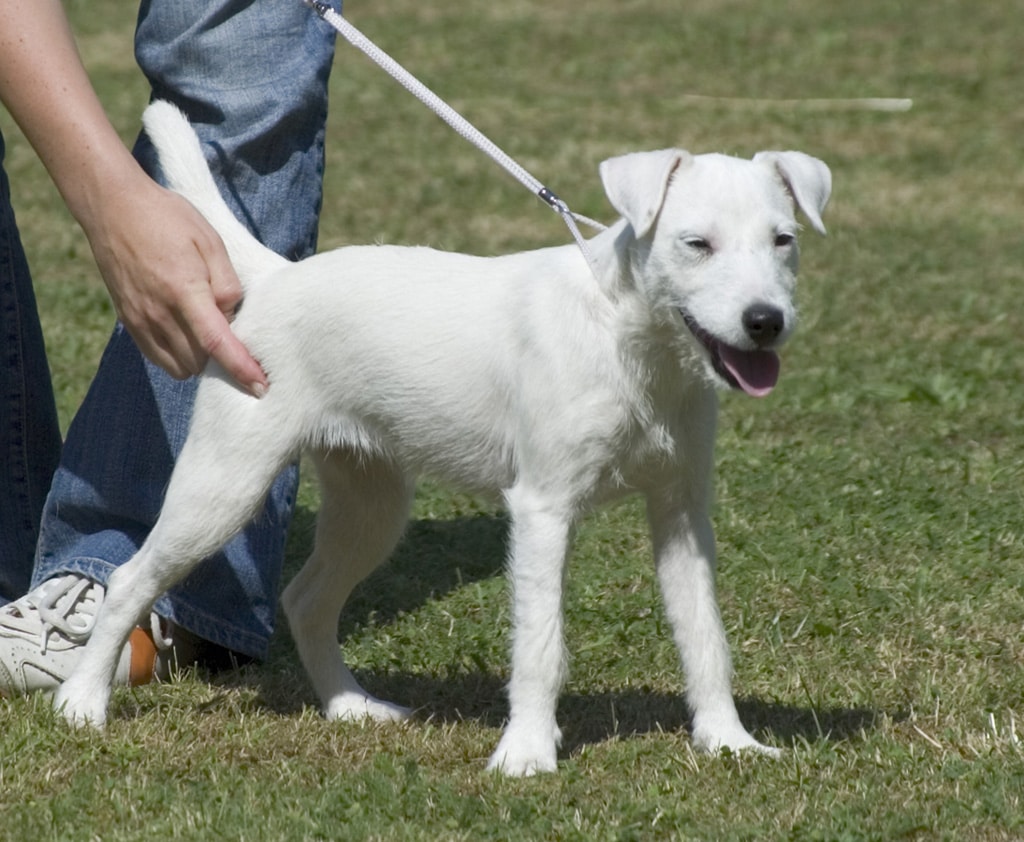
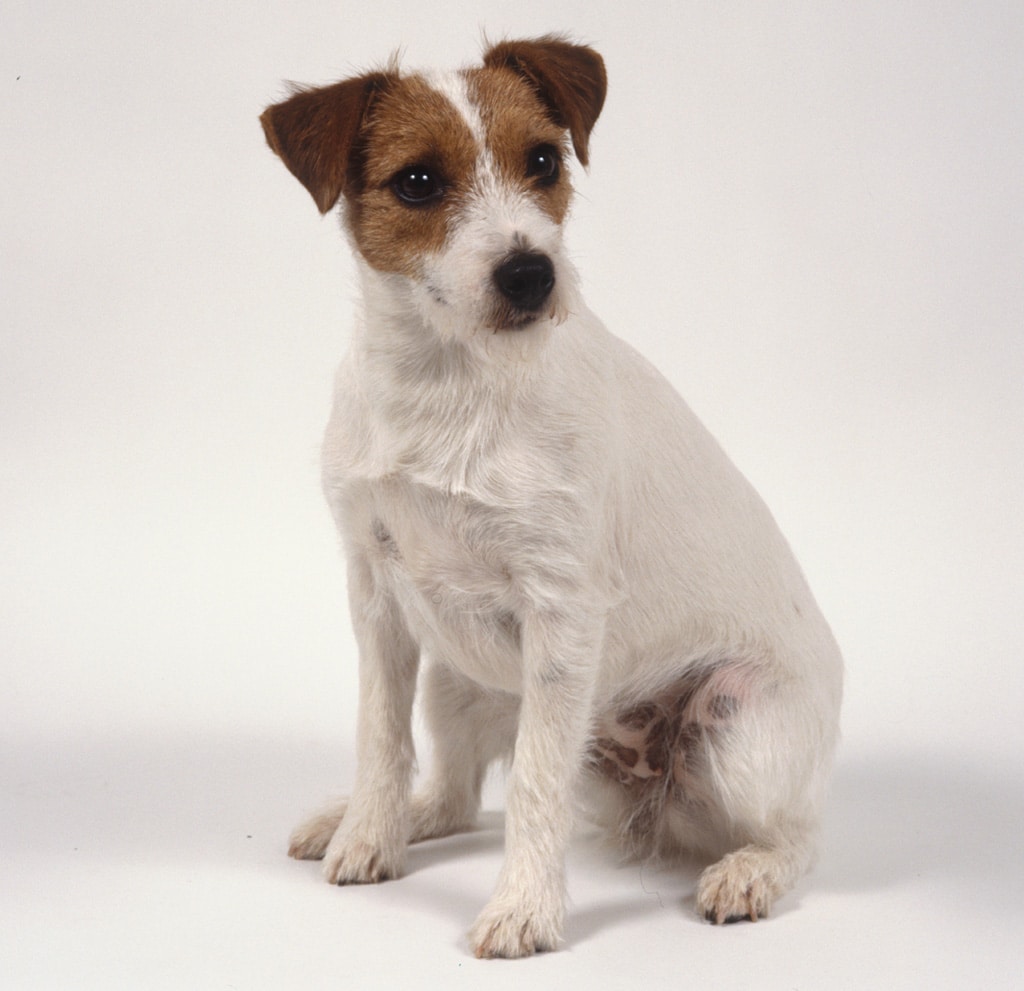
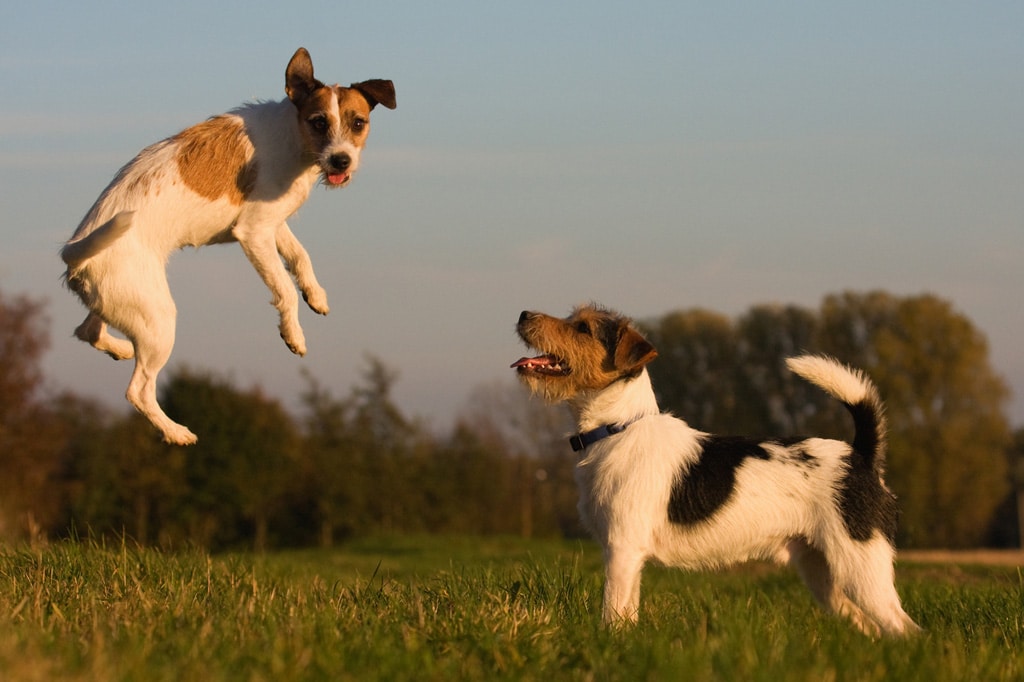
Parson Russell Terrier
Inglaterra Estados Unidos FCI 339 . Large and medium sized Terriers
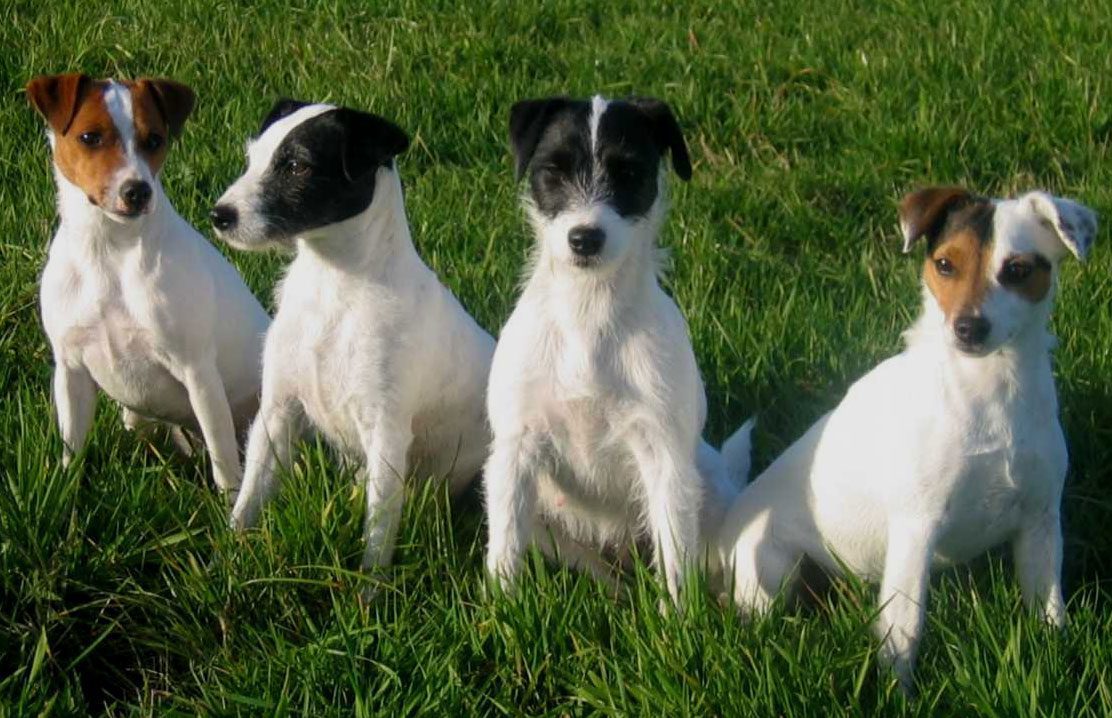
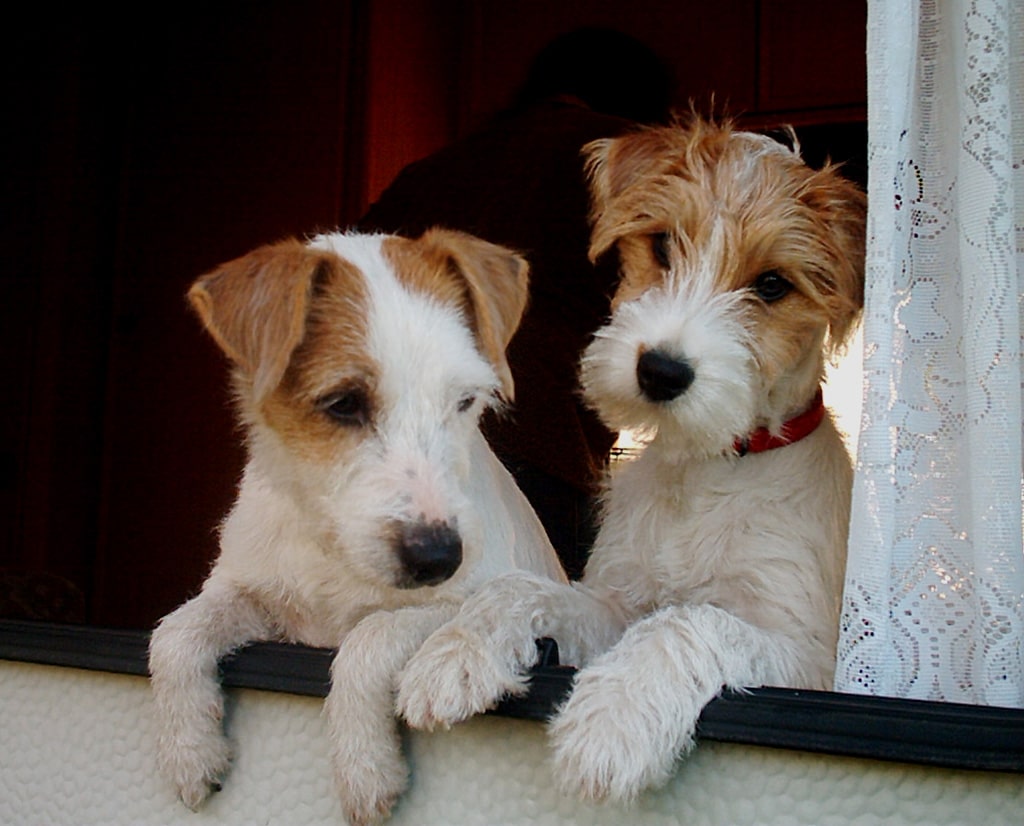
Parson Russell Terrier

The Parson Russell Terrier is a fearless dog, very happy, energetic and friendly.

Content

History

The Parson Russell Terrier it is a small to medium sized terrier. It's a hunting dog.

Although this breed of dog is very young in modern dog breeding, the Parson Russell Terrier is very close to the old and classic type of a terrier in character and appearance. Terriers form a large group within dogs. Its name is derived from the Latin ยซTerraยป for the earth. So they were dogs for work on the land. The first evidence is given by the ancient Romans. Already in the Middle Ages terriers are described in detail. His homeland is in the British Isles. Terriers existed throughout the country. In the stables they kept small vermin at bay. Even the big rats were not a problem for them. The hens, pigeons and rabbits protected them from martens and foxes. To keep chasing foxes, the terriers were sent to the trench.

The Parson Russell Terrier of today are made exactly for this purpose. They should and could get the fox out of the hole. At the same time, they had to run with the fox hunts in the pack, that is to say, they had to be able to follow the gallop of the hunt. All of these tasks require enthusiastic commitment, special courage, independent thinking and the so-called sharpness of predators.

The Parson Russell Terrier turned into a versatile hunting dog, it's not only suitable for underground work. In the 19th century the English shepherd Jack Russell he was a successful hunter, rider and above all breeder of Fox Terriers. In his long life as a breeder he greatly increased the performance of the Fox Terrier. They were now fit for all individual hunting tasks, they could work in the pack and in the den at the same time.

In Australia, only with the help of their dogs could a plague of foxes be contained. To thank this, these dogs were finally named after their breeder, the Parson ยซJack Russellยป Terrier. They were and are physically and mentally raised for work, no show dogs. So breeders and lovers of this terrier for a long time refused to join the system of modern pedigree dog breeding., because they did not want to see dogs evaluated primarily on their appearance and feared the negative consequences of the show business on the fitness and health of dogs. This has done this breed of dog very well..

Seriously raised, these are dogs that were largely spared from hereditary diseases and extremes in breeding. He "Jack Russell Terrierยป had a wide range of sizes from the beginning, rather short-legged and rather tall. Since performance was decisive, such refinements had no role. Now two breeds of dog have been made from the ยซJack Russell Terrierยป and the two lines have separated in breeding. The little one is still called Jack Russell Terrier, It has a height at the withers of up to 30 cm and is provided a little longer. The Parson it is a little taller and with more legs and in its rather square shape. Parish is another word for "pastor" in English.. So two breeds of dog are named after one person, el pastor Jack Russell. Both dogs are a credit to the Shepherd. In 2001 the new race Parson Russell Terrier was officially recognized.

Physical characteristics

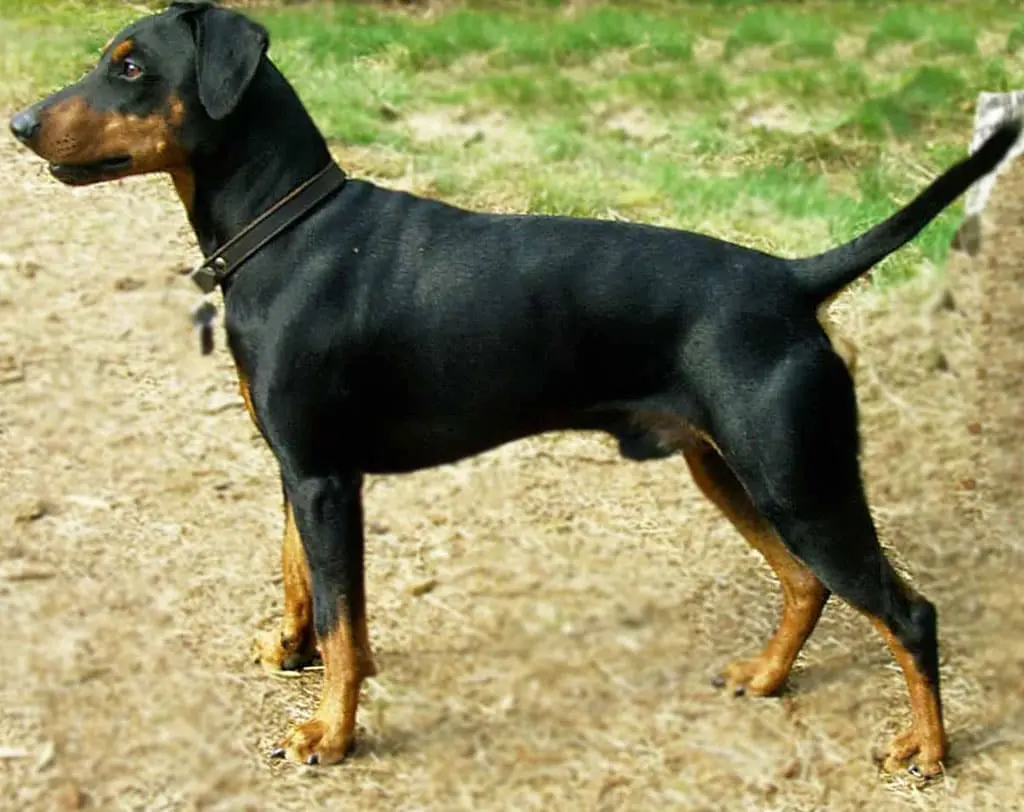
The Parson Russell Terrier It is suitable for the working dog, Active, agile, built for speed and endurance. It gives the impression of balance and flexibility as a whole.

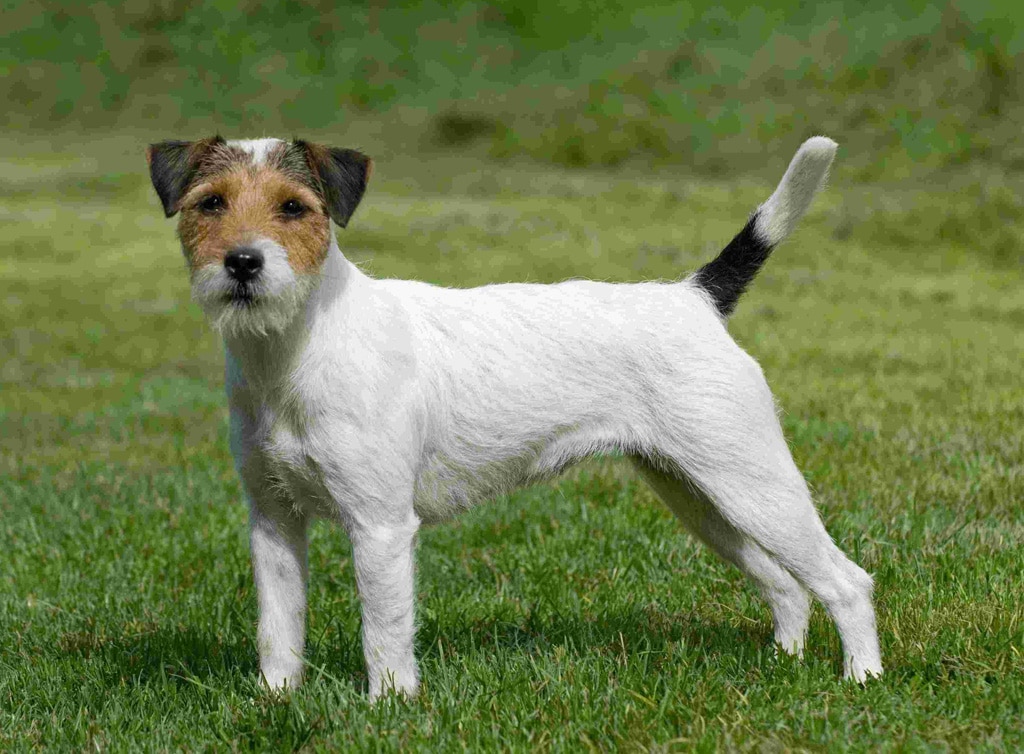
You can have hair smooth or hard if it is thick and dense to protect it from the inclement weather, like cold and damp. Its color It can be entirely white or predominantly white with brown spots, lemon or black or any combination of these colors, preferably stains should be limited to the head or the birth of the tail.

It measures to the cross between 33 and 36 cm., their weight approximate is of 8 to 10 kilos to be slightly larger in proportions that the version of the Jack Russell Terrier, although it should be noted that taller specimens exist as "Jack Russell" in some work clubs in the United Kingdom and the United States., due to what these clubs do not form part of the FCI and therefore, handle different to the recognized standard registers and accepted worldwide by the 84 member countries.

Character and skills

Parson Russell a fearless and friendly Terrier.

This breed was bred to hunt, Chase and corner foxes in its burrow, therefore, they carry in their genes, and if this activity does not form part of the life of your puppy, We recommend that, they should be exercised daily intensely since they are dogs with a huge dose of contained energy.

Perhaps its character lively and friendly has caused it to be one of the dog breeds preferred by many people as a pet.

But in reality it is a true working dog and we should not forget that if a specimen of... becomes part of our family..

Leave running, ride a bike, launch frisbee or ball - and teach him to bring them back-, It will help to strengthen the bond between the Parson and his owner while it educates, enjoys and is exercised.

Images ยซParson Russell Terrierยป

Videos ยซParson Russell Terrierยป

Type and recognitions:

  • FCI CLASSIFICATION:
  • Group :
  • Section : . .

Federations:

  • FCI – Terriers 1 Large and medium-sized terriers. โ“˜
  • AKC – Terriers โ“˜
  • ANKC – Terriers (utility dogs) โ“˜
  • CKC – Terriers โ“˜
  • โ€‹KC – Terriers โ“˜
  • NZKC – Terriers โ“˜
  • UKC – Terriers โ“˜

FCI breed standard "Parson Russell Terrier"

Origin:
United States, United Kingdom

Date of publication of the valid original standard:
22.08.2017.

Use:

Working terrier with the ability to work underground.


General appearance:

Efficient, active and agile, without exaggerations. Built for strength and power with an overall appearance of balance and flexibility. Honorable scars are allowed.

IMPORTANT PROPORTIONS: Well balanced. The total length from the tip of the shoulders to the tip of the ischium slightly greater than the height at the withers to the floor. The length from the nose to the stop is somewhat shorter than from the stop to the occipital protuberance.


Behavior / temperament:

Originally a terrier bred to work with the fox. A confident dog, energetic and cheerful who has the ability and conformation to work on the ground. Bold and friendly.

Head:

Wedge shaped.

Cranial region:
  • Skull: Plano, moderately wide gradually tapering to the eyes.
  • Depression links (Stop): Bit strong.

facial region:

  • Truffle: black.
  • Jaws / Teeth: Powerful and well muscled jaws. Good sized teeth with a perfect, regular and complete scissor bite. I.e., The upper incisors cover the lower incisors in close contact and are set squarely in relation to the jaws..
  • Cheeks: Not prominent.

Eyes: dark, almond shape, never prominent. Lively and intelligent expression.

Ears: Size in proportion to the head. In the shape of a โ€œVโ€ falling forward. The tips of the ears should reach the level of the outer corner of the eyes. The fold should not be above the level of the skull. Canopy of moderate thickness.

Neck:

Cleansed, muscle, good length, gradually widening and well placed on the shoulders.

Body:

  • Back: Strong, straight and flexible.
  • Pork loin: Strong and slightly arched.
  • Breast : Moderately lowered, without extending beyond the elbows. Behind the shoulders should encompass the palm of an average hand. Ribs worn well back, not too arched or too flat.

Tail:

Previously the custom was to amputate the tail.
  • amputee: Long complementing the body but maintaining a good grip. Strong, straight, moderately high insertion, very tall in movement.
  • Without amputating: Moderately long and as straight as possible, giving a good balance to the dog, thick at the base tapering towards the tip. Moderately high insertion, very tall in movement.


Tips

PREVIOUS MEMBERS:

  • ApGeneral arience: Moderate width between forelimbs, well placed under the body.
  • Hormbros: Wide and sloping, well defined on the cross.
  • Brazo: As long as the shoulders and with such angulation that the extremities are placed well under the body, below the tip of the cross.
  • Antarm: Strong and straight without leaning in or out. Arm length should be slightly greater than body depth.
  • Elbows: Glued to the body working freely on the sides.
  • Metacarpus: Strong and flexible.
  • Pinis previous: Compact with firm pads, moderately arched fingers, never flat open, without leaning in or out.

LATER MEMBERS:

  • ApGeneral arience: Strong, muscle with good angulations.
  • Knee: Good angulation without exaggeration.
  • PinScheme: Well developed.
  • Ahock joint: Low placement.
  • Metatarsals: Parallels, giving a lot of propulsion.
  • Hind feet: Like the previous ones.

Movement:

Libre, movement covering the surface, without exaggeration. The steps must be of good length, never forced or high steps. Posterior provides a strong push. Well coordinated, right movement back and forth.

Mantle

SKIN: It should be thick and loose.

MANTLE

  • Fur: Rough, broken the naturally rough smooth, straight, smooth, tight and bushy with good undercoat. Weather resistant. Abdomen and lower line covered with hair. The prepared cloak (Trimming) it must seem natural, never cut.
  • Color: White or predominantly white with fire markings, lemon or black or any combination of these colors. The color is preferably limited to the head and / or base of the tail but slight marks are accepted on the body.


Size and weight:

Height to the cross:

  • Ideal in males: 36 cm.
  • Ideal in females: 33 cm.

It is more important to maintain correctness and balance taking into account that this terrier, bred to work with the fox, behind the shoulders should encompass the palm of an average hand.


Fouls:

Any deviation from the aforementioned criteria is considered a fault and its severity is considered to the degree of deviation from the standard and its consequences on the health and well-being of the dog and the dog's ability to perform its traditional task..

FALTAS DESCALIFICANTES:

  • Aggressiveness or extreme shyness.
  • Any dog โ€‹โ€‹showing clear signs of physical or behavioral abnormalities must be disqualified..


N.B.:
  • Males should have two normal-appearing testicles fully descended into the scrotum..
  • Only functionally and clinically healthy dogs, with the typical conformation of the breed, should be used for parenting.

TRANSLATION: Brรญgida Nestler / Original version: IN.

Technical supervision: Miguel Angel Martinez.

Source: F.C.I - International Cynological Federation

Alternative names:

1. Parson, Parson Jack Russell Terrier (English).
2. Parson Russell terrier (French).
3. Parson (German).
4. Parson (Portuguese).
5. Parson, Parson Jack Russell (espaรฑol).

โ–ท The world of Pets: Dogs, cats, birds, reptiles, amphibians

Bosnian and Herzegovinian - Croatian Shepherd Dog
Bosnia & Herzegovina CroaciaFCI 355 . Molossoid . Mountain

Pastor de Bosnia-Herzegovina y Croacia

The Bosnian and Herzegovinian - Croatian Shepherd Dog It is a very sensitive and quiet dog.

Content

History

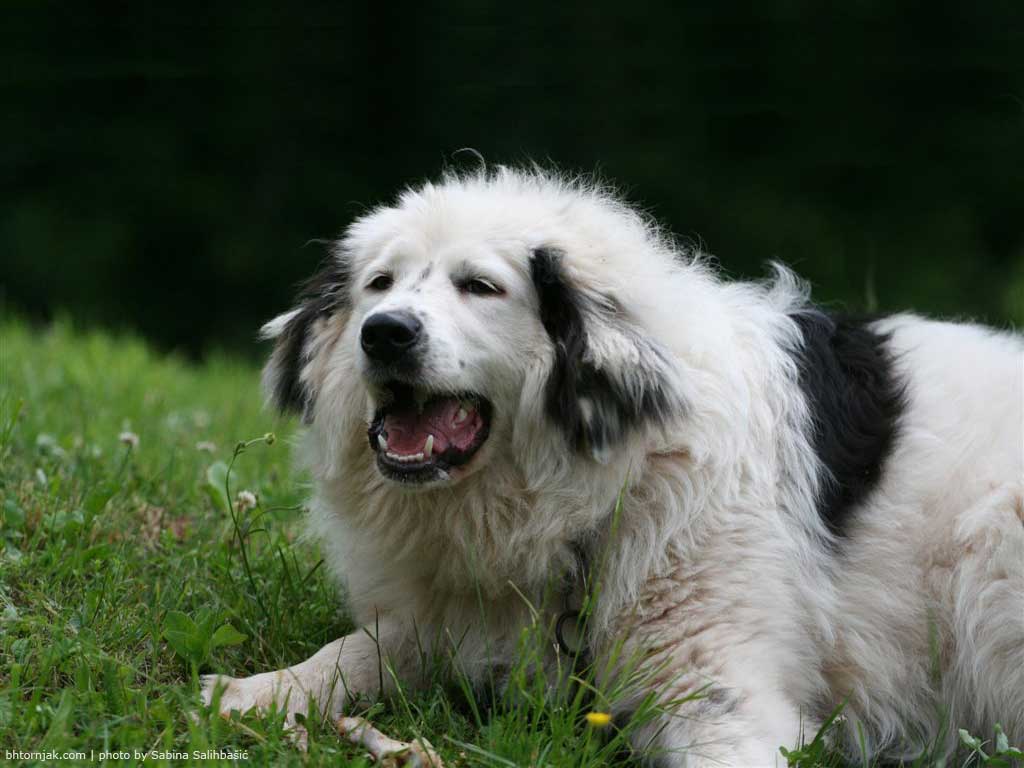
The Bosnian and Herzegovinian - Croatian Shepherd Dog, also called Tornjak, it is an ancient breed of dog, and its exact origin is lost in the meanders of history. Most specialists agree that it is one of the descendants of the Tibetan Mastiff (Do-Khy), that arrived in Europe several thousand years ago.

Some accounts suggest that it already existed in the Dinaric Alps (in present-day Bosnia) at the time of the Roman Empire, almost ago 2000 years. But, the first descriptions of a dog corresponding to the Bosnian and Herzegovinian - Croatian Shepherd Dog can be found in documents of the Bosnian Catholic Church dating from 1067.

Three centuries later, in 1374, Petar Horvat, then bishop of Dakovo, Croatia, He also described a dog that resembled the Bosnian and Herzegovinian - Croatian Shepherd Dog in all aspects, size, color and function. At that time it was called Canis Montanis ("mountain dog") and I was already working with the shepherds, leading flocks of sheep in the mountain pastures and, above all, protecting them from the attacks of wolves.

The name Tornjak first appeared in 1752 in the writings of Father Petar Lukic, member of the Dakovo Catholic Church. It is said to derive from the Croatian word ยซTorยป, which could be translated as "flock of sheep".

This dog was found mainly in present-day Bosnian territory, and to a lesser extent in Croatia. The first scientific references to it date back to the beginning of the 20th century., and more precisely to 1905, when Austrian dog fan Franz Laska accurately identified a mountain dog seen in Bosnia, call Tornjak by the locals. But, the Tornjak remained confined to the mountains for a long time. It even declined sharply in the following decades as lifestyles changed and grazing decreased.. Its population grew from several thousand in the nineteenth century to just under a hundred in the decades of 1960 and 1970, when a few Croatian and Bosnian enthusiasts conducted a census to preserve the breed.

If most of the identified specimens then came from Bosnia, it was in Croatia that a breeding program was established in the late 80. In 1979, in Zagreb (Croatia), the Yugoslavia Canine Association officially recognized the breed, and in 1982 the first litter with a complete pedigree was born as a result of this breeding program. Despite this almost rebirth, the Tornjak he was not at the end of his problems, since the explosion of Yugoslavia in 1991 and the civil war that followed caused him many difficulties.

The new Croatian Canine Association decided to identify a breed Tornjak croata, while his counterpart in Bosnia-Herzegovina spoke of the Tornjak bosnio. Although these dogs were in all respects the same, the fact that they were considered two separate breeds prevented them from breeding with each other, for example.

Was not up 2003 that the two organizations unified their standards under the name of Tornjak. In 2007, the Fรฉdรฉration Cynologique Internationale (FCI) provisionally recognized the Tornjak, that took the name of Bosnian and Herzegovinian - Croatian Shepherd Dog. At that moment, there was 1800 specimens recorded in Croatia, and 2700 in Bosnia.

After this recognition, the breed timidly began to make a name for itself outside the countries of the former Yugoslavia. El American United Kennel Club (UKC) accepted it in 2011, while the American Kennel Club (AKC), the other reference organization in the country, included it in 2012 in his Foundation Stock Service (FSS), a preliminary step before full recognition, what has not yet been produced to date. The first specimens arrived in Great Britain in 2013, and steps were taken to gain recognition from the prestigious and influential Kennel Club (KC), the reference body of the country. They haven't been successful yet. in Canada, the Canadian Kennel Club (KC) does not recognize the Bosnian and Herzegovinian - Croatian Shepherd Dog. But, year 2017 marked its final acceptance by the CFI.

Very popular in his home region, the Bosnian and Herzegovinian - Croatian Shepherd Dog struggles to win over audiences beyond his native region. It is extremely rare in North America, and it is not very common in Western Europe either. In France, He came in 2010. At the end of this decade, there were an average of fifty registrations per year in the Livre des Origines Franรงais (LOF).

Physical characteristics

Great and powerful, the Tornjaks retain above-average agility and flexibility for a mountain dog.

They have an almost square shape, with strong bones that are not heavy, giving them a harmonious overall appearance. The tail is long, very mobile and bushy. When falling to rest, rises well above the level of the back when in action, which is uncommon in mountain dogs. Legs are powerful, parallel and raised.

The head is elongated, with a slight stop. The muzzle is rectangular and ends in a dark nose with wide nostrils.. The eyes are also dark and almond-shaped. The ears, triangular and hairy, stand tall and fall along the cheeks.

The undercoat is dense and thick, with a woolly texture in winter. The stiff top coat is long all over the body, except on the face and front of the legs. It is particularly abundant on the neck, forming a mane that protects it from predator bites.

The Bosnian and Herzegovinian - Croatian Shepherd Dog and the Croatian Sheepdog are the ones that most often have a particular color, although there are white subjects, with only a few small spots of color. White is the most common background color, with markings of various colors: black, brown, cervato… More rarely, some individuals have a black coat stained with white.

Last, sexual dimorphism is well marked in this breed: the female is not only smaller on average by about 5 cm., but also less massive.

Character and skills

The Tornjak he is surprisingly outgoing and caring for a shepherd who has worked for centuries in the mountains. He likes to spend time with his family, and is willing to play with older and smaller animals. In fact, he is a dog that adores children, and can spend hours entertaining them – The opposite also is true. But, due to its size and power, could easily inadvertently push a small child, so it is better if you are already a certain age, especially since then he is more likely to learn to behave with an animal and to respect it. In any case, a young child should never be left alone with a dog, regardless of race.

His attachment to the family he grew up with also means he can hardly get used to life in a new home if life's perils mean he has to change owners.. You are likely to have the greatest difficulty recovering from abandonment.

In addition to their great closeness to their caregivers, the Bosnian and Herzegovinian - Croatian Shepherd Dog he's also surprisingly personable with strangers. It barks when they approach and perfectly fulfills its guardian mission, but do not hesitate to go greet them and accept some caresses once their carer has validated their arrival.

But, it would be a mistake to forget that their main function is to protect their flock. Under his cheerful and friendly airs, hides boundless courage and amazing strength. However, is not aggressive and is content to bark when a threat approaches. But if the threat becomes clearer and your family is in danger, does not hesitate to force its non-aggressive nature and take action; few things can stop it. It also, a malicious person would have no chance to persuade and corrupt him with sweets and caresses, because he is infallibly loyal.

His sociability is also expressed against his peers, to the point that you can generally share your home perfectly with one or more dogs. It also, has no predatory instinct, so it does not see cats or rodents as prey, and therefore is not inclined to chase them. However, the difference in size means that cohabitation can sometimes be dangerous. In practice, if there are small animals in the house, it's better for him Bosnian and Herzegovinian - Croatian Shepherd Dog live outside.

This would not be to displease you. In fact, used to large spaces, not really made for indoor living. You do not need to do a lot of intensive exercises every day, but must be able to move at any time, so it is not at all suited to apartment living, even if his master takes him out for more than an hour a day. Needs a large enclosed garden, where I can patrol, run, to play…

If it can be easily installed outdoors it is because, like any mountain dog, is independent and tolerates loneliness well. It can easily stay at home while its owners are out for the day, and does not suffer from separation anxiety if this absence lasts for a weekend. But, under no circumstances should it be constantly left alone in the garden throughout the day. You need to spend time with your family, and two or three daily walks of at least half an hour each are ideal.

Games and sports activities are also great ways to bond with him., while being physically and mentally stimulated. With an excellent memory that allows you to easily assimilate tricks and commands, has the potential to shine in dog sports like flyball, obedience or agility.

But, you cannot start too early with physically demanding activities. In effect, given its size, when is a puppy, you experience growth spurts during which you need to slow down your burning, or at least avoid any overly intense strain on your joints and skeleton. Otherwise, there is a real risk of injury (sometimes with lifelong sequelae) or malformations.

If you live in a residential area, it is better that the fence that surrounds the garden is solid, to avoid accidents. Similarly, walks in parks and relatively crowded places should always be done on a leash, so you can hold back if you sense a threat. On the other hand, in an environment where encounters are rare (for example, in the mountains), can be free, If and when, of course, has assimilated the withdrawal orders.

Finally, the Bosnian and Herzegovinian - Croatian Shepherd Dog has a serious and powerful bark that can be heard from a distance. Can be heard from a distance, and is also heard when approaching a stranger or when you perceive a suspicious noise. This is reassuring and enjoyable when living in an isolated area., but can quickly cause neighborhood problems in a residential neighborhood.

Education

Like all dogs, the Tornjak should be socialized as soon as you get to your new home. Give you the opportunity to meet all kinds of people, animals and situations during your first months helps you become familiar with the unknown, and to avoid being surprised or even reacting badly as an adult. So, you should not hesitate to take any opportunity to meet the neighbors, friends, dealers, the vet… but also other animals, be it dogs, cats, rodents, horses, cows… You also have to deal with situations that you are not yet used to., especially the ones you will have to deal with regularly afterwards: travel by car, walk around the city, go out in a hectic environment…

It also, given its size, it is advisable to accustom it from an early age to being handled obediently. Brush, bathing or even clipping the claws can turn into moments of complicity with your caregiver, instead of being dreaded tests each time by both protagonists. In any case, trying to groom or bathe a dog 50 kg not accommodated can quickly become an adventure…

Although they have the independent character of herding dogs, to the Bosnian and Herzegovinian - Croatian Shepherd Dog they like to please their owners. It also, as his intelligence and memory are admirable, a caregiver who combines patience and know-how can go a long way in your education, even teaching them many tricks. But, although easier to handle than most mountain breeds, this does not make him a recommended dog for a novice sitter. But, It can be an interesting option for a person with a little experience who wants to face the challenge of a large independent dog..

In any case, traditional training methods should not be used with the Tornjak, as they only reinforce their independent side instead of developing their potential. On the other hand, positive reinforcement, with the help of caresses, treats and stimuli, motivates you to want to learn more and more and allows you beautiful moments of complicity.

The assimilation of memory is of particular importance: given its size, it is better for such a dog to obey the finger and the eye when his handler asks him to stop pulling on the leash or to come back to him. This is the essential condition so that you can enjoy nature with total freedom, without being put on a leash.

On the other hand, protection of the pack is instinctive in the Tornjak: you don't really need any training to play this role perfectly.

Health

The Tornjak it is an extremely robust breed of dog, with a life expectancy much higher than the average of dogs of its size, to the point that some specimens reach the 15 years of age.

The thick, woolly coat of the Tornjak helps protect you from cold and bad weather, as well as the rays of the sun. It is clearly a dog made to live outdoors, who is not afraid of low temperatures as long as he has a place to take refuge. On the other hand, when the mercury rises and the heat wave sets in, it is better to limit your activities and make sure you have the opportunity to rest in a shady place.

Although they are generally healthy, the Bosnian and Herzegovinian - Croatian Shepherd Dog they are not exempt from certain problems, especially those that affect larger dog breeds. They are predisposed to ...:

  • Hip and elbow dysplasia, joint problems whose origins can be hereditary and cause more or less severe locomotor difficulties;
  • gastric dilation-torsion, which often follows too rapid ingestion of large amounts of food, and it's fatal if a vet doesn't intervene quickly;
  • protein intolerance, what can take, among other things, to a deterioration of the coat.
  • Other diseases have been reported occasionally in some subjects, but they are still exceptionally rare. These include anemia or von Willebrand disease, a hereditary condition.

    To limit the risk of having a puppy with a hereditary and / or congenital problem, nothing better than adopting from a breeder Tornjak serious and responsible. In particular, the professional must present an updated health or vaccination record, that allows to verify the vaccines received by the animal, as well as a certificate of good health signed by a veterinarian. But, the professional should also be asked to provide the results of the genetic tests performed to both the parents and the child.

    It also, the floppy ears of Tornjak can quickly become nests of infection if not cleaned weekly.

    It also, how you spend most of your time outdoors, their fur is likely a breeding ground for parasites: even more than most tornjaks, it is imperative to be rigorous in the administration of regular pest control treatments to avoid this type of inconvenience.

    Last, the fact that he is generally in good health does not exempt him from wearing it regularly (at least every year) to a routine check-up at the vet, just to keep it healthy. This not only ensures that you are up to date on your vaccinations, it also allows early detection of any health problems.

    Grooming

    The Tornjak rarely poses problems regarding your health, but its maintenance requires some effort.

    First of all, its thick coat needs to be brushed once or twice a week to avoid knots and remove dirt, and its size means that this task takes some time.

    During their annual molt periods in the spring and fall, a lot of undercoat is shed, and brushing should then become a daily routine to deal with the large amount of dead hair.

    Brushing is also an opportunity to inspect your skin and make sure it is not injured., Court, sore or irritation. Spending most of the time outdoors, he is more exposed to this type of problem than his peers who live in an apartment and only go out for half an hour each day.

    In any case, if grooming is done regularly, can remove a large part of the dirt from their fur, keeping it relatively clean and odorless. So, it is not necessary to bathe your dog often. Unless, of course, got particularly dirty, you can be content with doing it twice a year, at the time of the move. It is necessary to use a mild shampoo designed specifically for dogs every time.

    On the other hand, as with any dog โ€‹โ€‹with floppy ears, special care is required to prevent dirt from building up and causing infection. So, at least once a week, brushing his coat should be followed by cleaning his ears with a clean cloth.

    You should also take the opportunity to check your eyes and clean them, to limit the risk of eye infection, although, unlike ears, are not particularly susceptible to it.

    To end the beauty maintenance session, a teeth cleaning is de rigueur. Itร‚ยดs, in effect, the best way to effectively protect them against dental plaque formation, cavities and other problems at this level. Ideally, it should be done daily.. No matter how often you do it, always use a toothpaste specially designed for dogs.

    It may also be necessary to trim your dog's claws from time to time. Even if your dog lives outdoors, natural wear and tear is not always enough to file its strong claws. If you hear them hitting the ground when you walk, have grown too long and could injure or break: it's time to cut them with a special tool.

    Although all these operations do not require any particular knowledge, it is better to learn to do them correctly, especially to avoid hurting or even injuring your partner. It can be useful the first time to have the help of a veterinarian or a professional groomer to learn the correct gestures to perform.

    Buy a โ€œShepherd from Bosnia-Herzegovina and Croatiaโ€

    The price of a puppy Bosnian and Herzegovinian - Croatian Shepherd Dog is of some 1000 EUR, but it's a mean: the sale price varies according to the prestige of the breeding, the ancestry of the animal, but also and above all its characteristics. On the other hand, there is not a big difference according to sex: males and females are generally priced similarly.

    Having said that, the Bosnian and Herzegovinian - Croatian Shepherd Dog still hard to find outside the countries of the former Yugoslavia. So, it may be wise to turn to a Croatian breeder, Slovenian, Bosnian or Serbian to find the right one. The sale price will not necessarily be much cheaper, but then import costs must be added to the budget, registration and transportation.

    It is possible to find hatcheries in the United States, but it is also still very rare there.

    Characteristics "Bosnian and Herzegovinian - Croatian Shepherd Dog"

    Coexistence is important that you have with your new friend. Before considering the acquisition of a dog of the breed "Bosnian and Herzegovinian - Croatian Shepherd Dog" you know certain factors. Not all breeds of dogs are apt to live in an apartment, you must take into account his character, their need for exercise, their interaction with other pets, their care and if you have small children, their level of tolerance towards them.

    Adaptation โ“˜

    2,0 of 5 stars (based on 1 review)

    friendly dog โ€‹โ€‹โ“˜

    4,0 of 5 stars (based on 1 review)

    hair loss โ“˜

    3,0 of 5 stars (based on 1 review)

    Affection level โ“˜

    5,0 of 5 stars (based on 1 review)

    Need for exercise โ“˜

    3,0 of 5 stars (based on 1 review)

    Social need โ“˜

    3,0 of 5 stars (based on 1 review)

    Home โ“˜

    3,0 of 5 stars (based on 1 review)

    Toilet โ“˜

    3,0 of 5 stars (based on 1 review)

    Friendly with strangers โ“˜

    4,0 of 5 stars (based on 1 review)

    barking โ“˜

    3,0 of 5 stars (based on 1 review)

    Health โ“˜

    2,0 of 5 stars (based on 1 review)

    Territorial โ“˜

    3,0 of 5 stars (based on 1 review)

    Cat friendly โ“˜

    3,0 of 5 stars (based on 1 review)

    Intelligence โ“˜

    3,0 of 5 stars (based on 1 review)

    Versatility โ“˜

    3,0 of 5 stars (based on 1 review)

    Child friendly โ“˜

    4,0 of 5 stars (based on 1 review)

    Surveillance โ“˜

    3,0 of 5 stars (based on 1 review)

    joy โ“˜

    3,0 of 5 stars (based on 1 review)

    Images of the ยซPastor of Bosnia-Herzegovina and Croatiaยป

    Photos:

    1 – ยซPastor of Bosnia-Herzegovina and Croatiaยป by https://commons.wikimedia.org/wiki/File:Bosniantornjak.jpg
    2 – And little Tornjak. Colour: white & black by Canarian, CC BY-SA 4.0, via Wikimedia Commons
    3 – And little Tornjak. Colour: white & brown by Canarian, CC BY-SA 4.0, via Wikimedia Commons
    4 – A Croatian Tornjak (aka Croatian Mountain Dog or Bosnian and Herzegovinian – Croatian Shepherd Dog) female by Canarian, CC BY-SA 3.0, via Wikimedia Commons
    5 – And little Tornjak. Colour: white & black by Canarian, CC BY-SA 4.0, via Wikimedia Commons
    6 – Toro the Tornjak. Photo taken in a dog shelter in Zadar, Croatia by Mirta12, CC BY-SA 3.0, via Wikimedia Commons

    Videos of the ยซPastor of Bosnia-Herzegovina and Croatiaยป

    Type and recognitions:

    • FCI CLASSIFICATION:
    • Group :
    • Section : . .

    Federations:

    • FCI – Pinscher and Schnauzer-Molossoid type dogs – Swiss Mountain Dogs and Cattledogs. Section 2.2 Molossoid, mountain type. โ“˜
    • AKC(FSS) โ“˜

    FCI breed standard "Bosnian and Herzegovinian - Croatian Shepherd Dog"

    Origin:
    Bosnia y Herzegovina, Croatia

    Date of publication of the valid original standard:
    19.11.2007

    Use:

    Herding and protection of livestock and farm pens and guard dog.


    General appearance:

    The Tornjak is a large and powerful dog, well proportioned and agile. The body is almost square in shape. The bone is not light, but it's not heavy or rough anyway. Standing and moving is strong, harmonious and well balanced. The coat is long and thick.

    IMPORTANT PROPORTIONS:
    The body is almost square. The length of the body must not exceed its height by more than one 8 %. The radius between the length of the skull and the muzzle is 1:1.


    Behavior / temperament:

    Of good disposition, friendly, brave, obedient, Intelligent, full of dignity and confidence. Fierce looking after the property entrusted to him, cannot be bribed and is suspicious of strangers. Devoted to his master and very calm in his presence. Very affectionate with the people who live in his environment. Learn quickly and keep this learning in your memory for a long time. Pleasantly performs the tasks assigned to you. It is easy to train.

    Head:

    Elongated. The radius between the skull and the muzzle is 1:1.

    Cranial region:

    The upper lines of the skull and snout are divergent.
    Supra-orbital arches are slightly visible.
    The back of the skull is elongated but moderately wide.
    The area between the supra-orbital arches and the occiput is flat.
    The occipital protrusion is very slight.

    • Nasal frontal depression (stop): Slightly pronounced.

    facial region:

    Nose: Grand, with nostrils wide enough. Must have dark pigmentation. Pigmentation must be in harmony with the color of the coat. Depigmentation is not allowed.
    Snout: Rectangular. The bridge of the nose is perfectly straight.
    Lips: Tight, with dark pigmentation.
    Jaws/teeth :The jaws are very long and strong. Perfect scissor bite, full dentition.
    Eyes: Almond biscuits, attached eyelids, dark color. Dark pigmentation on the edge of the eyelids.
    Ears: Medium-sized, triangular, bent and earrings, high insertion. Carried close to the cheeks. With shorter hair.

    Neck:

    Medium length, powerful, carried slightly low. Well attached skin. With abundant and long hair forming a mane.

    Body:

    Cross: Moderately developed.
    Back: Short, the court, moderately wide and straight.
    Pork loin: The connection between the chest and the rump is short, moderately wide; in females it is a little longer.
    Rump: Long Middle, wide and slightly inclined.
    Breast : Very spacious, deep, wide and oval. Lower chest reaches at least elbows. Never barrel shaped. The chest is strong with the tip of the sternum moderately pronounced.
    bottom line: Well muscled abdomen. The lower line is not retracted but gradually rises from where the sternum ends towards the posterior.

    Tail:

    Long, inserted at a medium height, very mobile. When at rest it is always hanging and in motion it is always above the level of the upper line, this is a characteristic of the breed. With abundant hair and characteristic fringe.

    Tips

    Strong and well angled.

    PREVIOUS MEMBERS:well developed, with strong bone and tight muscles. Parallel and straight when stationary.

    Blades:Long Middle, well leaning back. The scapulo-humeral angle is approximately 120ยบ..
    Humeri:Muscular and strong, almost the same length as the scapulae.
    Elbows:Moderately close to the body.
    forearms:Strong bones and developed, straight muscles.
    Metacarpus:With slight inclination.
    Previous feet:Fingers arched and together. Pigmented nails, desirable dark pigmentation. Elastic pads, hard and compact, dark pigmentation is desired. Front feet are more developed than rear feet.

    LATER MEMBERS:Strong and parallel. Straight when standing with proper angulation. Well angled knees.

    Thighs:Widths, strong, good muscular.
    Warm:With good bodybuilding, strong wide and the same length as the femur.
    Tarsos:Firms. Insertion a little high.
    Metatarsals:Strong. They can have spurs.
    Hind feet:Fingers arched and together. Pigmented nails, dark pigmentation is desirable. Elastic pads, hard and compact, dark pigmentation is desirable.

    Movement:

    The Tornjak is a trotter. The movement is well balanced, stretchy and powerful, harmonious and with great drive. In motion the top line is firm.

    Mantle

    SKIN: The skin is thick, well adhered throughout the body.

    Fur: In general, the Tornjak is a long-haired dog, thick, rustic and straight. It is especially long at the top of the rump; over shoulders and back can be slightly wavy. It is short on the muzzle and face, above the imaginary line that connects the ears, over the ears and on the front of the legs and feet.

    It is especially abundant around the neck (mane), dense and long over the thighs. Forms fringes on the forearms. In well-coated dogs, it is also especially abundant on the back of the metatarsals.. The tail is very bushy with very long hair. The winter undercoat is long, very thick and with a pleasant woolly texture. The hair is thick and dense and should not split in two along the top line.

    Color: As a rule, the Tornjak is of split color with characteristic markings in various solid colors.. Generally the dominant background color is white. There may be dogs with a black coat and white markings that usually appear around the neck, over the head and along the legs. There may also be almost entirely white dogs with only small markings.


    Size and weight:

    Height to the cross:

    Males: 65 โ€“ 70 cm.
    females: 60 โ€“ 65 cm.

    Tolerance+/- 2cm.


    Fouls:

    Any deviation from the aforementioned criteria is considered as a fault and the severity of this is considered to the degree of the deviation to the standard and its consequences on the health and well-being of the dog..

    • Too thin or too heavy bone.
    • Very fine or very coarse head.
    • Missing ears (inclusion, long, hair).
    • Bite in clamp.
    • Absence of 2 p2, 2 p3.
    • Absence of more than 2 p1.
    • Very long back.
    • Curved or saddled top line.
    • Obviously exaggerated dog.
    • Angulations with faults.
    • Elbows in or out.
    • Tail resting on the back.
    • Tail with little hair.
    • Hair with insufficient length.
    • dark mask.
    • Weak feet.

    FALTAS DESCALIFICANTES:

    • Aggressiveness or extreme shyness.
    • Any dog โ€‹โ€‹showing clear signs of physical or behavioral abnormalities must be disqualified..
    • Lack of type (atypical dogs).
    • Sexual type deviation.
    • Anomalies in eye color and shape (wattled eyes, vicious expression, different colored eyes).
    • Entropion, ectropion.
    • Prognathism or enognatismo.
    • Absence of any other tooth than those mentioned as missing.
    • Too short hair.
    • Lack of undercoat.
    • Broken tail.
    • Absence of tail.
    • Solid color dogs.
    • albinism.
    • Atypical distribution of colors on the body.
    • Differences in the limits of the indicated heights (including tolerance).
    • Cosmetic treatment in the dog or evidence of cosmetic or surgical treatments.


    N.B.:
    • Males should have two normal-appearing testicles fully descended into the scrotum..
    • Only functionally and clinically healthy dogs, with the typical conformation of the breed, should be used for parenting.

    Source: F.C.I - International Cynological Federation

    Alternative names:

    1. Tornjak (English).
    2. Tornjak (French).
    3. Tornjak, Bosnien und Herzegowina und Kroatien (German).
    4. Tornjak (Portuguese).
    5. Tornjak (espaรฑol).

    โ–ท The world of Pets: Dogs, cats, birds, reptiles, amphibians

    Central Asian Shepherd Dog
    Rusia FCI 335 - Molossoid . Mountain

    Pastor de Asia Central

    The Central Asian Shepherd Dog It is a cat with dog skin, sensitive and partner.

    Content

    History

    The dog Central Asian Shepherd Dog (ัั€ะตะดะฝะตะฐะทะธะฐั‚ัะบะฐั ะพะฒั‡ะฐั€ะบะฐ or Sredneaziatskaya Ovtcharka, also known as, Volkodav or The Crusher Wolf) is recognized by the FCI, as a breed of molosser dog Russia, where most of the copies.

    Russian cynological clubs agree that this is one of the most popular breeds in the country, on many occasions, considering it the number 1 in the ranking of Russian dog breeds.

    The Central Asian Shepherd Dog It probably originated in a geographical area between the Urals, the Caspian Sea, Asia minor, and the Northwest of the border of China. The Central Asian Shepherd Dog, as well as mixtures with other breeds, yet, can be found in their countries of origin, as Kyrgyzstan, Tajikistan, Turkmenistan, Kazakhstan, Afghanistan, Uzbekistan and neighboring countries.

    Some serve as guardians of livestock, some protect their owners, and some are used for dog fighting, which is a national tradition in many countries of the region. Russian scientists and biologists have studied the local dog population since the 18th century., so far.

    After the Communist revolution, the Soviet Government focused on the working dog breeds for the Red Army, and imported the best representatives of the race to Russia accordance with the requirements of the army and guard dogs. For decades, This practice has harmed the local population. In addition to a large number of casualties, the introduction of new breeds to the region led to crossbreeding. With the time, purebred dogs were only left with some pastors and race enthusiasts, but in other places there was an excess of crosses.

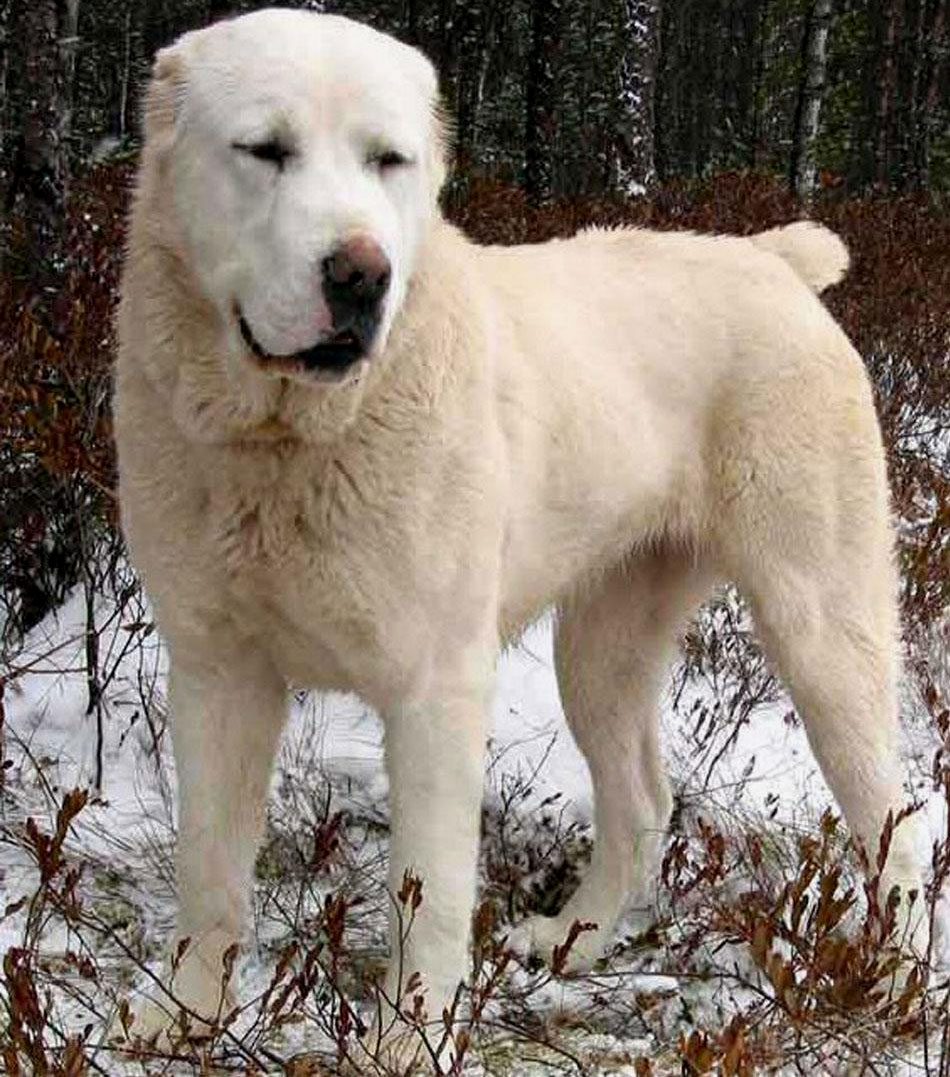
    But, and despite all, today the population of purebred dogs Central Asian Shepherd Dog remains stable, in general, and the reproduction of some true quality dogs that do honor to his capacity for work has been, regardless of country of origin.

    In Europe, the Central Asian Shepherd Dog is relatively unknown, but in the countries of Central Asia it is still used as a working dog and accompanies shepherds on their walks through the steppes.

    Physical characteristics

    This breed has many varieties that differ in the size, the color, head types, and the types of fur. For these reasons it is very difficult to establish an official standard of the breed.

    The Central Asian Shepherd Dog it is a dog of large or medium size, of rough constitution and strong musculature. Its coat is composed of the hard and smooth top layer and the abundant and dense inner layer. The top layer can be short (3 – 5 cm.) or slightly longer (7 – 10 cm.). With a longer top layer forms a distinctive mane around the neck. Due to a well developed undercoat and different lengths of the top coat, dogs adapt well to different weather conditions.

    The coat color of the Central Asian Shepherd Dog it's very diverse: it comes in the colors white, black, grey, red fox, Brown grey, straw yellow, mackerel, spotted and mottled.

    The ears are triangular, low-set and pendulous. The tail is thick at the base and set quite high. The natural tail is long and is carried like a sickle tail. Tail and ear docking is still practiced in the countries of origin.

    Although there are unique characteristics of the purebred breed of dog Central Asian Shepherd Dog, such as being extremely flexible, This is very notable in their joints, have false ribs, the very strong neck and a large Chin.

    Some have a black mask. The head is very solid, the neck is of low insertion, short, with double chin. The body is quite broad and proportionate with very flat muscles.. The ribcage appears very long, because they have their famous false ribs. The legs are straight, typical movement is a gallop.

    He has expressive eyes, almost human, revealing his inimitable intelligence.

    According to the qualities of work required by the owners, the modern Pastor of Central Asia has been raised in different directions, trying to highlight specific skills. Within the traditional area of origin of these canes, the dog fights were always, but they were never so cruel and destructive as the fights of type Pit Bull Terrier.

    Every year the shepherds of the area would gather to organize dog fights Central Asian Shepherd, but unlike the bloody and ruthless fights of which we are used to hearing news, in this case they were fighting for the guardianship of a herd, and the winner was the dog that eventually, it was done with the control of it. It was about 'domination' instead of destroying each other's own kind.

    Dogs rarely hurt each other, minor scratches were caused in most cases. only true leaders, In fact, you measured through a real fight, but that was not the most common. The primary task of these dogs has always been the defence of the flock to the attacks of various predators and venomous snakes.

    The Pastor of Central Asia, It is one of the most powerful group of livestock guardian dogs dogs, after the Caucasian Shepherd Dog, the Kangal, Akbash, for example.

    The height at the cross 60 to 65 cm.. And weigh in 37 to 50 kg.

    Character and skills

    In the news, rural people continue to demand and use the Central Asian Shepherd Dog like cattle watchdog, Although not as well as old.

    These dogs, to varying degrees, are protectors against human intruders, they are very territorial, excellent with children, shall ensure them as if were his flock were. Love and respect for older people are some of its characteristics, to protect all small animals from predators, they are very kind and attached with the members of the family.

    They do not need any complicated training to learn the basic rules of the house but they are quite stubborn and very independent dogs., the Central Asian Shepherd Dog It must be able to work as a team to protect sheep against predators, therefore, If the animal has an overly aggressive character, both other dogs as with people outside the family, they cannot be members of a Pack, and it would not pass the simple test for the fulfillment of the object origin of the race.

    The Central Asian Shepherd Dog can come from build lines which print a very different character: of work, combat, and livestock guardian, and act accordingly, regardless of the country of origin.

    According to the different kennel clubs, the classification within the groups varies, The Russian Kennel Club classifies the Central Asian Shepherd Dog like a working dog, that is reflected in the exceptional results in obedience, protection and training relating to the army.

    Modern reproduction of the main Canine Clubs of Russia requirements, require to register copies of Central Asian Shepherd Dog a mandatory temperament test and an accredited training certificate, Besides show rating. In these tests the ability of the dog stands for fit and adapt to dog guardians shepherds of other flocks, not be cause for conflict between dogs. The FCI classifies Central Asian Shepherd Dog in the group of dogs Molossoid.

    While it is a good dog to live, We must not forget that the Pastor of Central Asia is a livestock protection dog, people and possessions, He was raised to solve single problems, is independent-minded, strong, brave and responsible.

    It is a large but agile dog, sometimes described as a cat with dog skin, for that reason, and taking into account his strong instinct for protection and territoriality, It may not be a recommended breed for a novice owner.

    Sensitive and Intelligent, the Central Asian Shepherd Dog You will respond better to someone who can inspire loyalty in you as well as strong leadership..

    Heavy-handed training will be counterproductive with this breed, but respectful training, reflexive will result in a dedicated and inseparable companion.

    The Central Asian Shepherd Dog he spent a considerable amount of time moving around in his homeland, and this kind of slow but steady exercise is what he likes more.

    With a work to be done and a piece of property to protect, is the highest point of happiness and will always keep an eye on everything that happens.

    Central Asian Shepherd Dog Health

    the breed is still considered very healthy and extremely robust. Owners should not fear the typical diseases of the breed. But, from time to time, like in all big dogs, joint problems occur, especially on the knees.

    Central Asian Shepherd Nutrition

    Although many joint diseases are inherited, symptoms can often be prevented or at least relieved with the help of proper diet and posture. Particularly in the growth phase of dogs, care must be taken that animals do not shoot too fast. Too rapid growth due to excessive protein intake in the growing months is considered one of the most common causes of later joint diseases. In addition to a fairly low protein food, given in small amounts about three or four times a day, young dogs should also be physically preserved during this phase. Stairs or long walks should be avoided..

    Meat as the main component of food

    When the Central Asian Shepherd Dog is fully developed, the protein content of the feed can be increased again. The main component of dog food should be – like in all dogs – high quality meat. It can be cooked or raw or, if industrially produced food mixtures are used, can be dry or wet. Regardless of the feeding method preferred by the respective owner, it is important that the content and composition of the food is adapted to the needs of the dog. According to age, sex, size, activity level and living environment, the composition of the necessary nutrients can vary considerably. There is no correct food for Central Asian Shepherd Dog.

    How much food does he need? Central Asian Shepherd Dog?

    Nor can the question of the amount of food for all dogs of this breed be answered in general. If the composition of the food is correct, the Central Asian Shepherd Dog can cope with surprisingly small portions. So, two meals a day are usually enough for an adult dog, which should be given at fixed times if possible. Portions too large, too many "snacks" between meals and not resting after feeding can increase the risk of stomach torsion.

    Central Asian Shepherd Dog care

    Like nomadic dog, the Central Asian Shepherd Dog it's quite undemanding, this applies not only to the size of your food portions, but also in your care. Short to medium length coat proves to be very resistant and requires little grooming. But, should be brushed regularly to remove dirt and maintain healthy hair structure. The claws should also be trimmed to avoid injury and teeth, ears and eyes should be checked and cleaned regularly.

    Central Asian Shepherd Dog Education

    The purchase of a Central Asian Shepherd Dog must be well considered – although this applies to all breeds of dogs, it is especially true for this breed from Central Asia. It is not a family dog รขโ‚ฌโ€นรขโ‚ฌโ€นin the classical sense nor is it suitable for a city life. This freedom-loving and independent dog finds it difficult to cope with living conditions in European industrial nations.

    Who is this breed suitable for?

    In the hands of livestock keepers and keepers who live in remote and isolated places, this protective dog of the pack is still in the best hands. Also people who live far from the city, own a large lot and wish to have a capable watchdog, can be considered as owners of this Central Asian Shepherd Dog. But, experience and some knowledge in dog training should be prerequisites to keep this breed. It also, an owner needs above all time and patience, because the socialization and education of this self-confident four-legged friend, who doesn't think much about blind obedience, It is hard work. How Central Asian dogs tend to dominate, they need a trainer who constantly sets limits for them and who shows them with the necessary empathy (not to be confused with willingness to compromise) that it is worth trusting and following your human.

    Can a harmonious coexistence succeed?

    The Central Asian Shepherd Dog certainly not a family dog รขโ‚ฌโ€นรขโ‚ฌโ€นin the classical sense, so its maintenance as a pure house and companion dog is absolutely inadvisable. This does not mean that a Owtscharka can't live together with humans. In a family that appreciates its natural instinct for vigilance and protection and gives it its original task of guarding the house, the yard and the cattle, the Central Asian Shepherd Dog is quite adaptable and human-oriented. A basic socialization, that is to say, early contact with other people and animals, is as important to harmonious coexistence as sufficient opportunities for running and consistent parenting.

    Central Asian Shepherd Dog Pictures

    Central Asian Shepherd Dog Videos

    Type and recognitions:

    • FCI CLASSIFICATION:
    • Group :
    • Section : . .

    Federations:

    • FCI – Pinscher and Schnauzer-Molossoid type dogs – Swiss Mountain Dogs and Cattledogs. Section 2.2 Molossoid, mountain type. โ“˜
    • AKC – FSS โ“˜
    • ANKC – Group 6 (utility dogs) โ“˜
    • NZKC – Utility dog โ“˜
    • UKC – Watchdog โ“˜

    FCI breed standard "Central Asian Shepherd Dog"

    Origin:
    Russia

    Date of publication of the valid original standard:
    13.10.2010

    Use:

    Guard and surveillance dog.


    General appearance:

    The Central Asian Shepherd Dog is of a harmonious build and great stature, moderately long (never with a long or short body). Robust and muscular body, bulky but not with visible muscles.

    Clearly defined sexual dimorphism. Males are thicker and more courageous than females with a more pronounced cross and a larger head.. Full maturity is reached at the age of three.

    IMPORTANT PROPORTIONS: The length of the body only slightly exceeds its height at the withers. Increased height is desired but proportional structure must remain. Length of forelimbs to elbows is 50 โ€“ 52% the height at the withers.

    The length of the snout is less than ยฝ the length of the head but more than 1/3.


    Behavior / temperament:

    Self-confidence, silent, balanced, proud and independent. Dogs have great courage and high capacity for work, resistance and a natural instinct for territoriality. Courage in the face of large predators is one of its characteristics

    Head:

    Solid and well balanced with the overall appearance. The shape of the head is rectangular, top and side view.

    Cranial region:
    • Skull: deep. The antecara is flat and the skull area is flat and long. Occiput well defined but hardly visible due to well-developed musculature. Supraorbital arch moderately defined.
    • Depression links (Stop): Moderately defined.

    facial region:

    • Truffle: Grand, well developed but not exceeding the general outline of the muzzle. The color is black but in white and beige dogs the truffle may be somewhat lighter.
    • Snout: The muzzle is blunt and of moderate length., it is rectangular seen from above and the sides tapering slightly towards the nose. The muzzle is bulky, deep and well filled under the eyes. Wide nasal bridge, straight and sometimes slightly sunken. Well developed chin.
    • Lips: Thick. Upper lip tight, covering the bottom when the mouth is closed. Full black pigmentation preferred.
    • Jaws / Teeth: The jaws are strong and wide. Teeth are big, white and next to each other, 42 in total. Incisors positioned aligned. Scissor bite accepted, reverse clip and scissors. Canines positioned well apart. An injury to a tooth that does not affect the use of the bite is of no consequence.
    • Cheeks: Cheek bones are long and well developed, without interfering with the straight rectangular shape of the head.
    • Eyes: Medium size, oval-shaped, placed well apart, looking well ahead. Moderately sunken placement. Eye color from dark brown to hazel. Darker color is preferred. The eyelids are thick and preferably with the lower eyelid not too loose. The third eyelid should not be visible. The edge of the eyelids is preferred fully pigmented. Whatever the hair color, the eyelids must be black. His expression is confident and dignified.
    • Ears: Medium size, Triangular shape, thick, low insert and pendants. Your lower level or slightly below your eyes. Traditionally amputated ears as illustrated on the first page, which is practiced in the country of origin and in countries where it is not prohibited by law.

    Neck:

    Neck is medium length, very strong, oval transversely, well muscled and low set. The dewlap is a characteristic of the breed.

    Body:

    • top line: Well proportioned and well sustained. In the posture you must maintain the typical upper line.
    • Cross: Well defined, especially in males, muscle, long and tall with a well defined transition to the back.
    • Back: Straight, width, good muscular; the length is ยฝ of the length of the withers to the insertion of the tail.
    • Pork loin: Short, width, muscle, slightly arched.
    • Rump: Moderately long, wide, well muscled, slightly inclined towards the tail insert. Height at withers exceeds height above hip in 1 โ€“ 2 cm..
    • Breast : Deep, long, width, well developed, rib cage widening to the posterior. False long rib. Lower chest at elbow level or slightly below. The forechest extends slightly in front of the humerus/scapula joint.
    • Bottom line and belly: Moderately retracted abdomen.

    Tail:

    Thick at the base and somewhat high insertion. The natural tail is carried curved in the shape of a sickle or curved in a loose ring that begins in its last third.. When alert, the tail rises to the level of the back or slightly higher. Traditionally the tail is docked in the illustrated manner which is practiced in the country of origin or in countries where it is not prohibited by law.. Natural glue is valued the same as amputated.

    Tips

    PREVIOUS MEMBERS:

    • General appearance: Right members of strong bones, viewed from the front parallel and not very close to each other. Seen on side, the forearm is straight.
    • Shoulder: Long scapula, well inclined, forming an angle with the forearm of approximately 100ยฐ. Well muscled.
    • Forearm: Oblique, long and strong.
    • Elbows: Tight fitting without turning in or out. Arm: Straight, very strong bone, long, oval transversely.
    • Metacarpus: Moderately long, width, strong, rights.
    • Previous feet: Large, rounded, arched toes, bulky and thick pads; nails can be any color.

    LATER MEMBERS:

    • General appearance: Viewed from behind straight and parallel, placed somewhat more apart than the previous ones.
    • Thigh: Width, moderately long and with strong musculature.
    • Knee: Without turning neither inwards nor outwards. Its angulation is moderate.
    • Leg: Always the same length as the thigh.
    • The Hock joint: Moderately angled.
    • Metatarsals: Very strong and of moderate length, perpendicular. Without spurs.
    • Hind feet: Large, round, arched toes, bulky and thick pads; nails can be any color.

    Movement:

    Well balanced and elastic. Jog with free reach of the forelimbs and strong push from the rear. Top line remains firm during movement. All joints tilt effortlessly. The angulations of the posterior are more defined during the movement than during the stop..

    Mantle

    SKIN: Thick, loose enough to prevent injury during combat against predators.

    • Fur: Abundant, smooth, thick with well-developed inner hair. The hair on the head and on the front of the limbs is short and thick.. The hair on the cross is sometimes longer. Outer hair may be short or slightly longer. Depending on the length of the outer hair there may be shorter hair (3 โ€“ 5 cm.), covering the entire body or longer hair (7-10 cm.) forming a mane on the neck, feathers behind the ears and on the back of the limbs and on the tail.
    • Color: All except genetic blue or genetic brown in any combination and black cloak on fire.


    Size and weight:

    Height to the cross:

    • Males: Minimum 70 cm..
    • females: Minimum 65 cm..

    The largest size is desired but the proportional structure remains.

    Weight:

    • Males: Minimum 50 Kg.
    • females: Minimum 40 Kg


    Fouls:

    Any deviation from the aforementioned criteria is considered as a fault and the severity of this is considered to the degree of the deviation to the standard and its consequences on the health and well-being of the dog..

    • Slight deviation from the typicality of the breed.
    • Females with male type tendencies.
    • Rounded skull, narrow snout, narrow lower jaw, small nose.
    • Oblique eye placement or eyes close together, loose eyelids.
    • High insertion of the ears.
    • Thin or hanging lips.
    • Height above rump. Slightly short rump.
    • Narrow forehead.
    • Exaggerated angulations of the posterior.
    • Open foot and long toes.
    • Hackney movement, slightly unbalanced movement.
    • Too short hair.

    SERIOUS FAULTS:

    • Too nervous.
    • Significant deviations from the type and structure required.
    • Long-limbed appearance, Lightweight bones, soft muscles.
    • Very light eyes or protruding eyes.
    • Top line descended.
    • Croup much higher than the cross.
    • Narrow rump, short and steep.
    • Naturally short tail, broken tail.
    • Very high metacarpus, low.
    • Hindquarters placed too far apart under the body.
    • Height to the cross 2 cm less than the minimum required in the standard.

    FALTAS DESCALIFICANTES:

    • Aggressiveness or extreme shyness.
    • Any dog โ€‹โ€‹showing clear signs of physical or behavioral abnormalities must be disqualified..
    • Shy or overexcited.
    • Male female type.
    • Prognathic or clearly enognathic bite.
    • Different colored eyes, blue or green eyes, bizco.
    • Loose joints.
    • Hair of any combination of genetic brown or genetic blue.
    • Fire color with a black cloak.
    • Cloak the soft or smooth.
    • Unbalanced movement.


    N.B.:

    Males should have two normal-appearing testicles fully descended into the scrotum..

    Only functionally and clinically healthy dogs, with the typical conformation of the breed, should be used for parenting.

    Source: F.C.I - International Cynological Federation

    Alternative names:

    1. Alabai, Central Asian Ovtcharka, CAO Aziat (English).
    2. Chien de berger d’Asie centrale (French).
    3. Zentralasiatischer Owtscharka (German).
    4. Tรผrkmen Alabaรฝ, mastim-da-รกsia-central (Portuguese).
    5. Perro Pastor de Asia Central (espaรฑol).

    โ–ท The world of Pets: Dogs, cats, birds, reptiles, amphibians

    Austrian Pinscher
    Austria FCI 64 . Pinscher and schnauzer type

    Austrian Pinscher 1

    Self-confidence, lively, attentive, playful, especially attached

    Content

    History

    The Austrian Pinscher descends from old Austrian Landpinscher, which was still widespread in the second half of the 19th century as a frugal and versatile farm dog. In 1921 a pure breeding plan was started. Against him german pinscher, seems wider, more robust and more primitive. Emil Hauck became familiar with this type of dog during his travels at the beginning of the 20th century and worked for the recognition of the breed by the ร–KV and the FCI.. The 16 in October of 1928, this breed was recognized as Austrian Shorthaired Pinscher por la ร–KV. In the year 2000 the breed name was changed to Austrian Pinscher.

    But, according to the breeders association, the number of dogs decreased in the decade of 1970 so much so that only one stud dog remained, Diocles of Angers. Starting from this, the breed was preserved using โ€œLandpinschersโ€. The โ€œLandpinschersโ€ are still used in breeding. The โ€œLandpinschersโ€ are dogs that correspond to the Austrian Pinscher in terms of phenotype and are relatively stable in terms of breeding, without being specifically bred as pedigree dogs in the sense of modern dog breeding.

    Physical characteristics

    It is a medium to small size dog. The eyes are large, with the dark iris. The ears are usually "V" shaped., but there are also buttons, semi-straight or straight. Breeders try to set as far as possible a ยซVยป shaped ear that, otherwise, is already the most common. The tail is implanted high, the dog the coiled cam, frequently on the back, and it's short and thick. Can also be shortened.

    • Fur: short, straight and with undercoat. Remember the smooth-haired fox terrier.
    • Color: the most frequent are wheat yellow, brown yellow, leonado, fawn red and black with fiery spots. Almost always with large white spots on the chest, snout, throat, neck, nape, extremities and tip of tail. The specimens with the mottled coat, completely black or white and fire are not desirable.
    • Size: 35 to 50 cm., more frequently in tone to the 40 cm..

    Character and skills

    It is a vigorous little dog, bold, temperamental and very resistant. It is a great surveillance dog; on the other hand, it is not spread as a companion dog, among other things because it is very barking. But, medium-small dogs do not meet the demands of someone who wants a dog for the apartment (always as small as possible), nor those who want a watchdog (preferably medium-large size), and for this reason the spread of the breed is very limited.

    Observations

    He has good hunting attitudes.

    Characteristics "Austrian Pinscher"

    Coexistence is important that you have with your new friend. Before considering the acquisition of a dog of the breed "Austrian Pinscher" you know certain factors. Not all breeds of dogs are apt to live in an apartment, you must take into account his character, their need for exercise, their interaction with other pets, their care and if you have small children, their level of tolerance towards them.

    Adaptation โ“˜

    3,0 of 5 stars (based on 1 review)

    friendly dog โ€‹โ€‹โ“˜

    2,0 of 5 stars (based on 1 review)

    hair loss โ“˜

    5,0 of 5 stars (based on 1 review)

    Affection level โ“˜

    4,0 of 5 stars (based on 1 review)

    Need for exercise โ“˜

    4,0 of 5 stars (based on 1 review)

    Social need โ“˜

    2,0 of 5 stars (based on 1 review)

    Home โ“˜

    3,0 of 5 stars (based on 1 review)

    Toilet โ“˜

    2,0 of 5 stars (based on 1 review)

    Friendly with strangers โ“˜

    2,0 of 5 stars (based on 1 review)

    barking โ“˜

    2,0 of 5 stars (based on 1 review)

    Health โ“˜

    3,0 of 5 stars (based on 1 review)

    Territorial โ“˜

    5,0 of 5 stars (based on 1 review)

    Cat friendly โ“˜

    2,0 of 5 stars (based on 1 review)

    Intelligence โ“˜

    4,0 of 5 stars (based on 1 review)

    Versatility โ“˜

    4,0 of 5 stars (based on 1 review)

    Child friendly โ“˜

    4,0 of 5 stars (based on 1 review)

    Surveillance โ“˜

    4,0 of 5 stars (based on 1 review)

    joy โ“˜

    4,0 of 5 stars (based on 1 review)

    Images "Austrian Pinscher"

    Type and recognitions:

    • FCI CLASSIFICATION:
    • Group :
    • Section : . .

    Federations:

    • FCI – Pinscher and Schanuezer dogs. Molossian type Dogs and Swiss Mountain and Cattle Dogs. . Section 1.1 Pinscher type. โ“˜
    • UKC – Terriers โ“˜

    FCI breed standard Austrian Pinscher

    FCIFCI - Austrian Pinscher
    Pinscher

    Alternative names:

    1. Austrian Shorthaired Pinscher (English).
    2. Oesterreichisher Kurzhaariger Pinscher (French).
    3. ร–sterreichischer Pinscher (German).
    4. ร–sterreichischer Pinscher (Portuguese).
    5. Pinscher austriaco de pelo corto (espaรฑol).

    Photos:

    1 – Pinczer_Austrian at the World Dog Show in Poznaล„ by chained / CC BY-SA
    2 – Austrian Pinscher at the World Dog Show in Poznaล„ by chained / CC BY-SA
    3 – Pinscher austriaco by https://pxhere.com/es/photo/1603530
    4 – Pinscher austriaco by https://pxhere.com/es/photo/1593828
    5 – Austrian Pinscher at the World Dog Show in Poznaล„ by chained / CC BY-SA

    โ–ท The world of Pets: Dogs, cats, birds, reptiles, amphibians

    Castro Laboreiro Dog
    Portugal FCI 170 - Molossoid . Mountain

    Perro de Castro Laboreiro

    The Castro Laboreiro Dog It is an excellent guard dog and companion

    Content

    History

    The Castro Laboreiro Dog (Cรฃo de Castro Laboreiro) It is a breed of Portuguese dog of large size. Originating in the parish of Castro Laboreiro, Melgaรงo, is a dog type Lupoid amastinado is lighter than other breeds of cattle dogs.

    The Castro Laboreiro Dog it has its origin in the region that gave it its name, the people of Castro Laboreiro, in the municipality of Melgaรงo. It is a rugged mountainous region that stretches from the Miรฑo river to the Peneda and Soajo mountains between the Trancoso rivers, Laboreiro and moro, until around 1400 m above sea level.

    Like the dog, Castro Laboreiro is one of the oldest regions of the land of Portugal. The prehistoric remains such as dolmens and rock paintings, They demonstrate the presence of man in the region for thousands of years. The strengths are evidence of the strong presence of Celtic culture in the region. Also the Celts and the Romans came here, the roman roads and the construction of bridges with their landmarks. The castrejas communities have always lived of hunting, fishing, grazing and agriculture.

    Read more

    โ–ท The world of Pets: Dogs, cats, birds, reptiles, amphibians

    German Pinscher
    Alemania FCI 184 . Pinscher and Schnauzer type

    Pinscher Alemรกn

    The German Pinscher is a dog, extremely, active and lively, alert and vigilant.

    Content

    History

    The German Pinscher (from the German pinscher "biter") It is a breed of dog that belongs to the family of Pinscher.

    This race, whose origins date back to the 15th century and which is also related to the Schnauzer, It was originally a dog used by the farmers of Germany to control rodent pests. It is believed that he is descended from crosses between old German dogs and some black Terrier used to hunt rodents.

    It is also the breed that arose the Dobermann and the so-called Miniature Pinscher. In Germany, due to the fame that were acquiring the dog shows in the rest of Europe and America, a standard of the breed was established in the year 1879, year in which it was also recognized as a race.

    Currently, the Pinscher It is considered more of a companion and guard dog than a hunting dog or vermin controller. As a companion dog it is ideal, its size enables live perfectly in a flat in city, although, like any other dog, you need to do exercise.

    In its role as a guard dog, of course, is not as imposing as his descendant the Dobermann, but their functions.

    The use of Pinscher as a watchdog it is very satisfying, It is a dog that defends well property without falling (insofar as it is well educated) in the territoriality to his master, staying true to this at all times.

    Although it has always been considered that the Pinscher it is a very attractive breed of dog, It has never exceeded the popularity of his descendants: the Pinscher the Dobermann and miniature. In fact, according to a study conducted by the Kennel Club, the Pinscher miniature is almost 8 some times larger than the Pinscher and the Doberman 138 times more popular than this.

    Physical characteristics

    The Pinscher is a dog of size medium, between 45 and 50 cm., proud bearing and strong muscles, with a weight around the 18 kg (14 to 20 kg).

    It has a head thin and snout elongated, ears median, slightly bent at birth, they hang from the head of the dog and they are generally cut.

    Neck of average length, wide and strong, trunk slim and elegant lines. Regard to the tail, like the ears, also tends to be amputated.

    The fur, It is short and rough, it comes in shades of red, brown or black, and fire in the belly and chest.

    Their fur is short and smooth, does not require much care, just brushing regularly to remove dead hair.

    Character and skills

    Because of its vitality require quite some exercise outdoors, You can fix left him free in an open field so that it can run and romp.

    As well, related to the latter, It is a suitable dog to accompany people who practice physical exercise, such as running or cycling.

    It is a dog, extremely, active and lively, alert and vigilant. It is often wary of strangers.

    It would also be necessary, given his character slightly dominant, teach him to respect rules and who is charge at home.

    We need to socialize from very small, because the dominant character leads him to not tolerate the presence of other dogs too. Then, If he is raised with another dog from a young age, they will have a duo of inseparable barkers at home.

    German Pinscher Health

    All purebred dogs have the potential to develop genetic health problems, just as all people have the potential to inherit a particular disease. Run, do not walk, from any breeder that does not offer a health guarantee on puppies, to tell you that the breed is 100 percent healthy and has no known problems, or tell you that your puppies are isolated from the main part of the home for health reasons. A reputable breeder will be honest and open about the breed's health problems and the incidence with which they occur in their lines..

    Having said that, the German pinschers they are quite healthy, and breeders want to keep them that way.

    Do not buy a puppy from a breeder who cannot provide you with written documentation that the parents have been cleared of health issues affecting the breed. Getting dogs "vet checked" is not a substitute for genetic health testing.

    Remember that after bringing a new puppy home, has the power to protect you from one of the most common health problems: the obesity. Keep a german pinscher with a proper weight is one of the easiest ways to prolong your life. Make the most of your preventive skills to help ensure a healthier dog for life.

    German Pinscher Grooming

    The short and smooth coat of the German Pinscher makes it easy to style. One bath every three months (or when it gets dirty) with a mild shampoo is all you need, in addition to brushing once a week with a natural bristle brush or glove. Use hair conditioner / polisher to brighten hair.

    The rest is basic care. Trim nails as needed, usually once a month. Brush your teeth frequently for general good health and fresh breath. Check ears weekly for dirt, redness or odor that may indicate an infection. If the ears look dirty, clean them with a cotton ball moistened with a mild, pH-balanced ear cleaner. Enter the toilet of the German Pinscher when I'm too young to learn to accept it, especially the nail cut, with patience.

    Characteristics "German Pinscher"

    Coexistence is important that you have with your new friend. Before considering the acquisition of a dog of the breed "German Pinscher" you know certain factors. Not all breeds of dogs are apt to live in an apartment, you must take into account his character, their need for exercise, their interaction with other pets, their care and if you have small children, their level of tolerance towards them.

    Adaptation โ“˜

    3,0 of 5 stars (based on 1 review)

    friendly dog โ€‹โ€‹โ“˜

    3,0 of 5 stars (based on 1 review)

    hair loss โ“˜

    3,0 of 5 stars (based on 1 review)

    Affection level โ“˜

    4,0 of 5 stars (based on 1 review)

    Need for exercise โ“˜

    4,0 of 5 stars (based on 1 review)

    Social need โ“˜

    3,0 of 5 stars (based on 1 review)

    Home โ“˜

    3,0 of 5 stars (based on 1 review)

    Toilet โ“˜

    2,0 of 5 stars (based on 1 review)

    Friendly with strangers โ“˜

    3,0 of 5 stars (based on 1 review)

    barking โ“˜

    3,0 of 5 stars (based on 1 review)

    Health โ“˜

    4,0 of 5 stars (based on 1 review)

    Territorial โ“˜

    5,0 of 5 stars (based on 1 review)

    Cat friendly โ“˜

    3,0 of 5 stars (based on 1 review)

    Intelligence โ“˜

    4,0 of 5 stars (based on 1 review)

    Versatility โ“˜

    4,0 of 5 stars (based on 1 review)

    Child friendly โ“˜

    3,0 of 5 stars (based on 1 review)

    Surveillance โ“˜

    4,0 of 5 stars (based on 1 review)

    joy โ“˜

    5,0 of 5 stars (based on 1 review)

    German Pinscher Images

    German Pinscher videos

    Type and recognitions:

    • FCI CLASSIFICATION:
    • Group :
    • Section : . .

    Federations:

    • FCI – Pinscher and Schanuezer dogs. Molossian type Dogs and Swiss Mountain and Cattle Dogs. , Section 1: Pinscher and Schnauzer. โ“˜
    • AKC – Dogs working โ“˜
    • ANKC – Group 6 (utility dogs) โ“˜
    • CKC – Group 6 – Non-Sporting โ“˜
    • โ€‹KC – Working dogs โ“˜
    • NZKC – Utility dog โ“˜
    • UKC – Terrier โ“˜

    FCI breed standard "German Pinscher"

    Origin:
    Germany

    Date of publication of the valid original standard:
    06.03.2007

    Use:

    Guard and company.


    General appearance:

    The German Pinscher is short-haired and straight, medium-sized, of proud presence, contour of flowing lines, elegant and square construction. He is strong like the Schnauzer and his well developed musculature is clearly evident during the movement given his short and smooth coat.


    IMPORTANT PROPORTIONS:

    • The construction should as much as possible appear square in relation to body length and the height to the cross.
    • The total length of the head (from the tip of the truffle to the occipital protuberance) you must keep a relationship of 1:2 with body length (from the cross to the tail insert).


    Behavior / temperament:

    With a lot of temperament, liveliness, self-assurance, mental balance and intelligent prudence coupled with perseverance make him an excellent family dog, guard and company.

    Head:

    ---

    Cranial region:
    • Skull: Strong and elongated, with the back of the little marked head. The occiput should not be too marked; the forehead is flat and parallel with the nasal cannula.
    • Depression links (stop): Soft, although clearly marked.

    facial region:

    • Truffle: Well developed and always black.
    • Snout: It ends in a truncated crib. The nasal cannula is straight.Belfos: Blacks, rest firm and plans on the jaws; the corner of the lips is closed.
    • Jaws / Teeth: Powerful upper jaw and lower. The bite is scissors, strong and full (42 clean teeth and white according to the dental formula of dogs). They should close well. The chewing musculature is strongly developed without forming bothering cheeks.


    • EYES: dark, oval and with adherent and pigmented black eyelids.
    • EARS: Bent and falls, high insertion, โ€œVโ€ shaped; the inside edges of the ears rest on cheeks. The ears are directed forward in the direction of the temple. The parallel fold should not exceed the top line of the skull.

    Neck:

    Of aristocratic porte, not too short; without interruption, must flow harmoniously towards the cross; dry, without dewlap and loose in the throat skin. The skin of the throat is firm, without wrinkles.

    Body:

    • top line: Descending slightly from the withers backwards.Cross: It is the highest point of the top line.
    • Back: Strong, short, firm.
    • Pork loin: Short, strong, deep. The distance from the last rib to the hip is short so that the dog appears compact.Rump: Slightly rounded, imperceptibly towards the tail insert.
    • Breast : Moderately wide, oval cut, deep up to elbows. The parapet is especially marked by the tip of the breastbone.
    • bottom line: Flanks not excessively gathered so as to provide a nice wavy line along the lower part of the thorax..

    Tail:

    Natural, the goal being to make it Sabre or sickle-shaped.

    Tips

    PREVIOUS MEMBERS: The forelimbs are, seen from the front, vigorous, straight and placed not too close together. Seen side forearms are straight.

    • Shoulder: The scapula is firmly resting on the chest. Well muscled on both sides of the spine of the bone, stands out for above the vertebrae of the spine in its thoracic section. As much as possible and lean back, forms an angle of 50ยบ with the horizontal.
    • Arm: Well on the body, strong and muscular; forms an angle of approximately 95ยบ to 105ยบ with the scapula.
    • Elbows: Tight, not rotated or outward or inwardForearm: Straight seen from front and profile; strongly developed and well muscled.Carpo: Strong and stable.
    • Metacarpus: Strong and slightly elastic, seen from the front straight, of slightly oblique profile in relation to the ground.
    • Previous feet: Short and round, fingers pinched each others and arched (cat feet), strong pads, short nails, black and strong.

    LATER MEMBERS: Views of oblique profile, from the back, they are parallel and not too close together.

    • Thigh: Moderately long, width, and strongly muscled.Knee: Must not be turned neither inward nor outward.
    • Leg: Long and strong, sinewy, continuing in a powerful Tarsus.
    • Hock: Well angled, strong, firm, not turned neither inward nor outward.
    • Metatarsus: Perpendicular in relation to the ground.
    • Hind feet: A little longer than the previous ones. Fingers tightened one another well arched; nails short, black.

    Movement:

    The German Pinscher is a jogger. During the movement the back remains firm and relatively quiet. The beginning of the movement is harmonious, insurance, full of strength, free and good range. It is typical for trotters to have great ground coverage with clean, fluid movement., with a powerful drive and a wide front extension.

    Mantle

    • SKIN: Firm throughout the body.

    MANTLE

    • Fur: Short and bushy, shiny and tight to the body, without bald regions.

    Color:

    • Unicolor: Red Deer, red-brown to dark red-brown.black and tan: black hair lacquer with fiery red to brown markings. It is desirable that the trade marks are possible dark, saturated and well-defined. Fire marks are located: on the eyes, on the underside of the neck, in the Metacarpus, in feet, on the inner faces of the hind and the perineum. In the sill, two triangles of equal size clearly separated one from the other.


    Size and weight:

    Height to the cross: Males and females: 45 until 50 cm.. Weight: Males and females: 14 until 20 kg.


    Fouls:

    Any deviation from the aforementioned criteria is considered as a fault and the severity of this is considered to the degree of the deviation to the standard and its consequences on the health and well-being of the dog..


    In particular:

    • Heavy or light appearance, petizo or patilargo.
    • Heavy or round skull.
    • Wrinkles on the forehead.
    • Short snout, pointed or narrow.
    • Bite in clamp.
    • light eyes, too small or too big.
    • Inclusion of low or very long ears, ears carried different from each other.
    • Strongly prominent cheek bones.
    • The throat loose skin.
    • Too long back, collected or soft.
    • Encarpado back.
    • fallen group.
    • Long feet.
    • Amble step.
    • High way.
    • Fine animal hair.
    • eel line, Dark saddle, mantle clear.
    • 1 cm.. above the upper limit of height or 1 cm.. below the lower height limit.

    SERIOUS FAULTS:

    • Lack of type in the expression of sex (for example, male female).
    • Lightweight aspect.
    • Lack of parallelism skull/snout.
    • Amanzanado skull.
    • Elbows rotated out.
    • After not quite angled or barrel.
    • Hocks rotated inwards.
    • Deviation between 1 and 3 cm above the upper limit or lower limit of height.

    FALTAS DESCALIFICANTES:

    • Aggressiveness or extreme shyness.
    • Any dog โ€‹โ€‹showing clear signs of physical or behavioral abnormalities.
    • Evil, exaggerated suspicion, nervous behavior.
    • Any deformity.
    • Markedly inverted sexual characteristics.
    • Lacking bite, upper or lower prognathism, incisor arcade deviated.
    • Miss runner in each region as construction defects, hair and color.
    • Diversion of more than 3 cm.. of the upper and lower height limits.


    N.B.:
    • Males should have two normal-appearing testicles fully descended into the scrotum..
    • Only functionally and clinically healthy dogs, with the typical conformation of the breed, should be used for parenting.

    The latest changes are in bold.

    Source: F.C.I - International Cynological Federation

    Alternative names:

    1. Deutscher Pinscher (English).
    2. Deutscher Pinscher (French).
    3. Deutscher Pinscher (German).
    4. (em alemรฃo: Deutscher Pinscher) (Portuguese).
    5. Pinscher Mediano, Pinscher Estรกndar, Pinscher de pelo รกspero, Mordedor alemรกn (espaรฑol).

    โ–ท The world of Pets: Dogs, cats, birds, reptiles, amphibians

    Dogo Canario
    Espaรฑa FCI 346 - Molossoid . Dogo

    Dogo Canario

    The aggressiveness of Dogo Canario should not be overly stimulated. It is an optimal guardian and defender without the need for training.

    Content

    History

    The Dogo Canario It is a classic moloso. It is the offspring of an ancient and in this ancient form is only rarely found in Central Europe today.. It has many names: Presa Canario, Perro de Presa, Perro de Toro, Alano o Presa Canario. Dogs of the current type Dogo Canario they existed still ago 200 years everywhere. They were the old saupackers, bear teethers, guard dogs, butcher dogs, the ancestors of the current great danes, bulldogs, boxers and mastiffs. They are extremely strong and bulky dogs, that even today are summarized as molossers. They were already bred in ancient times and have always been highly appreciated. They were used on large farms, with livestock herds or for example on merchant ships such as guard and protection dogs, served as herding dogs and as hunting dogs for wild boar or bear. They served rulers like Hammurabi as war dogs, they had them carved in stone in full recognition does 3700 years.

    Due to its strength, courage and determination, have been used as fighting dogs in the arenas of animal fighting since Roman times. Molossians have a commanding head with a rather short snout and long lips.. The ears are usually worn hanging. According to the traditions of antiquity in words and images, the main characteristics of the molossian have remained essentially the same for thousands of years, but in recent centuries and especially due to modern dog breeding, the classic type of molosser has been lost to some extent. In extreme cases strange shapes have been bred with many extremely short folds or snouts such as bulldogs or giants like him Great Dane or the Mastiff. The Dog is still raised in his homeland only for his performance at work.

    So, chances are that the Dogo Canario still personify the type Molosoide as was common in the old days. It is clearly recognized as trotting, but does not suffer from cultivated exaggerations of any bodily characteristics or traits. Can only hope it stays that way. Unfortunately, breeders are very much at odds with Dogo Canario. They haven't even managed to agree on a name and a registry office. Since 1991 It has been officially considered as "The Canarian Presa Dog" among the natural symbols of the Canary Islands.. Meanwhile in 2001 the Spanish Ministry of Agriculture recognized these dogs as a national breed also under the name of Dogo Canario, the same dogs were then provisionally recognized as Dogo Canario by the world federation FCI in 2001 and finally in 2011. Other names are Perro de Presa y Alano. Alano It is an old word that means Great Dane.

    Physical characteristics

    The Dogo Canario, Perro de Presa, Perro de Toro, Alano o Presa Canario – all designations for the same four-legged friend – he is an elegant dog that radiates athletic power. He is an athletic, muscular, elongated but nevertheless typical molosser.

    The skull-muzzle ratio is approximately 6:4. The upper lip rests a little flaccidly on the lower one. The eyes, medium-sized, they are oval and hazelnut, the ears, high, they are separated from each other and are shaped like a button; they are only amputated to remember their original function as a combat dog. The neck, long and muscular, shows a slight dewlap. The tail is implanted high: thick at the base, is tuned to the extreme. the belly is retracted, but the last ribs stand out only slightly, giving a harmonious harp shape. Limbs are sturdy, muscular and perfectly plumb; angulation of the hind limbs is not very marked.

    The difference between male and female bulldogs desired by the FCI standard is therefore unnaturally large. In any case, desires of this standard for outward appearance should not be taken so seriously.

    Because fortunately this originally preserved dog breed, robust and healthy has set its standard โ€œfor itselfโ€, more exactly for their performance at work, and has kept it in the practice of life until today. People, who now wants to put him in a standard of modern pedigreed dog breeding, don't even agree to the principle, as we can see in its history of the breed. Modern pedigreed dog breeding has done no breed of dog any good, both in terms of health and character. In old times, the Bulldog fitted with pleasure to the ears, so that they protruded upwards. This is now prohibited. Today they show large down-hanging ears..

    • Fur: short, without Undercoat, pretty hard.
    • Color: leonado or atigrado. The tabby specimens have a wide range of colors, from very dark to a light gray with a rather cold tone.
    • Size: males, of 61 to 66 cm.; females, of 57 to 62 cm..

    Character

    The Dogo Canario is a quiet dog, balanced and self-assured. He is a powerful and defensive athlete who can show his performance at any time. Like all molossi, he is extremely kind, has strong nerves and a high stimulus threshold. But, he is more eager to move and not as lethargic as most molossers today bred only as companions. One Dogo Canario well socialized is friendly to people who know and like children. It is very sociable. Towards strangers is at first a little distant without fear. He is an incorruptible guardian, fearless and protective of his family without being aggressive himself. The FCI standard describes the character desired by the breed:

    Calm appearance; alert look. It is especially suitable as a watchdog… His temperament is even-tempered and he is very self-confident.. Deep barking. He is docile and kind to his family members and with strong ties to his master, but you may suspect strangers. Self-assured demeanor, elegant and somewhat distant. When you are alert, his attitude is confident and alert.

    It must be added that the Dogo Canario rarely barks. But if it barks once, it's pretty awesome.

    Fitness

    The Dogo Canario is undemanding in terms of external conditions. Of course: a small apartment in the big city would not be optimal for your attitude. But other than that it's easy to maintain. It is also a working dog, a guard, a driver, a hunting dog for hunting wild boar. The Dogo Canario it is suitable as a family dog รขโ‚ฌโ€นรขโ‚ฌโ€นonly on the condition that it is well socialized, well educated and physically fit. You also have to take into account a fact: It is considered a "dangerous dog" in many countries.

    Dogo Canario Education

    The Dogo Canario can be trained well, but still not a beginner dog. It is intelligent, very sociable and eager to work. But at the same time he is very powerful and assertive. In case of doubt, always the strongest end of the strap. So, his master or caretaker should not leave doubts about his role as leader and this on the basis of natural authority. So this dog will gladly leave the leading role to his bipeds without reservation.. But it must be filled. The Dogo Canario it is even suitable for demanding tasks such as training as an assistance or protection dog. The basic requirement is that it comes from a serious breeder and that it has already been socialized there..

    Dogo Canario health and care

    The Dogo Canario has no special demands on your care.

    Typical diseases

    Breed-specific diseases are not known.. Due to his still short career as an official pedigree dog, it can be assumed that the population of the Dogo Canario, Presa Dog or Presa Canario – Whatever this ancient breed of dog is called – enjoys robust health.

    Nutrition / Food

    The Dogo Canario has no special demands on their diet.

    Life expectancy Dogo Canario

    There are no reliable figures on life expectancy. Seriously raised, the Dogo Canario should be able to live off 10 to 12 years.

    Buy Dogo Canario

    Before making a purchase, be aware that the restrictive attitude of the State can cause many problems in daily life and additional financial burdens. The Dogo Canario it is a large and powerful dog that belongs to the hands of an experienced teacher or lover. The cost of a Dogo Canario is of some 1200 EUR.

    Characteristics "Dogo Canario"

    Coexistence is important that you have with your new friend. Before considering the acquisition of a dog of the breed "Dogo Canario" you know certain factors. Not all breeds of dogs are apt to live in an apartment, you must take into account his character, their need for exercise, their interaction with other pets, their care and if you have small children, their level of tolerance towards them.

    Adaptation โ“˜

    4,0 of 5 stars (based on 1 review)

    friendly dog โ€‹โ€‹โ“˜

    1,0 of 5 stars (based on 1 review)

    hair loss โ“˜

    3,0 of 5 stars (based on 1 review)

    Affection level โ“˜

    4,0 of 5 stars (based on 1 review)

    Need for exercise โ“˜

    4,0 of 5 stars (based on 1 review)

    Social need โ“˜

    1,0 of 5 stars (based on 1 review)

    Home โ“˜

    3,0 of 5 stars (based on 1 review)

    Toilet โ“˜

    2,0 of 5 stars (based on 1 review)

    Friendly with strangers โ“˜

    2,0 of 5 stars (based on 1 review)

    barking โ“˜

    3,0 of 5 stars (based on 1 review)

    Health โ“˜

    4,0 of 5 stars (based on 1 review)

    Territorial โ“˜

    5,0 of 5 stars (based on 1 review)

    Cat friendly โ“˜

    2,0 of 5 stars (based on 1 review)

    Intelligence โ“˜

    4,0 of 5 stars (based on 1 review)

    Versatility โ“˜

    2,0 of 5 stars (based on 1 review)

    Child friendly โ“˜

    2,0 of 5 stars (based on 1 review)

    Surveillance โ“˜

    5,0 of 5 stars (based on 1 review)

    joy โ“˜

    3,0 of 5 stars (based on 1 review)

    Images "Dogo Canario"

    Photos:

    1 – Canarian Presa Dog – Canary Dog by Kamen Rider Snipe / CC BY-SA
    2 – Presa Canario dog – Dogo Canario by Basil Dragon / CC BY-SA
    3 – Presa Canario by https://pxhere.com/es/photo/732874
    4 – Canary bulldog, edited by Canecorsodog (en.Wikipedia) edited by Caronna 12:25, 6 February 2008 (UTC) / CC BY-SA
    5 – Zai-Kan de Irema Curtรณ. Canary prey perro byManuel Curtรณ Jr. / CC BY-SA
    6 – Presa Canario by Wikipedia
    7 – Presa canario dog by https://pxhere.com/es/photo/75916

    Videos "Dogo Canario"

    Type and recognitions:

    • FCI CLASSIFICATION:
    • Group :
    • Section : . .

    Federations:

    • FCI – Pinscher and Schnauzer-Molossoid type dogs – Swiss Mountain Dogs and Cattledogs. Section 2.1 Molossoid, mastiff type. โ“˜
    • AKC – FSS โ“˜
    • UKC – Watchdog โ“˜

    FCI breed standard "Dogo Canario"

    Origin:
    Spain

    Date of publication of the valid original standard:
    26.11.2018

    Use:

    Guard dog and caring for cattle.


    General appearance:

    Large Medium-sized Molossoid Dog, straight profile and black mask. Robust and well proportioned.

    IMPORTANT PROPORTIONS: The body is longer than its height at the withers. This characteristic is more pronounced in females..

    The ratio of the skull to the antecara is 60-40 %. The width of the skull is 3/5 the total length of the head. The distance from the elbow to the ground must be 50 % height at withers in males and somewhat less in females.


    Behavior / temperament:

    calm look, attentive expression. Especially suitable as a guard dog and traditionally used to care for livestock. Balanced temperament and very self-confident. Low and deep bark. Obedient and docile with family members, very devoted to his master but can be reserved with strangers. Confident fitness, noble and somewhat distant. When he is alert his posture is firm with an alert attitude.

    Head:

    Solid, brachycephalic and compact in appearance covered in thick skin. Its shape tends towards a slightly elongated cube. The skull lines- facials are parallel or slightly convergent.

    Cranial region:
    • Skull: Somewhat convex in anteroposterior and transverse direction. The frontal bone tends to be flat. The width is almost identical to its length.
      Pronounced zygomatic arches with well-developed but not prominent cheek and jaw muscles, covered in loose fur. Occipital bump only slightly marked.
    • Stop: The stop is pronounced but not abrupt. The fold between the frontal lobes is well defined and approximately two thirds the size of the skull.

    facial region:

    • Truffle: Wide, heavily pigmented black. In the same line of the muzzle. Large nostrils to facilitate breathing.
    • Snout: Shorter than the skull, usually about the 40 % of the total length of the head. Width is 2/3 the width of the skull. Its base is very wide, slightly tapering towards the nose. Flat, straight nose without grooves.
    • Lips: The upper lip is hanging but not excessively. Seen from the front, the upper and lower lip join forming an inverted V. The edges are slightly divergent. The inside of the lips is dark.
    • Jaws / Teeth: Scissor bite or slightly prognathic bite, max. 2 mm. Tweezer bite is accepted but not desired due to tooth wear. The canines have a wide transverse distance. Teeth are wide with strong implantation base. Large molars, small incisors and well-developed canines.

    EYES: Slightly oval, medium to large. Placed well apart but never sagging or protruding. Tight black eyelids, never fallen. Color varies from dark to medium brown depending on coat color. They should never be clear.

    EARS: Medium size, set well apart with short fine hair. Naturally fall on both sides of the head. If they are folded they are shaped like a rose. Its insertion is slightly above the level of the eyes. Ears with a very high insertion or close together are considered unusual. In countries where amputation is permitted, they must be erect..

    Neck:

    Shorter than the length of the head. Skin on the lower part loose forming a slight dewlap. Solid and straight, tends to be cylindrical and muscular.

    Body:

    Long, wide and deep.

    • top line: Straight, without deformations supported by well-developed but poorly visible muscles. Rising slightly from the cross to the rump. The height at the rump is 1 โ€“ 2 cm greater than the height at the withers.
    • Rump: Average length, wide and rounded. It should not be long because it would limit your movement.. Females are usually wider.
    • Breast : High capacity and well-defined pectoral muscles. Seen both from the front and in profile, it must be lowered, at least down to elbow level. Chest circumference is generally equal to the height at the withers plus 45 %. Well arched ribs.
    • Bottom line and belly: Slightly collected and never lowered. The flanks only slightly pronounced.

    Tail:

    Thick at the base tapering towards the tip, reaching no further than the height of the hock. Middle insertion. During movement it lifts it in the shape of a saber but without stooping or leaning on the back. At rest it hangs right with a slight curve towards the end.

    Tips

    PREVIOUS MEMBERS:

    • Shoulder: With good inclination.
    • Arms: Well angled, oblique.
    • Forearm: Well balanced, straight. Strong bones and good musculature.
    • Elbows: They must not be glued to the ribs or open outwards. Metacarpus: Very solid and slightly inclined.
    • Previous feet: Cat foot with rounded toes, not very close.
      The foot pads are highly developed and black. Nails are dark. White nails should be avoided although it can happen according to the coat color.

    LATER MEMBERS:

    • General appearance: Seen from behind strong and parallel without deviations.
    • Thighs: Long and very muscular.
    • Knee: Angulation is not very pronounced but should not be insufficient.
    • Metatarsals: Always well descended.
    • Hind feet: Slightly longer than the front ones and with similar characteristics.

    Movement:

    During movement, the Presa Canario is agile and elastic, covering the terrain well. Long step. The tail is brought down and the head is only slightly raised above the level of the back. When you are alert, the tail and the head are carried high.

    Mantle

    SKIN: Thick and elastic. Looser over and around the neck. When alert, the skin over the head forms symmetrical folds that form from the fold between the frontal lobes..

    • Fur: Short, rough, smooth without undercoat (may appear on the neck and on the back of the thigh). Rather rough to the touch. Very short and thin on the ears, slightly longer on the withers and on the back of the thighs.
    • Color: All shades from fawn to sand, from dark brown to light gray or blonde. All shades from tabby to sand. White marks are accepted on the chest, at the base of the neck or throat, front feet and back toes but this should be minimal. The mask is always black and should not be spread above eye level.


    Size and weight:

    Height at the withers:

    • Males: 60 to 66 cm..
    • females: 56 to 62 cm..

    In the case of very typical specimens, 2 cm tolerance above or below limits.

    Minimum weight:

    • Males: 50 Kg.
    • females: 40 kg.

    Maximum weight:

    • Males: 65 kg.
    • females: 55 kg.


    Fouls:

    Any deviation from the aforementioned criteria is considered as a fault and the severity of this is considered to the degree of the deviation to the standard and its consequences on the health and well-being of the dog..

    Bite in clamp

    SEVERE FAULTS:

    Any fault is considered severe when it affects the expression and limits the type of dog..
    Incorrect head proportions
    Extremely convergent craniofacial lines (stop too steep)
    Loin and cross at the same height
    Incorrect limb position
    Square profile.
    Triangular head, close (not cube)
    Fine tail, threaded. High insertion.
    Sunken or soggy back.
    light eyes (yellow), very close to each other or oblique, sunken or bulging
    Excessively prognathic bite.
    Insufficient mask.
    Absence of teeth (Except P 1)

    FALTAS DESCALIFICANTES:

    Aggressiveness or extreme shyness.
    Any dog โ€‹โ€‹showing clear signs of physical or behavioral abnormalities.
    Totally nonpigmented nose.
    White marks not accepted.
    Bite: enognรกtica.
    Croup lower than the cross. Sloped top line.
    Blue eyes or with tonal difference.
    amputated tail.


    N.B.:
    • Males should have two normal-appearing testicles fully descended into the scrotum..
    • Only functionally and clinically healthy dogs, with the typical conformation of the breed, should be used for parenting.

      TRANSLATION: Brรญgida Nestler

    Technical supervision: SR. Miguel Angel Martinez

    Source: F.C.I - International Cynological Federation

    Alternative names:

    1. Canary Mastiff, Canary Catch Dog, Canarian Dogo, Presa Canario.Dogo Canario, Presa (English).
    2. dogo Canario (French).
    3. Presa Canario, Kanarische Dogge (German).
    4. Perro de presa canรกrio, Dogo canรกrio (Portuguese).
    5. Perro de presa canario (espaรฑol).