โ–ท The world of Pets: Dogs, cats, birds, reptiles, amphibians

Red-breasted Parakeet
Psittacula alexandri


Cotorra Pechirroja

Content

Description:

Ilustraciรณn Cotorra Pechirroja

33 to 38 cm.. length between 133 and 168 g. of weight.

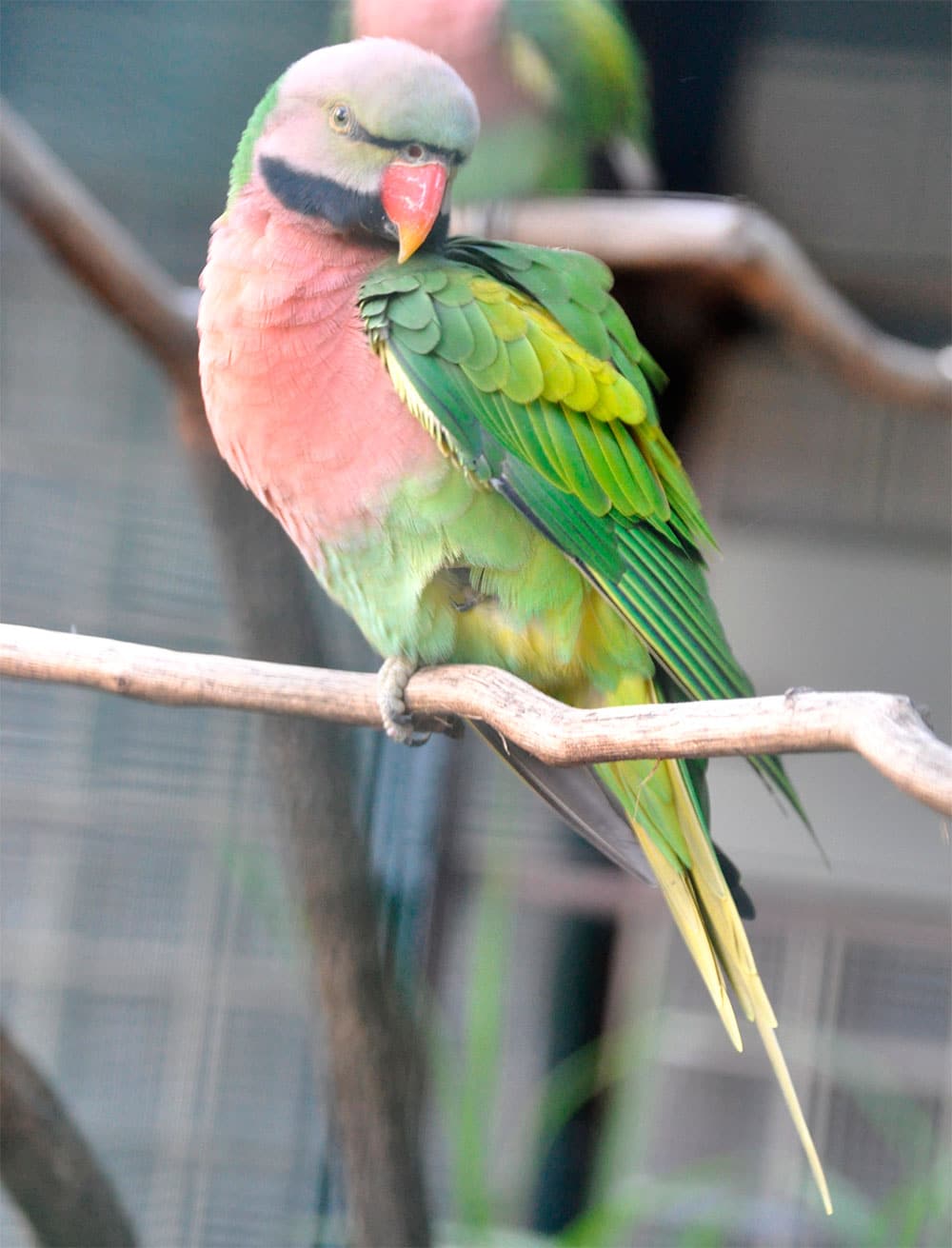
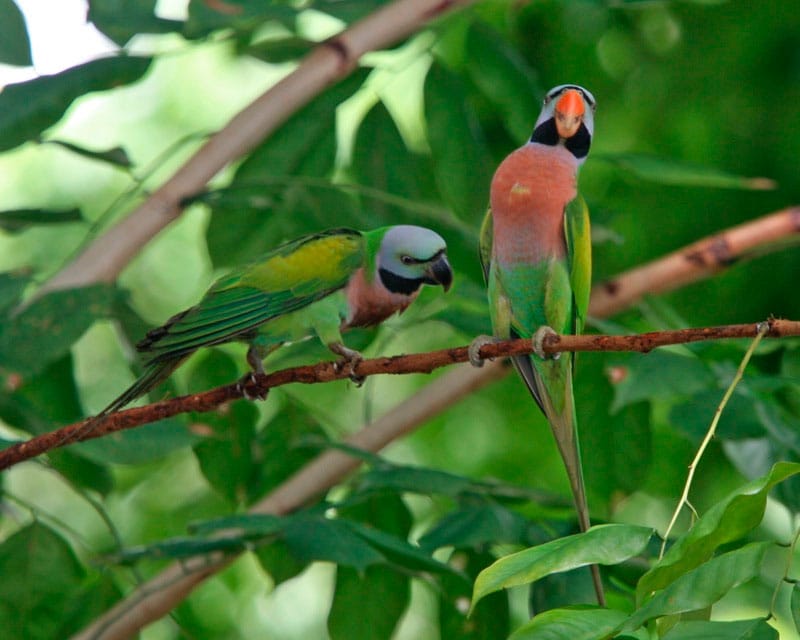
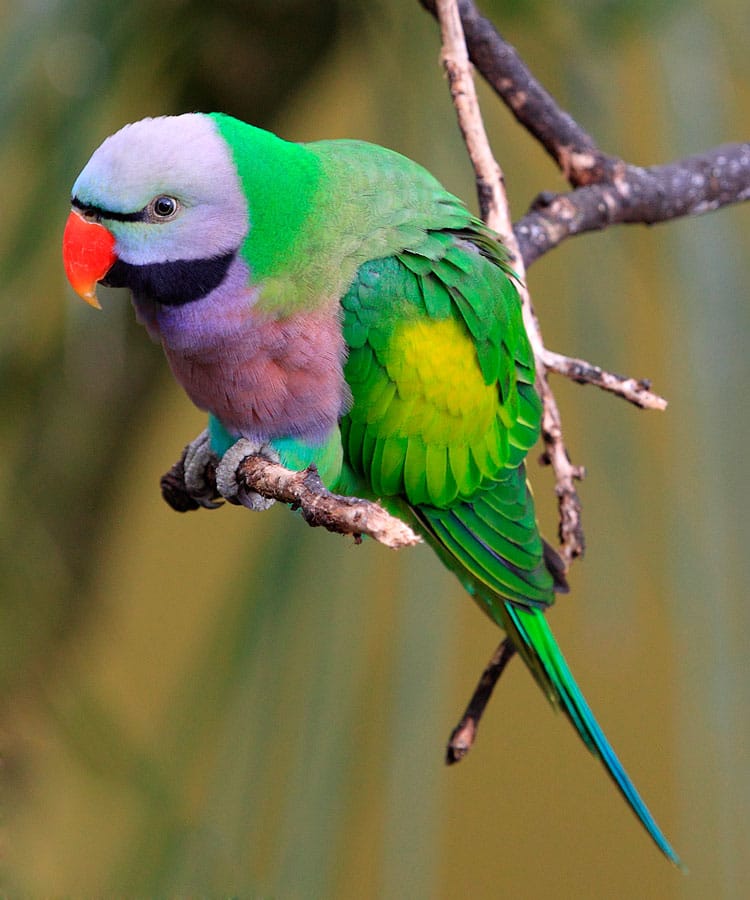
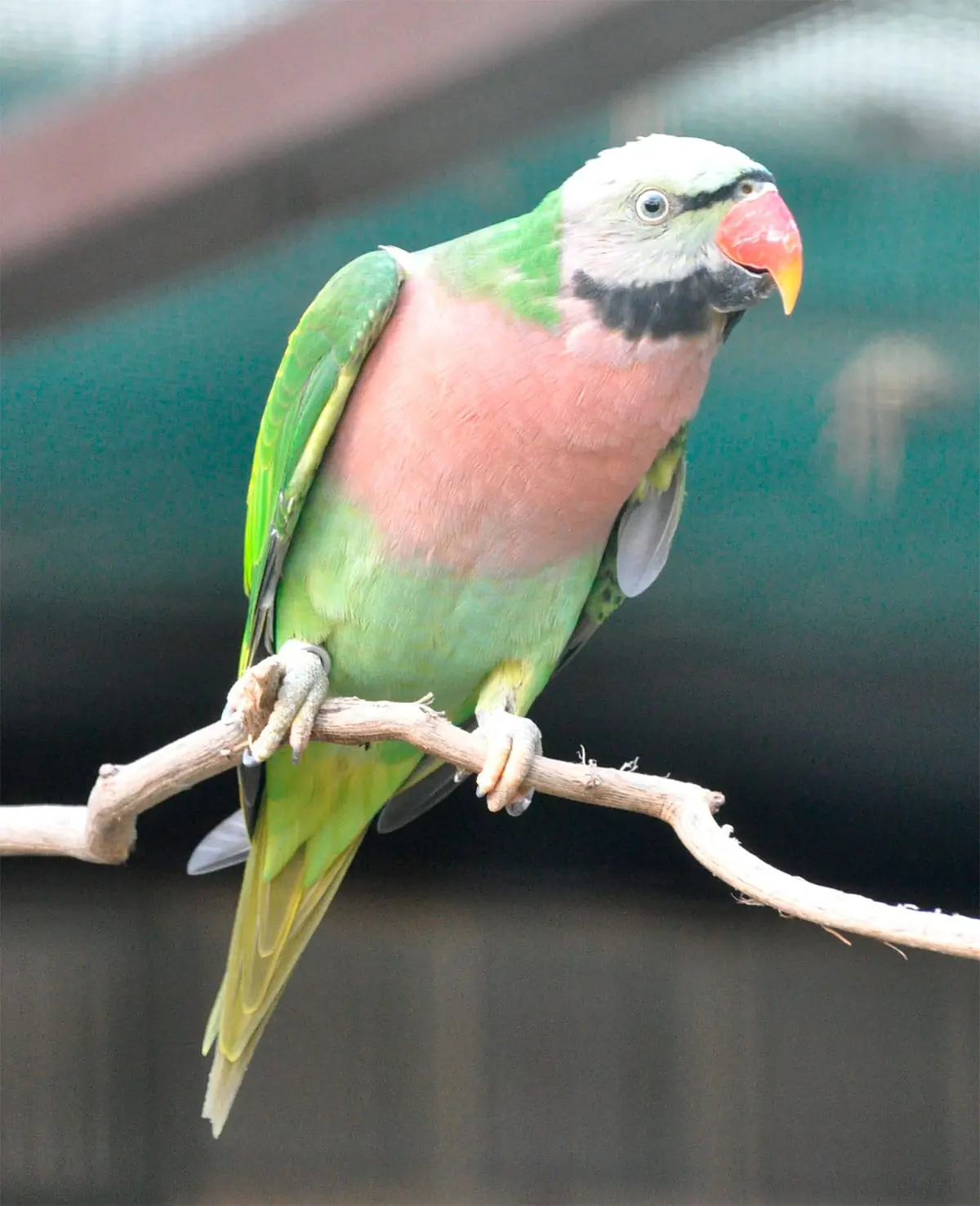
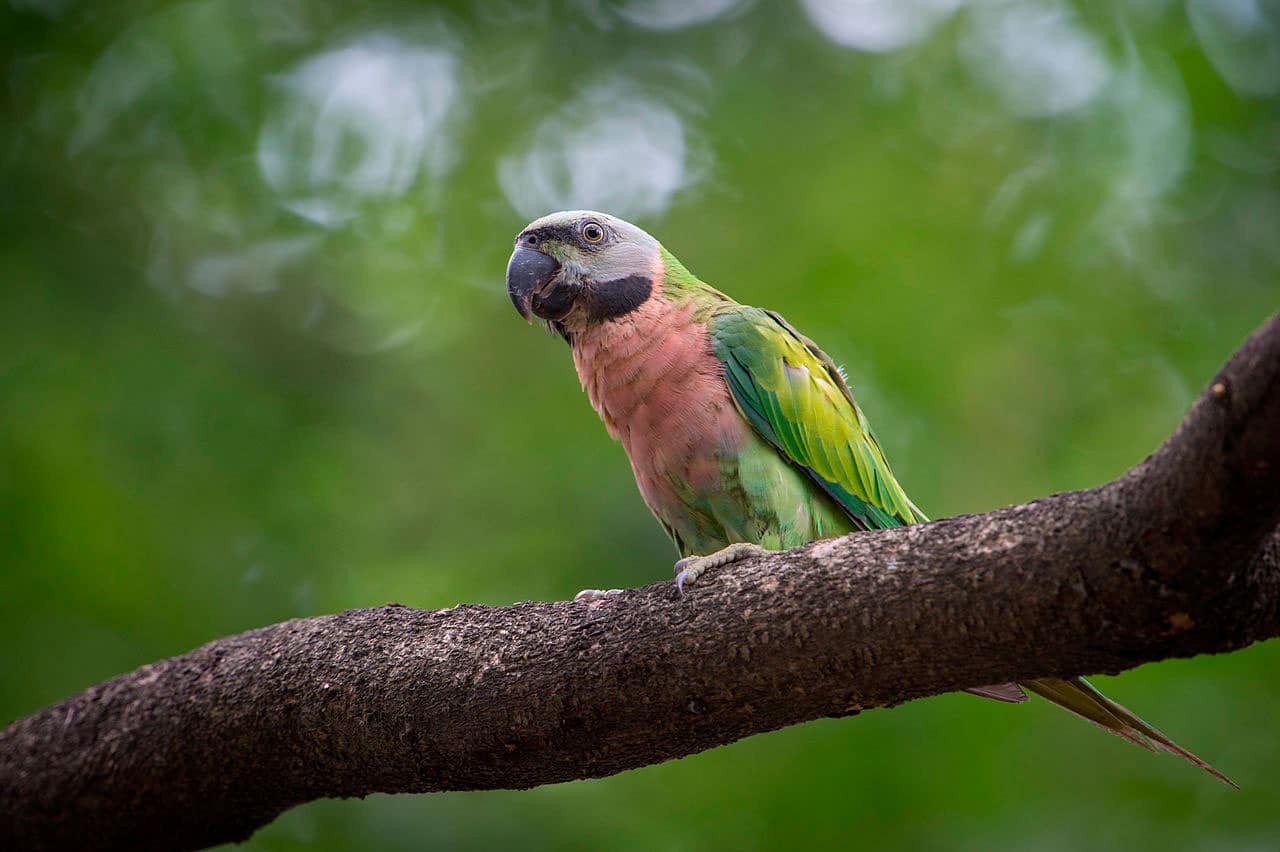
The Red-breasted Parakeet (Psittacula alexandri) is a bird with a form attractive, thin, and with a long and narrow tail. Its plumage is green, the overall tone of the head is grey, the bill red, and with brands distinctive in the head and face. The area around the eyes is greenish, with a pretty bluish tint. It has a fine line along its forecrown and wide stripes in their cheeks. Plumage in the chest, the throat and the top abdomen is salmon-pink color, extending halfway from the vent.

The female It has a shade bluish through the region of the face. In general, they have a pink color more off above the chest and the feather half of its tail they are shorter than the of the male.

The immature birds they have the tail shorter, the bill Pink, and incomplete rays of the cheek they are easily distinguished.

Between the young birds hard identification between males and females, However, breeders have managed to identify them correctly. The head of the female bows in a more uniform manner from the cere to the rear of the head. The young males they tend to be flatter in the forecrown. The females They seem to have a face darker than blue.

Subspecies description
Subspecies
  • Psittacula alexandri abbotti

    (Oberholser,1919) – Length: 36 cm.. Similar to the Psittacula alexandri fasciata (including sexual dimorphism in staining of the bill) but larger and paler.


  • Psittacula alexandri alexandri

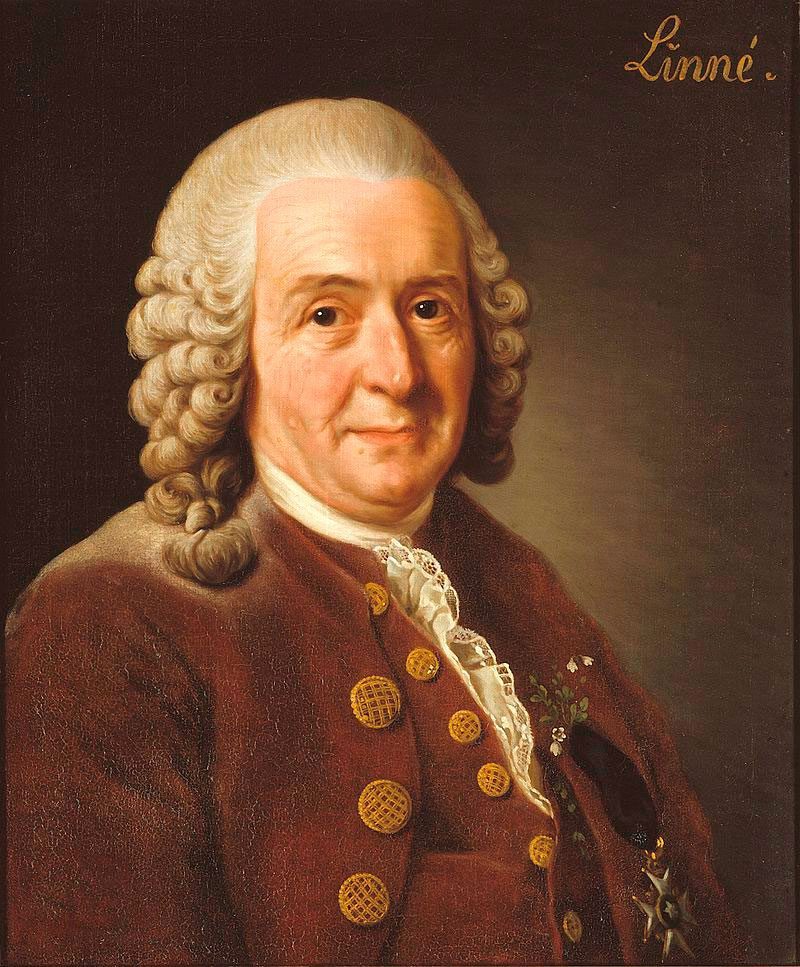
    (Linnaeus, 1758) – Species nominal


  • Psittacula alexandri cala

    (Oberholser, 1912) – Length: 36 cm.. As the Psittacula alexandri fasciata but with the belly blue (especially in males), the upper part of the abdomen darker and the lores, forecrown and bottom of the abdomen strongly impregnated with the pale blue.


  • Psittacula alexandri dammermani

    (Chasen & Kloss, 1932) – Length: 36 cm.. Perhaps, on average, larger that the Psittacula alexandri fasciata. The pink color of the chest It is darker than the species nominal. In the female, the pink color extends from the throat at the sides of the neck. The bill larger than that of the species nominal. Both jaws Red in both sexes.


  • Psittacula alexandri fasciata

    (Statius Mรผller, 1776) – Length: 33 cm.. Upper chest and abdomen is dark pink with violet tone, the head is bluish-grey way more uniform. The areas of the eyes and forehead with greenish hue. The females, part of the difference of the bill, nor have the violet tonality in the pink of the chest.


  • Psittacula alexandri kangeanensis

    (Hoogerwerf, 1962) – Length: 33 cm.. More grey the head (less blue). Bill larger than that of the species nominal and both jaws Red in both sexes.


  • Psittacula alexandri major

    (Richmond, 1902) – It is more large, of 38 cm.. length. Similar to the Psittacula Alexandri Fasciata but something more pale and the head is without bluish tone gray.


  • Psittacula alexandri perionca

    (Oberholser, 1912) – Length: 37 cm.. As the Psittacula alexandri fasciata (including sexual dimorphism in the coloration of the bill) but paler and larger, without the Green tint around the eyes.

Habitat:

Usually, they live below 2.000 m (rarely above 345 metres in Nepal) all types or forest and wooded areas, including dry forest, secondary-humid deciduous forest, mangroves, coconut and mango groves , areas planted with trees (including hills of shifting cultivation), parks and urban areas. In the region of the Himalaya avoids the dense green forests.

Gregaria, usually in flocks of 6-10 birds, less frequently in groups of 50 and very exceptionally in thousands, larger flocks during garbage collection (for example, the mango or rice), sometimes mixed with the Slaty-headed Parakeet wave Gray-headed Parakeet. They form communal roosts in the tall trees, bamboo or sugarcane scrub areas.

Reproduction:

The Red-breasted Parakeet nests in natural cavities or old hole made by woodpeckers or barbets, usually at a height between 3 and 10 m, often in loose colonies. The hole is filled with wood shavings.

The laying is of 2 to 4 eggs.

The breeding season is between December and April, Depending on the location and the altitude; in Java, breeding has been recorded in every month, except for April.

Food:

Diet Red-breasted Parakeet includes wild figs and other fruits, fruit trees and wild, flowers and nectar (especially, for example, of the Parkia speciosa and Erythrina variegata), dried fruits (for example, chestnuts Castanea), fruit (for example, Mango), berries, seeds (for example Albizia), leaves and cereals such as rice and corn, by causing serious damage to crops, especially for rice.

Distribution:

Size of the area of distribution (reproduction / resident): 2.570.000 km2

The Red-breasted Parakeet are distributed from the central area of the Himalaya until Indochina, China and West of Indonesian. From the lowlands of the Himalaya in the North of India, approximately to the East of Dehradun, through Nepal, Sikkim and North of Bhutan in the southwest of Yunnan, China; to the South by Assam, Manipur and Nagaland, India, until Bangladesh and to the East by Burma (including Mergui archipelago), Indochina, Malacca Peninsula, around 9ยฐN (a record of 1889 in the Kelantan River at approximately 5ยฐN suggests a contraction in its distribution) of Guangxi and Provinces of Canton and Hainan Island, to the South of China.

They are also distributed in Islas Andaman and Indonesian in Java, Bali, Karimun Java, Kangean, Borneo South (where it was probably introduced from Java) and Simeulue, Nias and Banyak, West of Sumatra.

Getaways captive birds eggs were found in Singapore and a single record (presumably an escape) in Hong Kong.

Resident but with some local movements dependent on food supply.

It is the most common parrot in some parts of its range., but with a substantial decrease in Thailand and Laos in recent years and local extinctions (for example, Java and Bali), because of the live poultry trade; the nominal subspecies may be at risk as a result of his capture. A small number in captivity out of range (mainly the nominal species and fasciata).

Subspecies distribution
Subspecies

Conservation:

State of conservation โ“˜


Near-threatened Near Threatened โ“˜ (UICN)โ“˜

โ€ข Current Red List of UICN: Near-threatened

โ€ข Population trend: Decreasing

The population of the Red-breasted Parakeet It is suspected in a moderate to fast global decline, due to the unsustainable levels of exploitation and the destruction of their habitat. This suspicion is supported by widespread anecdotal evidence that in many parts of its range decreases.

Threats:

    – The declines and local extinctions in recent decades in the population of the Red-breasted Parakeet have been attributed in large part to his capture to the trade in live birds (Juniper and Parr 1998).

    – The hunt they are considered the main threats to the species in Nepal, where it is also threatened by the loss of forests (C. Inskipp and HS Baral in litt. 2011).

    – His nasal voice makes the species a popular in Nepal cage bird, and their vocal habits during the breeding season, together with the tendency to form large flocks when not raising, they make susceptible to trappers. These factors lead to illegal hunting and his capture in protected areas; they are also persecuted by farmers due to their raids on crops (C. Inskipp and HS Baral in litt. 2013).

    – Similarly, in Bangladesh, the species is captured for the cage bird trade It is also likely that they are affected by the removal of large trees (P. Thompson in litt. 2012).

    – Almost the total disappearance of the species from the North of Laos, It is believed that it is mainly due to the loss of habitat through conversion to agriculture (JW Duckworth in litt. 2011).

    – Loss and fragmentation of forests is likely to accelerate in Cambodia in the near future, given that many of the large agro-industrial concessions have been awarded recently (H. Rainey in some. 2011).

Conservation Actions:

"Red-breasted Parakeet" in captivity:

The Red-breasted Parakeet is a bird Smart and outgoing that is gaining increasing worldwide popularity. These parrots are sociable and playful, and if they are properly socialized, they can be a few excellent pets. They can be a bit aggressive and authoritarian, If it is not properly discipline. They need a good cage for a large size, with a lot of toys to avoid boredom.

Although this bird is linked with the Rose-ringed Parakeet, they are very different in personality. The Red-breasted Parakeet It is softer and not so noisy, although she has been described as "feisty". It is usually more quiet than other Psittacula. Also are great eaters and you accept easily new foods other birds may be thrown away.

You can get to imitate some sounds, even words, Although not as clear as the some of the larger parrots, example the Grey Parrot. But, according to some sources, they can speak more clearly than the Rose-ringed Parakeet.

Regular handling is important at an early age, since they can become aggressive, If not are well socialized and manipulated.

If you want a small Parrot with personality, the Red-breasted Parakeet It can be the ideal ave. But, It is still a "stubborn" and "stubborn" bird.. It is not surprising considering his intelligence. Obedience training is recommended. On the other hand it is one voracious chomping and should it be should provide plenty of toys to chew.

Like other parrots, need company, and if they will not be in an Aviary with other birds, We must be able and willing to spend large amounts of time with them.

In nature, this bird is often seen in flocks of 10 to 50 individuals. These flocks, often, they are heard before to be seen. This is a fact that must be taken into account before deciding to buy one Red-breasted Parakeet. Breeding females can be put in 3 to 4 eggs in each clutch, with an incubation approximately 22 days.

With regard to its longevity, according to sources, We need to know that a specimen lived 23,3 years in captivity.

Captive breeding:

The Red-breasted Parakeet commonly bred in captivity. They reach maturity between 2 and 3 years of age. The birds must be matched at a young age. The female can sometimes dominate males. The procession begins at the end of winter and the females can be seen calling males for food. In the wild they breed between the months of December and April, Although this is variable, Depending on the climate and altitude.

A thick-walled hollow trunk, It can be used as nest. If not available, any commercially available nesting box should suffice.

They require long aviaries, more than wide, due to its long tail and its type of flight (powerful, linear). Also like a protected breeding area. The entrance door to the Aviary must be on the opposite end. We must place leaves of Palm on the bird front and leafy branches on the back to protect the young fledged when they hit the walls of the Aviary and fall on your floor. If this is not done, many of the young people will die from injuries in the head or severely damage their hair. Young hatchlings do not have great control when they start to fly; they can be left with the parents during 9 months, but then you must be separated.

Diet during breeding It is very important. We can use sunflower seeds germinated, soaked chickpeas, Apple diced, celery, raw or boiled corn and green feed. Supplementation with multiple vitamins and liquid calcium is especially important prior to egg laying..

Alternative names:

– Red-breasted Parakeet, Banded Parakeet, Bearded Parakeet, Indian Red-breasted Parakeet, Moustached Parakeet, Pink-breasted Parakeet, Red breasted Parakeet, Rose-breasted Parakeet (English).
– Perruche ร  moustaches (French).
– Bartsittich, Rosenbrustsittich (German).
– Periquito-de-bigode (Portuguese).
– Cotorra de Pecho Rosado, Cotorra Pechirroja (espaรฑol).


scientific classification:

Carlos Linneo
Carl Linnaeus

– Order: Psittaciformes
– Family: Psittaculidae
– Genus: Psittacula
– Scientific name: Psittacula alexandri
– Citation: (Linnaeus, 1758)
– Protonimo: Psittacus alexandri


Red-breasted Parakeet images:
Videos "Red-breasted Parakeet"


Especies del gรฉnero Psittacula

Red-breasted Parakeet (Psittacula alexandri)


Sources:

– Avibase
– Parrots of the World โ€“ Forshaw Joseph M
– Parrots A Guide to the Parrots of the World – Tony Juniper & Mike Parr
– Birdlife

– Photos:

(1) – Moustached Parakeet in the Walsrode Bird Park, Germany By Quartl (Own work) [CC BY-SA 3.0], via Wikimedia Commons
(2) – Red-breasted Parakeet at Brooklands Zoo, New Plymouth, New Zealand By Dave Young (originally posted to Flickr as bird) [CC BY 2.0], via Wikimedia Commons
(3) – Red-breasted Parakeet (Psittacula alexandri fasciata). Coutrtship – male on right. Changi Village, Singapore. 2 January 2006 By Lip Kee Yap [CC BY-SA 2.0], via Wikimedia Commons
(4) – Moustached Parakeet in the Walsrode Bird Park, Germany By Quartl (Own work) [CC BY-SA 3.0], via Wikimedia Commons
(5) – Female of Red-Breasted Parakeet (Psittacula alexandri) at Bangkok, Thailand By Jason Thompson (Flickr: Red-Breasted Parakeet (Female)) [CC BY 2.0], via Wikimedia Commons
(6) – Plate from Zoological illustrations, Volume 1, 2nd series By William Swainson [Public domain], via Wikimedia Commons

– Sounds: Peter Ericsson (Xeno-canto)
โ–ท The world of Pets: Dogs, cats, birds, reptiles, amphibians

Tepui Parrotlet
Nannopsittaca panychlora

Cotorrita de tepuy

Content

Description:

Tepui Parrotlet

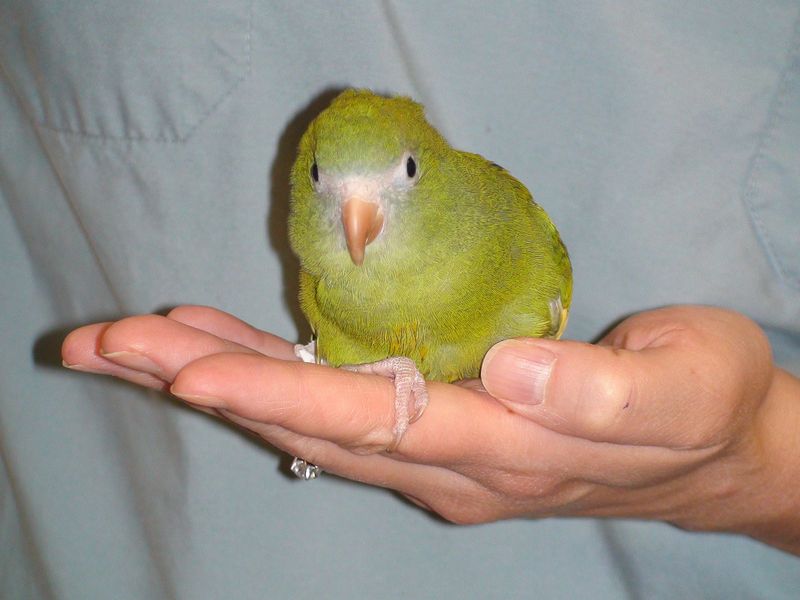
The Tepui Parrotlet (Nannopsittaca panychlora) measured between 14 and 15,7 cm.. height. Small size, with wings sharp and tail cut and wedge.

The head It is green with yellow tinge olivรกceo; the eye area is yellow, color extending below and behind the eyes. The upperparts they are green (brighter and less than olivรกceo head). Upperwing-coverts green. Flight feathers blackish green tipped primary, brownish opaque below; INFRACA-wing coverts green. The underparts yellowish green turn yellow-green in the undertail-coverts. Upper, the tail is green; undertail, yellower. Bill grey; cere grey; Bello to singr dark gray; irises brown; legs Rosaceae.

Both sexes are similar; the female has the forecrown Off-white to yellowish.

Habitat:

They inhabit moist montane forests. in tropical and subtropical highlands, sometimes in the rainforest of the lowlands around tepuyes, generally 750-1,850 m (Gran Sabana), although they observed at the top of Auyantepui to 2,200 meters and near the summit Monte Roraima A 2,200 m; to 750-950 metres in Sucre.

Can reproduce in subtropical and tropical zone descend to feed. Recent records in the view of birds in the lowlands suggest at least seasonal aparienciones at lower altitudes. Fly very high, fast and straight, in compact flocks of 6 to 150 individuals. Itร‚ยดs resident but it shows seasonal migrations.

Reproduction:

Sleeps and nests in Tepuis. Not much more information about the reproduction of this species in the wild.

Food:

In their natural habitats, the Tepui Parrotlet normally eat fruits, seeds and small insects.

Distribution:

Size of the area of distribution (reproduction / resident): 486.000 km2

Mainly montana, It is distributed in several scattered populations in eastern Venezuela and the adjacent area of รขโ‚ฌโ€นรขโ‚ฌโ€นwestern Guyana; concentrated in Gran Sabana from the east of Bolรญvar in Venezuela (for example, Montes Roraima and Auyantepui); It is also present around the meseta del Duida and the lowlands of Ventauri River, amazon, and in the West of Guyana from the area Camaran River; a more distant population occupies the Paria Peninsula (for example, the Monte Papelรณn), Sucre, to the northeast of Venezuela. Probably you can be observed at the north end of Roraima, Brazil.

Apparently locally common and stable, but perhaps it diminished in Paria peninsula due to large-scale deforestation. Much of the range is included in Canaima National Park.

Conservation:

State of conservation โ“˜


minor concern Minor Concern โ“˜ (UICN)โ“˜

โ€ข Current category of the Red List of the UICN: Least concern.
โ€ข Population trend: Stable.

Justification of the population

The size of the world population It has not been quantified, but this species is described as ยซquite common, but unevenly distributedยป (Stotz et to the., 1996).

Justification of trend

It is suspected that this species has lost 6,9-11,6% of habitat within its distribution over three generations (15 years) starting from a model of deforestation Amazon (Soares-Filho et to the., 2006, Bird et to the., 2011). Given the susceptibility of the species to hunting and / or capture, It is suspected that its population decline by <25% during three generations.

"Tepui Parrotlet" in captivity:

Breeding in captivity outside of South America. It is intelligent, quiet and very sociable.
Can normally live about 20 years.

Alternative names:

– Tepui Parrotlet, Tepui Parakeet, Tepui parrolet (English).
– Toui des tรฉpuis, Toui tรฉpui (French).
– Tepuisittich, Grรผnsperlingspapagei, Tepui Sittich (German).
– Periquito-dos-tepuis, periquito-do-Tepui (Portuguese).
– Catita Chirica, Cotorrita de tepuy, Cotorrita Tepuรญ (espaรฑol).
– Chirica (Venezuela).

scientific classification:

– Order: Psittaciformes
– Family: Psittacidae
– Genus: Nannopsittaca
– Scientific name: Nannopsittaca panychlora
– Citation: (Salvin & Godman, 1883)
– Protonimo: Brotogerys [sic] panychlorus

Images of the "Tepui Parrotlet"

Video of the "Tepui Parrotlet"


Species of the genus Nannopsittaca

Tepui Parrotlet (Nannopsittaca panychlora)


Sources:

  • Avibase
  • Parrots of the World โ€“ Forshaw Joseph M
  • Parrots A Guide to the Parrots of the World – Tony Juniper & Mike Parr
  • Birdlife
  • Parrot Book, Parrots and macaws Neotropical

  • Photos:

(1) – Credit: ยฉ Scott Echols, DVM
(2) – Brotogerys panychlorus = nannopsittaca panychlora (color green) & Microcerculus ustulatus (color brown) By J G Keulemans (Ibis 1883 (Web)) [Public domain], via Wikimedia Commons

โ–ท The world of Pets: Dogs, cats, birds, reptiles, amphibians

Blue-winged Parrotlet
Forpus xanthopterygius

Cotorrita Aliazul

Content

Description:


Anatomy-parrots

12 to 13 cm.. height.

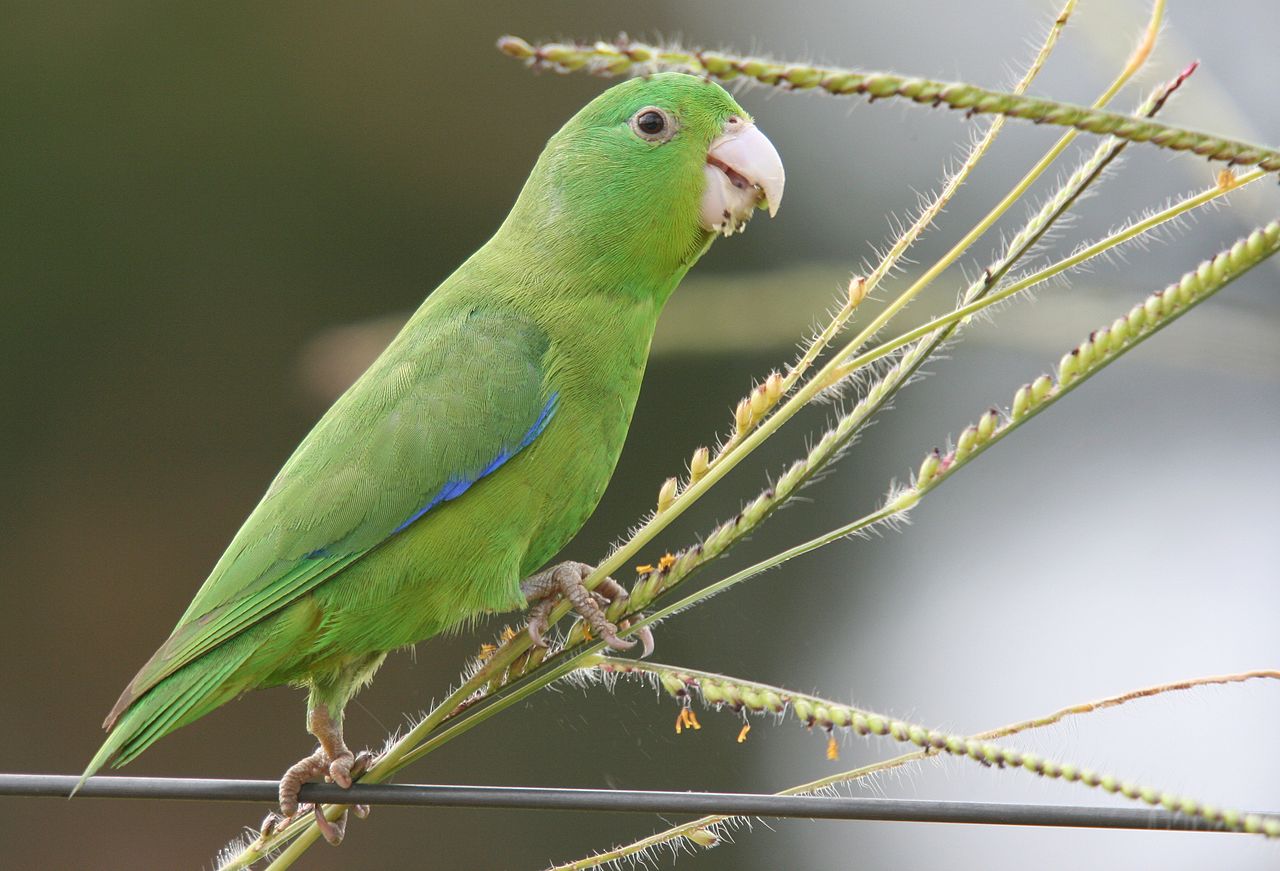
The Blue-winged Parrotlet (Forpus xanthopterygius) has the forecrown, the crown, back of the neck and ear-coverts, green; cheeks, eye area and lores, emerald green. Upperparts and wings, green, except the part inferior of the back, rump, primaries and greater coverts, are cobalt blue and blue color toward the base of the secondaries. Under, the wings with the coverts a rich cobalt blue color; the flight feathers Matte metallic blue. the underparts of color green with shades yellow and with feathers of color red Emerald around the thighs and vent. Upper, the tail green; undertail, pale green.

Bill and cere Pink with gray base up to the upper jaw; bare periophthalmic pale grey: irises dark brown: legs Gris-Rosado pale.

Female all green.

Immature similar to the adult respective but the color blue of them males young mixed with green.

Subspecies description
  • Forpus xanthopterygius flavescens

    (Salvadori, 1891) – Similar to the species nominal but the males with the rump pale blue; underparts and facial area more yellowish; undertail, the tail more bluish.

  • Forpus xanthopterygius flavescens

    (Hellmayr, 1929) – Generally paler and more yellowish which the nominal. Forehead, throat and cheeks males, yellow.

  • Forpus xanthopterygius xanthopterygius

    (Spix, 1824) – The nominal

  • Forpus xanthopterygius crassirostris

    (By Taczanowsk, 1883) – As the species nominal but blue pale with emerald green in it forecrown. Primary coverts pale, of color grisaceo-violeta that contrast with the coverts more large of color blue more dark. upper jaw laterally compressed in the Center.

    – Some authors like (Stotz et to the., 1996, Collar 1997) They have followed Pinto (1945) and considered this subspecies as monotypic species under the scientific name Forpus crassirostris

Habitat:

Frequent habitats woodlands more dry such as Open forests and riparian, closed and caatinga; at the edge of the range that is located in the Savannah, palm groves, scrub semiarid and pastures. In the western amazon appears to be mainly distributed along rivers in lighter riparian growth. Mainly in the land low, but reported to 1,200 m in the mountains of the southeast of Brazil. Gregaria, in herds of up to 50.

Reproduction:

It nests, mainly, in the cavities of trees, Although also termite tree, posts in fences, nests common hornero (Furnarius rufus), which can be occupied by force and lined with grass stalks, or even nests of the Red-rumped Cacique (Cacique haemorrhous). Clutch 3-7 eggs.

Food:

Its diet includes fruit of Cecropia, seeds of Mikania and Trema micrantha and flowers of Ambrosia and Marcgravia; Forages in open areas, sometimes in land.

Distribution:

Size of the area of distribution (reproduction / resident): 5.780.000 km2

Its distribution is discontinuous in South America, since the Basin Amazon to the North of Argentina with people separated in the North of Colombia. The latter occurs in the lowlands of the Caribbean arid from Cartagena through the valley bottom of the river Magdalena South to North of Bolรญvar and East to the base of Sierra Nevada de Santa Marta. The species reappears in the end South of Colombia about Leticia and possibly in the Putumayo, and records from the Northeast borders of the Ecuador and from the East of Peru to the East of Bolivia in hand me and Santa Cruz; It extends through the basin of the Western Amazon of Brazil eastward to the East of amazon and in large part of the interior of the this of Brazil towards the Southeast, possibly up to Rio Grande do Sul.

Apparently absent from parts of the East and northeast of brazilian amazon with its northeastern limits in maranhรฃo and Cearรก.

They are distributed in the northeast of Argentina, in Missions, Northeast of Currents, Chaco oriental and Formosa Eastern.

Is located in the East of Paraguay and can be observed over the West in the chaco.

Apparently introduced in Jamaica, but the current situation is unknown.

Mainly resident Although migrant altitude in the southeast of Brazil, with seasonal movements in Argentina in relation to food supply. common in the East of the cordillera, sometimes locally abundant (for example, in the northern parts of Bay), less abundant in the West, being uncommon and local (Perhaps reducing) in the Northwest of Colombia and scarce throughout the East of Peru and Bolivia. Perhaps increasing in parts of the western amazon with cleared of forest dense, but probably in decline in Paraguay, where formerly common and now rare.

The Blue-winged Parrotlet have been caught for the trade, with captive birds outside range countries. Is unlikely that the trade has been affected to their abundance in the Middle wild.

Subspecies distribution

With the aim of preserving the stability of the nomenclature, It has designated a lectotype for the name widely used xanthopterygius, What makes the correct name for the species present. Four subspecies currently recognized.

  • Forpus xanthopterygius flavescens

    (Salvadori, 1891) – Bolivia and Southeast Peru.

  • Forpus xanthopterygius flavescens

    (Hellmayr, 1929) – maranhรฃo, Piauรญ, Cearรก and Northeast South of Brazil to the North of Bay.

  • Forpus xanthopterygius xanthopterygius

    (Spix, 1824) – The nominal

  • Forpus xanthopterygius crassirostris

    (By Taczanowsk, 1883) – West amazon in South Colombia, is of Ecuador and this from Peru to center of amazon, Brazil.

    – Some authors like (Stotz et to the., 1996, Collar 1997) They have followed Pinto (1945) and considered this subspecies as monotypic species under the scientific name Forpus crassirostris

Conservation:

State of conservation โ“˜


minor concern Minor Concern โ“˜ (UICN)โ“˜

โ€ข Current category of the Red List of the UICN: Least concern.

โ€ข Population trend: Stable.

Justification of the population

The size of the world's population of the Blue-winged Parrotlet It has not been quantified, but this species is described as ยซcommonยป (Stotz et to the., 1996).

Justification of trend

Suspected that the population is stable in absence of evidence of any decline or threatens substantial.

"Blue-winged Parrotlet" in captivity:

In captivity they are not very frequent. They are birds enable you require a large cage. Quiet and something Shy. Not is easy to accommodate them with other parrots.
Can be prone to it Obesity.

Note:

Among the various species of the Blue-winged Parrotlet (Forpus xanthopterygius), There is, Unfortunately, a very extensive variety of colors mixed due to the crossing in captivity of the nominal species with several of their subspecies, as well as the different crosses between subspecies. So, it is rather doubtful to find yet species and subspecies properly colored, especially in the poultry raising European. Only the subspecies Forpus xanthopterygius flavescens, as pure subspecies, it's still pretty easy to recognize.

Alternative names:

– Blue-winged Parrotlet, Blue winged Parrotlet, Blue-winged, Large-billed or Turquoise-winged Parrotlet, Blue-winget parrotlet (English).
– Toui de Spix, Perruche-moineau ร  ailes bleues, xT. ร  gros bec ou T. de Spengel (French).
– Blauflรผgel-Sperlingspapagei (German).
– Tuim, bate-cu, caturra, coiรณ-coiรณ, cu-cozido, cuiรบba, cu-tapado, meudo, periquitinho, periquito, periquito-do-espรญrito-santo, quilim, tabacu, tapa-cu, tuietรช, tuim-de-asa-azul, tuitiri (Portuguese).
– Catita enana, Catita Enana Sudamericana, Cotorrita Aliazul, Periquito Azulejo, Viudita (espaรฑol).
– Catita enana (Argentina).
– Catita enana (Colombia).
– Periquito de Ala Azul (Peru).
– Viudita (Paraguay).


scientific classification:

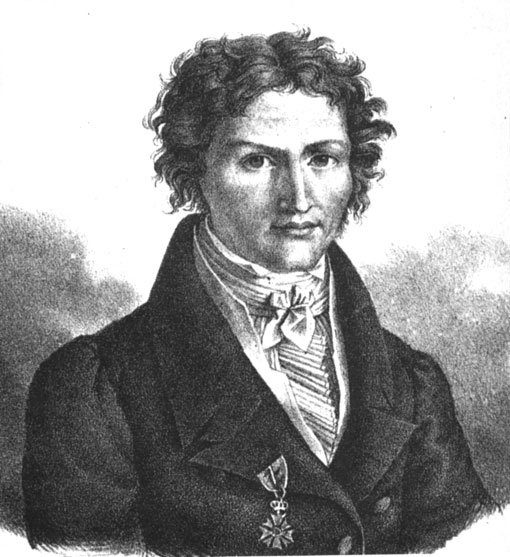
Johann Baptist von Spix

– Order: Psittaciformes
– Family: Psittacidae
– Genus: Forpus
– Scientific name: Forpus xanthopterygius
– Citation: (of Spix, 1824)
– Protonimo: Psittaculus xanthopterygius


Images Blue-winged Parrotlet:

Videos of the "Blue-winged Parrotlet"


Species of the genus Forpus

Blue-winged Parrotlet (The xanthopterygi of Forp)


Sources:

– Avibase
– Parrots of the World โ€“ Forshaw Joseph M
– Parrots A Guide to the Parrots of the World – Tony Juniper & Mike Parr
– Birdlife

– Photos:

(1) – A male Blue-winged Parrotlet in Goiรขnia, Goiรกs, Brazil By Wagner Machado Carlos Lemes [CC BY 2.0], via Wikimedia Commons
(2) – Blue-winged Parrotlet (Forpus xanthopterygius) Vale do Ribeira, Sao Paulo (state), Brazil By Dario Sanches [CC BY-SA 2.0], via Wikimedia Commons
(3) – A male Blue-winged Parrotlet in Goiรขnia, Goiรกs, Brazil By Wagner Machado Carlos Lemes [CC BY 2.0], via Wikimedia Commons
(4) – A male Blue-winged Parrotlet (Forpus xanthopterygius) looking out from a nest in the Vale do Ribeira, Brazil By Dario Sanches [CC BY-SA 2.0], via Wikimedia Commons
(5) – Blue-winged Parrotlet (Forpus xanthopterygius) at Foz do Iguacu, Brazil By Arthur Chapman [CC BY 2.0], via Wikimedia Commons

– Sounds: (Xeno-canto)

โ–ท The world of Pets: Dogs, cats, birds, reptiles, amphibians

Palm cockatoo
Probosciger aterrimus

Content

Description

51 to 64 cm. height and a weight between 910 and 1200 g.
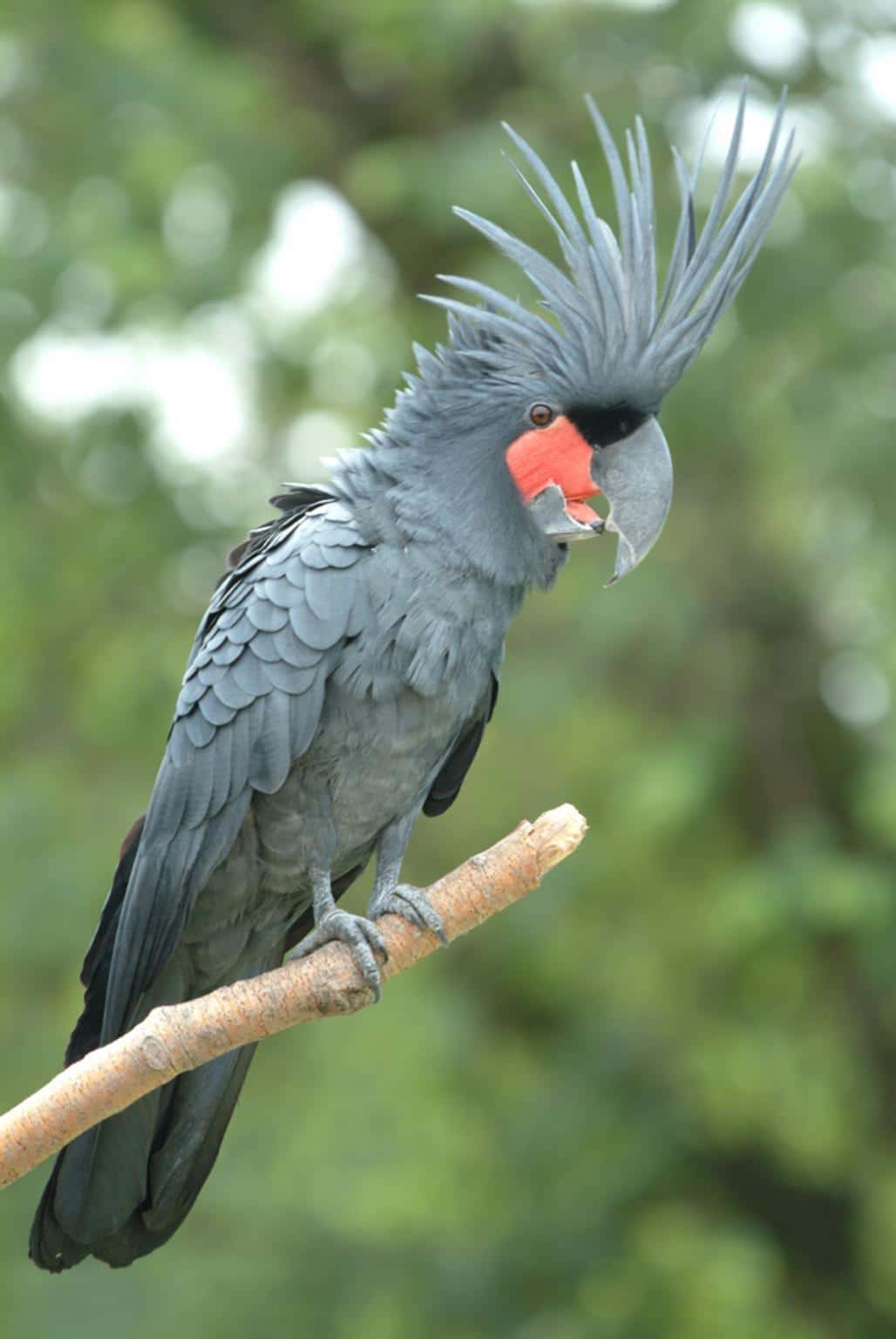
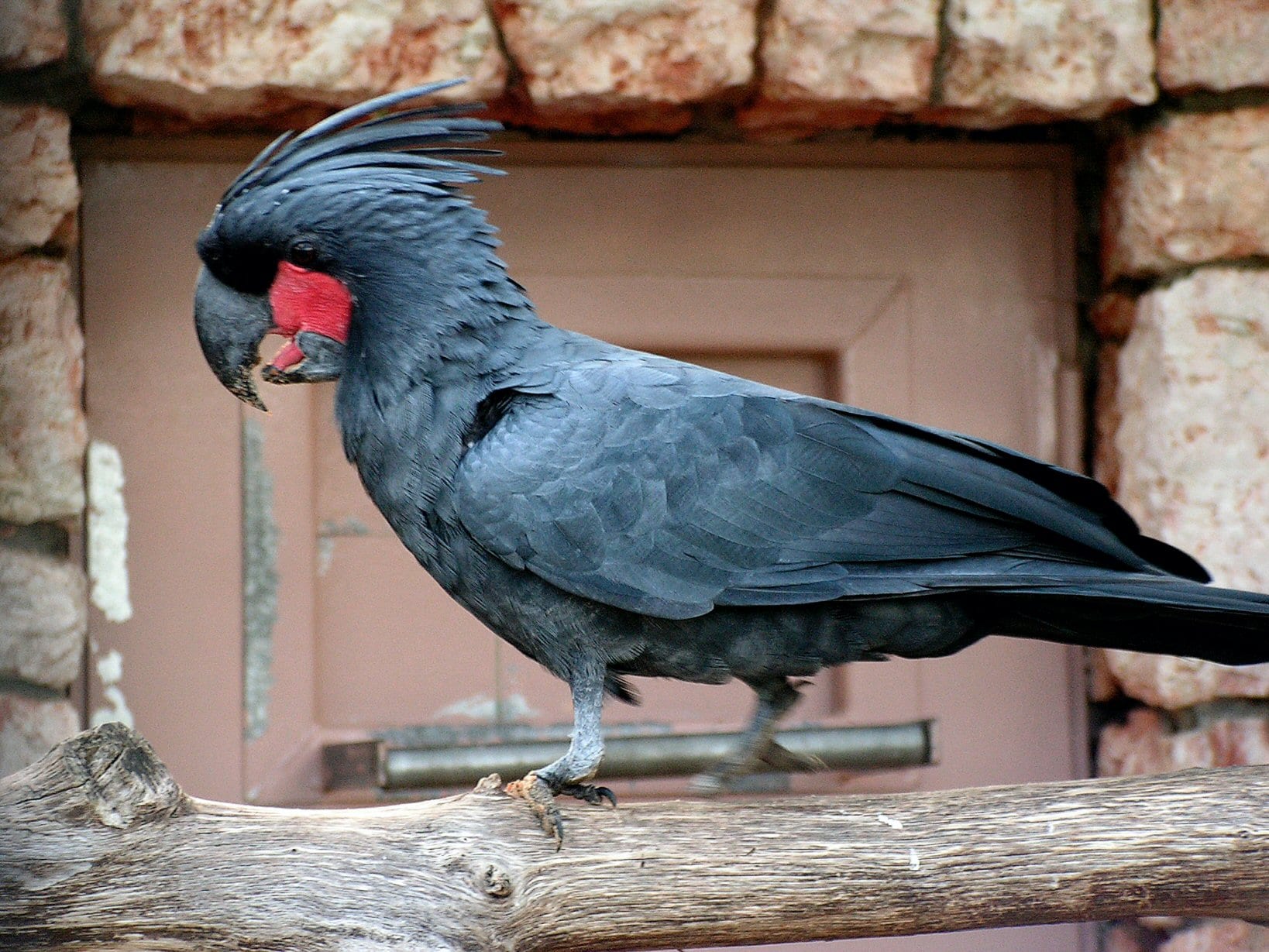
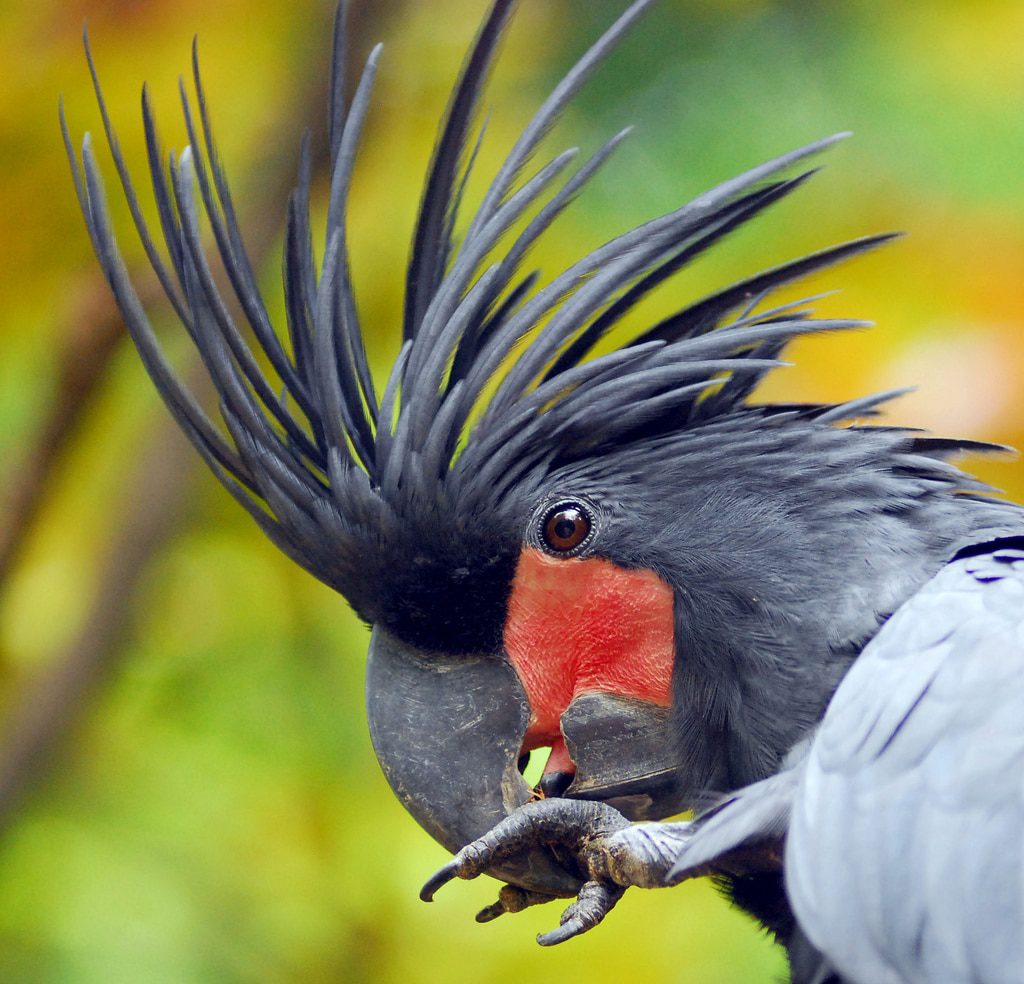
The Palm cockatoo (Probosciger aterrimus) it is one of the largest cockatoo species. Unmistakable with a Erectile Crest of 15 cm.. Mainly arboreal.

Both sexes differ in size. Immatures are differentiated by the pale yellow at the bottom and the tip of the bill and the eye ring in color white.
Usually black with a bare area around the cheeks and eyes red. The feathers of the crest they are long and thin, black streaks.
The bill is dark gray, smaller in the female. The legs son grises. The language is black and Red.
The cheek skin changes color according to its health or stress level, a pink / beige to a yellow when it is excited.

Description 4 supespecies

  • Probosciger aterrimus aterrimus

    (Gmelin, 1788) – Nominal.


  • Probosciger aterrimus goliath

    (Kuhl, 1820) – Larger than the subspecies macgillivrayi.


  • Probosciger aterrimus macgillivrayi

    (Mathews, 1912) – Larger than the species nominal.


  • Probosciger aterrimus stenolophus

    (Oort Cloud, 1911) – As the subspecies goliat, but with feathers crest closer.

Habitat:

The presence of this cockatoo is documented from sea level to 1350 metres in height.

In New Guinea they are in tropical rainforests, including gallery forests, edges of forests and monsoon forests. In Australia they live in forests of eucalyptus, forest of Melaleuca, partially cleared areas and sheets.

You are travelling individually, in pairs or in groups of five or six. About an hour after sunrise they gather in the treetops.

Reproduction:

The nesting occurs between August and February.
Nest in the cavities of trees which tend to be of approximately 1 m depth and 25 to 60 cm in diameter. These are full of branches broken at the bottom on which rests the egg. The site is often used year after year.
Reproduce every two years. They put a single egg and both parents the hatch for a period of 28 to 31 days, at around 3 to 4 more days to hatch. The squab was born completely naked and does not develop marker, unlike other Cockatoo chicks. They are taken from 100 to 110 days to leave the nest, the longest period among all parrot species. After leaving the nest, the young bird depends on the parents at least others 6 weeks because of its inability to fly.

Food:

Seeds, dried fruits, fruit, berries, sprouts leaves and insect larvae.
They feed mainly in the forest canopy, but can also feed on the ground on fallen fruits and seeds.

Distribution:

Size of the area of distribution (reproduction / resident): 716.000 km2

New Guinea and adjacent islands, North of Queensland, Australia.

Distribution 4 subspecies:

Conservation:

State of conservation โ“˜


minor concern Minor Concern โ“˜ (UICN)โ“˜

โ€ข Least concern according to IUCN classification.

โ€ข Population trend: Decrease

This species has a very large range, and therefore not approaching the threshold of vulnerability. While the trend of the population seems to be decreasing, the decline is not believed to be fast enough to approach vulnerable bird thresholds based on population trend criteria.

In some parts of its area of distribution, the forest habitat in which occur the hollow trees is being invaded by the rainforest.

"Palm cockatoo" in captivity:

Rare bird cage, Although they have a great demand for the market of pet due to its unusual appearance.
They can live more than 55 years of age in captivity.

They may develop compulsive behaviors, as the pecking of feathers. They can also mimic sounds and human language.

Aggressiveness within pairs is taken into account for captive breeding., Sometimes the male usually kill the female. As such, There are more different management methods, from bringing both cockatoos together only during the breeding period and quickly removing the male, cut the male that the female escape flying, or create complex installations that are carried out next to a cutout of the male, so that the female always has an escape route in the face of aggression.

There are currently laws that prohibit the export of any Palm cockatoo without a permit.

Alternative names:

– Palm Cockatoo, Black Macaw, Goliath Aratoo, Goliath Cockatoo, Great Black Cockatoo, Great Palm Cockatoo (English).
– Cacatoรจs noir, Microglosse noir (French).
– Arakakadu (German).
– Cacatua-das-palmeiras (Portuguese).
– Cacatรบa de las Palmas, Cacatรบa Enlutada (espaรฑol).

scientific classification:

– Order: Psittaciformes
– Family: Cacatuidae
– Genus: Palm
– Scientific name: Probosciger aterrimus
– Citation: (Gmelin, JF, 1788)
– Protonimo: Psittacus aterrimus

Images of the Black Cockatoo:


Sources:
– avibase
– infoexoticos
– Parrots of the World โ€“ Forshaw Joseph M
– Parrots A Guide to the Parrots of the World – Tony Juniper & Mike Parr
– Birdlife

– Photos: avianzoo, papageien.org, avianzoo, Wikimedia.org

– Sound: Frank Lambert

โ–ท The world of Pets: Dogs, cats, birds, reptiles, amphibians

Solomons cockatoo
Cacatua ducorpsii


Cacatรบa de las Salomรณn

Content

Description

It measures 30-35 centimeters to paste 380 g..
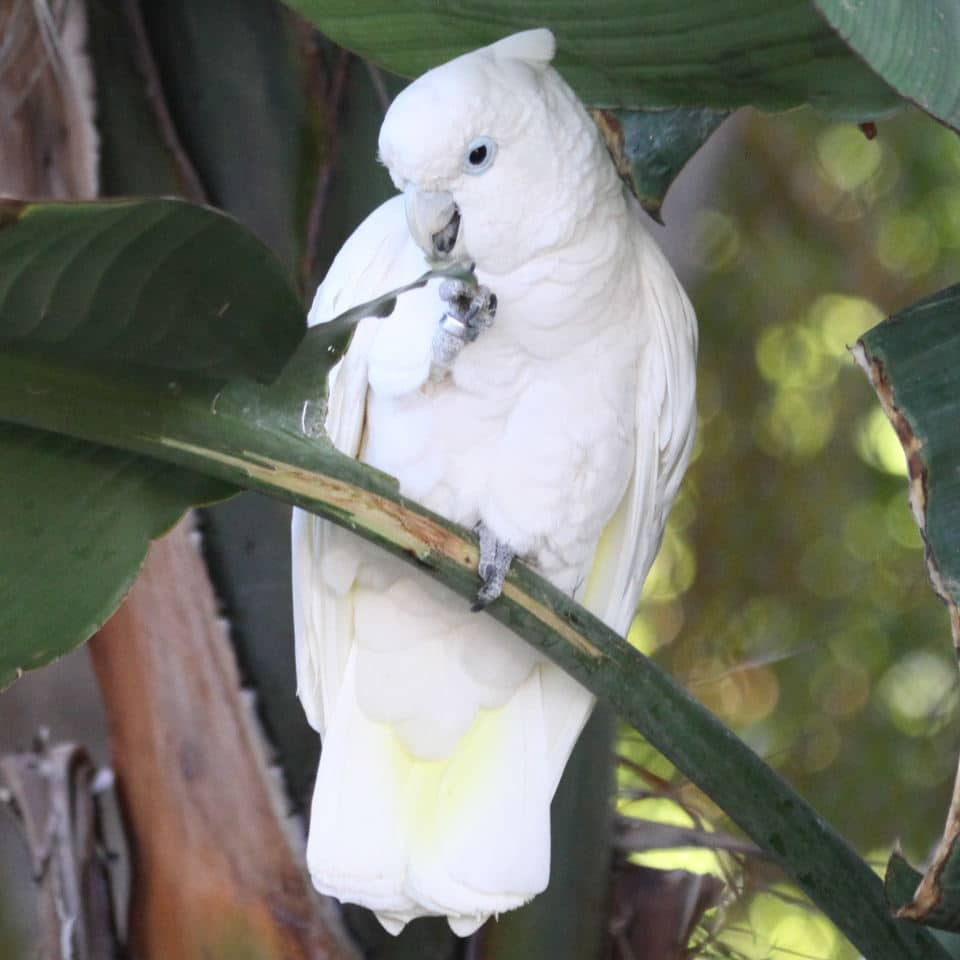
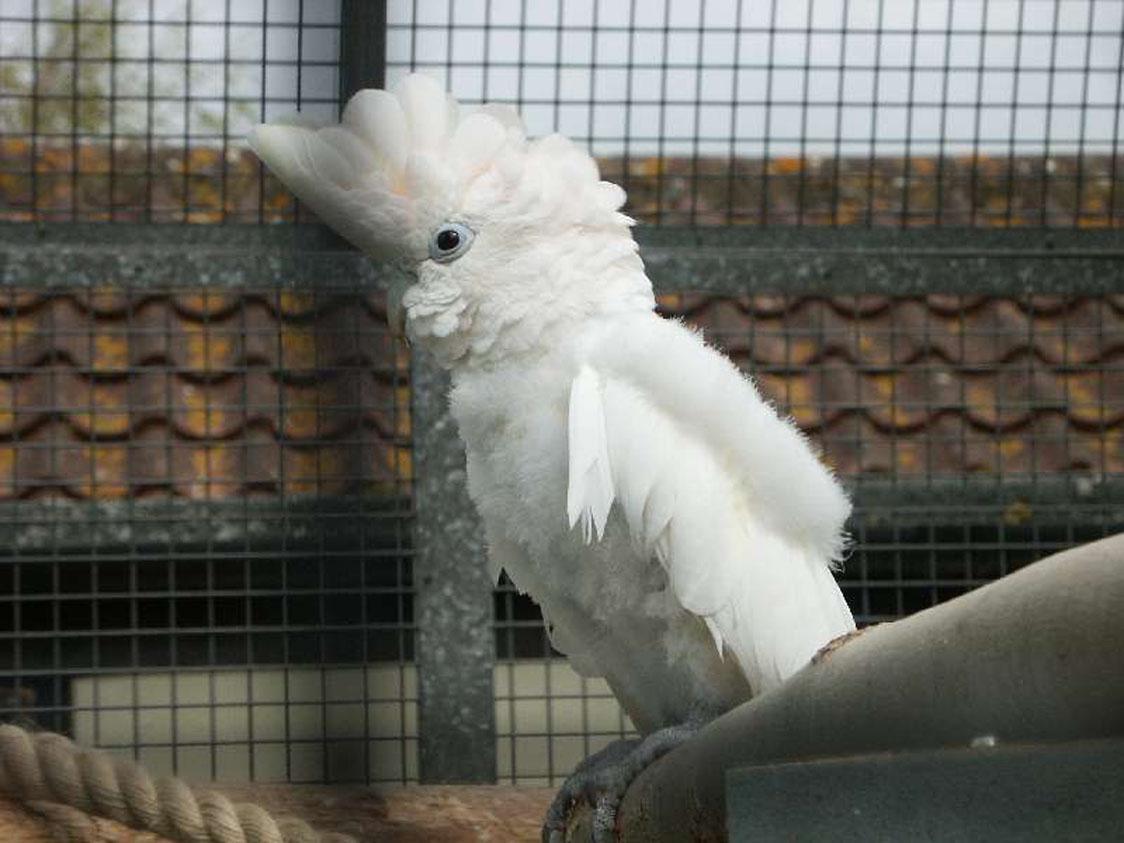
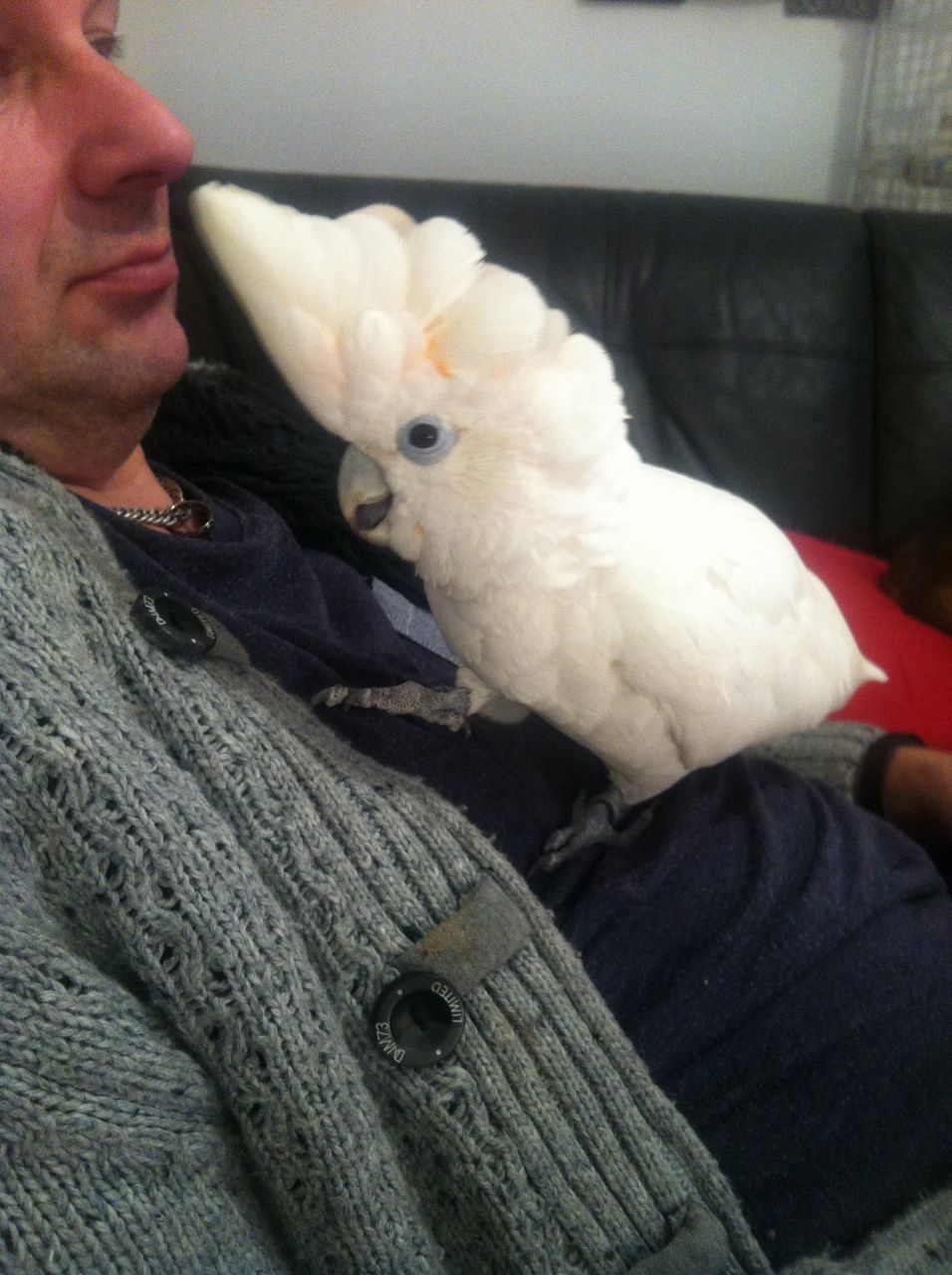
The Solomons cockatoo (Cacatua ducorpsii) is a small cockatoo immediately recognizable by its long triangular Crest.
Its plumage is almost completely white, except the part inferior of them wings and tail with infiltration of color yellow. The feathers of the crest, the cheeks, the the mantle and the chest they have a base of pink.
The bill is grey. The bare skin around the eyes is pale-blue. The irises are dark brown, the legs grey.
The females are distinguished from your partner to have the irises more reddish.

The Solomons cockatoo is quite similar to the Tanimbar corella living in the Tanimbar Islands. Also seems to the Little corella, although the latter have more bluish and developed the orbital area.

Habitat:

Is from coastal areas to the mountains; variety of habitats, including forests, secondary vegetation and gardens in cities. Found up to 1700m; mainly below the 700 m.

Behavior:

They are birds noisy and quite easy to observe, even though they mostly live in pairs or small groups. They fly high above the treetops where used well exposed perches in the top of the Cup.

Birds are very cautious, screaming when they are disturbed.

They have a strong and uneven consisting of shallow flapping flight.

Reproduction:

In the wild child from July to September.

They make their nests in hollows of trees or large branches and, they often use the same nest year after year.

The eggs are of color white and usually there are two in a clutch. The eggs are incubated for about 25 days, the young leave the nest 62 days after hatching.

Food:

They feed on seeds, berries, fruit, outbreaks, flowers, as well as insects and their larvae. From time to time they ingest the fleshy parts of ยซepiphytesยซ.

Distribution:

endemic to the Solomon Islands. Its area of distribution extends from Bougainville (Papua New Guinea) to Malaita, Choiseul, New Georgia and Santa Isabel. The species is absent in San Cristรณbal and the islands surrounding.

Conservation:

State of conservation โ“˜


minor concern Minor Concern โ“˜ (UICN)โ“˜

– Current IUCN Red List category: Least concern.

– The population trend: Stable

The population world is estimated at 100.000 birds and it seems quite stable.

The marketing of pet birds is a threat to this species, the other is the degradation of the habitat. The latter seems particularly serious, given the logging of forests in the lowlands.

"Solomons cockatoo" in captivity:

Itร‚ยดs little gregarious and have tendency to be aggressive with other species and with those of its same species. In relation to the human being is a Parrot very demanding. Not everyone is prepared to have a white cockatoo.

They often tend to develop behavior problems, unbearable screams, become very destructive…If not are given a rigorous education on a very regular basis. That is why it is convenient that if you intend to have a cockatoo, it should be done so that it can be accompanied by another or others of its kind to prevent it from developing an excessive dependency and thus you can enjoy it without fear of having problems or at least trying to avoid them as much as possible.

I like them much attention. They tend to create strong emotional bonds and they are quite Extrovert.

Despite the great attraction that having a pet parrot with such characteristics can mean for a person,. It is not often a parrot advised for anyone or rather, hardly anyone is prepared to have a cockatoo with these characteristics.

Alternative names:

– Ducorps’s Cockatoo, Broad-crested Corella, Solomon Corella, Solomon Islands Corella, White Cockatoo (ingles).
– Cacatoรจs de Ducorps (French).
– Salomonenkakadu (German).
– Cacatua-ducorps (Portuguese).
– Cacatรบa de las Salomรณn, Cacatรบa de Salomรณn (espaรฑol).

scientific classification:

– Order: Psittaciformes
– Family: Cacatuidae
– Scientific name: Cacatua ducorpsii
– Genus: Cockatoo
– Citation: Pucheran, 1853
– Protonimo: Cacatua ducorpsii

Solomon's Cockatoo Images:


Species of the genus Cacatua

Sources:
– Avibase, mascotasvicmar
– Photos: animalphotos.me, goldensunbirds

– Sounds: Mark Todd (Xeno-canto)

โ–ท The world of Pets: Dogs, cats, birds, reptiles, amphibians

Long-tailed Parakeet
Psittacula longicauda


Cotorra Colilarga

Content

Description:

Of 40 to 48 cm.. length and 168 to 196 g. of weight.

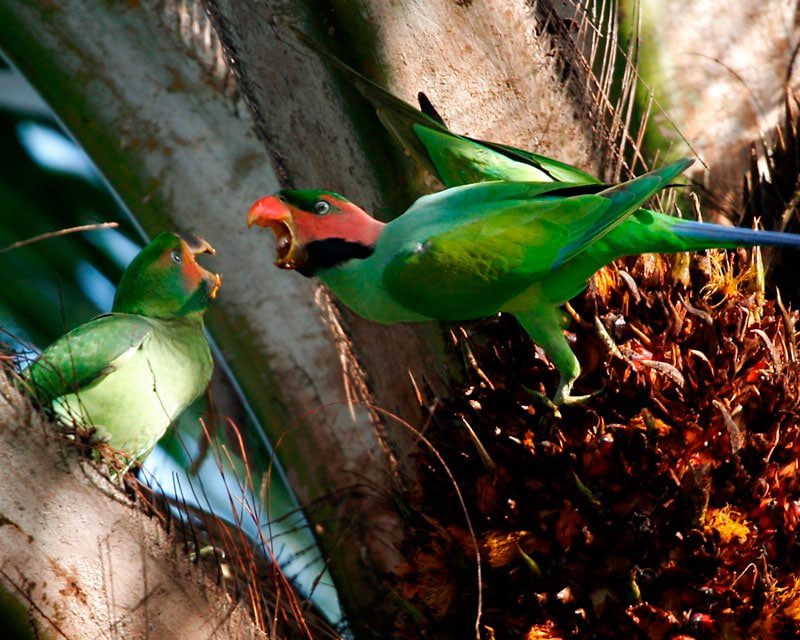
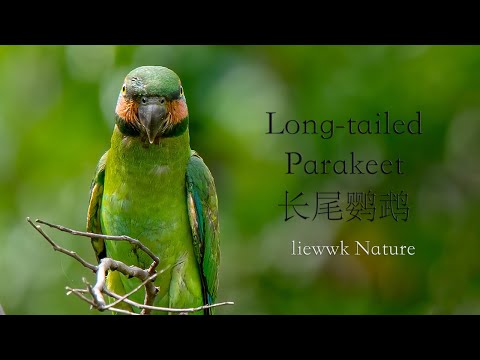
The Long-tailed Parakeet (Psittacula longicauda) has the plumage, in general, green. The throat, the chest and the abdomen are greenish-yellow; and lores (the regions between the eyes and the beak, on both sides of the head) are bluish-black. The crown is a green dark, and the sides of the head and nape are pinkish Red. They have a black stripe in the cheeks.

The upperparts is yellowish wash of blue-grey. The lower part of the back is pale-blue. The upperwing-coverts are yellowish. The supracaudales-coverts and infracaudales, as well as the the thighs are pale green. The central feathers of the tail are blue with pale tips and outer feathers are green.

The bill top is red and the lower beak is brown-black color. The irises they are amarillos-blanquecinos, and legs are grey.

The females they have the nape green. The band to their cheeks is dark green, and cheeks superiors are an orange-red live. Their feathers of the tail they are much shorter, and the bill top and bottom are brown-black color.

Ilustraciรณn Cotorra Colilarga

The young birds they have the head variable green interspersed with orange-red. The feathers of the tail they are shorter, and both the bill top and bottom are brown.

The young male they have a tint blue in the lower part of the back and some birds can have a reddish tint in the bill top.

Immature birds reach your adult plumage When they are near the 30 months of age.

The lutino and other colorations, It is believed that they are mutations observed both in the wild and in captivity.

Subspecies description:
Subspecies
  • Psittacula longicauda defontainei

    (Chasen, 1935) – Of an average length of 42 cm.. As the species nominal but but the pinkish red from the sides of the head It is deep orange-red-streaked.


  • Psittacula longicauda longicauda

    (Boddaert, 1783) – The species nominal


  • Psittacula longicauda modesta

    (Fraser, 1845) – Of 48 cm.. Plumage as of the species nominal, but the crown It has a reddish-brown core and a green at the end of feather edging, becoming pink on the back of the head and nape, thus causing in the crown more Brown than green appears in many birds . The black stripe in the lores is more clearly defined, continuing in some birds to form a narrow band in the forecrown. The upper cheeks they have a deep pinkish-Red, orange-red stripes.


  • Psittacula longicauda nicobarica

    (Gould, 1857) – Of 48 cm.. As the species nominal, but the back of the head, the nape and back are greenish-yellow and slightly washed with pale blue. The ear-coverts and cheeks are deep red. The lower part of the back is green.


  • Psittacula longicauda tytleri

    (Hume, 1874) – Of 44 cm.. length. As the species nominal but the back of the head, the nape and back are yellowish green washed with grisaceo-malva. The throat, the chest and the top chest they have a pale bluish tint. The lower part of the back is green.

Habitat:

Video – "Long-tailed Parakeet" (Psittacula longicauda)

eating Starfruit... Long-tailed Parakeet, parakeets, parakeets, Psittacula longicauda, Long-tailed Parakeet, MALAY BAYAN

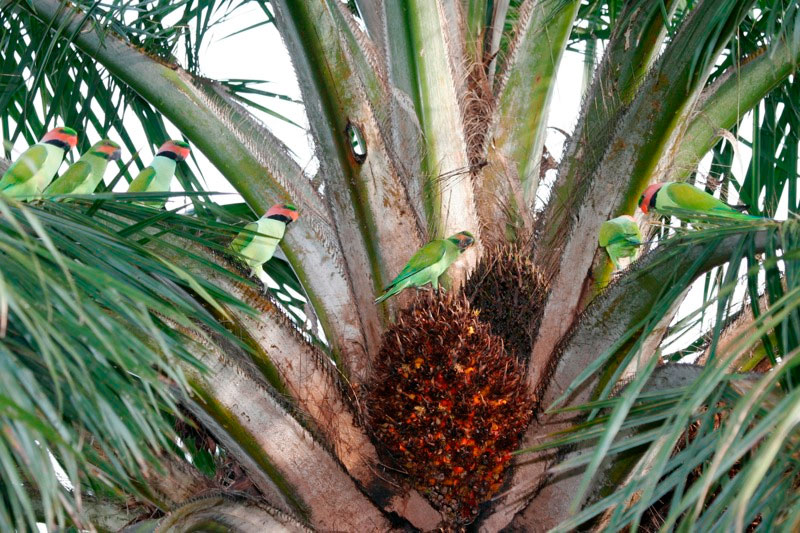
The Long-tailed Parakeet distributed over all types of lowland (below 300 metres in Sumatra), Evergreen from mangrove forests, swamps, tropical forests, to plantations of oil palm plantations (Elaeis) and coconut trees. It prefers the edges of high forest, especially with large dead trees, including close cultivated areas.

Visit parks and gardens on the Islands Nicobar Islands.

gregarious.

Flocks of thousands of birds reported in the Islands Andaman and Borneo but smaller groups (minor's 20) they are typically, especially during breeding. They form mixed flocks with the Blue-rumped Parrot (Psittinus cyanurus) in Kalimantan.

The Long-tailed Parakeet It is a restless bird that are constantly in motion. They fly quickly around branches, moving quickly from a tree to another. Although they are usually well camouflaged in green foliage, its continuous chirp betrays its position. They tend to feed shortly after sunrise and resume foraging around sunset..

Reproduction:

The Long-tailed Parakeet nests in tree cavities, usually dead, often to a considerable height (for example, reported nest in a tree of the species Koompassia in Sumatra to 45 meters above sea level); in the andaman islands commonly nest in trees of the species Pterocarpus marsupium; in the Nicobar Islands sometimes in Pandanus, some 4 meters above ground and in larger trees to 10 metres in height.

Breeds in colonies.

The nest It is full of pieces of bark and chewed wood. In the natural habitat, the average clutch consists of 2 to 3 eggs, each one measures 30,6 x 24,7 mm.

During the courtship, the male bows before the female, by spitting up, circular motions with his head and gently touching its beak.

The breeding It is between the months of December-February, Although pigeons have been observed in July in the Malacca Peninsula; Feb-Mar in the Nicobar Islands and Andaman. Reports of eggs in July sunsets in Sumatra.

Food:

The nominal species diet includes plants from Borneo camphor (Dryobalanops sumatrensis) and fruit of the Dillenia; the subspecies nicobarica largely feeds on fruits as the papaya (Carica papaya) and Pandanus; occasionally feed on the outer cover of the betel nuts (Areca catechu). On the other hand, They assail orchards and fruit plantations to feed, for example, of the oil palm plantations Elaeis, grains and seeds, and they can have an important impact in the fields of ripening rice (for example in the Islas Andaman) and fruit of the oil palm plantations (for example in the Malay Peninsula).

Insects and their larvae can also be part of your daily diet; If these parrots seek them actively unknown, but they may be ingested ,probably, While they feed on fruits and flowers.

Distribution:

Size of the area of distribution (reproduction / resident): 877.000 km2

The Long-tailed Parakeet distributed by the islands of the bay of bengal until Borneo. The range goes from the Coco Islands and andaman islands and Nicobar Islands (India) through Sumatra (including the Enggano Islands, Nias, Bangka and Belitung), South of Malay Peninsula from Sungei Patani (approximately 6ยฐN) to Singapore, Riau archipelago and Bintan, to the East, through the Anambas Islands and up Borneo including Natuna and Karimata Islands.

Resident and common in andaman islands and Coconut.

On the Islands Nicobar Islands described in the century 19 as 'excessively abundant', but with few details today.

Resident on Malay Peninsula, but possibly passage migrant in Singapore.

You can display migratory movements in Sumatra, where probably is the decrease due to the loss in the lowlands of the primary tropical forest.

Unevenly distributed in Borneo, and in Kalimantan numbers fluctuate through little-known seasonal movements.

Resident local in Sabah. More common in the coastal districts of Sumatra and Borneo.

Usually unpredictable appearances, being abundant in a locality for a period and against, absent for years.

Subspecies distribution:
Subspecies

Conservation:

State of conservation โ“˜


Near-threatened Near Threatened โ“˜ (UICN)โ“˜

โ€ข Current Red List of UICN: Near-threatened

โ€ข Population trend: Decreasing

The size of the world population Long-tailed Parakeet It has not been quantified, but the species is described as very common and widespread in southern Borneo, locally common in Sumatra and Peninsular Malaysia and common in Brunei, the andaman islands and Nicobar Islands (pit et to the. 1997).

The destruction of forests in the lowlands of Sundaland in Indonesian, as well as in Thailand and Malaysia It has been wide (Kalimantan almost lost the 25% its perennial forest during 1985 to 1.997, and Sumatra almost lost the 30% your coverage 1985), still, the species is still numerous in a number of areas, due to its ability to forage away from forested areas and nest communally. So, the decrease is estimated to have been of the order of 20 to 30% in the last ten years.

Conservation Actions Underway:

    – CITES Appendix II.

Conservation Actions Proposed:

    – Monitor the species in trade.

    – Monitor habitat trends and rates of deforestation in the lowlands of Sundaland using satellite imagery and remote sensing.

    – The investigation of the ecology of the species to improve the understanding of the movements it makes.

    – Effectively protect significant areas of habitat at key sites, both in strictly protected areas and in multiple use areas.

"Long-tailed Parakeet" in captivity:

Rare in captivity, their mortality is high and breeding successes are rare.

It is a bird very noisy. It is a principle very shy and slow to get your confidence. They don't bathe often, Although they occasionally sit in the rain. They enjoy gnawing fresh branches. The main problems for captive breeding are the difficulty of matching compatible pairs; the Long-tailed Parakeet they usually do not accept a mate that they have not chosen themselves and even if they are breeding pairs, it is very difficult to keep the chicks alive. Sudden deaths no apparent cause they have been reported – possibly as a result of stress.

Some birds may refuse to eat. Have been observed Occasional attacks of females to males, coming to Peck them on the penis, causing them serious injury. It also, these delicate parrots are difficult to acclimatize. Newly imported birds are susceptible to cold, wet conditions. During the acclimatization period, should not be exposed to temperatures below to 24 ยฐC and at no time below 10 ยฐ C.

Given that these parrots are so rare, experts prefer well managed breeding programs the possibility of keeping them captive in private hands.

The size of the clutch average consists of 2 – 4 eggs laid at daily intervals, with an incubation which lasts approximately 23 days. The young leave the nest 7 weeks after hatching and are independent 2 weeks later.

The Long-tailed Parakeet, in any case, you will need a large aviary which is a very active bird and will need plenty of room to move.
It is important to place the bird in a quiet and protected, as well as provide a rest box (22 x 22 x 60 cm.) at all times.

Alternative names:

– Long-tailed Parakeet, Long tailed Parakeet, Malaccan Red-cheeked Parakeet, Malayan Red-cheeked Parakeet, Pink-cheeked Parakeet, Red-cheeked Parakeet (English).
– Perruche ร  longs brins, Perruche de Malacca (French).
– Langschwanzsittich (German).
– Periquito-mustache-cauda-longa (Portuguese).
– Cotorra Colilarga, Cotorra de Cola Larga (espaรฑol).

scientific classification:

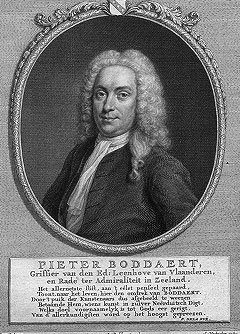
Pieter Boddaert
Pieter Boddaert

– Order: Psittaciformes
– Family: Psittaculidae
– Genus: Psittacula
– Scientific name: Psittacula longicauda
– Citation: (Boddaert, 1783)
– Protonimo: Psittacus longicauda

Long-tailed Parakeet Images:


Especies del gรฉnero Psittacula

Sources:

– Avibase
– Parrots of the World โ€“ Forshaw Joseph M
– Parrots A Guide to the Parrots of the World – Tony Juniper & Mike Parr
– Birdlife

– Photos:

(1) – A male warning juvenile to keep away from the food while he is there in Queenstown, Singapore By Lip Kee Yap [CC BY-SA 2.0], via Wikimedia Commons
(2) – A female in Queenstown, Central Singapore on 2 December 2005 By Lip Kee Yap [CC BY-SA 2.0], via Wikimedia Commons
(3) – feeding in Queenstown, Singapore on 2 December 2005 By Lip Kee Yap [CC BY-SA 2.0], via Wikimedia Commons
(4) – A juvenile in Queenstown, Central Singapore on 2 December 2005 By Lip Kee Yap [CC BY-SA 2.0], via Wikimedia Commons
(5) – Long-tailed Parakeets at the Botanic Gardens, Singapore By Lip Kee Yap [CC BY-SA 2.0], via Wikimedia Commons
(6) – Long-tailed Parakeet, adult male Joseph Wolf [Public domain], via Wikimedia Commons

– Sounds: Mathias Ritschard (Xeno-canto)
โ–ท The world of Pets: Dogs, cats, birds, reptiles, amphibians

Emma's Parakeet
Pyrrhura emma

Emma's Parakeet

Content

Description:

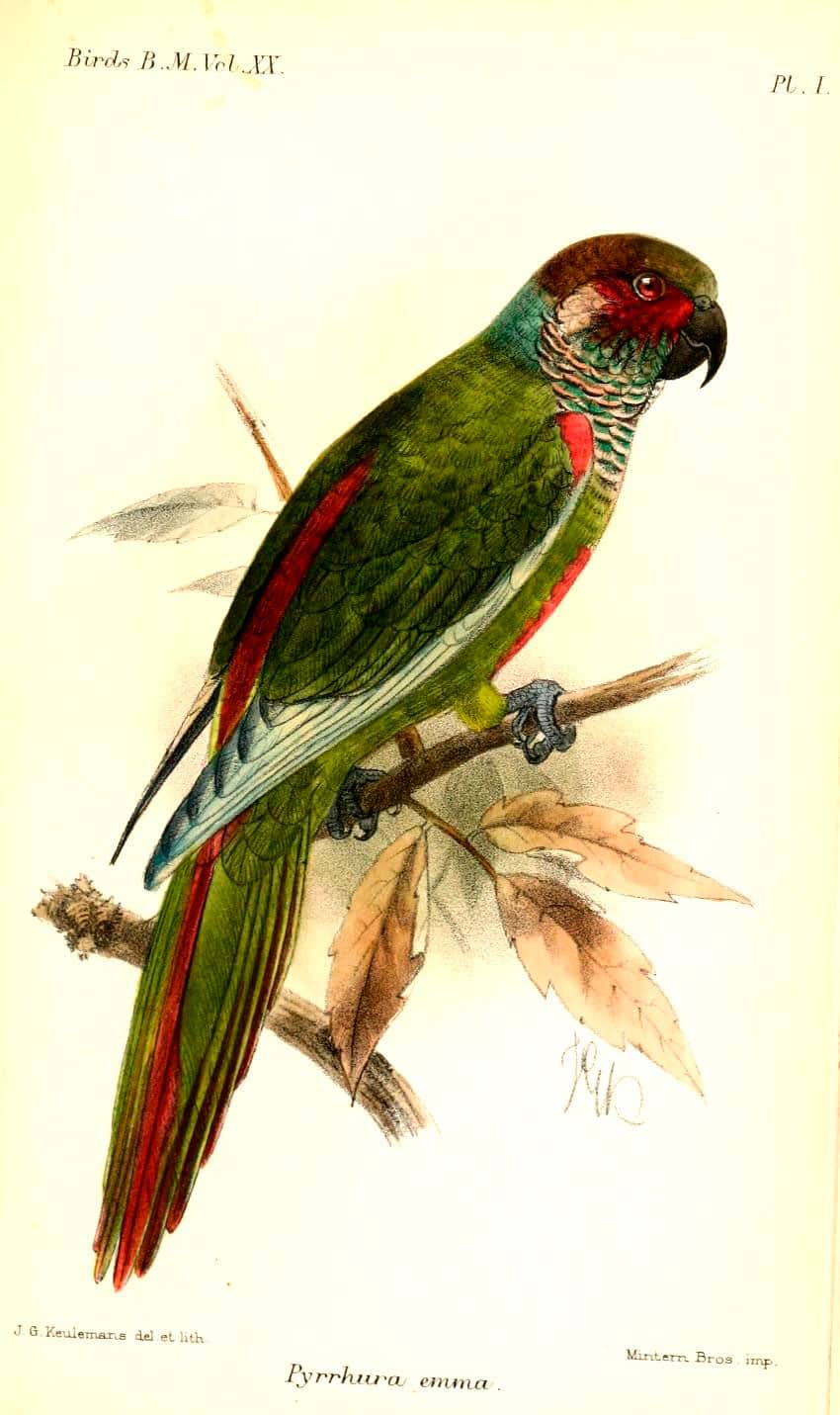
Emma's Parakeet

23 cm.. length.

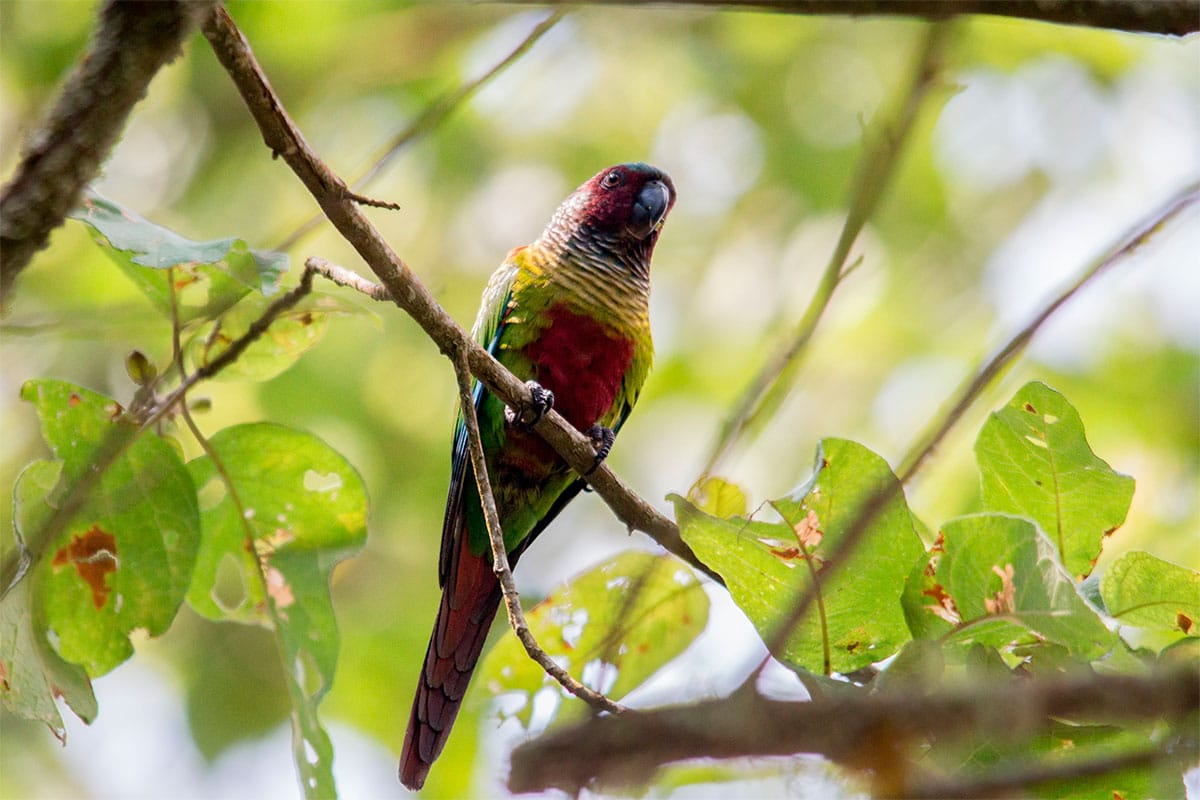
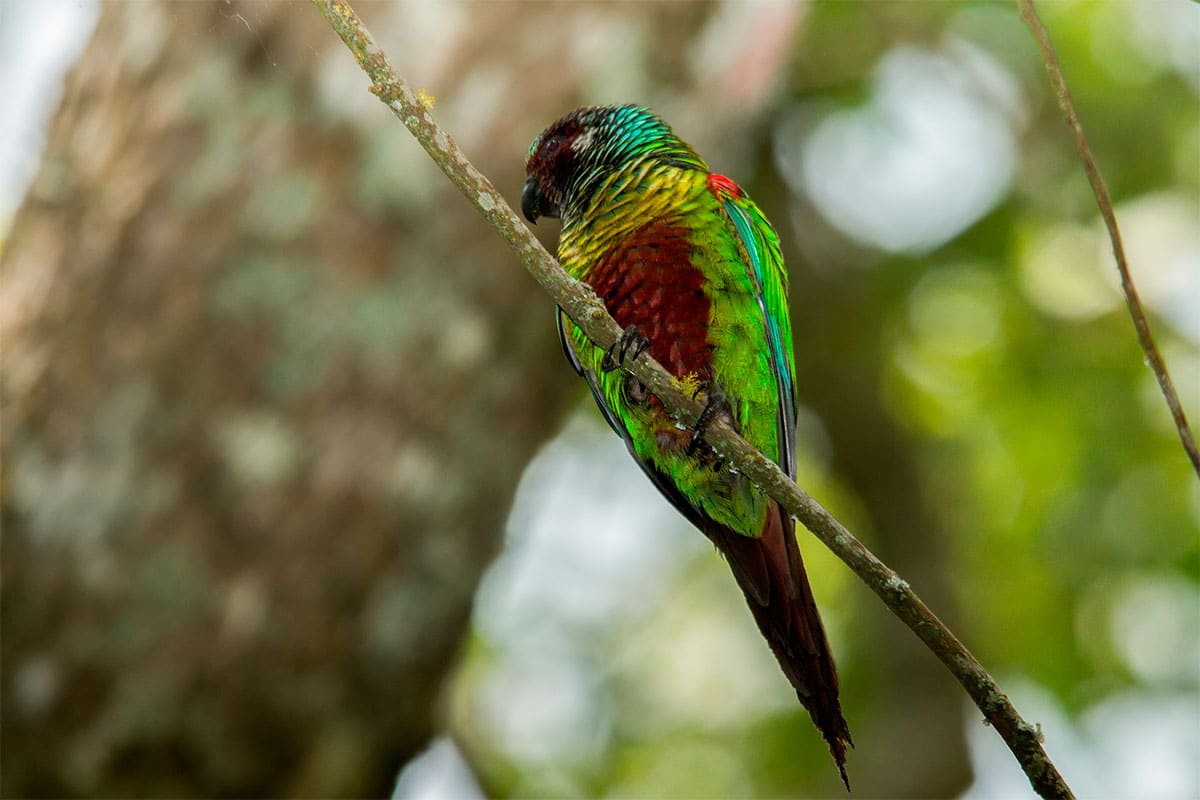
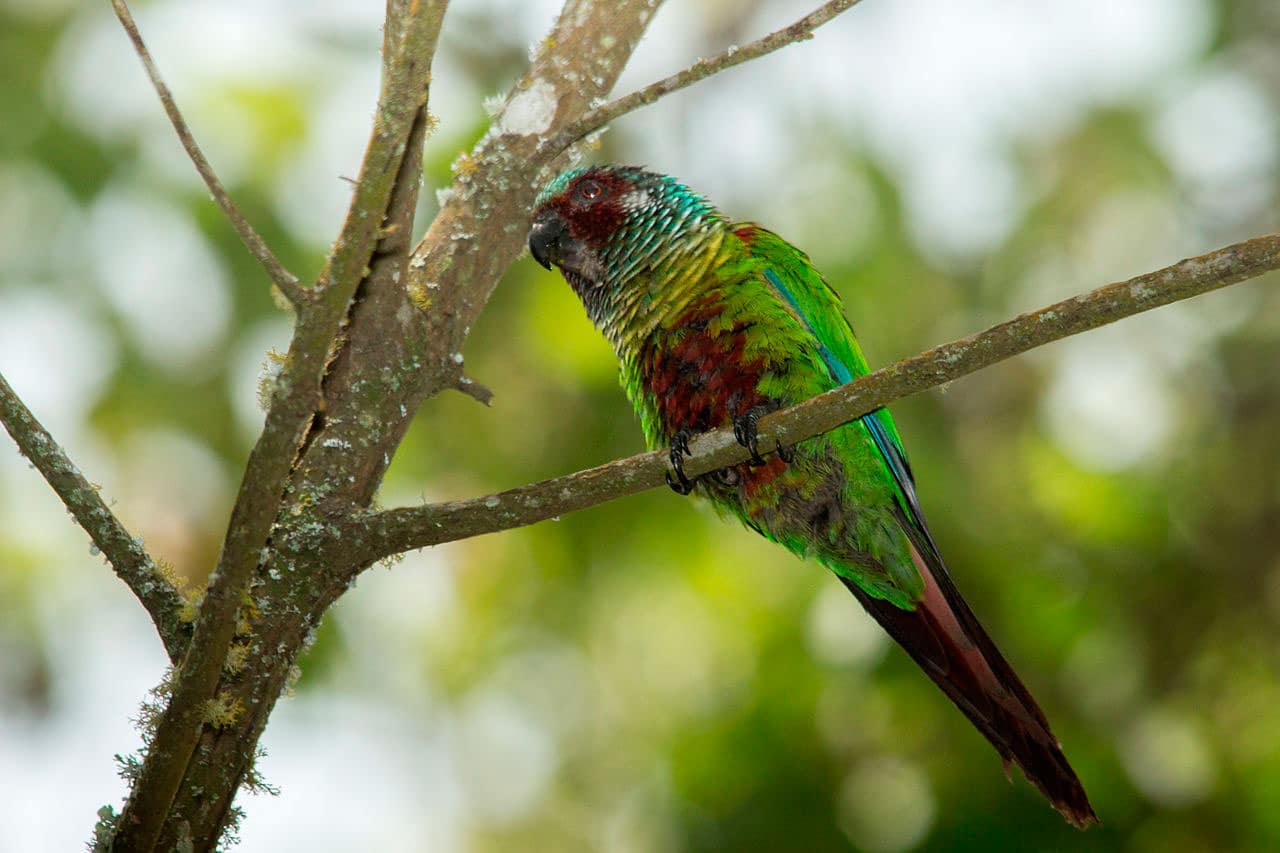
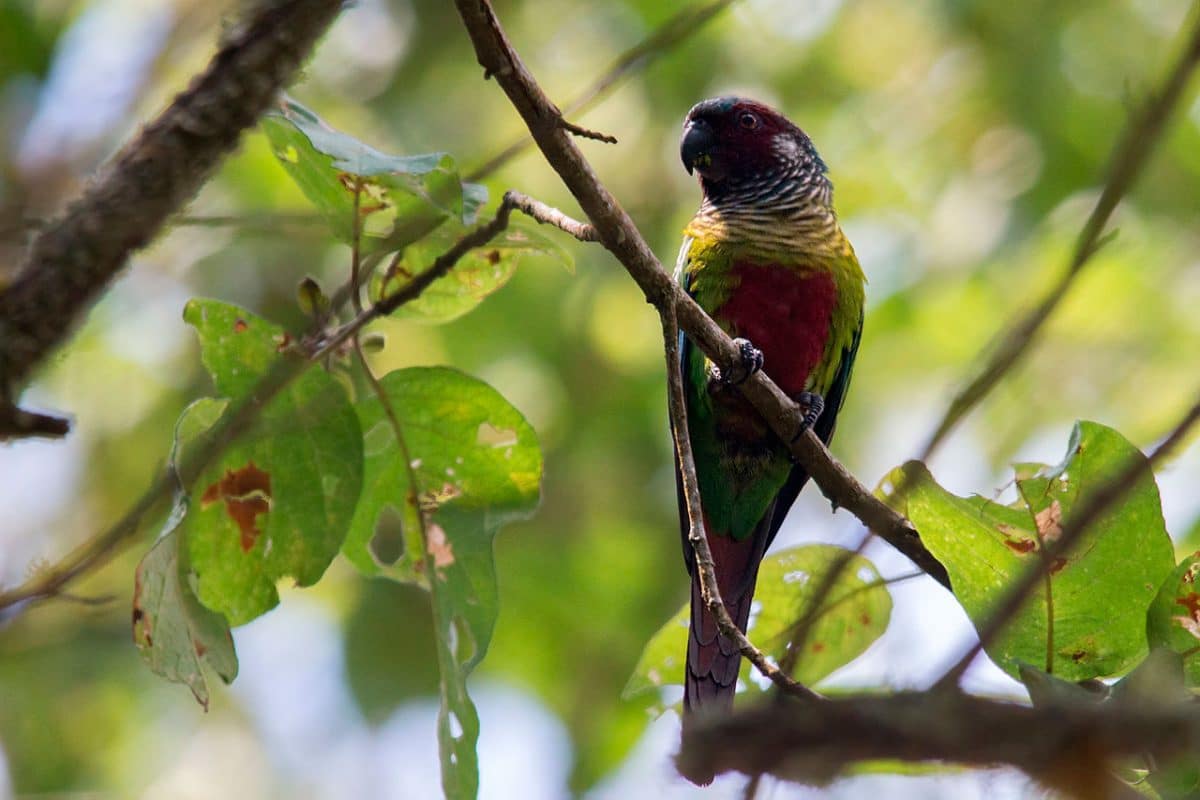
The Emma's Parakeet (Pyrrhura emma) is a bird, mostly, green, with blue in the wings, reddish-brown in rump, on tail and in the back; Scaled plumage chest yellowish color on a gray background olive; wings with red shoulder, inconspicuous.
The face red plum, while the pileum It is brown and gray forecrown blue. Abdomen with dark red stain, tail with green base, edge red and below all red.

Eye ring grey, cheeks red with white spot on ears. Bill dark. It has no sexual dimorphism.

Habitat:

They can be seen in hill forests in the coastal mountain range in Venezuela, in humid forests and edges as well as in adjacent clearings with sparse trees and groves (pit et to the., 1997).

Usually it moves in flocks, on quick flights up 25 specimens, before landing in the canopy.

Reproduction:

There is insufficient information regarding reproduction and feeding. Breeding season probably between May and July. Period of incubation: 24-25 days.

Food:

They have been observed eating flowers of Ochroma and nectar (Hilty 2003).

Distribution:

Size of its range (reproduction / resident): 88.300 km2

The Emma's Parakeet inhabits forested areas of the northern coastal range Venezuela, from Yacacuy and Carabobo until Miranda, and disjuntamente from Anzoรกtegui to Sucre and northern part of Monagas (Del Hoyo et al., 1997, Juniper and Parr 1998, Hilty 2003, Forshaw 2006).

It is mainly found at altitudes 250-1.700 m, but you can see at sea level in eastern Sucre (Hilty 2003), where is quite common (Hilty 2003, P. Boesman in a bit., 2006). Its distribution within this range is complex and disjoint, found especially in mountainous terrain at lower elevations (Hilty 2003).

Conservation:

โ€ข Current category of the Red List of the UICN: Least concern.
โ€ข Population trend: Decreasing.

Justification of the population

State of conservation โ“˜


minor concern Minor Concern โ“˜ (UICN)โ“˜

Apparently, the population size of this species has not been quantified.

Justification of trend

The capture for trade and changes in land use may be causing a decrease in population of this species, although the trend has not been quantified, and none of these is considered serious threats to this species today(CJ Sharpe a slightly. 2014).

Conservation Actions Underway

They live in several national parks (P. Boesman in a bit., 2006), with a "substantial" population in the Guatopo National Park, Miranda (Juniper and Parr 1998, Hilty 2003).

Conservation Actions Proposed

Continue to monitor this species in the field and in trade.

Strengthen the network of protected areas within the range of this species.

"Emma's Parakeet" in captivity:

Very rare in captivity. Very intelligent, active and playful. They are very aggressive with other species. Price per couple: 400 EUR.

Alternative names:

– Emma’s Parakeet, Emma’s Parakeet (incl. auricularis), Painted Parakeet (Venezuelan), Venezuelan Parakeet (English).
– Conure d’Emma, Conure emma, Conure emma (incl. auricularis) (French).
– Emmasittich (German).
– Emma’s Parakeet (Portuguese).
– Cotorra de Emma (espaรฑol).


scientific classification:

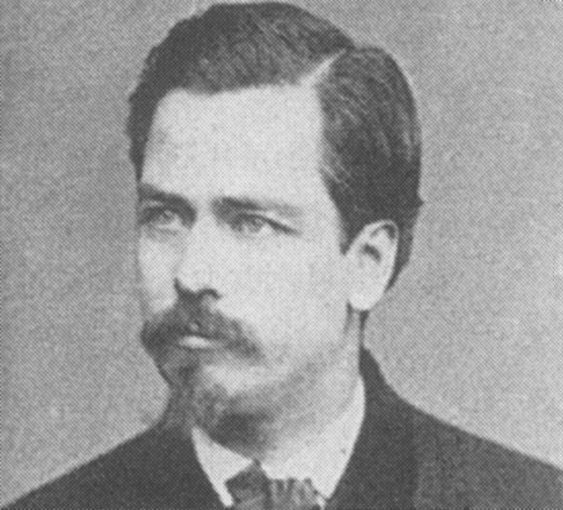
Salvadori Tommaso

– Order: Psittaciformes
– Family: Psittacidae
– Genus: Pyrrhura
– Scientific name: Pyrrhura emma
– Citation: Salvadori, 1891
– Protonimo: Pyrrhura emma


Images Emma's Parakeet:

Videos "Emma's Parakeet"


Especies del gรฉnero Pyrrhura

Emma's Parakeet (Pyrrhura emma)


Sources:

– Avibase
– Parrots of the World โ€“ Forshaw Joseph M
– Parrots A Guide to the Parrots of the World – Tony Juniper & Mike Parr
– Birdlife

– Photos:

(1) – Venezuelan Parakeet | Perico Pintado ( Pyrrhura emma)By Fernando Flores from Caracas, Venezuela [CC BY-SA 2.0], via Wikimedia Commons
(2) – Venezuelan Parakeet | Perico Pintado ( Pyrrhura picta emma) By Fernando Flores from Caracas, Venezuela [CC BY-SA 2.0 or CC BY-SA 2.0], via Wikimedia Commons
(3) – Venezuelan Parakeet | Perico Pintado (Pyrrhura emma) by Fernando Flores – Flickr
(4) – Venezuelan Parakeet | Perico Pintado (Pyrrhura emma) by Fernando Flores – Flickr
(5) – Venezuelan Parakeet | Perico Pintado (Pyrrhura emma) By Fernando Flores from Caracas, Venezuela [CC BY-SA 2.0], via Wikimedia Commons
(6) – Pyrrhura emma = Pyrrhura picta, Painted Parakeet by John Gerrard Keulemans [Public domain], via Wikimedia Commons

– Sounds:

โ–ท The world of Pets: Dogs, cats, birds, reptiles, amphibians

Hellmayr's Parakeet
Pyrrhura amazonum

Hellmayr's Parakeet

Content

Description:


Anatomy-parrots

22 cm.. length.

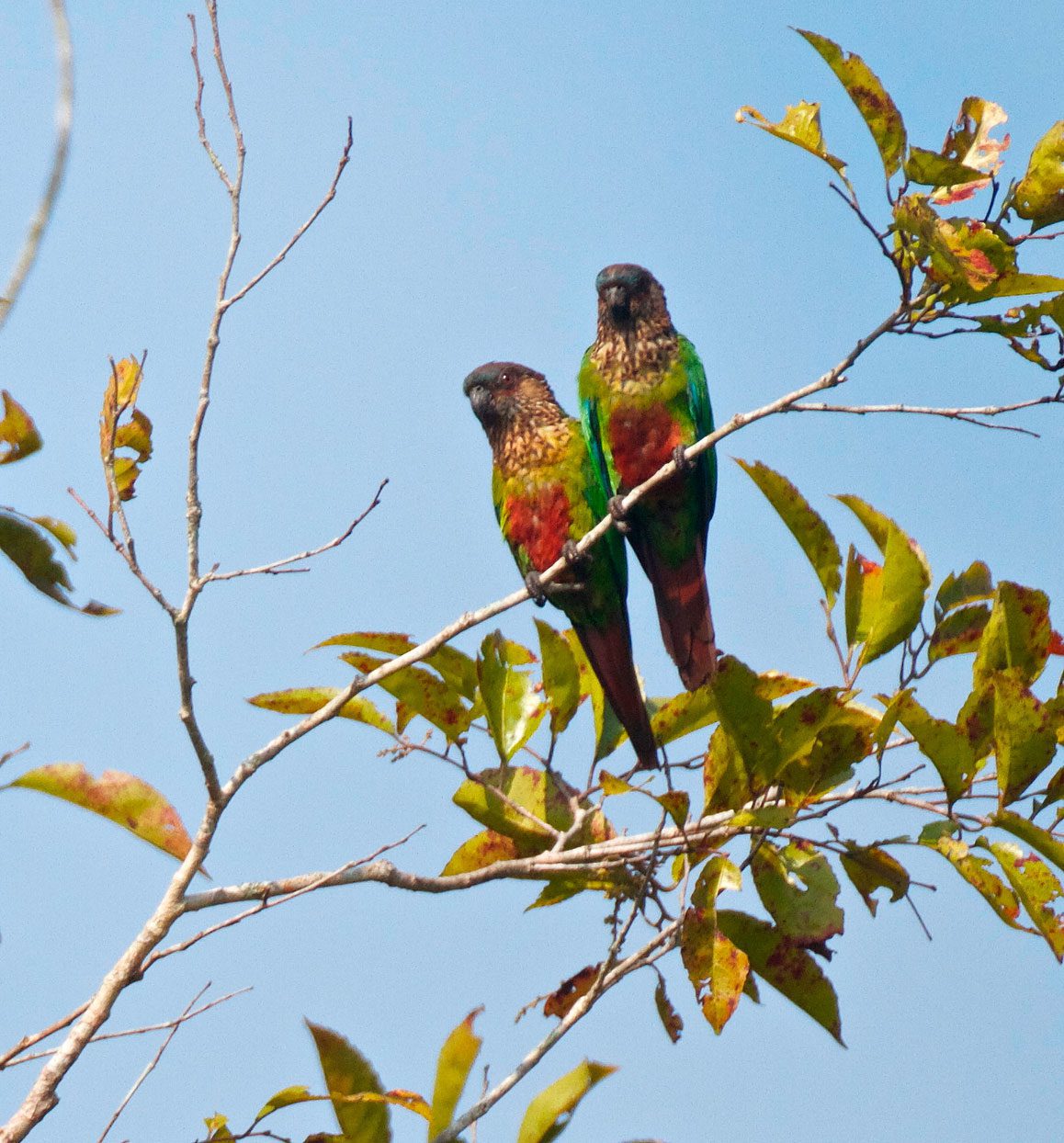
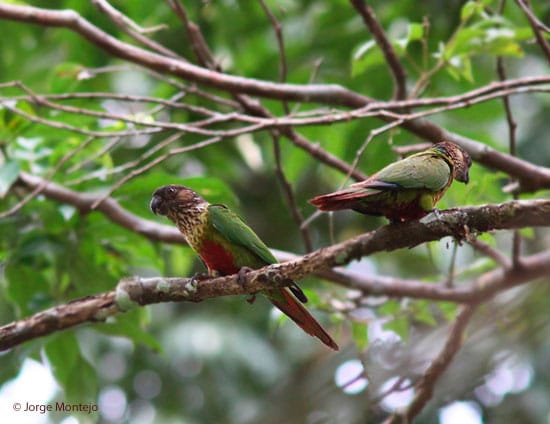
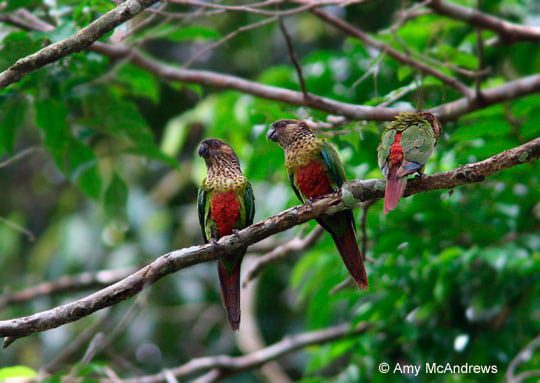
The Hellmayr's Parakeet (Pyrrhura amazonum) It is a mainly green parakeet; the area from crown at the nape it is dark brown; the belly, the rump and tip tail, They are dark red; below, the tail It is also dark red.

They have a patch whitish in ear-coverts; a blue band in front of eyes. The face It is dark reddish brown; the upper region chest It is greenish gray with gray scalloping; the bottom of the chest It is scaled with yellowish effect; the in bend of wing green; brown-red patch in the center of abdomen; of remiges blue (visible only in flight). Orbital ring blackish; the cheeks and ocular region are dark brown.
Bill grey-black; eyes orange brown.

The immature birds They have a darker plumage.

Taxonomic status:

Considered a subspecies of the Painted Parakeet by some authors

  • Sound of the Hellmayr's Parakeet.

Description 3 subspecies:

  • Pyrrhura amazonum amazonum

    (Hellmayr, 1906) – Nominal.


  • Pyrrhura amazonum lucida

    (Arndt, 2008 parrots[Arndt]) – Little or no blue on the front of the crown. Slightly smaller and paler than the Pyrrhura amazonum snethlageae


  • Pyrrhura amazonum snethlageae

    – perico madeira – (Joseph & Bates,JM, 2002) – The bare periophthalmic is of color beige.

Habitat:

They are distributed in tropical moist forests and adjacent habitats. Itร‚ยดs social. Observed in pairs or groups. It is quite common in most of its range and inhabits several protected areas.. The Pyrrhura amazonum amazonum It is in the Amazon National Park, For, Brazil, while the Pyrrhura amazonum lucida It is in the The Cristalino State Park, Mato Grosso, Brazil.

Reproduction:

They build their nests in tree cavities.

Food:

With feed seed, flowers, fruit, berries and nuts. They are also considered local pests, as they regularly raid cornfields and orchards, occasionally causing considerable damage.

Distribution:

Size of its range (players / residents): 392.000 km2

Distribution 3 subspecies:

Conservation:

State of conservation โ“˜


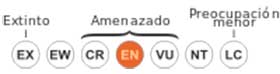
Endangered Endangered โ“˜ (UICN)โ“˜

โ€ข Current category of the Red List of the UICN: In danger of extinction.

โ€ข Population trend: Decreasing.

โ€ข Population size : Unknown.

Justification of the Red List of the Category

Based on a model of deforestation in the amazon basin, and their potential susceptibility to capture for the bird trade, It is suspected that the population of the Hellmayr's Parakeet It has declined rapidly over three generations, and therefore it has been classified as danger of extinction.

Justification of the population

Recent world population is unknown given taxonomic divisions.

Justification trend

This species is suspected that he has been able to lose 43,0 to 52,1% of suitable habitat within their distribution over three generations (18 years) based on a model of deforestation of the Amazon (Soares-Filho et to the . 2006, Bird et to the. 2011). Given the susceptibility of this species to capture, It suspected population decline by 50% in three generations.

Threats

The main threat to this species is that it is accelerating the Deforestation in the Amazon basin for livestock and soybean production, provided by the expansion of the road network (Soares-Filho et to the. 2006, Bird et to the. 2011).

The changes proposed by the Forest code of Brazil they reduce the percentage of land that a private owner has a legal obligation to keep as forest and include an amnesty for owners who deforested before July 2008 (who would later be absolved of the need to reforest illegally cleared land) (Bird et to the. 2011).

His capture for bird trade wild can represent a significant threat.

Conservation actions and ongoing research

It is not known any.

The proposed conservation and research actions

Expand the network of protected areas to effectively protect IBA.

Effectively manage the resources of existing protected areas and new, the use of new opportunities for financing the management of protected areas with the common goals of reducing carbon emissions and maximize biodiversity conservation.

conservation on private lands is also essential, through the expansion of market pressures for rational land management and prevention of logging on land not suitable for agriculture (Soares-Filho et to the. 2006).

Campaign against proposed changes to Forest code of Brazil that would lead to a decrease in the width of protected riparian forest areas such as Permanent Preservation Areas (APPs), that function as vital corridors in fragmented landscapes.

"Hellmayr's Parakeet" in captivity:

It is a bird in danger of extinction. Each captive specimen of this species which is capable of reproducing, must be placed in a well-managed captive breeding program and not sold as a pet, in order to ensure its long-term survival.

Alternative names:

– Hellmayr’s Parakeet, Santarem Parakeet, Santarem Parakeet (Santarem) (English).
– Conure de Hellmayr (French).
– Santaremsittich (German).
– Tiriba-de-hellmayr (Portuguese).
– Cotorra de Santarรฉm, Perico Santarรฉm (espaรฑol).

scientific classification:

Carl Edward Hellmayr

– Order: Psittaciformes
– Family: Psittacidae
– Genus: Pyrrhura
– Scientific name: Pyrrhura amazonum
– Citation: Hellmayr, 1906
– Protonimo: Pyrrhura pictured on Amazon


Images Hellmayr's Parakeet:


Hellmayr's Parakeet Santarem Parakeet (Pyrrhura amazonum) Cristalino Jungle Lodge, Mato Grosso, Brazil

Hellmayr's Parakeet Santarem Parakeet โ€“ Cristalino Lodge, Brazil

Videos "Hellmayr's Parakeet"


Especies del gรฉnero Pyrrhura

Hellmayr's Parakeet (Pyrrhura amazonum)


Sources:

– Avibase
– Parrots of the World โ€“ Forshaw Joseph M
– Parrots A Guide to the Parrots of the World – Tony Juniper & Mike Parr
– Birdlife

– Photos:

(1) – Pyrrhura or Amazon by snethlageae Blake Matheson – Flickr
(2) – Santarem Parakeet (Pyrrhura amazonum) Cristalino Jungle Lodge, Mato Grosso, Brazil by Amy McAndrews – Flickr
(3) – Santarem Parakeet – Cristalino Lodge, Brazil by Jorge Montejo – Flickr

– Sounds: Jeremy Recall, XC235131. accessible www.xeno-canto.org/235131