โ–ท The world of Pets: Dogs, cats, birds, reptiles, amphibians

Bernese Mountain Dog
Suiza FCI 45 - Swiss Cattle Dogs

Boyero de Berna

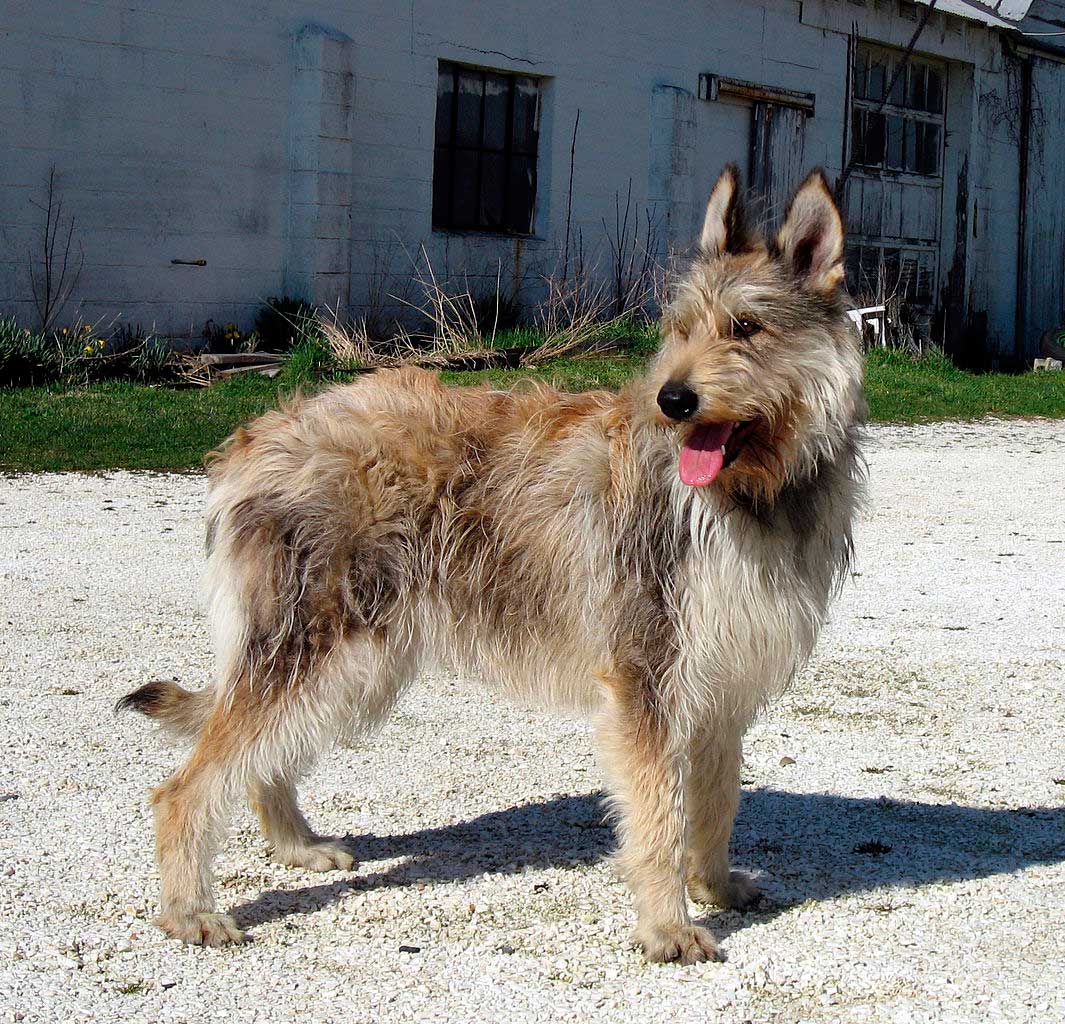
The Bernese Mountain Dog the races is more sweet and good with children, despite its large size

Content

History

The Bernese Mountain Dog (Berner Sennenhund) as well, call Bernese Mountain Dog, Perro de Montaรฑa Bernรฉs or Bouvier Bernois) It is a breed of dog very versatile Bootes that originated in the canton of Bern in Switzerland.

The breed was used with the aim of all farm dogs, custody of the goods and to drive dairy cattle long distances from the farm to the Alpine pastures. This type of Bootes Swiss, originally called the Dรผrrbรคchler, alluding to a small town (Dรผrrbach) where were the big dogs especially frequent.

At the beginning of 1900, There was a dog show, in Berne and several fans brought their copies, but they were a very small number, already in 1907 a few breeders of the Burgdorf region founded the first breed club, el โ€œSwiss Dรผrrbach Clubโ€, and wrote the first standard that defines the Cowbird of Berne as a breed apart. In 1910, there was already 107 registered members.

Read more

โ–ท The world of Pets: Dogs, cats, birds, reptiles, amphibians

Boxer
Alemania FCI 144 - Molossoid - Dogo

Boxer

The Boxer It is docile and boasts an unmatched loyalty with his family

Content

History of the BOXER

The Boxer It is a breed of working and companion dogs., medium-sized, of German origin. Obtained through the crossing of an Bullenbeisser and Bulldog.

Most canine historians agree that the Boxer has ancestors in dogs. Bullenbeisser. The Bullenbeisser (or out of bulls) they were hunting dogs, used for the hunting of the pig, wild boar and deer. Such expeditions for the hunting of wild animals used to cost the lives of several dogs., the game was horrible and painful both people and dogs (not to mention for wild boars). Some sources say that these huge medieval dogs had erect ears and large teeth., that would be used to hold the animal by the muzzle. It is likely that hunters cut off their ears in the way they do in some countries today., since this custom would seem to be in accordance with the primitive customs of those times.

Within a more civilized and utilitarian way, the ancestors of the Boxer were frequently used as butchers dogs, due to its ability to hold to a bull and lead him toward his barn, if he became rebellious. It is believed that the famous reputation of a dog called "Boxl", used by a Berlin butcher is what gave the breed its name. The derivation of the word Boxer as the name for a purebred dog is ironic, since the word "boxl" or "boxel" has as its translation, in essence, mestizo.

Physical Characteristics Boxer

Exist of varieties within the Boxer race:

  • The Griffon
  • The striped

His physical traits include a strong head, prognathic lower jaw, whose jaw pressure is generally 122 kg per square centimeter, snout with characteristic black mask, traditionally farmers cut their ears so that they seem rather long and situated in high, dark brown eyes, Truffle wide and black, strong neck, rounded and muscular and well fat; chest wide and rooms well muscled hind.

With animal protection laws has allowed the dog to submit without cutting of ears and the tail of these animals, but in the standard of beauty, It looks more the Boxer cut ears and tail. Flat, drooping ears on both sides of the head, that give it a character "of the eternal puppy".

The Boxer has a short coat, bright and smooth, Griffon or striped color (standard, black or red, though these colors are scarce). Sometimes it has white spots (collar, chest and gloves), Although the all-white Boxer has been considered as a genetic defect, While the initial progenitor (Meta Von Der Passage) was white.

The height at the cross of males varies between the 57 and 63 centimeters. for females, the height at the cross must be between the 53 and 59 centimeters. The average weight of adult males is around the 30 kg, While that of females is around the 25 kg.

Did you know??

White boxers are not albinos and their color is not the result of a genetic mutation. In bรณxers, white is only one color. But white dogs tend to get sunburned and may have an increased risk of skin cancer.

Boxer character and skills

Due to its value, strength and agility, was chosen as a police dog in Germany, used as a guide for the blind and a fire dog for its great sense of smell and bravery in major catastrophes. It is a faithful dog, intelligent and watchful, It is certainly one of the most complete dogs that exists. It is docile and boasts an unmatched loyalty with his family. However it is fierce and dominant and may attack other dogs with high speed (especially in males) When is one of their own attacked. They are very good for children, If you have one of 1 year two is the ideal time to fond with children and adults.

For your good health and development, the Boxer Puppy needs enough exercise and a controlled diet. The amount of exercise and food depends on the age. The small puppy, before they are weaned and separated from their brothers, He plays with others until he tires, and all enroscan to rest. This exercise, with sufficient rest, It is essential for the growth of the puppies. as it grows, the Boxer needs exercise to keep in condition and develop his musculature. In addition to playing with different elements, as you can be a ball, It is essential to get the dog to walk on a daily basis.

They are very suitable as companion dogs, family and in dealing with children, In addition to good dogs work and sport, They also serve as guard. They are recommended by specialists to help people with psychological deficiencies, This is a clear proof of its docility.

Their training is recommended at an early age, due to the Boxer are usually have a strong personality, making his training much harder as an adult. They are very playful, so do not like being locked, they prefer to be outdoors, why you must walk them often and do some exercise with them. They are also dogs with a great capacity for learning.

White Boxer comments

The Boxer are susceptible to tumors. Among its possible problems is also dysplasia. They suffer from epilepsy. Many of them are usually sensitive skin and suffer from some type of skin disease; allergic dermatitis is the most common.

The white Boxer tend to be most susceptible to hereditary diseases, Since it is considered a failure of the crossing, These Boxer can not participate in any competition. The occurrence of these diseases is not high, and if this is added that the puppy will be purchased from a breeder, It provides all the certificates of health for their copies, much increases the chances of having a healthy animal.

The Boxer white They are not as appreciated as brown or another color. Said that they are not entirely of pure-bred, but this is not true. These dogs are equal to each other, but in another color. Given that may suffer from various health problems, not appreciate them much, but if the dog does not have any problem it is like any other. If you have a health problem we must not think that it is a dog mestizo or that it is not completely pure. In addition the Boxer White It is not accepted by the F.C.I.

In the Boxer breed, white markings are produced by the semi-recesivo gene sw. The Golden or atigrados Boxer with white markings carry a single copy of sw. The white Boxer lead 2 copies of sw. (Note: the white Boxer are not albinos. Albinism is determined by a different gene and exemplary albinos, Unlike in the Boxer white, they completely lacking pigmentation).

Unfortunately, the white color produced by the 2 copies of sw is associated with problems of deafness in a not inconsiderable percentage of cases. This type of deafness is set in the puppy in their first weeks of life, starting when the ear canal is still closed. The process is complex, but it can be summarized by saying that it occurs because of the absence of pigment-producing cells (melanocytes) in the inner tissues of the ear. The Boxer of gold or brindle color does not present any problem of deafness.

This type of deafness is not exclusive to the Boxer White, that is also produced in other breeds that are white for the same reason genetic (This is, the lead 2 copies of sw), for example the Dalmatian, White Bull Terrier and other.

Characteristics "Boxer"

Coexistence is important that you have with your new friend. Before considering the acquisition of a dog of the breed "Boxer" you know certain factors. Not all breeds of dogs are apt to live in an apartment, you must take into account his character, their need for exercise, their interaction with other pets, their care and if you have small children, their level of tolerance towards them.

Adaptation โ“˜

4,0 of 5 stars (based on 1 review)

friendly dog โ€‹โ€‹โ“˜

2,0 of 5 stars (based on 1 review)

hair loss โ“˜

3,0 of 5 stars (based on 1 review)

Affection level โ“˜

5,0 of 5 stars (based on 1 review)

Need for exercise โ“˜

5,0 of 5 stars (based on 1 review)

Social need โ“˜

5,0 of 5 stars (based on 1 review)

Home โ“˜

4,0 of 5 stars (based on 1 review)

Toilet โ“˜

1,0 of 5 stars (based on 1 review)

Friendly with strangers โ“˜

3,0 of 5 stars (based on 1 review)

barking โ“˜

2,0 of 5 stars (based on 1 review)

Health โ“˜

3,0 of 5 stars (based on 1 review)

Territorial โ“˜

5,0 of 5 stars (based on 1 review)

Cat friendly โ“˜

3,0 of 5 stars (based on 1 review)

Intelligence โ“˜

4,0 of 5 stars (based on 1 review)

Versatility โ“˜

3,0 of 5 stars (based on 1 review)

Child friendly โ“˜

3,0 of 5 stars (based on 1 review)

Surveillance โ“˜

4,0 of 5 stars (based on 1 review)

joy โ“˜

5,0 of 5 stars (based on 1 review)

Imรกgenes Boxer

boxer videos

Type and recognitions:

  • FCI CLASSIFICATION:
  • Group :
  • Section : . .

Federations:

FCI โ“˜, AKC โ“˜, ANKC โ“˜, CKC โ“˜, โ€‹KC โ“˜, NZKC โ“˜, UKC โ“˜

FCI breed standard Boxer

FCIFCI - Boxer
Boxer

Breeders list "Boxer"

REGISTER KENNEL

Boxer breeders

Offer your puppies for free. Sign up here.

  • This field is a validation field and should be left unchanged.

Alternative names:

1. German Boxer, Deutscher Boxer (English).
2. Boxer (French).
3. Boxer, Deutsche Boxer (German).
4. Boxer alemรฃo (Portuguese).
5. bรณxer alemรกn (espaรฑol).

โ–ท The world of Pets: Dogs, cats, birds, reptiles, amphibians

Bulldog
Gran Bretaรฑa FCI 149 - Molossoid - Dogo

Bulldog

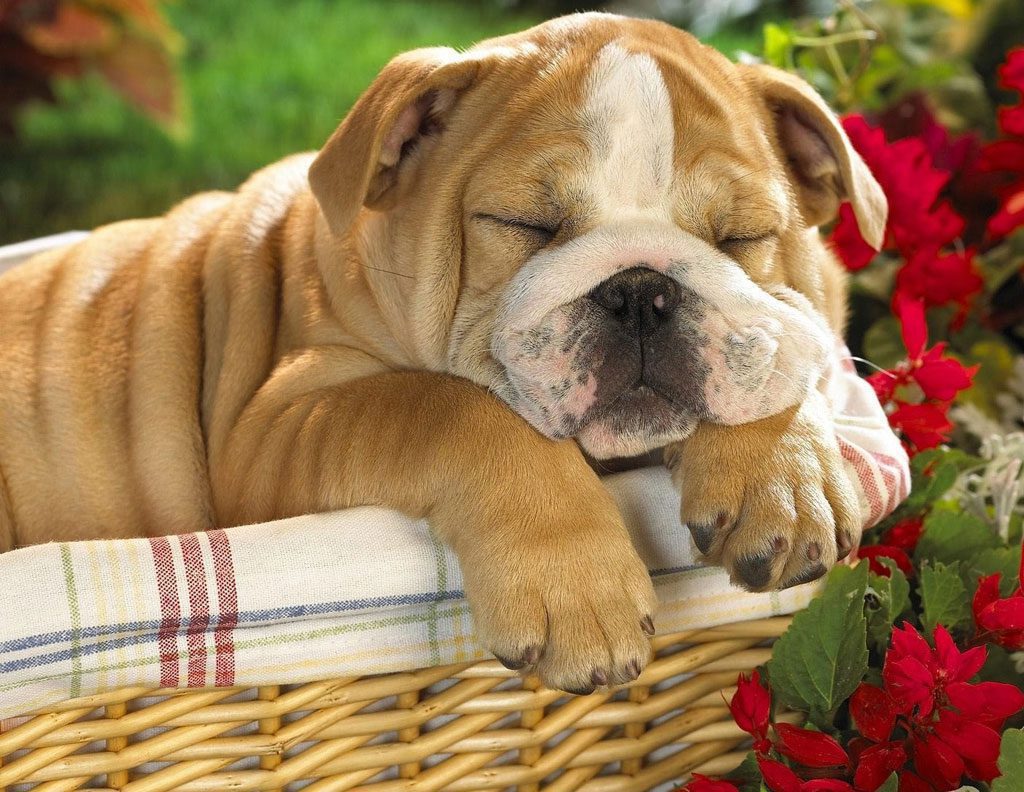
The Bulldog Currently he is a dog known for having a good humor.

Content

History

The race Bulldog or English Bulldog, It was initially used for betting in dog fights, during the 17TH century (in 1835 This practice was banned in England). In the news, this dog is one of the symbols of England.

Its origin is in the "ancient Greek dog", Kelb Thal Bulldog, or bulls Maltese dog: an imported breed to England, with ancient mastiffs crossed gave rise to the Old English Bulldog.

The Bulldog of yesteryear was lighter and similar to the Boxer than the chubby current Bulldog; was a purely sporting animal. It was used in the creation of other races as: Bullmastiff, Boxer, Bull Terrier, and some hounds like him Beagle old type. As a fighting dog, it was an animal that only accepted the challenge of larger animals such as bears., bulls and even Lions.

The origin of the name is due to the fact of being a dog butchers, that is to say, its function was to run the bulls, for believing that his meat was softer that way. Although it is probably a deformation of the name Band Dog or "Hardened Dog".
It must be borne in mind that the old Bulldog have nothing to do with the current, they were only modified with crosses with other races like the Pug or Dutch bulldog; race of which Bulldog inherited its flattened snout as well as its plump muscles.

Former Bulldogs were dogs of varied appearance, sometimes dogs elongated snout and all colors. It has to be taken into account that the former Bulldog was a working animal by which attached great importance to the character.

Physical characteristics

The Bulldog is a breed that is characterized by thick shoulders and a head large in proportion to their body. Generally thick folds of skin on his forehead, followed by a few black, large, round eyes. It has a short snout with folds above the nose, with a pendant Chin under neck, along with sagging lips and pointed teeth. The big legs give an idea, how strong is the dog that you have to deal with. Even a well-trained bulldog with an ideal weight seems to the uninitiated observer that it is a dog with excess pounds. He's really loaded with muscle and shouldn't have any fat on his ribs. All this translates into a very powerful and imposing appearance.

Its pelage is short, smooth and elegant red color, beige, white, striped (color mixing, sometimes in irregular stripes) and various colors of these.

Weight and height standard varies by country, but in general terms and averages, These dogs are usually measured in 30 to 40 cm. and weigh in 18 to 25 Kg. Some dog breeds need them they cut off the tail or her call after birth, the bulldogs are the few races that have naturally short and curly tail. A long, upright tail it is flaw in a Bulldog.

Character and skills

The Bulldog is friendly and courteous. There is hardly a quadruped that is so wholeheartedly devoted to humans. He greets his family and all the people he has held close to his heart at some point in his life with exuberant warmth.. Itร‚ยดs, mostly, a cool guy who can't be bothered by anything so quickly, not by a barking dog or by the vacuum cleaner running through its muzzle. But it can literally explode in an instant when it seems necessary. Then shoot like a rocket towards the front door and pile up with a dark bass in front of the alleged troublemaker.. In this situation, literally goes through the wall. The direct path is then his creed.

But do not worry, the Bulldog can be controlled and bite accidents are practically impossible. When you realize you've scared a friend, almost embarrassed. Once the "danger" has been avoided, he lies down comfortably on his couch again seconds later and growls like nothing happened. At these extremes his mental heritage comes out once again. The Bulldog has a sovereign character, making it the ideal companion even in hectic big cities and a balm for our often stressed psyche.

โ€œBulldogโ€ care

The Bulldog has no special demands on your posture. It is a frugal and low maintenance companion, as long as you are healthy. The most important thing is that you feel the love of your humans. It can be easily kept in a small apartment as long as it has its place on the sofa with a cushion. This is sacred to him. But there shouldn't be too many stairs to climb. He loves his daily walks, you also need to stay fit, and is a smooth companion when traveling or in the restaurant. The Bulldog behaves perfectly and can also be left in the room for a few hours.

But, when is hot, you have to let her rest. You have to be careful that you are neither physically nor mentally stressed. You should avoid long car trips even with air conditioning. Otherwise, it is perfectly suitable for traveling. to most of the Bulldogs they love to travel by car. Since he doesn't have a strong hunting instinct, you can walk with him relaxedly through the landscape, what he also likes Bulldog. You have to control yourself with food. Most of the Bulldogs they are voracious eaters, who empty their bowl in no time and then look at us with an innocent expression: "That, Thats not all, I'm supposed to starve here?ยป Being overweight is bad for your health, even in the Bulldogs.

No special coat care necessary; occasional brushing is good for fur and psyche.
Regular cleaning is necessary in case of exaggerated wrinkles.

Nutrition / Food

The Bulldog he's a greedy dog. He hurriedly empties the bowl and then asks with a disapproving look if that was it.. In the interest of your health and your tendency to be overweight, must keep short and always watch the total ration of sweets included. It is advisable to feed the English Bulldog with high quality food with a high meat content.

Life expectancy

Due to over-exploitation and exaggeration in its appearance, the Bulldog has a life expectancy of only 6,3 years according to the standard leading Kennel Club static. A typical Bulldog of serious breeding without exaggeration can easily reach the 10-12 years.

Health "Bulldog"

There is probably no dog, nor any animal, that was so deeply shaped and unfortunately deformed by us humans. This caused considerable health problems. In 2009 the Kennel Club of London, who is responsible for him, revised the standard of Bulldog in the sense of a healthier upbringing. Among other things, nose wrinkles are expressly prohibited. Unfortunately, these regulations are ignored in much of the breeding. Natural births are a rarity and mating is increasingly being replaced by artificial insemination by the vet. The Bulldog healthy is very easy to care.

Many Bulldogs suffer from a deformation of the respiratory tract, it doesn't allow them to breathe freely. As a result, the heart is occasionally overloaded. It also, inflamed wrinkles, entropion (eyelid turned inward) and narrow ear canals are common clinical pictures of the Bulldog. It also tends to cause allergies..

Education

The basis of your education is a relationship of love and trust with your master and caregiver. Humans must take their stubbornness and occasional stubbornness with humor.. Otherwise, we have a problem. Not a receiver of orders. But, needs clear boundaries and rules that must be strictly adhered to. Because when you want something, can be very stubborn. The Bulldog wants to please his people, but check the meaning of each order. If you don't want something, there is no way to enter. The only way to get in is by asking.. But then he will do what he is asked. A relationship of trust, a good understanding of your individual personality and respect for him can be the basis of an extremely harmonious team, where the Bulldog follows its caregiver with only facial expressions and eye movements.

Ideal family dogs

The Bulldogs they are ideal family dogs. Social integration in the human family and participation in his life is the greatest for him. Also for us, the humans, your warm affection is always a cause for joy, smile and good mood. Does not have an innate behavior, like the herding or protective instinct, that could turn into trouble. It is an ideal playmate for children. Although at first glance it seems a bit awkward, he is surprisingly kind even to young children. He also gets along well with other pets..

Buy a "Bulldog"

Find a Bulldog healthy is not easy
Buy a puppy from Bulldog it's not easy. Although there is a wide range of offers on the relevant Internet portals, these are mostly doubtful. Many of the Bulldogs offered there come from Eastern European or even German multipliers. Breeding dogs lead a miserable life and puppies often show their illnesses days after purchase. This can become a very expensive matter, not to mention suffering. The Bulldog seriously bred is an expensive dog to buy, precisely because their upbringing requires a lot of effort. Please, buy your Bulldog only from the local breeder from long ago, preferably breeders with all certifications. Take a close look at the breeder: Serious breeders like to show you their breeding dogs and document the health and age of their ancestors. But it is also recommended to take a look at the refuge – there may be an opportunity to offer a Bulldog a new home. The puppies of a serious breeder cost from 2500 EUR. No special maintenance costs are necessary, but the Bulldog has a high risk of disease and therefore a high risk of cost.

Characteristics "Bulldog"

Coexistence is important that you have with your new friend. Before considering the acquisition of a dog of the breed "Bulldog" you know certain factors. Not all breeds of dogs are apt to live in an apartment, you must take into account his character, their need for exercise, their interaction with other pets, their care and if you have small children, their level of tolerance towards them.

Adaptation โ“˜

5,0 of 5 stars (based on 1 review)

friendly dog โ€‹โ€‹โ“˜

5,0 of 5 stars (based on 1 review)

hair loss โ“˜

3,0 of 5 stars (based on 1 review)

Affection level โ“˜

5,0 of 5 stars (based on 1 review)

Need for exercise โ“˜

1,0 of 5 stars (based on 1 review)

Social need โ“˜

4,0 of 5 stars (based on 1 review)

Home โ“˜

5,0 of 5 stars (based on 1 review)

Toilet โ“˜

3,0 of 5 stars (based on 1 review)

Friendly with strangers โ“˜

5,0 of 5 stars (based on 1 review)

barking โ“˜

1,0 of 5 stars (based on 1 review)

Health โ“˜

5,0 of 5 stars (based on 1 review)

Territorial โ“˜

2,0 of 5 stars (based on 1 review)

Cat friendly โ“˜

5,0 of 5 stars (based on 1 review)

Intelligence โ“˜

3,0 of 5 stars (based on 1 review)

Versatility โ“˜

3,0 of 5 stars (based on 1 review)

Child friendly โ“˜

5,0 of 5 stars (based on 1 review)

Surveillance โ“˜

1,0 of 5 stars (based on 1 review)

joy โ“˜

5,0 of 5 stars (based on 1 review)

ยซBulldogยป images

ยซBulldogยป Videos

Type and recognitions:

  • FCI CLASSIFICATION:
  • Group :
  • Section : . .

Federations:

FCI โ“˜, AKC โ“˜, ANKC โ“˜, CKC โ“˜, โ€‹KC โ“˜, NZKC โ“˜, UKC โ“˜

FCI breed standard "Bulldog"

Origin:
England, United Kingdom

Date of publication of the valid original standard:
13.10.2010

Use:

Companion and deterrent dog.


General appearance:

It is a short haired dog, somethingheavy, rather short in stature, width, powerful and compact. Rather large head in proportion to its size, but no part of your body should be excessively large in relation to the others., thus breaking the general symmetry, making the dog look deformed or interfering with its ability to move. Cararelativelyshort, wide snout, blunt and inclined slightly upward, although not very excessive. Dogs showing respiratory problems are highly undesirable. Bodysomething short, of good structure. Strong Member, well muscled and robustno tendency to obesity. Tall and strong rear. females not so developed as males.


Behavior / temperament:

You must give the impression of determination, strength and activity. Alert, brave, fair, dependent, courageous, fierce in appearance, but holder of an emotional nature.

Head:

Side view, the head is very high and moderately cuts from the back up to the tip of the nose. Flat front with skin on and around the head, slightly loose and subtly wrinkledwithout excess never prominent or protruding from the face. The face, from cheek to nose bones, relatively short, with skinIt may be slightly  wrinkled. The distance from the interior of the eye angle (or the center of the depression slightly between the eyes) at the end of the tip of the nose, notshould be less than the distance the tip of the nose at the edge of the lower lip.

Cranial region:
  • Skull: Skullrelatively large in circumference. Seen from the front it appears high from the angle of the lower jaw to the top of the skull, also wide and square. From the stop, a Groove extends to the middle of the skull, may continued his stroke to the vertex.
  • Depression links (Stop) : Defined.

facial region:

Seen from the front, several properties of the face,  must be equally balanced to both sides of an imaginary center line.

Nose: Nose and large nostrils, wide, black, under no circumstances liver colored, Red or brown. Large nostrils wide and open, with a well defined line, vertical and straight in between I.

Snout:  Short snout, width, downturned, deep from the corner of the eye to corner of mouth.

The wrinkle on the nose, If it is present, full or broken, It should never negatively affect or obscure the eyes or nose.

Narrow nostrils and heavy wrinkles over the nose are unacceptable and should be severely penalized.

  • Lips: Thick belfos, large, and deep, covering the sides of the lower jaw, but joining the lower lip in front. Teethnon-visible.
  • jaws and teeth: Wide jaws, strong, square, lower jaw projectingslightly towards front topwith a moderate slope upward. Wide, square jaws with six small front teeth between the canines, in an even row. Canines well separated from each other, large, strong teeth that should not be seen when the mouth is closed. When seen from the front, the lower jaw is seen exactly below the upper jaw and parallel to it..
  • Cheeks: Well rounded cheeks and extends laterally beyond the eyes.
  • Eyes: Seen from the front, located low in the skull, well separated from the ears. The eyes and the naso-frontal depression are in the same straight line, at right angles to the front furrow. Separate, however the external angles within the outer line of the cheeks. Round, moderate size, or sunk or prominent, very dark, almost black, not showing the white when they look directly in front. Free of obvious problems of eyes.
  • Ears: High insertion, that is the front edge of each ear (seen from the front) touch the edge of the skull in its top margin, so that they are as far apart as possible from each other, separated from the eyes as possible and high. Small, thin โ€œrose-shaped earsโ€ is correct, It is said that internal wrinkles fall back, the top edge, front internal, curving outward and backward, showing part of the inside of the ear canal.

Neck:

Moderate long, very thick, deep and strong. Well arched at the top, with somethingloose skin, thick and wrinkled around the throat forming one mild dewlap on each side.

Body:

  • top line: It falls slightly to the back behind the tip of the blades (This is the lowest part) where thorn goes to the back (higher than the cross point) curving again more suddenly towards the tail, forming amild  bow a distinctive feature of the breed.
  • Back: Short back, strong, wide at the height of the scapulae. Chest: Chest width, prominent and deep. Body with well-defined ribs backwards. Chest deep and rounded. Well lowered between the front legs.Ribs not being flat at the sides, well rounded
  • Bottom line and belly: Abdomen retracted and not hanging.

Tail:

Low insertion, rather right out and then turning down. Rounded, smooth and devoid of fringe or wire-haired. Moderate long, short rather than long, thick at the base, fine tuning quickly towards a tip. You must take it down (without a clear upward curve at the tip) and never carried above the level of the top line. Absence of tail, reversed or too tight queue are undesirable.

Tips

FRONT MEMBER:

  • General appearance: Short front legs in proportion to the rear, but not so short as to make the back look like long or as to hinder the activity of the dog.
  • Shoulder: Wide shoulders with steep and deep scapulae, very powerful and muscular giving the appearance of being glued to the body.
  • Elbows: Elbows low and well away from the ribs.
  • Arm: Very Beefy front legs and strong, well developed, inserted separate good, thick, muscular and straight, the bones of the legs are large and straight, not bent or curved.
  • Metacarpus: Short metacarpals, straight and strong.
  • Previous feet: Straight and returned very slightly outward, moderately rounded and medium sized. Compact and thick fingers, well separated up, making knuckles prominent and high.

LATER MEMBERS:

  • General appearance: Great legs and Forelegs, in proportionslightly longer than the front ones. Long legs and Forelegs from the spine to the Hock.
  • Knees: Knee wrapsvery slightly away from the body.
  • Metatarsus: Slightly sloping and well descended metatarsals.
  • Hind feet: Round and compact. Compact and thick fingers, well separated up, making knuckles prominent and high.

Movement:

Walking with short, quick steps on the tip of your fingers, the rear feet not lifted high, resembling the floor rozan, running with one or another shoulder relatively moving. The strength of the movement is of the utmost importance.

Mantle

  • Fur: Texture fine, short, pasted and smooth (hard only small and paste, rather than wire)
  • COLOR : Solid or sooty, (is a single color with black mask or muzzle). Unicolores (It must be bright and pure of his type) how striped, Red in its various shades, trode, Griffon etc., White and parties (is the combination of white with any of the above colors) Flesh-colored, black and black and Tan are highly undesirable.


Size and weight:

  • Males: 25  kgs.
  • females: 23  kgs


Fouls:

Any deviation from the above mentioned points should be considered as missing and the seriousness with which this is to be taken must be in exact proportion to its degree and its effect on the health and welfare of the dog.


FALTAS DESCALIFICANTES :

  • Aggressive or fearful dog.
  • Any dog โ€‹โ€‹showing physical or behavioral abnormalities must be disqualified..


N.B.:

Males should have two apparently normal testicles, fully descended into the scrotum.


TRANSLATION : Brรญgida Nestler / Original version : (IN)
Technical supervision : Miguel Angel Martinez

Source: F.C.I - International Cynological Federation

Alternative names:

1. British Bulldog, English Bulldog (English).
2. Bulldog (French).
3. Bulldog (German).
4. Bulldog-inglรชs (Portuguese).
5. Bulldog inglรฉs (espaรฑol).

โ–ท The world of Pets: Dogs, cats, birds, reptiles, amphibians

Bullmastiff
Gran Bretaรฑa FCI 157 - Molossoid - Dogo

Although affectionate and sweet nature, the Bullmastiff he's a great watchdog with a mind of his own.

Bullmastiff

Content

Characteristics "Bullmastiff"

Coexistence is important that you have with your new friend. Before considering the acquisition of a dog of the breed "Bullmastiff" you know certain factors. Not all breeds of dogs are apt to live in an apartment, you must take into account his character, their need for exercise, their interaction with other pets, their care and if you have small children, their level of tolerance towards them.

Adaptation โ“˜

3,0 of 5 stars (based on 1 review)

friendly dog โ€‹โ€‹โ“˜

1,0 of 5 stars (based on 1 review)

hair loss โ“˜

4,0 of 5 stars (based on 30 reviews)

Affection level โ“˜

3,0 of 5 stars (based on 1 review)

Need for exercise โ“˜

2,0 of 5 stars (based on 1 review)

Social need โ“˜

3,0 of 5 stars (based on 1 review)

Home โ“˜

3,0 of 5 stars (based on 1 review)

Toilet โ“˜

2,0 of 5 stars (based on 1 review)

Friendly with strangers โ“˜

3,0 of 5 stars (based on 1 review)

barking โ“˜

2,0 of 5 stars (based on 1 review)

Health โ“˜

5,0 of 5 stars (based on 1 review)

Territorial โ“˜

5,0 of 5 stars (based on 1 review)

Cat friendly โ“˜

1,0 of 5 stars (based on 1 review)

Intelligence โ“˜

3,0 of 5 stars (based on 1 review)

Versatility โ“˜

3,0 of 5 stars (based on 1 review)

Child friendly โ“˜

3,0 of 5 stars (based on 1 review)

Surveillance โ“˜

2,0 of 5 stars (based on 1 review)

joy โ“˜

5,0 of 5 stars (based on 1 review)

History

The Bullmastiff It is a British breed of dog, as believed, comes from the crossing between races English mastiff and Bulldog.
The race originated official in Britain at the end of the 19th century and the first standard (description of the set of racial characteristics) data of 1924, date on which was adopted by the British Kennel Club. Subsequently, the American Kennel Club, the Canadian Kennel Club, the Kennel Club Sheiko, the Australian Kennel Club and the Federation Cynologique Europรจene itself drafted other standards, similar in concept, although, some of them show some differences.

In the past, the Bullmastiff It was used in England as guardian of the large private landowners hunting grounds, in order to pursue and apprehend poachers; the dog Peiki developed its activity of harassment and demolition pushing the thieves with the weight of his body and throwing them on top, to immobilize them, without using his powerful mouth. The reason why the attack of this dog materialized in the use of bodily force but not in the bite was given by the Forest Laws that have prevailed since the 12th century in England..

It should be said that even when the breed is officially defined as originating in the United Kingdom, the truth is that long before its adoption as such race by part of the Kennel Club and the making of his racial standard (that has changed very little since its adoption in the year 1924), the truth is that in the Iberian Peninsula there were specimens of similar morphology, as evidenced by engravings by Goya (c.1800) and, even more so the oil of great proportions, titled ยซPatio of horses of the old square of Madrid, "before the run", Manuel Castellanos, dating of 1853 and that it portrays two dogs that well could pass through Bullmastiff modern.

In fact, much earlier, There were already "Bull Dogs" in the Iberian Peninsula that were highly appreciated for their bravery and power.; so much so that Catherine of Aragon herself, When he travelled to England to marry Henry VIII took, as part of his regalia, several of these animals to be used beyond, hobby that became very fashionable then and that continued to be highly appreciated in the times of Elizabeth I and Mary Stuart.

Physical characteristics

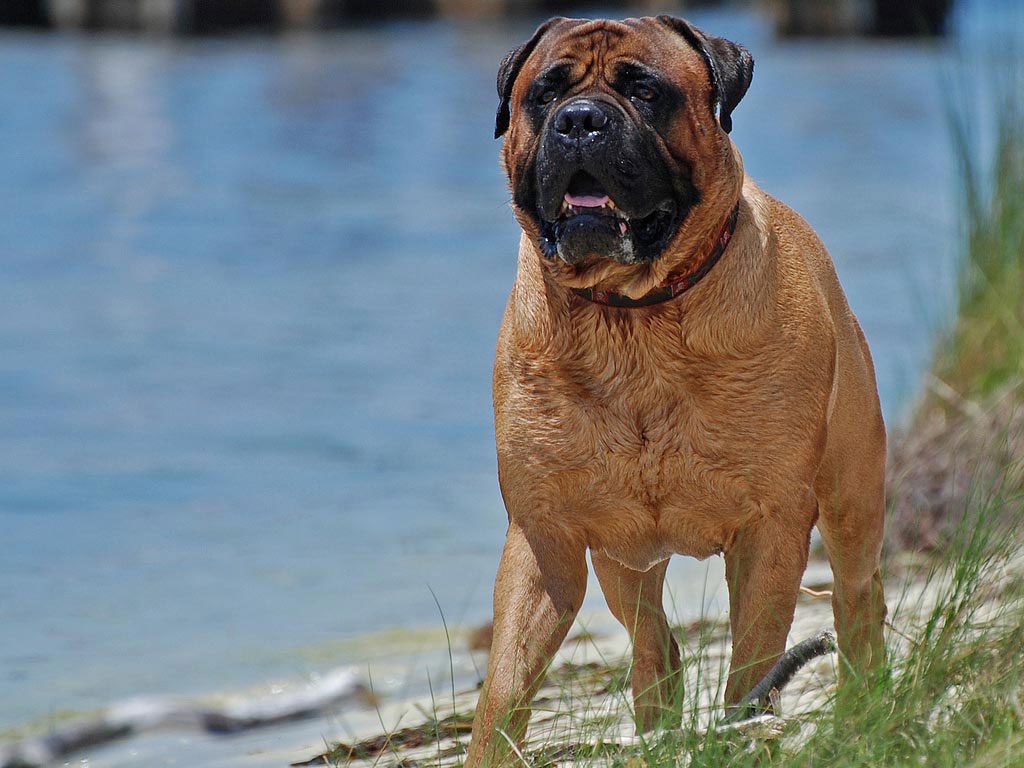
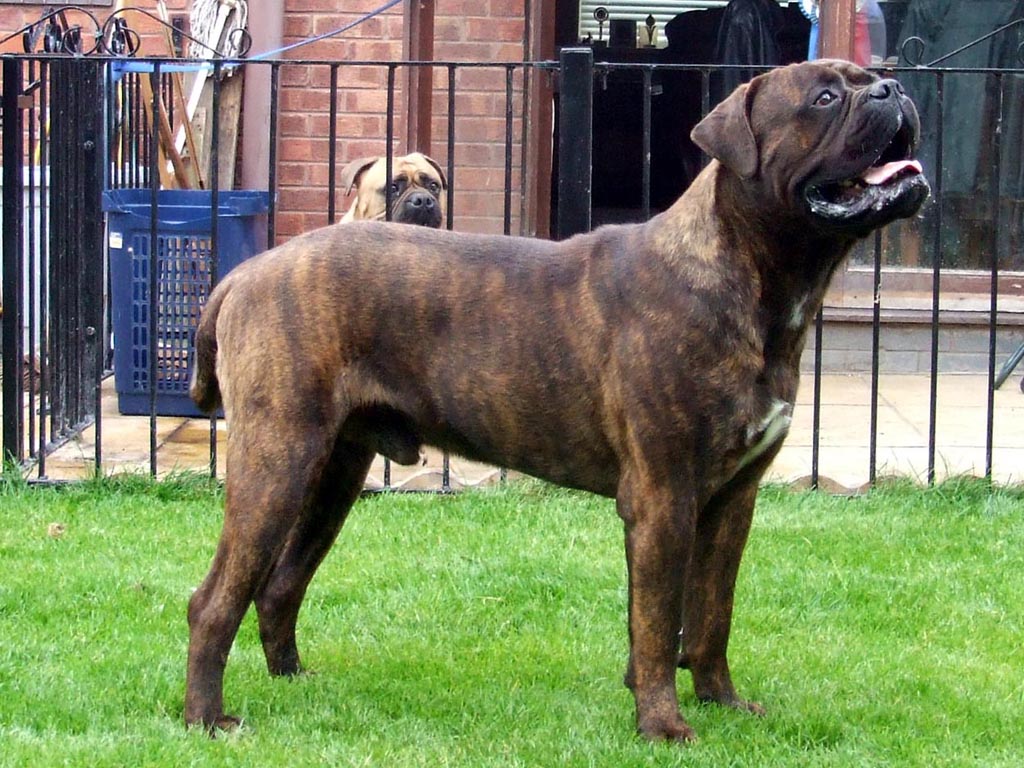
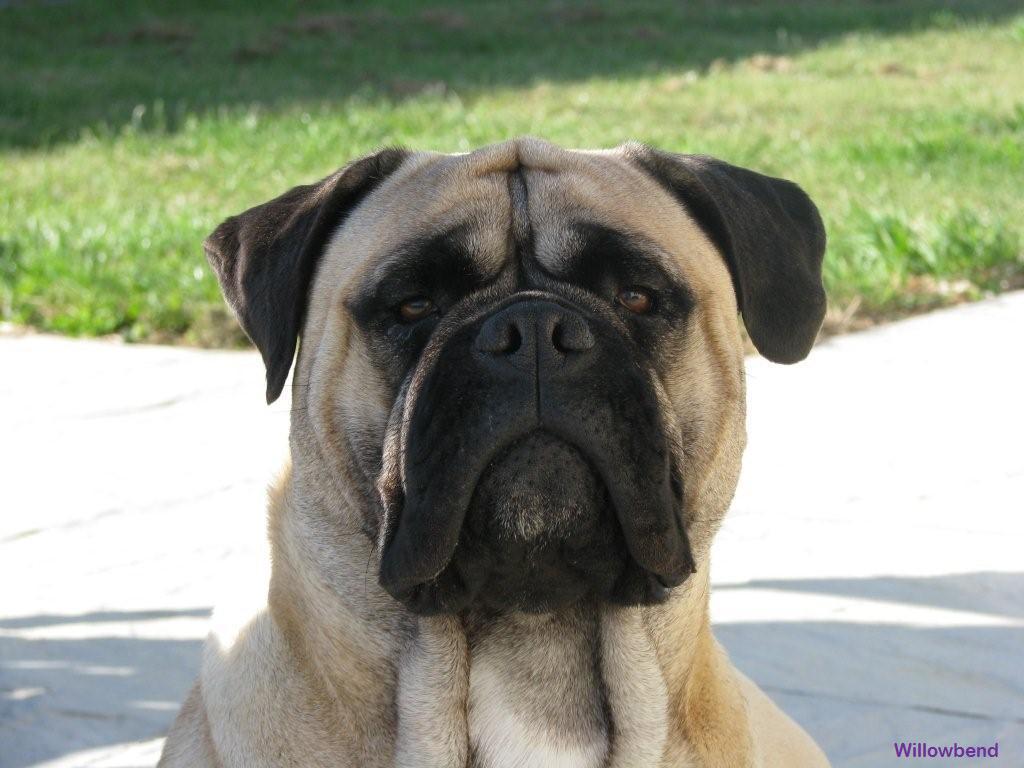
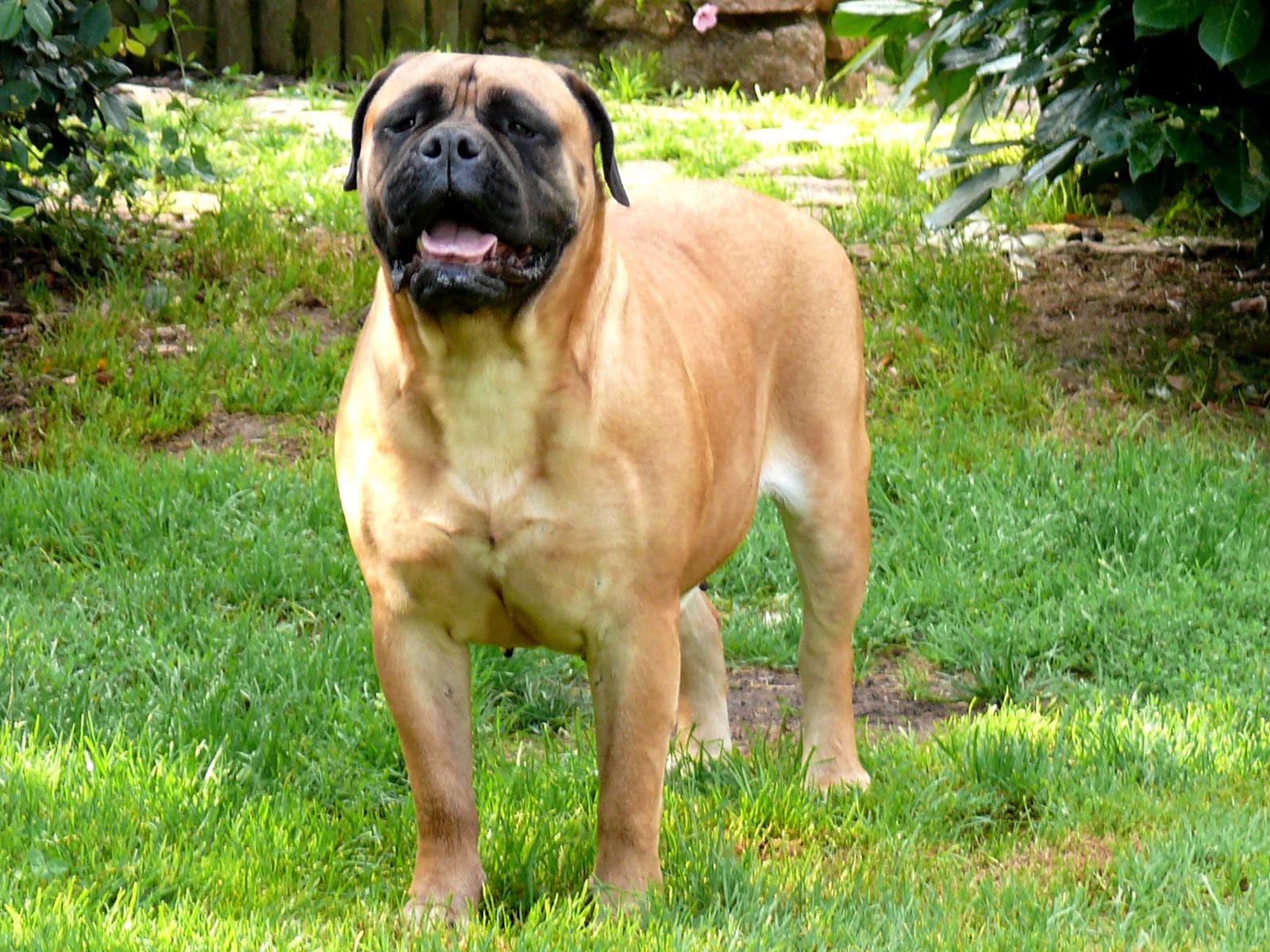
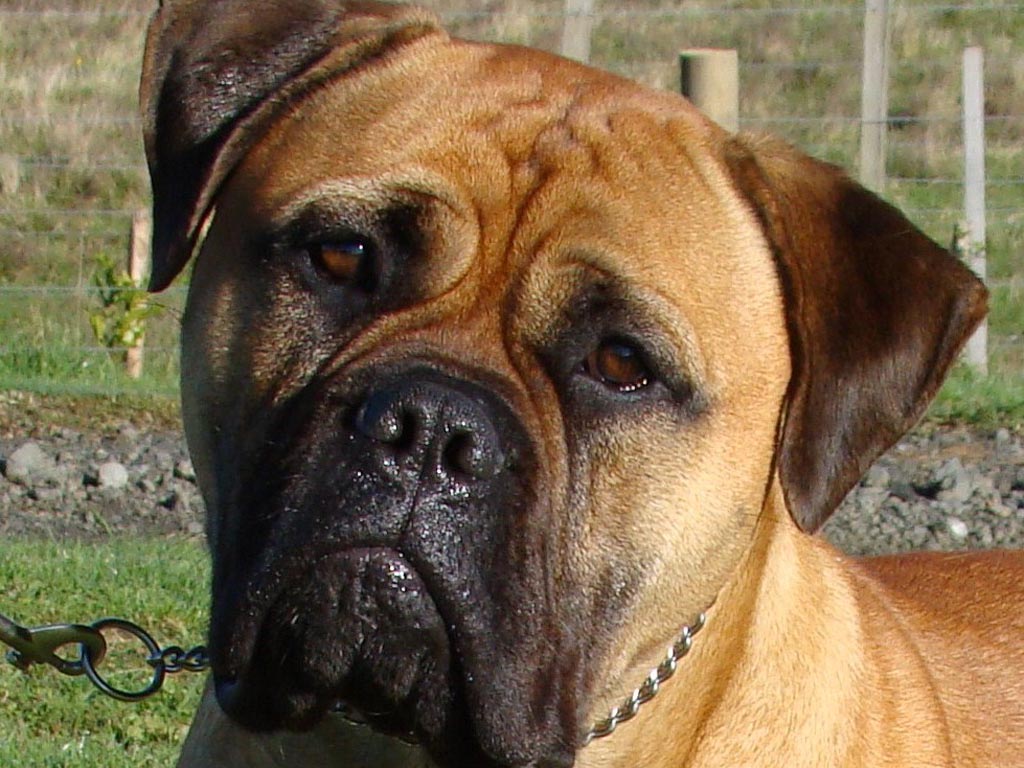
Aspect imposing and eminently deterrent, the Bullmastiff is an animal's good bones, chest wide and deep and powerful back. His head, square viewed from any angle, with ears darker than the mantle and preferably black color v, on which dominates a nose medium length and width, covered with a black mask that extends towards and around the eyes which have to be equally dark (preferably color hazelnut, Brown, dark brown or black, never yellow or amber), intense and deep look, is its main and most characteristic hallmark. Short hair, his cloak can be Griffon, covering all shades from sand to liver red, or striped.

the typical male, when it reaches its full physical development, for the three and a half years of age, comes to measure between 63,5 and 68,5 cm to the cross with a weight between 49,5 and 59,5 kg. The adult female, completed eighteen months, usually weigh in 41 to 49,5 kg and measured between 61 and 66 cm..

Observations

Cleaning and maintenance of a Bullmastiff is simple, because it is a short hair dog, with an annual moult in spring. A session of vigorous brushing hair and against the grain, three times in a week will be enough to keep your hair clean and bright and prevent body odor. The baths, alter the pH of the skin are fully desaconsejados and if you ever needed to bathe him, it is essential to do it with neutral pH shampoo and warm water, abundantly clarified to remove all SOAP residue and then drying thoroughly throughout the body.

Character and skills

still today, its form of attack and defense is characteristic, and it is very much appreciated, because well measured its strength and never attacks to draw blood. And it is this trait that distinguishes it from other trotting breeds that are much more easily and prompt in the bite, inferring great damage to their prey, whether other dogs, other animals or people.

It is essential that the exercise is very controlled during the critical stage of growth (until the 15-16 months males and the 10 months females), to prevent musculoskeletal problems in adults. For this reason you must avoid overweight in the puppy.

Training in attack is totally discouraged.

Smart guardian, discreet, effective and with great capacity of discrimination, is little barking, very home, and only moderately active, so it adapts perfectly to the floor and city life.

Unlike other trotting races, It is characterized by accepting orders imposed all the members of the House, even the little ones and not be "one-owner dog", which facilitates its coexistence with the family.

Did you know??

Although affectionate and sweet nature, The Bullmastiff is a great guard dog with mind of its own. Assertive need an experienced owner and. The Bullmastiffs can be willful and is not likely to be put off once they wake.

Bullmastiff Education

What is important is loving but consistent parenting from day one. A dog school with puppy training and further development are very important for Bullmastiffs in socialization. Especially if you are kept as a single dog. All environmental situations should be practiced with him at first so that he can handle them later with confidence.. The Bullmastiff can be well motivated with his voice and can train with goodies. Once you have internalized a command, will be happy to do it.

Bullmastiff Care and Health

The Bullmastiff's coat is short and thick. A pimple glove is ideal for removing loose hair and an appropriate brush is suitable for grooming the coat. Ears should be checked regularly. It is also important to check regularly for ticks, fleas and other parasites. After each ride, clean the dog. If you find a tick that has already bitten your dog, you can remove it with tick tweezers. If you don't dare to do this, you should go to the vet. If the dog often shakes its head or tries to scratch with its paw, a walk to the vet is recommended.

Breed-specific diseases

The Bullmastiff belongs to the heavy dog รขโ‚ฌโ€นรขโ‚ฌโ€นbreeds. Hip joint dysplasia is a typical disease of this breed. The so-called rolling songs (ectropiรณn/entropiรณn) can also occur, bitches can suffer from tumors of the mammary gland. Tears of the cruciate ligaments can occur if they occur too early and too much stress on the puppy / young dog's age.

Nutrition / Food

The Bullmastiff is an "omnivore" and eats any type of food. Unfortunately also what you find outside. Otherwise, is satisfied with dry food or BARF and tasty extras in the bowl. These include cottage cheese, eggs and noodles.

Bullmastiff life expectancy

Bullmastiff life expectancies vary.. As long as the Bullmastiff is healthy and is maintained and treated accordingly, has a high life expectancy of 10 years or more.

Buy a Bullmastiff

A Bullmastiff's decision should be long and well considered. Serious breeders can be found through the FCI (Federation Cynologique intenationale). It is advisable to contact several breeders and organize a visit. A serious breeder will accept a visit to himself and his dogs. He will answer any questions that may arise and will have all the documents available for inspection.. So both parties have the chance to get to know each other and exchange information and get a picture of the upbringing of dogs and puppies.. A responsible breeder will continue to accompany and support their puppies and their families..

Once you have decided on a breeder and all questions have been clarified to your satisfaction, nothing stands in the way of a new family member moving out.

Bullmastiff pictures

bullmastiff videos

Type and recognitions:

  • FCI CLASSIFICATION:
  • Group :
  • Section : . .

Federations:

FCI โ“˜, AKC โ“˜, ANKC โ“˜, CKC โ“˜, โ€‹KC โ“˜, NZKC โ“˜, UKC โ“˜

FCI breed standard "Bullmastiff"

Origin:
United Kingdom

Date of publication of the valid original standard:
13.10.2010

Use:

guard dog


General appearance:

Powerful and symmetrical in construction. Show great strength, although its appearance is not heavy. It is a robust and active dog.


Behavior / temperament:

Is spirited, alert and faithful. It is strong, Active, reliable and heavy duty.

Head:

---

Cranial region:
  • Skull: Viewed from any angle, the skull is wide and square. They can be observed many folds when the dog shows interest, but not when it is at rest. Wide and deep.
  • Depression links (Stop): Pronounced.

facial region:

  • Truffle: Wide; the Windows are wide open. Chata; the profile being or pointed, or raised.
  • Snout: Well open nostrils. Is short. The distance from the tip of the nose to the naso-frontal depression corresponds to approximately one third of the length from the tip of the nose to the center of the occiput. Width is below the eyes and maintains approximately the same amplitude to the tip of the nose. It is obtuse and square, forming a right angle to the top line of the face, and at the same time proportionate to the skull.
  • Lips: They are not hanging, and never below the lower jaw.
  • Jaws / Teeth: Lower jaw wide to its end. Level (Bite in clamp, edge to edge) desired, a slight lower prognathism is accepted without preference. The canines are large and well separated. Other teeth are strong and well applied on a regular basis.
  • Cheeks: The cheeks are bulky.
  • Eyes: Dark or hazelnut, medium-sized. They are separated by the amplitude of the snout, It presents a slight median furrow. Clear or yellow eyes are extremely undesirable.
  • Ears: They are v-shaped, they are set high and folded; they are well separated at the level of the back of the head, thus imparting to the skull a square appearance, which is very important. The ears are small and of a color darker than the rest of the body. When is the dog alert, the tips of the ears are at the same level of eyes. They do not accept the ears in pink.

Neck:

Well arched, not very long and well muscled; its circumference is almost equal to skull.

Body:

  • Back: Short and straight, providing a compact look, but not so much as to interfere with movement. Does not accept the back concave or convex.
  • Pork loin: Wide and muscled; flanks are quite deep.
  • Breast : Wide and deep, well descended between the forelimbs. Deep sill.

Tail:

High implementation. It is strong at the base and gradually decreases until the tip, reaching the Hock. It is straight or bent, but without โ€œhoundโ€ type. The crooked tail is very undesirable.

Tips

PREVIOUS MEMBERS:

  • General appearance: Front view separate presenting a right front.
  • Shoulder: Inclined, strong, muscular, Although not overloaded.
  • Metacarpus: Straight and strong.
  • Previous feet: Well arched. Cat foot with rounded toes and hard pads. Desirable dark nails. Crushed toes are very undesirable.

LATER MEMBERS:

  • General appearance: Strong and muscular.
  • Leg: It is well developed, denoting strength and activity.
  • Hocks: Moderately angled. Cow hocks are a serious misconduct.
  • Hind feet: Well arched. Cat foot with rounded toes and hard pads. Desirable dark nails. Crushed toes are very undesirable.

Movement:

Denotes strength and determination. When they move in a straight line, or front members, or hind limbs must be crossed or bending. The right forelimb and hind limb left should stand up and support at the same time. The vigorous push of the hind limbs does not alter the firmness of the back line, thus denoting a harmonious and balanced movement.

Mantle

  • Fur: It is short and hard to the touch. It protects the animal from the climatic conditions. It is smooth and close to the body. Long hair, woolly or silky is very undesirable.

COLOR: Any shade of Brindle, Fawn or red; the color should be pure and clear. Accepts a slight white mark on the chest, but other white markings are undesirable. Black Mask is essential, harmoniously joining the black markings around the eyes that contribute to the expression.


Size and weight:

Height to the cross :

  • Males: 64 โ€“ 69 cm..
  • females: 61 66 cm..

Weight:

  • Males: 50 โ€“ 59 kg
  • females: 41 โ€“ 50 kg


Fouls:

Any deviation from the aforementioned criteria is considered as a fault and the severity of this is considered to the degree of the deviation to the standard and its consequences on the health and well-being of the dog..


FALTAS DESCALIFICANTES:

  • Aggressive or fearful dog.
  • Any dog โ€‹โ€‹showing clear signs of physical or behavioral abnormalities must be disqualified..


N.B.:

Males should have two normal-appearing testicles fully descended into the scrotum..


TRANSLATION : Brรญgida Nestler / Original version : (IN)
Technical supervision : Miguel Angel Martinez

Source: F.C.I - International Cynological Federation

Alternative names:

1. Bullmastiff (English).
2. bull mastiff (French).
3. Bullmastiff (German).
4. Bullmastiff (Portuguese).
5. Bullmastiff (espaรฑol).

โ–ท The world of Pets: Dogs, cats, birds, reptiles, amphibians

Bosnian and Herzegovinian - Croatian Shepherd Dog
Bosnia & Herzegovina CroaciaFCI 355 . Molossoid . Mountain

Pastor de Bosnia-Herzegovina y Croacia

The Bosnian and Herzegovinian - Croatian Shepherd Dog It is a very sensitive and quiet dog.

Content

History

The Bosnian and Herzegovinian - Croatian Shepherd Dog, also called Tornjak, it is an ancient breed of dog, and its exact origin is lost in the meanders of history. Most specialists agree that it is one of the descendants of the Tibetan Mastiff (Do-Khy), that arrived in Europe several thousand years ago.

Some accounts suggest that it already existed in the Dinaric Alps (in present-day Bosnia) at the time of the Roman Empire, almost ago 2000 years. But, the first descriptions of a dog corresponding to the Bosnian and Herzegovinian - Croatian Shepherd Dog can be found in documents of the Bosnian Catholic Church dating from 1067.

Three centuries later, in 1374, Petar Horvat, then bishop of Dakovo, Croatia, He also described a dog that resembled the Bosnian and Herzegovinian - Croatian Shepherd Dog in all aspects, size, color and function. At that time it was called Canis Montanis ("mountain dog") and I was already working with the shepherds, leading flocks of sheep in the mountain pastures and, above all, protecting them from the attacks of wolves.

The name Tornjak first appeared in 1752 in the writings of Father Petar Lukic, member of the Dakovo Catholic Church. It is said to derive from the Croatian word ยซTorยป, which could be translated as "flock of sheep".

This dog was found mainly in present-day Bosnian territory, and to a lesser extent in Croatia. The first scientific references to it date back to the beginning of the 20th century., and more precisely to 1905, when Austrian dog fan Franz Laska accurately identified a mountain dog seen in Bosnia, call Tornjak by the locals. But, the Tornjak remained confined to the mountains for a long time. It even declined sharply in the following decades as lifestyles changed and grazing decreased.. Its population grew from several thousand in the nineteenth century to just under a hundred in the decades of 1960 and 1970, when a few Croatian and Bosnian enthusiasts conducted a census to preserve the breed.

If most of the identified specimens then came from Bosnia, it was in Croatia that a breeding program was established in the late 80. In 1979, in Zagreb (Croatia), the Yugoslavia Canine Association officially recognized the breed, and in 1982 the first litter with a complete pedigree was born as a result of this breeding program. Despite this almost rebirth, the Tornjak he was not at the end of his problems, since the explosion of Yugoslavia in 1991 and the civil war that followed caused him many difficulties.

The new Croatian Canine Association decided to identify a breed Tornjak croata, while his counterpart in Bosnia-Herzegovina spoke of the Tornjak bosnio. Although these dogs were in all respects the same, the fact that they were considered two separate breeds prevented them from breeding with each other, for example.

Was not up 2003 that the two organizations unified their standards under the name of Tornjak. In 2007, the Fรฉdรฉration Cynologique Internationale (FCI) provisionally recognized the Tornjak, that took the name of Bosnian and Herzegovinian - Croatian Shepherd Dog. At that moment, there was 1800 specimens recorded in Croatia, and 2700 in Bosnia.

After this recognition, the breed timidly began to make a name for itself outside the countries of the former Yugoslavia. El American United Kennel Club (UKC) accepted it in 2011, while the American Kennel Club (AKC), the other reference organization in the country, included it in 2012 in his Foundation Stock Service (FSS), a preliminary step before full recognition, what has not yet been produced to date. The first specimens arrived in Great Britain in 2013, and steps were taken to gain recognition from the prestigious and influential Kennel Club (KC), the reference body of the country. They haven't been successful yet. in Canada, the Canadian Kennel Club (KC) does not recognize the Bosnian and Herzegovinian - Croatian Shepherd Dog. But, year 2017 marked its final acceptance by the CFI.

Very popular in his home region, the Bosnian and Herzegovinian - Croatian Shepherd Dog struggles to win over audiences beyond his native region. It is extremely rare in North America, and it is not very common in Western Europe either. In France, He came in 2010. At the end of this decade, there were an average of fifty registrations per year in the Livre des Origines Franรงais (LOF).

Physical characteristics

Great and powerful, the Tornjaks retain above-average agility and flexibility for a mountain dog.

They have an almost square shape, with strong bones that are not heavy, giving them a harmonious overall appearance. The tail is long, very mobile and bushy. When falling to rest, rises well above the level of the back when in action, which is uncommon in mountain dogs. Legs are powerful, parallel and raised.

The head is elongated, with a slight stop. The muzzle is rectangular and ends in a dark nose with wide nostrils.. The eyes are also dark and almond-shaped. The ears, triangular and hairy, stand tall and fall along the cheeks.

The undercoat is dense and thick, with a woolly texture in winter. The stiff top coat is long all over the body, except on the face and front of the legs. It is particularly abundant on the neck, forming a mane that protects it from predator bites.

The Bosnian and Herzegovinian - Croatian Shepherd Dog and the Croatian Sheepdog are the ones that most often have a particular color, although there are white subjects, with only a few small spots of color. White is the most common background color, with markings of various colors: black, brown, cervato… More rarely, some individuals have a black coat stained with white.

Last, sexual dimorphism is well marked in this breed: the female is not only smaller on average by about 5 cm., but also less massive.

Character and skills

The Tornjak he is surprisingly outgoing and caring for a shepherd who has worked for centuries in the mountains. He likes to spend time with his family, and is willing to play with older and smaller animals. In fact, he is a dog that adores children, and can spend hours entertaining them – The opposite also is true. But, due to its size and power, could easily inadvertently push a small child, so it is better if you are already a certain age, especially since then he is more likely to learn to behave with an animal and to respect it. In any case, a young child should never be left alone with a dog, regardless of race.

His attachment to the family he grew up with also means he can hardly get used to life in a new home if life's perils mean he has to change owners.. You are likely to have the greatest difficulty recovering from abandonment.

In addition to their great closeness to their caregivers, the Bosnian and Herzegovinian - Croatian Shepherd Dog he's also surprisingly personable with strangers. It barks when they approach and perfectly fulfills its guardian mission, but do not hesitate to go greet them and accept some caresses once their carer has validated their arrival.

But, it would be a mistake to forget that their main function is to protect their flock. Under his cheerful and friendly airs, hides boundless courage and amazing strength. However, is not aggressive and is content to bark when a threat approaches. But if the threat becomes clearer and your family is in danger, does not hesitate to force its non-aggressive nature and take action; few things can stop it. It also, a malicious person would have no chance to persuade and corrupt him with sweets and caresses, because he is infallibly loyal.

His sociability is also expressed against his peers, to the point that you can generally share your home perfectly with one or more dogs. It also, has no predatory instinct, so it does not see cats or rodents as prey, and therefore is not inclined to chase them. However, the difference in size means that cohabitation can sometimes be dangerous. In practice, if there are small animals in the house, it's better for him Bosnian and Herzegovinian - Croatian Shepherd Dog live outside.

This would not be to displease you. In fact, used to large spaces, not really made for indoor living. You do not need to do a lot of intensive exercises every day, but must be able to move at any time, so it is not at all suited to apartment living, even if his master takes him out for more than an hour a day. Needs a large enclosed garden, where I can patrol, run, to play…

If it can be easily installed outdoors it is because, like any mountain dog, is independent and tolerates loneliness well. It can easily stay at home while its owners are out for the day, and does not suffer from separation anxiety if this absence lasts for a weekend. But, under no circumstances should it be constantly left alone in the garden throughout the day. You need to spend time with your family, and two or three daily walks of at least half an hour each are ideal.

Games and sports activities are also great ways to bond with him., while being physically and mentally stimulated. With an excellent memory that allows you to easily assimilate tricks and commands, has the potential to shine in dog sports like flyball, obedience or agility.

But, you cannot start too early with physically demanding activities. In effect, given its size, when is a puppy, you experience growth spurts during which you need to slow down your burning, or at least avoid any overly intense strain on your joints and skeleton. Otherwise, there is a real risk of injury (sometimes with lifelong sequelae) or malformations.

If you live in a residential area, it is better that the fence that surrounds the garden is solid, to avoid accidents. Similarly, walks in parks and relatively crowded places should always be done on a leash, so you can hold back if you sense a threat. On the other hand, in an environment where encounters are rare (for example, in the mountains), can be free, If and when, of course, has assimilated the withdrawal orders.

Finally, the Bosnian and Herzegovinian - Croatian Shepherd Dog has a serious and powerful bark that can be heard from a distance. Can be heard from a distance, and is also heard when approaching a stranger or when you perceive a suspicious noise. This is reassuring and enjoyable when living in an isolated area., but can quickly cause neighborhood problems in a residential neighborhood.

Education

Like all dogs, the Tornjak should be socialized as soon as you get to your new home. Give you the opportunity to meet all kinds of people, animals and situations during your first months helps you become familiar with the unknown, and to avoid being surprised or even reacting badly as an adult. So, you should not hesitate to take any opportunity to meet the neighbors, friends, dealers, the vet… but also other animals, be it dogs, cats, rodents, horses, cows… You also have to deal with situations that you are not yet used to., especially the ones you will have to deal with regularly afterwards: travel by car, walk around the city, go out in a hectic environment…

It also, given its size, it is advisable to accustom it from an early age to being handled obediently. Brush, bathing or even clipping the claws can turn into moments of complicity with your caregiver, instead of being dreaded tests each time by both protagonists. In any case, trying to groom or bathe a dog 50 kg not accommodated can quickly become an adventure…

Although they have the independent character of herding dogs, to the Bosnian and Herzegovinian - Croatian Shepherd Dog they like to please their owners. It also, as his intelligence and memory are admirable, a caregiver who combines patience and know-how can go a long way in your education, even teaching them many tricks. But, although easier to handle than most mountain breeds, this does not make him a recommended dog for a novice sitter. But, It can be an interesting option for a person with a little experience who wants to face the challenge of a large independent dog..

In any case, traditional training methods should not be used with the Tornjak, as they only reinforce their independent side instead of developing their potential. On the other hand, positive reinforcement, with the help of caresses, treats and stimuli, motivates you to want to learn more and more and allows you beautiful moments of complicity.

The assimilation of memory is of particular importance: given its size, it is better for such a dog to obey the finger and the eye when his handler asks him to stop pulling on the leash or to come back to him. This is the essential condition so that you can enjoy nature with total freedom, without being put on a leash.

On the other hand, protection of the pack is instinctive in the Tornjak: you don't really need any training to play this role perfectly.

Health

The Tornjak it is an extremely robust breed of dog, with a life expectancy much higher than the average of dogs of its size, to the point that some specimens reach the 15 years of age.

The thick, woolly coat of the Tornjak helps protect you from cold and bad weather, as well as the rays of the sun. It is clearly a dog made to live outdoors, who is not afraid of low temperatures as long as he has a place to take refuge. On the other hand, when the mercury rises and the heat wave sets in, it is better to limit your activities and make sure you have the opportunity to rest in a shady place.

Although they are generally healthy, the Bosnian and Herzegovinian - Croatian Shepherd Dog they are not exempt from certain problems, especially those that affect larger dog breeds. They are predisposed to ...:

  • Hip and elbow dysplasia, joint problems whose origins can be hereditary and cause more or less severe locomotor difficulties;
  • gastric dilation-torsion, which often follows too rapid ingestion of large amounts of food, and it's fatal if a vet doesn't intervene quickly;
  • protein intolerance, what can take, among other things, to a deterioration of the coat.
  • Other diseases have been reported occasionally in some subjects, but they are still exceptionally rare. These include anemia or von Willebrand disease, a hereditary condition.

    To limit the risk of having a puppy with a hereditary and / or congenital problem, nothing better than adopting from a breeder Tornjak serious and responsible. In particular, the professional must present an updated health or vaccination record, that allows to verify the vaccines received by the animal, as well as a certificate of good health signed by a veterinarian. But, the professional should also be asked to provide the results of the genetic tests performed to both the parents and the child.

    It also, the floppy ears of Tornjak can quickly become nests of infection if not cleaned weekly.

    It also, how you spend most of your time outdoors, their fur is likely a breeding ground for parasites: even more than most tornjaks, it is imperative to be rigorous in the administration of regular pest control treatments to avoid this type of inconvenience.

    Last, the fact that he is generally in good health does not exempt him from wearing it regularly (at least every year) to a routine check-up at the vet, just to keep it healthy. This not only ensures that you are up to date on your vaccinations, it also allows early detection of any health problems.

    Grooming

    The Tornjak rarely poses problems regarding your health, but its maintenance requires some effort.

    First of all, its thick coat needs to be brushed once or twice a week to avoid knots and remove dirt, and its size means that this task takes some time.

    During their annual molt periods in the spring and fall, a lot of undercoat is shed, and brushing should then become a daily routine to deal with the large amount of dead hair.

    Brushing is also an opportunity to inspect your skin and make sure it is not injured., Court, sore or irritation. Spending most of the time outdoors, he is more exposed to this type of problem than his peers who live in an apartment and only go out for half an hour each day.

    In any case, if grooming is done regularly, can remove a large part of the dirt from their fur, keeping it relatively clean and odorless. So, it is not necessary to bathe your dog often. Unless, of course, got particularly dirty, you can be content with doing it twice a year, at the time of the move. It is necessary to use a mild shampoo designed specifically for dogs every time.

    On the other hand, as with any dog โ€‹โ€‹with floppy ears, special care is required to prevent dirt from building up and causing infection. So, at least once a week, brushing his coat should be followed by cleaning his ears with a clean cloth.

    You should also take the opportunity to check your eyes and clean them, to limit the risk of eye infection, although, unlike ears, are not particularly susceptible to it.

    To end the beauty maintenance session, a teeth cleaning is de rigueur. Itร‚ยดs, in effect, the best way to effectively protect them against dental plaque formation, cavities and other problems at this level. Ideally, it should be done daily.. No matter how often you do it, always use a toothpaste specially designed for dogs.

    It may also be necessary to trim your dog's claws from time to time. Even if your dog lives outdoors, natural wear and tear is not always enough to file its strong claws. If you hear them hitting the ground when you walk, have grown too long and could injure or break: it's time to cut them with a special tool.

    Although all these operations do not require any particular knowledge, it is better to learn to do them correctly, especially to avoid hurting or even injuring your partner. It can be useful the first time to have the help of a veterinarian or a professional groomer to learn the correct gestures to perform.

    Buy a โ€œShepherd from Bosnia-Herzegovina and Croatiaโ€

    The price of a puppy Bosnian and Herzegovinian - Croatian Shepherd Dog is of some 1000 EUR, but it's a mean: the sale price varies according to the prestige of the breeding, the ancestry of the animal, but also and above all its characteristics. On the other hand, there is not a big difference according to sex: males and females are generally priced similarly.

    Having said that, the Bosnian and Herzegovinian - Croatian Shepherd Dog still hard to find outside the countries of the former Yugoslavia. So, it may be wise to turn to a Croatian breeder, Slovenian, Bosnian or Serbian to find the right one. The sale price will not necessarily be much cheaper, but then import costs must be added to the budget, registration and transportation.

    It is possible to find hatcheries in the United States, but it is also still very rare there.

    Characteristics "Bosnian and Herzegovinian - Croatian Shepherd Dog"

    Coexistence is important that you have with your new friend. Before considering the acquisition of a dog of the breed "Bosnian and Herzegovinian - Croatian Shepherd Dog" you know certain factors. Not all breeds of dogs are apt to live in an apartment, you must take into account his character, their need for exercise, their interaction with other pets, their care and if you have small children, their level of tolerance towards them.

    Adaptation โ“˜

    2,0 of 5 stars (based on 1 review)

    friendly dog โ€‹โ€‹โ“˜

    4,0 of 5 stars (based on 1 review)

    hair loss โ“˜

    3,0 of 5 stars (based on 1 review)

    Affection level โ“˜

    5,0 of 5 stars (based on 1 review)

    Need for exercise โ“˜

    3,0 of 5 stars (based on 1 review)

    Social need โ“˜

    3,0 of 5 stars (based on 1 review)

    Home โ“˜

    3,0 of 5 stars (based on 1 review)

    Toilet โ“˜

    3,0 of 5 stars (based on 1 review)

    Friendly with strangers โ“˜

    4,0 of 5 stars (based on 1 review)

    barking โ“˜

    3,0 of 5 stars (based on 1 review)

    Health โ“˜

    2,0 of 5 stars (based on 1 review)

    Territorial โ“˜

    3,0 of 5 stars (based on 1 review)

    Cat friendly โ“˜

    3,0 of 5 stars (based on 1 review)

    Intelligence โ“˜

    3,0 of 5 stars (based on 1 review)

    Versatility โ“˜

    3,0 of 5 stars (based on 1 review)

    Child friendly โ“˜

    4,0 of 5 stars (based on 1 review)

    Surveillance โ“˜

    3,0 of 5 stars (based on 1 review)

    joy โ“˜

    3,0 of 5 stars (based on 1 review)

    Images of the ยซPastor of Bosnia-Herzegovina and Croatiaยป

    Photos:

    1 – ยซPastor of Bosnia-Herzegovina and Croatiaยป by https://commons.wikimedia.org/wiki/File:Bosniantornjak.jpg
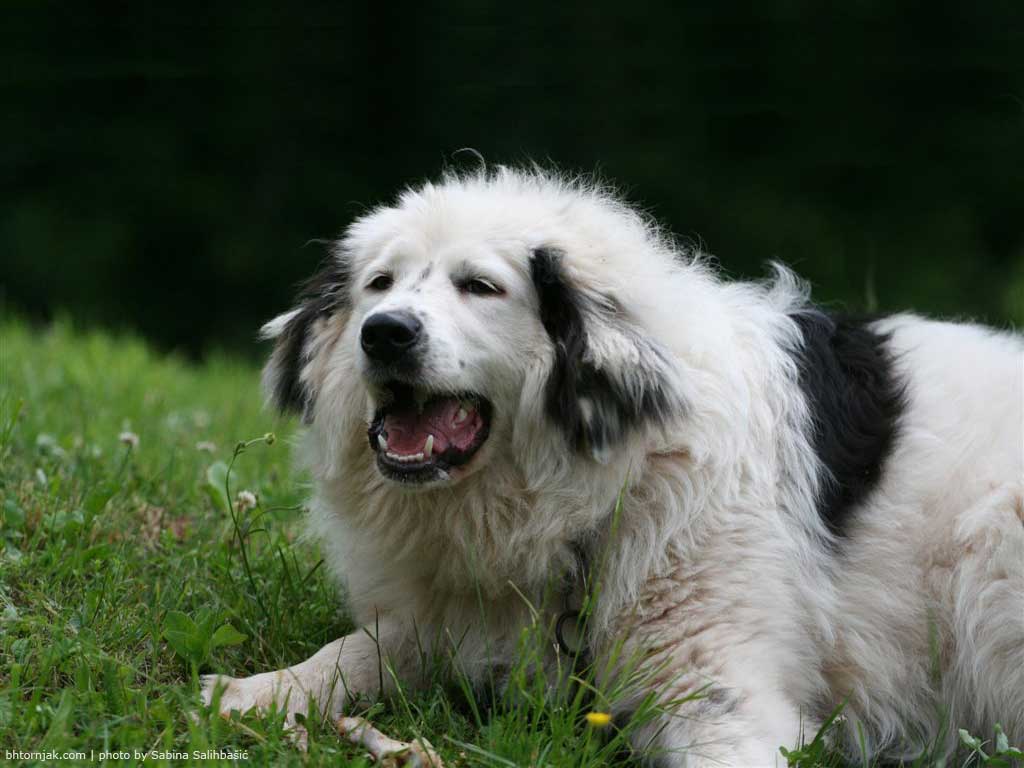
    2 – And little Tornjak. Colour: white & black by Canarian, CC BY-SA 4.0, via Wikimedia Commons
    3 – And little Tornjak. Colour: white & brown by Canarian, CC BY-SA 4.0, via Wikimedia Commons
    4 – A Croatian Tornjak (aka Croatian Mountain Dog or Bosnian and Herzegovinian – Croatian Shepherd Dog) female by Canarian, CC BY-SA 3.0, via Wikimedia Commons
    5 – And little Tornjak. Colour: white & black by Canarian, CC BY-SA 4.0, via Wikimedia Commons
    6 – Toro the Tornjak. Photo taken in a dog shelter in Zadar, Croatia by Mirta12, CC BY-SA 3.0, via Wikimedia Commons

    Videos of the ยซPastor of Bosnia-Herzegovina and Croatiaยป

    Type and recognitions:

    • FCI CLASSIFICATION:
    • Group :
    • Section : . .

    Federations:

    • FCI – Pinscher and Schnauzer-Molossoid type dogs – Swiss Mountain Dogs and Cattledogs. Section 2.2 Molossoid, mountain type. โ“˜
    • AKC(FSS) โ“˜

    FCI breed standard "Bosnian and Herzegovinian - Croatian Shepherd Dog"

    Origin:
    Bosnia y Herzegovina, Croatia

    Date of publication of the valid original standard:
    19.11.2007

    Use:

    Herding and protection of livestock and farm pens and guard dog.


    General appearance:

    The Tornjak is a large and powerful dog, well proportioned and agile. The body is almost square in shape. The bone is not light, but it's not heavy or rough anyway. Standing and moving is strong, harmonious and well balanced. The coat is long and thick.

    IMPORTANT PROPORTIONS:
    The body is almost square. The length of the body must not exceed its height by more than one 8 %. The radius between the length of the skull and the muzzle is 1:1.


    Behavior / temperament:

    Of good disposition, friendly, brave, obedient, Intelligent, full of dignity and confidence. Fierce looking after the property entrusted to him, cannot be bribed and is suspicious of strangers. Devoted to his master and very calm in his presence. Very affectionate with the people who live in his environment. Learn quickly and keep this learning in your memory for a long time. Pleasantly performs the tasks assigned to you. It is easy to train.

    Head:

    Elongated. The radius between the skull and the muzzle is 1:1.

    Cranial region:

    The upper lines of the skull and snout are divergent.
    Supra-orbital arches are slightly visible.
    The back of the skull is elongated but moderately wide.
    The area between the supra-orbital arches and the occiput is flat.
    The occipital protrusion is very slight.

    • Nasal frontal depression (stop): Slightly pronounced.

    facial region:

    Nose: Grand, with nostrils wide enough. Must have dark pigmentation. Pigmentation must be in harmony with the color of the coat. Depigmentation is not allowed.
    Snout: Rectangular. The bridge of the nose is perfectly straight.
    Lips: Tight, with dark pigmentation.
    Jaws/teeth :The jaws are very long and strong. Perfect scissor bite, full dentition.
    Eyes: Almond biscuits, attached eyelids, dark color. Dark pigmentation on the edge of the eyelids.
    Ears: Medium-sized, triangular, bent and earrings, high insertion. Carried close to the cheeks. With shorter hair.

    Neck:

    Medium length, powerful, carried slightly low. Well attached skin. With abundant and long hair forming a mane.

    Body:

    Cross: Moderately developed.
    Back: Short, the court, moderately wide and straight.
    Pork loin: The connection between the chest and the rump is short, moderately wide; in females it is a little longer.
    Rump: Long Middle, wide and slightly inclined.
    Breast : Very spacious, deep, wide and oval. Lower chest reaches at least elbows. Never barrel shaped. The chest is strong with the tip of the sternum moderately pronounced.
    bottom line: Well muscled abdomen. The lower line is not retracted but gradually rises from where the sternum ends towards the posterior.

    Tail:

    Long, inserted at a medium height, very mobile. When at rest it is always hanging and in motion it is always above the level of the upper line, this is a characteristic of the breed. With abundant hair and characteristic fringe.

    Tips

    Strong and well angled.

    PREVIOUS MEMBERS:well developed, with strong bone and tight muscles. Parallel and straight when stationary.

    Blades:Long Middle, well leaning back. The scapulo-humeral angle is approximately 120ยบ..
    Humeri:Muscular and strong, almost the same length as the scapulae.
    Elbows:Moderately close to the body.
    forearms:Strong bones and developed, straight muscles.
    Metacarpus:With slight inclination.
    Previous feet:Fingers arched and together. Pigmented nails, desirable dark pigmentation. Elastic pads, hard and compact, dark pigmentation is desired. Front feet are more developed than rear feet.

    LATER MEMBERS:Strong and parallel. Straight when standing with proper angulation. Well angled knees.

    Thighs:Widths, strong, good muscular.
    Warm:With good bodybuilding, strong wide and the same length as the femur.
    Tarsos:Firms. Insertion a little high.
    Metatarsals:Strong. They can have spurs.
    Hind feet:Fingers arched and together. Pigmented nails, dark pigmentation is desirable. Elastic pads, hard and compact, dark pigmentation is desirable.

    Movement:

    The Tornjak is a trotter. The movement is well balanced, stretchy and powerful, harmonious and with great drive. In motion the top line is firm.

    Mantle

    SKIN: The skin is thick, well adhered throughout the body.

    Fur: In general, the Tornjak is a long-haired dog, thick, rustic and straight. It is especially long at the top of the rump; over shoulders and back can be slightly wavy. It is short on the muzzle and face, above the imaginary line that connects the ears, over the ears and on the front of the legs and feet.

    It is especially abundant around the neck (mane), dense and long over the thighs. Forms fringes on the forearms. In well-coated dogs, it is also especially abundant on the back of the metatarsals.. The tail is very bushy with very long hair. The winter undercoat is long, very thick and with a pleasant woolly texture. The hair is thick and dense and should not split in two along the top line.

    Color: As a rule, the Tornjak is of split color with characteristic markings in various solid colors.. Generally the dominant background color is white. There may be dogs with a black coat and white markings that usually appear around the neck, over the head and along the legs. There may also be almost entirely white dogs with only small markings.


    Size and weight:

    Height to the cross:

    Males: 65 โ€“ 70 cm.
    females: 60 โ€“ 65 cm.

    Tolerance+/- 2cm.


    Fouls:

    Any deviation from the aforementioned criteria is considered as a fault and the severity of this is considered to the degree of the deviation to the standard and its consequences on the health and well-being of the dog..

    • Too thin or too heavy bone.
    • Very fine or very coarse head.
    • Missing ears (inclusion, long, hair).
    • Bite in clamp.
    • Absence of 2 p2, 2 p3.
    • Absence of more than 2 p1.
    • Very long back.
    • Curved or saddled top line.
    • Obviously exaggerated dog.
    • Angulations with faults.
    • Elbows in or out.
    • Tail resting on the back.
    • Tail with little hair.
    • Hair with insufficient length.
    • dark mask.
    • Weak feet.

    FALTAS DESCALIFICANTES:

    • Aggressiveness or extreme shyness.
    • Any dog โ€‹โ€‹showing clear signs of physical or behavioral abnormalities must be disqualified..
    • Lack of type (atypical dogs).
    • Sexual type deviation.
    • Anomalies in eye color and shape (wattled eyes, vicious expression, different colored eyes).
    • Entropion, ectropion.
    • Prognathism or enognatismo.
    • Absence of any other tooth than those mentioned as missing.
    • Too short hair.
    • Lack of undercoat.
    • Broken tail.
    • Absence of tail.
    • Solid color dogs.
    • albinism.
    • Atypical distribution of colors on the body.
    • Differences in the limits of the indicated heights (including tolerance).
    • Cosmetic treatment in the dog or evidence of cosmetic or surgical treatments.


    N.B.:
    • Males should have two normal-appearing testicles fully descended into the scrotum..
    • Only functionally and clinically healthy dogs, with the typical conformation of the breed, should be used for parenting.

    Source: F.C.I - International Cynological Federation

    Alternative names:

    1. Tornjak (English).
    2. Tornjak (French).
    3. Tornjak, Bosnien und Herzegowina und Kroatien (German).
    4. Tornjak (Portuguese).
    5. Tornjak (espaรฑol).

    โ–ท The world of Pets: Dogs, cats, birds, reptiles, amphibians

    Beauceron
    Francia FCI 44 . Sheepdogs

    Pastor de Beauce

    The Beauceron It is one of the best job in the world dogs.

    Content

    History

    The Beauceron, It is a breed of dog originating in the French Brie region; This race is quite old and well known in France.

    True that the canine world, the history of this beautiful dog is not of the noveladas. The Beauceron, It was presented for the first time in a dogshow in the year 1897, but the race is actually quite old.

    The specimens of Beauceron older, the first to set foot on our land, they had hard and coarse hair, but the characteristic that stood out the most was his marked aggressiveness.

    With the passage of time, Select mediantes, breeders have succeeded in lowering the level of aggressiveness, but even so, it is not an easy dog โ€‹โ€‹to train, it retains certain ferocious traits.

    At first the Beauceron It was used to hunt wild boar but later developed the ability to guide herds, being able to defend it from any attack by a predator; is a great guardian.

    Physical characteristics

    The Beauceron, often confused with the Dobermann due to the combination of color bronze and fire of his cloak. This coincides with the fact that the most widespread variety of the Beauceron.

    Despite the similarity in the colors of the coat, it has many differences with him Dobermann, the Beauceron It is a dog with a more rustic and robust structure, the hair is also different and the tail does not cut.

    Another differential characteristic, It is that the hind legs should stand double spur. This is one distinctive feature of the race.

    The height males will of 65 to 70 cm and the females of 61 to 68 cm.. The approximate weight is between 40 and 50 kg. Females tend to be lighter.

    It has a aspect rustic, Wolf. Long head and flat, the muzzle and skull have the same length, dark eyes to harmonize with the fur, their ears hang naturally if they have not been cut.

    They have the long neck, the elongated body and deep chest. Their limbs are strong.

    The Beauceron has two layers of hair, the exterior is strong, thick, thick and smooth (Although they tend to present ripples around the neck). Internal hair layer is more dense and velvety, color grey mouse and must not be seen through the upper layer.

    The colors supported are the black and tan and the Harlequin.

    Character and skills

    According to experts, It one of the best job in the world dogs, and all dogs of pastor is one who is more prepared for the defense.

    Then, his character allows you to carry out defense, foster, useful but it is good to take into account that it is not a dog to be in the hands of inexperienced or too permissive.

    He has a very independent character and a strong instinct for responsibility that allows him to make his own decisions. If he notices the slightest insecurity in his master, he will not take long and seconds to make the decisions himself..

    With the strangers will be very suspicious, for this reason it is very important that the owner of the dog can control it because if it feels minimally intimidated it can be very biting.

    If you receive adequate training and education will be an excellent companion.

    Observations

    Before purchasing a copy of Beauceron, We must take into account that it is not an easy dog. The person who decides to have a copy of this breed as a pet should be able to train him and raise him with full security.

    The dog needs to know who is charge, It is also important to understand that all members of the family are heads of the herd, because if you can not pass it only obey one person whom he recognizes as head of the herd and the rest of the family will ignore or or them even try to impose.

    Images of the "Beauce Pastor"

    Videos del "Pastor de Beauce"

    Characteristics "Beauceron"

    Coexistence is important that you have with your new friend. Before considering the acquisition of a dog of the breed "Beauceron" you know certain factors. Not all breeds of dogs are apt to live in an apartment, you must take into account his character, their need for exercise, their interaction with other pets, their care and if you have small children, their level of tolerance towards them.

    Adaptation โ“˜

    3,0 of 5 stars (based on 1 review)

    friendly dog โ€‹โ€‹โ“˜

    2,0 of 5 stars (based on 1 review)

    hair loss โ“˜

    3,0 of 5 stars (based on 1 review)

    Affection level โ“˜

    4,0 of 5 stars (based on 1 review)

    Need for exercise โ“˜

    5,0 of 5 stars (based on 1 review)

    Social need โ“˜

    4,0 of 5 stars (based on 1 review)

    Home โ“˜

    2,0 of 5 stars (based on 1 review)

    Toilet โ“˜

    2,0 of 5 stars (based on 1 review)

    Friendly with strangers โ“˜

    2,0 of 5 stars (based on 1 review)

    barking โ“˜

    4,0 of 5 stars (based on 1 review)

    Health โ“˜

    2,0 of 5 stars (based on 1 review)

    Territorial โ“˜

    5,0 of 5 stars (based on 1 review)

    Cat friendly โ“˜

    2,0 of 5 stars (based on 1 review)

    Intelligence โ“˜

    5,0 of 5 stars (based on 1 review)

    Versatility โ“˜

    5,0 of 5 stars (based on 1 review)

    Child friendly โ“˜

    3,0 of 5 stars (based on 1 review)

    Surveillance โ“˜

    4,0 of 5 stars (based on 1 review)

    joy โ“˜

    5,0 of 5 stars (based on 1 review)

    Type and recognitions:

    • FCI CLASSIFICATION:
    • Group :
    • Section : . .

    Federations:

    • FCI โ“˜
    • AKC โ“˜
    • โ€‹KC โ“˜
    • UKC โ“˜

    FCI breed standard Beauceron

    FCIFCI - Beauceron
    Pastor

    Alternative names:

    • Alternative names: French Shorthaired Shepherd / Beauce Shepherd / Berger de Beauce / Bas Rouge (Red Stocking)

    โ–ท The world of Pets: Dogs, cats, birds, reptiles, amphibians

    Briard
    Francia FCI 113 - Sheepdogs

    The Berger de Brie It is an excellent race to raise with children of all ages.

    Pastor de Brie

    Content

    Characteristics "Briard"

    Coexistence is important that you have with your new friend. Before considering the acquisition of a dog of the breed ยซยซ you know certain factors. Not all breeds of dogs are apt to live in an apartment, you must take into account his character, their need for exercise, their interaction with other pets, their care and if you have small children, their level of tolerance towards them.

    Adaptation โ“˜

    4,0 of 5 stars (based on 1 review)

    friendly dog โ€‹โ€‹โ“˜

    3,0 of 5 stars (based on 1 review)

    hair loss โ“˜

    3,0 of 5 stars (based on 1 review)

    Affection level โ“˜

    5,0 of 5 stars (based on 1 review)

    Need for exercise โ“˜

    5,0 of 5 stars (based on 1 review)

    Social need โ“˜

    4,0 of 5 stars (based on 1 review)

    Home โ“˜

    4,0 of 5 stars (based on 1 review)

    Toilet โ“˜

    5,0 of 5 stars (based on 1 review)

    Friendly with strangers โ“˜

    2,0 of 5 stars (based on 1 review)

    barking โ“˜

    3,0 of 5 stars (based on 1 review)

    Health โ“˜

    3,0 of 5 stars (based on 1 review)

    Territorial โ“˜

    5,0 of 5 stars (based on 1 review)

    Cat friendly โ“˜

    3,0 of 5 stars (based on 1 review)

    Intelligence โ“˜

    5,0 of 5 stars (based on 1 review)

    Versatility โ“˜

    5,0 of 5 stars (based on 1 review)

    Child friendly โ“˜

    4,0 of 5 stars (based on 1 review)

    Surveillance โ“˜

    3,0 of 5 stars (based on 1 review)

    joy โ“˜

    5,0 of 5 stars (based on 1 review)

    History

    The Berger de Brie or Briard is a breed dog, one of the many existing breeds of dogs pastors. Its origin is French. The history of the Briard has already some centuries… Charlemagne, Napoleon, Thomas Jefferson and Lafayette, they all had a dog of this breed.

    Some theories say that, the Briard descends from Asian dogs brought to the region by the barbaric invasions that attacked Europe during the Middle Ages.

    This former guardian of sheep and shepherd has also been used, as well, by the French Navy as Sentinel, messenger and in search of wounded soldiers because of his fine sense of hearing. They were used in the first world war in an indiscriminate way to bring them to extinction. This breed is still used as guardian and Shepherd of herds, as well as as a pet.

    They became popular just after the ยซParis Dog Show" from 1863, in large part due to an improvement in the appearance of animal achieved by crossing with the Beauceron and the Barbet.

    It is believed that they take their name from the French province of Brie, although the animal probably does not come from that locality., the population of Briard is slowly recovering. It is believed that this breed is related to the Berger Picard.

    Physical characteristics

    The Briard, is a dog from medium-sized, robust but flexible, to coat hard and resistant to the weather inclement. It has a double spur on each rear leg that, They seem to extra toes, giving the appearance of a wider rear leg. Additional toes on each hind leg give the Briard the ability to turn on one foot in fast turns, they are necessary when performing tasks of grazing and protection of their flocks.

    Throughout history, the Briard has maintained a proper balance between size and lightness that is required both for grazing and to protect its herds. They are not too big, but they are large enough to defend themselves from predators such as Fox and the Wolf.

    The coat of the Briard can be of various solid colors or light colors with darker ears. Allowed all colors except black. They prefer dark colors.

    The height at the cross in the males is of 58 to 68.5 cm and the females of 56 to 64 cm.. The weight is around the 34 Kg.

    Ear cropping has been a common practice for a long time, but it is no longer done since -fortunately- It is illegal in many European countries., including France.

    Character and skills

    The Briard has very good memory. Once he learns a lesson, is something good or bad, knowledge shall retain it for a long time. It may sometimes seem very stubborn, or what its owner, but those are some of the features of the Briard, let's not forget that they were bred for centuries to think for themselves and act on their conclusions, Sometimes to the point of thinking what the "flock" will do ahead. It is a dog very independent, in this regard.

    Those are some of the traits that the Briard has preserved throughout history. Even, a Briard what does the city live, retains within itself a great grazing capacity. If you ever, During his lifetime, He has a herd sheep, automatically, will begin to do your homework, to perform the functions for which they were raised, grazing.

    Also don't be surprised if at some point when you're out for a walk with your family, the Berger de Brie nibbles on the ankles or nods to a family member who moves away a bit, because the dog that group of human beings will be his flock and will guide his master and the other members of group.

    The Berger de Brie It is a very dog loyal and protective, often described as "a heart of gold wrapped in fur". Once you have joined the members of his family, It will be very protective and very reserved with strangers, that is why it is important to bear in mind that any Member who is a family, as an infant for example, You will need a friendly adaptation, the Briard, a sample of which the new intrusion is friendly and free of conflicts. Should be taught that it is a good thing and is not harmful. It is a race excellent to raise with children of all ages.

    Images "Briard"

    Videos "Briard"

    Type and recognitions:

    • FCI CLASSIFICATION:
    • Group :
    • Section : . .
    Federations:
    • FCI โ“˜
    • AKC โ“˜
    • ANKC โ“˜
    • CKC โ“˜
    • KC โ“˜
    • NZKC โ“˜
    • UKC โ“˜

    โ€‹


    FCI breed standard "Briard"

    Origin:
    France

    Date of publication of the valid original standard:
    04.11.2008

    Use:

    ---


    General appearance:

    The Briard is rustic, flexible, muscular and well proportioned, cheerful and alert.


    Behavior / temperament:

    Balanced temperament, never aggressive or shy.
    The Briard must be confident and fearless.

    Head:

    Strong, long, cover of hair forming beard, whiskers and eyebrows slightly covering eyes. Profile view The skull and snout lines are parallel.

    Cranial region:
    • Skull: Strong, slightly rounded seen profile
    • Stop: Pronounced, located at equal distance from the occipital Crest and the truffle tip.

    facial region:

    • Truffle: Strong. Well open nasal Windows. The nose is always black except in blue dogs that have a blue or bluish-truffle.
    • Snout: The end of the snout is rather square. Strong nose, wide enough and never pointed.
    • Nose caneRectilinear.
    • Lips: Tight lips.
    • Jaws / Teeth: Strong jaws, white teeth. Scissor bite.
    • EYES: Oval. Horizontal, wide open, rather large and dark in color. Blue dogs are allowed lighter colored eyes.
    • EARS: High insertion without being glued to the head and rather short in the wild. The natural ears cartilage must be the same or slightly less than half of the head of the head. The ears are always flat and covered with long hair. If you are cut, In countries where this practice is allowed, your port must be erect, never divergent or convergent.

    Neck:

    Muscular and detachment of the shoulders.

    Body:

    • top line: The back is straight. The loin is short and firm.Rump: Little inclined, slightly rounded shape.
    • Breast : Wide and long deep and well descended to elbows. Well arched ribs.

    Tail:

    Natural, low postage, You must reach at least the articulation of the Hock, without deviations, forming a slight hook in the form of "J". In motion the tail must be carried as prolongation of the upper line.

    Tips

    Good muscular with strong and straight bones.

    PREVIOUS MEMBERS:

    • Shoulder: Oblique, well angled, moderately long, well glued to the rib cage.
    • Elbows: In line with the body.
    • Forearm: Straight and muscular.
    • Metacarpus: Slightly inclined seen profile.
    • Previous feet: Strong, round and well in axis with the body. The nails are always black (except in blue) and thick pads. Fingers closed and arched.

    LATER MEMBERS:

    • Thigh: Muscled.
    • The Hock joint: Not too low and well angled.
    • Metatarsus: Perfectly vertical seen from behind.
    • Hind feet: Strong, round. The nails are always black (except in blue) and thick pads. Fingers tightly closed.
    • Spurs: By tradition, the shepherds want to keep the double spur. The Spurs are fingers, well separated and nails, relatively close to the foot.

    Movement:

    Regular, agile, harmonious so that it allows the dog to cover the surface and can do its work with a minimum of effort and fatigue. The Briard must have a long trot with good range and good push from the back.

    Mantle

    • Fur: Hair texture Goat, dry, soft, long with a light Undercoat.
    • Color: Negro, leonado, Fawn with a black layer (mild to medium), many times with mask gray or blue.

    A warm tawny mantle may show a lighter color on the tips and inclined body areas (Fawn marked with color sand). Black mantles, gray and blue can also show areas clearer. All colors may show different degrees of grey.


    Size and weight:

    Males: 62 cm. - 68 cm to the cross. females: 56 cm. - 64 cm to the cross.


    Fouls:

    Any deviation from the above criteria is considered missing and the seriousness is considered to the extent of the deviation to the standard and their effect on the health and welfare of the dog.


    SERIOUS FAULTS:

    • Serious defects of limbs.
    • In general the hair color too light.
    • Mantle: Insufficient length (less than 7 cm.) soft or woolly hair.

    FALTAS DESCALIFICANTES:

    • Aggressiveness or extreme shyness.
    • Any dog โ€‹โ€‹showing clear signs of physical or behavioral abnormalities.
    • Non-existent stop.
    • Any other color that is not blue or black truffle, presence of pink (Depigmented areas).
    • Prognathism or inferior with loss of contact of the incisors, absence of 2 PM4 lower or absence of 3 teeth or more any that are. (Except for PM1)
    • Eyes too light (yellow), huraรฑos.
    • Ears folded inward, low insertion, below the level of the eyes, short hair covers, naturally erect.
    • Tail curled up or carried vertically.
    • Simple RAM or total absence of spurs on the hind limbs.
    • White color, Brown or mahogany, mantle of two different colors, stain white, white hairs at the ends of the members, Fawn blanket.
    • Size outside the limit specified in the standard with a tolerance of + 2 cm o - 1 cm..
    • Fraudulent modification of the dog or evidence of these practices through the use of substances or surgeries.


    N.B.:
    • Males should have two normal-appearing testicles fully descended into the scrotum..
    • Only functionally and clinically healthy dogs, with the typical conformation of the breed, should be used for parenting.

    Source: F.C.I - International Cynological Federation

    Alternative names:

    1. Berger de Brie (English).
    2. Chien de Berger franรงais de Plaine, Briard (French).
    3. Franzรถsisch auch berger de Brie (German).
    4. Berger de Brie (Portuguese).
    5. Briard (espaรฑol).

    โ–ท The world of Pets: Dogs, cats, birds, reptiles, amphibians

    Border Collie
    Gran Bretaรฑa FCI 297 . Sheepdogs

    Border Collie

    The Border Collie is regarded as the breed of smarter dogs que existe

    Content

    History

    The Border Collie takes its name from the region of Borders, the border region between Scotland and England, where he has been tending flocks of sheep since ancient times with extraordinary efficiency. For a long time, has remained there out of sight of international canine enthusiasts. So, the official rule was not registered with the FCI until 1976.

    The foundation of the ISDS (International Society of Sheep Dogs) in 1906 marked a turning point in this dog's history. The name of Border Collie then appeared in 1915 to describe these famous "sheepdogs", in recognition of the selection work carried out by the pastoralists of the border regions. The word "border" refers to the border, while the word "Collie" is used to describe a sheepdog.

    The Border Collie owes excellent performance in many disciplines to rigorous and uncompromising selection in a pastoral environment. The different breeds that have stabilized the border are mainly herder breeds (Old English Sheepdog (Bobtail), Bearded Collie…), but also hunting dogs, as the English Pointer and especially the Gordon Setter.

    Like this, the definitive pedigree of Border Collie, and therefore his right to breed dogs with pedigree, directly depends on your herding skills.

    Physical characteristics

    The Border Collie is a dog of medium size, well proportioned, that can weigh between 16 and 23 kg. It has a double cloak of hair that supports various colors, variations of black, toasted and white though white should never be the predominant color, the fur is impermeable, It can be dense and coarse, or dense, soft. The body has athletic appearance, low chest, strong and agile.

    The height varies between 46,5 and 56 centimeters for males and between 46 and 53 centimeters in females. The tail is moderately long, slightly curved, well populated, with a lock of his hair white at the end of the same.

    There are two coat varieties, moderately long and short. In both, the outer layer is dense and has a medium texture; the inner layer is dense and soft, which gives it good protection against the inclement weather. In dogs that have a moderately long fur, the abundant hair is Manes, fringes and tail brush. In the face, ears, previous members (except for the fringes) and later members from hocks to the ground, the hair should be short and smooth.

    Character and skills

    He is loyal to his own and especially to whom he adopts as a leader, with whom he forges an unconditional bond. His gaze is one of his main characteristics., in moments of work he never separates her from her leader, denoting an unusual ability to concentrate in other dog breeds. He is happy when working, enjoy doing it.

    According to the classification made by Stanley Coren after analyzing the responses of more than 200 work of the AKC judges (ยซThe intelligence of dogsยป, Stanley city, Ediciones B, 1995), the Border Collie is the No. 1 from the list.

    It is a clever dog, very acute hearing, with a broad response capacity but, above all, It has a great agility and is owner of extreme intelligence, both functional and obedience.

    His strong herding instinct, coupled with his tenacity and resistance, It places it among the most required to bring races, controlling and driving flocks, proving the best breed of dog existing pastor.

    The Border Collie is regarded as the breed of more intelligent dogs que existe, next to the Golden Retriever and to the German Shepherd, that is why it is so easy to train.

    Itร‚ยดs awake, vigilant, responsive and intelligent. Affectionate and docile, sociable with humans and other animals. He possesses an innate curiosity. It is a working dog and requires exercise in large or open spaces. You need to feel that it is part of a group and it has a function in the same. As it is a herding breed, it needs a lot of daily physical activity..

    Slender, regular and easy, raising little toes, which gives the impression that move furtively and at high speed. The Agility It is a sport open to all those people who have one or more dogs (Whatever your race, with or without pedigree). It consists of the dogs led by their handlers being able to overcome a series of obstacles in order to demonstrate their intelligence., obedience, concentration, sociability and agility.

    The Border Collie stands out in this sport for its physical and mental characteristics. If any of these tests has been occasionally observed, couldn't help but realize that the Border Collie They are present in many of them and they always end up doing it well.

    Did you know??

    The Border Collie they are known as herding dogs, but a dog of this breed currently holds the Guinness World Record for the fastest car window opened by a dog. Striker, a Border Collie from hungary, non electric opened window 11,34 seconds. Awesome!

    Characteristics "Border Collie"

    Coexistence is important that you have with your new friend. Before considering the acquisition of a dog of the breed "Border Collie" you know certain factors. Not all breeds of dogs are apt to live in an apartment, you must take into account his character, their need for exercise, their interaction with other pets, their care and if you have small children, their level of tolerance towards them.

    Adaptation โ“˜

    5,0 of 5 stars (based on 1 review)

    friendly dog โ€‹โ€‹โ“˜

    3,0 of 5 stars (based on 1 review)

    hair loss โ“˜

    3,0 of 5 stars (based on 1 review)

    Affection level โ“˜

    5,0 of 5 stars (based on 1 review)

    Need for exercise โ“˜

    5,0 of 5 stars (based on 1 review)

    Social need โ“˜

    5,0 of 5 stars (based on 1 review)

    Home โ“˜

    2,0 of 5 stars (based on 1 review)

    Toilet โ“˜

    2,0 of 5 stars (based on 1 review)

    Friendly with strangers โ“˜

    3,0 of 5 stars (based on 1 review)

    barking โ“˜

    5,0 of 5 stars (based on 1 review)

    Health โ“˜

    3,0 of 5 stars (based on 1 review)

    Territorial โ“˜

    5,0 of 5 stars (based on 1 review)

    Cat friendly โ“˜

    3,0 of 5 stars (based on 1 review)

    Intelligence โ“˜

    5,0 of 5 stars (based on 1 review)

    Versatility โ“˜

    5,0 of 5 stars (based on 1 review)

    Child friendly โ“˜

    5,0 of 5 stars (based on 1 review)

    Surveillance โ“˜

    5,0 of 5 stars (based on 1 review)

    joy โ“˜

    5,0 of 5 stars (based on 1 review)

    Border Collie Images

    Videos ยซBorder Collieยป

    Type and recognitions:

    • FCI CLASSIFICATION:Group 1 –> Pastor and Boyeros dogs (except Swiss Cattle Dogs ) / Section 1 –> Pastor dogs. With working trial.
    • FCI 297
    • Federations: FCI โ“˜, AKC โ“˜, ANKC โ“˜, CKC โ“˜, โ€‹KC โ“˜, NZKC โ“˜, UKC โ“˜

    • FCI breed standard "Border Collie"

      Origin:
      Ireland, United Kingdom

      Date of publication of the valid original standard:
      24.06.1987

      Use:

      Shepherd dog.


      General appearance:

      Well proportioned; the silhouette is harmonious showing quality, grace and perfect balance, combined with enough substance to give the impression of resistance. Any tendency to coarseness or weakness are undesirable.


      Behavior / temperament:

      Tenacious, worker of great docility. Crafty, alert, obedient and intelligent. Neither nervous nor aggressive.

      Head:


      Cranial region:
      • Skull: Quite wide, the occiput is not pronounced.
      • Stop: Very defined.

      facial region:

      • Truffle: black, except in brown specimens (chocolate), in whom the nose may be brown.
      • In the blue specimens,  the nose must have a slaty color. The nostrils must be well developed.
      • Snout: Thinning towards the nose, moderately short and strong.
      • Jaws / teeth: Strong teeth and jaws with perfect and regular scissors bite, that is, the upper incisors closely overlap the lower incisors and are positioned vertically in the maxillae.
      • Cheeks: Neither full nor rounded.
      • Eyes: They must be well separated,  be oval in shape and of moderate size. Its color must be brown, except in the specimens "Merle",  in which one or both, or a part of one or both may be blue.  Sweet expression,  awake,  alert and intelligent.
      • Ears: Medium in size and texture,  placed well apart. They must be carried erect or semi-erect and attentive to the smallest noise.

      Neck:

      Long, strong and muscular, slightly arched and widening towards its insertion in the back.

      Body:

      Athletic in appearance. Slightly longer than the height at the withers.

      • Pork loin: Deep and muscular but not withdrawn.
      • Breast : Deep and quite wide, well arched ribs.

      Tail:

      Moderately long, the last vertebra must reach at least the tibiotarsal joint; low insertion,  well stocked with hair, ends up curving up, which completes the grace of the silhouette and the balance of the dog.  In a state of excitement, The tail can be raised but never taken over the dorsog>

      Tips

      Former members

      Seen from the front,  the forelimbs should be parallel to each other.  Of strong bones,  but not heavy.

      • Blades: Leaning well back.
      • Elbows: Glued to the body.
      • Metacarpus: Viewed from the side slightly inclined.
      • Front feet: Oval; thick footpads, strong and healthy; the fingers should be close together and arched; nails should be short and strong.
      Former members

      Spacious and muscular, its upper profile slopes slightly towards the insertion of the tail.

      • Thighs: Long, wide and muscular.
      • Knees: Well angulated.
      • Hocks: Strong and close to the ground.
      • Metatarsals: From the hock to the ground, the hind limbs should be well boned and parallel to each other when viewed from behind.
      • Hind feet: Oval, thick footpads, strong and healthy; the fingers should be close together and arched; nails should be short and strong.

      Movement:

      Libre, easy and indefatigable, raising your feet as little as possible, which gives the impression of caution and speed.

      Mantle

      • Fur: There are two varieties: Moderately long or short.

      In both, the outer layer is dense and has a medium texture; the undercoat is soft and dense, which gives you good protection against inclement weather. In dogs that have a moderately long coat, abundant hair forms manes, fringes and tail brush.  In the face, ears, previous members (except for the fringes) and later members from hocks to the ground, the hair should be short and smooth.

      • Color: Variety of colors are supported.  White color should never prevail.


      Size and weight:

      Ideal height:

      Males: 53 cm. (21 inches)

      females: slightly less.


      Fouls:

      Any deviation from the aforementioned criteria is considered as a fault and its severity is considered to the degree of the deviation to the standard and its consequences on the health and well-being of the dog., and the dog's ability to perform its traditional task.

      disqualifying fouls:

      โ€ข Aggressiveness or extreme shyness.
      โ€ข Any dog โ€‹โ€‹showing clear signs of physical or behavioral abnormalities.


      N.B.:

      Males should have two normal-looking testicles completely descended into the scrotum..

      โ€ข Only functionally and clinically healthy dogs, with the typical conformation of the breed, should be used for parenting.

      The latest changes are in bold.

      Source: F.C.I - International Cynological Federation

      Alternative names:

      1. Scottish Sheepdog (English).
      2. Border collie (French).
      3. Border collie (German).
      4. collie da fronteira (Portuguese).
      5. Collie de la frontera, Collie fronterizo (espaรฑol).