โ–ท The world of Pets: Dogs, cats, birds, reptiles, amphibians

English Toy Terrier (black and tan)
Gran Bretaรฑaa FCI 13 . Toy Terriers

English Toy Terrier

In Great Britain they are increasingly rare and in the rest of Europe they are disappearing.

Content

History

The English Toy Terrier (black and tan) is closely related to the Manchester Terrier. It was originally called Black and Tan Terrier and was usually even larger than current specimens. They deliberately mated with him Italian Sighthound and only the smallest dogs were used for breeding.

They were originally kept in London as rat catchers. Due to its size, they were often put in a purse or coat pocket, where they should protect themselves from pickpockets. In the time of Queen Victoria it was very popular as a lap dog.

Physical characteristics

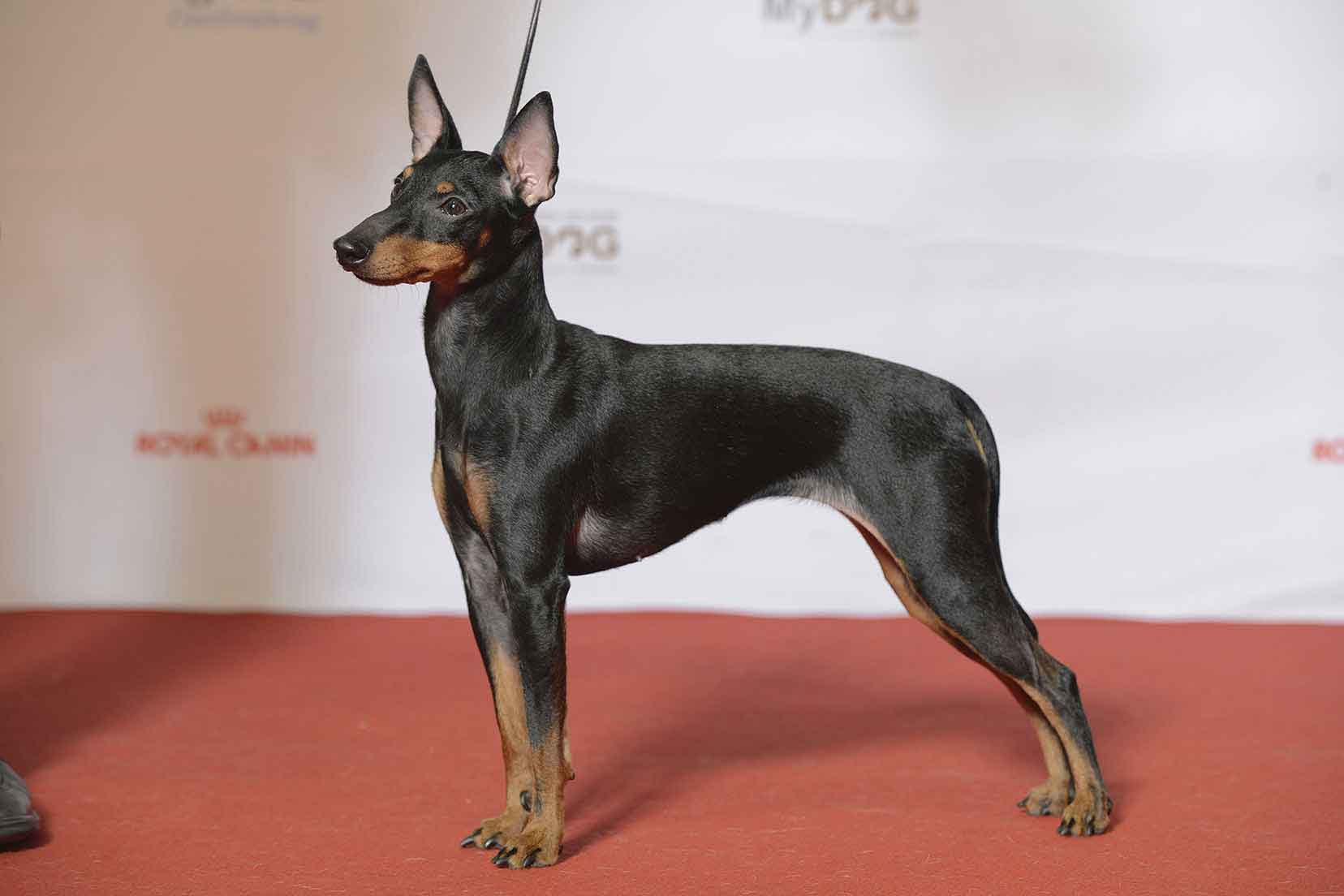
The English Toy Terrier (black and tan) he is a well balanced dog, elegant, compact, neat and clean construction.

Has a body weight of about 3,6 kg. The height of his body is about 30 cm.. With this size, the English toy terrier It is one of the smallest representatives of the group of terriers. So, falls in section 4 "Dwarf Terriers".

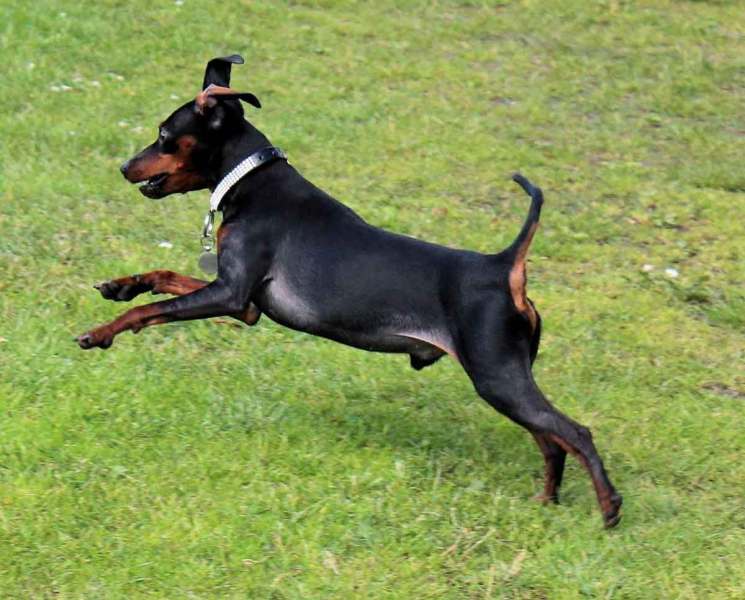
This breed is characterized by a slim body. All four legs are straight and very delicate. But, at the same time, the representatives of these Terriers are sporty and muscular, so they can easily accompany you on long walks.

At first sight, the little dog's large, upright ears stick out. The dog's muzzle is long and reminiscent of larger terriers. The eyes of the English toy terrier they are alert and awake. All the Toy Terriers ingleses They have the hair pattern "black and fire", what does black and tan mean. Most of the coat is black, but there are tan marks on some parts of the body. So the dog always has tan markings on his face and chest.. The coat of a English toy terrier it's short and smooth.

Character and skills

Today the English Toy Terrier (black and tan) belongs to the rare breeds and there are only a few breeders. And that, although this little terrier can be kept well even in city apartments. He is very close to his family and continues to be a good guardian, but tends to bark a little. He usually gets along well with children and is a tireless playmate. The little terrier also gets along with other dogs.

To the English Toy Terrier (black and tan) loves long walks and ball games. It can even be a good companion for shorter and not too fast jogging rounds.

The English Toy Terrier (black and tan) they still show typical terrier features. They are brave, testy, lively, alert and cheerful. They learn quickly, but they also need some consistency up front. They still have a hunting instinct, so from the beginning you must work to direct this instinct in an acceptable way.

Health and life expectancy

The English Toy Terrier (black and tan) tend to be a bit nervous, but otherwise they are quite healthy dogs. They can come to live off 13 to 15 years.

Similar breeds and relatives

The English Toy Terrier (black and tan) es similar al Manchester Terrier, the Italian Sighthound, the German Pinscher and the Doberman.

English Toy Terrier Care

This little terrier has an easy-care coat that never really needs to be washed. Once your English Toy Terrier has been lying, you can wash it with clean water. You should only use a dog shampoo if it is very dirty. Too frequent use of shampoos destroys the natural protective layer of the coat, what can cause skin diseases.

Its English toy terrier he is a robust dog that does not normally need a jacket. In very low temperatures it may be useful to protect your dog with a well-fitting jacket. Especially very small dogs get hypothermia when they are in the snow for a long period of time.. The jacket should fit well and not get in the way of your dog when he runs and plays.

Check your teeth English Toy Terrier regularly. Tartar can form here, which in the long run can lead to painful inflammation of the teeth. Care, a soft dog toothbrush can be used for brushing. A toothpaste for dogs is harmless and usually tastes quite good to animals.. Make sure to slowly and gently get your English Toy Terrier used to brushing their teeth..

The correct nutrition of the English Toy Terrier

The English toy terrier it is a very robust breed that gets along well with most foods. Due to its small body size it is important to provide the English toy terrier of enough energy. As such, for example, you can choose a type of food specially developed for small breeds. Small dogs have a greater renewal of energy than large ones. Another way of feeding is to give the dog fresh food or homemade food. Here too care must be taken to ensure sufficient calorie intake.

feed your English toy terrier several times a day, since the small dog can only absorb small amounts. Although healthy dogs usually have good teeth, the food components should not be too large.

Because the English toy terrier he is an adorable dog, many people tend to pamper him. But, many human foods are not suitable for dogs. So, their English toy terrier should only be fed with leftover food if it does not contain sugar or spices.

Suitable accessories for the English Toy Terrier

You don't need many accessories for your English toy terrier for everyday use. For food and water your dog needs at least two bowls. The water bowl should always be full and accessible to your dog.

Like the Toy Terriers ingleses they are very delicate animals, you should buy a well fitted harness. It is also important to use a light lead line. Pull lines are less suitable if your dog has not yet learned not to pull on the leash. A good alternative is to use a lightweight traction strap, that gives your dog freedom of movement.

To the playful English toy terrier loves to learn. So you can do a lot of sports with it which is also suitable for very small dogs. Dummies and other retrieval toys are good for training. It also, you English toy terrier will have a lot of fun with chew toys, that also support dental health.

Last, but no less important, should provide your English toy terrier a comfortable dog bed. There are several dog beds, almost all of them suitable. Whether your terrier is allowed on the couch or in bed, you can also give him a dog blanket there.

It is very important that you secure your English toy terrier in the car. An adapter for the belt buckles can be attached to the harness. This prevents skipping while driving and reduces the risk to your dog in the event of an accident. An alternative is to accustom your dog to a transport box. You can also take him on the train in a transport box if he is used to it.

Images "English Toy Terrier (black and tan)"
Photos:

1 – ENGLISH TOY TERRIER, NO JV-14 NO UCH X-Pected Dine Mites X-Factor by Svenska Mรคssan from Sweden / CC BY
2 – English Toy Terrier (Black & So) by AkselHelp / CC BY-SA
3 – English Toy Terrier by Lil Shepherd / CC BY
4 – English Toy Terrier by Lil Shepherd / CC BY
5 – English Toy Terrier by Lil Shepherd / CC BY
6 – Dog 2013 Helsinki 13-15/12/2013 by Thomas / CC BY-SA
6 – English toy terrier by https://pxhere.com/en/photo/883104

Videos "English Toy Terrier (black and tan)"
Type and recognitions:

  • FCI CLASSIFICATION:
  • Group :
  • Section : . .

Federations:

  • – FCI – Group 3 – Section 4 Toy Terriers. โ“˜
  • – โ€‹KC – Toy Group โ“˜

FCI breed standard "English Toy Terrier (black and tan)"

Origin:
United Kingdom

Date of publication of the valid original standard:
26.03.2009

Use:

Terrier


General appearance:

Well balanced, elegant, compact, neat and clean construction.


Behavior / temperament:

Toy dog (Toy), With the characteristics of the terriers. Alert, Remember that historically this dog could cruelly drive in the rats holes. Never overly nervous.

Head:

It is long, close, wedgeless without giving much emphasis to the cheese muscles; under the eyes is very full.

Cranial region:
  • Craging: Plano.
  • Stop: Little noticeable.

facial region:

  • Trufa: black.
  • Horcico: The muzzle gradually tapers to give the wedged shape, profile view very similar to looking from the front. Although it may give an impression of prognathism, it is not desirable to have a pointy appearance.
  • Labios: Well compressed.
  • Jaws / Teeth: Upper and lower jaw form a perfect and tight closure. Strong JAWS, with a perfect scissor bite, regular and complete, that is, the inner face of the upper incisors is in close contact with the outer face of the lower incisors and the teeth are placed perpendicularly in the maxillae. Uniform and strong teeth.
  • Cheeks: No emphasis of the muscles.
  • Ojors: Dark to black, without having light shadows on the iris. Of sizerelativelysmall, almond shape and oblique position, they are bright andnot prominent.
  • Obars: In the shape of a candle flame, slightly pointed, positioned very high and at the back of the skull, proportionally very close. A good reference point for size can be obtained by bending the ear forward, should not reach the eye. From nine months of age, ears must be erect. The entire pinna of the ear should point towards the front. The leather of the ear is thin.

Neck:

Long, with grace, slightly arched. The neck line descends on the shoulders in an elegant decline. Double chin is undesirable.

Body:

Compact, with head and limbs provided, producing a perfect balance.

  • Espalda: Little arched from behind the shoulders to the loins, The upper line later falling on the root of the tail.
  • Itmor: Well up.
  • Pecho: Narrow and deep with well sprung ribs.

Tail:

Thick at the root, tapering towards the tip. Low-set, without reaching below the hocks. Tail carried high excessively is undesirable.

Tips

PREVIOUS MEMBERS: Forelimbs fall straight from the shoulders, with the elbows close to the chest, making the front straight. Very desirable fine bone structure

  • Hormbros: Well positioned back.
  • Elbows: Well glued.

LATER MEMBERS: Well rounded loins and slightly rounded buttocks lead to good knee angulation. It is undesirable that the front extremities appear stuck under the body.

  • Corvejones: Positioned low, without twisting outward or inward.
  • PinIt: Refined, compact, with fingers wide apart, well arched with jet black nails; the middle fingers of the forelimbs are longer than the others; hind feet have the appearance of cat's feet. Hare's foot is undesirable.

Movement:

The ideal movement is similar to an extended trot. You don't want the "Hackney" step. Dragging is also undesirable. Agile hindlimb action, combining ease and precision with a good push, should be fluid to indicate firmness.

Mantle

Fur: Thick, closed and glossy. High density of short hair is required.

Color: black and tan. The black must have the coloration of ebony, and the fire must remember the firm chestnut color. The colors neither spill nor fade but meet abruptly, forming clear and defined lines in the division of colors.

The forelimbs are tan colored up to the carpal joint in front, following the inside and back of the forelimb down to the elbows; small black lines (brush strokes) on each finger, and a definite black mark (thumb mark) in the center of each metacarpus, also under the chin. The hind limbs are tan in front and inside, with a black bar that divides the tan color in the center of the legs. Much tan color on the outside of the hind limbs (breeching the falda) is undesirable. The muzzle is tan. The truffle is black, continuing the black color on the nasal bridge, forming a curve under the eyes to the base of the throat. Has a fire mark over each eye, and a small one on each cheek. The lower jaw and throat are also tan colored; The line of the lips is black. The hair inside the ears is fire. Tan behind the ears is undesirable. Each side of the chest has a little tan coloring, as well as the perineum and under the root of the tail. White patches are totally undesirable anywhere.


Size and weight:

The ideal weight is 2,7 to 3,6 kg (6 to 8 English pounds).

The ideal height at the withers is 25 to 30 cm. (10 to 12 inches).


Fouls:

Any deviation from the aforementioned criteria is considered as a fault and the severity of this is considered to the degree of the deviation to the standard and its consequences on the health and well-being of the dog..

FALTAS DISQUALIFYING:

  • Aggressiveness or extreme shyness.
  • Any dog โ€‹โ€‹showing clear signs of physical or behavioral abnormalities must be disqualified..


N.B.:
  • Males should have two normal-appearing testicles fully descended into the scrotum..
  • Only functionally and clinically healthy dogs, with the typical conformation of the breed, should be used for parenting.

Itlatest changes are in bold.

TRADUCCION: Federation Canรณfila Mexicana, A.C.

Source: F.C.I - International Cynological Federation

Alternative names:

1. ETT, English toy terrier (English).
2. Toy terrier anglais noir et feu (French).
3. English Toy Terrier (German).
4. English Toy Terrier (Portuguese).
5. Terrier miniatura negro y fuego, English toy terrier, Toy Terrier inglรฉs, TERRIER INGLร‰S DE JUGUETE NEGRO Y FUEGO (espaรฑol).

โ–ท The world of Pets: Dogs, cats, birds, reptiles, amphibians

Bulldog
Gran Bretaรฑa FCI 149 - Molossoid - Dogo

Bulldog

The Bulldog Currently he is a dog known for having a good humor.

Content

History

The race Bulldog or English Bulldog, It was initially used for betting in dog fights, during the 17TH century (in 1835 This practice was banned in England). In the news, this dog is one of the symbols of England.

Its origin is in the "ancient Greek dog", Kelb Thal Bulldog, or bulls Maltese dog: an imported breed to England, with ancient mastiffs crossed gave rise to the Old English Bulldog.

The Bulldog of yesteryear was lighter and similar to the Boxer than the chubby current Bulldog; was a purely sporting animal. It was used in the creation of other races as: Bullmastiff, Boxer, Bull Terrier, and some hounds like him Beagle old type. As a fighting dog, it was an animal that only accepted the challenge of larger animals such as bears., bulls and even Lions.

The origin of the name is due to the fact of being a dog butchers, that is to say, its function was to run the bulls, for believing that his meat was softer that way. Although it is probably a deformation of the name Band Dog or "Hardened Dog".
It must be borne in mind that the old Bulldog have nothing to do with the current, they were only modified with crosses with other races like the Pug or Dutch bulldog; race of which Bulldog inherited its flattened snout as well as its plump muscles.

Former Bulldogs were dogs of varied appearance, sometimes dogs elongated snout and all colors. It has to be taken into account that the former Bulldog was a working animal by which attached great importance to the character.

Physical characteristics

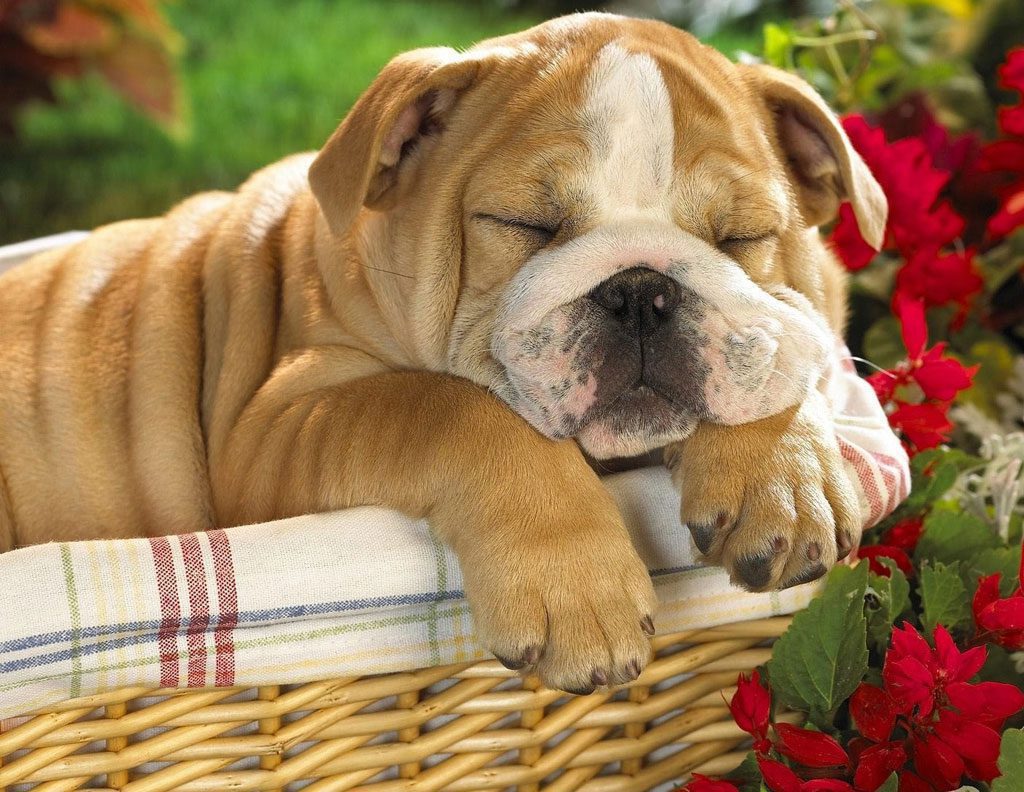
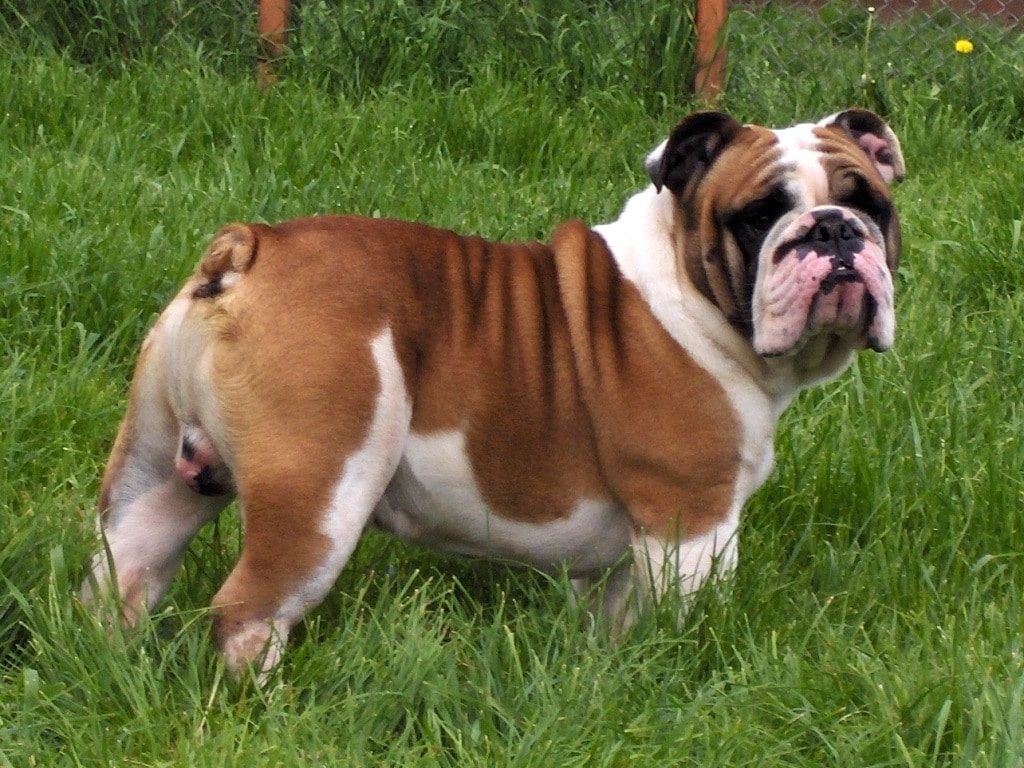
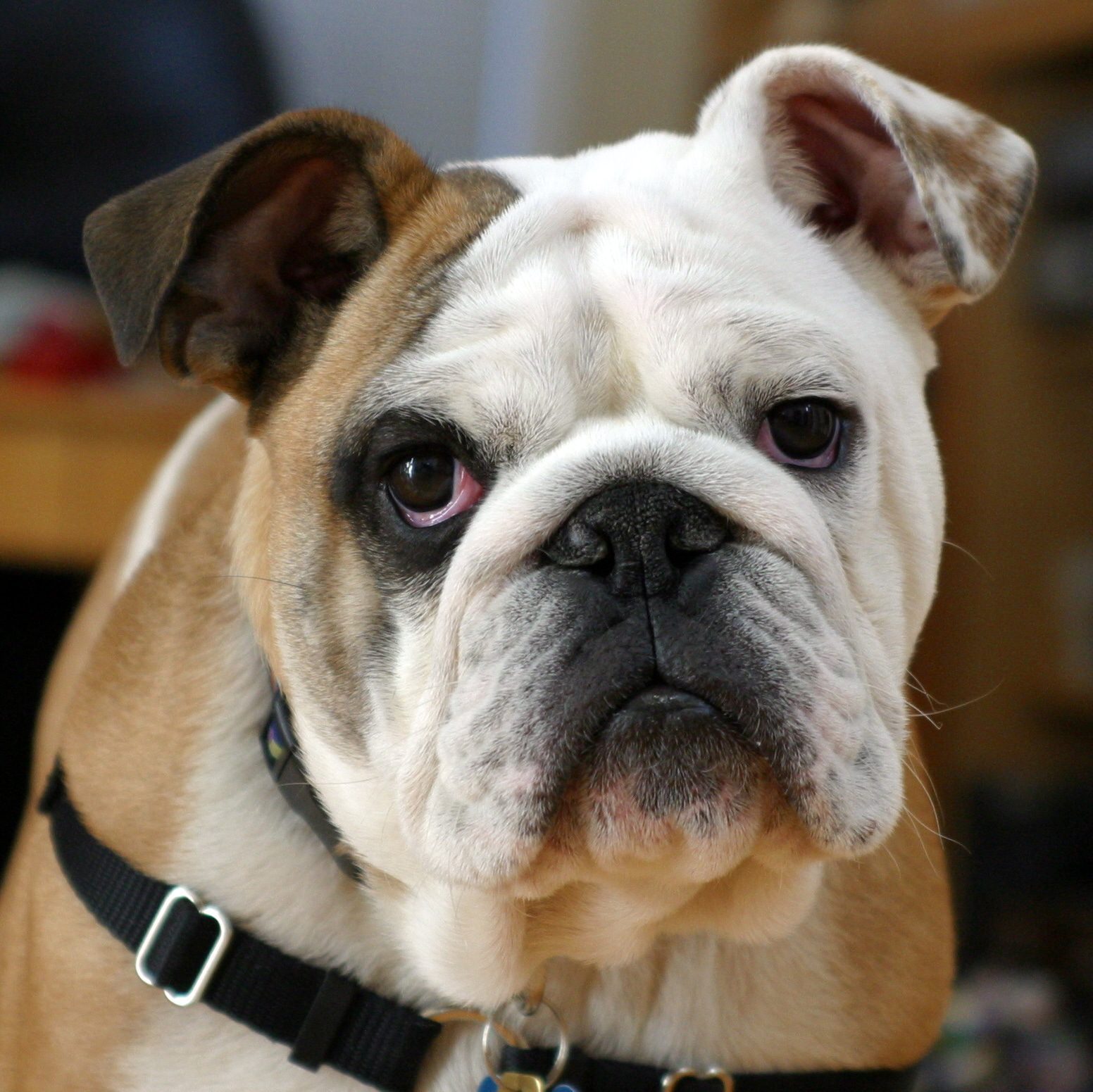
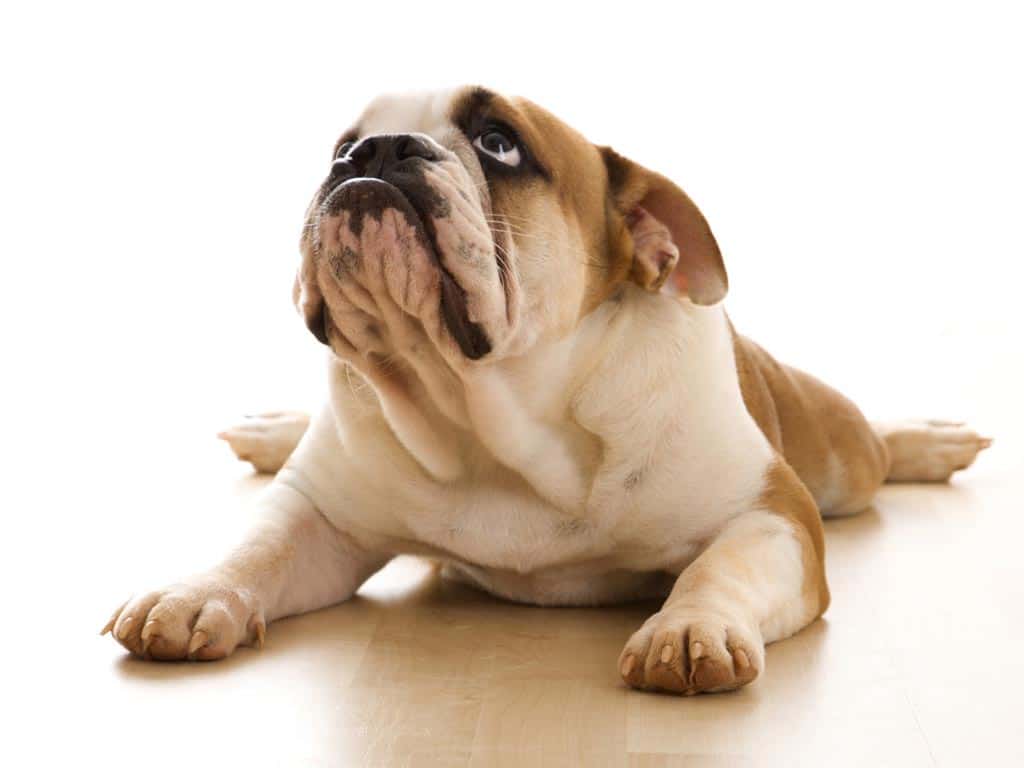
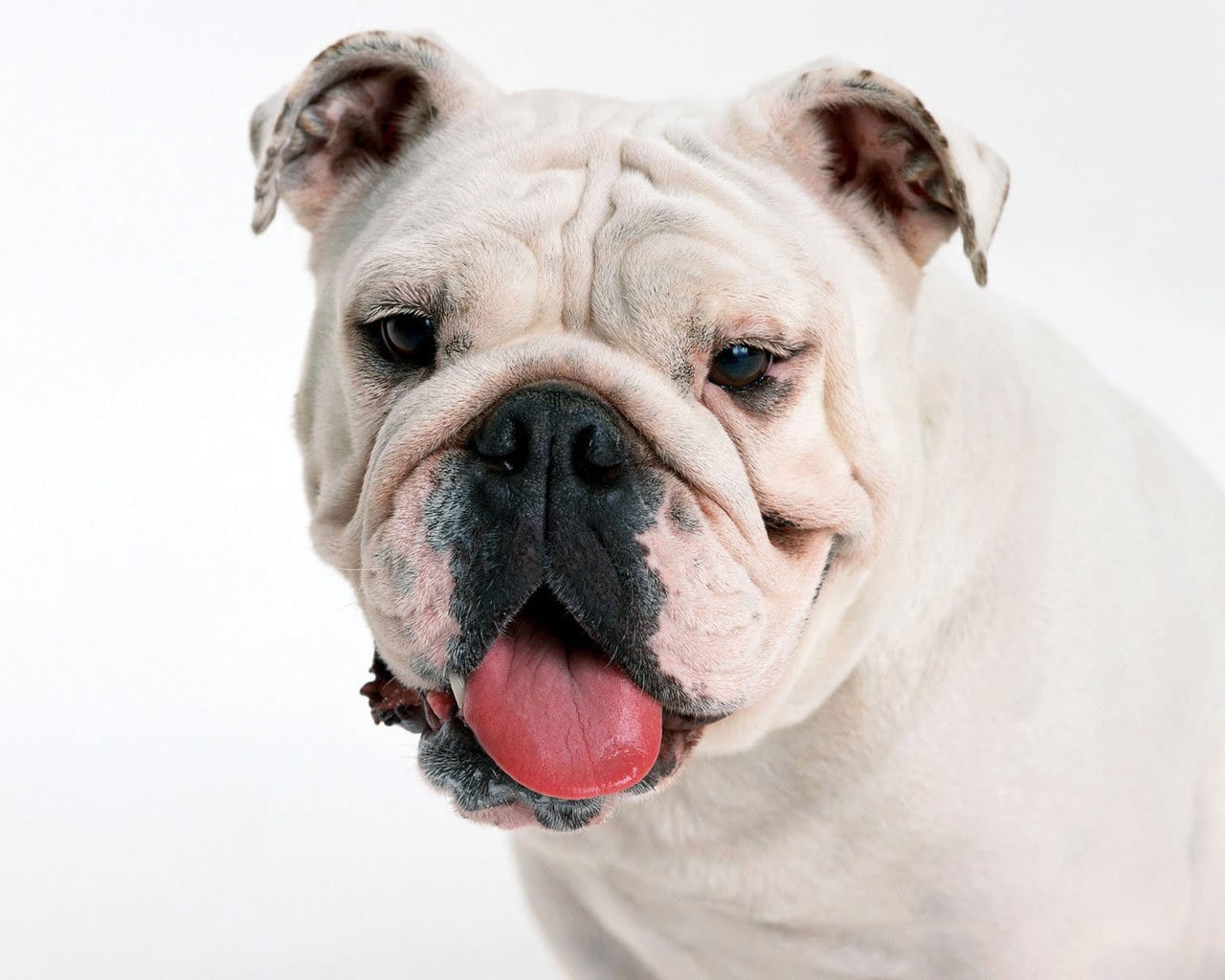
The Bulldog is a breed that is characterized by thick shoulders and a head large in proportion to their body. Generally thick folds of skin on his forehead, followed by a few black, large, round eyes. It has a short snout with folds above the nose, with a pendant Chin under neck, along with sagging lips and pointed teeth. The big legs give an idea, how strong is the dog that you have to deal with. Even a well-trained bulldog with an ideal weight seems to the uninitiated observer that it is a dog with excess pounds. He's really loaded with muscle and shouldn't have any fat on his ribs. All this translates into a very powerful and imposing appearance.

Its pelage is short, smooth and elegant red color, beige, white, striped (color mixing, sometimes in irregular stripes) and various colors of these.

Weight and height standard varies by country, but in general terms and averages, These dogs are usually measured in 30 to 40 cm. and weigh in 18 to 25 Kg. Some dog breeds need them they cut off the tail or her call after birth, the bulldogs are the few races that have naturally short and curly tail. A long, upright tail it is flaw in a Bulldog.

Character and skills

The Bulldog is friendly and courteous. There is hardly a quadruped that is so wholeheartedly devoted to humans. He greets his family and all the people he has held close to his heart at some point in his life with exuberant warmth.. Itร‚ยดs, mostly, a cool guy who can't be bothered by anything so quickly, not by a barking dog or by the vacuum cleaner running through its muzzle. But it can literally explode in an instant when it seems necessary. Then shoot like a rocket towards the front door and pile up with a dark bass in front of the alleged troublemaker.. In this situation, literally goes through the wall. The direct path is then his creed.

But do not worry, the Bulldog can be controlled and bite accidents are practically impossible. When you realize you've scared a friend, almost embarrassed. Once the "danger" has been avoided, he lies down comfortably on his couch again seconds later and growls like nothing happened. At these extremes his mental heritage comes out once again. The Bulldog has a sovereign character, making it the ideal companion even in hectic big cities and a balm for our often stressed psyche.

โ€œBulldogโ€ care

The Bulldog has no special demands on your posture. It is a frugal and low maintenance companion, as long as you are healthy. The most important thing is that you feel the love of your humans. It can be easily kept in a small apartment as long as it has its place on the sofa with a cushion. This is sacred to him. But there shouldn't be too many stairs to climb. He loves his daily walks, you also need to stay fit, and is a smooth companion when traveling or in the restaurant. The Bulldog behaves perfectly and can also be left in the room for a few hours.

But, when is hot, you have to let her rest. You have to be careful that you are neither physically nor mentally stressed. You should avoid long car trips even with air conditioning. Otherwise, it is perfectly suitable for traveling. to most of the Bulldogs they love to travel by car. Since he doesn't have a strong hunting instinct, you can walk with him relaxedly through the landscape, what he also likes Bulldog. You have to control yourself with food. Most of the Bulldogs they are voracious eaters, who empty their bowl in no time and then look at us with an innocent expression: "That, Thats not all, I'm supposed to starve here?ยป Being overweight is bad for your health, even in the Bulldogs.

No special coat care necessary; occasional brushing is good for fur and psyche.
Regular cleaning is necessary in case of exaggerated wrinkles.

Nutrition / Food

The Bulldog he's a greedy dog. He hurriedly empties the bowl and then asks with a disapproving look if that was it.. In the interest of your health and your tendency to be overweight, must keep short and always watch the total ration of sweets included. It is advisable to feed the English Bulldog with high quality food with a high meat content.

Life expectancy

Due to over-exploitation and exaggeration in its appearance, the Bulldog has a life expectancy of only 6,3 years according to the standard leading Kennel Club static. A typical Bulldog of serious breeding without exaggeration can easily reach the 10-12 years.

Health "Bulldog"

There is probably no dog, nor any animal, that was so deeply shaped and unfortunately deformed by us humans. This caused considerable health problems. In 2009 the Kennel Club of London, who is responsible for him, revised the standard of Bulldog in the sense of a healthier upbringing. Among other things, nose wrinkles are expressly prohibited. Unfortunately, these regulations are ignored in much of the breeding. Natural births are a rarity and mating is increasingly being replaced by artificial insemination by the vet. The Bulldog healthy is very easy to care.

Many Bulldogs suffer from a deformation of the respiratory tract, it doesn't allow them to breathe freely. As a result, the heart is occasionally overloaded. It also, inflamed wrinkles, entropion (eyelid turned inward) and narrow ear canals are common clinical pictures of the Bulldog. It also tends to cause allergies..

Education

The basis of your education is a relationship of love and trust with your master and caregiver. Humans must take their stubbornness and occasional stubbornness with humor.. Otherwise, we have a problem. Not a receiver of orders. But, needs clear boundaries and rules that must be strictly adhered to. Because when you want something, can be very stubborn. The Bulldog wants to please his people, but check the meaning of each order. If you don't want something, there is no way to enter. The only way to get in is by asking.. But then he will do what he is asked. A relationship of trust, a good understanding of your individual personality and respect for him can be the basis of an extremely harmonious team, where the Bulldog follows its caregiver with only facial expressions and eye movements.

Ideal family dogs

The Bulldogs they are ideal family dogs. Social integration in the human family and participation in his life is the greatest for him. Also for us, the humans, your warm affection is always a cause for joy, smile and good mood. Does not have an innate behavior, like the herding or protective instinct, that could turn into trouble. It is an ideal playmate for children. Although at first glance it seems a bit awkward, he is surprisingly kind even to young children. He also gets along well with other pets..

Buy a "Bulldog"

Find a Bulldog healthy is not easy
Buy a puppy from Bulldog it's not easy. Although there is a wide range of offers on the relevant Internet portals, these are mostly doubtful. Many of the Bulldogs offered there come from Eastern European or even German multipliers. Breeding dogs lead a miserable life and puppies often show their illnesses days after purchase. This can become a very expensive matter, not to mention suffering. The Bulldog seriously bred is an expensive dog to buy, precisely because their upbringing requires a lot of effort. Please, buy your Bulldog only from the local breeder from long ago, preferably breeders with all certifications. Take a close look at the breeder: Serious breeders like to show you their breeding dogs and document the health and age of their ancestors. But it is also recommended to take a look at the refuge – there may be an opportunity to offer a Bulldog a new home. The puppies of a serious breeder cost from 2500 EUR. No special maintenance costs are necessary, but the Bulldog has a high risk of disease and therefore a high risk of cost.

Characteristics "Bulldog"

Coexistence is important that you have with your new friend. Before considering the acquisition of a dog of the breed "Bulldog" you know certain factors. Not all breeds of dogs are apt to live in an apartment, you must take into account his character, their need for exercise, their interaction with other pets, their care and if you have small children, their level of tolerance towards them.

Adaptation โ“˜

5,0 of 5 stars (based on 1 review)

friendly dog โ€‹โ€‹โ“˜

5,0 of 5 stars (based on 1 review)

hair loss โ“˜

3,0 of 5 stars (based on 1 review)

Affection level โ“˜

5,0 of 5 stars (based on 1 review)

Need for exercise โ“˜

1,0 of 5 stars (based on 1 review)

Social need โ“˜

4,0 of 5 stars (based on 1 review)

Home โ“˜

5,0 of 5 stars (based on 1 review)

Toilet โ“˜

3,0 of 5 stars (based on 1 review)

Friendly with strangers โ“˜

5,0 of 5 stars (based on 1 review)

barking โ“˜

1,0 of 5 stars (based on 1 review)

Health โ“˜

5,0 of 5 stars (based on 1 review)

Territorial โ“˜

2,0 of 5 stars (based on 1 review)

Cat friendly โ“˜

5,0 of 5 stars (based on 1 review)

Intelligence โ“˜

3,0 of 5 stars (based on 1 review)

Versatility โ“˜

3,0 of 5 stars (based on 1 review)

Child friendly โ“˜

5,0 of 5 stars (based on 1 review)

Surveillance โ“˜

1,0 of 5 stars (based on 1 review)

joy โ“˜

5,0 of 5 stars (based on 1 review)

ยซBulldogยป images

ยซBulldogยป Videos

Type and recognitions:

  • FCI CLASSIFICATION:
  • Group :
  • Section : . .

Federations:

FCI โ“˜, AKC โ“˜, ANKC โ“˜, CKC โ“˜, โ€‹KC โ“˜, NZKC โ“˜, UKC โ“˜

FCI breed standard "Bulldog"

Origin:
England, United Kingdom

Date of publication of the valid original standard:
13.10.2010

Use:

Companion and deterrent dog.


General appearance:

It is a short haired dog, somethingheavy, rather short in stature, width, powerful and compact. Rather large head in proportion to its size, but no part of your body should be excessively large in relation to the others., thus breaking the general symmetry, making the dog look deformed or interfering with its ability to move. Cararelativelyshort, wide snout, blunt and inclined slightly upward, although not very excessive. Dogs showing respiratory problems are highly undesirable. Bodysomething short, of good structure. Strong Member, well muscled and robustno tendency to obesity. Tall and strong rear. females not so developed as males.


Behavior / temperament:

You must give the impression of determination, strength and activity. Alert, brave, fair, dependent, courageous, fierce in appearance, but holder of an emotional nature.

Head:

Side view, the head is very high and moderately cuts from the back up to the tip of the nose. Flat front with skin on and around the head, slightly loose and subtly wrinkledwithout excess never prominent or protruding from the face. The face, from cheek to nose bones, relatively short, with skinIt may be slightly  wrinkled. The distance from the interior of the eye angle (or the center of the depression slightly between the eyes) at the end of the tip of the nose, notshould be less than the distance the tip of the nose at the edge of the lower lip.

Cranial region:
  • Skull: Skullrelatively large in circumference. Seen from the front it appears high from the angle of the lower jaw to the top of the skull, also wide and square. From the stop, a Groove extends to the middle of the skull, may continued his stroke to the vertex.
  • Depression links (Stop) : Defined.

facial region:

Seen from the front, several properties of the face,  must be equally balanced to both sides of an imaginary center line.

Nose: Nose and large nostrils, wide, black, under no circumstances liver colored, Red or brown. Large nostrils wide and open, with a well defined line, vertical and straight in between I.

Snout:  Short snout, width, downturned, deep from the corner of the eye to corner of mouth.

The wrinkle on the nose, If it is present, full or broken, It should never negatively affect or obscure the eyes or nose.

Narrow nostrils and heavy wrinkles over the nose are unacceptable and should be severely penalized.

  • Lips: Thick belfos, large, and deep, covering the sides of the lower jaw, but joining the lower lip in front. Teethnon-visible.
  • jaws and teeth: Wide jaws, strong, square, lower jaw projectingslightly towards front topwith a moderate slope upward. Wide, square jaws with six small front teeth between the canines, in an even row. Canines well separated from each other, large, strong teeth that should not be seen when the mouth is closed. When seen from the front, the lower jaw is seen exactly below the upper jaw and parallel to it..
  • Cheeks: Well rounded cheeks and extends laterally beyond the eyes.
  • Eyes: Seen from the front, located low in the skull, well separated from the ears. The eyes and the naso-frontal depression are in the same straight line, at right angles to the front furrow. Separate, however the external angles within the outer line of the cheeks. Round, moderate size, or sunk or prominent, very dark, almost black, not showing the white when they look directly in front. Free of obvious problems of eyes.
  • Ears: High insertion, that is the front edge of each ear (seen from the front) touch the edge of the skull in its top margin, so that they are as far apart as possible from each other, separated from the eyes as possible and high. Small, thin โ€œrose-shaped earsโ€ is correct, It is said that internal wrinkles fall back, the top edge, front internal, curving outward and backward, showing part of the inside of the ear canal.

Neck:

Moderate long, very thick, deep and strong. Well arched at the top, with somethingloose skin, thick and wrinkled around the throat forming one mild dewlap on each side.

Body:

  • top line: It falls slightly to the back behind the tip of the blades (This is the lowest part) where thorn goes to the back (higher than the cross point) curving again more suddenly towards the tail, forming amild  bow a distinctive feature of the breed.
  • Back: Short back, strong, wide at the height of the scapulae. Chest: Chest width, prominent and deep. Body with well-defined ribs backwards. Chest deep and rounded. Well lowered between the front legs.Ribs not being flat at the sides, well rounded
  • Bottom line and belly: Abdomen retracted and not hanging.

Tail:

Low insertion, rather right out and then turning down. Rounded, smooth and devoid of fringe or wire-haired. Moderate long, short rather than long, thick at the base, fine tuning quickly towards a tip. You must take it down (without a clear upward curve at the tip) and never carried above the level of the top line. Absence of tail, reversed or too tight queue are undesirable.

Tips

FRONT MEMBER:

  • General appearance: Short front legs in proportion to the rear, but not so short as to make the back look like long or as to hinder the activity of the dog.
  • Shoulder: Wide shoulders with steep and deep scapulae, very powerful and muscular giving the appearance of being glued to the body.
  • Elbows: Elbows low and well away from the ribs.
  • Arm: Very Beefy front legs and strong, well developed, inserted separate good, thick, muscular and straight, the bones of the legs are large and straight, not bent or curved.
  • Metacarpus: Short metacarpals, straight and strong.
  • Previous feet: Straight and returned very slightly outward, moderately rounded and medium sized. Compact and thick fingers, well separated up, making knuckles prominent and high.

LATER MEMBERS:

  • General appearance: Great legs and Forelegs, in proportionslightly longer than the front ones. Long legs and Forelegs from the spine to the Hock.
  • Knees: Knee wrapsvery slightly away from the body.
  • Metatarsus: Slightly sloping and well descended metatarsals.
  • Hind feet: Round and compact. Compact and thick fingers, well separated up, making knuckles prominent and high.

Movement:

Walking with short, quick steps on the tip of your fingers, the rear feet not lifted high, resembling the floor rozan, running with one or another shoulder relatively moving. The strength of the movement is of the utmost importance.

Mantle

  • Fur: Texture fine, short, pasted and smooth (hard only small and paste, rather than wire)
  • COLOR : Solid or sooty, (is a single color with black mask or muzzle). Unicolores (It must be bright and pure of his type) how striped, Red in its various shades, trode, Griffon etc., White and parties (is the combination of white with any of the above colors) Flesh-colored, black and black and Tan are highly undesirable.


Size and weight:

  • Males: 25  kgs.
  • females: 23  kgs


Fouls:

Any deviation from the above mentioned points should be considered as missing and the seriousness with which this is to be taken must be in exact proportion to its degree and its effect on the health and welfare of the dog.


FALTAS DESCALIFICANTES :

  • Aggressive or fearful dog.
  • Any dog โ€‹โ€‹showing physical or behavioral abnormalities must be disqualified..


N.B.:

Males should have two apparently normal testicles, fully descended into the scrotum.


TRANSLATION : Brรญgida Nestler / Original version : (IN)
Technical supervision : Miguel Angel Martinez

Source: F.C.I - International Cynological Federation

Alternative names:

1. British Bulldog, English Bulldog (English).
2. Bulldog (French).
3. Bulldog (German).
4. Bulldog-inglรชs (Portuguese).
5. Bulldog inglรฉs (espaรฑol).

โ–ท The world of Pets: Dogs, cats, birds, reptiles, amphibians

Entelbucher Cattle Dog
Suiza FCI 47 - Swiss Cattle Dogs

Boyero de Entlebuch

The Entelbucher Cattle Dog they are kind and dedicated to people close to him

Content

History

The Entelbucher Cattle Dog is the smallest of the four Sennenhund, a type of dog that includes four races in the region. The name Sennenhund refers to the population Senn, dairy and livestock farmers in the Swiss Alps.

The distinctive of this variety of Sennenhund name responds to the District of Entlebuch (in German Amt Entlebuch) It is one of five districts of the Canton of Lucerne (Switzerland), Located southwest of Canton.

All races Sennenhund are believed to be descendants of large molossians brought to Switzerland by the Romans in the 1st century to. C. But, Entlebuch's Boyero was described as a separate breed in 1889. After World War I, the breed greatly decreased in number of specimens.

The first breed club was not formed until 1926, only sixteen examples of this type of dog were recorded in 1927, and it was so, the race was gradually restored. Although initially the race stayed for custody of goods and grazing, today the breed is generally reserved as a cheerful family companion.

The Entelbucher Cattle Dog is recognized by the International Cynological Federation, and the standard written in the native country of the breed is used, Switzerland.

Other national canine clubs not affiliated to the Federation Cynologique Internationale, They also recognize the race, but they often write their own versions of the standard of the breed.

The breed is recognized by numerous small clubs and registries on the Internet, where it is promoted as a rare breed to puppy buyers looking for a unique pet.

Physical characteristics

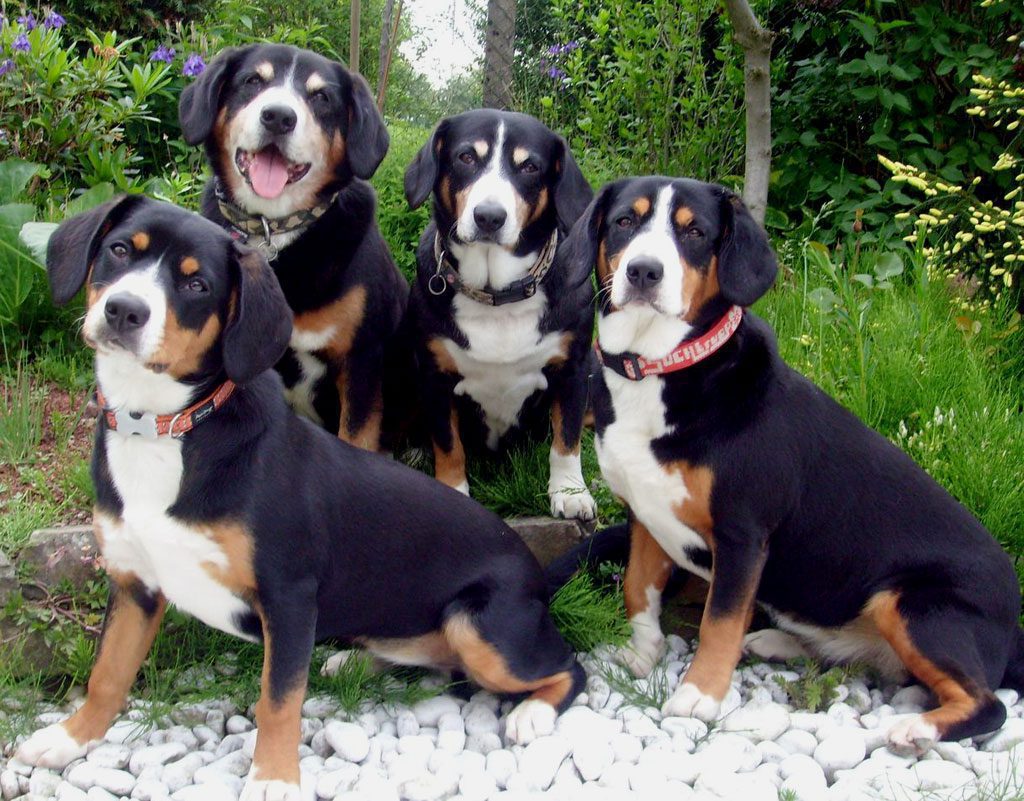
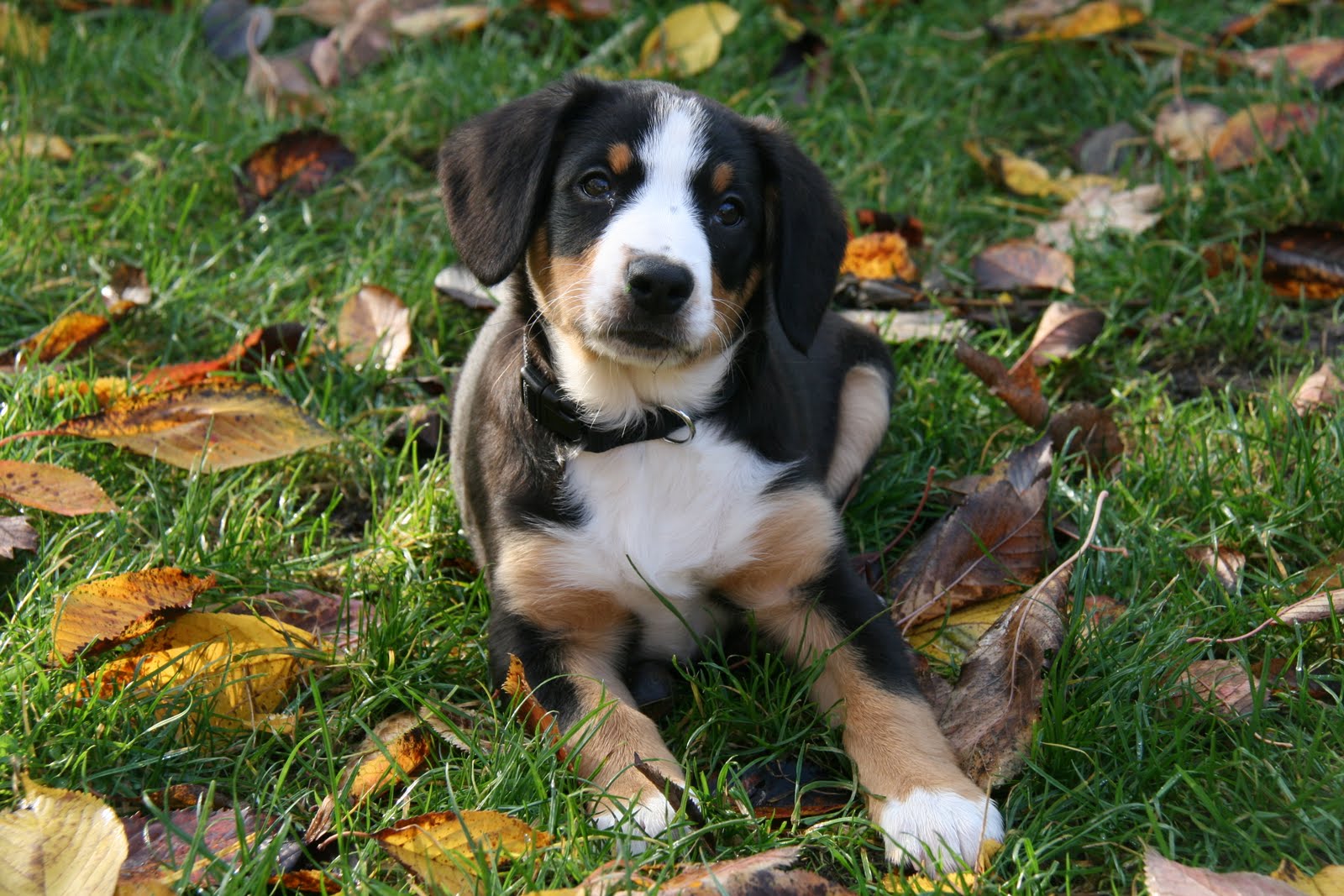
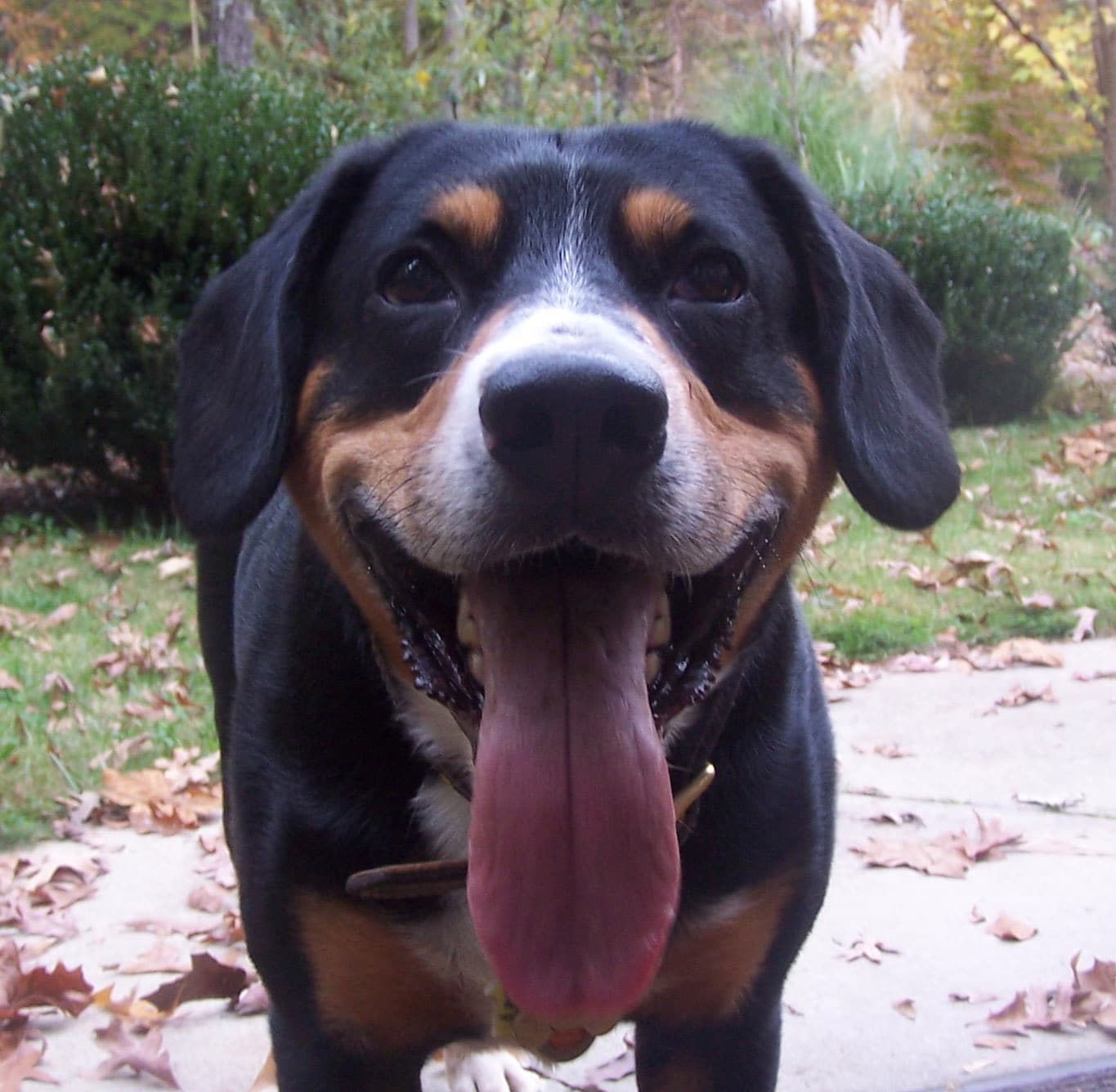
Entelbucher Cattle Dog is a square dog, robust, but medium-sized. It has small ears, triangular and rather small brown eyes. The head is well-proportioned to the body, with a flat and strong skull. His long jaw is well shaped and powerful. Toes are compact and provide cushioning and support his muscular body.

The layer of hair is smooth is thin and hard, with symmetrical markings of tricolor. White on their toes, the tip of the tail, the chest, the Tan always lies between the black and white. It has muscular broad hips. The tail is sometimes cut, a practice that is prohibited by law in many countries.

One Entelbucher Cattle Dog It has a height at the withers between 44 and 52 cm in males and between 42 and 50 cm in females. Weight is between 20 and 30 kg.

Character and skills

Like all large working dogs, very active, which is why, This race should be socialized at an early age with other dogs and people, and always with normal activity and training that can live safely as a pet (given its size, It may be a problem if you do not receive adequate education).

According to the breed standard, they are dedicated to people close to him and kind dogs, a little distrustful with strangers, and he loves children. But we must always bear in mind that the temperament of the dogs is individual, that is to say, may varyโ€ฆ

Entelbucher Cattle Dog Education

The Entelbucher Cattle Dog feel more comfortable in the field. He wants to move and be busy. Not a sofa dog. Not suitable for comfortable people and not for life in the middle of the city, but for challenges at work and dog sports. But, you don't necessarily need a house with a big garden, what would be ideal, because it also settles for an apartment. He has no special demands on his attitude, except the fact that we work with him and that on a daily basis. The nucleus and the end of their close participation is the human family. The Entelbucher Cattle Dog can be well trained. Loves to learn and learns with enthusiasm. It is strongly oriented towards its humans, which can be put to good use. The Entlebucher can read the mood and desires of your humans on their faces. This in turn means that one must approach one's education with feeling and of course with consequence.. You have a clear sense of justice and, therefore, questions fair treatment of him.

Entelbucher Cattle Dog Images

Videos Entlebuch Mountain Dog

Type and recognitions:

  • FCI CLASSIFICATION:
  • Group :
  • Section : . .

Federations:

FCI โ“˜, AKC โ“˜, ANKC โ“˜, CKC โ“˜, โ€‹KC โ“˜, UKC โ“˜

FCI breed standard Entelbucher Cattle Dog

FCIFCI - Entelbucher Cattle Dog
Cattle

Alternative names:

1. Entelbuch Mountain Dog, Entelbucher Cattle Dog, Entlebucher (English).
2. Bouvier de l’Entlebuch (French).
3. Entlebucher Sennenhund (German).
4. Entlebucher Sennenhund (Portuguese).
5. Entlebucher Sennenhund (espaรฑol).

โ–ท The world of Pets: Dogs, cats, birds, reptiles, amphibians

American English Coonhound
Estados Unidos Not recognized by the FCI
Content

History

The American English Coonhound, is one of the varieties of Coonhound normally bred in the southern United States.

This breed was originally classified and recorded as English Fox and Coonhound, prior to the specialization of the six breeds of Coonhound. Recognition in the Decade of 1940 by the United Kennel Club of Bluetick Coonhound and Treeing Walker Coonhound as different races, gave rise to the classification and registration of the American English Coonhound as a distinct race within the group Coonhound.

The breed originated in the southeast of United States, where they were raised by the cross of a American Foxhound and English Foxhound, most other European hunting breeds, and other native dogs, in order to specialize the race in the hunting of animals that are fugaban climbing trees.

Physical characteristics

Unlike the other classifications of Coonhound, a wide variety of colorations is acceptable to meet the standards of the American English Coonhound. The coloration may be reddish, bluish or tricolor.

But, red marks are predominant and ยซRedtickยป is a common euphemism to refer to the color of the American English Coonhound.

Some people believe that this lack of emphasis on specific coloration has allowed breeders to focus breeding programs on traits like intelligence and hunting ability rather than superficial concerns., like coat standards. Color variations are common even among puppies from the same litter of a American English Coonhound , which indicates high levels of DNA diversity in the breed.

Character and skills

To the American English Coonhound loves to snuggle up on any fluffy surface he finds, important to take into account, all those people who do not want to have their dog on the sofa and in bed all day.

Just like all the Coonhound, are โ€“generally- good dogs, affable and very sociable. Nervousness or aggression is considered a defect according to UKC breed standards. Are strong and stubborn nature, so it requires more patience in training than other breeds.

Young dogs tend to be very active, playful and eager to human attention, they are dogs that require plenty of exercise.

The American English Coonhound, It is used more often as hunting dogs, mainly of raccoons.

They are also excellent family pets, that they have been bred for hunting in Group, so tend to be very friendly.

The American English Coonhound as well, is very good guardian. It has a very characteristic alert bark that makes it infallible.

โ–ท The world of Pets: Dogs, cats, birds, reptiles, amphibians

English Shepherd
Estados Unidos UKC - Herding Dog Group

Pastor Inglรฉs

The English Shepherd It resists the pressure of long demanding hours.

Content

History

The race English Shepherd It is extremely versatile as a working dog. It's a line of Collie developed in the United States from farm dogs brought by the English and Scots early in the country's history.

Should not be confused with Old English Sheepdog (Bobtail).

The English Shepherd is very smart, able to bring forward any dog on the farm and used in varied pastoral work (beef, sheep, goats, pig), monitoring, hunting, vermin and rodent eradicator and company for the kids. It is possibly one of the most common breeds during the 19th century before the pedigree was given the importance it has to this day..

Many farmers appreciated this race for its versatility and not on their standard of appearance, being raised according to their abilities and not for exhibitions.

Physical characteristics

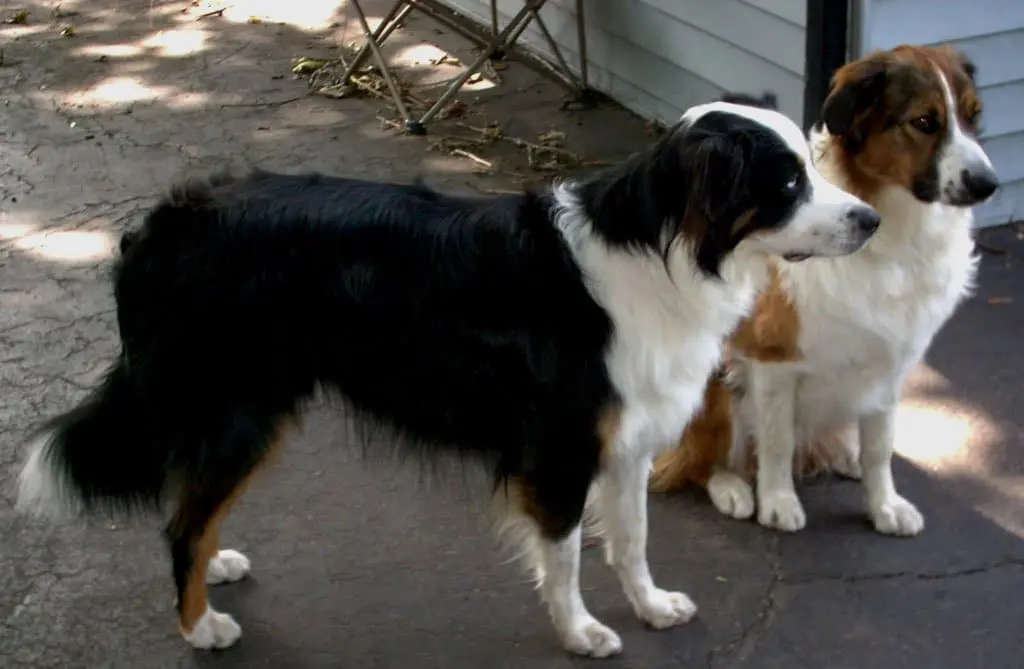
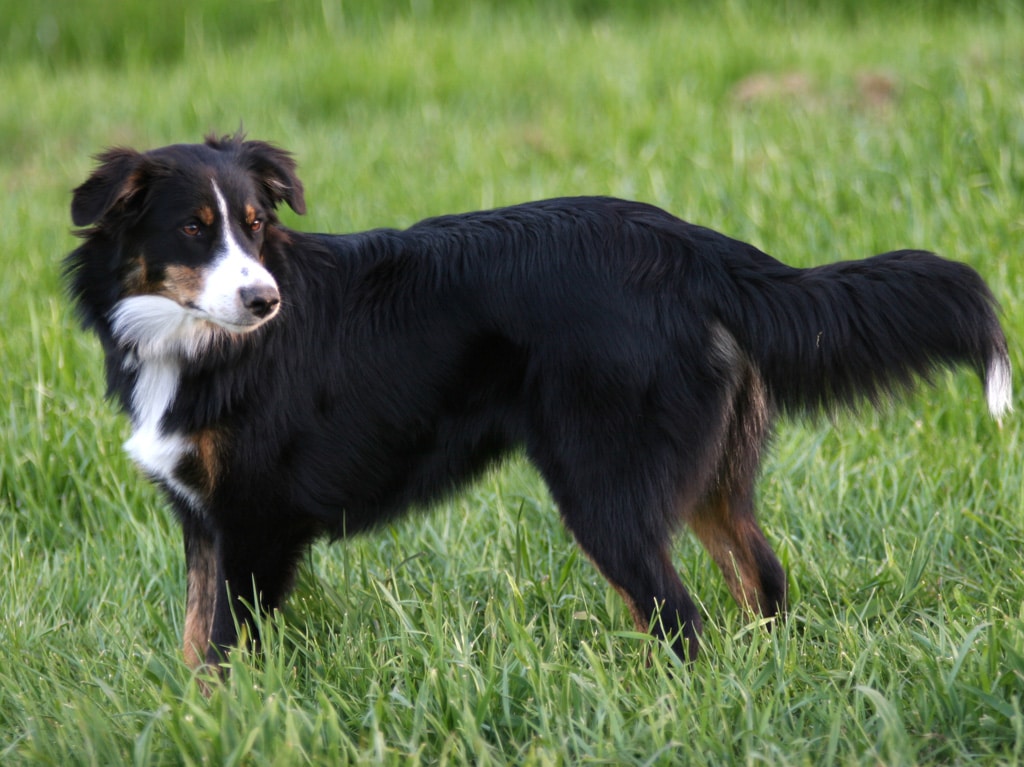
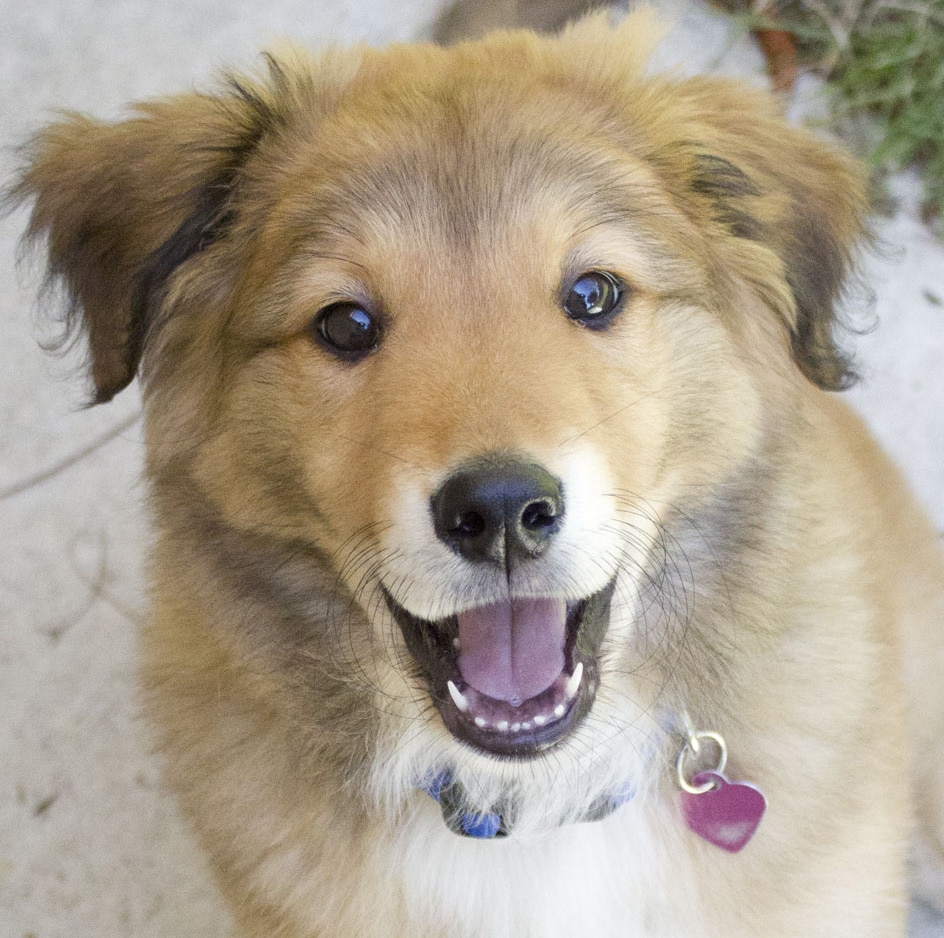
The English Shepherd is similar in appearance to Border Collie and to the Australian Shepherd. Although it has a less rounded head than the last, nor do they tend to have the mantle of merle color, something common in the Australian Shepherd, they have not so square body.

The English Shepherd is usually larger than the Border Collie, are easier to distinguish from Border Collie what of Australian Shepherd.

The English Shepherd is a medium-sized dog, usually a little longer than high. His weight is about 20 to 30 kg and is balanced in proportions. As a small farms working dog, has been selected to meet a variety of needs and that has resulted in a wide range of regional variations, appearance on.

The mantle is of average length and can be smooth, wavy or curly. It often has fringes on legs and the tail. As in all working dog, the hair should be easy to maintain, they require very little preparation. Dirt tends to be repulsed by the fur.

The English Shepherd It, generally, a healthy dog.

The colors of the layer can be sable & white, tricolor, black and white, or black and Tan. Other variants, such as solid colors (any), Red and atigrados also exist but are not common.

Character and skills

The temperament of English Shepherd is the defining characteristic of the breed, has one great intelligence and, often a unique kind of kindness for their own, both animals and people.

Often, is a independent worker, but always attentive to its own. They adapt easily and quickly learn routines.

Some may be distrustful with strangers and they are dogs of a single person. But, Once you agree to another adult (or other pets) or children, the converted part of his flock, and, with children especially, from that moment it will be difficult to find a better caregiver than a English Shepherd, to be aware of their children.

Images "English Shepherd"

Videos "English Shepherd"

English Shepherd Puppies of Forrest Run Farm Registered family raised April 2010
English Shepherd pups at 4 wks  old
Patient English Shepherd
Walnut Ranch English Shepherd puppies

Type and recognitions:

  • CLASSIFICATION UKC: Herding Dog Group

  • Alternative names:

    1. Farm Collie, Farm Shepherd, Old Farm Collie (English).
    2. English Shepherd (German).

โ–ท The world of Pets: Dogs, cats, birds, reptiles, amphibians

English Water Spaniel
Inglaterra Extinct

Content

History

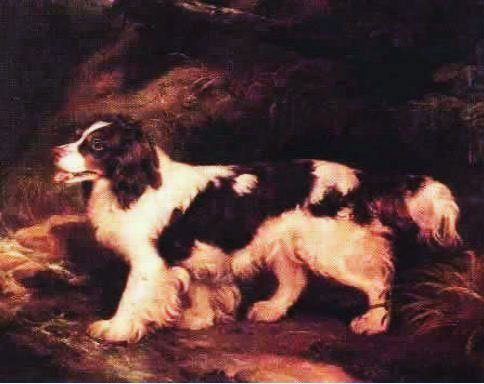
English Water Spaniel (Water Dog) It is a breed of dog that has been extinct since the first part of the 20th century, was last seen in the s 1930. Is of English origin.

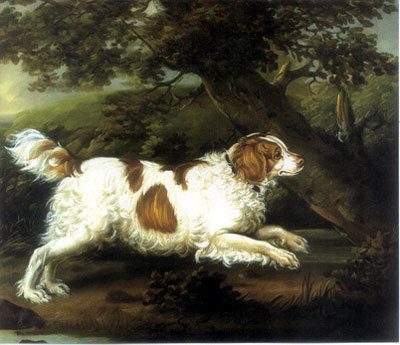
He was very famous for his skill in hunting waterfowl and being able to dive like a duck. It was described as similar to a Collie or a cross between a Poodle and Curly-coated Springer Spaniel and was usually white with liver or brown markings.

The English Water Spaniel is prior to Irish Water Spaniel (Whiptail). Historians of the race, They claim that they have been mentioned by Shakespeare in his work "Macbethโ€, and they believe that they have influenced genetically in several modern dog breeds, including therein to the American Water Spaniel, the Curly-coated Retriever and the Field Spaniel, Although it is unknown if the race was involved in the creation of Irish Water Spaniel.

In 1570, the Dr. John Caius wrote a description of the English Water Spaniel. But the race is officially mentioned by name in 1802, in the "Sportsmanโ€™s Cabinetโ€ (organization that nuclear all hunting sports), where they describe the English Water Spaniel like a dog "natural hair is long and curly, and compact, not loose and messyโ€, the description was accompanied by an engraving in which a English Hair Spaniel white with liver spots. This shows that the English Water Spaniel is prior to Irish Water Spaniel, not developed as a breed recognized until the Decade of 1830.

During the first half of the 18th century, the English Water Spaniel It was used for hunting ducks in East Anglia.

The Kennel Club โ€“initially– had a specific classification in which all the "Non-Irish water dogsโ€. That standard was created specifically for the English Water Spaniel by Hugh Dalziel in one of his books dedicated to the races of water dogs.

In an article of his published in the year 1897, Hugh Dalziel, ensured that, I didn't think the breed was extinct, on the other hand, He assured that there were still many specimens of the breed distributed throughout the country, and keeping alive the race passed through motivate breeders from the most important clubs and canine committees, in the perpetuation and improvement of the breed. But later, Dalziel, regretted the fact that while the Irish Water Spaniel became famous, the English Water Spaniel was absorbed by other breeds of spaniel, under the eye of the most important clubs and canine committees, until you reach the extinction…

In 1967, the author John Fawcett Gordon (and politician from Northern Ireland) He said: โ€œAfter two centuries of breeding the English Water Spaniel has become extinct. No specimen has been seen again in the last thirty yearsโ€.

At least, It is believed that the English Water Spaniel has left its legacy in descendant races...

Some authors include within these races the American Water Spaniel which was also developed using additional genetic material from the Irish Water Spaniel and of the Flat-coated Retriever. The Curly-coated Retriever is considered to have descended from Poodle, of the Setter, of the extinct St. John’s Water Dog and of the English Water Spaniel.

The records for the origin of the modern breed Field Spaniel are more precise and show that one of the four parent dogs used in the creation of the breed was a English Water Spaniel crossed with a Cocker Spaniel officially registered as a Sussex Spaniel, due to its liver-colored spots. ยฟEs lioso?, truth?

Physical characteristics

The English Water Spaniel looked more like a curly-haired version of the Springer Spaniel, with some features of the Collie, Pudelhund, and Setter.

With white hair and liver-colored spots (brown), they measured about 51 cm in height to the cross. They were thin, long-legged characteristic of some Spaniel, with the tail and long ears, White under belly and Brown dorsum. With a head long and narrow small and those long ears covered with thick and very defined curls. The body was moderately thick, barrel-shaped, but not as much as the Field Spaniel.

Due to the colors of the English Water Spaniel (liver or brown and white), it has been suggested that breed may have been the source of the colors that modern breeds have English Springer Spaniel and Welsh Springer Spaniel.

Alternative names:

  • Water Dog, Water Rug