โ–ท The world of Pets: Dogs, cats, birds, reptiles, amphibians

Pink cockatoo
Cacatua leadbeateri

Cacatรบa Abanderada

Content

Description


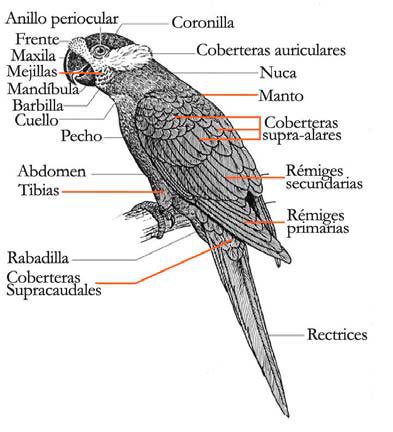
Anatomy-parrots

35 cm.. length and weighing approximately between 340 and 425 g.
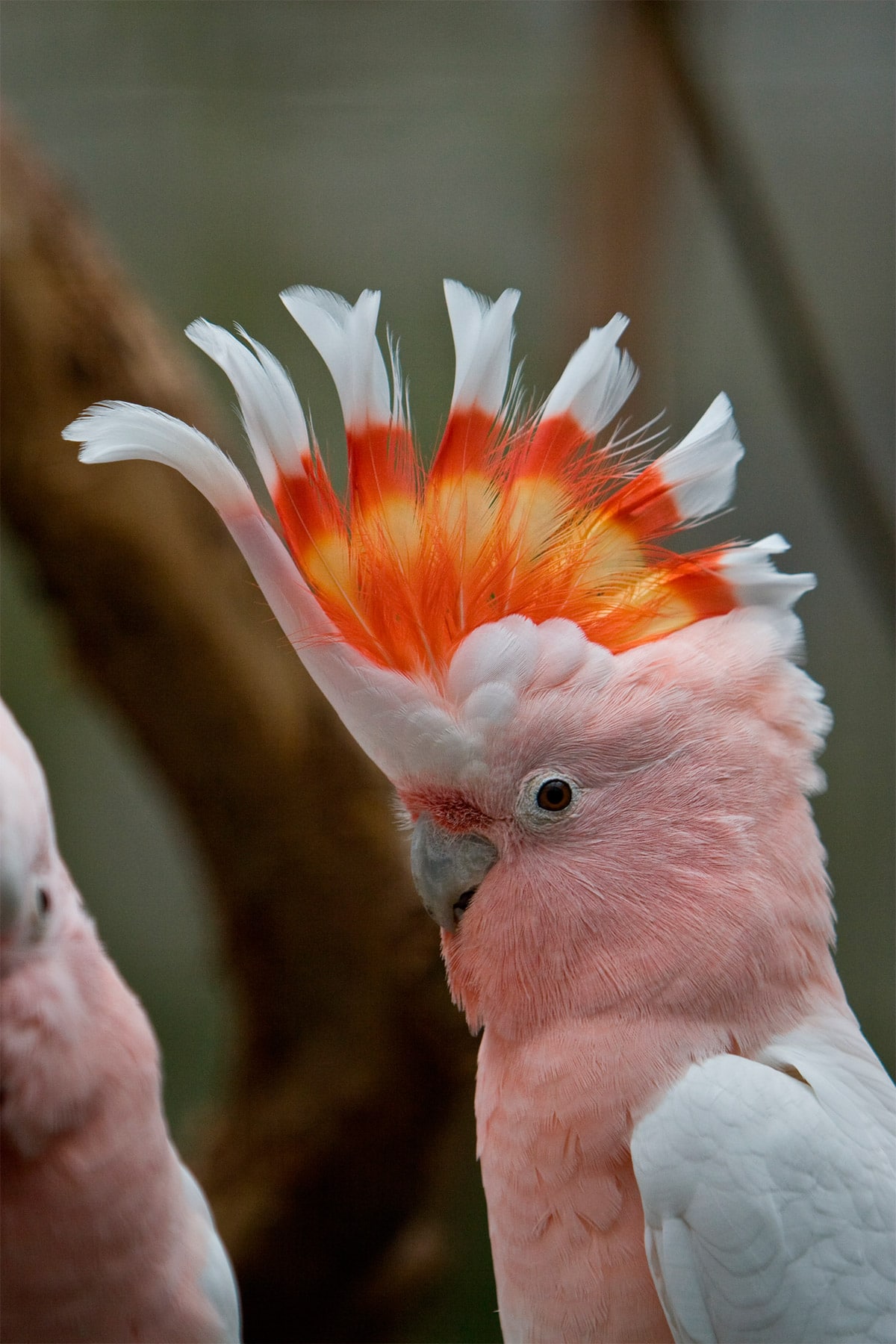
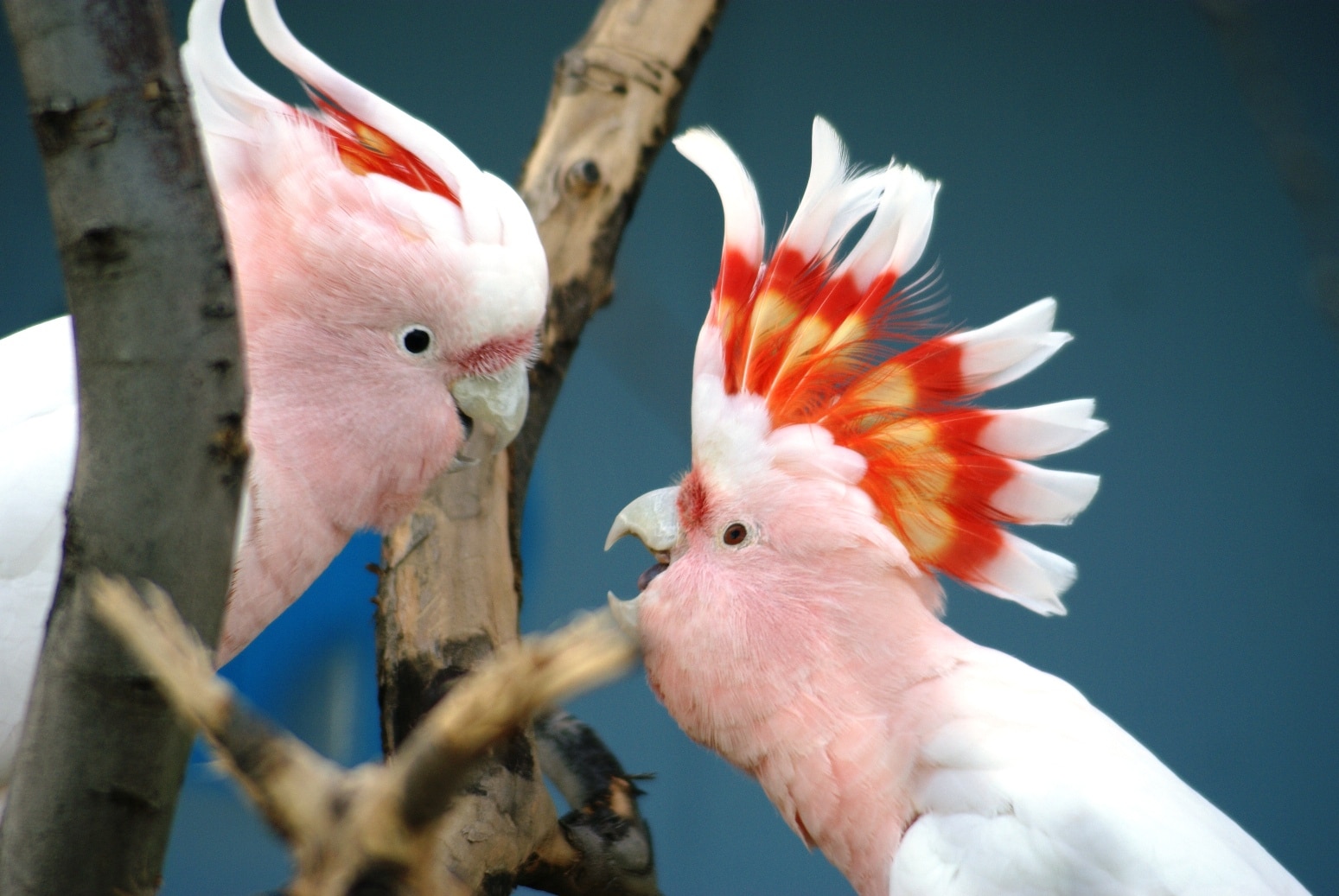
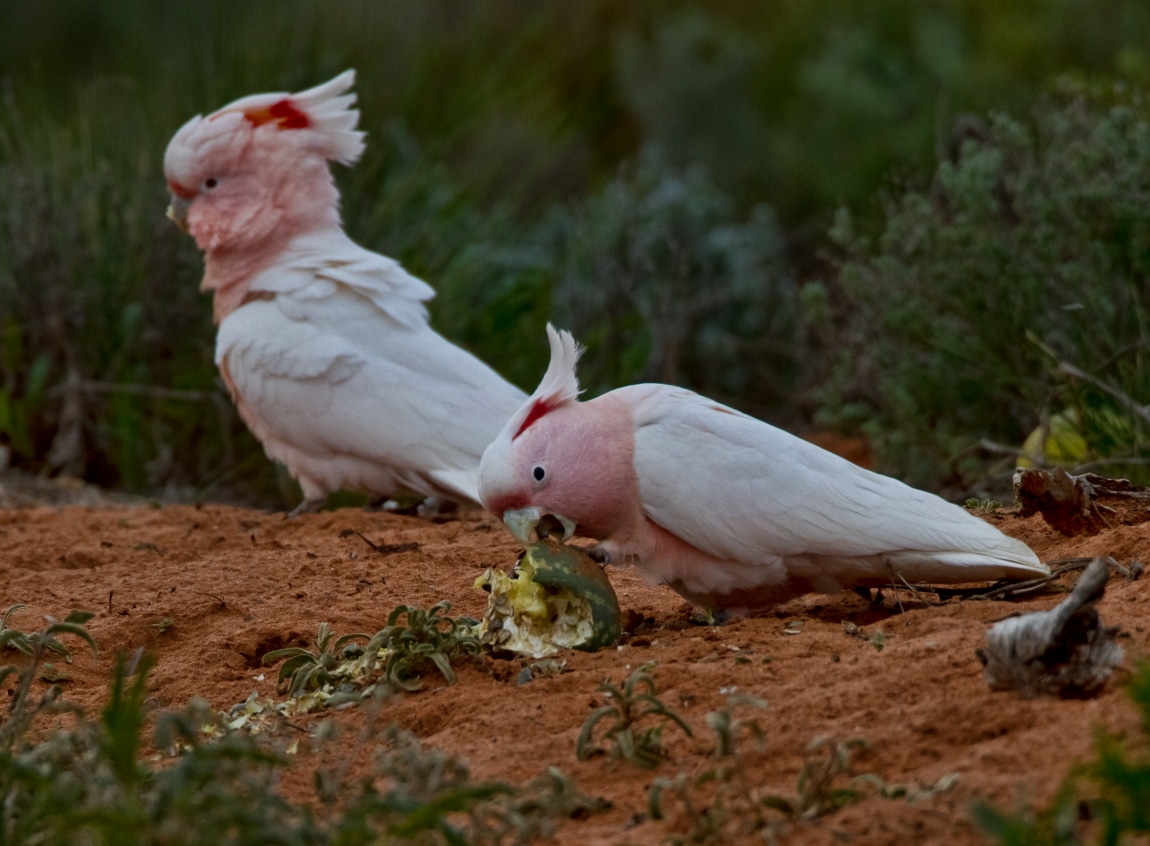
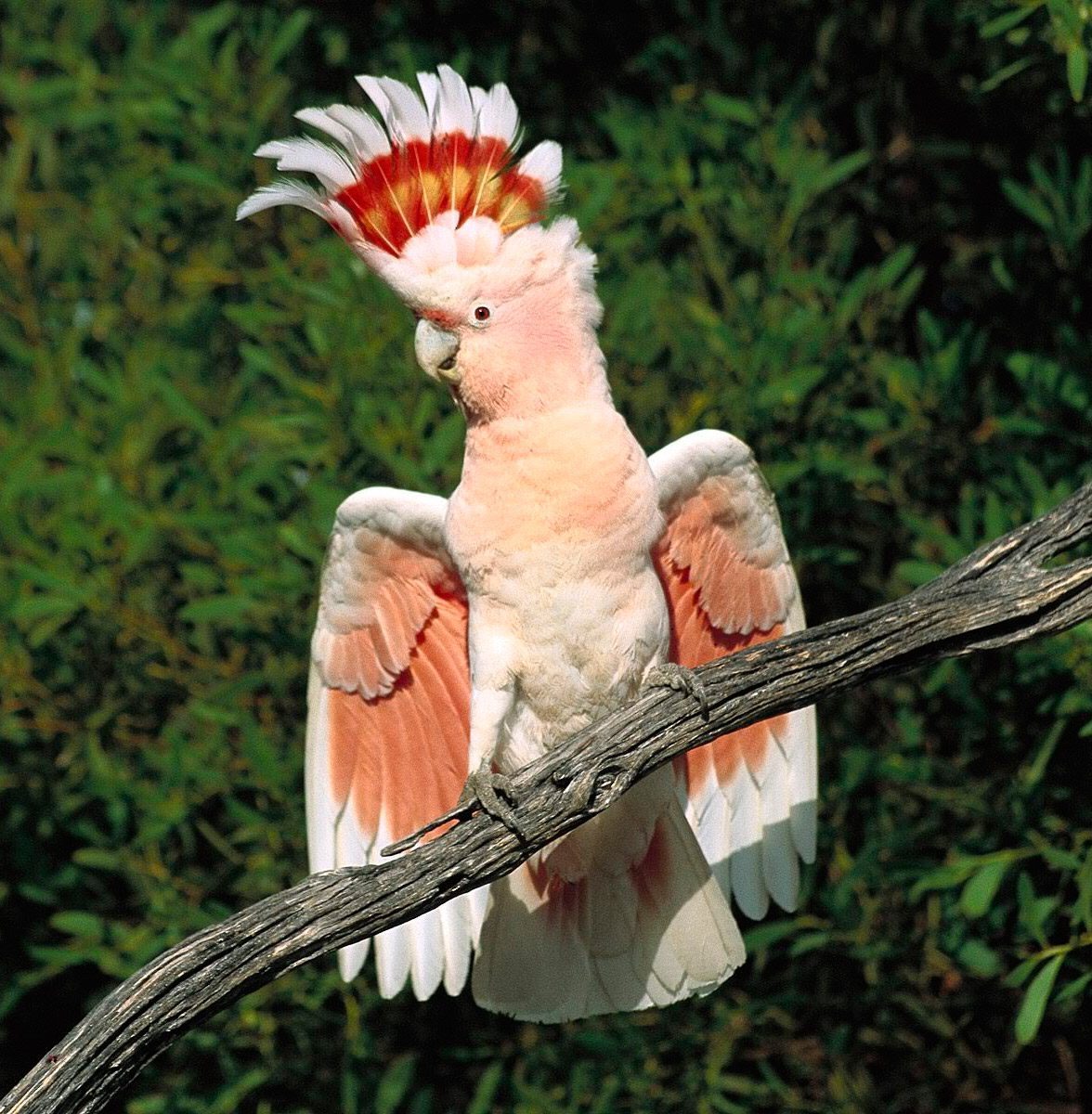
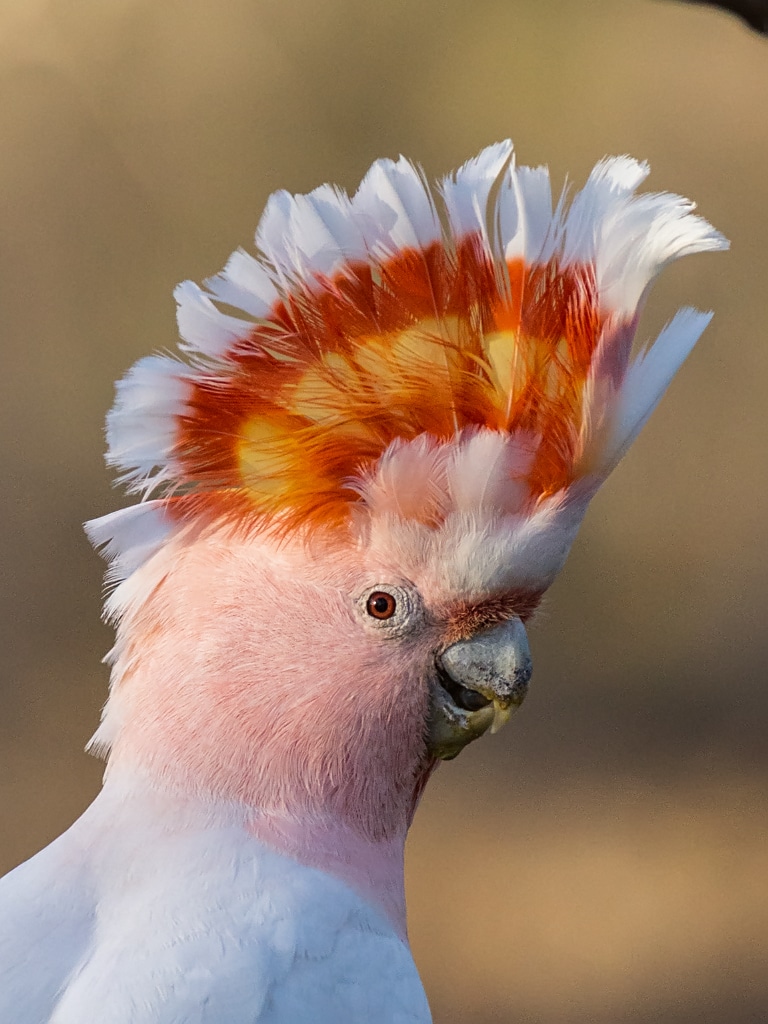
The Pink cockatoo (Cacatua leadbeateri) is distinguishable by its spectacular Crest composed by 16 long feathers forward curved. These pens have a wide base with a slightly pink and yellow red-stained central part.

The top ends of the crest are white. Another set of more rounded feathers grow over the eye, forming a white base when the crest is raised. The forecrown is spanned by a band thin and reddish.

The face, neck and underparts are salmon, becoming is white in the coverts.
The flight feather and tail are white with infiltration of salmon on the bottom.

The bill is horn. The irises dark brown and legs grey.

The female looks like your partner, but the head Pink salmon and underparts they are paler. The band Yellow that decorates the bill is brighter and wider. Upper belly It is white instead of Pink salmon. The irises are reddish-pink.

The immature they are identical to the female. The frontal band is bright orange-red, the irises light brown.

Description 2 subspecies

  • Cacatua leadbeateri leadbeateri

    (Vigors, 1831) – Nominal.


  • Cacatua leadbeateri mollis

    (Mathews, 1912) – Both similar to the kind adults nominal, but with the crest darker red, with little or no yellow. White Peak.

Behavior:

The couple is the basic social unit, but are maintained contact with other couples nonreproductive through the establishment of groups.

Out of it breeding season, There are mainly small bands consisting of 10 to 50 birds. Major gatherings occur only during periods of drought or when food sources are abundant. In this case, There may be a few hundred individuals, among them, small Galah.

Dormitories they are occupied exclusively outside the breeding season and the birds leave early at dawn.

The Pink cockatoo they forage in trees and on the ground. But, This species is more arboreal that the Galah wave Little corella.

When moving on the ground, He walks slowly to avoid the tall grass.

In the Flock, a bird play always the role of Sentinel. It adopts a very careful attitude, it partially roughcast its crest and regularly pauses during which is very upright inspecting the surroundings.

During the mid-day heat, it finds shelter in the foliage of the trees.. During the summer, rest period is longer.

The paired birds they are always near each other. During periods of intense heat, This bird visit water points, even during the day. At sunset, they return to your bedroom.

Habitat:

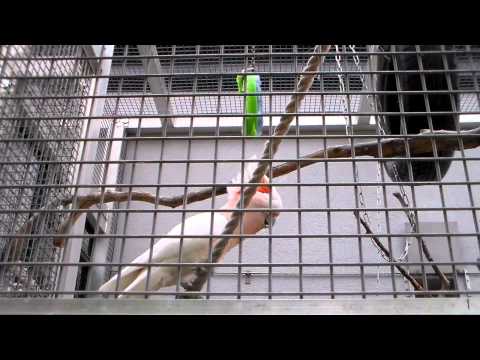
Video – "Pink cockatoo" (Cacatua leadbeateri)

Cockatoo leadbeateri _ Inkakakadu`s in Aktion

Its population is distributed by a variety of forest habitats in arid or semi-arid areas.
The species is closely related to the areas of ยซMalleeยซ.

Found particularly in afforestation of cypress and eucalyptus, in mixed plots of eucalyptus and Casuarinas or near cliffs.
Its presence in a place is largely also to the existence of a water fountain.
On the other hand, shows a very weak attachment to the fragmented habitats that is no long.

Reproduction:

The nesting season running from August to December. Cockatoos return to their traditional nesting sites.

The cavity for the nest receives improvements: the entrance is enlarged and covered with a layer of fresh chips placed at the bottom of the nest. The nests they are almost always far from one another, at a distance of 2 km.

The spawning is between 2 and 5 eggs being deposited between 2 and 3 days. The incubation It made both parents, begins after the deposit of the third egg and lasts between 23 and 24 days.

The chicks they remain at the bottom of the cavity during 57 days and are fed by the male and the female indistinctly. The family stays near the nest until the last hatchling leaves the nest., they will then join other family groups in the place where food resources are appropriate.

On rare occasions, the Pink cockatoo is forced to eject a couple of Galah He started to lay eggs in their nest, but it can also happen that this form of parasitism is a success. In this case, the partner of the Pink cockatoo takes care of eggs and young after hatching. When are born, the young of the species Eolophus roseicapilla, they behave exactly like their hosts, ignoring the difference in origin.

Food:

With feed seed, herbs, cereals and often of melons (Cucumber myiocarpus). Also consume fresh local figs, pine cones, eucalyptus seeds, bulbs, dried fruits, estate, insects and larvae.

During and after your meal, These birds biting branches and pieces of bark, causing a shower of timber crushed at the foot of the trees.

During periods of intense heat, increase the frequency of his visits to water points.

Distribution:

Size of the area of distribution (reproduction / resident): 2,88 million km2

endemic to Australia. Its main strongholds are in the southwest of Queensland where is quite extended and South of Australia, where is locally common.

In other parts of the continent are very rare and scarce, going back to the vicinity of the Northern Territory and carrying out raids in Western Australia.

Distribution 2 subspecies:

  • Cacatua leadbeateri leadbeateri

    (Vigors, 1831) – Nominal.


  • Cacatua leadbeateri mollis

    (Mathews, 1912) – Interior West and centre of Australia, towards the East, up to the eyre peninsula and the basin of the Lake Eyre, South of Australia.

Conservation:

โ€ข Least concern (Red list 2006).

โ€ข Listed as vulnerable by NSW national parks and wildlife.

โ€ข Threatened by the law of conservation of species (2005).

Its distribution is very unequal, but only in the Centre - this actually is and South-East where they have widespread. In other parts of Australia, This species is declining due to the thinning of the habitat and its marketing as bird cage.

Competition with the Galah's disability for nesting cavities may be a crucial problem in the future if this species continues to grow. The world population of the Pink cockatoo It is estimated in a little less than 20 000 birds. It is classified as near threatened.

"Pink cockatoo" in captivity:

It is a frequently held in captive animal in your Australia natal, but it is less known in other countries like ours. Its price in the market is very high, especially that of males, being one of the most expensive white cockatoos.

Very noisy, with a great personality, playful and very active. It is very destructive, We must therefore provide toys and wood to gnaw, or otherwise you will satisfy with house furniture and other elements. Inactive animals, bored or stressed tend to yell a lot.

Its life expectancy round between the 40 and 60 years of life.

Alternative names:

– Pink Cockatoo, Leadbeater’s Cockatoo, Major Mitchell’s cackatoo (ingles).
– Cacatoรจs de Leadbeater, Cacatoรจs commandant Mitchell (French).
– Inkakakadu (German).
– Cacatua-rosa (Portuguese).
– Cacatรบa Abanderada, Cacatรบa Inca (espaรฑol).

scientific classification:

– Order: Psittaciformes
– Family: Cacatuidae
– Genus: Cockatoo
– Scientific name: Cacatua leadbeateri
– Citation: (Vigors, 1831)
– Protonimo: Plyctolophus Leadbeateri

Images Flag-crested Cockatoo:


Species of the genus Cacatua
  • Cacatua tenuirostris
  • Cacatua pastinator
  • —- Cacatua pastinator derbyi
  • —- Cacatua pastinator pastinator
  • Cacatua sanguinea
  • —- Cacatua sanguinea gymnopis
  • —- Cacatua sanguinea normantoni
  • —- Cacatua sanguinea sanguinea
  • —- Cacatua sanguinea transfreta
  • —- Cacatua sanguinea westralensis
  • Cacatua goffiniana
  • Cacatua ducorpsii
  • Cacatua haematuropygia
  • Cacatua galerita
  • —- Cacatua galerita eleonora
  • —- Cacatua galerita fitzroyi
  • —- Cacatua galerita galerita
  • —- Cacatua galerita triton
  • Cacatua ophthalmica
  • Cacatua sulphurea
  • —- Cacatua sulphurea abbotti
  • —- Cacatua sulphurea citrinocristata
  • —- Cacatua sulphurea parvula
  • —- Cacatua sulphurea sulphurea
  • Cacatua moluccensis
  • Cacatua alba

  • Sources:

    – Avibase, infoexoticos, Oiseaux.NET

    – Photos: imagenesdeanimalessalvajes (Alexis Obninsk), David Cook Wildlife Photography, Wikimedia , parcodeipappagalli , Geoffrey Dabb

    – Sounds: Patrik ร…berg (Xeno-canto)

    โ–ท The world of Pets: Dogs, cats, birds, reptiles, amphibians

    Layard's Parakeet
    Psittacula calthrapae


    Cotorra de Ceilรกn

    Content

    Description:

    29 cm., including its tail up 13 cm.. and 100 g. of weight.
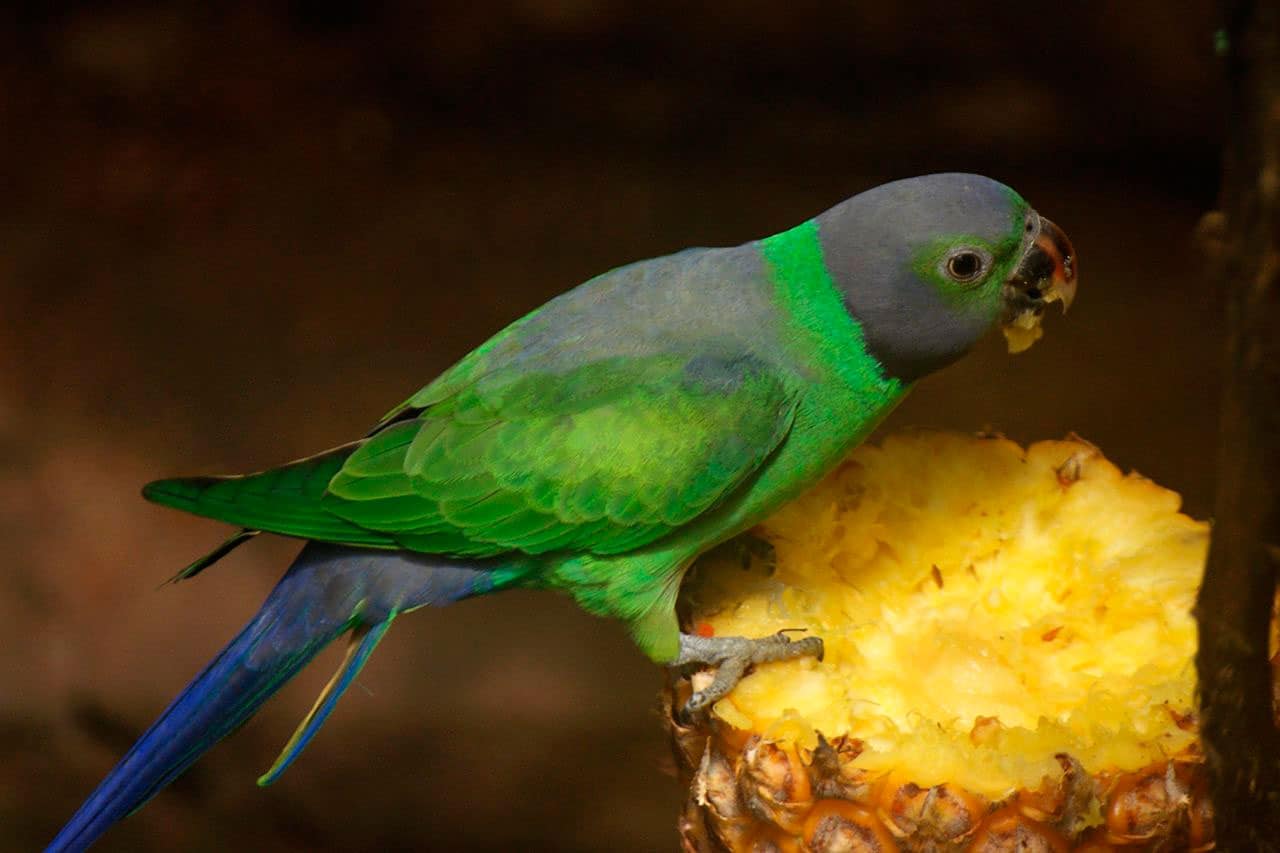
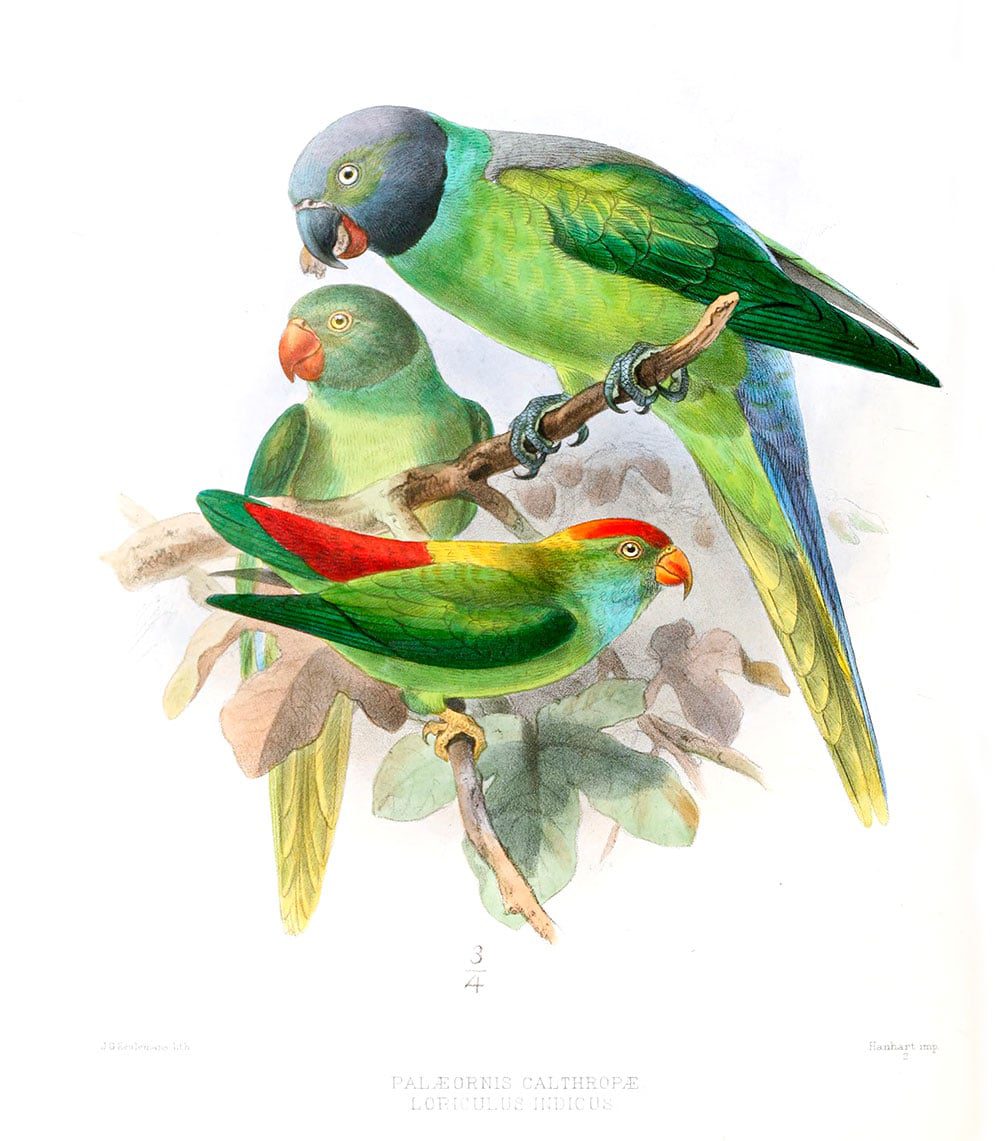
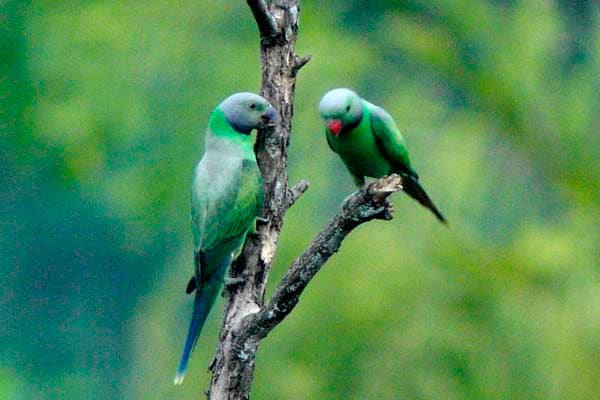
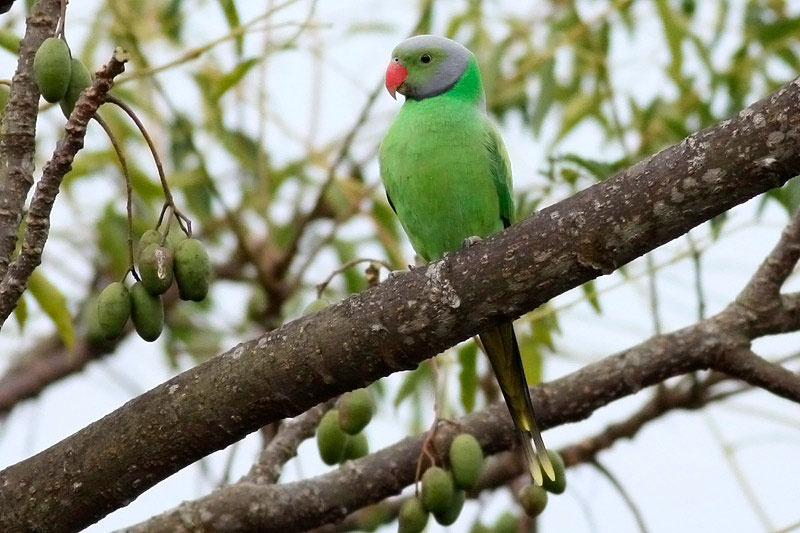
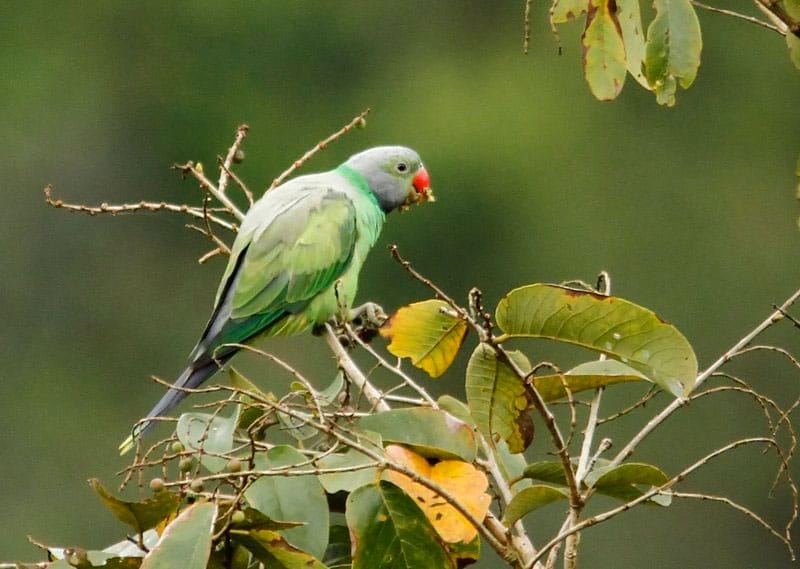
    The adult male of the (Psittacula calthrapae) Layard's Parakeet has the head and back bluish grey, separated by a neck green. There is a wide swath in the chin of black color and tail It is blue with a yellow tip. Upper bill the male is red, and the bill bottom is brown.

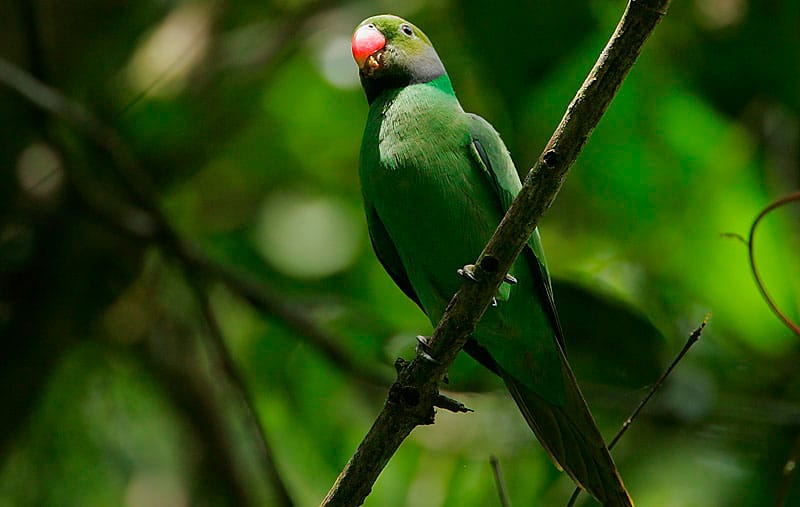
    The female es similar, but has the bill top in black, and dark green stripe on the cheek. Lack the band pink in nape and the neck is greenish yellow. They have the blue tint in the rear of the head if you can see in males. Feathers middle of the tail You are washed with blue.

    The immature they are like the females, but with feathers tail shorter, with a plumage mainly green and bill dark red.

    Ilustraciรณn Cotorra de Ceilรกn

  • Sound of the Layard's Parakeet.

    Habitat:

    Their preferred habitats are forested areas 1.600 meters above sea level, although registered at altitudes 2.000 m, taking advantage of a wide variety of vegetation types including natural and semi-natural moist forests, tea plantation and botanical gardens; often at the edge of the woods, generally in small groups or couples.

    Sedentary, especially in mountain areas, but extending over the lowlands, especially in humid forests near sea level.

    after feeding, the Layard's Parakeet congregate in trees chattering loud and persistent. Before break, roam issuing strong calls.

    Reproduction:

    The time of reproduction It is around January to May, with a high season from July to September.

    The eggs They are deposited in a natural cavity or disused nest Woody Woodpecker or a bearded, usually at the top of a tree. Competition for nest sites is often intense, especially with Plum-headed Parakeet. The cavity is lined with rotting wood and dust. Two to four white eggs make commissioning. Both sexes share duties incubation and feed on young.

    Food:

    Diet Layard's Parakeet It is believed to be similar to the Rose-ringed Parakeet and Plum-headed Parakeet, although their arboreal habits make them more frugivores and less destructive to crops.

    Registered with the company Brahminy Starling (Sturnia pagodarum) feeding fruit Map peltata (Macaranga tomentosa). Favorite foods include figs and fruit of wild cinnamon (Cinnamomum).

    Distribution:

    Size of the area of distribution (reproduction / resident): 18.900 km2

    The Layard's Parakeet It is endemic in south-central and south-west Sri Lanka. In Provincia Central, North of Matale through highlands around south and west Kandy in Western Province and Sabaragamuwa to the North of On Provincia.

    They are distributed also in the east, around the Gal Oya National Park and to the South, in Uva Province, until Haputale. A record of 1880 a bird against Eastern Province. Registration, unconfirmed, in the Maldives It is believed to come from leaks.

    According to sources, abundant in the 19th century and apparently still numerous in some areas, but declining due to habitat loss arising, for example, conversion of natural and semi-natural forests and plantations capture for trade.

    Conservation:

    State of conservation โ“˜


    minor concern Minor Concern โ“˜ (UICN)โ“˜

    โ€ข Current Red List of UICN: Least concern

    โ€ข Population trend: Decreasing

    The Psittacula calthrapae (del Hoyo and necklace 2014) It was previously listed as Psittacula calthropae.

    The size of the world's population has not been quantified, but the species is reported as locally common (pit et to the. 1997).

    The population is suspected of being in decline due to ongoing habitat destruction.

    "Layard's Parakeet" in captivity:

    Rare captive out of their range.

    Alternative names:

    – Layard’s Parakeet, Emerald-collared Parakeet (English).
    – Perruche de Layard (French).
    – Blauschwanzsittich (German).
    – Periquito-de-colarinho-verde (Portuguese).
    – Cotorra de Ceilรกn (espaรฑol).


    scientific classification:

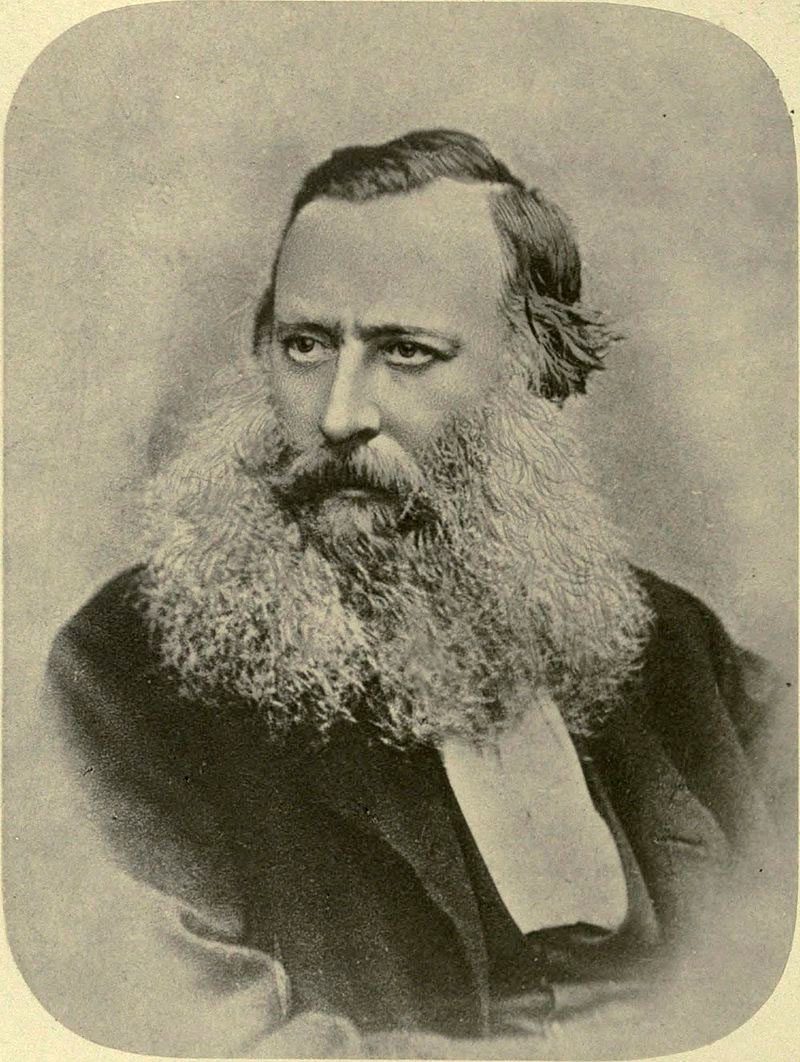
    Edward Blyth
    Edward Blyth

    – Order: Psittaciformes
    – Family: Psittaculidae
    – Genus: Psittacula
    – Scientific name: Psittacula calthrapae
    – Citation: (Blyth, 1849)
    – Protonimo: Palaeornis Calthrapae


    Layard's Parakeet Images:

    Videos "Layard's Parakeet"

    Parrots in the world
  • Psittaciformes (Psittaciformes) from America
  • Psittaciformes (Psittaciformes) Oceanian
  • Psittaciformes (Psittaciformes) from Asia
  • Psittaciformes (Psittaciformes) from Africa
  • Psittaciformes (Psittaciformes) of the world

  • Especies del gรฉnero Psittacula
  • Psittacula finschii
  • Psittacula himalayana
  • Psittacula roseata
  • —- Psittacula roseata juneae
  • —- Psittacula roseata roseata
  • Psittacula cyanocephala
  • Psittacula alexandri
  • —- Psittacula alexandri abbotti
  • —- Psittacula alexandri alexandri
  • —- Psittacula alexandri cala
  • —- Psittacula alexandri dammermani
  • —- Psittacula alexandri fasciata
  • —- Psittacula alexandri kangeanensis
  • —- Psittacula alexandri major
  • —- Psittacula alexandri perionca
  • Psittacula derbiana
  • Psittacula longicauda
  • —- Psittacula longicauda defontainei
  • —- Psittacula longicauda longicauda
  • —- Psittacula longicauda modesta
  • —- Psittacula longicauda nicobarica
  • —- Psittacula longicauda tytleri
  • Psittacula columboides
  • Psittacula calthrapae
  • Psittacula eupatria
  • —- Psittacula eupatria Avensis
  • —- Psittacula eupatria eupatria
  • —- Psittacula eupatria magnirostris
  • —- Psittacula eupatria nipalensis
  • —- Psittacula eupatria siamensis
  • Parrots wardi
  • Psittacula krameri
  • —- Psittacula krameri borealis
  • —- Psittacula krameri krameri
  • —- Psittacula krameri manillensis
  • —- Psittacula krameri parvirostris
  • Psittacula eques
  • —- Parrot knight knightโ€ 
  • —- Psittacula eques echo
  • Parrots
  • Psittacula caniceps

  • Layard's Parakeet (Psittacula calthrapae)


    Sources:

    – Avibase
    – Parrots of the World โ€“ Forshaw Joseph M
    – Parrots A Guide to the Parrots of the World – Tony Juniper & Mike Parr
    – Birdlife

    – Photos:

    (1) – Layardโ€™s Parakeet eating fruit in Sri Lanka. Its beak is not fully black, so it is probably a sub-adult female By Hafiz Issadeen (originally posted to Flickr as Layardโ€™s Parakeet) [CC BY 2.0], via Wikimedia Commons
    (2) – [BirdPhotoIndia] Layardโ€™s parakeet, Sri Lanka – Indian Birds Photography
    (3) – Photo by Steve G near Sinharaja, Sri Lanka, July 28, 2009 – Bird Forum
    (4) – An adult of Layardโ€™s Parakeet – World-Birds
    (5) – Layardโ€™s Parakeet Psittacula calthropae – Starron Bird and Wildlife
    (6) – John Gerrard Keulemans [Public domain], via Wikimedia Commons

    – Sounds: David Farrow (Xeno-canto)
    โ–ท The world of Pets: Dogs, cats, birds, reptiles, amphibians

    Deville's Parakeet
    Pyrrhura lucianii


    Deville's Parakeet

    Content

    Description:

    21-23 cm.. height.

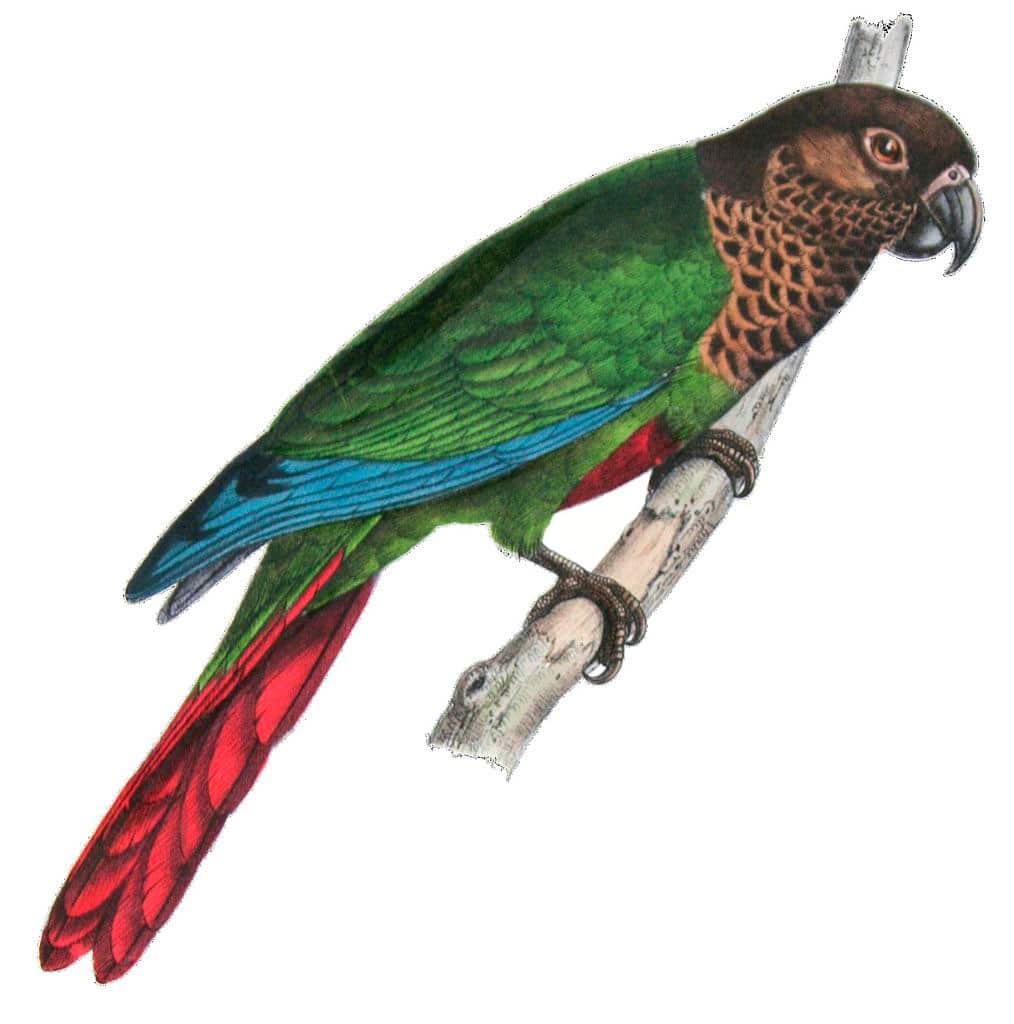
    the showy plumage of the Deville's Parakeet (Pyrrhura lucianii) is generally Green, darker in the lower parts, the crown is dark brown, the forecrown and face is brownish red in colour; cheeks brick red, faded of blue, ear-coverts brownish yellow, neck and chest with the typical scales very visible due to the black and yellow contrast of the feathers. The ventral coat of arms, reddish, is well defined; in flight the dark red spot is notorious for the abdomen. Well defined are the reddish marks on the rump and in his long tail; the flight feather they are blue.

    It has periocular ring Of course, irises brown, bill blackish and legs grey pink.

    Note:

    Until recently this species was included along with the Pyrrhura subandina, Pyrrhura caeruliceps, Pyrrhura pantchenkoi within the species Pyrrhura picta.

    Habitat:

    Found in altitudes of 800 m, in forests Terra firm and vรกrzea, including forest margins and near clearings with tall trees. In forests low semi humid, up close 100 m.

    Seen in pairs, groups of three or flocks of up to 20 individuals.

    Reproduction:

    Little is known about the reproductive cycle of this species, probably nesting in large trees, in cavities or in nest of woodpeckers abandoned, with one laying estimated in 5-7 eggs.

    Food:

    With feeds a wide variety of fruits, flowers, seeds and algae, possibly.

    Distribution:

    Size of the distribution (breeding/resident): 47,200 km2

    Restricted to the State of amazon in the Northwest Amazon of Brazil.

    This species is supposed fairly common within its range, However, This can not be confirmed since this time rare remote region is visited by researchers.

    Conservation:

    โ€ข Red List Category: Least concern

    โ€ข Population trend: Decrease

    State of conservation โ“˜


    minor concern Minor Concern โ“˜ (UICN)โ“˜

    The status of their populations is unknown, but for the good condition of the habitat, it can be assumed that they are in good state of conservation.

    While the trend of the population seems to be decreasing, do not believe that the decline is fast enough for approaching the threshold of vulnerable under the criterion of population trend

    "Deville's Parakeet" in captivity:

    Although he is a parrot rare in captivity, its potential as a domestic fowl is excellent, provided there are hand raised and socialized from an early age. The newly imported birds are usually shy and nervous and often they remain reserved.

    It is usually inquisitive and active, enjoy flying and requires plenty of exercise and a spacious cage. Usually, It is not too noisy unless it is excited (as it is usually the case of all species Pyrrhura).

    Once acclimatized, These parrots are quite robust. Enjoy with the bath by what are them must provide a dish of water little deep to daily. Also the love chew branches fresh.

    Alternative names:

    – Deville’s Parakeet, Bonaparte’s Parakeet (English).
    – Conure de Bonaparte, Conure de Luciani (French).
    – Bonapartesittich, Prinz Luzians Rotschwanzsittich (German).
    – Tiriba-de-deville (Portuguese).
    – Cotorra de Bonaparte, ร‘รกngaro de Deville, Perico de Deville, Cotorrita barriguiroja (espaรฑol).
    – Perico de Bonaparte (Peru).

    scientific classification:

    – Order: Psittaciformes
    – Family: Psittacidae
    – Genus: Pyrrhura
    – Scientific name: Pyrrhura lucianii
    – Citation: (Deville, 1851)
    – Protonimo: Conurus Lucianii

    Images Deville's Parakeet:


    Especies del gรฉnero Pyrrhura

    Deville's Parakeet (Pyrrhura lucianii)


    Sources:

    – Avibase
    – Parrots of the World โ€“ Forshaw Joseph M
    – Parrots A Guide to the Parrots of the World – Tony Juniper & Mike Parr
    – Birdlife

    – Photos:

    (1) – Maracana luciani Dev. & Cast. Pyrrhura lucianii = (Deville, 1851) by Francis de Laporte de Castelnau [Public domain], via Wikimedia Commons

    – Sounds: Daniel Lane (Xeno-canto)
    โ–ท The world of Pets: Dogs, cats, birds, reptiles, amphibians

    Turquoise-winged Parrotlet
    Forpus spengeli

    Turquoise-winged Parrotlet

    Content

    Description:

    Turquoise-winged Parrotlet

    12โ€“13 cm. length and 28 g. of weight.
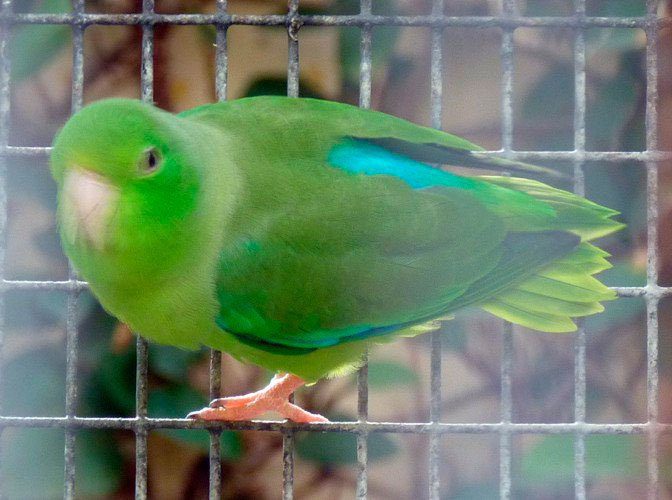
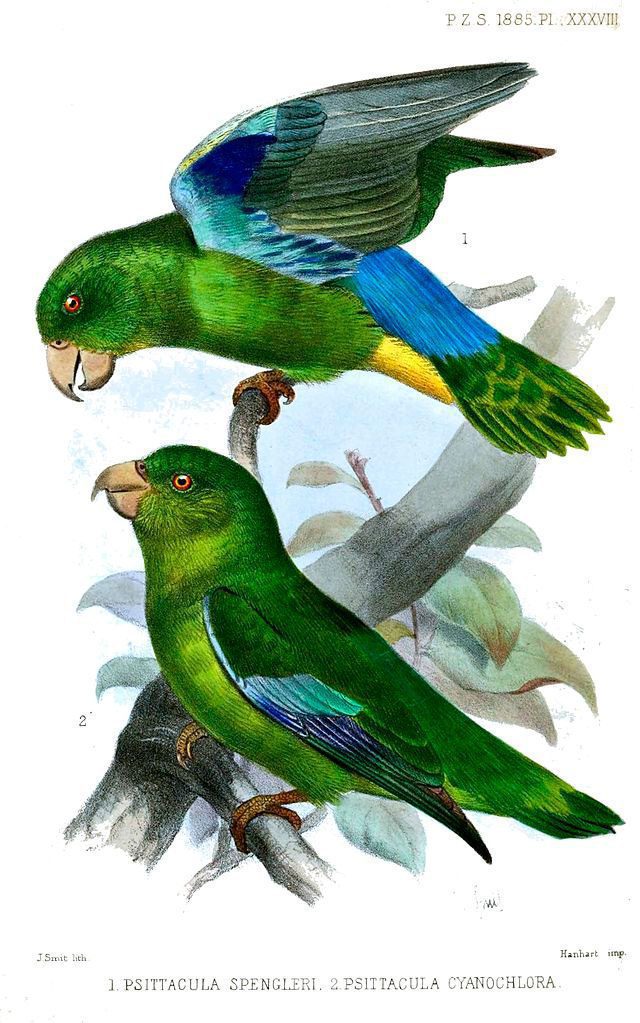
    The male of the Turquoise-winged Parrotlet (Forpus spengeli) It has shades of blue at the bottom of the back, still it rump of a turquoise hue; turquoise / blue with purple on the underwing-coverts and axillary.

    The wing coverts are dark green. Primary coverts are violet; wing edge bright green. Supracaudals coverts are bright green; undertail-coverts, bright yellow. Dark brown eyes with iris gray; flesh-colored legs; peak light colored horn.

    The female It is green instead of blue; their face is green / yellow, It is his forecrown yellower.

    taxonomy:

    Until now treated as conspecific the species Forpus xanthopterygius, or sometimes as a subspecies of Forpus passerinus, or a subspecies of Forpus cyanopygius. differs, However, of the Forpus xanthopterygius in pale turquoise against the rich color tone blue rump and of the wing-coverts of the male; in the dark blue, against the rich blue color in underwing-coverts of the male; the forecrown and lores yellow in female.

    • Sound of the Turquoise-winged Parrotlet.

    Habitat:

    they prefer forested habitats drier as open forests and riparian, closed caatinga; Also they found in savannas, palm groves, semiarid scrub and grassland areas.

    With feed in open areas and sometimes on the floor. Highly social; found in groups of up 50 individuals.

    Reproduction:

    Breeding season, May-August. Clutch, 3-7 eggs.

    Food:

    Diet Turquoise-winged Parrotlet in their natural environment it is composed of fruit of Cecropia, seeds of Mikania and tremble mirantha and flowers of Ambrosia and Marcgravia.

    Distribution:

    Size of its range (breeding/resident): 29.200 km2

    Restricted north of Colombia, from the coastal region Caribbean western and southern mountains Santa Marta, Atlantic, south along the Magdalena river in Bolรญvar and Cรฉsar.

    Conservation:

    โ€ข Current category of the Red List of the UICN: Least concern.

    โ€ข Population trend: Decreasing.

    Justification of the Red List of the Category

    State of conservation โ“˜


    minor concern Minor Concern โ“˜ (UICN)โ“˜

    Although this species may have a small range, It not believed to approach the thresholds for vulnerable under the range size criterion (extent of occurrence <20.000 km2 combinan con un tamaรฑo gama disminuciรณn o fluctuante, hรกbitat medida / calidad, o tamaรฑo de la poblaciรณn y un pequeรฑo nรบmero de localidades o fragmentaciรณn severa). La tendencia de la poblaciรณn no se conoce, pero la poblaciรณn no se cree que estรฉ disminuyendo con la rapidez suficiente como para acercarse a los umbrales del criterio tendencia de la poblaciรณn (> 30% decrease of more than ten years or three generations). The population size has not been quantified, but it is not believed to approach the thresholds for Vulnerable according to the criterion of population size (<10.000 individuos maduros con una disminuciรณn continua estima en> 10% in ten years or three generations, or a specific population structure). For these reasons, the species is evaluated as Least concern.

    Justification of the population

    The world's population has not been quantified, but this species is described as rare and local (Juniper and Parr 1998).

    Justification trend

    The population trend is unknown, but according to some reports, the species may be declining. (Juniper and Parr 1998).

    "Turquoise-winged Parrotlet" in captivity:

    Rare.

    Alternative names:

    – Blue-winged Parrotlet (spengeli), Blue-winged Parrotlet (Turquoise-winged), Green-rumped Parrotlet (spengeli), Turquoise-winged Parrotlet (English).
    – Toui de Spengel, Toui de Spix (spengeli), Toui รฉtรฉ (spengeli) (French).
    – Tรผrkisflรผgel-Sperlingspapagei (German).
    – Turquoise-winged Parrotlet (Portuguese).
    – Cotorrita aliturquesa (espaรฑol).


    scientific classification:

    Gustav Hartlaub

    – Order: Psittaciformes
    – Family: Psittacidae
    – Genus: Forpus
    – Scientific name: Forpus xanthopterygius spengeli
    – Citation: (Hartlaub, 1885)
    – Protonimo: Psittacula spengeli

    Images Turquoise-winged Parrotlet:


    Species of the genus Forpus

    Turquoise-winged Parrotlet (Forpus spengeli)


    Sources:

    – Avibase
    – Parrots of the World โ€“ Forshaw Joseph M
    – Parrots A Guide to the Parrots of the World – Tony Juniper & Mike Parr
    – Birdlife

    – Photos:

    (1) – Forpus xanthopterygius spengeli (24-3-15 Loro Parque) by bar – Flickr
    (2) – (above) Psittacula spengleri [sic] = Forpus xanthopterygius spengeli (Hartlaub, 1885), ?โ™‚ (below) Psittacula cyanochlora = Forpus passerinus cyanochlorus (Schlegel, 1864), โ™‚ by Joseph Smit [Public domain], via Wikimedia Commons

    – Sounds: ndrew Spencer, XC165598. accessible www.xeno-canto.org/165598

    โ–ท The world of Pets: Dogs, cats, birds, reptiles, amphibians

    Yellow-faced Parrotlet
    Forpus xanthops

    Yellow-faced Parrotlet

    Content

    Description:

    Yellow-faced Parrotlet

    14 cm.. height.

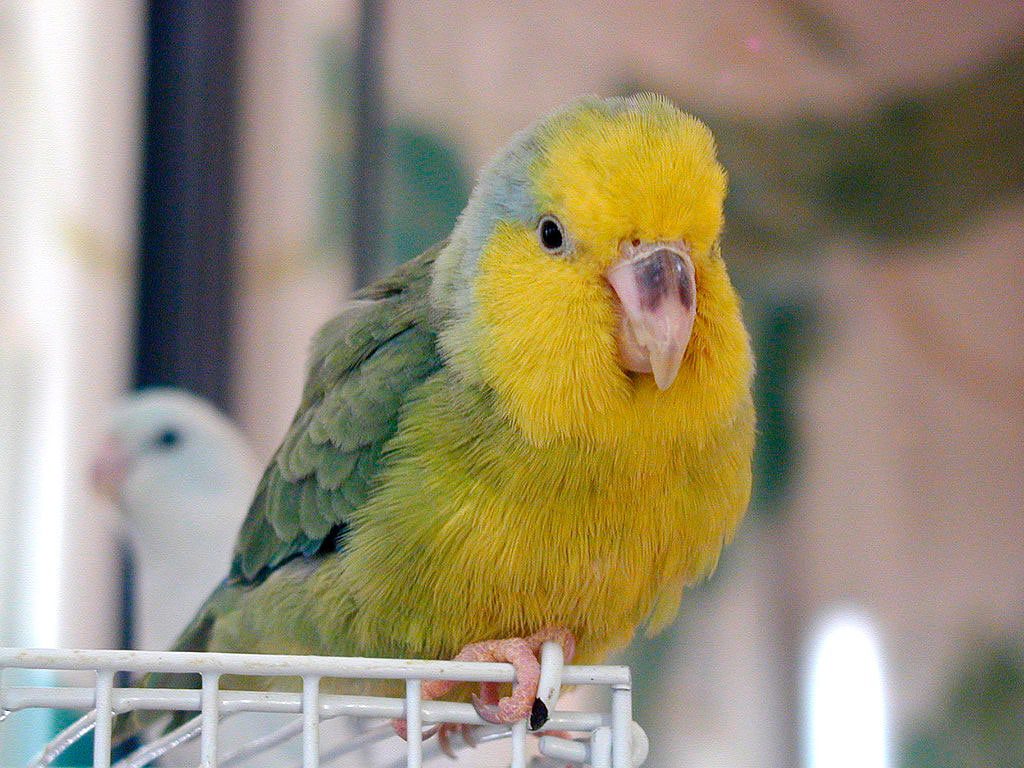
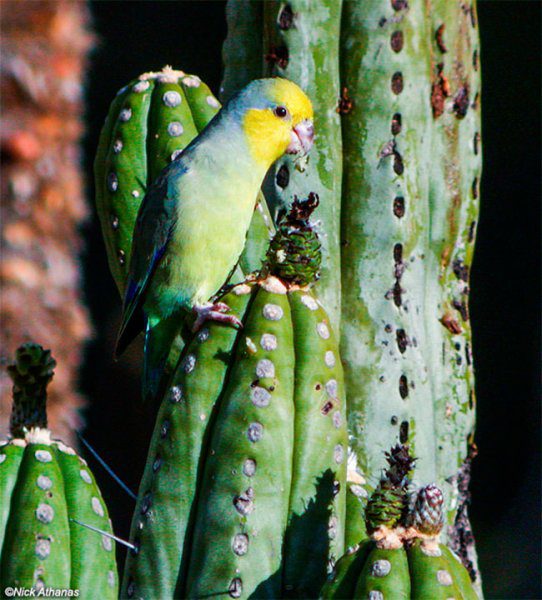
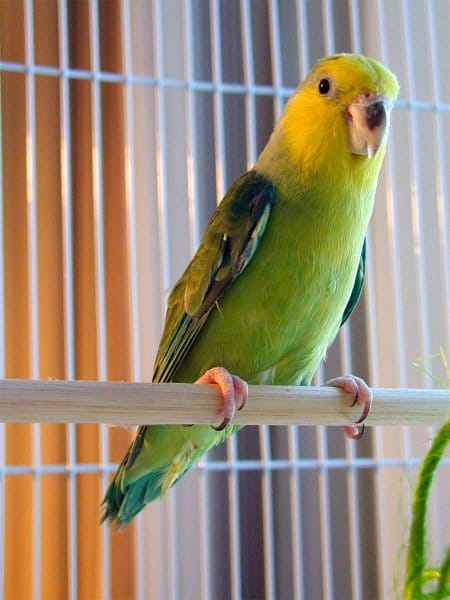
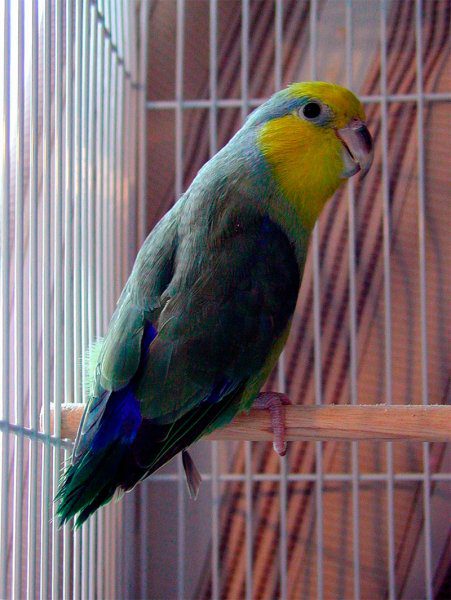
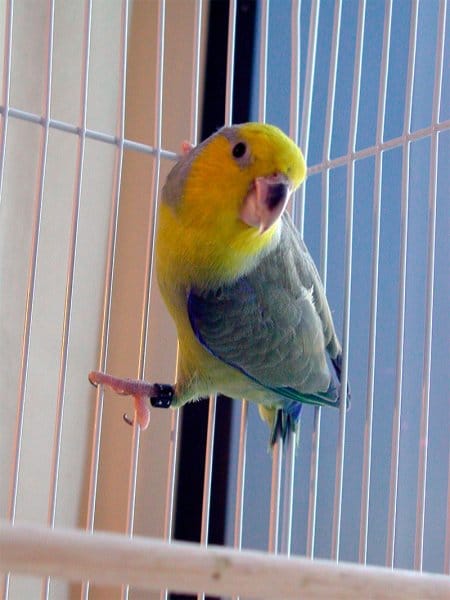
    The Yellow-faced Parrotlet (Forpus xanthops) is plump appearance and a tail short ending in point. Distinguished by the crown, face, chest and belly yellow, with strong blue patch on the wing , in flight blue occupies almost half of wing . Dorsally gray cafesoso, with the rump blue. Its bill It is ocher.

    The female has blue patch on the rump and wings pale smaller.

    taxonomy:

    Closely related to Pacific Parrotlet (Forpus coelestis); in the past it has been considered a subspecies of this, but there are clear differences in size and color. Monotypic.

    Habitat:

    The Yellow-faced Parrotlet It Gregaria, He lives in varied habitats, usually arid, riparian forests or gallery in the tropics and subtropics, between 1000 to 1600 m, Although it has been reported to 2745 m.

    Reproduction:

    Nest in communal area, using tree hollows or sand. The breeding season It is from March to April.

    In captivity, They are made of 3 to 6 eggs and up to three broods are raised per year.

    Food:

    Their diet includes cactus, besides fruit trees. If you know that feeds on Cercidium praecox, patรฉ flowers Bombax discolor and plum fruit Prunus domestica (Begazo 1996, F. Angulo Prato Longo a slightly. 2012).

    Distribution:

    Extension of the distribution (breeding/resident): 4,800 km2

    The Yellow-faced Parrotlet It endemic North Peru in the Valley of the Maranon River, to the south of this country and western Amazon.

    Conservation:

    State of conservation โ“˜


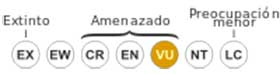
    Vulnerable Vulnerable โ“˜ (UICN)โ“˜

    โ€ข Current category of the Red List of the UICN: Vulnerable.
    โ€ข Population trend: Stable.
    โ€ข Population size : 350-1500 individuals.

    According to the categories of UICN It is considered Vulnerable (VU). Habitat degradation and trade are adversely affecting the population.

    Justification of the population

    The population It is estimated in 250-999 mature individuals, according to surveys of Begazo (1996) and subsequent recovery of the small-scale. This equates to a total of 375-1,499 individuals, rounded here to 350-1,500 individuals.

    The ban on the capture and trade has improved the status of this species. The rate of decline was very rapid in the Decade of 1980, Although at present has been reduced and even stabilized. But, the population is still very small, with records in very few places.

    Conservation Actions Underway

    – Appendix II of the CITES.

    – This protected legally in the Peru, but enforcement is poor.

    – Catch rates have declined significantly since the ban, and trappers capture the species apparently only on request (Begazo 1996).

    – There are no protected areas within its range.

    Conservation Actions Proposed

    – Examine the population, especially in the less accessible center of its range, and between the distribution areas of the two known species of Forpus.

    – Monitor the population, working with local people to generate the will to preserve the species in situ (Begazo 1996).

    – Study their biology and ecology throughout an annual cycle.

    – controlling trade and enforce laws capture.

    – Create at least one protected area within the range of the species (Angulo et al. 2008).

    "Yellow-faced Parrotlet" in captivity:

    captured for him wild bird trade, It is estimated that 17.000 birds were captured between 1981 and 1994. The rate of mortality during capture is estimated between the 40% and the 100%. Rare and unknown in captivity until 1979-1980.

    Itร‚ยดs territorial, temperament quiet, active and initially shy, usually it takes in trust although this depending more on their previous experiences, age, breeding form (by hand creates it naturally).

    Notes on captive breeding of Forpus xanthops

    Alternative names:

    – Yellow faced Parrotlet, Yellow-faced Parrotlet (English).
    – Perruche-moineau ร  tรชte jaune, Toui ร  tรชte jaune (French).
    – Gelbmaskenpapagei, Gelbmasken-Sperlingspapagei (German).
    – Tuim-de-cabeรงa-amarela (Portuguese).
    – Catita Enana de Cara Amarilla, Cotorrita Carigualda (espaรฑol).
    – Periquito de Cara Amarilla (Peru).


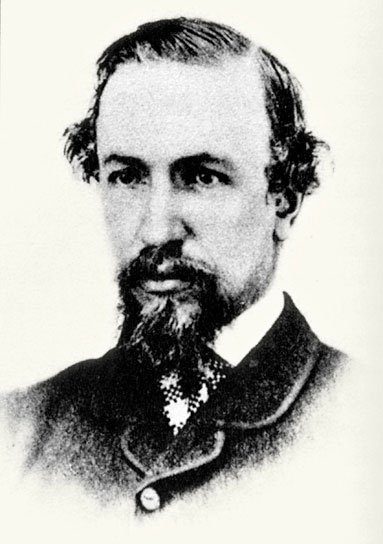
    scientific classification:

    Salvin Osbert
    Salvin Osbert

    – Order: Psittaciformes
    – Family: Psittacidae
    – Gender: Forpus
    – Scientific name: Forpus xanthops
    – Subpoena: (Salvin, 1895)
    – Protonimo: Psittacula xanthops

    Yellow-faced Parrotlet images:


    Video Carigualda Parrot


    Species of the genus Forpus

    Sources:

    โ€ข Avibase
    โ€ข Parrots of the World โ€“ Forshaw Joseph M
    โ€ข Parrots A Guide to the Parrots of the World – Tony Juniper & Mike Parr
    โ€ข Book Parrots, Parrots and macaws Neotropical
    โ€ข Birdlife

    Photos:

    (1) – An adult male Yellow-faced Parrotlet perching on the top of its cage by Ruth Rogers [CC BY 2.0], via Wikimedia Commons
    (2) – An adult male Yellow-faced Parrotlet photographed at the 2002 AFA convention in Tampa, Florida, USA by Rogers [CC BY 2.0], via Wikimedia Commons
    (3) – An adult Yellow-faced Parrotlet photographed at the 2002 AFA convention in Tampa, Florida, USA by Rogers [CC BY 2.0], via Wikimedia Commons
    (4) – An adult male Yellow-faced Parrotlet photographed at the 2002 AFA convention in Tampa, Florida, USA by Ruth Rogers [CC BY 2.0], via Wikimedia Commons
    (5) – Forpus xanthops Maraรฑon near Canyon Ferry, Cajamarca, Peru by Nick Athanas – Flickr
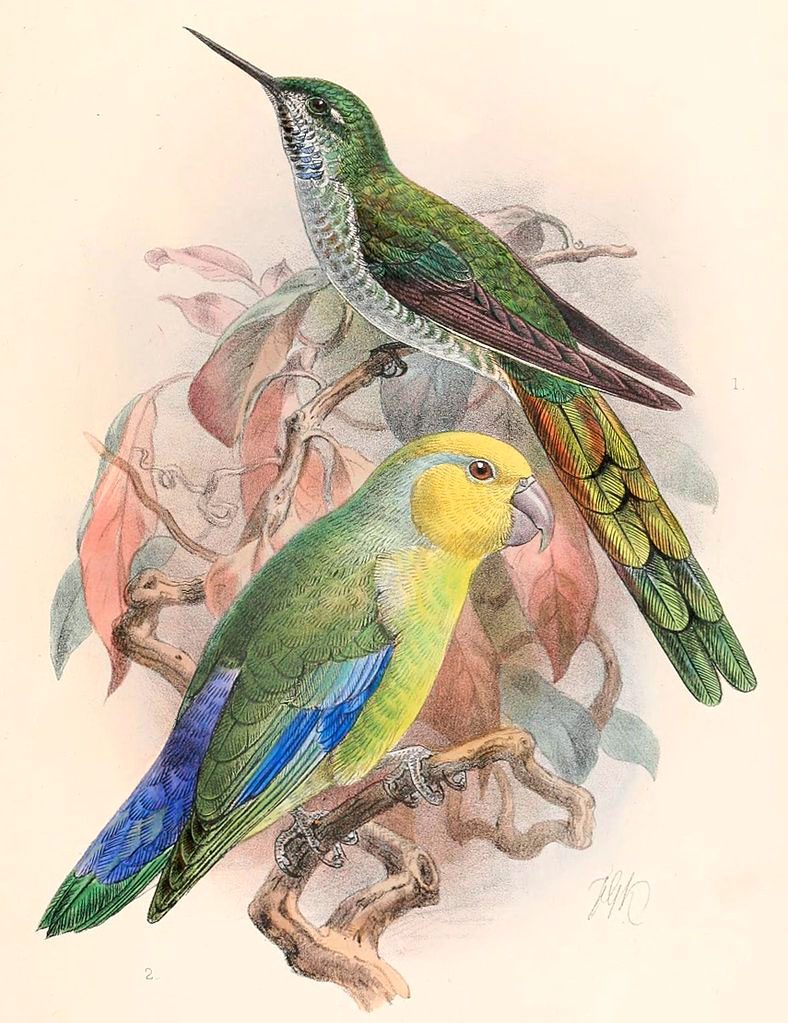
    (6) – John Gerrard Keulemans [Public domain] – Novelty Zoologicae, too.. 2

    โ–ท The world of Pets: Dogs, cats, birds, reptiles, amphibians

    Red-eared Parakeet
    Pyrrhura hoematotis

    Cotorra Colirroja

    Content

    Red-eared Parakeet

    Description:

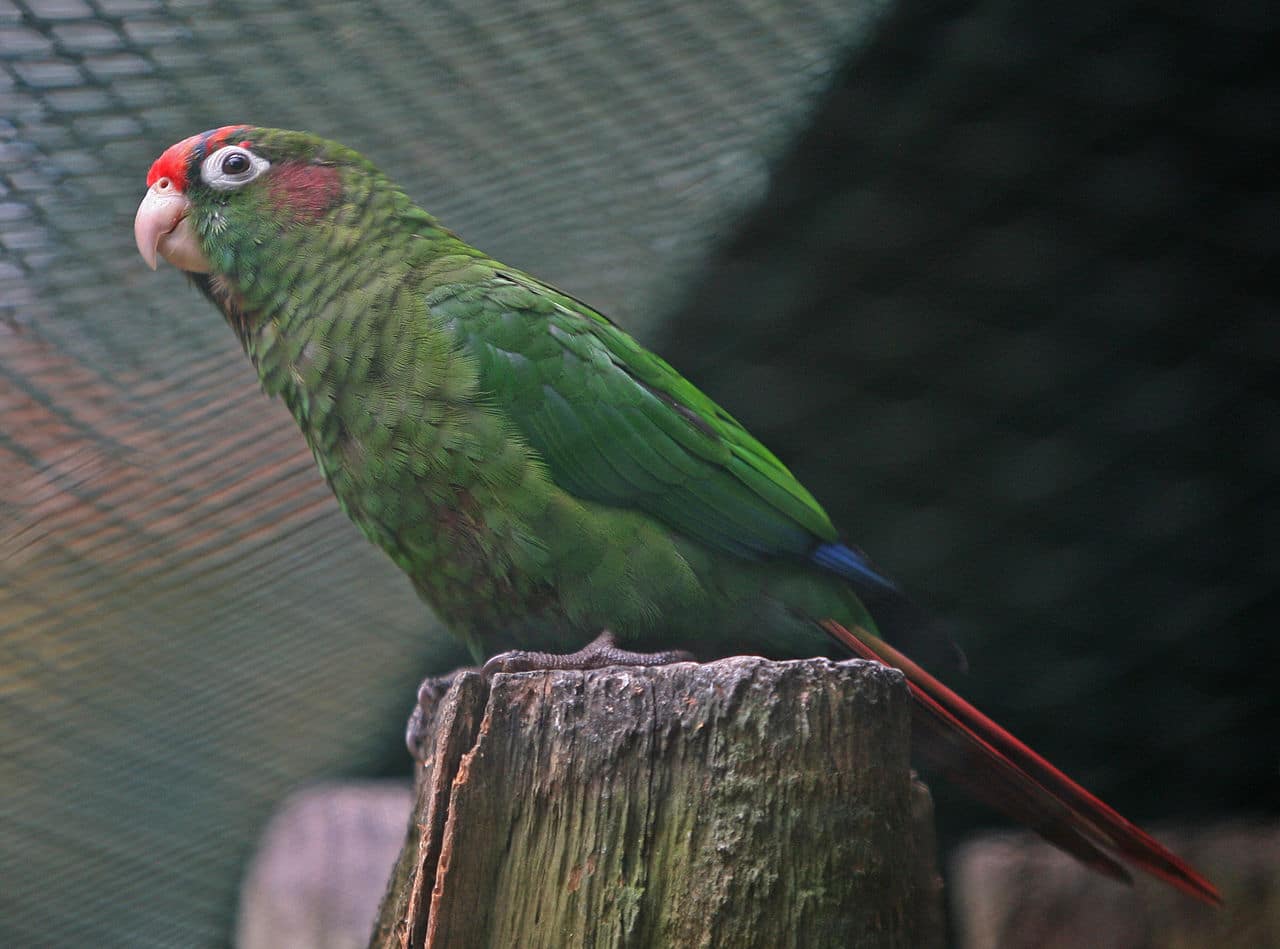
    25 cm.. height.

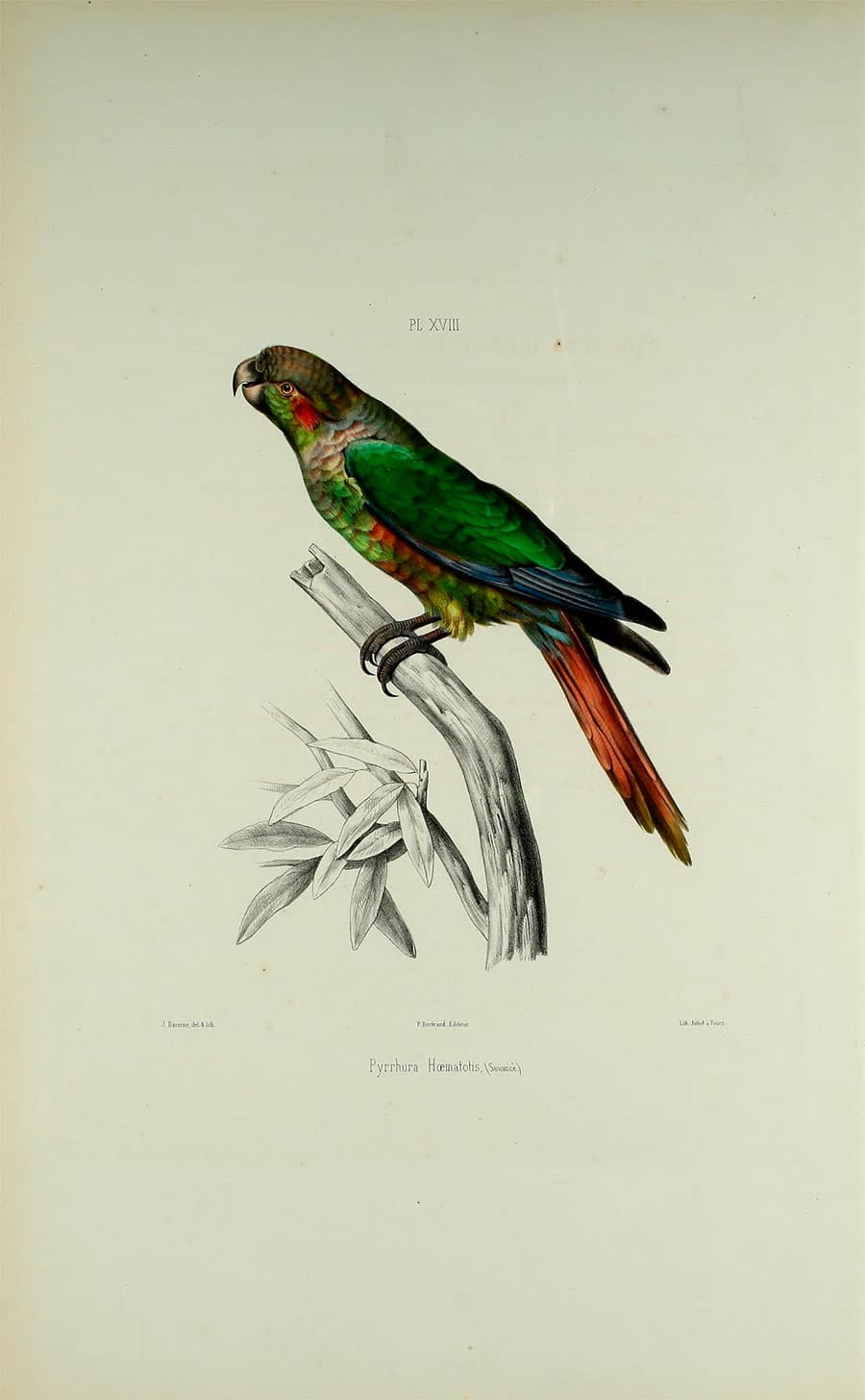
    The Red-eared Parakeet (Pyrrhura hoematotis) It is distinguishable by the Brown of the forecrown with edges bluish to them feathers; cheeks green; crown and feathers of nape Green with tips more pale and yellowish. The upperparts green. Primary coverts and maybe some feathers in the area of the carpus, blue; other coverts green. Primaries Blue with black tips. Under wings with the lesser coverts green, the others coverts black. Throat and chest Brown olive with tones dark; margins to some feathers create a pattern squamous; sides neck also with effect squamous; belly and undertail-coverts Green with a patch Brown mal-definido in the center of the belly. Upper, the tail of color brown with tips from color olive; undertail, of color copper. Bill of color bone pink; Iris and legs brown.

    Both of them sexes are similar. Immature not described.

    Description 2 subspecies:

    • Pyrrhura hoematotis hoematotis

      (Souance, 1857) – Nominal.


    • Pyrrhura hoematotis immarginata

      (Zimmer & Phelps, 1944) – It has a narrow red line above the bill. What nominal but chest and sides of neck more green and with a pickling less obvious. Not there are tips yellowish in the feathers of the crown and nape.

    Habitat:

    They inhabit in montane and cloud forests with open areas and trees of low dispersion, often at the edge or in clear, mainly in altitudes of 1.000-2.000 m, Although there are report of the species at altitudes between 600 and 2.400 m. It is estimated that he performs altitudinal migrations. Gregaria, mainly seen in groups of 3-12 outside the breeding season, rarely in flocks of up to 100 individuals.

    Reproduction:

    Probably it breeding season be in the month of August (rainy season).

    Food:

    Poorly documented diet and breeding: the food known include guava (Psidium) and petioles some leafy trees, possibly to extract larvae of insects.

    Distribution:

    Size of the area of distribution (reproduction / resident): 14.300 km2

    To the Red-eared Parakeet is known only in the coastal mountains north of Venezuela, with the westernmost record observed in Cubiro, Lara, the eastern-most in Miranda. But, Most of the records are from Aragua in Miranda; Cubiro is in fact the only known site in Lara and the population there is apparently discontinuous (subspecies Pyrrhura hoematotis immarginata). Diurnal movements occur from the mountains of the Highlands until the lowest feeding areas; also apparently some local seasonal movements guided by the availability of food.

    Fairly common in most of its more restricted range and especially numerous in the Henri Pittier National Park; its status in Lara It is unknown. Much habitat right remains within the range outside the areas protected, and there is a rate of deforestation relatively low, but with constant habitat loss around Cubiro.

    Absent or very rare in captivity.

    Distribution 2 subspecies:

    Conservation:

    โ€ข Current category of the Red List of the UICN: Least concern.

    โ€ข Population trend: Decreasing.

    Justification of the population

    The size of the world population It has not been quantified, but this species is described as ยซquite commonยป (Stotz et to the., 1996).

    Justification of trend

    It is suspected that the population is in decline due to ongoing habitat destruction.

    "Red-eared Parakeet" in captivity:

    Absent or very rare in captivity.

    Alternative names:

    – Red-eared Parakeet, Blood-eared Conure, Blood-eared Parakeet, Red eared Parakeet, Red-eared Conure (English).
    – Conure ร  oreillons, Perriche ร  oreillons, Perruche ร  oreillons rouges (French).
    – Blutohrsittich, Blutohr-Sittich (German).
    – Tiriba-de-orelha-vermelha (Portuguese).
    – Cotorra Colirroja, Perico de Cuello Rojo (espaรฑol).
    – Perico Cola Roja (Venezuela).

    scientific classification:

    – Order: Psittaciformes
    – Family: Psittacidae
    – Genus: Pyrrhura
    – Scientific name: Pyrrhura hoematotis
    – Citation: Souancรฉ, 1857
    – Protonimo: Pyrrhura hoematotis

    Red-eared Parakeet images:


    Red-eared Parakeet (Pyrrhura hoematotis)


    Sources:

    • Avibase
    • Parrots of the World โ€“ Forshaw Joseph M
    • Parrots A Guide to the Parrots of the World – Tony Juniper & Mike Parr
    • Birdlife
    • Parrot Book, Parrots and macaws Neotropical

    • Photos:

    (1) – Venezuelan endemic Red-eared Parakeet (Pyrrhura hoematotis) photographed in captivity in Mรฉrida, Venezuela By http://www.birdphotos.com (Own work) [CC BY 3.0], via Wikimedia Commons
    (2) – Perico tail Red [Blood-eared Parakeet] (Pyrrhura hoematotis hoematotis) Place: The deer, Park national the Avila by barloventomagico – Flickr
    (3) – Bando of parrots parakeet place: The deer, Park national Guaraira Repano by barloventomagico – Flickr
    (4) – Pyrrhura hoematotis by Diana register – Flickr
    (5) – Pyrrhura hoematotis by Diana register – Flickr
    (6) – Iconographie des perroquets: Paris :P. Bertrand,1857 by Biodiversity Heritage Library – Flickr

    โ–ท The world of Pets: Dogs, cats, birds, reptiles, amphibians

    Amazonian Parrotlet
    Nannopsittaca dachilleae

    Cotorrita Amazรณnica

    Content

    Description:


    Anatomy-parrots

    Very small size, 12 cm.. height.

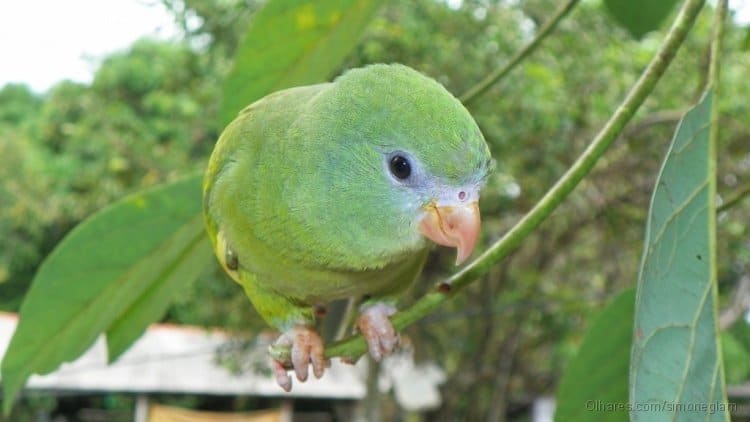
    The Amazonian Parrotlet (Nannopsittaca dachilleae) has pointed wings, something square tail. Distinguishable from this species is the forehead and Crown with blue dye, feet and pink Bill, area naked clear around the eye. Usually green body on the back, and more yellowish belly.

    Sound of the Amazonian Parrotlet.

    Habitat:

    Common and abundant in riparian forest, until the 300 m. Possibly associated with the guadua. They fly low over rivers in small, compact flocks of 3 to 12 individuals.

    Seen climbing on trees.

    They are presumed to nest in clumps of bromeliads or other epiphytes..

    Calls are described as acute, they sound very similar to the chicks of birds of farm.

    Distribution:

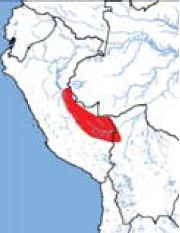
    It is found in the western part of the Amazon basin, from southern and southeastern Peru to northwestern Bolivia. Probably West of Brazil.

    Cotorrita amazonica

    It is a scarce bird that rarely has photographed. The conservation of the rainforest is crucial to their survival. There are many threats to the ecosystem of the Amazonian Parrotlet, harvesting the Guaua bamboo, the Habitat fragmentation and pollution.

    Conservation:


    Near-threatened


    According to the IUCN categories it is considered as Near Threatened. (NT). Deforestation, mainly for colonization, logging and mining, affect their populations.

    Alternative names:

    – Manu Parrotlet o Amazonian Parrotlet (English)
    – Amazonaspapagei, Amazonassittich, Urwaldsittich (Germany)
    – Toui de D’Achille, Toui de l’Amazone (France)
    – Periquito-da-amazรดnia (Brazil).
    – Periquito-da-Amazรดnia (Portugal).
    – Periquito Amazรณnico (Peru).


    scientific classification:

    – Order: Psittaciformes
    – Family: Psittacidae
    – Genus: Nannopsittaca
    – Scientific name: Nannopsittaca dachilleae
    – Citation: Oโ€™Neill, Munn & Franke, 1991
    – Protonimo: Nannopsittaca dachilleae

    Images "Amazonian Parrotlet"

    Video "Amazonian Parrotlet"


    Species of the genus Nannopsittaca

    "Amazon Parakeet" (Nannopsittaca dachilleae)


    Photo: olhares.uol.com.br
    Source: Parrot Book, Parrots and macaws Neotropical

    โ–ท The world of Pets: Dogs, cats, birds, reptiles, amphibians

    Sulphur-crested cockatoo
    Cacatua galerita

    Cacatua galerita

    Content

    Description

    55 cm.. height and a weight between 815 and 975 g..
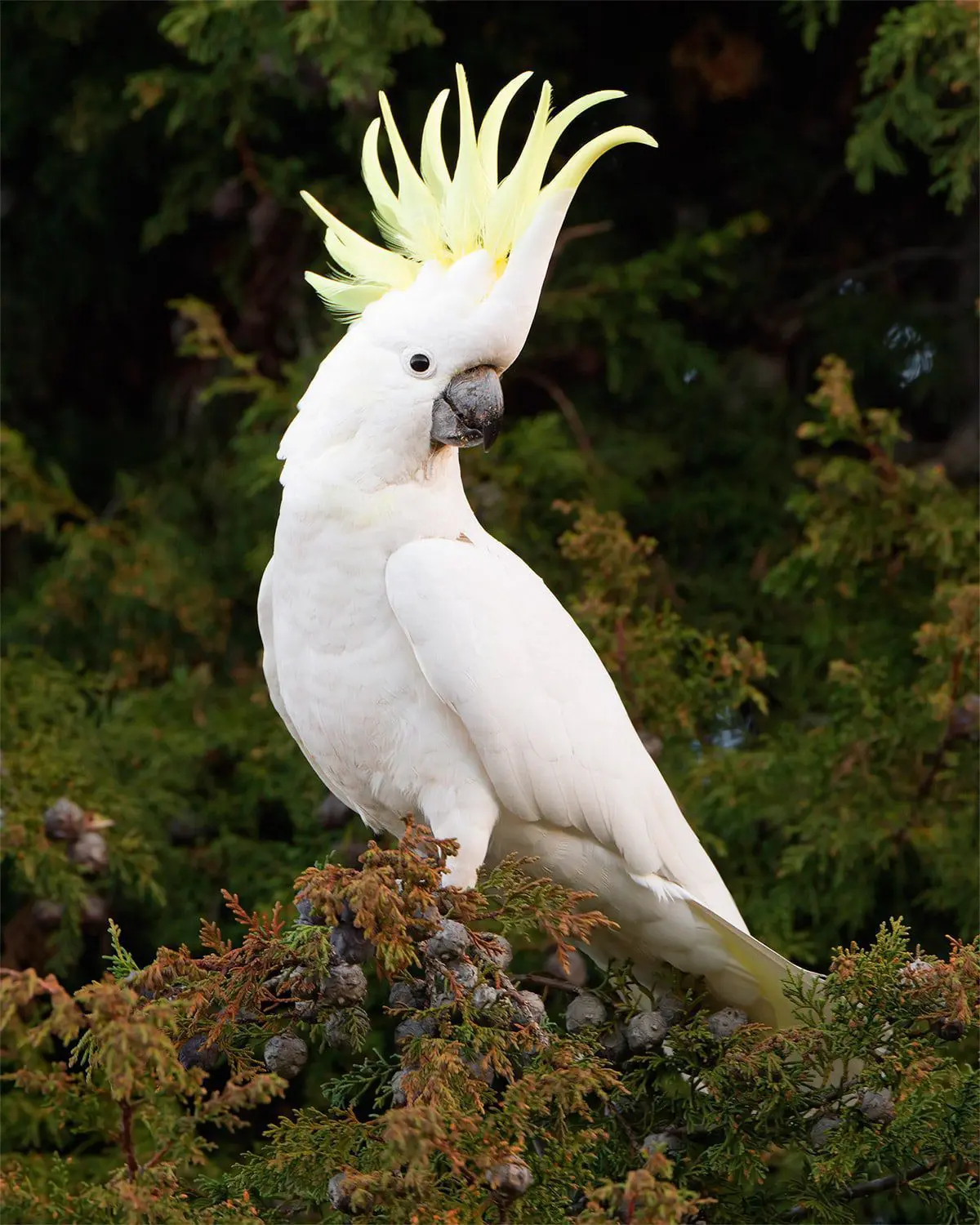
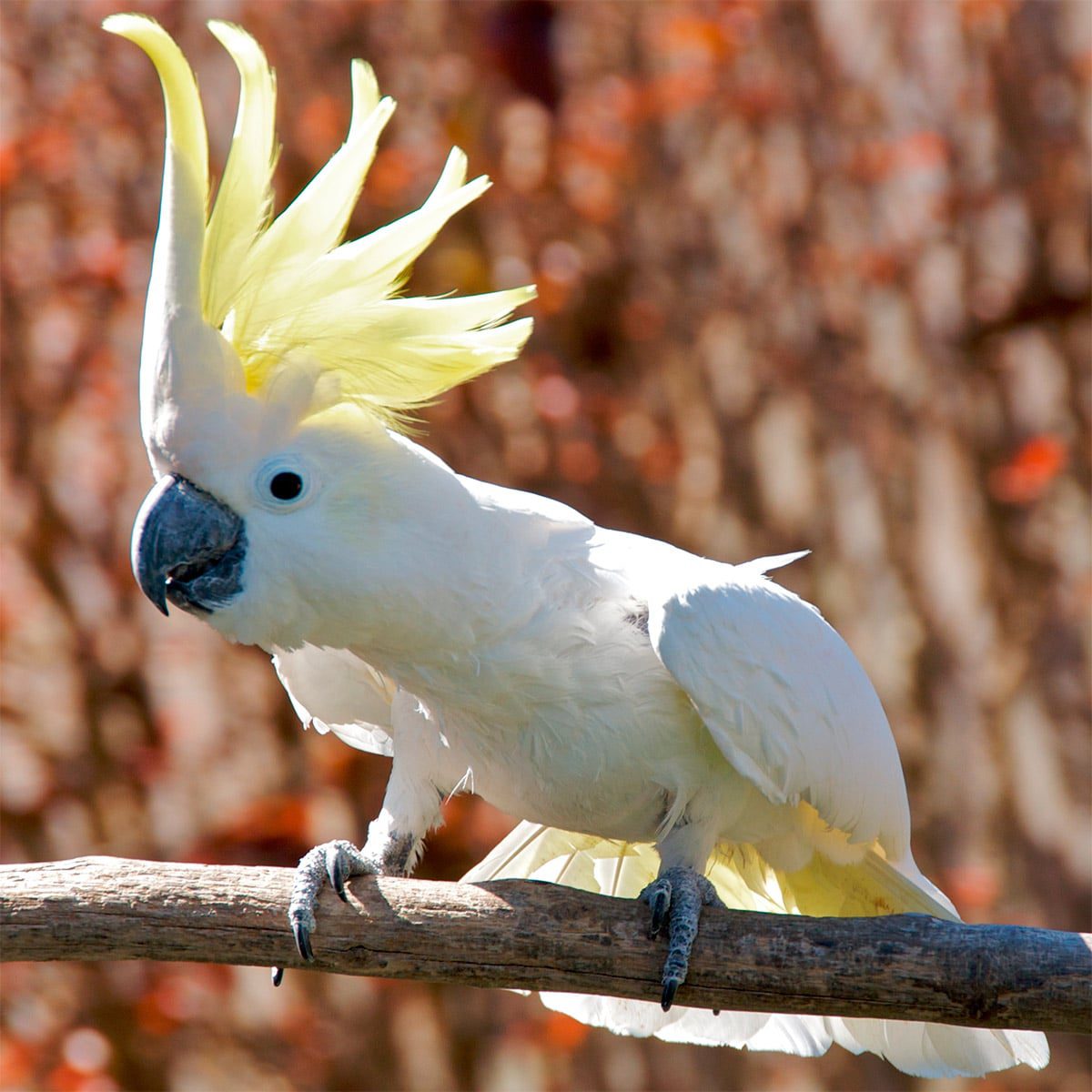
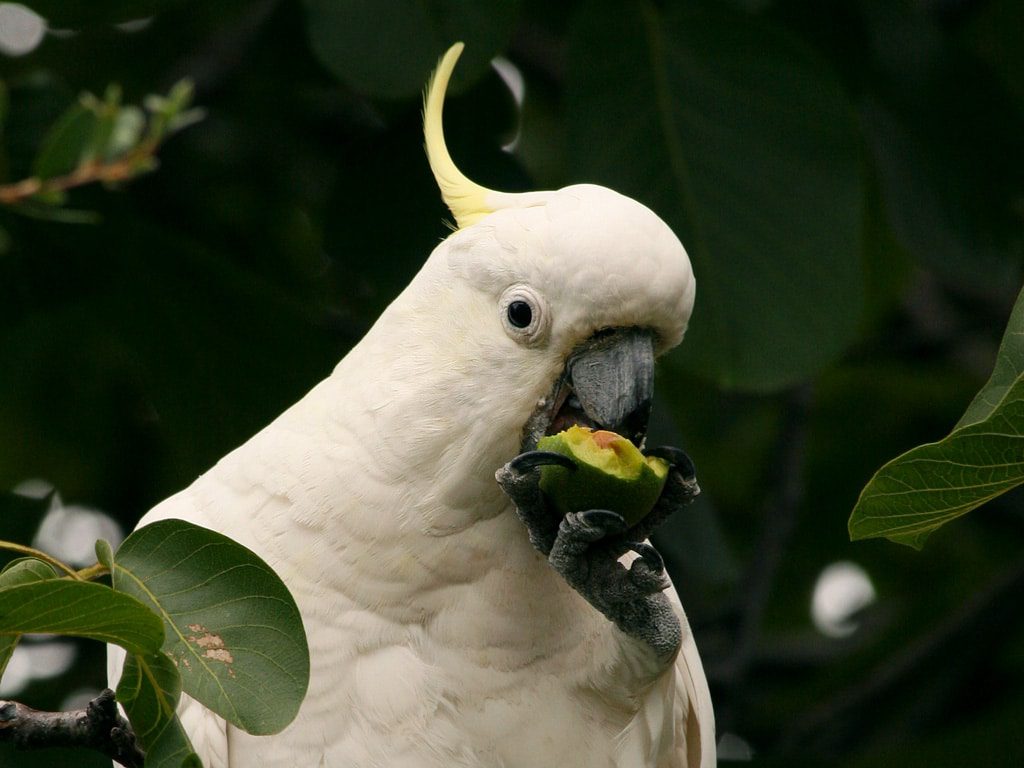
    The Sulphur-crested cockatoo (Cacatua galerita) It is a bird with a predominantly white plumage.
    In adults, the ear-coverts, bases feathers throat and cheeks, are pale yellow. the arista formed by the 6 Erectile feathers slightly inclined forward, are yellow. The crest You can reach up 14 centimeters in length. The bottom of the wings and of the tail van dyed pale yellow.
    The ring surrounding the eye shows a white. The irises is dark brown in the male and reddish brown in the female. The bill is blackish grey, the legs grey.

    The immature They are just different from adults. The irises They are pale brown.

    Description 4 subspecies
    • Cacatua galerita eleonora

      (Finsch, 1863) – It's like Cacatua galerita triton but smaller and with bill smaller.


    • Cacatua galerita fitzroyi

      (Mathews, 1912) – Yellowed feathers, both ear-coverts, and the throat and cheeks, they are absent. The eye ring It is light blue. Bill but great.


    • Cacatua galerita galerita

      (Latham, 1790) – Nominal.


    • Cacatua galerita triton

      (Temminck, 1849) – Something smaller, the crest WIDER and eye ring pale blue.

    Behavior:

    They are very noisy and very easy to observe, Although they are more identifiable by their cries.

    During the breeding season, they live in pairs or in small family groups, but the rest of the year, They are in flocks that may contain hundreds of birds.

    In the urban areas and in places that they are equipped with feeders, adopt a family behavior.
    In other places, It inspired his distrust and his usual prudence, the Sulphur-crested cockatoo they are very difficult to deal with.

    In open areas these birds are implementing a sentinel system that is organized as follows: while most of the flock feeds, Some birds seen from a nearby perch and are likely to sound the alarm if danger.

    Habitat:

    Video – "Sulphur-crested cockatoo" (Cacatua galerita)

    Cacatua galerita (mini documentary)

    Is located in variety of forest areas, forests (including swamps and river areas), mangroves, Open field, on farm land (including rice fields and plantations of Palm), Savannah, Mallee and suburban areas. Found up to 1.500 meters in parts of Australia, 2.400 metres in Papua New Guinea.

    Reproduction:

    In Australia, the breeding season occurs from May to August in the North and between August and January, in the South.

    In New Guinea, It takes place during every month of the year, although the most active months are during the period from May to December.

    This species occasionally breeds in colonies. The nest is a natural cavity in a eucalyptus large near a stream between 3 and 30 meters above the ground. Sometimes the residence of the Sulphur-crested cockatoo It is located in the holes of the limestone cliffs along the murray river. In this case, the eggs are deposited directly in the sand.

    In New Zealand, These birds lay amid bales of hay in barns. The nest generally it contains 3 white eggs. These are deposited on a layer of debris decomposing at the bottom of the cavity.
    incubate both parents alternately for a period of 30 days. Hatchlings have a yellowish color and leave the nest after 6 to 9 weeks. Quite regularly, they return to the nest to rest for about two weeks.

    The juveniles They remain within the family group for several months. They feed together in small scattered groups.

    Food:

    forages in grasses and herbs. You can take corn and wheat sprouts. It also feeds harmful herbs like cotton thistle. other foods include: estate, Rhizomes, nuts, berries, flowers, bulbs, flower and insect larvae.

    They can cause great damage to crops. They dig in lands that were recently planted to eating fruit ripening, It also causes damage to crops that are stored and bales of hay to tear the plastic covering them.

    Distribution:

    Size of the area of distribution (reproduction / resident): 10600000 km2

    This species is endemic to the north and east of Australia, New Guinea and nearby islands, especially islas Aru, Indonesian.
    It was imported successfully to Palau Islands in Micronesia, New Zealand and some Maluku islands.

    The population in Taiwan It has been estimated at about 100 introduced breeding pairs

    Lives mainly below 1.000 m, but sometimes you can see in Australia to 1500 m. and 2000 m in east New Guinea.

    Distribution 4 subspecies

    Conservation:

    State of conservation โ“˜


    minor concern Minor Concern โ“˜ (UICN)โ“˜

    โ€ข Current category of the Red List of the UICN: Least concern.

    โ€ข Population trend: In decline.

    It is thought that his population It is greater than 500.000 individuals.

    It is not an endangered species. But, despite protection Indonesian this species is followed by trapping wild bird trade. Nor is a protected species in Australia, therefore sacrifices occur.

    In New Guinea, sometimes it is hunted for its feathers.

    It is suspected that his population is in decline due to ongoing habitat destruction.

    "Sulphur-crested cockatoo" in captivity:

    and valued species often as a pet.
    Very Intelligent, sociable and playful. It is a cockatiel for experienced bird owners. You can be dominant and aggressive. It can be very noisy.

    There are anecdotal reports of some Sulphur-crested cockatoo who they have lived more than 100 years. In the news, However, longevity record, according to sources, belongs to a captive specimen called "Cocky" who lived more than 57 years in the London Zoo. Another report suggests that these animals can live up 73.0 years in captivity, but this has not been verified.

    Alternative names:

    – Sulphur-crested Cockatoo, Greater Sulphur-crested Cockatoo, White Cockatoo, Yellow-crested cackatoo (ingles).
    – Cacatoรจs ร  huppe jaune, Grand Cacatoรจs ร  huppe jaune (French).
    – Gelbhaubenkakadu (German).
    – Cacatua-de-crista-amarela (Portuguese).
    – Cacatรบa de Moรฑo Amarillo, Cacatรบa Galerita (espaรฑol).

    John Latham
    John Latham

    scientific classification:


    – Order: Psittaciformes
    – Family: Cacatuidae
    – Genus: Cockatoo
    – Scientific name: Cacatua galerita
    – Citation: (Latham, 1790)
    – Protonimo: parrot galeritns


    Images Galerita Cockatoo:


    Species of the genus Cacatua
  • Cacatua tenuirostris
  • Cacatua pastinator
  • —- Cacatua pastinator derbyi
  • —- Cacatua pastinator pastinator
  • Cacatua sanguinea
  • —- Cacatua sanguinea gymnopis
  • —- Cacatua sanguinea normantoni
  • —- Cacatua sanguinea sanguinea
  • —- Cacatua sanguinea transfreta
  • —- Cacatua sanguinea westralensis
  • Cacatua goffiniana
  • Cacatua ducorpsii
  • Cacatua haematuropygia
  • Cacatua galerita
  • —- Cacatua galerita eleonora
  • —- Cacatua galerita fitzroyi
  • —- Cacatua galerita galerita
  • —- Cacatua galerita triton
  • Cacatua ophthalmica
  • Cacatua sulphurea
  • —- Cacatua sulphurea abbotti
  • —- Cacatua sulphurea citrinocristata
  • —- Cacatua sulphurea parvula
  • —- Cacatua sulphurea sulphurea
  • Cacatua moluccensis
  • Cacatua alba

  • Sources:

    – Avibase
    – Parrots of the World โ€“ Forshaw Joseph M
    – Parrots A Guide to the Parrots of the World – Tony Juniper & Mike Parr
    – Birdlife

    – Photos:

    (1) – commons.wikimedia.org
    (2) – birdsandbirds.com
    (3) – tilcheff

    – Sounds: Hans Matheve (Xeno-canto)

    + More