โ–ท The world of Pets: Dogs, cats, birds, reptiles, amphibians

Canaan Dog
Israel FCI 273 - Primitive type

Canaan Dog

Suspicious of strangers and very affectionate towards members of his clan

Content

History

The Canaan Dog They belong to the group of "pariah dogs", found throughout the Afro-Asian region. They live near human settlements, tolerated by humans, but they are not encouraged or fed. For primitive peoples they are useful as a destroyer of all organic residues.. Even today, the Canaan Dog they live in herds in the desert. If Bedouins need a guard dog for their camp or a herding dog for their sheep, they look for a wild female who raises her cubs in a cave, they throw a piece of bread at him every now and then until they have chosen the strongest male cub that will guard their camp in the future.

Cynologically, los ยซpariah dogยป belong to the Spitz family, the oldest family of dogs in the world. Cave paintings thousands of years old show these dogs as hunting helpers. With the time, the original type of Spitz adapted to the situation of its environment. The Canaan Dog is the most developed form of the type Spitz in israel today. The canaan dogs still possess strong survival instincts, what makes them smart, independent and also very cautious dogs.

The Canaan breed has been domesticated by outcast wild dogs, namely, by Rudolphina Menzel, a canine behaviorist and cynologist who emigrated from Vienna to Palestine in the 1930. He took some of them home and was amazed at how easily they were tamed and trained. They were lively and loving. The teacher Menzel I call them canaan dogs in honor of the Biblical land of Canaan and campaigned for them to be recognized as a race.

Canaan dog physical characteristics

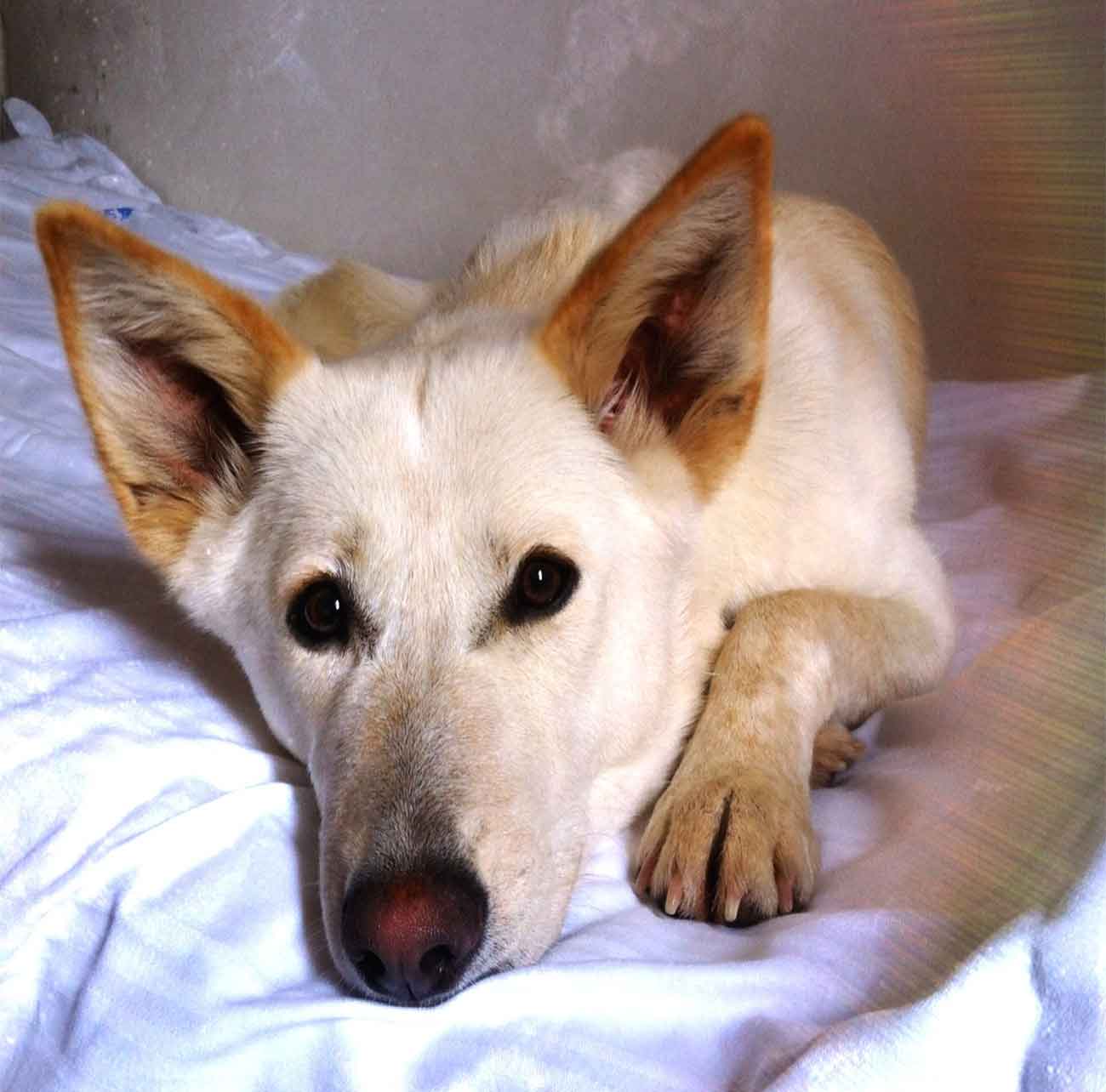
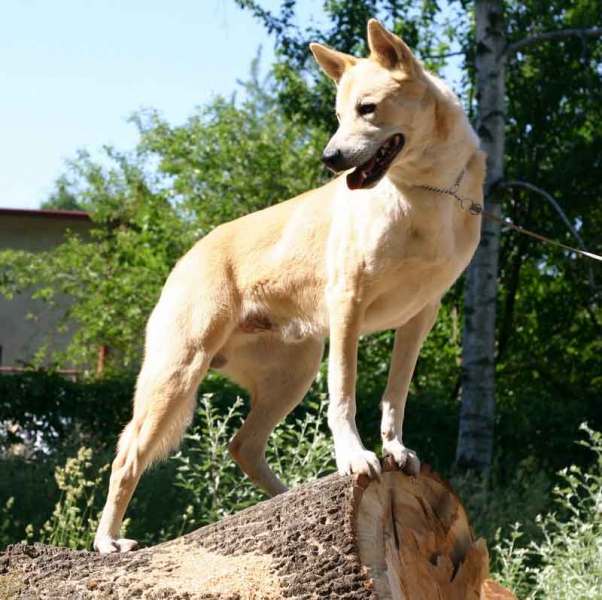
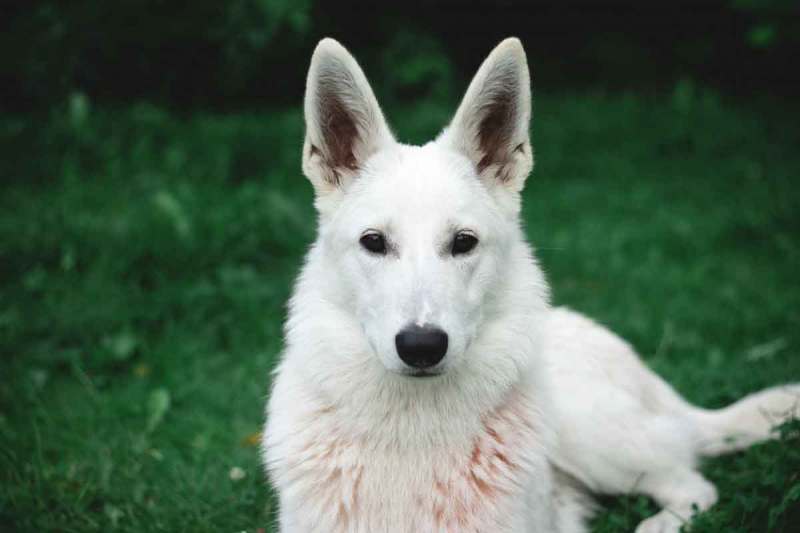
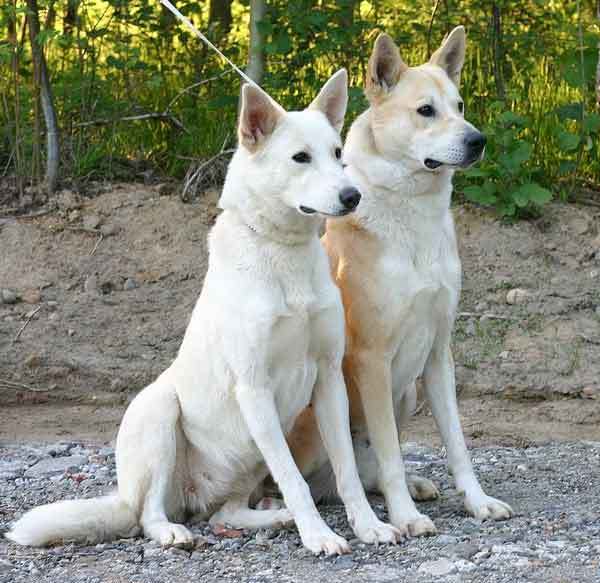
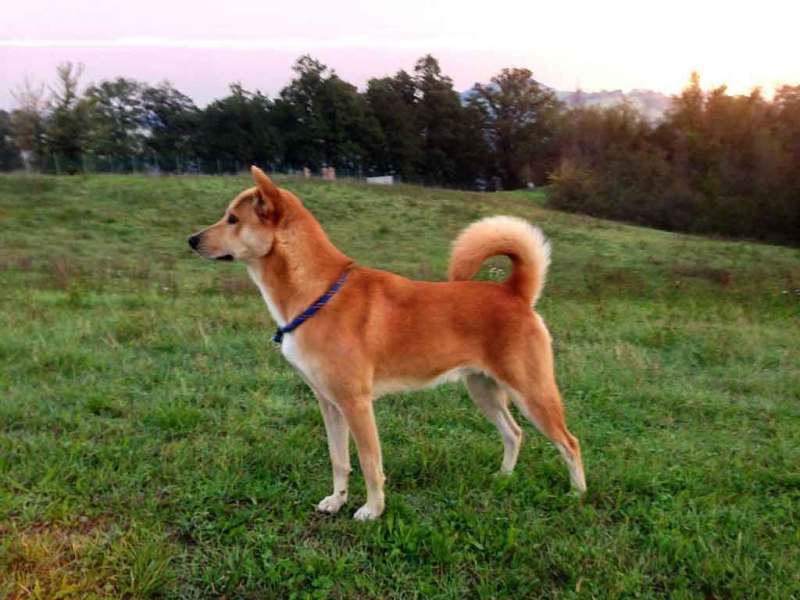
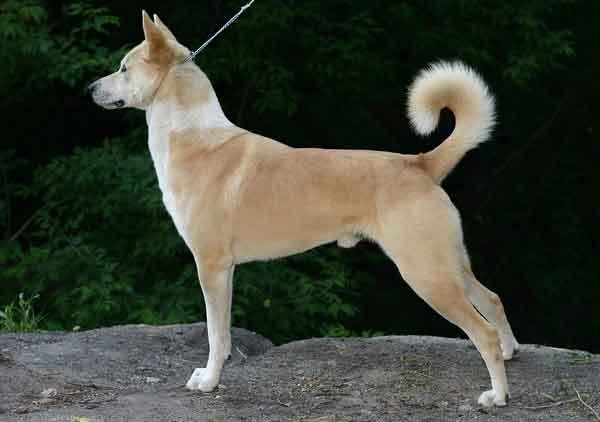
The height at the withers of these square animals, strong and medium in size is about 50 to 60 cm., while males are usually much larger than females. In general, the sex characteristics between female and male dogs are very pronounced. These may include, the rather broad skull of the Canaan Dog, that narrows at a point towards the front, is clearly visible, especially in males. The head is always well proportioned. Standing ears, slightly laterally arranged, triangular and wide, as well as his almond-shaped and dark eyes, give you a very alert and intelligent expression. In fact, nothing escapes the watchman Canaan Dog, even when asleep.

HAIR:
Thick layer, rough and straight, short to medium length. The inner layer is very close and abundant.

COLOR:
Sandy to reddish brown, white, black or mottled, with or without mask. If there is a mask, must be symmetrical. A black mask and white markings are allowed for all colors. A pattern such as the Boston Terrier. Gray colors are not allowed, striped, black and tan or tricolor. The characteristic colors of the desert – sandy, dorado, Red and cream – are particularly typical of the breed.

Character and skills Canaan Dog

The Canaan Dog is lively, sensitive, distrustful of strangers, defensive, but not aggressive by nature. Watcher not only of humans, but also other animals. He is faithful and devoted to his family. The relationship with its owner means for him a partnership, both sides taking and giving. The Canaan Dog you don't have to follow your owner everywhere and submissively read every wish in his eyes. There are times when he shows his love and wants to be caressed. But other times he minds his own business and only belongs to himself.. If one responds to his character, a deep understanding develops between man and animal, which is even more attractive, since one must acquire their trust and affection. This special bond makes it difficult to place the Canaan Dog adults in new settings.

Protects their owner's children and shows a lot of tolerance towards the little ones. But, parents should ensure the dog has a chance to withdraw.

The Canaan Dog they are good watchdogs, but they are not attackers by nature. Only when a Canaan Dog you have the impression that he or his family is seriously threatened, will attack. The Canaan Dog barks as a warning, gives a dangerous appearance, and that is usually enough.

The Canaan Dog can react aggressively to other dogs who dare to pass by his property. Aggression between dogs of the same sex is not uncommon among Canaanites. Each Canaan is different. You have to watch it closely to know what collisions – with other dogs on walks – it is better to avoid.

Canaan Dog education

One Canaan Dog he would never do anything that could harm himself. Nor would it comply with its owner's commands without first questioning their meaning.. You can't demand obedience from this dog. But, once he has gained trust in his human and recognizes him as "leader of the pack", is very cooperative and obedient. Loyalty to his master and his quick understanding make him, despite its independence, an easy-to-handle dog, who can learn the necessary basic obedience without restrictions. But, during training its primitive nature must be taken into account, so it certainly takes some compromises and tricks to convince the Canaan Dog that obedience is worth it. For inexperienced beginners, this self-assured breed is not suitable.

where can i get canaan dog?

Today, not only in his homeland Israel, but also in the US. and in several European countries, like germany, Finland, England, Italy or Switzerland, there are breeders who have dedicated themselves to this special and still very rare breed. The addresses of the breeders can be found in the national kennel clubs or, of course, on the Internet. If you are considering buying a Canaan, enough time should be taken to consider your purchase decision thoroughly. This is true of all dogs, but especially for him Canaan Dog, because this original and independent four-legged friend is no ordinary family dog.

Canaan Dog care

The rough coat naturally repels dirt and only needs to be brushed once or twice a week. Only in the phase of the biannual coat change should it come into contact with a brush or comb daily to remove dead hairs from the dense undercoat and reduce the tuft of carpet hairs, the sofa or the blanket.

Canaan Dog nutrition

While the Canaan, as a "pariah dog" in freedom, forages for its own food and feeds on whatever organic waste humans leave behind, as a domestic dog it depends on the support of its owner. But what do you give such an original wild dog? In general: Dogs are carnivores by nature., regardless of whether they are shepherd dogs, Sausage dog or even Canaan. This means that the food must be largely meat. (around the 70 per cent). Meat is the most important source of protein for the dog. Its entire masticatory and digestive system is oriented to the processing of meat: the strong teeth, strong chewing muscles, the relatively short intestinal tract and digestive juices that are quite aggressive in contrast to humans.

Canaan Dog health

The race Canaan Dog It is very healthy, it does not have typical diseases and it is considered very clean..

Characteristics "Canaan Dog"

Coexistence is important that you have with your new friend. Before considering the acquisition of a dog of the breed "Canaan Dog" you know certain factors. Not all breeds of dogs are apt to live in an apartment, you must take into account his character, their need for exercise, their interaction with other pets, their care and if you have small children, their level of tolerance towards them.

Training ?

4,0 of 5 stars (based on 1 review)

Suitability of the apartment ?

4,0 of 5 stars (based on 1 review)

Can be alone all day ?

3,0 of 5 stars (based on 1 review)

Suitable as a first dog ?

2,0 of 5 stars (based on 1 review)

Weight gain ?

2,0 of 5 stars (based on 1 review)

Health ?

5,0 of 5 stars (based on 1 review)

Intelligence ?

5,0 of 5 stars (based on 1 review)

Kindness with child ?

3,0 of 5 stars (based on 1 review)

Tendency to bite ?

3,0 of 5 stars (based on 1 review)

Tendency to bark ?

4,0 of 5 stars (based on 1 review)

Tendency to flee ?

3,0 of 5 stars (based on 1 review)

hair loss strength ?

4,0 of 5 stars (based on 1 review)

Suitable as a guard dog ?

5,0 of 5 stars (based on 1 review)

Joy ?

3,0 of 5 stars (based on 1 review)

Cat friendliness ?

4,0 of 5 stars (based on 1 review)

Power level ?

4,0 of 5 stars (based on 1 review)

Images "Canaan Dog"

Photos:

1 – Canaan dog by Giora Sluzky, CC BY-SA 3.0, via Wikimedia Commons
2 – Canaan dog by Canaan Dog, Kennel Samorodok Hanaanahttp://www.ruscanaan.ru, CC BY-SA 3.0, via Wikimedia Commons
3 – Canaan dog by Giora Sluzky, CC BY-SA 3.0, via Wikimedia Commons
4 – Canaan dog by SamorodokhanaanaCanaan Dogs from "Samorodok" http://www.ruscanaan.ru, CC BY-SA 3.0, via Wikimedia Commons
5 – Canaan dog by https://pxhere.com/en/photo/1503483
6 – Canaan dog by Samorodokhanaanahttp://www.ruscanaan.ru, CC BY-SA 3.0, via Wikimedia Commons
7 – Canaan dog by Arikk, CC BY-SA 3.0, via Wikimedia Commons

Videos "Canaan Dog"

Canaan - Top 10 Facts
Canaan – Top 10 Facts
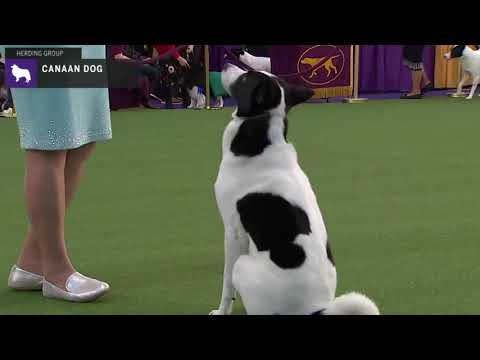
Canaan Dogs | Breed Judging 2020

Type and recognitions:

  • FCI CLASSIFICATION:
  • Group :
  • Section : . .

Federations:

  • FCI – Group 5: Spitz-type dogs and primitive type – Section 6: Primitive type. โ“˜
  • AKCHerding โ“˜
  • ANKC – Group 7 (Nonsporting) โ“˜
  • CKC – Group 7 (Nonsporting) โ“˜
  • โ€‹KCUtility โ“˜
  • NZKCNonsporting โ“˜
  • UKC – sighthounds and pariah โ“˜

FCI breed standard "Canaan Dog"

Origin:
Israel

Date of publication of the valid original standard:
26.03.1998

Use:

Guard and protection dog.


General appearance:

Medium-sized, square body, well balanced, strong, similar to the type of wild dog. There is a marked difference between both sexes.


Behavior / temperament:

You are always alert and react quickly. Distrustful of strangers, his character is strongly defensive, but not aggressive by nature. Is vigilant, not only with humans, but also with all the animals. It is very faithful and easy to train.

Head:

Is well proportioned, medium length, in the form of an obtuse wedge. It appears even wider because the ears are set low.

Cranial region:
  • Skull : Is something flat. Head may be wider in powerful males.
  • Depression links (Stop) : shallow, although well defined.

facial region:

  • Truffle : black.
  • Snout : Vigorous, of moderate length and width.
  • Lips : Tight.
  • Jaws / Teeth : Jaws must be strong. Teething is complete with a uniform scissor bite.

Eyes : Dark brown in color, slightly oblique and almond-shaped. Dark eye rim is essential.

Ears : erected, relatively short and wide. They are slightly rounded at the tip and are set low.

Neck:

Muscular and of medium length.

Body:

Square.

  • Cross : Well developed.
  • Back : Uniform.
  • Pork loin : Muscular.
  • Breast : Deep and moderately wide. Well arched ribs.
  • Belly : Well up.

Tail:

Set high it is worn curled over the back. The hair is abundant and dense.

Tips

PREVIOUS MEMBERS : Perfectly straight.

  • Shoulder : Oblique and muscular.
  • Elbows : Well attached to the body.

LATER MEMBERS : Powerful.

  • Buttocks : Strong and covered with a slight fringe of hair.
  • Knees : Well angulated.
  • Hocks : Well descended.

FEET : Jack's foot. They're strong, round and the pads are hard.

Movement:

The trot is fast, light and vigorous. The animal must show great agility and resistance. Correct movements are of essential importance.

Mantle

HAIR : The hairs on the outer coat are dense, hard, straight and short or of medium length. The hairs of the undercoat are abundant and well glued.

COLOR : Ranges from sand to reddish-brown, white, black or mottled, with or without mask. If there is a mask, this must be symmetrical. Black mascara and white markings are allowed in all colors. Brands like the Boston Terrier are common. Gray colors are not accepted, striped, Black with fire, nor tricolor. The most typical colors of the breed are the colors of the desert, sand, oro, Red and cream.


Size and weight:

Height to the cross : It is of 50 to 60 cm.. Males can be considerably larger than females.

Weight : It is of 18 to 25 kg.


Fouls:

Any deviation from the aforementioned criteria is considered as a fault and the severity of this is considered to the degree of the deviation to the standard and its consequences on the health and well-being of the dog..

Any dog โ€‹โ€‹showing clear signs of physical or behavioral abnormalities must be disqualified..


N.B.:

โ€ข Males must have two normal-appearing testicles fully descended into the scrotum..
โ€ข Only functionally and clinically healthy dogs, with the typical conformation of the breed, should be used for parenting.

Source: F.C.I - International Cynological Federation

Alternative names:

1. Bedouin Sheepdog, Palestinian Pariah Dog (English).
2. Canaan dog (French).
3. Canaan Dog, Israel-Spitz (German).
4. Cรฃo de canaรฃ (Portuguese).
5. Perro de Canaรกn, Kelev Kna’anรญ, kunean alkalb (espaรฑol).

โ–ท The world of Pets: Dogs, cats, birds, reptiles, amphibians

The Collie and its different lines

El Collie y sus diferentes lรญneas

Content

Meaning of the term Collie

The term Collie It refers to many dog breeds that have originated in Scotland and Northern England. The exact origin of the name is unknown. It is possible that it comes from:

  • The term 'Colโ€™ o โ€˜Collโ€™ from Old Scots meaning โ€˜blackโ€™.
  • Or from English'coalโ€™: 'Coal'.
  • As well, It is possible that it is a deformation of the word Colley It was as they called the sheep (face and Black-legged), These dogs pastoreaban.
  • The Anglo-Saxon regional term collie, which means '[thing] usefulโ€™.
  • So it has been called in several ways: Coll, colly, collie, Colley, Pastor of Scotland

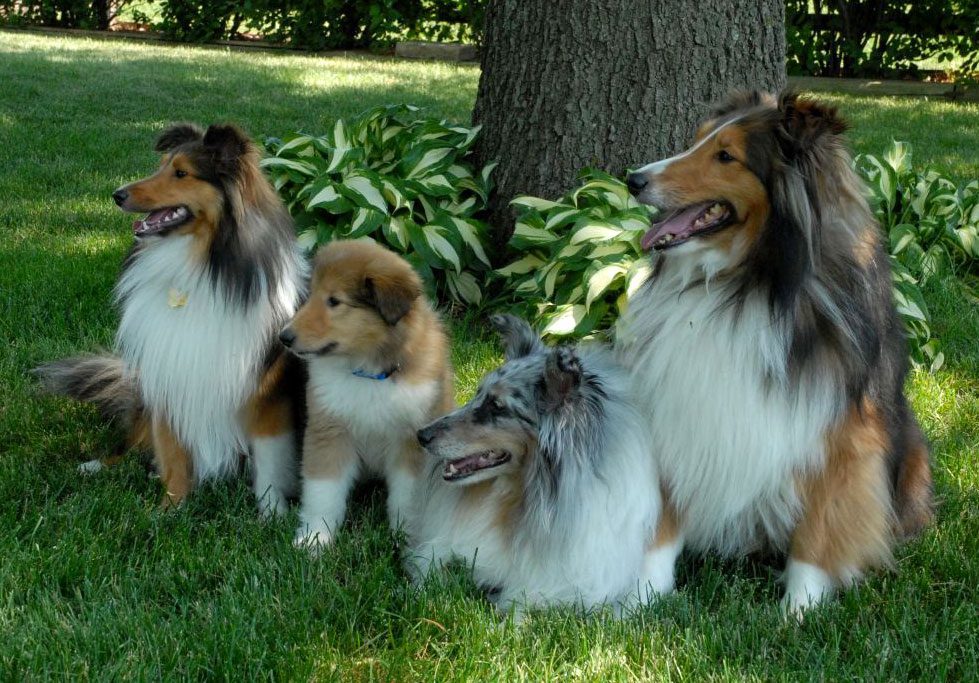
The Shetland Sheepdog, for example, It is erroneously called Collie miniature, While aesthetically (with the exception of the size) they are identical, they are two different races… Though, We should not forget that, the most direct ancestor of the Shetland Sheepdog or โ€œSheltieโ€ as they are often nicknamed, is the Border Collie.

Collie breed history

The high mountains of Scotland are the natural home of this breed. It is not known if you run Roman blood in his veins, but we do know that the Romans conquered Scotland in the sixth century BC.. C. Then, the Collie was known for his great abilities of grazing, capable of driving up 500 sheep at a time. Unlike the current Collie, I didn't have such long and beautiful hair. The Collie was crossed with Setter Irish and with the Borzoi, and from there he was obtaining the characteristics of the Collie of today. William Shakespeare wrote about this dog, calling it Collied Ski. The first illustration of this breed dates back to the year 1790.

While collies have used this dog for a long time and since the beginning of the race, as ovejero dog, the different forms varieties were developed in England at the end of the 1800.

The ancient race Collie was referred to as Scottish Collie in the nineteenth century and beginning of the twentieth century. Scottish Collie were heavier than the current. Their modern ancestors were exhibited for the first time Scotch Sheepdogs (foresee Scots) in 1860, in Birmingham (England), in a dogshow.

In the 19th century, this breed was not well known yet, but with the first dog shows, its popularity began to grow to their highest point. Today remains one of the breeds of dogs most popular. South Africa still used as pastor, but in this case, large flocks of ostriches, his sense of monitoring is very developed.

Lassie, the character of the television that popularized this race, is a Rough Collie.

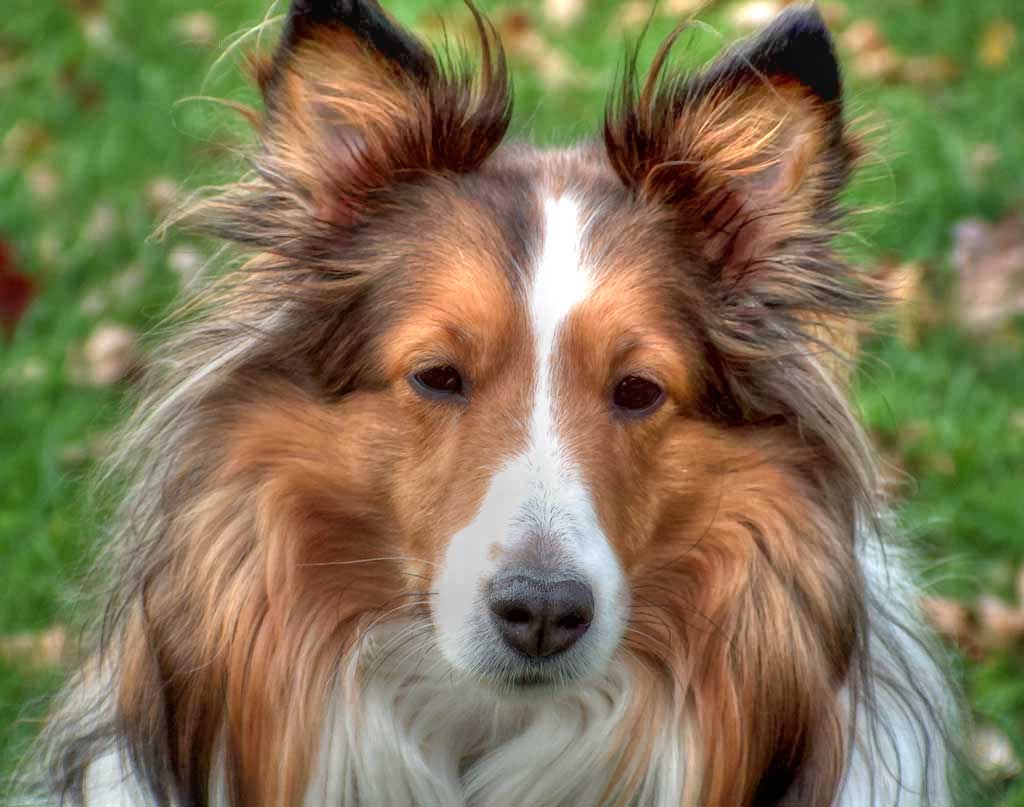
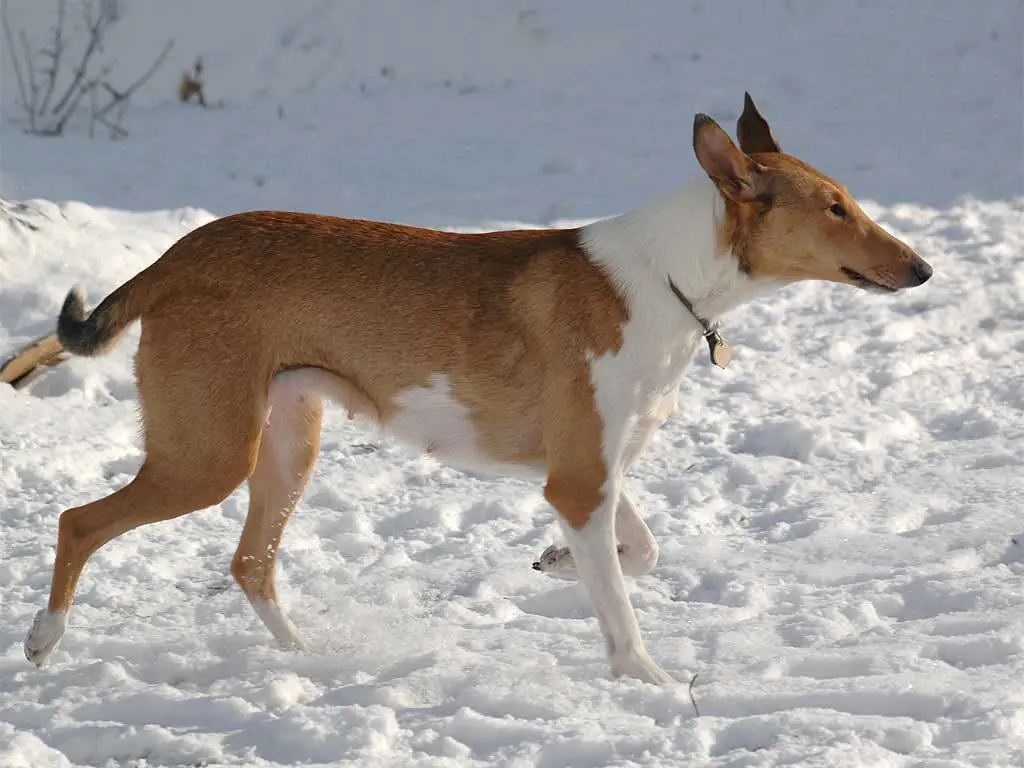
Collie dog has two varieties. The first is the Rough Collie, more easily recognizable due to its extensive use in movies and television (e.g.: Lassie). This variety has pretty hair in neck, tail and legs. It has a double cover, with small hairs lining the body. The second variety is the Smooth Collie, It has two coatings but the outer coat is short and smooth.

Collie breed characteristics

Collie dog has long body in relation to height. Its height of cross is of 56 to 61 cm. the male and 51 to 56 cm. females. They weigh in 18 to 29 kg. He has Brown eyes, almendrada and slightly oblique way. Their ears are small and are played back, or forward when the dog is alert. The snout is long and flat, with black truffle. Its tail is long and abundant hair, and the fur is dense, hard to the touch, soft and bright if it is taken care of very well. It can be color caramel and white, tricolor or blue dark. This dog's life expectancy is of 12 years.

Collie dog character

Healthy by nature, It is also known that he has very few known congenital problems. The most delicate part of the body tends to be your eyes, they should be frequently cleaned through a piece of absorbent cotton impregnated simply with warm clean water.

Known to be sweet and protective. They are easy to train due to her intelligence and innate please desire. They develop a very strong bond with their masters.. They are excellent foresee dogs, good company for family and other dogs. They are very loyal and faithful, although they are wary of strangers if they don't like them. They are also very playful and love to children. She loves to charge monitor children. It is sweet, good very attentive and vigilant: a suitable dog to leave a child in his charge. With babies is treated as a stuffed animal, and a baby can learn to walk if he grabs her hair. This dog will be careful to avoid it to fall. It also, It will avoid that the baby will go with strangers.

On the beach, It will be devoted to monitoring the smallest, and if something happens, They cry or fall, do not hesitate to act. He does not fear nothing. It is not a fearful or timid dog. In case of danger, defends the family. And it is able to stay a whole night warning, to pounce to lower noise. Every time that the members of the family discuss, It stands always because he hates disputes.

Before a rebuke sometimes it can be susceptible, and away to a corner to grumbling. But if the owner gets to look for him there is nothing spiteful: jump to your arms. It is active and disciplined. You must be educated with affection and without resorting to force.

Collie breeds ancestry

There are many breeds of dog with Collie ancestry, as for example, to get an idea…:

  • Australian dog: used in Australia for cattle raising. Dogs of this type are also known as Queensland Heeler, Blue Heeler and Red Heeler. Heeler, means "heel".
  • Collie de Australia or ยซBordaussieยป: It is not really a recognized breed, but a cross between two popular breeds: Australian Shepherd and Border Collie.
  • Australian Kelpie: Developed in Australia from Collie dogs brought over from Scotland and the North of England. prick ears, shorthair, usually black, black and brown or red and Brown and white feet.
  • Australian Shepherd: Developed in United States, with crossing of British dogs, German and Spanish, but they are in other parts of the world (including Australia).
  • Stumpy Tail: Used in Australia for cattle raising. erect ears, shorthair, mottled grey or red without white. With a very short tail or no tail.
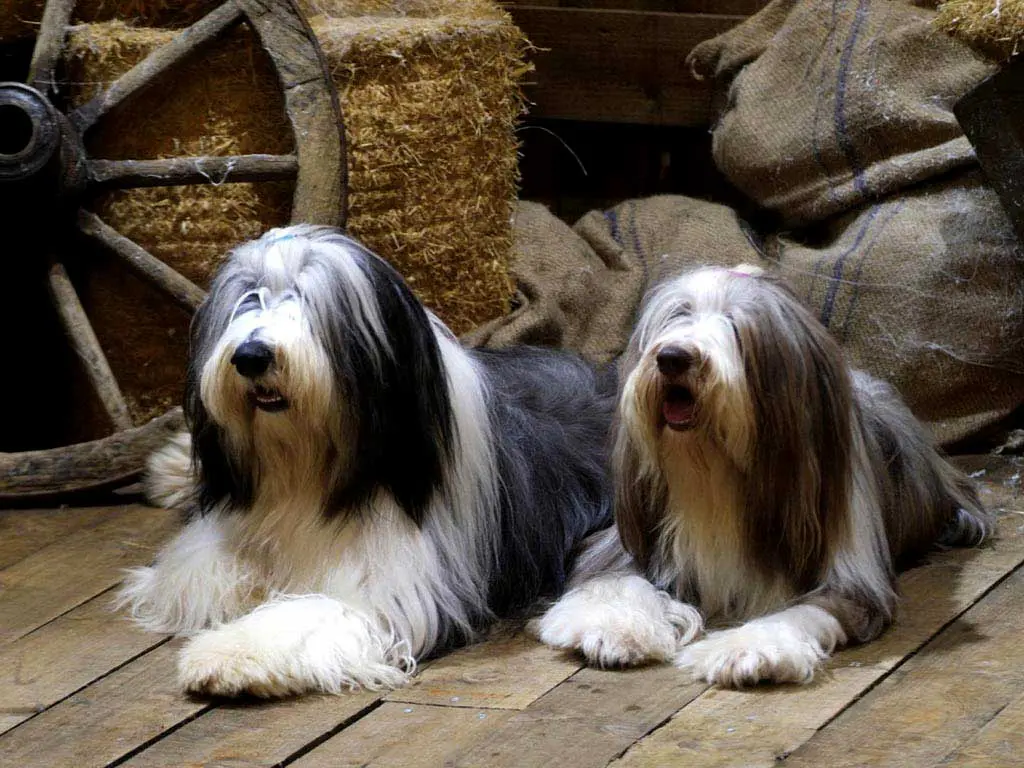
  • Bearded Collie: Now largely animal home and exhibition, but are still used as working dogs on farms. Long and silky hair (included in the face and legs), color negro, grey or beige, and white on the shoulders.
  • Blue Lacy: Gris, shorthair, floppy ears. Derived in part from English Pastor, with other races that descend from the Collie but aren't Collie.
  • Border Collie: The most famous race for grazing sheep around the world. Originally developed in Scotland and Northern England. According to the classification made by Stanley Coren after analyzing the responses of more than 200 work of the AKC judges ("The Intelligence of Dogs", Stanley city, Ediciones B, 1995), the Border Collie is the No. 1 from the list.
  • Cumberland Sheepdog: An extinct breed similar to the Border Collie and, possibly, absorbed by this race. An ancestor of the Australian Shepherd. Ears erect or semi-erectas, dense fur, Black with white only on the face and chest.
  • English Shepherd: Developed in United States from a farm Collie originating in Great Britain. It should not be confused with the old English Pastor.
  • Farm Collie or farm Collie: It was any dog grazing is encuontraba for farming in Britain or United States (descendants of British dogs), and perhaps in other places.
  • German Collie: Developed in Australia, probably from British Collie dogs, but they may have included Germany and Spain dogs. The name "German Collie" is also applied to a cross between a German Shepherd and Border Collie).
  • Huntaway: New Zealand developed from a mixture of races, probably including some Collie – but it is not a breed of the Collie type. It is larger and more stout than most Collies..
  • Warren hound: It is not a race, but a Collie cross (or other grazing or Terrier dog) with a hound or Greyhound. Obtained in a traditional way for poaching, with the speed of a hound, but more obedient and less visible.
  • McNab Shepherd: Developed in United States from British Collie dogs. Ears of variable size, upright or semi-erectas, shorthair, black or red, usually with some white on the face and chest.
  • Old English Pastor: Derivative of the ancestors of the Collie Barbudo. They are bigger than most Collies, with a lack of tail, hair is long and silky (included in the face), usually grey and white. It should not be confused with the English Shepherd.
  • Scottish Collie, in its two varieties, Rough Collie and Smooth Collie: They were created by crossing dogs working with other races Collie (especially dogs Borzoi).
  • Shetland Sheepdog: comes from the Shetland Islands (Scotland, United Kingdom), intentionally was raised in small size. At first sight, It seems to be a copy of miniaturized hair long Collie, However, are 2 different races with a similar look.
  • Smithfield: a breed of British dog that has been terminated, It was like a great Collie, strong, white or black and white color that is used to guide cattle in South East England, especially the Smithfield market (an area of the city of London).
  • Welsh Sheepdog: a native of Wales. Ears erect or semi-erectas, short or silky hair, red, black, black and fire or Blackbird, usually with white over shoulders.

Collie dog breed lines

According to the type of coat, the different lines of Collie have been born., among them are:

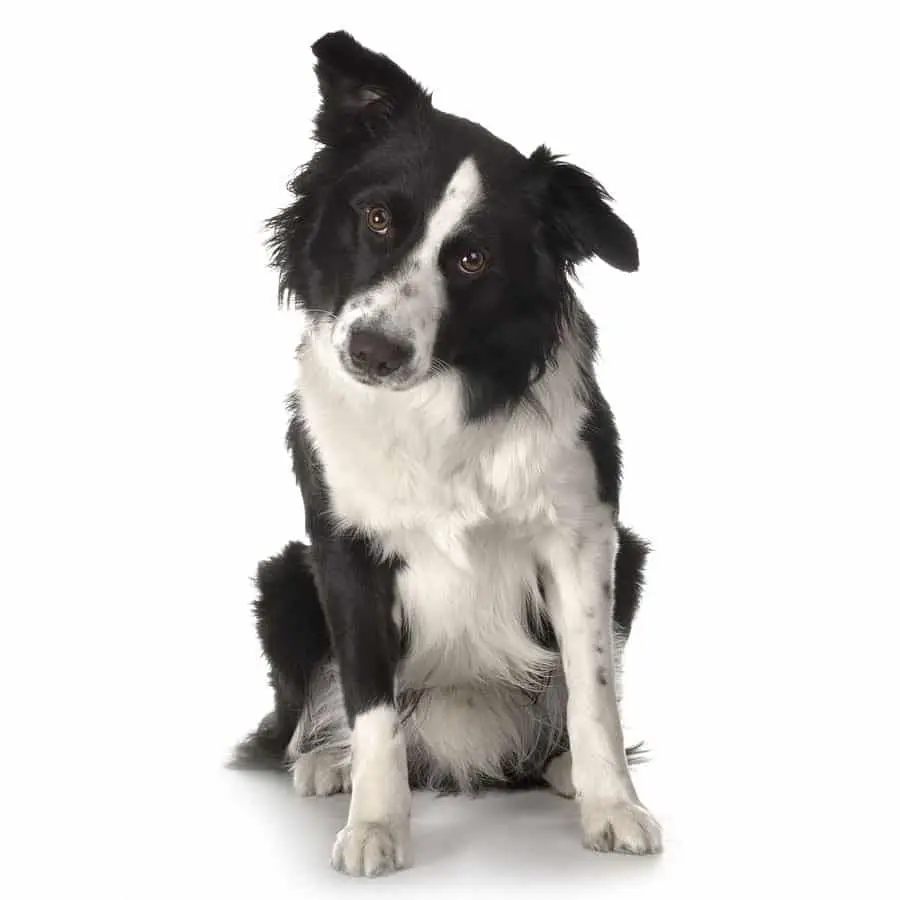
1 Border Collie

Border Collie

The Border Collie is regarded as the breed of smarter dogs que existe

The Border Collie takes its name from the region of Borders, the border region between Scotland and England,

... Read more

2 Bearded collie

Breeders of bearded Collie or Bearded Collie in Spain

The Bearded collie It is an energetic dog. They need exercise and homework to do, How to care for children.

The Bearded collie It is a breed of dog of medium size and long coat, que originalmente fue

... Read more

3 Smooth Collie

Smooth Collie

The Smooth Collie, today it is considered a variety of Border Collie in countries such as the United States and Canada

The Shorthair Collie is a breed of dog originally developed for grazing. With

... Read more

4 Rough Collie

Rough Collie

The Rough Collie he is a very sweet and affectionate dog, maybe a little shy.

The Rough Collie is one of the Collie breeds de tamaรฑo medio y pelo

... Read more

โ–ท The world of Pets: Dogs, cats, birds, reptiles, amphibians

Coonhound
Estados Unidos Coonhound types

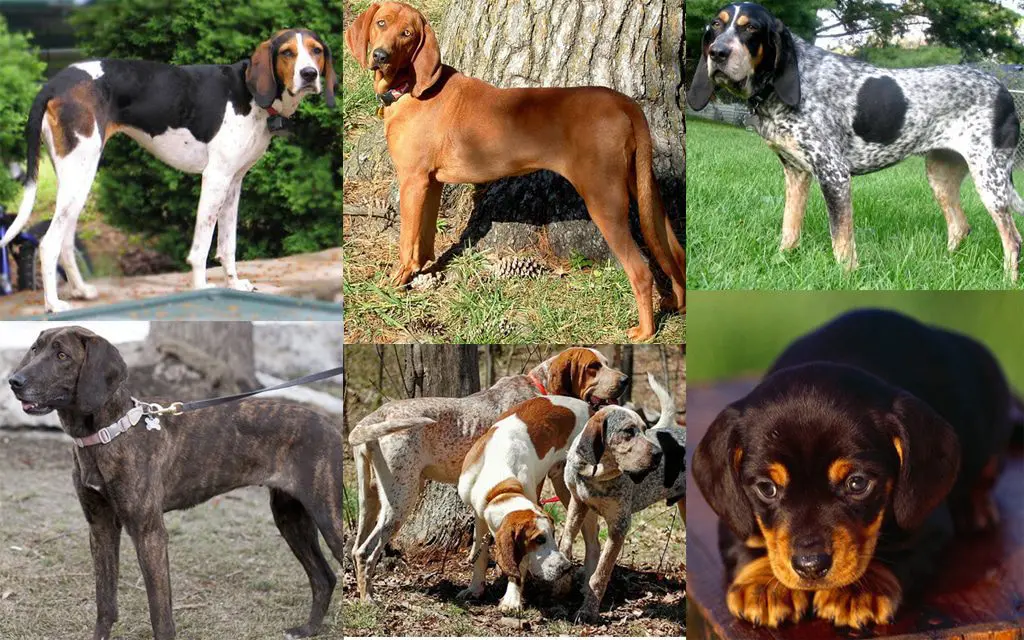
Coonhound (the English: coon = raccoon; Hound = hound or hunting dog) It is a breed of dog of American origin which, It consists of a group of six different types of hounds. Los โ€œCoondogsโ€ (or โ€œraccoon dogsโ€, as they tend to call them) they are highly valued in United States.

Content

History


in the colonial period, several hunting dogs were imported because of the popular sport of the moment, fox hunting. Various breeds of hunting dogs were imported from England, Ireland and France, and the particular mix of these different races form the initial genetic composition of dogs which became known later, as dogs Virginia.

At the time the existing hunting dogs, were considered inadequate or rather incomplete, because he could only dedicate himself to hunting animals that hid close to the ground, but they could not with those who hid in the treetops, as raccoons, the opossums, wildcats and even bigger prey, as Cougars and bears.

the dogs were confused, They despistaban and in turn were unable to keep track of the dam, years. At that time, to take refuge in trees escaping. It was for that reason that cross mediantes, they got a wide variety of dogs that might be able to follow the trail of animals sheltering in the treetops. Above all, raccoons.

The race name derives from its original use in the hunt for raccoons.

It was thus that this group of dogs were developed trying to highlight and increase their best characteristics.: an acute sense of smell, the ability of tracking, pursue tirelessly its prey regardless of human orders, both on the ground and when they hid in the treetops. Y, especially guard cornered prey until the Hunter arrived. It also, they are excellent in the delivery of all types of dam, If adequate training.

Physical characteristics

To race Coonhound, Throughout history, different lines of hounds have been added in order to improve their capabilities., as the tracking, and physical characteristics such as the shape of their feet, some Coonhounds have webbed toes for tackling rivers and swamps, so common in its habitual hunting territory.

There are six individual breeds of Coonhound:

Character and skills

The Coonhound They can hunt individually or in packs.. In general, the hunters do not pursue their prey with the hounds, unlike organized fox hunting which do. In this case, they simply wait to hear the distinctive howl to determine if a raccoon or some other animal, It has been cornered.

curiosidades

In the rural area of the Colbert County, Alabama ((UNITED STATES)UU.) there is a cemetery calledKey Underwood Coon Dog Memorial Graveyardโ€, reserved specifically for the burial of raccoon dogs (Coonhound).

A group of American troops, he chose that spot because it had been a popular hunting camp and the 4 in September of 1937 they buried a Coonhound (raccoon dog), property of the troop. Thus the cemetery was opened in memory of these precious hounds. He became an emblematic place, over time...in the 2007 more than 185 dogs were buried there.

To be able to have a tombstone there, a corner in the cemetery, Dogs must meet three requirements:

  • The owner has to prove (by primer and pedigree) its mascot is a dog authentic Coonhound.
  • A witness must declare that the deceased is a Coonhound.
  • A member of the "Coonhunter Organization" of the place where the dog resided must be authorized by the owner to see the deceased pet and declare the dog as a true Coonhound.

The cemetery has the same format as a graveyard of human, there you will see tombstones of all kinds and details. Each 4 September (Labor Day in the United States), For quite some time now, the Tennessee Valley Coon Hunter's Association has sponsored a meeting at the cemetery to pay tribute to the cemetery's inauguration. (on Labor Day in 1937). The celebration includes music, dance, Food and contests. They attend the event, often, local politicians.

"Labor Day" or Labor Day, is a federal holiday observed in the United States on the first Monday in September. It has its origin in a parade held the 5 in September of 1882 in New York organized by the Nobles of the order of the Knights of labour (Knights of Labor). Inspired by a similar annual event held in Toronto (Canada). In 1884 another parade was held and the Knights of Labor they decided to do it annually.

Other organizations, mostly the affiliated with the first international, they preferred the 1 may, date that recalls the beginning in 1886 of a strike demanding the eight-hour work day and that had led to the Haymarket Riot in Chicago, three days later, the 4 may. President Grover Cleveland believed that the holiday of the 1 May would be an opportunity for disorder. So, fearing that it would reinforce the Socialist Movement, rapidly in 1887 supported the position of the Knights of Labor and its date for Labor Day.

Since then, unlike most countries, The United States celebrates Labor Day on a different date.

โ–ท The world of Pets: Dogs, cats, birds, reptiles, amphibians

Chesapeake
USA FCI 263 . Retrievers

Chesapeake Bay Retriever

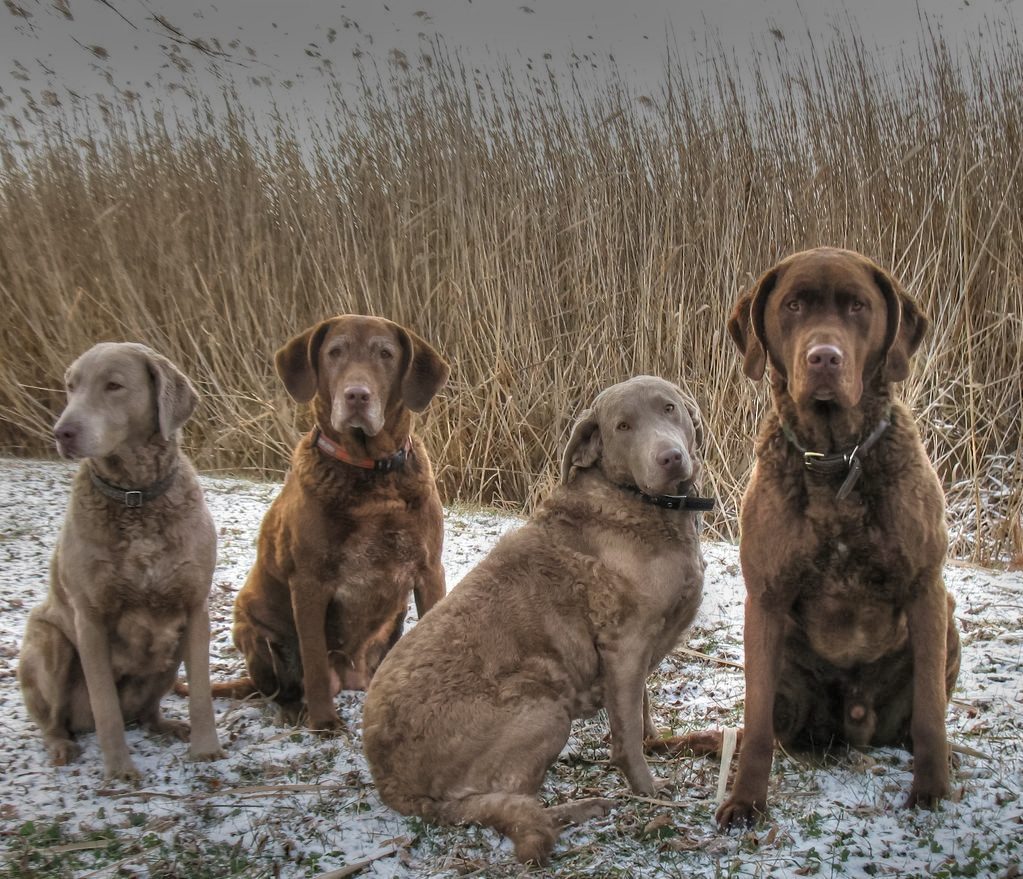
The Chesapeake (or Chesapeake Bay Retriever) It is a breed of dog that originated in the Chesapeake Bay, shores of Maryland in the East of United States.

They come from the race Newfoundland What, It was a gift from the English offered to the families who helped the victims of a shipwreck off the coast of Maryland., in 1807. These two pieces of Newfoundland, a male named โ€œSailorโ€ and a female named โ€œCantonโ€, they were rescued from the ship that sank in Maryland in 1807 and they are the parents of the Chesapeake Bay Retriever breed.

Read more

โ–ท The world of Pets: Dogs, cats, birds, reptiles, amphibians

American English Coonhound
Estados Unidos Not recognized by the FCI

Content

History

The American English Coonhound, is one of the varieties of Coonhound normally bred in the southern United States.

This breed was originally classified and recorded as English Fox and Coonhound, prior to the specialization of the six breeds of Coonhound. Recognition in the Decade of 1940 by the United Kennel Club of Bluetick Coonhound and Treeing Walker Coonhound as different races, gave rise to the classification and registration of the American English Coonhound as a distinct race within the group Coonhound.

The breed originated in the southeast of United States, where they were raised by the cross of a American Foxhound and English Foxhound, most other European hunting breeds, and other native dogs, in order to specialize the race in the hunting of animals that are fugaban climbing trees.

Physical characteristics

Unlike the other classifications of Coonhound, a wide variety of colorations is acceptable to meet the standards of the American English Coonhound. The coloration may be reddish, bluish or tricolor.

But, red marks are predominant and ยซRedtickยป is a common euphemism to refer to the color of the American English Coonhound.

Some people believe that this lack of emphasis on specific coloration has allowed breeders to focus breeding programs on traits like intelligence and hunting ability rather than superficial concerns., like coat standards. Color variations are common even among puppies from the same litter of a American English Coonhound , which indicates high levels of DNA diversity in the breed.

Character and skills

To the American English Coonhound loves to snuggle up on any fluffy surface he finds, important to take into account, all those people who do not want to have their dog on the sofa and in bed all day.

Just like all the Coonhound, are โ€“generally- good dogs, affable and very sociable. Nervousness or aggression is considered a defect according to UKC breed standards. Are strong and stubborn nature, so it requires more patience in training than other breeds.

Young dogs tend to be very active, playful and eager to human attention, they are dogs that require plenty of exercise.

The American English Coonhound, It is used more often as hunting dogs, mainly of raccoons.

They are also excellent family pets, that they have been bred for hunting in Group, so tend to be very friendly.

The American English Coonhound as well, is very good guardian. It has a very characteristic alert bark that makes it infallible.

โ–ท The world of Pets: Dogs, cats, birds, reptiles, amphibians

Bohemian Wire-haired
Repรบblica Checa FCI 245 . Griffon type

Cesky Fousek

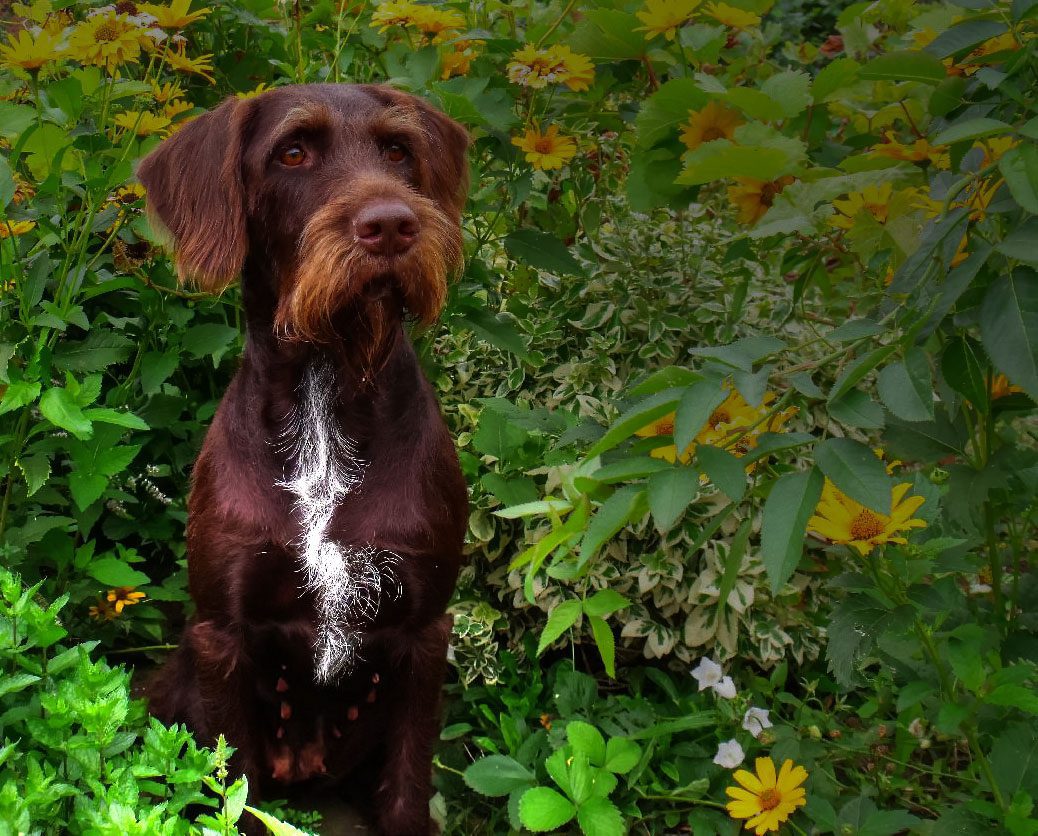
The Bohemian Wire-haired (in Czech: ฤŒeskรฝ Fousek) It is a dog of Czech origin, defined as a breed of versatile.

Cesky Fousek was used in the creation of the Slovakian Wirehaired Pointers.

The authors who have written about race, they say that the Cesky Fousek is a very old dog, Despite the rules of the standard were written and officially settled for the first time, in the 19th century. The breed nearly became extinct in the Decade of 1920, And it was saved thanks to the development of breeding with doghelhaar dogs.

Read more

โ–ท The world of Pets: Dogs, cats, birds, reptiles, amphibians

Bohemian Terrier
Repรบblica Checa FCI 246 . Small sized Terriers

Cesky Terrier

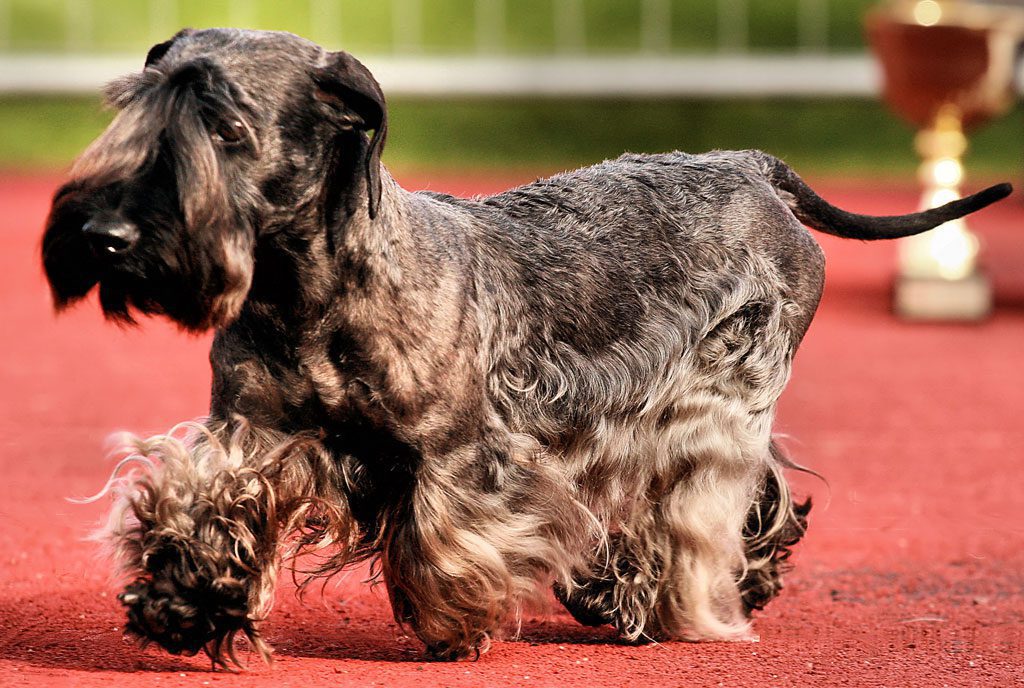
The Bohemian Terrier (Cesky Terrier), is a dog that originated in the Czech Republic. One of the multiple types of Terrier. It is a light hunting dog, under, well pigmented and easy to use with small hanging ears and with an easy to care for coat.

Cesky Terrier was created by the Czech, Frantisek Horรกk, in 1948, with a cross between a Sealyham Terrier and a Scottish Terrier, to create a Terrier suitable for hunting in the forests of Bohemia. Although he was not a trained scientist, Horรกk worked for many years as a research assistant at the Czechoslovak Academy of Sciences and used knowledge gained with his breeding dogs..

Cesky Terrier, He was recognized by the Federation Cynologique international in 1963 with the number 246 of the race, in the Group 3, Terrier.

The breed is now recognized by all the major Canine Clubs of the English speaking world. Cesky Terrier, It is one of the rarest dog breeds worldwide.

It has short legs and has oblong body, resembling the Sealyham Terrier and the Scottish Terrier. It has elongated head, thick beard, whiskers and eyebrows. The body is solid, but not heavy.

Read more

โ–ท The world of Pets: Dogs, cats, birds, reptiles, amphibians

American Black and Tan Coonhound
Estados Unidos FCI 300 - The Hound of raccoons

Cazador de mapaches negro y bronce

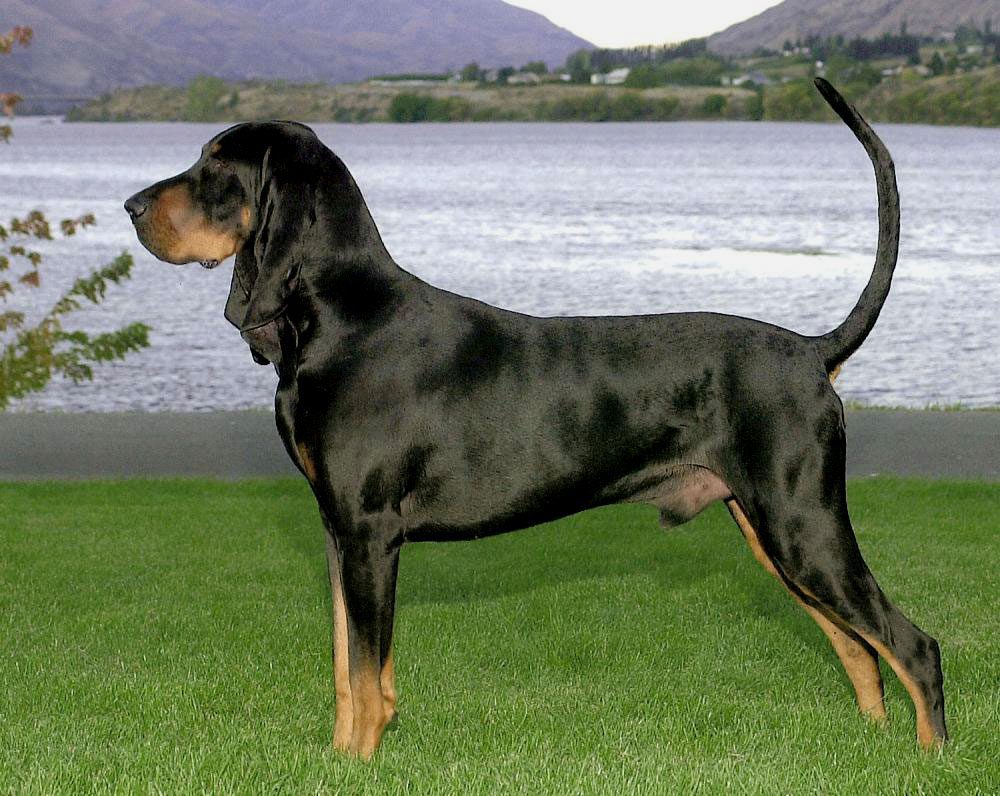
The American Black and Tan Coonhound (in English: ยซBlack and Tan Coonhoundยซ) It is a breed of dog used especially to follow the trail to raccoons. It is a cross between Bloodhound (Bloodhound) and the Black and Tan Virginia Foxhound ("Virginia Black and Tan Foxhunter").

Read all the information in the race, by clicking on: Black and Tan Coonhound.

American Black and Tan Coonhound