โ–ท The world of Pets: Dogs, cats, birds, reptiles, amphibians

English Setter
Gales Inglaterra Reino Unido francia FCI 2 - Setter

Setter Inglรฉs

By your selection, the English Setter it's mostly a hunting dog, so you need activity

Content

History

The origins of the English Setter they are quite confusing, but they seem to date back to the Middle Ages. It is believed to be descended from the Oysel Dog and ancient Spanish flagger breeds that were brought to England.. The breed settled around 1860 thanks to the work of Edward Laverack and after R. Purcell Llewellin, two breeders who established a selective breeding program to stabilize English setters.

Laverack bred a practically pure line of very willful and elegant dogs. Llewellin crossed the Laverack dogs with the English Setter and then with him Setters Gordon. From these crosses a strain especially competent for hunting emerged.

It was at this time that the English Setter began to be recognized internationally. Came to france, and more generally to continental Europe, in 1880. But, was not up 1963 when the breed was officially recognized by the FCI.

Its great hunting qualities make it the most widely used pointer in France today.. He usually wins national and international hunting contests. But, it is also appreciated for its beauty, and is featured frequently at dog shows. So, we distinguish between lines of beauty and lines of work, depending on the use made of the animal.

Physical characteristics

The English Setter is the type of Pointing Dogs medium in size with a solid and compact body.

Its coat is flexible and smooth, with fringes on the ears, the chest, legs and tail. Five coat colors are allowed: black and white, Orange and white, lemon and white, brown and white and tricolor.

The tail is of medium length, carried low and placed on the back.

Size and weight

    ▷ Male size: Of 65 to 68 cm.

    ▷ female size: Of 61 to 65 cm.

    ▷ Male weight: Of 18 to 23 kg

    ▷ female weight: Of 18 to 22 kg

Character and skills

The English Setter he is a very friendly partner, even with children or other dogs. But, living with small animals requires early socialization so you don't see them as prey.

It is an excellent companion dog, easy to live with and completely devoted to his family, which he will cover with affection. Intelligent, friendly, Tender, quiet, playful and faithful, will brighten up your home. Sensitive and very attached to his master, can't stand loneliness.

By your selection, it's mostly a hunting dog, so you need activity. A house with a garden in the country is ideal for him. But, an urban life in an apartment is possible, as long as it provides you with enough opportunities to exercise: two outputs of 30 minutes a day is a minimum. He will also be happy to accompany his master on bike rides or jogging. In any case, It is not a recommended dog for an elderly or very sedentary person.

Last, hunting instinct is generally highly developed in the English Setter. If it is intended for this use, it is advisable to adopt a puppy from a line of work. In fact, beauty lines are selected with aesthetic criteria and, Therefore, are potentially less effective. But, in any case, it is a breed that tends to dig and chase prey: fencing your ground is strongly recommended to prevent any dog รขโ‚ฌโ€นรขโ‚ฌโ€นescape.

Education

Very intelligent, the English Setter has a good aptitude for dressage. But, need a gentle education (although not without firmness), because his sensitivity does not admit brutality. Brutality would make him fear.

Like any hunting dog, learning to remember will be essential so that you do not get carried away by your instincts.

Health

The English Setter is in fairly robust overall health.

But, their floppy ears make them prone to canine ear infections, especially because they are dogs that do not hesitate to get into the water. It can also be affected by skin diseases such as atopy.

Last, this breed has a predisposition to congenital deafness, thyroid problems or hip dysplasia. The latter being partially hereditary, it is advisable to check the health of the stallions with the breeder of English Setter.

Grooming

The English Setter requires weekly brushing. During the molting period, which takes place twice a year, should be even daily. It also, her fringes of hair should be trimmed to maintain her signature look. This operation can be done at home or entrusted to a dog groomer.

Under normal circumstances, it is not necessary to bathe the dog. But, when hunting, the English Setter does not hesitate to get into the water, sometimes muddy: in this case, it may be convenient to provide him with a dog shampoo to help him regain his whiteness.

It also, you have to check your floppy ears after every outing, especially if the dog has been swimming, to avoid any ear infection.

Use

The english setter is originally a hunting dog (Pointing Dogs). Today, it is also highly appreciated as a companion dog.

It also, its beauty and elegance make it a recognized show dog.

Life expectancy

14 years

Characteristics "English Setter"

Coexistence is important that you have with your new friend. Before considering the acquisition of a dog of the breed "English Setter" you know certain factors. Not all breeds of dogs are apt to live in an apartment, you must take into account his character, their need for exercise, their interaction with other pets, their care and if you have small children, their level of tolerance towards them.

Adaptation โ“˜

2,0 of 5 stars (based on 1 review)

friendly dog โ€‹โ€‹โ“˜

4,0 of 5 stars (based on 1 review)

hair loss โ“˜

3,0 of 5 stars (based on 1 review)

Affection level โ“˜

5,0 of 5 stars (based on 1 review)

Need for exercise โ“˜

5,0 of 5 stars (based on 1 review)

Social need โ“˜

5,0 of 5 stars (based on 1 review)

Home โ“˜

3,0 of 5 stars (based on 1 review)

Toilet โ“˜

3,0 of 5 stars (based on 1 review)

Friendly with strangers โ“˜

2,0 of 5 stars (based on 1 review)

barking โ“˜

3,0 of 5 stars (based on 1 review)

Health โ“˜

3,0 of 5 stars (based on 1 review)

Territorial โ“˜

2,0 of 5 stars (based on 1 review)

Cat friendly โ“˜

2,0 of 5 stars (based on 1 review)

Intelligence โ“˜

4,0 of 5 stars (based on 1 review)

Versatility โ“˜

3,0 of 5 stars (based on 1 review)

Child friendly โ“˜

5,0 of 5 stars (based on 1 review)

Surveillance โ“˜

2,0 of 5 stars (based on 1 review)

joy โ“˜

5,0 of 5 stars (based on 1 review)

Images "English Setter"

Photos:

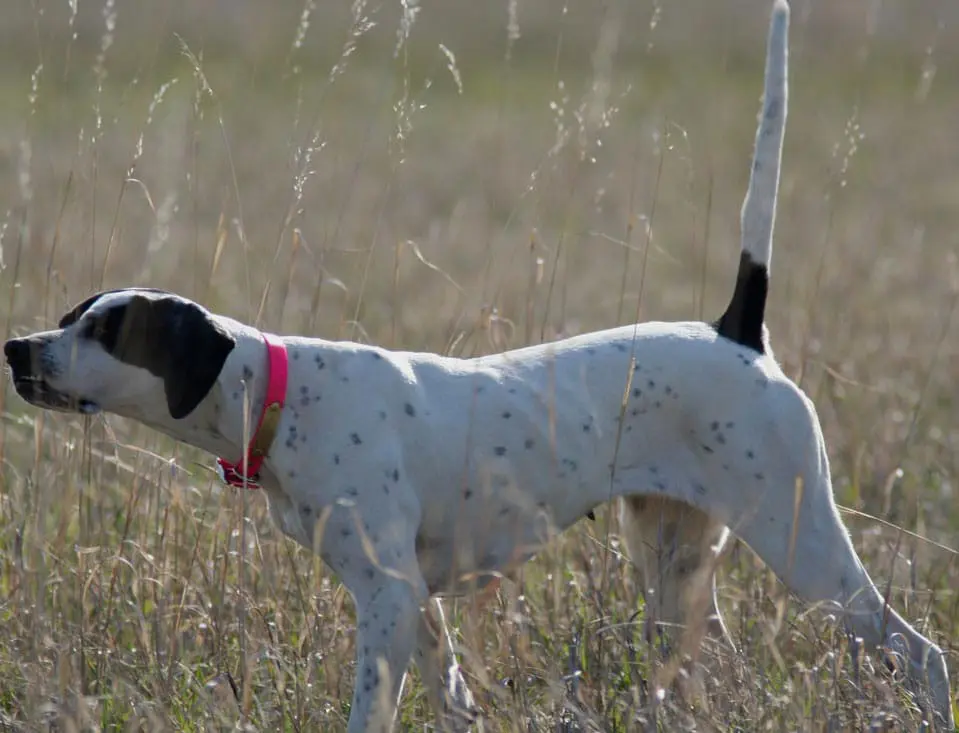
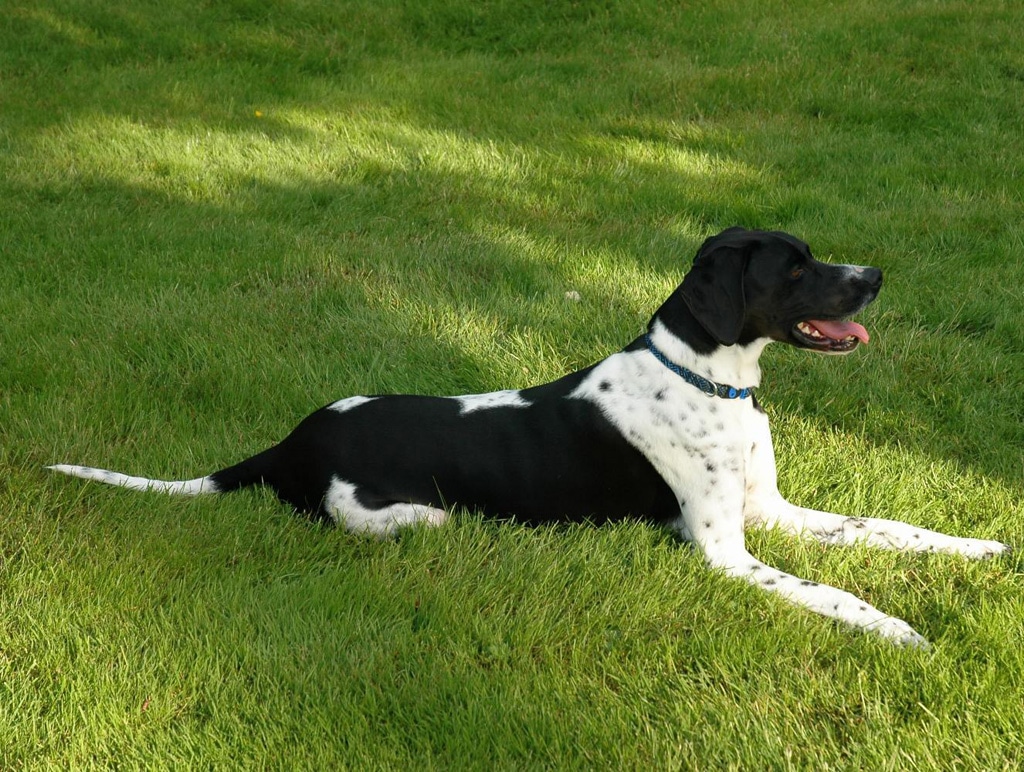
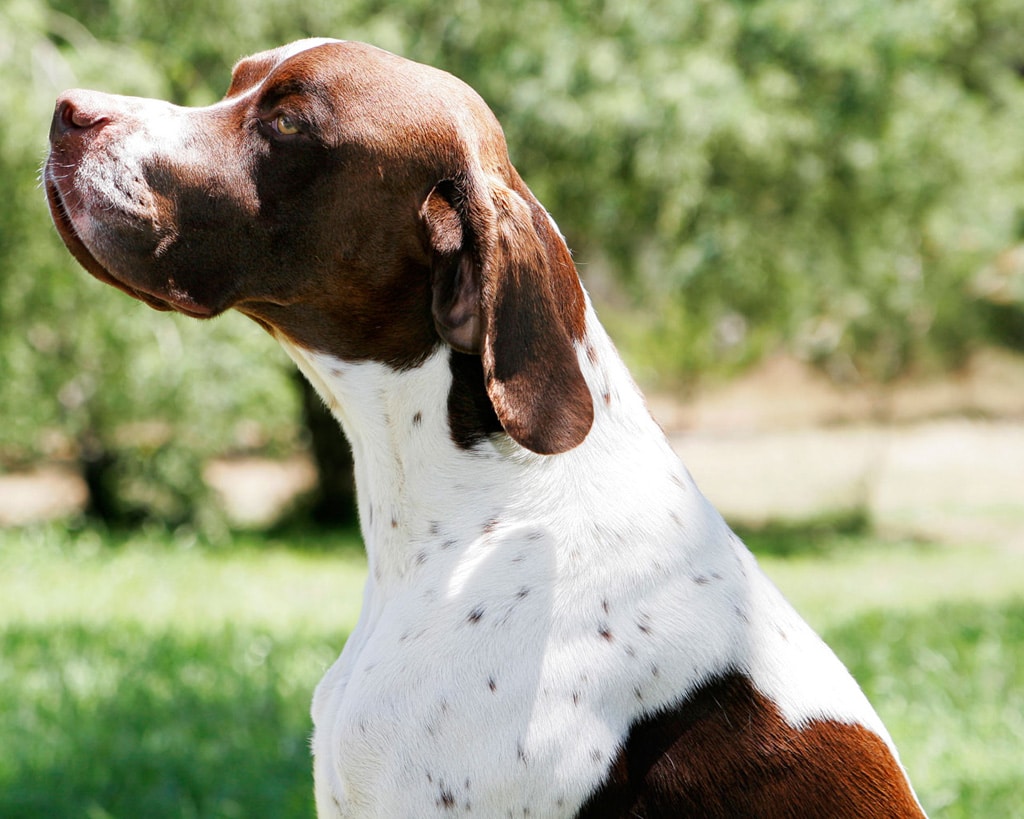
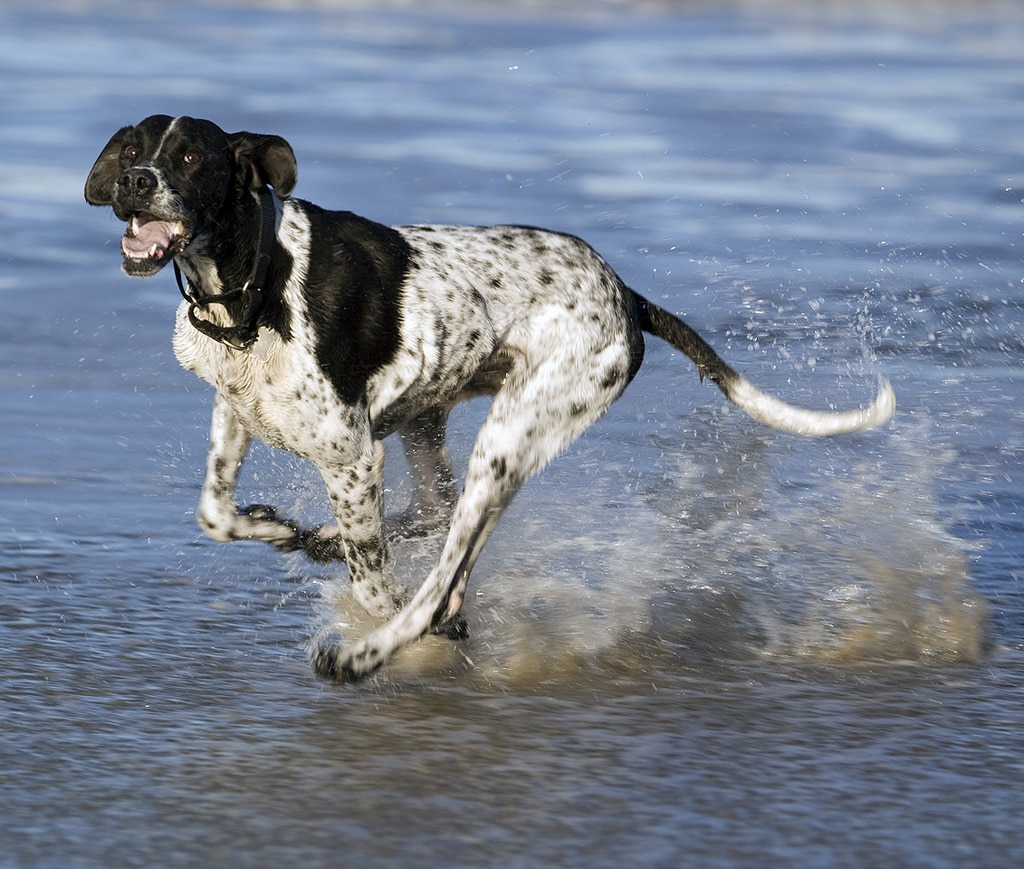
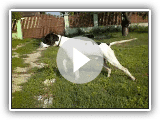
1 – English Setter, Dogs Show Racibรณrz RAVEN WHITE Magenta by I, Lilly M, CC BY-SA 3.0, via Wikimedia Commons
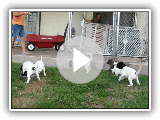
2 – English Setter in Tallinn, duo CACIB, 17-18 Aug 2013 by Thomas, CC BY-SA 3.0, via Wikimedia Commons
3 – English setter working in the field by Dmitry A. Mottl, CC BY-SA 3.0, via Wikimedia Commons
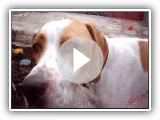
4 – English Setter Puppy at 2 and a half months of age by Immotilla, CC BY-SA 4.0, via Wikimedia Commons
5 – English Setter by Villa16, CC BY-SA 3.0, via Wikimedia Commons
6 – Liver belton English Setter. by Canarian, CC BY-SA 3.0, via Wikimedia Commons

Videos "English Setter"

Type and recognitions:

  • FCI CLASSIFICATION:
  • Group :
  • Section : . .

Federations:

  • FCI – Group 7: Pointing Dogs. – Section 2: Continental Pointing Dogs. 2.1: Pointer โ“˜
  • AKCSporting โ“˜
  • ANKC Group 3 (Gundogs) โ“˜
  • CKCSporting Dogs โ“˜
  • โ€‹KC – Sports โ“˜
  • NZKCGundog โ“˜
  • UKCGun Dogs โ“˜

FCI breed standard "English Setter"

Origin:
France, United Kingdom

Date of publication of the valid original standard:
24.06.1987

Use:

Pointing Dogs.


General appearance:

Medium-sized, sharp contour, elegant appearance and movements.


Behavior / temperament:

Very friendly and personable. Very active and with a keen sense for hunting.

Head:

carried high, long and reasonably dry.

Cranial region:
  • Skull: It is oval in shape between the ears, which provides enough cavity to the brain; clearly defined occipital protuberance.
  • Depression links (Stop): Well defined.

facial region:

  • Truffle: must be black or liver, depending on hair color. Wide nostrils.
  • Snout: Moderately tall and quite square. The distance from the stop to the tip of the nose should be equal to the distance the skull has between the occipital bone and the eyes.
  • Lips: Not very hanging.
  • jaws and teeth: Jaws, of almost equal length, they are strong, with perfect bite, regular and complete in scissors. I.e., that the internal face of the upper incisors is in contact with the external face of the lower incisors, and placed at right angles to the jaws. full dentition is desirable.

Eyes: The English setter's eyes are bright, sweet and expressive look. Its color varies from hazelnut to dark brown., the more dark best. lighter eyes are accepted only in those Belton liver-colored specimens. The eyes should be oval in shape and not protruding.

Ears: They should be of moderate length, low insertion, hang folded forming well defined folds, stuck to the cheeks, velvety at the ends and its upper part should be covered with fine and silky hair.

Neck:

The neck of the English setter is rather long, muscular y seco, slightly arched at the top. The junction with the head must be clearly marked. should be wider and more muscular towards the back, although it should never have a double chin or be hanging, but to have an elegant appearance.

Body:

Of moderate length.

  • Back: Short and straight.
  • Pork loin: Large, slightly pummeled, strong and muscular.

Tail:

Insertion almost in line with the back, medium length, that does not reach the height of the hocks. The tail of the English setter should not be crooked or knotty, but slightly curved or scimitar-shaped, but in no case with a vertical trend. With long hanging fringes. The fringes should start slightly below the base of the tail, getting longer from the middle, then gradually taper towards the tip. Long hair, bright, soft and wavy, but never curly. In motion it whips and is not carried higher than the level of the back.

Tips

Former members:

  • Shoulder: Well laid back and oblique backs.
  • Elbows: Well lowered and close to the body.
  • forearms: Straight, very muscular and with round bones.
  • Metacarpus: Short, strong, round and straight.

Later members: Well muscled members, especially the leg. Long from hip to hock.

  • Thigh: Long.
  • Femoro-tibio-patellar joint (knee): well angled.
  • Hocks: well descended, without drifting in or out.

Pies: The English setter must have good pads, strong, with fingers well arched and together, covered with a lot of hair.

Movement:

The movement of the English setter is free and graceful, characterized by speed and endurance. Free movement of the hocks exhibiting a powerful drive from the hind limbs. Seen from the back, hip joints, knee and hock should be in line. the head is naturally carried high.

Mantle

Fur: It should be slightly wavy from the back of the head to the level of the ears, but never curly. In general, the English setter's coat should be long and silky. The back of the thighs and the forelimbs almost to the feet must be fringed.

Color:

  • black and white (azul Belton),
  • Orange and white (naranja Belton),
  • Lemon and white (belton lemon),
  • Liver and white(Belton liver) or tricolor; that is to say, blue Belton and fire or liver Belton and fire.

Those specimens of English setter that do not have large colored spots on their body are preferred, but mottled (Belton) scattered throughout the body.

Note from the Standards Commission:

"Belton" is the special name used to describe the characteristic mottling of the English Setter's coat.. Belton is a Northumberland town. This designation was raised and defended in the book on the English Setter by Mr. Edward Lavarack, breeder who had a preponderant influence on the current appearance of the breed.


Size and weight:

  • The males between 65 and 68 cm.. (25,5 - 27 inches).
  • The females among 61 and 65 cm.. (24 - 25,5 inches).


Fouls:

Any deviation from the aforementioned criteria is considered as a fault and the severity of this is considered to the degree of the deviation to the standard and its consequences on the health and well-being of the dog., and the dog's ability to perform its traditional task.

FALTAS DESCALIFICANTES:

โ€ข Aggressiveness or extreme shyness.
โ€ข Any dog โ€‹โ€‹showing clear signs of physical or behavioral abnormalities.


N.B.:

โ€ข Males must have two normal-appearing testicles fully descended into the scrotum..
โ€ข Only functionally and clinically healthy dogs, with the typical conformation of the breed, should be used for parenting.

Source: F.C.I - International Cynological Federation

Alternative names:

1. Lawerack, Llewellin (or Llewellyn) Setter (English).
2. Setter Laverack (French).
3. Englischer Setter (German).
4. (em inglรชs: English Setter) (Portuguese).
5. Setter Llewellin (o Llewellyn), Setter Lawerack (o Laverack) (espaรฑol).

โ–ท The world of Pets: Dogs, cats, birds, reptiles, amphibians

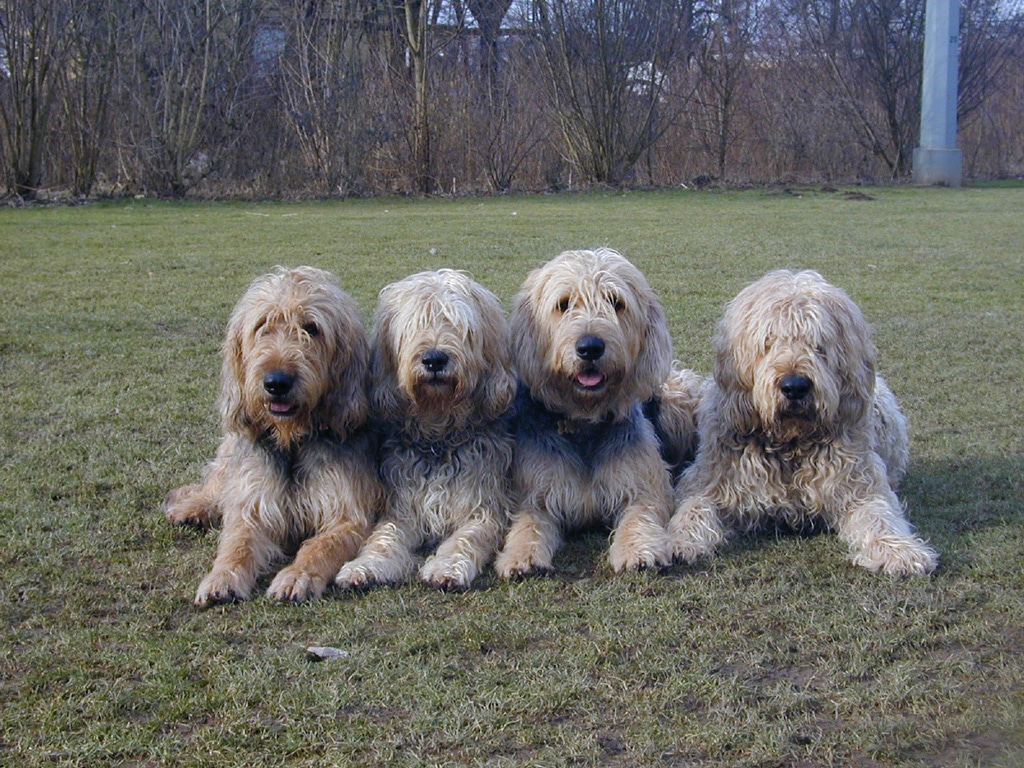
Otterhound
Inglaterra FCI 294 . Large-sized Hounds

Perro de Nutria

The Otterhound is the most endangered dog breed in the UK.

Content

History

The Otterhound It is a very old breed of dog from United Kingdom, has, among many other mixtures- within their ancestors to the race Airedale Terrier.

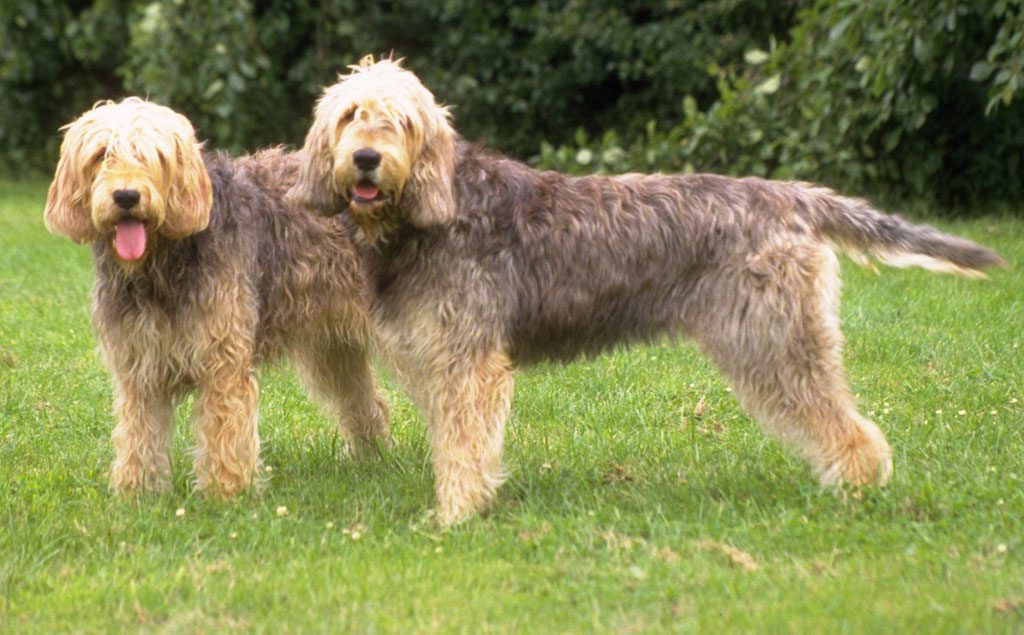
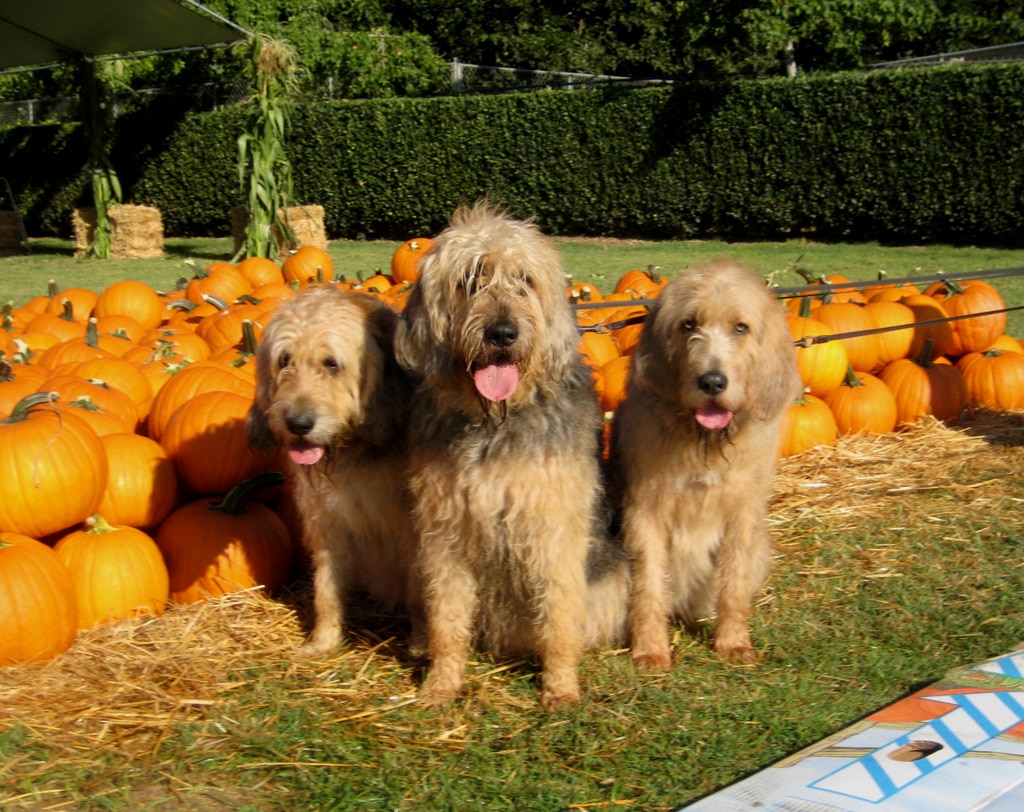
The name of this precious woolly, It just comes to the task for which it was created: the House of otters. This dog has a smell nearly as well developed as the Bloodhound. This breed was developed in England.

But like all dog breeds, changes and social advances always bring consequences in the case of Otterhound, It happened that the Otter hunting was banned in England, and if so few copies of this breed, with this ban the race saw very committed his existence.

Though, To avoid its extinction some race fans what they did was focus the hunting instinct of the Otterhoundtowards other types of prey.

The Otterhound It is a dog specializing in otters, extremely difficult and dangerous job.

Some experts suggest that the danger of the Otterhound is similar to the extinction of the Panda Bear.

It is a very small breed, It is estimated that they there are around 1.000 Otterhound in the world, of which from 350 and 400 they are in the U.S.. Even at the beginning of the 20th century, When was Otter hunting a popular sport, the Otterhound they were never numerous.

Today, this breed is considered as the most threatened by endangered United Kingdom, There are only 51 specimens born in 2006. Are on the list of most vulnerable native breeds of the UK Kennel Club and programmes are being carried out to save the race.

Physical characteristics

The Otterhound, is a dog large and strong, sometimes we could say, incombustible. It is capable of spending all day hunting in the water or running around the field, without showing even the slightest index of exhaustion.

It has a head big and strong with well marked bone.

Their eyes, intelligent and lively expression, vary in color depending on the coat. The ears, they are long, them it is hanging at the height of the eyes. They are set high and have a characteristic fold of the breed..

The tail, high insertion it takes her upright always to pay attention a State of alert, but when it is resting her leads hanging.

The hair of the Otterhound is long, has a length of 4 to 8 cm approximately. The mantle is double layer, the outdoor hair is dense, hard and waterproof and should be rough to the touch. The internal layer It is notorious and touch gives a feeling oilseed.

While, measures with respect to the height and weight, vary according to the club as a consensus we could say that the height the cross in the males is of approximately 69 cm and the females of 61 cm..

The average life expectancy the race is a little more than 10 years. A quarter tends to live in 12 to 15 years. Y, the case of a copy which he lived has been known to the 16 years of age.

Character and skills

The Otterhound, is a Hound very versatile, is generally used for the House of large dams, both individually and in a pack.

Its temperament It friendly and balanced, as long as you have enough physical exercise especially everything related to water, enjoy a lot swimming.

The Otterhound enjoy exercise, the routine. They are very good companion dogs for the family, but they must be kept in a secure property, that can jump fences of up 5 metres in height. They are not at all appropriate for life in apartment.

It is a excellent swimmer, he chased the otters swimming, using only the trail of bubbles that were leaving them diving as track.

This dog is a highly specialized breed who instinctively knows what has to do. Perhaps that is why they are a little stubborn and not always obedient.

They need plenty of exercise, preferably swimming. It is a working dog and needs to maintain a series of obligations or activities, a well-marked routine to avoid boredom and the emergence of destructive behaviors.

A good training is key to keep happy the dog and the family.

Observations

Despite having fame of stubborn, with a proper training is usually used also in civil defence tasks.

Otterhound Images

Otterhound Videos

Type and recognitions:

  • FCI CLASSIFICATION:
  • Group :
  • Section : . .

Federations:

  • FCI – Group 6: Scent hounds, and related breeds. – Section 1.1: Large-sized Hounds. โ“˜
  • AKCHound โ“˜
  • ANKCGroup 4 (Hounds) โ“˜
  • CKCGroup 2 – Hounds โ“˜
  • โ€‹KCHound โ“˜
  • NZKCHound โ“˜
  • UKCScenthounds โ“˜

FCI breed standard "Otterhound"

Origin:
England, United Kingdom

Date of publication of the valid original standard:
13.10.2010

Use:

Big hound, strong, Built primarily for a long day of work on the water, but able to gallop on land.


General appearance:

It is great, straight-limbed and robust, its coat is rough, has a majestic head and a strong body. It moves with loamy and loose strides. Rough double coat and big feet are essential. Easy movement.

IMPORTANT PROPORTIONS: The distance from the tip of the truffle to the naso-frontal depression is somewhat shorter than the distance from the depression to the occiput.


Behavior / temperament:

Friendly and balanced.Signs of aggression and nervousness should be severely penalized.

Head:

Clearly outlined, imposing, higher than wide. The forehead does not have a bump or a scowl ; the expression is open and friendly. Except the truffle, the whole head is well covered with coarse hair that forms light mustaches and beard.

Cranial region:
  • Skull: Delicately pumped, neither thick nor exaggerated; rises from the naso-frontal depression to the slightly marked occipital protuberance.
  • Depression links (Stop): Something marked, but without exaggeration.

facial region:

  • Truffle: Long, windows wide open. Snout: Strong and deep.
  • Lips: Belfos profusos, although not in excess.
  • Jaws / Teeth: The jaws are strong, wide. Teeth are well aligned, and the joint is scissor-shaped, that is to say, that the upper incisors closely overlap the lower ones and are vertically implanted in the maxillae.
  • Cheeks: Defined cheek bones.

EYES: They are of intelligent expression and moderately sunken. The conjunctiva is somewhat apparent. Eye color and eyelid edge pigment vary according to coat color (a blue and tan hound may have hazel eyes). Yellow eyes are not desirable.

EARS: They present unique characteristics of the breed. They are long, pendant and implanted at the level of the angle of the eye. They can reach the truffle when pulled forward, forming a characteristic fold. The tip bends or curls inwards giving a curious folded look. This is an essential point that should not go unnoticed. The ears are well covered with hair that forms bangs.

Neck:

It's long and powerful. It is delicately inserted in the well oblique and cleanly outlined shoulders . A slight double chin is acceptable.

Body:

Very strong.

  • top line : Level.
  • Back : wide.
  • Pork loin : Short and strong.
  • Breast : Deep ; rib cage is snug, quite deep and oval in shape ; not very wide, not too narrow. The ribs extend well back, which allows enough room for the heart and lungs.

Tail:

High implementation ; dog picks up when alert or on the move. Never curls over the back, but it can hang up when the dog is resting. It is thick at the base and tapers to the tip ; the caudal bones extend to the hock ; carries it straight, or in a slight curve. The hair on the lower part of the tail is longer and more abundant than that on the upper part.

Tips

PREVIOUS MEMBERS:

  • ShoulderDefinedand well oblique.
  • forearmsStrong bones, straight from elbow to ground
  • Metacarpus: Strong and well oblique.
  • Previous feet: Large, rounded, with well arched toes and thick pads; they do not deviate either outwards or inwards. The interdigital skin must be visible.

LATER MEMBERS:

  • General appearance: They are very strong and muscular; views from any angle, the position should not be too wide, not too narrow. Posterior angulation is moderate. When the dog maintains a natural position, the hind limbs, from hock to ground, they are perpendicular.
  • Thighs: They are very muscular.
  • Metatarsus: Hocksin very low position, and they do not deviate even inwards, nor out.
  • Hind feet: Only slightly smaller than the previous ones. Large, rounded, with well arched toes and thick pads; they do not deviate either outwards or inwards. The interdigital skin must be visible.

Movement:

To step, the movement is very loose with the feet close to the ground; immediately go into an active trot, agile, regular, of very long strides. The gallop is uniform and strides of exceptional length.

Mantle

Fur: It is long of 4 to 8 cm., dense, rough, hard, but not wire hair. It is waterproof, hair texture is between straight and rough. Smoother textured hair on the head and lower part of the limbs is natural. The undercoat of hairs is apparent, a slightly greasy texture may appear, both in the outer layer and in the inner layer of hairs. Hair must not be trimmed and trimmed for display; presentation must be natural.

Color: All recognized hound colors accepted: solid color, grey, sandy, red, wheat, blue. They may have slight white marks on the head, the chest, the feet and the tip of the tail.

White hounds may have slight lemon markings, blue or badger. black and tan, Blue and fire, black and cream, sometimes liver, fawn and liver, fawn and white. The following colors are not allowed: liver (brown) and white, a white hound with black patches and clearly separated tan markings. The pigment must harmonize, although not necessarily combined with the color of the coat; for example, a tawny hound may have brown eyes and noses. The slightly depigmented nose is allowed.


Size and weight:

Height to the cross :

  • In males approximately 69 cm. (27 inches),
  • In females approximately 61 cm. (24 inches).


Fouls:

Any deviation from the aforementioned criteria is considered as a fault and the severity of this is considered to the degree of the deviation to the standard and its consequences on the health and well-being of the dog..

FALTAS DESCALIFICANTES:

  • Aggressiveness or extreme shyness.

  • Any dog โ€‹โ€‹showing clear signs of physical or behavioral abnormalities.


N.B.:
  • Males should have two normal-appearing testicles fully descended into the scrotum..
  • Only functionally and clinically healthy dogs, with the typical conformation of the breed, should be used for parenting.

The latest changes are in bold.

Source: F.C.I - International Cynological Federation

Alternative names:

1. Otterhound (English).
2. Otterhound (French).
3. Otterhound (German).
4. Otterhound (Portuguese).
5. Otterhound (espaรฑol).

โ–ท The world of Pets: Dogs, cats, birds, reptiles, amphibians

Norwich Terrier
Inglaterra FCI 72 . Small sized Terriers.

Norwich Terrier

The Norwich Terrier, has lively character, joyful, affectionate and is curious by nature.

Content

History

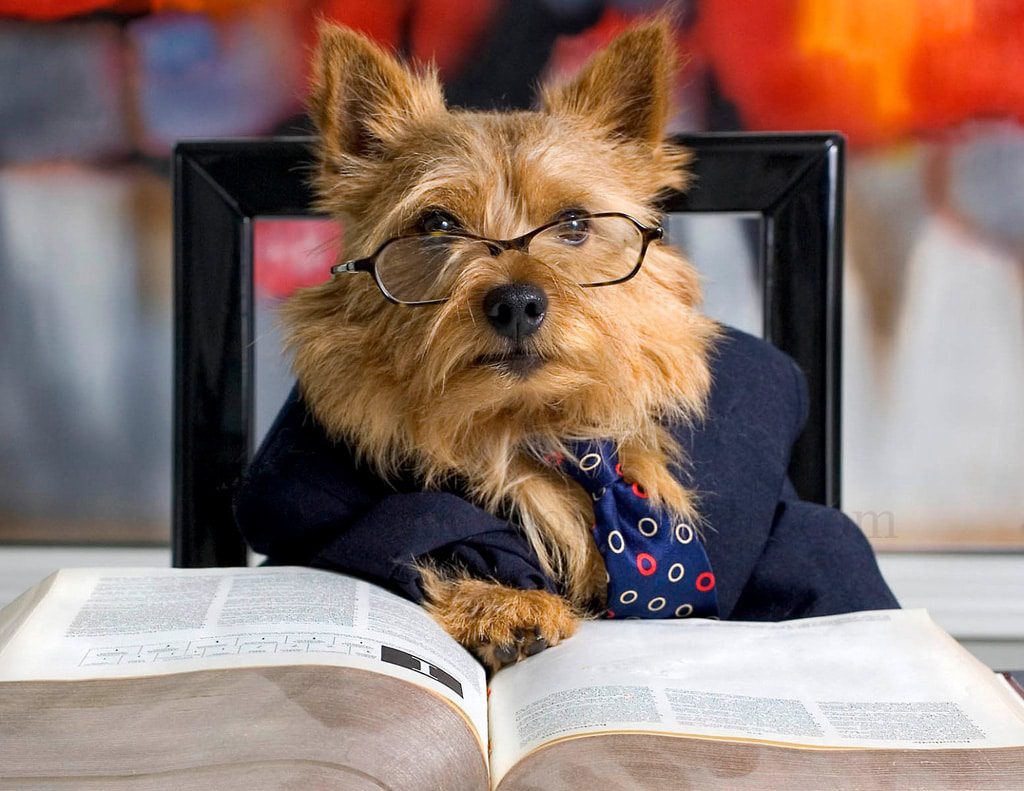
One of the reasons there are so many Terrier breeds is because many were created to measure for a given area or population.. The Norwich comes from the East Anglia of England, Cambridge University Headquarters. Like college students of any age, Cambridge students of the decade 1880 they thought it was a lot of fun betting on sporting events, including your dogs' mouseing skills. Los terrier, including those in yorkshire and ireland, they were bred to develop small red or black and tan dogs with a spirit of play. They were known as Terriers Trumpington.

A Trumpington named Rags, he was a stable dog near the city of Norwich, He had such a reputation as a buzzard that he had a profound influence on what would become known as Norwich Terrier. Rags and their descendants were crossed with other Terriers, including a small Staffordshire Terrier, and became known for a new skill: get foxes out of their burrows.

Since the 19th century there are documented sources that confirm the breeding of the Norwich Terrier. But, At that time there was also Norfolk Terrier, which is closely related to the Norwich Terrier. Back then it was considered the same race, nowadays they differ in insignificant points. Since the decade of 1960 the two races have been handled differently.

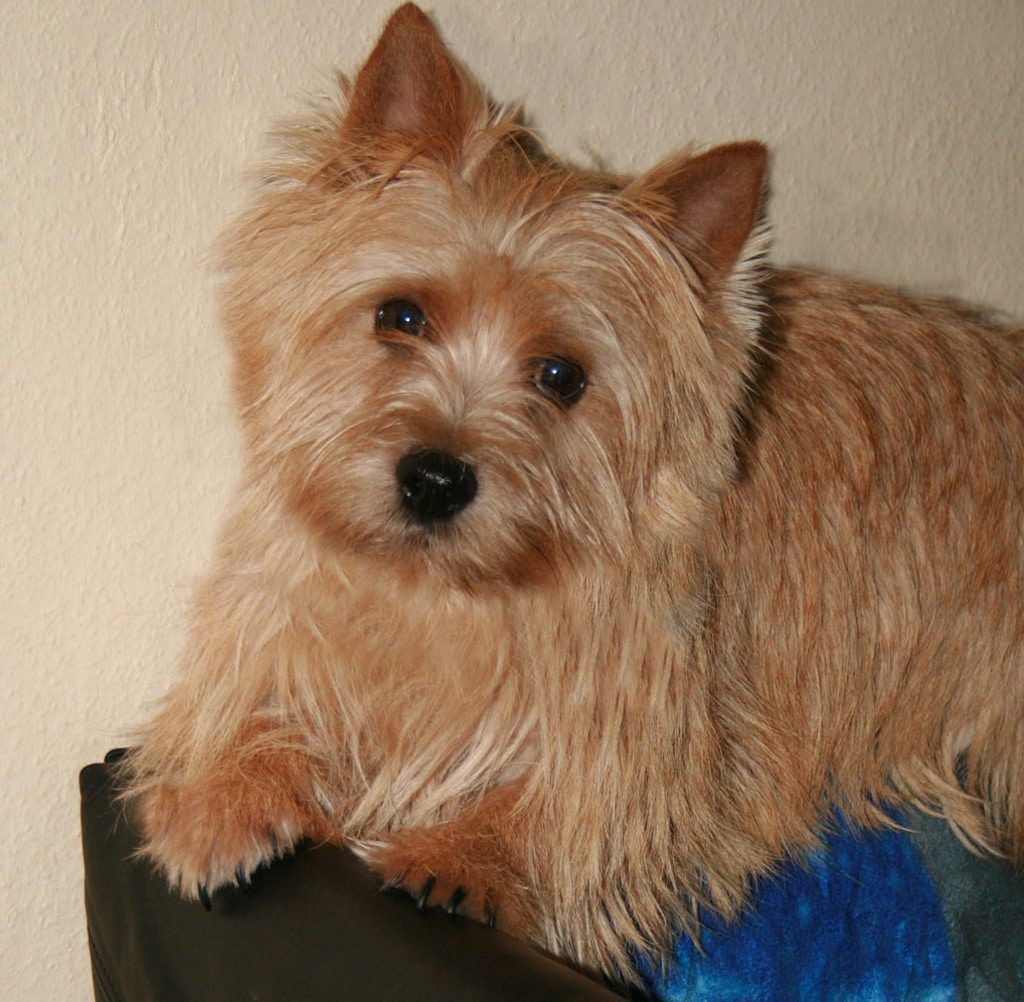
A particularly different trait is the ears, in the Norwich Terrier tend to be more upright, While in the Norfolk Terrier they are slightly bent. After many years of upbringing, you can see some character differences. The Norwich Terrier, for example, is considered more affectionate than the Norfolk Terrier. At that time animals were especially used as rat catchers and were often used on farms.

Physical characteristics

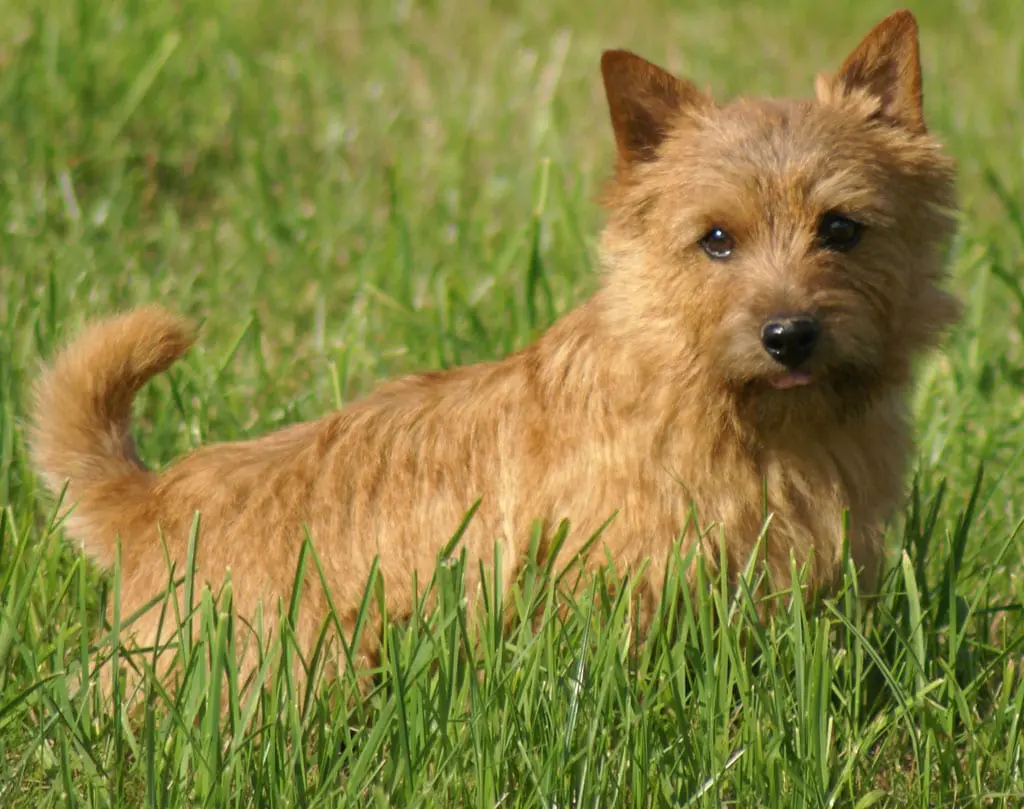
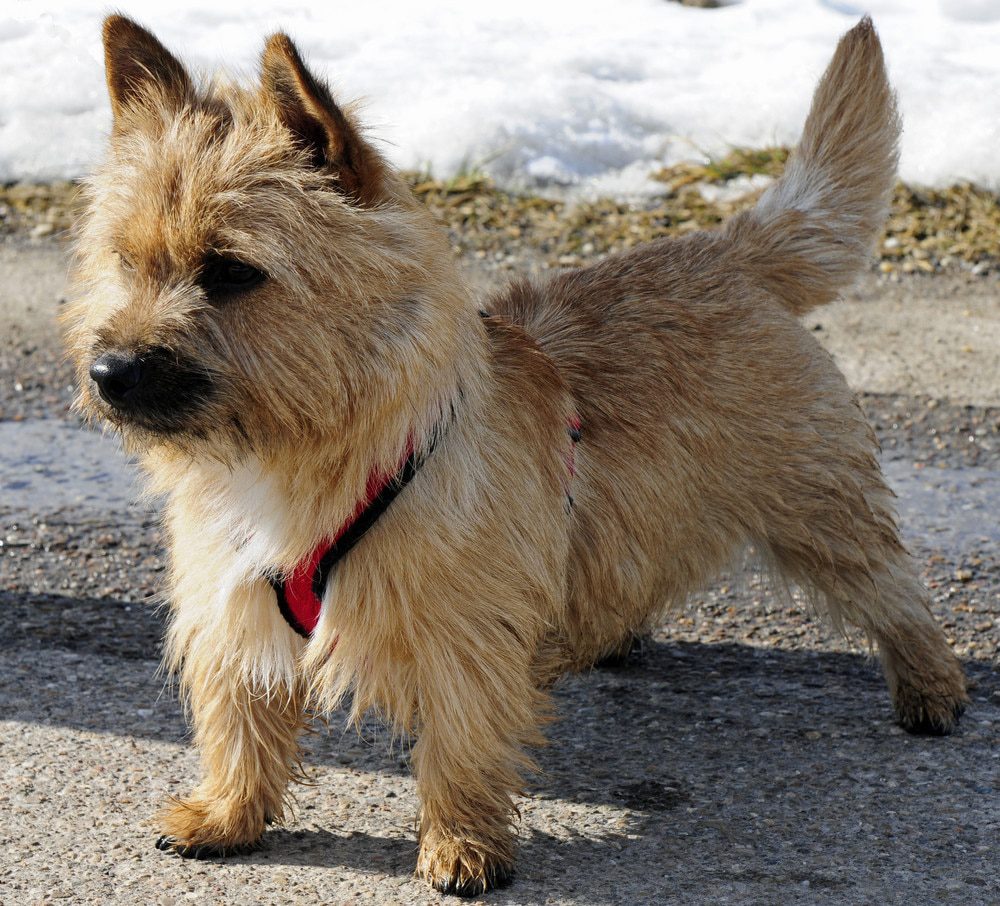
It is one the smaller Terrier its height is maximum 25 cm the cross and his weight is between 5 and 5.5 kg.

Recently on United States, There has been a great fraud with these dogs, they sold fake Norwich Terriers with pedigree, by Internet.

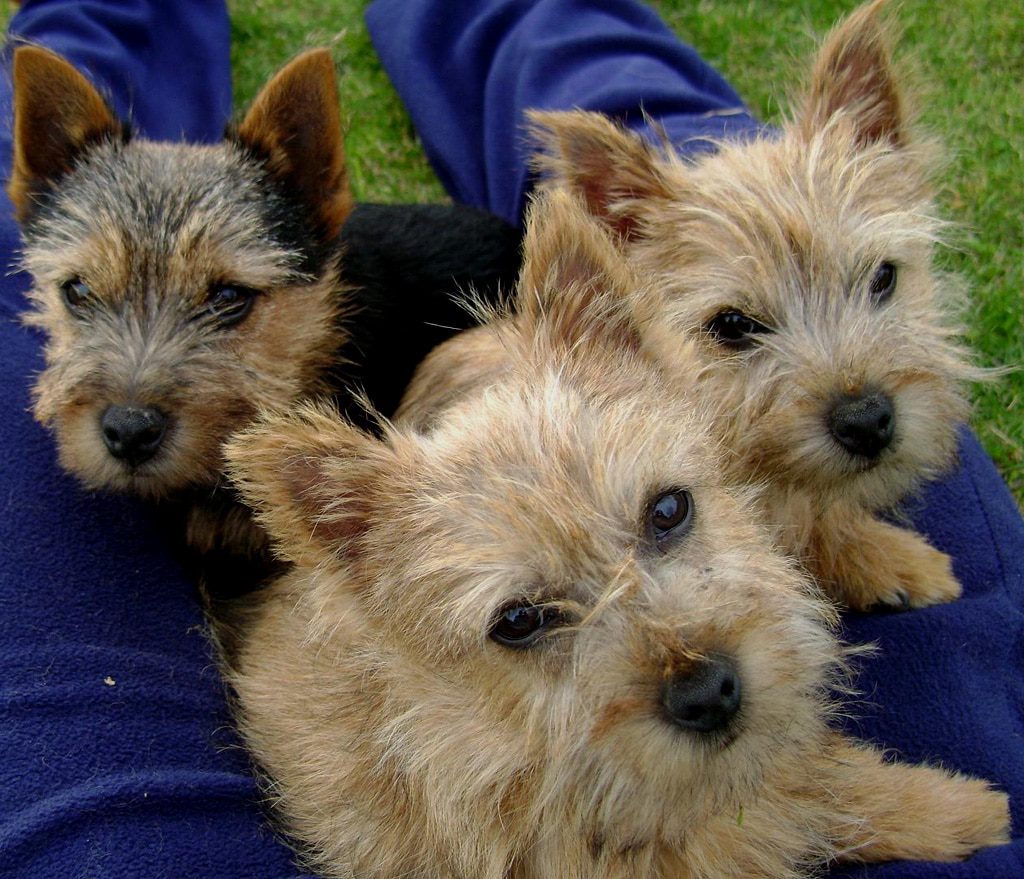
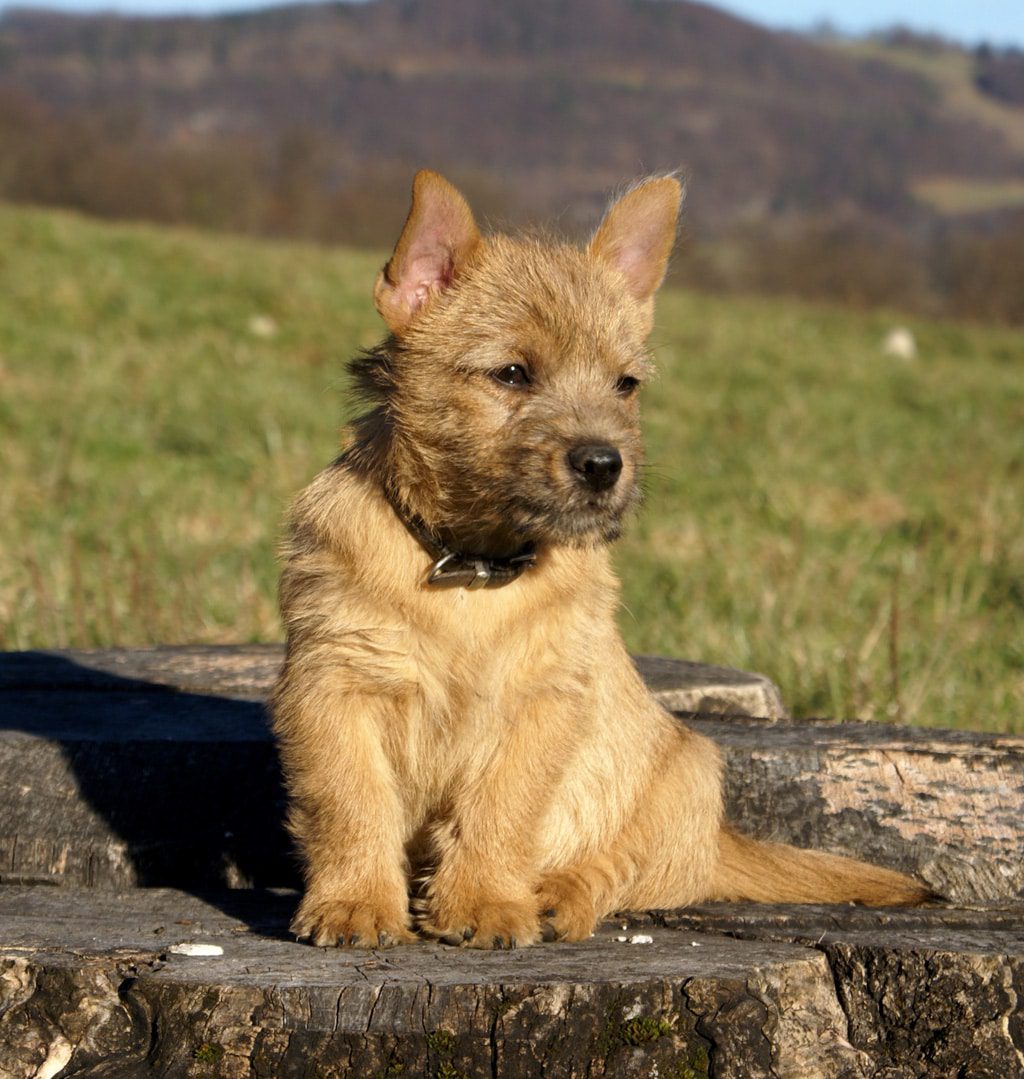
Son difficult to create because their births tend to be by caesarean section. His cloak is twofold and can be red, Red wheat, Black fire or salt and pepper (grey).

Norwich Terrier has a fur two layers, a foreign finish hard, rough and a warm and soft layer, attached to the skin.

Ideally, styling it once a week to remove the loose hairs killed.

As minimum, the hair should be stripped once in the fall and once in the spring.

Observations

The cut or Court it adversely affects the appearance of the natural colors of the layer and texture.

Character and skills

The Norwich Terrier, they have a character lively, joyful, loving and they are curious by nature.

One advantage is that they are not anti-social dogs or they tend to show aggressiveness.

They were originally bred to hunt burrowing animals but today they have become excellent companion animals..

These small but sturdy dog, brave, Smart and very loving. They were bred for chasing varmints and accompanied their owners farmers on horseback. A good daily walk is therefore, the minimum necessary to meet exercise requirements, and give a healthy lifestyle.

They are sensitive to the scolding, as the 100% Terrier. Much like family life, and very little loneliness. It is not meaningless ladrador, But if you notice something strange, It will be.

It is a dog that She loves children. They adapt perfectly to other pets.

The life expectancy the Norwich Terrier is 12 to 16 years.

Characteristics "Norwich Terrier"

Coexistence is important that you have with your new friend. Before considering the acquisition of a dog of the breed "Norwich Terrier" you know certain factors. Not all breeds of dogs are apt to live in an apartment, you must take into account his character, their need for exercise, their interaction with other pets, their care and if you have small children, their level of tolerance towards them.

Adaptation โ“˜

5,0 of 5 stars (based on 1 review)

friendly dog โ€‹โ€‹โ“˜

5,0 of 5 stars (based on 1 review)

hair loss โ“˜

2,0 of 5 stars (based on 1 review)

Affection level โ“˜

4,0 of 5 stars (based on 1 review)

Need for exercise โ“˜

4,0 of 5 stars (based on 1 review)

Social need โ“˜

3,0 of 5 stars (based on 1 review)

Home โ“˜

4,0 of 5 stars (based on 1 review)

Toilet โ“˜

3,0 of 5 stars (based on 1 review)

Friendly with strangers โ“˜

2,0 of 5 stars (based on 1 review)

barking โ“˜

4,0 of 5 stars (based on 1 review)

Health โ“˜

2,0 of 5 stars (based on 1 review)

Territorial โ“˜

3,0 of 5 stars (based on 1 review)

Cat friendly โ“˜

4,0 of 5 stars (based on 1 review)

Intelligence โ“˜

4,0 of 5 stars (based on 1 review)

Versatility โ“˜

2,0 of 5 stars (based on 1 review)

Child friendly โ“˜

4,0 of 5 stars (based on 1 review)

Surveillance โ“˜

4,0 of 5 stars (based on 1 review)

joy โ“˜

3,0 of 5 stars (based on 1 review)

Norwich Terrier Images

Norwich Terrier Videos

Type and recognitions:

  • FCI CLASSIFICATION:
  • Group :
  • Section : . .

Federations:

  • FCI – Terriers 2 Small sized Terriers. โ“˜
  • AKC – Terriers โ“˜
  • ANKC – Terriers โ“˜
  • CKC – Terriers โ“˜
  • โ€‹KC – Terriers โ“˜
  • NZKC – Terriers โ“˜
  • UKC – Terriers โ“˜

FCI breed standard "Norwich Terrier"

Origin:
United Kingdom

Date of publication of the valid original standard:
13.10.2010.

Use:

Terrier


General appearance:

One of the smallest terriers. It's a cunning dog, short limb, compact and strong, with good structure and skeleton. Honorable scars resulting from deterioration and natural tears should not be unfairly penalized.


Behavior / temperament:

One of the smallest ground dogs. Loving but not quarrelsome, tremendously active and robustly built. Cheerful and brave.

Head:

---

Cranial region:
  • Skull: Wide and slightly rounded, with good width between the ears.
  • Depression links (Stop): Well defined.

facial region:

  • Snout: Strong and wedge-shaped (its length is less than a third of the distance measured from the occipital to the base of the naso-frontal depression).
  • Lips: Glued.
  • Jaws / Teeth: Strong and sharp jaws. Pretty big teeth, strong, with healthy teeth, complete and scissor bite, that is to say, that the inner face of the upper incisors is in close contact with the outer face of the lower incisors; the teeth should be set at right angles in the jaws.
  • Eyes: relativelysmall, oval-shaped, dark, full of expression, bright and lively.
  • Ears: erect, placed well apart on the skull. Medium-sized and pointed. When the dog is excited he carries them perfectly erect and can throw them back when he is not attentive.

Neck:

Strong and of good length, in proportion to the overall balance of the dog, and it descends harmoniously towards the well inclined shoulders.

Body:

Compact

  • top line: Level.
  • Back: Short
  • Pork loin: Short.
  • Breast : Long, well-rounded chest. With good depth.

Tail:

Previously optional tail amputation.
  • Medium amputation: High implementation, completing a perfectly level dorsal line. Carried upright.
  • Without amputation: Tail of moderate length to give the dog a general balance, thick at the base and is tuned toward the tip, as straight as possible, live, but not too happy, completing a perfectly level dorsal line.


Tips

PREVIOUS MEMBERS:

  • Elbows: Glued to the body.
  • Forearm: Short limbs, powerful and straight.
  • Metacarpus: Firm and straight.
  • Previous feet: Round, with thick, cat-like foot pads. Headed straight forward when the dog moves or stands.

LATER MEMBERS:

  • General appearance: Widths, strong and muscular.
  • Knee : good angulation.
  • Metatarsus: Hockslowered with great pushing capacity.
  • Hind feet: Round, with thick, cat-like foot pads. Headed straight forward when the dog moves or stands.

Movement:

The forelimbs should move forward in a straight line when the dog is moving.; the hind limbs follow the tread of the forelimbs; hocks are parallel and flex to show pads.

Mantle

  • Fur: Lasted, rough texture, straight and close to the body, with a dense undercoat. Longer and rougher at the neck forming a collar that frames the face. The hair on the head and ears is short and straight, except for slight eyebrows and a mustache.
  • Color: All shades of red, wheat, black and Tan or grey. Stains or white markings are undesirable.


Size and weight:

The ideal height to cross is between 25 cm..


Fouls:

Any deviation from the aforementioned criteria is considered as a fault and the severity of this is considered to the degree of the deviation to the standard and its consequences on the health and well-being of the dog..

FALTAS DESCALIFICANTES:

  1. Aggressiveness or extreme shyness.
  2. Any dog โ€‹โ€‹showing clear signs of physical or behavioral abnormalities must be disqualified..


N.B.:
  1. Males should have two normal-appearing testicles fully descended into the scrotum..
  2. Only functionally and clinically healthy dogs, with the typical conformation of the breed, should be used for parenting.

The latest changes are in bold.

TRANSLATION: Brรญgida Nestler / Original version: (IN) Technical supervision: Miguel Angel Martinez

Source: F.C.I - International Cynological Federation

Alternative names:

1. Norwich (English).
2. Norwich (French).
3. Norwich (German).
4. Norwich (Portuguese).
5. Terrier de Norwich (espaรฑol).

โ–ท The world of Pets: Dogs, cats, birds, reptiles, amphibians

Parson Russell Terrier
Inglaterra Estados Unidos FCI 339 . Large and medium sized Terriers
Parson Russell Terrier

The Parson Russell Terrier is a fearless dog, very happy, energetic and friendly.

Content

History

The Parson Russell Terrier it is a small to medium sized terrier. It's a hunting dog.

Although this breed of dog is very young in modern dog breeding, the Parson Russell Terrier is very close to the old and classic type of a terrier in character and appearance. Terriers form a large group within dogs. Its name is derived from the Latin ยซTerraยป for the earth. So they were dogs for work on the land. The first evidence is given by the ancient Romans. Already in the Middle Ages terriers are described in detail. His homeland is in the British Isles. Terriers existed throughout the country. In the stables they kept small vermin at bay. Even the big rats were not a problem for them. The hens, pigeons and rabbits protected them from martens and foxes. To keep chasing foxes, the terriers were sent to the trench.

The Parson Russell Terrier of today are made exactly for this purpose. They should and could get the fox out of the hole. At the same time, they had to run with the fox hunts in the pack, that is to say, they had to be able to follow the gallop of the hunt. All of these tasks require enthusiastic commitment, special courage, independent thinking and the so-called sharpness of predators.

The Parson Russell Terrier turned into a versatile hunting dog, it's not only suitable for underground work. In the 19th century the English shepherd Jack Russell he was a successful hunter, rider and above all breeder of Fox Terriers. In his long life as a breeder he greatly increased the performance of the Fox Terrier. They were now fit for all individual hunting tasks, they could work in the pack and in the den at the same time.

In Australia, only with the help of their dogs could a plague of foxes be contained. To thank this, these dogs were finally named after their breeder, the Parson ยซJack Russellยป Terrier. They were and are physically and mentally raised for work, no show dogs. So breeders and lovers of this terrier for a long time refused to join the system of modern pedigree dog breeding., because they did not want to see dogs evaluated primarily on their appearance and feared the negative consequences of the show business on the fitness and health of dogs. This has done this breed of dog very well..

Seriously raised, these are dogs that were largely spared from hereditary diseases and extremes in breeding. He "Jack Russell Terrierยป had a wide range of sizes from the beginning, rather short-legged and rather tall. Since performance was decisive, such refinements had no role. Now two breeds of dog have been made from the ยซJack Russell Terrierยป and the two lines have separated in breeding. The little one is still called Jack Russell Terrier, It has a height at the withers of up to 30 cm and is provided a little longer. The Parson it is a little taller and with more legs and in its rather square shape. Parish is another word for "pastor" in English.. So two breeds of dog are named after one person, el pastor Jack Russell. Both dogs are a credit to the Shepherd. In 2001 the new race Parson Russell Terrier was officially recognized.

Physical characteristics

The Parson Russell Terrier It is suitable for the working dog, Active, agile, built for speed and endurance. It gives the impression of balance and flexibility as a whole.

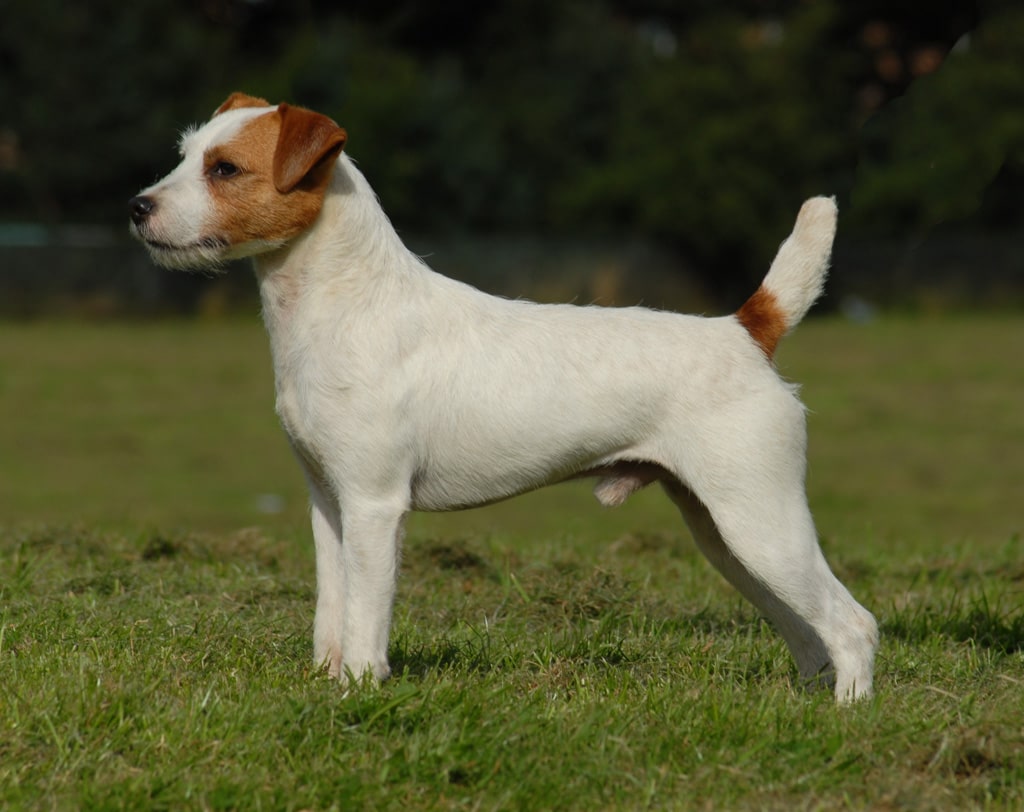
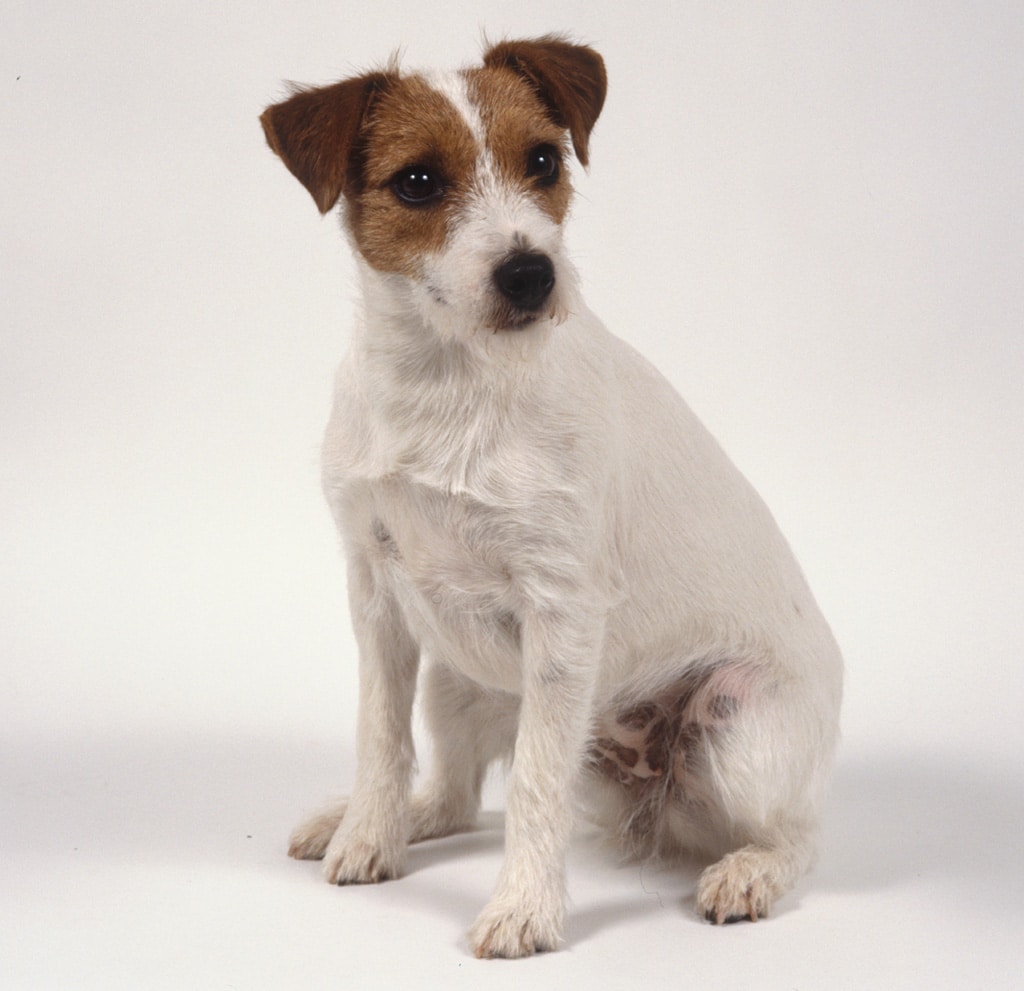
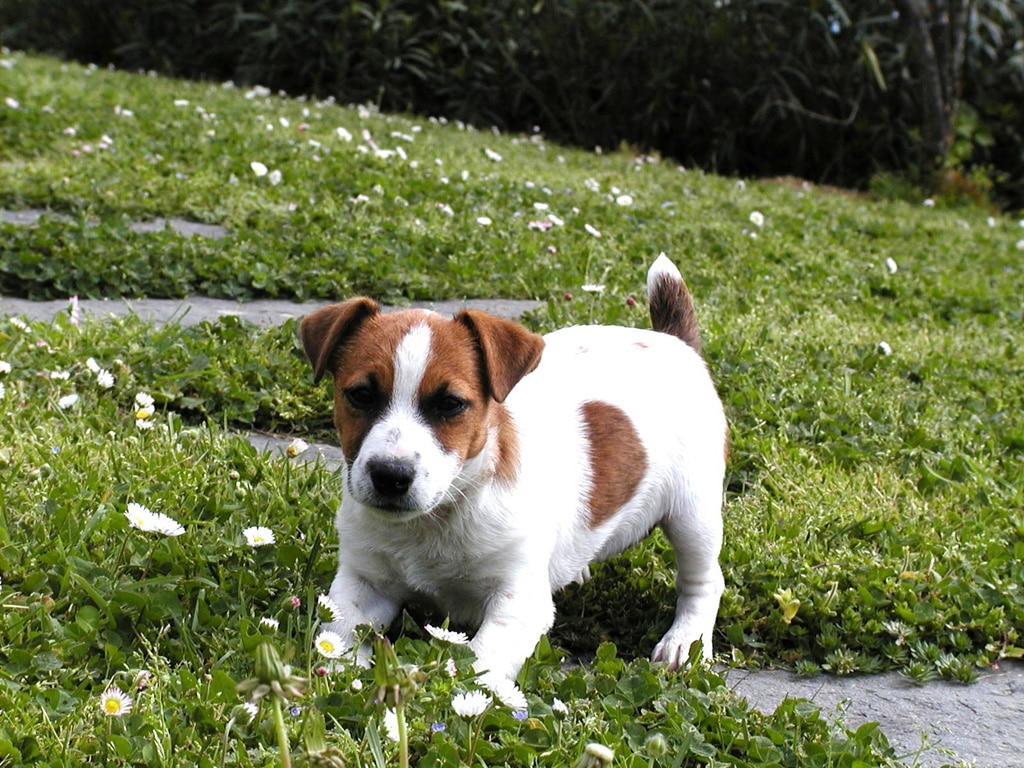
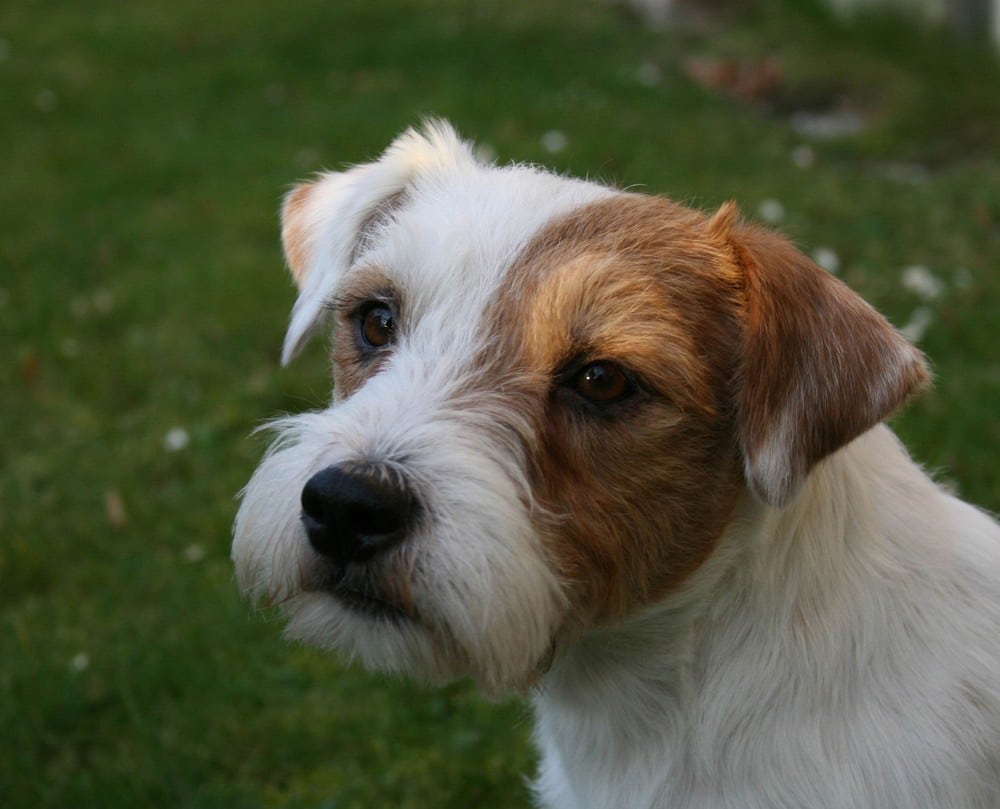
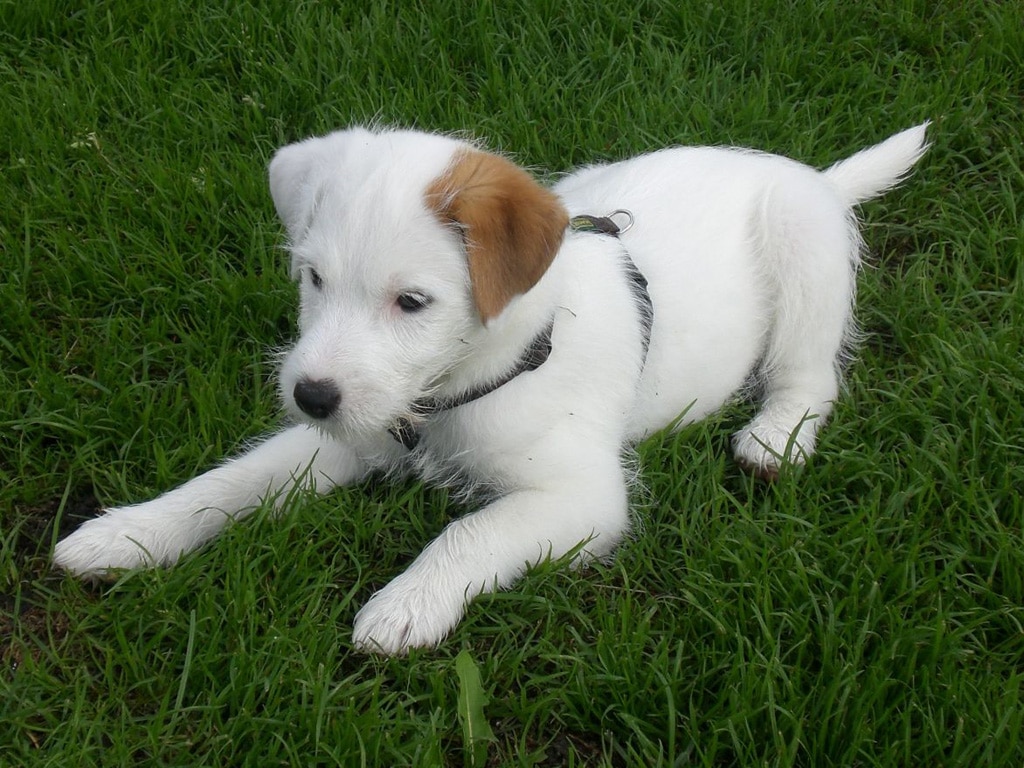
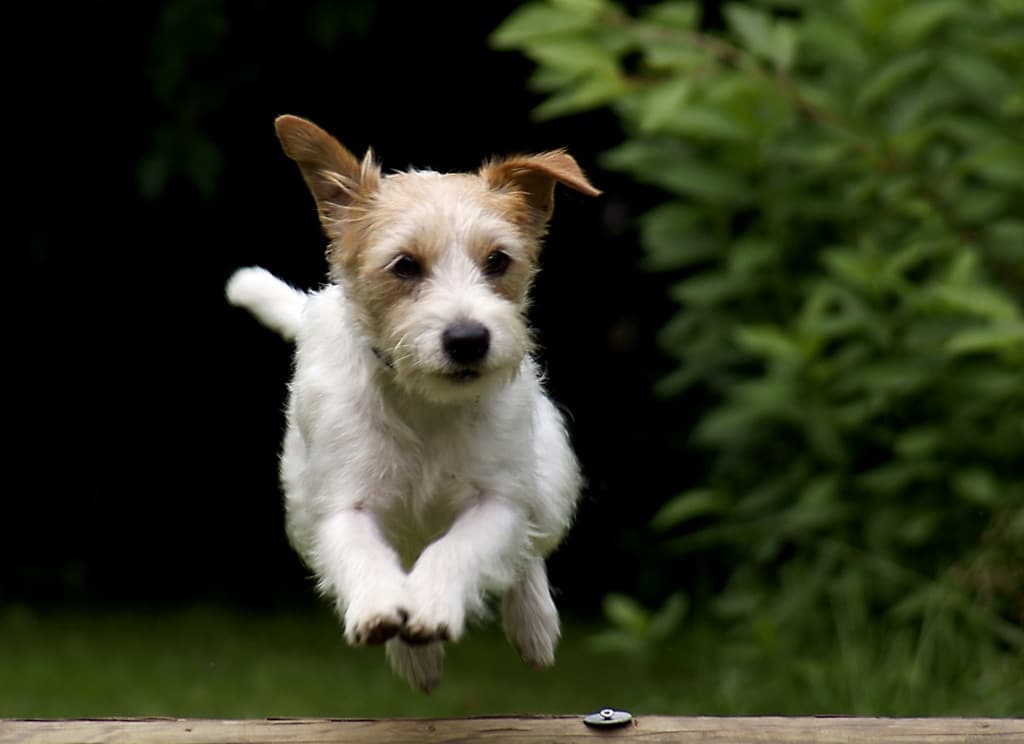
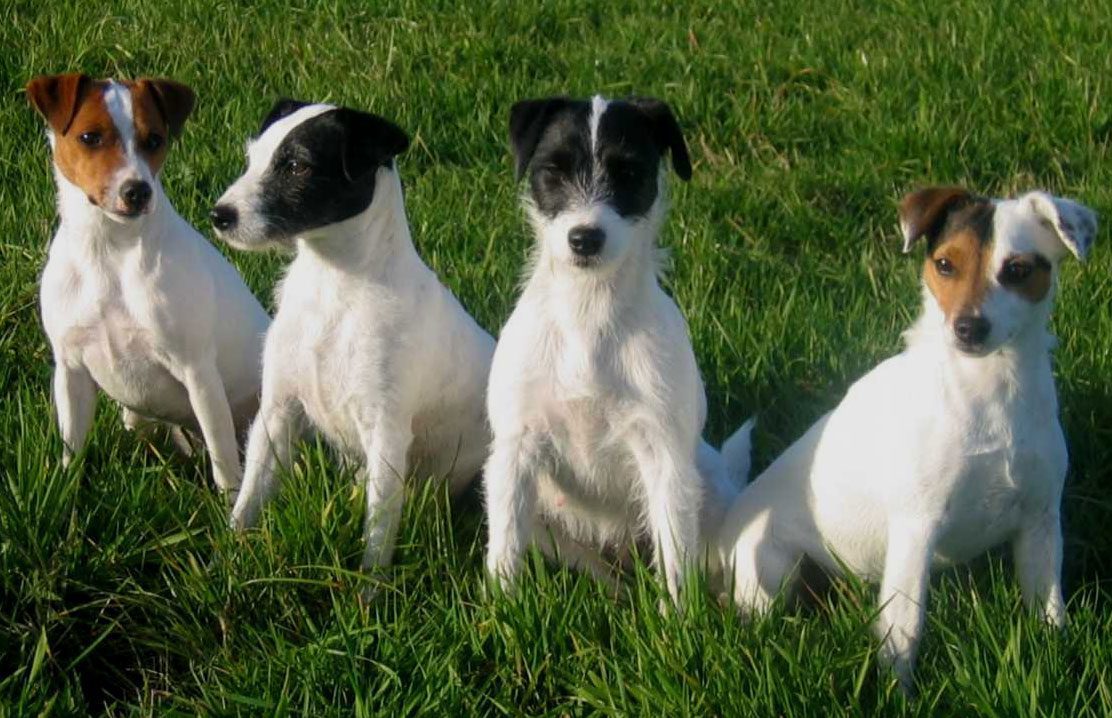
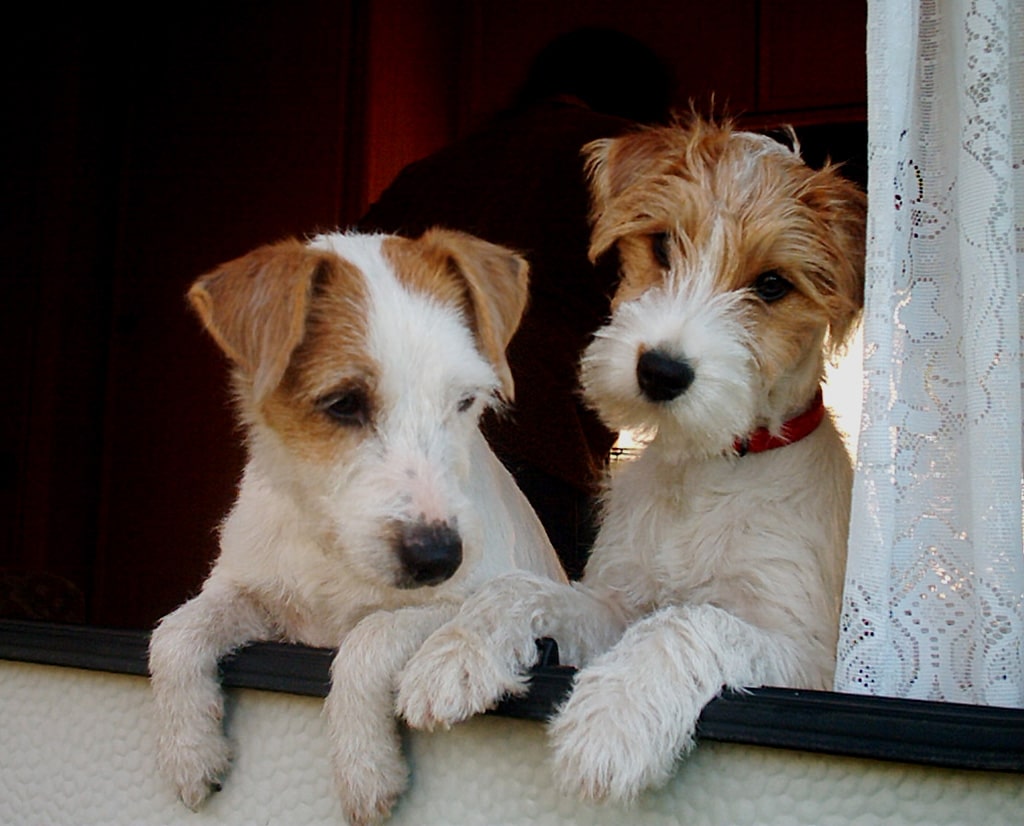
You can have hair smooth or hard if it is thick and dense to protect it from the inclement weather, like cold and damp. Its color It can be entirely white or predominantly white with brown spots, lemon or black or any combination of these colors, preferably stains should be limited to the head or the birth of the tail.

It measures to the cross between 33 and 36 cm., their weight approximate is of 8 to 10 kilos to be slightly larger in proportions that the version of the Jack Russell Terrier, although it should be noted that taller specimens exist as "Jack Russell" in some work clubs in the United Kingdom and the United States., due to what these clubs do not form part of the FCI and therefore, handle different to the recognized standard registers and accepted worldwide by the 84 member countries.

Character and skills

Parson Russell a fearless and friendly Terrier.

This breed was bred to hunt, Chase and corner foxes in its burrow, therefore, they carry in their genes, and if this activity does not form part of the life of your puppy, We recommend that, they should be exercised daily intensely since they are dogs with a huge dose of contained energy.

Perhaps its character lively and friendly has caused it to be one of the dog breeds preferred by many people as a pet.

But in reality it is a true working dog and we should not forget that if a specimen of... becomes part of our family..

Leave running, ride a bike, launch frisbee or ball - and teach him to bring them back-, It will help to strengthen the bond between the Parson and his owner while it educates, enjoys and is exercised.

Images ยซParson Russell Terrierยป

Videos ยซParson Russell Terrierยป

Type and recognitions:

  • FCI CLASSIFICATION:
  • Group :
  • Section : . .

Federations:

  • FCI – Terriers 1 Large and medium-sized terriers. โ“˜
  • AKC – Terriers โ“˜
  • ANKC – Terriers (utility dogs) โ“˜
  • CKC – Terriers โ“˜
  • โ€‹KC – Terriers โ“˜
  • NZKC – Terriers โ“˜
  • UKC – Terriers โ“˜

FCI breed standard "Parson Russell Terrier"

Origin:
United States, United Kingdom

Date of publication of the valid original standard:
22.08.2017.

Use:

Working terrier with the ability to work underground.


General appearance:

Efficient, active and agile, without exaggerations. Built for strength and power with an overall appearance of balance and flexibility. Honorable scars are allowed.

IMPORTANT PROPORTIONS: Well balanced. The total length from the tip of the shoulders to the tip of the ischium slightly greater than the height at the withers to the floor. The length from the nose to the stop is somewhat shorter than from the stop to the occipital protuberance.


Behavior / temperament:

Originally a terrier bred to work with the fox. A confident dog, energetic and cheerful who has the ability and conformation to work on the ground. Bold and friendly.

Head:

Wedge shaped.

Cranial region:
  • Skull: Plano, moderately wide gradually tapering to the eyes.
  • Depression links (Stop): Bit strong.

facial region:

  • Truffle: black.
  • Jaws / Teeth: Powerful and well muscled jaws. Good sized teeth with a perfect, regular and complete scissor bite. I.e., The upper incisors cover the lower incisors in close contact and are set squarely in relation to the jaws..
  • Cheeks: Not prominent.

Eyes: dark, almond shape, never prominent. Lively and intelligent expression.

Ears: Size in proportion to the head. In the shape of a โ€œVโ€ falling forward. The tips of the ears should reach the level of the outer corner of the eyes. The fold should not be above the level of the skull. Canopy of moderate thickness.

Neck:

Cleansed, muscle, good length, gradually widening and well placed on the shoulders.

Body:

  • Back: Strong, straight and flexible.
  • Pork loin: Strong and slightly arched.
  • Breast : Moderately lowered, without extending beyond the elbows. Behind the shoulders should encompass the palm of an average hand. Ribs worn well back, not too arched or too flat.

Tail:

Previously the custom was to amputate the tail.
  • amputee: Long complementing the body but maintaining a good grip. Strong, straight, moderately high insertion, very tall in movement.
  • Without amputating: Moderately long and as straight as possible, giving a good balance to the dog, thick at the base tapering towards the tip. Moderately high insertion, very tall in movement.


Tips

PREVIOUS MEMBERS:

  • ApGeneral arience: Moderate width between forelimbs, well placed under the body.
  • Hormbros: Wide and sloping, well defined on the cross.
  • Brazo: As long as the shoulders and with such angulation that the extremities are placed well under the body, below the tip of the cross.
  • Antarm: Strong and straight without leaning in or out. Arm length should be slightly greater than body depth.
  • Elbows: Glued to the body working freely on the sides.
  • Metacarpus: Strong and flexible.
  • Pinis previous: Compact with firm pads, moderately arched fingers, never flat open, without leaning in or out.

LATER MEMBERS:

  • ApGeneral arience: Strong, muscle with good angulations.
  • Knee: Good angulation without exaggeration.
  • PinScheme: Well developed.
  • Ahock joint: Low placement.
  • Metatarsals: Parallels, giving a lot of propulsion.
  • Hind feet: Like the previous ones.

Movement:

Libre, movement covering the surface, without exaggeration. The steps must be of good length, never forced or high steps. Posterior provides a strong push. Well coordinated, right movement back and forth.

Mantle

SKIN: It should be thick and loose.

MANTLE

  • Fur: Rough, broken the naturally rough smooth, straight, smooth, tight and bushy with good undercoat. Weather resistant. Abdomen and lower line covered with hair. The prepared cloak (Trimming) it must seem natural, never cut.
  • Color: White or predominantly white with fire markings, lemon or black or any combination of these colors. The color is preferably limited to the head and / or base of the tail but slight marks are accepted on the body.


Size and weight:

Height to the cross:

  • Ideal in males: 36 cm.
  • Ideal in females: 33 cm.

It is more important to maintain correctness and balance taking into account that this terrier, bred to work with the fox, behind the shoulders should encompass the palm of an average hand.


Fouls:

Any deviation from the aforementioned criteria is considered a fault and its severity is considered to the degree of deviation from the standard and its consequences on the health and well-being of the dog and the dog's ability to perform its traditional task..

FALTAS DESCALIFICANTES:

  • Aggressiveness or extreme shyness.
  • Any dog โ€‹โ€‹showing clear signs of physical or behavioral abnormalities must be disqualified..


N.B.:
  • Males should have two normal-appearing testicles fully descended into the scrotum..
  • Only functionally and clinically healthy dogs, with the typical conformation of the breed, should be used for parenting.

TRANSLATION: Brรญgida Nestler / Original version: IN.

Technical supervision: Miguel Angel Martinez.

Source: F.C.I - International Cynological Federation

Alternative names:

1. Parson, Parson Jack Russell Terrier (English).
2. Parson Russell terrier (French).
3. Parson (German).
4. Parson (Portuguese).
5. Parson, Parson Jack Russell (espaรฑol).

โ–ท The world of Pets: Dogs, cats, birds, reptiles, amphibians

English mastiff
Inglaterra FCI 264 - Molosoids โ€“ Doge

Mastรญn Inglรฉs

The English mastiff He is extremely loyal and faithful to his family.

Content

History

The English mastiff It is a breed of dog of large size type trotting and English origin.

The history of this dog goes back to the year 55 to. c., time when the legions invaded Great Britain and to his surprise had to face an enemy that had two curious assistants, two dogs with striking characteristics.

One of them was strong and robust both body and members, with a large head and a short but powerful jaw.

That dog is possibly the ancestor of the Bulldog, and part of the current Bullmastiff.

The other dog had dimensions that were scary, looked more like a lion than a dog. This specimen was a direct descendant of the Mastiffs 'Asiriobabilonians' who had traveled to England by the Phoenicians five centuries before the Roman invasion.

Before this beanpole, the 'molossians of Epirus' which the Romans brought with them as their war dogs, they looked like Chihuahuas...

So once conquered 'Britain', the Romans, they expanded his army with several copies of those giant and fearful dogs who called "Pugnaces Britannici" and they used them, mainly in typical shows of the time...

They faced these dogs with huge wild beasts in the arenas of circuses, there they participated in bloody fights against bulls, bears and other dogs. As well, they were used as guardians of herds, bodyguard, protectors and companions.

The English Mastiff or Mastiff, is descended directly from those dogs.

A Mastiff arrived in America aboard the Mayflower, name of the ship that transported the so-called "Pilgrims" from England (United Kingdom), to the coast of what is today the United States of America, in the year 1620.

They were the first settlers, in settling on the coast of Massachusetts, forming the Plymouth Colony, and with them the English Mastiff.

There is documentary evidence that the English Mastiff first arrived in America on the Mayflower., but the standardization of the breed in United States did not occur until the end of the 19th century.

By the end of the second world war, the mastiffs were almost extinct in England. But, with the flow of imports of United States and Canada, the breed resurfaced and today its existence is not in any danger in England and has gained much popularity in North America..

Physical characteristics

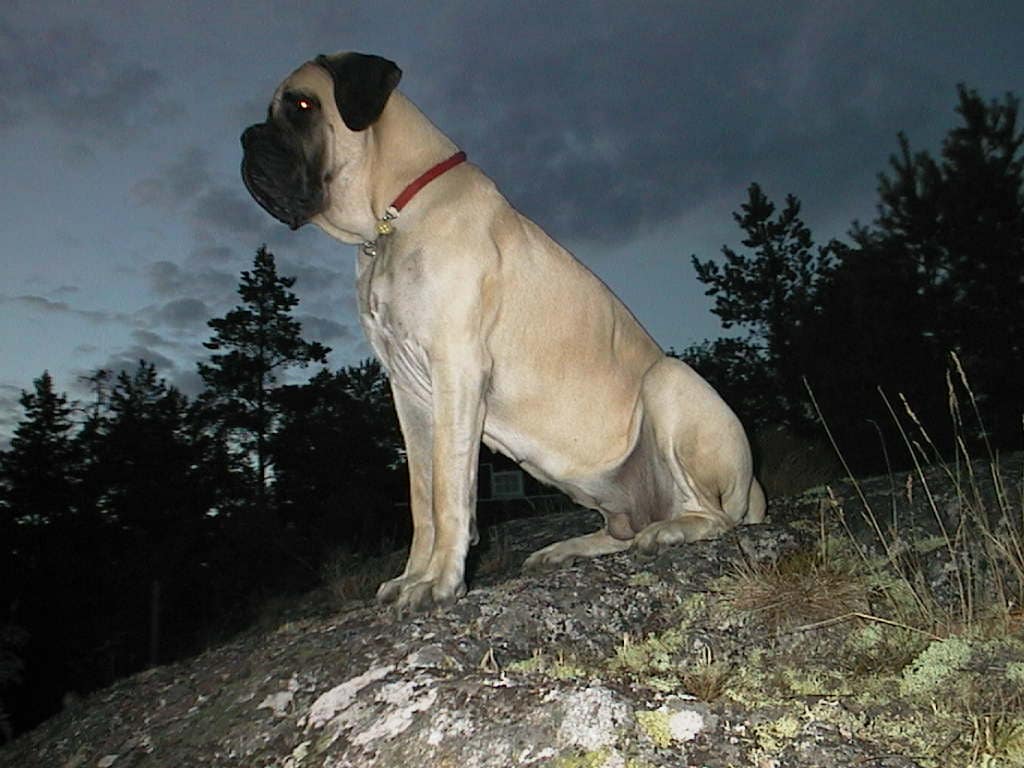
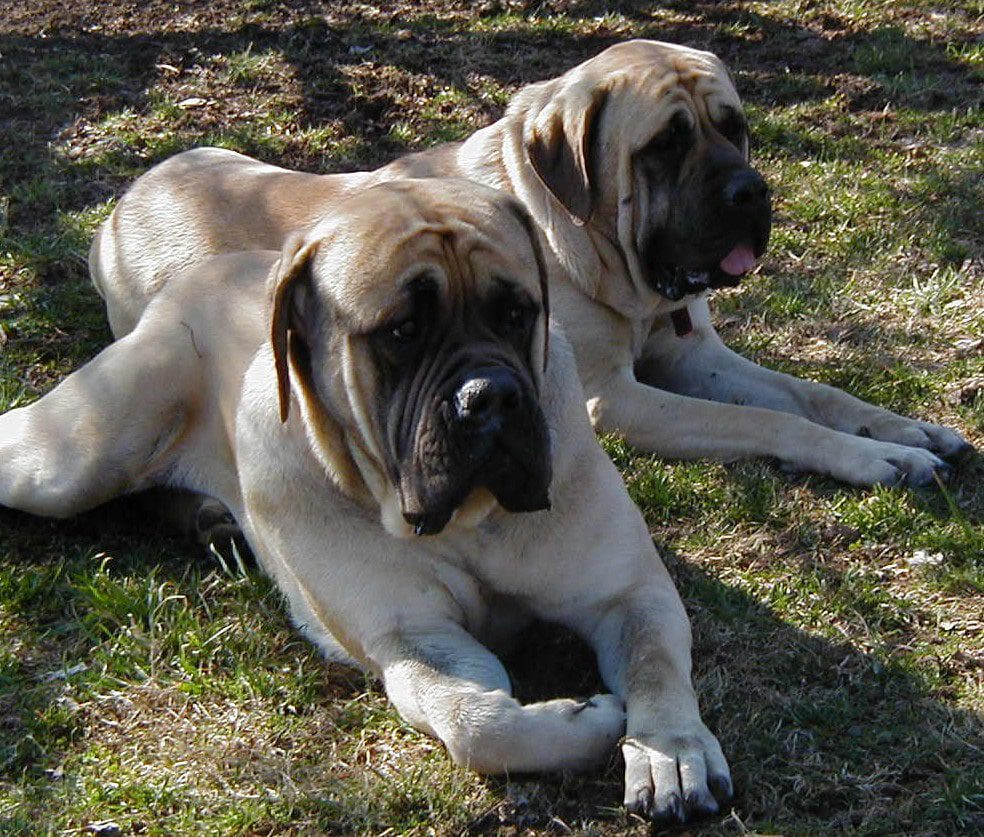
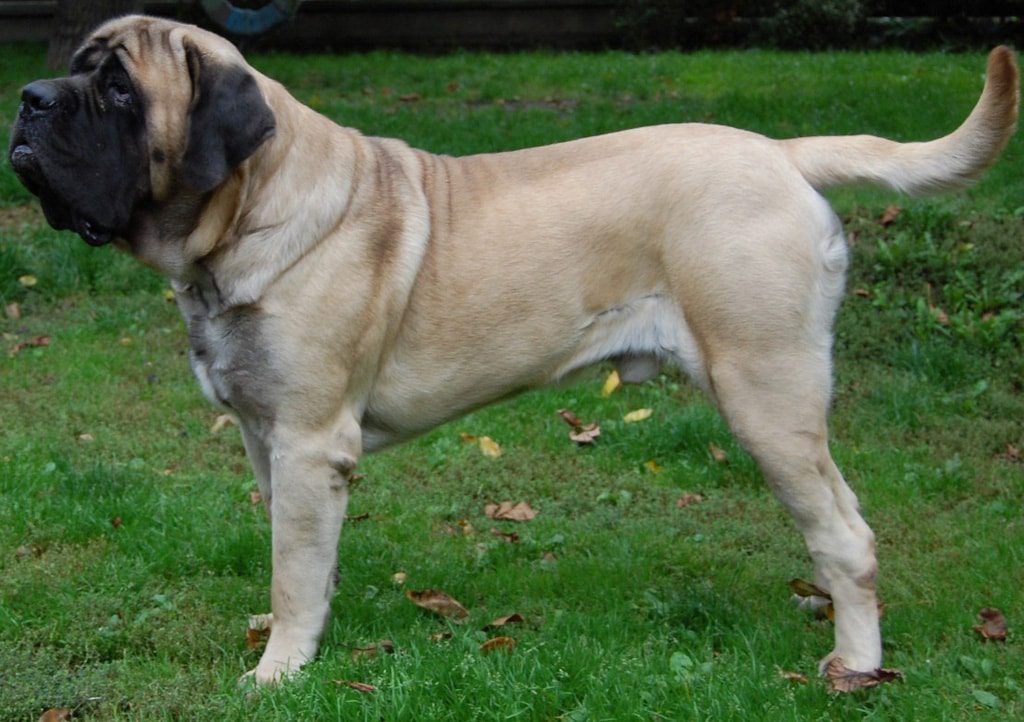
This is a race of powerful composition, burly, wide skull and the head usually has a square appearance.

Of size It must be very large and give the impression of power and strength, viewed from any angle. The body must be massive with great width and depth, especially between the Forelegs, cause these are well separated. While no height or weight have been specified for this race, the approximate height of 70 to 80 cm and the weight of 80 kg to 90 kg.

His hair is short and glued to the body and color may vary, while its snout, ears and nose, around the eyes is always black.

This is a particularly large dog that requires a correct diet and exercise. Normally live in 10 to 12 years.

Different colors are possible, for example, sand color, striped, brown or gray. Unfortunately the human tends to extremes and the mastiff was not spared from this.. So it has been raised bigger and heavier in recent decades.. His head has become increasingly massive and many folds have also been made. Giants could no longer reproduce naturally, they could no longer walk properly, his life expectancy was dramatically reduced.

Character and skills

Videos of the English Mastiff
Handsome English Mastiff
English Mastiff Samson Snaps Tree Branch!Lightbox for Video by VideoLightBox.com v1.11

The Mastiff breed is a combination of greatness, dignity, and bravery; calm and affectionate towards his owner, but capable of protecting.

He is a well-mannered dog but you need enough field to stretch his long body. It is an extremely loyal breed and, Although it shows no excessively, It is true to his family and is very good with children.

But, It can be very jealous for the protection of owners and should be handled sensibly, as it is exceptionally powerful and can be difficult to control.

Seeks proximity to its humans. It is a reliable protector for them. In case of acute threat to your humans, will try to keep danger away from them by facing the attacker with his body, but it won't attack him anymore. His calm and serene temperament makes him a loyal and child-friendly companion, who forgives everything. It gets along very well with other pets.

English Mastiff Education

Keep in mind that in an adult mastiff the leash is only symbolically a control. The mastiff easily has the power to maneuver the other end of the line at will.. But you don't want to do it, at least if you have enjoyed the basics of a good education. The Mastiff is very easy to train. Only their stubbornness has to be broken here and here a consistent softness is needed.. He wants to follow his master and caretaker and he does it very reliably. It is an elementary duty of the owner of a Mastiff to pay attention to a consequent education already in the puppy. This alone and not the strap makes wonderful walks in nature possible, that together with this four-legged friend become a balm for the soul of agitated people.

Care and health English Mastiff

Caring for a healthy mastiff is not problematic. Brushing the coat once a week is enough.

Typical diseases

Gigantism with copies of more than 90 kg, sometimes up to 120 kg, unbalances the entire natural dog building plan. Serious gait damage is just one consequence, and life expectancy is also greatly reduced. Bad habit of strong folding of the head and body often leads to chronic inflammations. As in most large dogs, we see hip or elbow dysplasia. Eye and heart disease can occur more frequently with mastiffs – the rule is always: the more serious, the greater the risk.

Nutrition / Food

You need a lot of high quality food. Especially in the growth phase you need a professional nutrition plan. It is helpful to have a feeding bowl in a high position to counteract the risk of stomach twisting. You should always pay close attention to their weight.

Characteristics "English mastiff"

Coexistence is important that you have with your new friend. Before considering the acquisition of a dog of the breed "English mastiff" you know certain factors. Not all breeds of dogs are apt to live in an apartment, you must take into account his character, their need for exercise, their interaction with other pets, their care and if you have small children, their level of tolerance towards them.

The life expectancy of the English Mastiff

Breeding errors, especially the tendency to gigantism, they have cost this dog, once extremely robust, many years of his life expectancy. Before they were 12, Today are 7 – 9 years.

Buy an English Mastiff

Buying a mastiff should be long-term and well-considered. You should carefully check if you have all the requirements to be able to spend many wonderful years with this giant.. If you are looking for a puppy, you must pay special attention that the dogs are not too massive. One should wonder about ancestors, its appearance, their illnesses, your age. Also to get a Mastiff with a stable character, you should just look directly at a serious breeder. For animal welfare reasons one should refrain from buying puppies from parents of more than 90 kg. Very occasionally there is also a mastiff in the animal shelter. Puppies raised in serious conditions cost around 2000 EUR.

Characteristics "English mastiff"

Adaptation โ“˜

5,0 of 5 stars (based on 1 review)

friendly dog โ€‹โ€‹โ“˜

3,0 of 5 stars (based on 1 review)

hair loss โ“˜

3,0 of 5 stars (based on 1 review)

Affection level โ“˜

5,0 of 5 stars (based on 1 review)

Need for exercise โ“˜

2,0 of 5 stars (based on 1 review)

Social need โ“˜

3,0 of 5 stars (based on 1 review)

Home โ“˜

3,0 of 5 stars (based on 1 review)

Toilet โ“˜

2,0 of 5 stars (based on 1 review)

Friendly with strangers โ“˜

3,0 of 5 stars (based on 1 review)

barking โ“˜

1,0 of 5 stars (based on 1 review)

Health โ“˜

4,0 of 5 stars (based on 1 review)

Territorial โ“˜

5,0 of 5 stars (based on 1 review)

Cat friendly โ“˜

5,0 of 5 stars (based on 1 review)

Intelligence โ“˜

3,0 of 5 stars (based on 1 review)

Versatility โ“˜

3,0 of 5 stars (based on 1 review)

Child friendly โ“˜

5,0 of 5 stars (based on 1 review)

Surveillance โ“˜

2,0 of 5 stars (based on 1 review)

joy โ“˜

5,0 of 5 stars (based on 1 review)

Images ยซEnglish Mastiffยป

ยซEnglish Mastiffยป Videos

Type and recognitions:

  • FCI CLASSIFICATION:
  • Group :
  • Section : . .

Federations:

  • FCI – Pinscher and Schnauzer-Molossoid type dogs – Swiss Mountain Dogs and Cattledogs. Section 2.1 Molossoid, mastiff type. โ“˜
  • AKC – Dogs working โ“˜
  • ANKC – Group 6 (utility dogs) โ“˜
  • CKC – Group 3 – Working dogs โ“˜
  • โ€‹KC – Working dogs โ“˜
  • NZKC – Utility dog โ“˜
  • UKC – Watchdog โ“˜

FCI breed standard "English mastiff"

Origin:
United Kingdom

Date of publication of the valid original standard:
13.10.2010

Use:

Defense and guard dog.


General appearance:

View from any angle, the head, in its outline it appears well square. Width is a sought after characteristic and the width of the skull is equal to two thirds of the total length of the head.

The body, width, alto, long and strong build. The limbs are well apart and in aplomb. The musculature is clearly drawn.

The size ishighly desiredbut onlyif it is on par with the build qualityand the correction is not maintained at all. Height and substance are two important points if they are correctly combined. Grand, powerful, well built.

IMPORTANT PROPORTIONS: The length of the body from the tip of the shoulders to the tip of the ischium is greater than its height at the withers.


Behavior / temperament:

Combination of nobility and courage. Take it easy, affectionate with their owners, but good guardian.Usually indifferent to strangers, shyness is unacceptable.

Head:

---

Cranial region:
  • Skull: The skull is wide between the ears. The forehead is smooth but wrinkles when the dog is attentive.. Eyebrows (supra-orbital arches) are slightly raised. The temporalis and masseter muscles are well developed. The cross section of the skull describes an arch. From the middle area between the eyes, a depression can be traced through the center of the forehead and extends to the middle of the skull., following the sagittal axis.
  • Depression links (Stop): Stop between the eyes well marked but not abrupt.

facial region:

  • Truffle: black. The nose, seen from the front, it is wide offering wide open nostrils and a profile view, it's flat (It is neither pointed nor retracted.).
  • Snout: The snout is short, width between the eyes, remaining this wide to the end of the nose.

The muzzle is truncated, that is to say, cut into square, Its anterior surface forms a right angle with the upper line of the snout., having a great width from the upper anterior border to the lower jaw. The length of the muzzle is equal to one third of the total length of the head. Muzzle circumference, measured at the midpoint between the eyes and the nose, represents three fifths of the head, measured in front of the ears.When is at rest, any exaggeration of folds or excess skin is unacceptable in adult dogs.

  • Lips: The lips are divergent, forming an obtuse angle in relation to the nasal septum (Septum). They are slightly hanging to offer a square profile.
  • Jaws / Teeth: The lower jaw is wide to the end. Healthy canines, powerful and well separated.Level incisors (bite clamp, edge to edge) or lower projection in front of the upper ones (reverse scissor bite) but never so much that they are visible with the mouth closed.
  • Cheeks: Well-developed temporal masseter and cheek muscles.

Eyes: Moderate size, well separated. Hazel eyes, as dark as possible. The conjunctiva not visible.Highly undesirable are the loose eyelids. Free from obvious eye problems.

Ears: Small, fine to the touch, well separated from each other.

High on the sides of the skull, in the form of prolonging the transverse upper profile. At rest, are placed flat adjacent to the cheeks.

Neck:

Slightly arched profile, medium length, very muscular. Its circumference is less around2,5 to 5 cm.of the head, measure in front of the ears.

Body:

  • top line: Level.
  • Back: Wide and muscular.
  • Pork loin: Wide and muscular, flat and very wide in females, slightly arched in males.
  • Breast : Chest width, deep and well descended in the sternal region. Ribs well arched and well rounded. False ribs are long and well developed towards the back of the chest.
  • Bottom line and belly: Flanks heavily lowered.

Tail:

High implanted, descending to the hocks or a little lower. Wide at birth and tapering to the extreme. Hangs right at rest, but in action it forms a curve, the end straightens; but it is never carried on the back.

Tips

PREVIOUS MEMBERS:

  • General appearance: Balanced and in harmony with the hind limbs.
  • Shoulder: They are slightly oblique, powerful and very muscular.
  • Arm: Slightly inclined, heavy and muscular. Elbows: Elbows are on the axis of the body.
  • Forearm: Strong Member, rights placed well apart, big bones.
  • Metacarpus: They are poised.
  • Previous feet: Large, roundand tight. Well arched fingers. black nails.

LATER MEMBERS:

  • General appearance: Very wide and muscular.Strength in the hind limbs is of utmost importance, cow hock in adult dogs is unacceptable.
  • Legs: Well developed.
  • Metatarsals: Angled hocks, well separated and always in aplomb both in season and on the move.
  • Hind feet: Large, roundand tight. Well arched fingers. black nails.

Movement:

Powerful with easy limb extension. Push from the rear, fluid, Right, steps covering the surface. Top line stays level during movement. The tendency to pasuqueo is undesirable. Absolute correction is essential.

Mantle

Fur: Short and flat on the body.But rough on the neck and shoulders.

Color: Tawny, apricot, or striped. In all cases the muzzle, ears and nose should be blackand the eyes are surrounded by blackextending upward.Excessive white color on the body is unacceptable, chest or feet.


Size and weight:

----


Fouls:

Any deviation from the aforementioned criteria is considered as a fault and the severity of this is considered to the degree of the deviation to the standard and its consequences on the health and well-being of the dog..

FALTAS DESCALIFICANTES:

  • Aggressiveness or extreme shyness.
  • Any dog โ€‹โ€‹showing clear signs of physical or behavioral abnormalities must be disqualified..


N.B.:
  • Males should have two normal-appearing testicles fully descended into the scrotum..
  • Only functionally and clinically healthy dogs, with the typical conformation of the breed, should be used for parenting.

The latest changes are in bold.

TRANSLATION: Brรญgida Nestler / Original version: (IN).

Technical supervision: Miguel Angel Martinez

Source: F.C.I - International Cynological Federation

Alternative names:

1. Mastiff, Old English Mastiff (English).
2. Old English Mastiff (French).
3. Old English Mastiff (German).
4. Mastiff inglรชs, Mastim inglรชs, Canis molossus, ะก. mastivus gladiator, Mastife inglรชs (Portuguese).
5. Old English Mastiff (espaรฑol).

โ–ท The world of Pets: Dogs, cats, birds, reptiles, amphibians

Old English Sheepdog (Bobtail)
Gran Bretaรฑaa FCI 16 . Sheepdogs

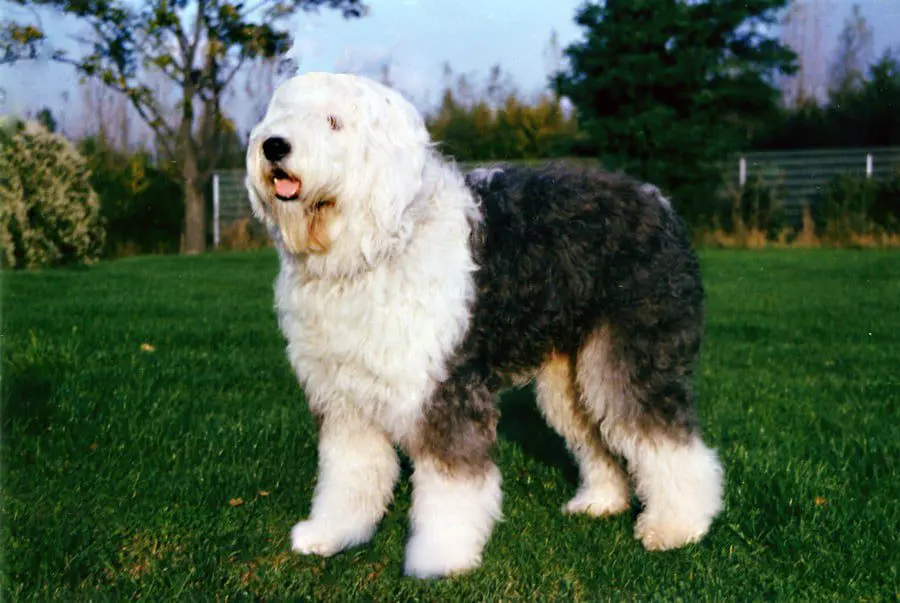
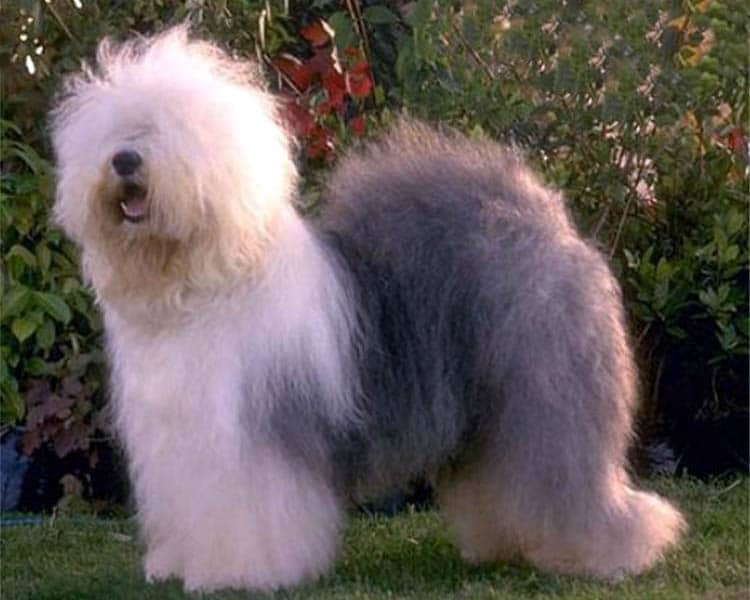
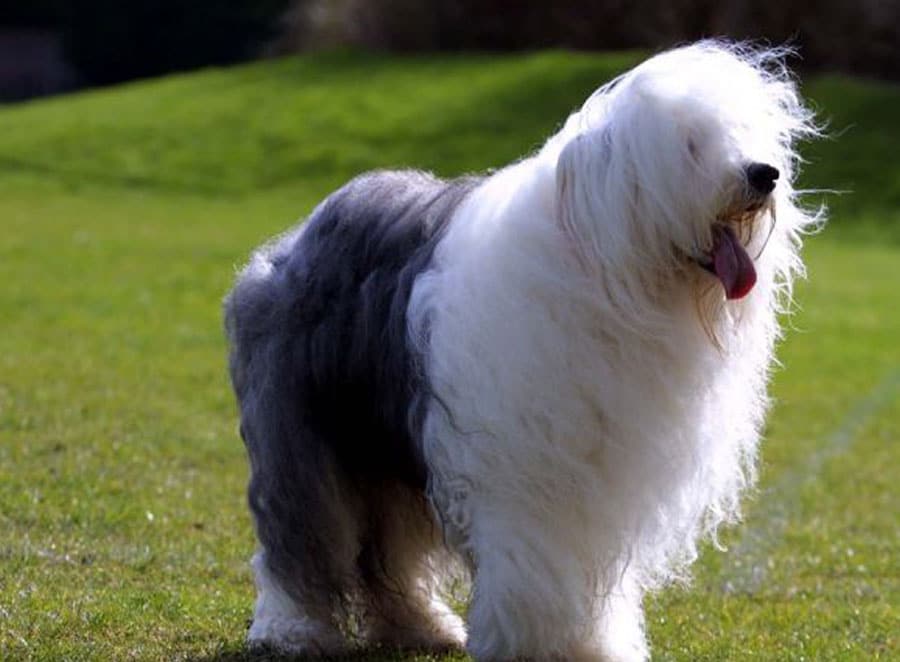
The Old English Sheepdog It is possibly the breed that needs the most care regarding its hair.

Antiguo Perro Pastor Inglรฉs

Characteristics "Old English Sheepdog (Bobtail)"

Coexistence is important that you have with your new friend. Before considering the acquisition of a dog of the breed "Old English Sheepdog (Bobtail)" you know certain factors. Not all breeds of dogs are apt to live in an apartment, you must take into account his character, their need for exercise, their interaction with other pets, their care and if you have small children, their level of tolerance towards them.

Content

Adaptation โ“˜

3,0 of 5 stars (based on 1 review)

friendly dog โ€‹โ€‹โ“˜

3,0 of 5 stars (based on 1 review)

hair loss โ“˜

5,0 of 5 stars (based on 1 review)

Affection level โ“˜

5,0 of 5 stars (based on 1 review)

Need for exercise โ“˜

3,0 of 5 stars (based on 1 review)

Social need โ“˜

5,0 of 5 stars (based on 1 review)

Home โ“˜

1,0 of 5 stars (based on 1 review)

Toilet โ“˜

5,0 of 5 stars (based on 1 review)

Friendly with strangers โ“˜

2,0 of 5 stars (based on 1 review)

barking โ“˜

4,0 of 5 stars (based on 1 review)

Health โ“˜

3,0 of 5 stars (based on 1 review)

Territorial โ“˜

5,0 of 5 stars (based on 1 review)

Cat friendly โ“˜

3,0 of 5 stars (based on 1 review)

Intelligence โ“˜

4,0 of 5 stars (based on 1 review)

Versatility โ“˜

3,0 of 5 stars (based on 1 review)

Child friendly โ“˜

5,0 of 5 stars (based on 1 review)

Surveillance โ“˜

3,0 of 5 stars (based on 1 review)

joy โ“˜

5,0 of 5 stars (based on 1 review)

History

The Old English Sheepdog or Bobtail. It is a breed of dog guard or shepherds dogs family.

The race was created in England, more specifically, in the west, in the mid-19th century, to control the sheep and beef cattle in the rural area. While the race is born and develops in England, there is more than one theory that explains its origin.

Some authors raised the breed descended from dogs brought from Central Europe by the Romans, that over time they were crossing with different English races, including the English mastiff giving rise to Old English Sheepdog.

Other scholars of the race stress that it is a very old dog and possibly his most significant ancestor is the famous Asian Shepherd What, It has helped the existence of the Berger de Brie in France, of the Bergamasco Shepherd in Italy, and of the Komondor in Hungary.

According to this second current, the first copies of Bobtail they were selected for the first time in an era marked by the savage rivalry between England and France, the Of the hundred years ' war (1337-1453).

Y, finally, they pose in their ancestors, appears with total security the Berger de Brie.

In addition to in England this dog took many acceptance and dissemination among the Spanish shepherds in the 19th and 20th centuries by their excellent conditions and skills for the care of livestock.

Physical characteristics

It is a dog great size and scale, with a height around the 63 cm.. and a weight between the 30 and 40 kg.

Small and floppy ears, coated with hair, strong and elongated neck, abundant hair desgreรฑado and rough touch, with a range of colors that can range from grey, grey, Blue to blue merle, with or without white markings on the head, bottom of the stomach or forelimbs.

The tail is often be amputated, or are there simply copies that are already born without it, hence its name Bobtail which in means ยซcut tailยซ, The search for this characteristic trait is believed to have been due to the desire of English breeders not to pay taxes., already before the dogs with tails were thought to be luxury goods. This dog has a very characteristic bark in the canine world, serious and pervasive.

Did you know??

There is no upper limit to the height of the Old English Sheepdog. Females usually measure 53 cm , the males 56 cm . That's because the sheep varied in size, so the dogs used to herd them they also varied in size.

Character and skills

Video "Old English Sheepdog (Bobtail)"

The Bobtail, tolerant character, It is an excellent dog for living together with children and other pets. They are able to easily adapt themselves to different conditions.. Faithful and intelligent It adapts to life in an apartment if necessary, always with the company of its owner. It is important to train it well from small, It is to learn fast and responsive dog.

The Old English Sheepdog he is a very good worker and is able to carry out orders, but it won't if the instruction if they believe that they are stronger minded than the human herd members.

They have a strong herding instinct and can treat the flock to shock people, never to bites. It is necessary to learn from an early age that humans are not part of his flock.
This dog is possibly the more care you need for your hair, that should be dealt with by canine professionals. As well, but to adapt to living in small spaces, you need a daily dose of exercise in the open air, because otherwise it could become destructive with the furniture in the house. Due to its thick coat is not a recommended race to live in warm places.

Health

The Bobtail have a predisposition to certain skin conditions:

– atopy ;
– demodecy;
– Furunculosis bacteriana (in the legs).

Life expectancy

13 years

Grooming

The maintenance of "Old English Sheepdog (Bobtail)" it is tedious due to its fur. Grooming is recommended every 4 or 6 weeks, otherwise shearing is inevitable.

Images ยซOld English Sheepdogยป

โ€œOld English Sheepdogโ€ Videos

Home Again Chip saves Texas Old English Sheepdog

Type and recognitions:

  • FCI CLASSIFICATION:Group 1 –> Pastor and Boyeros dogs (except Swiss Cattle Dogs). – Section 1 –> Pastor dogs. Without working trial.
  • FCI 16
  • Federations: FCI โ“˜, AKC โ“˜, ANKC โ“˜, CKC โ“˜, โ€‹KC โ“˜, NZKC โ“˜, UKC โ“˜

FCI breed standard "Old English Sheepdog (Bobtail)"

Origin:
United Kingdom

Date of publication of the valid original standard:
13.10.2010

Use:

Shepherd dog.


General appearance:

It is a strong dog, symmetric, square, very harmonious construction and robust constitution. Absolutely no weakness in the limbs. Completely covered in abundant hair. He is a muscular dog, solid and with a very intelligent expression. Natural shapes should not be artificially modified using scissors or shearing machines.. Of great vitality, presenting a slightly ascending upper line and, seen from above, a pear-shaped body. Has a typical sway when walking with an ambling gait or with a normal gait. His barking has a characteristic timbre.


Behavior / temperament:

It is a docile dog with a good character. Bold, fell, and trustworthy. Not in any way fearful or aggressive if not provoked.

Head:


Cranial region:
  • Skull : Bulky and square in shape. The supra-orbital region is well arched.
  • Depression links (Stop) :  Well defined.

facial region:

  • Truffle : Large and black. The nostrils are wide.
  • Snout :  Strong, square and truncated,
  • Jaws / teeth : Strong teeth, large and well placed. Scissor bite : The jaws are strong and articulated in a perfect scissor shape., regular and complete, that is to say, that the upper incisors cover the lower ones in close contact and are set square in relation to the jaws. Pincer bite is tolerated but undesirable.
  • Eyes :  Separate. Dark-colored eyes or gazey eyes. The two blue eyes are admitted. Light eyes are a flaw. Pigmented eye rim will be preferred.
  • Ears :  Small and stuck to the sides of the head,

Neck:

Good length, strong and gracefully arched.

Body:

Rather short and compact.

  • Pork loin : Very robust, wide and slightly arched.
  • Breast : Well lowered and wide. The ribs are well sprung.

Tail:

Previouslycustom wasamputate the tail or naturally borntailless.
  • amputeeUsually completely amputated.
  • Without amputating : natural size. With good fringes and abundant hard-textured hair.


Tips

Former members
  • Shoulder : The scapulae should be well oblique, more  closer in the area of รขโ‚ฌโ€นรขโ‚ฌโ€นthe cross than in the shoulders. Loaded shoulders are undesirable.
  • Elbows : Tight to the chest.
  • Forearm: Perfectly straight forelimbs ; his skeleton is very strong, holding the body so that it is not close to the ground.
  • Previous feet: They must not be turned either inwards or outwards. They are small and tight. Well arched fingers, thick and solid ear pads.
Former members
  • General appearance: The posterior third is well covered with hairs, round and muscular.
  • Knee : Well angled, but without exaggeration
  • ;Leg : Long and well developed.
  • Hock : Well descended.
  • Metatarsus: Seen from behind, they must be perfectly straight.
  • Rear foot: They must not be turned either inwards or outwards. They are small and tight. Well arched fingers, thick and solid ear pads.
  • Movement:

    When walking, the rear one sways like a bear. At a trot, the extension is easy and the drive given by the rear is powerful. The members move in planes parallel to the axis of the body. Very elastic canter. In slow movements, certain dogs may have a tendency to walk at a walking pace. In motion, the dog may adopt a naturally lower head stature.

    Mantle

    • Fur : Abundant, very rough in texture ;  it is not smooth, but hirsute and free of loops. The undercoat is waterproof. The head and skull are well covered with hair. Ears are moderately covered. Neck well covered, as well as the anterior limbs, especially their surroundings. Hair is more abundant in the posterior third than in the rest of the body. Quality should be given more importance, to hair texture than to length andabundance.
    • Color : Any shade of gray, grayish or blue. The body and posterior third are uniform in color, with or without small white spots on the extremities of the limbs (socks). White spots in solid color areas should be rejected.  The head, the neck, forelimbs and lower belly should be white, with or no stains. Any brown hue is undesirable.


    Size and weight:

    Height to the cross

    • Males:    61 cm ,
    • females:   56  cm .

    The type and balance of shapes are of utmost importance and should not, in no case, be slaughtered for the carving.


    Fouls:

    Any deviation from the aforementioned criteria is considered a fault and its severity is considered to the degree of deviation from the standard and its consequences on the health and well-being of the dog and the dog's ability to perform its traditional task..

    disqualifying fouls
    • Aggressive or fearful dog
    • Any dog โ€‹โ€‹showing clear signs of physical or behavioral abnormalities must be disqualified..


    N.B.:

    Males should have two normal-appearing testicles fully descended into the scrotum..

    The latest changes are in bold.

    Source: F.C.I - International Cynological Federation

    Alternative names:

    1. Shepherd’s Dog, bob-tailed sheep-dog, Bob-tail, Bobtail (English).
    2. Chien de berger anglais ancestral (French).
    3. Stummelschwanz, Schรคferhund, Altenglischer (German).
    4. Old english sheepdog, Ovelheiro-inglรชs (Portuguese).
    5. Antiguo pastor inglรฉs, Bobtail (espaรฑol).

    โ–ท The world of Pets: Dogs, cats, birds, reptiles, amphibians

    The Collie and its different lines

    El Collie y sus diferentes lรญneas

    Content

    Meaning of the term Collie

    The term Collie It refers to many dog breeds that have originated in Scotland and Northern England. The exact origin of the name is unknown. It is possible that it comes from:

    • The term 'Colโ€™ o โ€˜Collโ€™ from Old Scots meaning โ€˜blackโ€™.
    • Or from English'coalโ€™: 'Coal'.
    • As well, It is possible that it is a deformation of the word Colley It was as they called the sheep (face and Black-legged), These dogs pastoreaban.
    • The Anglo-Saxon regional term collie, which means '[thing] usefulโ€™.
    • So it has been called in several ways: Coll, colly, collie, Colley, Pastor of Scotland

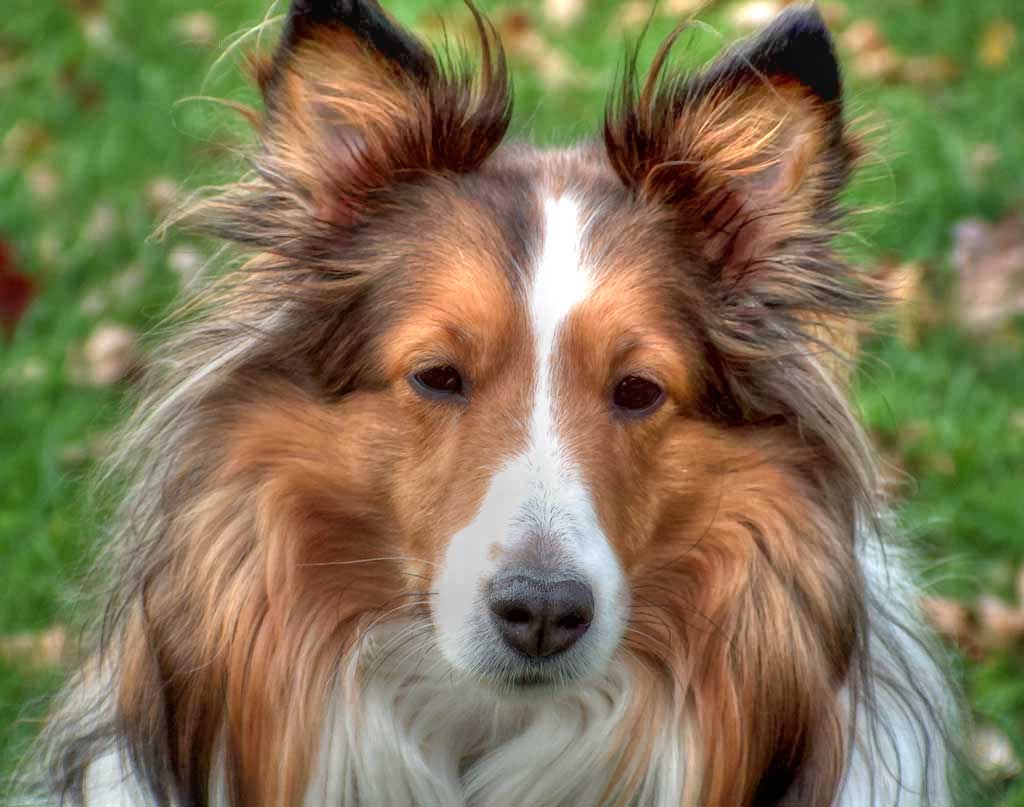
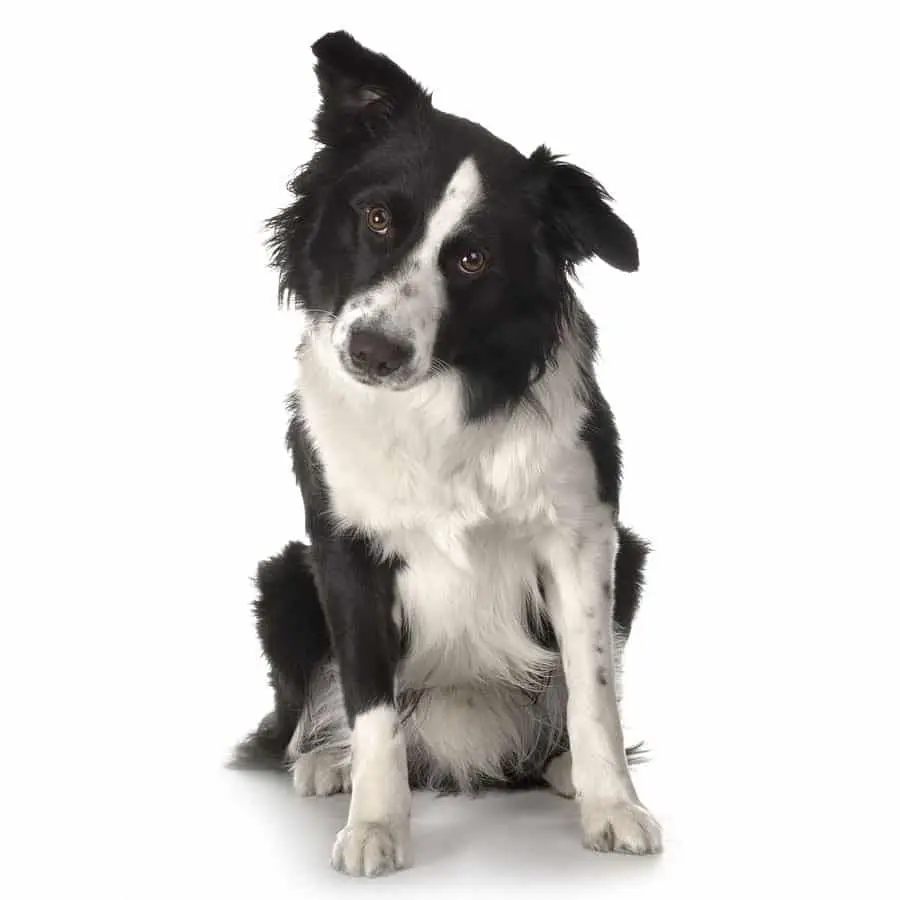
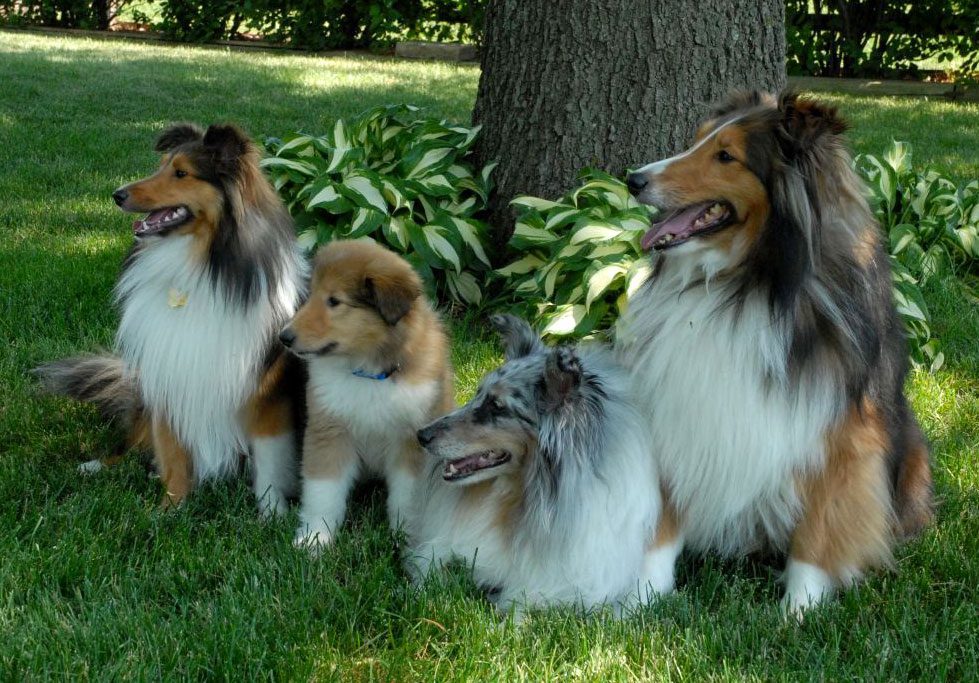
    The Shetland Sheepdog, for example, It is erroneously called Collie miniature, While aesthetically (with the exception of the size) they are identical, they are two different races… Though, We should not forget that, the most direct ancestor of the Shetland Sheepdog or โ€œSheltieโ€ as they are often nicknamed, is the Border Collie.

    Collie breed history

    The high mountains of Scotland are the natural home of this breed. It is not known if you run Roman blood in his veins, but we do know that the Romans conquered Scotland in the sixth century BC.. C. Then, the Collie was known for his great abilities of grazing, capable of driving up 500 sheep at a time. Unlike the current Collie, I didn't have such long and beautiful hair. The Collie was crossed with Setter Irish and with the Borzoi, and from there he was obtaining the characteristics of the Collie of today. William Shakespeare wrote about this dog, calling it Collied Ski. The first illustration of this breed dates back to the year 1790.

    While collies have used this dog for a long time and since the beginning of the race, as ovejero dog, the different forms varieties were developed in England at the end of the 1800.

    The ancient race Collie was referred to as Scottish Collie in the nineteenth century and beginning of the twentieth century. Scottish Collie were heavier than the current. Their modern ancestors were exhibited for the first time Scotch Sheepdogs (foresee Scots) in 1860, in Birmingham (England), in a dogshow.

    In the 19th century, this breed was not well known yet, but with the first dog shows, its popularity began to grow to their highest point. Today remains one of the breeds of dogs most popular. South Africa still used as pastor, but in this case, large flocks of ostriches, his sense of monitoring is very developed.

    Lassie, the character of the television that popularized this race, is a Rough Collie.

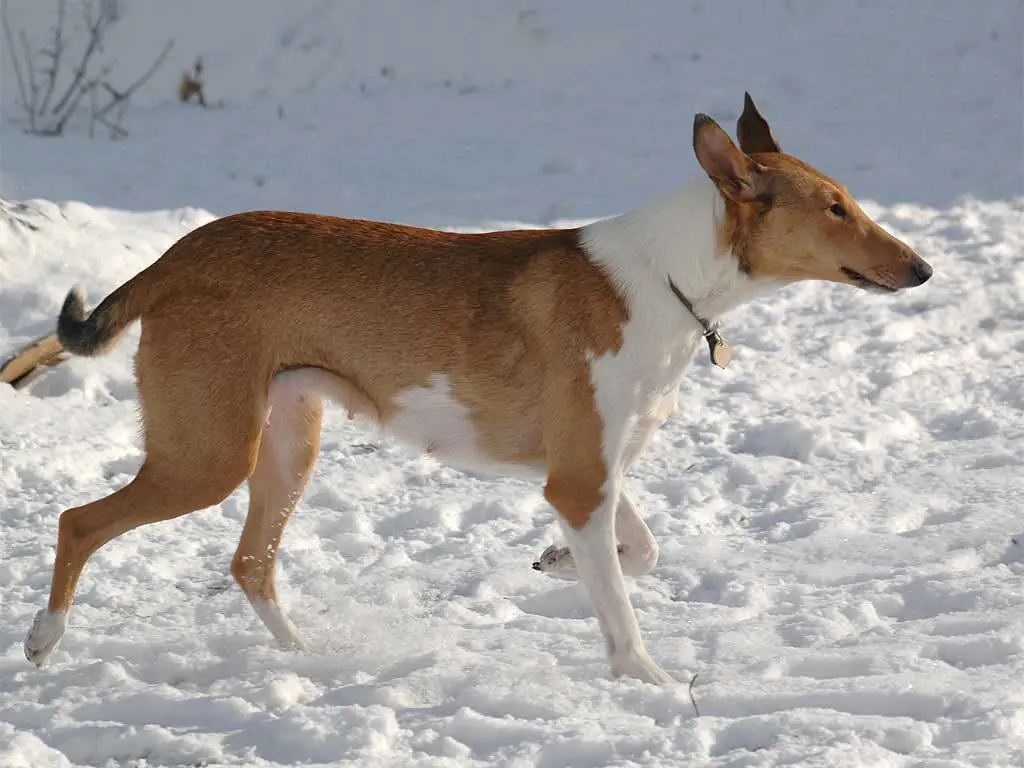
    Collie dog has two varieties. The first is the Rough Collie, more easily recognizable due to its extensive use in movies and television (e.g.: Lassie). This variety has pretty hair in neck, tail and legs. It has a double cover, with small hairs lining the body. The second variety is the Smooth Collie, It has two coatings but the outer coat is short and smooth.

    Collie breed characteristics

    Collie dog has long body in relation to height. Its height of cross is of 56 to 61 cm. the male and 51 to 56 cm. females. They weigh in 18 to 29 kg. He has Brown eyes, almendrada and slightly oblique way. Their ears are small and are played back, or forward when the dog is alert. The snout is long and flat, with black truffle. Its tail is long and abundant hair, and the fur is dense, hard to the touch, soft and bright if it is taken care of very well. It can be color caramel and white, tricolor or blue dark. This dog's life expectancy is of 12 years.

    Collie dog character

    Healthy by nature, It is also known that he has very few known congenital problems. The most delicate part of the body tends to be your eyes, they should be frequently cleaned through a piece of absorbent cotton impregnated simply with warm clean water.

    Known to be sweet and protective. They are easy to train due to her intelligence and innate please desire. They develop a very strong bond with their masters.. They are excellent foresee dogs, good company for family and other dogs. They are very loyal and faithful, although they are wary of strangers if they don't like them. They are also very playful and love to children. She loves to charge monitor children. It is sweet, good very attentive and vigilant: a suitable dog to leave a child in his charge. With babies is treated as a stuffed animal, and a baby can learn to walk if he grabs her hair. This dog will be careful to avoid it to fall. It also, It will avoid that the baby will go with strangers.

    On the beach, It will be devoted to monitoring the smallest, and if something happens, They cry or fall, do not hesitate to act. He does not fear nothing. It is not a fearful or timid dog. In case of danger, defends the family. And it is able to stay a whole night warning, to pounce to lower noise. Every time that the members of the family discuss, It stands always because he hates disputes.

    Before a rebuke sometimes it can be susceptible, and away to a corner to grumbling. But if the owner gets to look for him there is nothing spiteful: jump to your arms. It is active and disciplined. You must be educated with affection and without resorting to force.

    Collie breeds ancestry

    There are many breeds of dog with Collie ancestry, as for example, to get an idea…:

    • Australian dog: used in Australia for cattle raising. Dogs of this type are also known as Queensland Heeler, Blue Heeler and Red Heeler. Heeler, means "heel".
    • Collie de Australia or ยซBordaussieยป: It is not really a recognized breed, but a cross between two popular breeds: Australian Shepherd and Border Collie.
    • Australian Kelpie: Developed in Australia from Collie dogs brought over from Scotland and the North of England. prick ears, shorthair, usually black, black and brown or red and Brown and white feet.
    • Australian Shepherd: Developed in United States, with crossing of British dogs, German and Spanish, but they are in other parts of the world (including Australia).
    • Stumpy Tail: Used in Australia for cattle raising. erect ears, shorthair, mottled grey or red without white. With a very short tail or no tail.
    • Bearded Collie: Now largely animal home and exhibition, but are still used as working dogs on farms. Long and silky hair (included in the face and legs), color negro, grey or beige, and white on the shoulders.
    • Blue Lacy: Gris, shorthair, floppy ears. Derived in part from English Pastor, with other races that descend from the Collie but aren't Collie.
    • Border Collie: The most famous race for grazing sheep around the world. Originally developed in Scotland and Northern England. According to the classification made by Stanley Coren after analyzing the responses of more than 200 work of the AKC judges ("The Intelligence of Dogs", Stanley city, Ediciones B, 1995), the Border Collie is the No. 1 from the list.
    • Cumberland Sheepdog: An extinct breed similar to the Border Collie and, possibly, absorbed by this race. An ancestor of the Australian Shepherd. Ears erect or semi-erectas, dense fur, Black with white only on the face and chest.
    • English Shepherd: Developed in United States from a farm Collie originating in Great Britain. It should not be confused with the old English Pastor.
    • Farm Collie or farm Collie: It was any dog grazing is encuontraba for farming in Britain or United States (descendants of British dogs), and perhaps in other places.
    • German Collie: Developed in Australia, probably from British Collie dogs, but they may have included Germany and Spain dogs. The name "German Collie" is also applied to a cross between a German Shepherd and Border Collie).
    • Huntaway: New Zealand developed from a mixture of races, probably including some Collie – but it is not a breed of the Collie type. It is larger and more stout than most Collies..
    • Warren hound: It is not a race, but a Collie cross (or other grazing or Terrier dog) with a hound or Greyhound. Obtained in a traditional way for poaching, with the speed of a hound, but more obedient and less visible.
    • McNab Shepherd: Developed in United States from British Collie dogs. Ears of variable size, upright or semi-erectas, shorthair, black or red, usually with some white on the face and chest.
    • Old English Pastor: Derivative of the ancestors of the Collie Barbudo. They are bigger than most Collies, with a lack of tail, hair is long and silky (included in the face), usually grey and white. It should not be confused with the English Shepherd.
    • Scottish Collie, in its two varieties, Rough Collie and Smooth Collie: They were created by crossing dogs working with other races Collie (especially dogs Borzoi).
    • Shetland Sheepdog: comes from the Shetland Islands (Scotland, United Kingdom), intentionally was raised in small size. At first sight, It seems to be a copy of miniaturized hair long Collie, However, are 2 different races with a similar look.
    • Smithfield: a breed of British dog that has been terminated, It was like a great Collie, strong, white or black and white color that is used to guide cattle in South East England, especially the Smithfield market (an area of the city of London).
    • Welsh Sheepdog: a native of Wales. Ears erect or semi-erectas, short or silky hair, red, black, black and fire or Blackbird, usually with white over shoulders.

    Collie dog breed lines

    According to the type of coat, the different lines of Collie have been born., among them are:

    1 Border Collie

    Border Collie

    The Border Collie is regarded as the breed of smarter dogs que existe

    The Border Collie It takes its name

    ... Read more

    2 Bearded collie

    Breeders of bearded Collie or Bearded Collie in Spain

    The Bearded collie It is an energetic dog. They need exercise and homework to do, How to care for children.

    The Bearded collie is one

    ... Read more

    3 Smooth Collie

    Smooth Collie

    The Smooth Collie, today it is considered a variety of Border Collie in countries such as the United States and Canada

    The Hair Collie

    ... Read more

    4 Rough Collie

    Rough Collie

    The Rough Collie he is a very sweet and affectionate dog, maybe a little shy.

    The Rough Collie is one of

    ... Read more

    โ–ท The world of Pets: Dogs, cats, birds, reptiles, amphibians

    English White Terrier
    Inglaterra Extinct

    The English White Terrier (White English Terrieris a breed of dog extinct, of English origin.

    Content

    History

    The name of "English White Terrierโ€ was invented and adopted at the beginning of 1860 by a group of breeders willing to create a new breed of dog, inspired by the typical working Terrier but with greater hearing acuity. This premature intention was born later the Fox Terrier, the Jack Russell Terrier, the Sealyham terrier and, later, in United States the Boston Terrier and the Rat Terrier.

    With the passage of time (and not much) the authorities of the Kennel Club they decided that the English White Terrier, should be considered as a race and was admitted, but the dog's myriad of genetic problems led to its popularity plummeting...

    All these vicissitudes led to the life and history of the English White Terrier, it will last very littleโ€ฆ at 30 years of appearing on the stage of the Kennel Club, the English White Terrier had fallen into extinction. But, before disappearing was crossed with the English Bulldog thus generating the first dawn of the races Boston Terrier and Bull Terrier.

    In fact, working and small Terrier breeds have existed at least since the end of the century in United Kingdom 18. These dogs have always been very variable in size and shape, dogs could be found Terrier with a height at the withers that ranged from 25,4 and 31 cm., with floppy ears or straight ears, smooth coat or hard hairโ€ฆ

    With the rise of the show ring over the years 1860, enthusiasts of the new races that were emerging, they made possible by naming them and improve them, the Terrier were the first of their lists. From there working Terrier dogs were born that we know today as Fox Terrier, Jack Russell Terrier, Parson Russell Terrier and Sealyham terrier.

    In the vortex of creation and claim of new dog breeds, the different breeding groups competed ruthlessly, sometimes they put different names for the same breed, it was also common practice to make up stories about racesโ€”totally- fictitious they advertised as part of a campaign by declaring a new strain of a race, or a new race, that gave certain personal distinction and cachet to the breeder and of course... his sales went up. That was the real meaning...

    Physical characteristics

    In 1894, for as long as he English White Terrier finally disappeared from the scene of the canine clubs (who was always more of a companion pet and show dog, as a working dog) a scholar of the race, Rawdon Lee Briggs, noted that โ€œthe last specimens seen in London, they were of typeToyโ€, small dogs that were not above the 7 kg, with a rounded skull, or the so-called 'apple head', which would be due to an effect of inbreedingโ€. According to the official standard, the English White Terrier weighed between 6 and 9 Kg.

    Lee described the English White Terrier as "the most fragile and delicate of all our Terrier. He is not the typical companion of an athlete, but it is an ideal dog to live in a nice house, in which he receives a considerable amount of pampering and careโ€.

    Though 1894 the dog still existed, people linked to the canine world could see before their eyes that the possible extinction of the English White Terrier it was already a harsh reality... But lamenting the decline of the race, they consoled themselves with the thought that perhaps they should give rise to new races (assuming the inevitable)โ€ฆ, and they thought developing breeds better adapted to the needs and comforts of the historic present.

    There was, a male specimen of the breed English White Terrier born in 1876, He was very famous, was owned by Alfred Benjamin, it was called 'Silvioโ€™. Today it is considered a reliable and privileged sample of the breed..

    In 1877, Silvio was the champion of an event of โ€˜Conformation Showโ€™ (Demonstrations of conformation, also known as a demonstration race), is a competition, orโ€ฆ an event in which a judge familiar with a certain breed of dog, individually evaluates each specimen and determines which dogs are purebred or, which conform to the breed standard. Silvio I weighed nineteen kilos.

    This exhibition was held at theRoyal Agricultural Hall" in the year 1878, in what we know today as the l "Business Design Centreโ€ which is an exhibition center located in the Islington district, in London.

    Alternative names:

  • White English Terrier
  • Old English Terrier
  • British White Terrier